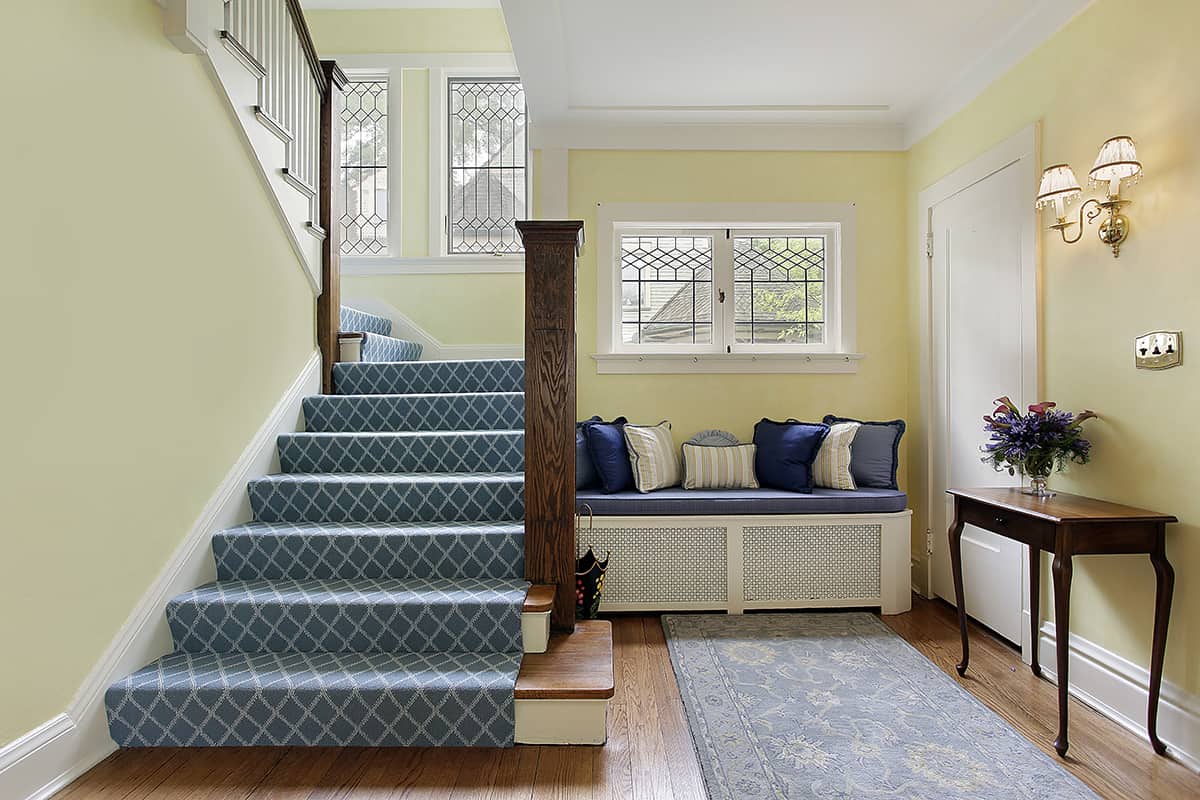
The staircase wall is one of the largest areas of blank canvas in most homes, yet it is also the most underused. The great expanse of the wall along the side of a staircase will usually be double height, making it a prime spot for real estate to create a feature.
However, since it is usually an odd shape, following the diagonal tilt of the staircase, added to the fact that it’s not in an area that people will sit down and spend time around, means that most of us don’t utilize the staircase wall as well as we could. Here we explore ways to maximize your staircase wall’s potential with several decorative ideas.
Table of Contents
- Top Ways to Decorate a Staircase Wall
- Feature wallpaper
- Paneling
- Gallery wall
- Collection display
- Mural
- Living wall
- Wood Slat Accent Wall
- Wallpaper In Framed Panels
- Vertical Trio Of Large Art
- Two-Tone Paint With Chair Rail
- Statement Clock Moment
- Staircase “Timeline” Photo Story
- Sculptural Sconces + Minimal Art
- Picture Rail With Swappable Frames
- Oversized Arched Mirror
- Mixed Materials Paneling + Wallpaper Split
- Micro Spotlights Washing Art
- Corner Landing Feature Wall
- Built-In Display Niches Following The Stair Line
- Black-And-White Photo Stair Run
- Architectural Molding Grid
- Accent Color “Stair Stripe” Band
- Should Staircase Wall be the Same as the Hallway?
- Can You Wallpaper a Staircase Wall?
Top Ways to Decorate a Staircase Wall
Feature wallpaper
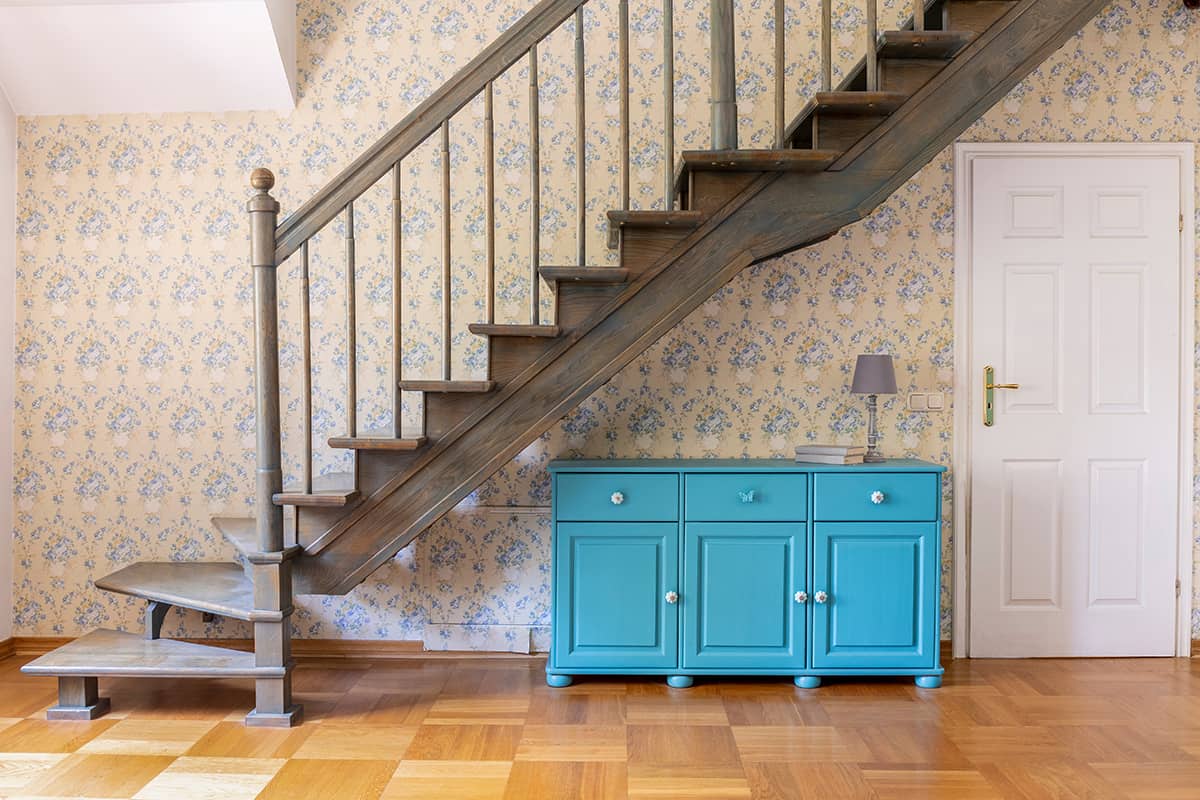
If you want to make a feature from your staircase wall, why not choose a patterned or textured wallpaper? Wallpaper is an excellent choice for a staircase wall because the expanse of surface allows the wallpaper to be seen at its best. When used in a room, the wallpaper will often be interrupted by windows and doorways or pieces of furniture in front of it.
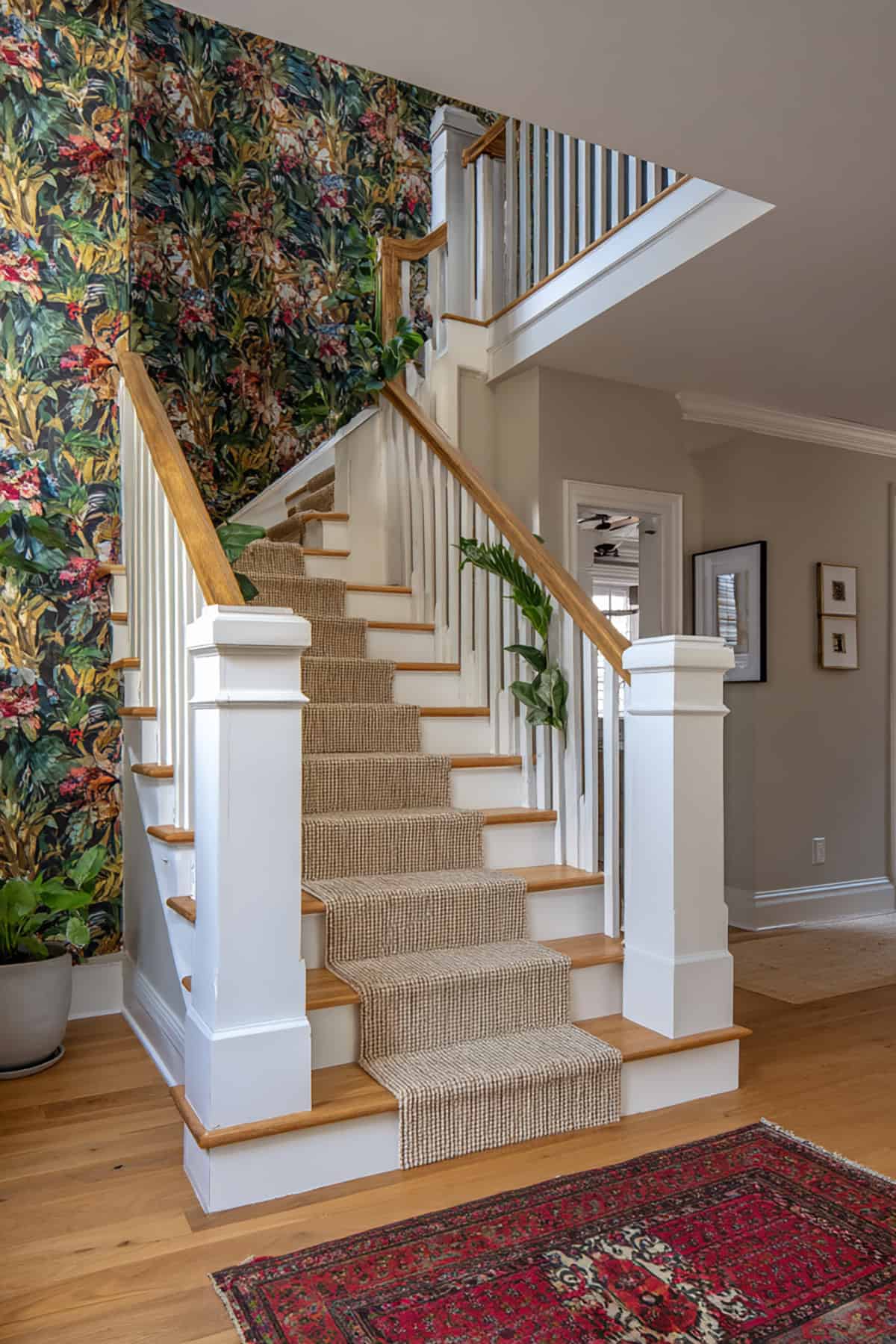
On a staircase wall, you can cover the blank wall in exciting wallpaper and enjoy it to the maximum. When using a feature wallpaper, opt for something that is in keeping with the style of the rest of the space; for example, you’ll want it to be within the same color scheme as the hallway and upstairs landing.
Most feature wallpapers will use a bold pattern, so in order not to overwhelm the space while also allowing the wallpaper to take center stage, ensure the rest of the decoration on the stairway is simple or plain. For example, choose a plain carpet for the stairs instead of a patterned one.
Paneling
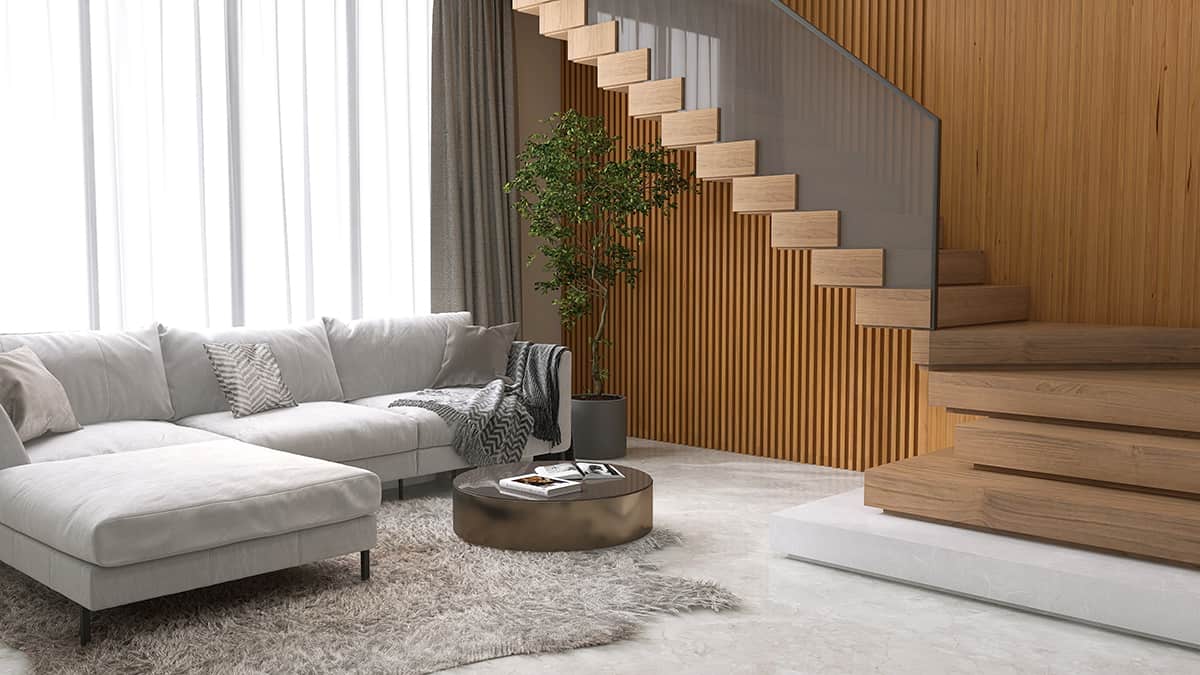
Paneling has become popular over the last few years, as more and more of us are turning our hands to DIY and following Youtube tutorials to improve our home’s aesthetics. Paneling a staircase wall creates a look of grandeur, and therefore it works especially well in larger homes.
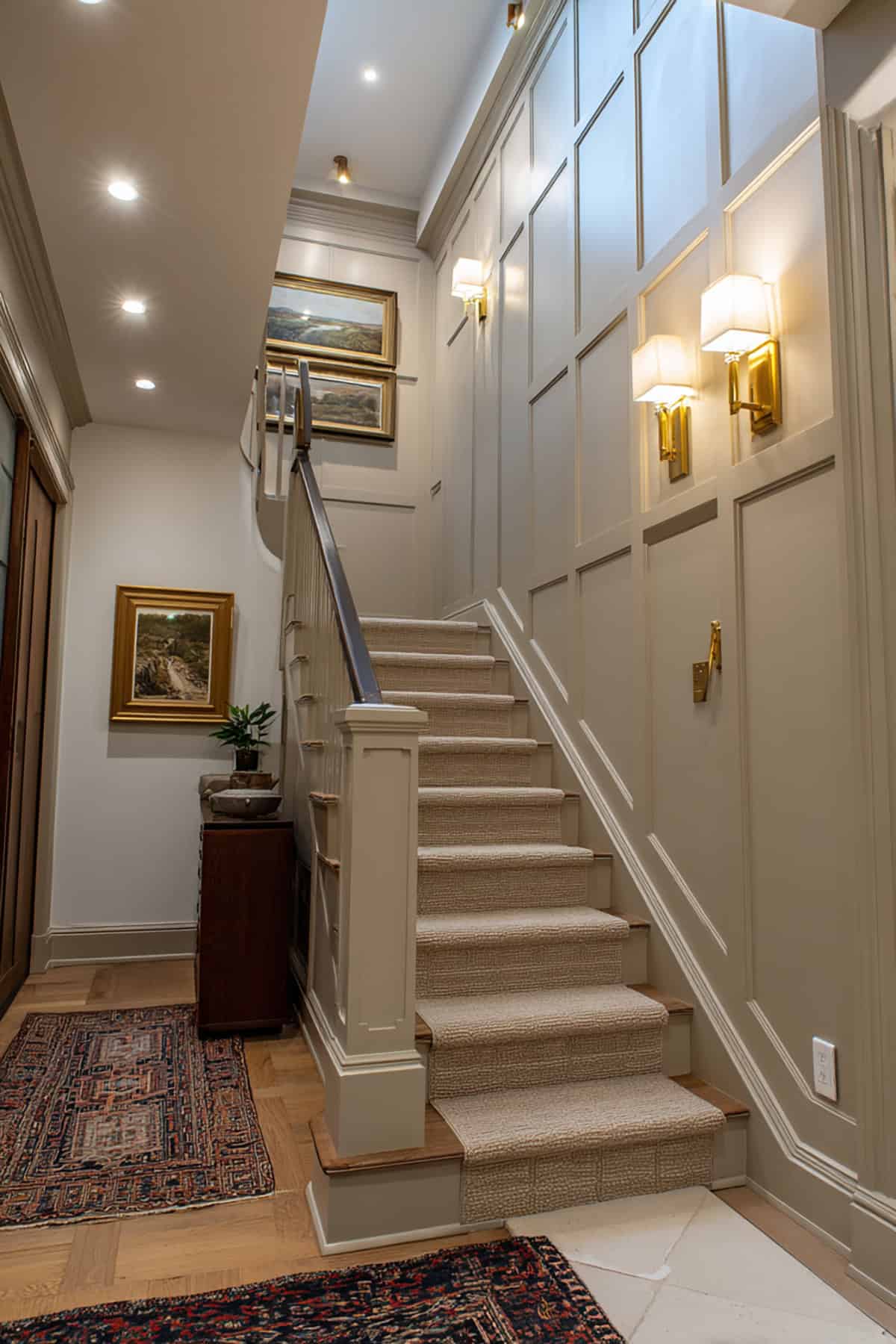
Paneling has a classic appeal, but it will appear modern and stylish when painted in a modern, muted color such as olive green. You can panel the entire wall for a bold effect or just panel halfway up the wall for a slightly more relaxed feel. Paneling a staircase wall is a project that can be achieved on a weekend if you have all your equipment and supplies ready.
You can paint the wall in the same color as the paneling for a sleek and understated style or use different paint colors for the staircase wall and paneling to create some contrast. You can hang picture frames or art over the paneling or leave it blank.
Gallery wall
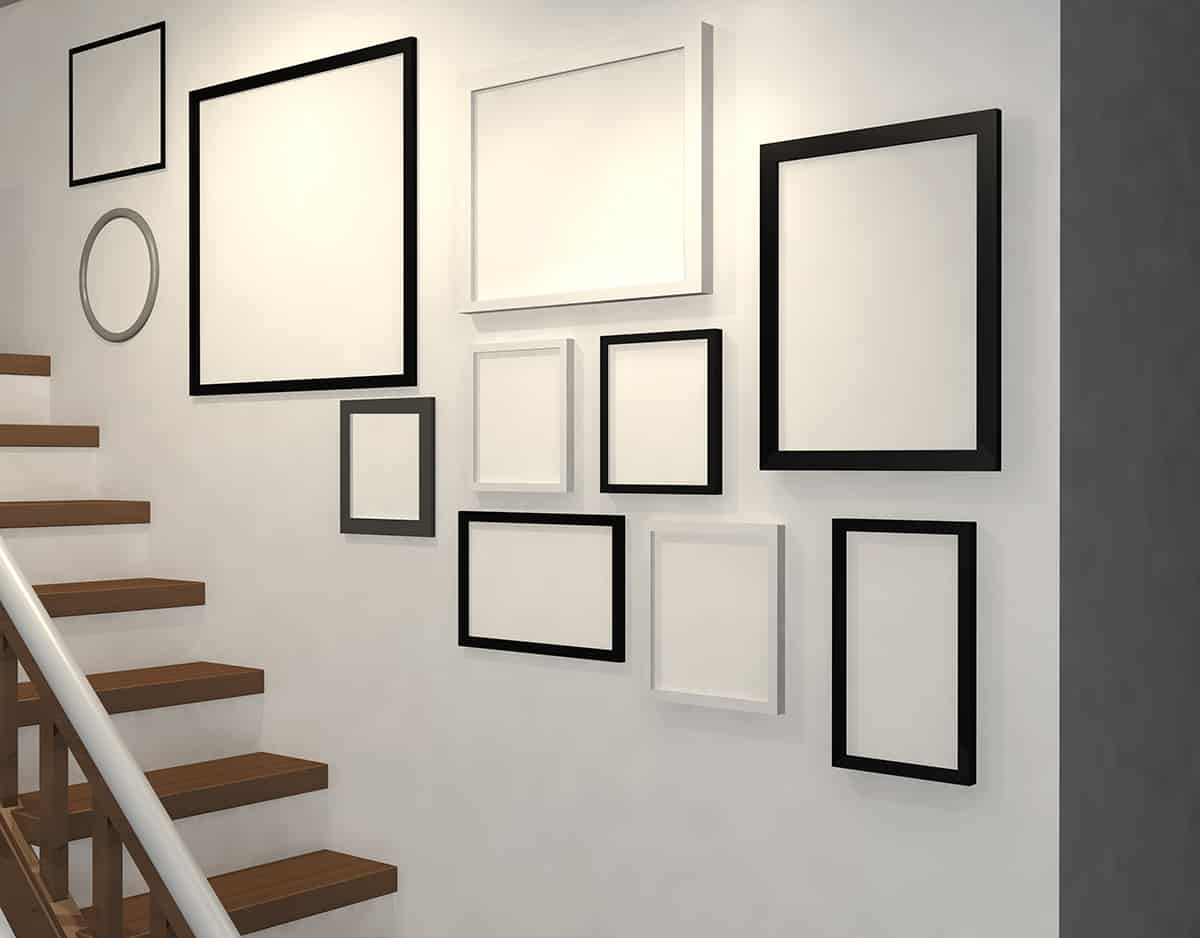
One way that many people add interest to the staircase wall is with a gallery. This looks engaging while also providing the perfect place for you to display your much-loved family photographs or pieces of art. There are many ways a gallery wall can take the shape of a staircase wall, and all of them can be equally effective as long as some theme is followed.
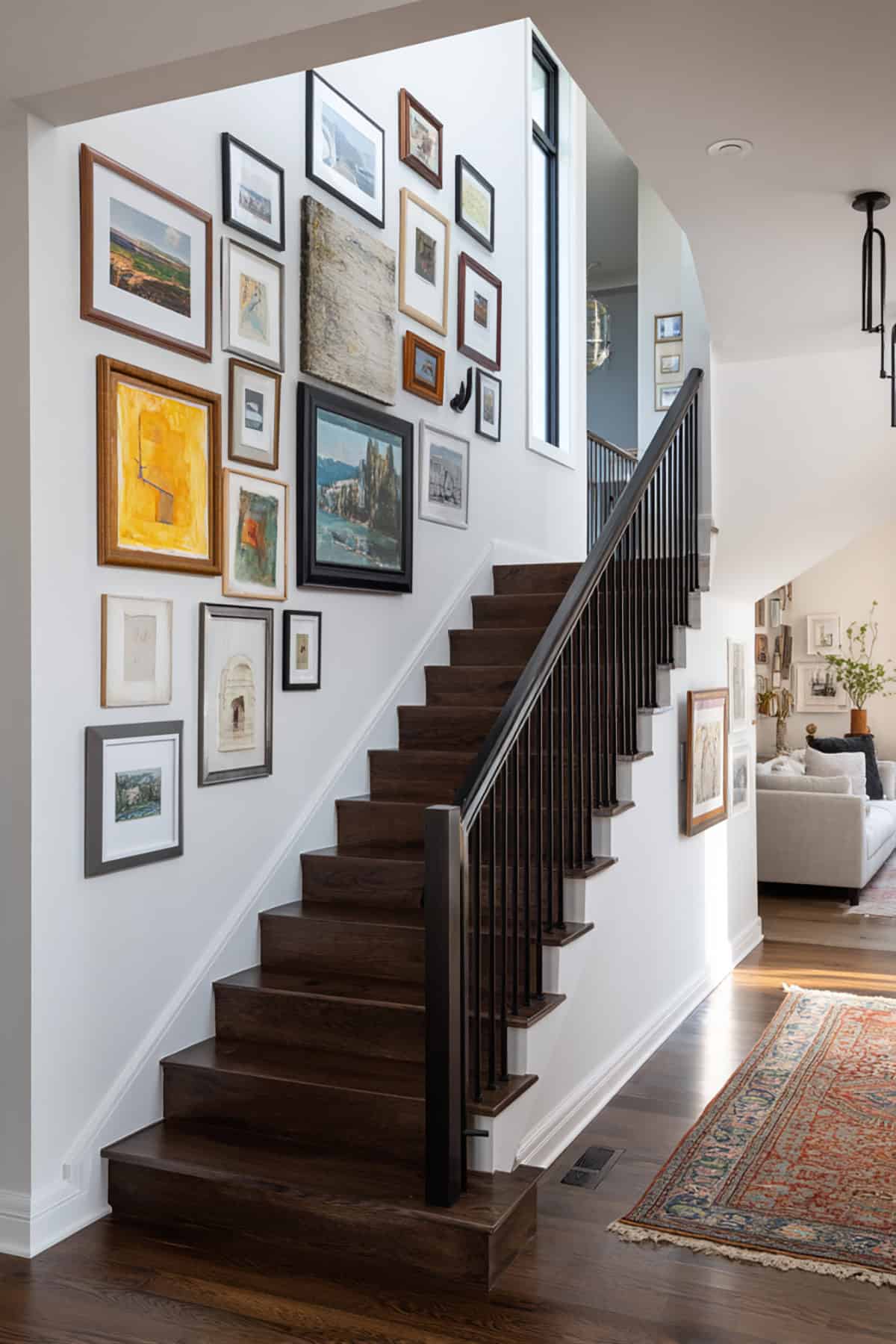
For example, use a wide array of photographs from different events and different colors, but display them all in frames that match, such as all-white wooden frames. You could use a variety of small, medium, and large frames arranged in what appears to be a random order, or you could use all frames the same size for a more uniform, formal look.
To avoid creating a mismatched wall, you could print all the photos in black and white or in a sepia finish to aid consistency.
Collection display
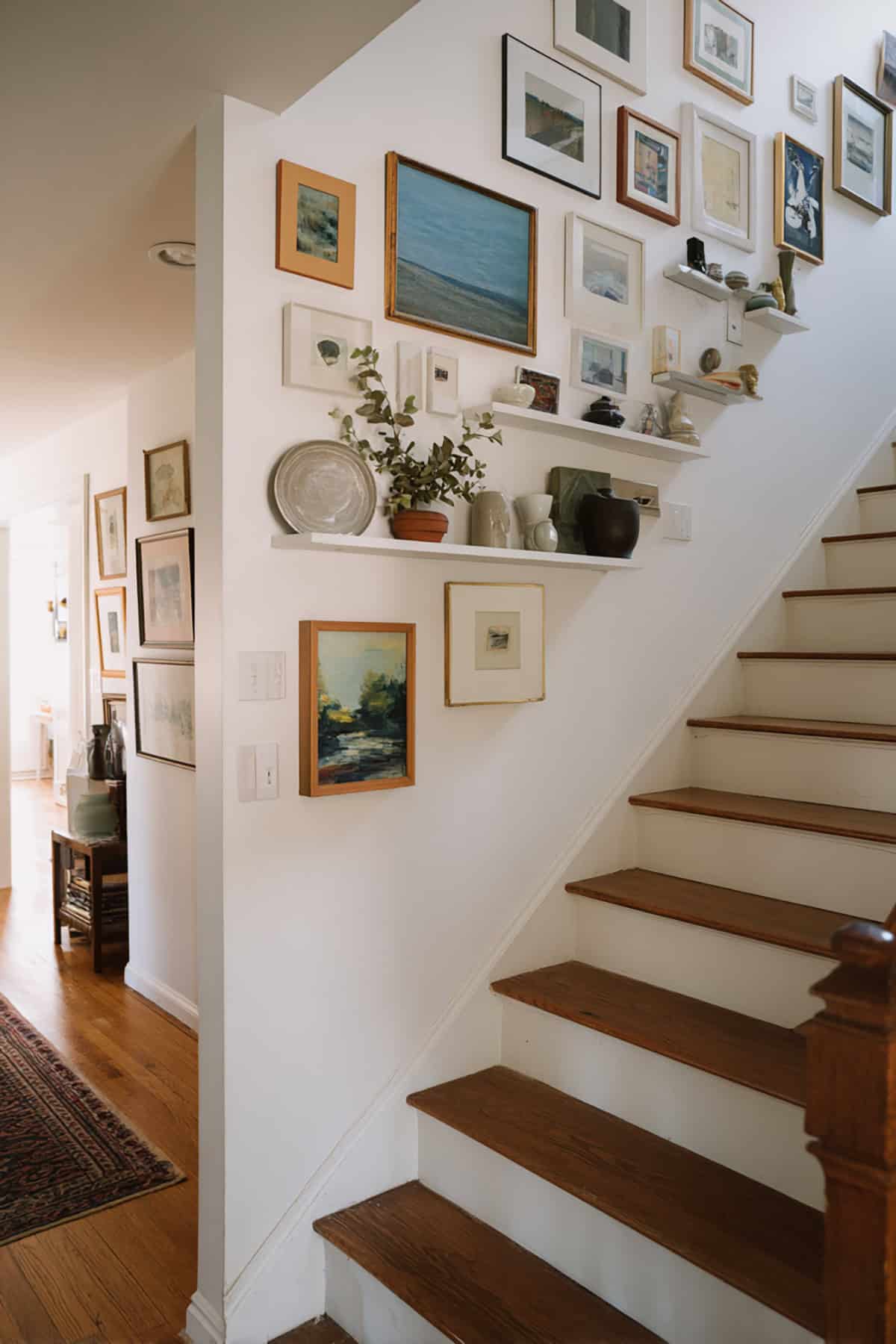
If you are a collector of novelty items or memorabilia, then the staircase wall is ideal for displaying your collection. The stairway is an area that gets to be viewed daily. However, it isn’t a space where you will sit and spend much time. This means you can enjoy a quick glance at a collection display without having it become a centerpiece in a living space.
The objects you could display on the stairway wall are only limited by your imagination. You could display a collection of old postcards or a collection of stamps. You could hang a collection of plates on the wall or a collection of dried flowers.
Mural
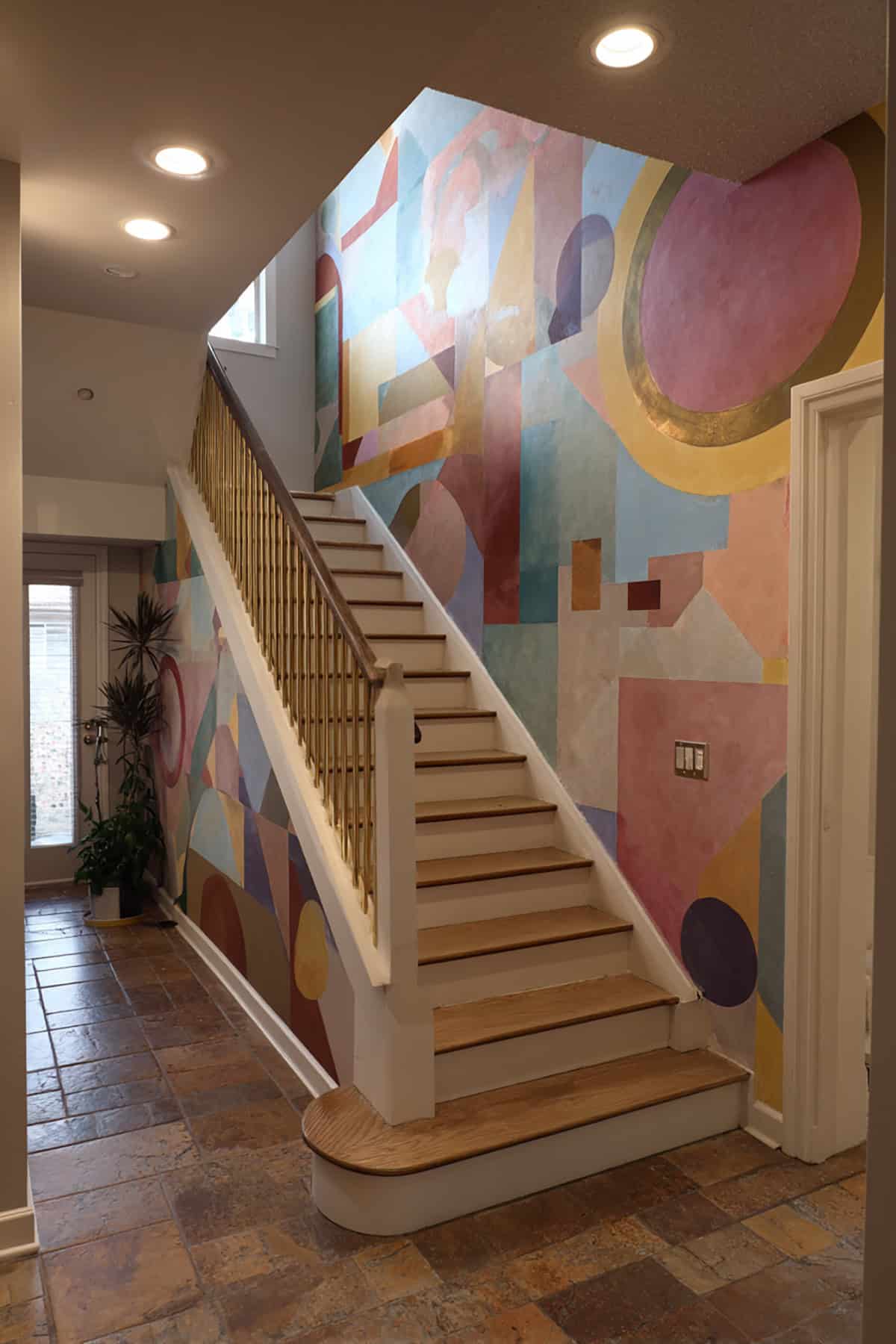
The staircase wall is a large expanse of blank surface, making it the ideal place in the home to paint a mural. If you’re a creative person, you could draw and paint your own mural in this space, or for an easier option; you can buy ready-printed murals on paper applied to the walls in the same way as wallpaper.
Instead of repeating patterns, these sheets combine to create one large picture. The type of mural you opt for could reflect your personality or family, or you could choose something that reflects the atmosphere you want to achieve. Potential murals include a beach scene, a snow-covered forest, or a city skyline.
You can also find companies online who will blow up a photograph of your family or a photo you have taken and turn this into a mural that can be stuck onto your staircase wall.
Living wall
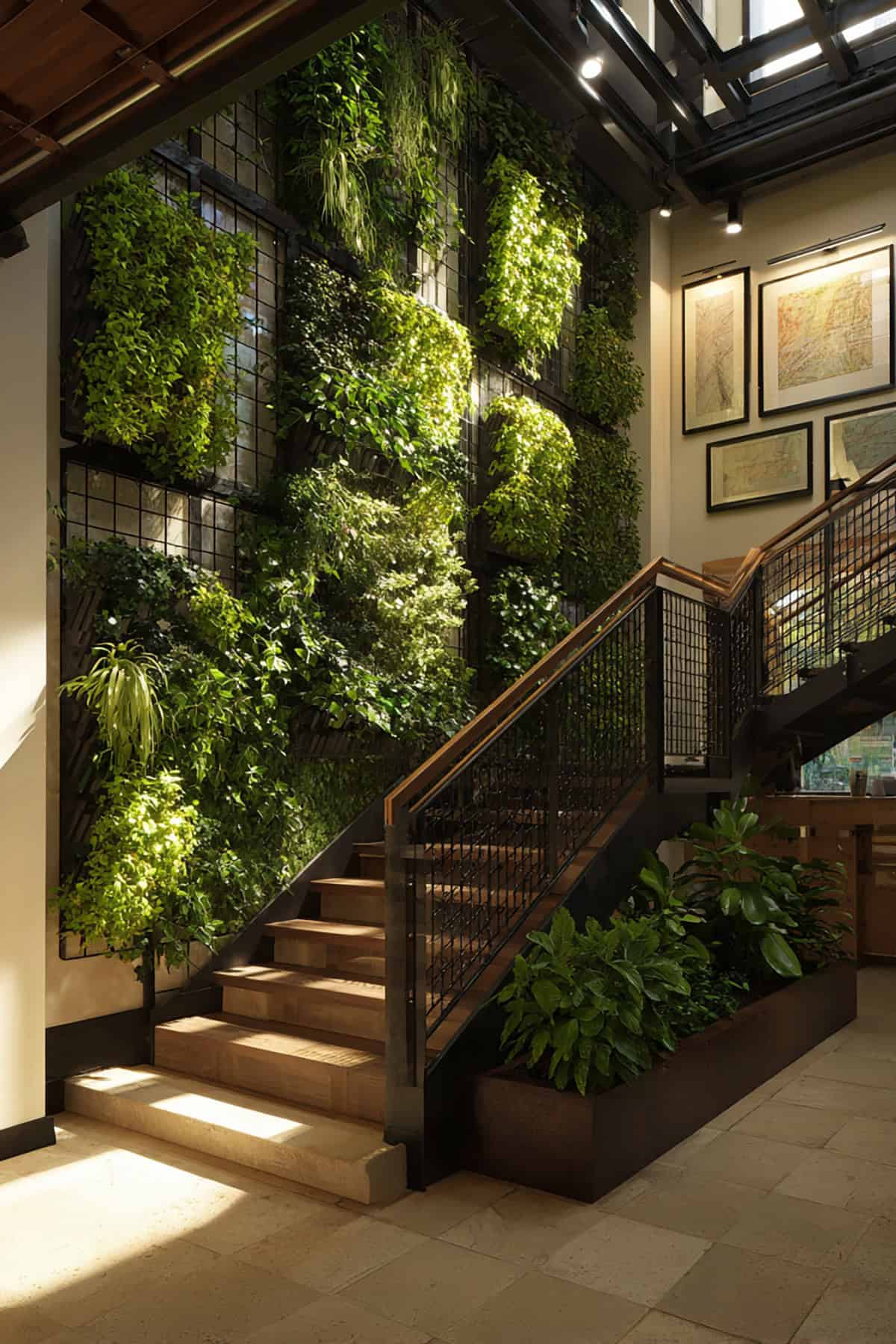
A living wall is a wall that is entirely covered in live plants. This makes for a striking look featuring color, texture, and depth. The first step in creating a living wall on your staircase wall is to assess if your stairway gets enough light to keep a living wall alive and then choose plants that are appropriate for your lighting level.
Climbing plants are hanging plants that work well for indoor living walls because they will trail up a structure to help entirely cover your wall, and they won’t stick out from the wall to block your way up and down the stairs.
In a well-lit stairway, choose plants like Pothos, Raphidophora tetrasperma, and a trailing Philodendron. If your light is on the lower side, you could grow a wall of English Ivy which will thrive in shaded conditions.
There are a number of ways you can create your living wall, depending on how much you want to commit to this idea. For a fully hidden wall behind a mass of green foliage, you’ll need to install a structure for support first. The best option for this is a metal trellis installation made up of long pieces of wire overlapping each other in a crisscross pattern.
These can be fixed to the wall with screws or brackets to hold them, and plants trail over the structure. Chicken wire cut to the size of the wall could also be a good option. Plants will then need to be secured to the wall in their pots, and their stems can be trained to grow in various directions until all of the walls are covered.
Wood Slat Accent Wall
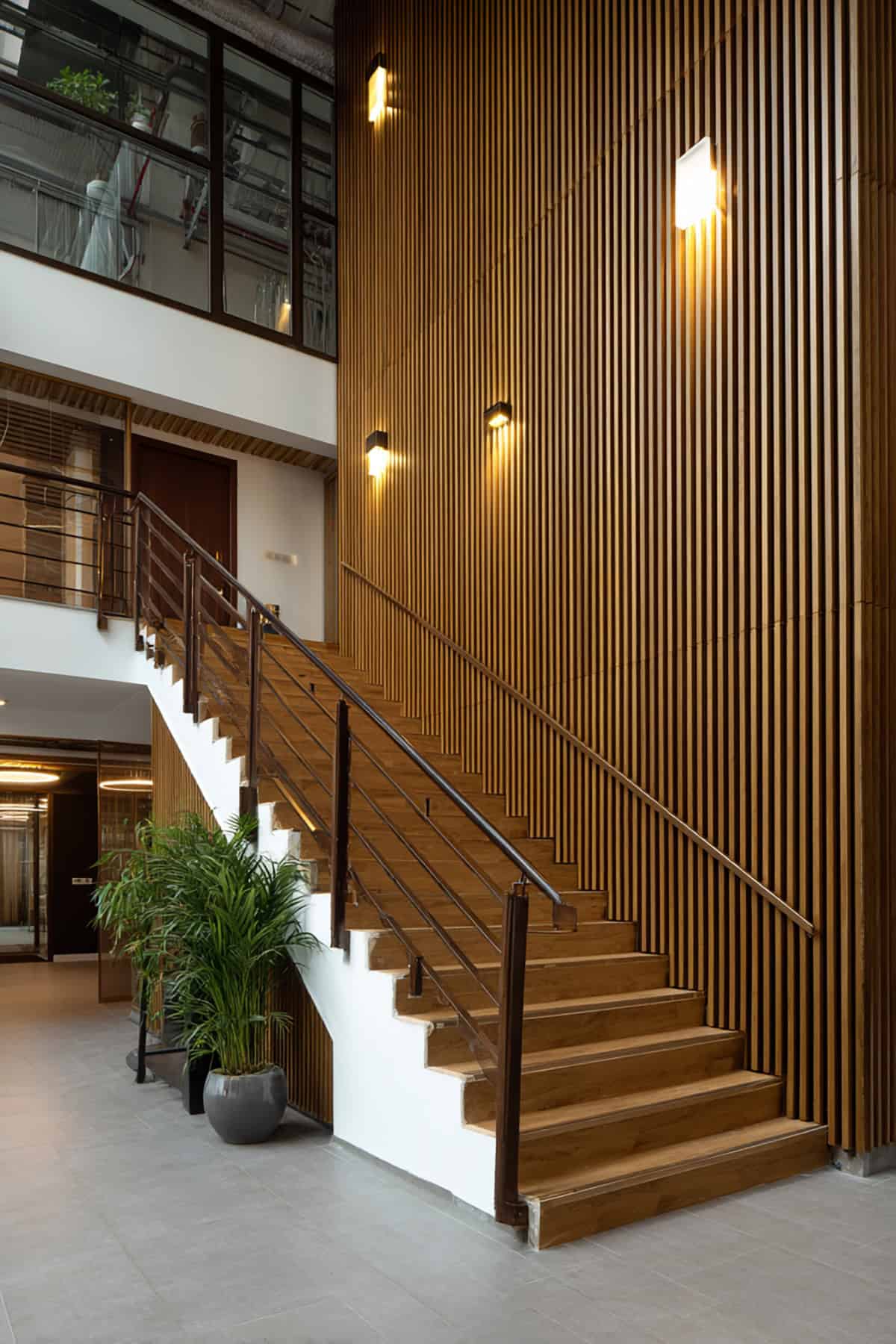
If you’re after warmth and structure, vertical wood slats do the job. Stick with consistent widths and tight spacing for a calm, streamlined look. Light oak feels fresh and modern, but walnut’s hard to beat for something more classic.
Going floor to ceiling visually stretches the space. Matte finishes are your friend here—no one wants blinding reflections as they walk up. Hidden fasteners? Worth it for that seamless vibe.
Don’t forget about the handrail. It’s best to plan around the slats, lining the rail up with gaps or the center of a slat so you’re not left with weird cuts. Details like that make the whole thing feel thought out.
Wallpaper In Framed Panels
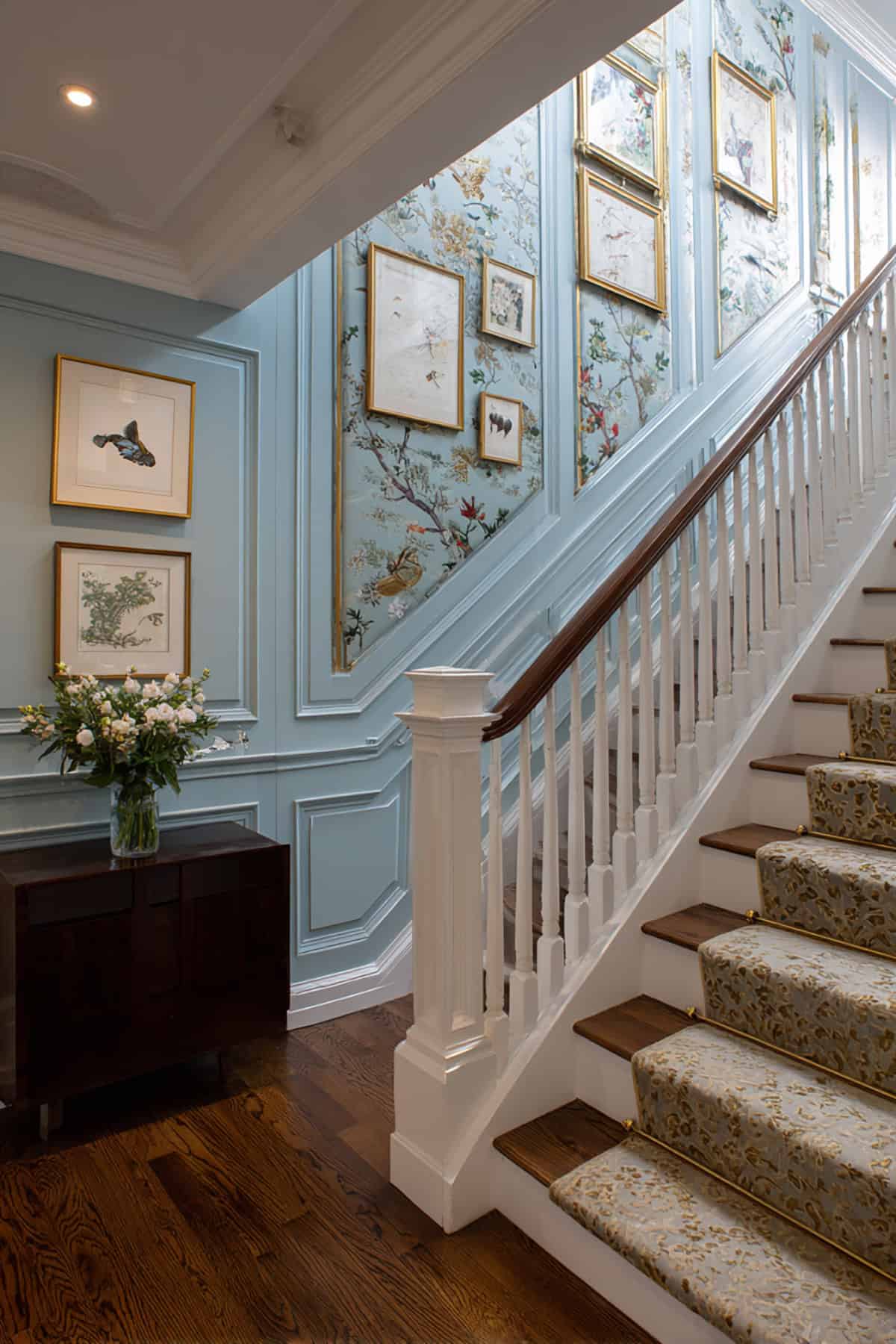
Wallpaper can get wild fast, but framing it out with thin molding keeps things tidy and a bit architectural. You have more control over how much pattern you see—never a bad thing.
Go for something durable and washable (kids, pets, bags: enough said). Subtle geometric patterns work well from all angles, but anything too bold can quickly overwhelm.
Keep the frames spaced evenly from the stair treads—it’s noticeable if you don’t. Painting the molding to match the trim pulls everything together.
Vertical Trio Of Large Art
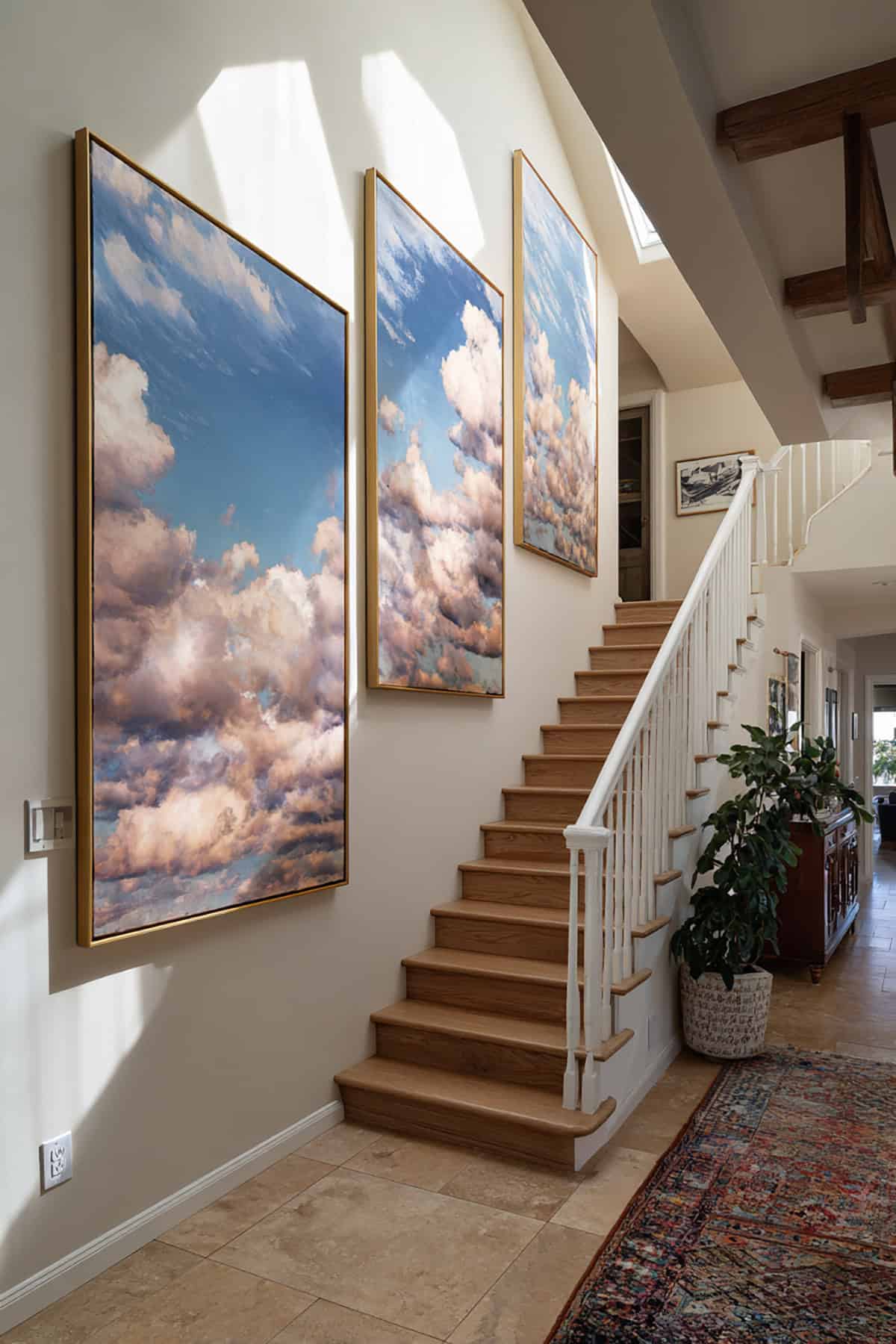
Stacking three big art pieces along the angle of the stairs just works. It fills the height without making things look busy, and you can see the art from both floors.
Make sure the art relates to the width of the wall, not how many steps you have. Keep the frames visually balanced, even if you mix up the subjects. Palettes should play nice together.
Hang the middle piece at eye level on the landing, then let the others follow the incline. Use solid anchors—stairs are high-traffic, and you don’t want anything coming loose.
Two-Tone Paint With Chair Rail
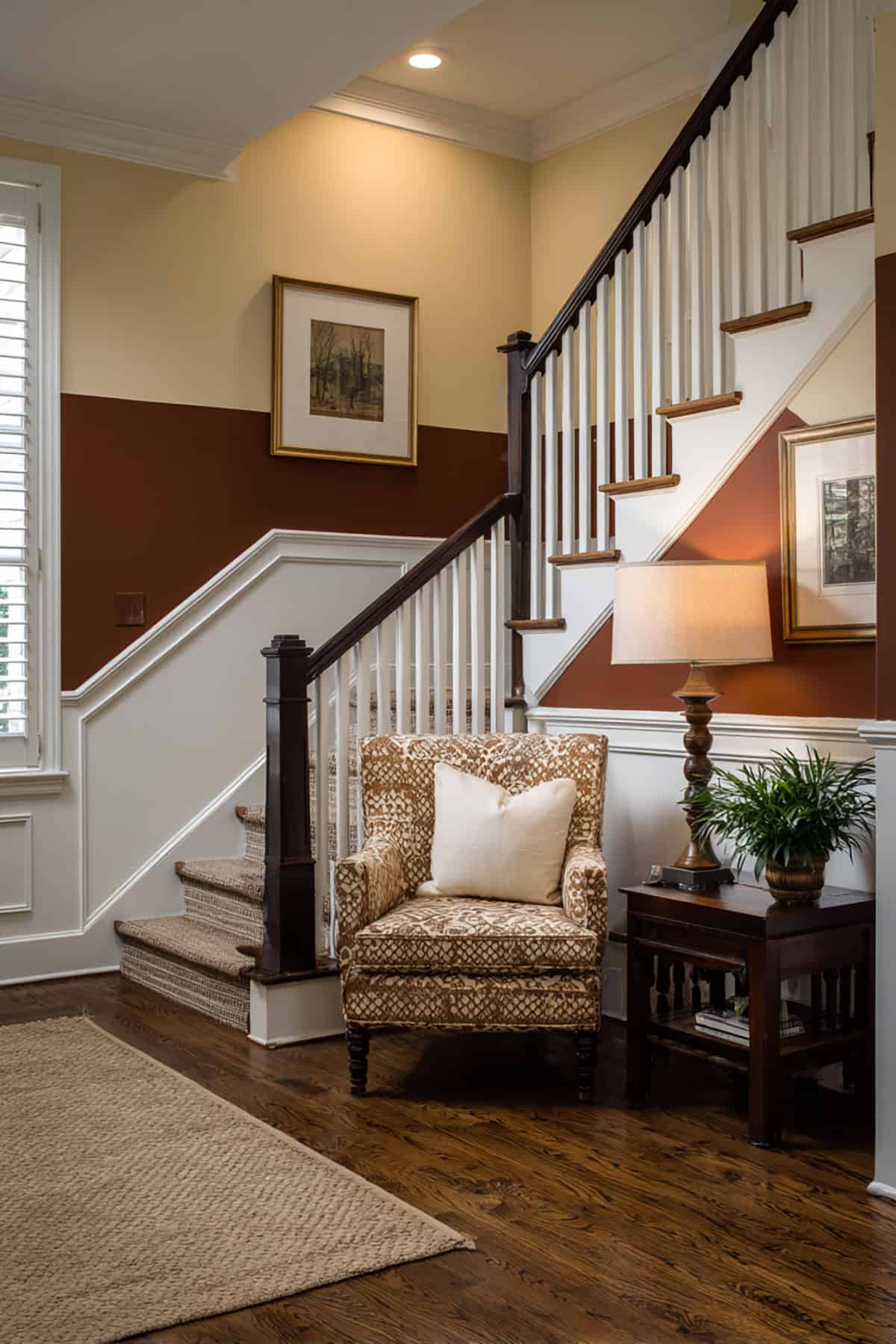
A chair rail’s practical and good-looking. It splits the wall, protects from scuffs, and lets you play with color. Two tones? Always adds some interest, even if you skip the art.
Install the rail parallel to the stairs—horizontal rails just look off on an angle. Pick a tough paint for below the rail, since that’s where all the action happens. Lighter color up top keeps things airy.
Statement Clock Moment
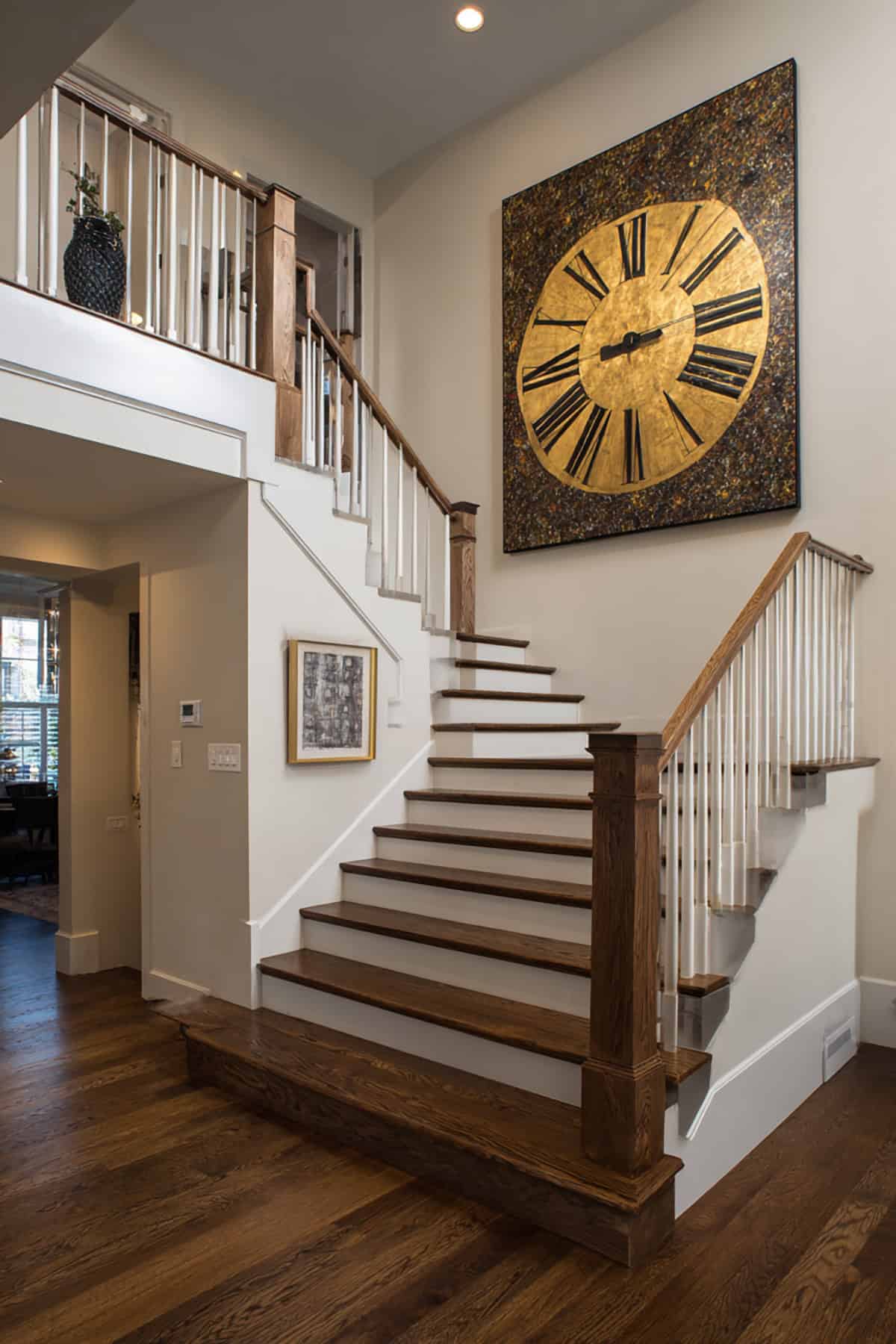
One oversized clock can do more than a gallery wall ever will—functional, bold, and you’ll never be late again (maybe). It’s a smart way to break up a big blank space.
Round clocks soften all those straight stair lines. Metal frames feel sleek, wood’s more timeless. Place it where you can actually see it, avoiding awkward corners. Silent mechanisms are a must—echoes are the worst.
Staircase “Timeline” Photo Story
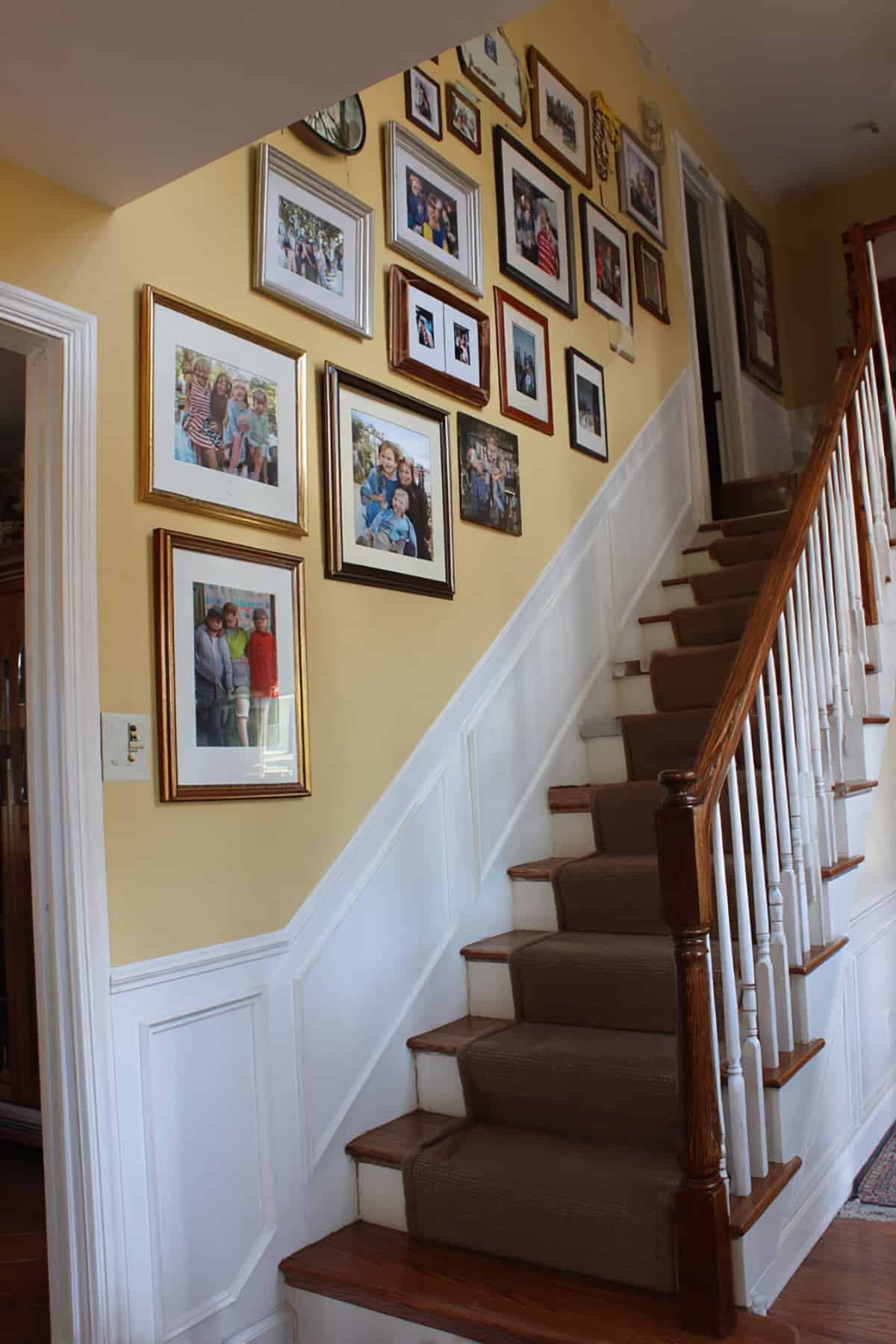
Running family photos up the stairs in chronological order? It tells a story as you go. Order counts more than frame style, honestly.
Matching frames (black or wood) keep things neat, and consistent matting ties it all together. Stick to the angle of the stairs with even spacing between each—precision here pays off.
Sculptural Sconces + Minimal Art
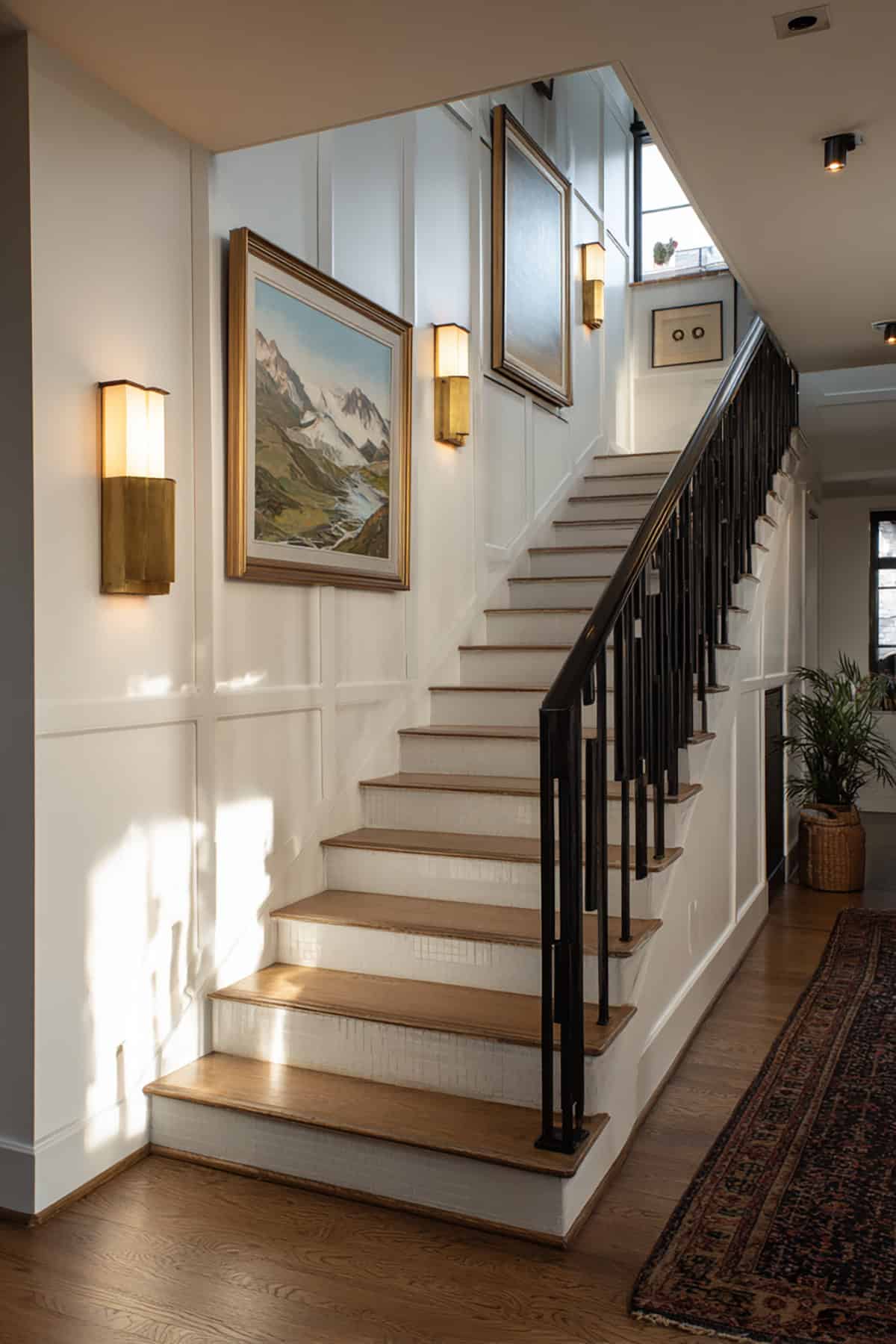
Wall sconces bring light where overhead fixtures just can’t reach. Choose sculptural shapes so they double as art, even when switched off. Pair with simple, small art—don’t overdo it.
Set sconces at the same height for a sense of order. Warm bulbs make the whole stairway feel more inviting. Give the artwork space to breathe.
Picture Rail With Swappable Frames
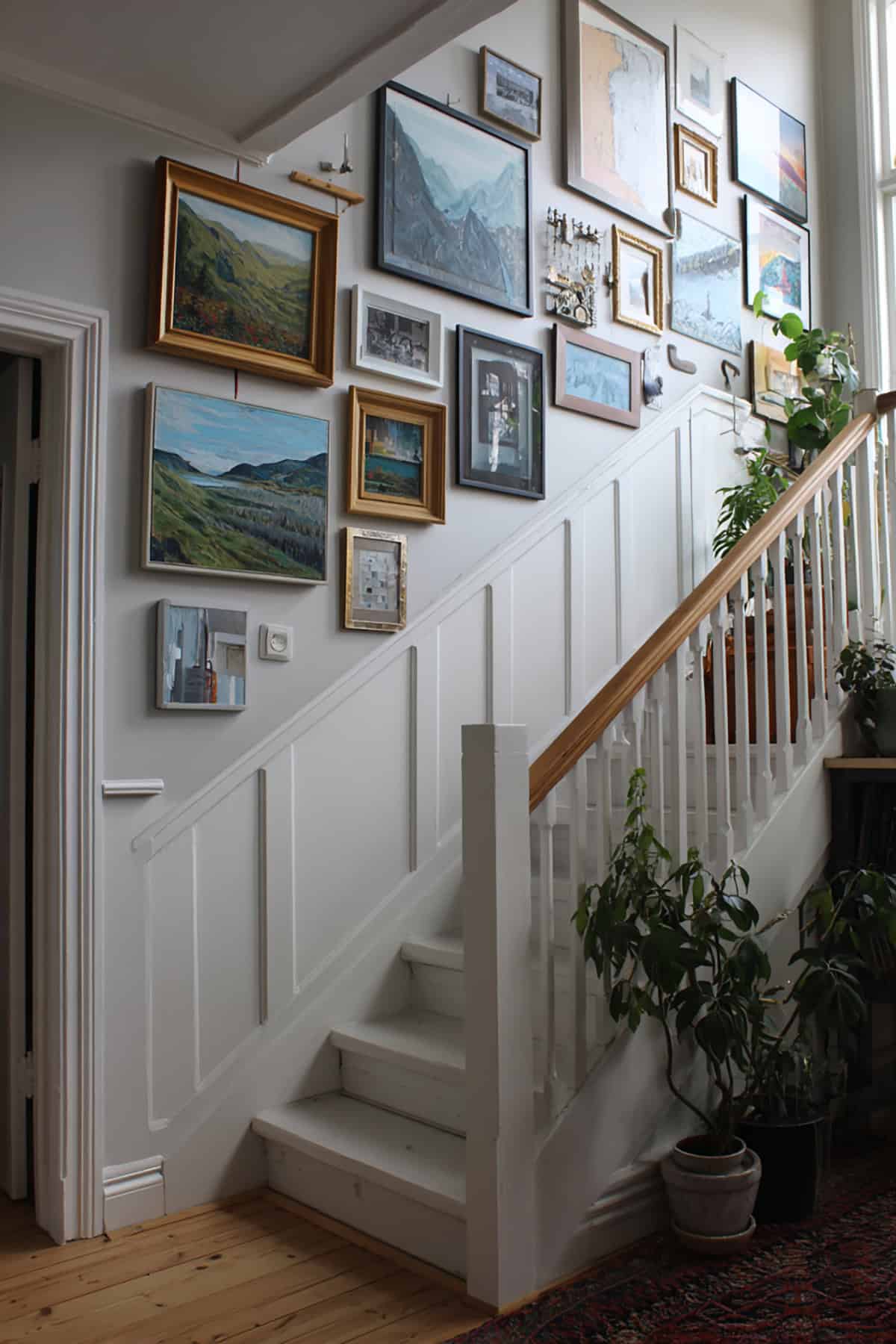
Picture rails are underrated. You can swap out art without patching holes every few months. Hooks and cords make realignment easy.
Mount the rail high, near the ceiling—staircase walls are tall, so play to that. Stick to a narrow range of frame sizes for some visual sanity, and match cord colors for a cleaner look.
Oversized Arched Mirror
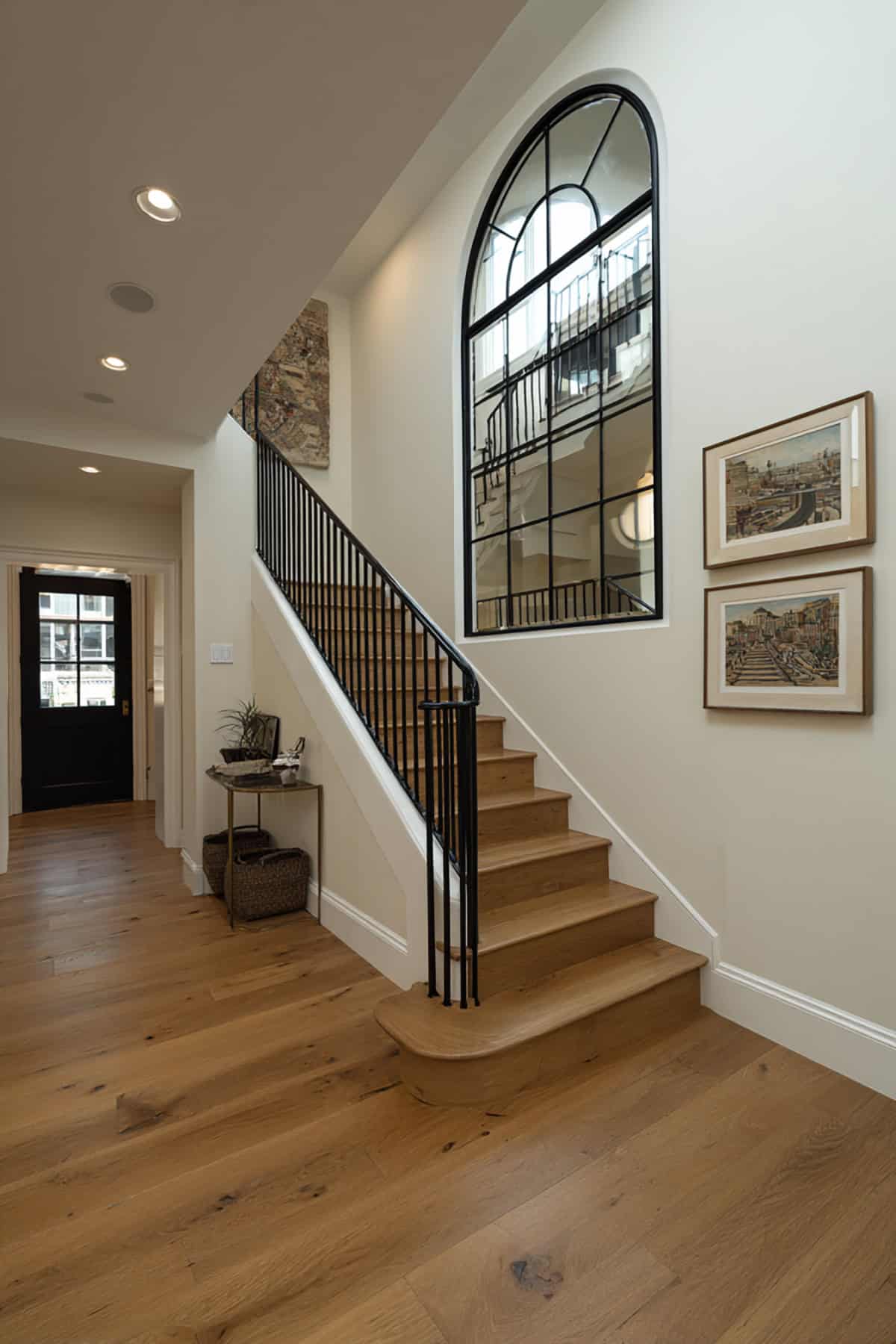
One big arched mirror can totally change the feel of a stairway—light bounces around, and the curve breaks up all those lines. Bigger is better here; skip the small ones.
If you’ve got a wide landing, leaning the mirror looks relaxed. For narrower stairs, wall-mount it with proper safety hardware. Angle it to catch the daylight but avoid reflecting clutter.
Mixed Materials Paneling + Wallpaper Split
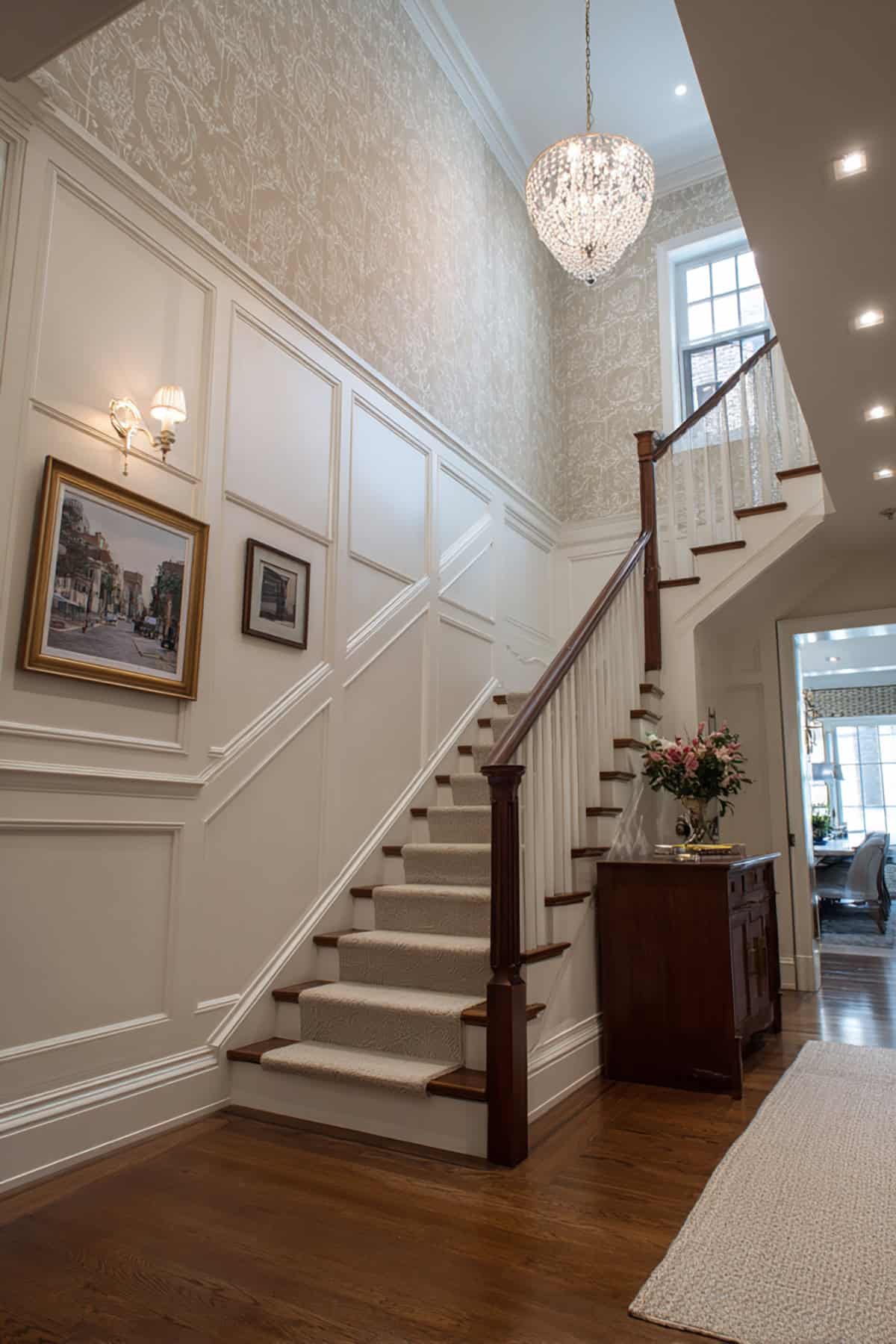
Paneling on the bottom, wallpaper on top: it’s a classic combo that adds depth and handles wear. The key is balance, not a jumble of finishes.
Stick to simple, flat paneling—busy details fight with wallpaper. Keep the split at the same angle as the stairs, and don’t go wild with colors. Two or three max, or it starts to look chaotic.
Micro Spotlights Washing Art
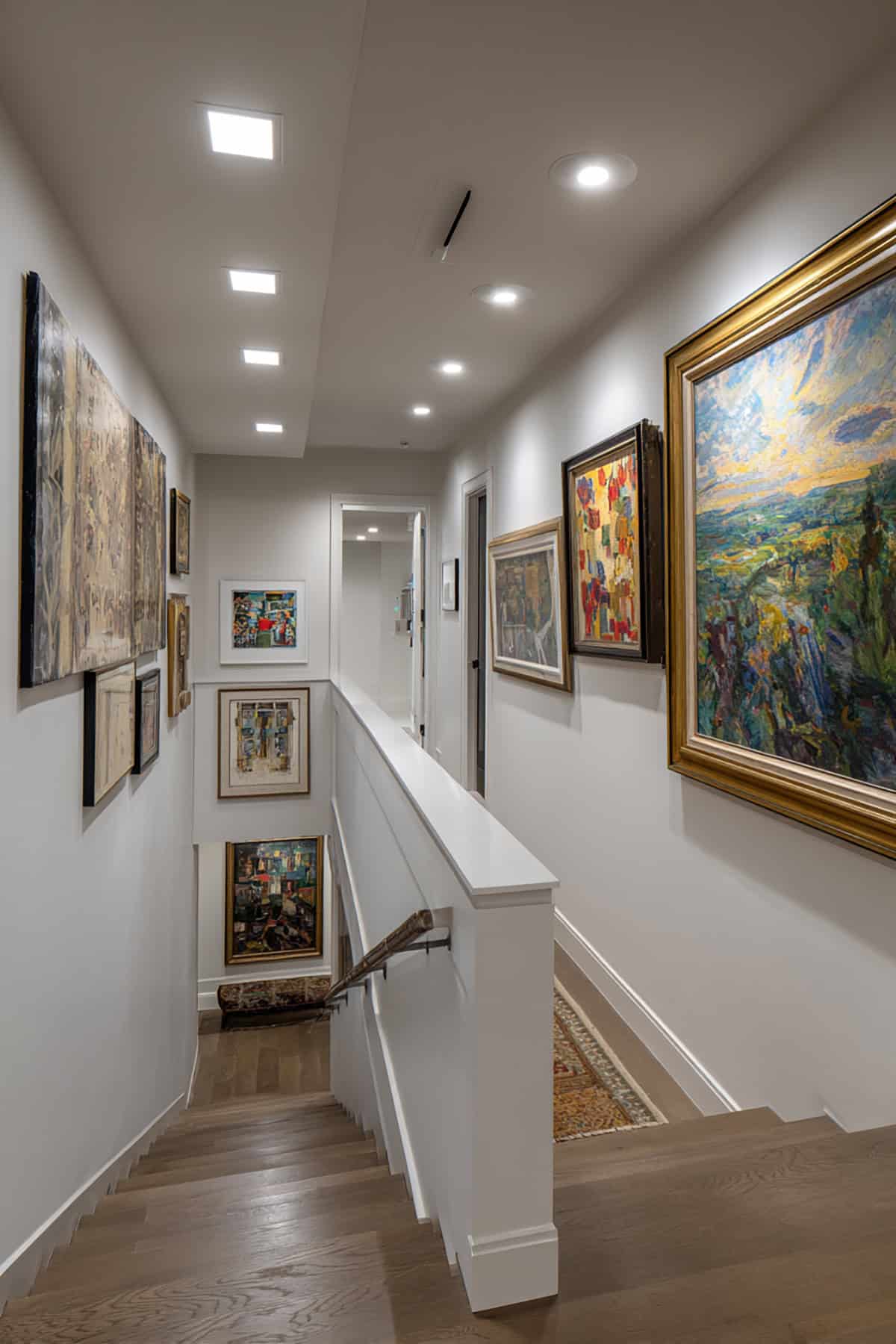
Tiny spotlights can make artwork pop without harsh glare. Aim for an even wash of light, not direct beams that leave hot spots. Adjustable heads help a lot.
Space the lights based on how wide your art is, and keep distances consistent. Warm bulbs keep colors true and the vibe cozy.
Corner Landing Feature Wall
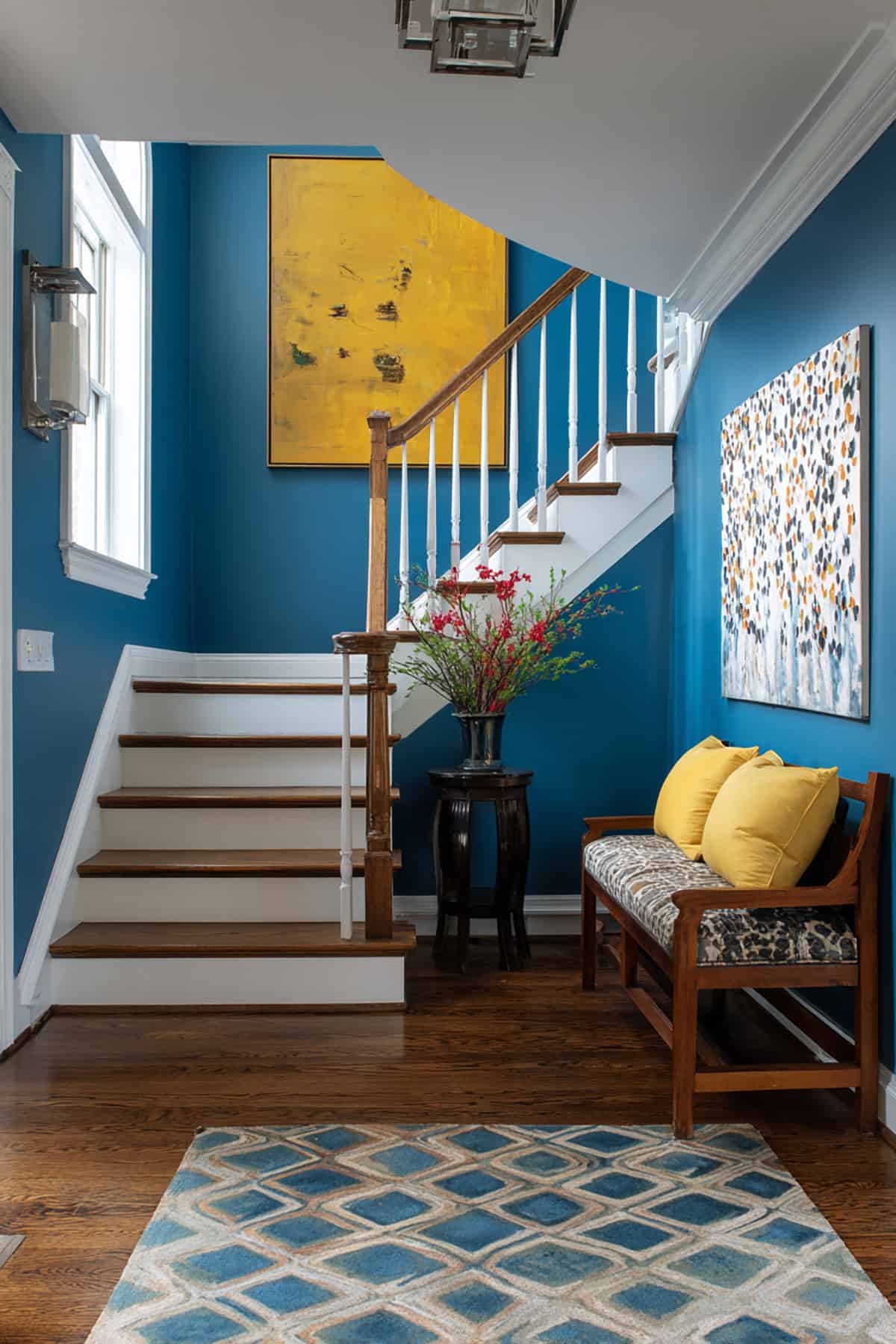
Landings are always a bit awkward, but a bold wall color or one big piece of art can anchor the space. Skip clusters—tight corners need simplicity.
Check the view from both above and below before you commit to placement. Sightlines matter more than you’d think.
Built-In Display Niches Following The Stair Line
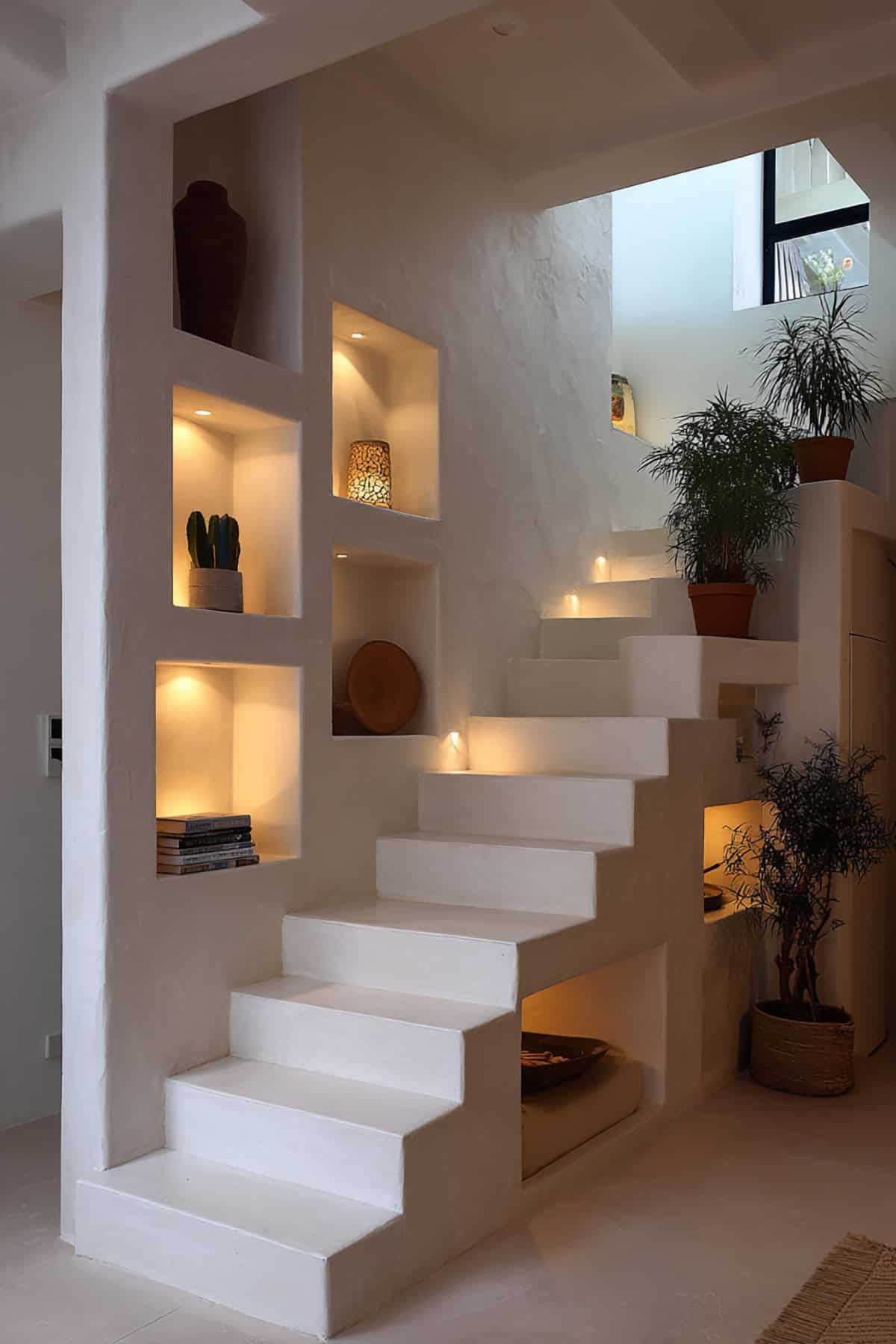
Recessed niches are a clever way to add storage or display space without anything sticking out. They work best on wide stair walls—just keep them shallow.
Follow the slope of the stairs with the niches, not straight rows. Stick to a handful of objects and leave some empty space. Secure everything so it doesn’t rattle loose.
Black-And-White Photo Stair Run
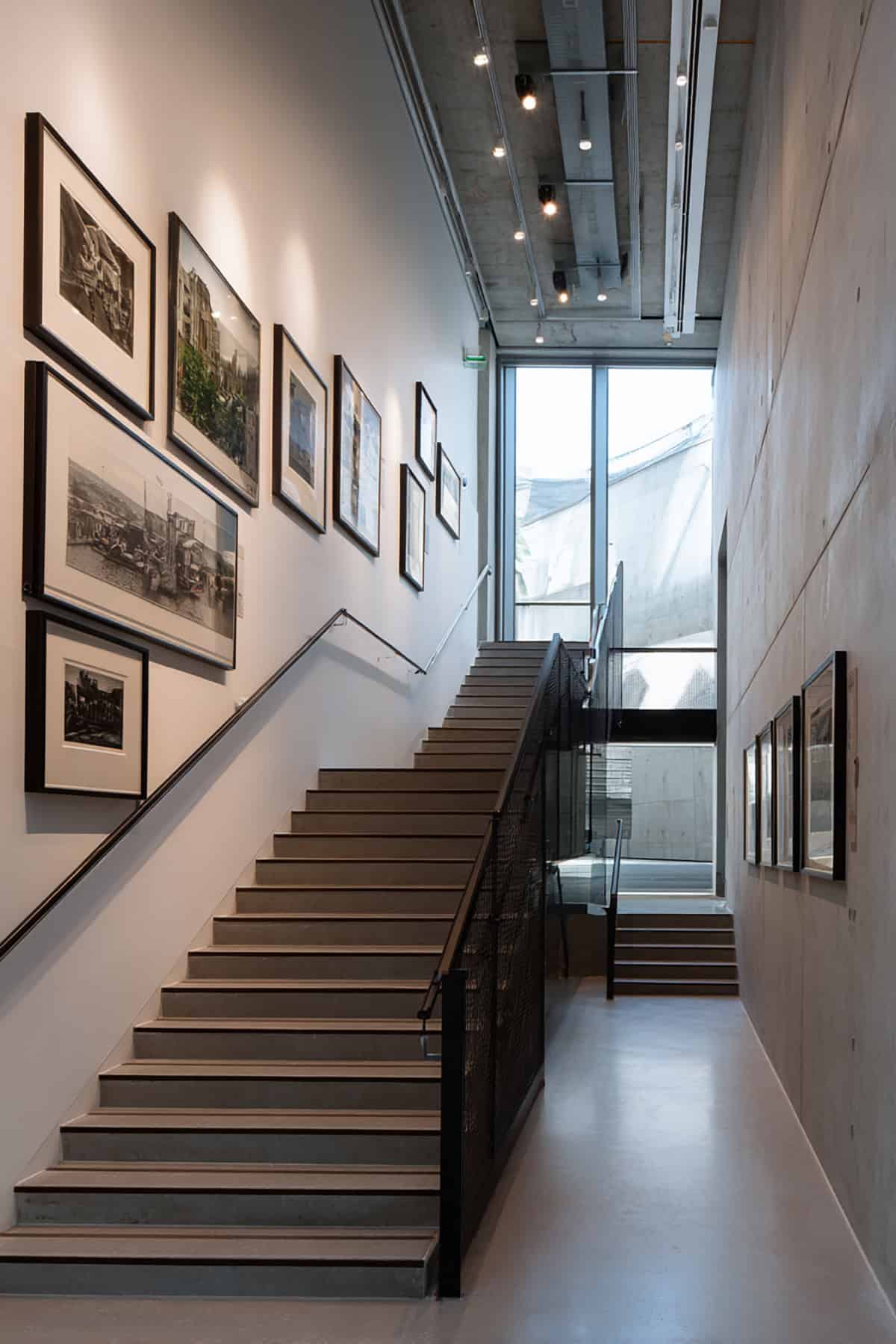
Black-and-white photos bring a sense of unity, even with lots of frames. Color’s not missed—form and story come through stronger.
Repeat print sizes in a pattern to guide the eye upward. White mats keep things crisp, and matte glass cuts down on glare. Secure frames well; stairs are no place for wobbly art.
Architectural Molding Grid
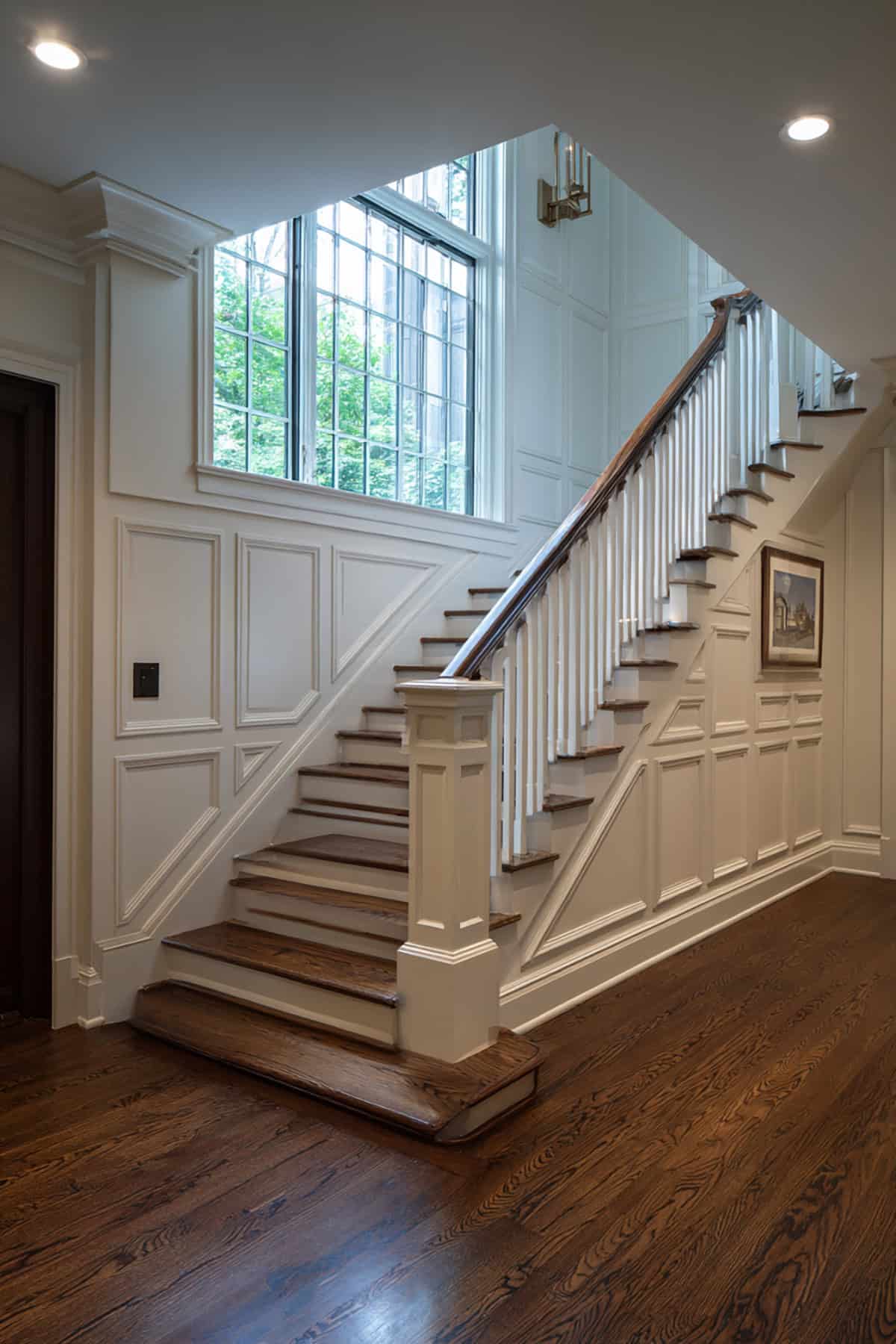
Molding grids give structure to a wall, no art required. They suit a range of styles, but you’ve got to be precise—crooked boxes stand out fast.
Measure, measure, and measure again. Keep lines level and parallel to the stairs. Painting the grid and wall the same color lets the shadows do the work for a subtle, polished effect.
Accent Color “Stair Stripe” Band
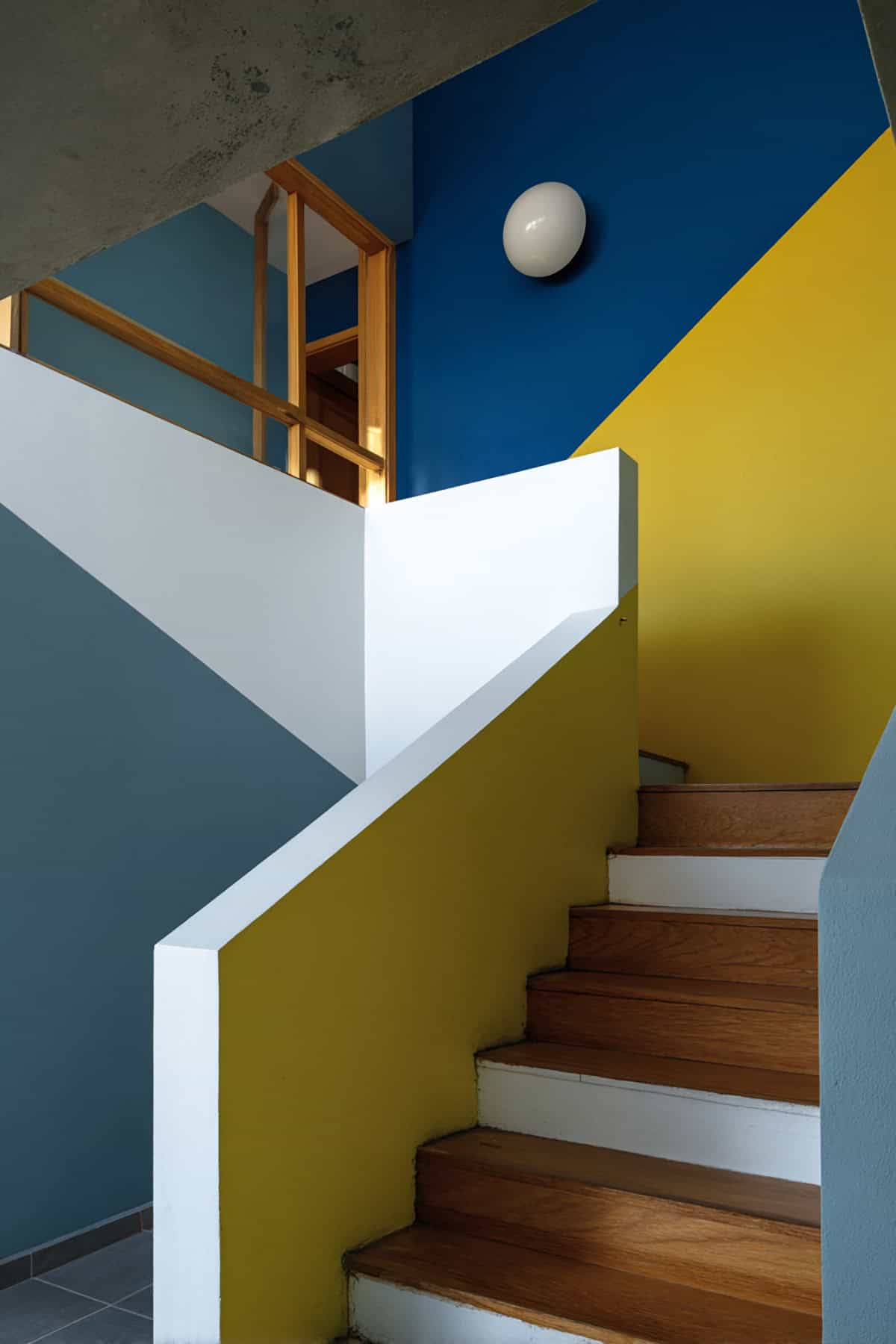
Paint a band that follows the stairs—let the color pull your gaze as you head up. It’s a cheap trick, honestly.
Stick with the same width all the way. Tape helps you figure it out before you commit. Go for a bold color if you want it to pop.
Neutral walls nearby? Good. That contrast really makes the stripe stand out. And hey, if it gets scuffed, fixing it up is a breeze.
Should Staircase Wall be the Same as the Hallway?
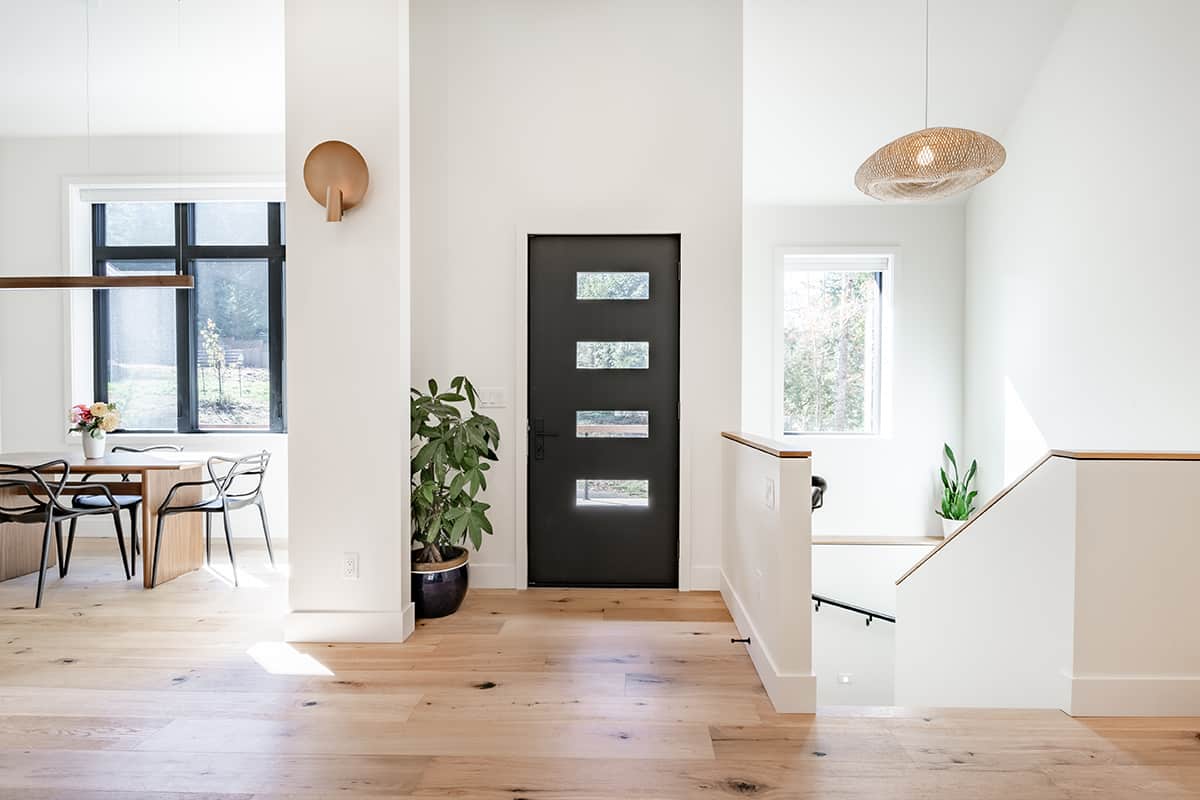
In most modern homes, the hallway and the staircase are joined together, which begs the question, should the staircase and the hallway be decorated the same?
The choice, of course, all comes down to personal preference. Essentially, when a hallway and staircase are decorated similarly, a sense of continuity helps tie the spaces together. This can help maintain a consistent feel throughout the home as you navigate from one room to another.
However, the hallway and staircase do not need to be decorated exactly the same, though it makes for a more peaceful transition when they at least coordinate.
For example, suppose your hallway features pale dusky pink walls and weathered oak hardwood flooring. In that case, it’s a good idea to continue a similar theme up the staircase by having beige carpet on the staircase and painting the staircase wall in a deep shade of dark pink, with weathered oak photo frames displayed on the wall to tie in with the oak hallway floor.
This helps to create continuity without all of the elements needing to be exactly the same.
Can You Wallpaper a Staircase Wall?
Yes, absolutely. The wallpaper looks great on a staircase, and though you might think it will be hard to install because of the diagonal angle, it can turn out easier than wallpapering a regular room because you won’t have to work around plug sockets and doorways.
The additional height of staircase walls means you will need a set of ladders to reach the top, and it’s advisable only to attempt this job when there are at least two of you. Alternatively, hire a professional decorator to install the wallpaper if you aren’t experienced in DIY.