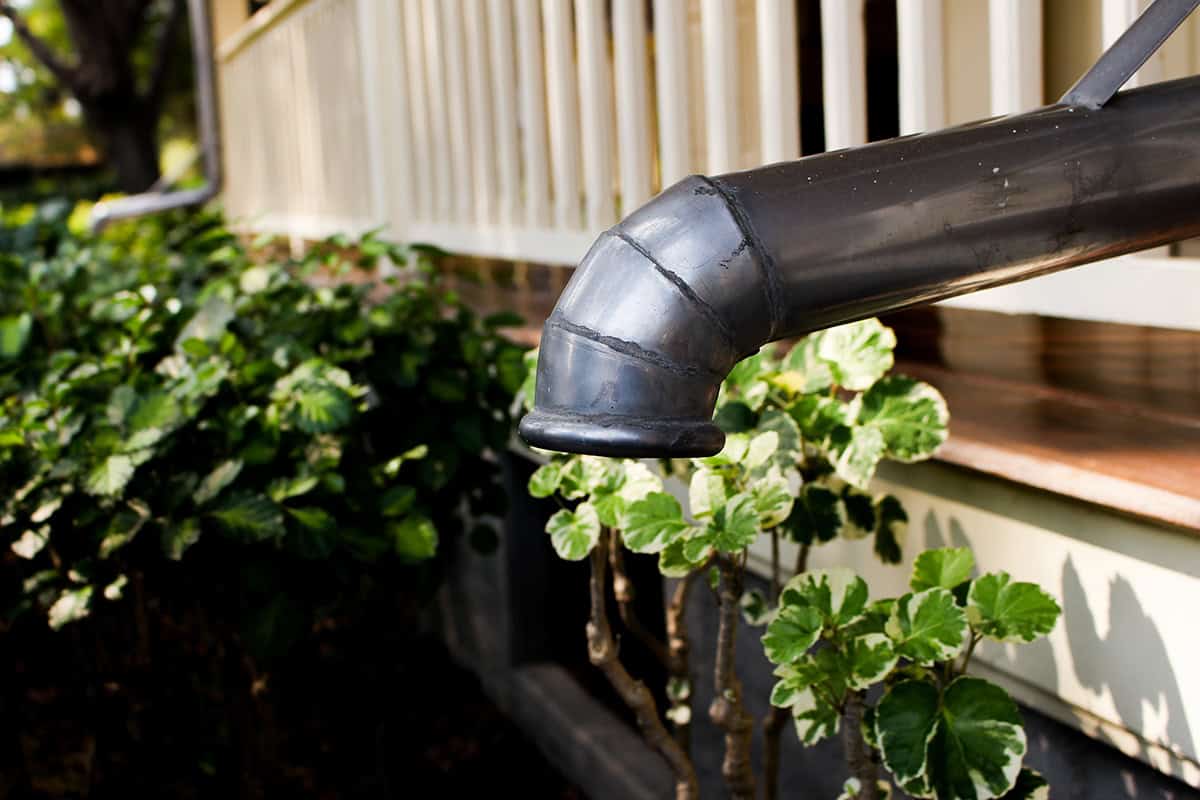
A beautiful landscape can quickly lose its charm when rainwater starts carving channels through garden beds. Runoff issues tend to get worse with every storm, especially around foundations and walkways. Fortunately, plenty of attractive solutions exist that handle water effectively. Browse these 26 downspout drainage ideas to find one that fits your yard.
Table of Contents
- 25+ Downspout Drainage Ideas
- River Rock Dry Creek Bed Drainage
- Underground Pop-Up Drain System
- Stone Basin Collection System
- Multi-Level Stone Water Channel
- Gravel Drainage Trench
- Gabion Drainage Feature
- Downspout To Garden Pond
- Downspout To Decorative Cistern
- Downspout Into Water Garden
- Downspout Into A Rain Barrel
- Downspout Into A Large Planter
- Decorative Stone Spillway
- Decorative Rain Chain And Stone Basin
- Decorative Drainage Through Raised Beds
- Copper Rain Chain Into Ceramic Urn
- Mosaic Downspout Waterway
- Pebble Creek Drainage Path
- Leaf Stone Rainwater Cascade
- Rock Cascade Drainage Garden
- Cascading Planter Drainage Wall
- Raised Bed Overflow Garden
- Downspout Into Rain Garden Border
- Cascading Flagstone Water Feature
- Downspout Fed Garden Planter
- Mini Dry Creek Drainage Channel
- Zigzag Rainwater Spillway
25+ Downspout Drainage Ideas
Options run the gamut: hidden pipes, pop-up emitters, dry creek beds, rain chains, and more. Some keep water moving, some soak it up, and a few even turn the downspout into a garden highlight. The thing is you should pick what actually works for your drainage headache.
River Rock Dry Creek Bed Drainage
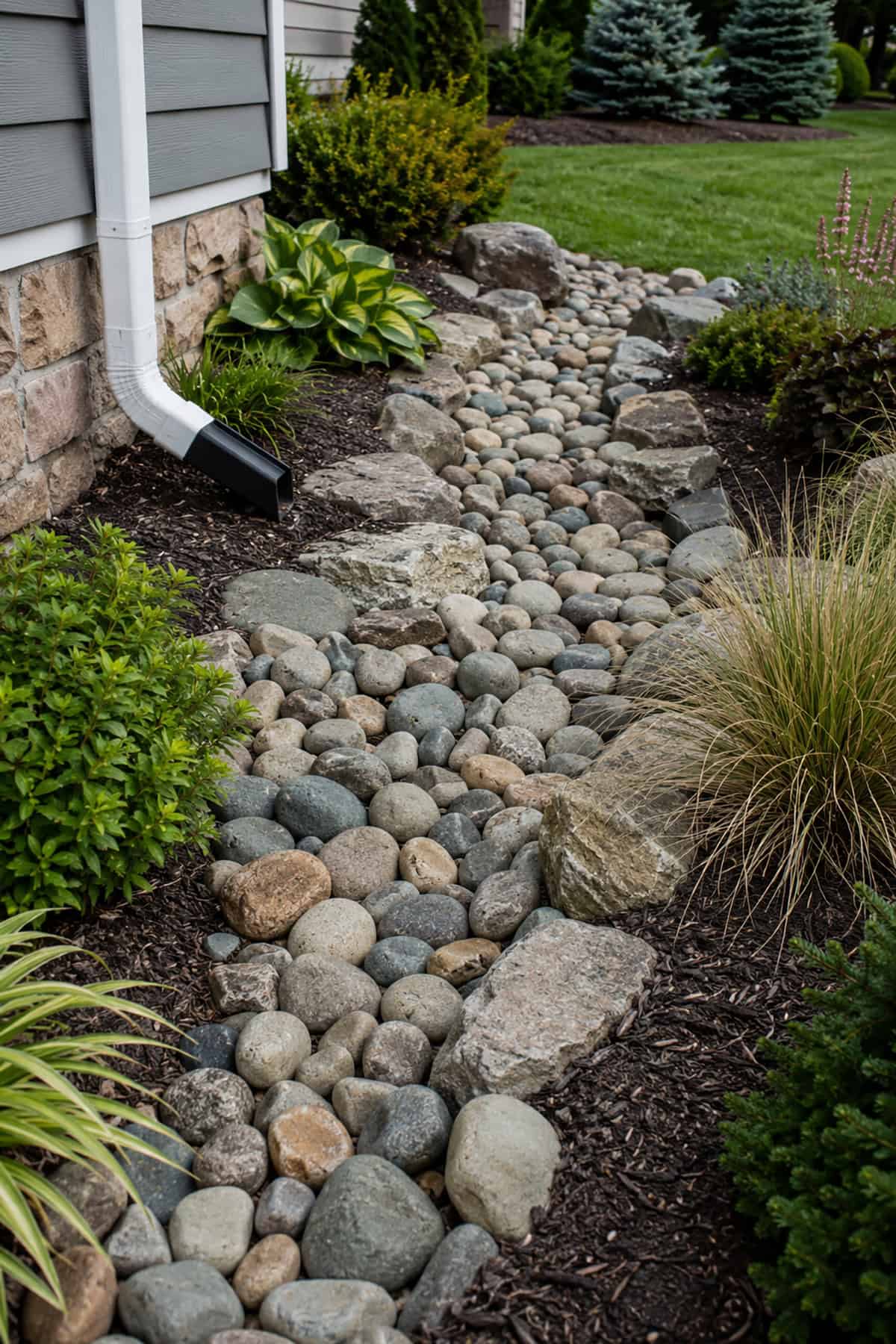
The mood shifts instantly when you carve a shallow trench and fill it with river rocks. Even bone dry, it feels like a natural streambed, hinting at movement. When storms hit, water snakes through, slowed by the rocks, giving the soil a chance to soak it up instead of letting it gouge out the lawn.
But this only works if you get the slope right—at least a one percent drop, or water just sits there mocking you. If your property flattens out before you hit a safe spot, finish the creek bed with a dry well or pop-up emitter so you’re not trading one problem for another.
Ornamental grasses or low native plants along the banks give it a finished look, blending the whole thing into the landscape instead of screaming “emergency fix.”
Underground Pop-Up Drain System
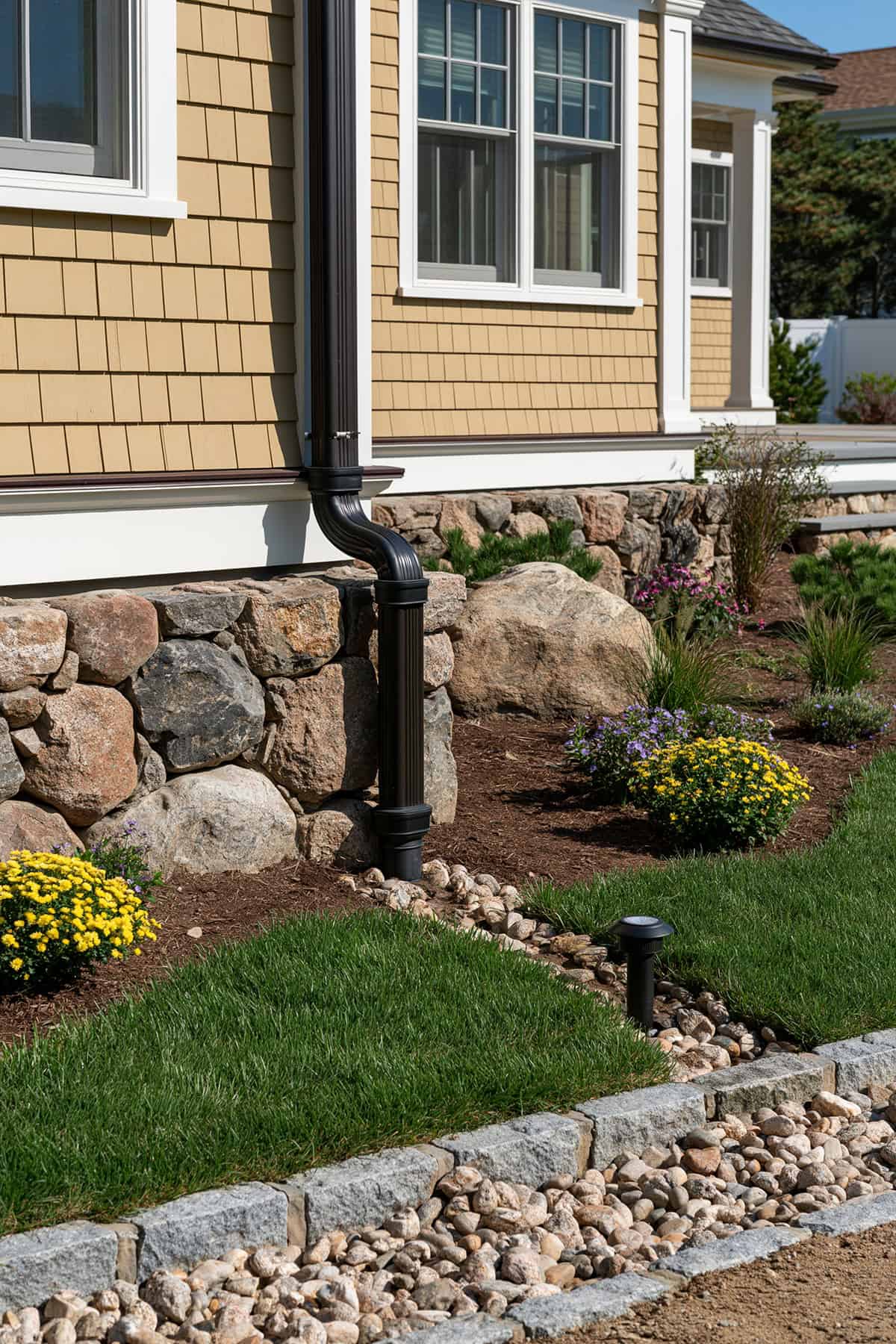
Sometimes you want the yard to look clean and uncluttered, not like a construction zone. That’s where a buried pipe and a pop-up emitter come in. Water travels underground, out of sight, then lifts a discreet green cap when it’s ready to exit—no ugly pipes snaking across the grass.
This setup shines when surface water just sits and refuses to budge. The trick? Slope the pipe—about an inch drop for every ten feet—so you don’t end up with a mosquito spa between storms.
Put the emitter where overflow won’t cause trouble: lawn, garden, or a gravel pit at the far edge of your lot.
Stone Basin Collection System
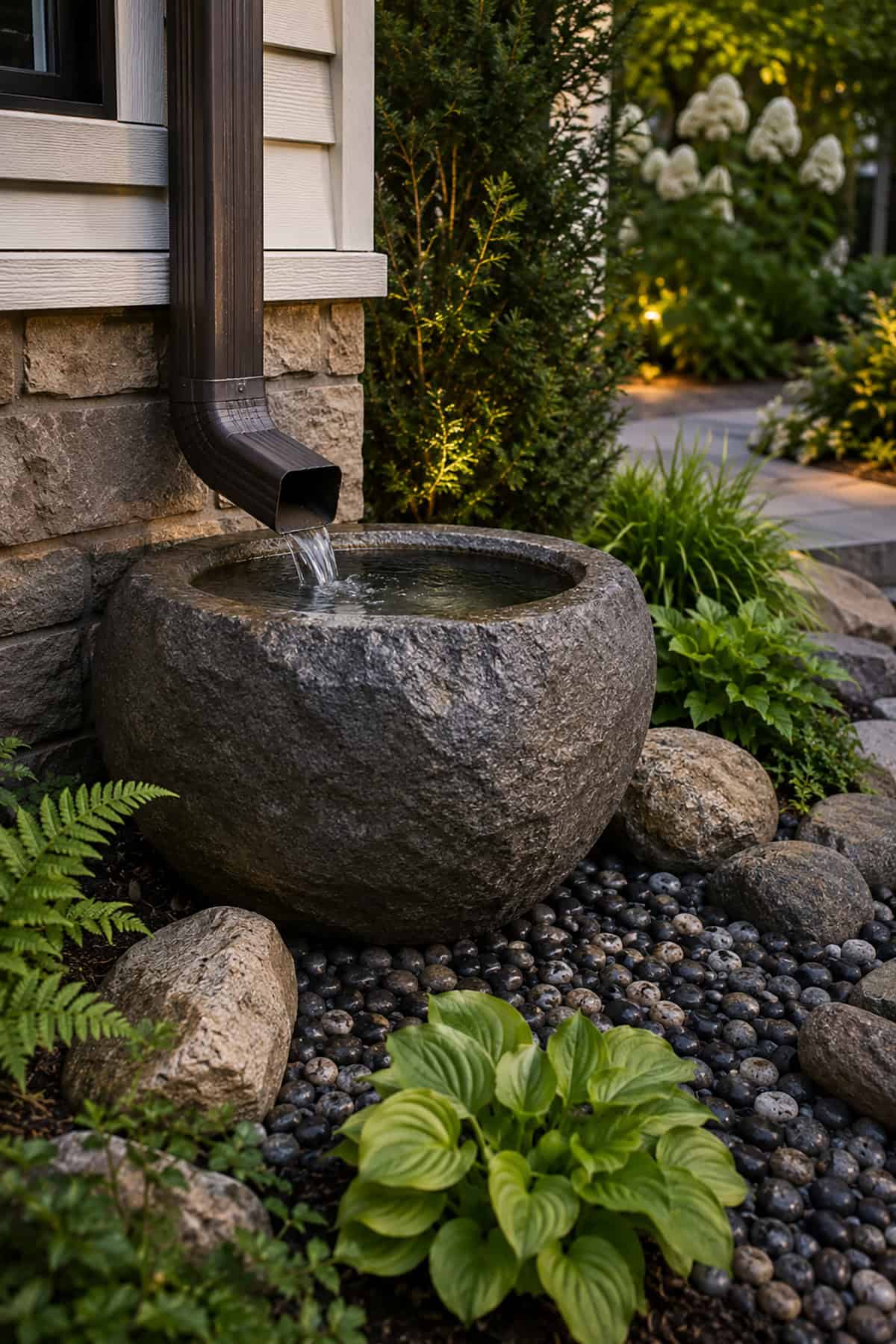
Under the downspout, a stone basin absorbs that first violent gush, spreading water into gravel before it can dig a hole or fling mulch everywhere. It’s basically a shallow depression lined with flat stones and filled with river rock—simple, but it takes the punch out of every storm.
In places where rain comes in bursts, this works like a charm. If you’re in a soggy region, though, you’ll need an overflow path—a creek bed or pipe—so water doesn’t back up and drown your foundation shrubs.
Multi-Level Stone Water Channel
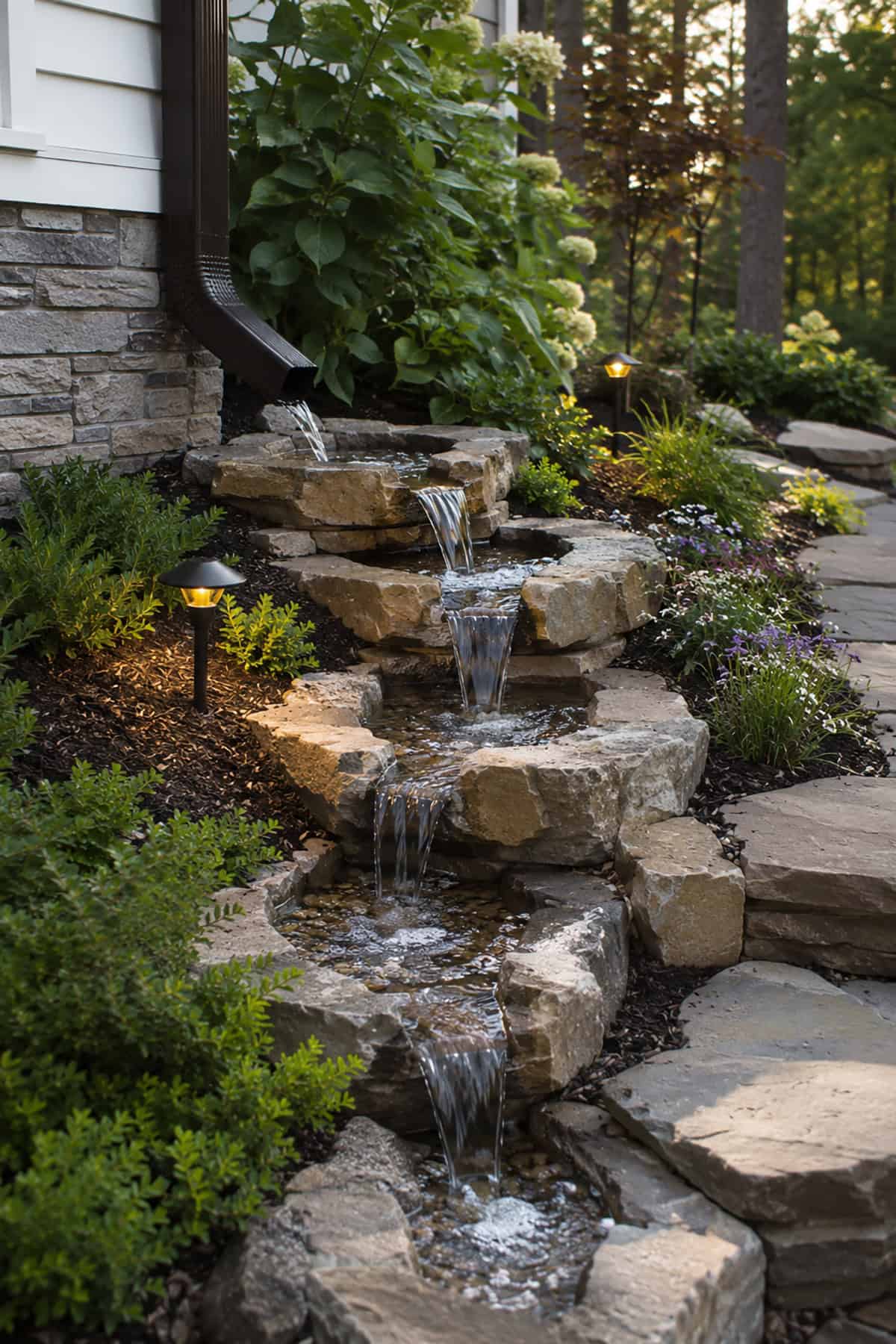
On a yard with real slope, stacking flat stones into stepped tiers can turn a drainage eyesore into something that feels almost sculptural. Water tumbles from one level to the next, slowing down, losing energy, and seeping in as it goes. When it’s actually raining, the sound is surprisingly satisfying.
This isn’t for flat yards—without a slope, the whole thing just sits there, pointless. Fieldstone or flagstone for the walls, coarse gravel and landscape fabric between tiers to keep weeds out and water moving through.
Gravel Drainage Trench
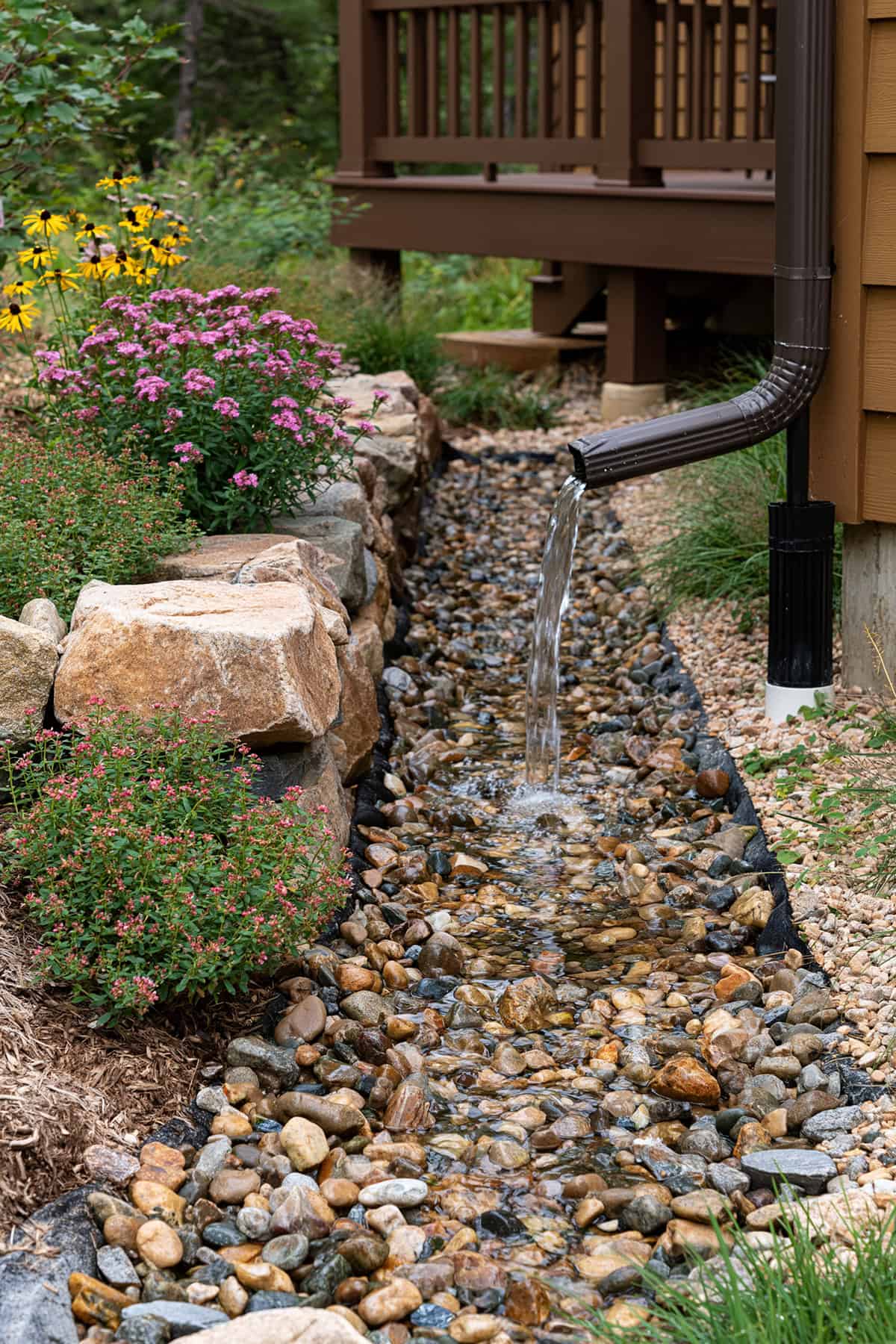
Dig a trench, line it with landscape fabric, fill it with coarse gravel, and you’ve got a cheap, fast way to move water away from the house—no ugly pipes on display. Water seeps down and out through the rock, keeping the area dry.
Sandy or loamy soils love this method. If you’re stuck with heavy clay, water will just sit unless you drop a perforated pipe at the bottom—basically turning it into a French drain.
Don’t skimp on size. A trench that’s too shallow or narrow will overflow the minute you get a real storm.
Gabion Drainage Feature
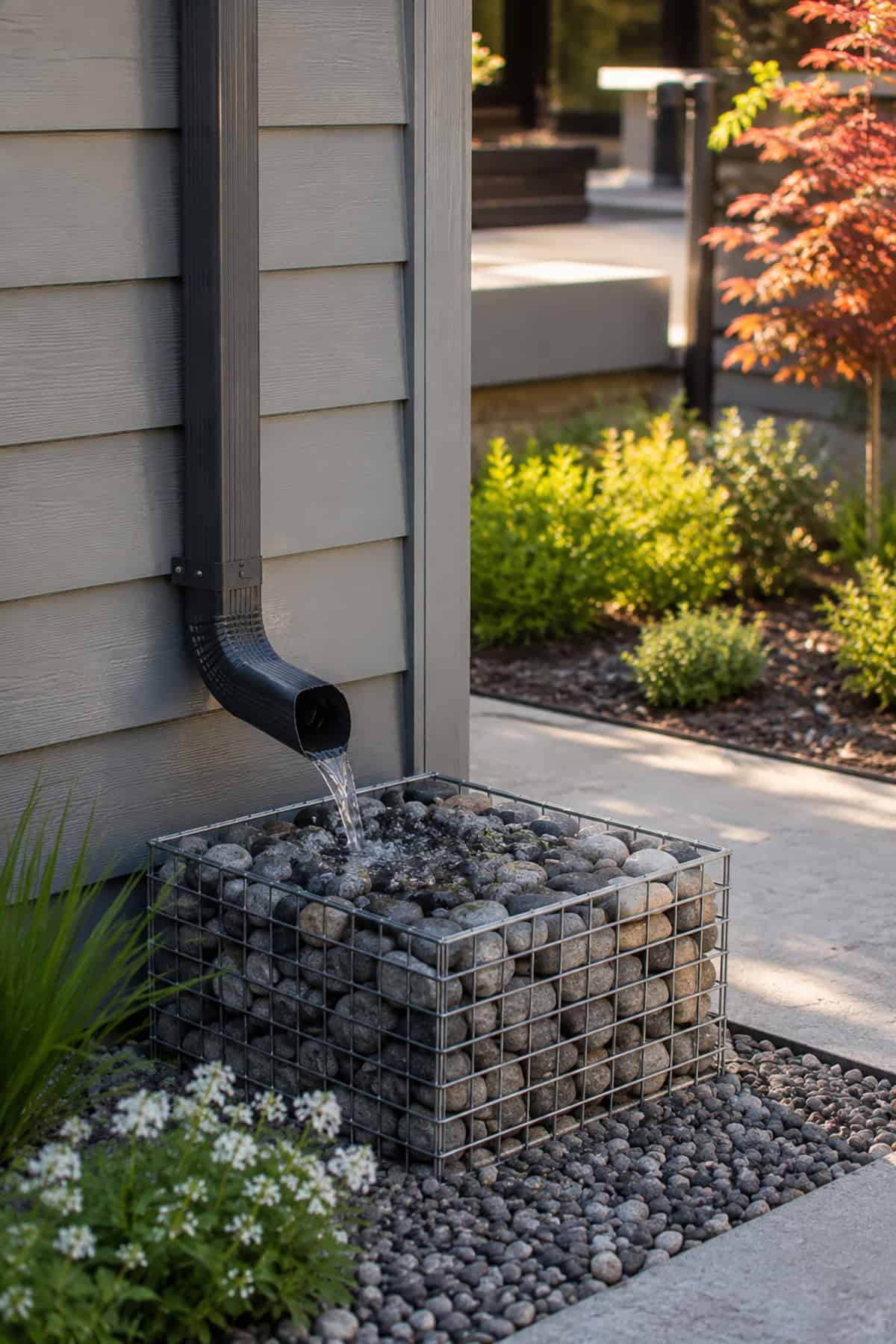
Gabions—those wire cages stuffed with stone—aren’t just for holding back hillsides. Plop one under a downspout, and it’ll soak up the impact, slow the flow, and scatter runoff through the rocks. Bonus: it’s got a kind of industrial-chic vibe if you’re into that.
Perfect for spots where erosion’s already chewing up the yard. The mass of stone keeps everything in place, and water moves through instead of pooling. On slopes, a series of smaller gabions can step water down gently, doubling as a bold border for your planting beds.
Downspout To Garden Pond
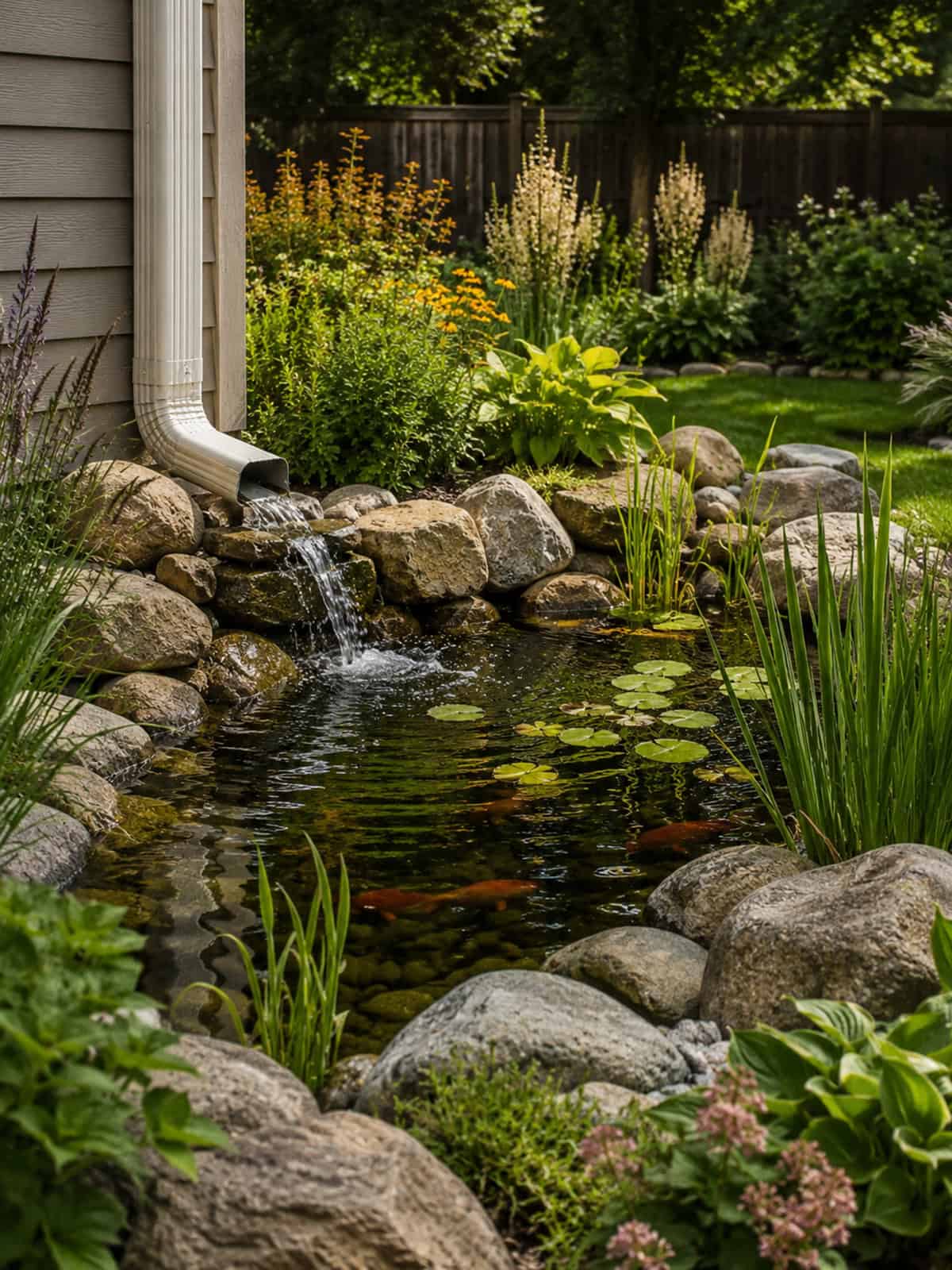
Why not turn runoff into a backyard pond? Instead of letting all that water vanish, you get a little oasis that holds the volume, evaporates slowly, and gives frogs and dragonflies a home.
Just don’t put it right up against the foundation—ten feet away, minimum. And if you skip the overflow route, you’ll regret it the first time a storm dumps more than the pond can handle. Stone edging, marginal plants, and shelves for water-loving greenery help it look like you meant to do this all along.
Downspout To Decorative Cistern

Storing water for dry spells? A cistern beats a rain barrel for sheer volume. Whether it’s a vintage wooden tank or a sleek plastic drum, it can be tucked behind a trellis or hidden with plantings if you’re not keen on the look.
Handy for watering the garden when restrictions hit. Just make sure you’ve got a screened inlet, an overflow pipe that won’t flood the yard, and a spigot low enough for gravity to do the work. Go too small and you’ll be empty half the time; too big, and the water just sits, going stale.
Downspout Into Water Garden
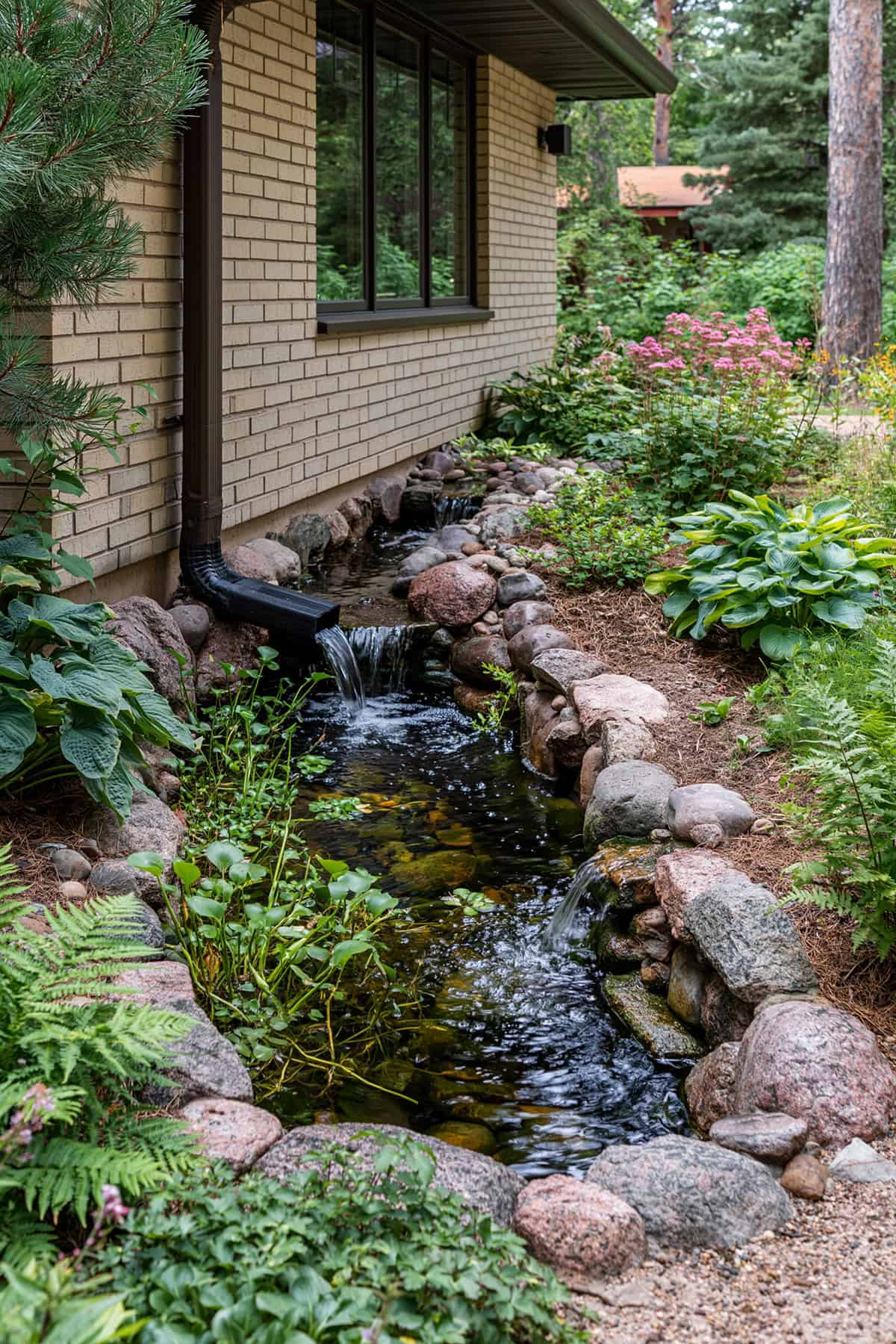
Shallow water, lush plants, and a bit of stone edging—let a water garden do double duty as drainage and centerpiece. Unlike a deep pond, this one’s all about dense planting and quick absorption.
Pick plants that can handle dry spells and sudden floods. Native options like blue flag iris and water sedge shrug off the mood swings of stormwater better than fussy exotics. Don’t forget an overflow pipe or gravel spillway to keep things from turning into a swamp after a big rain.
Downspout Into A Rain Barrel
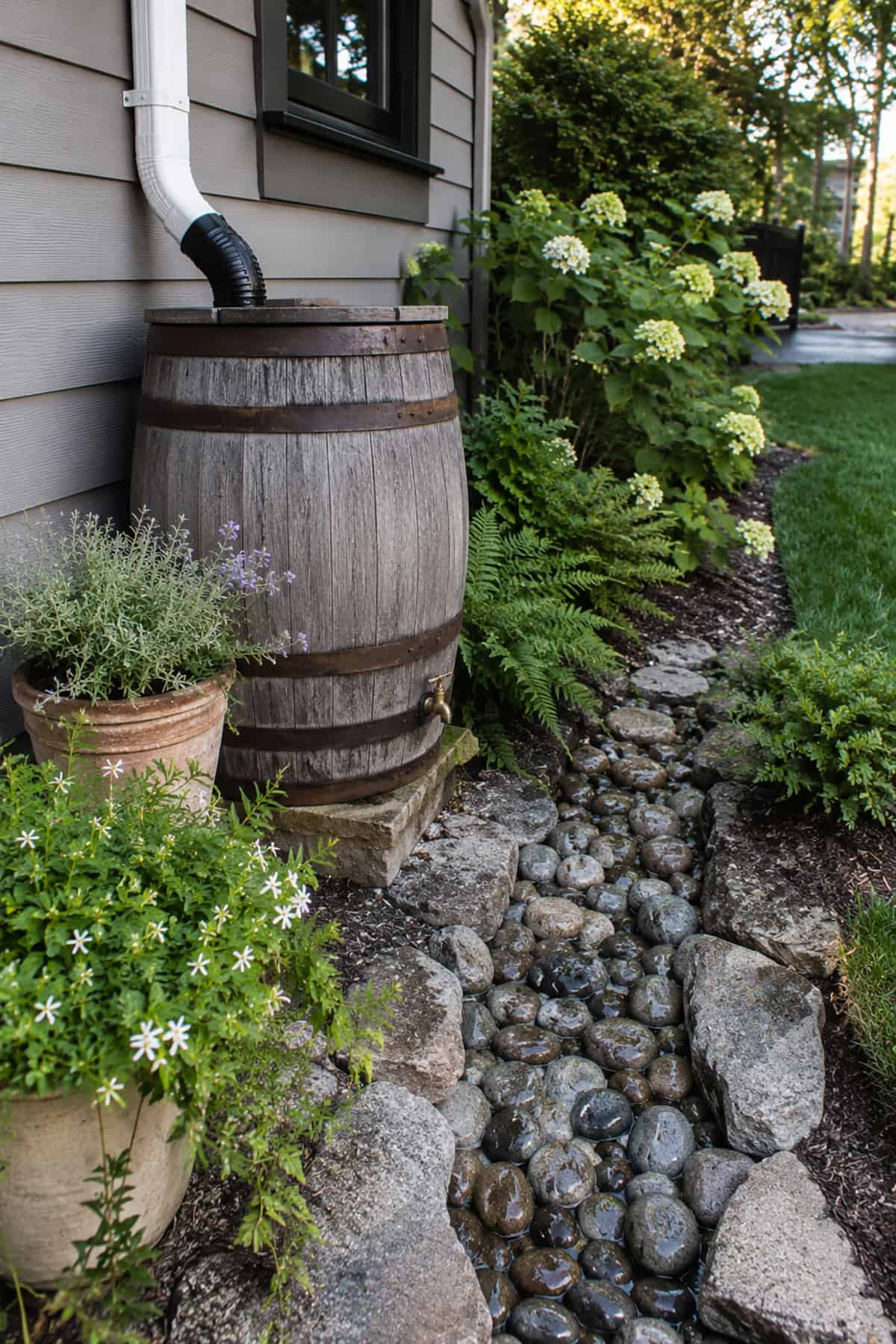
Rain barrels are the classic low-budget move. A diverter sends water into the barrel, it fills up, and you use it later for the garden. When it’s full, the diverter shunts water away again—no mess, no fuss.
Most barrels hold 50 to 80 gallons. If your roof is huge, link a couple together for more capacity and less overflow drama.
Set the barrel on a solid stand so you get enough pressure for a hose or drip line, and aim the overflow away from the house so you’re not just trading one problem for another.
Downspout Into A Large Planter
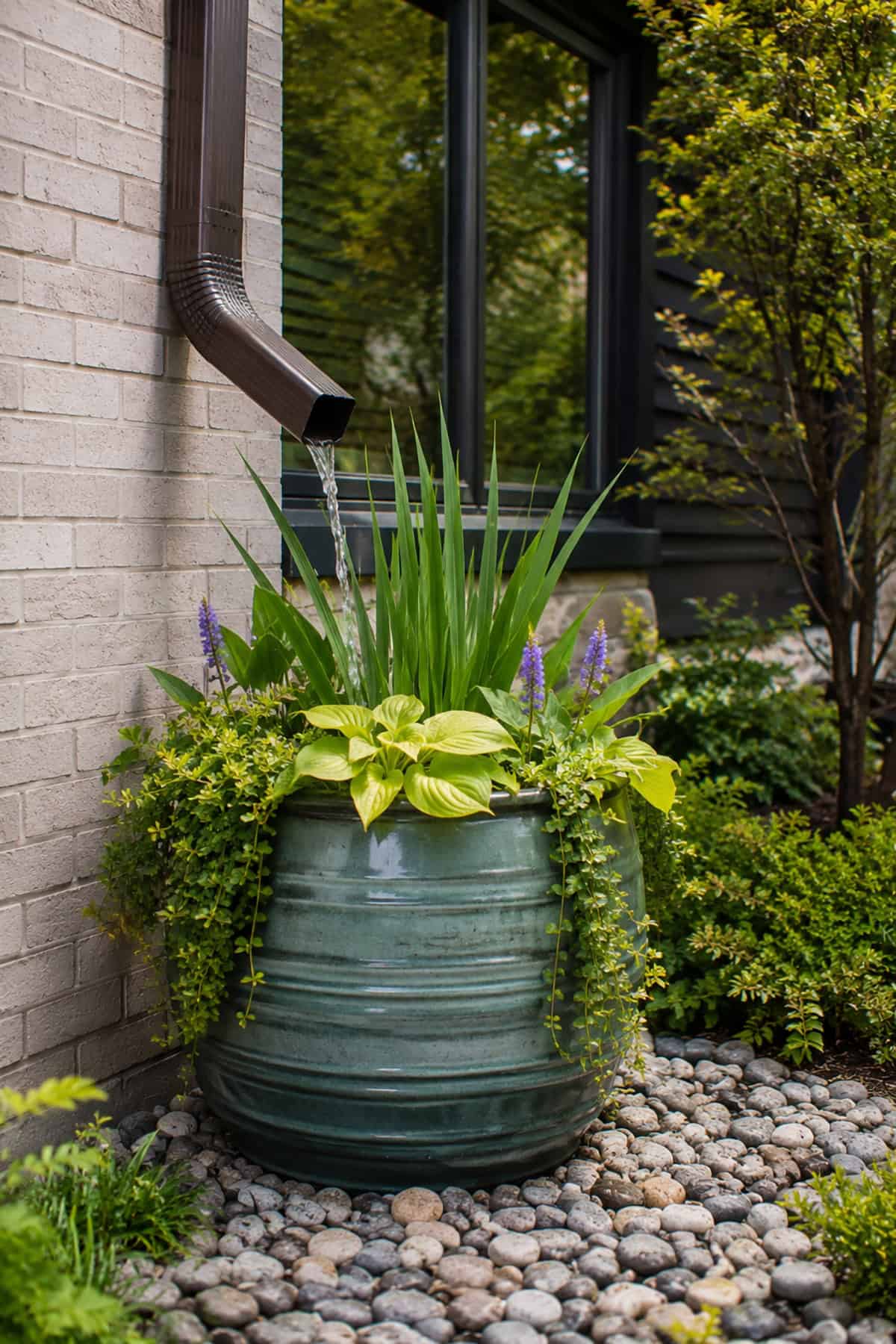
Urban yards with no space to spare? Slide a deep planter under the downspout. It’ll soak up runoff, water the plants, and only let the excess drain out the bottom—way better than letting water pool by the foundation.
Just choose a roomy container with big drainage holes that point away from the wall. Gravel at the base helps keep roots from drowning. Grasses, sedges, and shade-loving ferns can handle the wet-dry cycle without turning crispy or mushy.
Decorative Stone Spillway
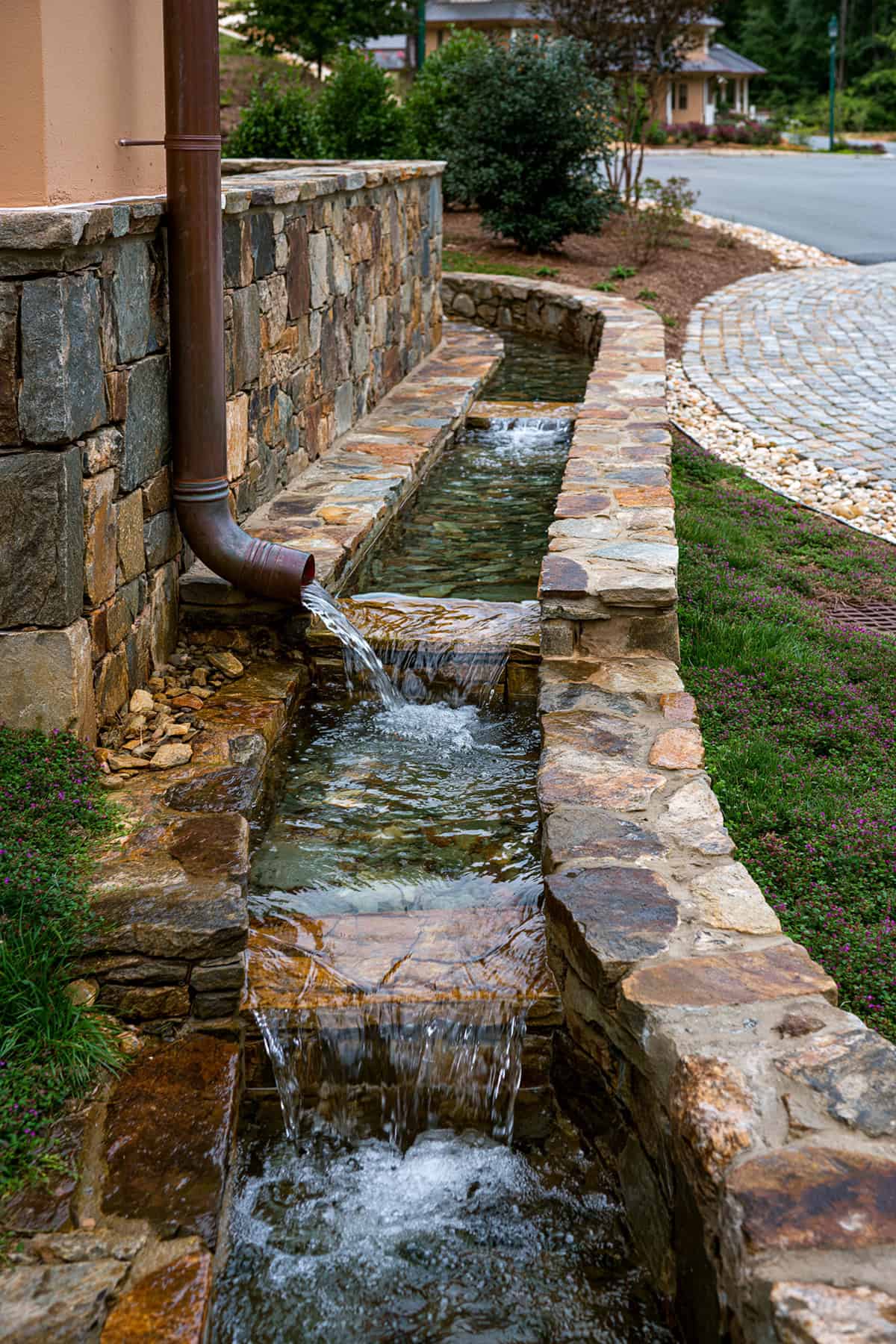
Flat or irregular stones laid in a gentle slope transform runoff into a controlled, good-looking path. No more muddy streaks across the yard—just water trickling over stone, slowed and spread out as it goes.
Fits right in with cottage or naturalistic gardens where stone already feels at home. Widening the spillway as it moves away from the house helps water soak in rather than race off. Laying the stones on sand instead of hard-packed dirt keeps things stable and lets a bit of water seep through the gaps.
Decorative Rain Chain And Stone Basin
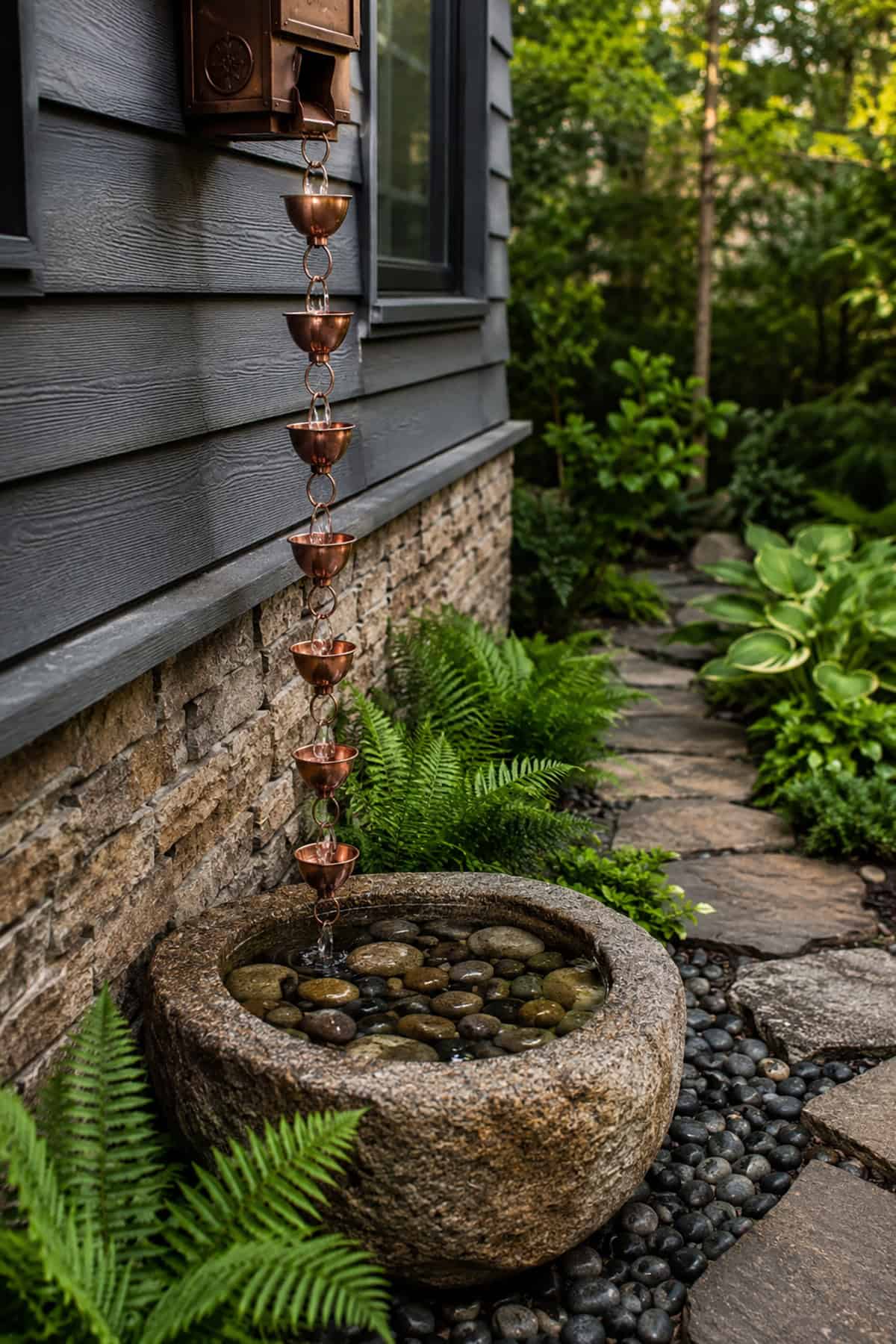
Swapping a plain downspout for a rain chain? Now you’ve got water traveling down a string of cups or links, tinkling audibly before dropping into a gravel-filled stone basin. It’s a little bit of theater every time it rains.
The look is clean, and the sound is oddly soothing. But if you get a lot of rain, size up the basin and add a buried overflow pipe, or water will just bounce back toward your foundation. In drier climates, this is more than enough.
Decorative Drainage Through Raised Beds
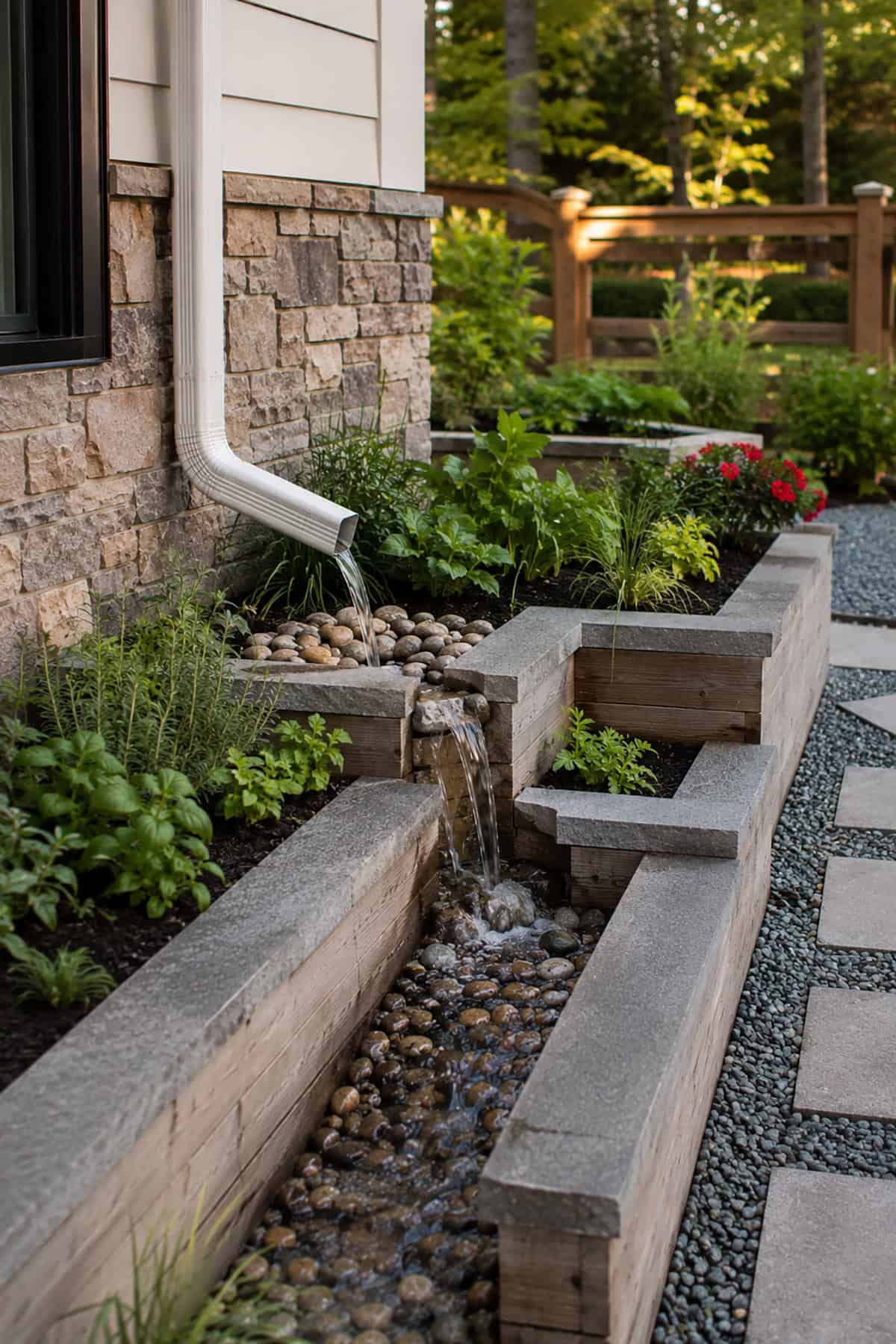
Raised beds can do more than grow tomatoes—they’ll handle downspout flow if you route water through a gravel channel at the base. Water moves along the edge, dispersing into lawn or a catchment at the far end.
Works best when beds run perpendicular to the house, giving runoff a straight shot away. Beds slow the water and help filter out gunk before it hits the yard. Use landscape fabric and gravel to keep soil from washing into the channel, and leave a gap between the bed and the house for airflow and drainage.
Copper Rain Chain Into Ceramic Urn

For a touch of elegance, a copper rain chain feeding into a hefty ceramic urn creates a striking focal point near the house. Over time, the copper weathers to a rich patina, and the urn’s weight keeps it anchored against stray kicks or wind.
This isn’t for monsoon country—the urn only holds so much before it spills over. Plan for overflow, maybe into a gravel trench or creek bed, so you’re not left with a moat. In cold climates, pick a frost-resistant urn or you’ll be sweeping up pottery shards come spring.
Mosaic Downspout Waterway
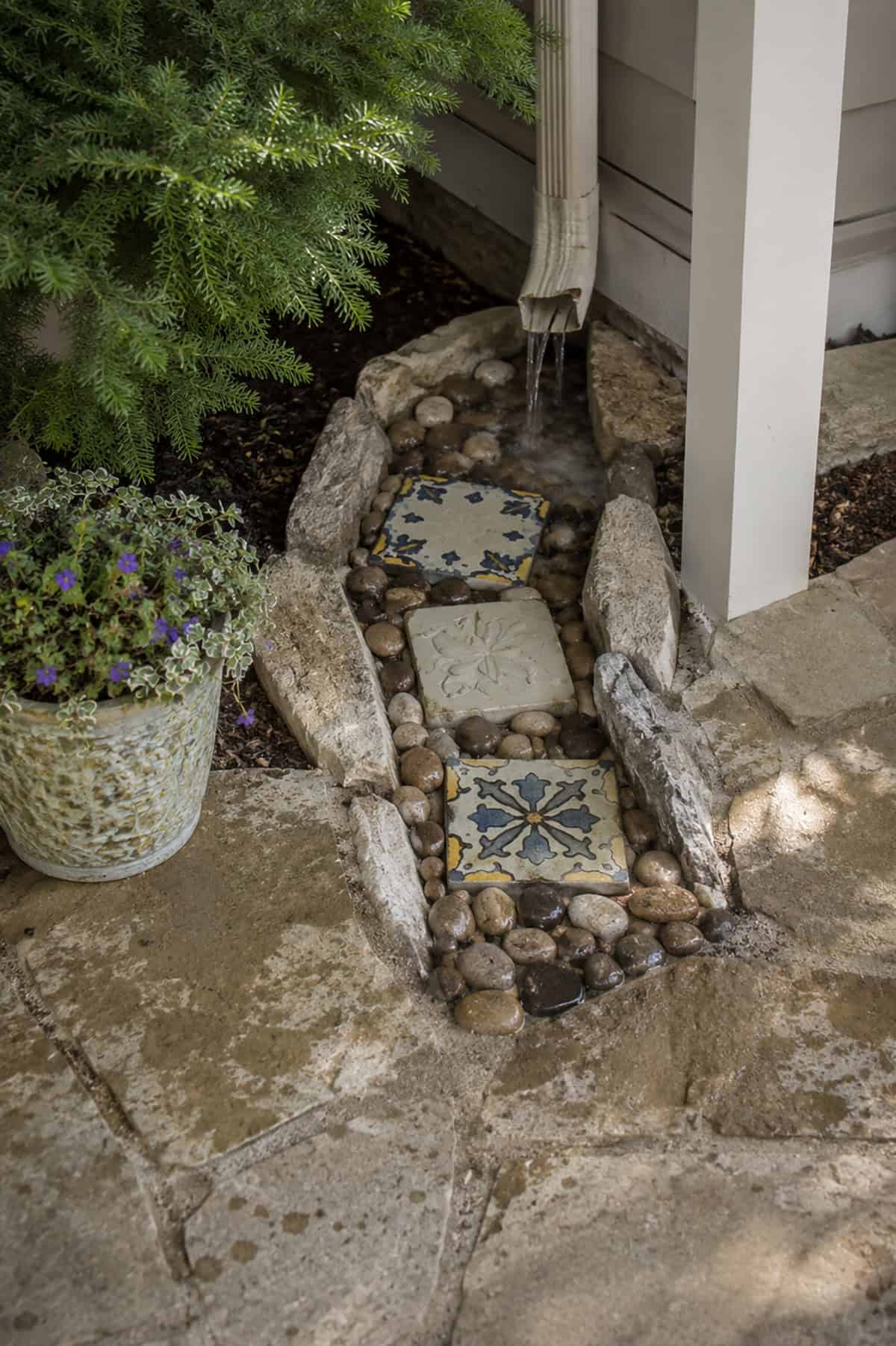
Why settle for a boring concrete channel? Cover it with a mosaic—ceramic tile, glass, or broken pavers—and suddenly the drainage path is something you actually want people to notice. The channel still moves water, but now it’s a feature, not a flaw.
It’s a labor of love, but in a spot where everyone sees the drain—like a courtyard or patio—it can really pay off. Don’t forget to seal the grout, or you’ll be patching cracks and stains after every big storm.
Pebble Creek Drainage Path
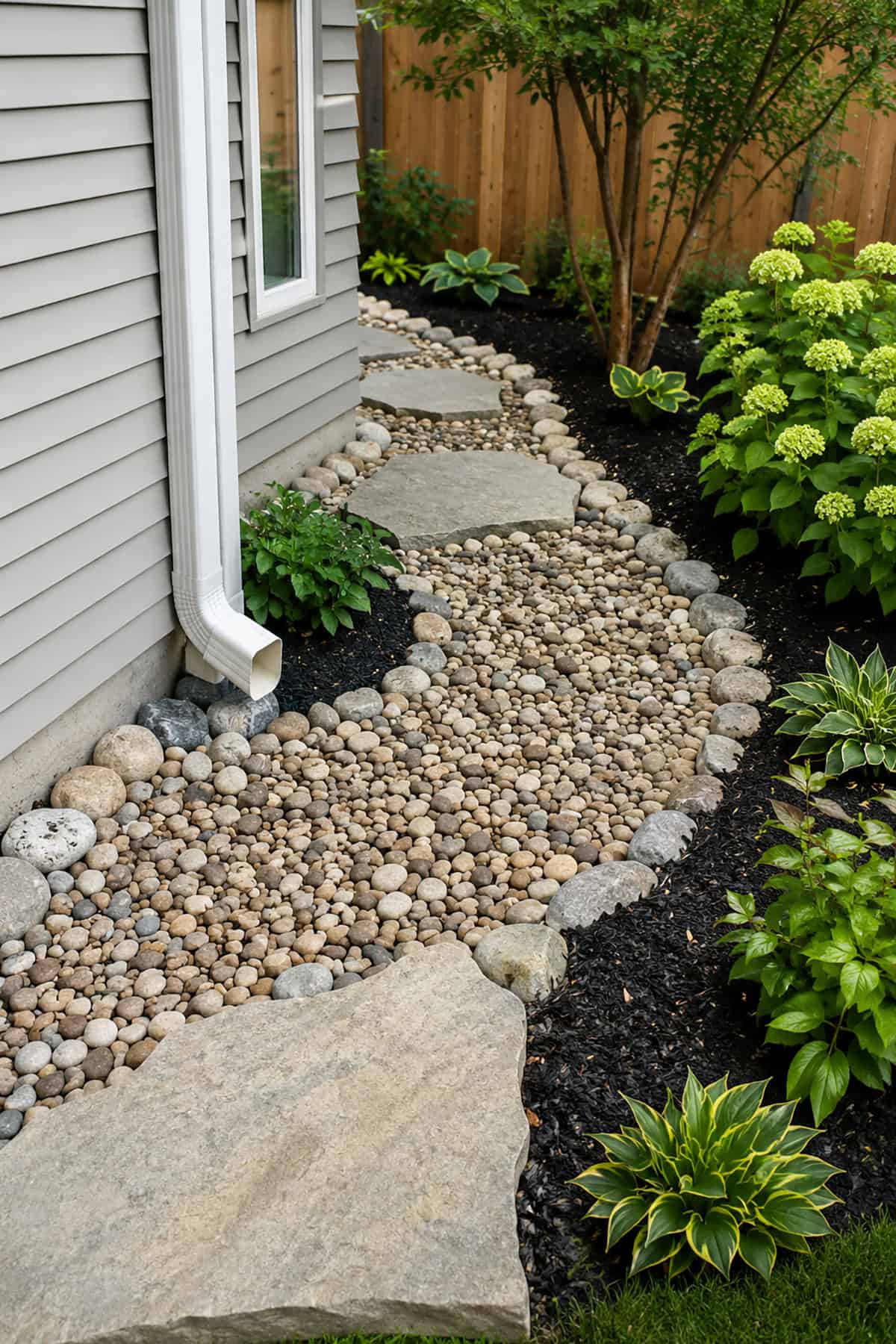
Soft, scattered river stones across a shallow, sloped ground lend a relaxed texture—almost more garden than drainage. The look is subtle, spreading wider and lower than a classic dry creek bed, and it just sort of blends into whatever’s planted nearby. No crisp lines here, just a gentle transition from stone to green.
Water seeps and trickles through the pebbles, slowing down as it goes. On a gentle slope, it’s pretty effective for moderate flow, but if you get a real downpour, the whole thing can turn into a spread-out mess, especially if the water starts wandering into your planting beds.
Low groundcovers or creeping perennials along the edge keep things feeling natural; there’s no need for rigid borders. Underneath, a couple of inches of gravel help the water vanish down instead of pooling up top.
Leaf Stone Rainwater Cascade
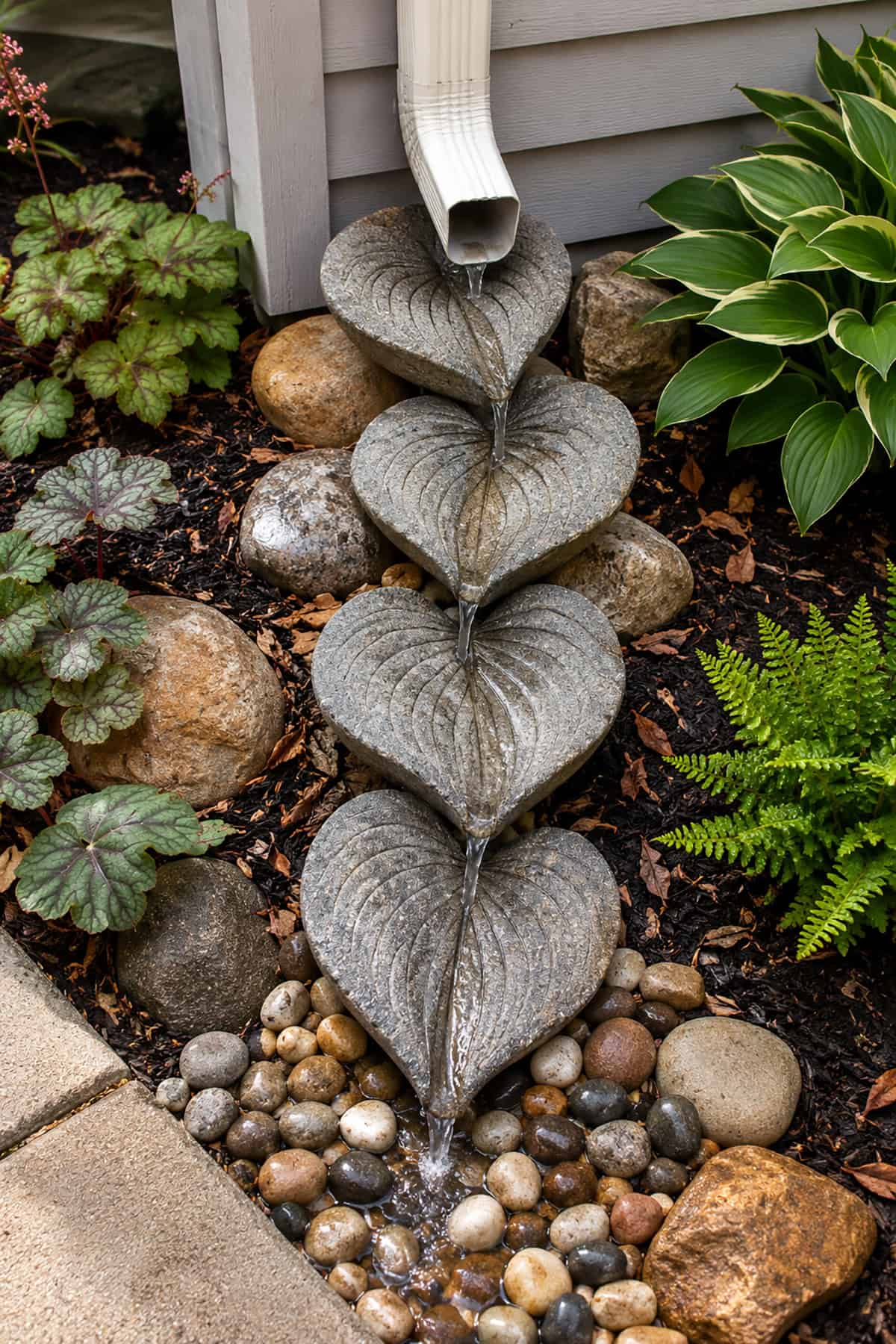
Catch a downspout’s splash in a carved stone or concrete leaf—water fans out, glides across the veins, and drops into a waiting basin or gravel bed. The look borrows from nature but skips the garden gnome vibe, and the stone only looks better as it weathers.
It’s more sculpture than utility, honestly—best placed where people will notice, not lost behind a tangle of shrubs.
Hidden below, a gravel pit or overflow pipe quietly handles the extra when a storm outpaces the leaf’s capacity.
Rock Cascade Drainage Garden
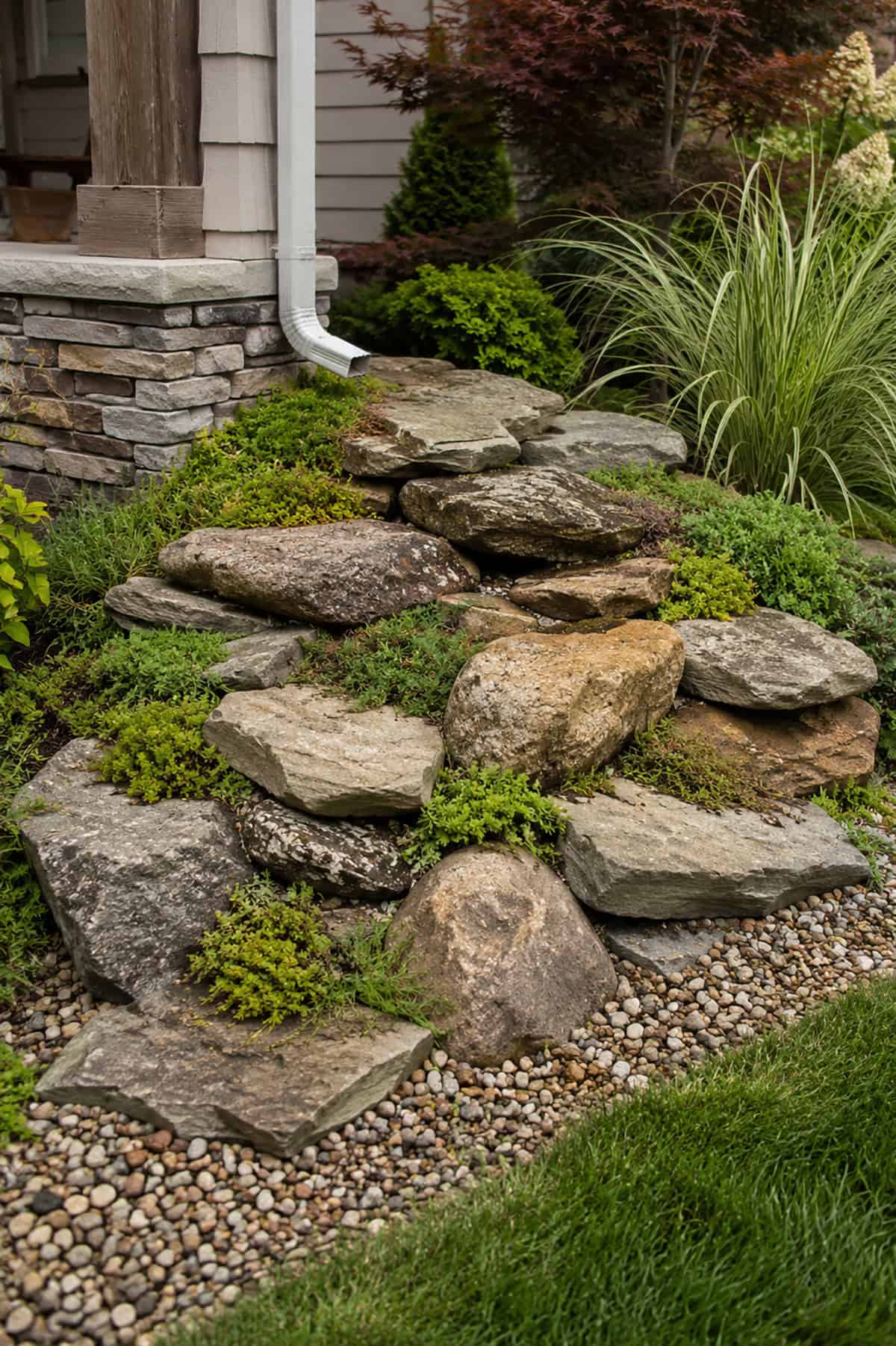
Layered boulders and mid-sized stones tumble down a slope, letting water drop from one ledge to the next. The effect lands somewhere between a water feature and a dry stream, breaking up the monotony of flat yards with some real topographic punch.
It’s all about the prep—digging and grading so the stones follow a true slope. If you skip that, water just pools in dead spots and the whole thing falls flat, literally.
Cracks between rocks filled with chunky gravel keep the flow moving and sidestep the muddy mess that comes from washed-out mulch or soil.
Cascading Planter Drainage Wall
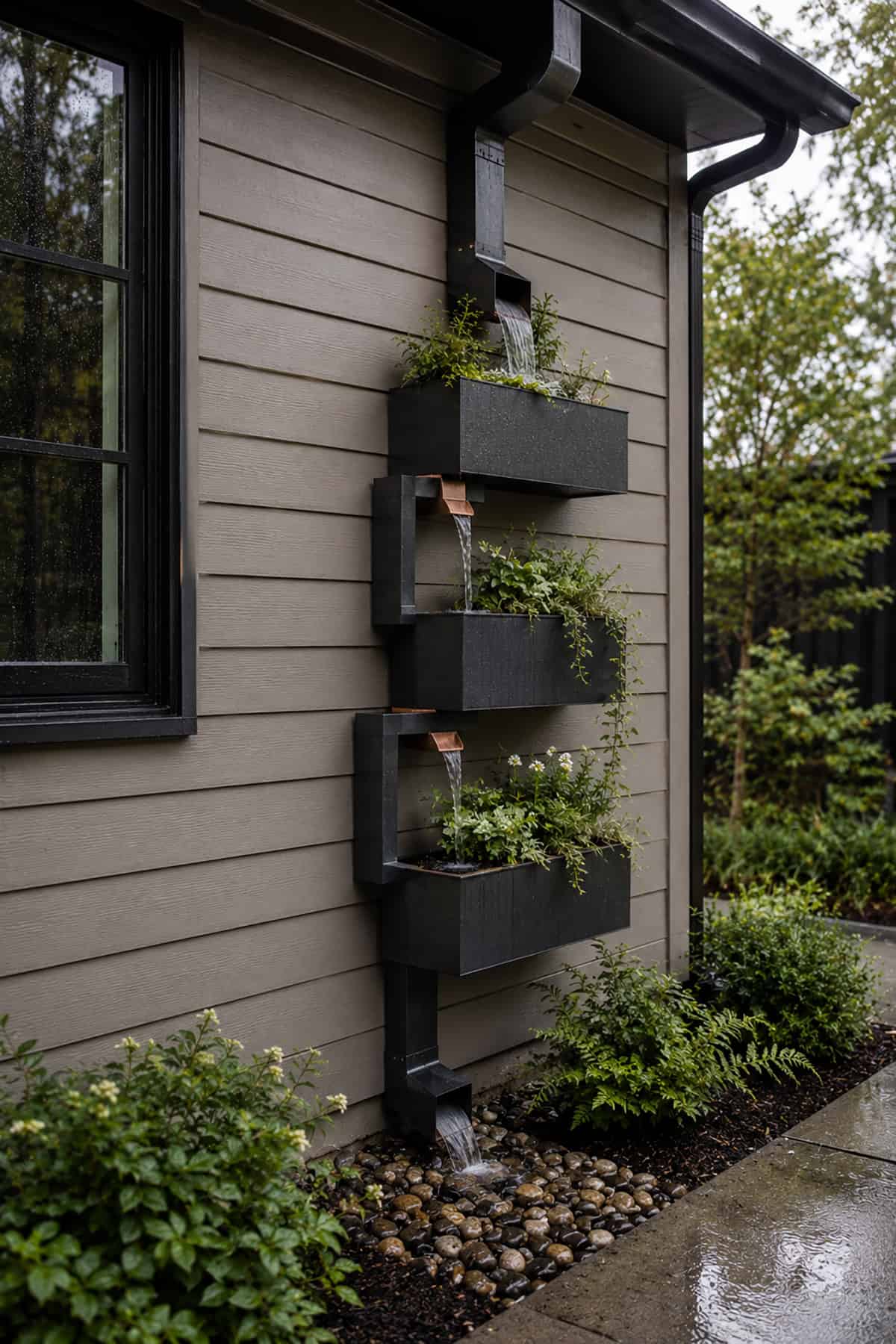
Stacked planters, tiered down a wall, catch and spill water from one level to the next, each overflowing into the one below. Every tier pulls double duty: soaking up runoff and offering a spot for herbs or flowers.
On a slope, especially where a retaining wall already defines the space, this setup feels like it belongs. The planters hug the wall, making the most of vertical space while taming runoff that would otherwise chew up the base.
Don’t skimp on the connections between planters—wide, direct overflows are your insurance policy against storms that might otherwise send water gushing over the edges and into the wall itself.
Raised Bed Overflow Garden
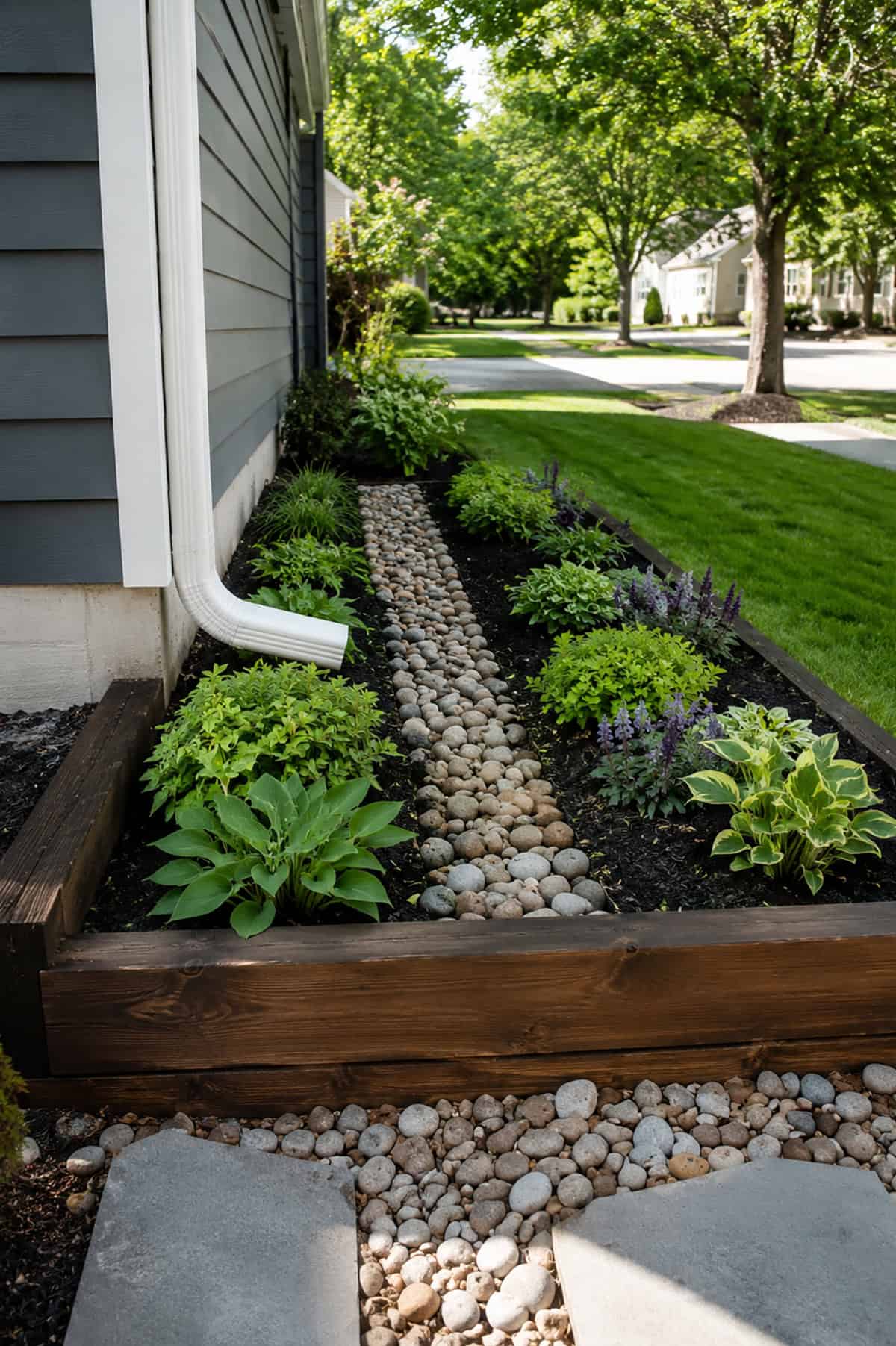
Set a raised bed right where a downspout drains, and it becomes a final stop for roof runoff. The walls hold back water just long enough for it to soak into the soil, sparing the rest of the yard from puddles or erosion.
Mix up the soil with plenty of coarse compost, perlite, and sand—plants won’t drown, and water moves through fast. Toss in some tough natives or grasses that don’t mind the occasional soak.
Keep the bed a good distance from the house—six to eight feet is about right—and make sure the slope actually delivers water there instead of letting it wander off elsewhere.
Downspout Into Rain Garden Border
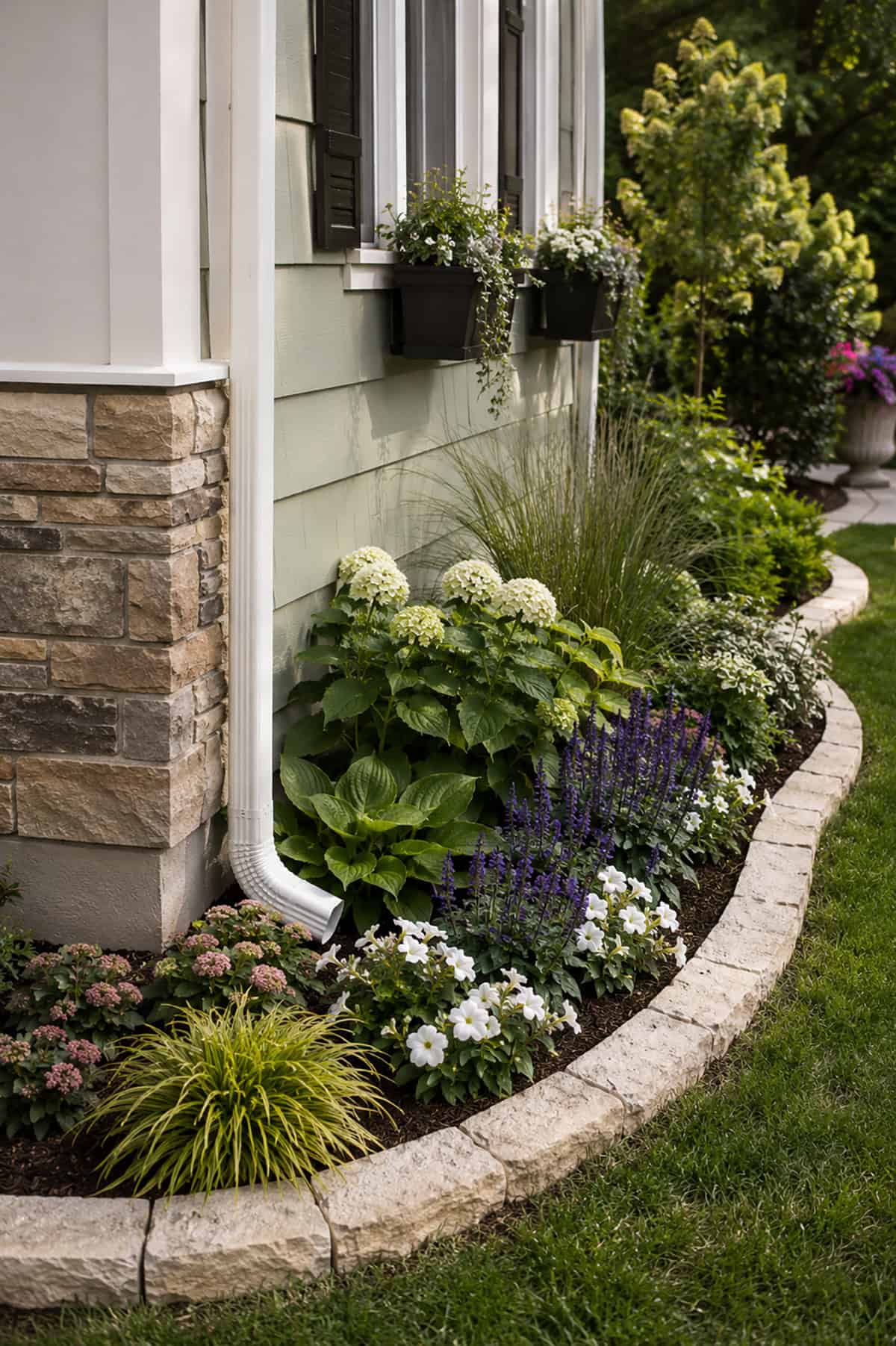
A sunken border of native plants right at the end of a downspout turns runoff into a mini ecosystem. Water pools after storms, then disappears within a day or two, leaving behind a patchwork of blooms and waving grass that pulls double duty for pollinators.
The real trick is picking plants with roots deep enough to drink up the water but tough enough to handle dry spells. Coneflowers, switchgrass, swamp milkweed—those types thrive here.
Don’t tuck the garden too close to the house; ten feet or more gives you a buffer. And if the grade doesn’t send water into the depression, you’re just planting flowers in a hole for no reason.
Cascading Flagstone Water Feature
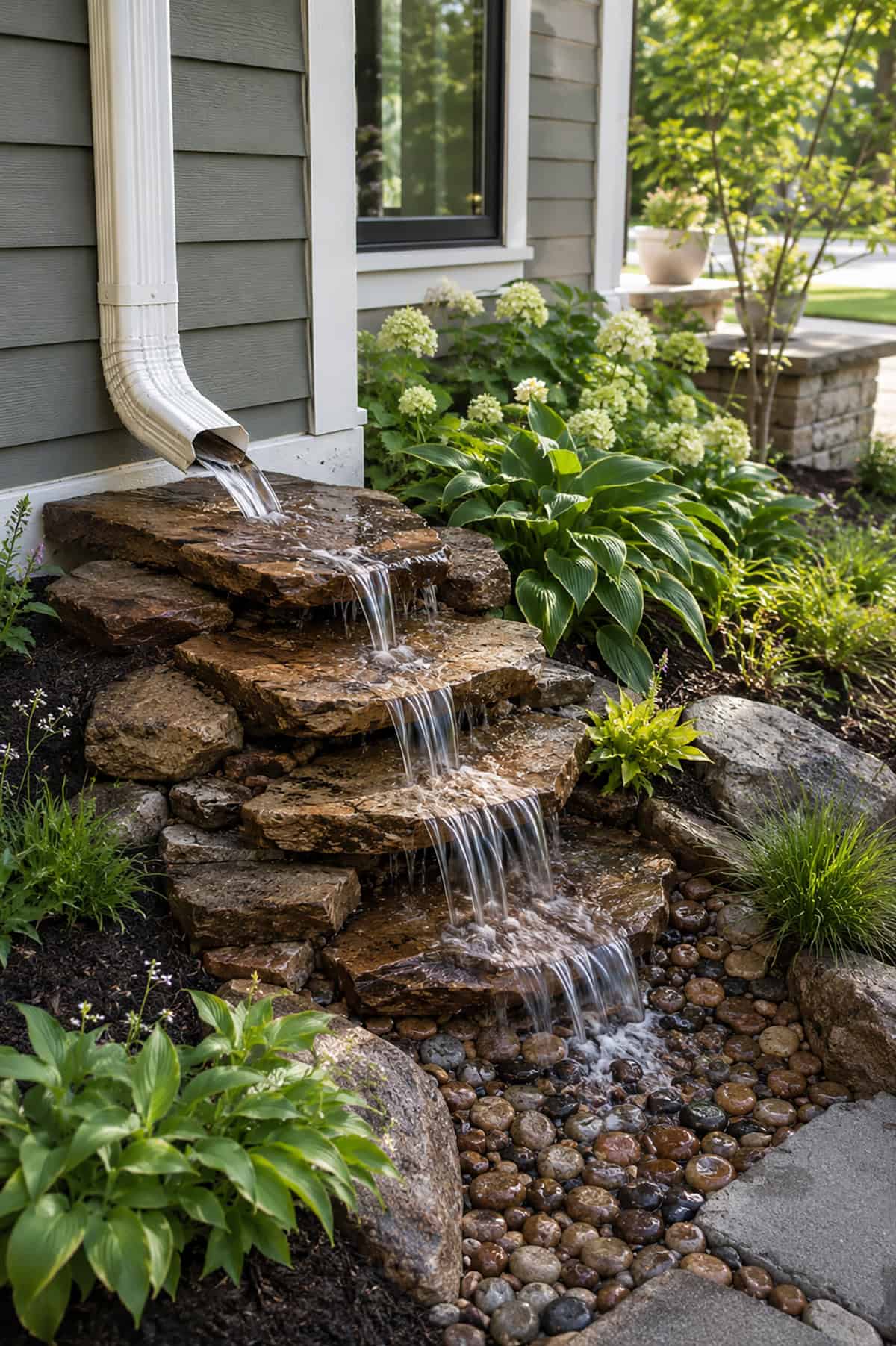
Flagstones set in staggered steps along a slope create a path where water pauses, pools, and then moves on, each stone slowing the rush. The effect is organized, even formal, and fits right into gardens where crisp lines and geometry already rule.
Bonus: when dry, the flagstone doubles as a walkway, so you’re not just building for the rain. That makes splurging on good stone and a solid base feel a little less extravagant.
Each slab needs a firm gravel base and a bit of sand underneath. Otherwise, over time, they’ll wobble or tip—nobody wants a twisted ankle or a lopsided cascade.
Downspout Fed Garden Planter
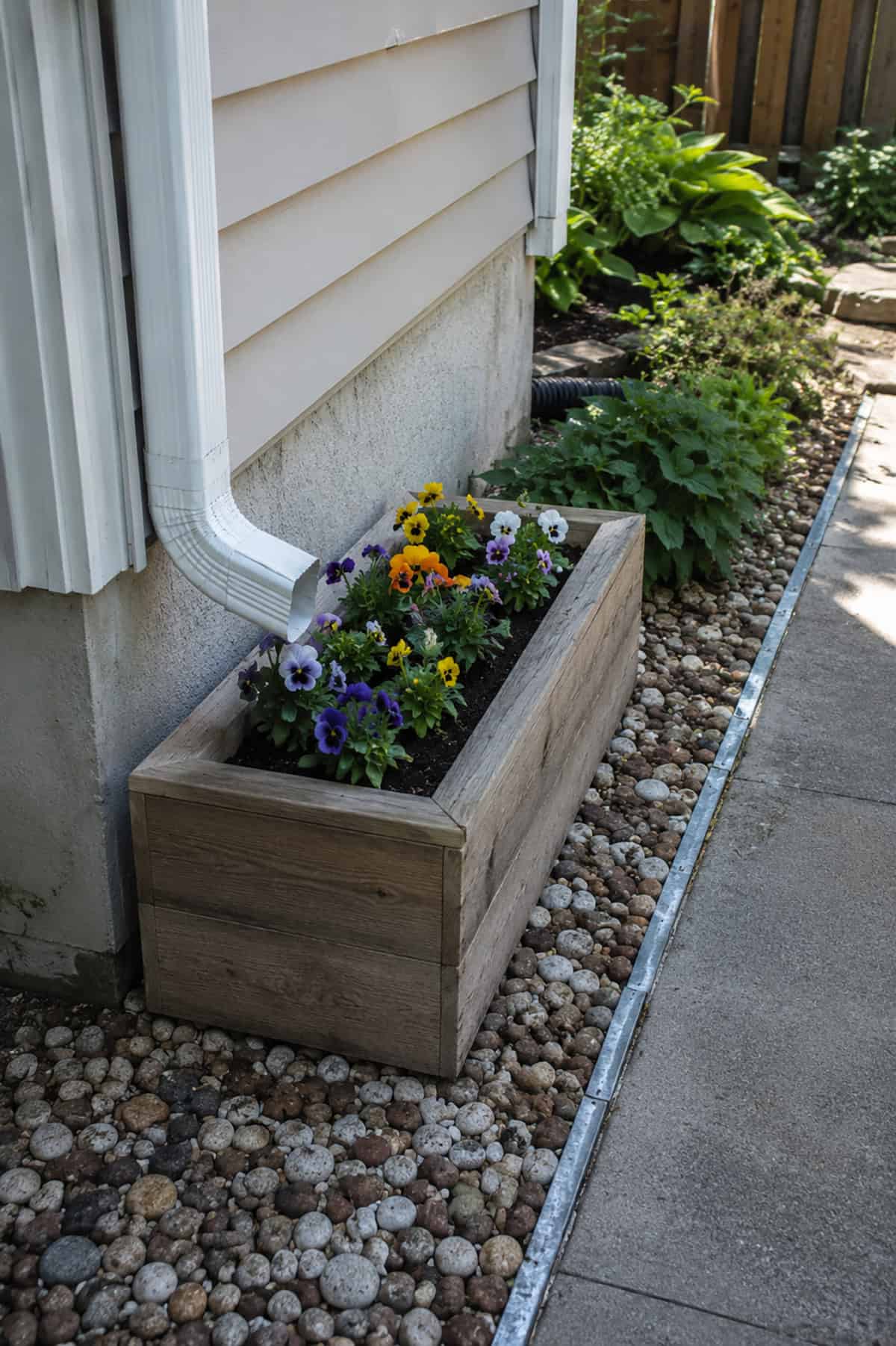
Hooking a planter straight to a downspout gives your plants a free drink every time it rains, cutting down on the need for watering cans. Once the planter fills, extra water drains through the bottom and heads into a gravel bed or catch basin.
Match the planter size to your local weather—smaller for frequent showers, bigger for rare but heavy storms. That way, you avoid waterlogged roots or surprise floods next to your foundation.
A chunky drainage layer at the bottom keeps things from getting swampy. Pick plants that shrug off wet feet, especially if your downspout feeds them every time the clouds open up.
Mini Dry Creek Drainage Channel
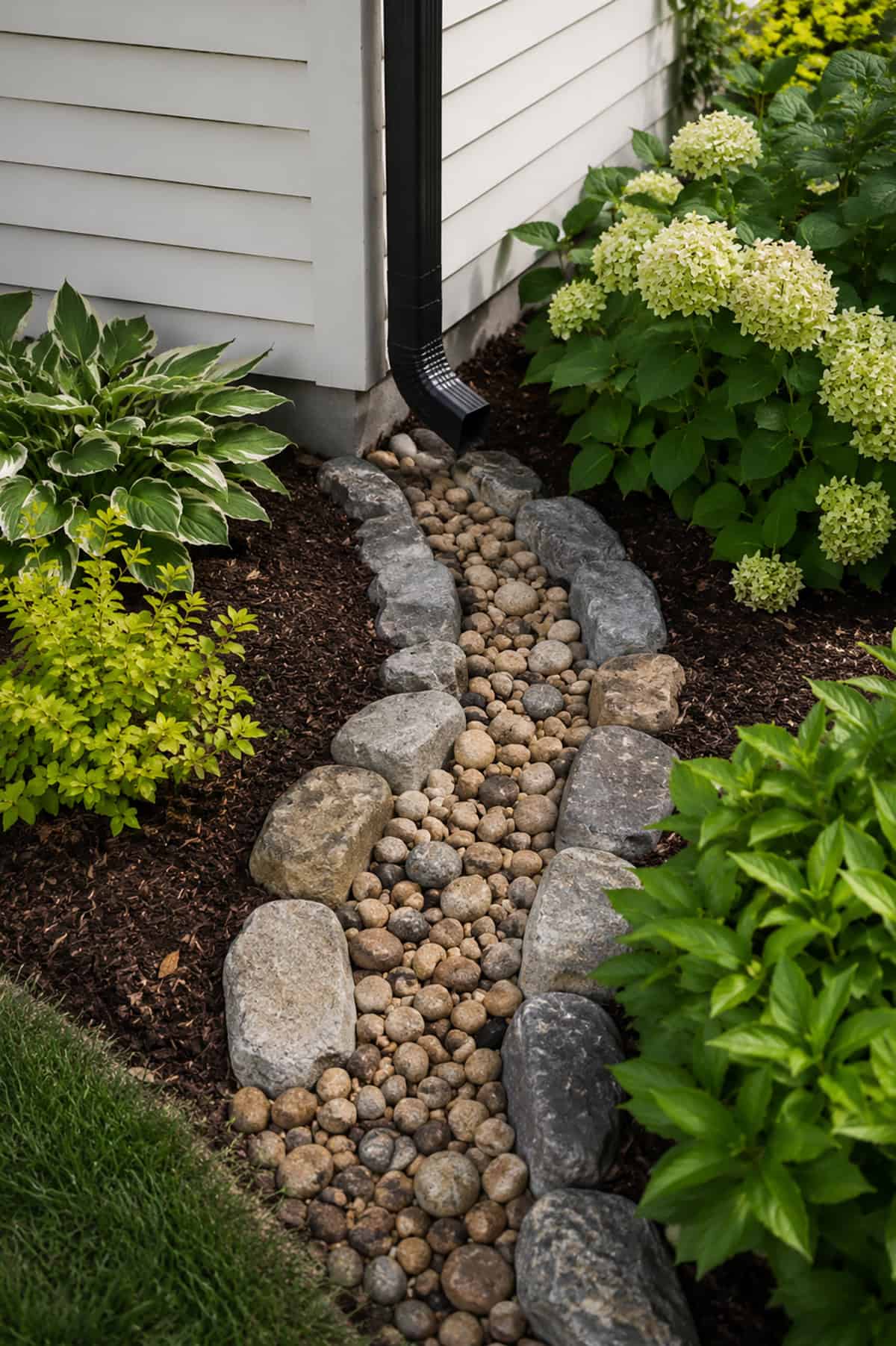
Short on space? A compact dry creek—just a few feet long—handles downspout runoff without swallowing half your yard. Gravel, river rock, and maybe a few edging plants define the path, all scaled down for side yards or townhouse strips where every inch matters.
Even in a tight spot, performance doesn’t have to suffer. As long as there’s enough slope and a real destination for the water, this little channel does the job.
At the end, a pop-up emitter or small dry well quietly finishes the work, sparing you from extra pipes or unsightly hardware cluttering the view.
Zigzag Rainwater Spillway
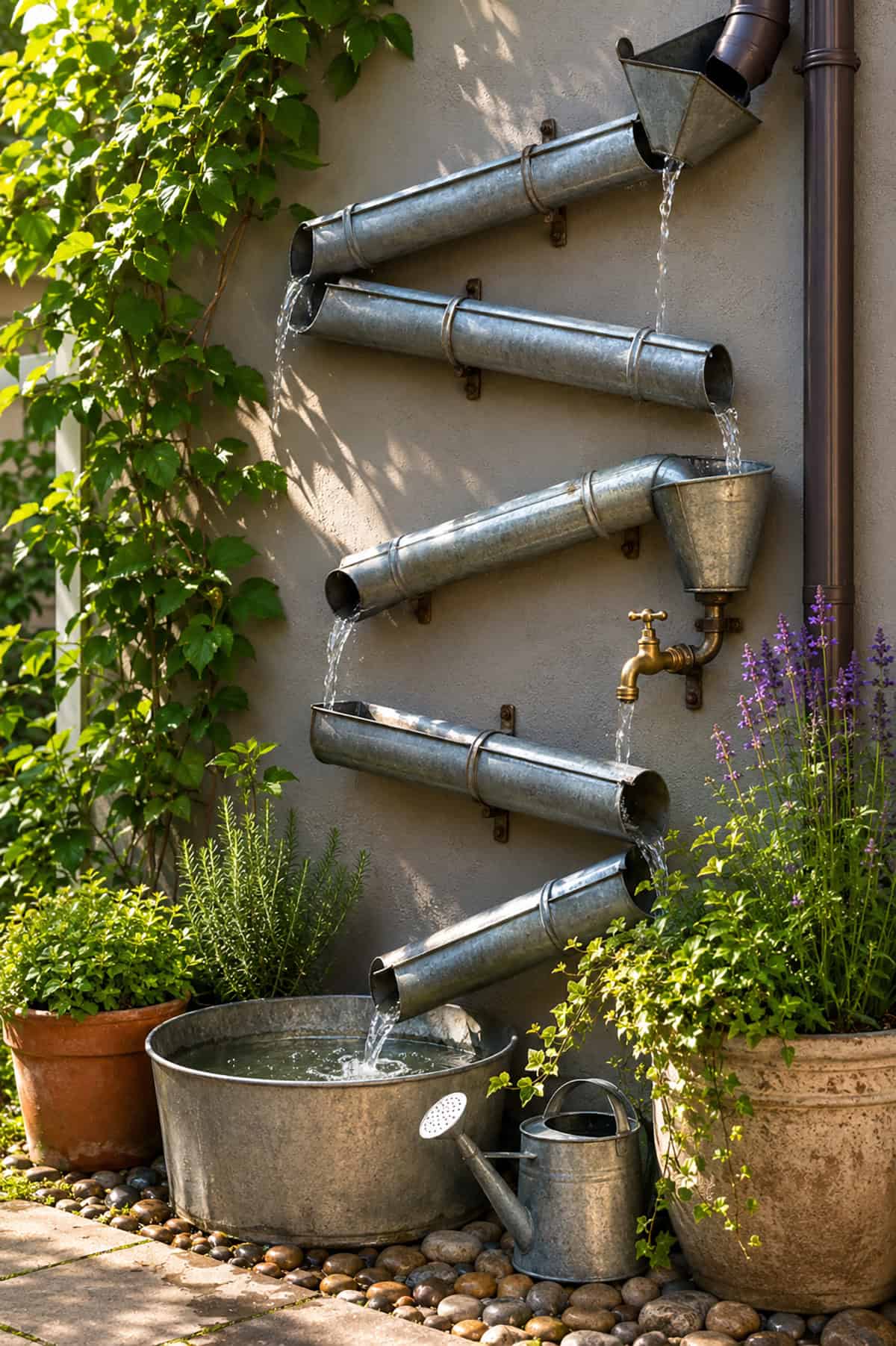
Sharp angles and shifting directions carve a zigzag spillway into the slope, forcing water to snake its way down instead of racing straight for the exit. Every bend throws off the momentum, stretching out the journey and giving runoff a chance to soak in rather than tear through. Erosion gets dialed back as the water’s energy disperses around each curve.
On hillsides where gravity wants to take over, a direct chute just invites trouble. This winding path only works if the slope’s graded right at every twist—otherwise, water will collect in awkward pockets or jump the edge in heavy rain.