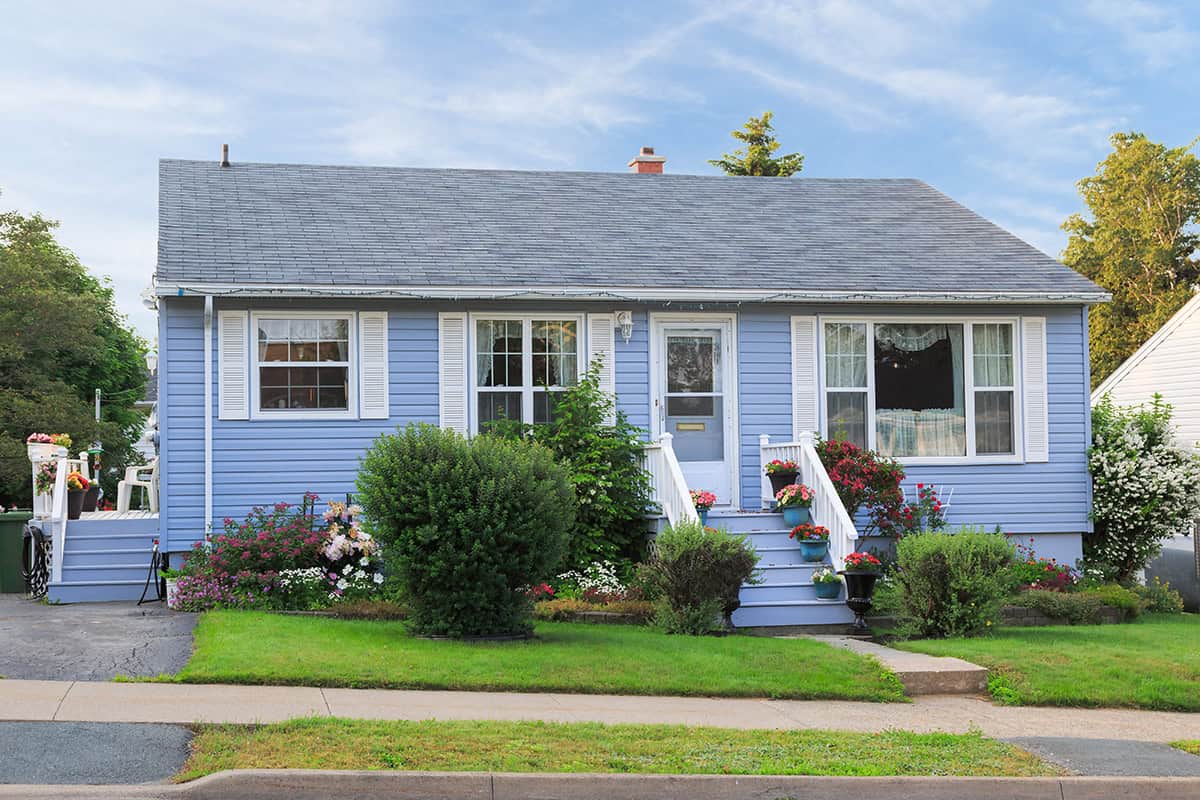
When you treat your bungalow as a single, cohesive design, every element—roofline, siding, porch, windows, landscaping, driveway—begins to pull together for real curb appeal. It’s not about a jumble of upgrades, but how the whole thing reads from the street.
If you want standout curb appeal, pick one clear exterior direction and back it up with the right roof, finishes, entry details, and landscaping. Mixing too many styles at once? That’s where things usually fall apart.
With bungalows, the low profile means every choice gets noticed. A tidy, edited exterior can make even a small house look polished, while a messy mix of colors and materials just feels busy. Take a look at these 37 bungalow exterior inspirations and see which one clicks with you.
Table of Contents
- White Walls With Gray Roofs and Modern Lines
- Cottage-Style Stone Exterior With Texture
- Brick Siding With Functional Front Garage
- Fresh Cottage Style
- Ranch Bungalow Exterior With Wide Open Lawn
- Black and White Tudor Bungalow Exterior
- Backyard Dining Area and Sunroom
- Nature-Inspired With Timber Build
- Suburban Bungalow with Wide Lawn Appeal and Curved Driveway
- Beachfront Bungalow With Natural Materials
- Soft Blue Tone With Welcoming Entry
- Luxury Bungalow With Poolside
- Subtle Monochrome Layers with Warm Gray Schemes
- Warm Beige Exterior With Layered Roof Sections
- Two-Tone Horizontal Siding Bungalow
- Soft Yellow Bungalow
- Olive Green Bungalow With Natural Stone Base
- Matte Black Window Frames With Neutral Walls
- Light Taupe Bungalow With Soft Curved Pathway Entry
- L-Shaped Bungalow With Defined Corner Layout
- Earth-Toned Stucco Bungalow
- Desert-Inspired Bungalow With Flat Rooflines
- Dark Charcoal Bungalow With Warm Wood Accents
- Cream Brick Bungalow With Symmetrical Facade Design
- Concrete Bungalow With Sharp Edges
- Compact Bungalow With Courtyard-Style Entry
- Wraparound Low Planter Borders
- Vertical Window Accents for Height Illusion
- Subtle Roof Overhang Lighting
- Recessed Window Bays
- Raised Front Platform Entry
- Offset Entry and Asymmetrical Layout
- Mixed Material Facade Panels
- Light Stone Pathway and Framed Entry
- Front Pergola Structure
- Continuous Horizontal Window Band
- Arched Entryway and Mediterranean Influence
White Walls With Gray Roofs and Modern Lines
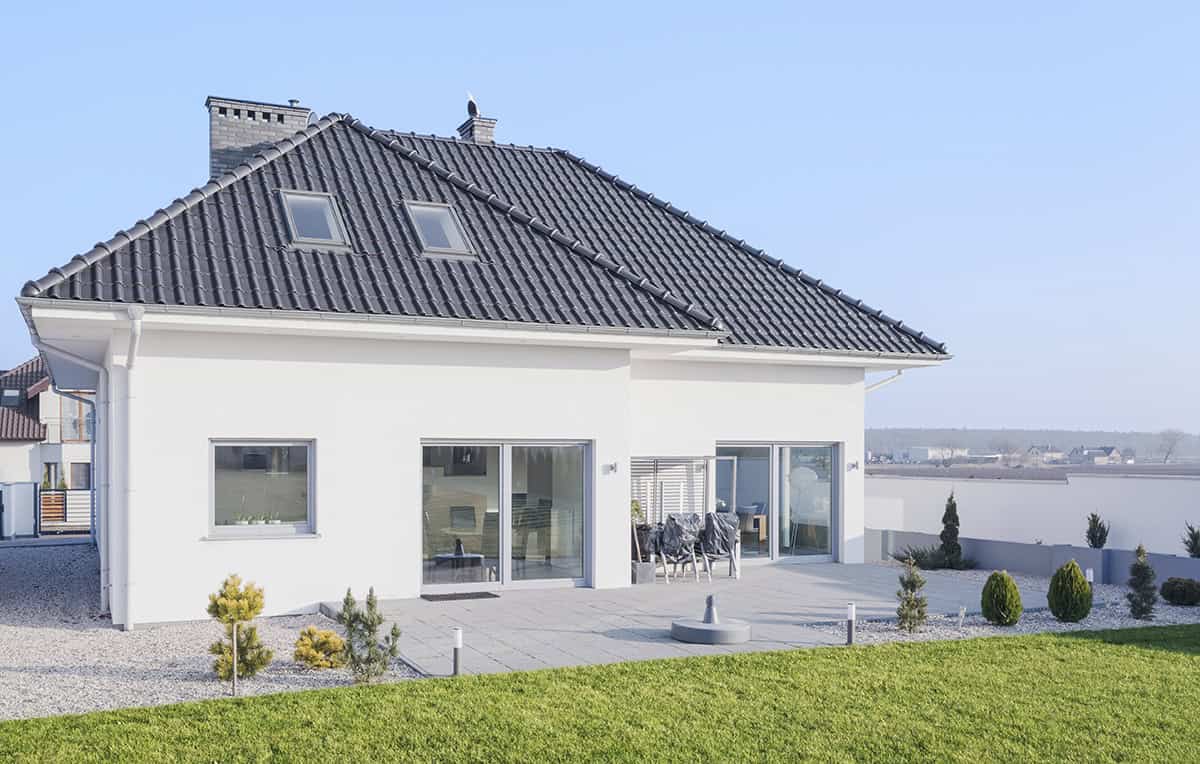
Crisp white siding paired with a gray roof brings a fresh, uncluttered vibe to a bungalow. It’s a look that manages to stay warm and inviting instead of cold or stark.
Light exteriors open up a small facade, making it feel more expansive. A gray pitched roof keeps the contrast gentle, which honestly feels more livable than harsh black in most neighborhoods.
Trim kept minimal, broad steps, and understated porch railings all help. I’ve watched this approach work for folks chasing a modern farmhouse feel, but who want to respect the bungalow’s roots. The trick? Don’t overdo it.
Cottage-Style Stone Exterior With Texture
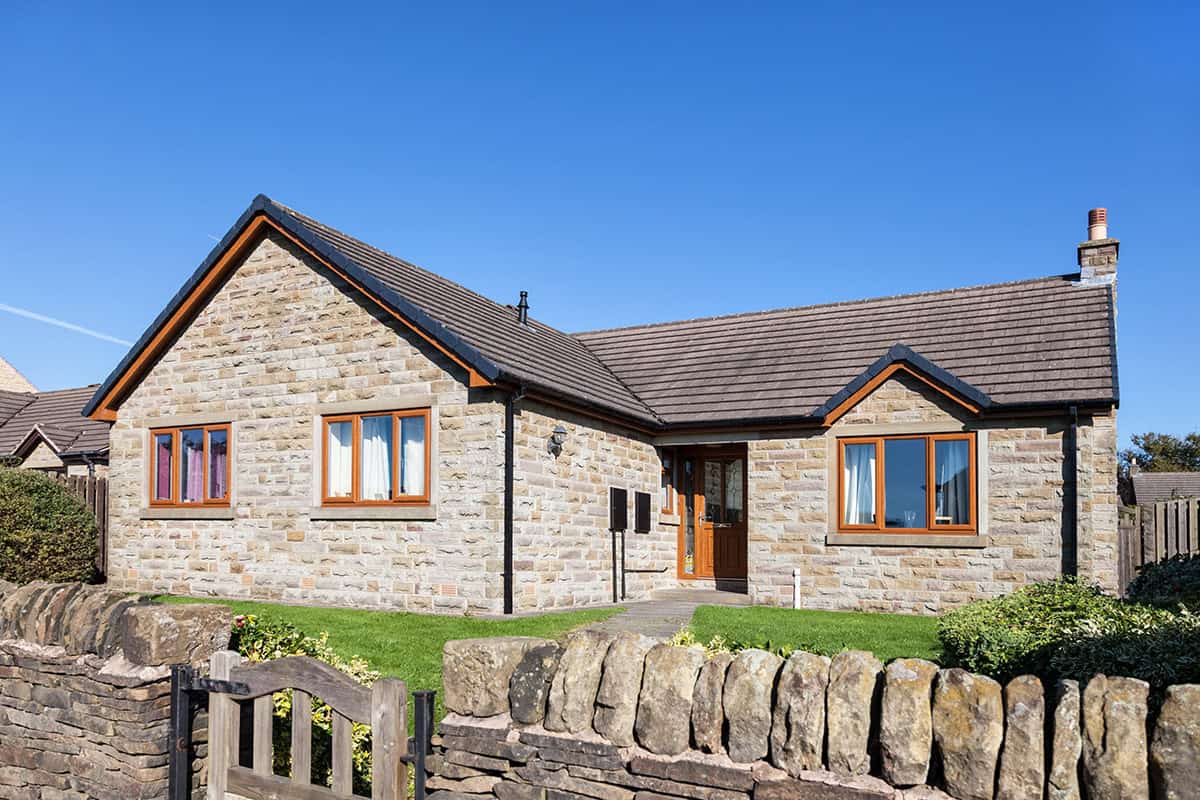
Texture does the heavy lifting for a cottage-inspired bungalow. Stone brings visual heft, making even a modest house feel anchored and permanent.
No need to go full stone—sometimes just a base, chimney, porch columns, or an entry surround gets the job done. It’s about depth and shadow, not covering every inch.
Stones with variation—warm gray, tan, weathered cream—add richness. A slate roof’s matte finish works with the vibe, feeling timeworn instead of flashy.
Brick Siding With Functional Front Garage
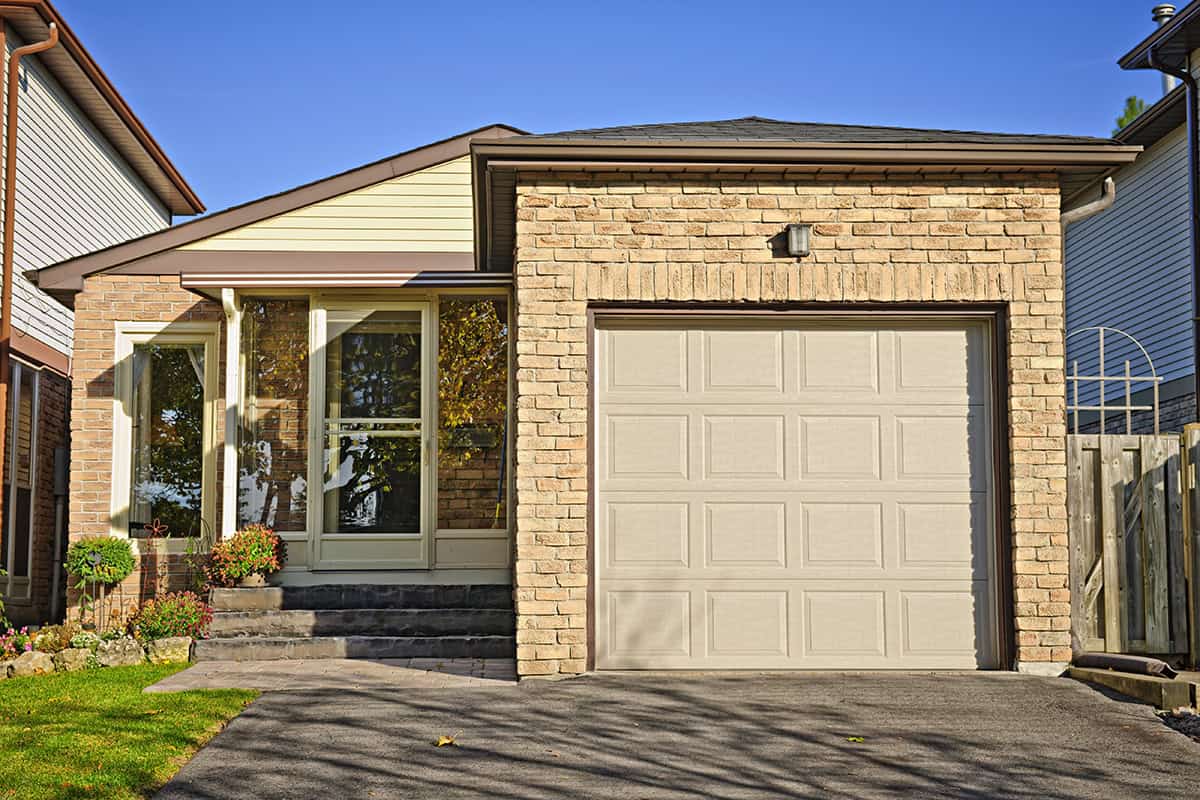
Brick’s got built-in texture, so the challenge is taming the garage so it doesn’t steal the show.
Color-matched garage doors blend in, letting the front door pop with paint, lighting, and a clear path. That’s usually enough to shift the focus.
Wide, street-facing garages need a little breakup—carriage-style panels, slim windows, maybe a pergola eyebrow. Suddenly, it’s part of the house, not just a big blank.
Fresh Cottage Style
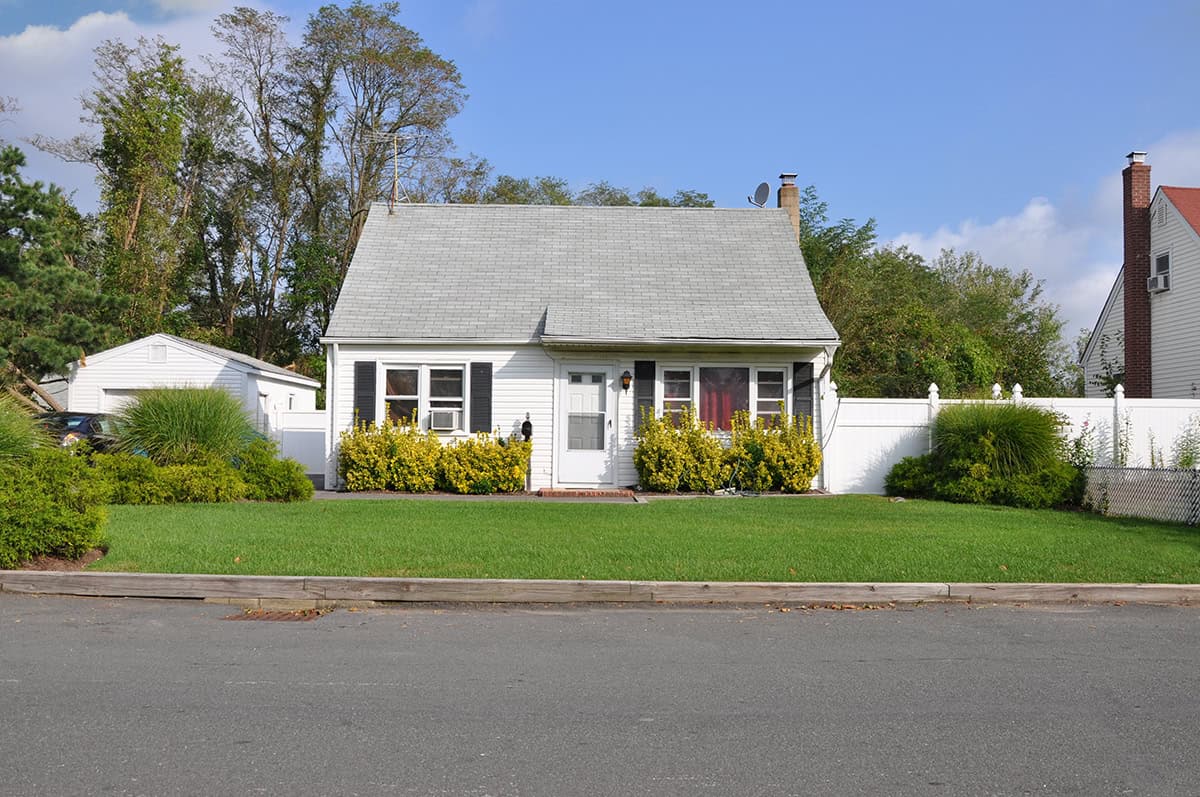
Cheerful, approachable details can make a small bungalow sing. It’s not about cramming in ornament, but picking cottage touches that fit the scale.
Soft paint, skinny trim, a few well-placed shutters, and lush, layered plantings do wonders. California bungalows, in particular, seem to thrive with this treatment—compact, generous porches and low roofs just feel right.
Dormers, if you’ve got them, should feel deliberate. Paint and trim can make them an asset instead of an afterthought.
Ranch Bungalow Exterior With Wide Open Lawn
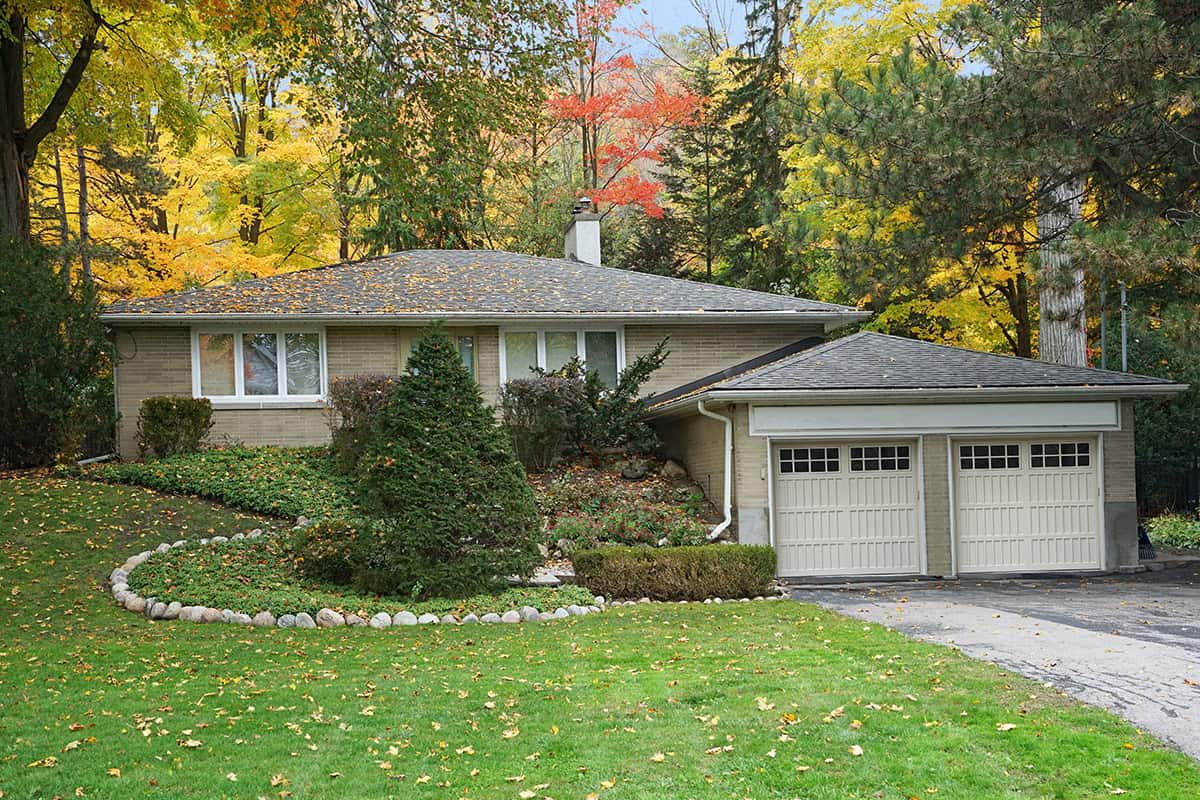
Horizontal lines take center stage on a ranch bungalow. The landscape and facade need to stretch the property, not chop it up.
Long beds, low rooflines, and broad walkways do more for this style than a scatter of tiny features. From the street, a few big moves read clearer than lots of little ones.
This is probably the easiest style to modernize. Swap in darker window trim, a new front door, bigger house numbers, or a streamlined path—no need to mess with the bones.
Black and White Tudor Bungalow Exterior
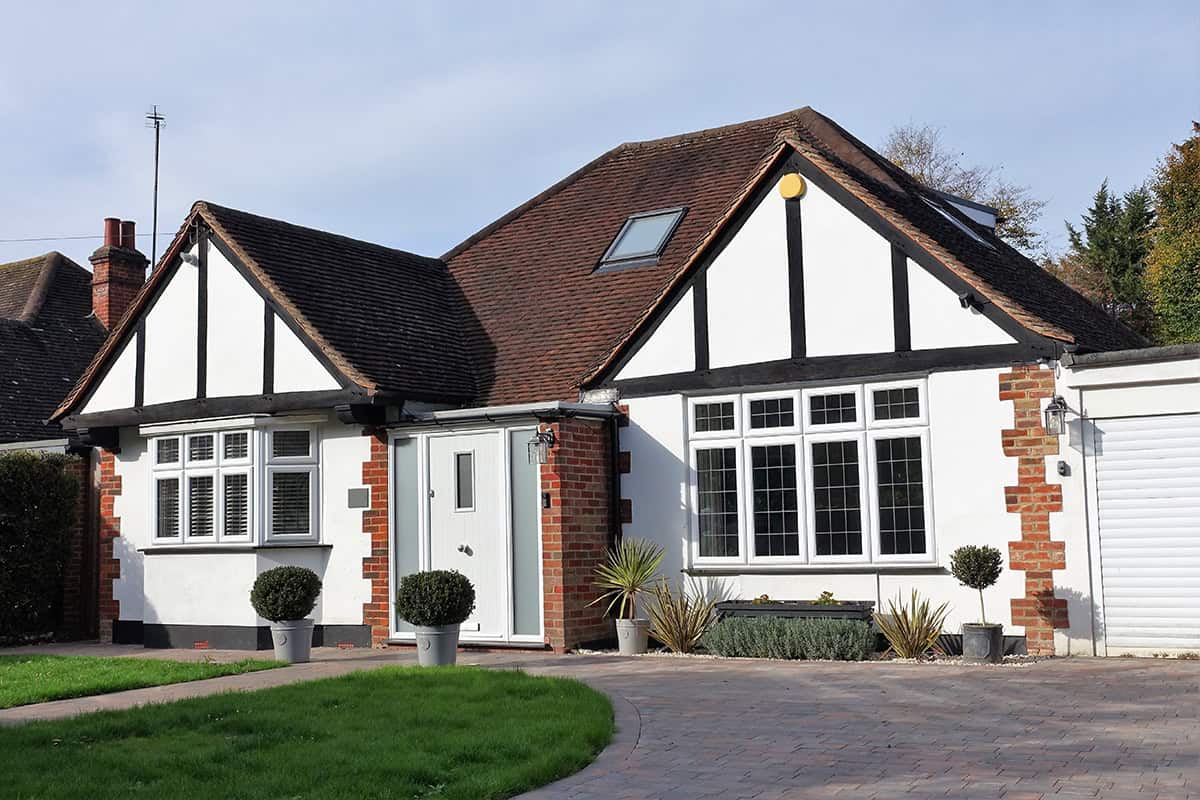
Strong contrast and graphic lines bring a punchy identity to a black and white Tudor bungalow. It’s a style that stands out, especially where most homes play it safe.
Discipline with the palette is everything. Warm white or creamy walls, black trim, and timber-style accents get you the Tudor feel without tipping into cartoon territory.
Scale is tricky: thick black lines can smother a low bungalow. Narrower profiles and selective contrast usually work better—no need to outline every edge.
Backyard Dining Area and Sunroom
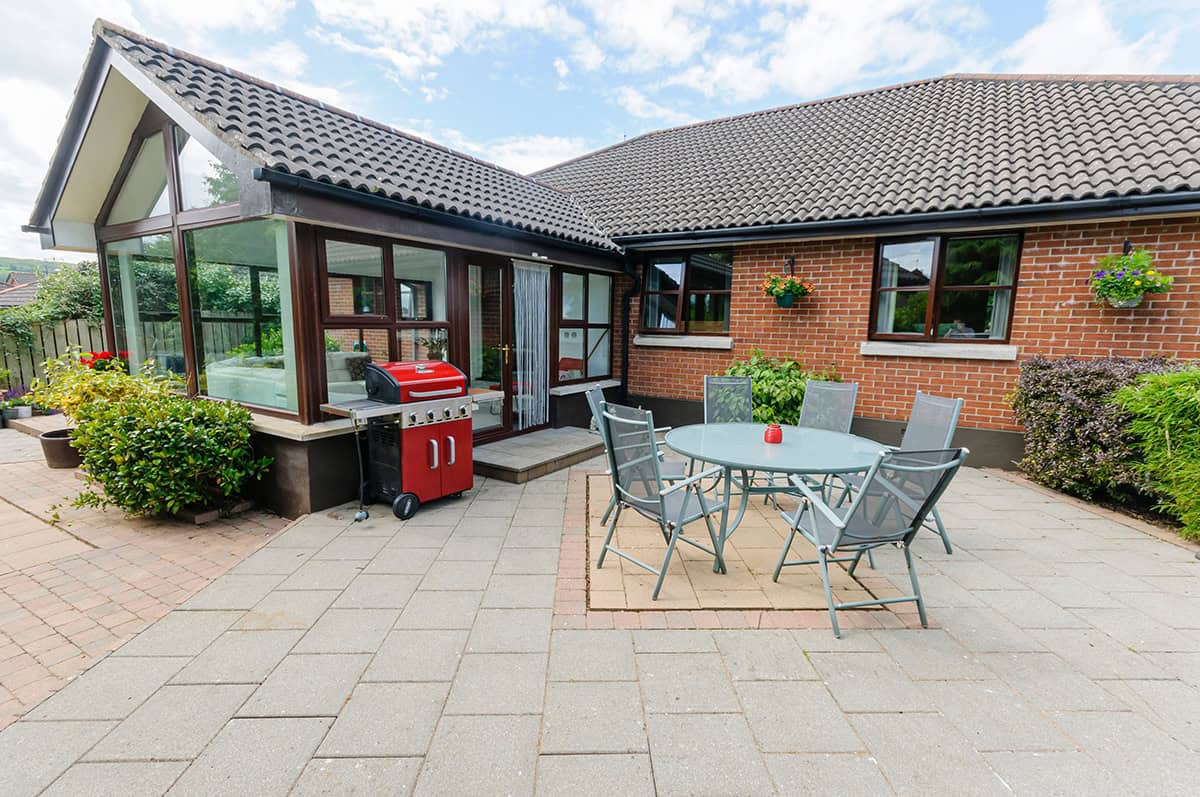
Openness and connection to daily living drive a modern bungalow’s feel. If you’re big on backyard time, the rear of the house deserves as much attention as the front.
Large glass doors, a simple patio, and a sunroom extension can totally change how the house works. It’s a smart update if you want indoor-outdoor flow without the headache of a second story.
Stick to a tight material palette—smooth siding, dark-framed glass, warm wood, and concrete or big pavers. It’s modern but still feels like home.
Nature-Inspired With Timber Build
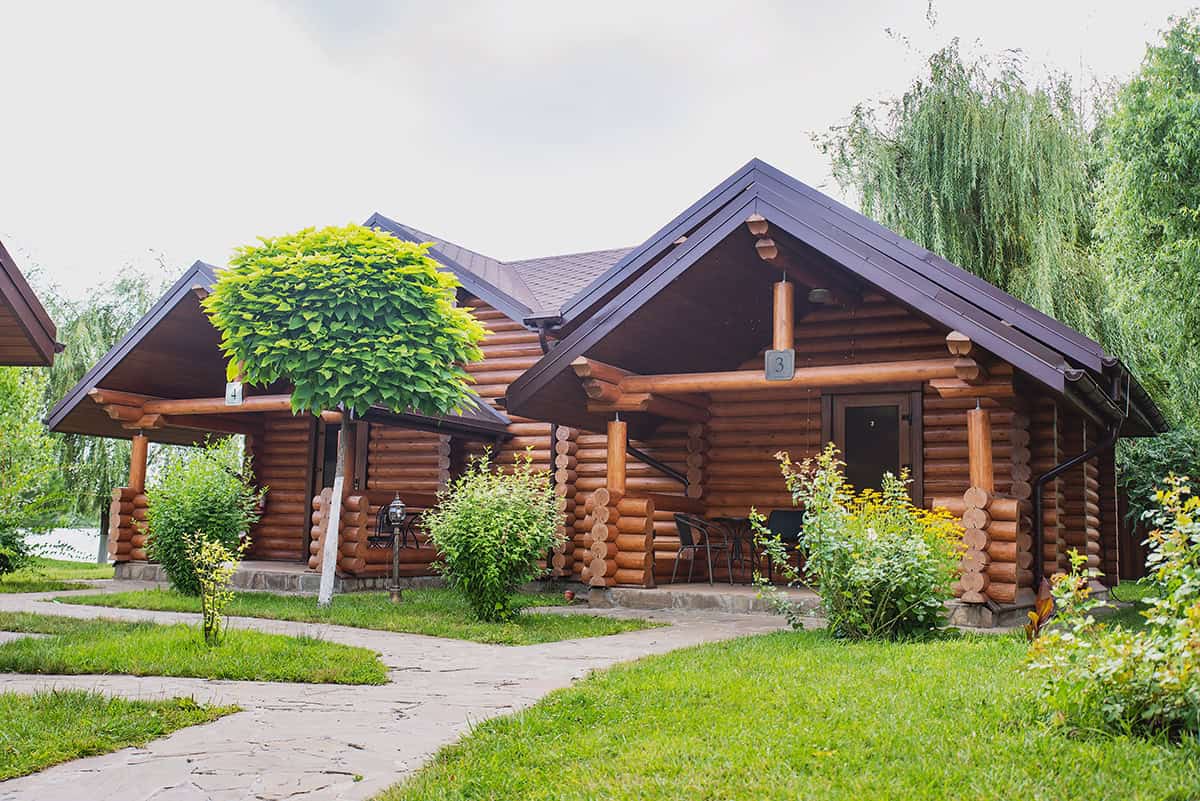
When you want your house to blend into its setting, nature-inspired design is the way to go. Wooded lots, mountain edges, or anywhere natural materials already fit in—this look just works.
Wood siding, stained in cedar, brown, or weathered gray, sets the tone. Craftsman bungalows take especially well to this style, with their focus on handmade details and honest structure.
Exposed rafters, tapered porch columns, and solid stone or concrete bases add interest without clutter. These are the kinds of details that reward a closer look.
Suburban Bungalow with Wide Lawn Appeal and Curved Driveway
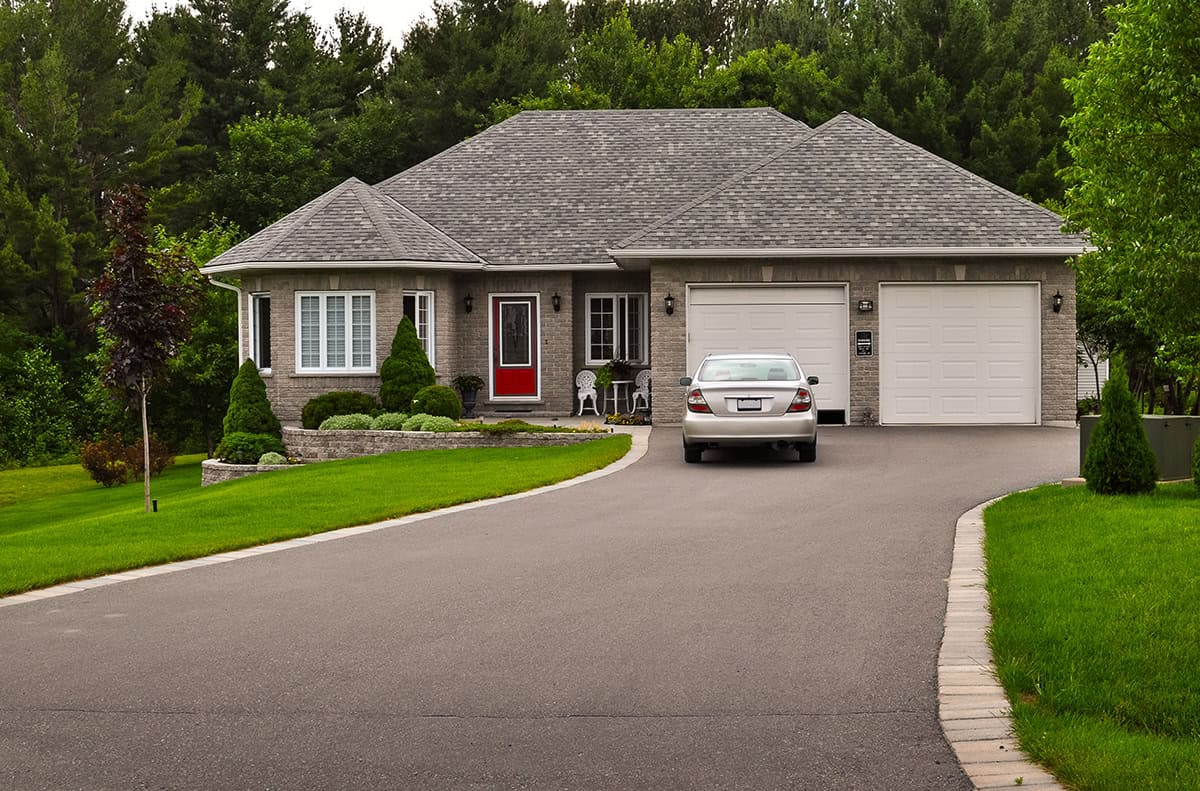
In suburbia, a bungalow needs to look welcoming and fit in without disappearing. A wide lawn and curved driveway, when handled right, help the house feel established and a bit grander.
The curve in the driveway softens the approach, adding a gentle sense of movement. It only works, though, if the lot’s wide enough—forced curves just look awkward.
With so much lawn up front, the entry needs enough contrast to stand out. A strong front door, porch, and path make sure the house doesn’t get lost in all that green.
Beachfront Bungalow With Natural Materials
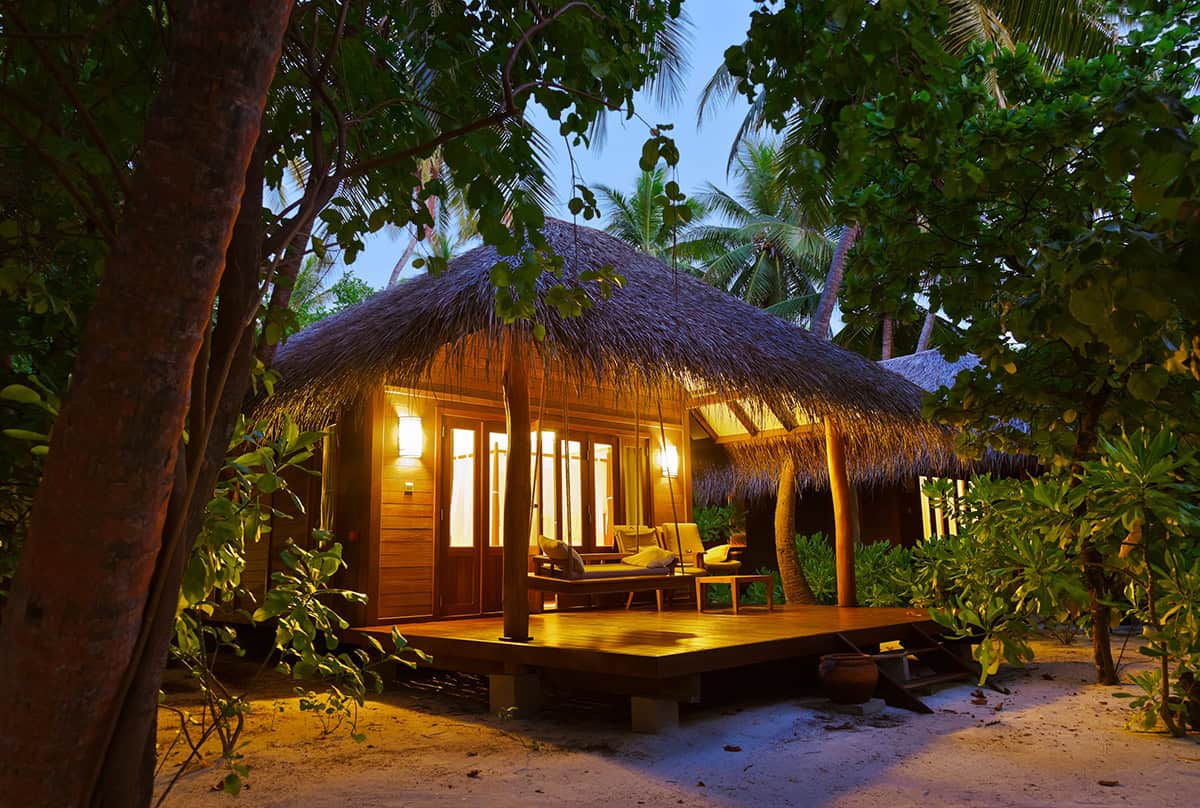
Durability and a laid-back vibe matter most for a beachfront bungalow. Natural materials hold up to salt, wind, and sun, and they just feel right for coastal living.
Weathered wood, fiber cement in sandy or sun-bleached tones, natural stone, and simple metal touches all fit the bill. The idea isn’t rustic, just appropriate for the elements and the mood.
Big porches, open railings, and generous windows connect the inside to the view. In many coastal spots, simpler shapes actually look better than fussy trim or too many decorative bits.
Soft Blue Tone With Welcoming Entry
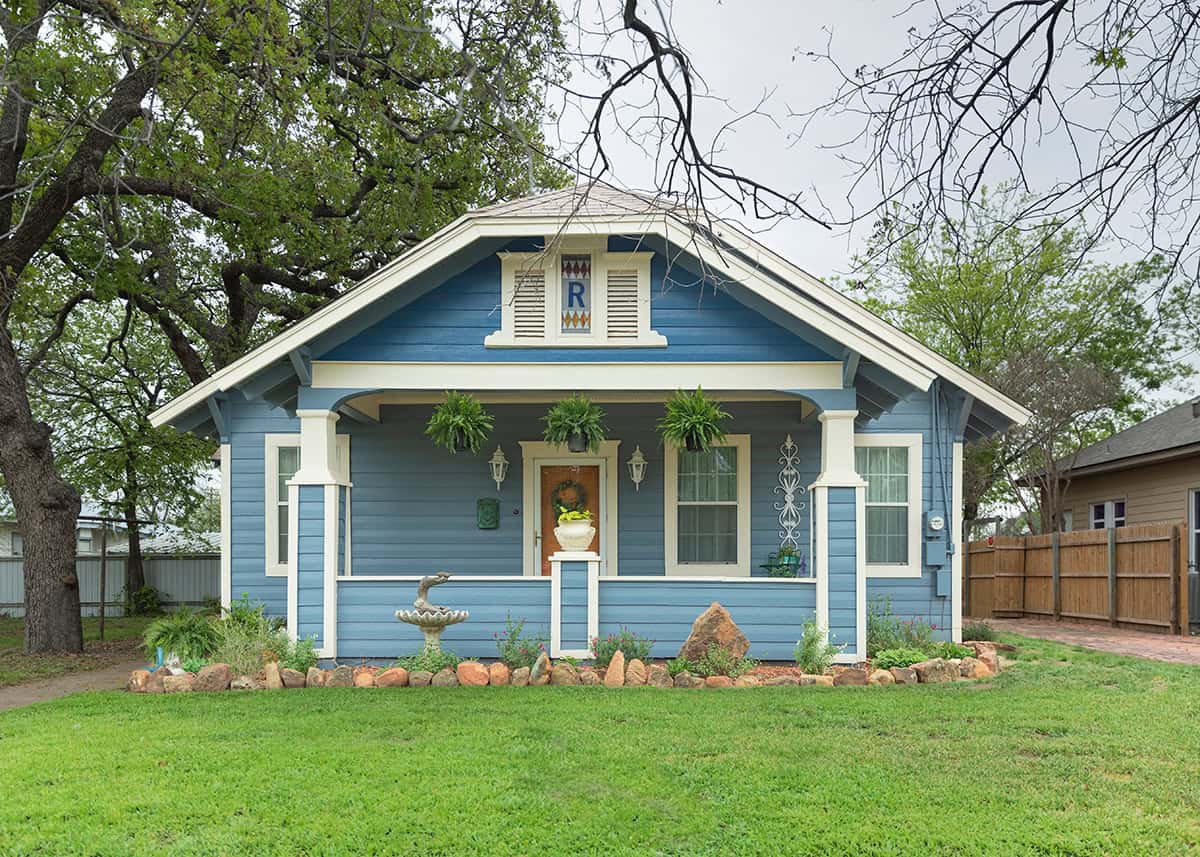
Soft blue brings a calm, approachable feel, and it’s surprisingly flexible. Depending on trim and hardware, it can swing cottage, coastal, traditional, or even a little modern.
Balance is everything—body color, trim, and the entry flow all need to play nicely. Crisp white trim adds freshness, while cream softens the effect.
Windows and doors should look like they belong together. Bright white trim with a navy or slate blue door usually feels intentional and grounded.
The porch makes or breaks it. Blue siding, warm wood steps, black lanterns, and simple seating create an inviting entry that doesn’t try too hard.
Luxury Bungalow With Poolside
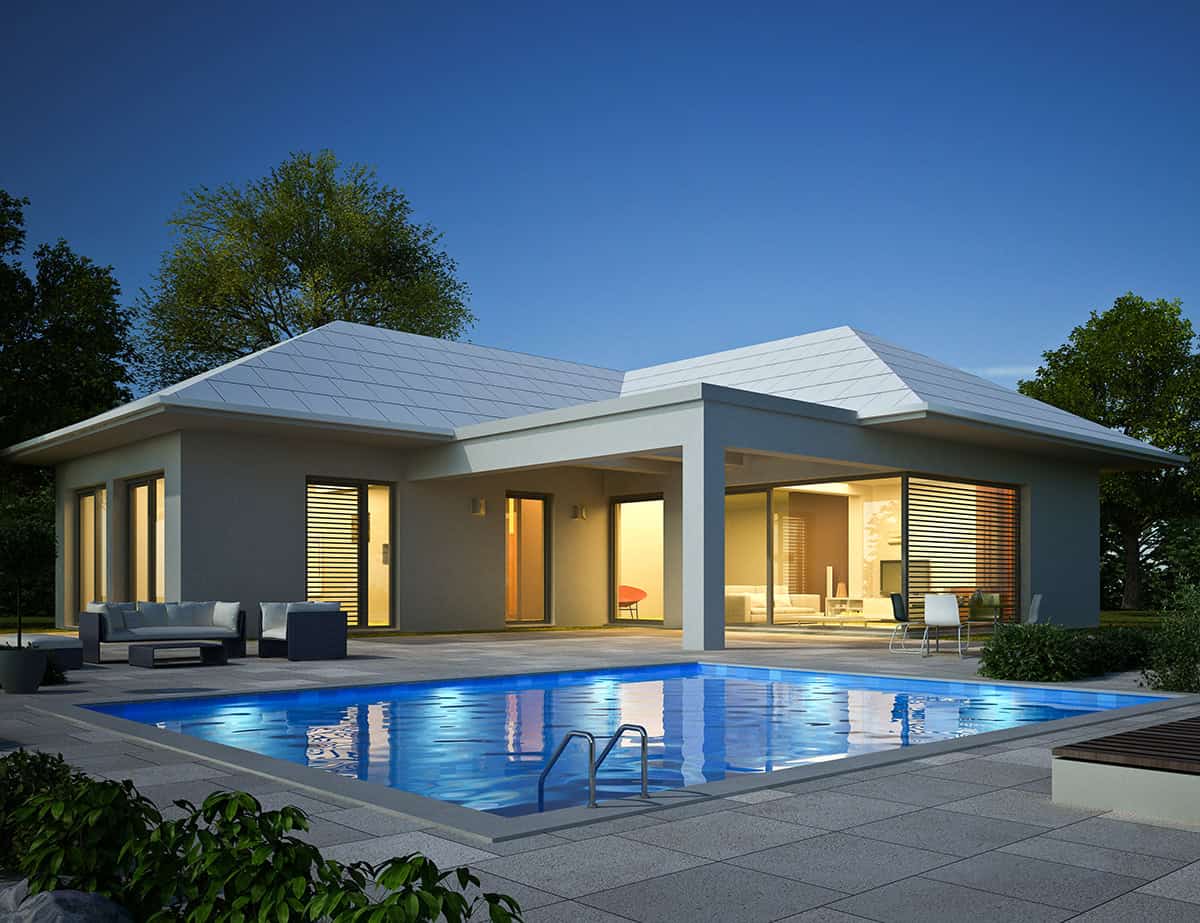
Even before you step inside, the atmosphere around a luxury bungalow whispers intention. It’s not necessarily about sprawling square footage—what really stands out is the crispness of the materials and the way outdoor living spaces unfold with purpose.
By the pool, the boundary between indoors and out almost disappears. When the stone underfoot echoes the textures of the house, and sightlines pull your gaze from living room to water, the whole place feels thoughtfully woven together. Lighting plays along, too—warm, understated, never harsh.
Subtle Monochrome Layers with Warm Gray Schemes
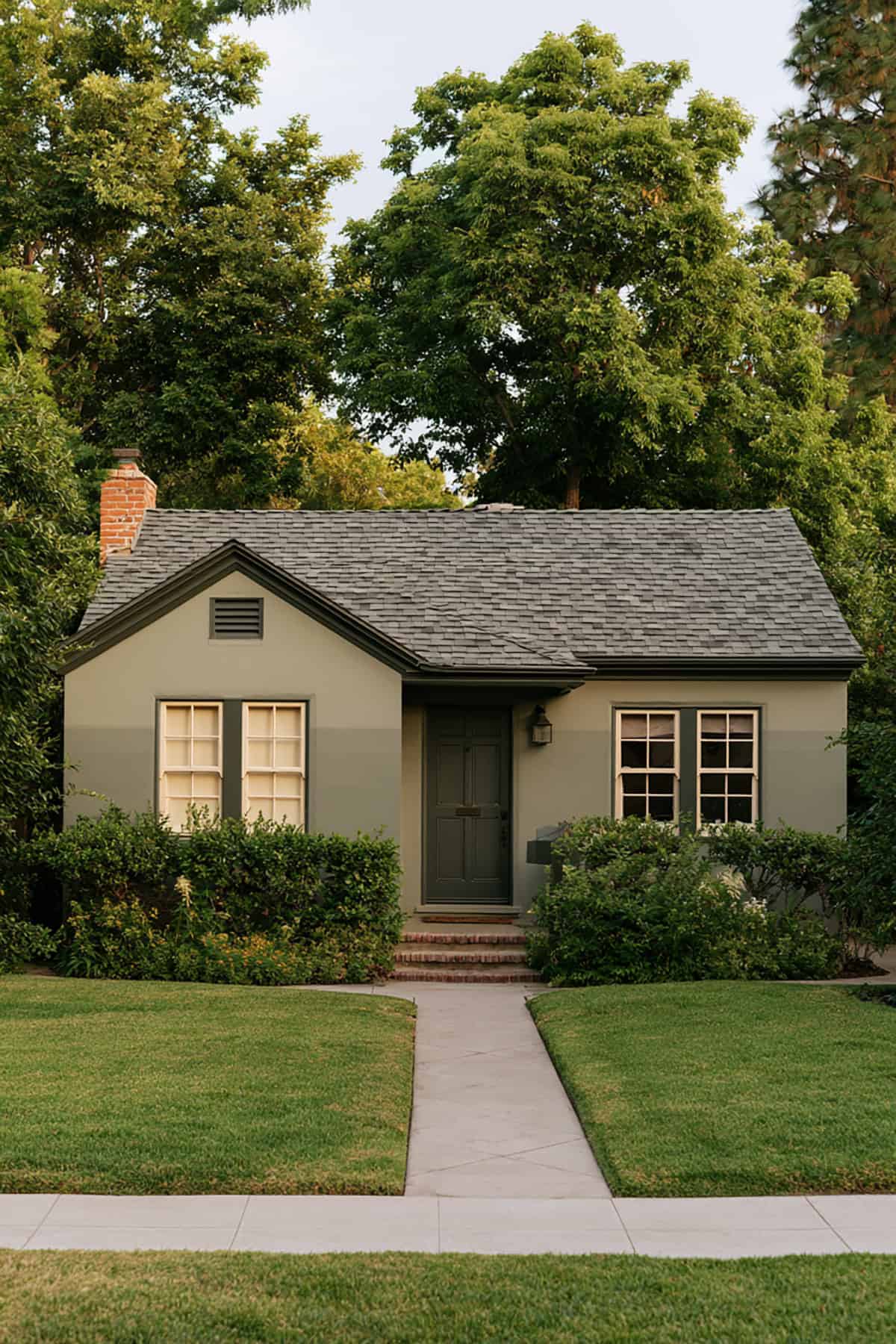
Moody, layered grays can modernize a bungalow without erasing its roots. Instead of relying on high-contrast colors, the interest comes from subtle shifts—maybe a deeper gray on the trim or porch posts, paired with off-white soffits or a muted wood door. That way, the house never feels chilly or flat.
Slate roofing almost always helps here, giving the whole facade some visual heft and keeping the gray siding from looking faded. You’ll see this approach shine on older bungalows with deep porches—the neutrals really show off the eaves and those shadow lines.
Warm Beige Exterior With Layered Roof Sections
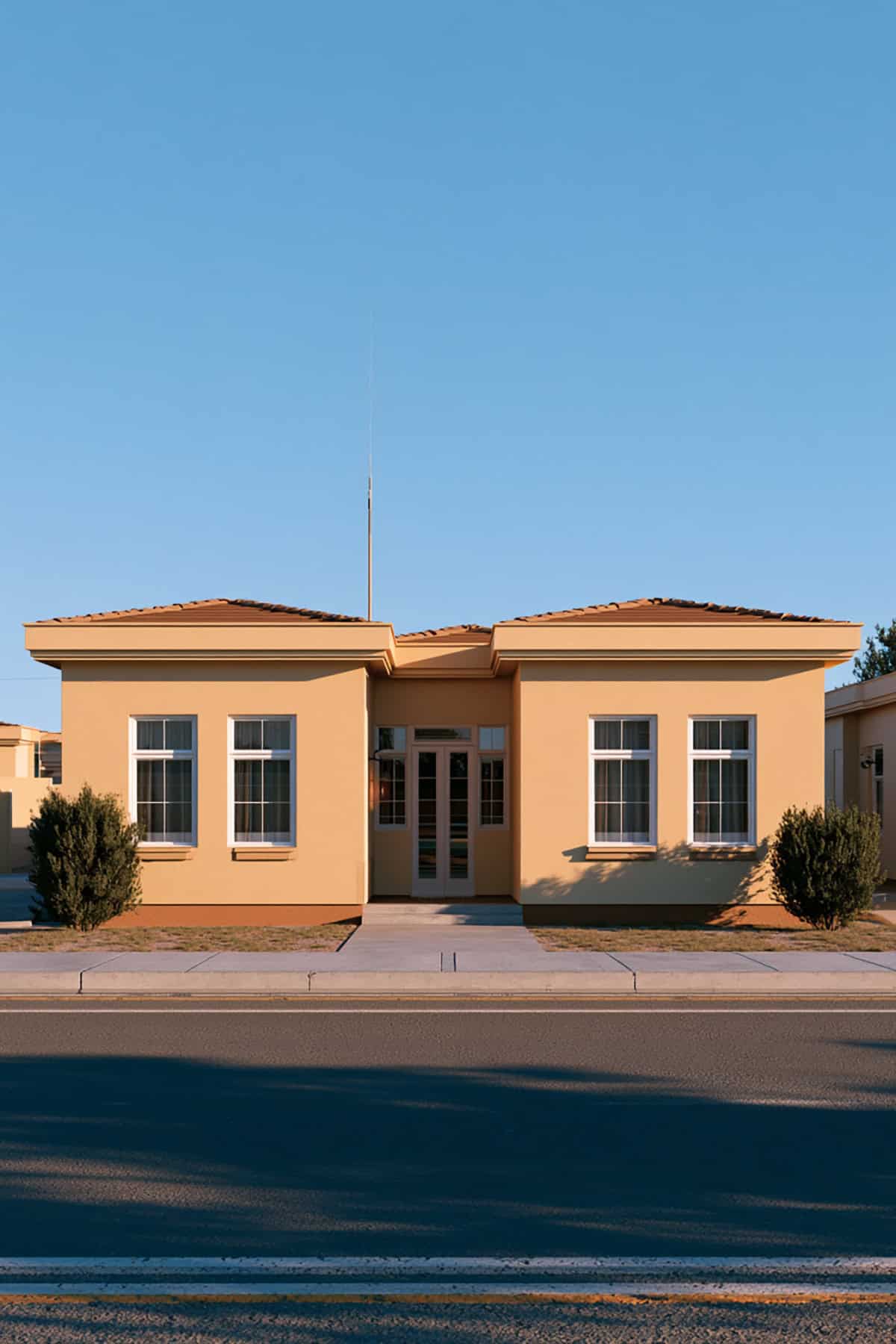
Somehow, warm beige just settles a bungalow into its lot in a way that bright white or cool gray can’t. When a home already has interesting rooflines, the soft color lets the roof shapes take center stage.
On a classic pitched roof, beige siding or stucco under a deeper brown or weathered shingle roof keeps the walls grounded and the roof distinct. Dormers trimmed a notch lighter than the body don’t overwhelm the roofline but stay visible.
Two-Tone Horizontal Siding Bungalow
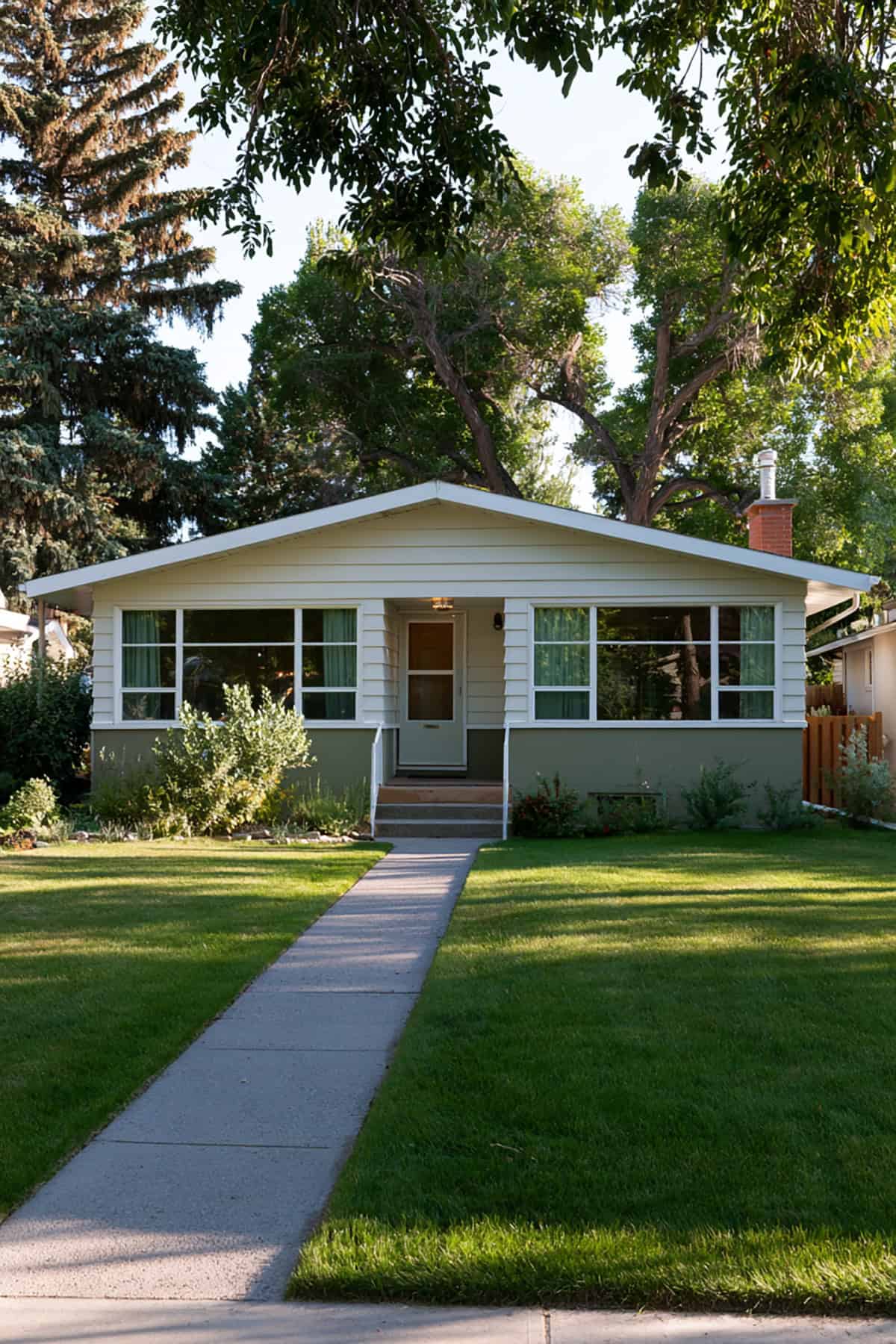
Horizontal siding in two tones can define a bungalow’s shape without changing the bones. The trick is placing the darker color where it grounds the house—usually along the foundation or porch base—so you don’t accidentally make the house look squat.
Lighter upper walls over a deeper base (think greige over charcoal, or sand over olive-gray) give a sense of intention. Let the siding’s natural breaks—like porch rails or water tables—dictate where the colors shift. Inventing new lines just makes things awkward.
Soft Yellow Bungalow
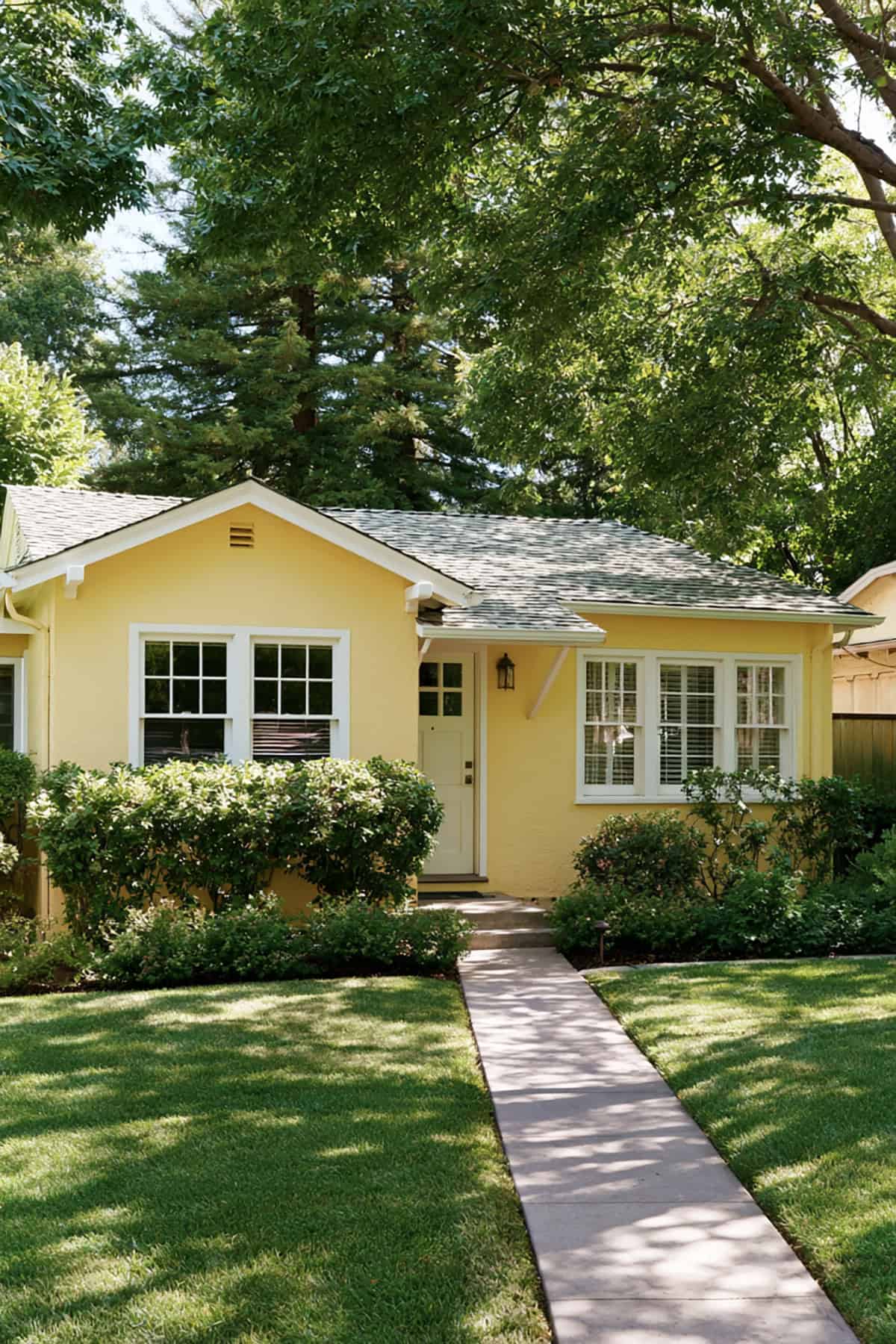
Muted, creamy yellow just feels right on a bungalow—especially when the rest of the exterior keeps things modest and welcoming. It’s a color that works with the scale, not against it.
Pair it with warm white trim, a medium porch floor, and keep those exposed rafters crisp if you have them. That little bit of structure keeps yellow from drifting into “cute” territory and makes it feel architectural.
A deeper front door color—dusty blue, forest green, or even just stained wood—gives the entry enough weight. As for traditional touches, less is more: simple columns, divided-light windows, and classic lantern sconces.
Olive Green Bungalow With Natural Stone Base
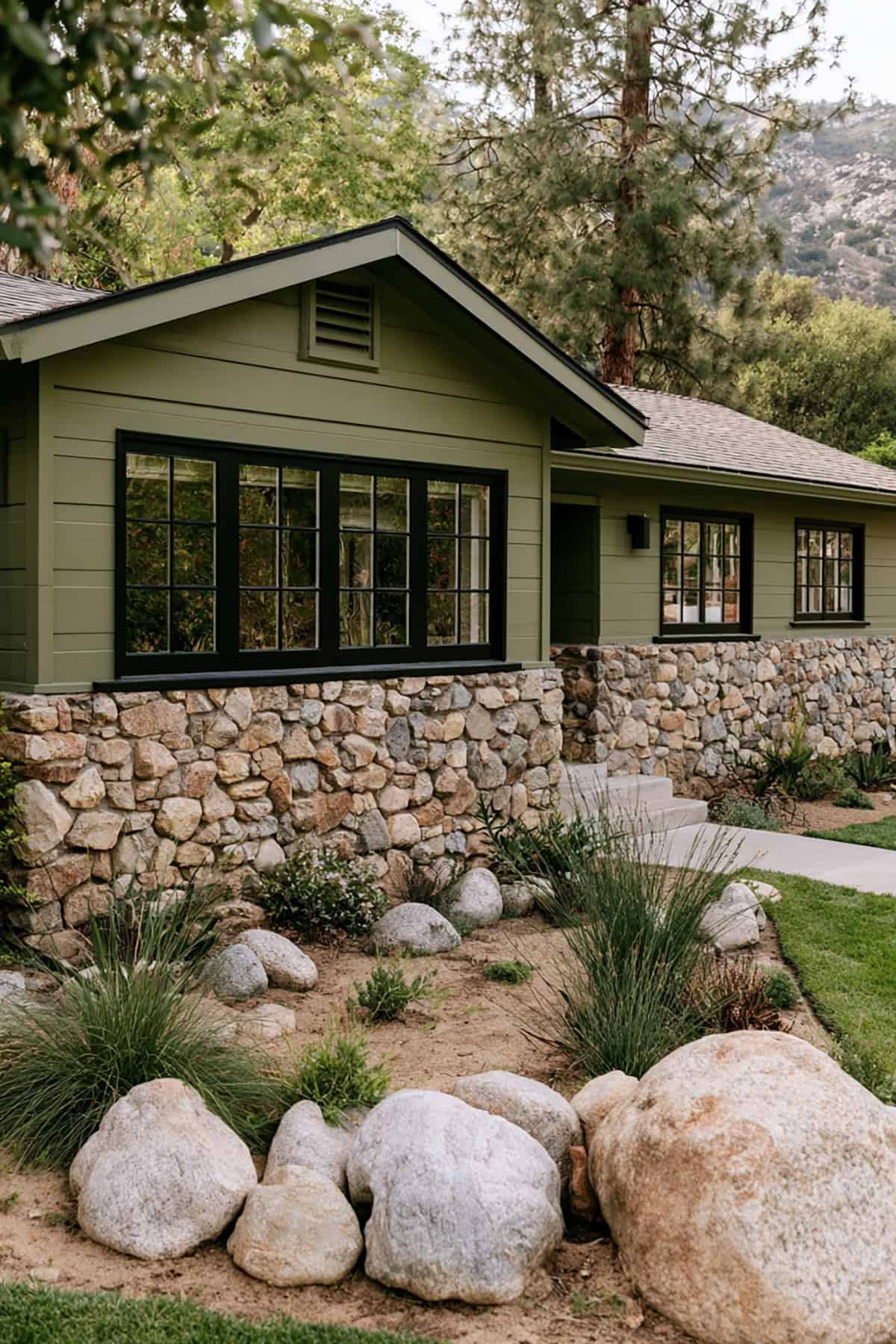
Olive green manages to feel both rooted and fresh, which suits a bungalow’s low profile. It doesn’t disappear into the yard, but it never feels forced either.
Stone bases bring in texture and a sense of permanence, especially on houses with low foundations or porch piers. The stone should look natural and varied, not overly polished or uniform.
Trim can swing either way—warm cream for a softer, classic look, or deep bronze-black for sharper lines. The landscape should echo the wall color without matching it exactly.
Matte Black Window Frames With Neutral Walls
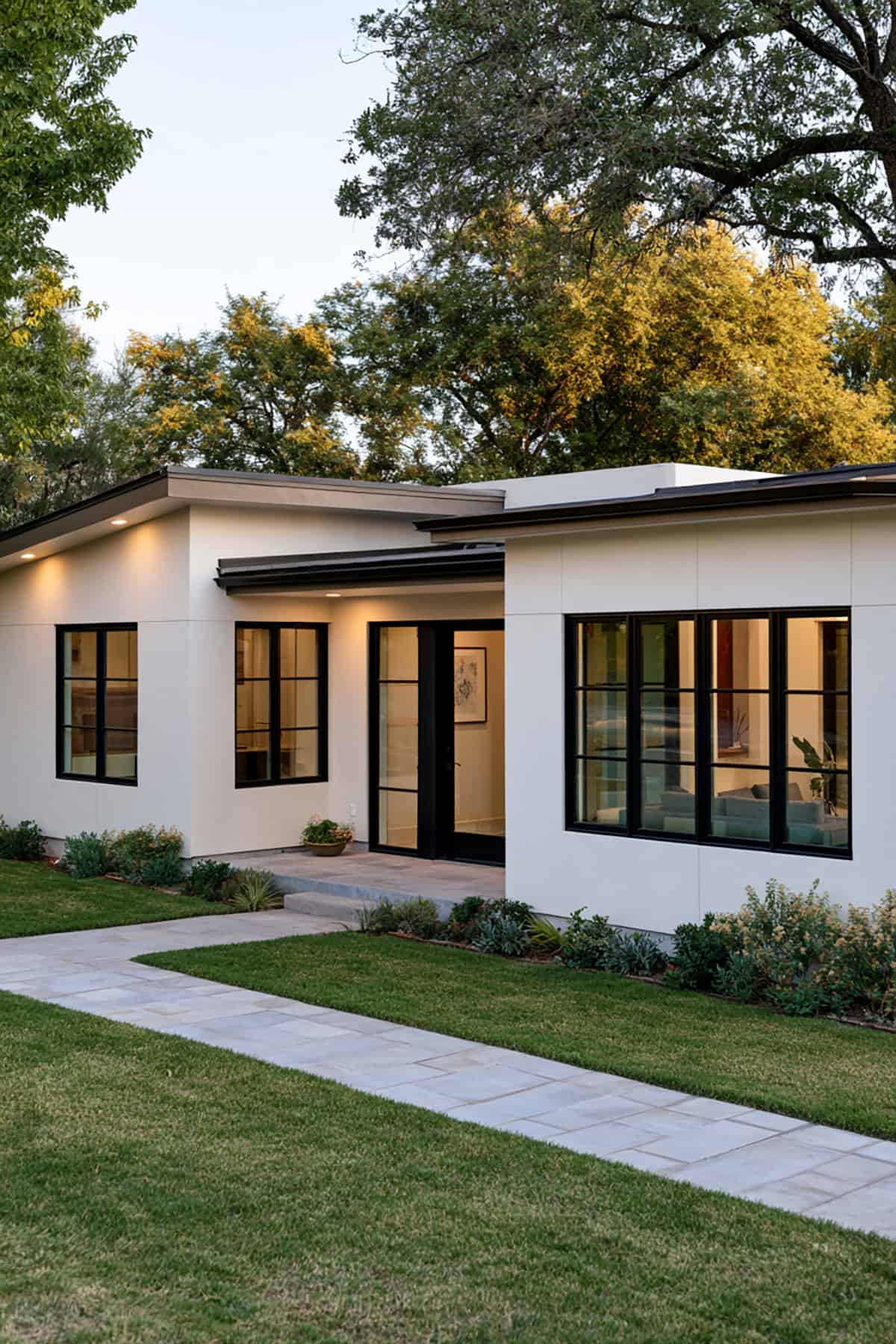
Matte black window frames have a way of making even a basic bungalow look sharper and more current, especially when the walls stay neutral. Suddenly, the windows become the main event, and you don’t have to overhaul the whole exterior to get a big impact.
Best results come from pairing black frames with warm white, taupe, or pale sand walls. On a small house, restraint is key—too much black can fragment the facade. Stick to the window frames, front door hardware, and maybe a couple of lights.
Light Taupe Bungalow With Soft Curved Pathway Entry
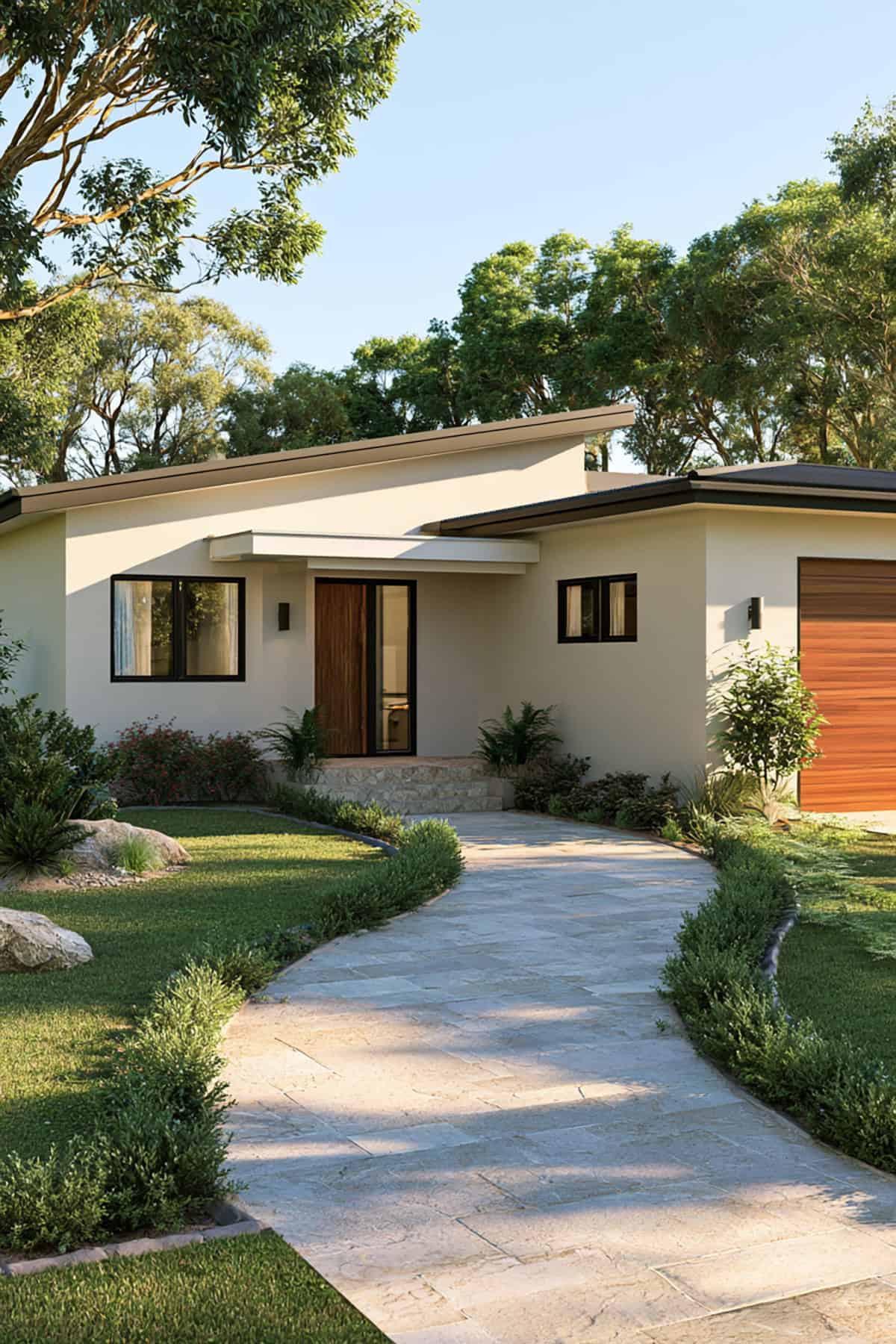
Light taupe brings a kind of quiet warmth that sits between gray and beige—a subtle backdrop that lets other elements, like the walkway or garden, set the tone.
Curved pathways are underrated. They break up the straight lines of a low roof and add a sense of movement, even in a small yard. Taupe works well with cream trim, muted charcoal roofs, and understated fixtures.
L-Shaped Bungalow With Defined Corner Layout
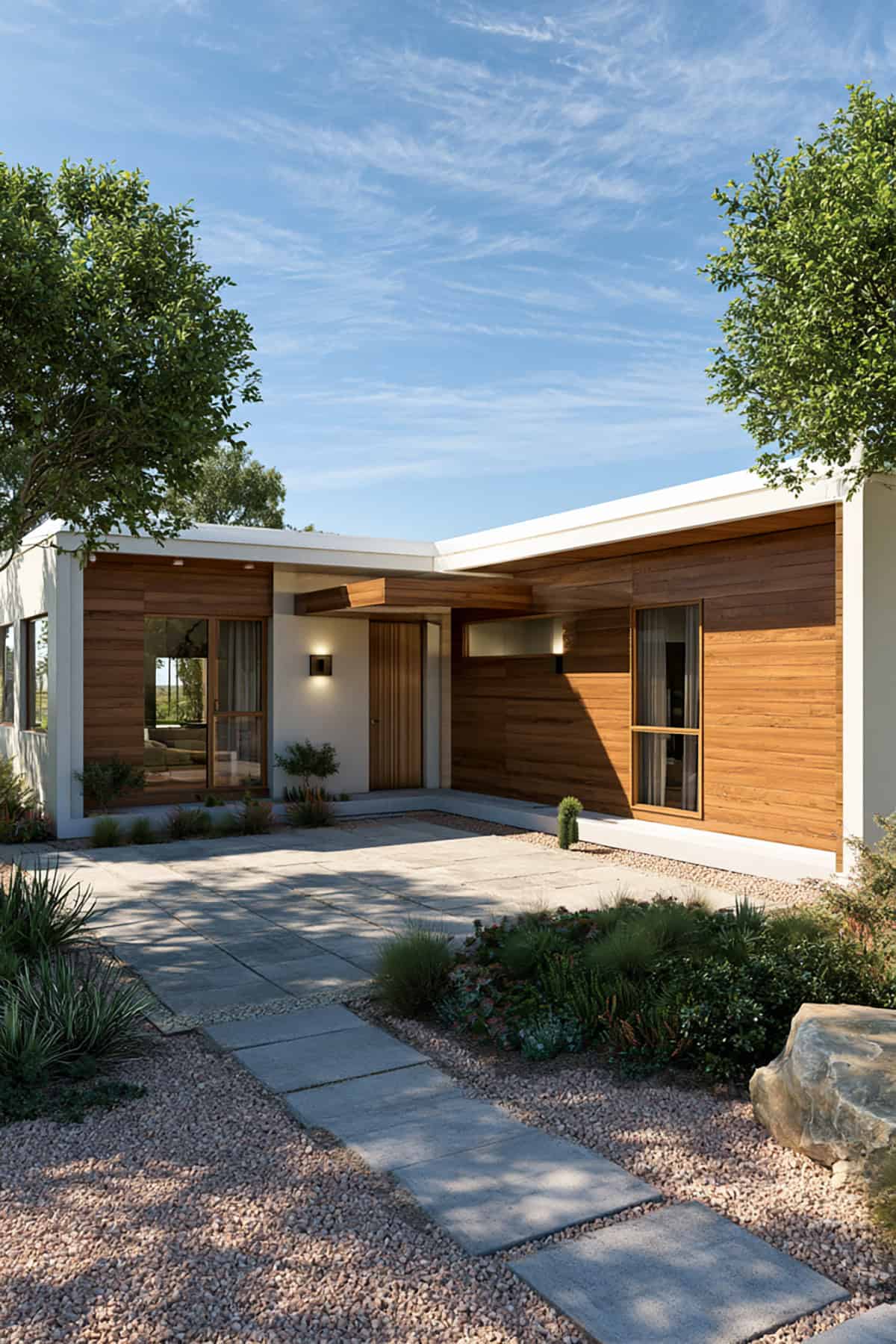
There’s a certain opportunity baked into an L-shaped bungalow. The corner where the two wings meet can anchor the whole composition if you let it.
One wing can face the street, the other can tuck into a side garden or offer privacy. When the front door sits in that inner angle, it’s easy to highlight the protected spot with a small court or a covered porch.
Consistency across siding, trim, and roofing helps the two wings feel like a single home. Variation can come from how you group windows or shape the entry.
Earth-Toned Stucco Bungalow
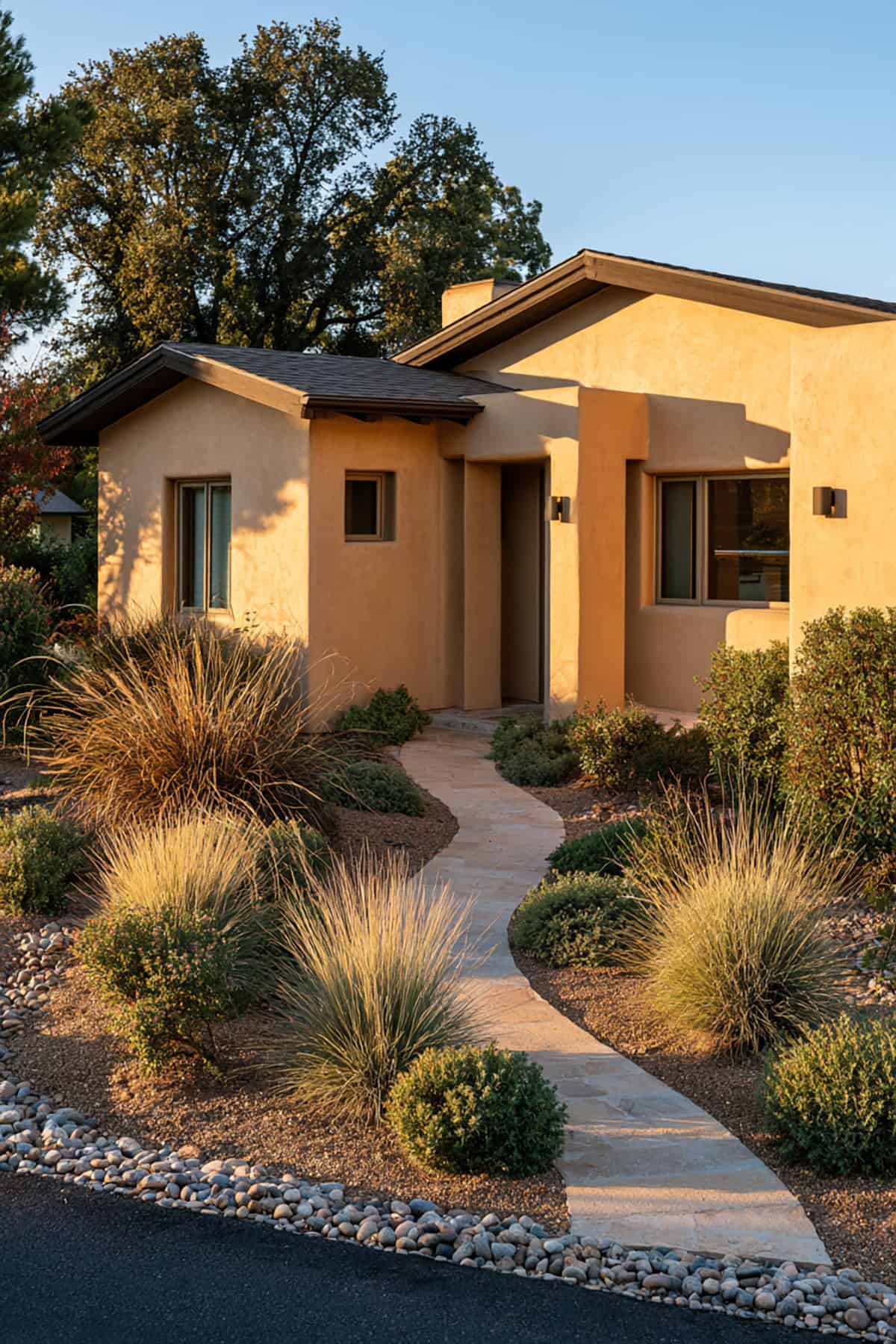
Stucco in earth tones brings a calm, grounded look that works especially well in dry climates or transitional neighborhoods. The smooth walls keep the facade simple, so the landscape has to step up and provide texture.
Colors like clay, mushroom, or muted tan help the house settle into its lot. Since stucco can look flat from the street, layered landscaping is crucial. Start with low shrubs at the foundation, then add medium grasses or perennials further out, and maybe a taller accent plant at the entry or corners. That repetition of height mirrors the bungalow’s low stance and adds depth.
Desert-Inspired Bungalow With Flat Rooflines
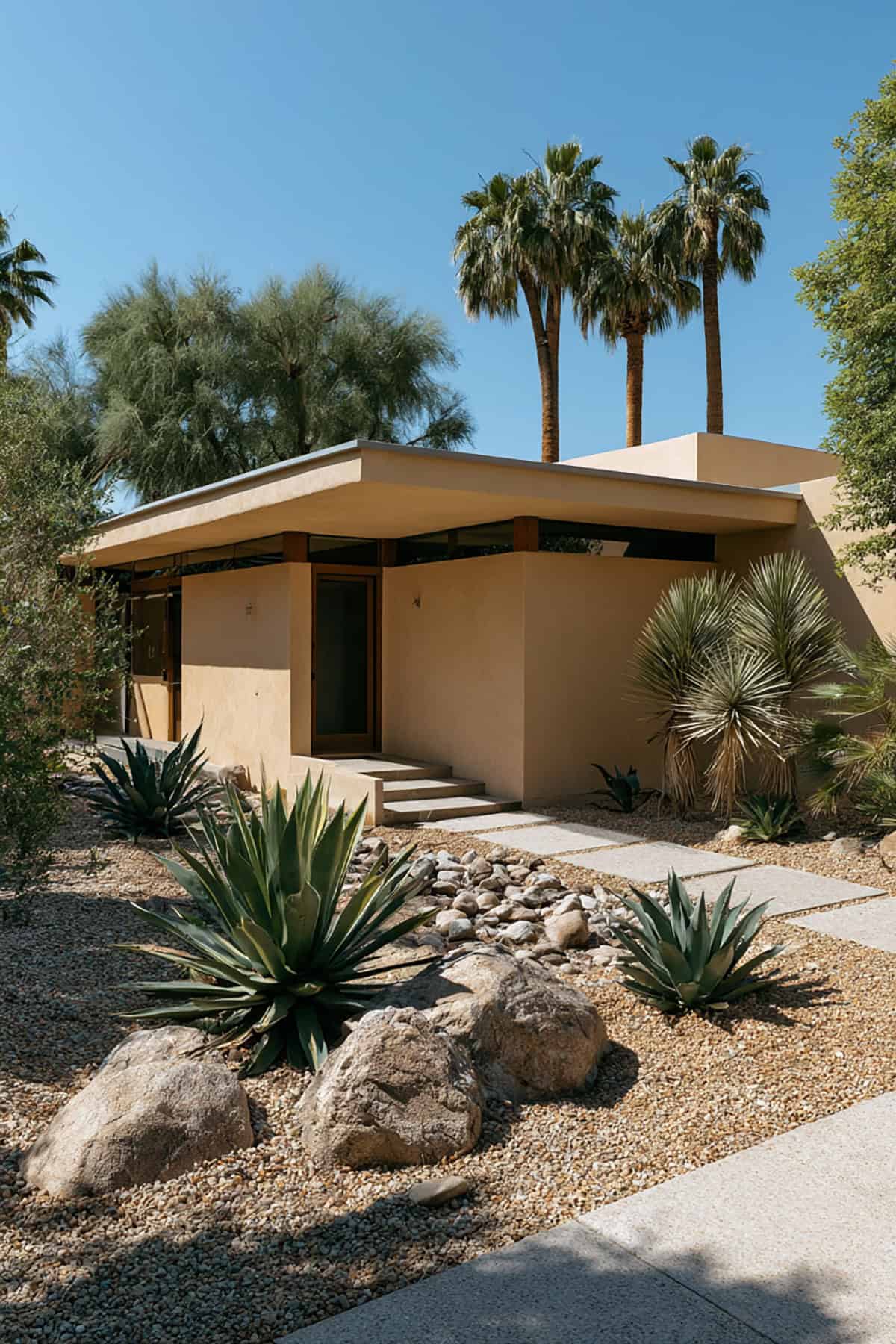
Horizontal lines, muted finishes, and generous shade set the mood for a desert-inspired bungalow. Flat, extended rooflines stretch the house wider and create a sense of shelter that feels right for a one-story home.
The wall palette leans toward sand, clay, or pale taupe. Roof edges should project enough to throw real shadow across the facade—those shadow lines are as important as any color choice.
Metal roofing in a weathered bronze, matte gray, or warm brown holds the geometry crisp and fits the vibe perfectly. Foundation planting should be minimal—think desert grasses, agave, gravel, and broad stones.
Dark Charcoal Bungalow With Warm Wood Accents
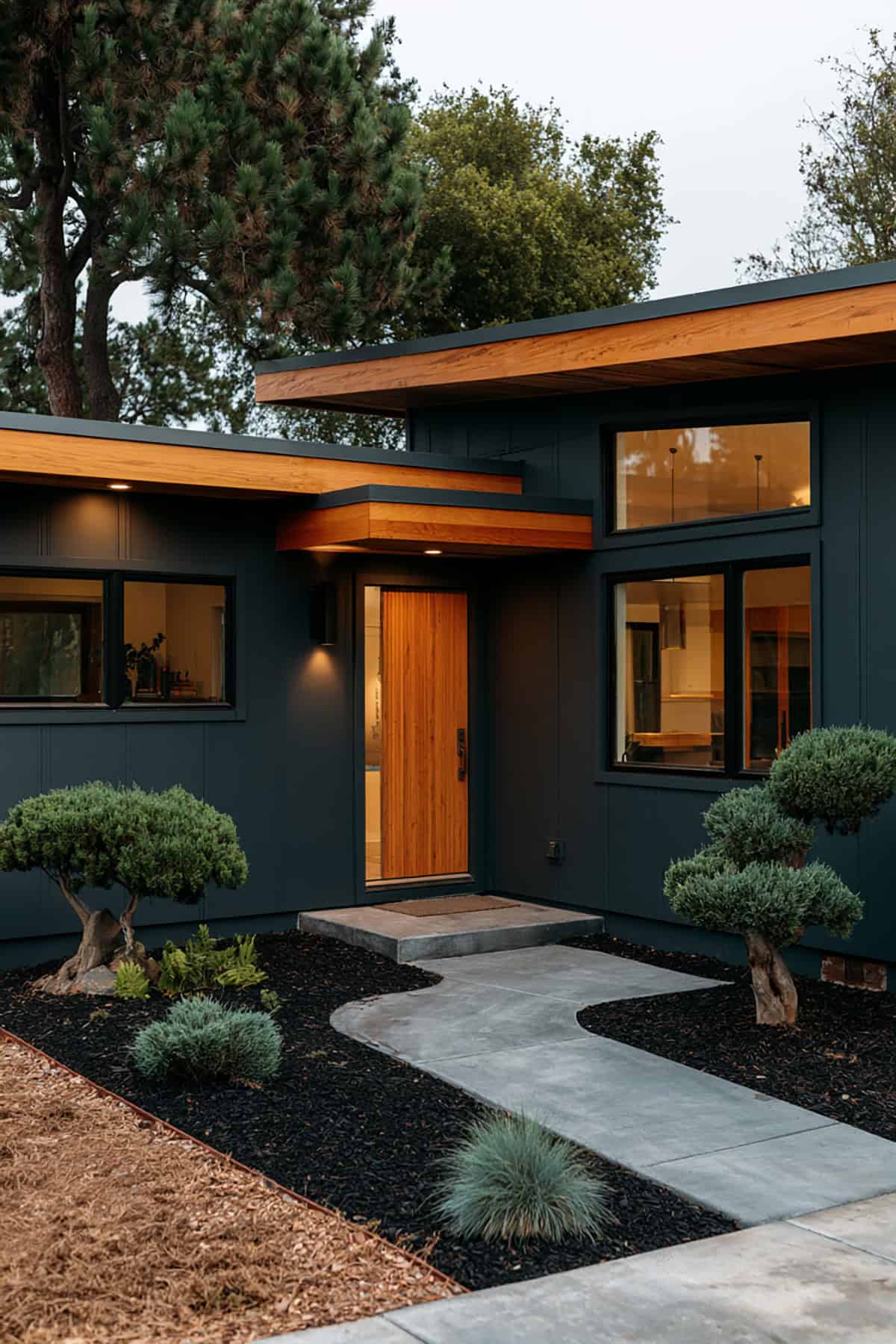
Charcoal brings instant presence to a bungalow, but it’s the warm wood accents that keep things from getting too stark. The contrast is strong, but not harsh—especially when the wood stays natural and mid-toned.
Charcoal siding paired with wood at the porch ceiling, gable, or entry surround looks intentional, not busy. Avoid overly orange or dark stains; cedar or thermally modified wood usually lands in the sweet spot.
Lighting matters—warm amber porch lights or low path fixtures make the wood glow at night. If the landscaping is too sparse, dark bungalows can feel heavy, so make sure there’s enough green at the base to tie everything together and soften the look.
Cream Brick Bungalow With Symmetrical Facade Design
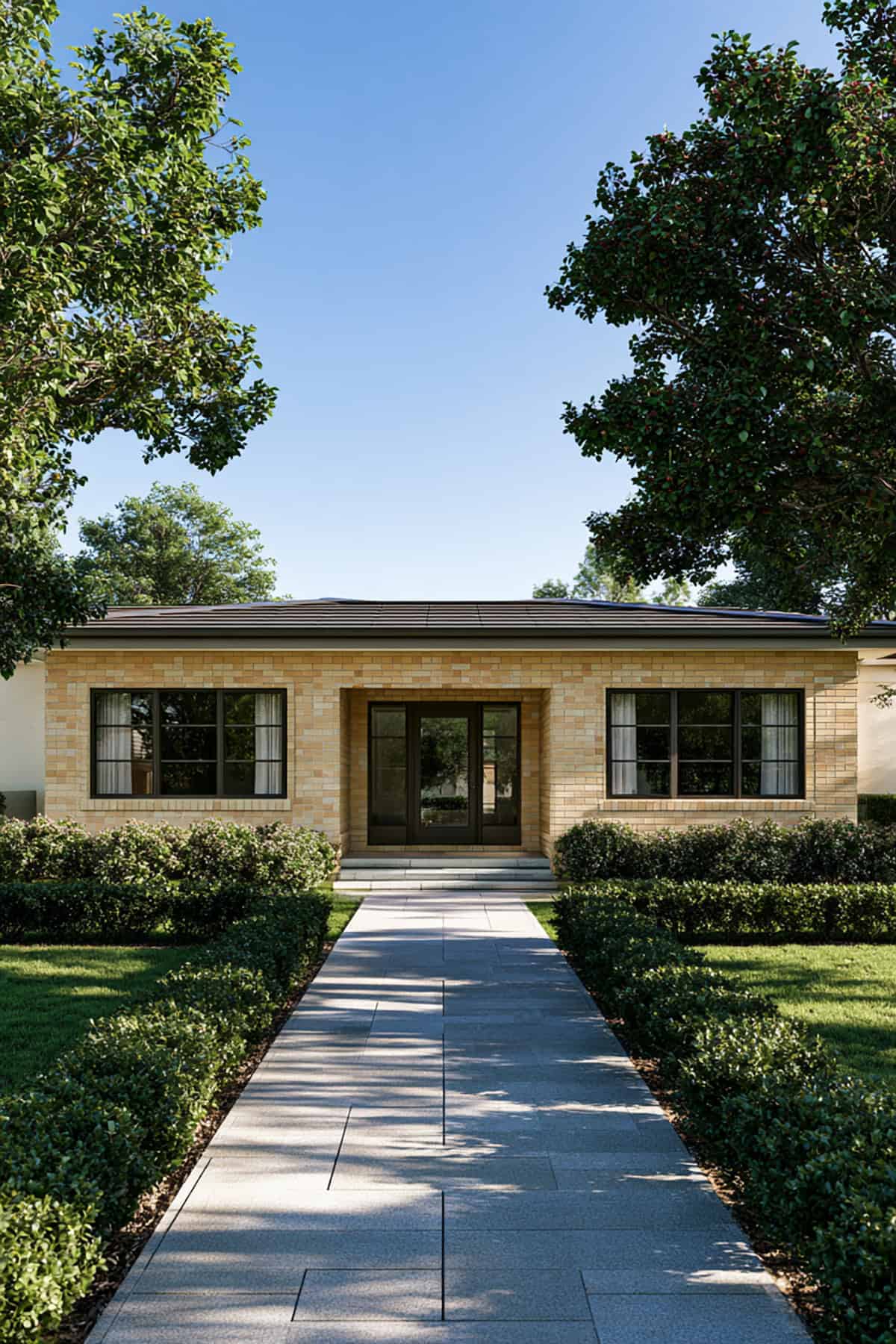
Something about that creamy brick—soft, a bit chalky, never too heavy—lets a bungalow stand out without shouting. When the facade lines up with a centered door and balanced windows, the effect feels calm, almost effortless, not stiff or overly formal. Matching planters or porch lights on either side, evenly spaced posts, and the brick itself do most of the visual work, so the rest can stay understated.
Trim works best when it’s not trying too hard: white or muted taupe, maybe, but black shutters usually just clutter things up.
Concrete Bungalow With Sharp Edges
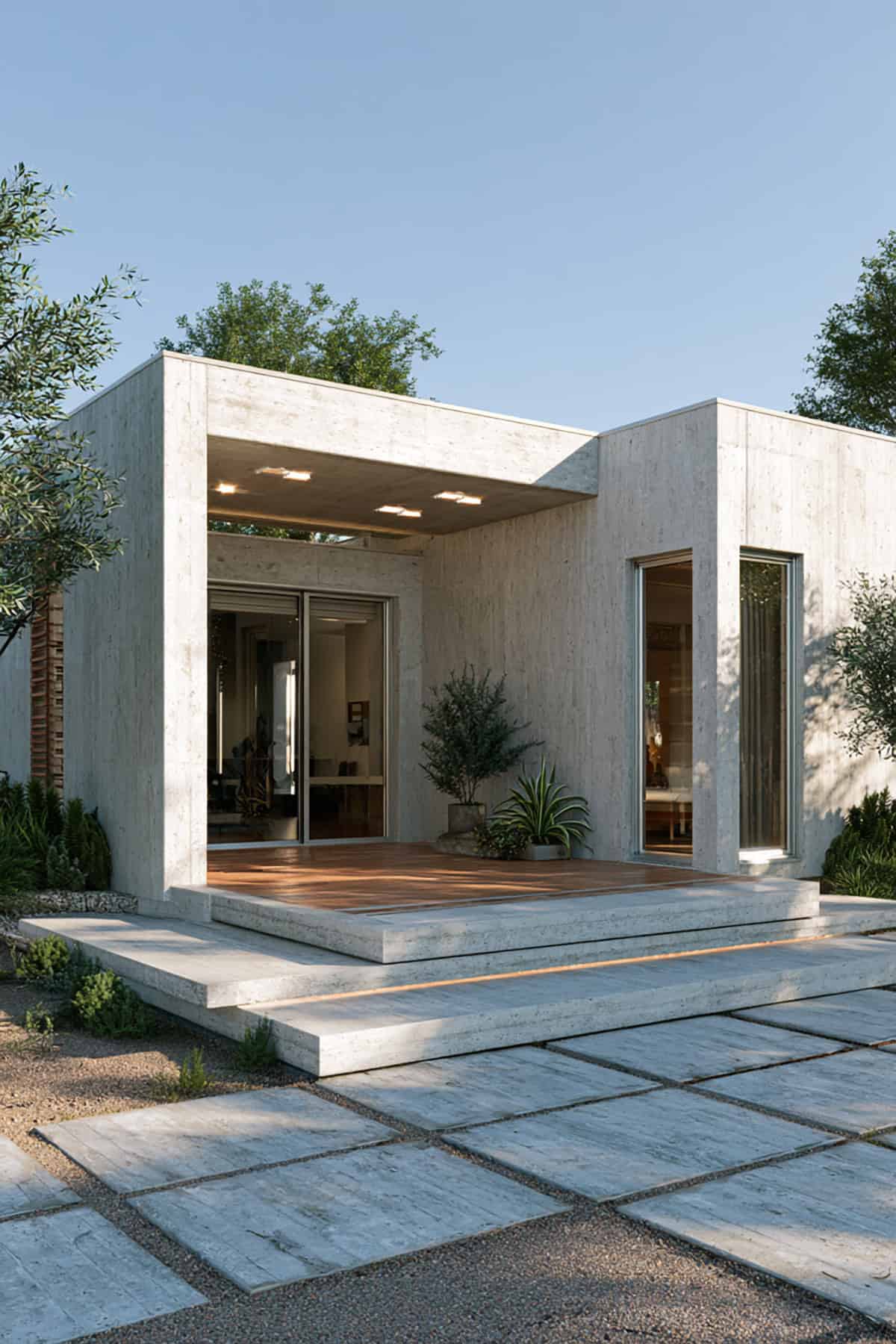
It’s the lines that make a concrete bungalow feel intentional, not cold. When the house starts simple—uncluttered walls, squared-off supports, barely-there trim—concrete can look striking, almost sculptural. If the place is already bristling with brackets or gingerbread, though, those extras usually need to go first or the effect gets muddled.
Here, contrast comes from form, not flashy colors. Pale concrete, a single wood door, charcoal frames—just enough variety, no more.
Compact Bungalow With Courtyard-Style Entry
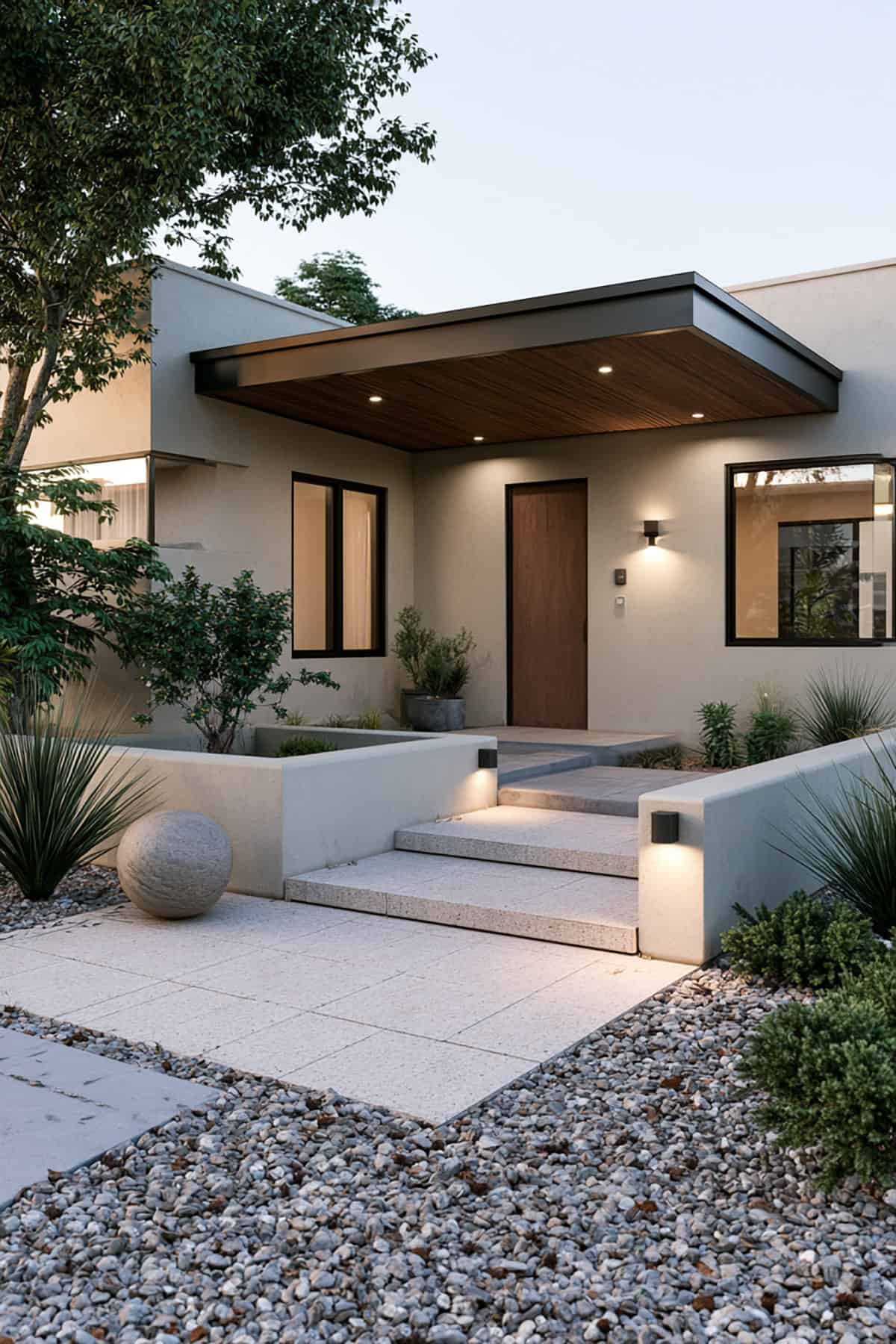
There’s a certain presence that comes from a sheltered entry, even on a small lot. A courtyard-style approach carves out a little outdoor room before you ever reach the front door—low walls, planted edges, maybe a short gate, all working together to give depth and intention to the facade.
When the door sits back or off to the side, this setup feels especially inviting. Paving should feel proportional—rectangular pads, brick, or cut stone, nothing too fussy.
Wraparound Low Planter Borders
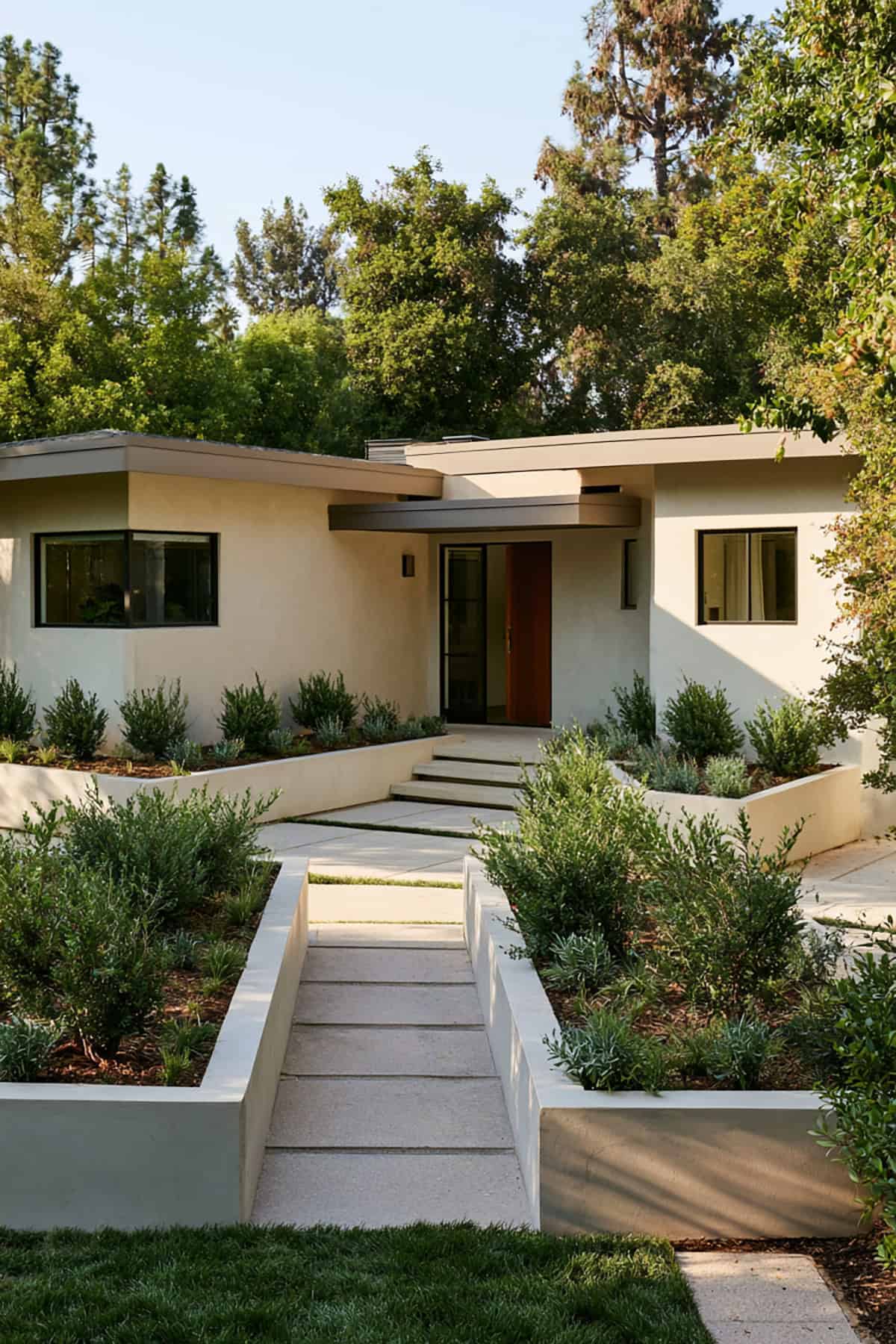
Framing a bungalow with low planter borders gives the whole front a crisp, finished edge—especially around the porch, where things can get a bit muddy between house and yard. The material should suit the home’s style: stone, brick, or smooth concrete, but always low enough to let the porch breathe.
When the border wraps, it ties together steps, window lines, and foundation plantings in a way that feels unified instead of piecemeal.
Vertical Window Accents for Height Illusion
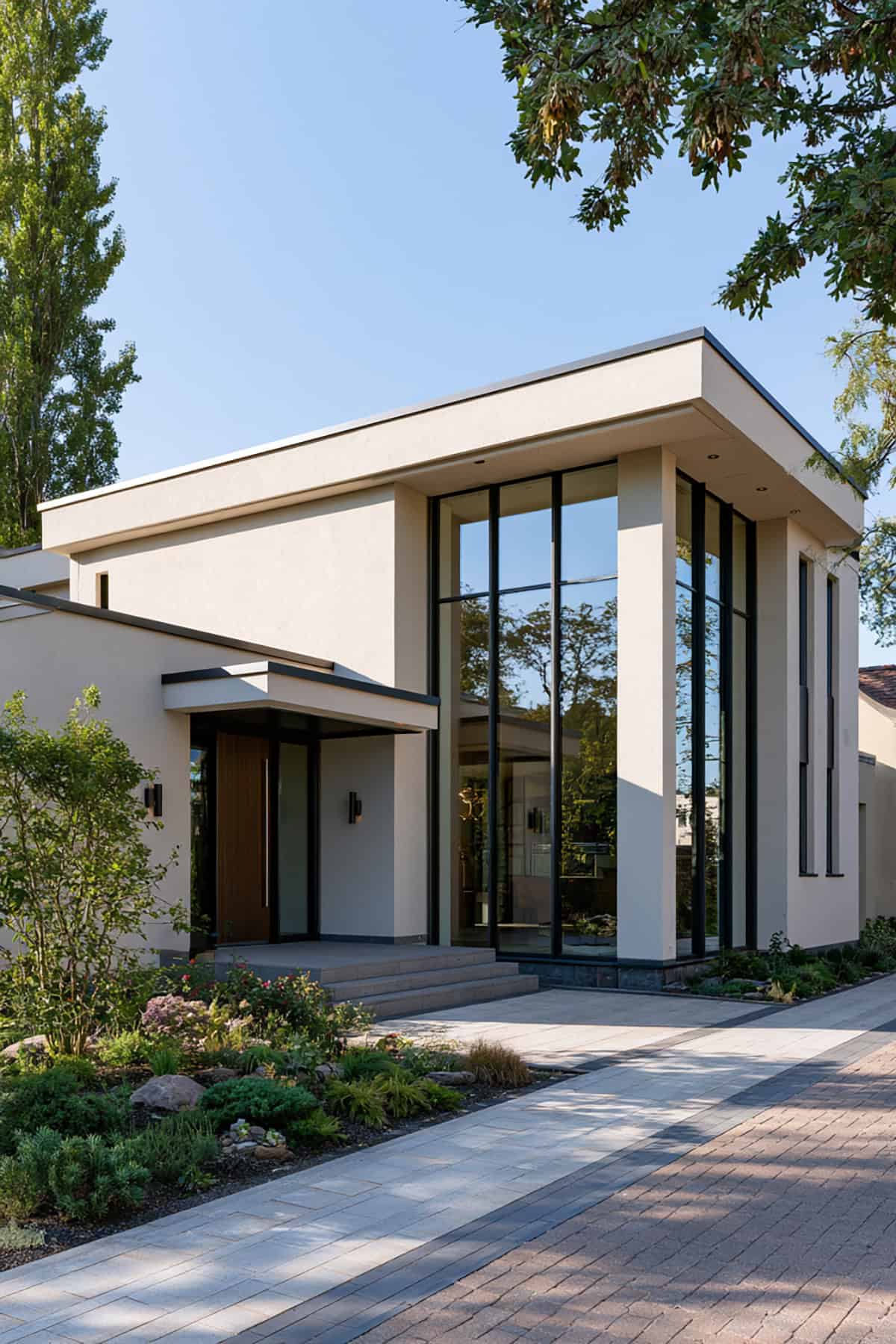
If the bungalows just feel too anchored, too horizontal, vertical window accents can break that up, adding a bit of lift without messing with the roof. It’s not about swapping every window for a tall one—just grouping a few narrow panes, running trim lines upward, or tucking in a vertical sidelight near the entry can do the trick.
Subtle Roof Overhang Lighting
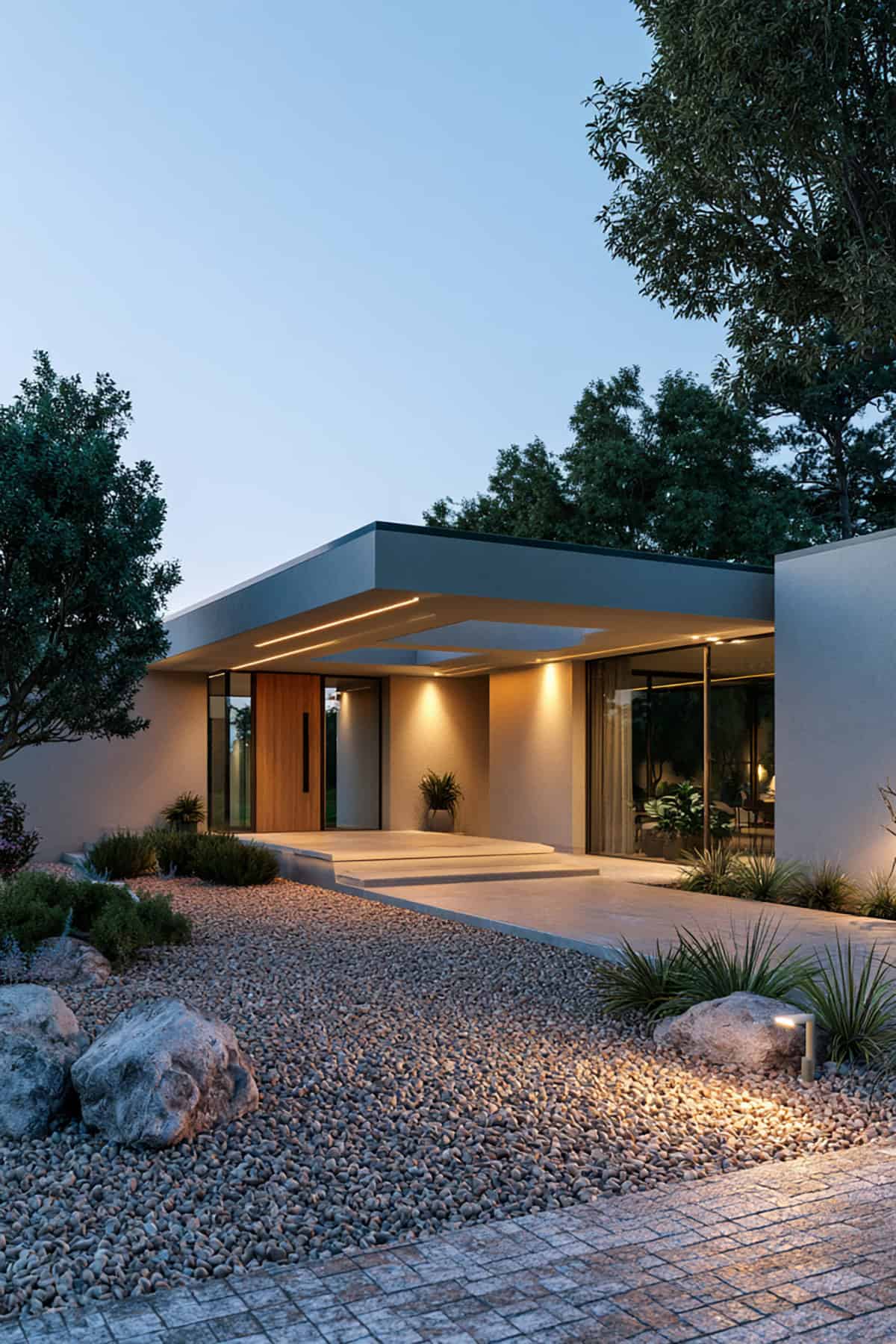
As daylight fades, subtle lighting under the roof overhang can make a bungalow feel warmer and more inviting—never overlit, just enough glow to highlight the lines. The eaves and porch already cast natural shadows, so a few small, concealed fixtures can bring out those details and make the entry path safer without turning the whole house into a spotlight.
If there’s a pendant light on the porch, let that be the star. The overhang lights should just gently wash the soffit, columns, or path.
Recessed Window Bays
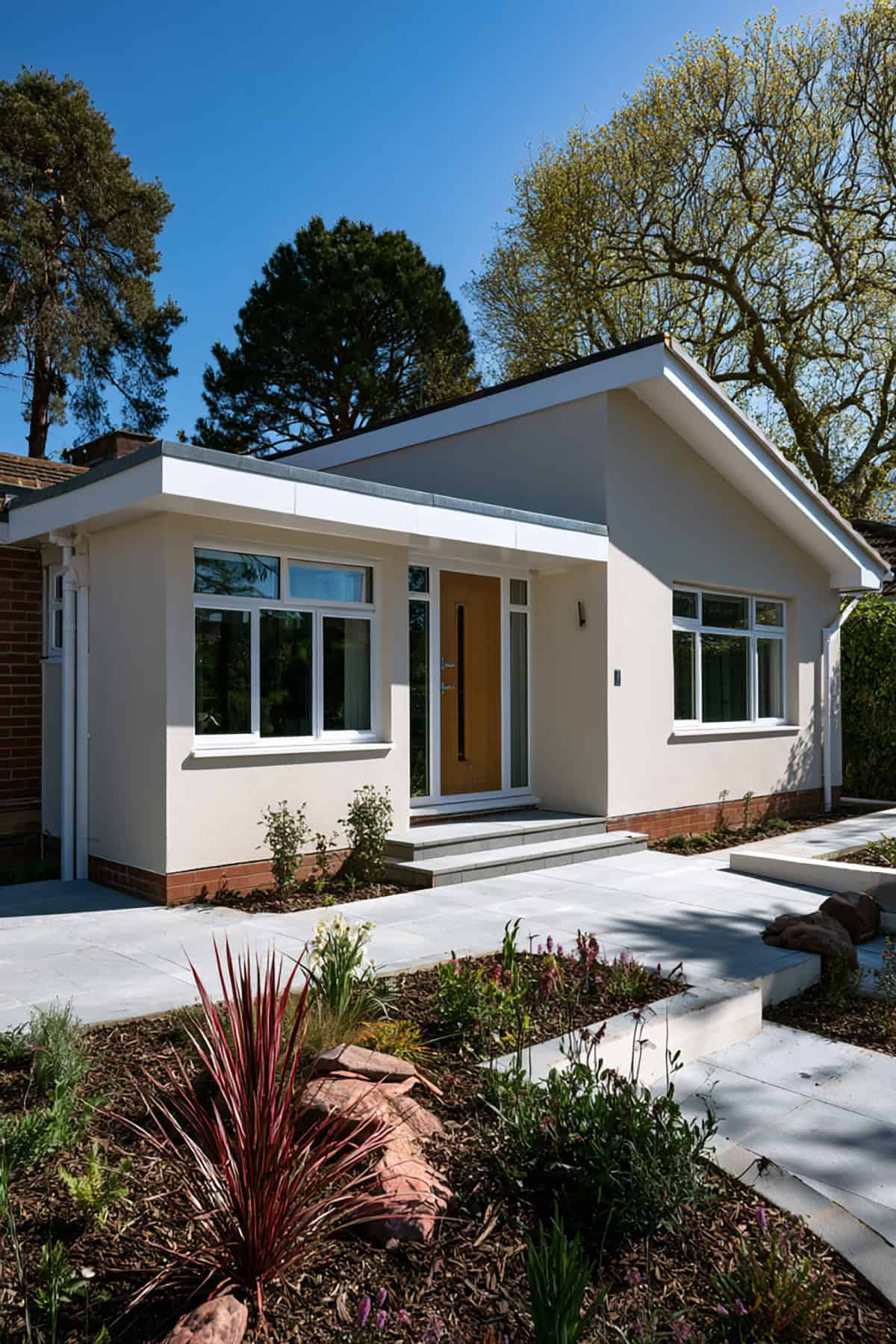
Recessed window bays give a flat bungalow facade a whisper of dimension without overwhelming it. Instead of bumping out, the window tucks back, casting shadow and adding interest where there was none.
Framing the recess with clean trim or a slight material shift—maybe a shade darker, maybe a different cladding—creates a focal point that still respects the house’s proportions.
Raised Front Platform Entry
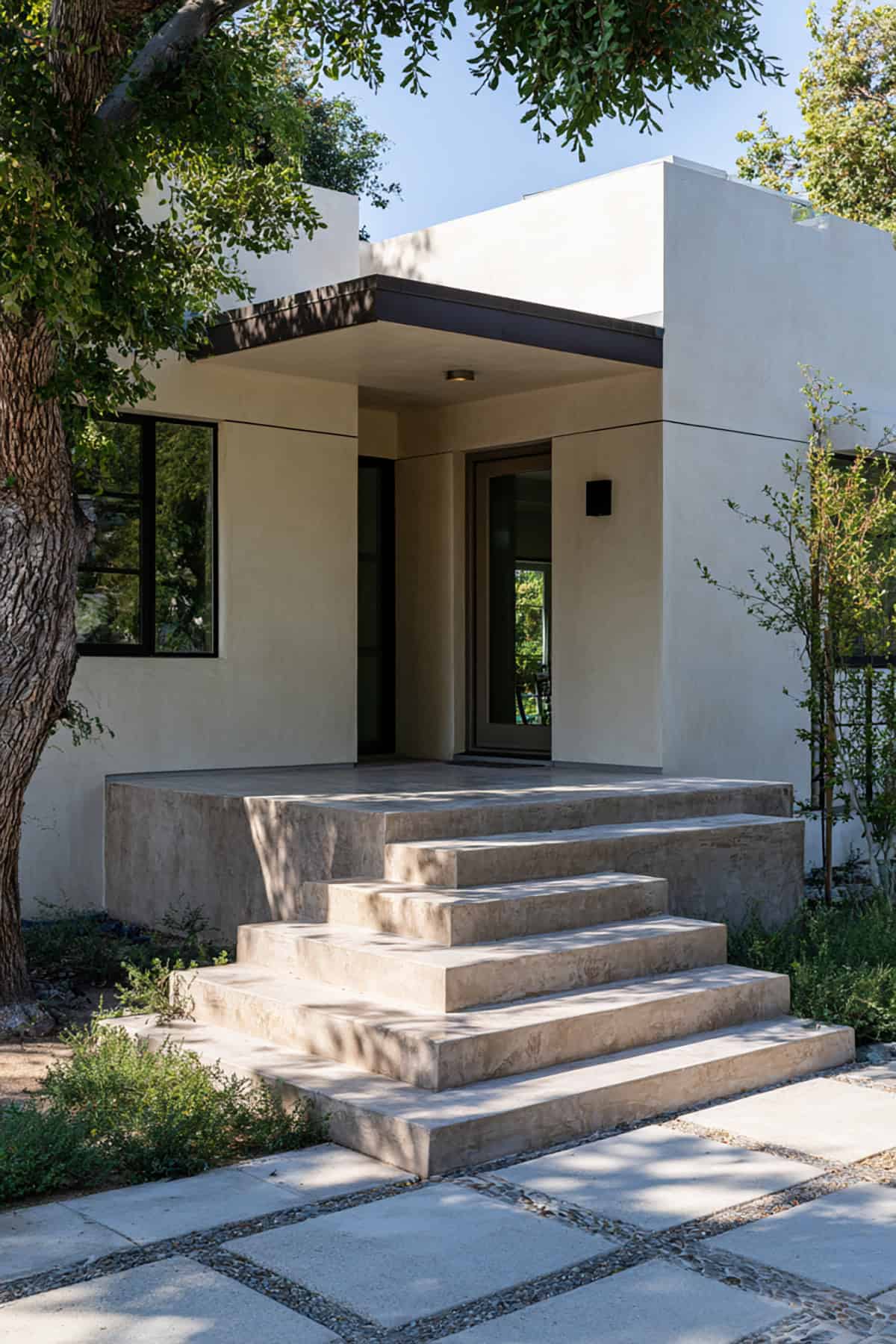
Raising the front entry with a broad platform changes the whole approach, especially when the house sits a bit above grade. Instead of a skinny run of steps, you get a generous landing that invites you in and visually expands the entry zone. Materials should echo the house—brick, concrete, or stone, nothing that feels out of place.
Offset Entry and Asymmetrical Layout
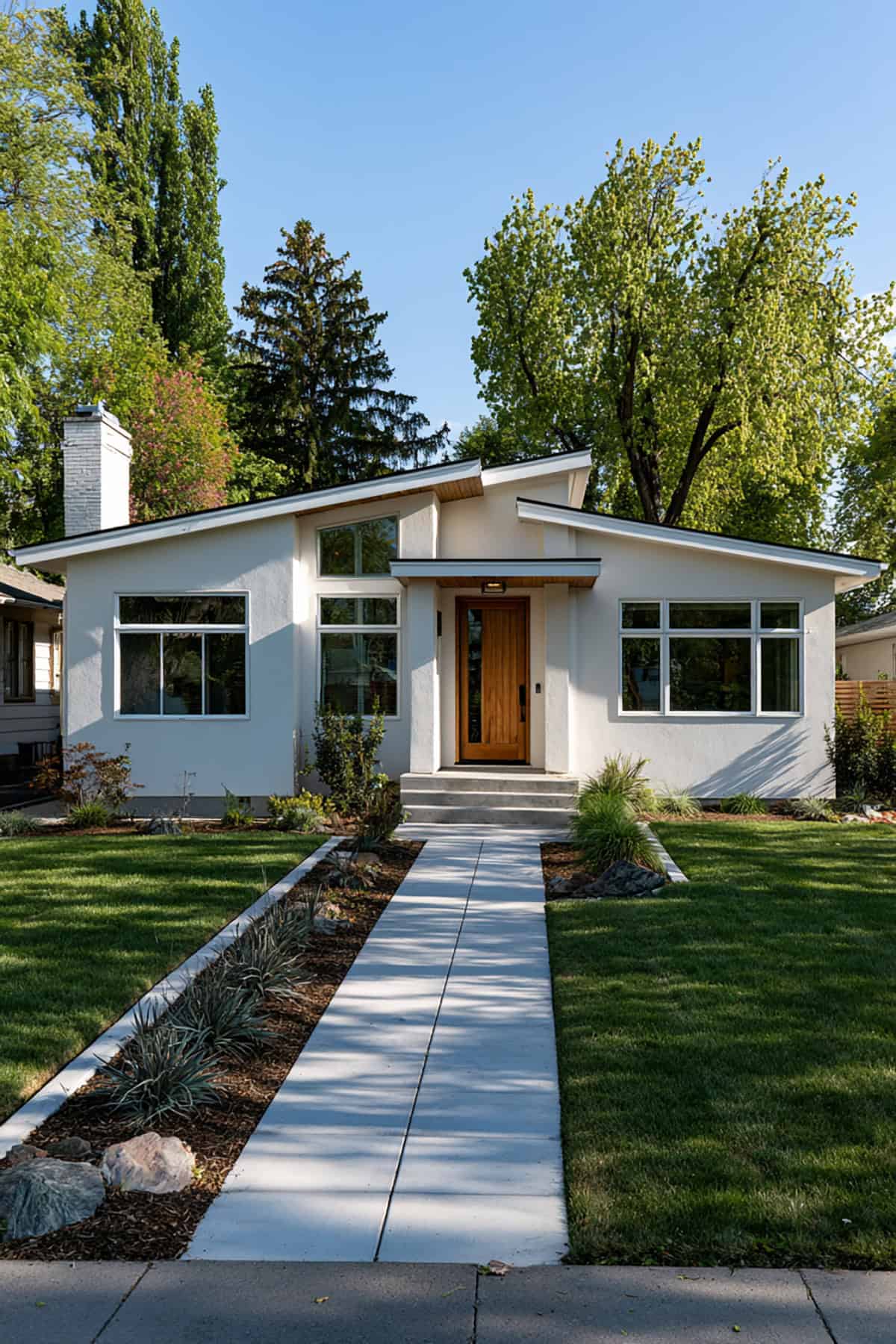
Not every bungalow needs to play by symmetry’s rules. An offset entry can bring a laid-back, modern feel—so long as the imbalance looks purposeful.
When the front door sits off to one side, a path that leads straight to it and a porch or roof element that marks the entrance help draw the eye where it belongs. The other side gets balanced with windows, plantings, or a subtle material shift, not by forcing a mirror image.
Mixed Material Facade Panels
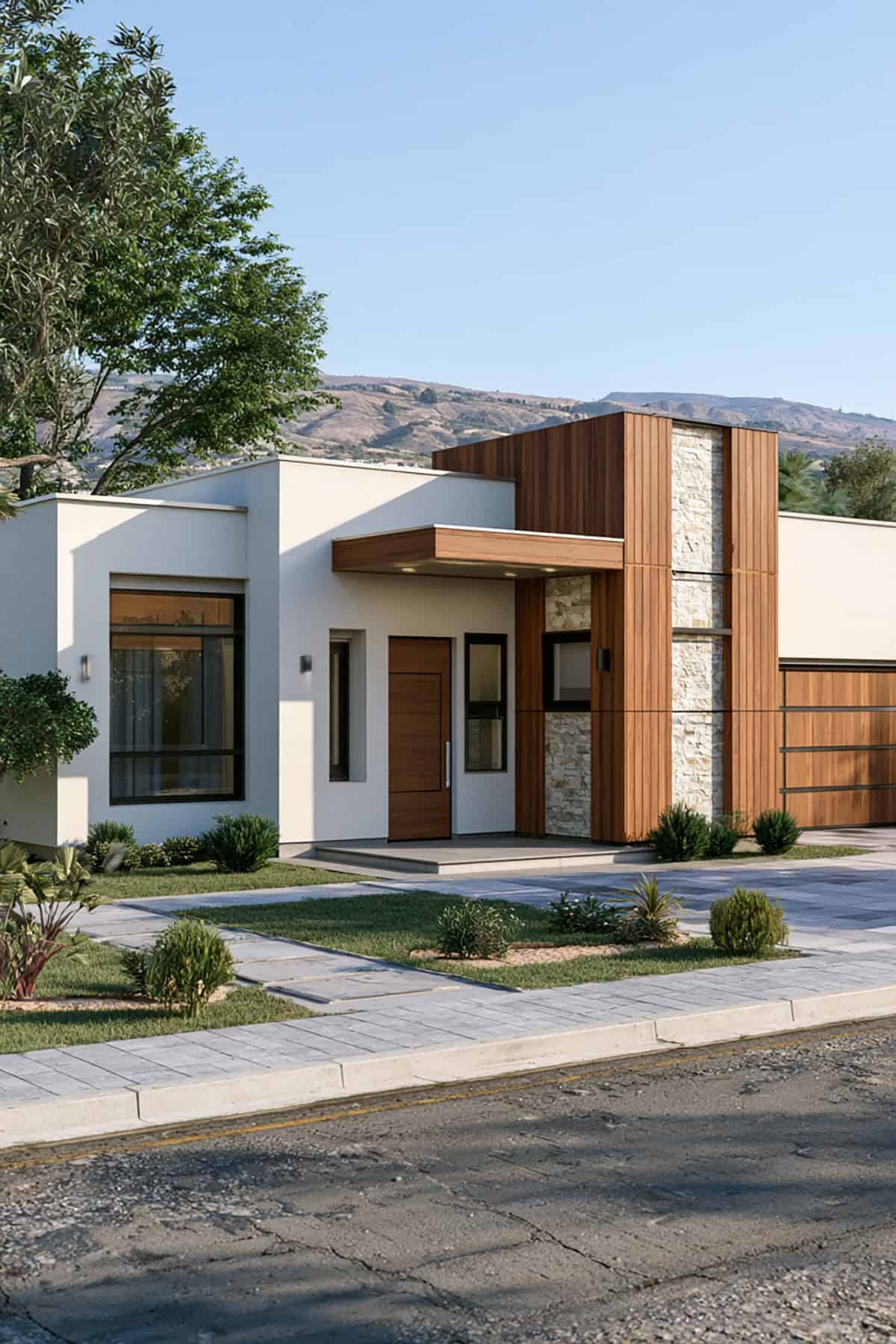
Mixing facade materials can give a bungalow more depth and a tailored feel, but it’s easy to go overboard. The real trick is to pick your moments: lap siding on the main body, maybe vertical panels at the entry, or stone at the base. Sometimes a combination like smooth fiber cement and natural wood at the porch or gable end works well. Texture can vary, but the colors should stay in the same family.
Light Stone Pathway and Framed Entry
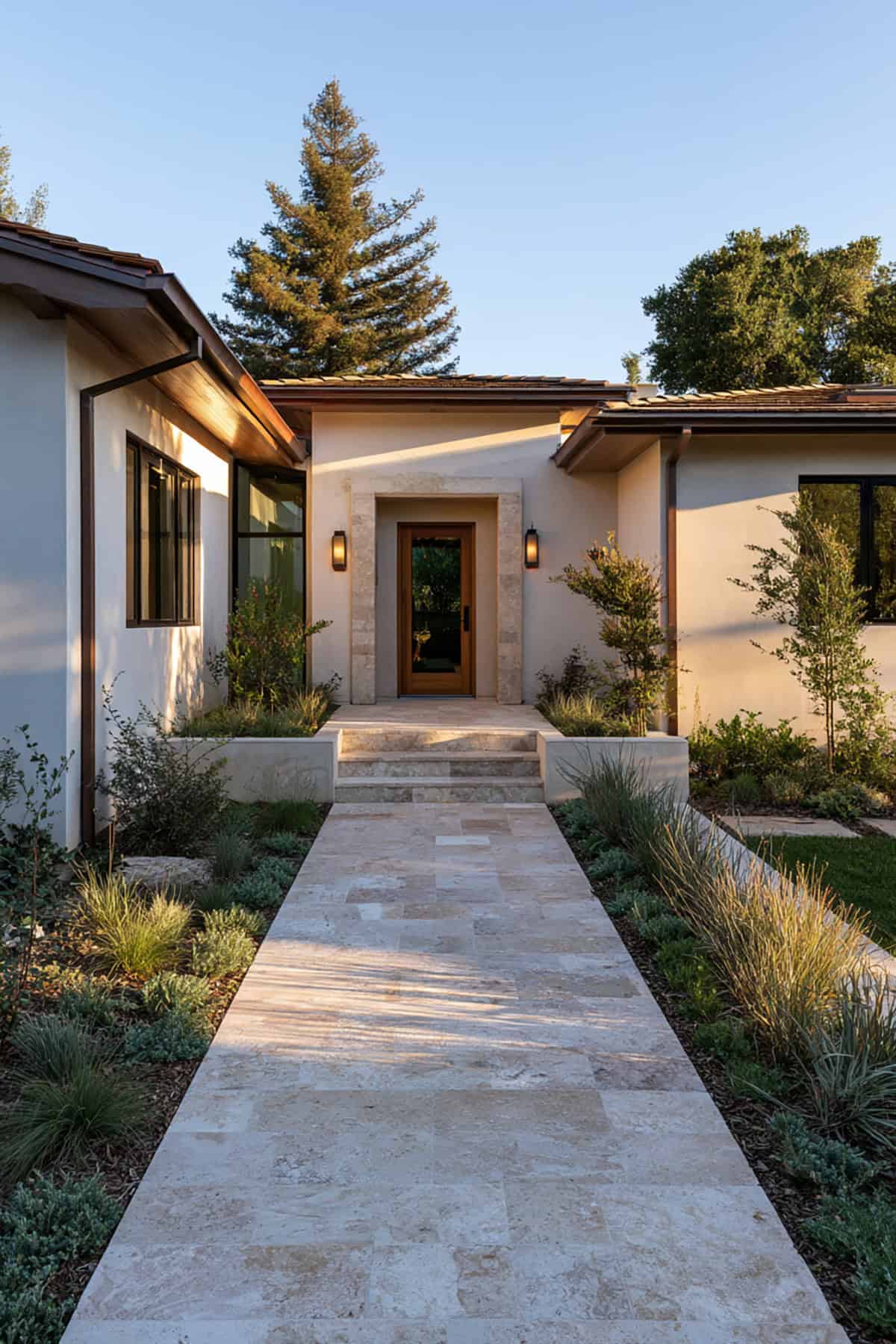
A pale stone path can wake up a shaded bungalow front yard, especially if the house itself is painted dark or sits under big trees. The path draws you toward the entry and gives the facade a grounded, organized look. Using the same stone tone somewhere else—on the steps, porch cap, or planter edge—ties it all together so it doesn’t feel tacked on.
Framing the entry doesn’t require anything grand. A pair of planters, a slim trim surround, or a modest beam overhead can mark the door and keep it in scale with the house.
Front Pergola Structure
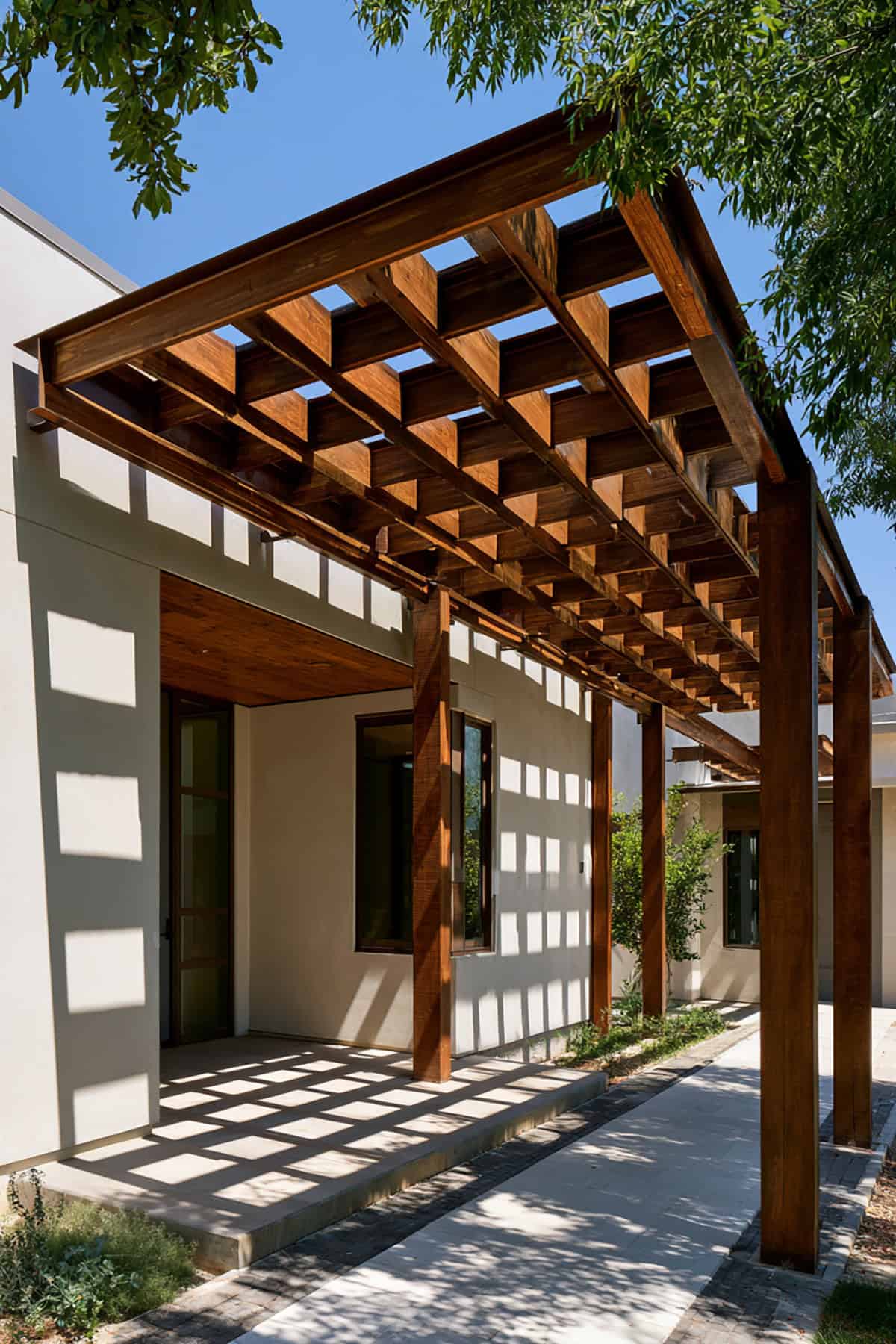
When a bungalow lacks porch projection, a front pergola can bring much-needed depth and shadow. The key is scale: oversized or spindly pergolas just feel awkward here. A low, solid frame that lines up with the roof or walk and feels like a natural extension of the house works far better.
Wood, finished in a muted stain or paint that matches the trim, keeps things grounded. You can leave the top open for a lighter touch, or partially cover it if you want more shade and stronger shadow lines.
Continuous Horizontal Window Band
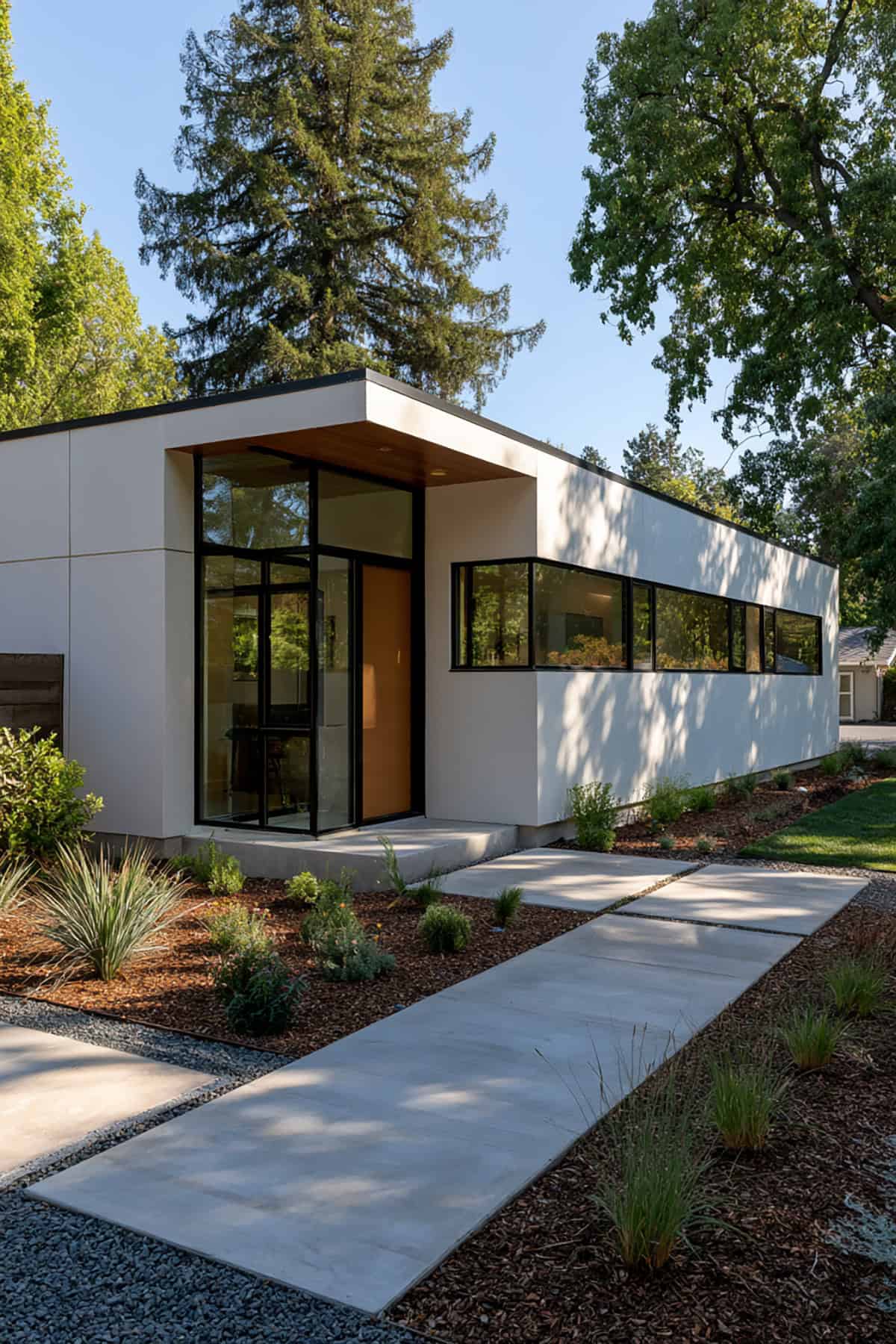
Horizontal window bands give a bungalow a subtle modern twist, emphasizing the width in a way that feels intentional, not squat.
The band should support a main living or front-facing room, and align with other windows or trim. If it cuts across unrelated elements, it just looks random.
Arched Entryway and Mediterranean Influence
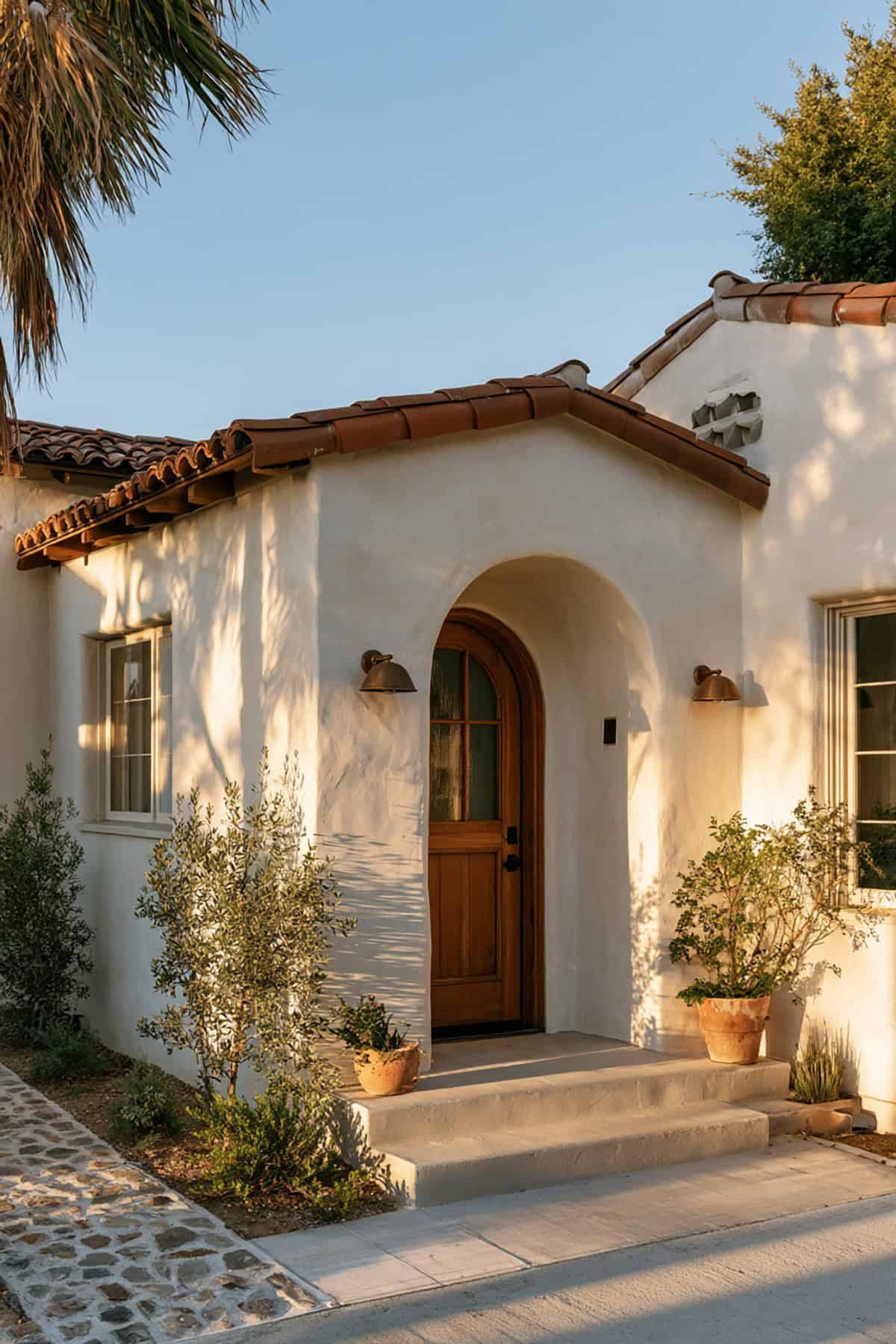
Sunlight catching on curved plaster and warm clay—when Mediterranean touches meet bungalow proportions, the result can feel inviting.
That first glimpse, a graceful arch framing the entry, instantly shifts the mood. The door becomes a quiet anchor. Soft stucco—think pale sand, creamy white—lets the light play, especially when it’s set off by a roof with a hint of clay or a delicate line of tile.
A rounded wood door, maybe a simple lantern or two, and the occasional dark iron accent—these touches give the place its personal identity. Fussy trim or elaborate metalwork tends to fight the easy scale of a bungalow, crowding what should feel effortless.