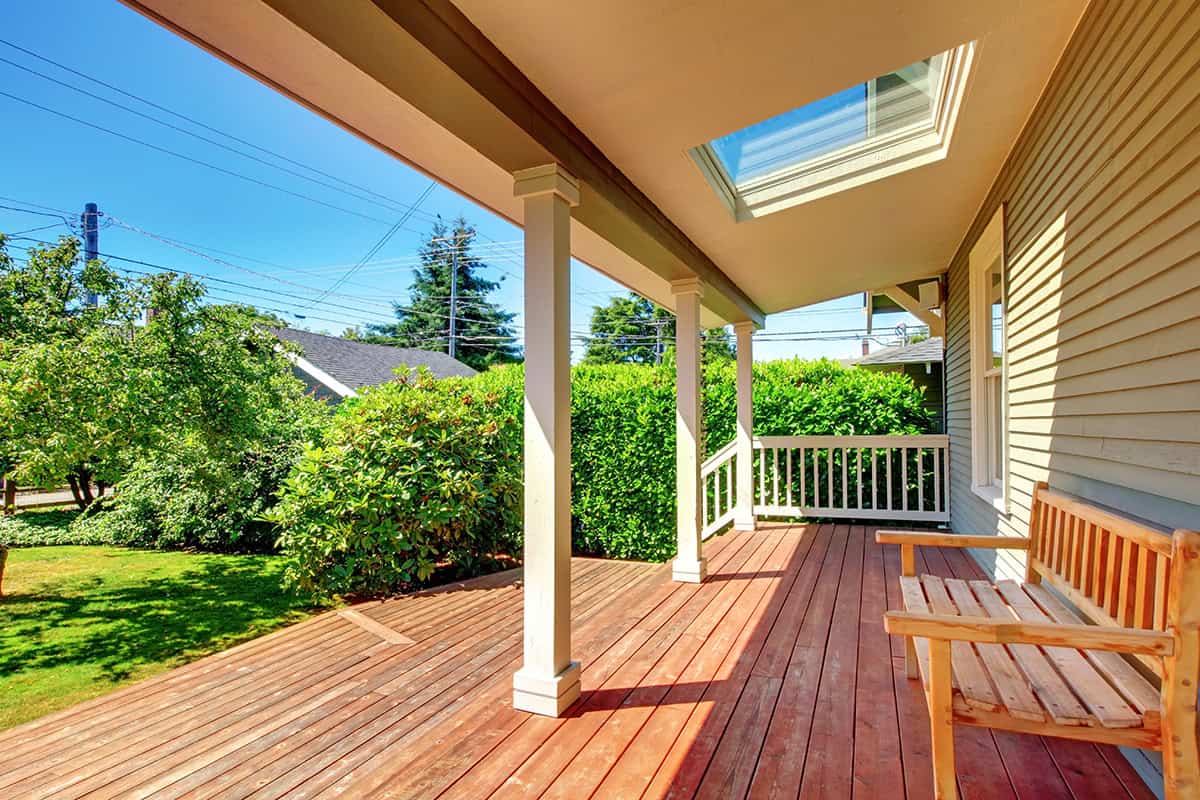
Back porches don’t ask for much, but they give back a lot when you invest a little thought & money into them. Think about it — it’s personal, private, it’s connected to your home, and it already has the bones of a great outdoor living space.
The gap between what your porch is right now and what it could be is usually smaller than you think. Browse through these 37 back porch ideas and see which ones make you want to grab a measuring tape and get moving.
Table of Contents
- Inspiring Back Porch Ideas
- Rustic Lounge Setup with Back Porch Fireplace
- Narrow Back Porch with Rail Planters and Rocking Chair
- Small Back Porch with Corner Seating
- Covered Back Porch with Pergola Frame
- Rustic Back Porch Dining Setup
- Covered Concrete Patio Back Porch
- Back Porch with Built-In Outdoor Kitchen
- Covered Porch with Center Table Setup
- Long Back Porch Dining Layout
- Facing Sofa Back Porch Seating Arrangement
- Covered Porch with Fireplace Lounge Zone
- Back Porch with Zoned Hot Tub Area
- Back Porch with Hanging Baskets
- Centered Porch Swing Bed Setup
- Pergola Back Porch Seating with Center Firepit
- Small Back Porch Dining with Umbrella
- Open Back Porch with Sunken Seating Layout
- Covered Back Porch with Seating Layout Facing Built-In Fireplace
- Multi-Zone Back Porch Seating Plan
- Planter Bench Hybrid
- Reading Nook with Floor Cushions
- Raised Platform Lounge Zone
- Rug-Defined Lounge Area
- Outdoor Daybed Against Wall
- Sunken Fire Pit Lounge Rectangle
- Built-In Bench with Storage Drawers
- Minimal Concrete Bench Seating
- Built-In Wood Ledge Seating Along Perimeter
- Corner Fireplace Bench Combo
- Vertical Slat Privacy Wall
- Sliding Panel Screens
- Retractable Roof Panel System
- Outdoor Shower Feature Corner
- Built-In Wall Niche Storage Display
- Built-In Corner Bar Counter
- Outdoor Movie Screen Wall Setup
- Hammock Corner with Stand Frame
Inspiring Back Porch Ideas
There’s a lot you can do to make a back porch work harder—built-in seating, clever zones, privacy tricks, and weatherproofing all play a part. The following ideas dig into layouts, materials, and those practical touches that turn a porch into a real living space.
Rustic Lounge Setup with Back Porch Fireplace
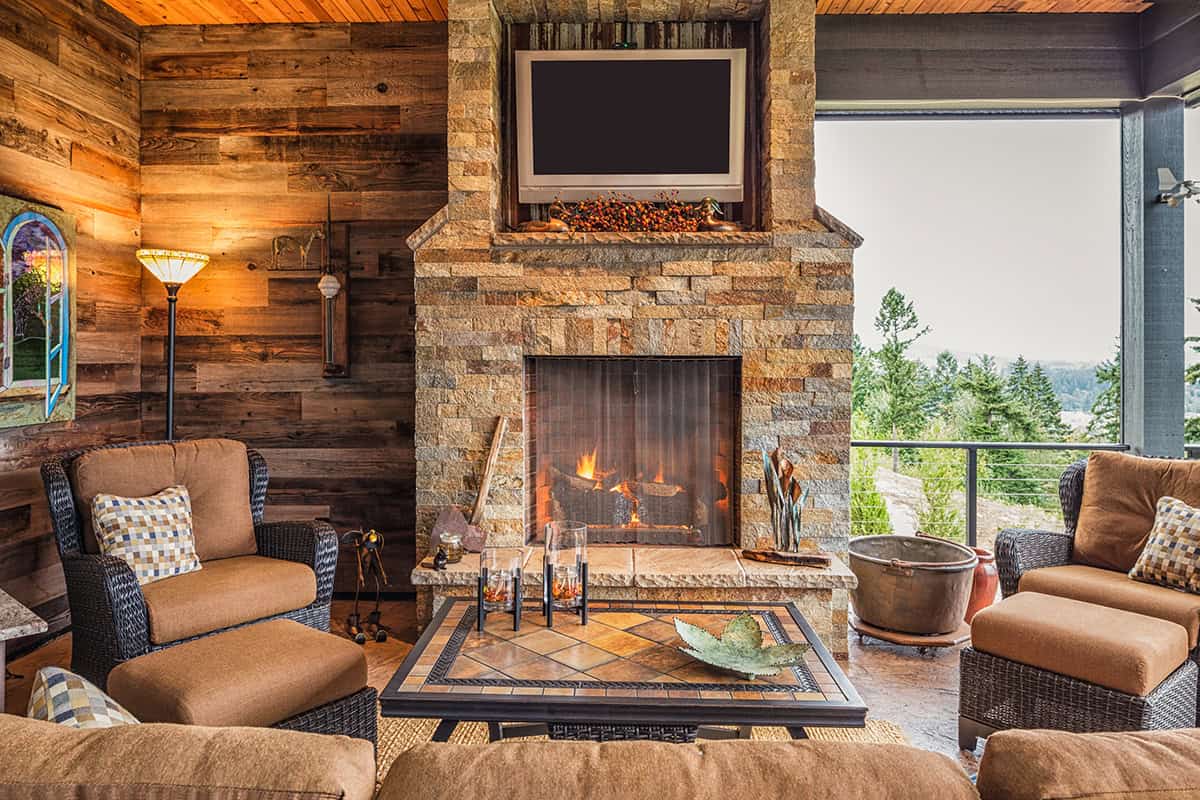
A space like this makes people stay longer without even thinking about it. The fireplace sits right in the middle, built with stacked stone that adds a solid, grounded feel. Chairs are placed around a wide coffee table, close enough for conversation without feeling tight.
The mix of wood walls and open railing keeps it from feeling boxed in. You can see the view outside, but the warmth from the fire still holds your attention.
Narrow Back Porch with Rail Planters and Rocking Chair
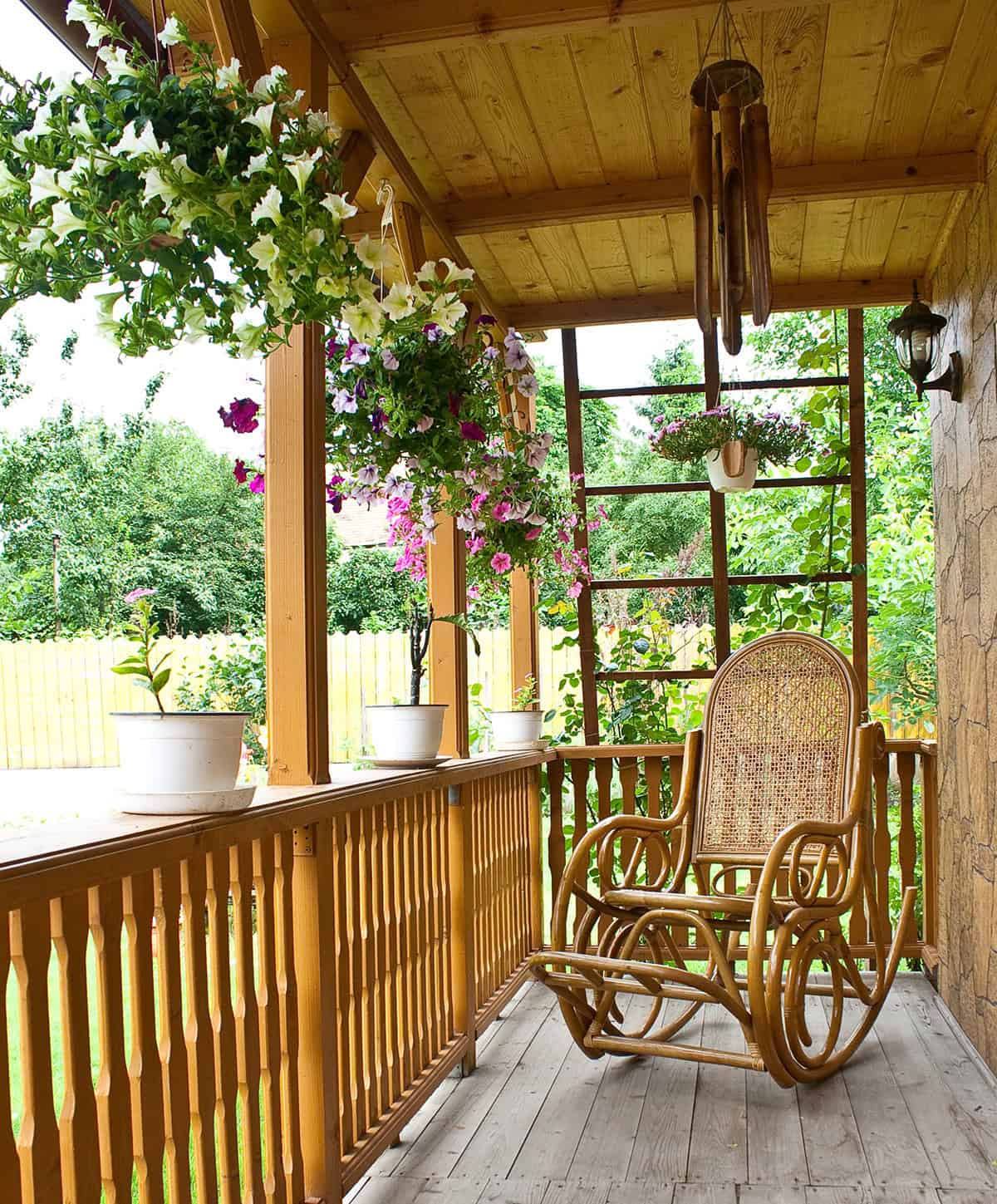
This setup shows how a narrow porch can still feel inviting. Plants line the railing instead of taking up floor space, which keeps everything open and easy to walk through.
A single rocking chair becomes the main spot, perfect for quiet time or a short break. Hanging flowers bring in color without making the space feel crowded.
Small Back Porch with Corner Seating
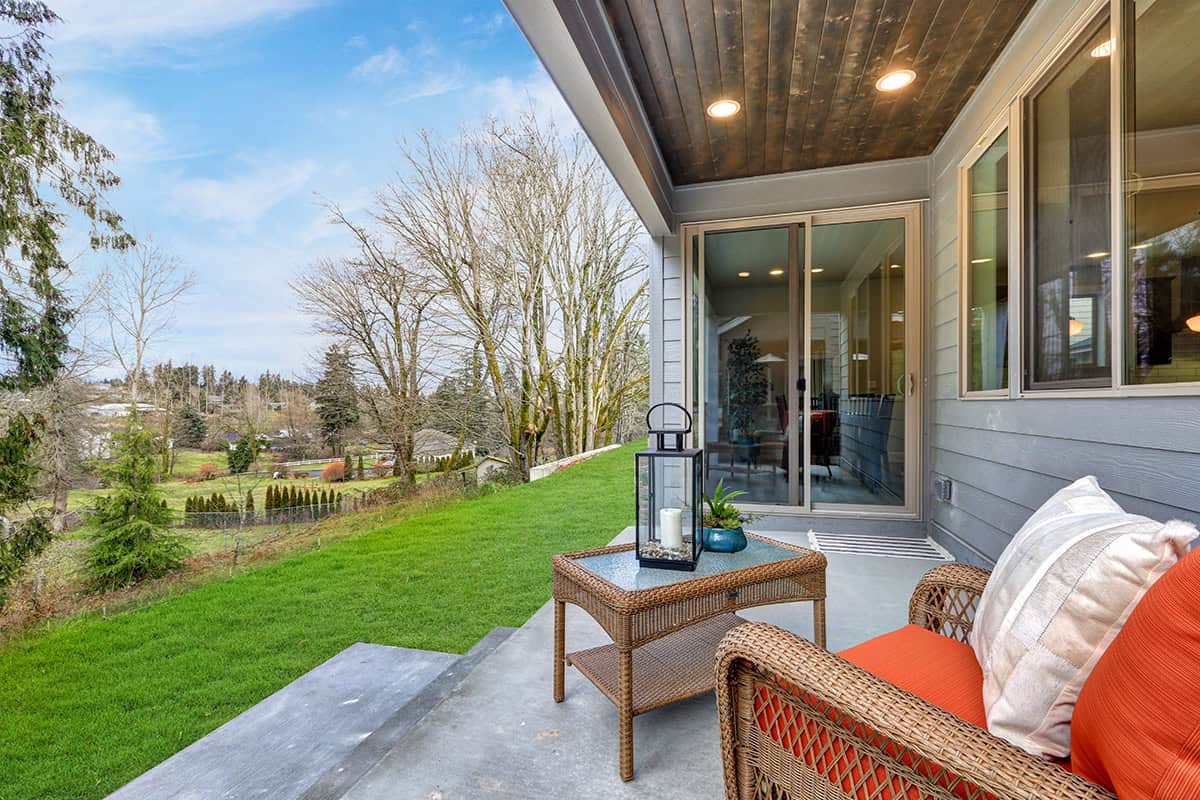
Why waste the middle? Everything pulls into one corner and leaves the rest untouched. A single chair pairs with a small table, both pushed tight against the wall. The outer edge stays open toward the yard, so the space doesn’t shrink in on itself.
Covered Back Porch with Pergola Frame
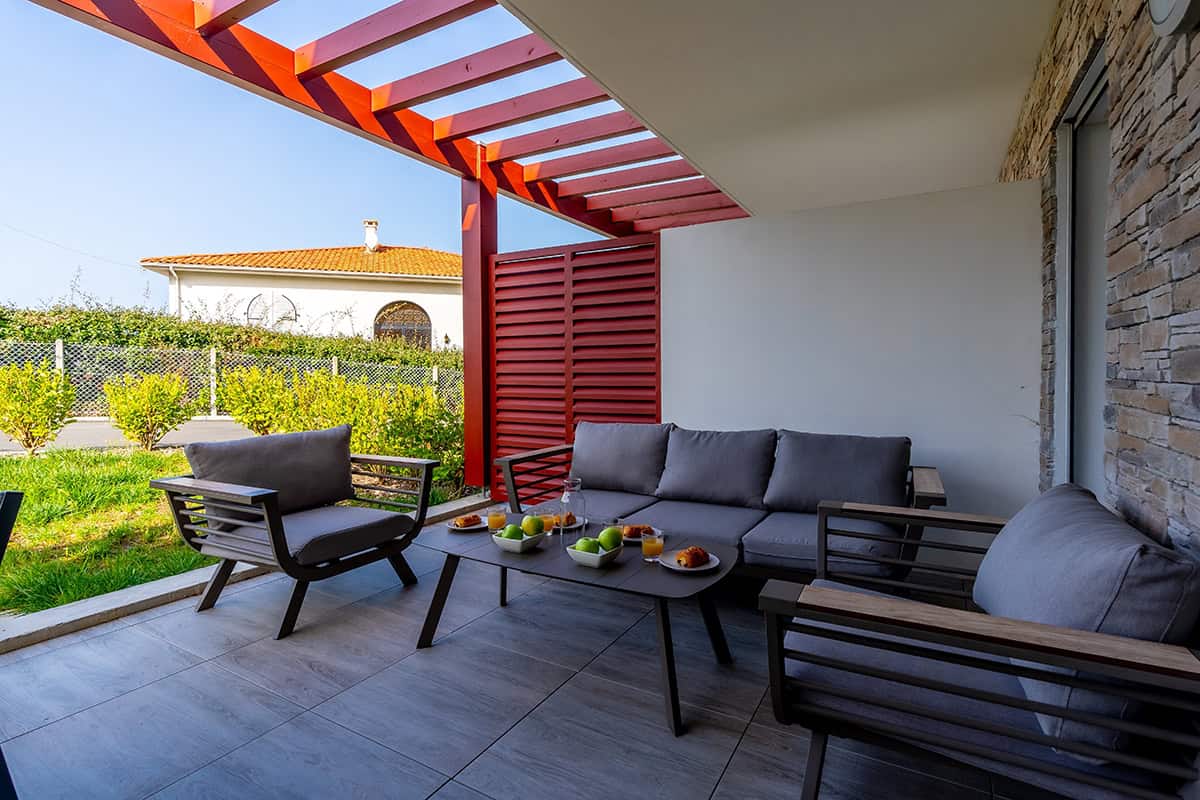
This porch has a more structured look with the overhead beams adding shape and shade. The seating area sits underneath, arranged around a low table that keeps everything easy to reach.
One side feels more private, while the other opens out to the yard. The mix of open and closed areas makes it more flexible for different times of day.
Rustic Back Porch Dining Setup
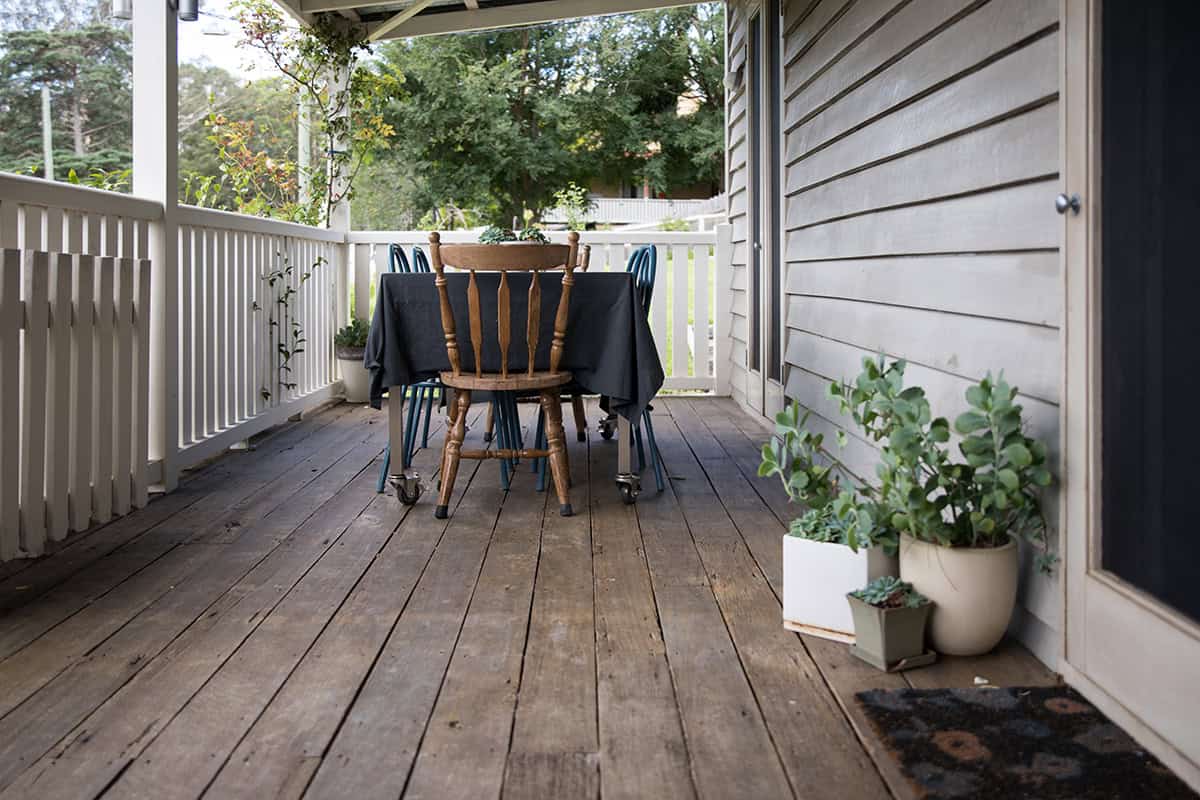
A table at the center sets the tone for the entire porch. Chairs sit far enough apart to allow movement behind them, which avoids tight circulation.
The surrounding edges stay free of extra furniture, so the dining zone remains the focus. Plants sit along the perimeter instead of near the table. The layout supports group use without overlap.
Covered Concrete Patio Back Porch
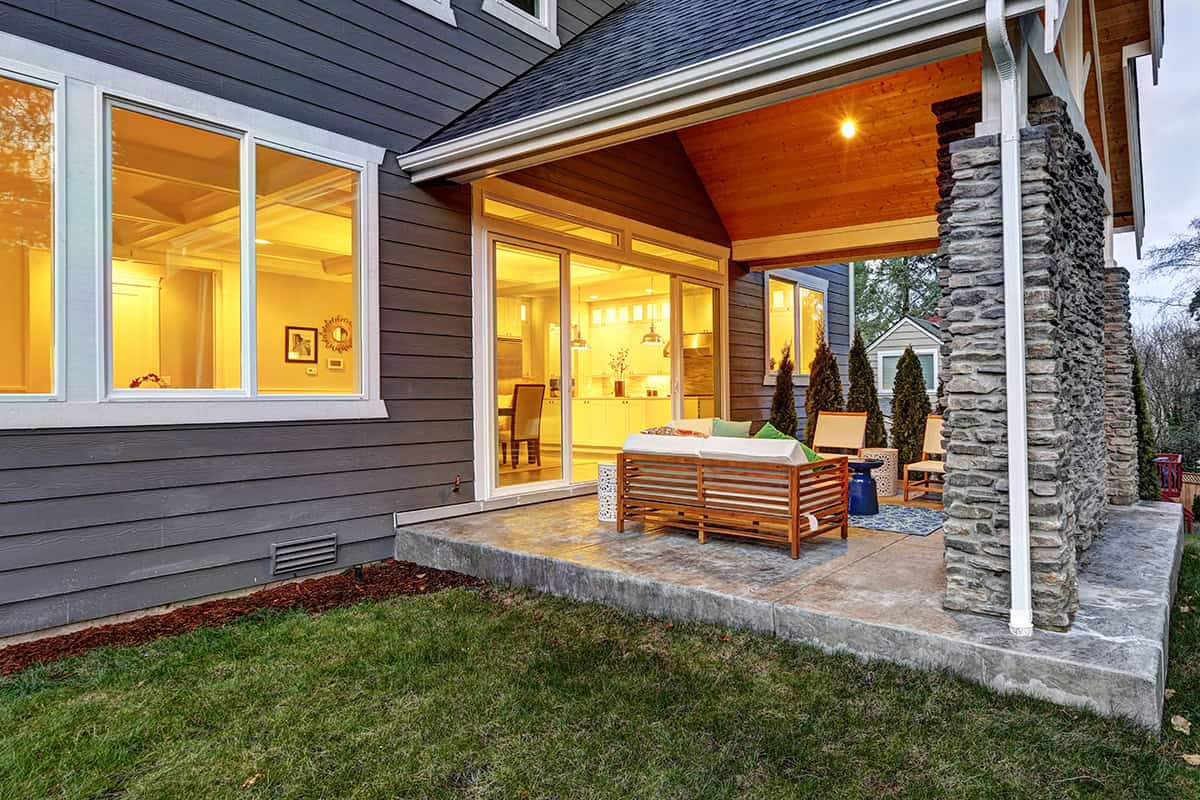
A small porch works best with restraint. One seat and one table cover the basic use without crowding. The rest of the floor stays open, which keeps movement direct from door to yard. Larger furniture would block that path, so the layout stays minimal on purpose.
Back Porch with Built-In Outdoor Kitchen
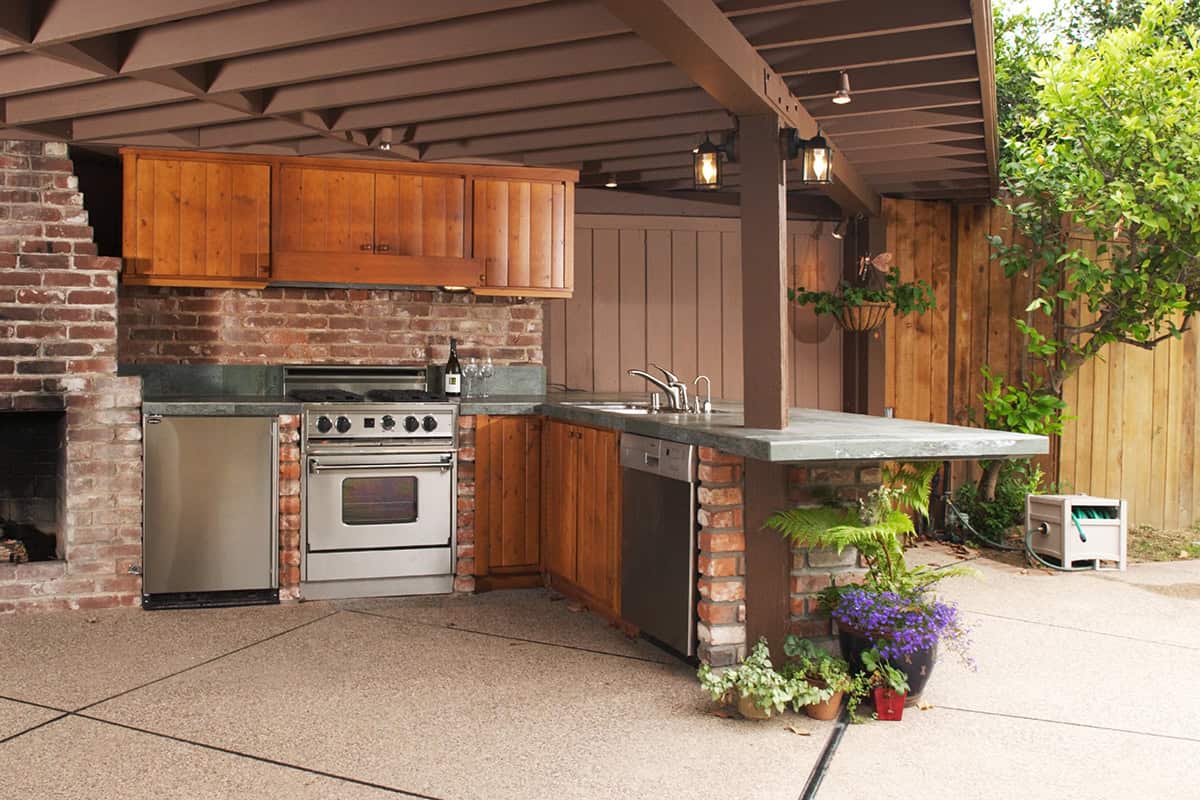
A kitchen layout on a porch shifts the focus from sitting to use. Counters line the wall so prep and cooking stay in one zone. Storage sits above and below for quick access. The open side remains free, which leaves room for movement or added seating if needed.
Covered Porch with Center Table Setup
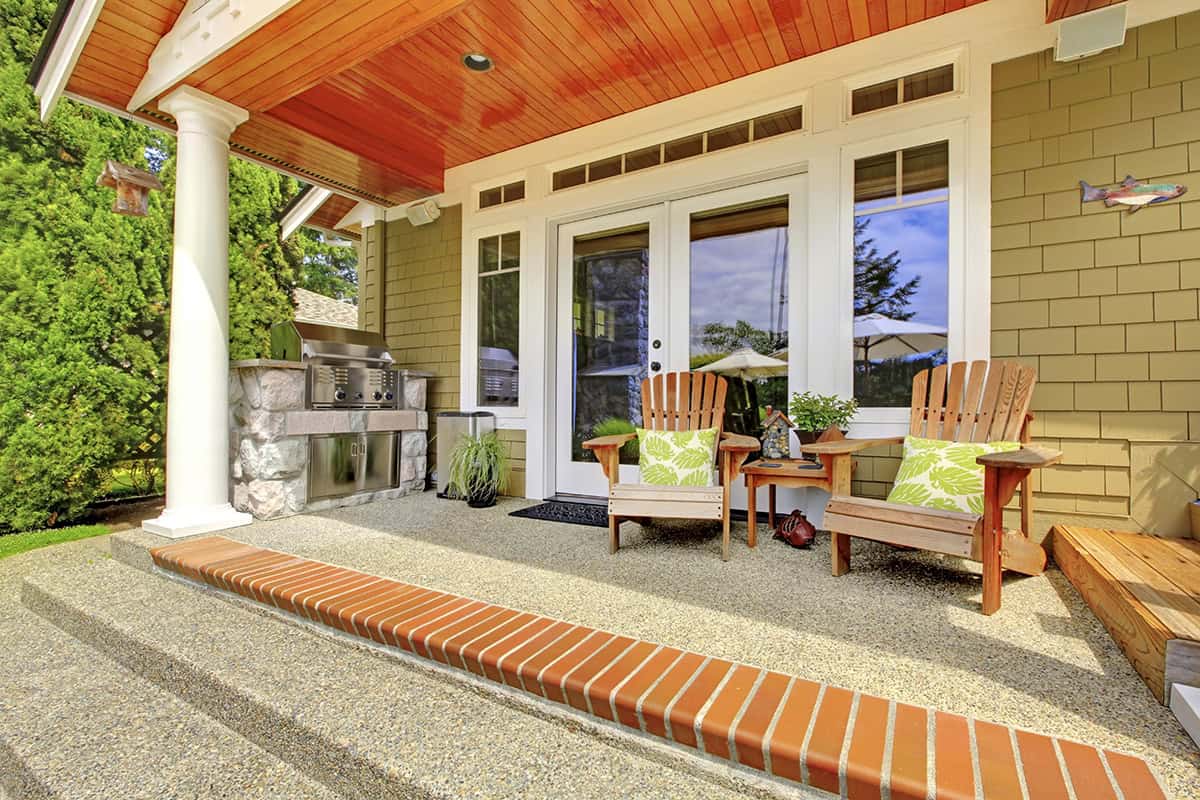
A table at the center creates a shared point without fixing the layout too tightly. Chairs sit around it with space between each seat. The edges stay open for movement. This type of setup adapts easily, whether used for drinks, meals, or casual seating.
Long Back Porch Dining Layout
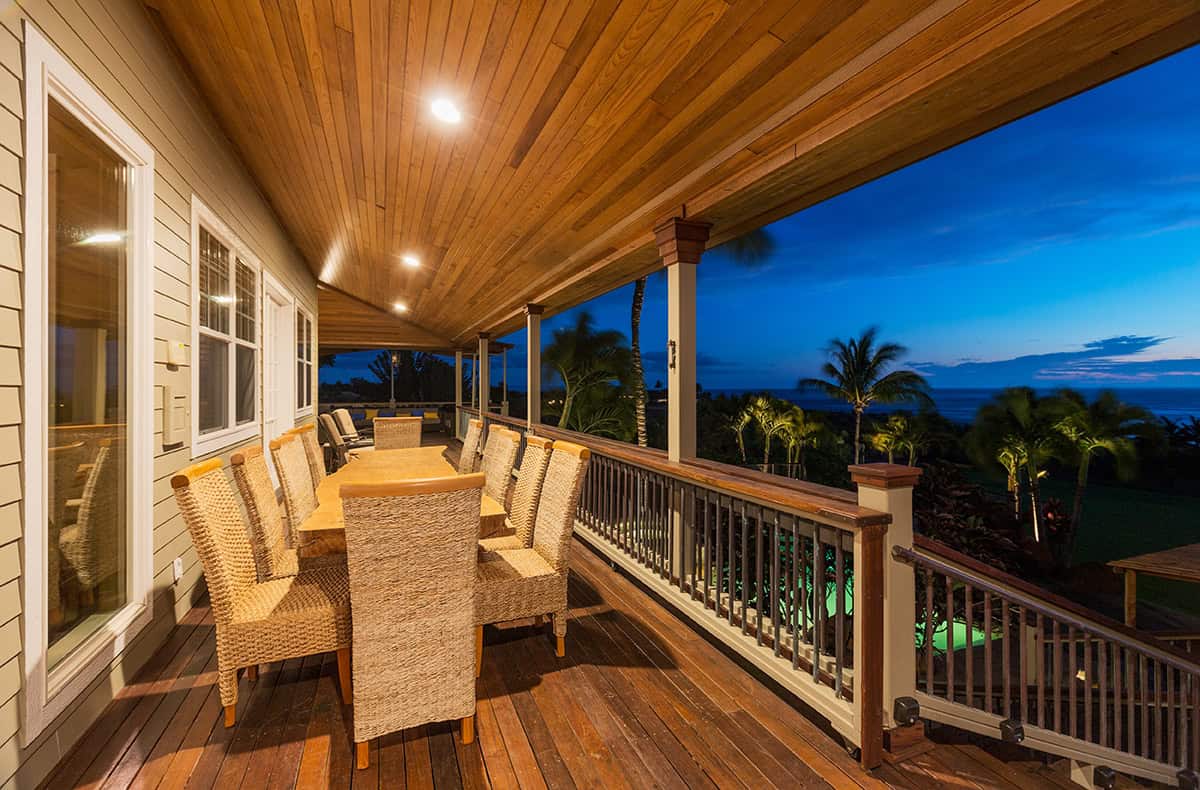
The length of the porch becomes the main feature. A long table follows that direction instead of crossing it. Chairs line both sides in a steady row, while one edge stays open for walking. Lights hang above in a straight line that matches the table below.
Facing Sofa Back Porch Seating Arrangement
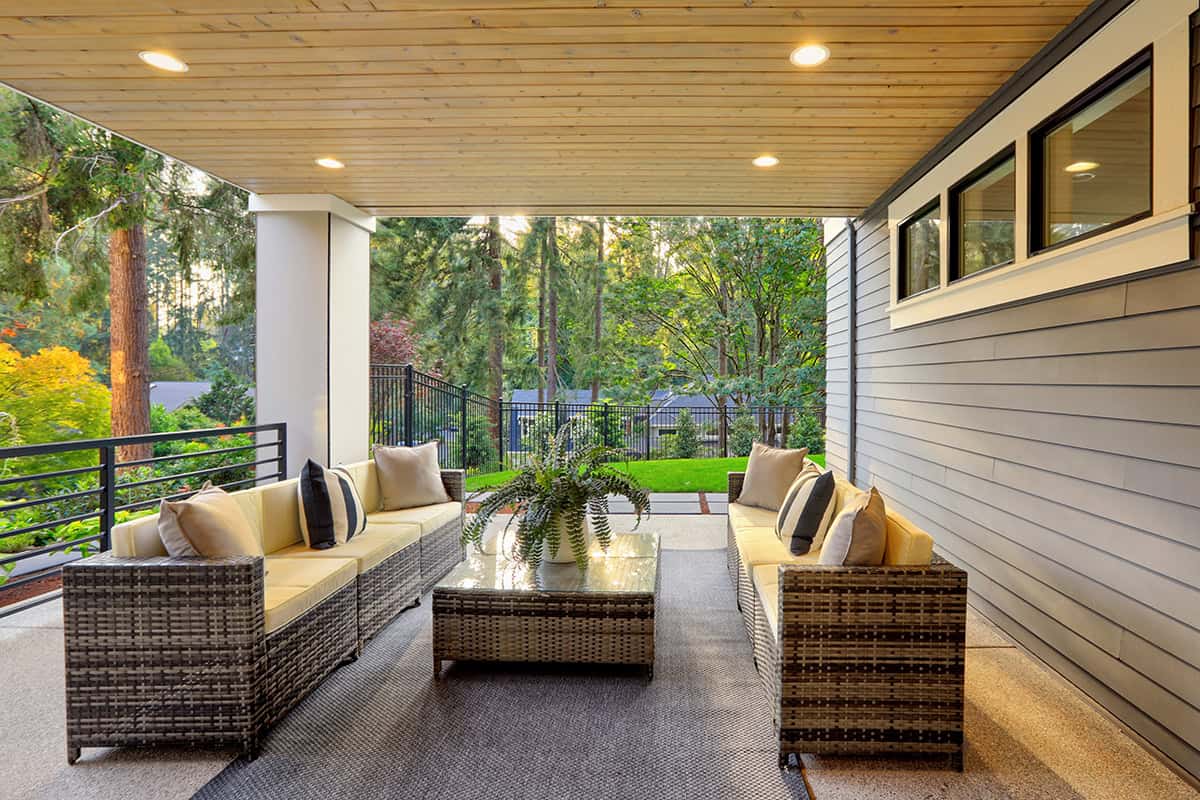
Two sofas placed opposite each other set a clear conversation layout. The table sits between them within reach from both sides. One end stays open to avoid blocking entry. \
Covered Porch with Fireplace Lounge Zone
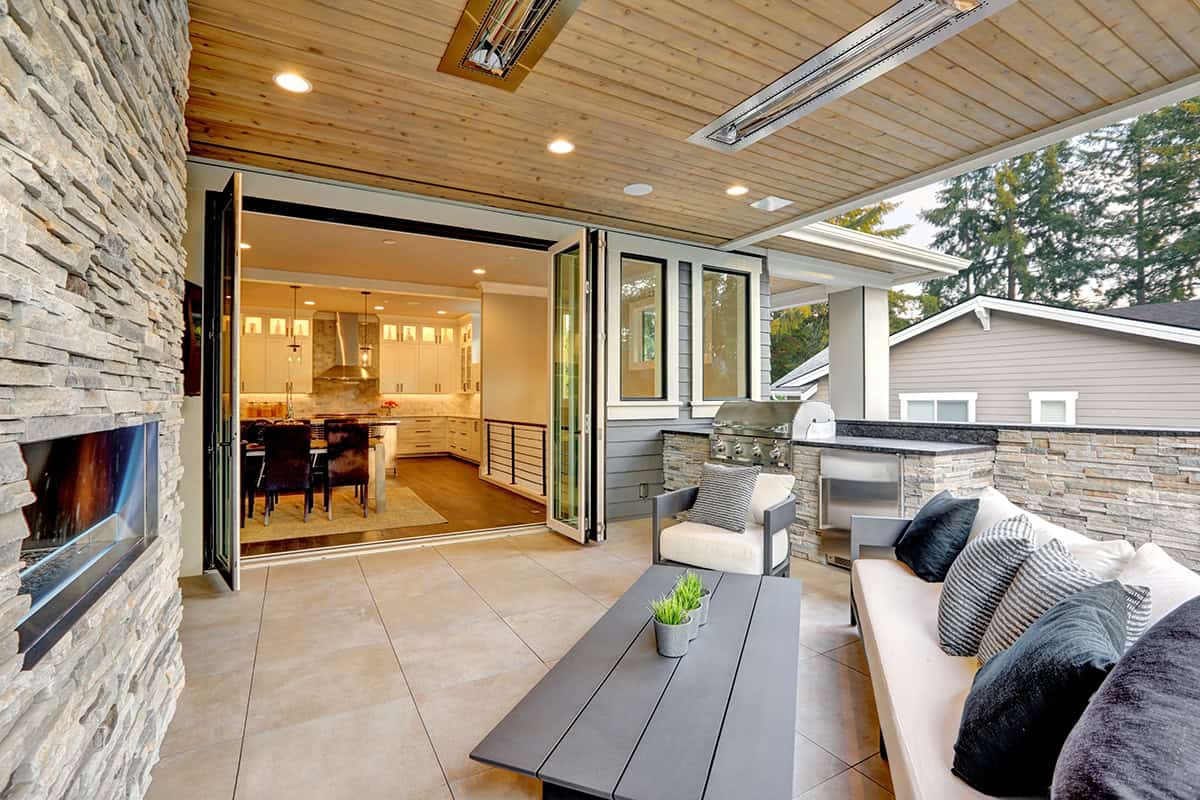
A fireplace wall fixes the direction of the entire setup. Seating turns toward it, not scattered across the space. The area in front stays open for movement. Other functions stay secondary, so the layout does not compete with itself.
Back Porch with Zoned Hot Tub Area
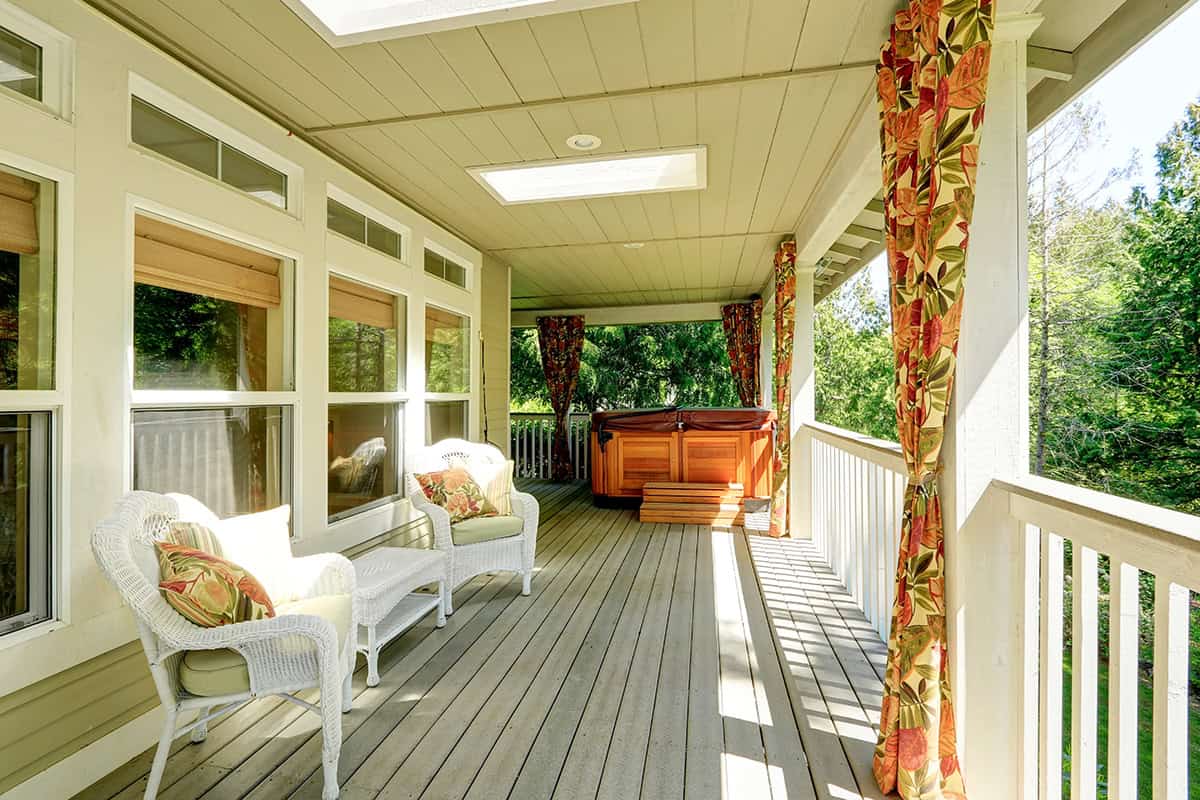
This porch is split into two clear parts. The front section has two white chairs placed side by side near the wall, good for sitting and talking.
Further down, a hot tub sits at the end under the same roof. Curtains hang along the posts and can be pulled for shade or privacy.
Back Porch with Hanging Baskets
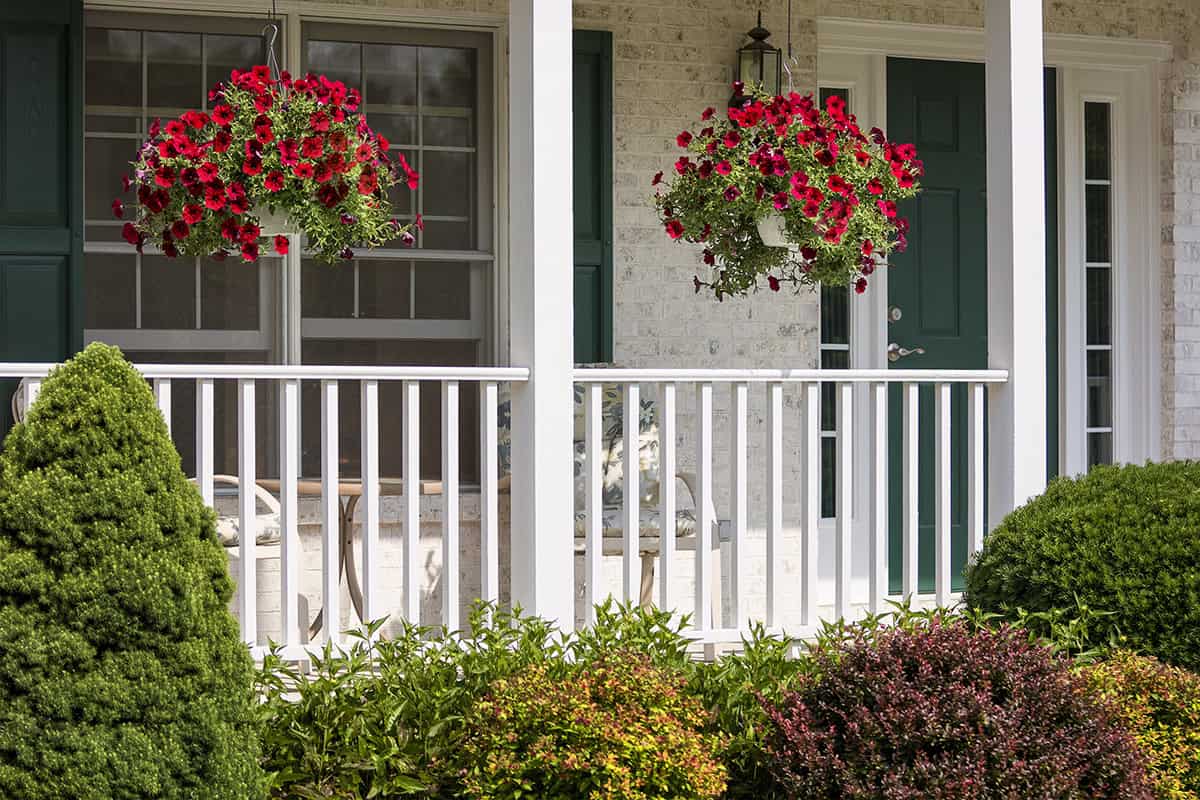
When floor space runs limited, vertical placement solves it. Hanging baskets take the upper space instead of the ground. Rail planters fill the lower edge.
Centered Porch Swing Bed Setup
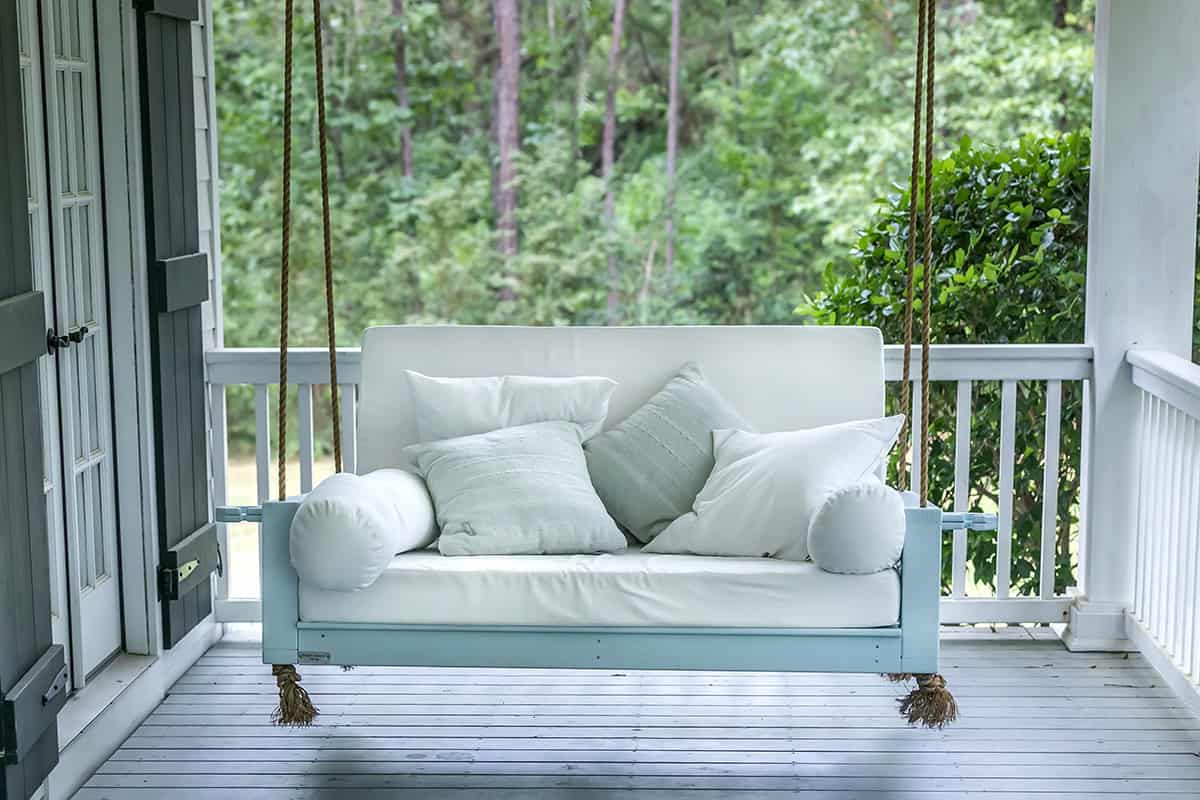
A swing bed at the center turns the layout into a single-use space. It requires clear space on all sides for access and motion. Other furniture stays out of the way. The structure above supports the weight and placement.
Pergola Back Porch Seating with Center Firepit
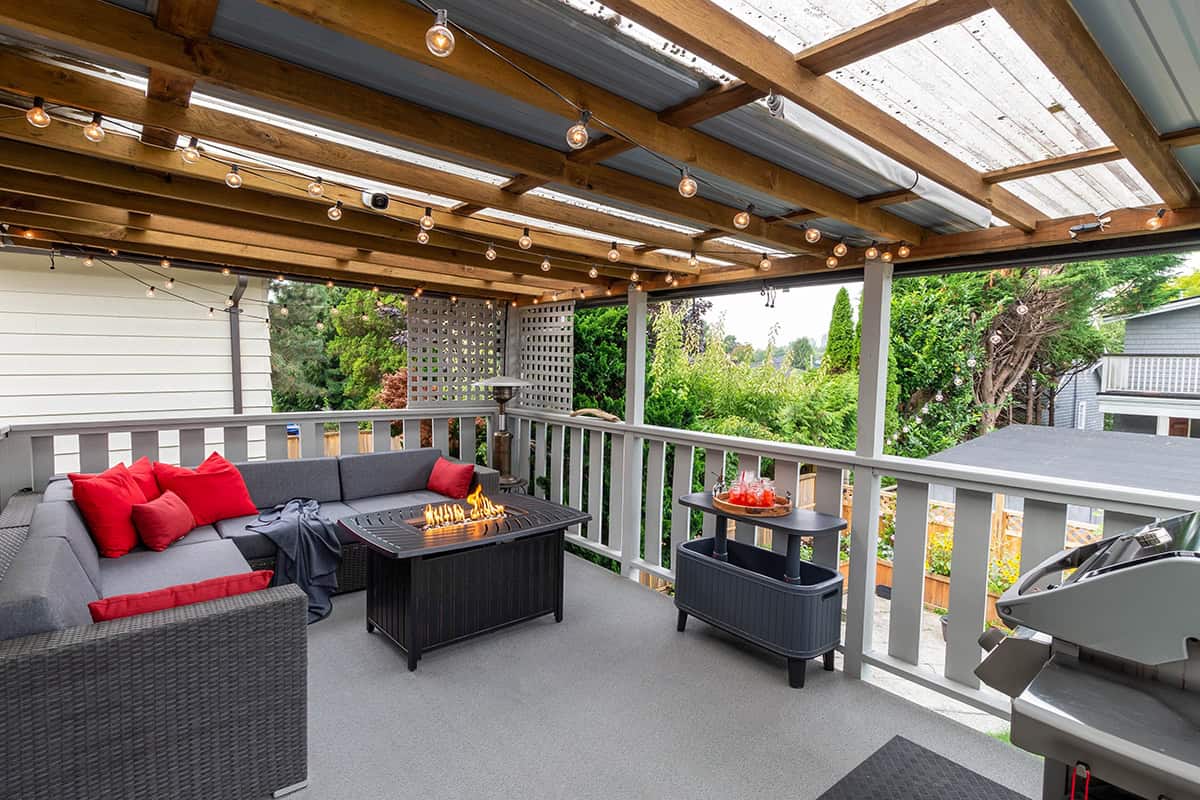
You don’t notice the furniture first—it’s the overhead structure that sets the tone. Those beams create rhythm without symmetry, and the space below follows that same idea. One corner holds everything together: sofa, fire, a tight cluster that feels deliberate without being rigid.
Small Back Porch Dining with Umbrella
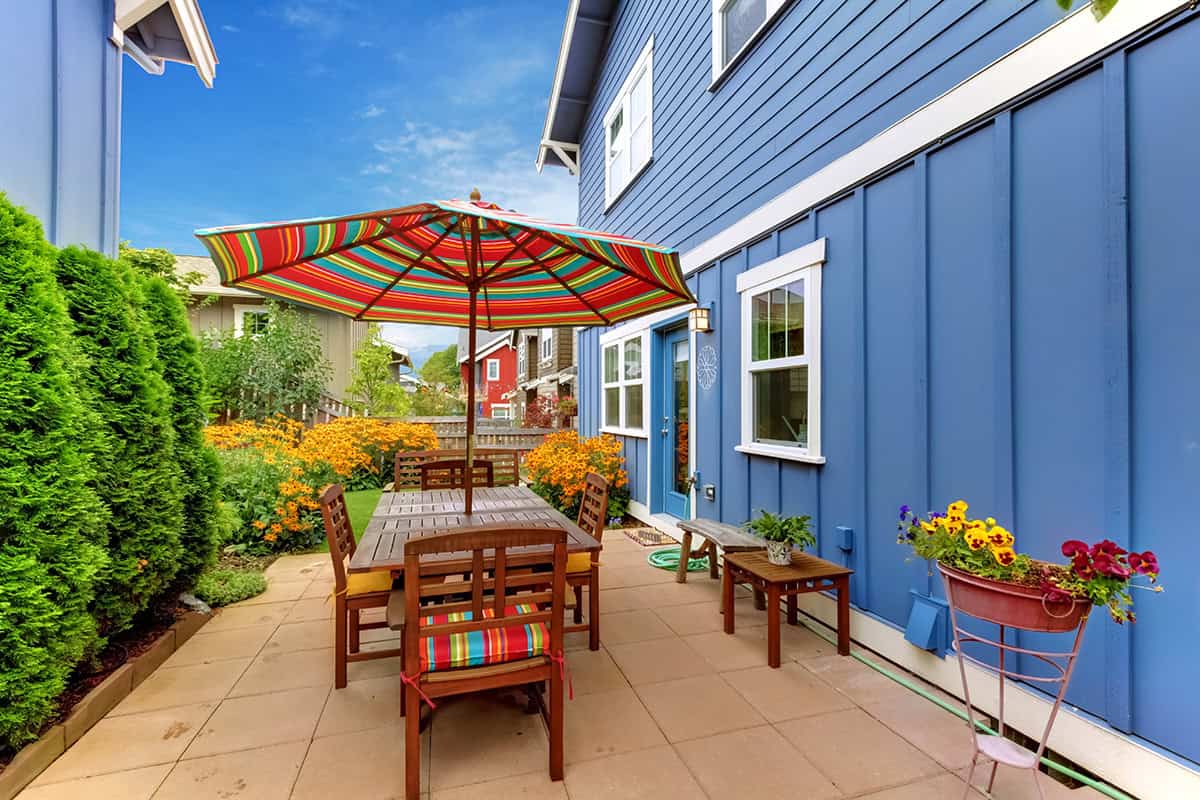
A compact dining setup relies on tight spacing. The table sits under an umbrella for shade without adding structure. Chairs tuck in close to reduce footprint. The surrounding edge stays open for movement.
Open Back Porch with Sunken Seating Layout
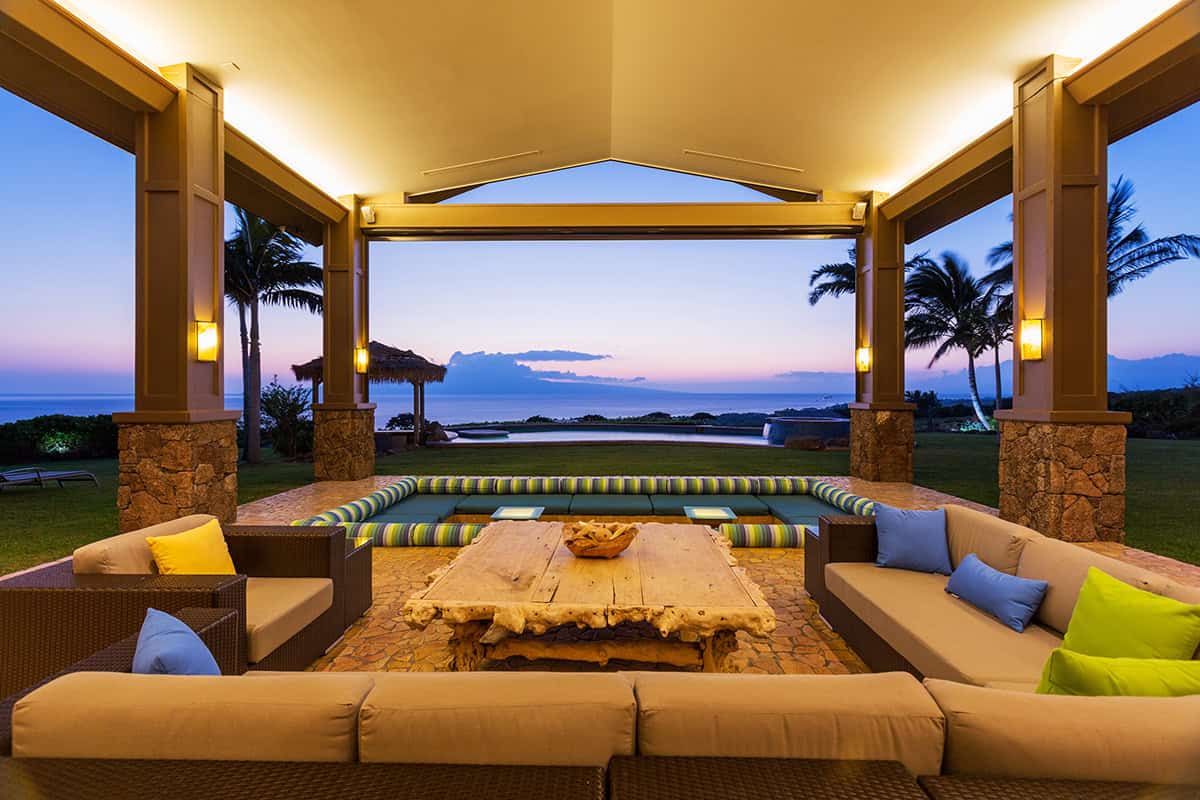
Instead of spreading furniture across one flat surface, this setup pulls you inward. The drop creates a clear boundary, even though nothing physically closes it off. Cushions bring color in uneven bursts, not coordinated, not planned.
Covered Back Porch with Seating Layout Facing Built-In Fireplace
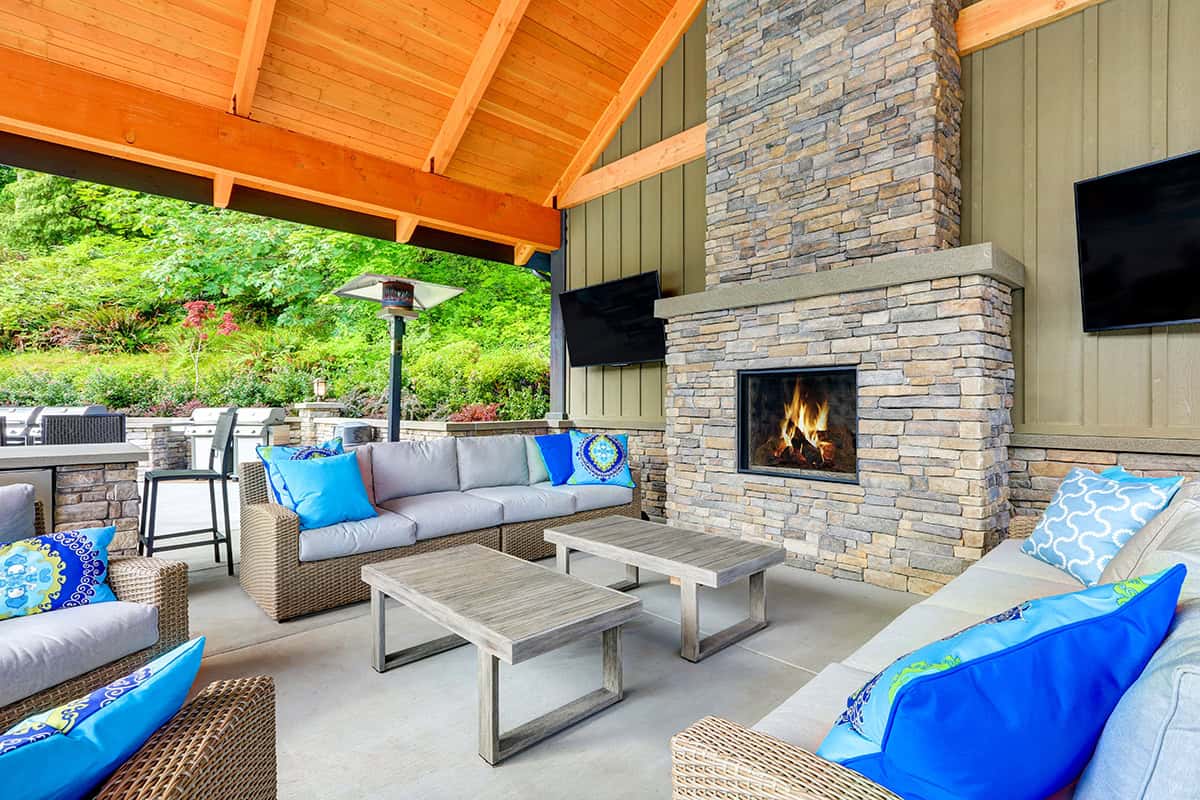
The fireplace sits directly across from the seating, so everything points toward it. Stone runs from the floor up to the ceiling, which makes it stand out. A sofa and chairs sit close enough to feel connected. The space behind opens to a small outdoor kitchen.
Multi-Zone Back Porch Seating Plan
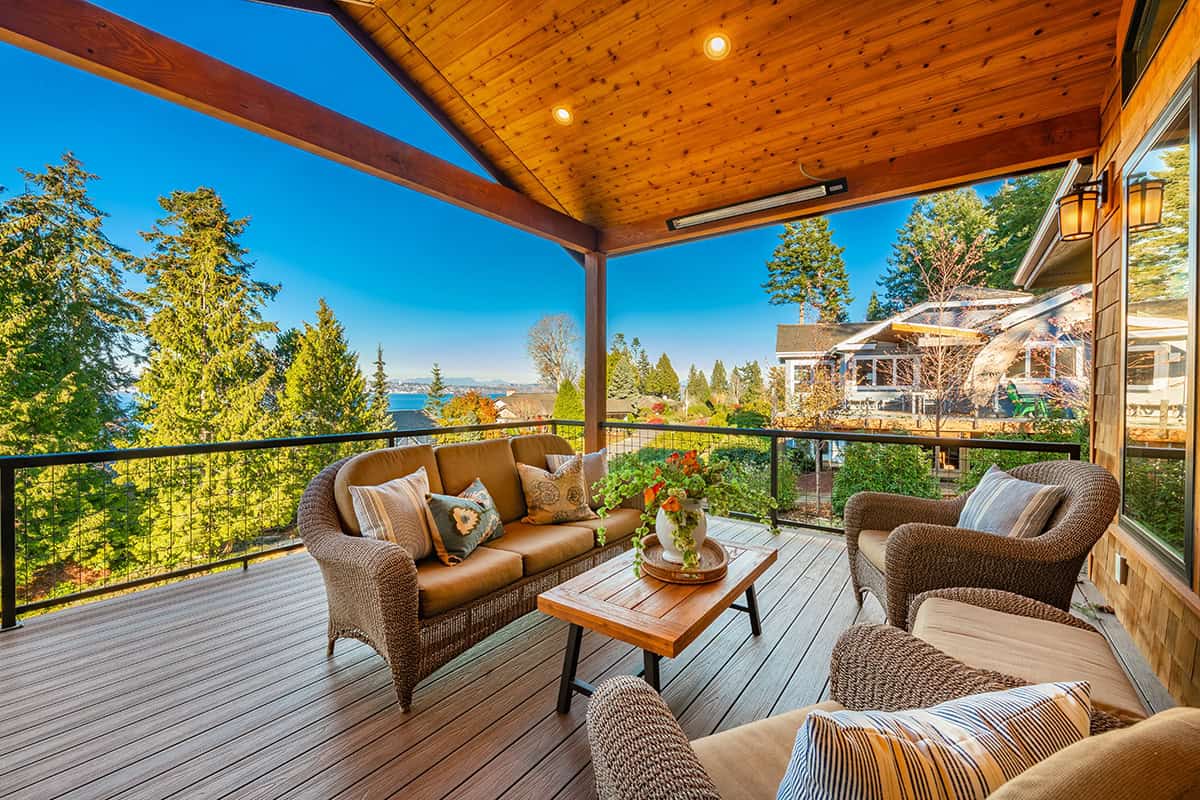
This porch splits into sections without using walls. A dining table runs along one side, while a sitting area takes the other. Lights hang above the table, which keeps that area clear at night. The railing stays open so the view still comes through.
Planter Bench Hybrid
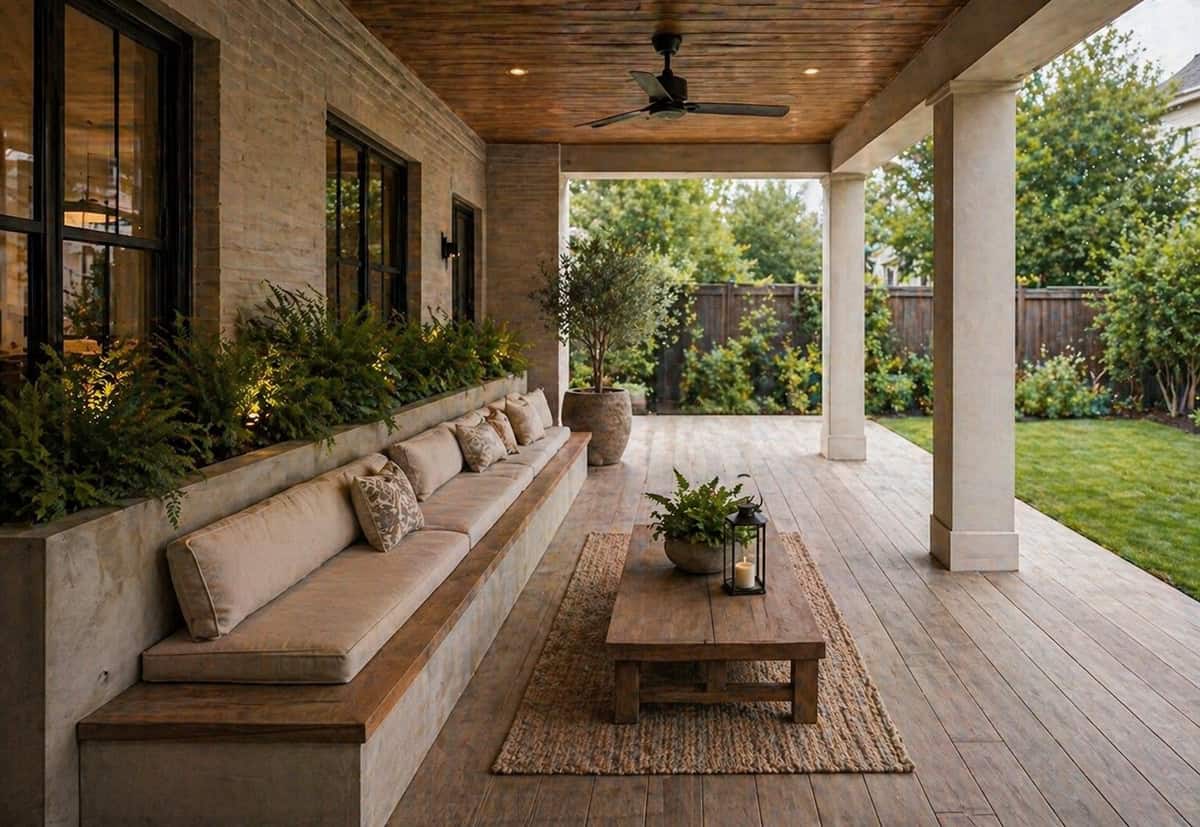
When space is tight, blending seating with greenery just makes sense. You can add a bench with planters built right in—use pressure-treated lumber or steel for the frame, then tuck planter boxes at the ends or along the back.
Cedar stands up well where it shows. Waterproof membranes and drainage holes in the planters keep both roots and wood from turning mushy.
Stick to a seat height around 18 inches and a depth between 16 and 20 for comfort. Compact shrubs or shade-tolerant grasses work well and double as a bit of privacy screening, so you’re not just staring at your neighbor’s fence.
Reading Nook with Floor Cushions
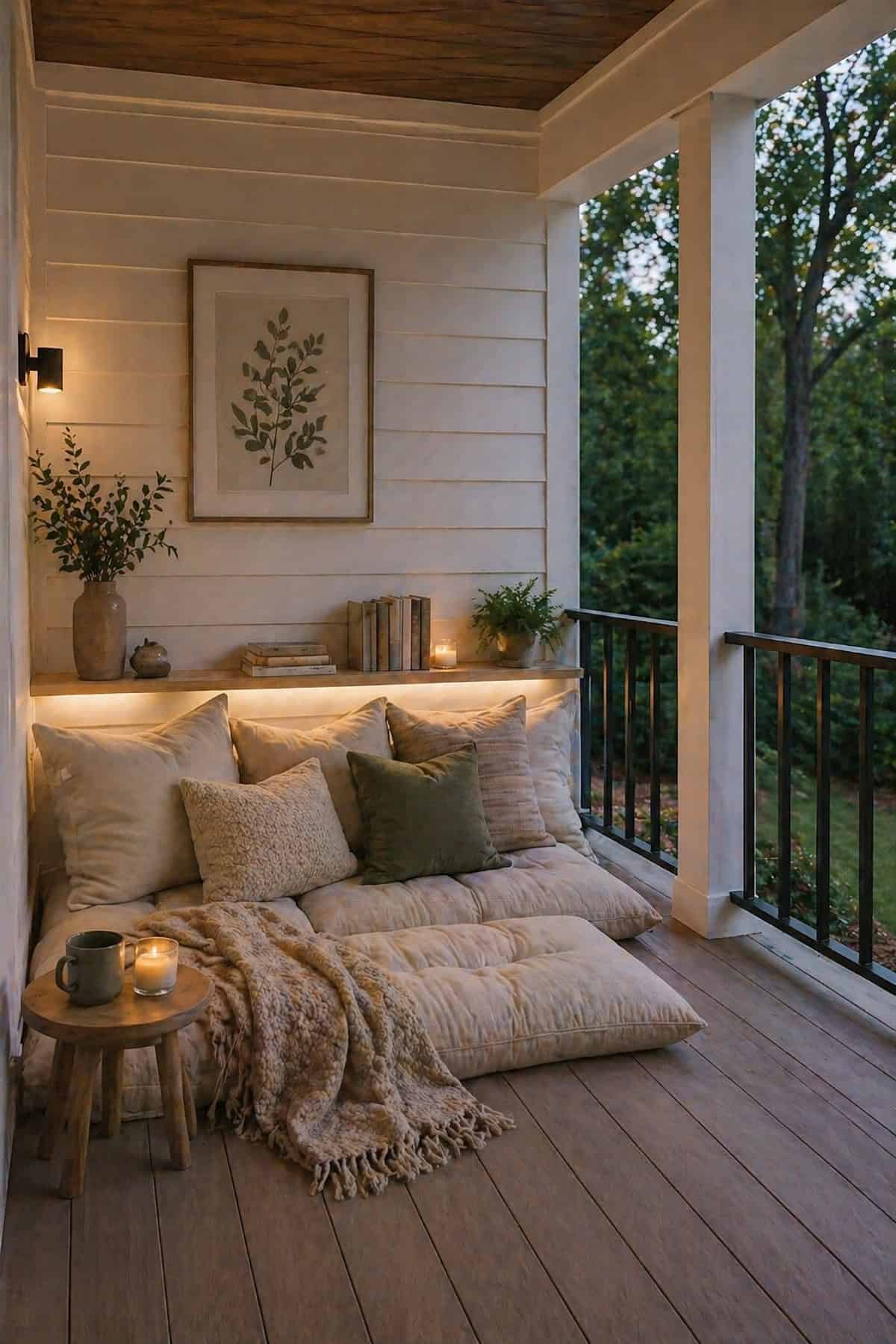
For a laid-back vibe, pile up thick floor cushions and a sturdy backrest in a corner. Outdoor-rated foam with covers you can toss in the wash makes life easier.
Anchoring the setup against a wall or railing helps it feel intentional. A small side table nearby keeps your coffee and book off the floor.
Lighting changes everything—try a wall sconce or a plug-in lamp that’s safe for damp spots.
Raised Platform Lounge Zone
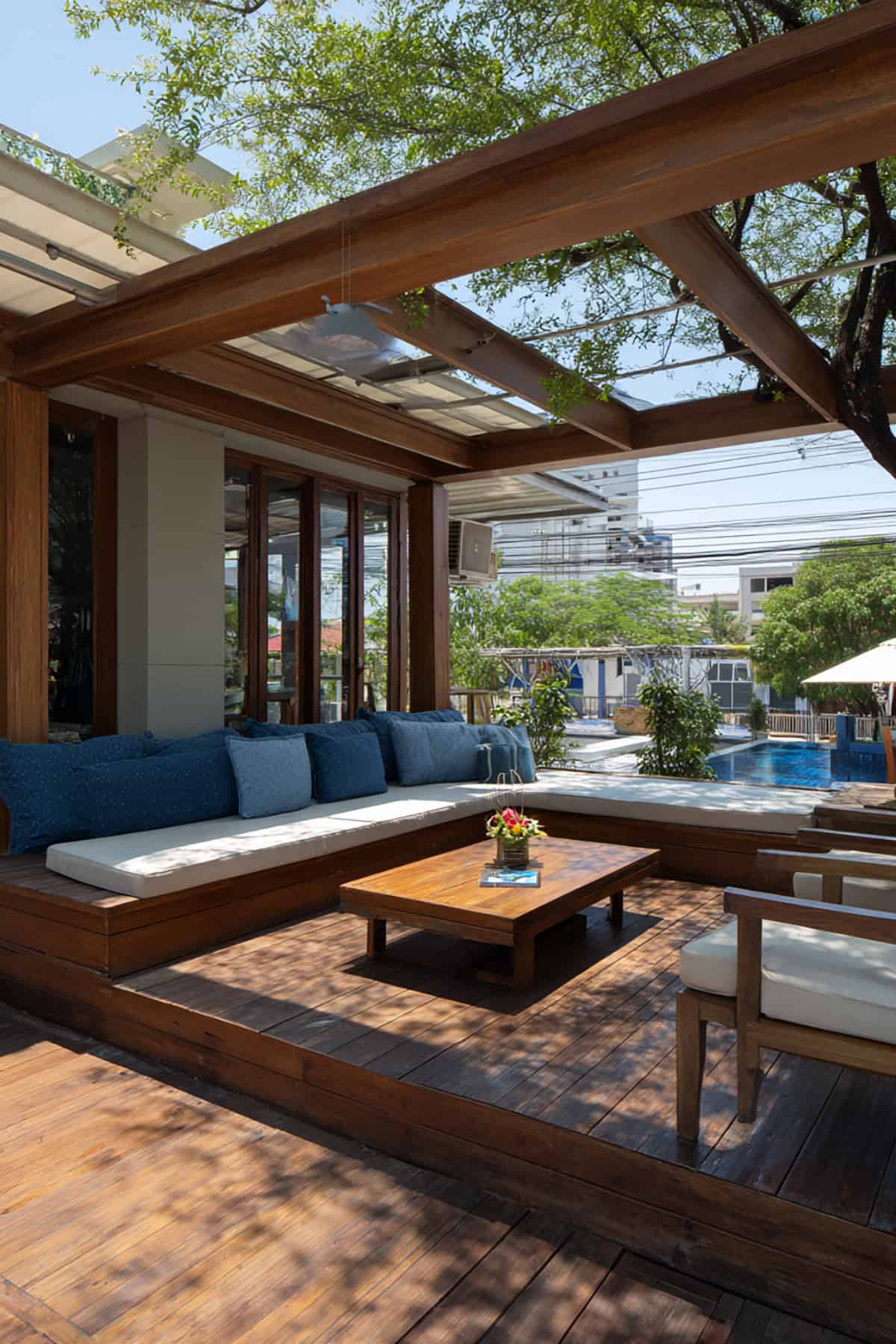
A subtle change in elevation can break up a porch visually. Building a platform six to twelve inches above the main deck sets the lounge zone apart—composite decking or sealed hardwood stands up to the elements.
Running electrical conduit under the platform lets you add outlets or lighting without tripping over cords.
Sectional seating that fits the platform keeps things tidy. Remember to leave at least three feet of clearance around the edge so you’re not squeezing by.
Rug-Defined Lounge Area
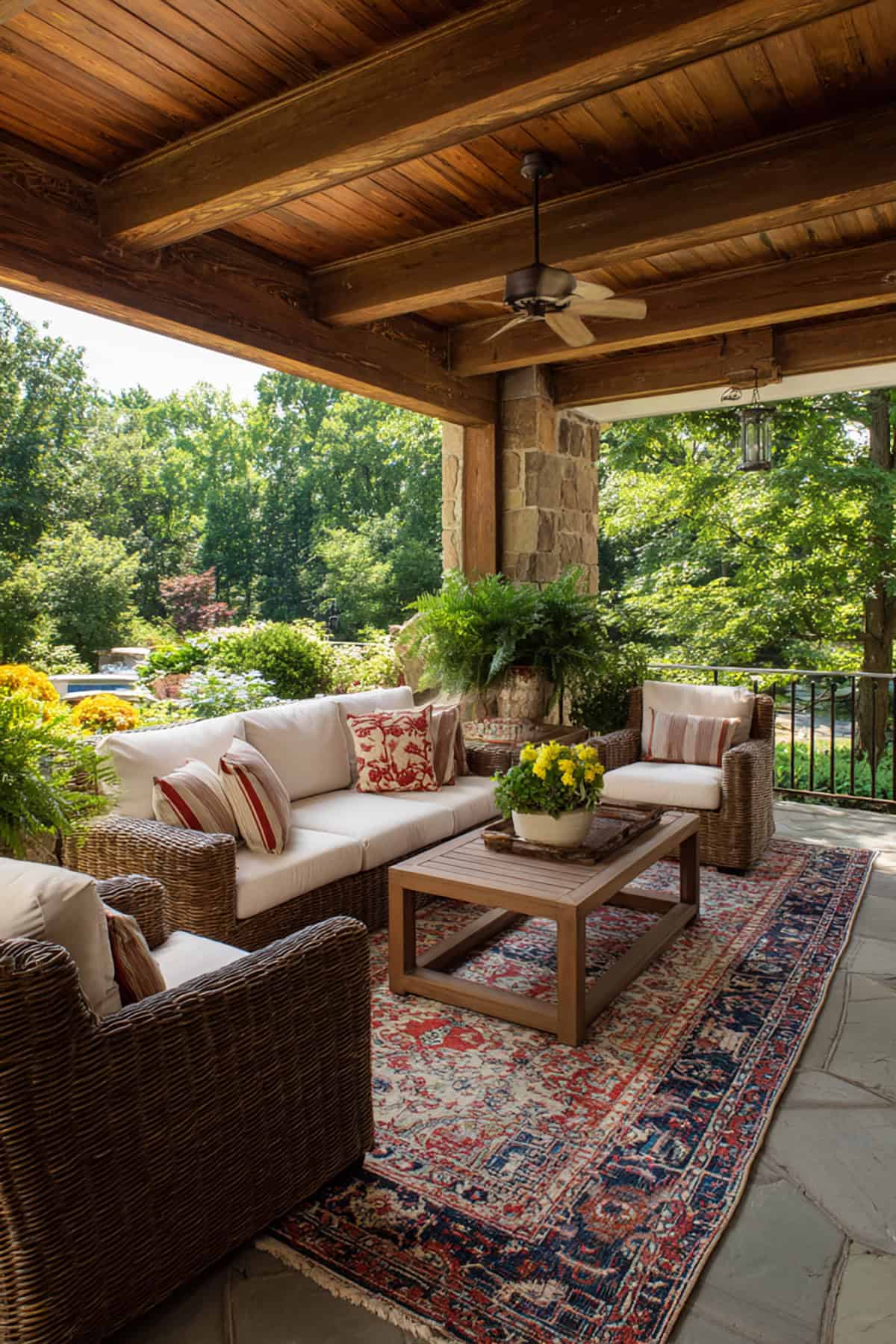
Sometimes all you need is a good rug to pull things together. Polypropylene rugs handle moisture and sun without complaint.
Choose a size that lets the front legs of your seating rest on it. That way, everything feels anchored—no awkward floating furniture.
Rug tape or heavy furniture at the corners helps with shifting. Go neutral for flexibility, or pick a bold pattern if your deck needs some personality.
Outdoor Daybed Against Wall
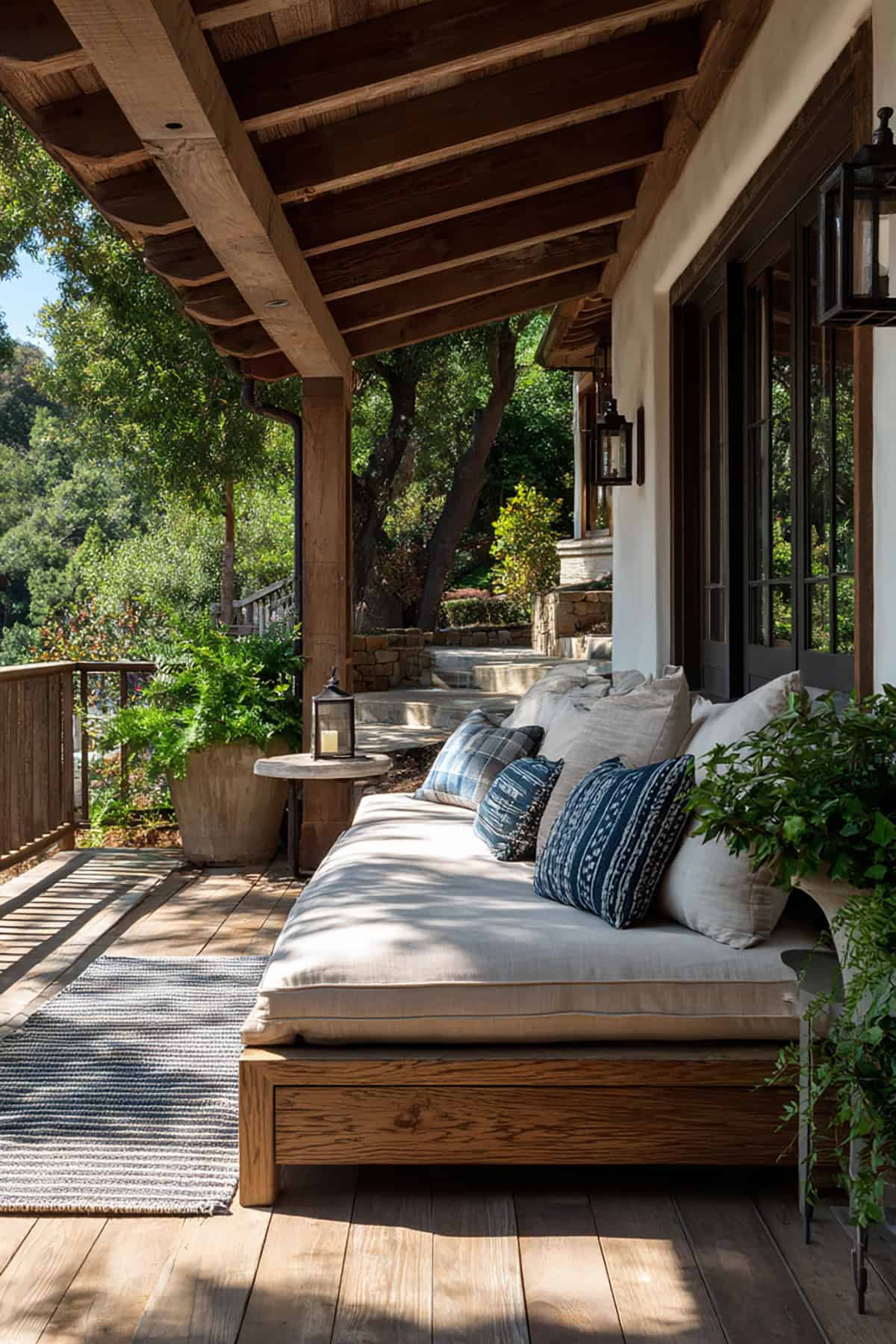
Setting a daybed along a solid wall frees up floor space and invites naps. A twin mattress is usually a good fit for mid-sized porches.
Metal or teak frames hold up outdoors, and quick-dry cushions mean you’re not stuck dragging everything inside when it rains.
Wall-mounted reading lights above the daybed make evenings cozier. Leave a couple feet at the foot so people can get by.
Sunken Fire Pit Lounge Rectangle
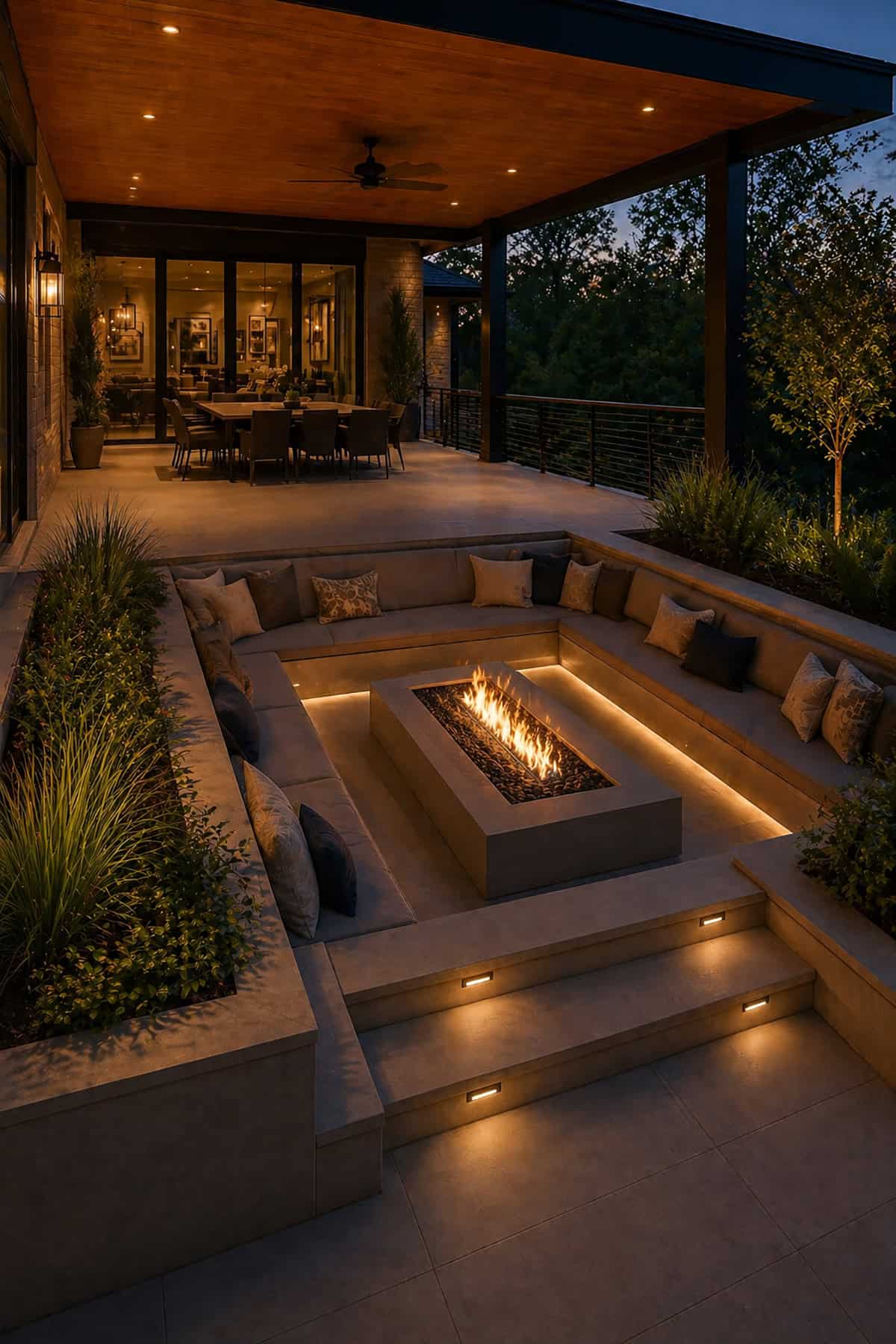
Going down instead of up? Lowering part of a ground-level porch by a foot or so creates a cozy, tucked-in lounge. Built-in benches around the edge, made from fire-resistant materials, keep things safe.
Gas fire pits are less hassle than wood, especially for cleanup and control.
Don’t forget ventilation and local codes. Steps with non-slip treads make getting in and out less of a circus act. The sunken layout keeps conversations flowing and sightlines clear.
Built-In Bench with Storage Drawers
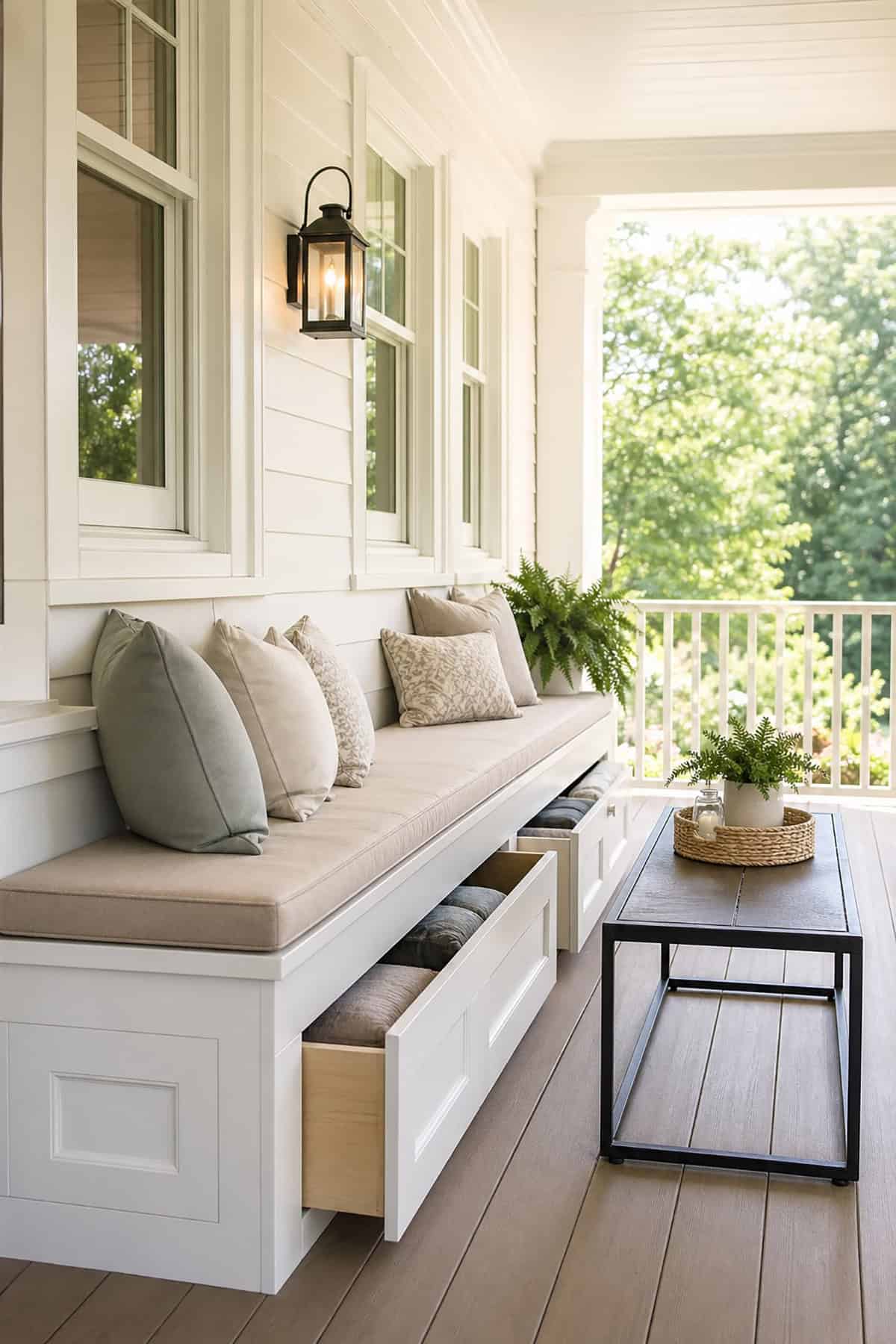
Why not stash stuff where you sit? Benches with pull-out drawers or hinged lids hide away cushions, tools, or games.
Exterior-grade plywood and stainless hardware keep rust at bay. Sealing the joints blocks out moisture.
Keep drawer depth manageable—under two feet is about right. Less clutter, no need for extra storage bins crowding your space.
Minimal Concrete Bench Seating
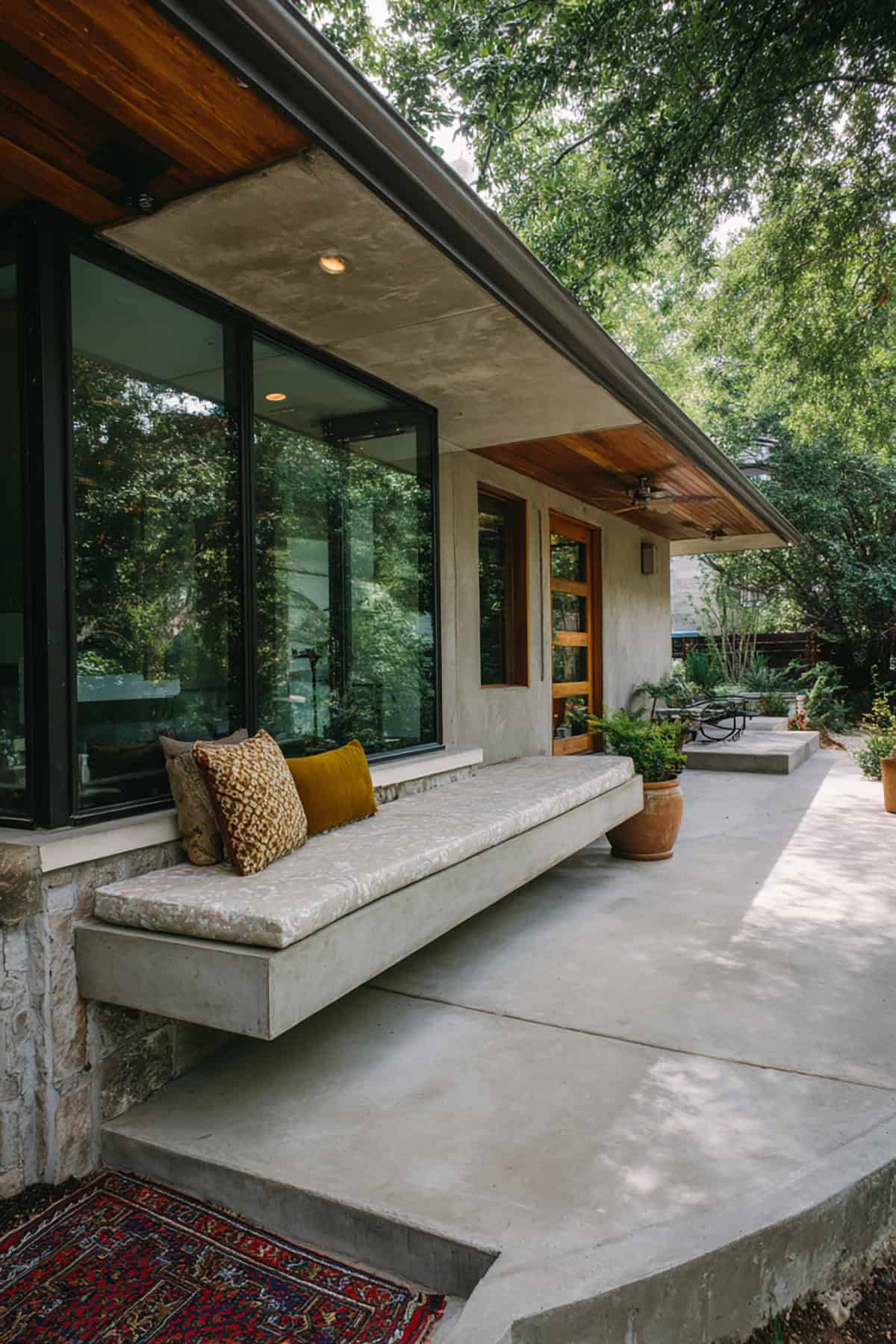
Concrete benches lean modern and require almost zero upkeep. Pour them in place or use precast sections if you’d rather not mix concrete on-site.
Straight lines and smoothed edges keep things clean. Cushions soften the look and add warmth.
Sealing the concrete fends off stains and water. This style fits right in with metal railings or big glass doors.
Built-In Wood Ledge Seating Along Perimeter
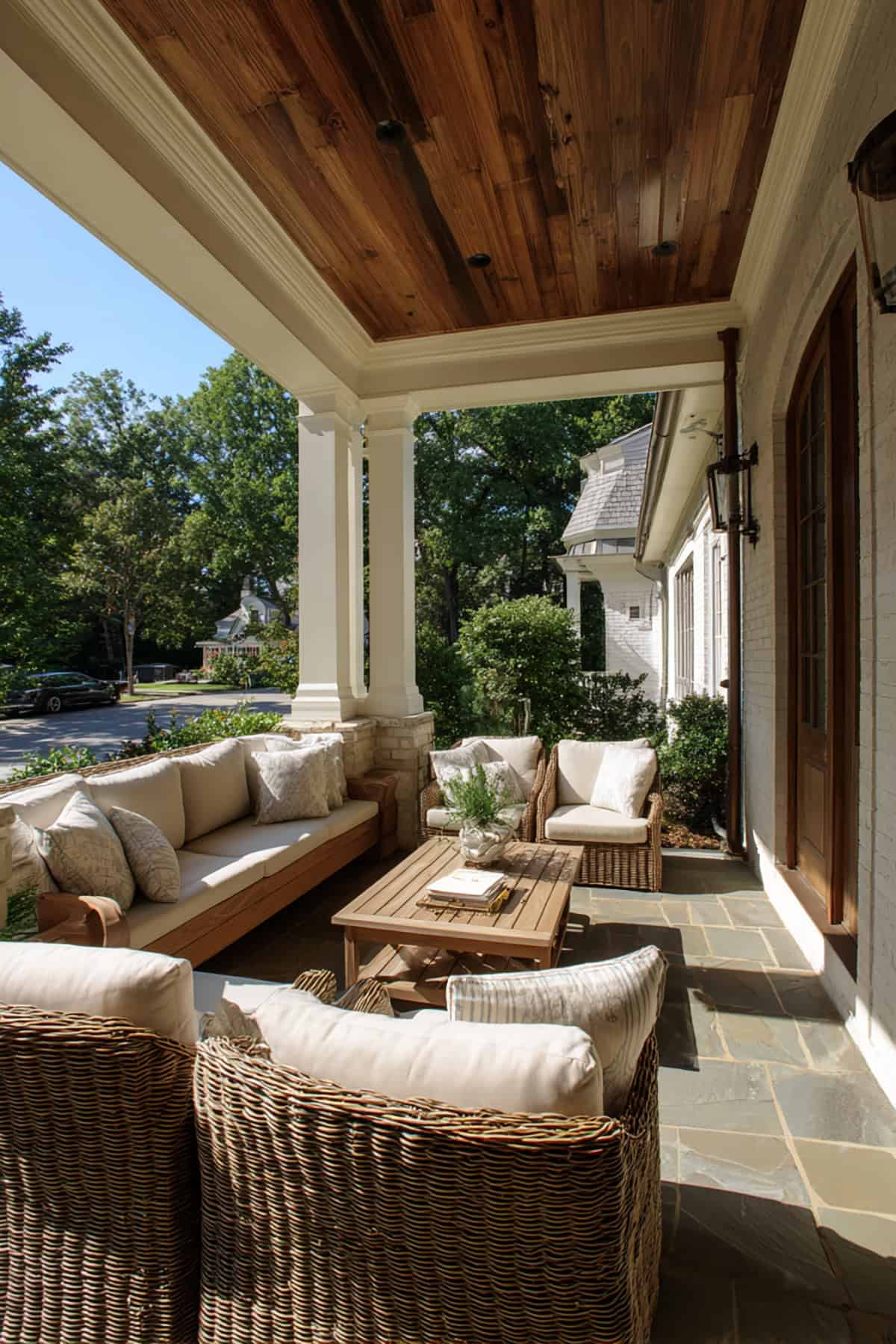
Running a continuous wood ledge along the porch edge opens up the center for everything else. Attach it to posts or walls for strength.
A height near 18 inches and depth of at least 14 works for most people. Use hardwood or well-sealed softwood so it lasts.
Loose cushions add comfort when you want them, and they’re easy to pull off for cleaning or when the weather turns.
Corner Fireplace Bench Combo
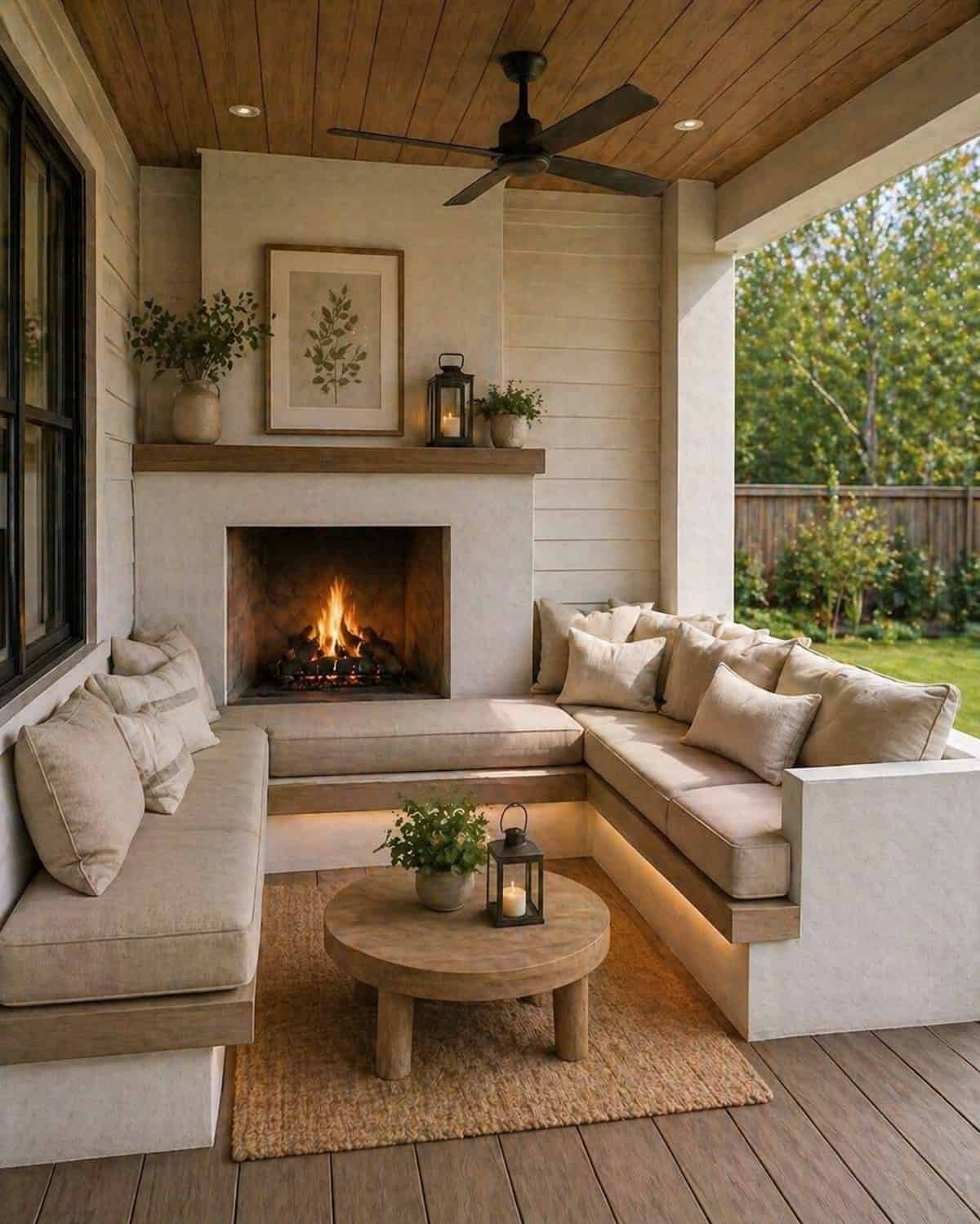
Nothing anchors a porch like a fireplace tucked into a corner, with an L-shaped bench wrapping around it. Stone, brick, or concrete board near the firebox keeps things safe.
A small ledge or mantel gives space for a few decorative touches. Pay attention to manufacturer clearances for safety. This setup draws people in during chilly evenings.
Vertical Slat Privacy Wall
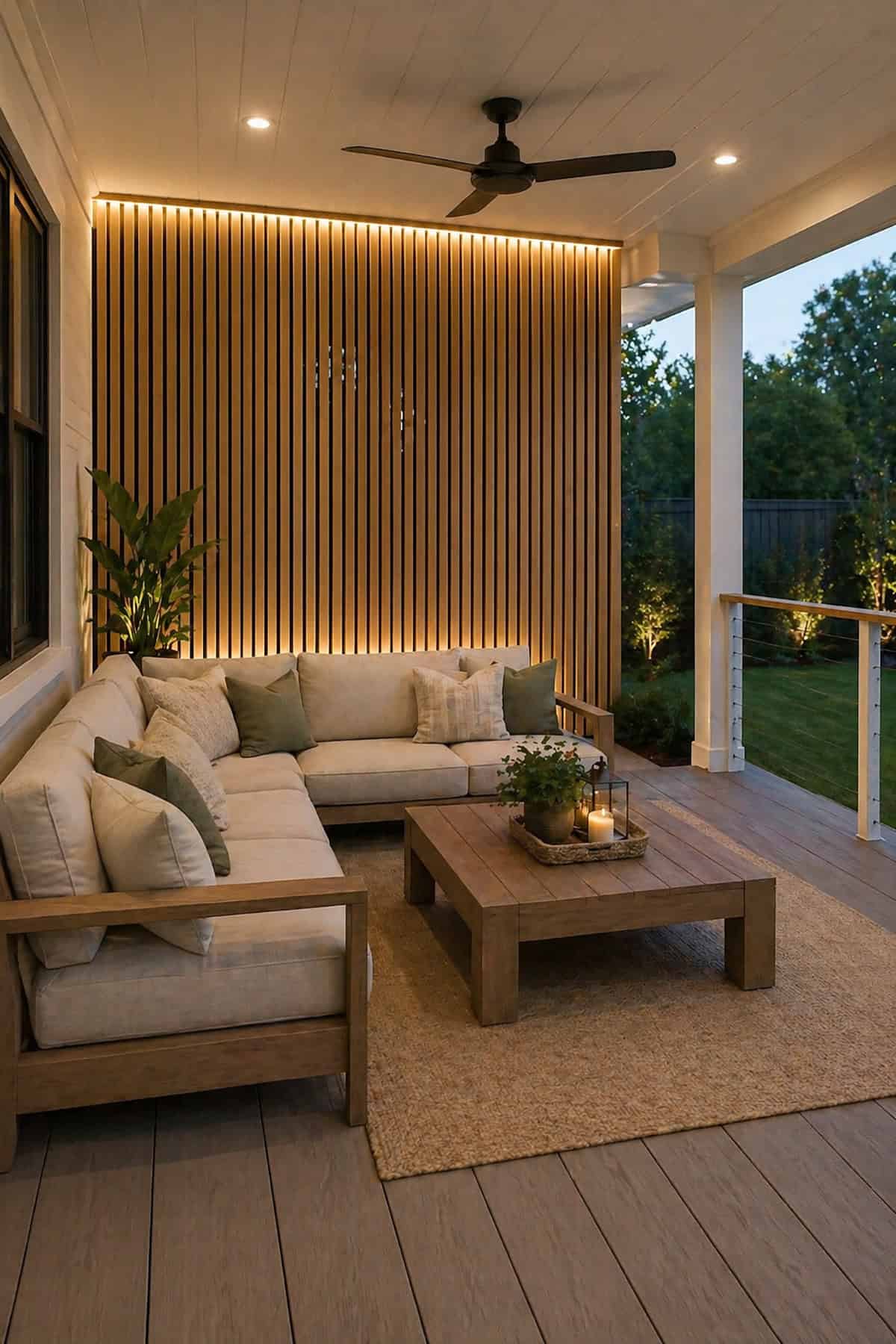
Blocking out the neighbors (or just some wind) can be as simple as a vertical slat screen. Spacing slats an inch or two apart lets air move through without giving up privacy.
Wood, composite, or powder-coated aluminum all work, as long as the wall’s anchored to the porch frame.
Stain or paint to match your trim. Light still gets through, but prying eyes don’t—a solid move for city lots or tight suburbs.
Sliding Panel Screens
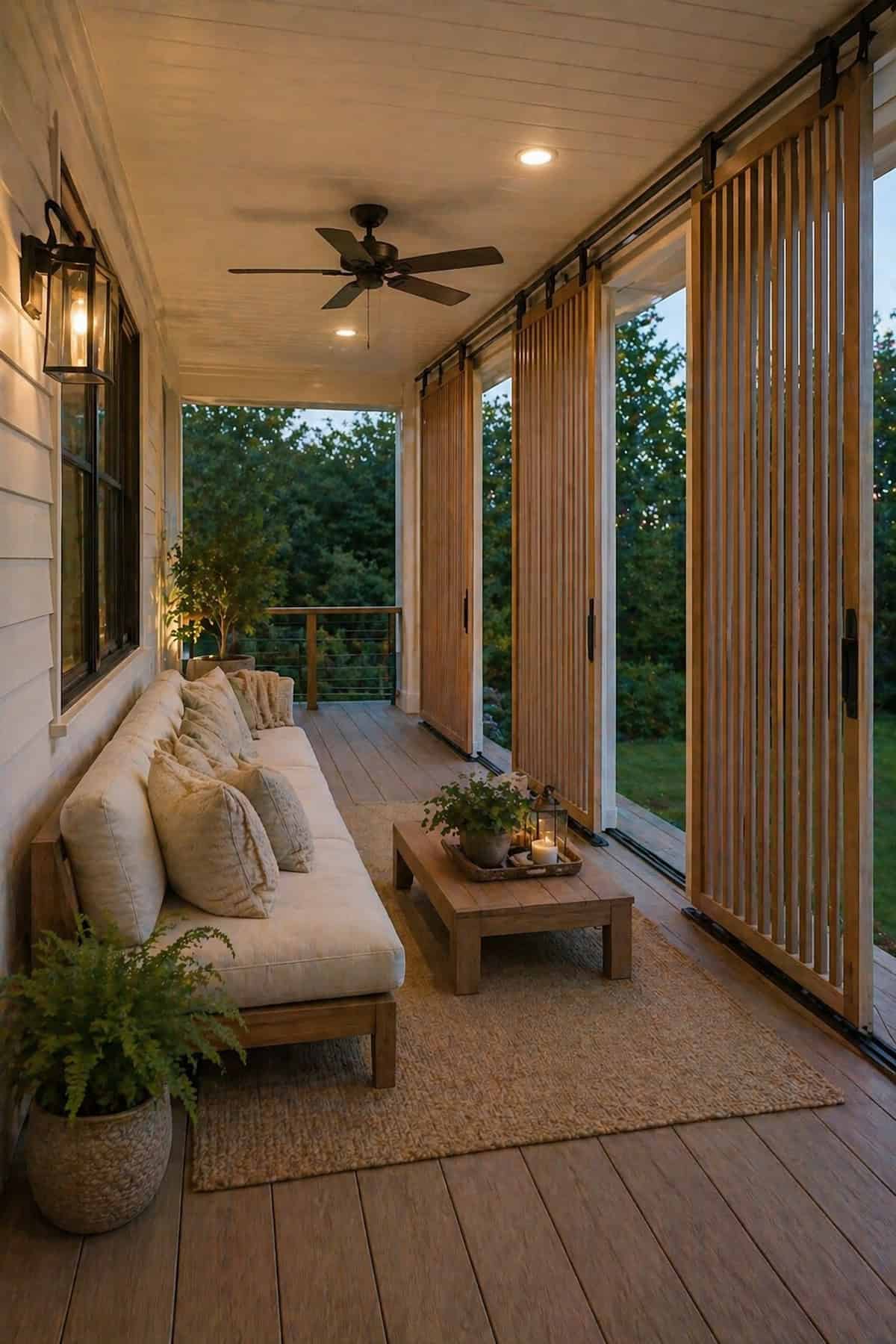
Need flexibility? Sliding panels on a ceiling track can open things up or close them down as needed. Floor guides keep everything lined up.
Mix wood frames with mesh, frosted acrylic, or slim slats. Pop them open for breeze, slide shut for shade or privacy.
Look for smooth rollers and hardware that won’t rust out. The adaptability is a lifesaver when the weather refuses to cooperate.
Retractable Roof Panel System
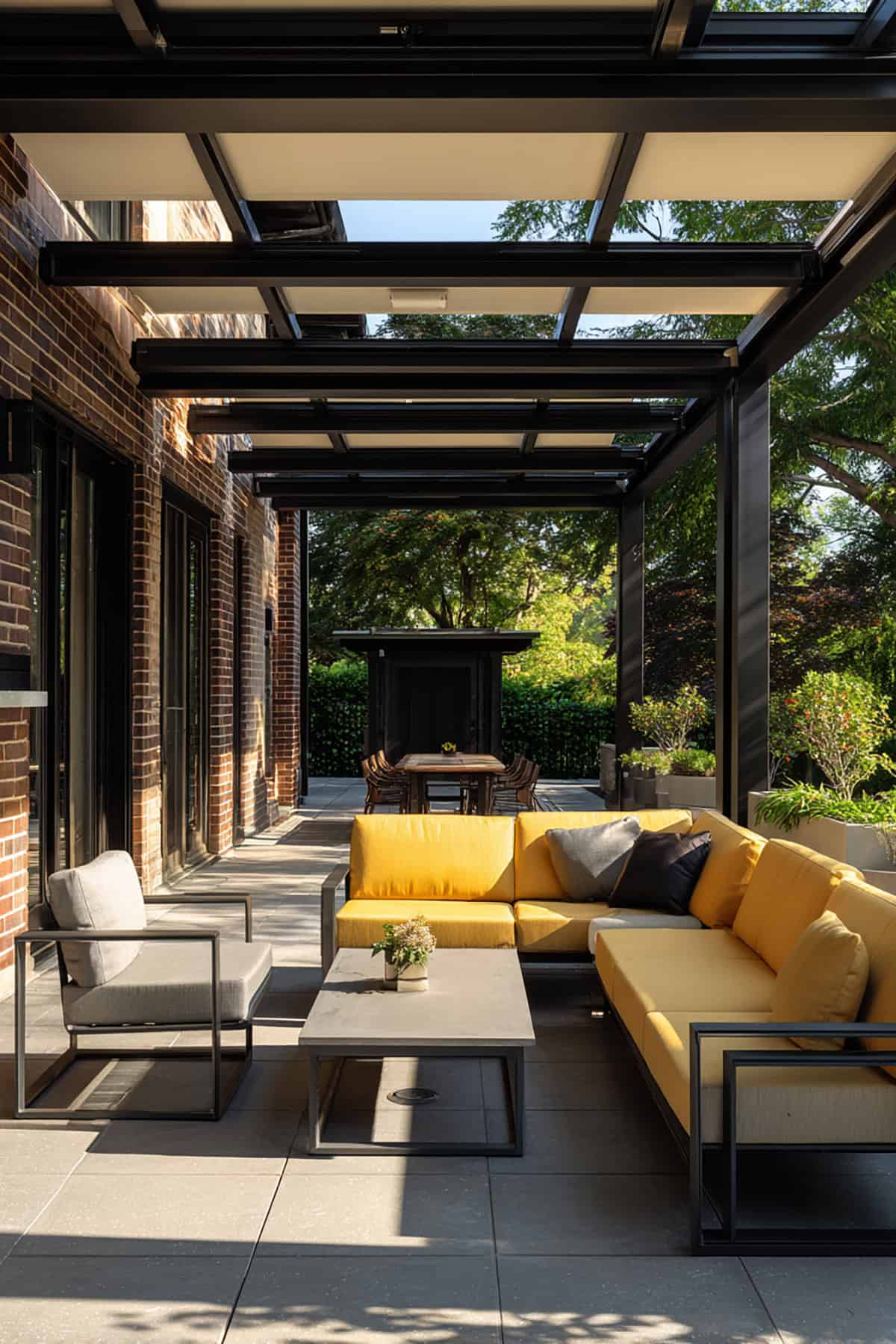
Control over sun and rain comes with a retractable roof. Aluminum or steel frames with motorized panels or fabric canopies do the trick.
Wall switches or remotes make adjustments easy. Some systems even close themselves at the first sign of rain—pretty handy.
Just make sure your porch can handle the extra weight. This feature lets you enjoy the space even when the weather’s unpredictable.
Outdoor Shower Feature Corner
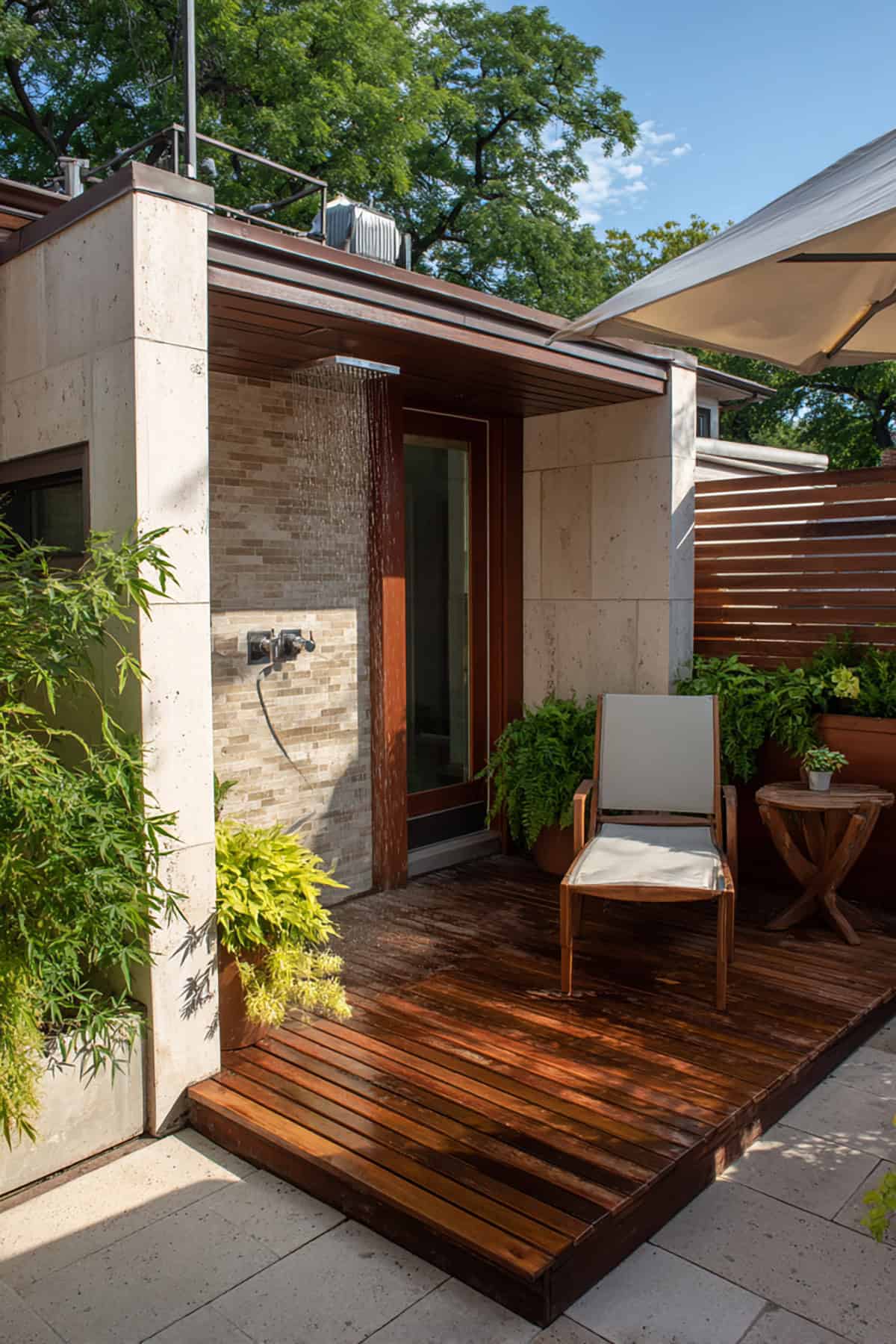
For homes near a pool or the beach, a tucked-away outdoor shower keeps the mess outside. Plumbing through an exterior wall usually simplifies things.
A sloped tile or concrete base with proper drainage keeps water from pooling. Privacy screens around the shower are a must.
Stainless fixtures hold up against corrosion. It’s practical and keeps sand and water from trailing inside.
Built-In Wall Niche Storage Display
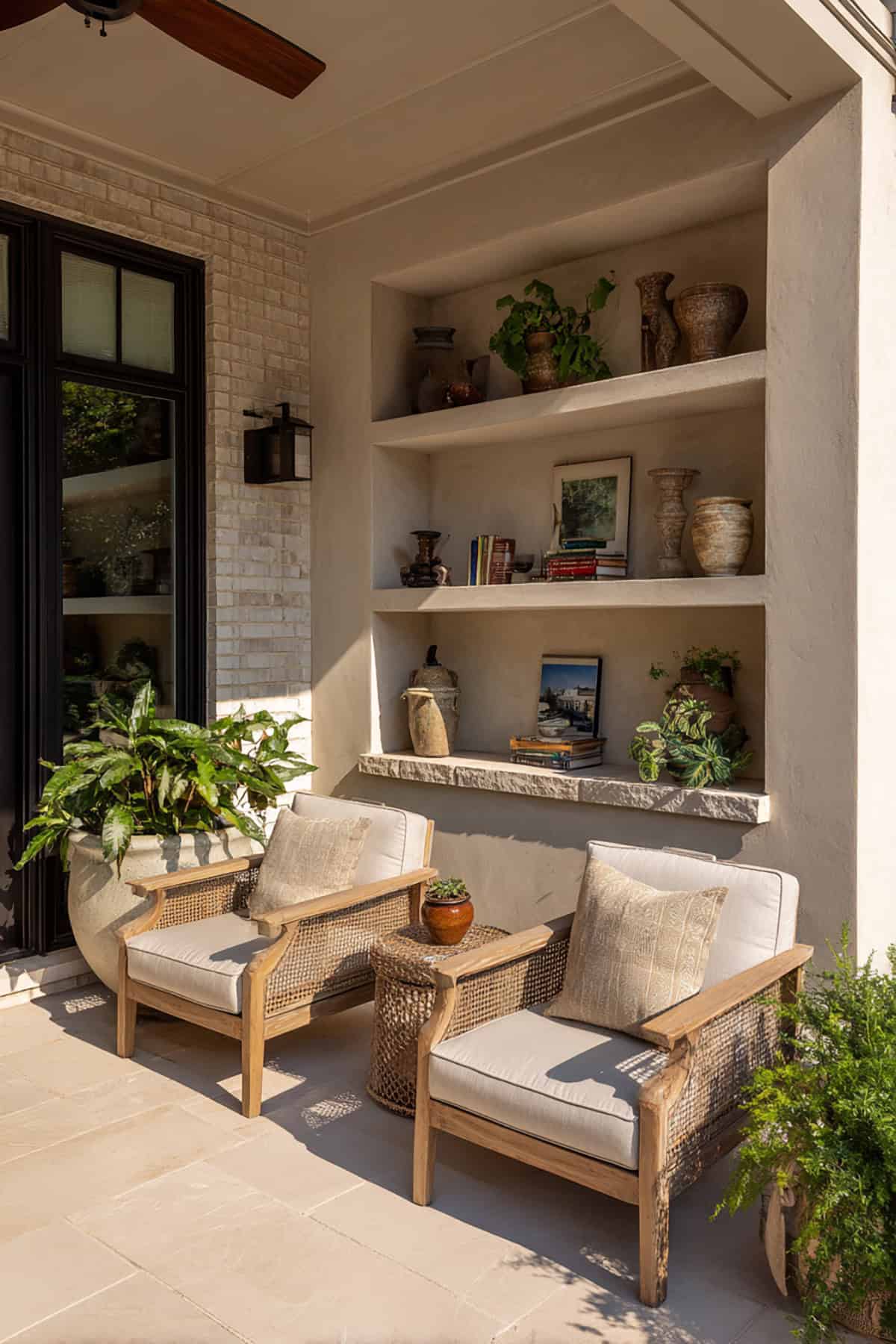
Recessed wall niches bring storage off the floor. Tile, wood, or waterproof board lines the inside for durability.
Perfect for lanterns, plants, or even compact speakers. Subtle LED strips light up the shelves without glare.
Stick to a depth of 6–12 inches to avoid messing with the wall structure. Storage that doesn’t eat up valuable floor area is always a win.
Built-In Corner Bar Counter
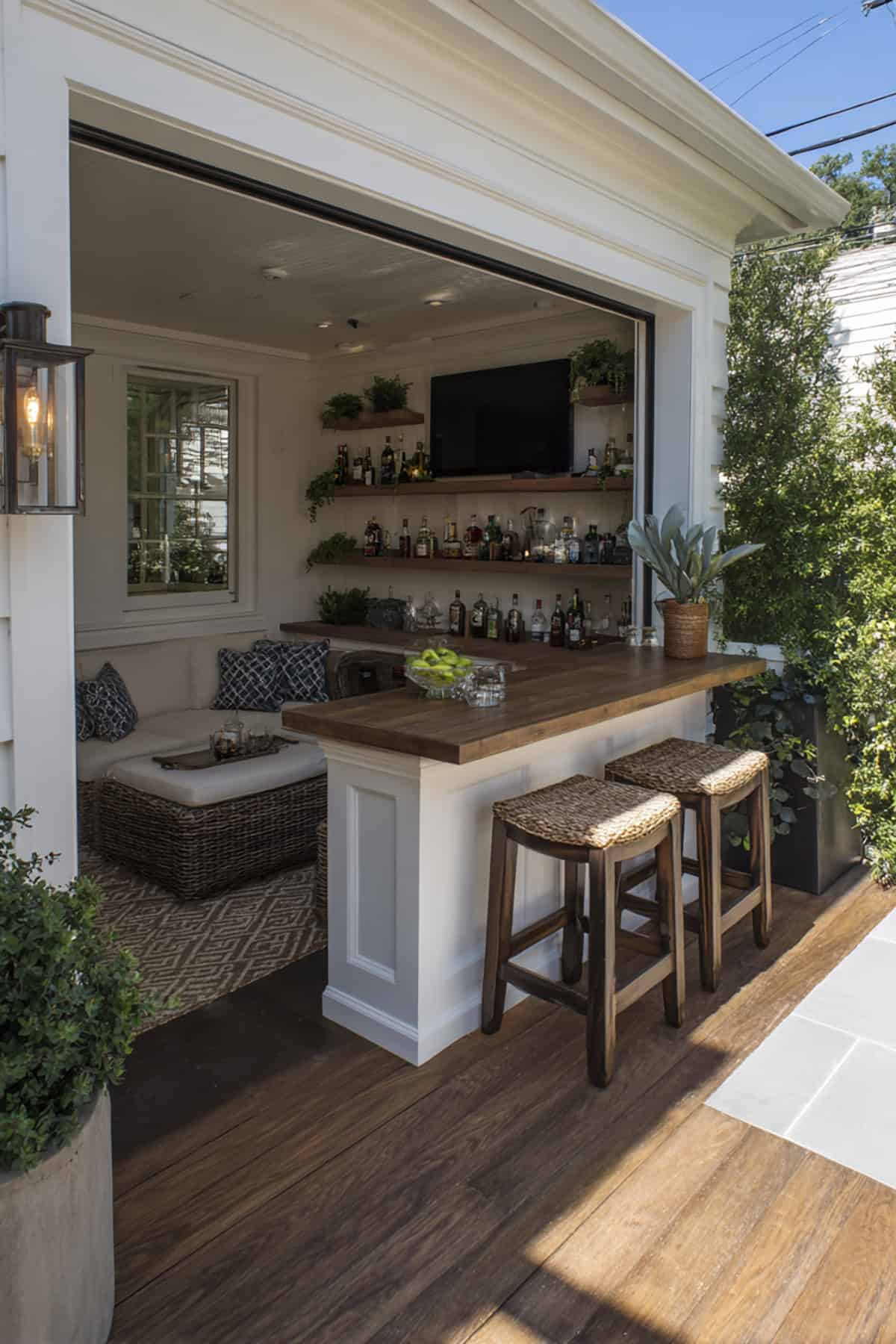
A bar counter in an unused corner makes entertaining smoother. Standard bar stool height is around 42 inches.
Stone, sealed wood, or concrete all work for the top. Shelves underneath hold glasses and gear.
Don’t forget an outdoor-rated outlet for blenders or a mini fridge. Keeps the party outside and the kitchen traffic down.
Outdoor Movie Screen Wall Setup
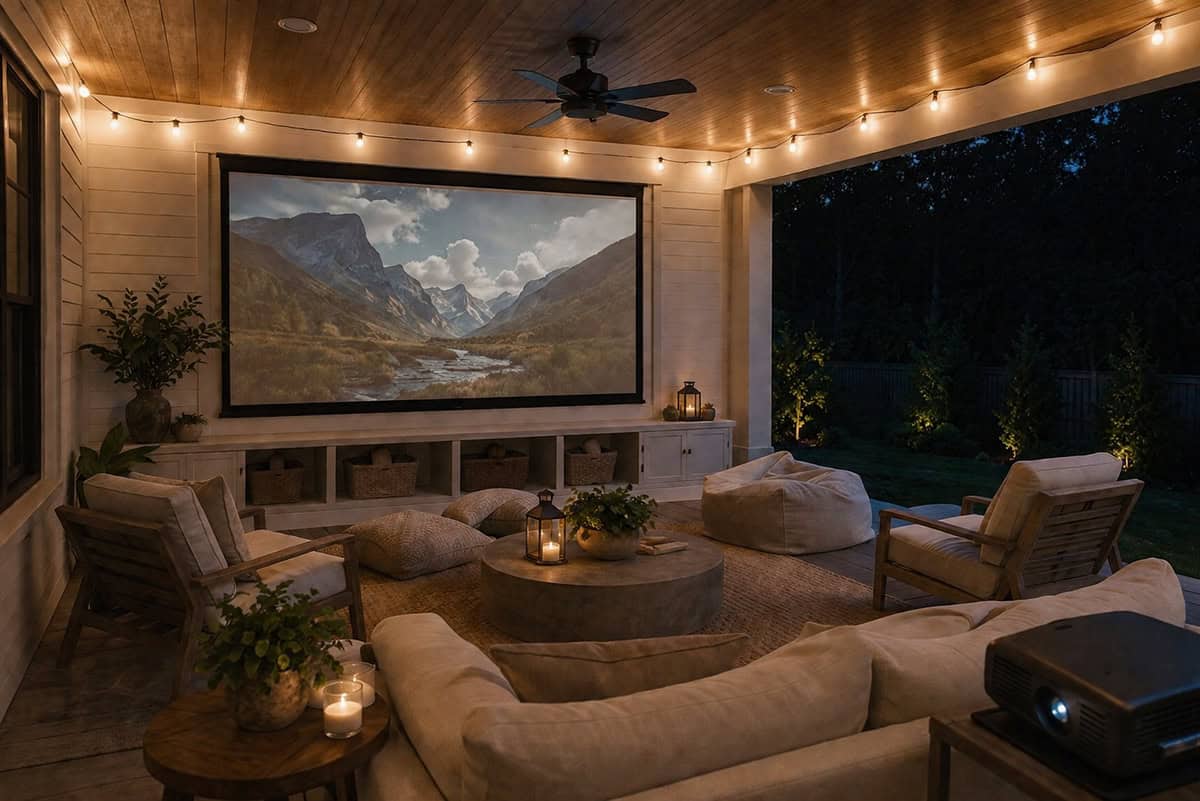
Movie nights outdoors? Dedicate a wall to a retractable or fixed screen, making sure it’s smooth and free of obstacles.
Mount a weatherproof projector under the ceiling, running cables through conduit for protection.
Set up seating 8–12 feet back, depending on your screen size. Blackout curtains or panels help if you’re battling streetlights or porch lights nearby.
Hammock Corner with Stand Frame
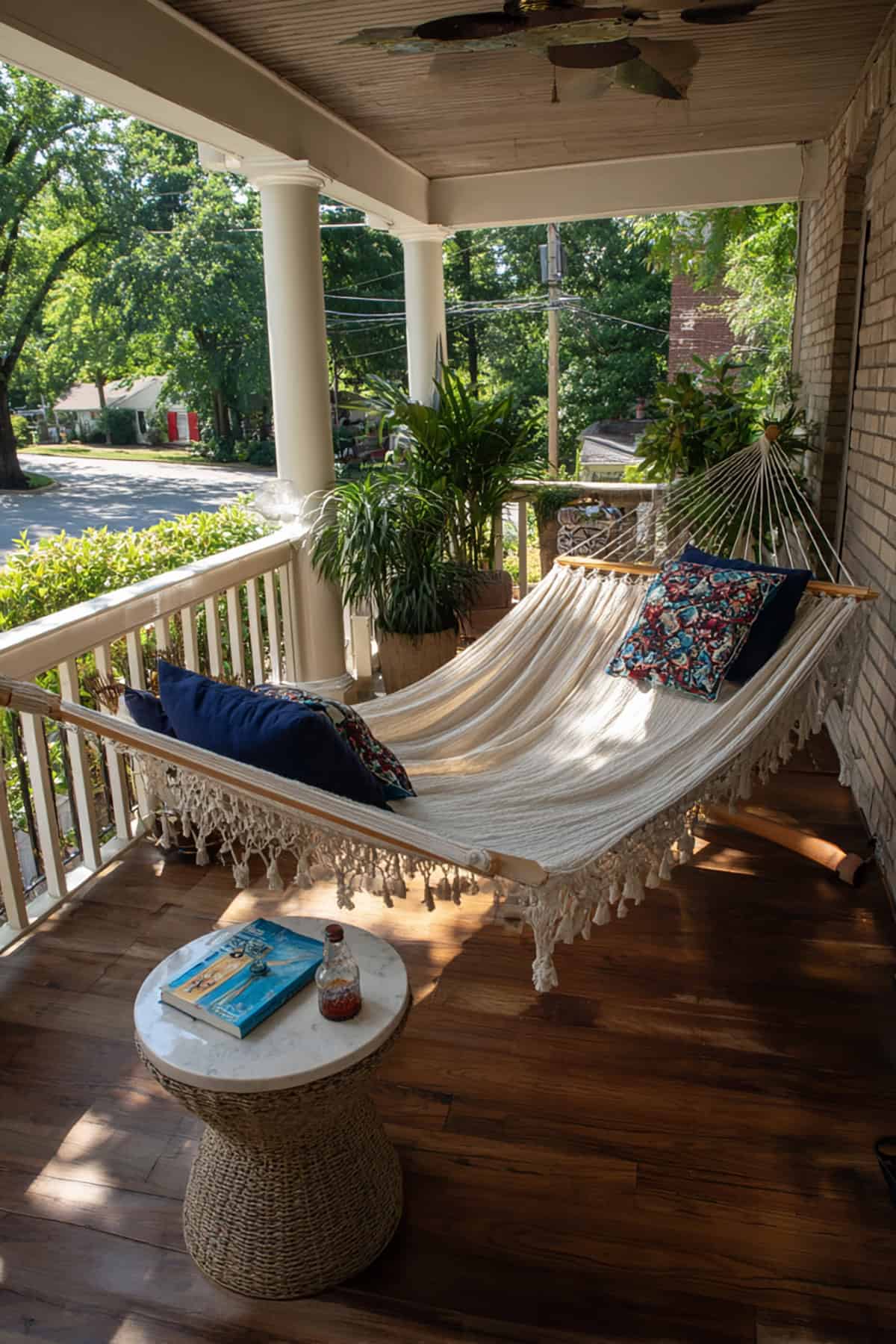
That awkward porch corner? It’s practically begging for a hammock—especially one on a freestanding frame, so you can skip the hassle of drilling into walls. Powder-coated steel stands hold up well, even if you’re a chronic napper.
Before dragging one home, double-check the measurements. You’ll want a couple of feet of breathing room on all sides, or you’ll end up bumping into things every time you swing.
Quick-dry, mildew-resistant fabrics are a lifesaver if you’re not into soggy surprises. With the right setup, you’ve got a low-commitment hideaway that won’t leave a mark when you change your mind later.