
If your home has a deck, you probably use it as a place for gathering and enjoying the fresh air. However, the design of a deck goes beyond railing and whether or not to include a canopy.
The area underneath, which plays a role in the overall design and safety of the deck, requires as much attention to every detail. This is where skirting comes into play.
Table of Contents
- 35 Deck Skirting Ideas
- Lattice
- Vertical or Horizontal Shiplap
- Panel
- Board and Batten
- Stone Veneer
- Square Lattice
- Irregular Screen
- Brick and Mortar
- Composite
- Slat Fence
- Metal
- Stairs
- Louvers
- Interlocking Pickets
- Garden Bed
- V-Shaped
- Fascia Board
- Curved
- Lighting
- Bulit-in Dog House
- Swinging Deck Gate
- Vertical Baluster
- Firewood Stack
- Decorative Concrete Block
- Frosted Glass Panels
- Horizontal Brick Accent
- Horizontal Wood Planks
- Perforated Aluminum Panels
- Built-in Planter Box
- Reclaimed Wood Panels
- River Rock Wire Cage
- Stone Column Sections
- Vertical Cedar Boards
- Log Slice Panels
- Chevron Wood Pattern
35 Deck Skirting Ideas
A deck skirting transforms the look of a deck, as well as prevents critters from setting up homebase on the underside. Today, we’re going to take a look at 35 deck skirting ideas, which includes various materials, design choices, and features.
Lattice

Credit to sunsetdecks_js
Perhaps the most common deck skirting style is the lattice. This is a pattern made by crisscrossing pieces of wood or metal, leaving diamond-shaped holes in between.
The lattice design provides ample airflow underneath your deck, thereby reducing moisture levels and preventing the buildup of rot, mold, and warped wood. Not only is lattice among the most inexpensive deck skirting designs, but it’s also as durable as it is lightweight.
Vertical or Horizontal Shiplap
Credit to kissmyemptyglass
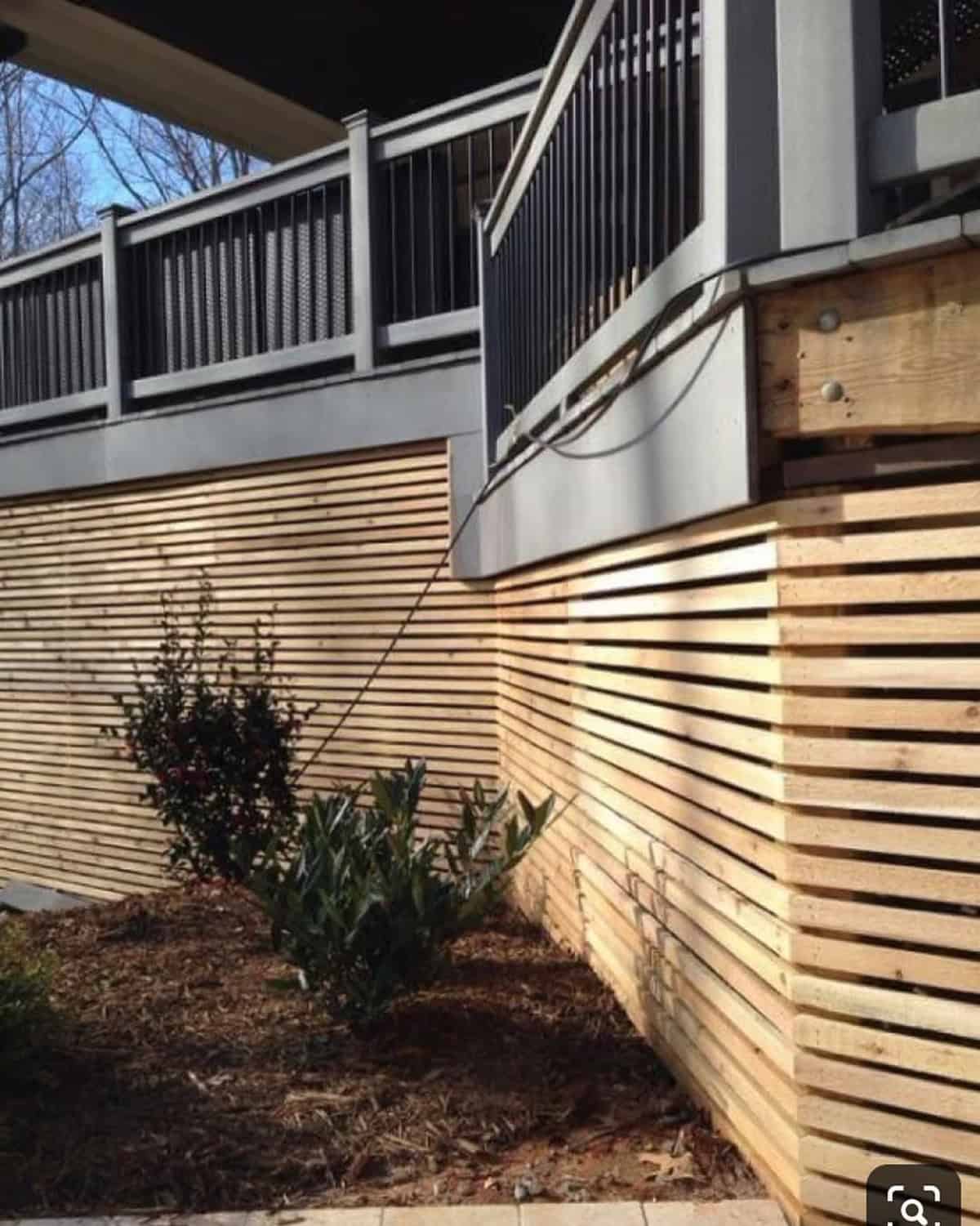
Shiplap refers to overlapping boards. Vertical shiplap is when the boards are placed standing up, while horizontal shiplap boards go from left to right.
Regardless of orientation, the final result is a deck skirting that’s uniform in look and virtually seamless due to the overlap between boards. Stain the wood to produce a more polished look and feel or leave it untouched to blend better with nature.
Panel
Credit to darlington_designs_nj
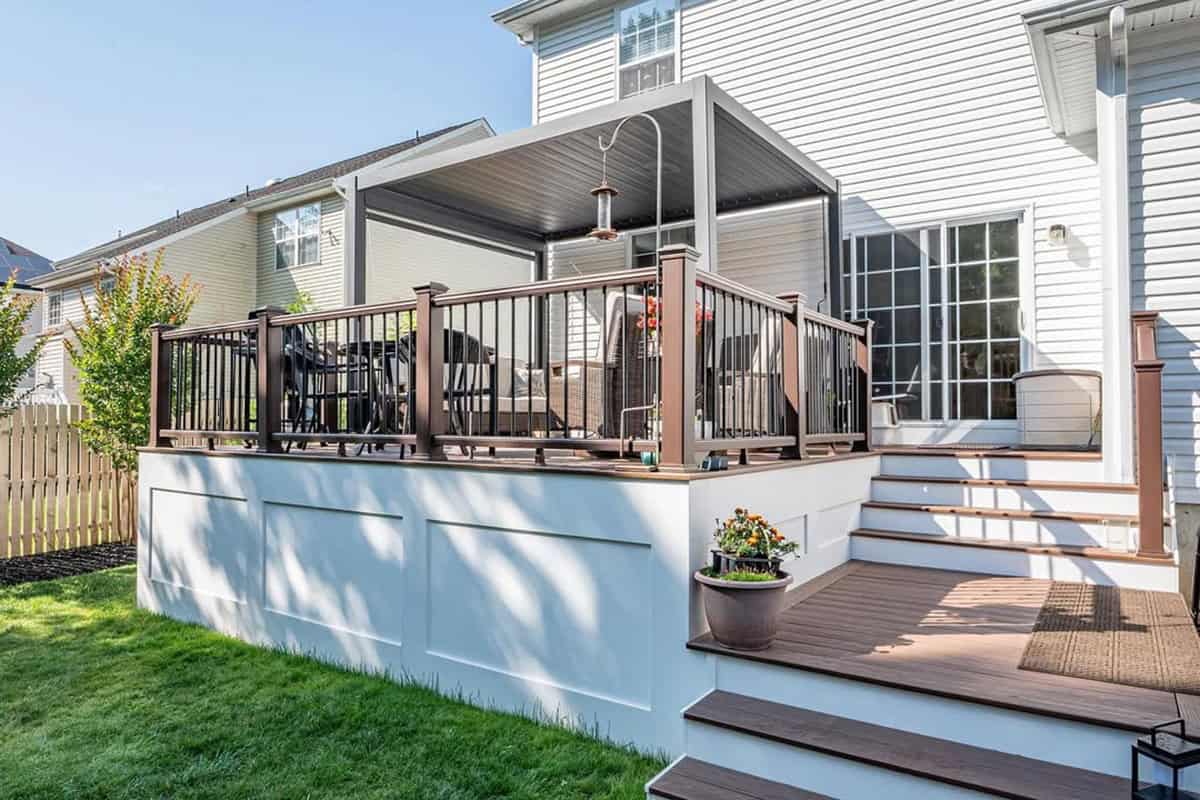
Deck skirtings can be made with large panels to create a cohesive look from left to right. Panel design options are limitless, with recessed panels being a popular choice for deck skirtings.
The framed sections of the panel jut out slightly, leaving an inset for added depth and dimension. They can be painted for a more refined look to fit more formal or classic home designs. If you don’t like the recessed look, raised panels may be more suitable.
Board and Batten
Credit to morganqualityhomes
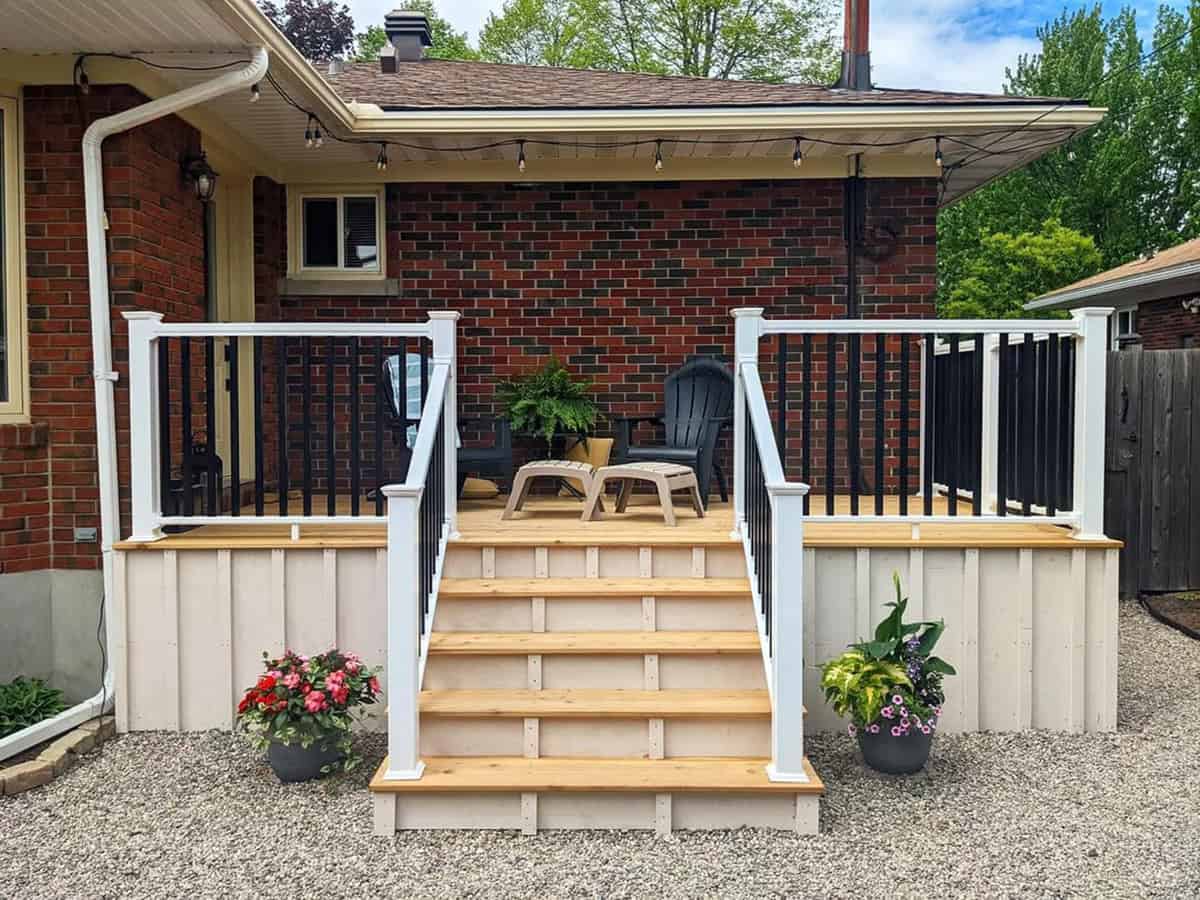
If you like the idea of large panels but don’t want to leave visible seams in between, board and batten may be more your style. In between each vertical panel or board is a batten or strip of material that conceals the seam.
This produces a clean, uniform look across the entire length of the deck skirting. However, you’ll need to find another way to allow dry air to pass, possibly with vent inserts or a swinging door.
Stone Veneer
Credit to kmorrislandscapedesign
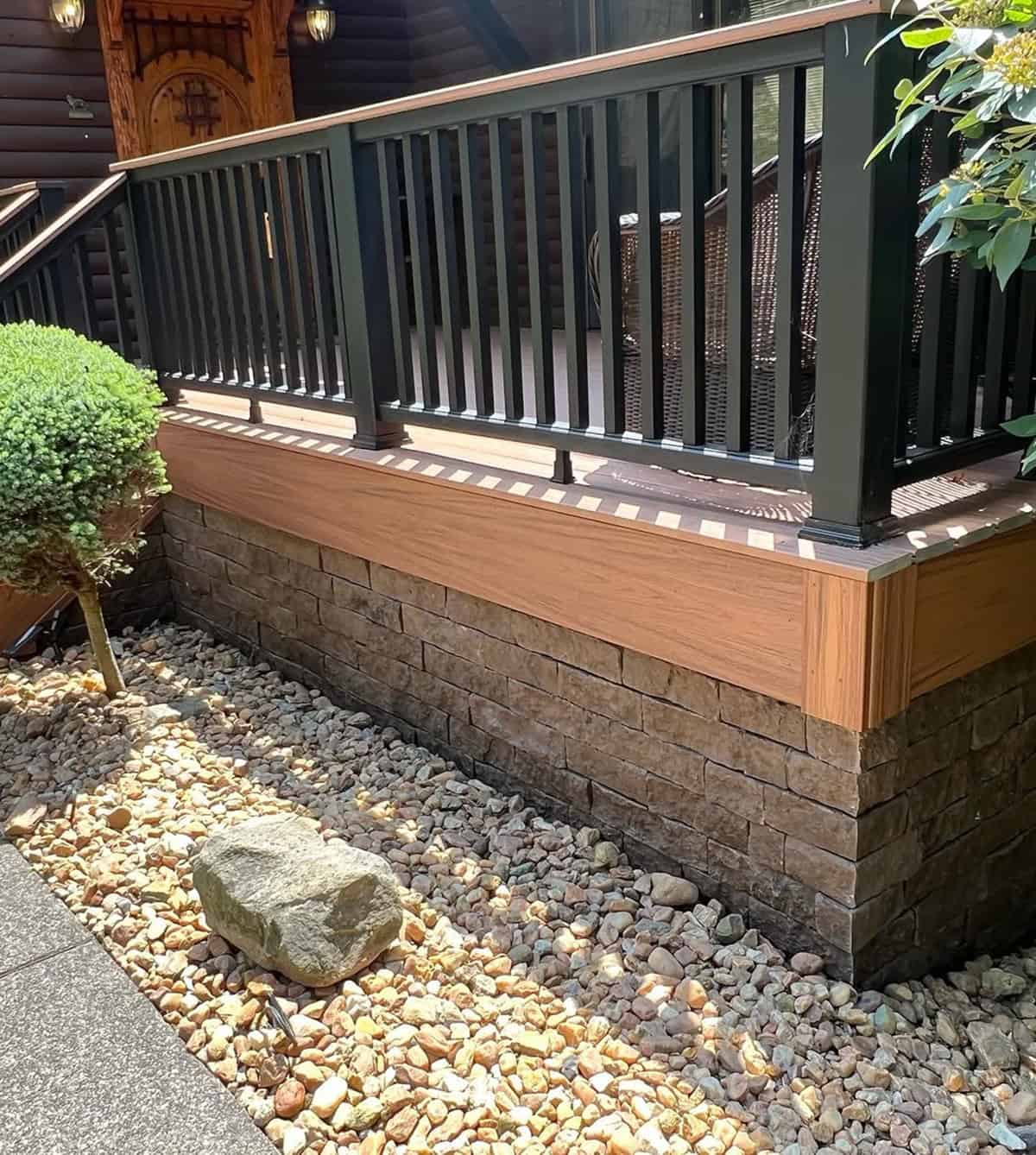
While wood is the most popular material used in deck skirtings, you don’t have to settle for the wood-y look. With stone veneer, or thin layers of stone, you can give your deck skirting a polished, masonry finish.
Stone veneer can also make your deck feel more in-tune with natural surroundings. That way, your home will look less like an intrusion in nature and more like an integral part.
Square Lattice
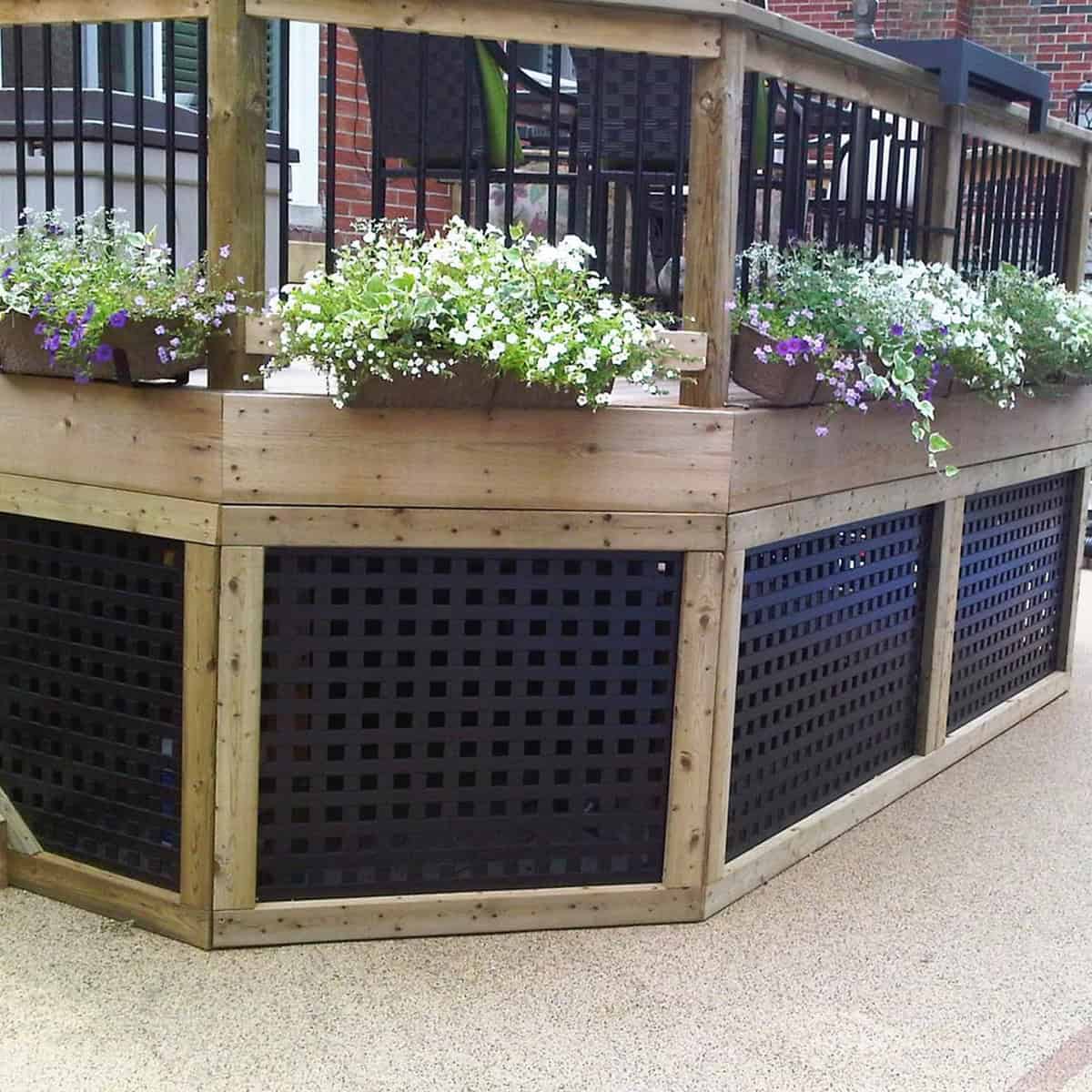
Credit to acuriolatticeworks
Square lattice gets rid of the classic diamond-shape holes in exchange for a modern grid design. This is done simply by changing the orientation of each board.
Square lattice is more durable than its diamond counterpart. It also works well with bolder color choices. If your goal is to design a minimalist deck, a square lattice pattern may be more fitting.
Irregular Screen
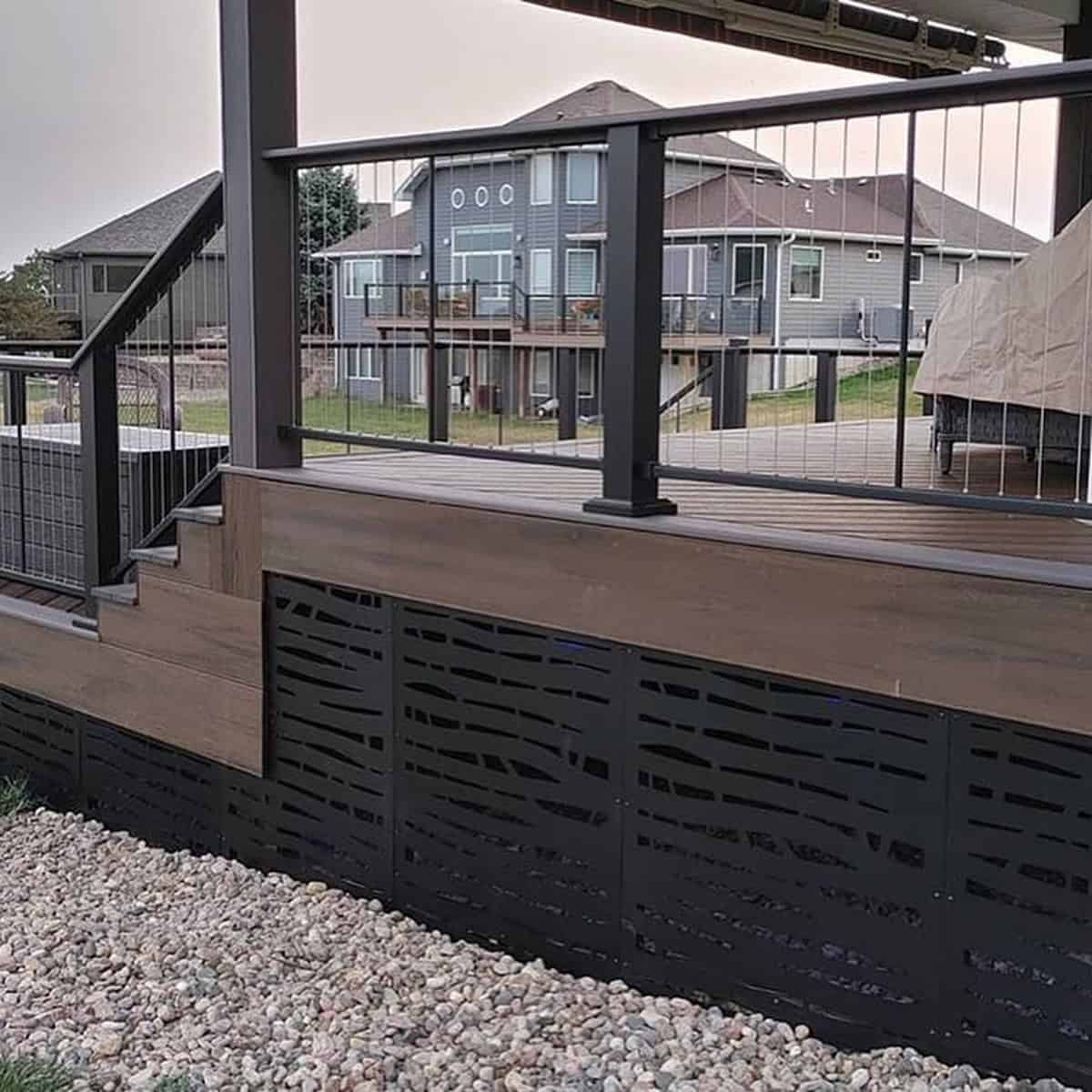
Credit to hideaway_inc
Metal is another common material used in deck skirting. It also has the benefit of being molded into any shape or design you like. Screen deck skirtings are a popular choice since they allow air to flow in, but there are more options to choose from.
This homeowner went with aluminum screens with irregular slats that somewhat resemble wood grains. Thanks to this open-slat design, the underside of this deck has plenty of airflow to dry out moist areas. Paint your metal skirting in any bold color you prefer!
Brick and Mortar
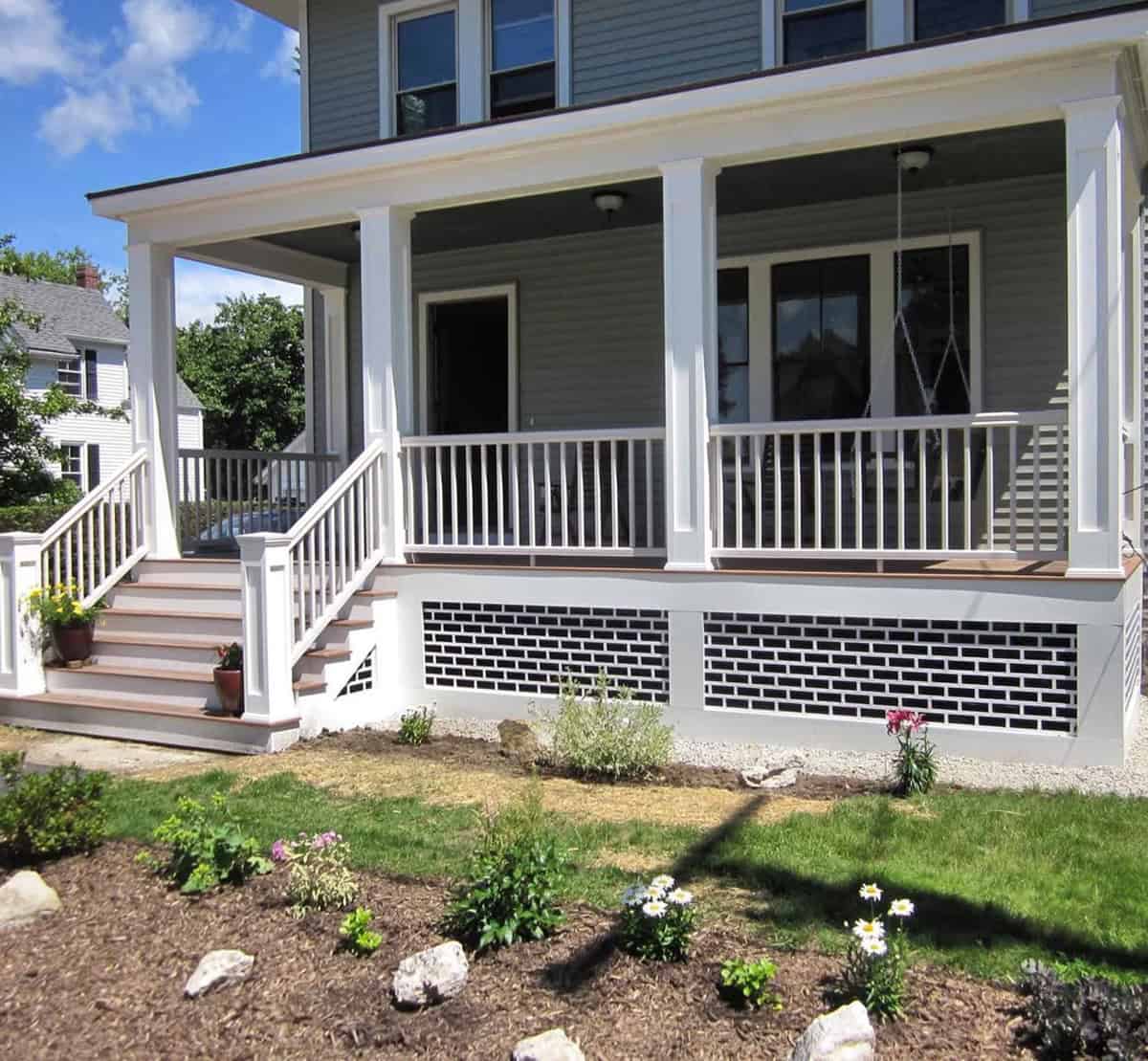
Credit to acuriolatticeworks
There’s no denying the longevity of brick and mortar! Brick skirting provides durability and ease of mind since it can withstand the test of time.
It will also blend in well with brick homes to create a timeless, cohesive feel. This is especially true when the brick skirting leads up to a brick patio or down to brick-laden pathways. There are various brick shades to choose from, from look-at-me reds to camouflaged grays.
Composite
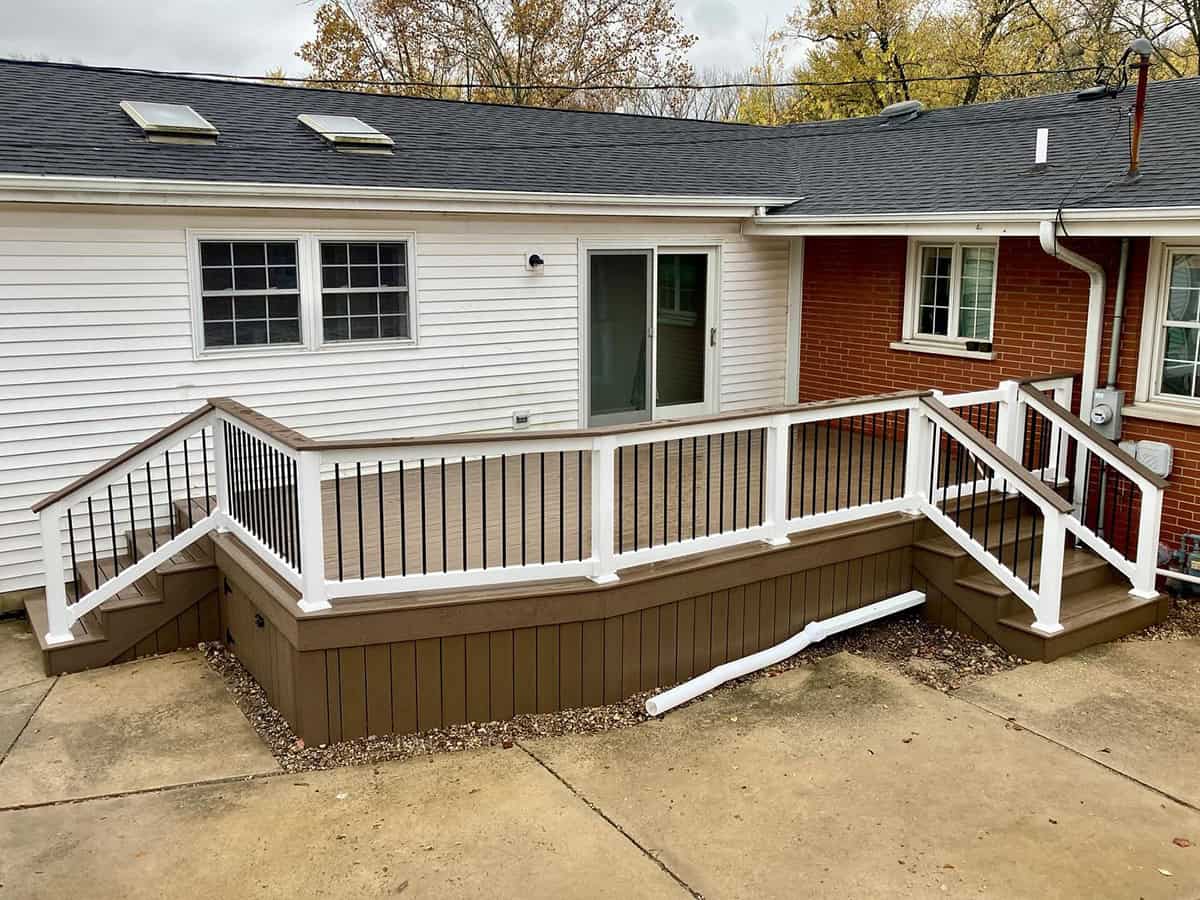
Credit to pinecone_decks
A composite skirting provides the best of both natural and engineered worlds. It can have the natural wood-grain finish but without blemishes and knots. Composites are typically made of recycled fibers and plastics, so they’re durable against moisture, pests, and fading over time.
It’s also a low-maintenance option for busy homeowners. Best of all, you can get composite panels made in any shape or color you like! If you’d like a polished feel for your deck skirting, composite wins every time.
Slat Fence
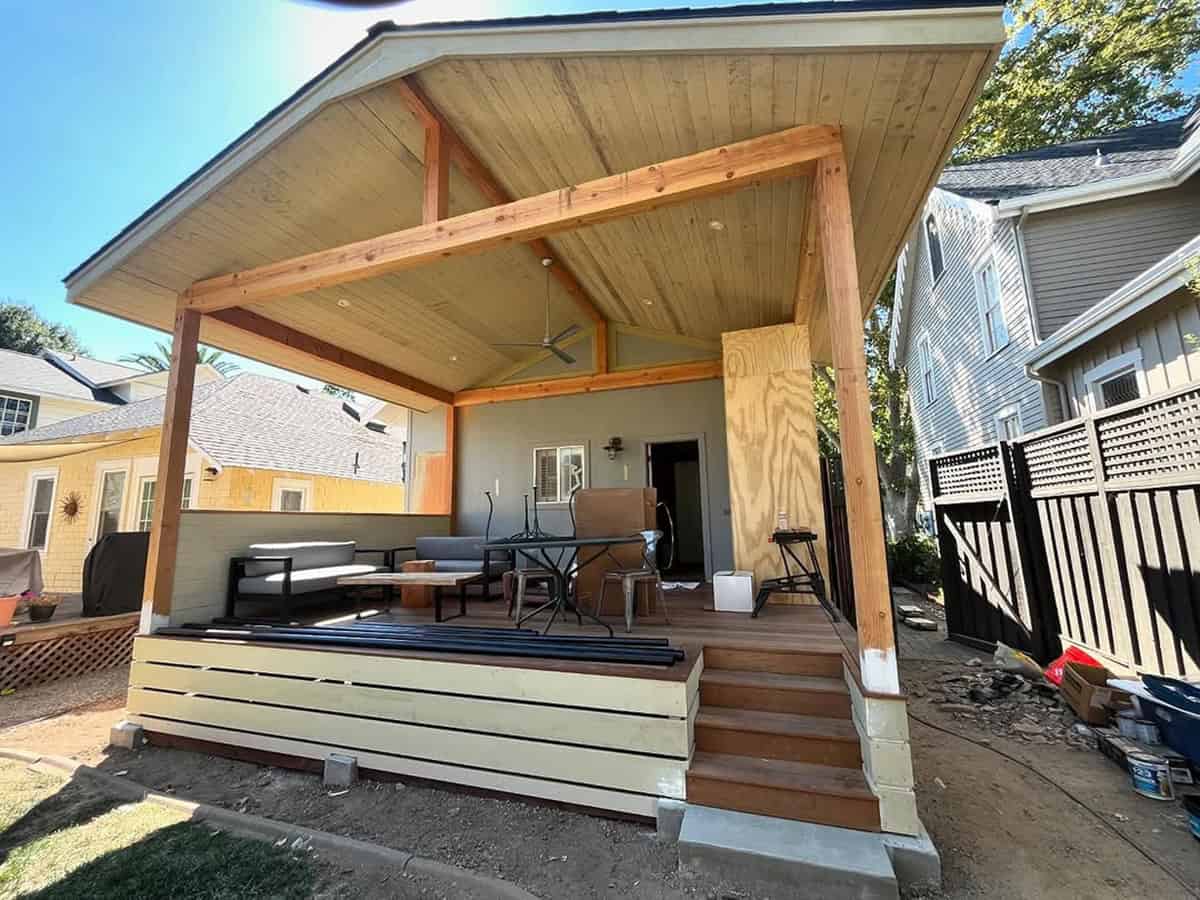
Credit to tellez_91
In slat fencing, the slats are made by leaving a slight gap in between each board of the deck skirting. As such, the seams will stand out, but they’re there for optimal ventilation.
The spaces between boards are typically made as thin as possible, lowering the risk of curious critters from seeking refuge under your deck. Slat fencing can be made with wood, metal, or composite materials, and they’re customizable to match your deck’s design.
Metal
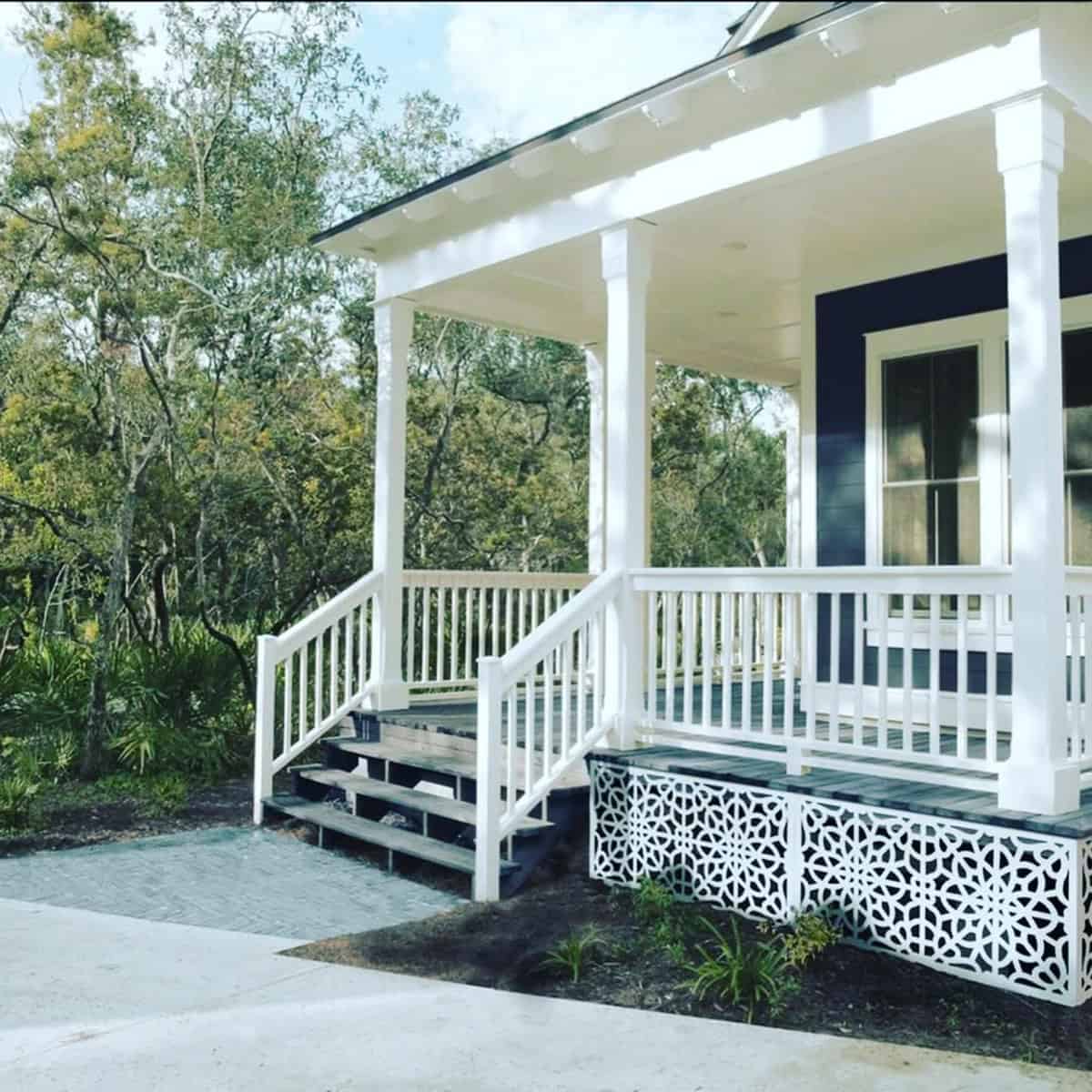
Credit to deckexpressions
Whether you’re looking for a more industrial-looking edge for your deck or something with intricate shapes, metal is your best friend. Metal skirting, which typically comes in stamped aluminum or corrugated sheets, can have rust-resistant finishes for increased longevity.
You can also use metal as an accent in your wooden deck. Metal skirting is an excellent match for modern or minimalist homes.
Stairs
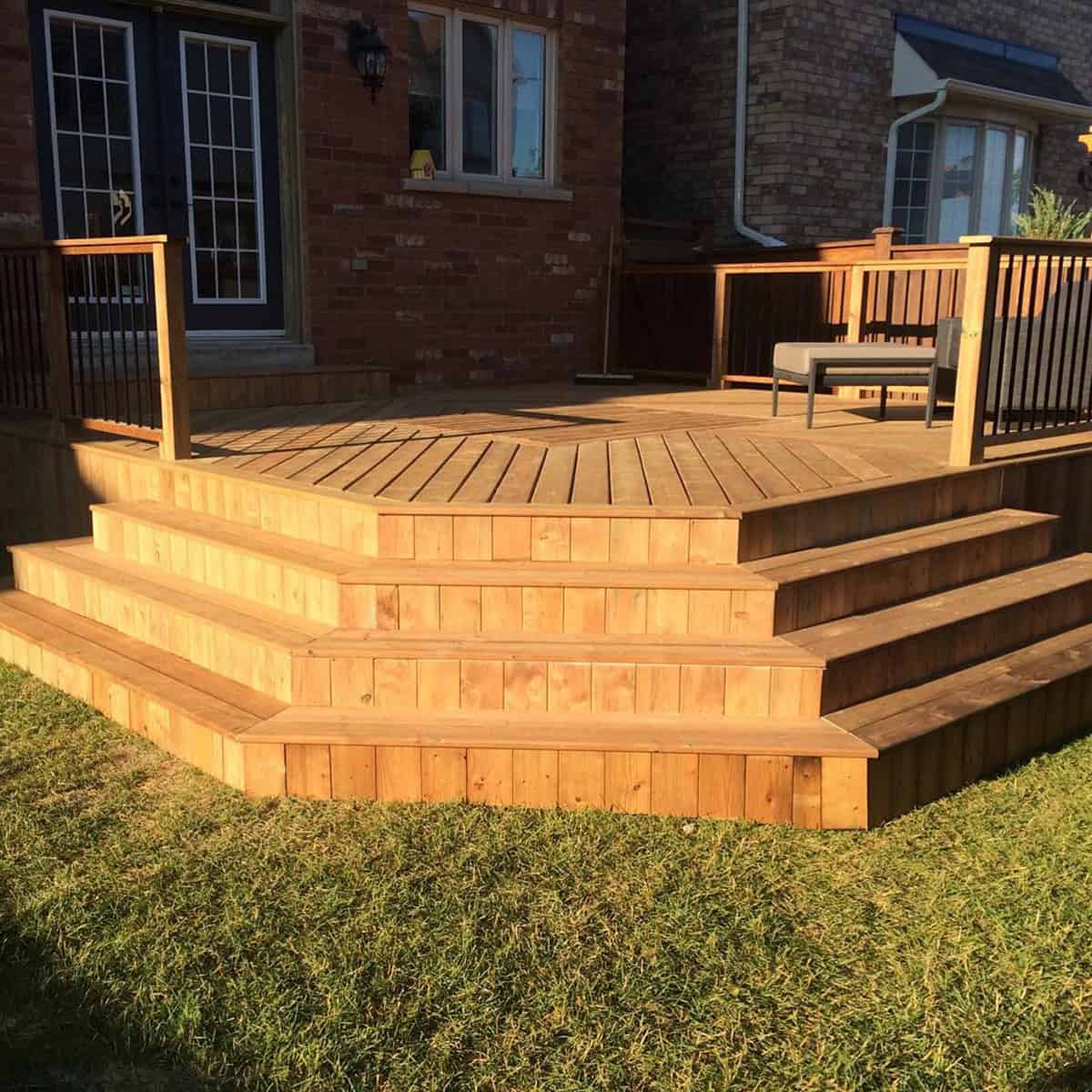
Credit to outdoorliving_ol
The stairs on your deck can act somewhat as a skirting. By extending the stairs’ width, it’ll cover a greater portion of the side of your deck. This way combined form and function by not only creating a place to move up and down the deck but also removing gaps altogether.
Some homeowners have even found creative ways to improve the functionality of their stairs—e.g., installing hidden drawers for storing outdoor items. There’s also another creative way pet owners can utilize the bare space underneath their decks. More on this later!
Louvers
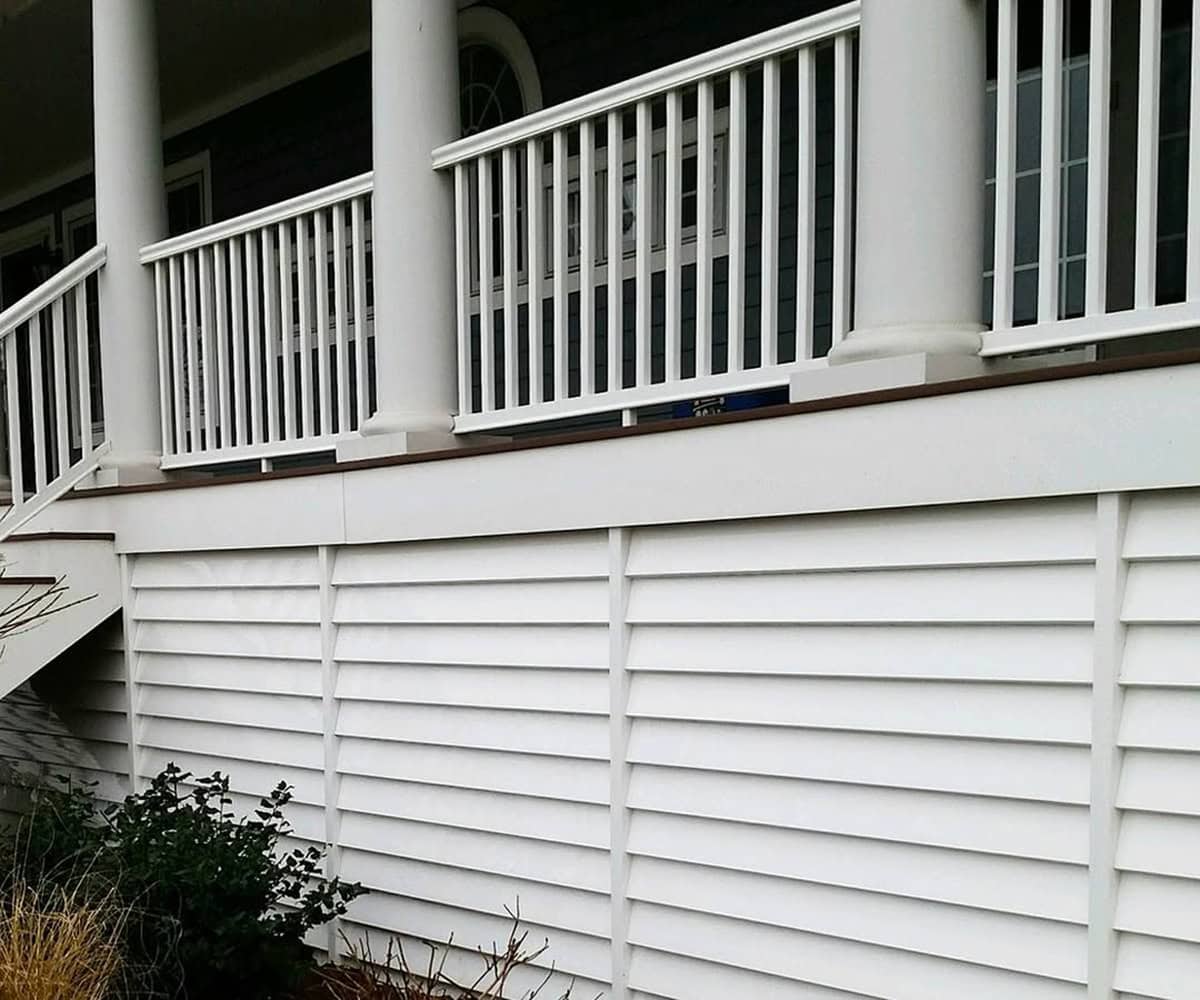
Credit to phonexrails
Louvered skirting is made with angled slats that conceal the underside of the deck while also allowing air to pass. From straight-on, the gaps between the boards may be impossible to see. Louvered skirting works especially well in humid areas.
More advanced louvered systems allow users to adjust the angles of the slats, thereby increasing or reducing the amount of light and airflow underneath the deck.
Interlocking Pickets
Credit to trexfencing
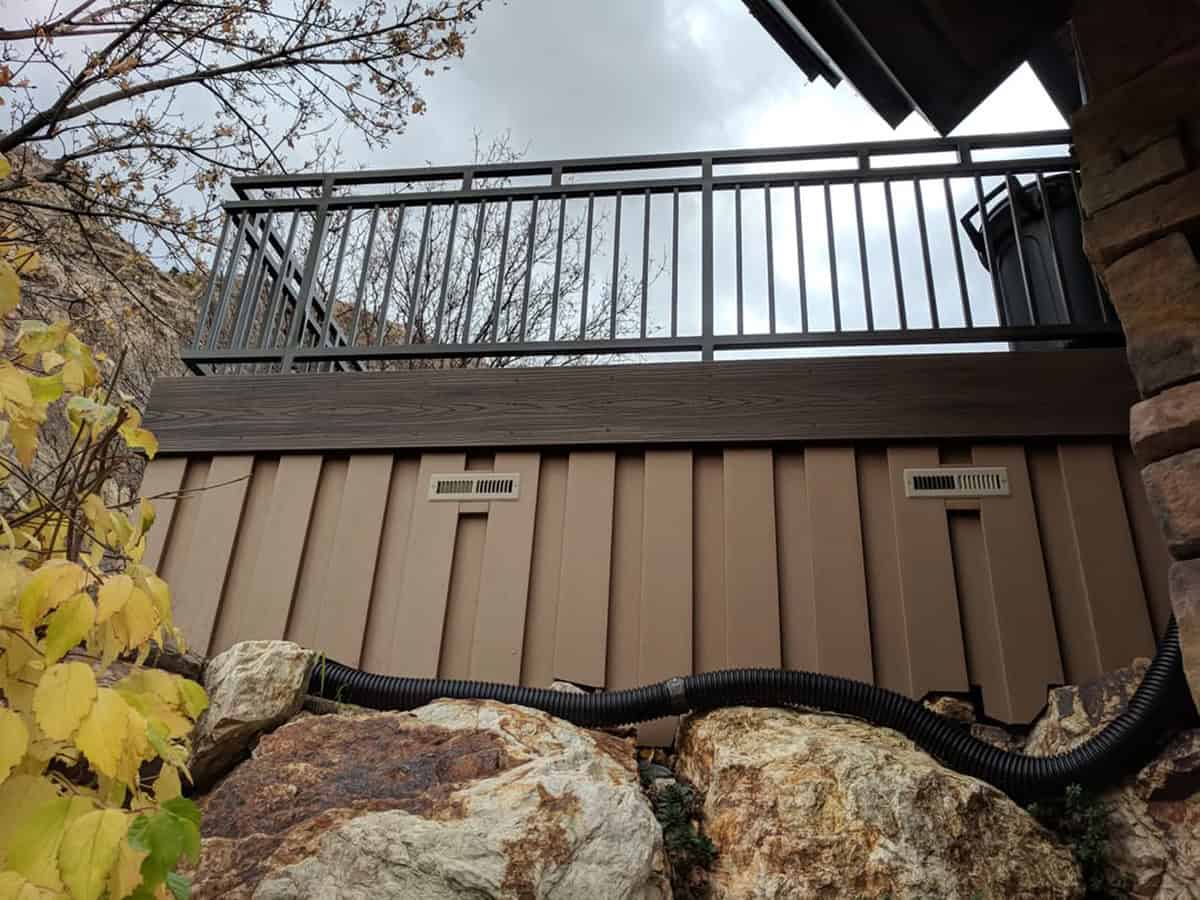
Interlocking skirting panels is actually one of the best ways to prevent moisture from finding its way underneath your deck.
And it just so happens that there are interlocking panels or pickets for deck skirtings. They take less time to install and are less prone to shifting due to their locking mechanisms. However, as this homeowner did, you may need to install vents to allow some airflow in.
Garden Bed
Credit to 1stplacefinishing
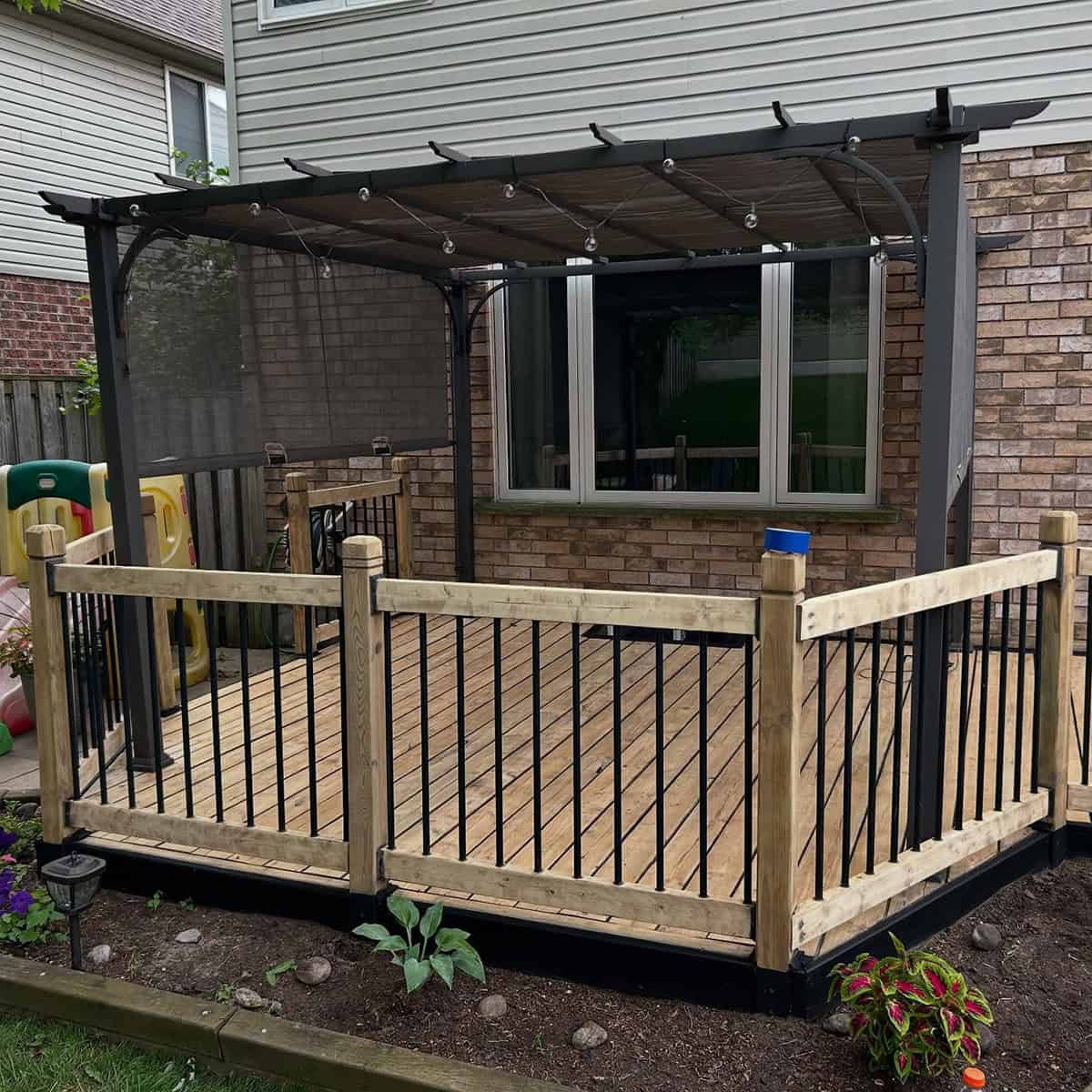
This is not a deck skirting in the technical sense, but it serves the same purpose. If you have the space in front of your open-design deck, consider planting bushes or a few shrubs there. The natural greenery will prevent some of the moisture from getting in while also adding beauty to your home’s exterior.
If your patio is farther up, you may need to use raised garden beds, or you can try planting and maintaining larger, bushier plants.
V-Shaped
Credit to thequalitycraftsman
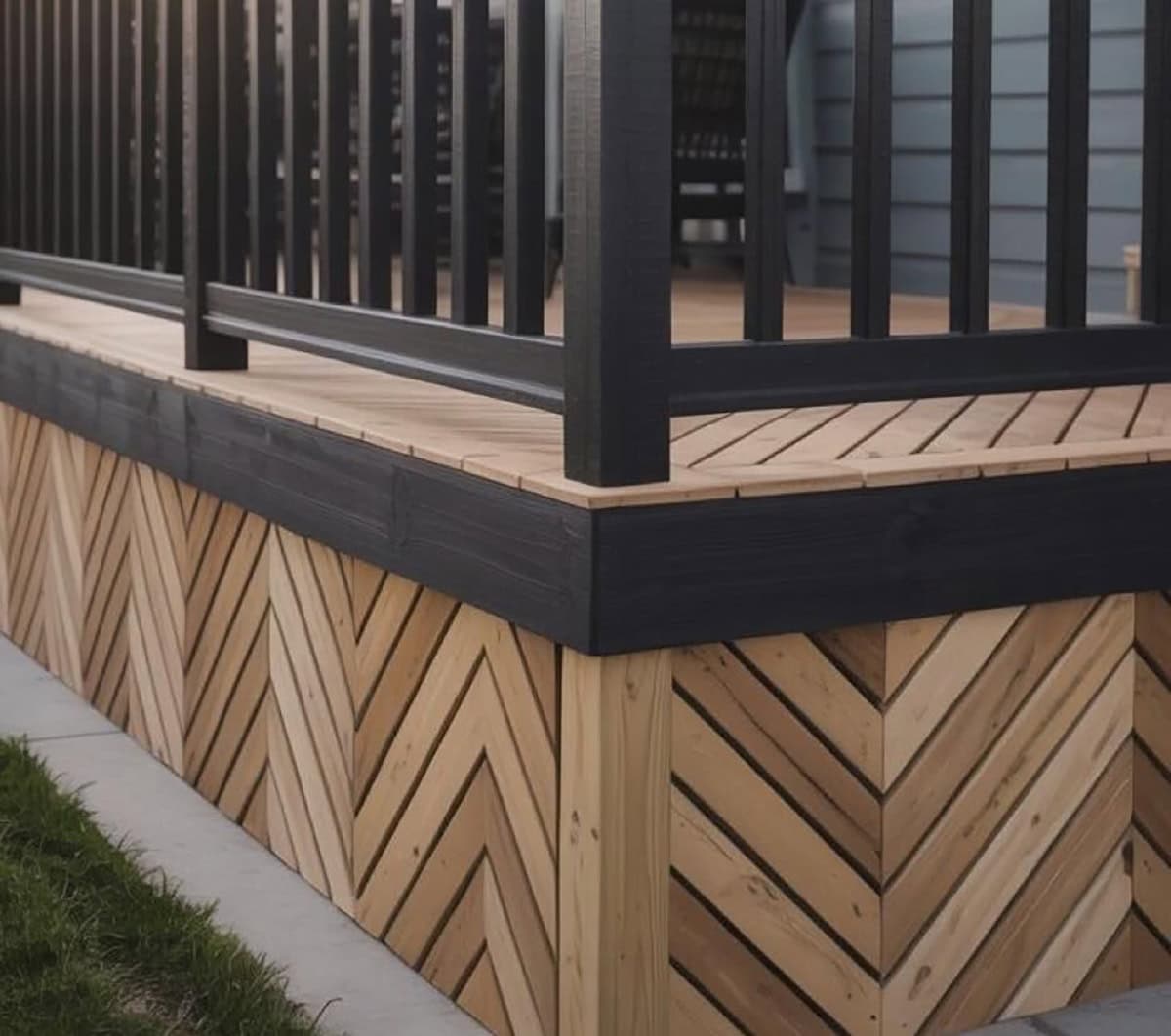
The way you orient your deck skirting’s panels can create entirely new shapes and designs. Rather than crisscrossing the boards or creating a grid pattern, you can do what this person did and construct a V-shaped skirting.
This design adds to the overall depth and character of your home with a fresh and unique arrangement. This particular layout leaves little room for air to pass through, so a vent or swinging door built around the corner may be necessary.
Fascia Board
Credit to deck_express
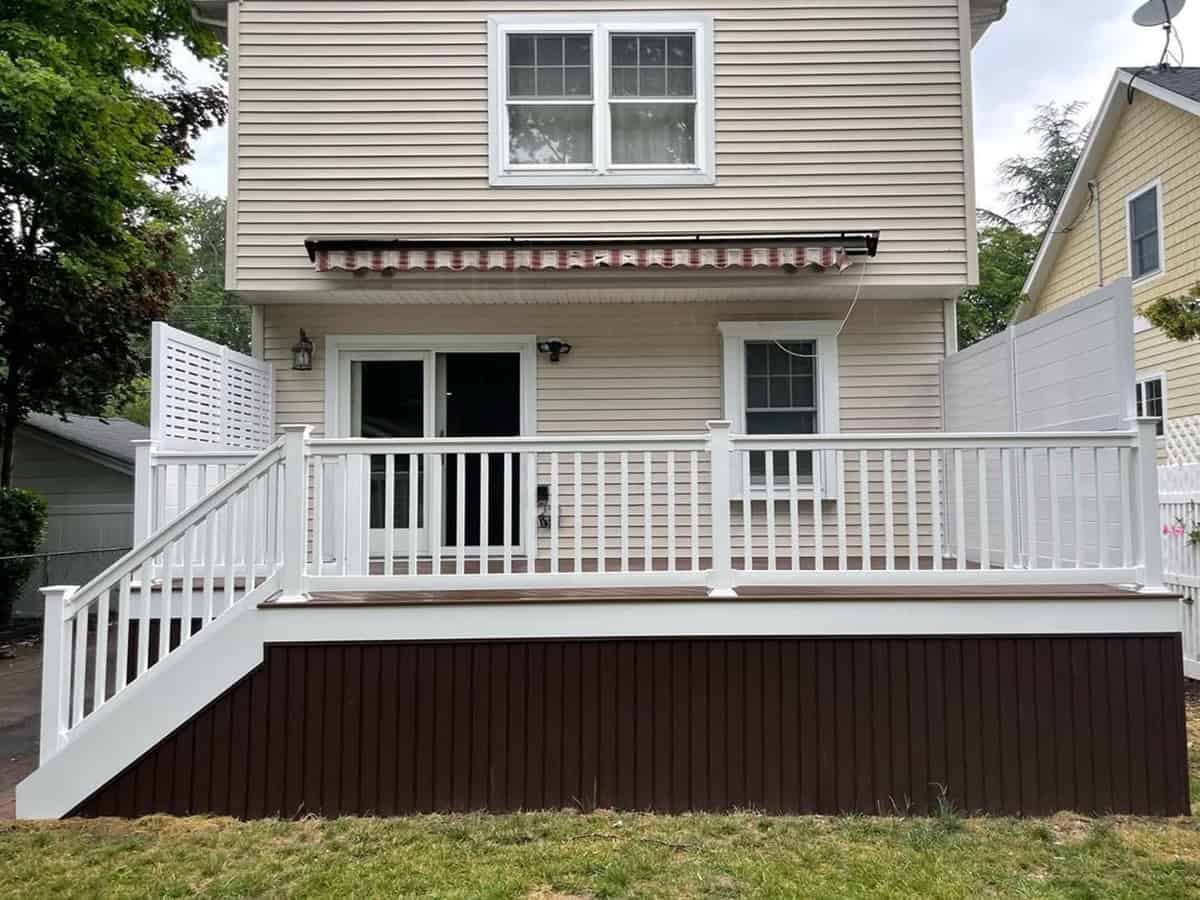
Fascia boards are trim boards that are used to mask construction details. For instance, if the boards used in your deck skirting are slightly warped at the top or bottom, you can install a fascia board over the minor mistakes.
In addition, fascia boards produce a clean trim on the top and/or bottom of the skirting. This trim choice highlights the beauty of the deck skirting while also giving it a more polished look.
Curved
Credit to woflhomeproducts
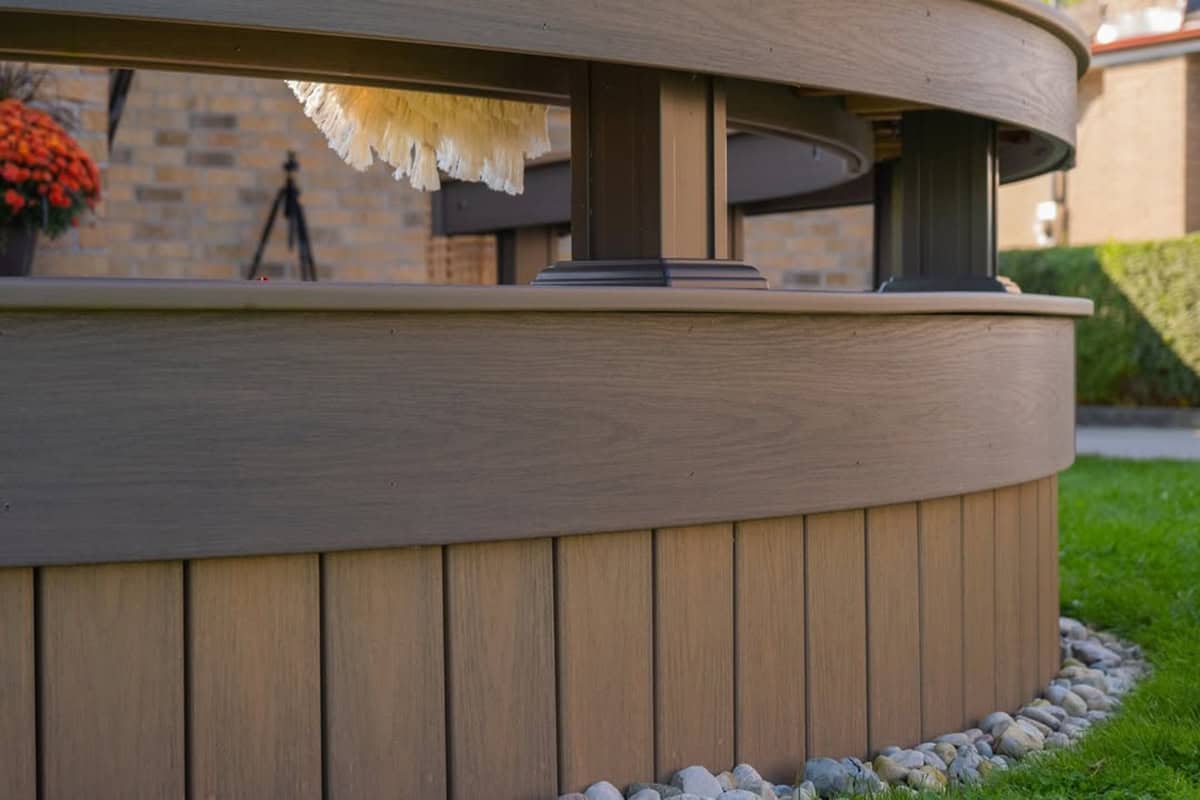
If you’re constructing a deck from scratch, you may want to think about creative design options. While there’s nothing wrong with blocky decks with sharp corners, a curved deck is more sophisticated and elegant. The deck skirting will also follow the contours or convex angles.
However, for a truly curved skirting, you may need to skip natural wood and opt for metal or composite options.
Lighting
Credit to fjfremodelers
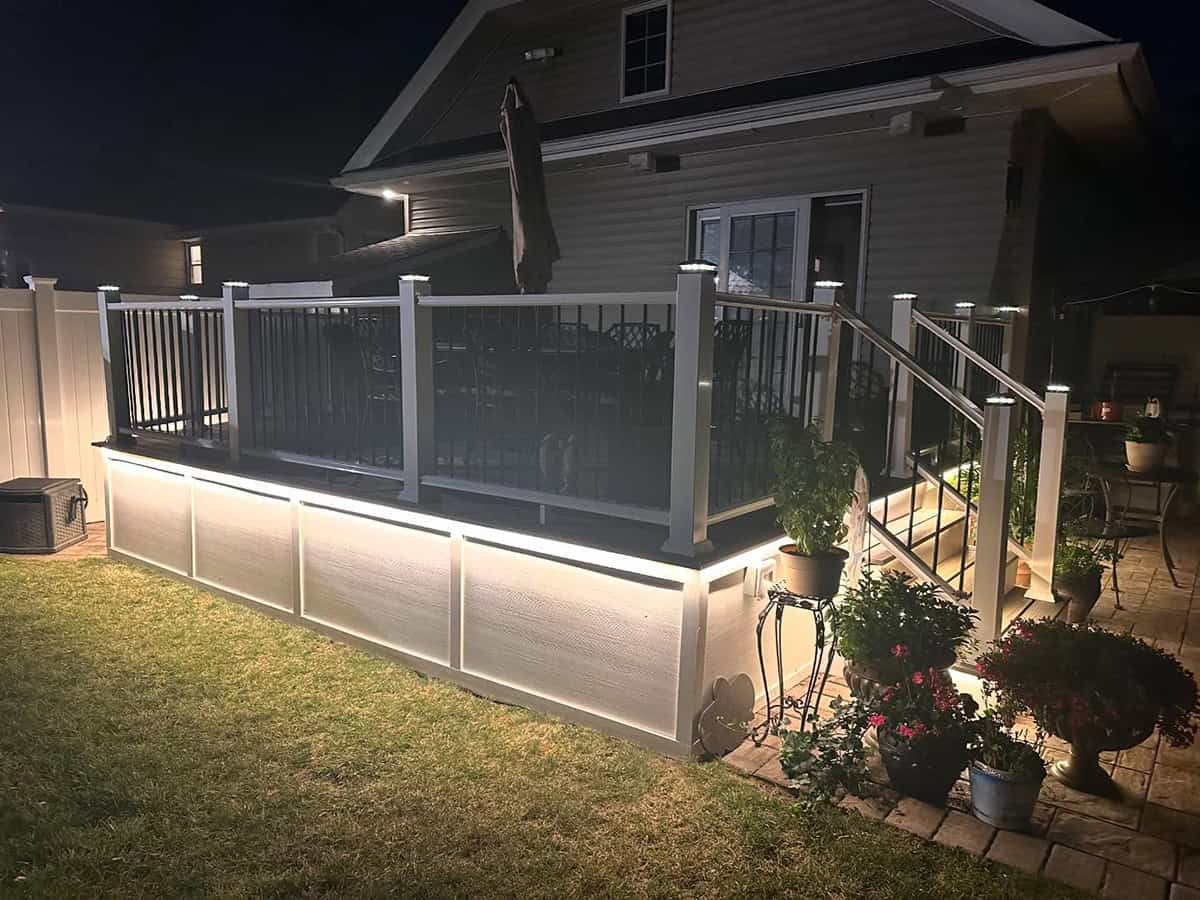
The add-on feature of you deck skirting can make it stand out in your neighborhood. One of the simplest ways to highlight your deck is to add lights. This person integrated a few LEDs on the fascia trim of their skirting.
At night, they light up the wide panels and steps to make it the perfect nighttime hangout spot. You can go with subtler lighting options if you prefer or choose colorful twinkling lights.
Bulit-in Dog House
Credit to sjwdecks
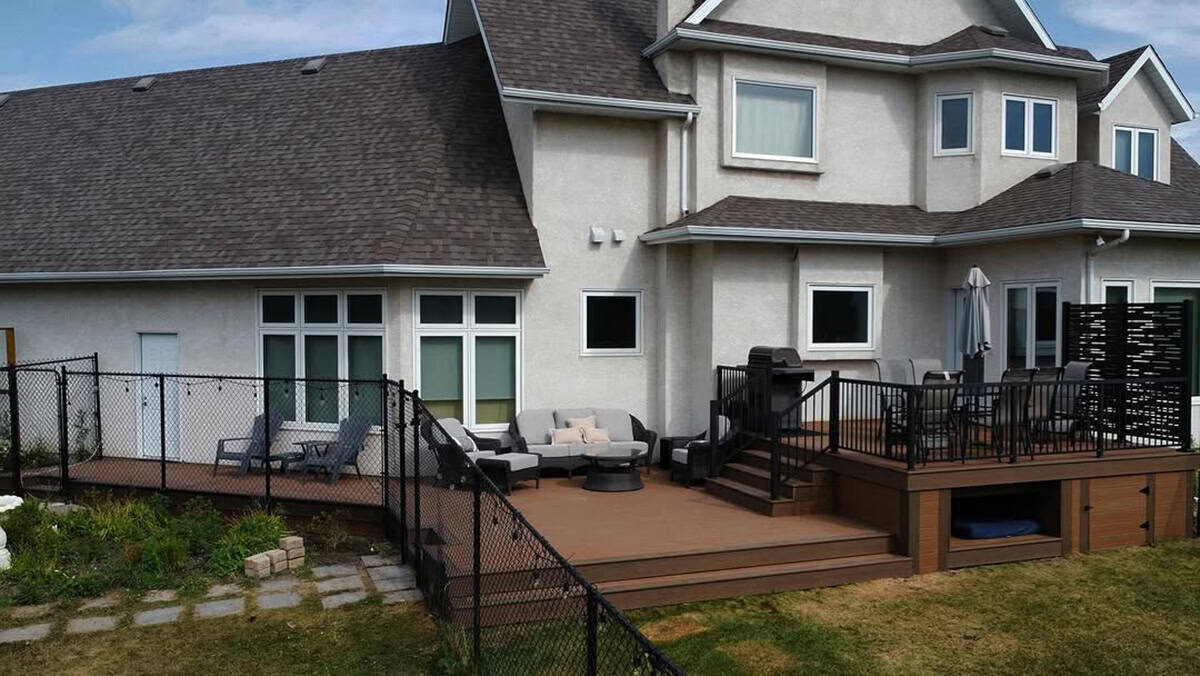
In some cases, a deck skirting means concealing a major portion of your home’s exterior. This turns unused space into unusable space, which is a shame. This person eliminated this by converting a portion of their deck’s underside into a fun dog house.
A tiny segment of this home’s deck skirting was given a fence, and interior partitions were used to construct the three inner walls of the dog house. Would your dog feel happy living underneath your deck?
Swinging Deck Gate
Credit to deckorators
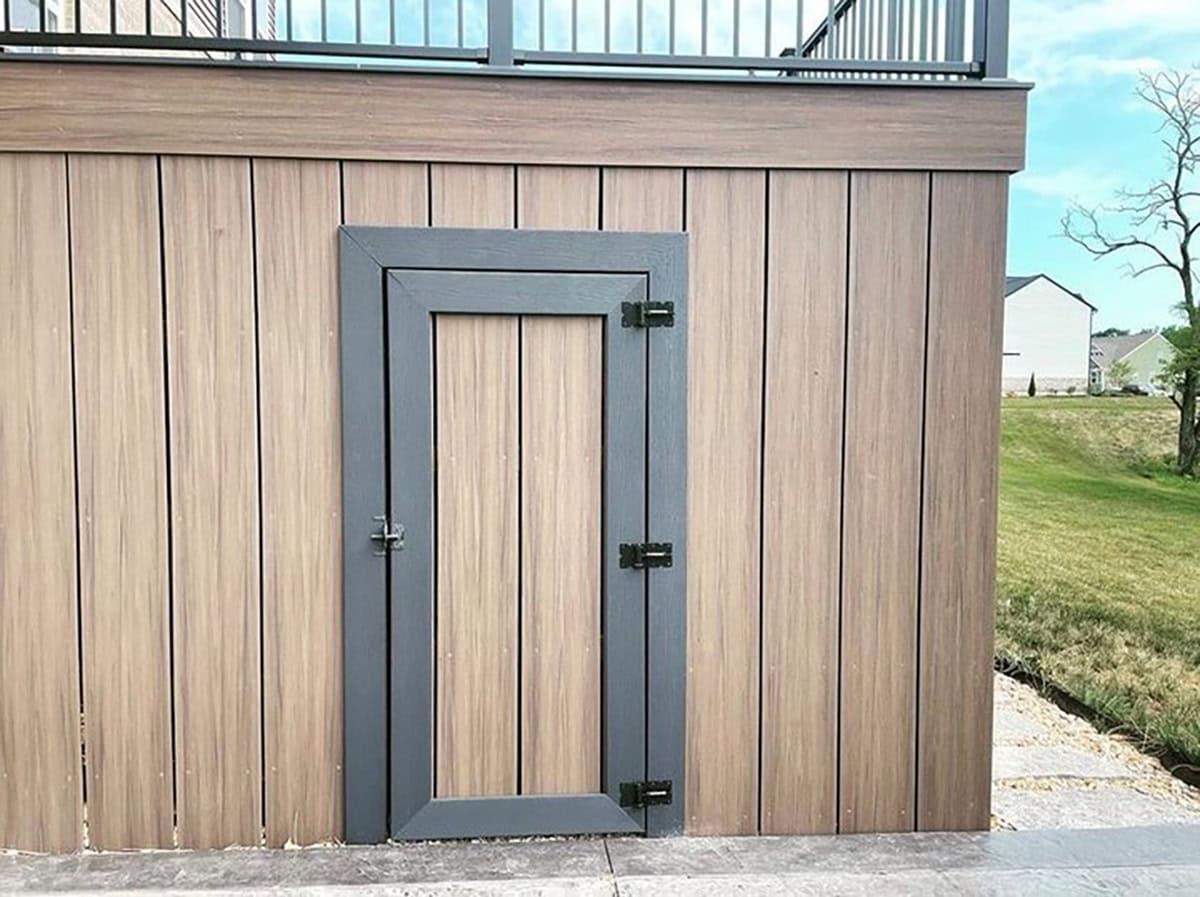
As mentioned time and time again, optimal airflow underneath your deck is important. It’ll prevent mold and rot from claiming your deck, reducing the risk of costly repairs over time. Vent inlets or slats may help somewhat, or you can install a swinging deck gate.
In addition to increasing airflow, the gate will also let you go underneath the deck and handle whatever needs fixing down there. Just make sure to keep the gate shut to prevent furry fiends from finding their way in.
Vertical Baluster
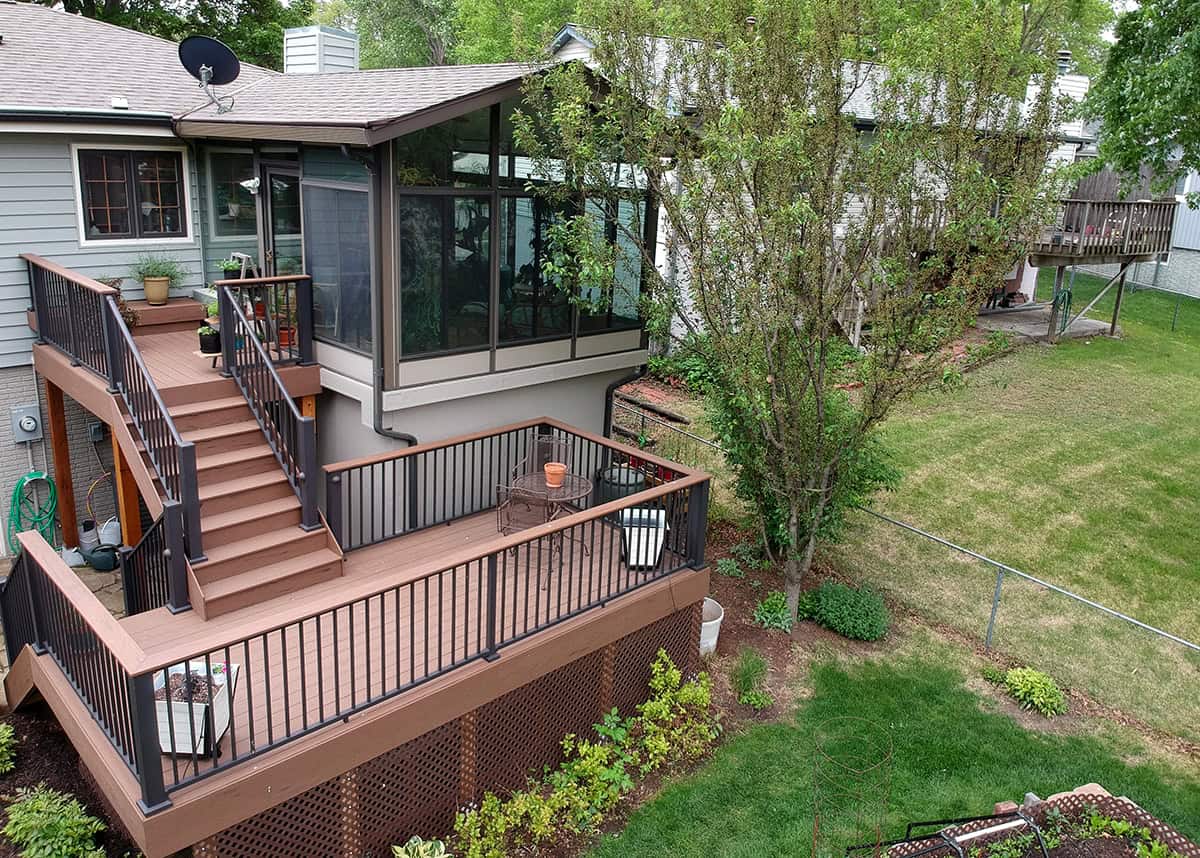
Clean vertical lines running all the way to the ground can pull the whole deck together. Mimicking the railing above, this look feels unified but not overdone. Just make sure you’re following local codes for spacing, especially if your deck sits high up.
Pressure treated wood, composites, or metal all hold up well in the elements. Keep the gaps narrow enough to keep animals out, but don’t block off airflow completely. An access door tucked into the design makes reaching utilities or storage less of a hassle.
Firewood Stack
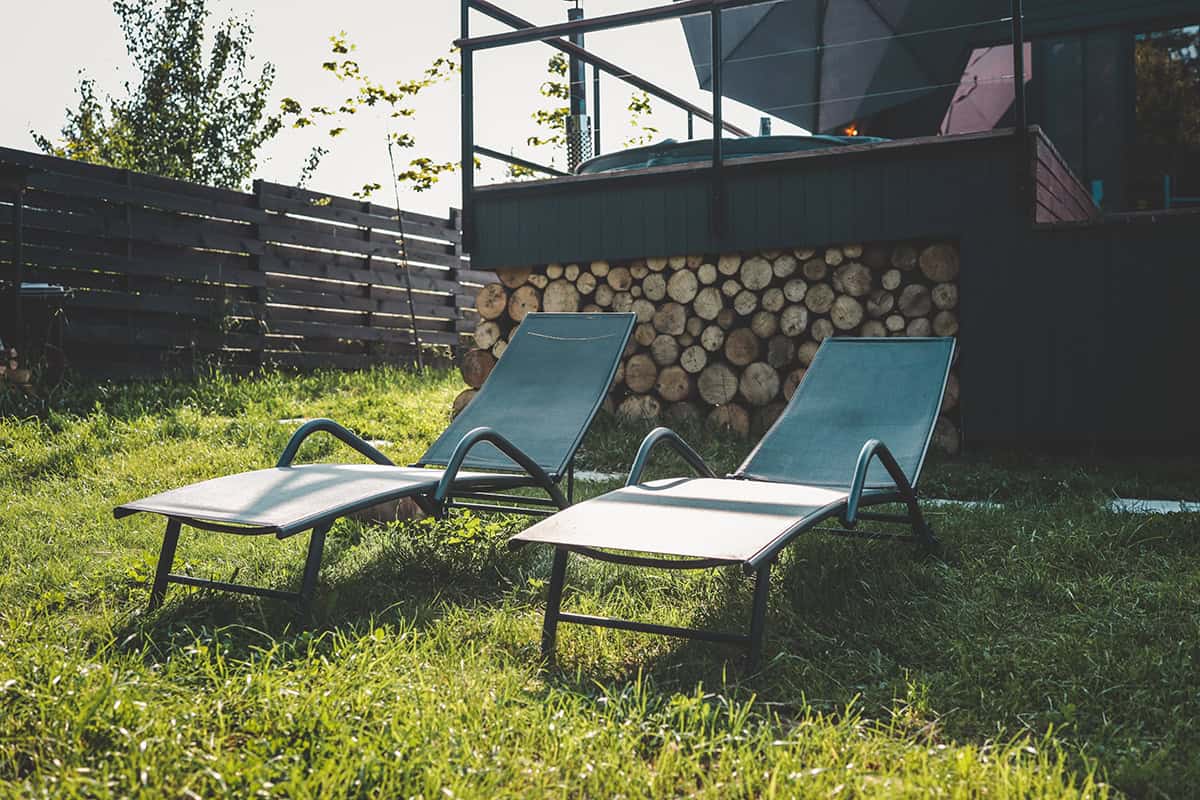
Why not turn your firewood stash into a feature? Tightly stacked logs between sturdy posts double as skirting and storage, especially on a covered deck where rain isn’t a constant threat.
Frames built from treated lumber support the weight. Leave a little breathing room behind the stack for air to move, and rotate your wood so you’re not inviting bugs or rot right up to your house.
Decorative Concrete Block
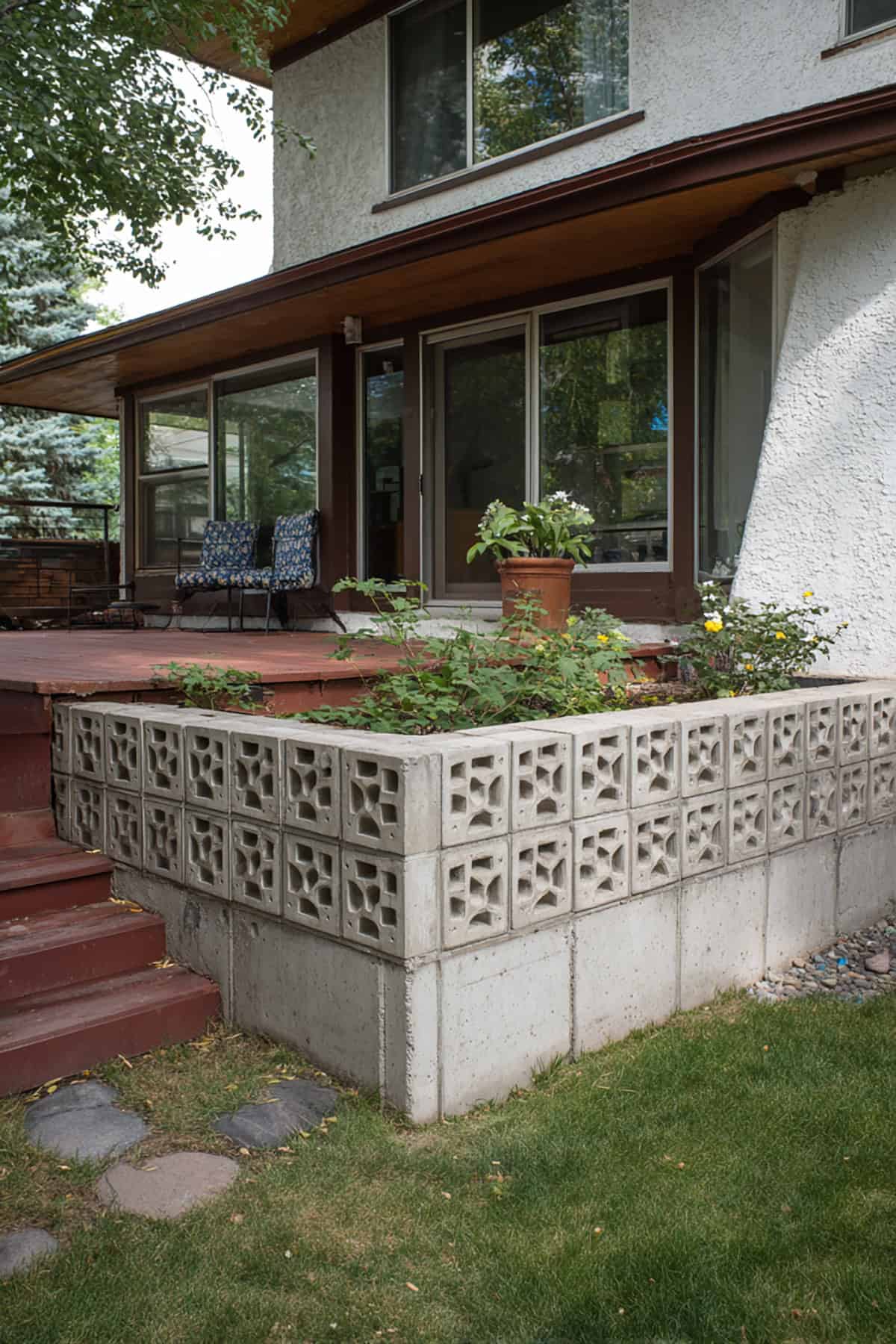
Mid-century vibes come through strong with patterned concrete screen blocks. The built-in ventilation is a bonus, letting air circulate while keeping prying eyes out. These blocks need a solid gravel base or footing to sit right.
Level mortar joints keep the look crisp. If you’re in a freeze-thaw climate, make sure your blocks are rated for it. Sealing helps fend off stains and moisture creeping in.
Frosted Glass Panels
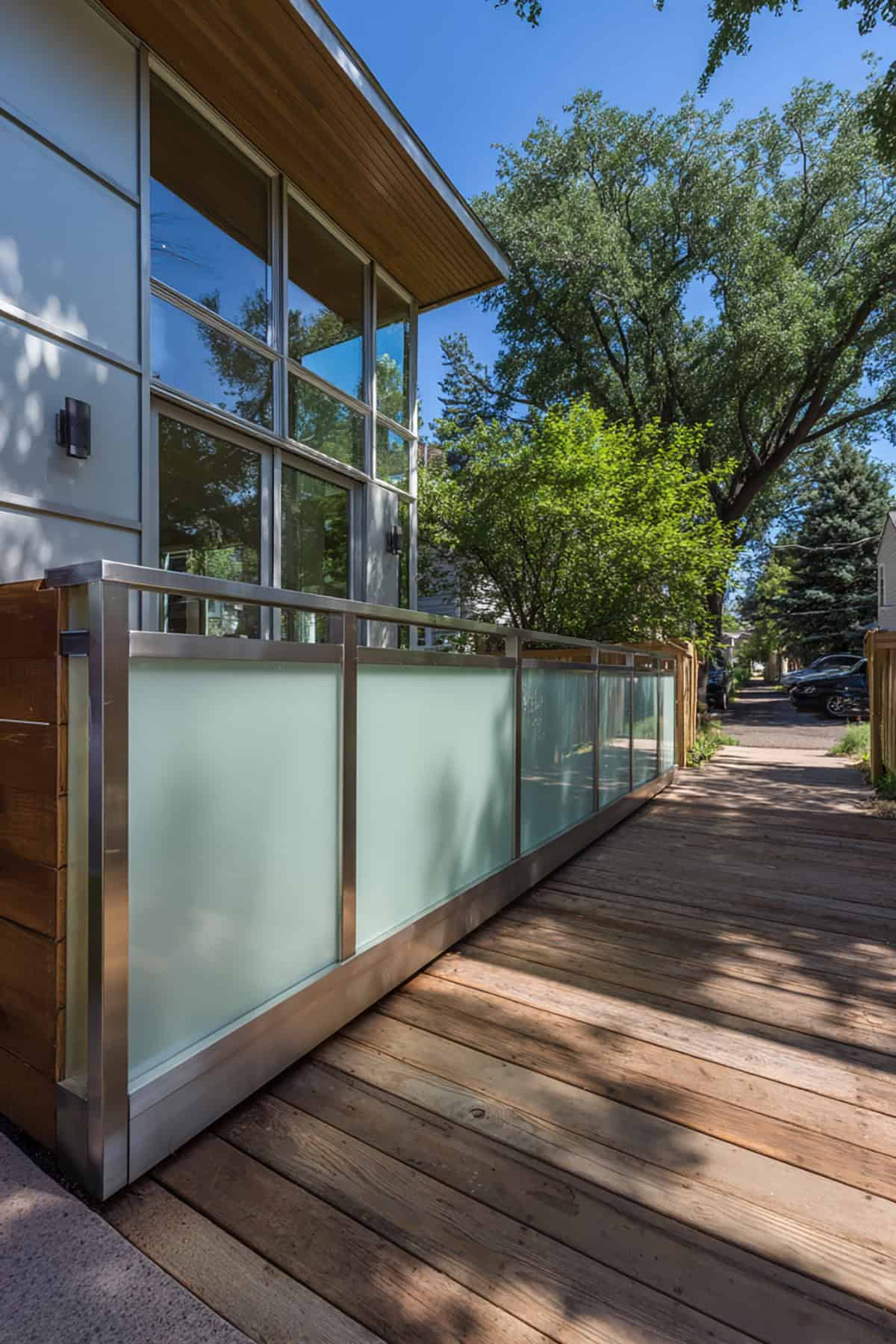
Nothing says modern quite like frosted or etched glass panels. Light filters through, but your storage stays hidden. For safety, tempered or laminated glass is the way to go.
Aluminum or steel channels anchored to posts keep everything secure, and it’s smart to keep the glass off the soil to avoid stress fractures. Stick to non-abrasive cleaners—scratches ruin the effect fast.
Horizontal Brick Accent
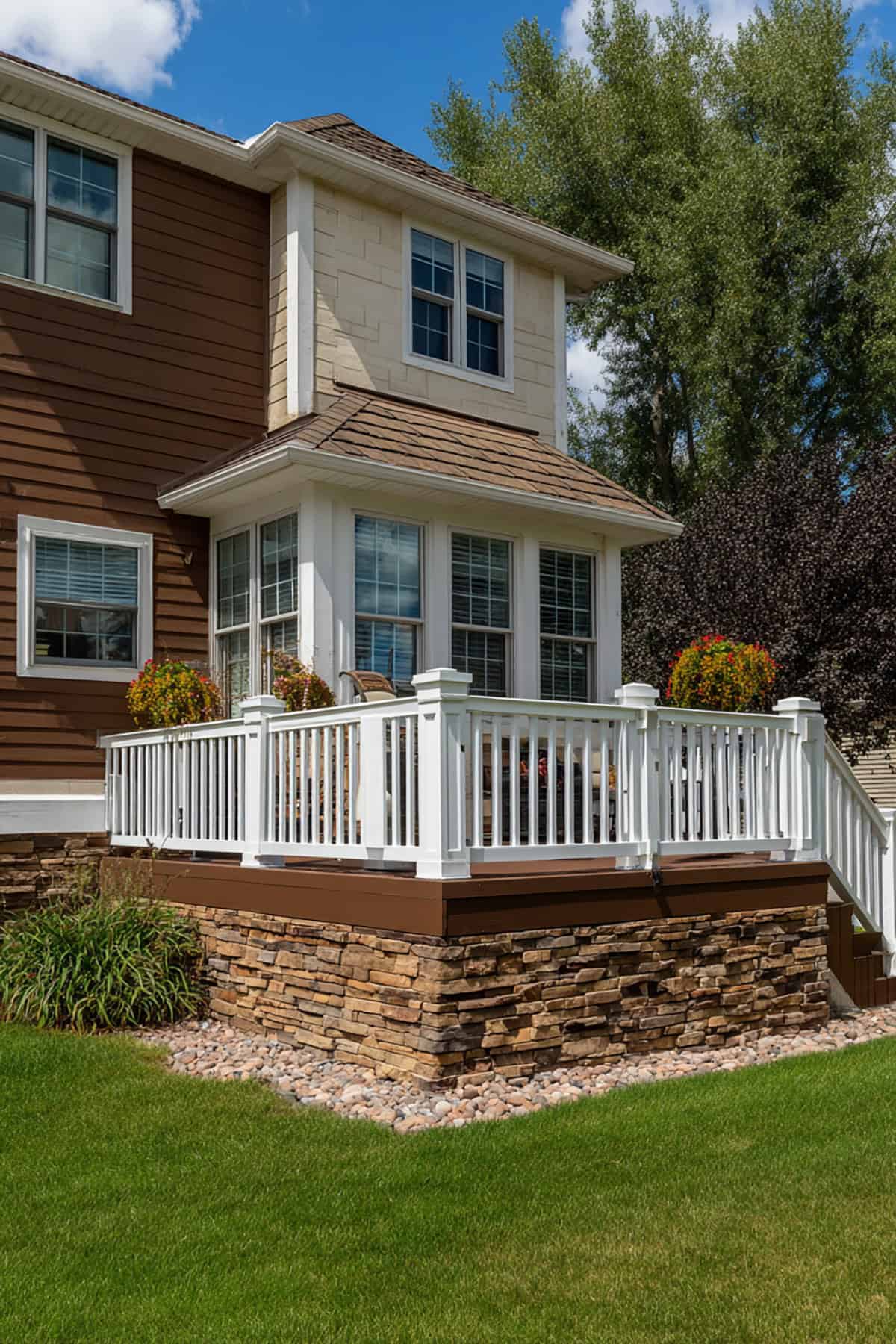
For a sense of permanence, a low brick wall can anchor a raised deck and echo your home’s exterior. Weep holes are a must to let water out and air in.
Colder climates mean you’ll need a deep footing. Metal anchors tie the brickwork to deck posts for extra stability. A steel-framed access door blends in without drawing attention.
Horizontal Wood Planks
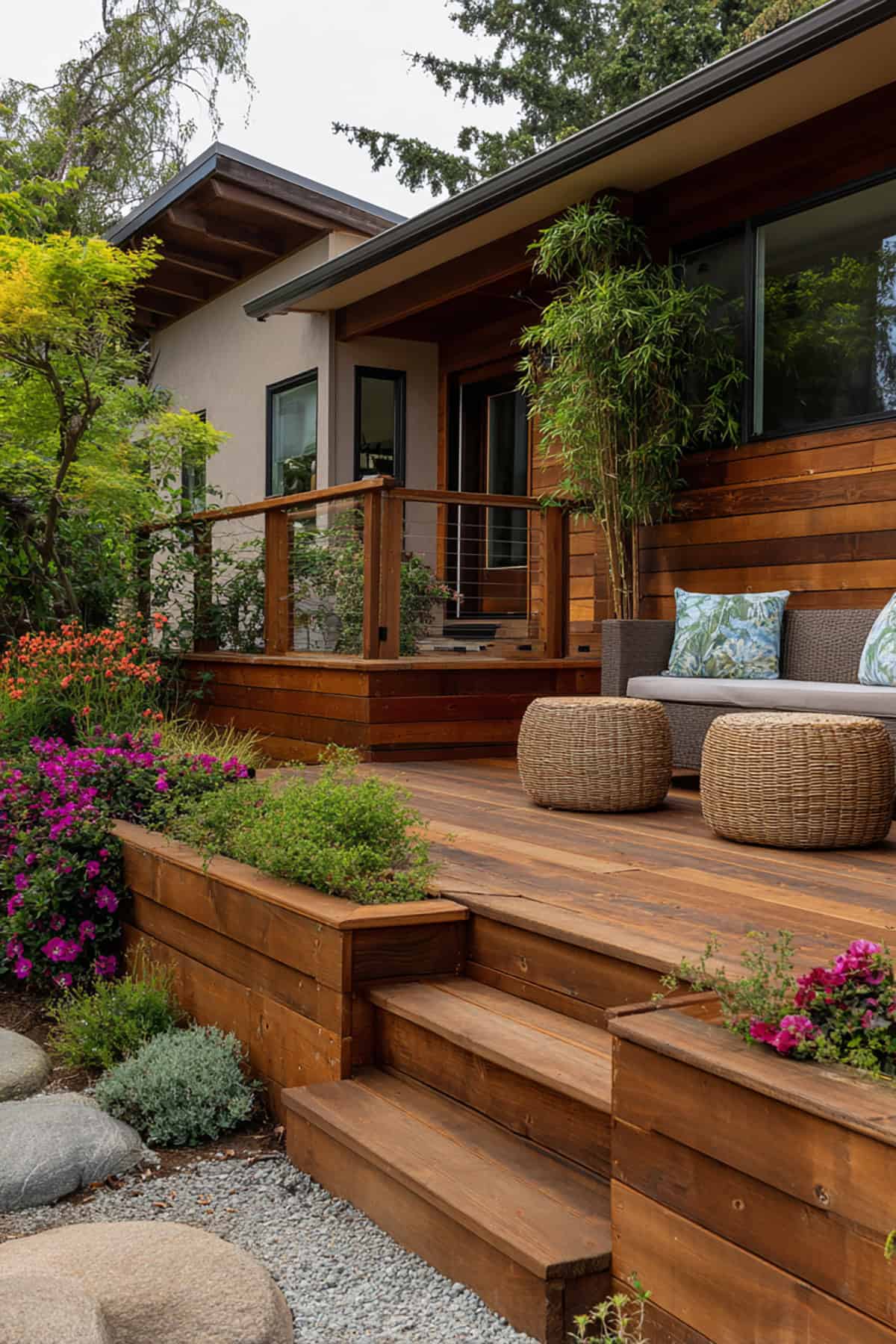
Wide, horizontal boards make for a sleek, modern base. Cedar, redwood, or treated pine all stand up well outside, especially with a good stain or sealant.
Mount the planks on a framework between posts. Gaps between boards let the air move and keep things from getting musty. Don’t let the boards touch the ground—rot and termites are relentless.
Perforated Aluminum Panels
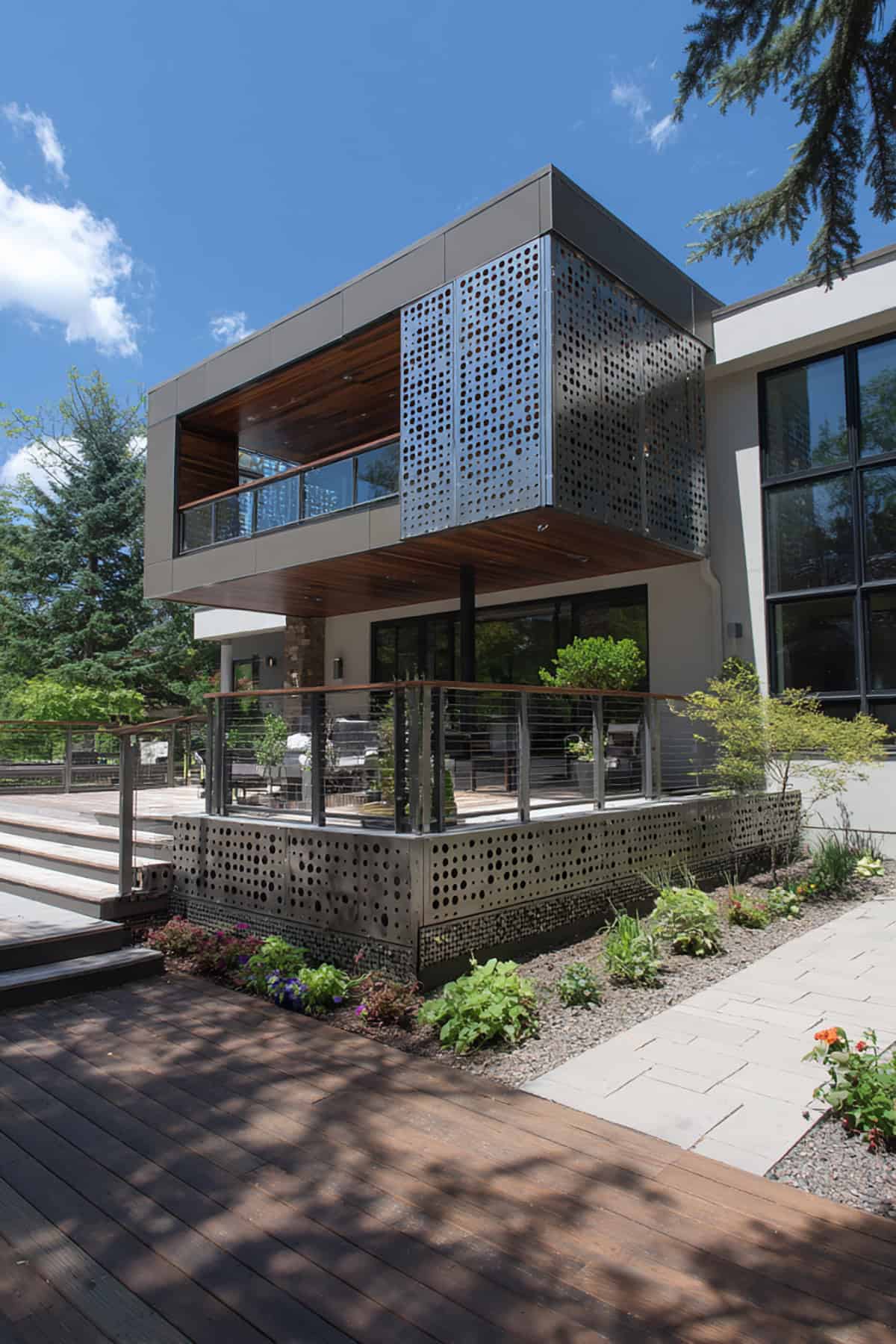
Metal panels dotted with uniform holes keep pests out but let plenty of air in. Powder coating helps them shrug off rust and fading, especially near the coast.
Steel or treated wood frames work for mounting. Pick a panel thickness that won’t bend or dent easily. This style fits right in with contemporary architecture.
Built-in Planter Box
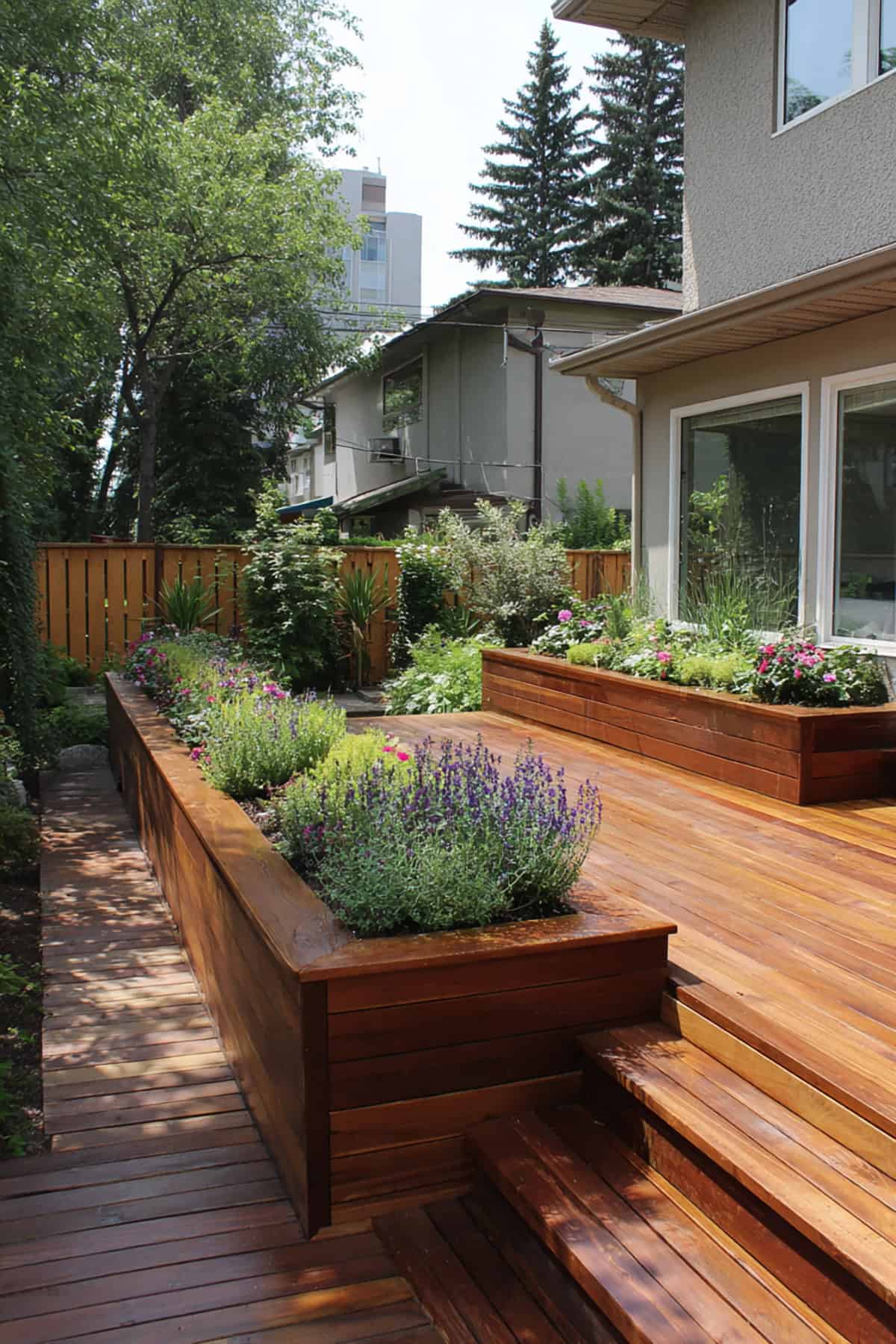
Planter boxes built into the perimeter do double duty—hiding the under-deck mess and adding greenery. The soil and plants soften the overall look, making the transition from deck to yard less abrupt.
Waterproof liners protect the wood framing. Drainage holes and a gravel base keep roots from getting waterlogged. Stick to plants with shallow roots to avoid pushing against the structure.
Reclaimed Wood Panels
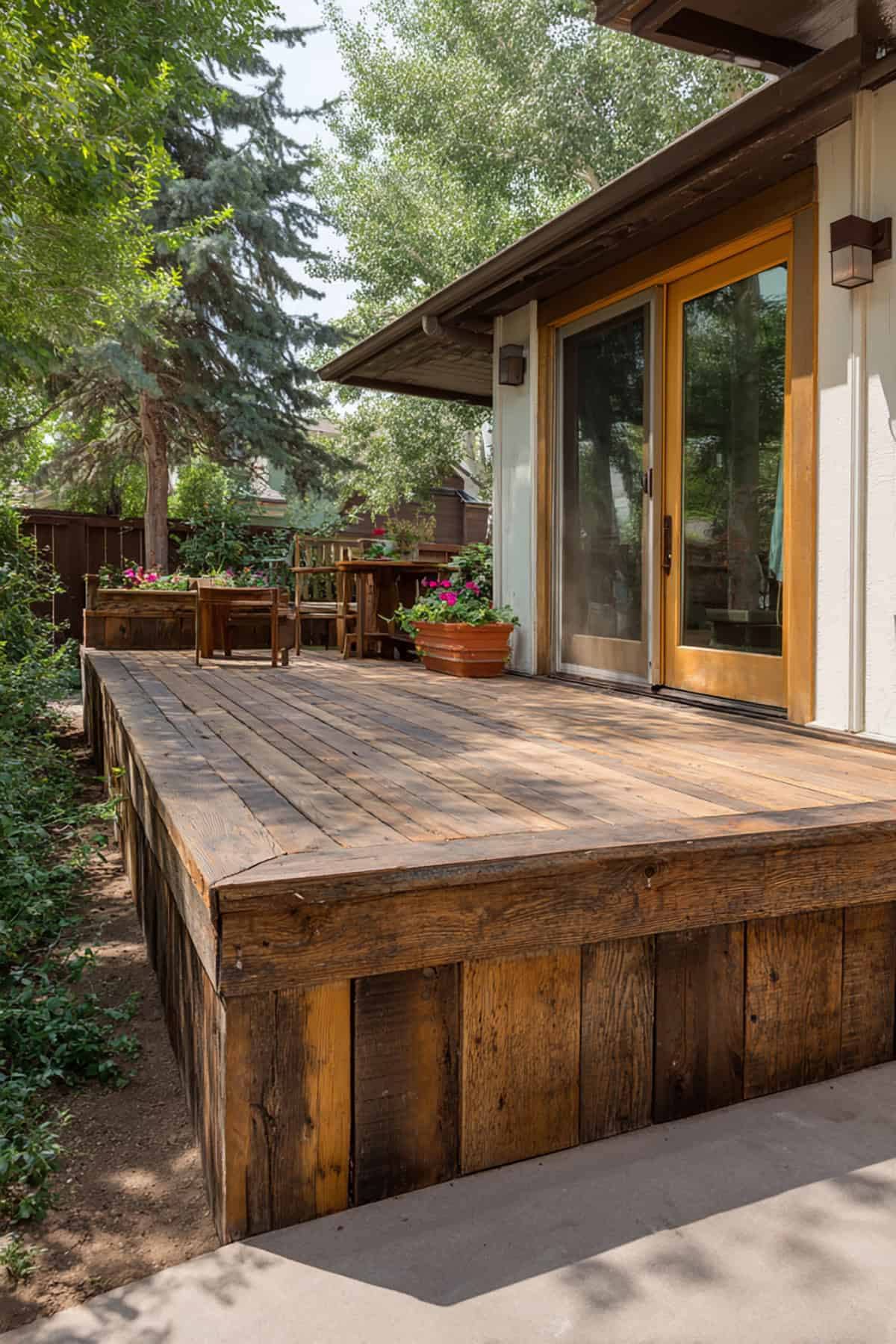
Old boards tell a story. Weathered, reclaimed wood brings warmth and texture, especially if you’re after a farmhouse or rustic feel. Check every piece for leftover nails, rot, or pests before you start.
Sealing the boards helps them last and keeps the color from fading too fast. Mounting to a treated frame adds sturdiness. Mixing board widths creates a more relaxed, organic look.
River Rock Wire Cage
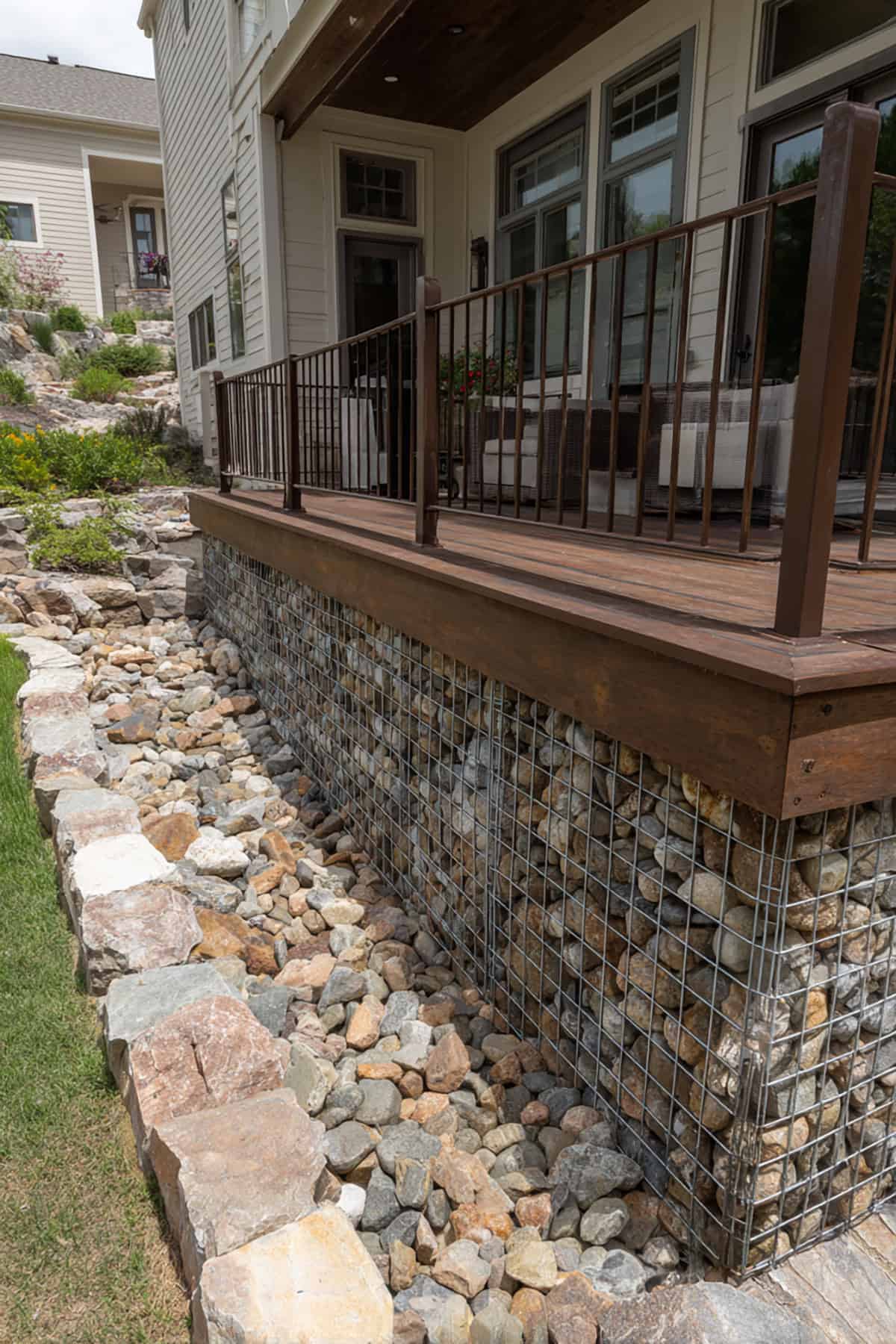
Gabion cages filled with river rock bring a rugged, natural edge to the base of your deck. Stones handle ground contact well and let water drain freely.
Galvanized or stainless mesh fights off rust. Cages need a compacted gravel base to stay put. Visually, this option is hefty—make sure it fits the deck’s scale.
Stone Column Sections
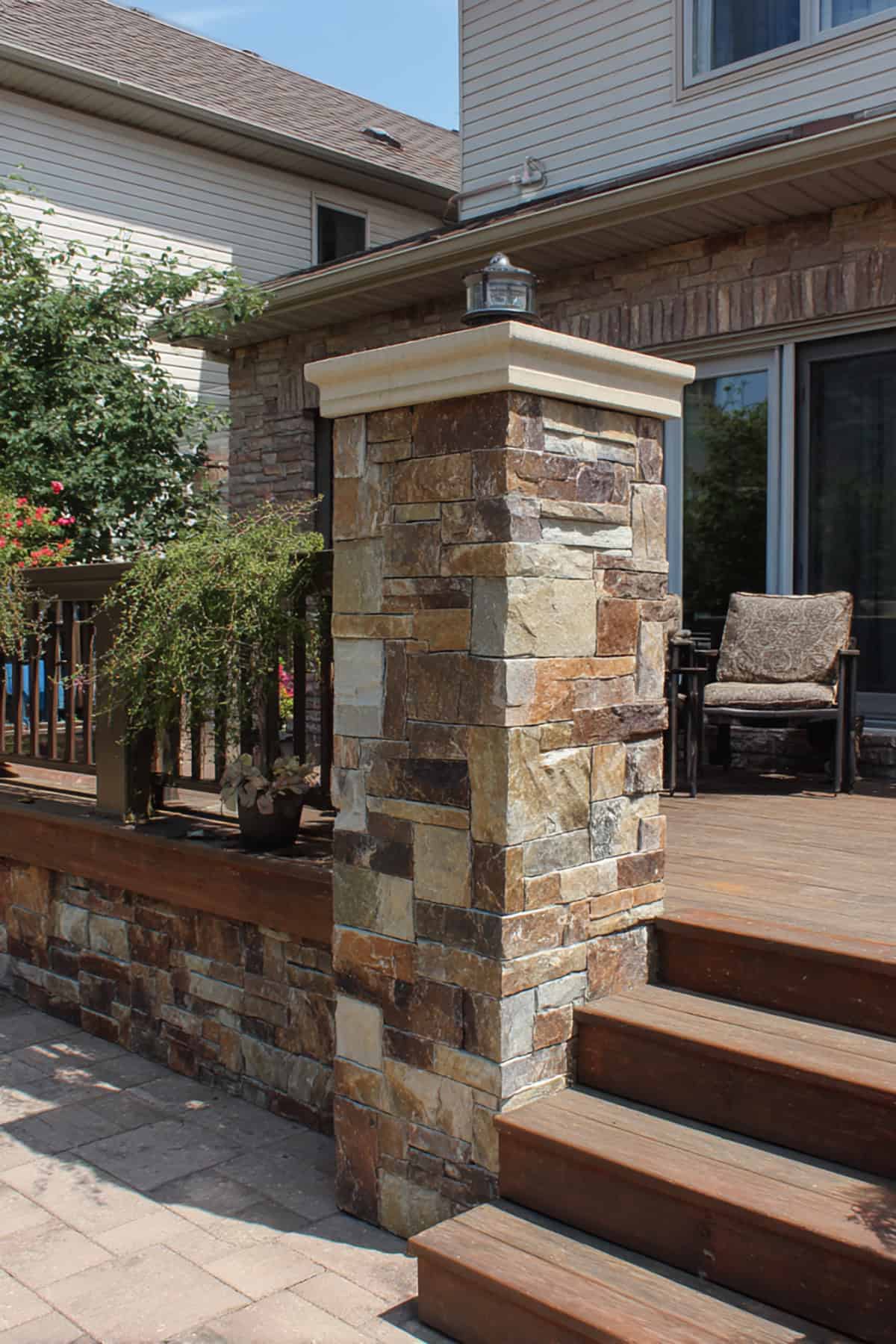
Spacing stone columns between open areas gives partial coverage and a bit of architectural rhythm. Veneer stone keeps the weight down compared to full masonry.
Concrete footings keep columns solid. Color-matching to your exterior makes everything feel intentional. Pairing columns with panels or lattice can fill in the gaps if you want more privacy.
Vertical Cedar Boards
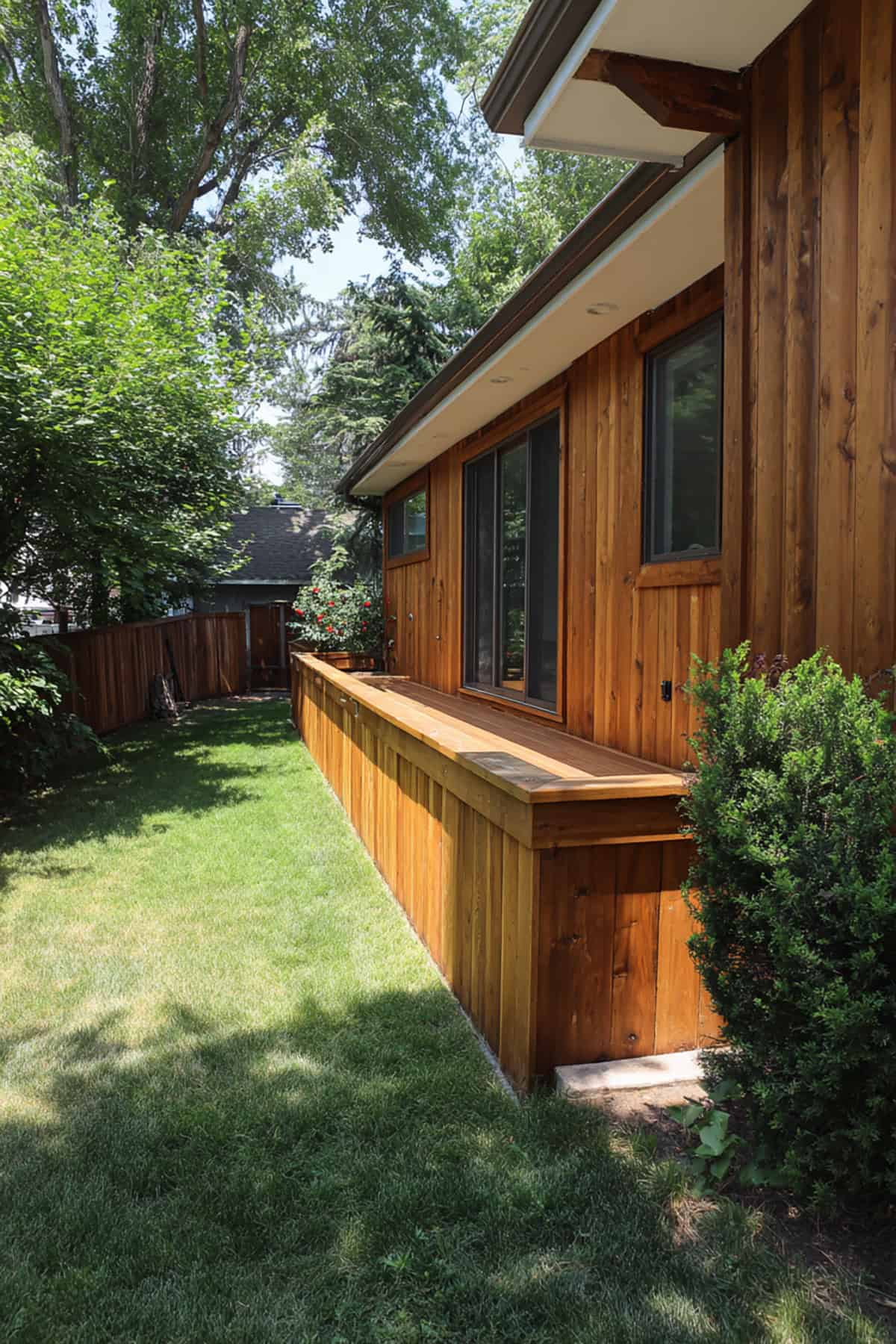
Tall cedar boards lined up close together cut off views and keep animals out. Cedar shrugs off decay and bugs, and you don’t need harsh treatments.
Boards attach to horizontal rails—simple but effective. A small gap at the bottom lets water escape. A clear or tinted sealant helps the wood hold up longer.
Log Slice Panels
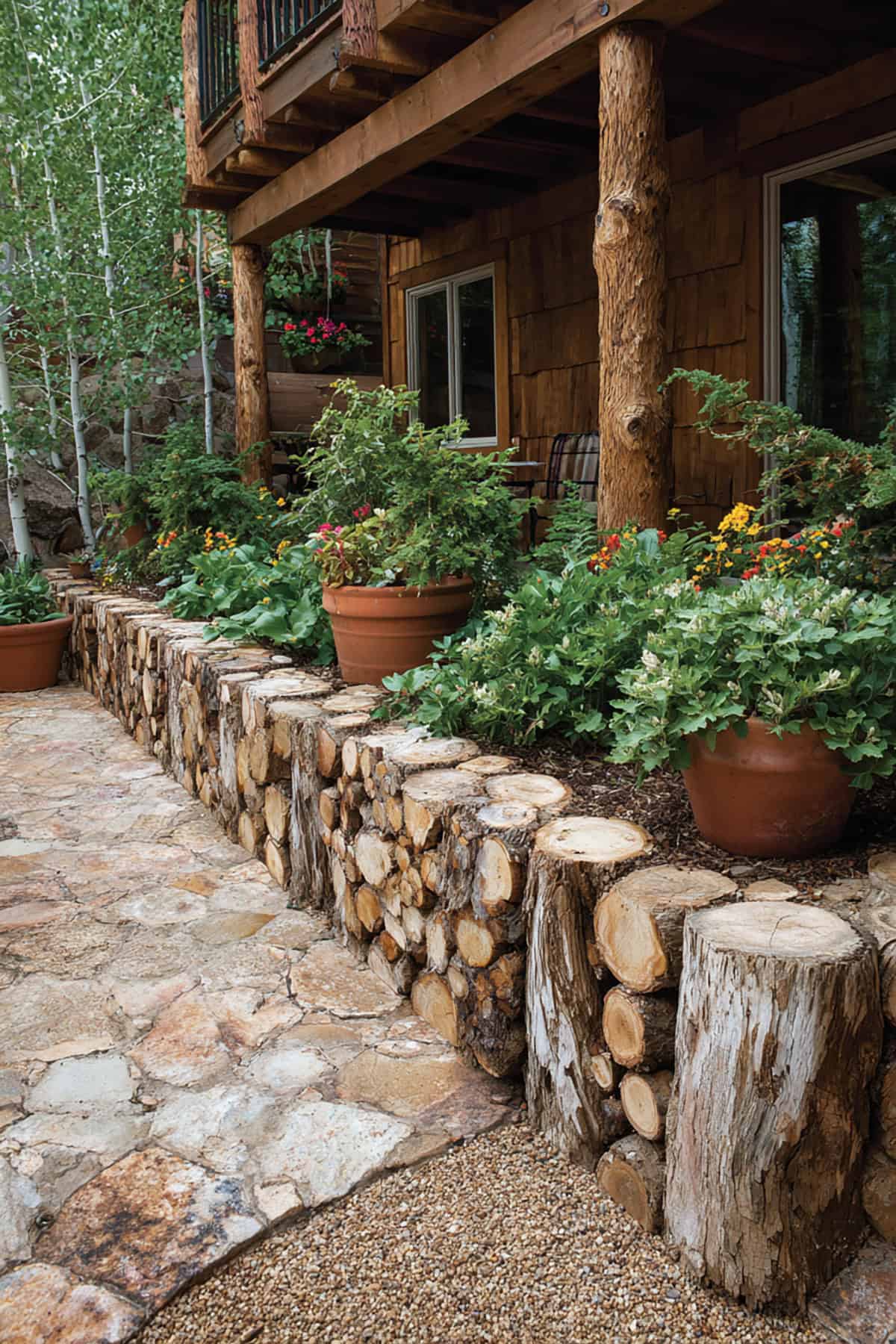
Cross-sections of logs show off their rings and grain, bringing a quirky, rustic charm. This one’s right at home in a cabin setting or wooded lot.
Solid plywood backing supports the slices. Sealing every surface helps prevent splitting and water damage. Keep the whole assembly off the ground to give it a fighting chance against the elements.
Chevron Wood Pattern
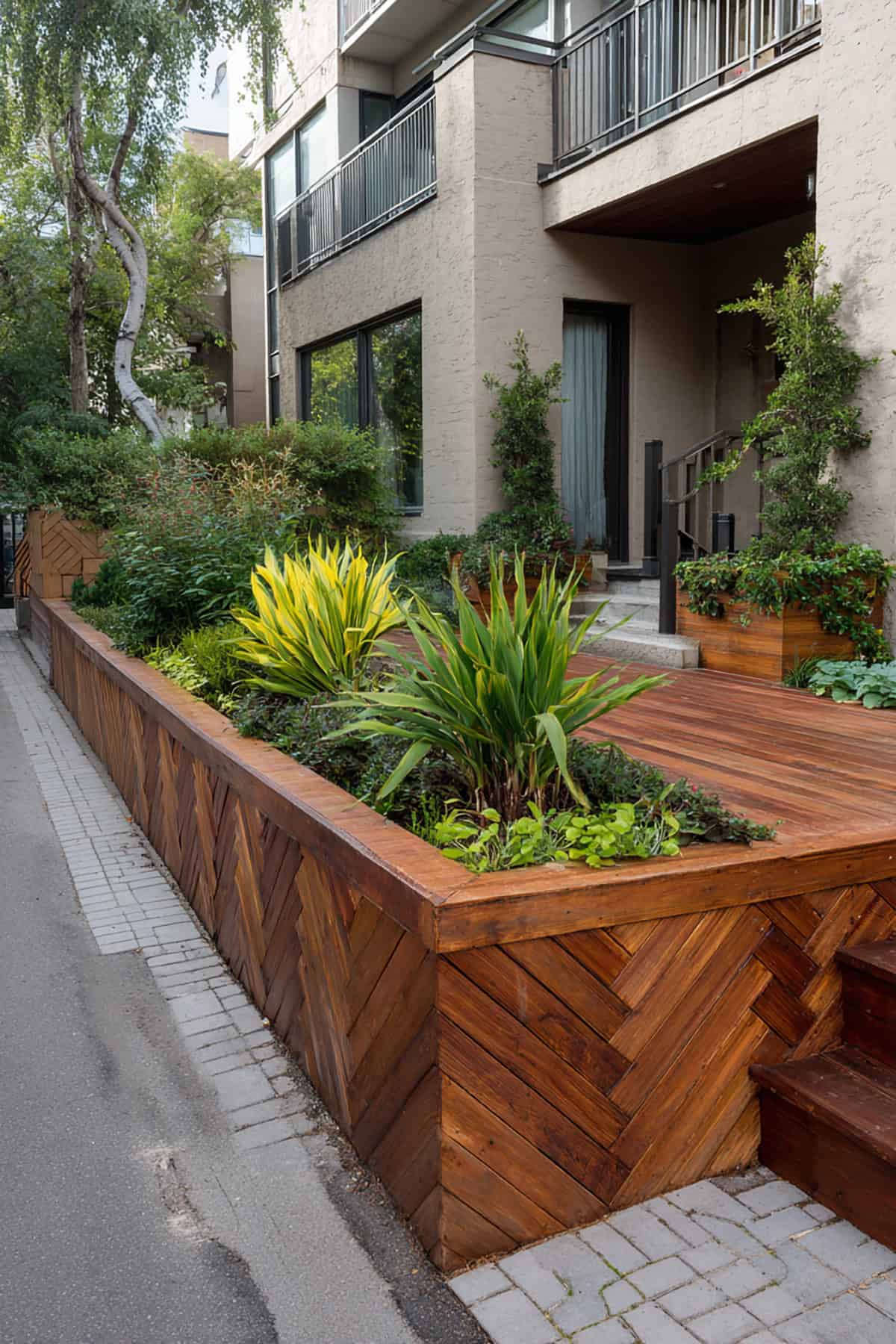
Sharp angles and a rhythmic zigzag pull the eye along the base, throwing a playful energy into what’s usually a background detail. Stained hardwoods or composites both handle this look well, especially if you’re after a bit of drama in the grain.
Getting that crisp, seamless line? It demands careful measuring and cuts—no shortcuts here. Boards need to meet just right, all while anchored to a frame that holds steady through the seasons. A tough exterior stain seals the deal, keeping weather and wear at bay.