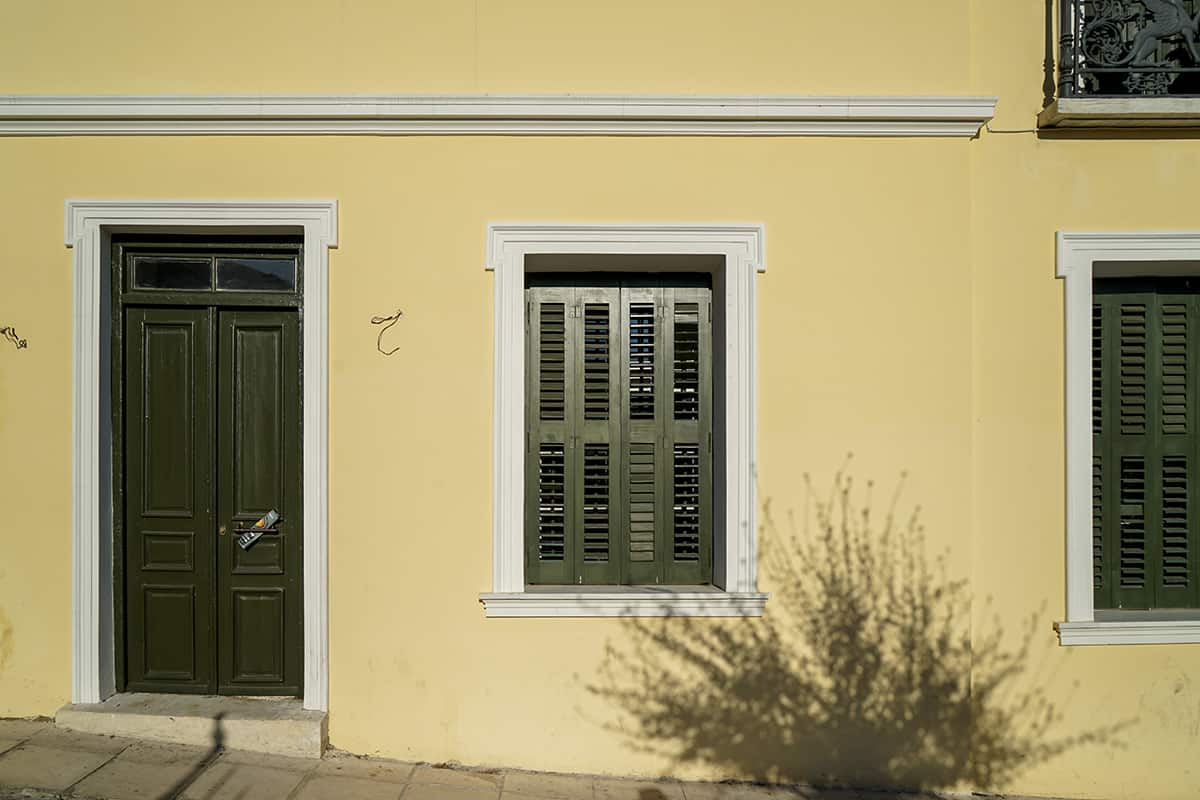
If the exterior walls or siding of your home are cream, then there is a huge range of colors available to you that will work well for shutters. As a neutral color, cream pairs well with almost any other color, so it can be overwhelming trying to find exactly the right shade.
Here, we look at how to determine the best shutter color for a cream house and look at ideas for inspiration.
Table of Contents
How to Choose Shutter Color for a Cream Siding
Choosing the right shutter colors for a cream house can greatly impact the overall look and curb appeal of your home. When deciding on a color palette for the exterior of your home, there are numerous factors to consider that will affect your final choice.
Shade of Cream
Cream can vary in shades from warm beige to soft ivory. Take a good look at the exact shade of cream your house is painted in, because this will be the base color that your shutter color should complement. The cream is a warm color with yellow undertones, but the intensity of the undertones and the degree of white in your cream is going to affect which colors will work best with it.
For example, if your cream is very close to white then painting your shutters white will make for a bland and flat look. However, if your house is a dark shade of cream closer to beige, then white shutters alongside this will look sophisticated and classy. Understanding the shade and tone of your exterior house color is the best place to start when looking at shutter colors.
Architectural Style
The architectural style of your home can provide guidance on suitable shutter colors. Traditional styles often use classic, subdued colors, while modern homes may opt for more vibrant or contrasting options.
For example, Cape Cod style homes are typically decorated in coastal or muted colors, while Edwardian style homes typically exhibit deeper or bolder color combinations.
Neighborhood Regulations
Check if your neighborhood or homeowner’s association has any regulations or guidelines regarding house colors and shutter choices. You’ll want to ensure your choice complies with any restrictions in place in order to avoid fines or having to repaint your shutters.
Color Palette
Create a color palette that includes the cream base color, trim color, and shutter color. Look for colors that harmonize well together. You can use color swatches, paint samples, or online tools to help you visualize the combination. The ideal number for any exterior color palette is three, with at least one of those colors being a neutral shade.
Your home’s external walls are cream, so this counts as one of the colors, and it is also neutral. Your second and third colors can be used for the shutters and other trim or accessories on the outside of the home, for example, window frames, your front door, and your mailbox.
Best Shutter Colors for Cream Home
Black
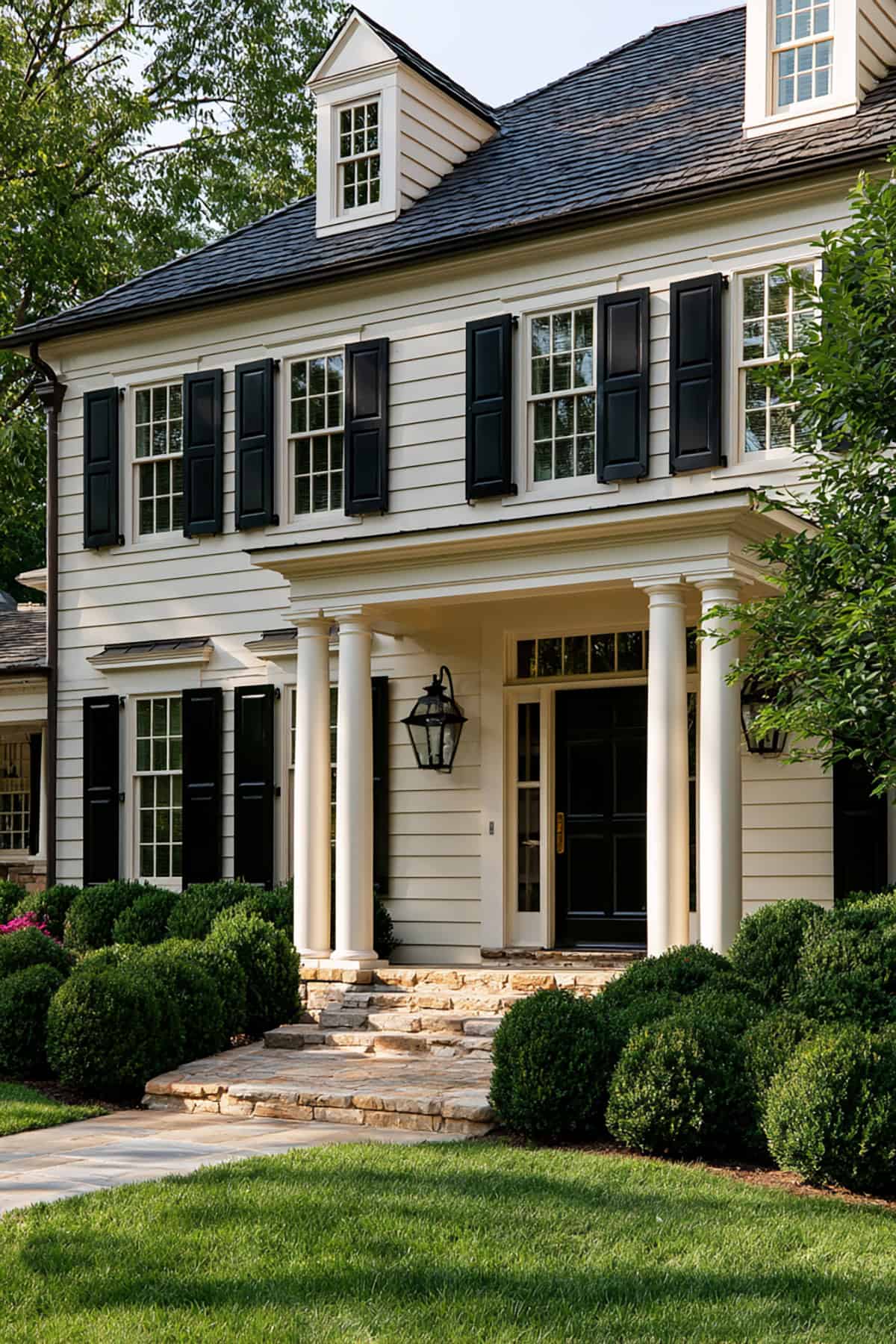
Black is a great color choice for shutters on a cream house if you want a style that creates contrast yet isn’t too loud or overstimulating. Black contrasts heavily against cream because it is intensely dark, while cream is very light, yet the fact that black is a neutral color means that the overall look is bold yet elegant.
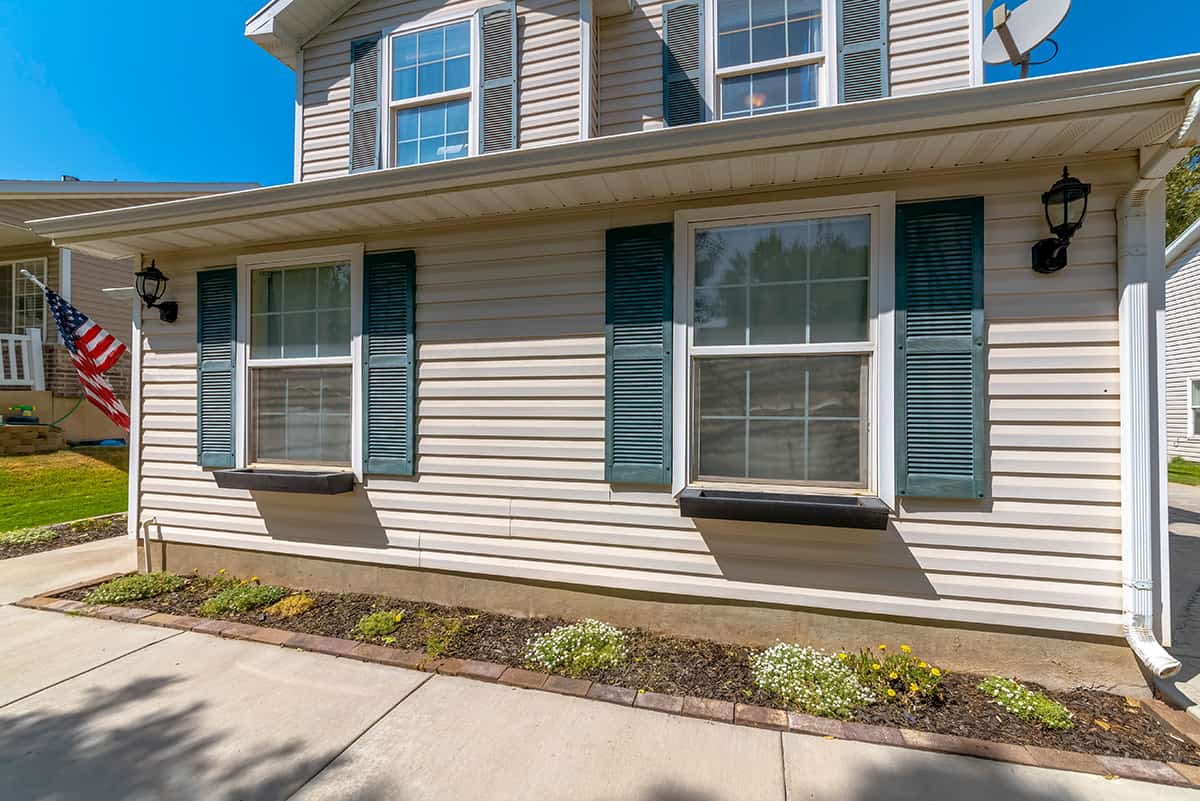
In the home shown here, the color palette used is cream, black, and white, for an understated yet sophisticated style. The contrast between black shutters and cream siding is enhanced by the white window frames. Other accessories have also been added in black which help to create a sense of coordination and cohesion.
Here, the window boxes have been painted black, and exterior lights in black have been selected.
White
White is a classic color choice for shutters, bringing a breezy and airy look to a home. White shutters will work well with cream siding or cream stone walls, for an overall neutral style. Shutters in white will look best when the shade of cream isn’t too pale. Otherwise, the features can look too plain and samey.
Instead, opt for white shutters when your cream walls are mid to dark cream. It can be helpful to employ a third color that stands out so that your cream and white color palette doesn’t look dull.
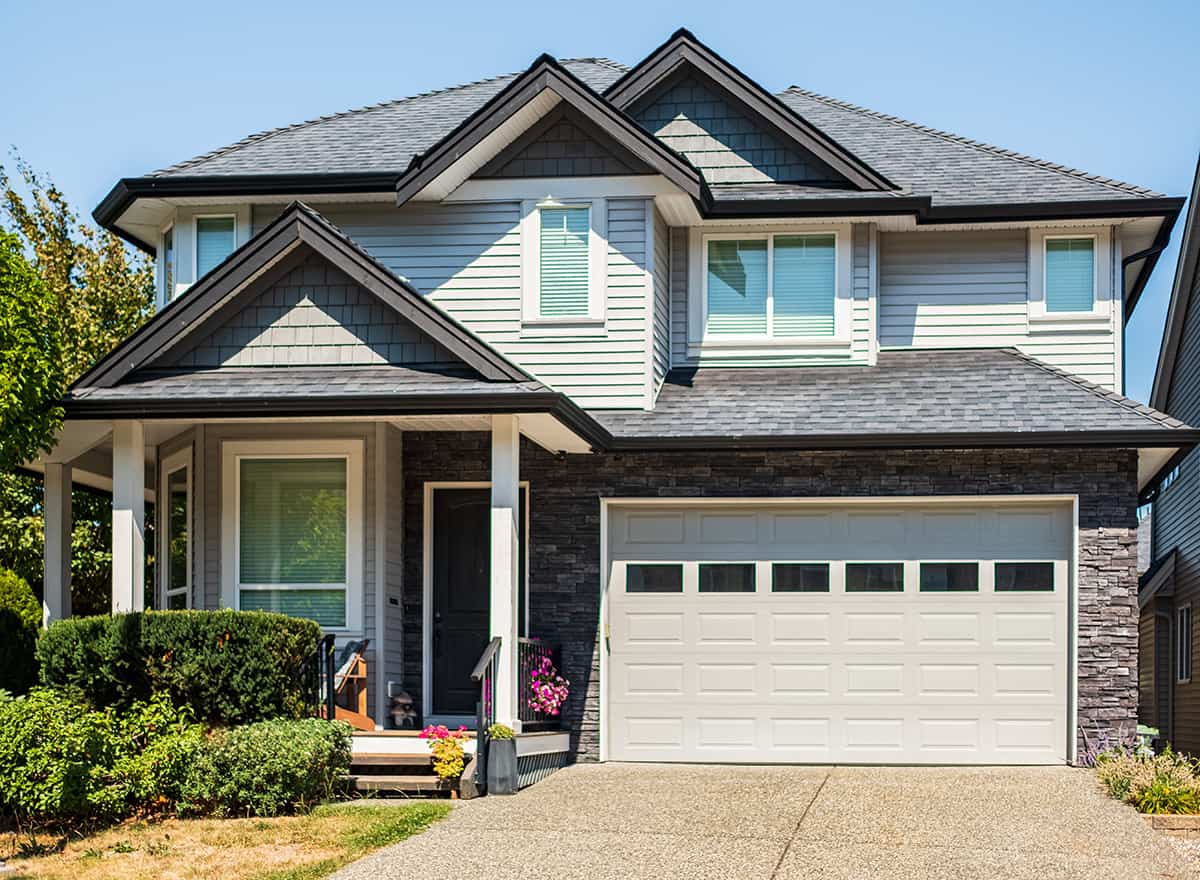
In the home shown here, cream siding and white shutters have been paired with a gray roof, for a result that looks sleek and modern. The addition of a gray stone facade on the ground floor exterior of the house serves to further enforce this color scheme.
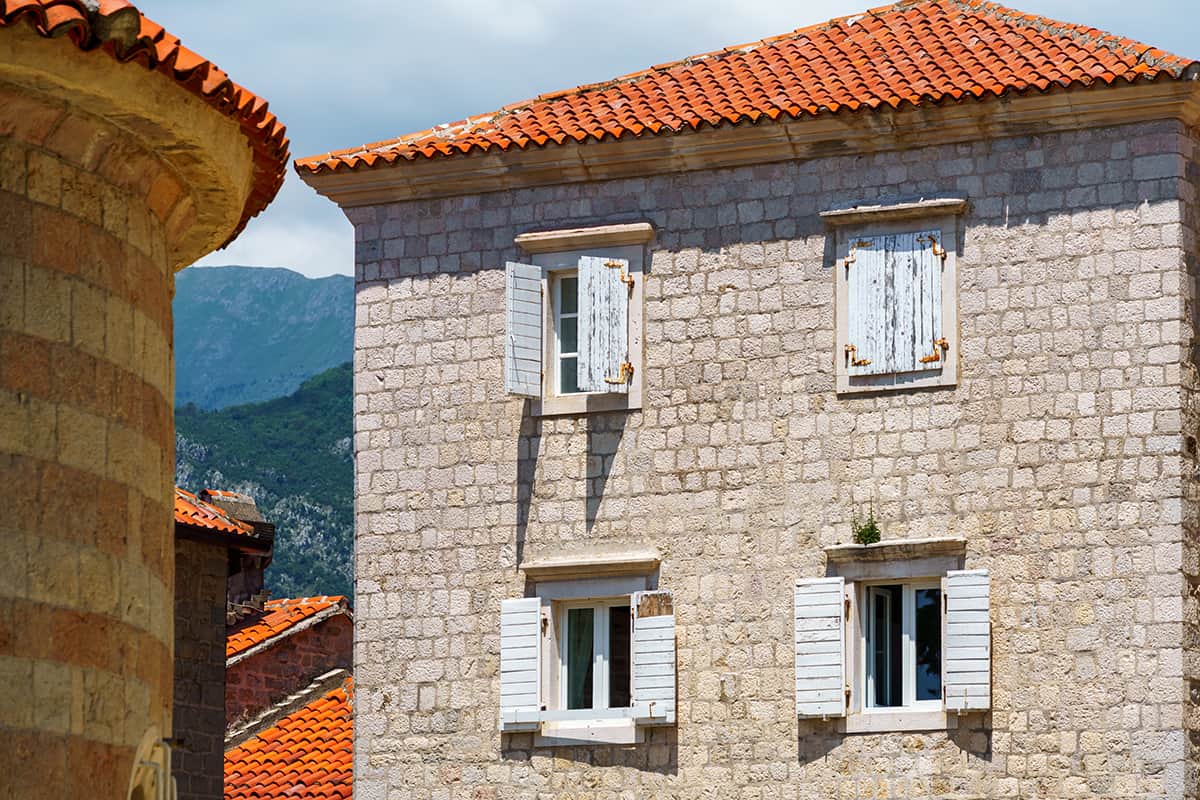
In the European home shown here, cream stone walls and white rustic shutters provide a contrast against the orange terracotta color of the roof tiles, for a style that feels earthy and rugged.
Orange
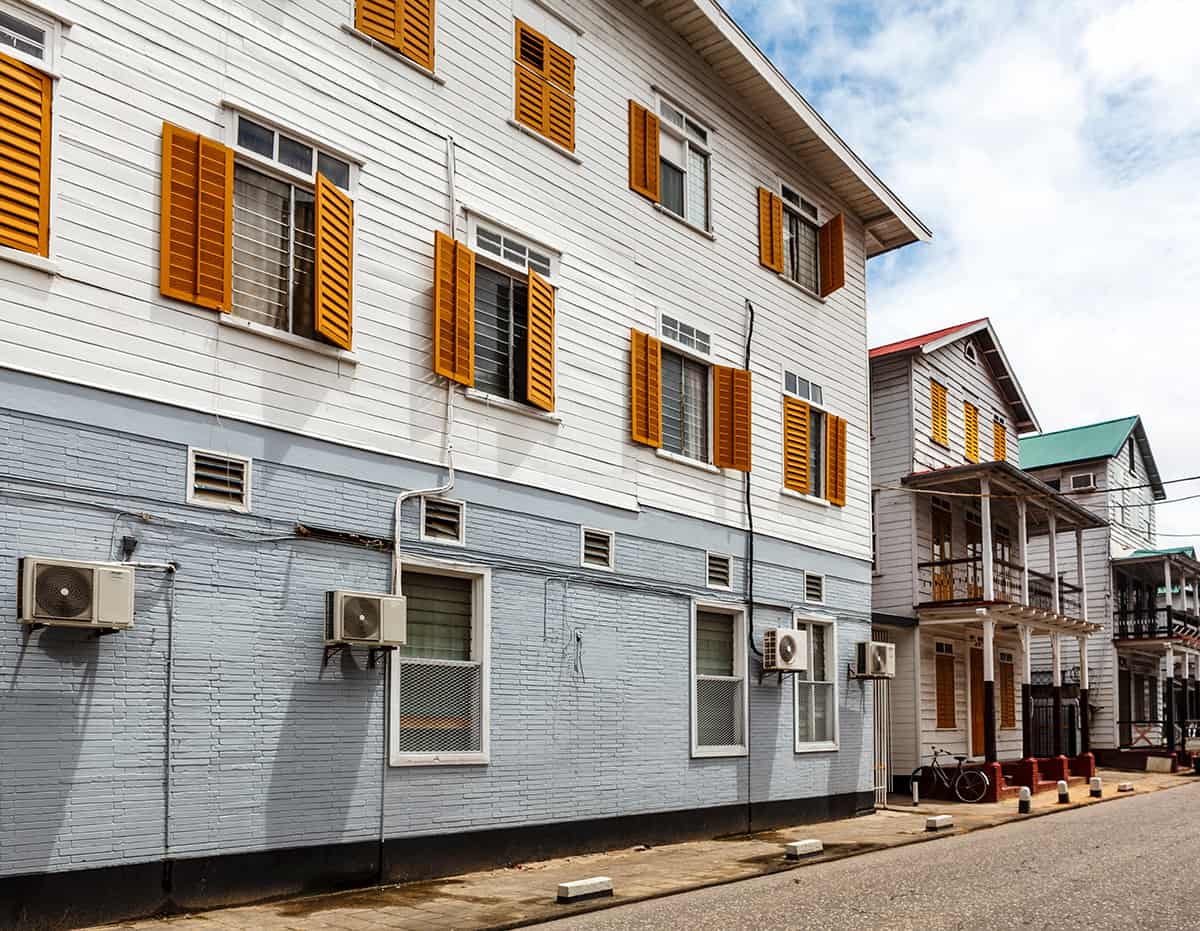
If you want to create a positive and welcoming energy for the outside of your home, then yellow or orange shutters set against cream walls will do just that. In the property pictured here, orange-yellow shutters stand out beautifully against the off-white cream siding. This shade of orange-yellow is sunny and lively, resulting in a curb appeal that feels welcoming and warming.
The owners of this home have added a third color to their color palette of blue-gray, and this has been painted across the lower half of the home’s facade. The addition of this color helps to balance out the warmth found in the cream walls and the orange shutters since blue-gray is a cool color.
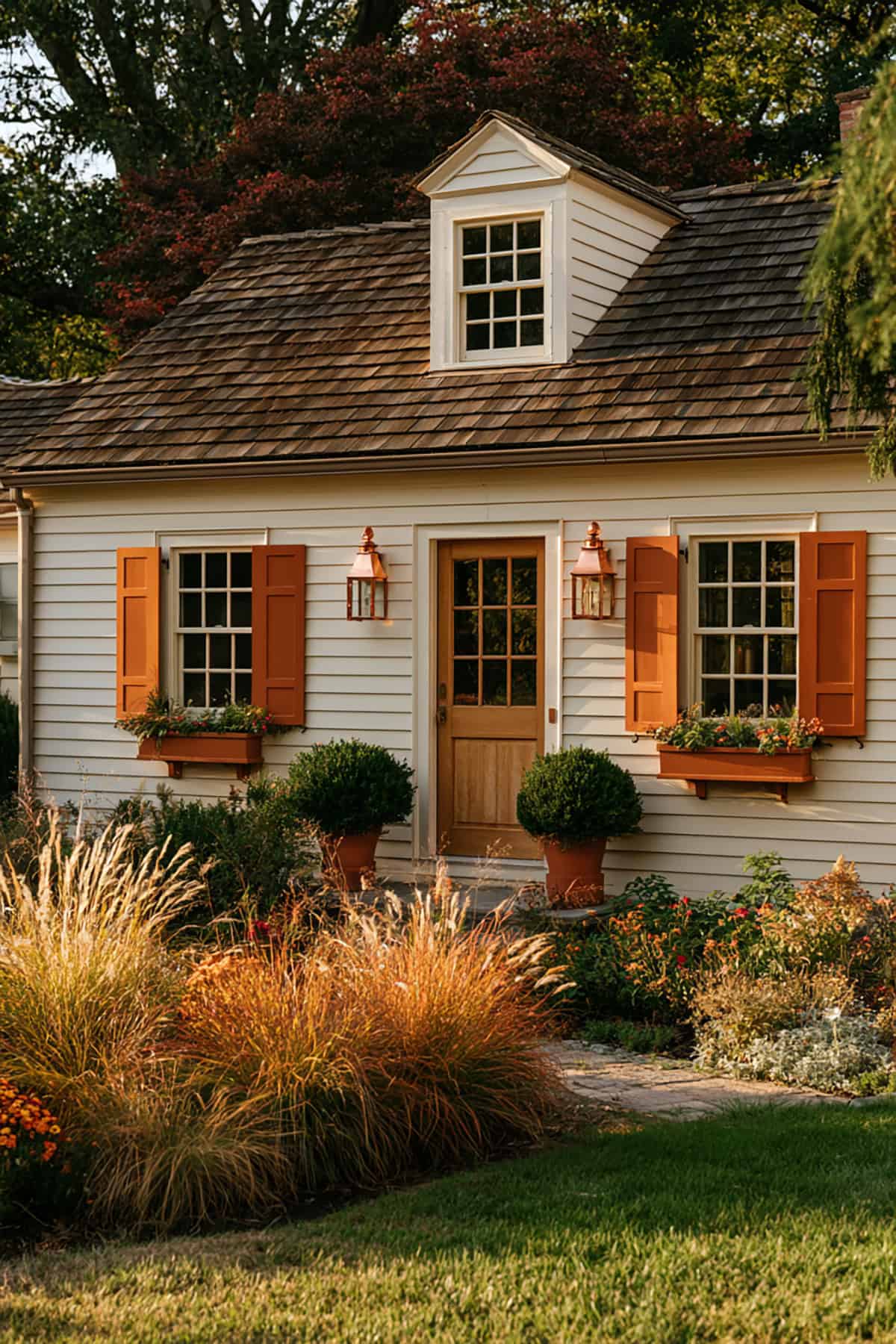
However, the contrast is very subtle because the shade of blue-gray is muted. The overall result feels cheerful and coastal inspired, since these colors are commonly found in coastal or beach-themed designs.
Blue
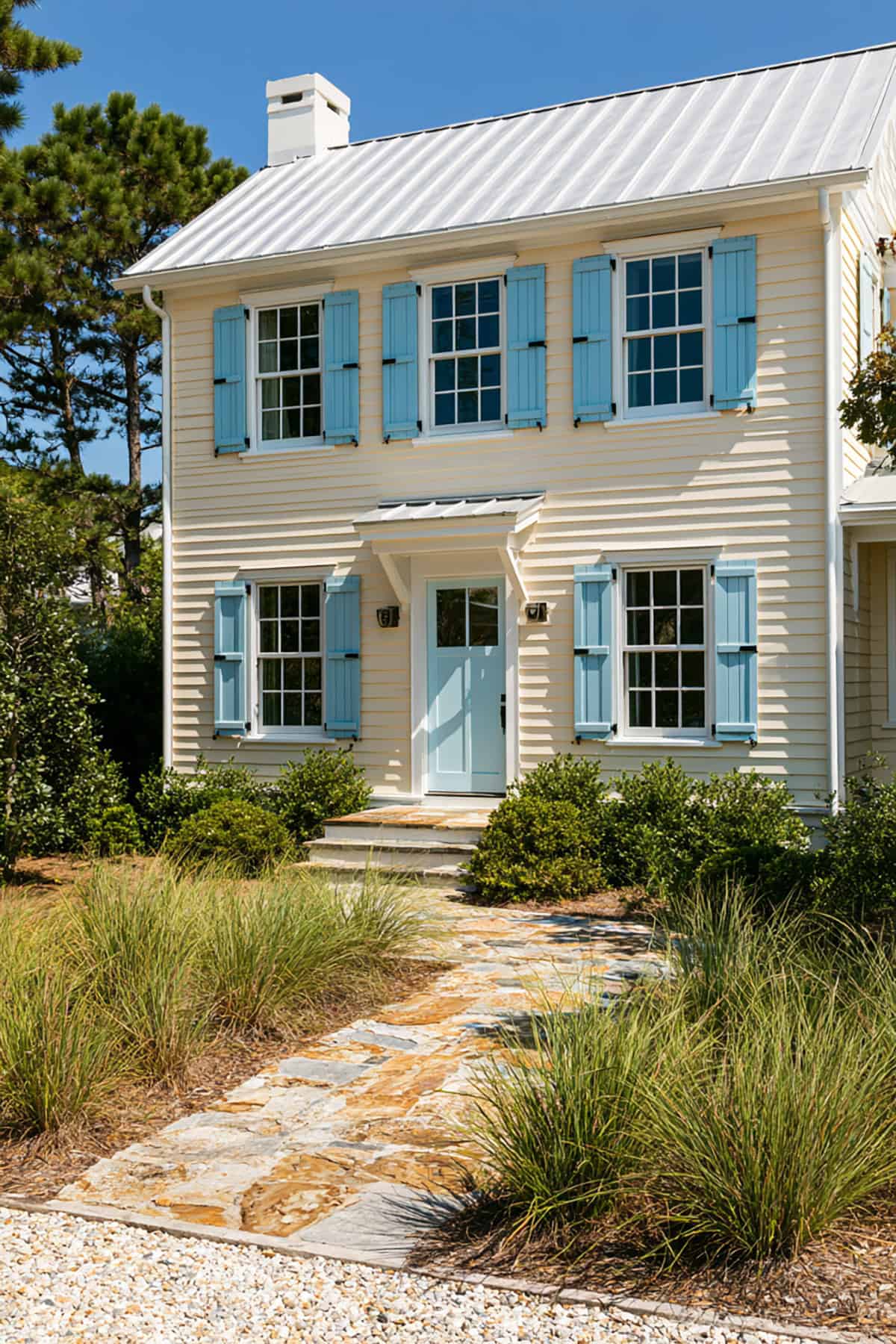
Blue shutters can provide a charming and timeless contrast against cream walls, creating a visually appealing and classic look. This is a color pairing that is reminiscent of coastal regions and summer holidays, so if you want your home to have a beach house appeal then blue and cream can work really well.
Nature often pairs blue skies and bodies of water with sandy or creamy beaches, so take inspiration from these natural combinations to help guide your color choices.
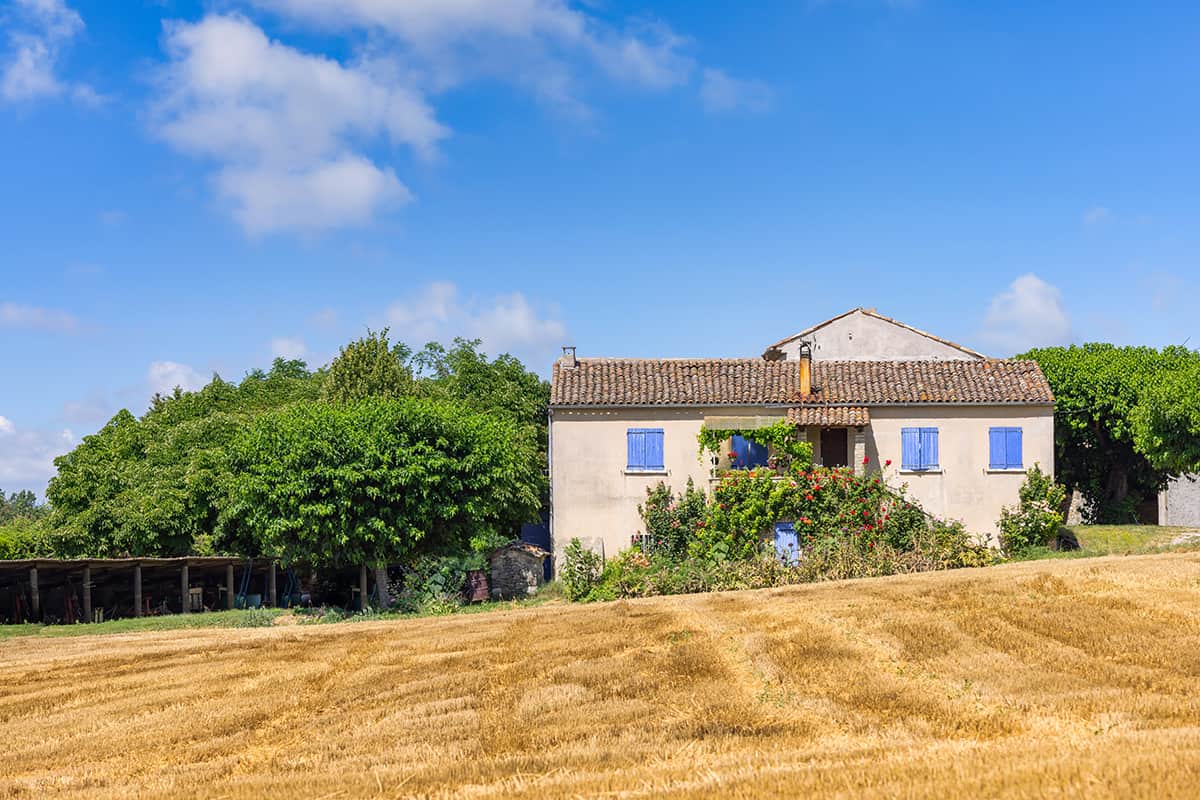
In the home pictured here, the blue of the shutters matches the blue of the sky, allowing the house to look at ease within the landscape. This pretty shade of sky blue will help to evoke a sense of calm and tranquility, even on days when the sky isn’t as clear or bright.
Blue shutters will add a sense of balance to a cream house because blue is a cool color while cream is a warm color. This combination helps to show off both colors in their best light, while also creating a subtle contrast that is pleasing to the eye.
Gray
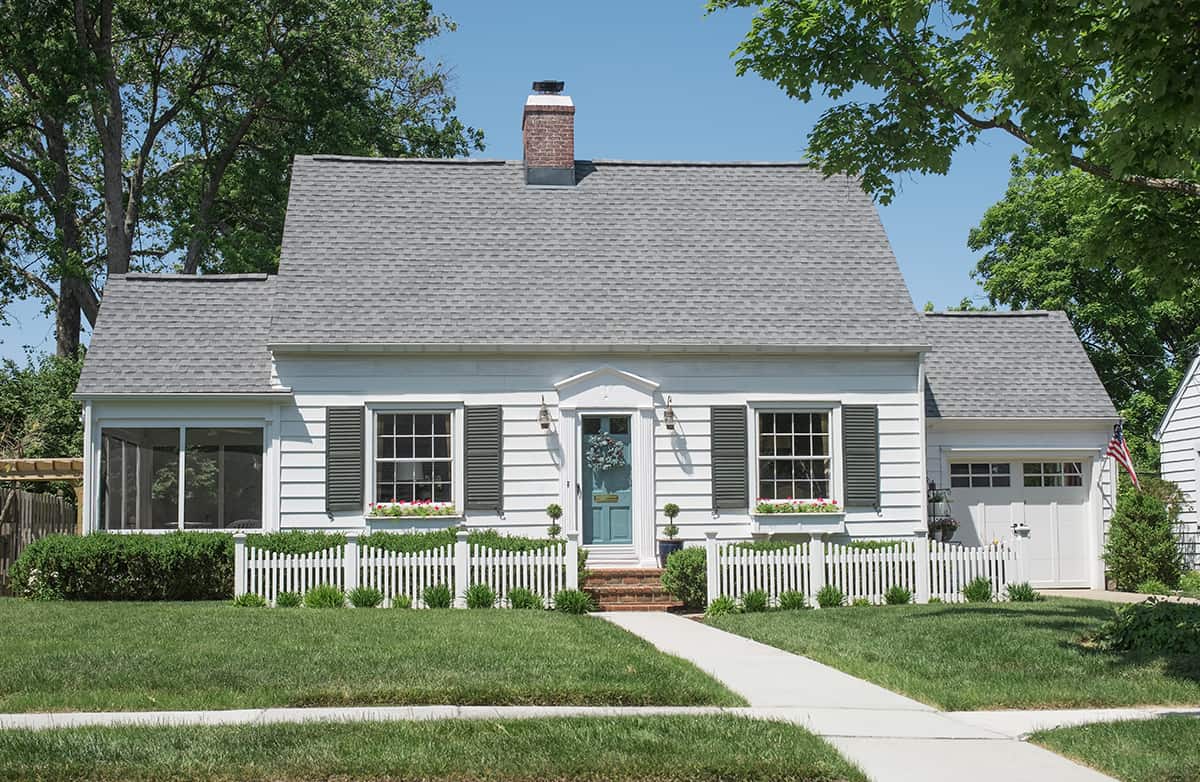
In the quaint home pictured here, the color of the shutters has been coordinated with the color of the roof tiles. By matching the shade of gray on both of these features, the opportunity has arisen for the blue front door to stand out in a bold and obvious way.
Gray is a modern color that retains a classic and elegant appeal, and it pairs beautifully with cream because both colors are neutral and understated. The dark shade of gray used on these shutters contrasts heavily against the cream walls, which are so pale they are almost white. This shade contrast ensures that the home looks interesting, without being bright or vibrant.
Red
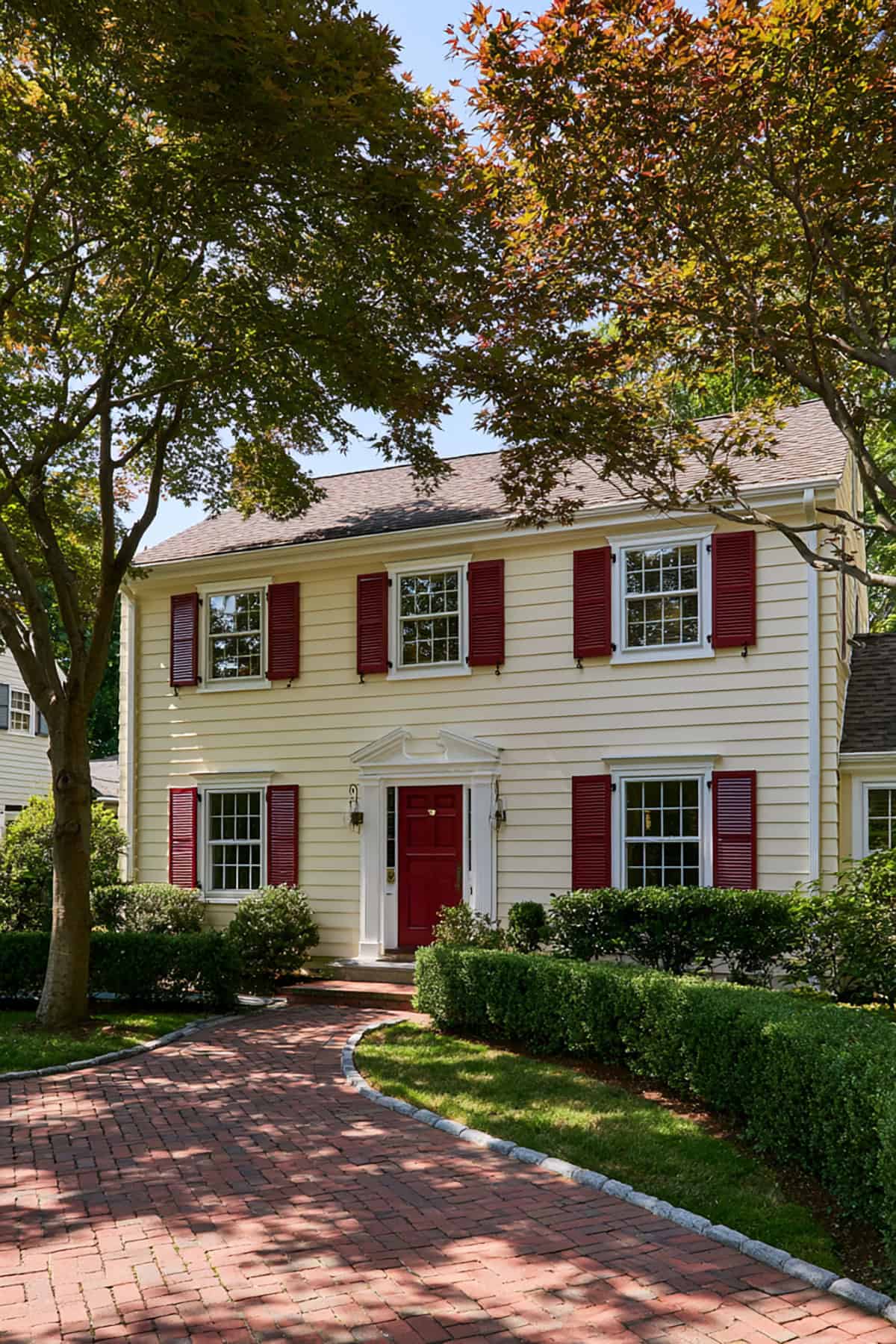
If you want to make a statement on a cream house then red shutters are the way to go. As seen on the home pictured here , red shutters make for a bold choice, yet because both the walls and shutters have a warm base, they complement each other very well.
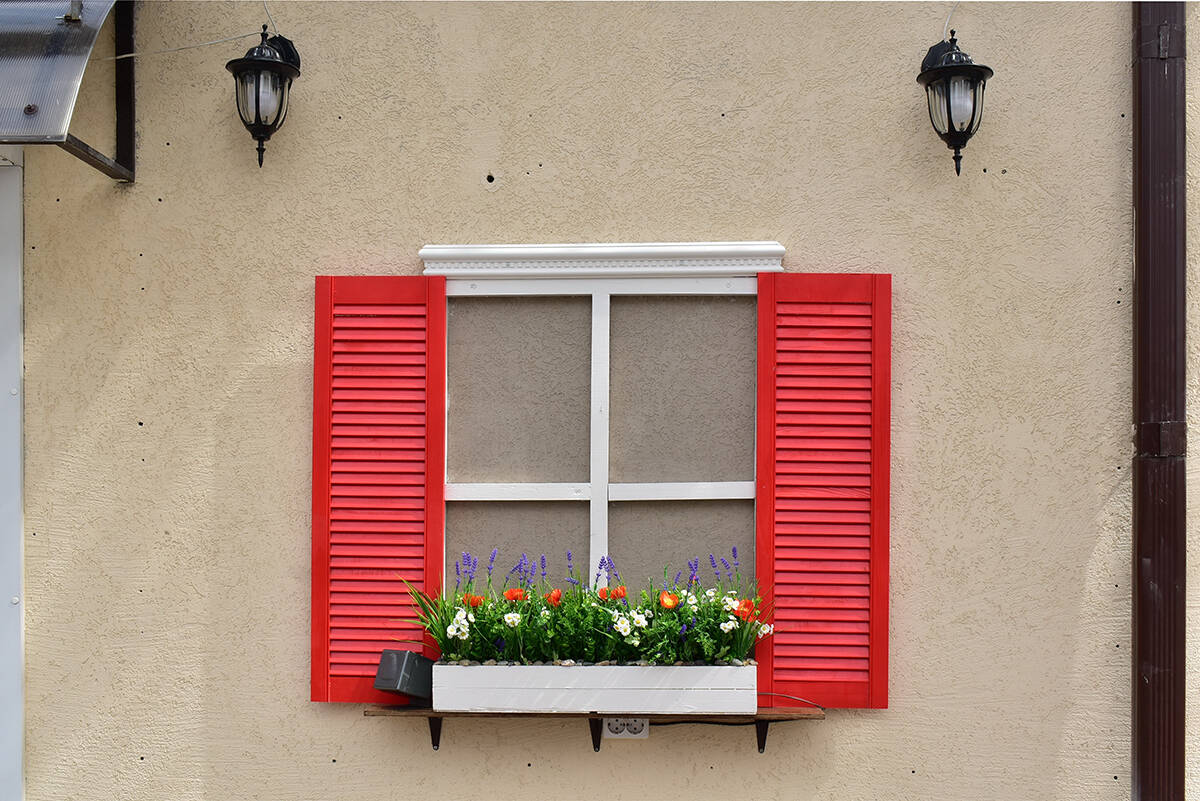
Black has been used as the third color in this color palette, which helps to ground the whole look and add a sense of definition. By using two neutral colors with red shutters, the red shutters are able to stand out without competing for attention.
Green
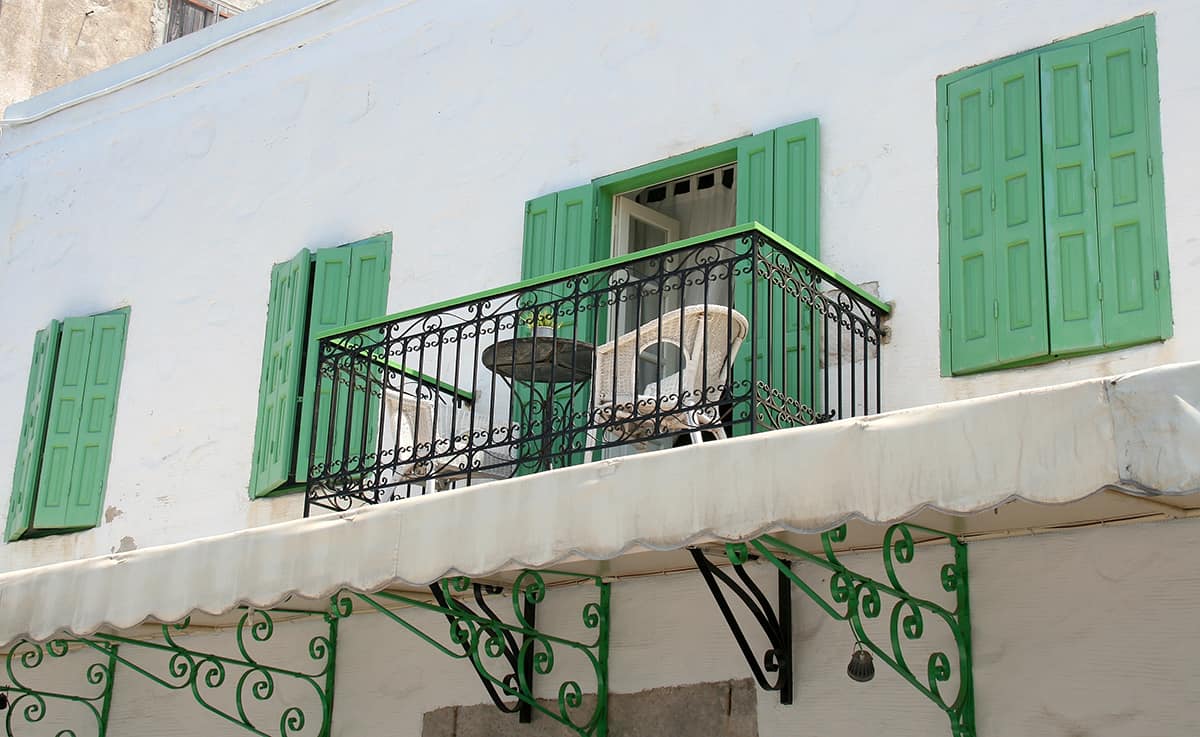
The green shutters on this cream house create a sense of luxury and old-world glamor while also linking the home to its surroundings and the natural world. Green has a fresh energy that is also soothing, and this translates perfectly against a cream-wall backdrop. Opt for green shutters on a cream house when you want to achieve timeless elegance.
Brown
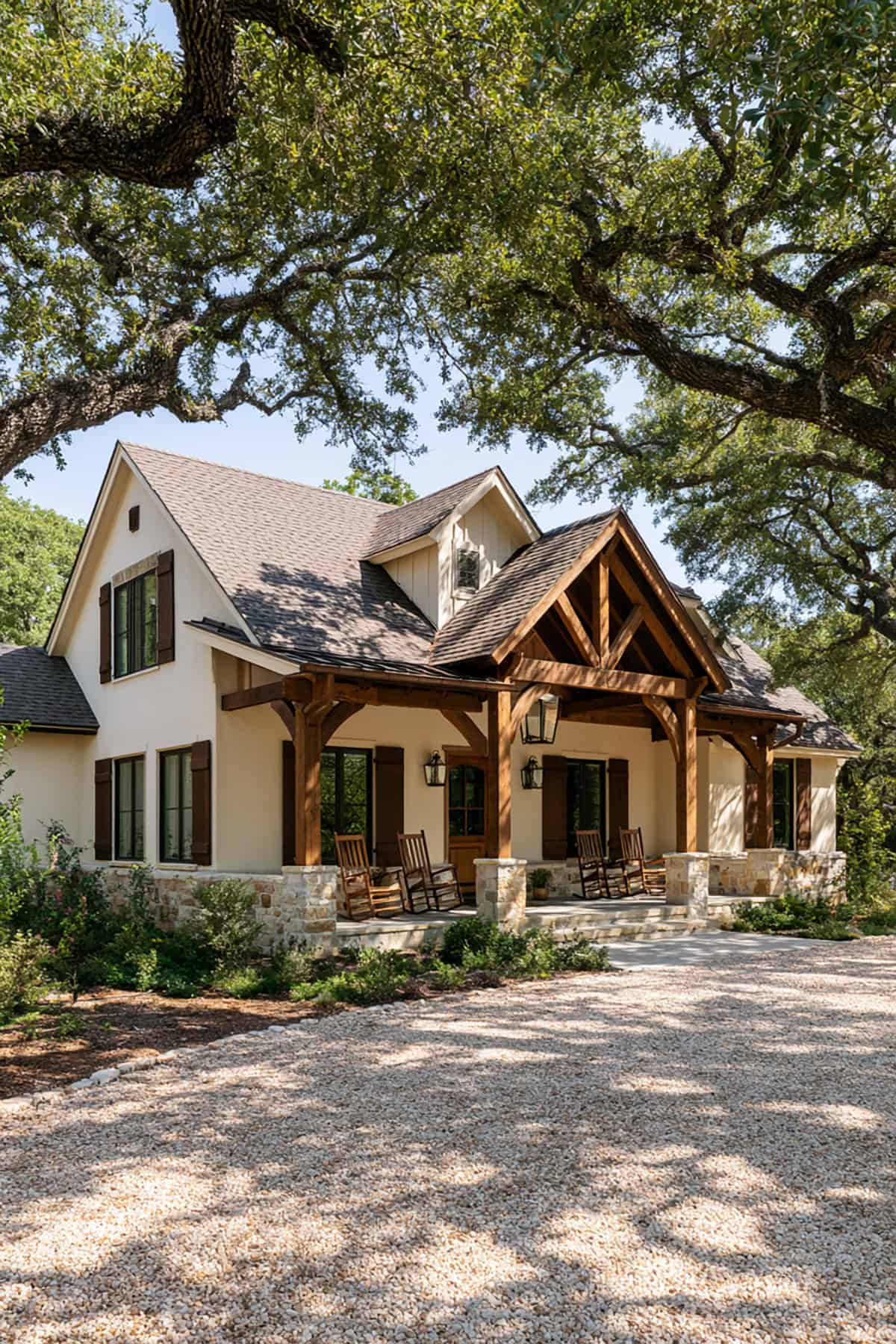
Brown is a stunning color choice for a cream house if you’re going for a rustic farmhouse vibe. Use brown paint or a brown stain on wooden shutters to achieve a rugged style like the one shown here.
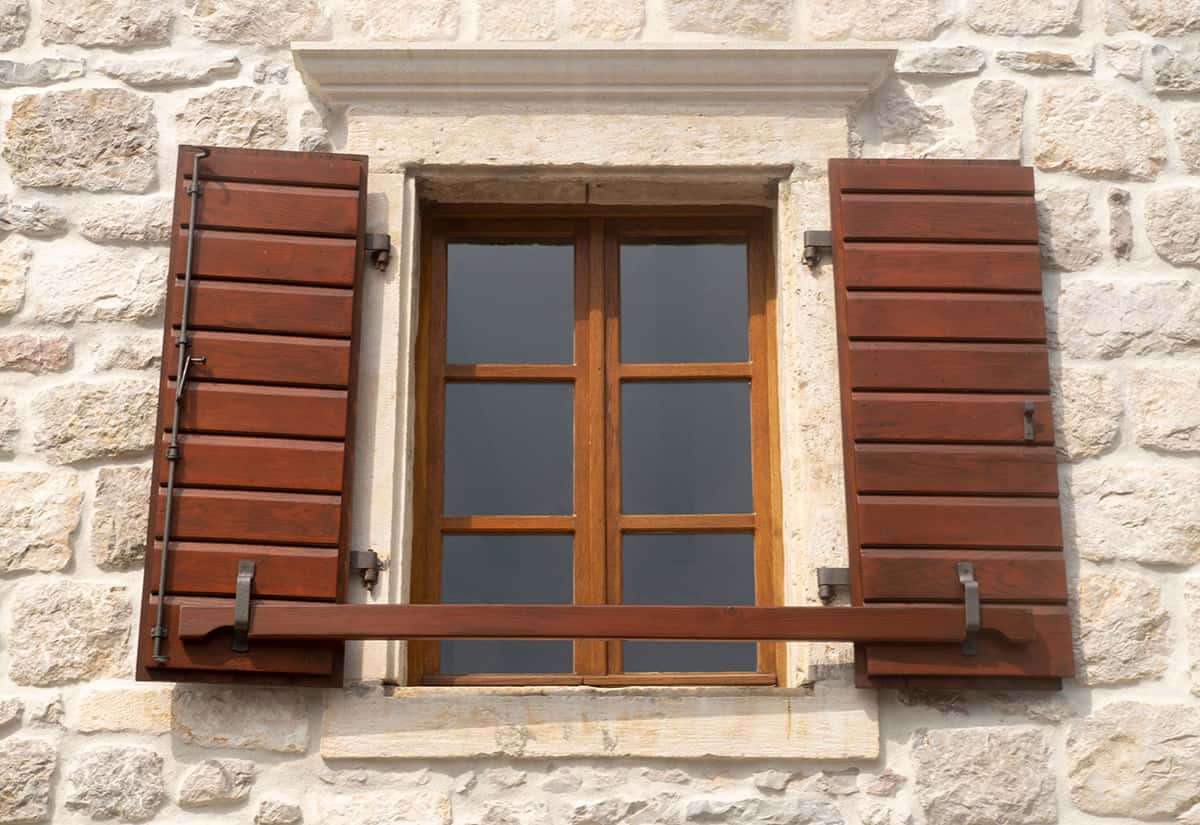
This earthy color palette helps a house to blend seamlessly into the landscape while maintaining a cozy and welcoming appeal.
Espresso Brown
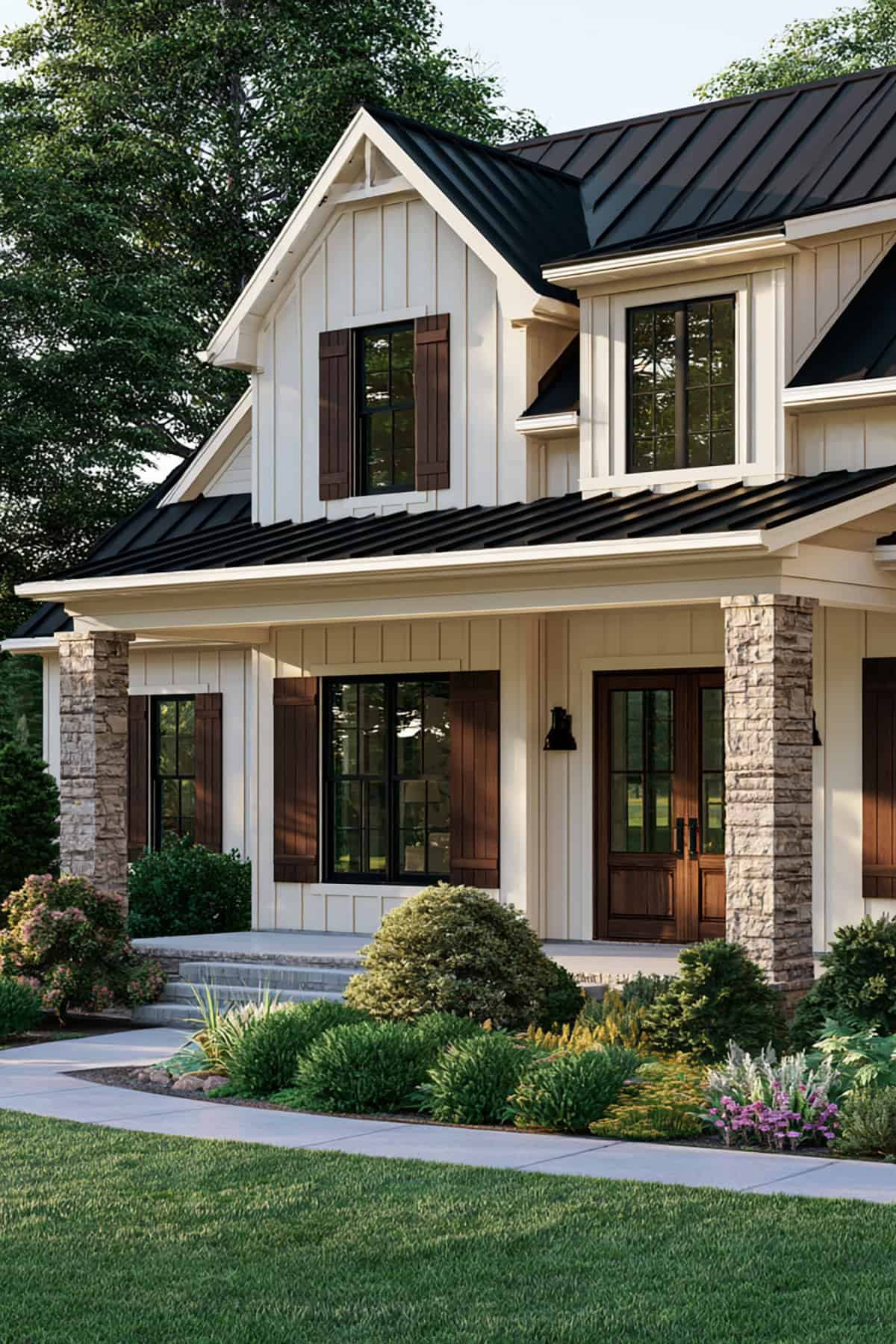
Espresso brown is darker, cleaner, and more architectural than standard brown. Against cream board-and-batten, it emphasizes vertical lines and gives the exterior a stronger frame.
This pairing is effective if your roof is dark bronze, weathered brown, or black. Add natural wood at the entry and the palette looks resolved rather than heavy.
Taupe
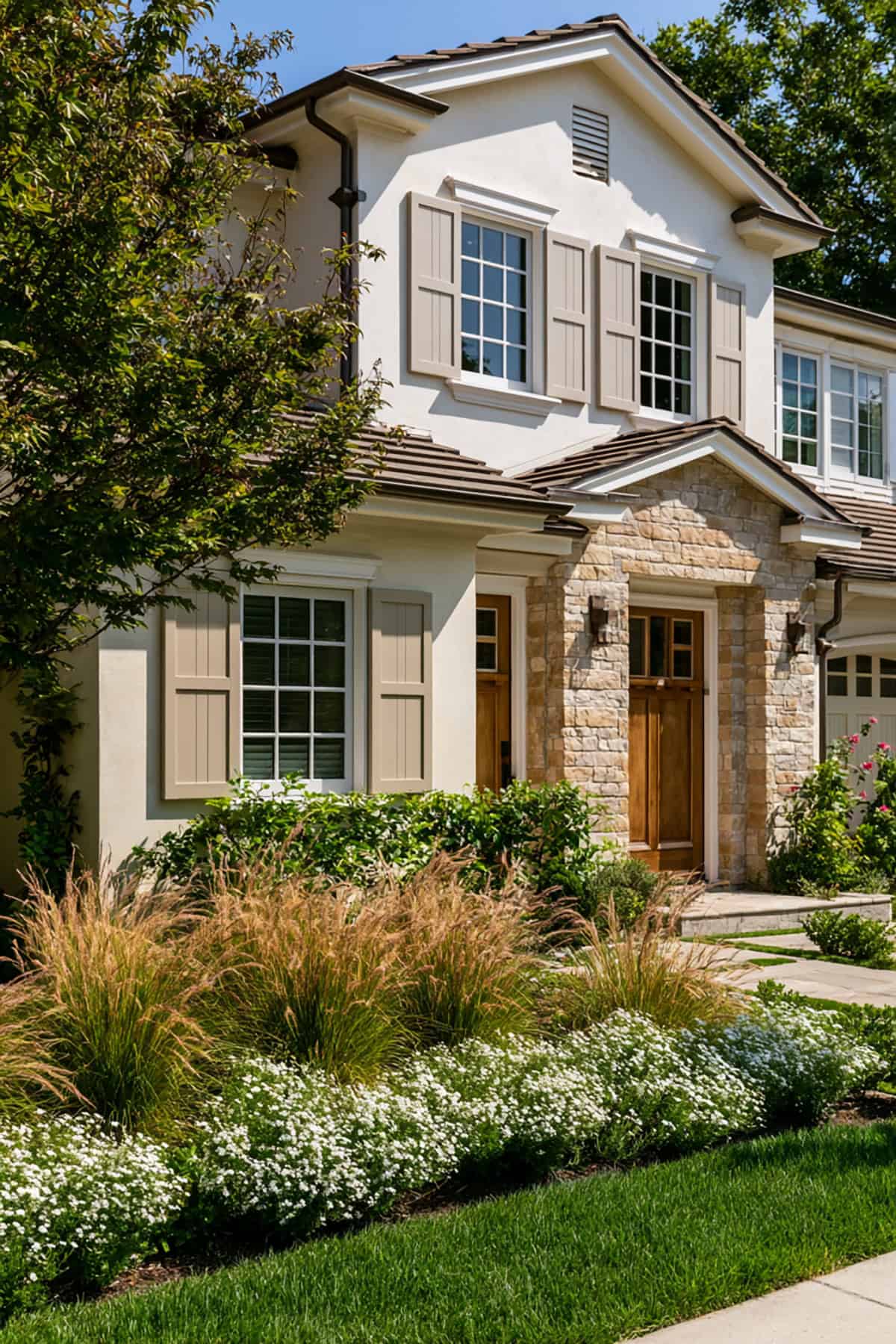
Taupe shutters are for homeowners who want subtle separation, not drama. They fit cream houses with stone veneer, pale trim, and neutral roofing.
Watch the undertone closely. Taupe that leans pink turns dusty next to yellow cream. A brown-gray taupe holds together better and keeps the facade from going muddy.
Soft Aqua
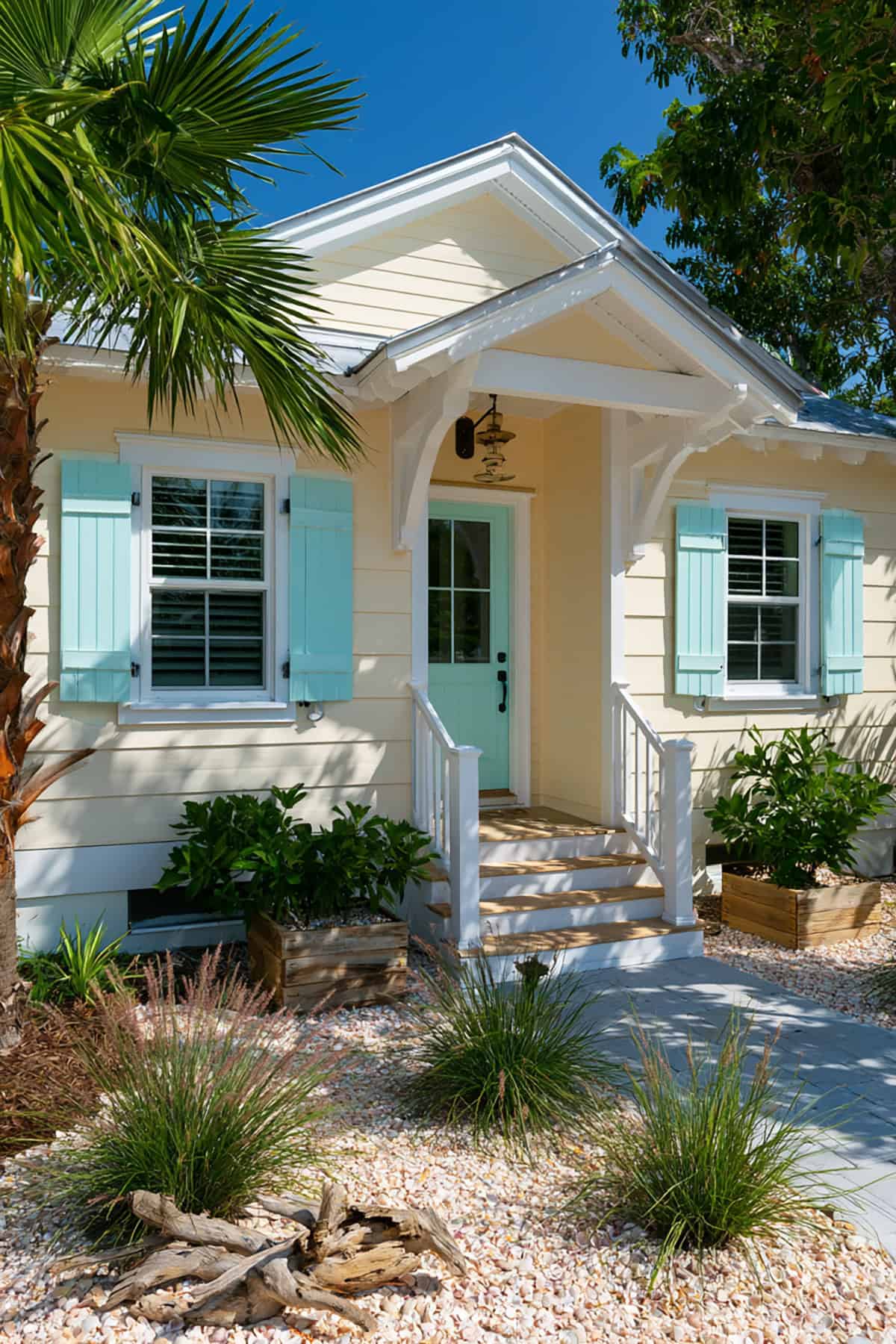
Soft aqua suits cream exteriors when the architecture supports a breezier palette. Think beach cottage, Gulf Coast bungalow, or a light farmhouse with crisp white trim.
The shade needs enough gray in it. Too pastel, and it reads childlike against cream. A softened aqua keeps the coastal cue while staying believable on a full exterior.
Slate Blue
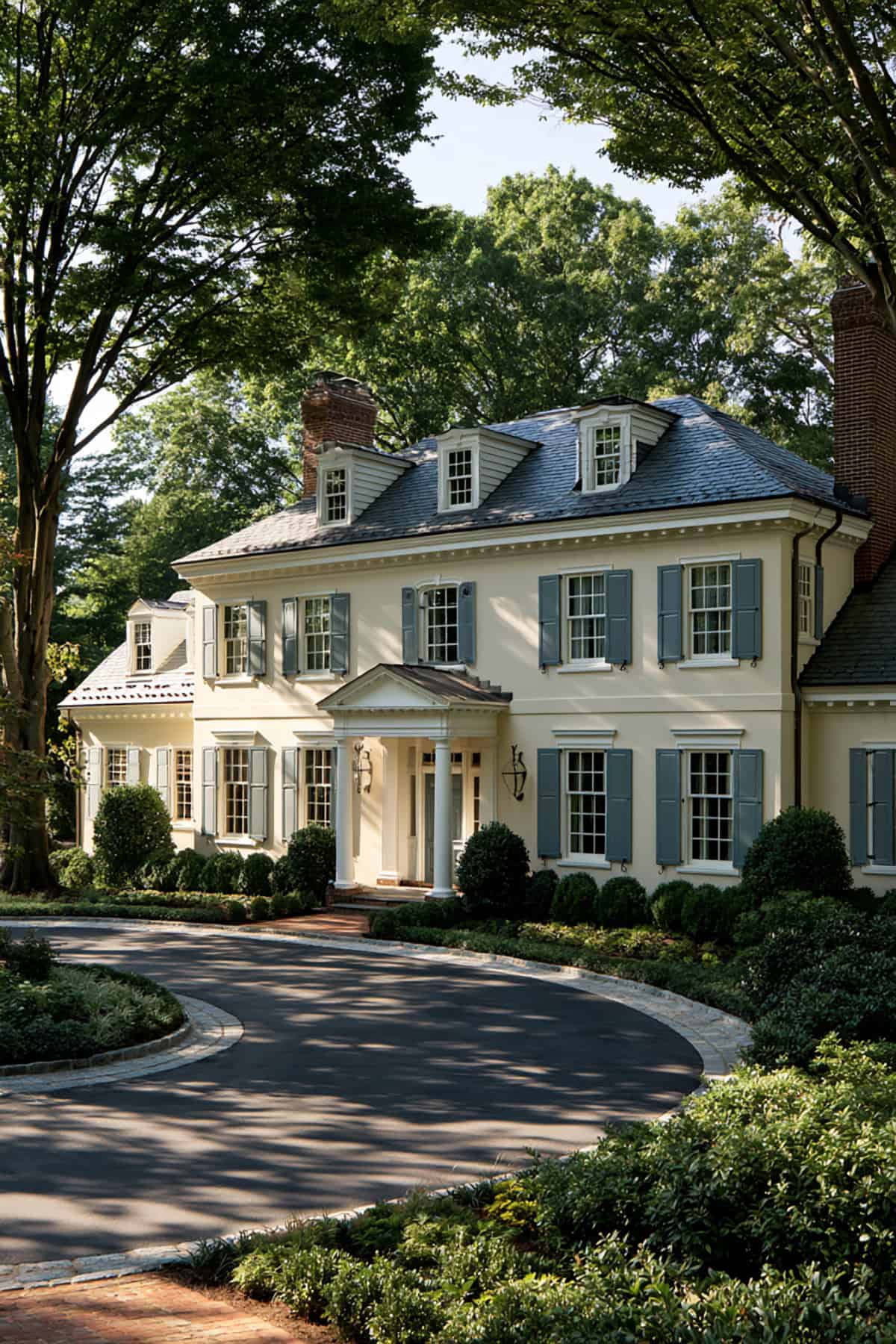
Slate blue carries more depth and less sweetness than softer blue options. On traditional architecture, it sharpens window placement and pairs well with cream brick, white trim, and dark roofing.
Olive Green
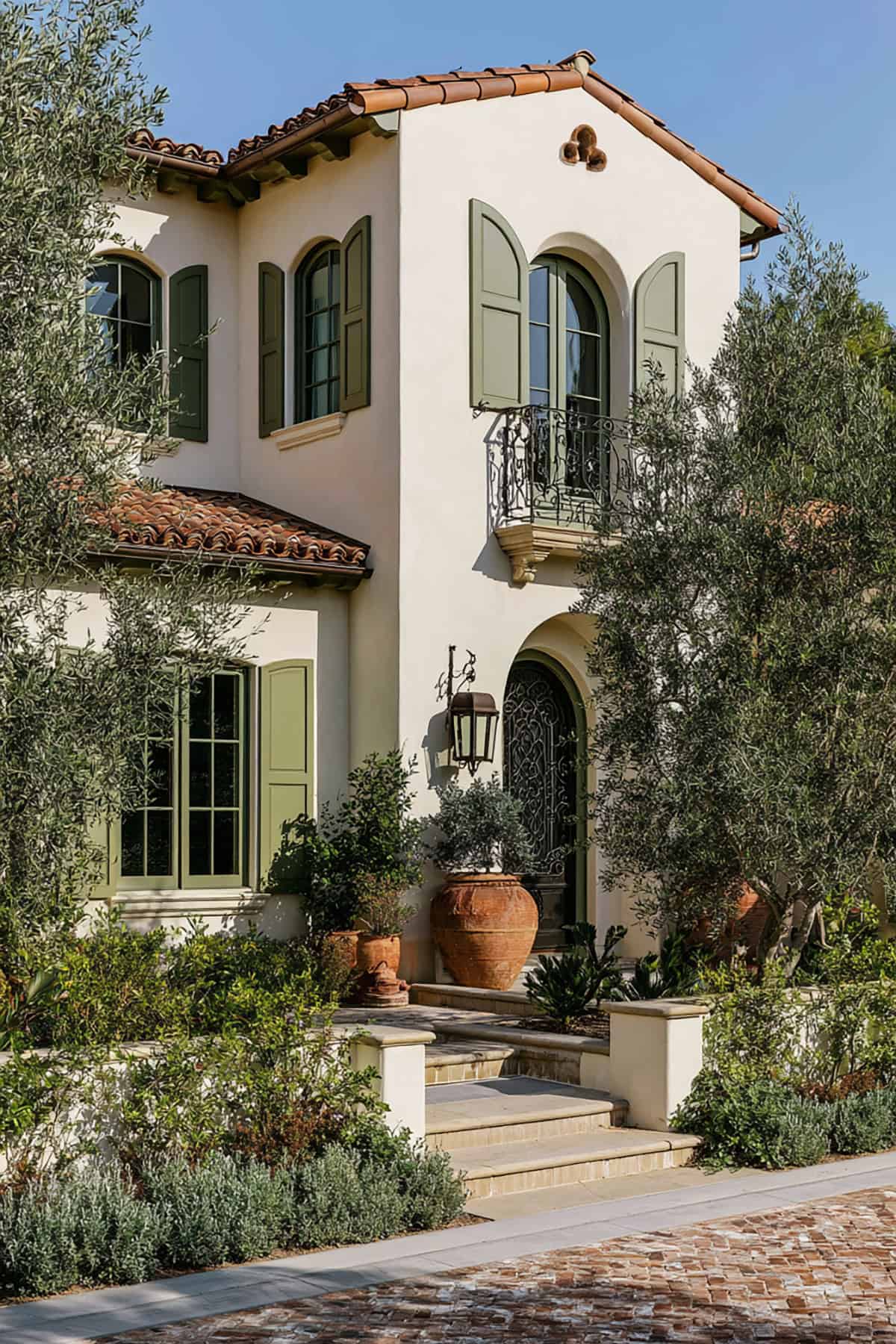
Olive green has an earthy cast that pairs beautifully with cream stucco, clay-toned roofing, and iron details. It suits Mediterranean influences better than bright green ever will.
The key is dryness. Olive should look muted and grounded, not fresh and springy.
Mustard Yellow
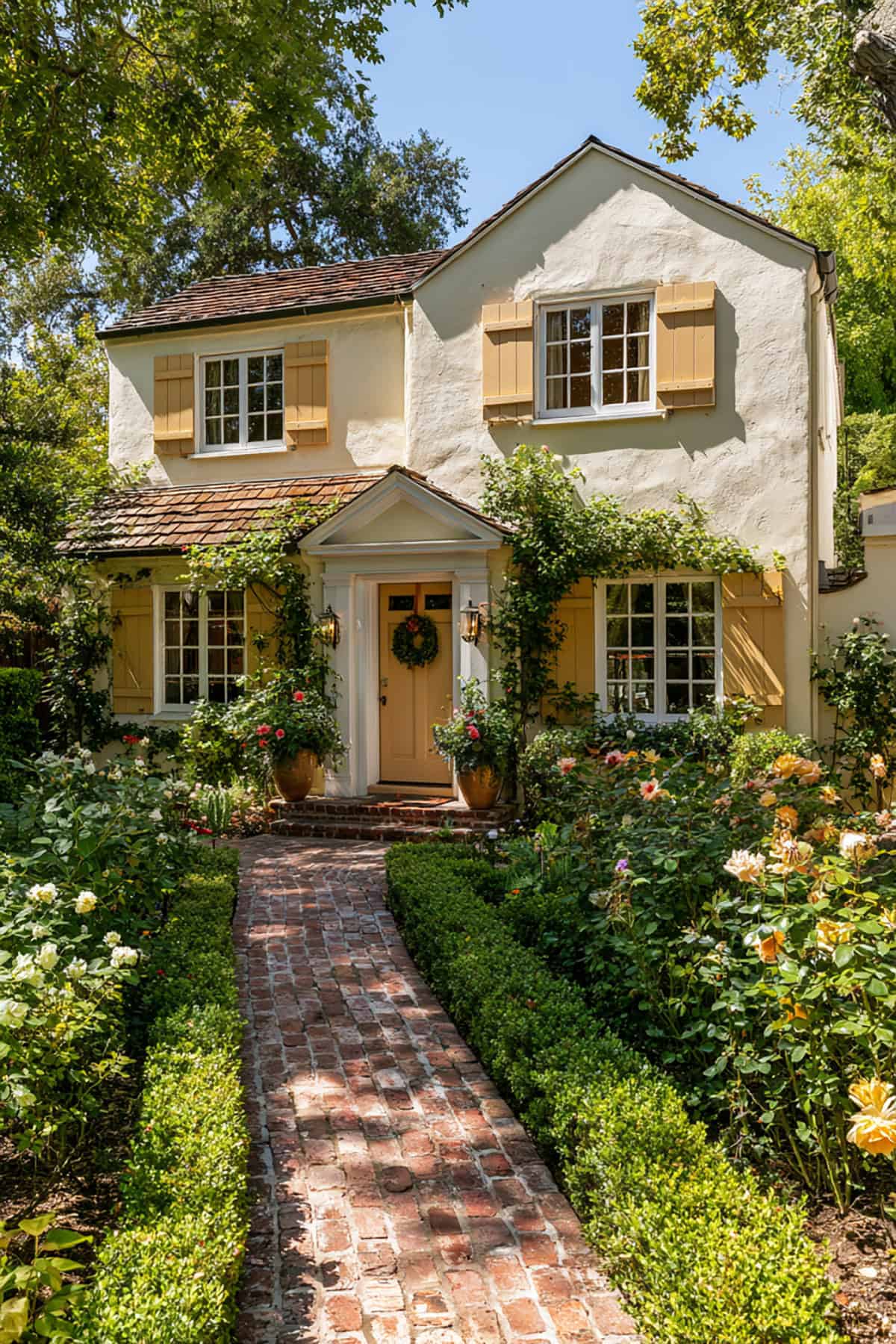
Mustard yellow is a niche choice, though it is excellent on a vintage cream house with brick walkways or aged trim. You need a deep, browned mustard rather than a cheerful primary yellow.
Forest Green Board-And-Batten Shutters
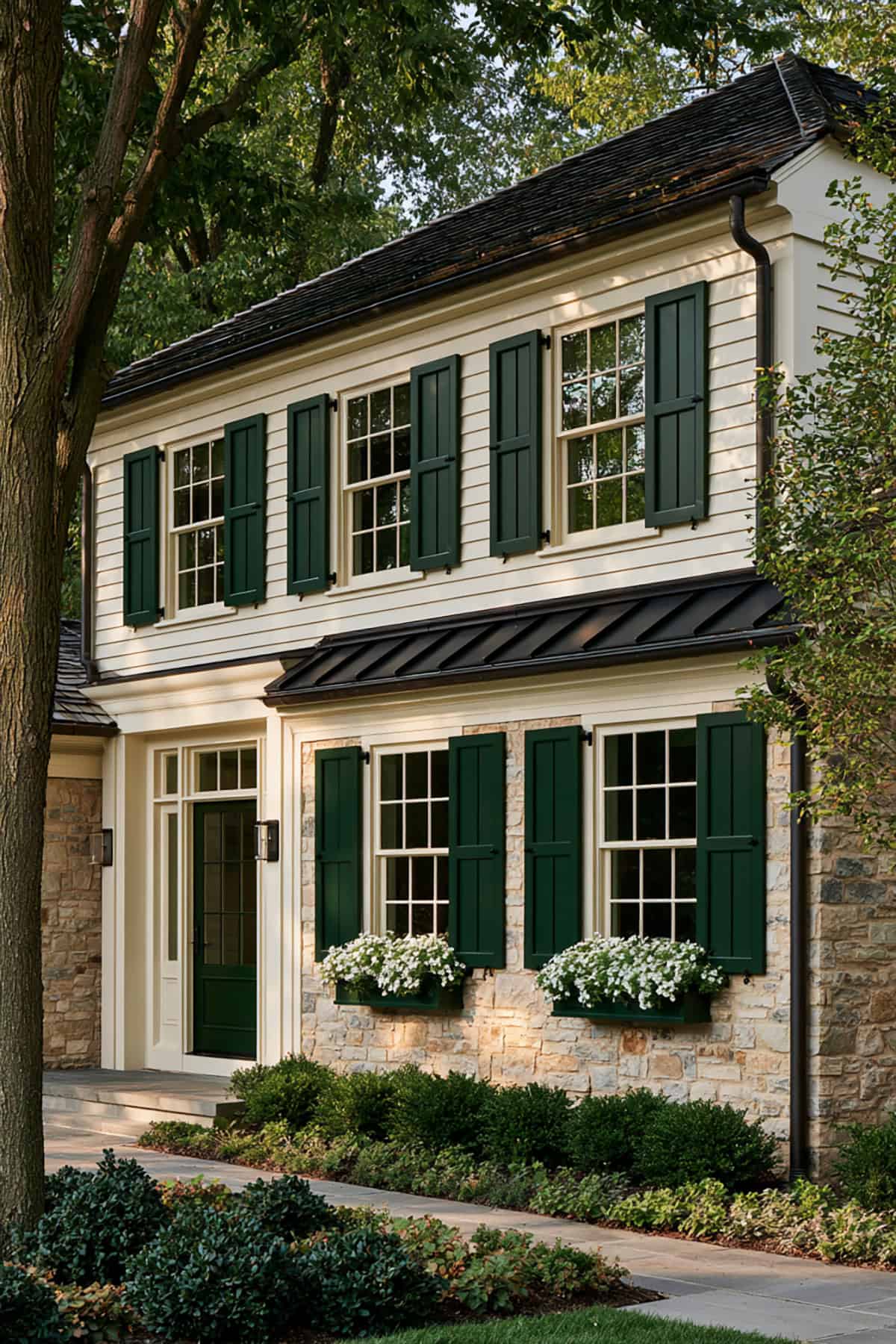
Forest green gives a cream house stronger contrast than sage or olive. On board-and-batten shutters, the darker green highlights the shutter shape and gives the windows more presence.
This color holds up particularly well around brick foundations, gravel drives, and established trees.
Dusty Blue-Green
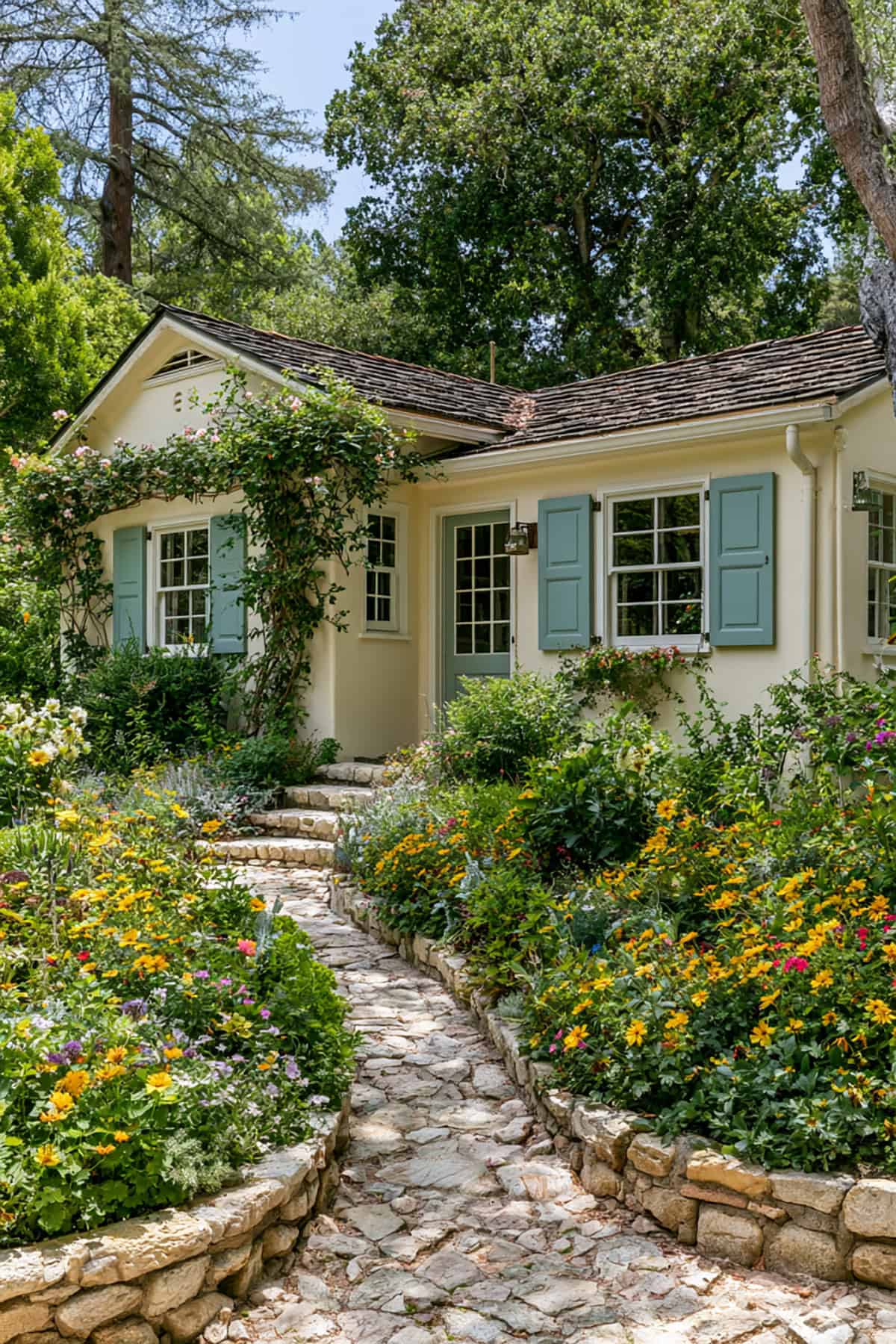
Dusty blue-green sits between muted teal and softened sage. On a cream house with cottage landscaping, it picks up both flower colors and foliage without becoming too sweet.
Deep Teal
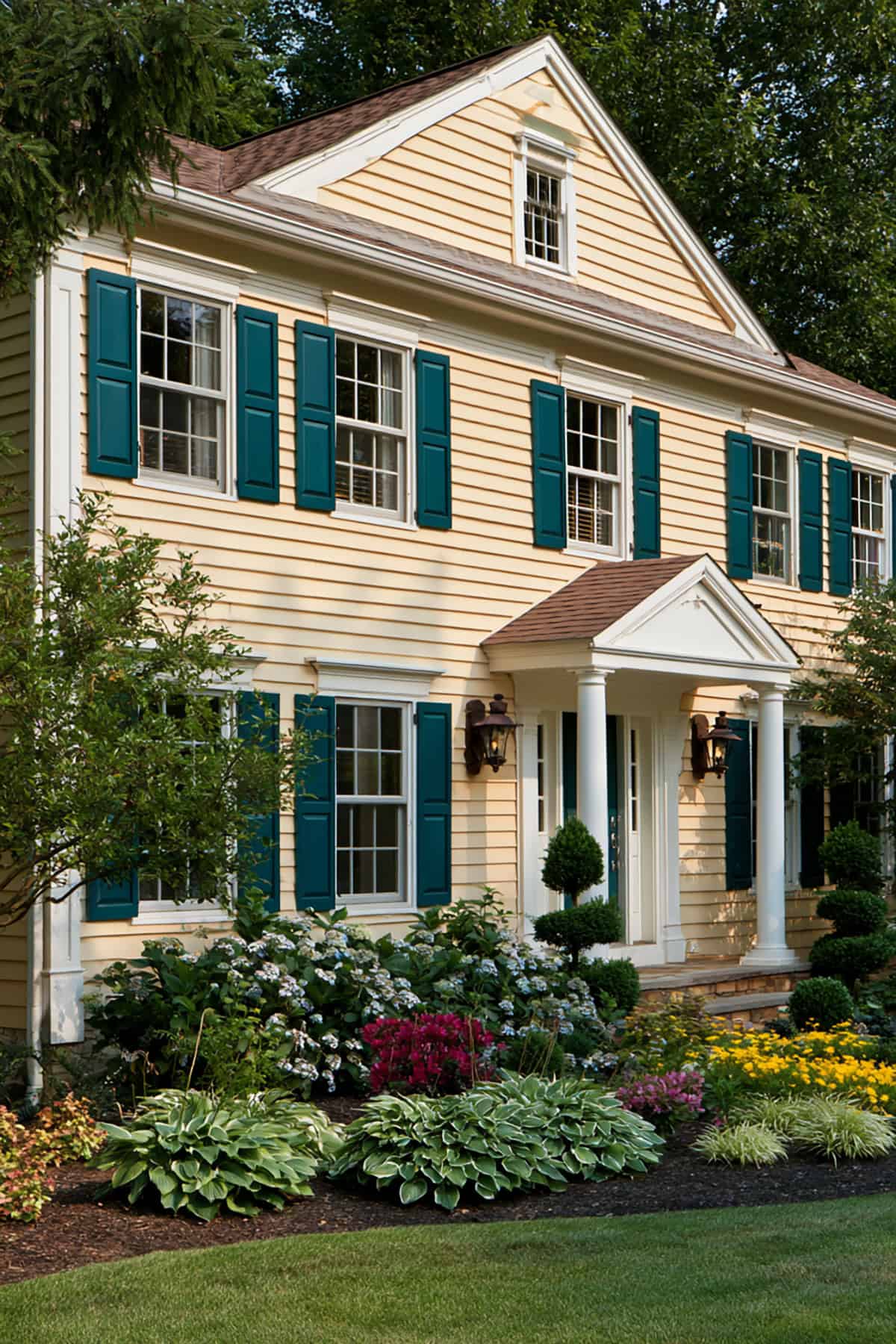
Deep teal is bolder than most homeowners expect, though against cream siding it reads rich rather than loud when the saturation is controlled. It is effective on houses with black hardware or a stained wood door.
Avoid bright tropical teal. You want depth, a little gray, and enough darkness to anchor the warm siding.
Charcoal
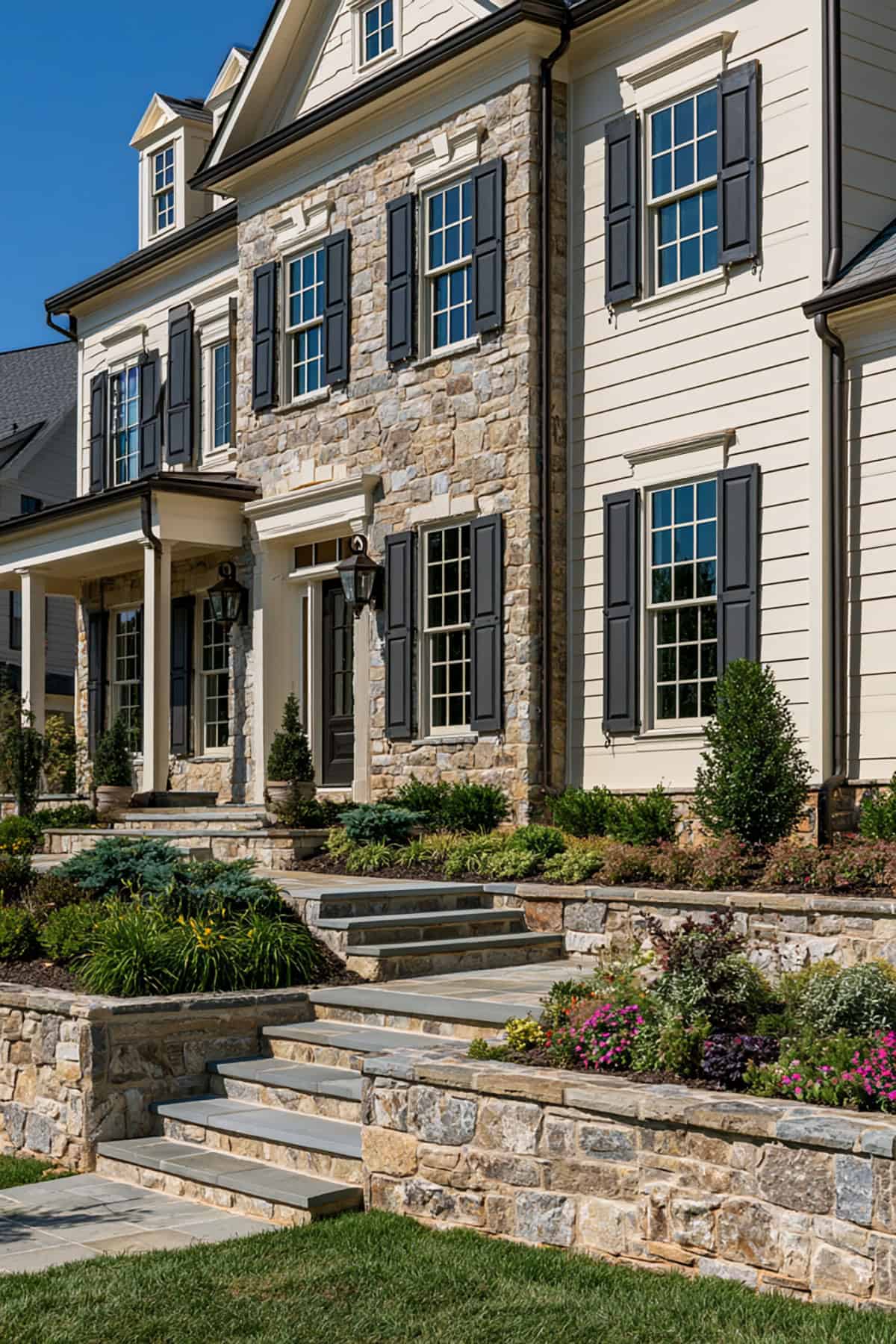
Charcoal shutters are excellent when your cream house includes stone accents, dark window screens, or a charcoal roof. The color is sharper than brown and softer than black.
This is one of the best pairings for mixed materials. Charcoal holds its own next to stone surfaces and keeps the house from drifting into yellow softness.
Cedar Wood
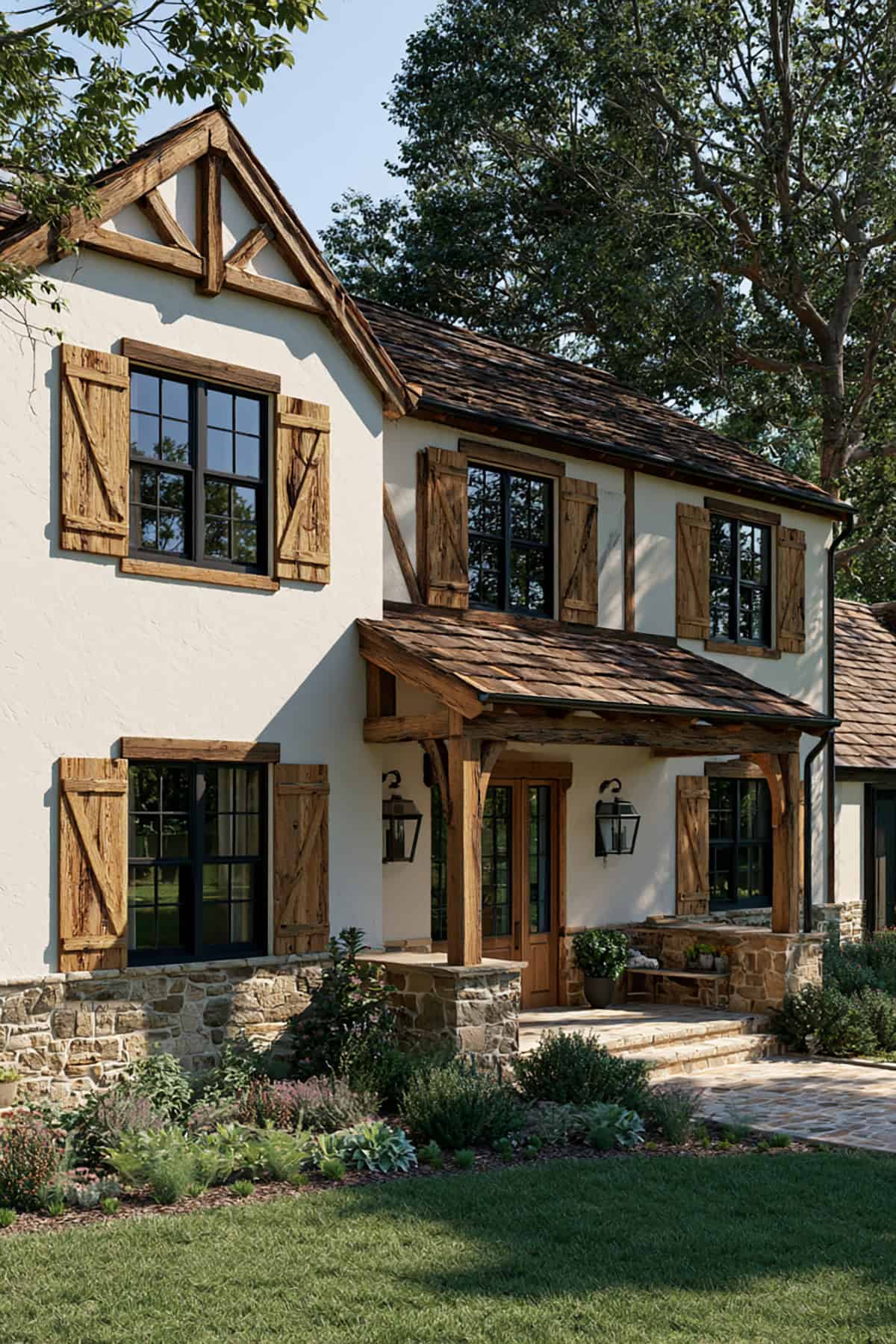
Cedar wood shutters provide visual detail that paint does not replicate. The natural grain offsets smooth siding and suits porches, shutters used decoratively, and warm metal fixtures.
For a more textured and weathered look, reclaimed wood shutters are a growing favorite for a cream-colored home. They offer a unique, aged aesthetic that adds immediate history to a newer exterior.
Burgundy
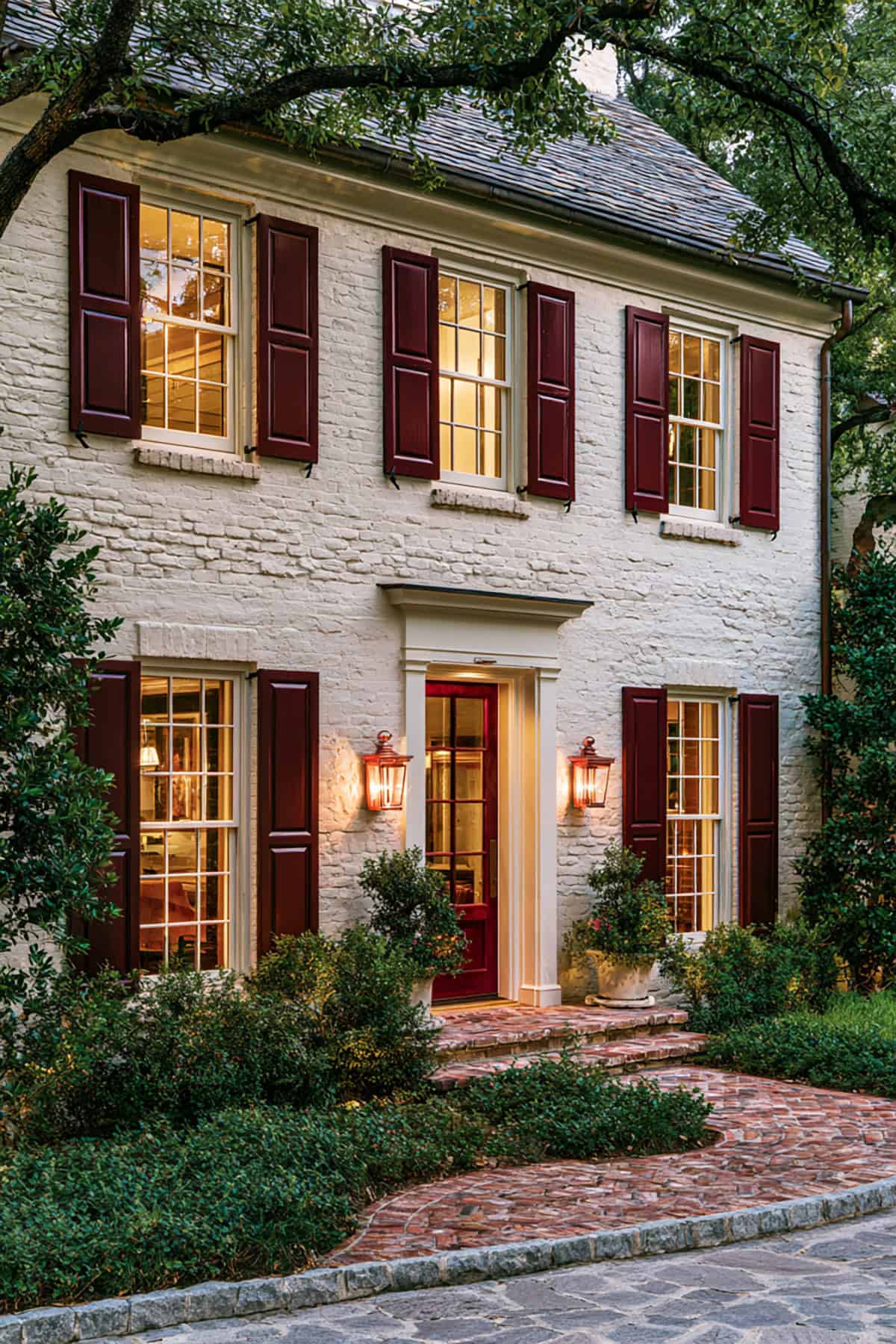
Burgundy shutters have more depth and formality than standard red. Against a cream brick exterior, they look especially strong when the brick has a tan, rose, or warm gray variation.
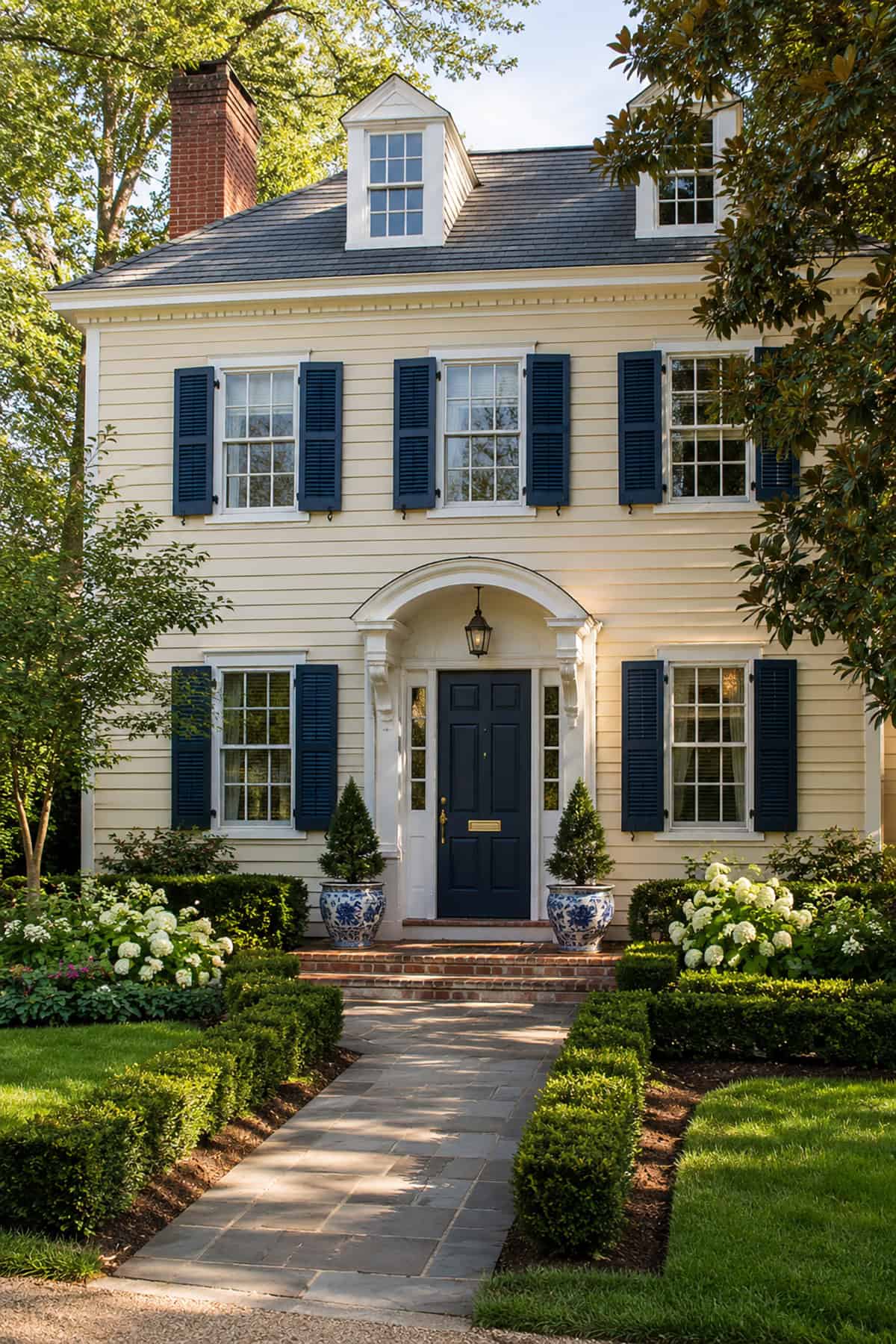
Navy blue shutters are a classic choice for a cream house because they create contrast without appearing overly bold. In the home shown here, the deep navy shutters frame the windows beautifully and draw attention to the architectural details across the facade. The combination of warm cream siding and rich navy blue accents creates a look that is polished, timeless, and easy to live with for years.
White trim has been used throughout the exterior to separate the two colors and keep the palette looking crisp. The result is a balanced design that feels traditional yet still works well on updated homes. This is the kind of color pairing that rarely goes out of style and suits everything from Colonial homes to modern farmhouses.
Sage Green
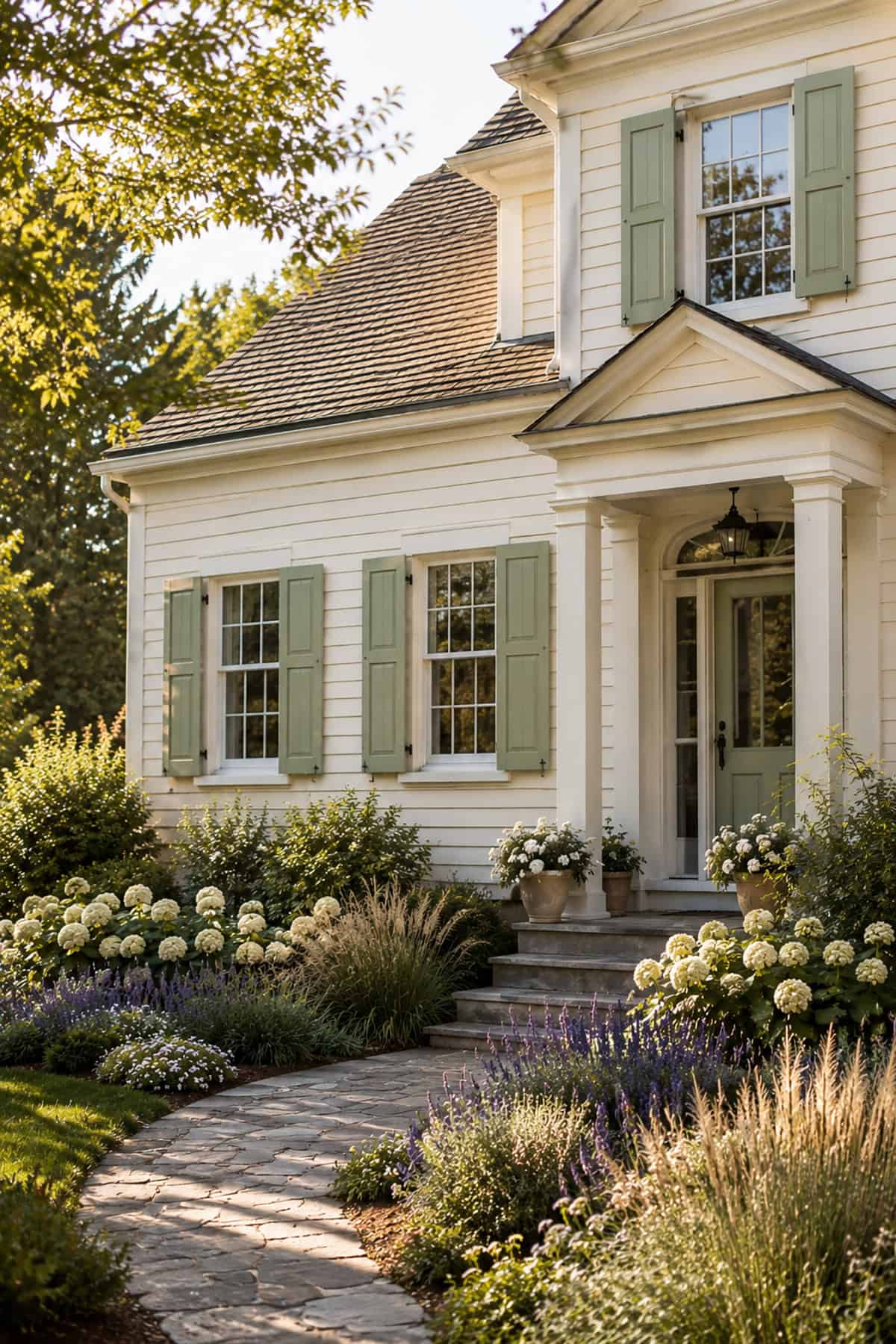
For homeowners who want a softer look, sage green shutters offer a beautiful alternative to darker colors. Against cream siding, sage green creates a gentle contrast that feels fresh and natural without dominating the exterior. The muted green tone works especially well in settings surrounded by mature trees, gardens, and lush landscaping.
The property featured here also incorporates white trim, which helps brighten the facade and highlight the subtle color difference between the shutters and the walls. Together, the cream and sage green create a relaxed color palette inspired by nature. This combination delivers plenty of character while maintaining a calm and welcoming appearance.
How To Match Undertones And Exterior Accents
A good color chip is not enough. Judge the shutter color against the actual cream siding, the trim brightness, and every fixed exterior surface around it.
Reading Warm Vs Cool Cream Undertones
Start by identifying whether your cream reads yellow, peach, beige, or gray. Most cream siding in the US leans warm, and that shifts how shutter color samples behave outdoors.
Hold several shutter color samples directly against the siding in sun and shade. Warm cream supports black, brown, olive, slate blue, and charcoal well. Cooler cream tolerates clearer grays and cleaner blues. If the sample suddenly looks pink, icy, or muddy, the undertones are off.
Pairing Shutters With Trim, Roof, And Front Door
Your trim and roof decide more than homeowners expect. White trim pushes shutters into higher contrast. Cream trim softens the whole composition. A brown roof leans the palette warmer, while charcoal or black roofing supports cooler darks.
Use color visualization tools if you are torn between two dark shades, especially black versus charcoal, or navy versus slate blue. Then test physical shutter color samples. Screens flatten nuance, and the front door finish may shift your decision once all the parts are visible together.
When Low Contrast Beats High Contrast
High contrast gets attention. Low contrast looks more settled and expensive on some homes, especially large facades with many windows or irregular rooflines.
If your cream house already has stone, brick, or heavy trim detail, quiet shutters in taupe, warm gray, soft white, or muted green may read better than black. The facade does not always need another strong line. Sometimes lower contrast lets the architecture provide the impact.
Materials, Durability, And Decorative Details
Color matters first, then material determines how that color holds up. A beautiful shutter shade loses value fast if the finish chalks, fades, or warps after two hot summers.
Vinyl Vs Wood For Exterior Use
Vinyl shutters are the practical default for many homes. They are lighter, lower maintenance, and widely available in standard colors, which helps for straightforward replacement later.
Wood provides better surface depth and custom paint flexibility. It also asks more from you. On exposed facades, I have seen wood shutters age beautifully with disciplined upkeep. High-quality options like Goflame wood shutters offer enhanced durability and a premium look for those seeking to maximize curb appeal.
Decorative Louvers And Functional Expectations
Most exterior shutters sold today are decorative, not operable. That matters because decorative louvers should still look proportionate to the window and match the style of the house.
Board-and-batten fits farmhouse, cottage, and rustic exteriors. Louvered shutters look more traditional. Raised panel styles feel formal. Pick the profile that suits the architecture before obsessing over paint. Whether you are outfitting a full residence or searching for shed windows and more, the profile should be consistent across all structures.
Fade Resistance, Maintenance, And UV Resistance
Dark shutter colors fade faster in punishing sun, especially on south- and west-facing walls. Ask about UV resistance, molded-through color in vinyl shutters, and whether the finish is factory-applied or field-painted.
Charcoal, black, deep blue, and deep green need the most scrutiny for fade resistance. Lighter neutrals hide wear better. If you are testing samples, leave them outdoors for a few days. That quick check reveals more than a catalog swatch about sheen, heat, and color stability.