
Blank walls are easier to decorate when one substantial piece sets the direction. A wooden sign may introduce color, display a favorite phrase, or connect nearby furniture and accessories. Outdoor versions also suit porches, cabins, and garden paths. Check out these 34 wood sign ideas before planning your next piece.
Table of Contents
- Kitchen Shelf Sign
- Wooden Noel Sign
- Floral Hello Sign
- Tabletop Chalkboard
- Wooden Food Labels
- Mixed-Type Quote Sign
- Lighted Home Sign
- Wedding Seating Chart
- Vegetable Garden Sign
- Backyard Direction Post
- Porch Rules Sign
- Nursery Name Sign
- Kitchen Rules Sign
- House Number Plaque
- Herb Garden Marker
- Halloween Porch Sign
- Wooden Growth Chart
- Christmas Porch Sign
- Bathroom Direction Sign
- Rustic Garden Signpost
- Garden Welcome Sign
- Vertical Porch Welcome
- Layered Mountain Sign
- Laundry Room Sign
- Lake House Sign
- Farmhouse Kitchen Sign
- Kids’ Name Sign
- Home Sweet Home Sign
- Floral Welcome Sign
- Established Family Sign
- Coffee Bar Sign
- Welcome Planter Sign
- Live-Edge Cabin Sign
- Beach House Sign
Kitchen Shelf Sign
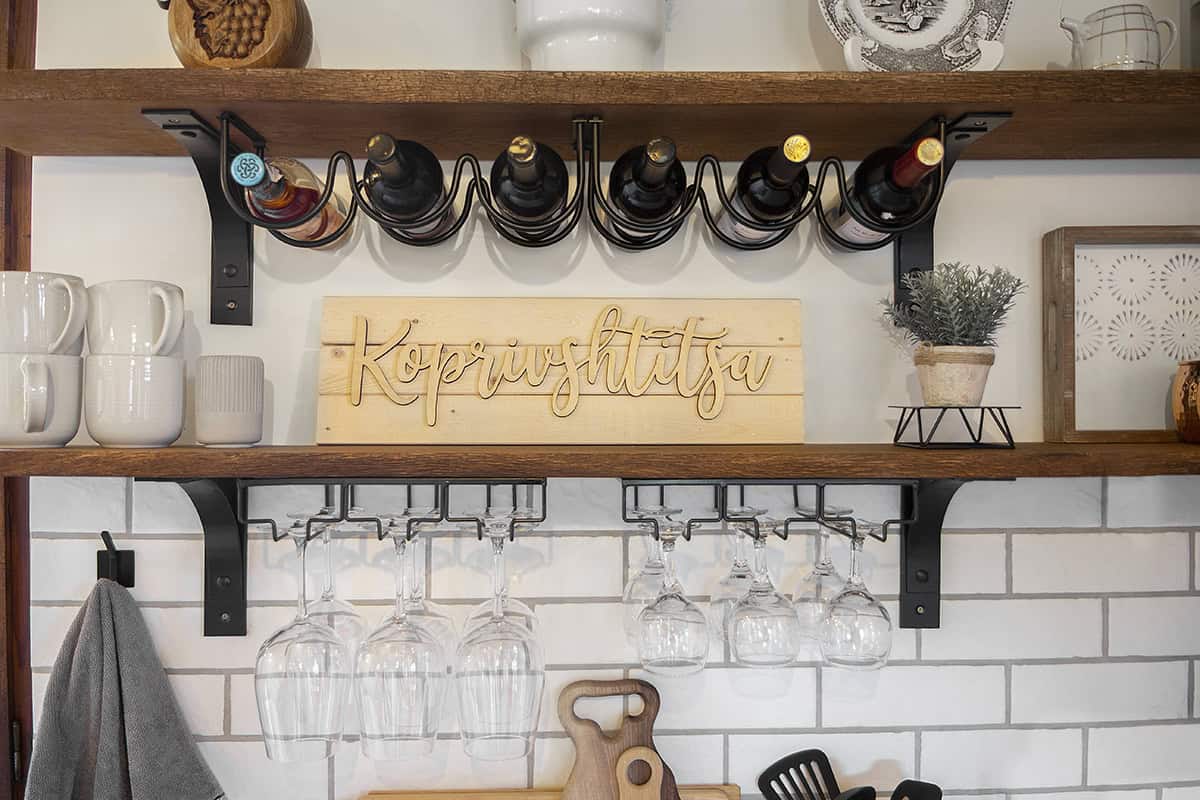
Place a custom wood sign at the center of open kitchen shelves, between everyday dishes and small decorative pieces. Pale pine stands out clearly against dark wood shelves, black brackets, and the wine rack above.
Choose a family name, hometown, or short kitchen phrase for the lettering. Raised script has more depth than flat paint and pairs nicely with ceramic pitchers, glassware, and natural wood accessories.
Wooden Noel Sign

Spell “Noel” with freestanding wooden letters and replace the “O” with a cutout snowflake. Set the sign on a round coffee table, fireplace mantel, or dining-room console where the full word remains easy to see.
A small fern or evergreen plant behind the letters introduces fresh green color. Natural wood edges and pale painted fronts produce a simple Christmas display beyond standard red decorations.
Floral Hello Sign
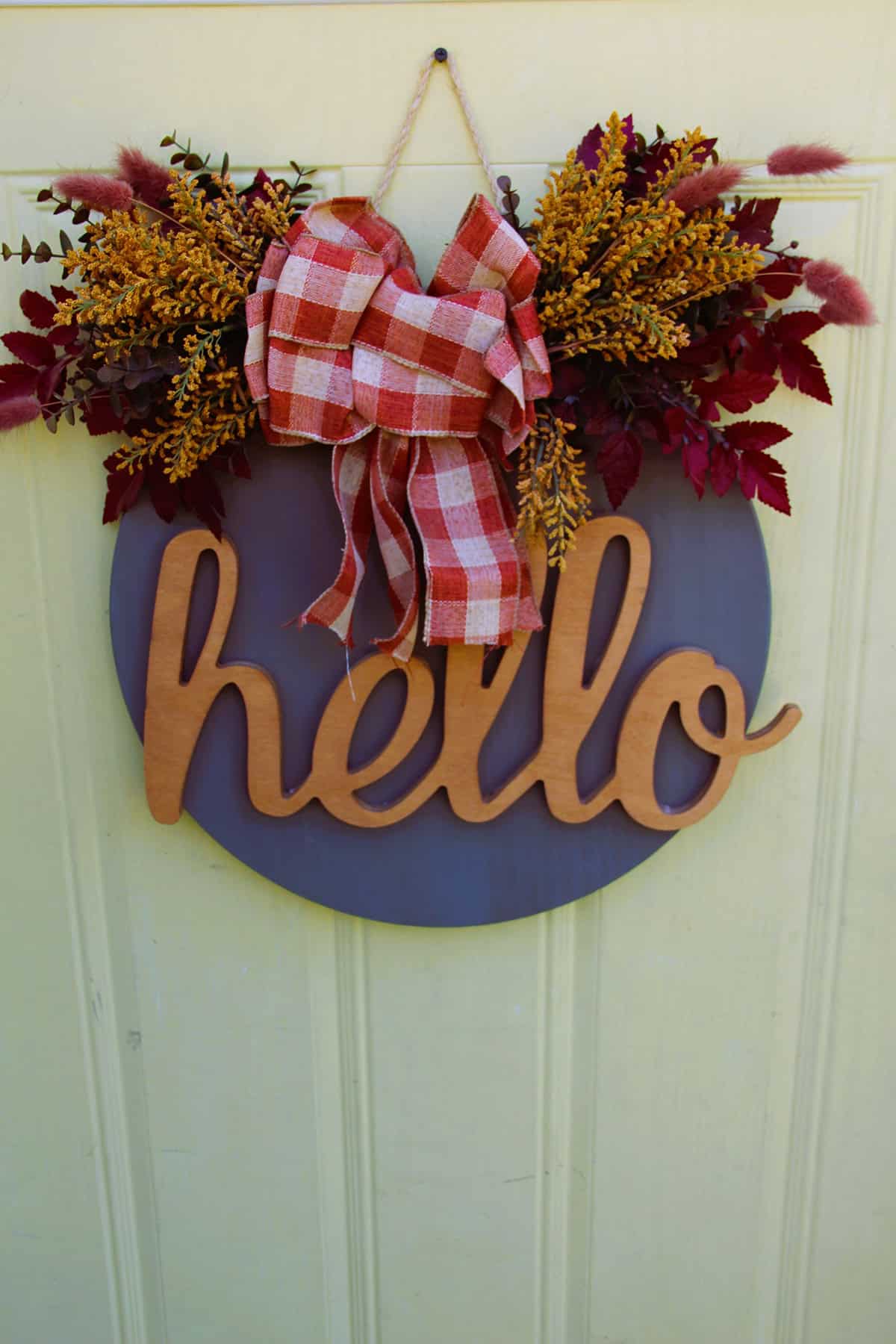
Start with a round painted wood panel and attach a large script “hello” across the lower half. Dark plum paint provides strong contrast against the natural wood letters and looks especially rich during autumn.
Arrange burgundy leaves, golden flowers, eucalyptus stems, and soft grass plumes across the top. A wide gingham bow covers the center attachment point and ties the colors together across the whole door decoration.
Tabletop Chalkboard
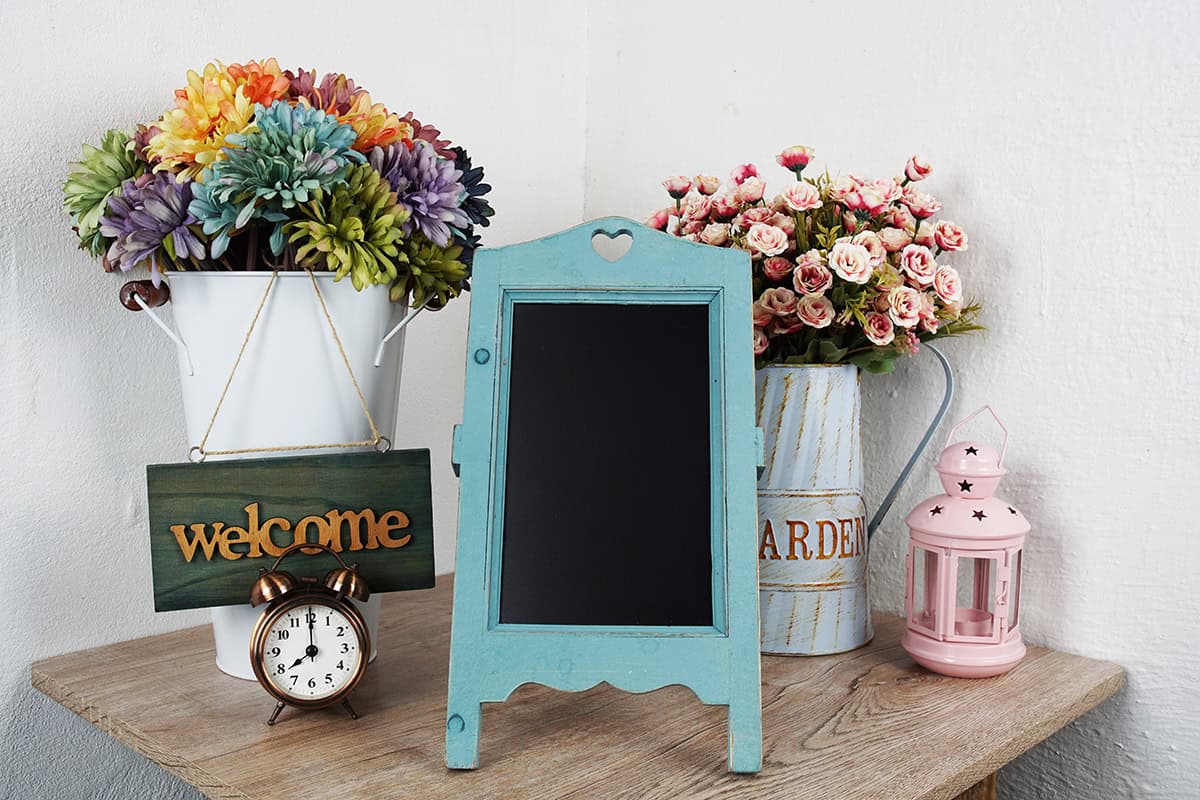
Use a small framed chalkboard for handwritten notes, weekly menus, party greetings, or seasonal messages. A freestanding design fits easily on an entry table, kitchen shelf, garden counter, or breakfast nook.
Paint the wooden frame aqua, sage, cream, or another color already present in the room. A heart cutout near the top adds a small decorative detail, while flower-filled pitchers complete the tabletop arrangement.
Wooden Food Labels
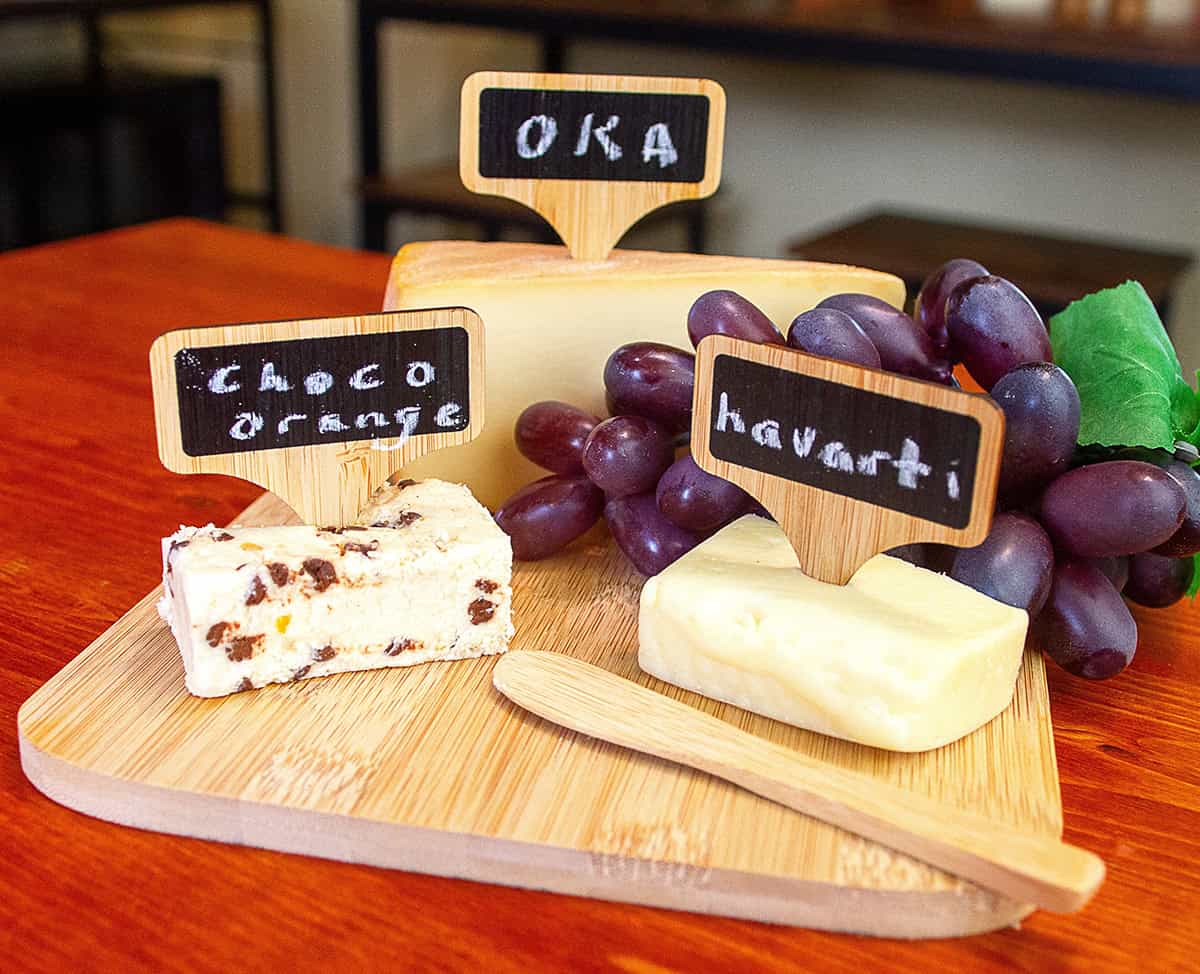
Small wooden markers help guests identify cheeses, dips, sauces, and desserts across a crowded serving board. Each marker has a dark chalkboard center, so the food names remain clear beside pale cheeses and colorful fruit.
Write with regular chalk for a casual look or use a chalk pen for neater letters. After the meal, wipe each label clean and prepare a new set for the next menu.
Mixed-Type Quote Sign

Divide a long quote across separate wooden planks so every line has enough room. Large metal letters create a strong opening, while script and narrow capitals prevent the lower lines from looking identical.
Mount the planks inside a tall dark frame with small gaps between them. This vertical format fits beside shelves, along a stair landing, or on a narrow entryway wall where a wide sign would appear crowded.
Lighted Home Sign
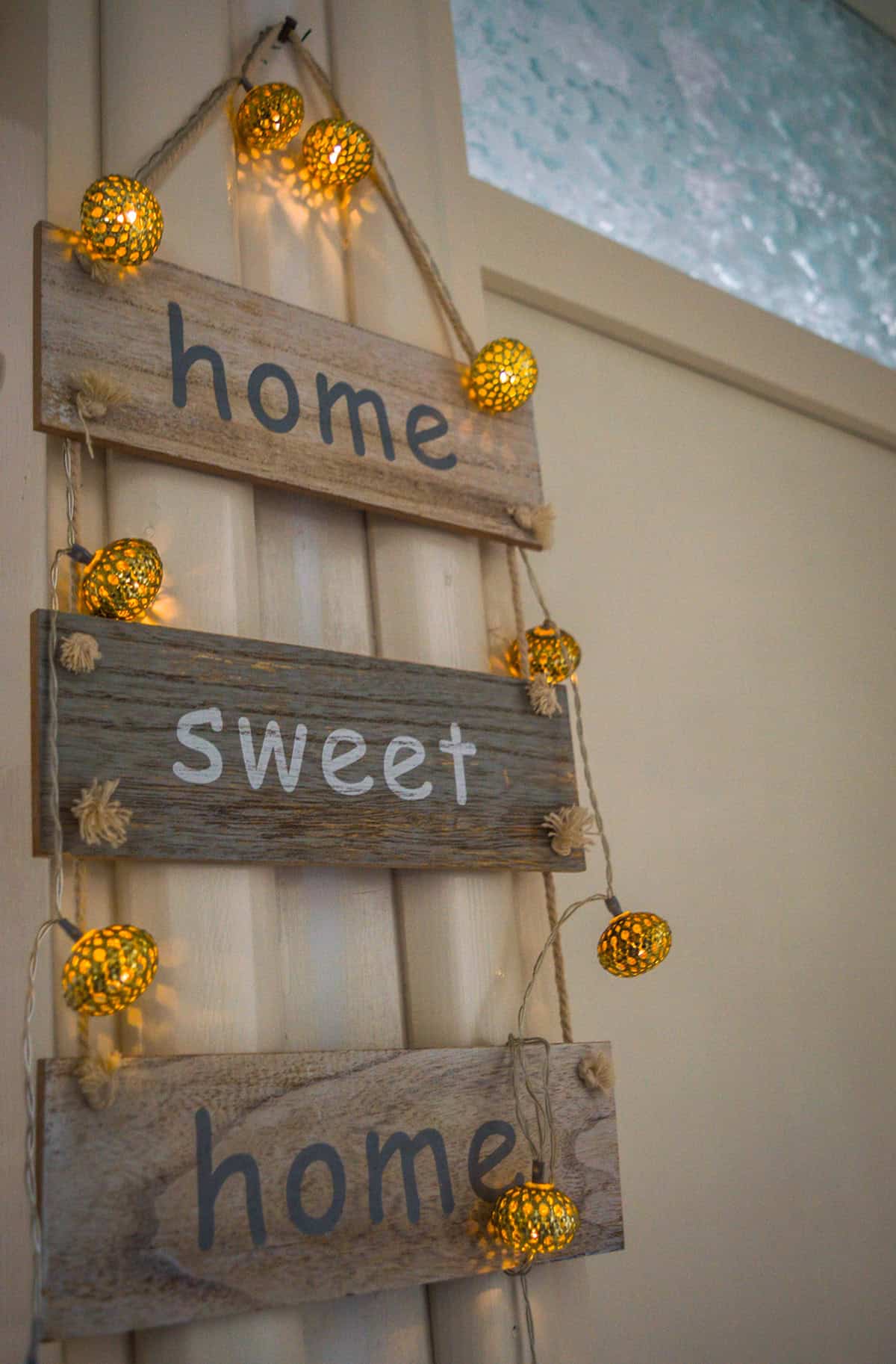
Connect weathered wood planks with rope and paint one word on each board. Different gray and brown finishes help separate the words while preserving a handmade look.
Wrap small pierced metal globe lights around the ropes and boards. Their warm light casts dotted shadows across the wall after dark. This narrow vertical arrangement fills the space beside a doorway, at the end of a hallway, or above a slim console.
Wedding Seating Chart
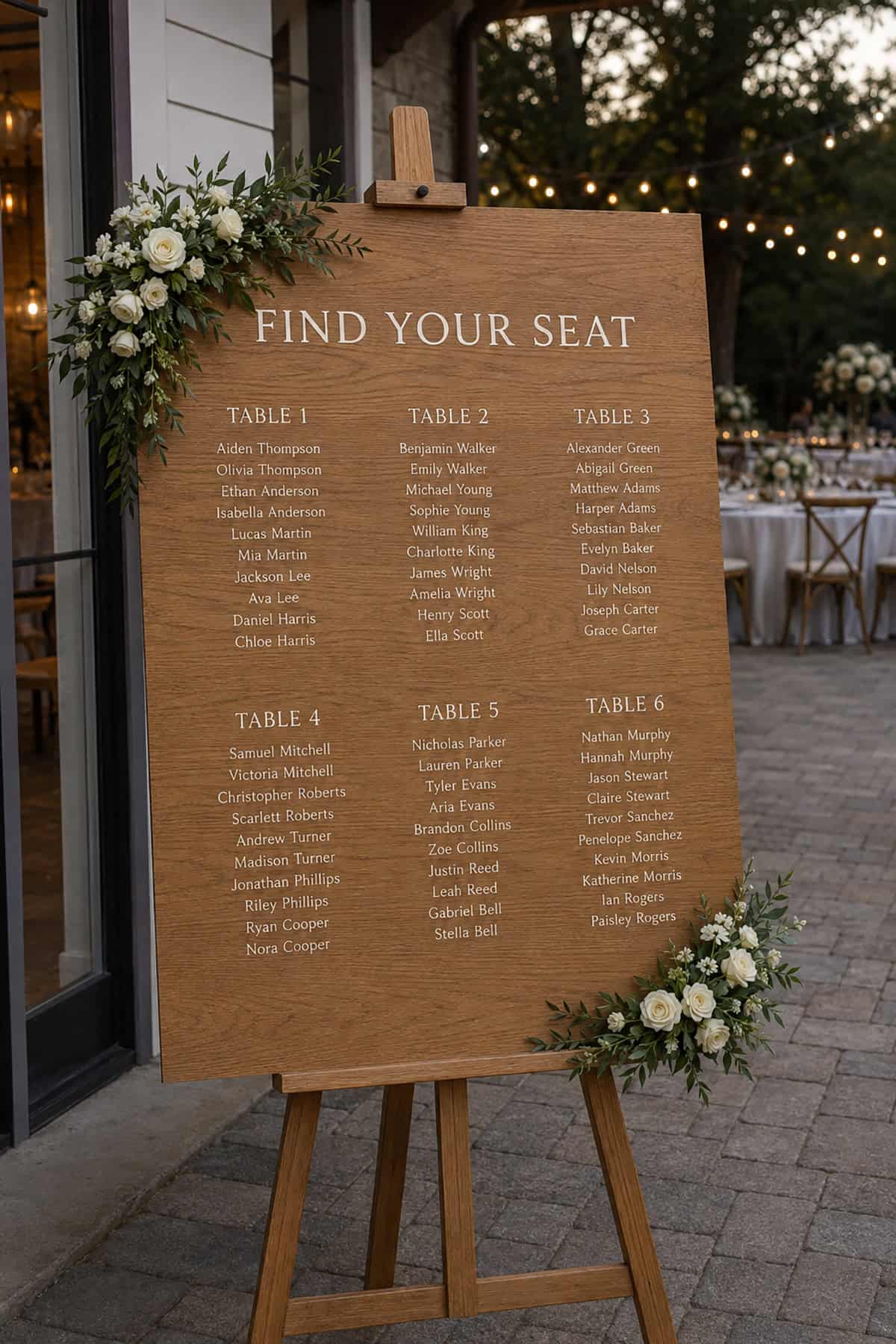
For an outdoor reception, place a large oak seating chart near the entrance. Print guest names in wide, orderly columns under clear table numbers, then set the board on a sturdy wooden easel.
Add white roses and loose greenery to two opposite corners. The floral accents connect the board with the ceremony arrangements, and the open center leaves every name easy to find before guests enter the dining area.
Vegetable Garden Sign
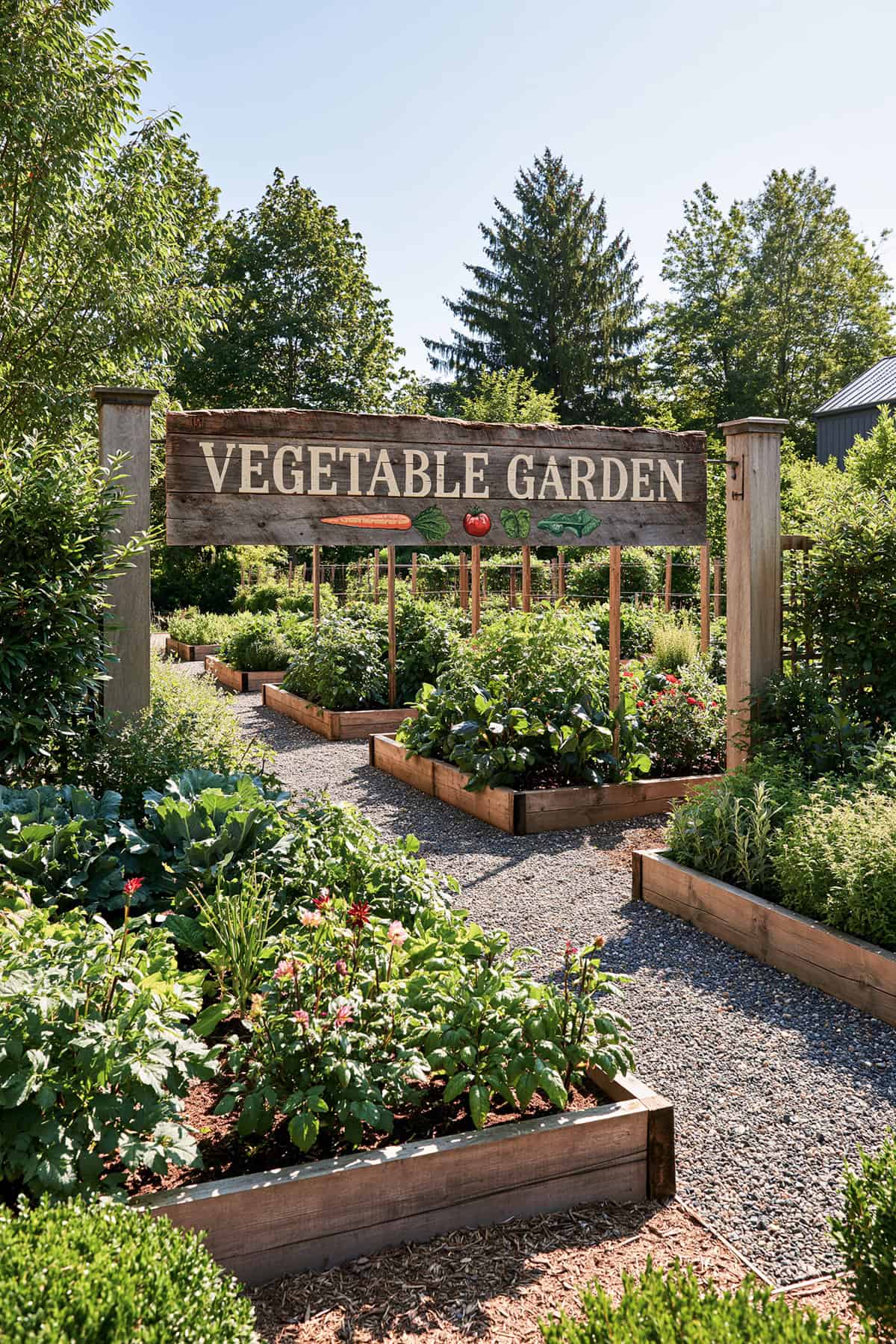
Mark the entrance to a home vegetable garden with a broad reclaimed plank between two timber posts. Paint the title in large cream letters, then add small illustrations of carrots, tomatoes, cabbage, or lettuce below it.
Choose wood with knots, cracks, and an uneven upper edge. Those rough details match raised beds, gravel paths, and mature crops far better than a smooth store-bought plaque.
Backyard Direction Post
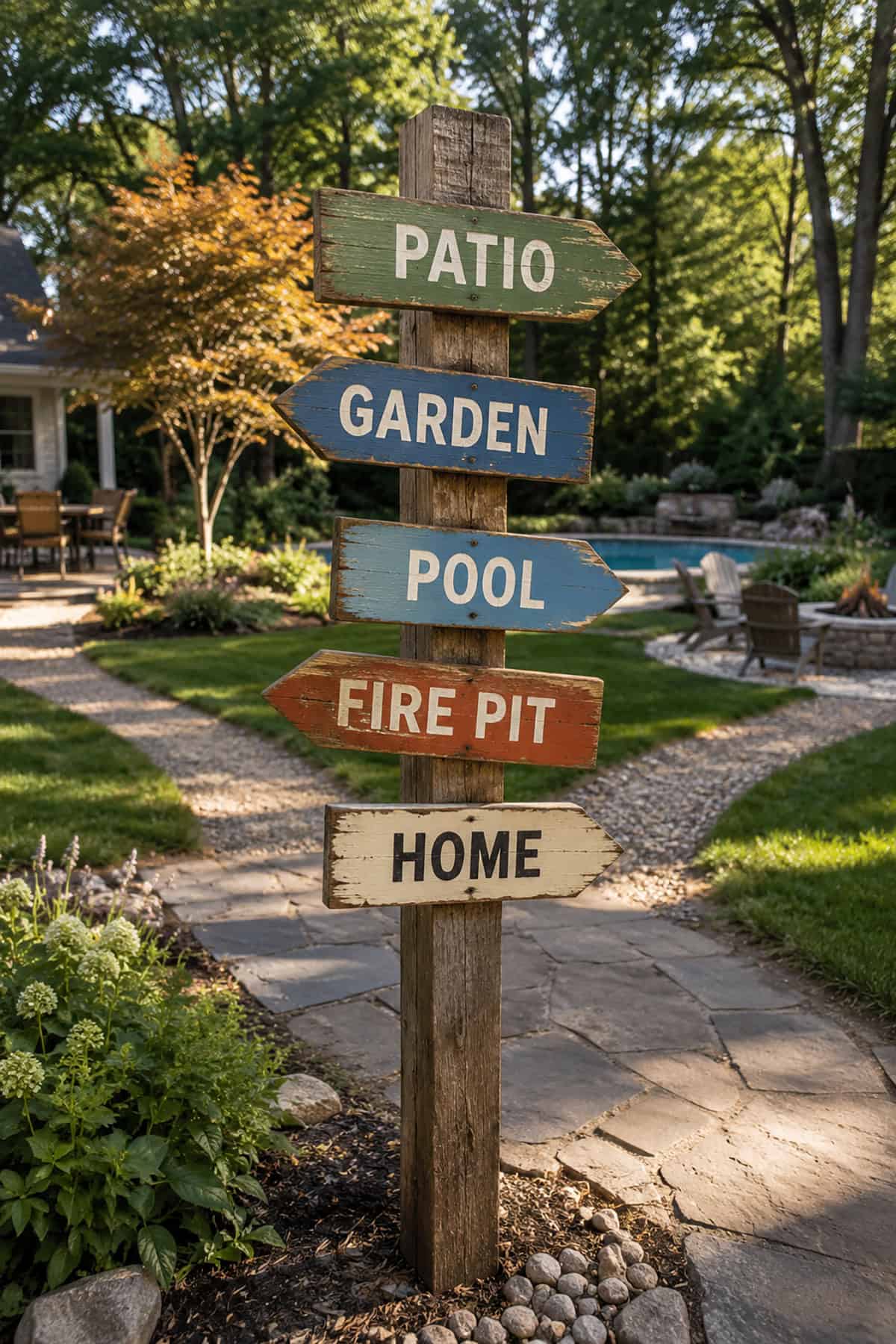
Place a tall wooden signpost where several backyard paths meet. Cut arrow shapes from old fence boards and label each one with a nearby destination, such as the patio, pool, garden, fire pit, or house.
Use faded green, blue, red, and cream paint across the separate arrows. Bold white letters provide clear directions, and worn edges help the post settle naturally among stone paths, lawn, and established shrubs.
Porch Rules Sign
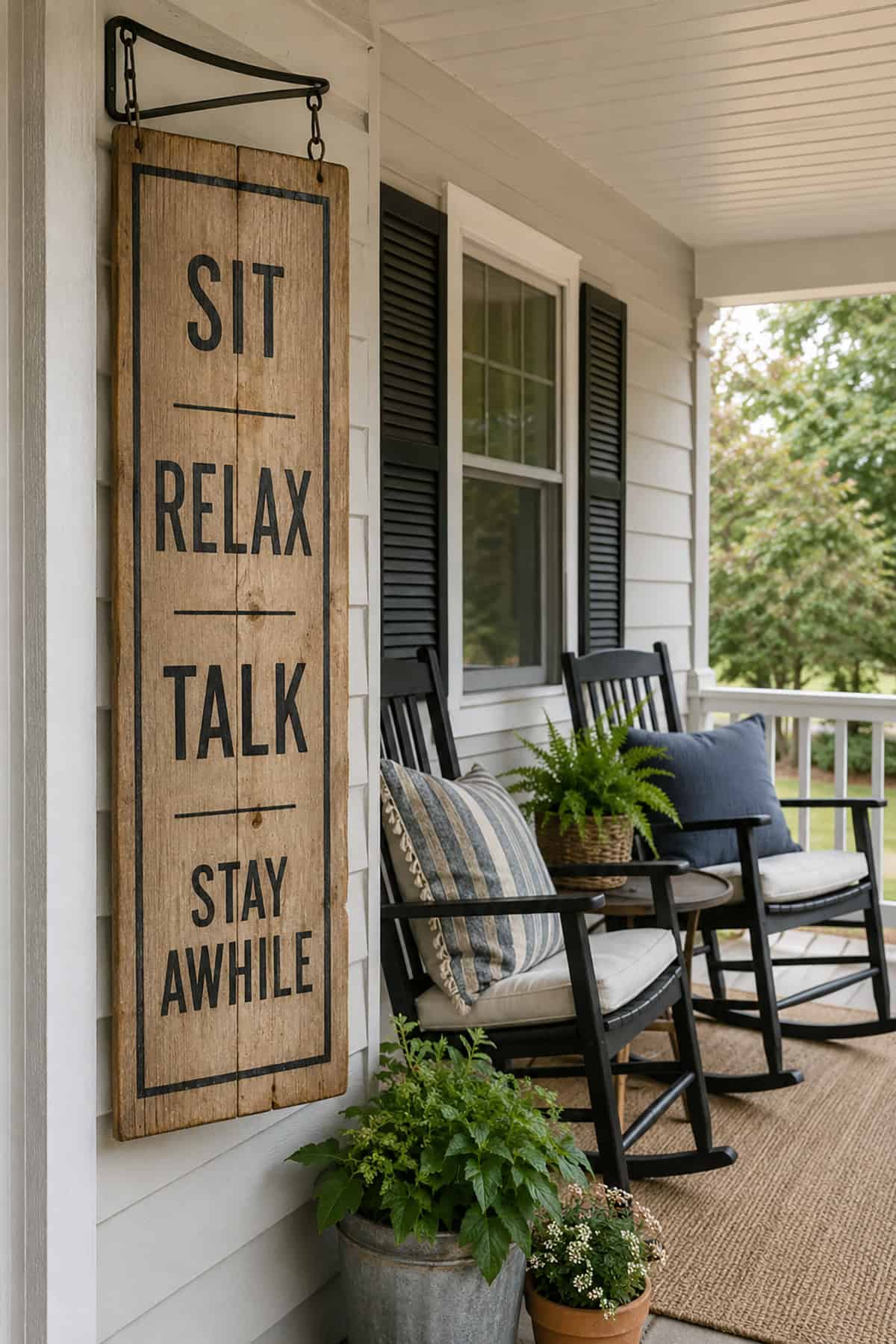
Fill a narrow section beside the porch door with a tall cedar rules sign. Stack short words down the board, such as “sit,” “relax,” “talk,” and “visit awhile,” with a slim line between each phrase.
Paint the letters and border in charcoal black. A dark metal bracket and short chains add sturdy hardware above the sign, especially near black shutters, rocking chairs, woven cushions, and galvanized planters.
Nursery Name Sign
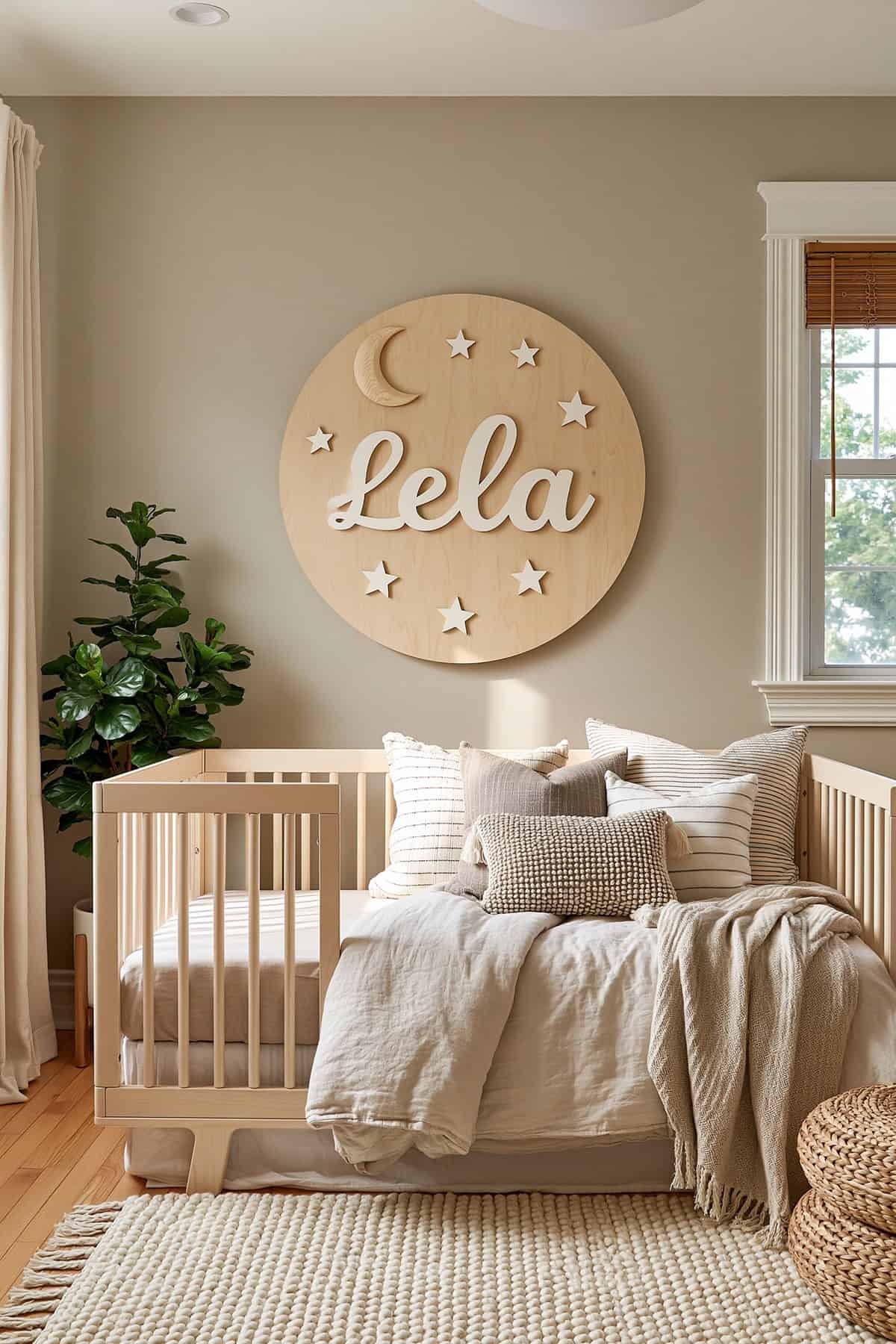
Personalize the wall above a crib with a large circular birch sign. Place the child’s name across the center in raised white script, then attach a crescent moon and several small stars around it.
Leave plenty of pale wood visible between the decorations. The simple color palette pairs well with cream bedding, natural baskets, light furniture, and warm neutral walls, so the name becomes the room’s main decorative detail.
Kitchen Rules Sign
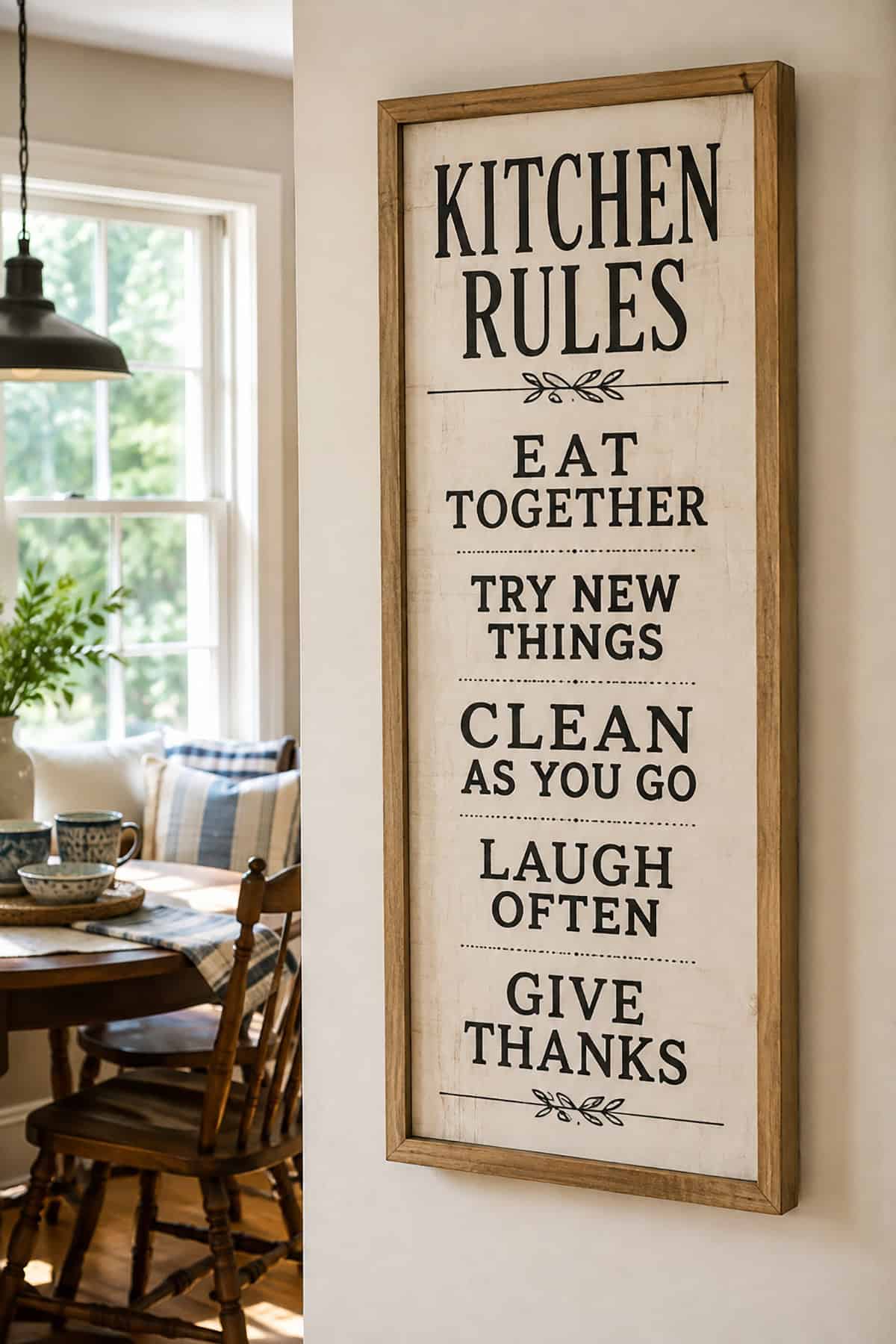
Use a slim wall near the breakfast nook for a tall framed kitchen rules sign. Print a bold title at the top, followed by short family reminders about shared meals, new foods, cleanup, laughter, and gratitude.
A warm white board with black type stays easy to read from across the room. Add an oak frame and small decorative dividers that relate to wooden chairs, cabinets, and everyday tableware nearby.
House Number Plaque
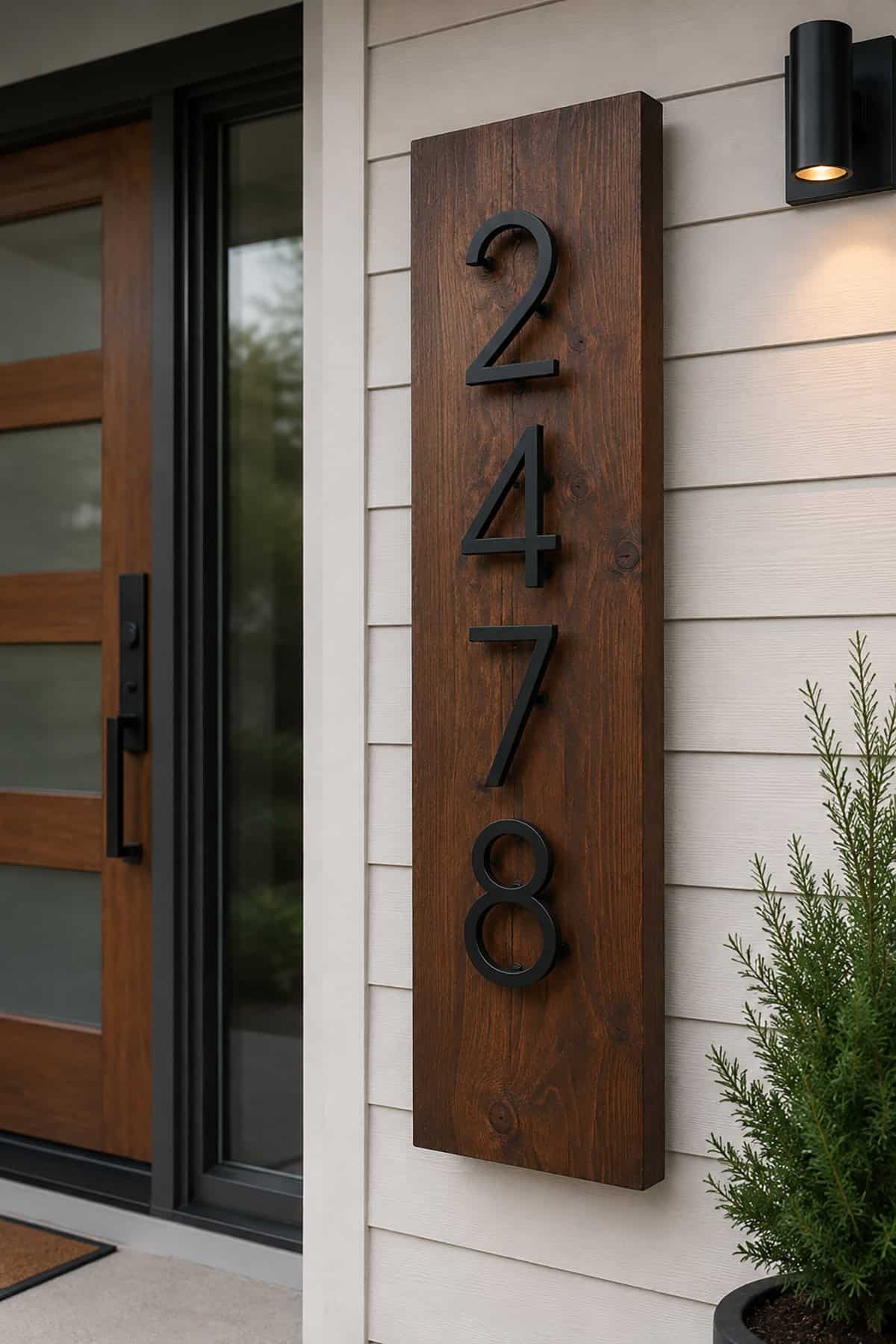
Create a modern address plaque from one thick vertical cedar board with a deep brown stain. Mount large matte-black numbers down the center and use equal gaps between each digit.
Install the plaque beside the front door against pale exterior siding. Raised metal numbers cast narrow shadows across the wood, and a nearby black wall light makes the address easier to read after dark. Concealed fixings preserve the clean front surface.
Herb Garden Marker
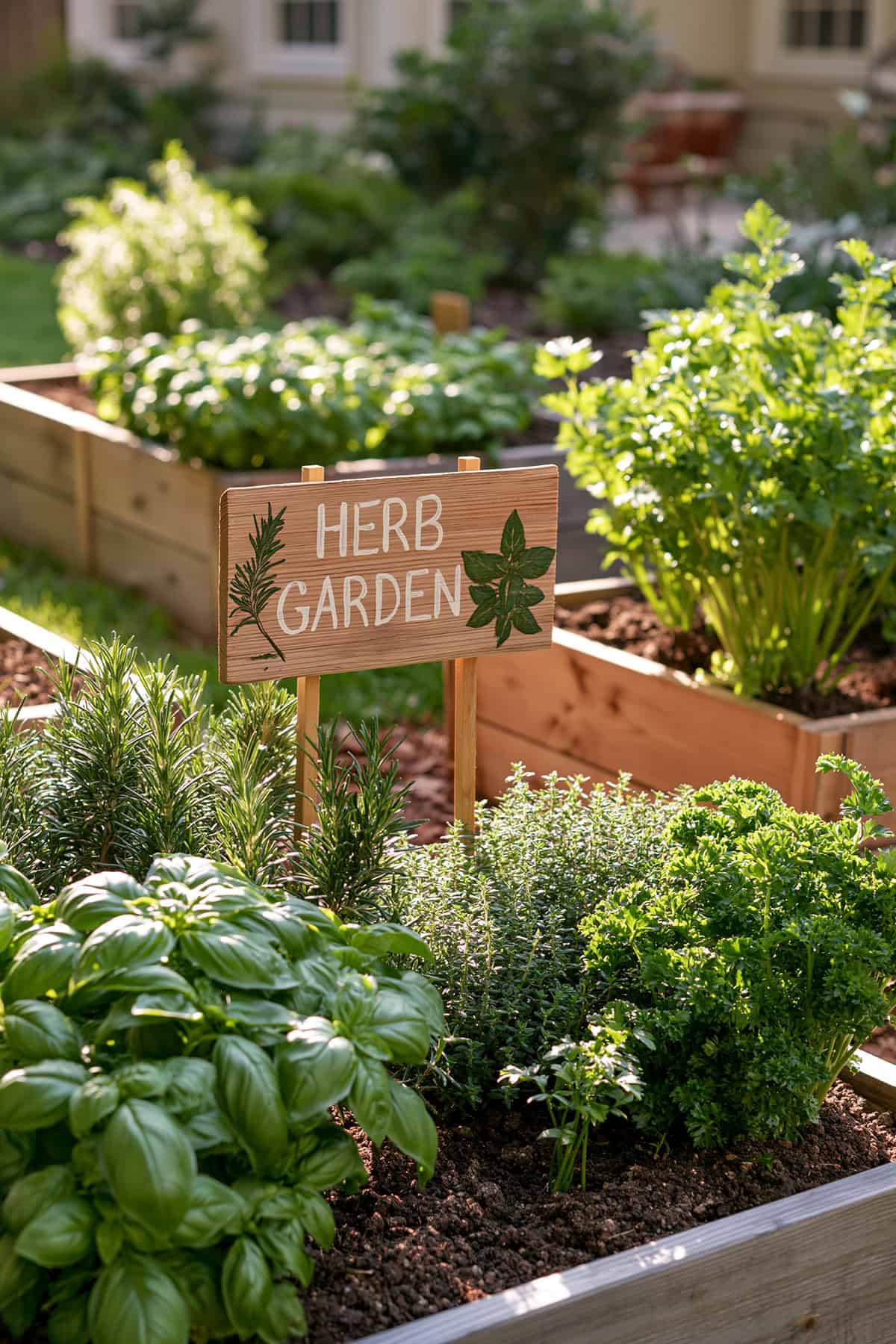
Label a raised herb bed with a small cedar board supported by two narrow stakes. Paint “HERB GARDEN” in white, then add simple rosemary and basil illustrations at the sides.
Set the sign among distinct groups of parsley, thyme, basil, and rosemary. For several garden beds, repeat the same board shape with different plant names and leaf drawings. Clear labels also help guests identify unfamiliar herbs before harvest.
Halloween Porch Sign

Make a porch-scale Halloween sign from three rough boards joined vertically. Coat the front with distressed black paint, add large aged-white “TRICK OR TREAT” letters, and cut several small bat shapes into the open areas.
Lean the board beside the front door with carved pumpkins, fallen leaves, and a metal lantern. Exposed brown edges and deep cracks create enough age, so the display needs few extra decorations.
Wooden Growth Chart
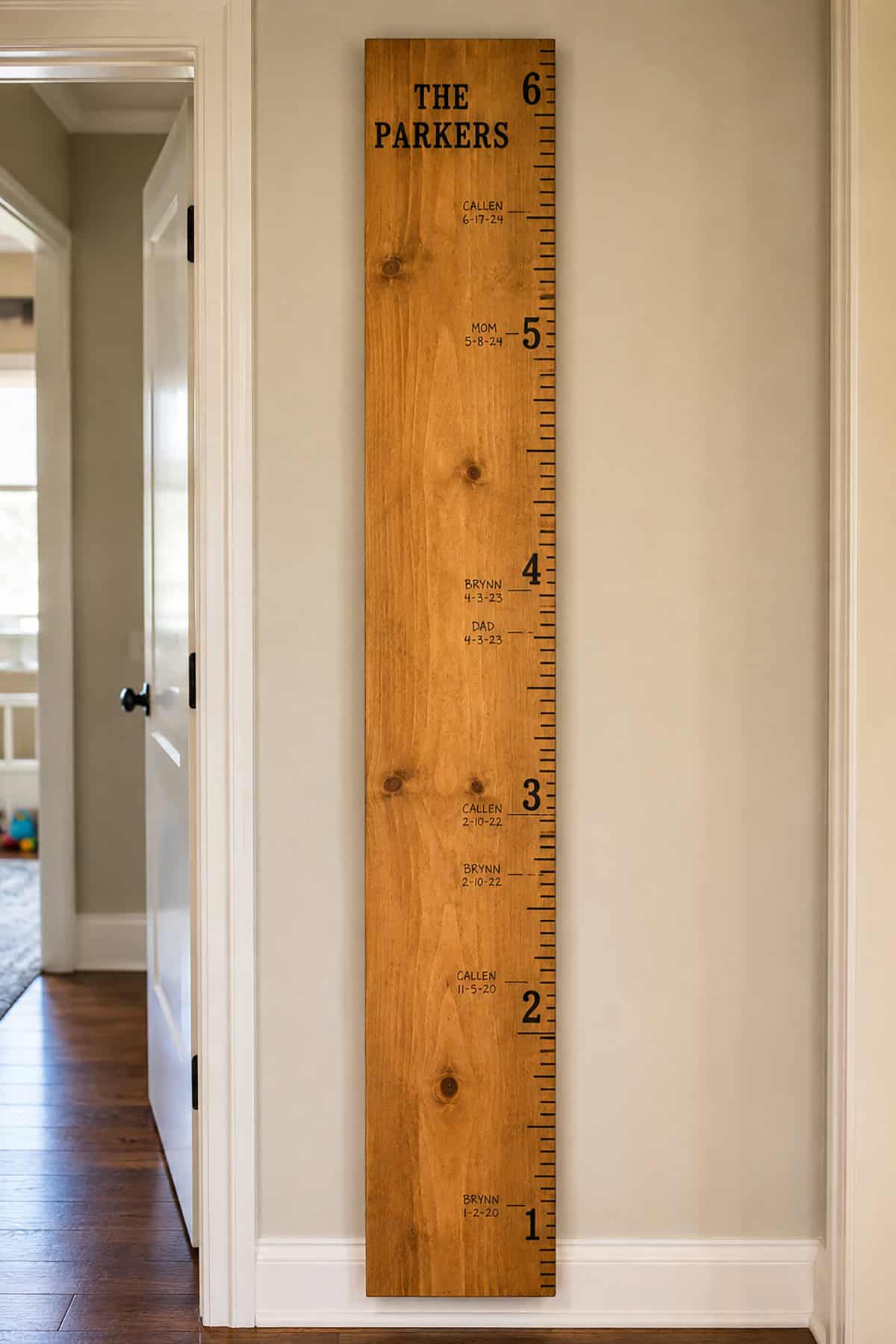
Record family heights on a six-foot pine board rather than directly on a doorframe. Stain the wood honey brown, paint ruler marks along one edge, and add the family surname near the top.
Write each name and date beside its measurement. Mount the chart in a hallway near a child’s bedroom, with the bottom edge set at the correct height above the floor. The board may move to a future home with every record intact.
Christmas Porch Sign

Deep green boards and worn cream letters suit a Christmas porch that leans traditional rather than flashy. Pine sprigs and red berries in the corners echo real garland nearby, so the sign belongs with the rest of the decorations.
Its large size matters. Set it against an empty wall beside two lanterns and a few wrapped boxes, where it replaces several smaller ornaments and still reads clearly from the street.
Bathroom Direction Sign
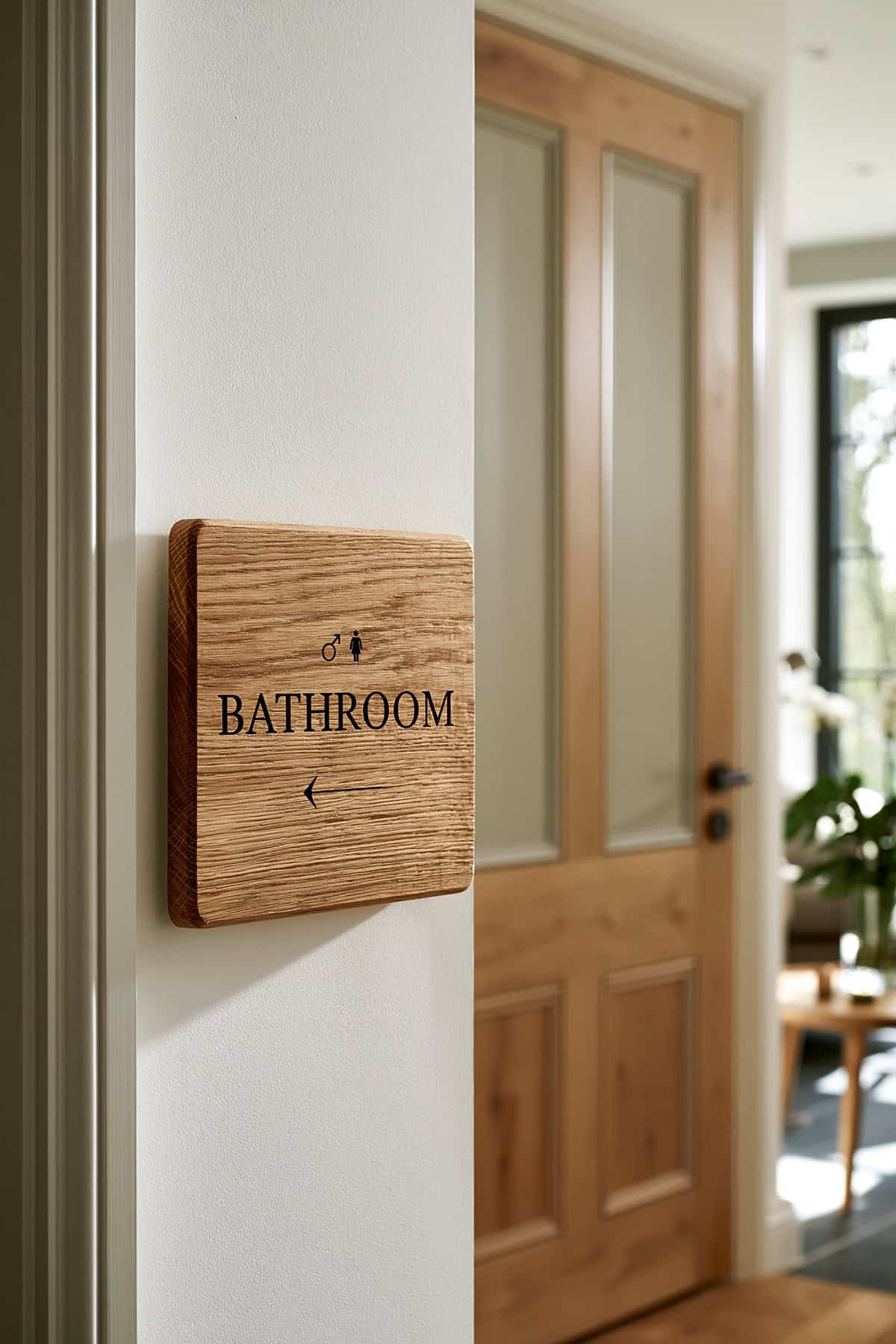
A bathroom plaque solves an awkward problem in homes where several hallway doors look alike. Oak has enough warmth for residential interiors, while engraved black letters remain easy to spot at a distance.
Small restroom symbols or a directional arrow provide useful information without crowding the board. Rounded corners and hidden mounts make the piece resemble custom household joinery rather than commercial signage.
Rustic Garden Signpost
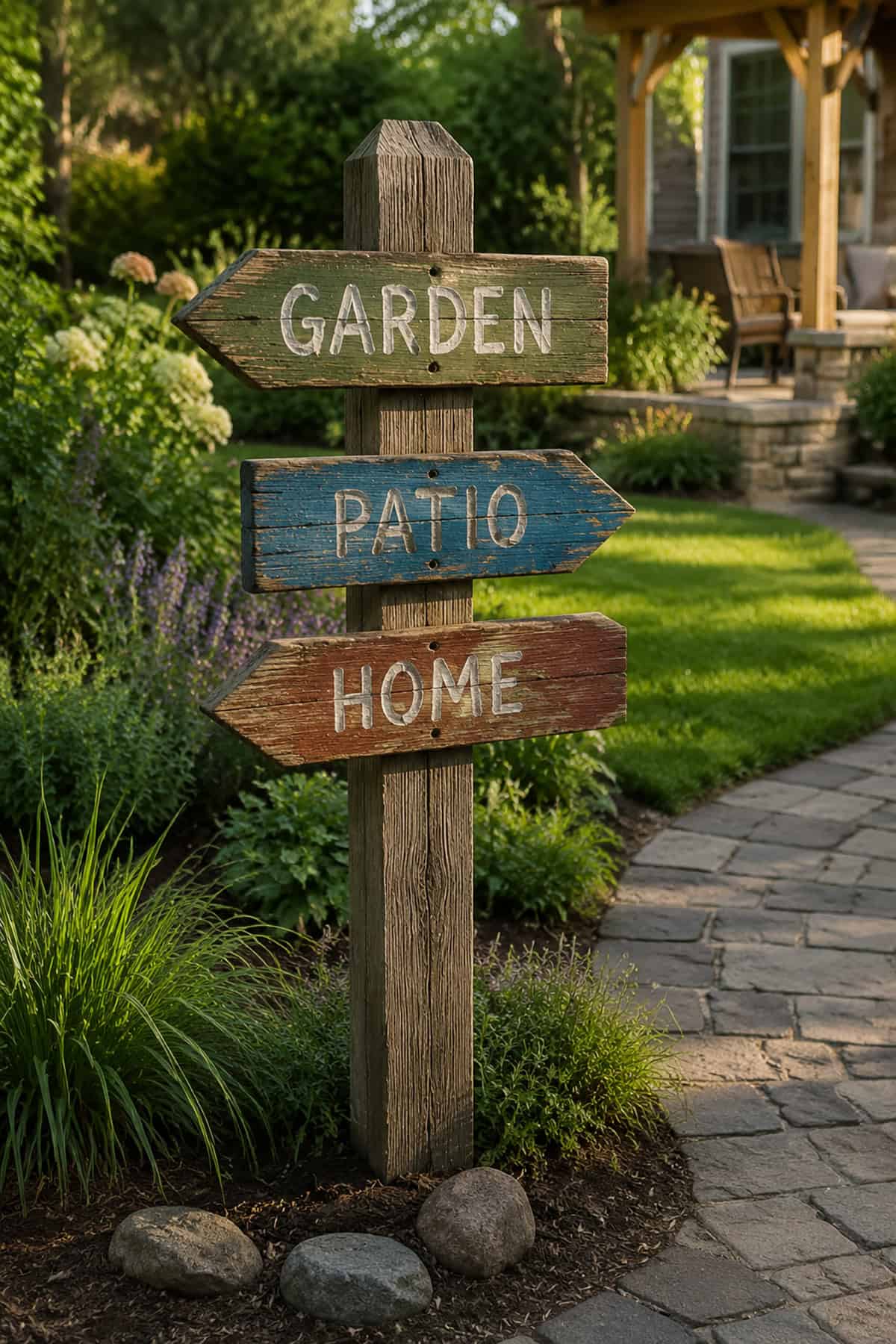
Which path leads back to the patio? A small garden signpost answers the question and adds color where walkways divide. Three reclaimed arrows are plenty for a residential yard, especially when each destination sits nearby.
Faded olive, dusty blue, and muted rust look at home among mature shrubs and stone paving. Old screw holes, chipped edges, and mismatched boards make a newly built post seem as though it has occupied the garden for years.
Garden Welcome Sign
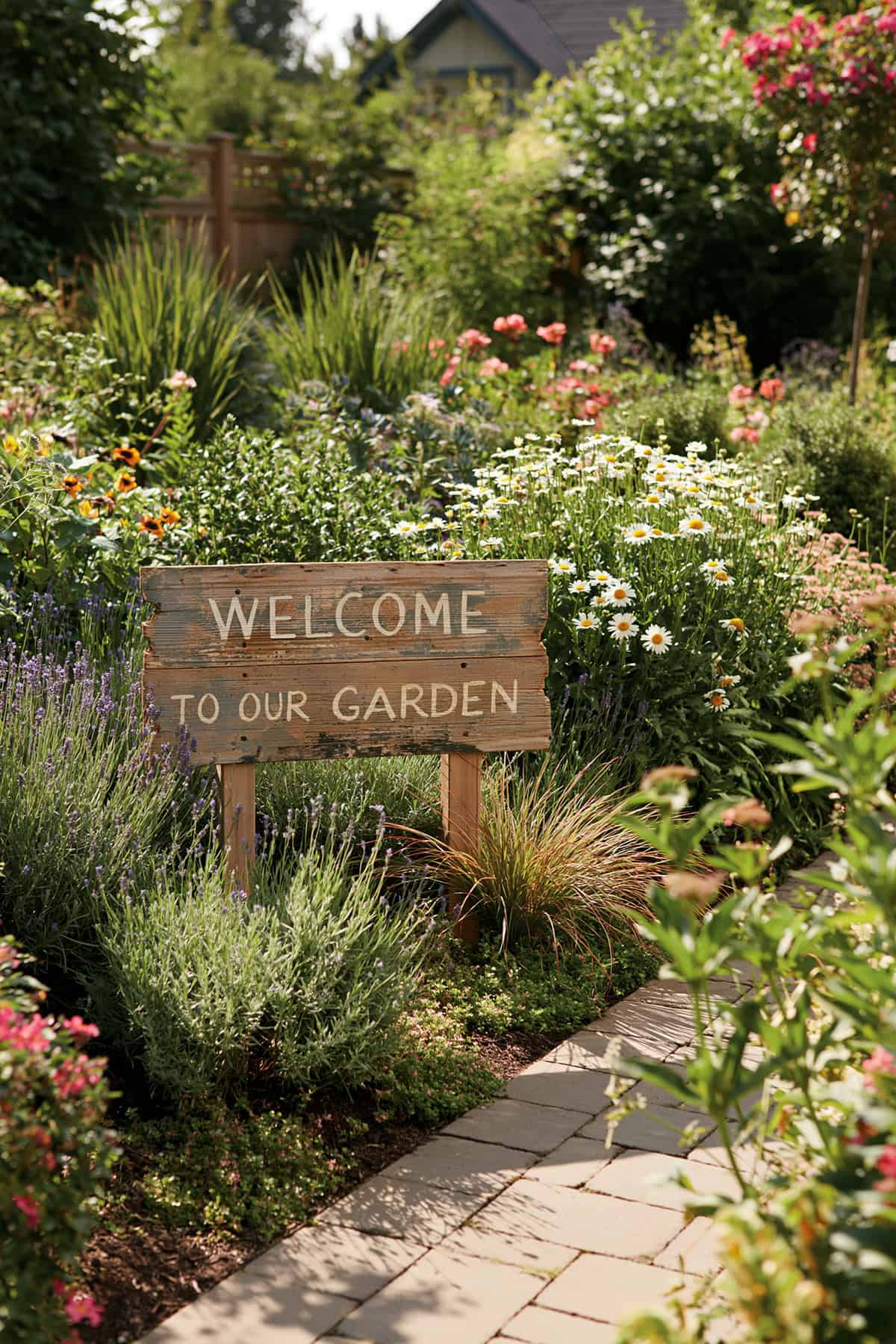
Flowers already provide plenty of color, so a garden welcome sign needs little decoration of its own. Gray-brown boards, pale letters, and short timber posts sit quietly among lavender, daisies, grasses, and groundcover.
Set the sign near the path rather than deep inside a flower bed. Visitors see the message immediately, and the surrounding plants still frame the wood. An uneven edge adds more character than a perfectly cut rectangle.
Vertical Porch Welcome
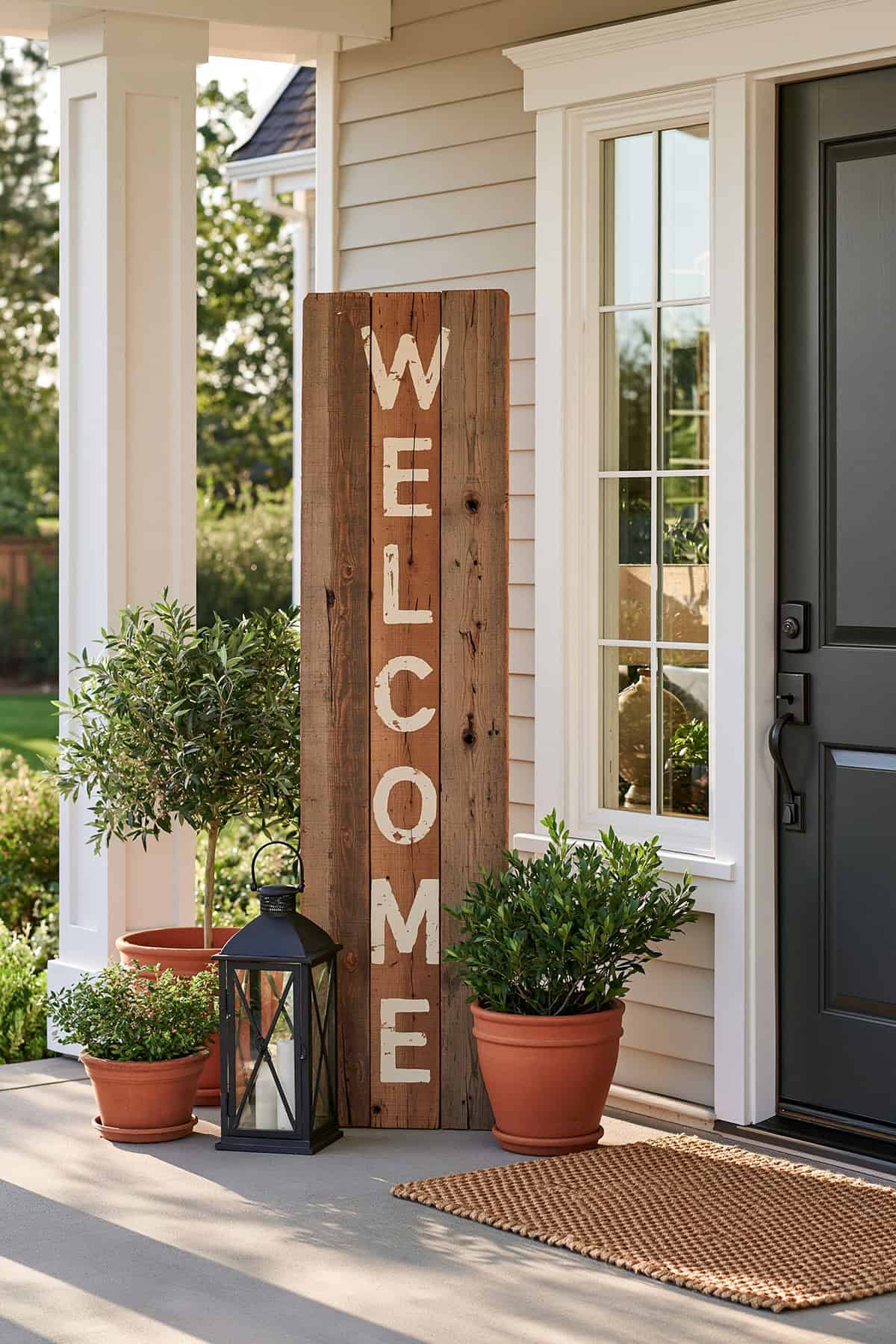
Narrow porch walls rarely have room for wide artwork. A vertical welcome board uses that height and fills the gap beside the door, all within a small footprint.
Wide cedar planks and worn cream letters suit terracotta pots, black lanterns, and a coarse woven mat. Let knots and cracks remain visible beneath a clear outdoor sealer. The board already has enough detail, so elaborate borders would only compete with the tall lettering.
Layered Mountain Sign
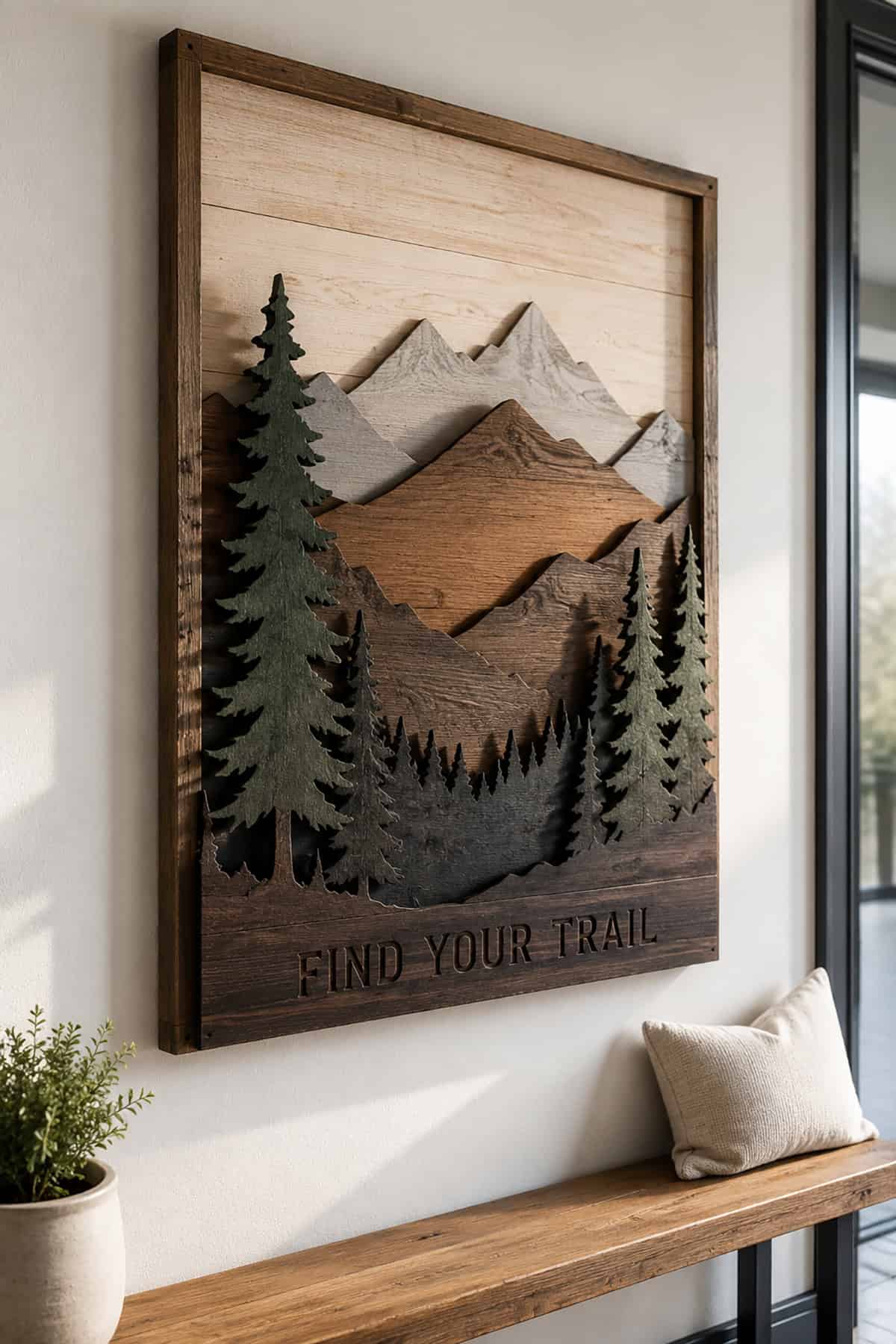
This idea sits between a wood sign and carved wall art. Separate mountain ridges, distant peaks, and pine trees overlap across the board, with each layer cut from wood in a different stain.
The shadows matter as much as the shapes. A nearby window or wall light reveals the gaps between each section throughout the day. Reserve a narrow strip at the bottom for a short phrase, since large words across the scene would hide the cutout details.
Laundry Room Sign
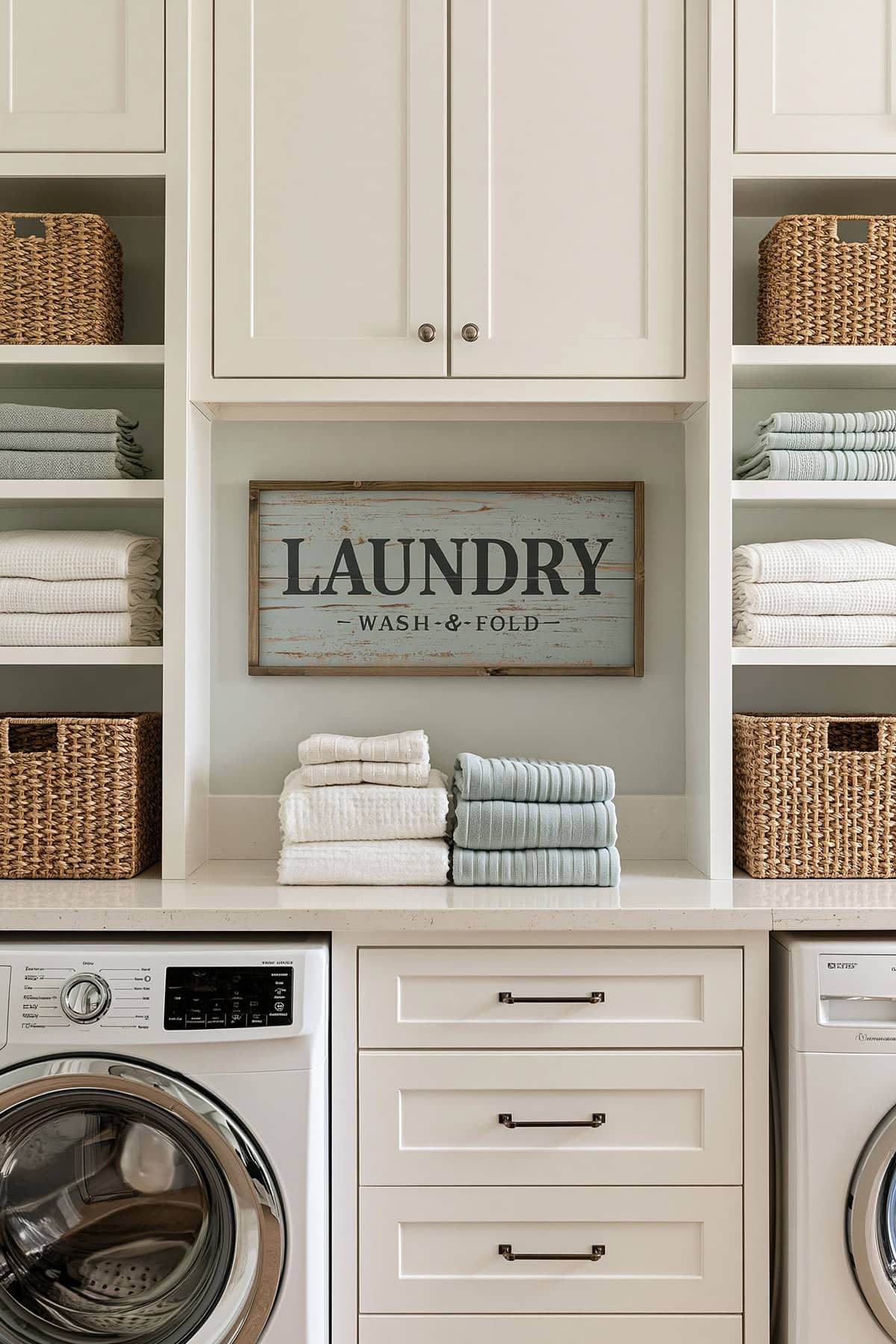
Pale blue-gray introduces a quiet bit of color between white laundry cabinets. A dark “LAUNDRY” title provides enough contrast, while a smaller wash-and-fold line fills the space below it.
The sign looks best inside the open cabinet niche above the counter, where baskets and folded towels already create a balanced arrangement. A slim wood frame ties it to wicker storage and prevents the distressed surface from appearing too rough beside clean cabinetry.
Lake House Sign
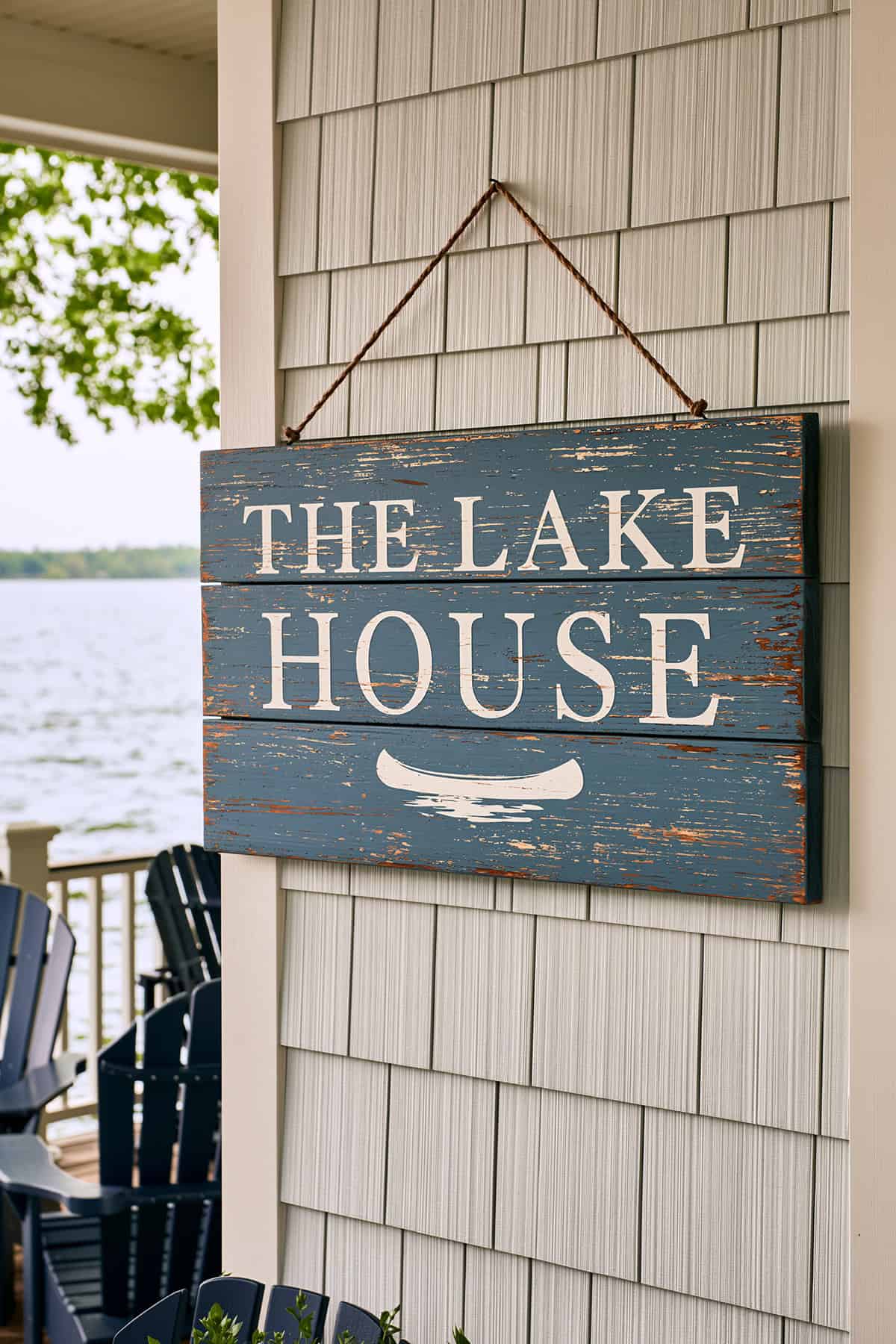
Sun-faded blue boards belong naturally on a porch beside the water. Large white letters name the house, and a single canoe silhouette adds context with far less fuss than anchors, rope knots, paddles, or other nautical symbols.
Hang the sign against pale shingles where it faces the seating area. Scraped paint exposes warm wood beneath the blue, a detail that echoes old docks and well-used Adirondack chairs.
Farmhouse Kitchen Sign
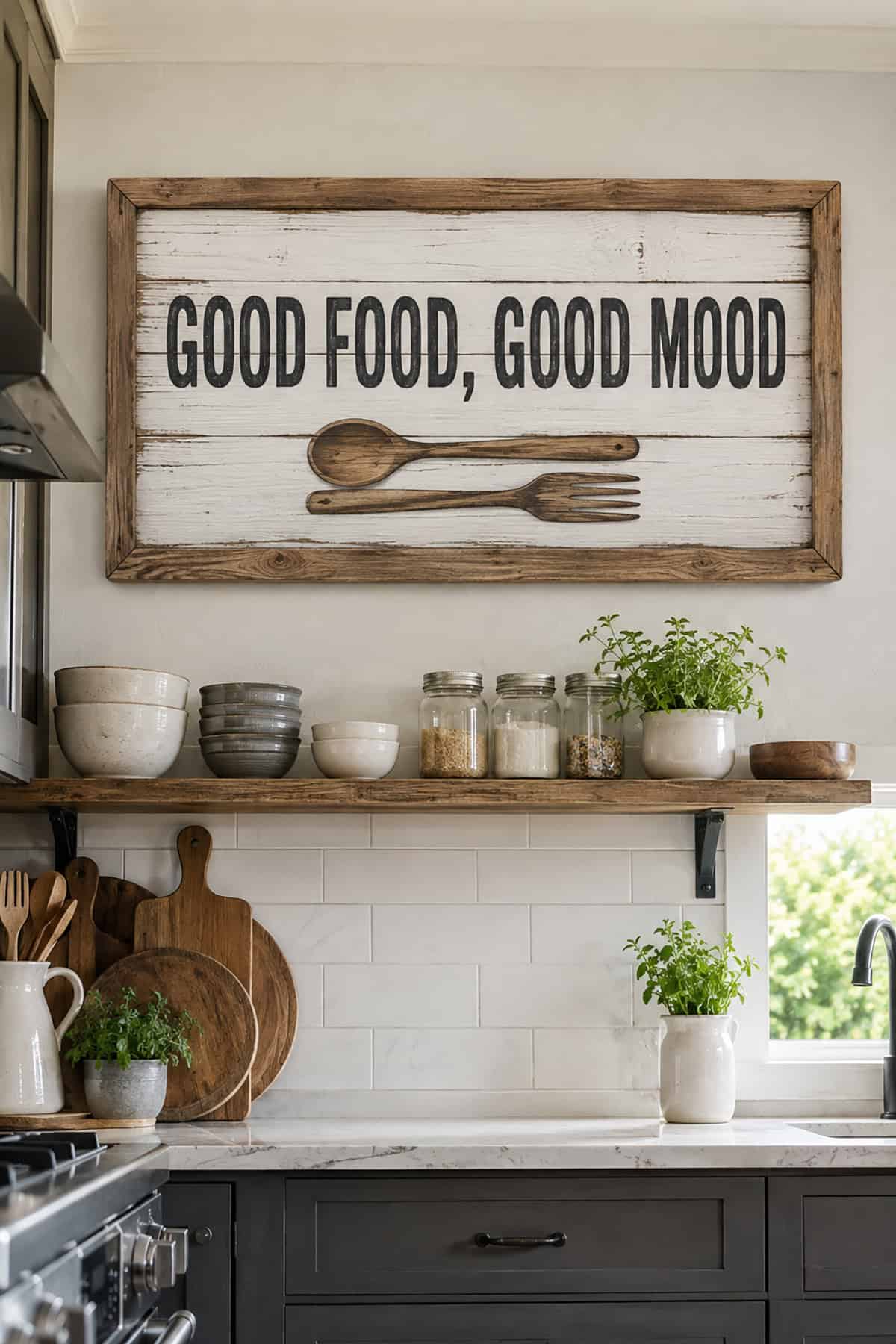
A favorite family phrase has more relevance in a kitchen than generic restaurant-style wording. Dark letters across distressed white boards read clearly above an open shelf, and a carved spoon-and-fork motif fills the lower section.
Choose a broad natural frame with the same tone as nearby cutting boards. Ceramic bowls, pantry jars, and fresh herbs provide enough detail below, so the sign needs only one phrase and one simple graphic.
Kids’ Name Sign
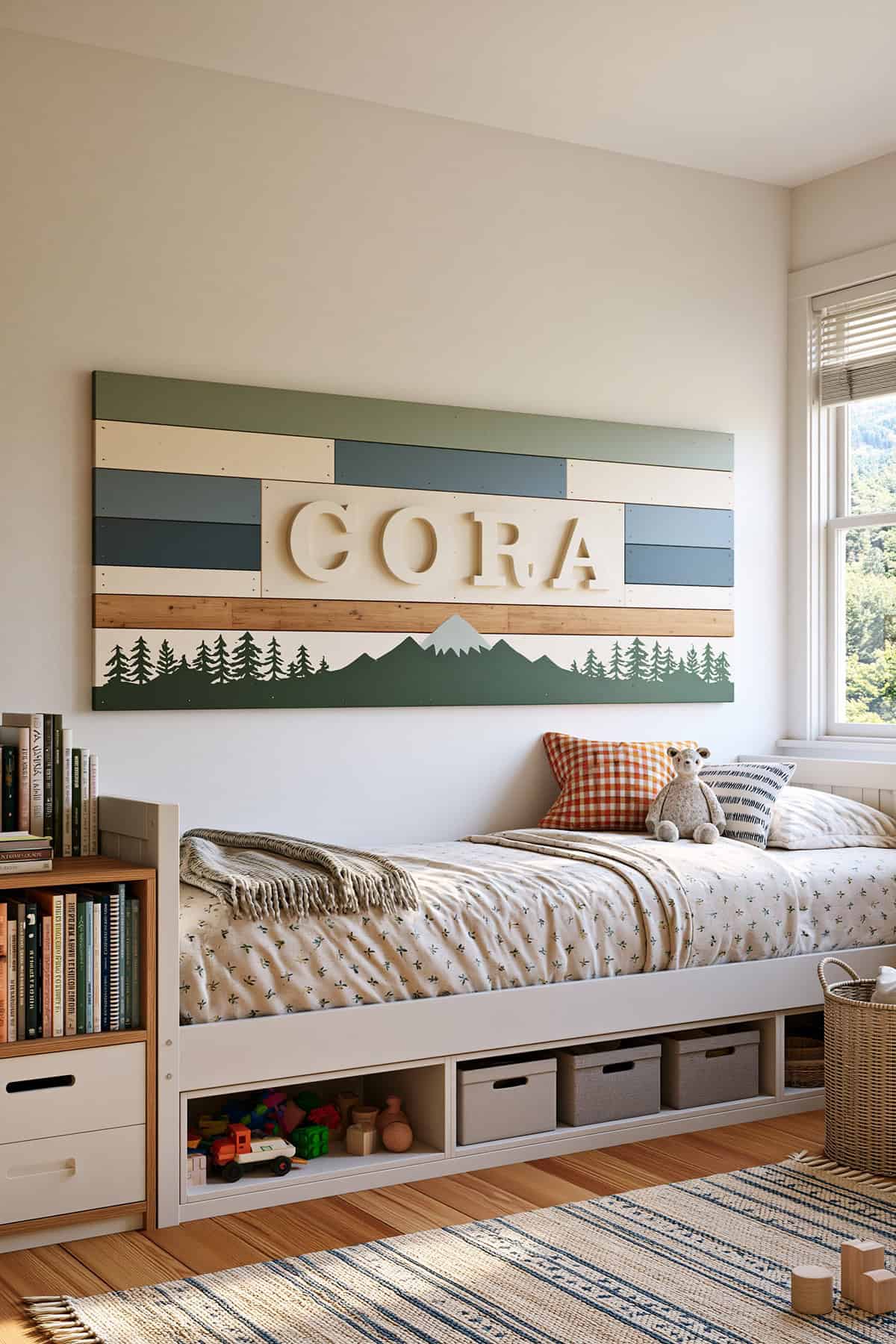
Muted strips of green, blue, cream, and bare wood create a name sign that still suits the room as a child grows. Raised letters make the name easy to read, while a low mountain-and-forest scene adds interest beneath it.
The wide format fits naturally above a single bed and balances low storage along the opposite wall. Repeat two sign colors in the bedding or rug; the rest of the room may develop gradually around books, toys, and collected objects.
Home Sweet Home Sign
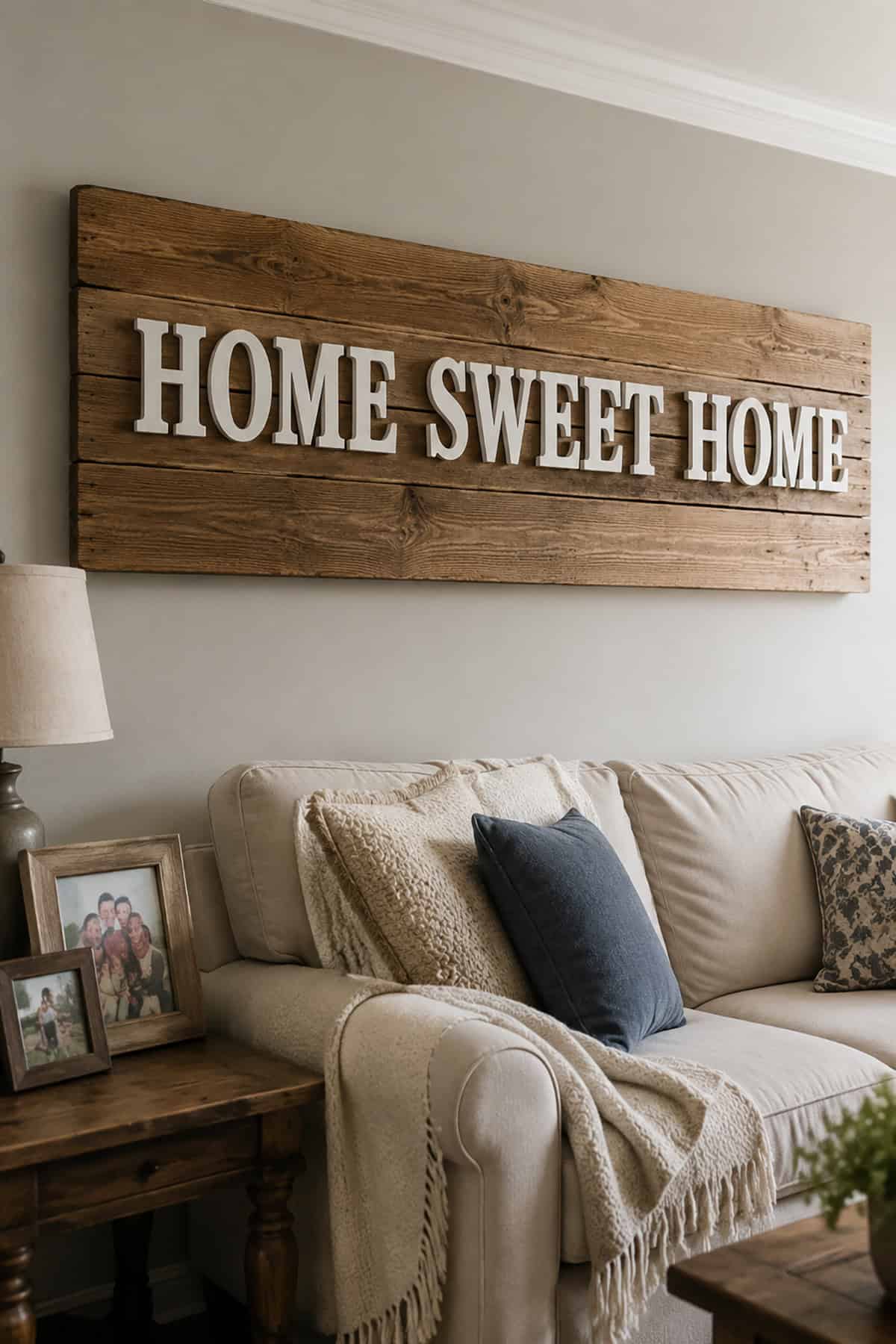
Raised white letters add real depth to a familiar “Home Sweet Home” design. Join three or four wide boards horizontally, stain them medium brown, and attach painted wooden letters across the center.
Leave the plank seams, knots, and grain visible. A long rectangular format fits naturally above a sofa, console, or dining bench. Choose thick letters rather than vinyl so small shadows appear across the wood throughout the day.
Floral Welcome Sign
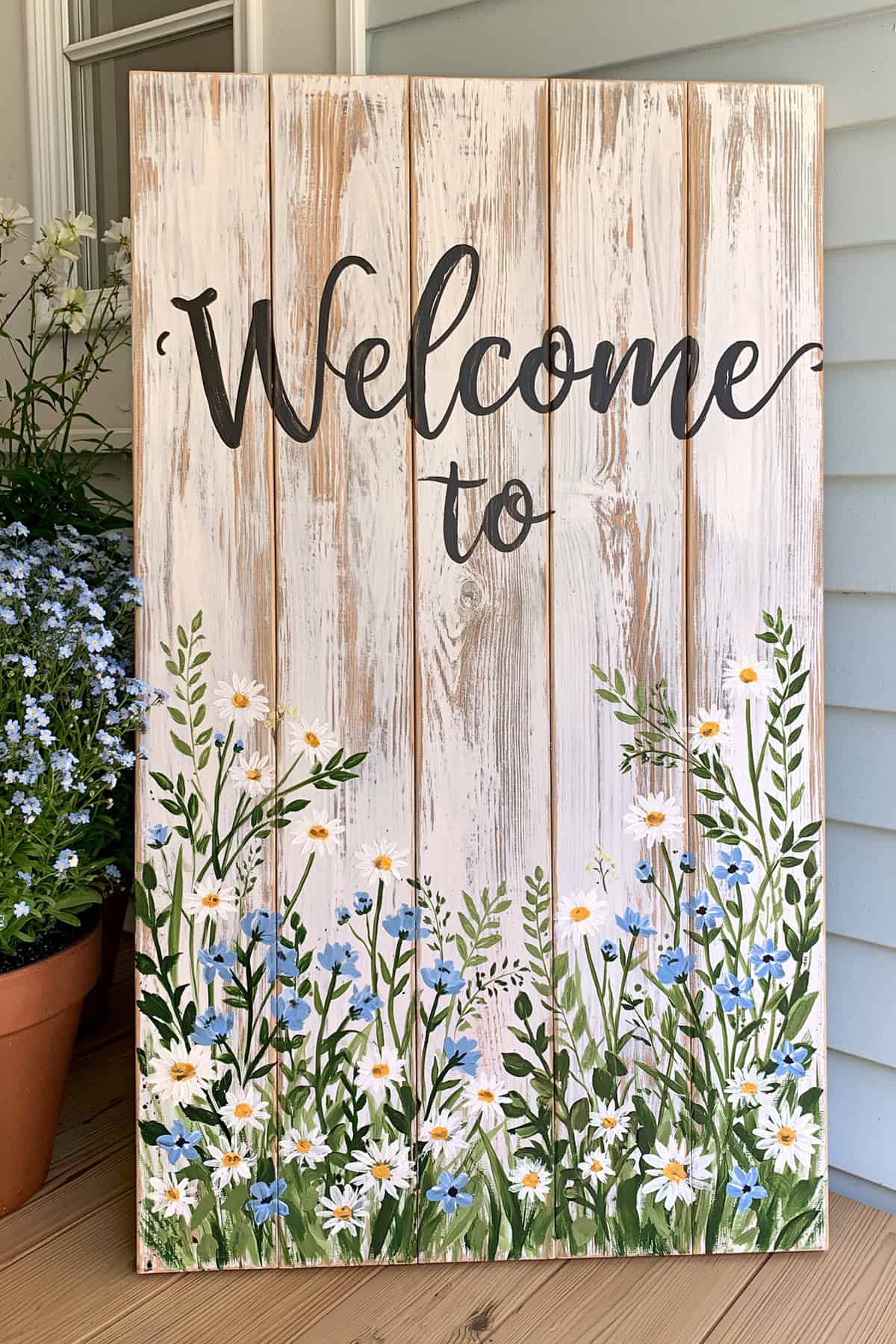
Paint wildflowers across the lower section of several whitewashed boards, with a short greeting in dark script above them. Daisies, small blue blossoms, slender stems, and loose green leaves create enough color for a spring or summer porch.
Vary the flower heights and leave open gaps between each cluster. Visible brush marks make the piece look handmade, while exposed grain beneath the thin white paint prevents the background from appearing flat.
Established Family Sign
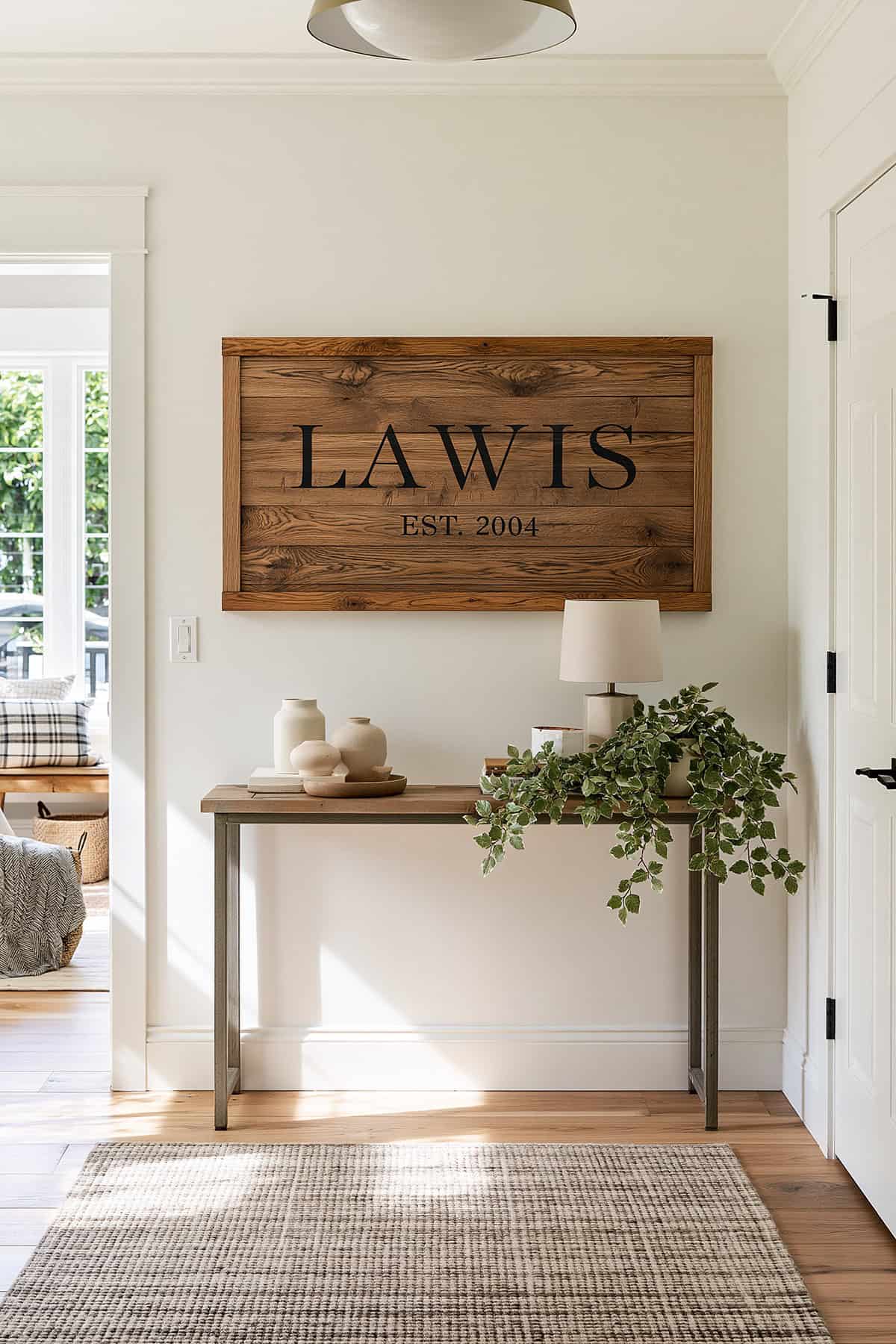
A surname and meaningful year create a wood sign specific to one household. Choose warm oak with strong grain, center the family name in large black letters, and set “EST.” with the year on a smaller line below.
Frame the board with narrow strips of darker-stained wood. The contrast defines the edges and makes a wide sign easier to read. This design also makes a practical wedding, anniversary, or housewarming gift.
Coffee Bar Sign
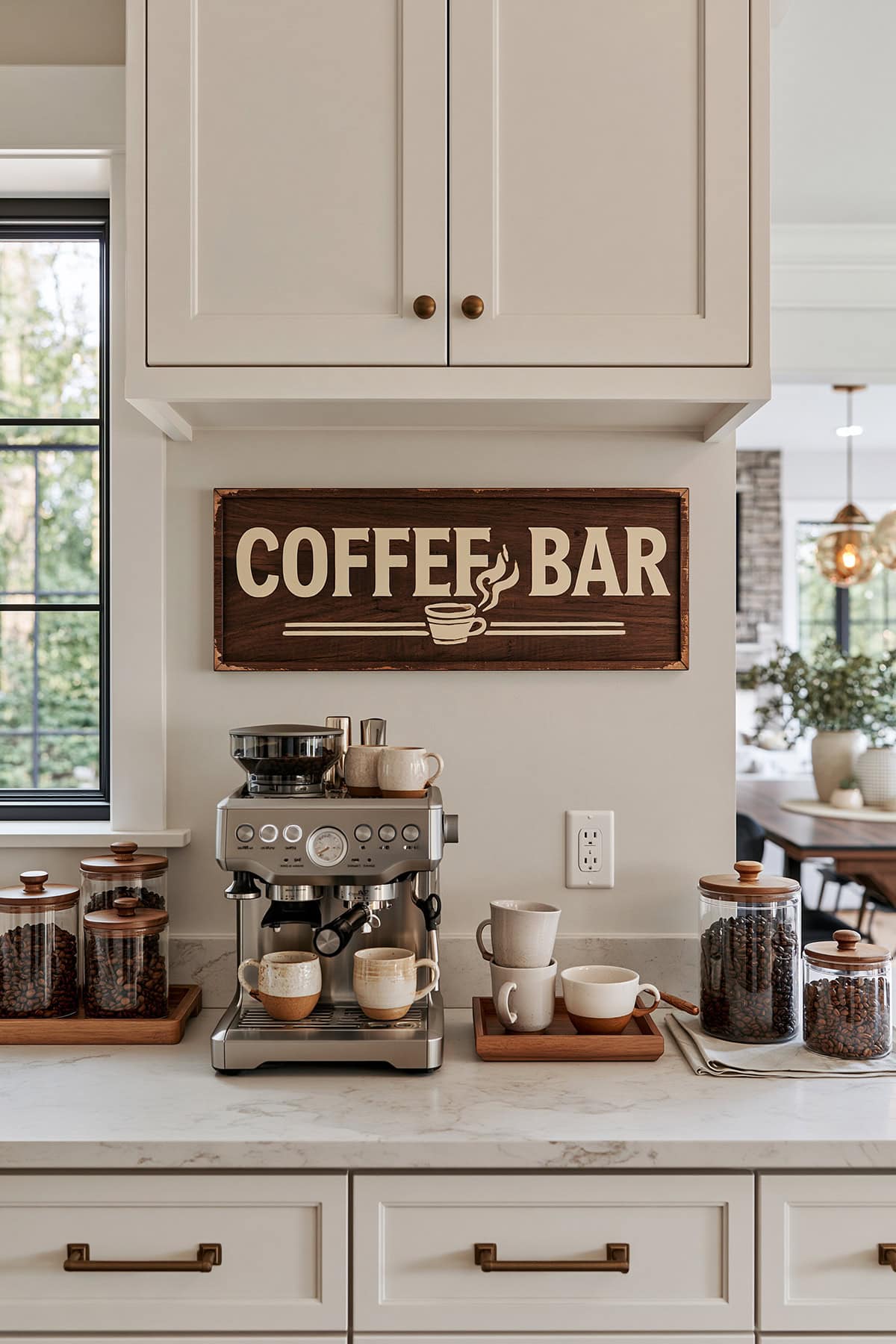
Dark walnut and cream letters will make a coffee sign that pairs well with espresso machines, glass jars, and ceramic mugs. Keep the wording short—“Coffee Bar” is clear—and place a small cup or steam graphic underneath.
Lightly sand the corners so the board has a little age, yet avoid heavy distress marks. A compact horizontal shape fits under upper cabinets or across the wall directly above a dedicated drink counter.
Welcome Planter Sign
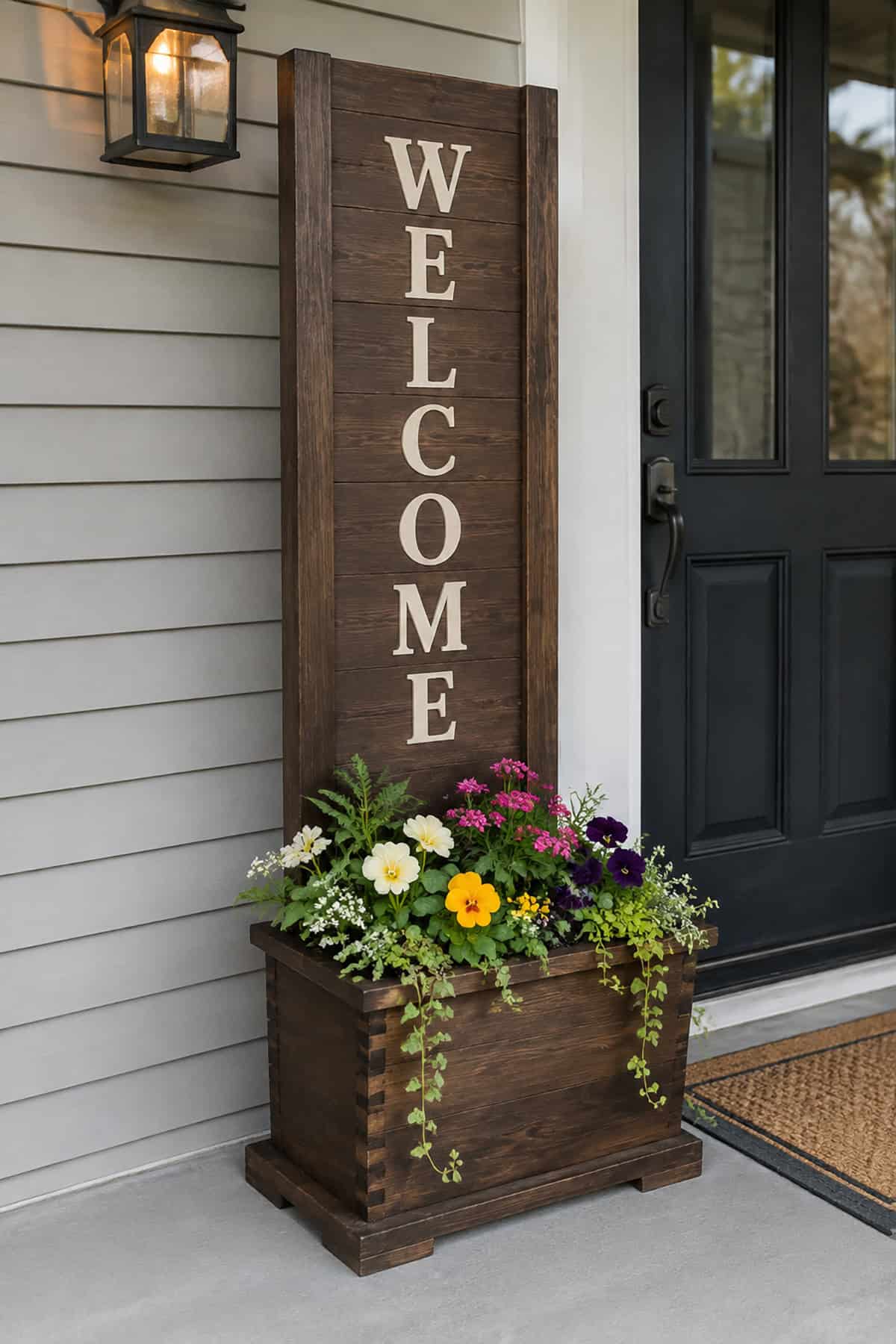
Combine a tall welcome board with a planter box across its base. Dark-stained cedar supports cream vertical letters, while the attached container adds enough width to prevent the piece from appearing narrow or top-heavy.
Fill the box with flowers that match the season. Trailing plants soften the straight sides, and upright blooms cover the joint between the sign and planter. A sealed interior liner protects the wood from wet soil.
Live-Edge Cabin Sign

Carve a cabin name into a thick cedar slab and preserve the natural edges on both sides. A mountain ridge and several pine trees below the words connect the design to its forest setting without extra painted decoration.
Apply dark stain inside every carved recess, then seal the front against moisture. Large metal bolts secure the heavy slab to an exterior wall or timber post. Cracks and knots belong in the design rather than under filler.
Beach House Sign
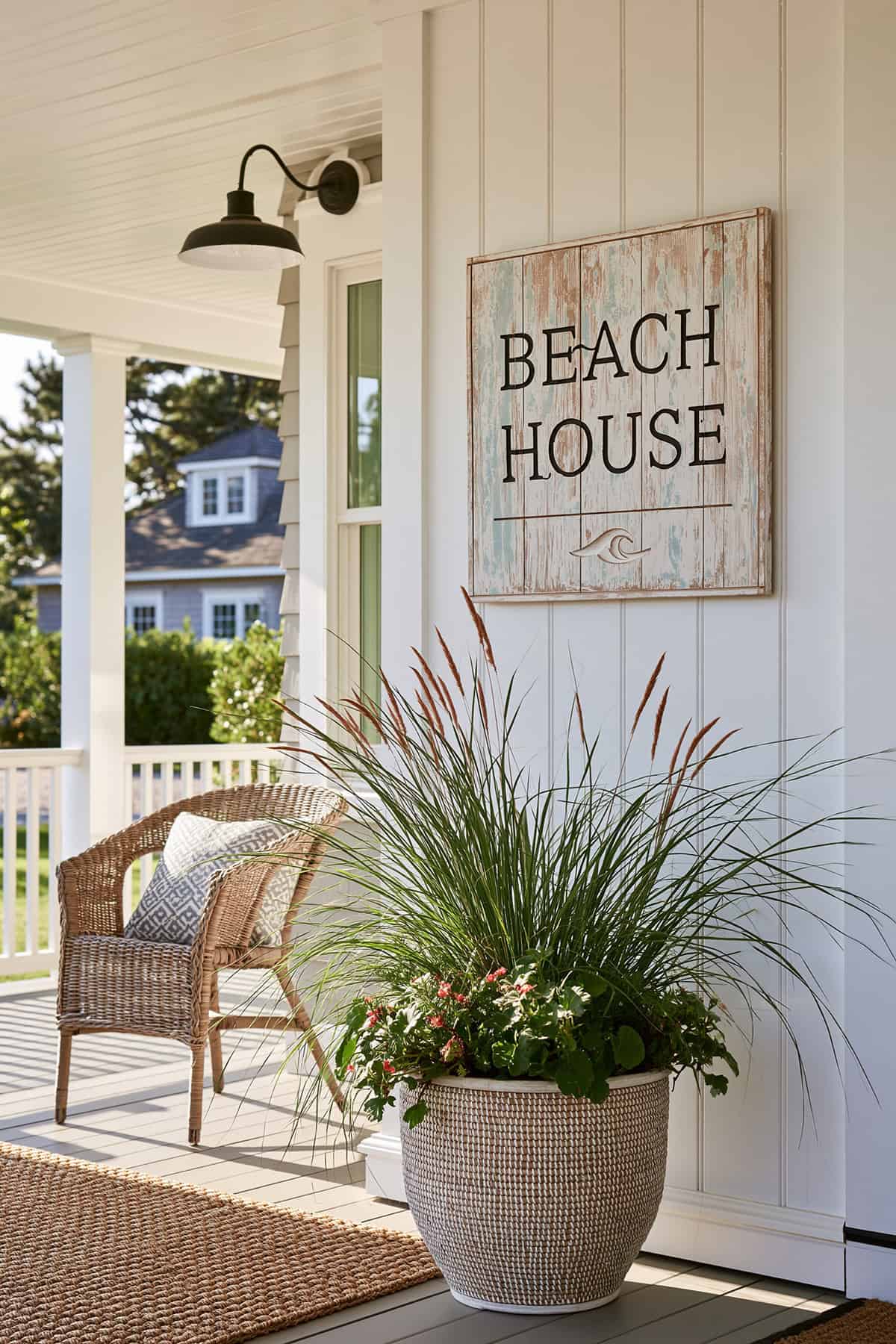
Sun-washed boards in pale white and faded blue create a relaxed base for a beach-house name. Add dark letters across the center and carve one simple wave below the words.
Skip anchors, seashells, rope knots, and crowded nautical graphics. The weathered paint already establishes the coastal direction. A shallow wood frame protects the plank edges, while exterior sealer helps the faded finish survive salt air and strong sunlight.