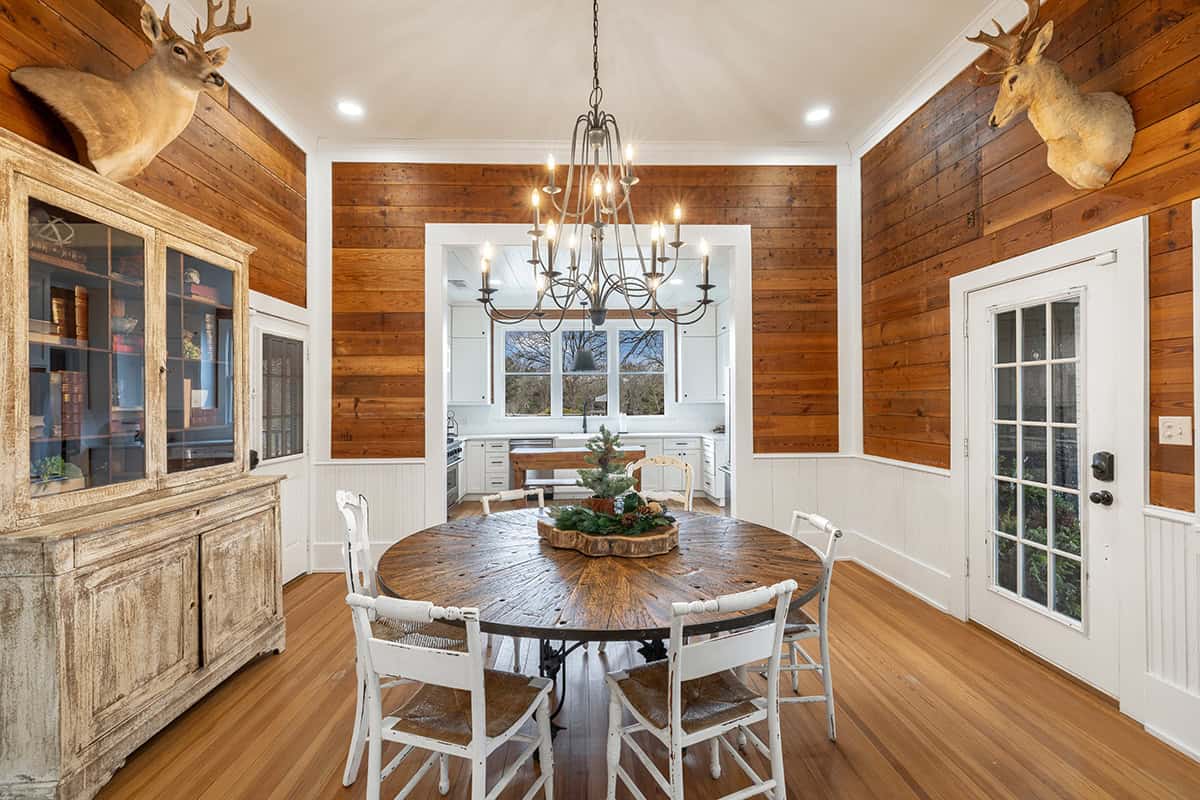
Living in a small home is nothing to be ashamed of, nor should the limited square footage of your abode mean sacrificing style. Smaller spaces often shine the brightest with the right design choices. Wainscoting can be one of those choices, turning boring walls into textured works of art and craftsmanship.
For this guide, I studied, compared, and selected 51 distinct wainscoting approaches that actually make sense for compact homes—proportions, placement, finish, and all.
Table of Contents
- 51 Wainscoting Ideas For Small Homes
- More Inspiring Ideas
- Two-Tone Wainscoting For Modern Farmhouse Bedroom Style
- White Wall Paneling For An Airy, Light-Filled Space
- Half-Wall Stair Wainscoting That Grounds Bold Wall Colors
- Two-Tone Box-Panel Stair Wainscoting
- Shadow Box Wainscoting For Subtle Texture
- Dark Paint With Slim Panel Trim For Depth
- Classic White Stair Wainscoting With Black Floors For High-Contrast
- Library-Style Wainscoting For A Small Den
- Entryway Wainscoting That Frames Built-Ins
- Slim Picture-Ledge Cap
- Curved Wainscoting Corners
- Extra-Low Wainscoting For Tight Ceilings
- Thin-Line Modern Panel Grid
- Wainscoting With Hidden LED Strip
- Floor-To-Cap Vertical Slat Accent
- Wainscoting Around Built-In Seating
- Ultra-Minimal Flat Panel Without Cap Rail
- Contrasting Baseboard Emphasis
- Wainscoting As Headboard Extension
- Micro-Scale Panels For Tiny Rooms
- High Wainscoting To Window-Sill Height
- Two-Tone Wainscoting With A Hairline Divider
- Wallpaper-In-Panel Insets
- Slim Reeding For A Modern Texture Wall
- Mudroom-Style Wainscoting With Peg Rail
- Stairwell Wainscoting That Follows The Slope
- Mirror Strip Inlay Between Panels
- Built-In Corner Wrap For Awkward Nooks
- Paint-Only Faux Wainscoting With Crisp Lines
51 Wainscoting Ideas For Small Homes
Curious to see how wainscoting can make your walls work smarter? This guide is for you! Below, we’ll explore 51 types of wainscoting ideas tailored for small homes. Learn from what others have done and implement in your home what you think works best.
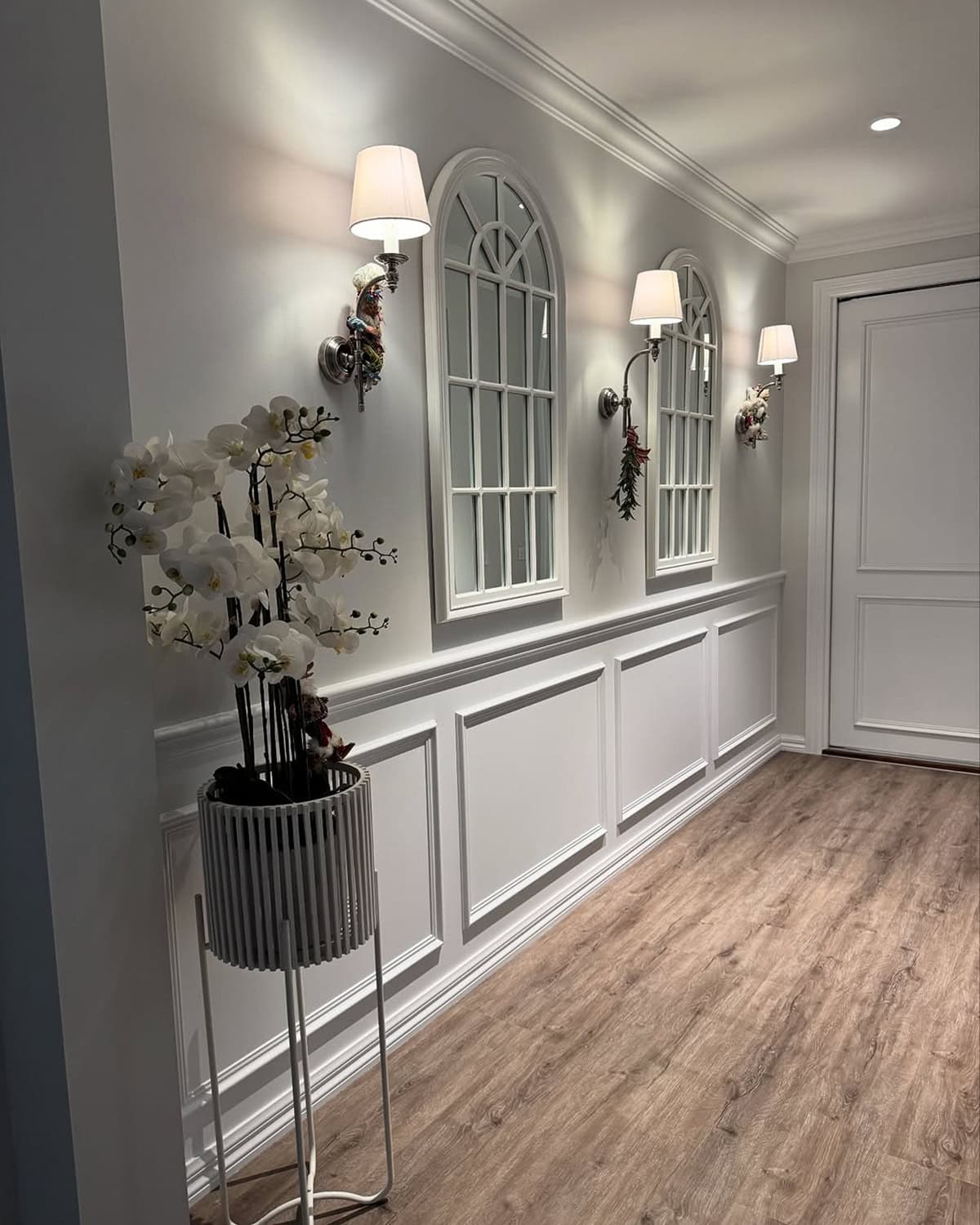
Box Panel
Credit to accentwalls.au
Box panel wainscoting may be one of the simplest and most common types available, and for good reason. This type uses evenly spaced square or rectangular frames to create a timeless look on your walls.
In small homes, this style adds elegance without going overboard, resulting in a more polished room. Box panel wainscoting is perfect in living rooms, hallways, and bedrooms—virtually anywhere you would like to add a dash of sophistication.
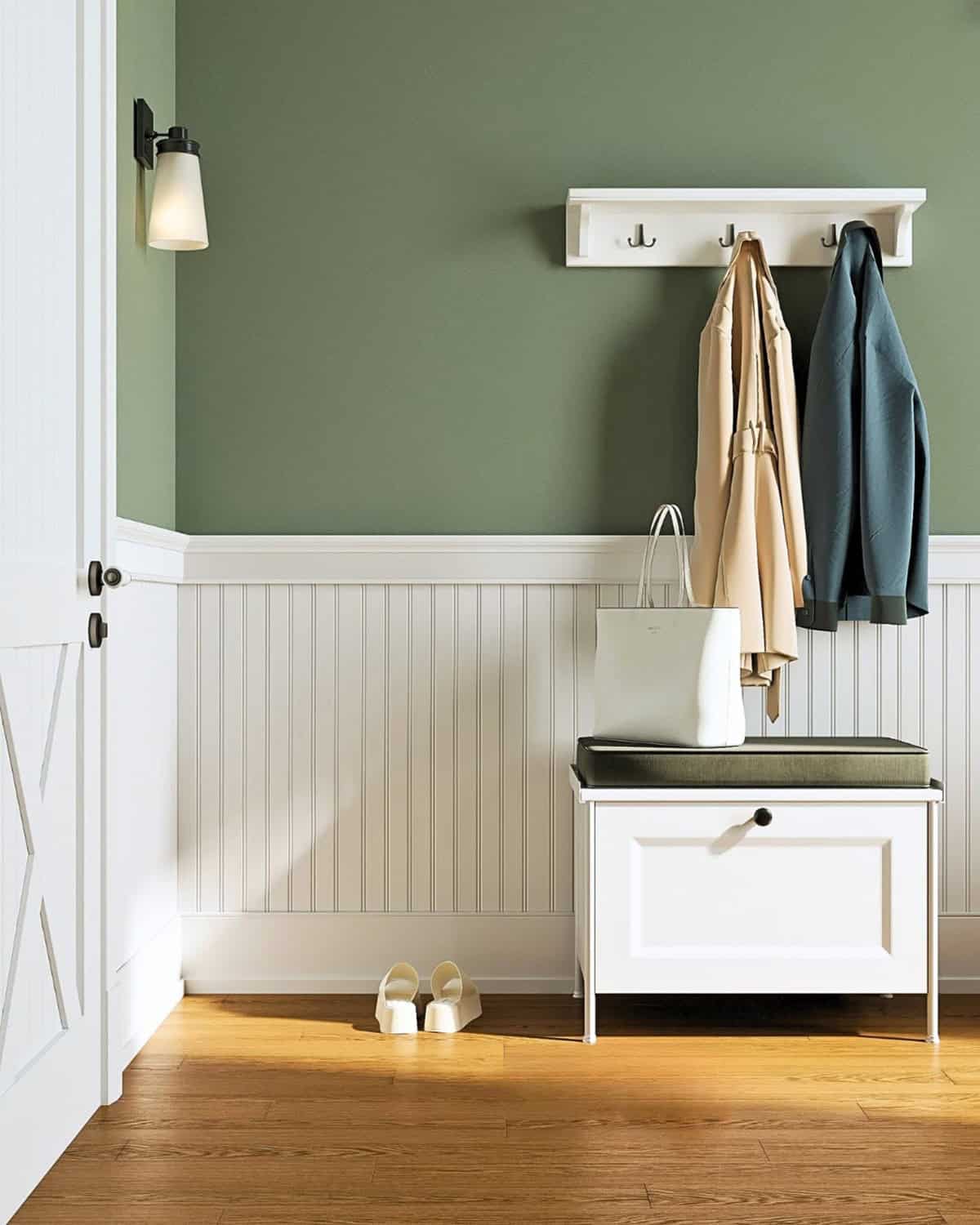
Beadboard
Credit to elitetrimworks
Beadboard wainscoting is wonderfully difficult to get wrong. The key component of this type is its slim vertical grooves, which helps make a room feel larger than it actually is.
Beadboard often measures half the height of a room. It can help give bathrooms a cozy cottage feel, hallways a visual stretch, and breakfast nooks a subtle charm. Experiment with brighter tones for a more expansive feel.
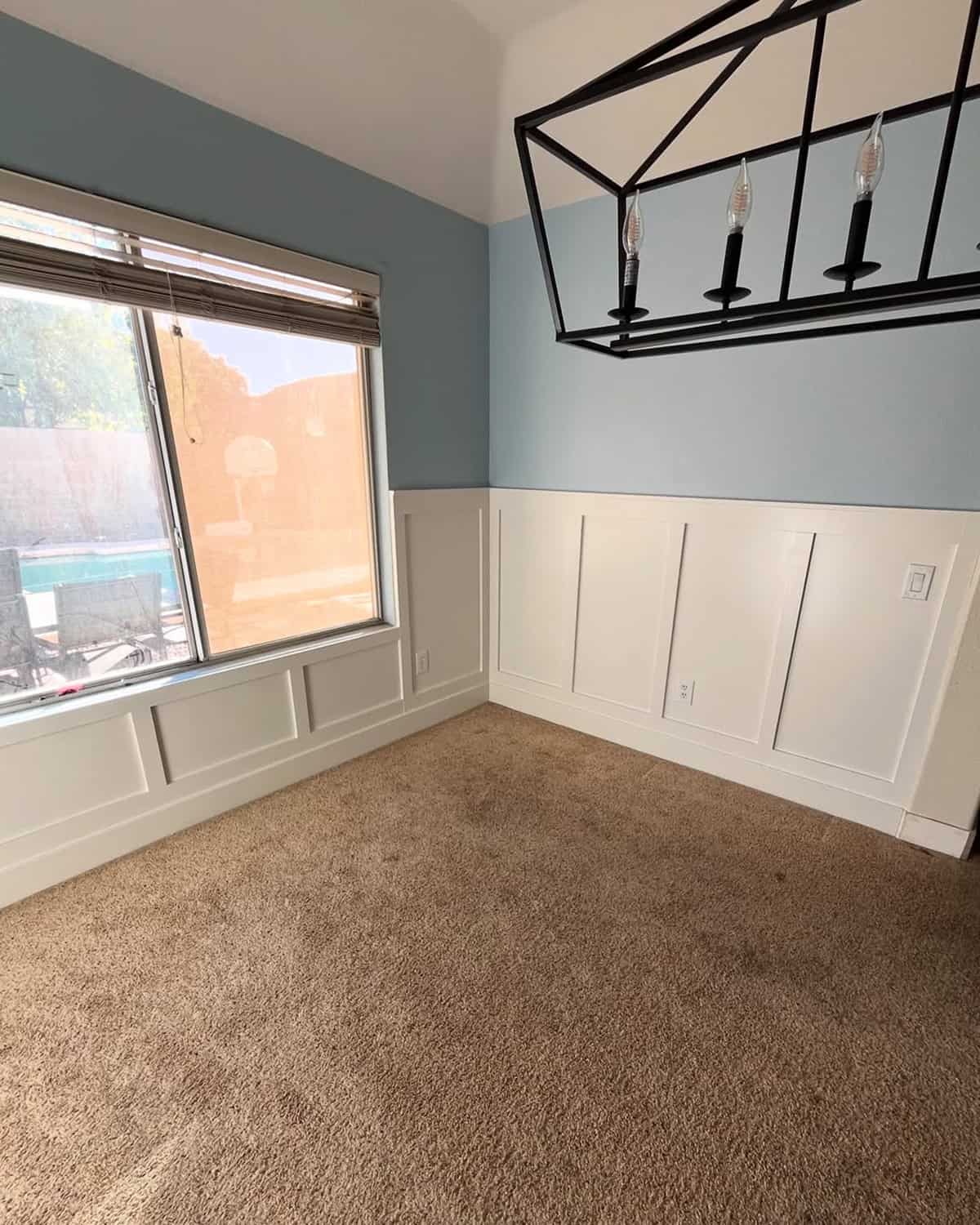
Board and Batten
Credit to cactuswoodscarpentry
This type of wainscoting alternates between wide boards and narrow vertical battens. The final look is crisp squares or rectangles embedded between the top cap and shoe molding.
When used in small homes, board and batten wainscoting creates a rhythm of lines to make a room appear taller. Consider installing board and batten wainscoting in entryways for a dramatic feel upon entering your home.
Raised Panel
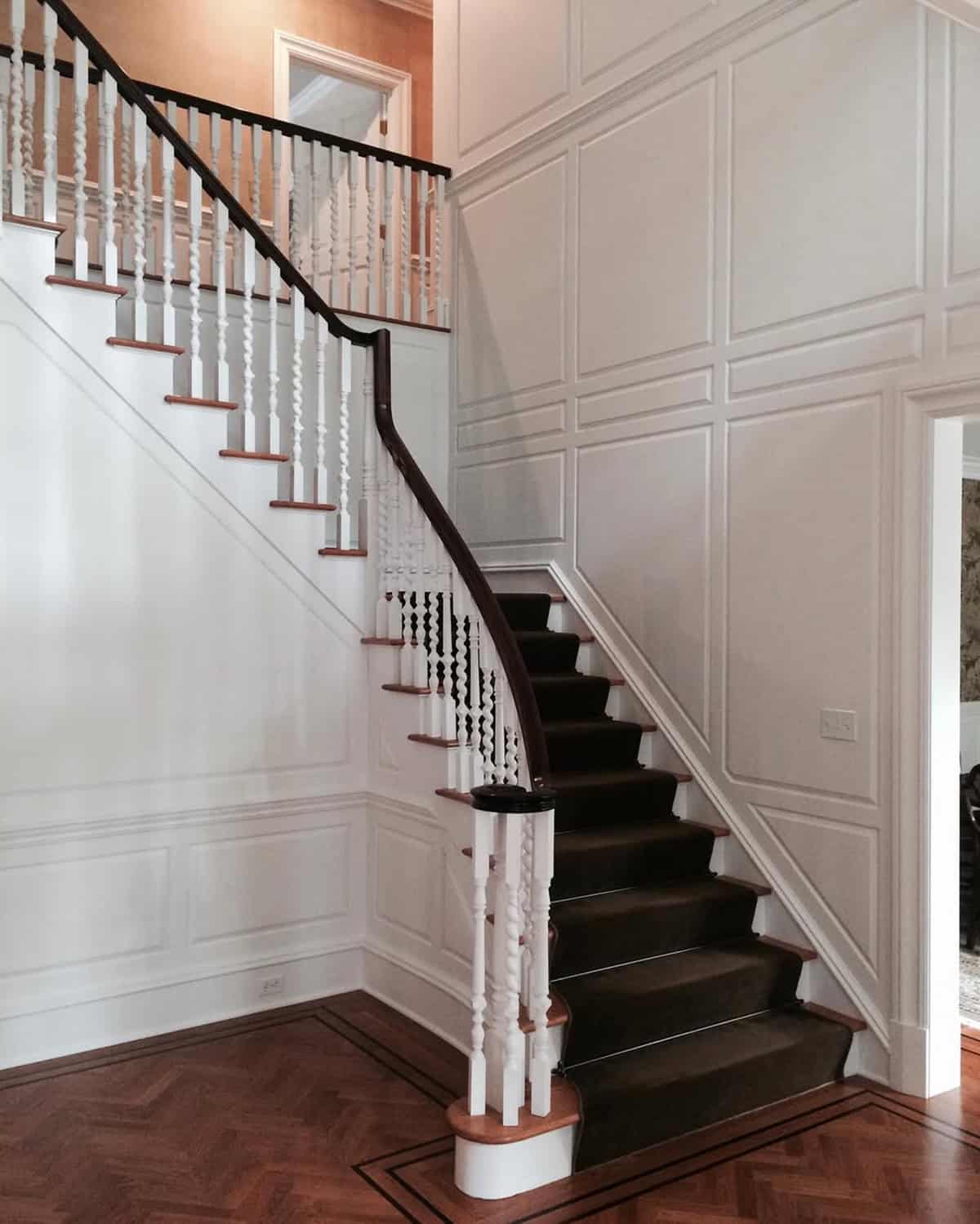
Credit to wainscotsolutions
Wainscoting typically comes in two forms: raised and recessed. Raised panels include panels that project slightly outward to create a shadow effect in the right light.
These shadows can make the walls feel layered, similar to the feeling you get when standing in old-world architecture. Raised panels are ideal for formal dining rooms or in cozy living areas where an added dash of grandeur wouldn’t hurt.
Recessed Panel
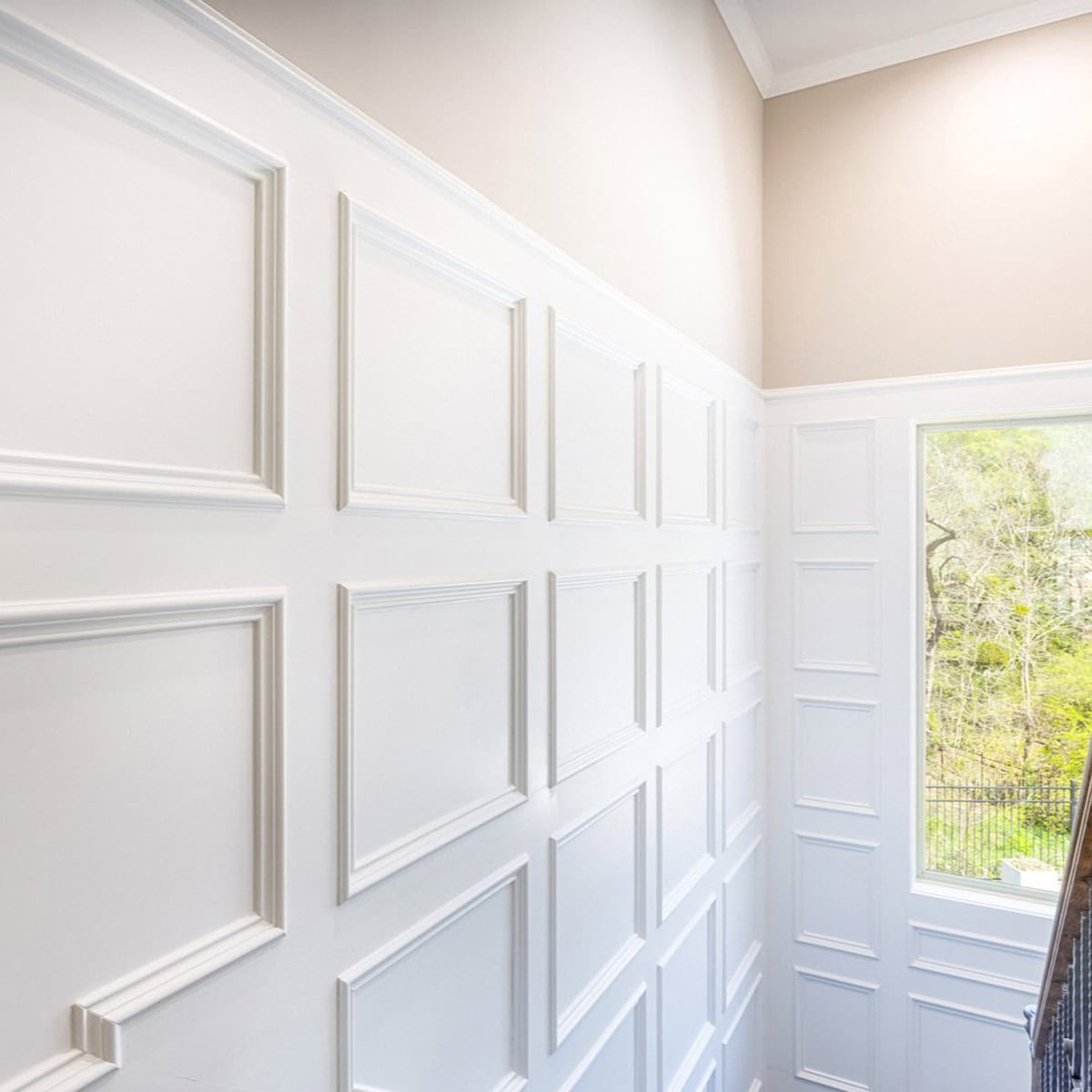
Credit to theaccent.co
On the other hand, there are recessed panels, which are the polar opposite of their raised counterparts. Instead of slightly protruding from your wall, recessed panels are set inward for a streamlined look.
They ultimately make smaller homes feel less bulky while still adding a touch of refinement. You’ll typically find recessed panels along the walls of staircases or in dining rooms.
Horizontal Shiplap
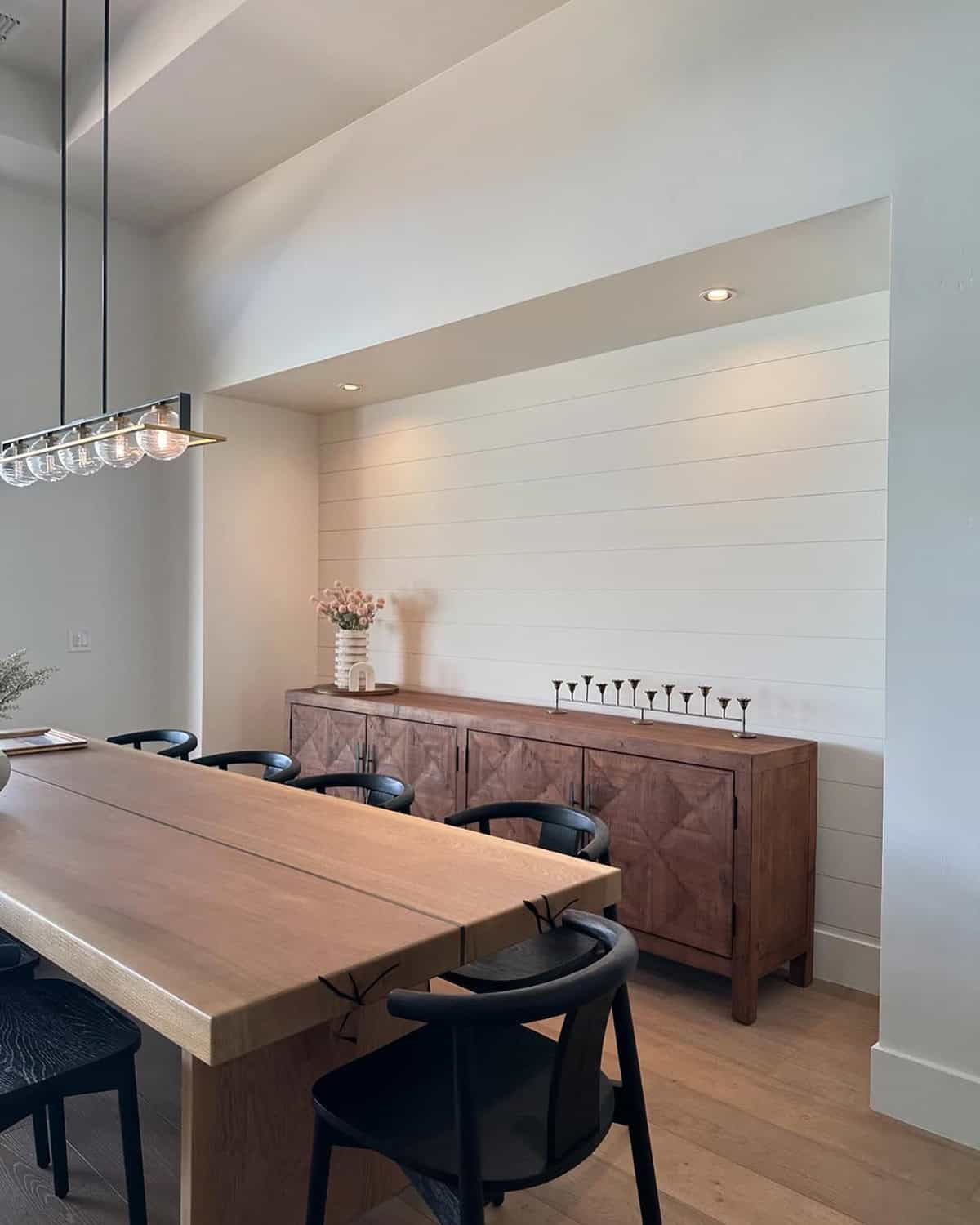
Credit to accentartcreators
The main characteristic of shiplap paneling is the overlapping design with adjacent boards. Together, these boards create a seal with minimal seams. They come in both horizontal and vertical styles, where horizontal shiplaps help make a room feel broader.
The crisp lines between shiplap panels helps introduce a farmhouse vibe into smaller homes, but they’re also helpful in keeping things simple and roomy. Try using alternating colors to amplify the optical illusion of spaciousness.
Vertical Shiplap
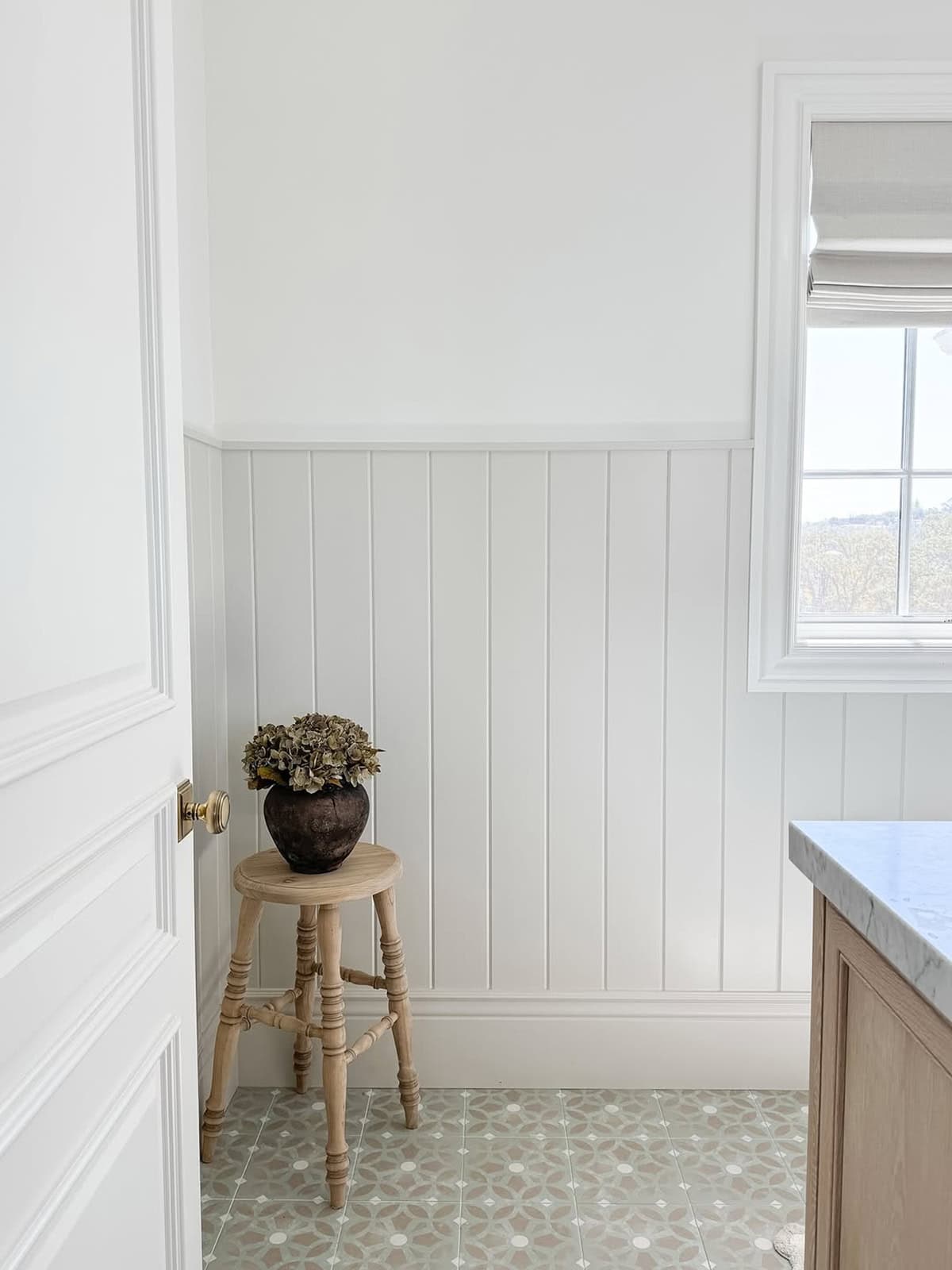
Credit to ourfrenchcountryhome
Rotate shiplap 90 degrees and you’ll end up with a completely different effect. Vertical boards, where the seams run up and down, redirect the eye upward.
This boosts the sense of height in a room, which is perfect in smaller rooms with lower ceilings. Basements, bathrooms, mudrooms, and other confined spaces would benefit from having their walls appear elongated from the bottom up.
Ceiling-High
Credit to archisense8
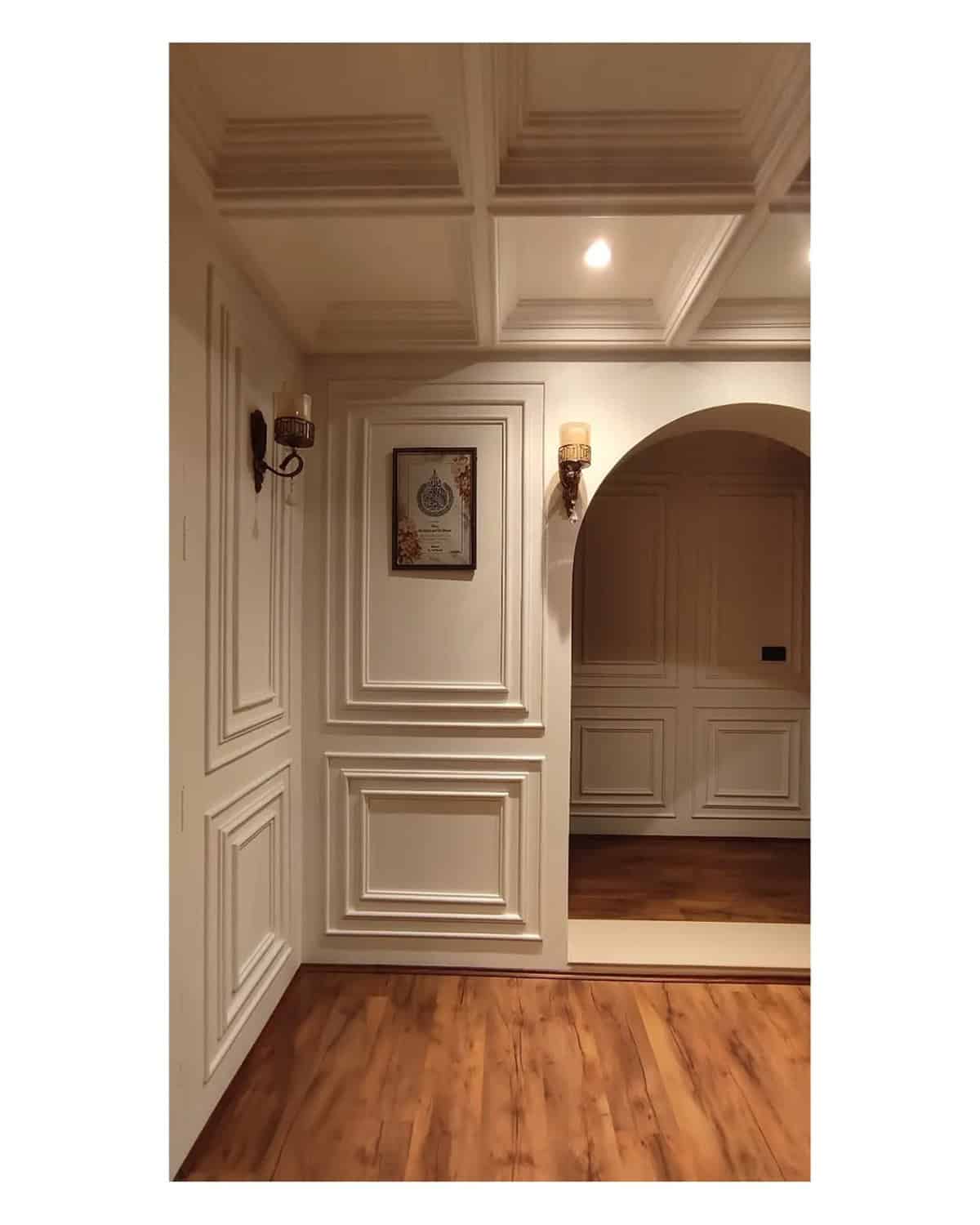
The installed height for wainscoting varies from user to user, with popular choices between one-third and half the height of the wall. However, if you extend the panels all the way to the ceiling, you can create a dramatic effect that makes smaller spaces feel much taller and more cohesive.
Ceiling-high wainscoting eliminates the visual break between lower and upper walls since there’s no cap. Small bedrooms and home offices are popular spots for ceiling-high wainscoting.
Tongue and Groove
Credit to jacksonfencing
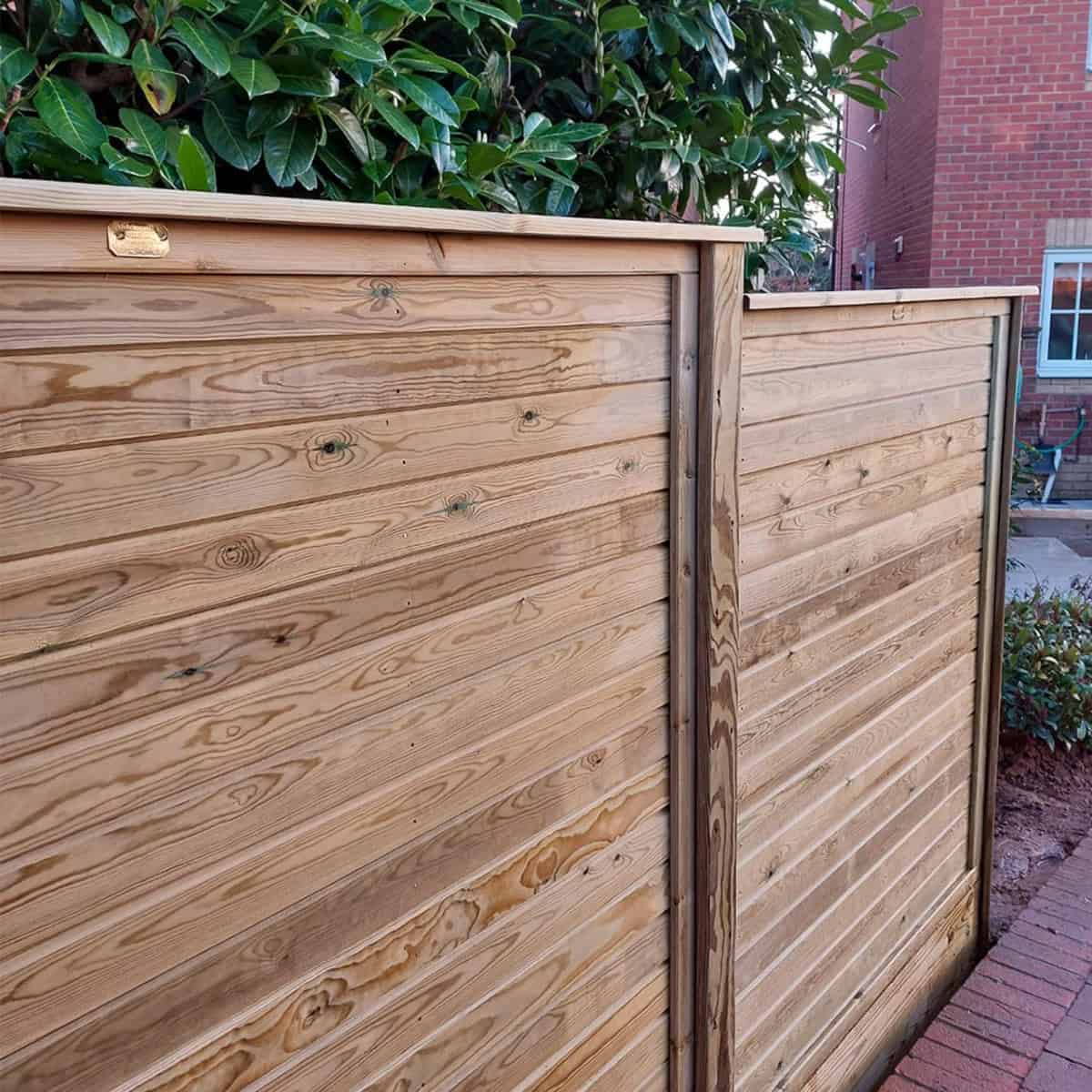
Most wainscoting styles include a visual break between panels. This can come in the form of battens or the edges between each board. However, if you’re looking for a seamless, continuous surface with minimal lines, tongue and groove wainscoting may be more your style.
In smaller homes, the subtle lines can make the wall appear less cluttered. Tongue and groove wainscoting is a versatile option that fits in any room, from kitchens to hallways and even bathrooms.
Classic White
Credit to wood_visions
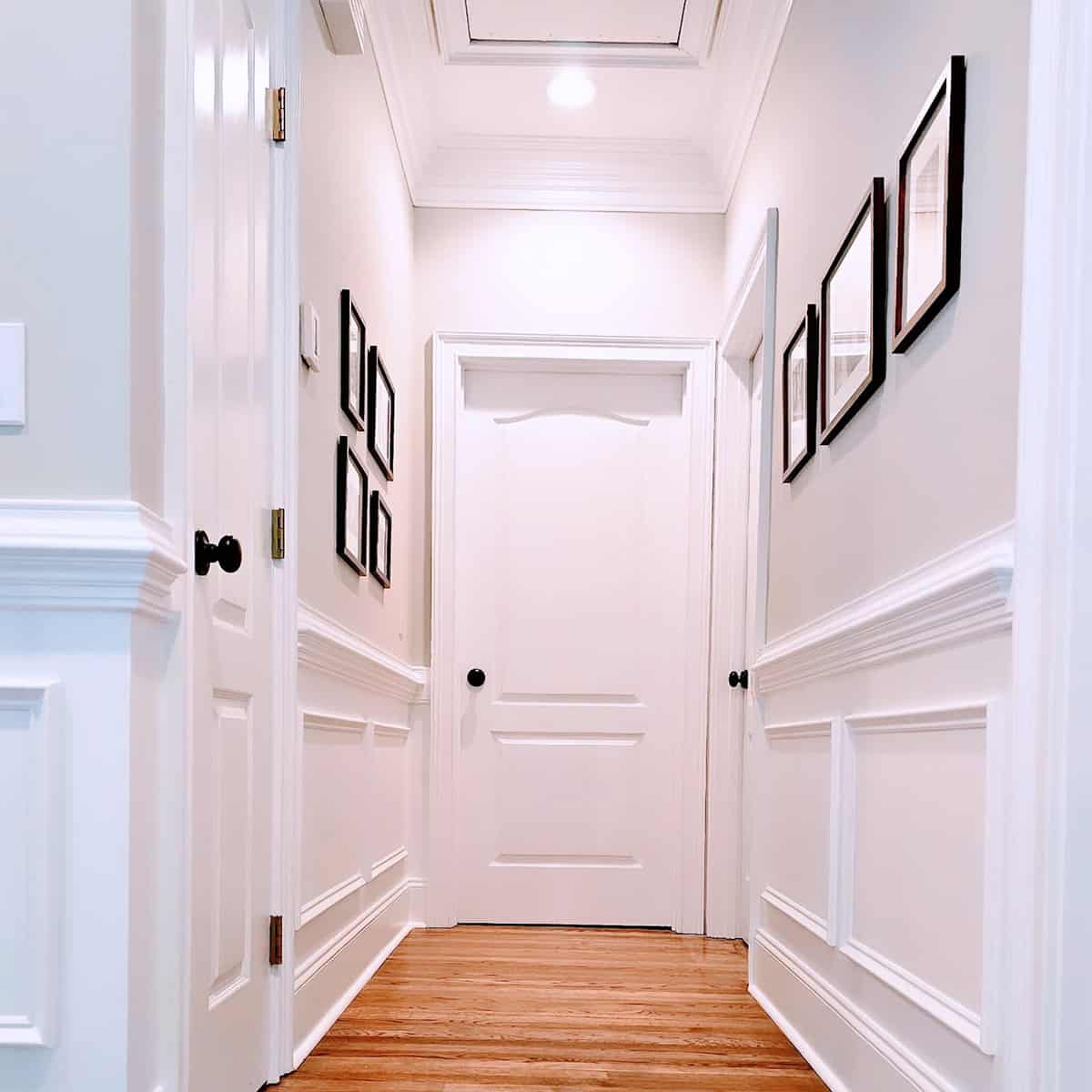
The type of wainscoting you choose is only half the battle. At the end of the day, it’s the color of the boards that will determine how well it suits your home.
White is a traditional option since it pairs well with all wall colors or patterns you have going on. Also, white wainscoting can help bounce light around, thereby making a small home feel a bit roomier.
Dark Paint
Credit to designs_av
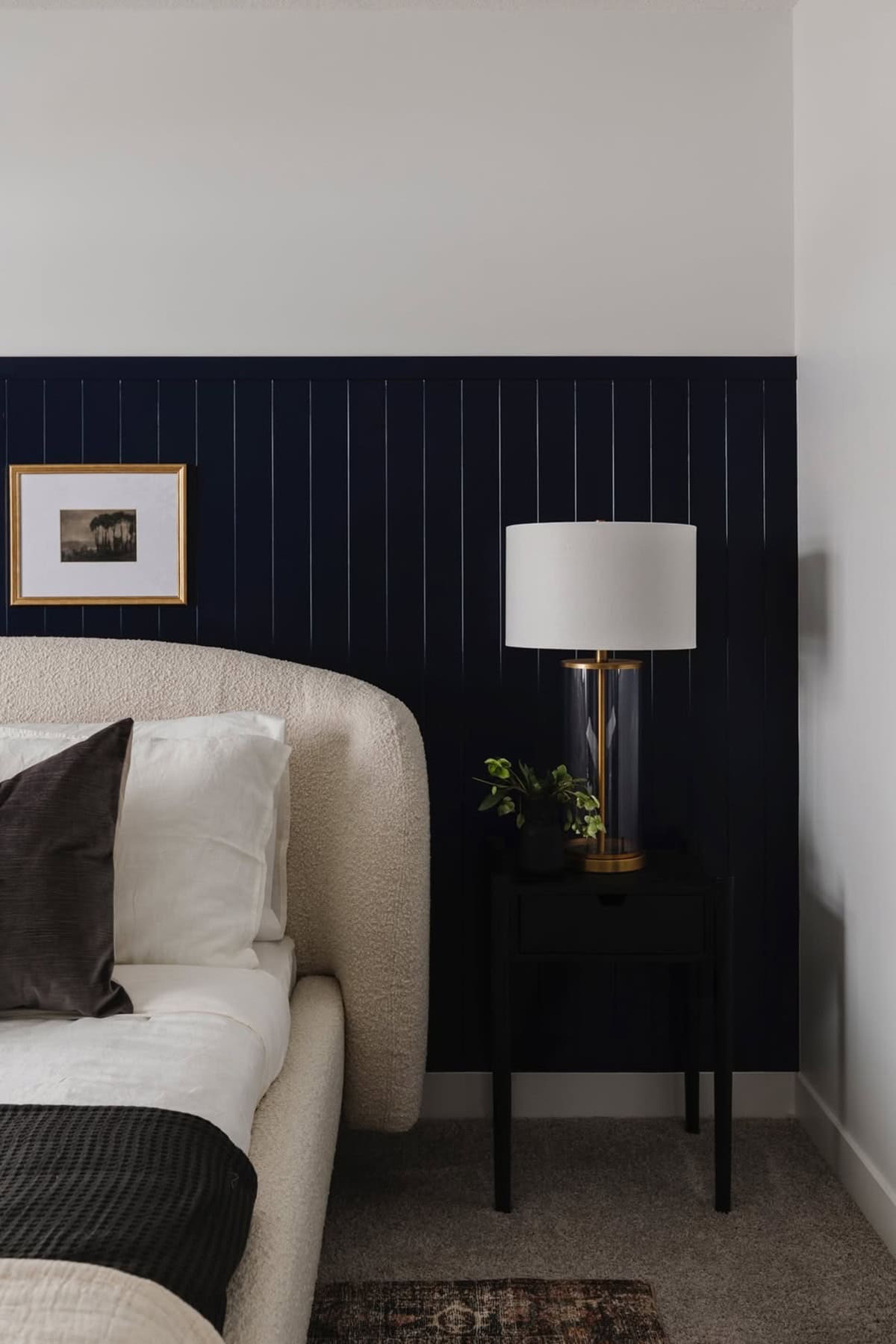
If white wainscoting visually enlarges a room, then surely darker tones will shrink a room, right? Not necessarily! You can use darker colors, such as navy, charcoal, or black, to add depth and elegance. From afar, objects in front of darker surfaces, like bookcases or sofas, may appear larger.
Far warning: darker tones will reduce the space-increasing illusion of light, which may make a room feel slightly claustrophobic. So, think long and hard before settling on darker tones.
Wainscoting with Wallpaper
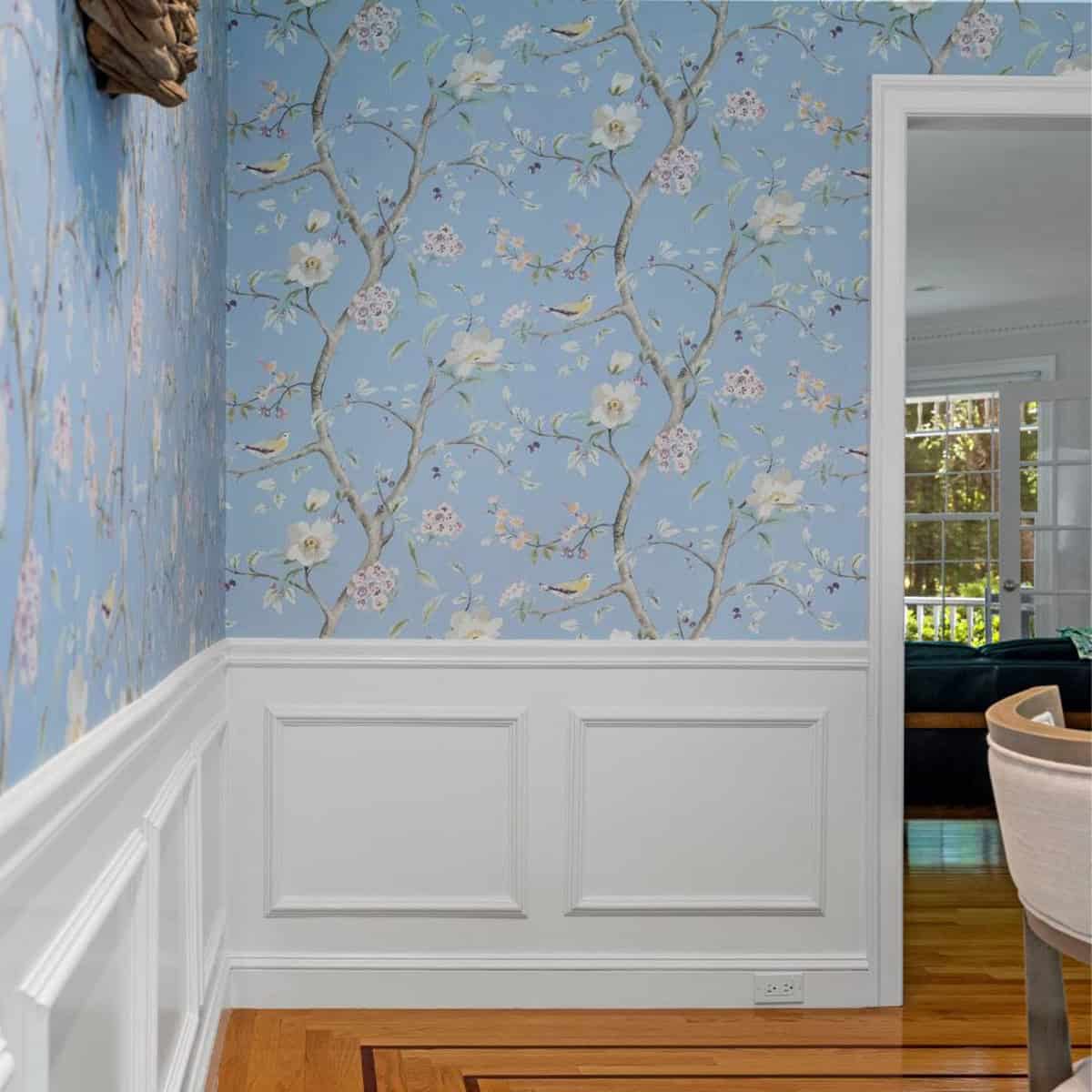
Credit to kateecksteindesign
While wainscoting only covers a portion of your wall, what do you do with the rest of it? The good news is, the remaining upper portion is a canvas for expression!
Slap on some wall paper above the wainscoting panels to add a bit of pattern and flair. The bottom panels will appear crisp and clean, while the top portion of your walls are full of style.
Two-Tone Wall
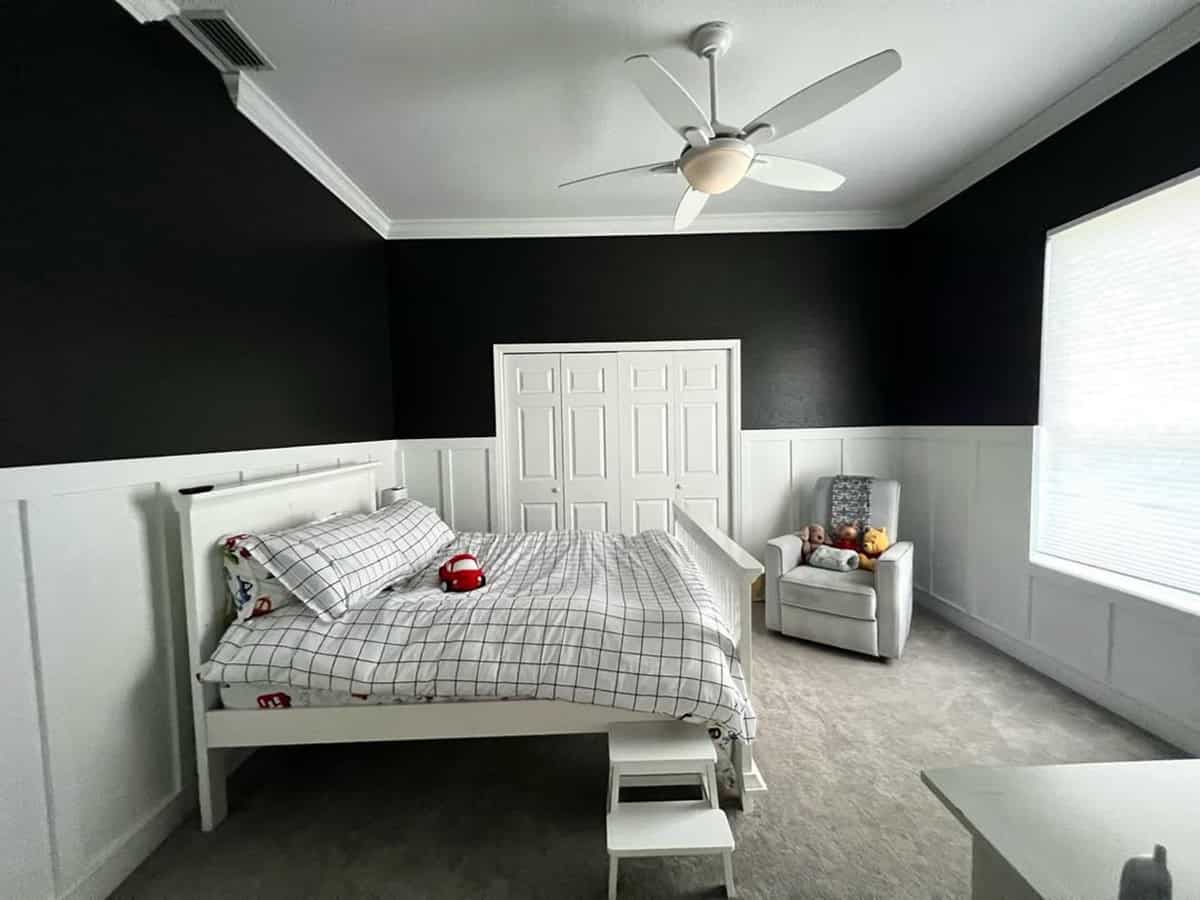
Credit to handymartin_llc
Why settle for a single color when you can have two? Two-tone color combinations using wainscoting lets you experiment with contrast. Try brighter colors on top with darker panels at the bottom, or vice versa.
You can also try using complementary colors, such as white and sage green, taupe and pale blush, or charcoal gray and powder blue. Just remember that painting wainscoting panels can be tricky, so think carefully about what colors to use.
Contrasting Trim
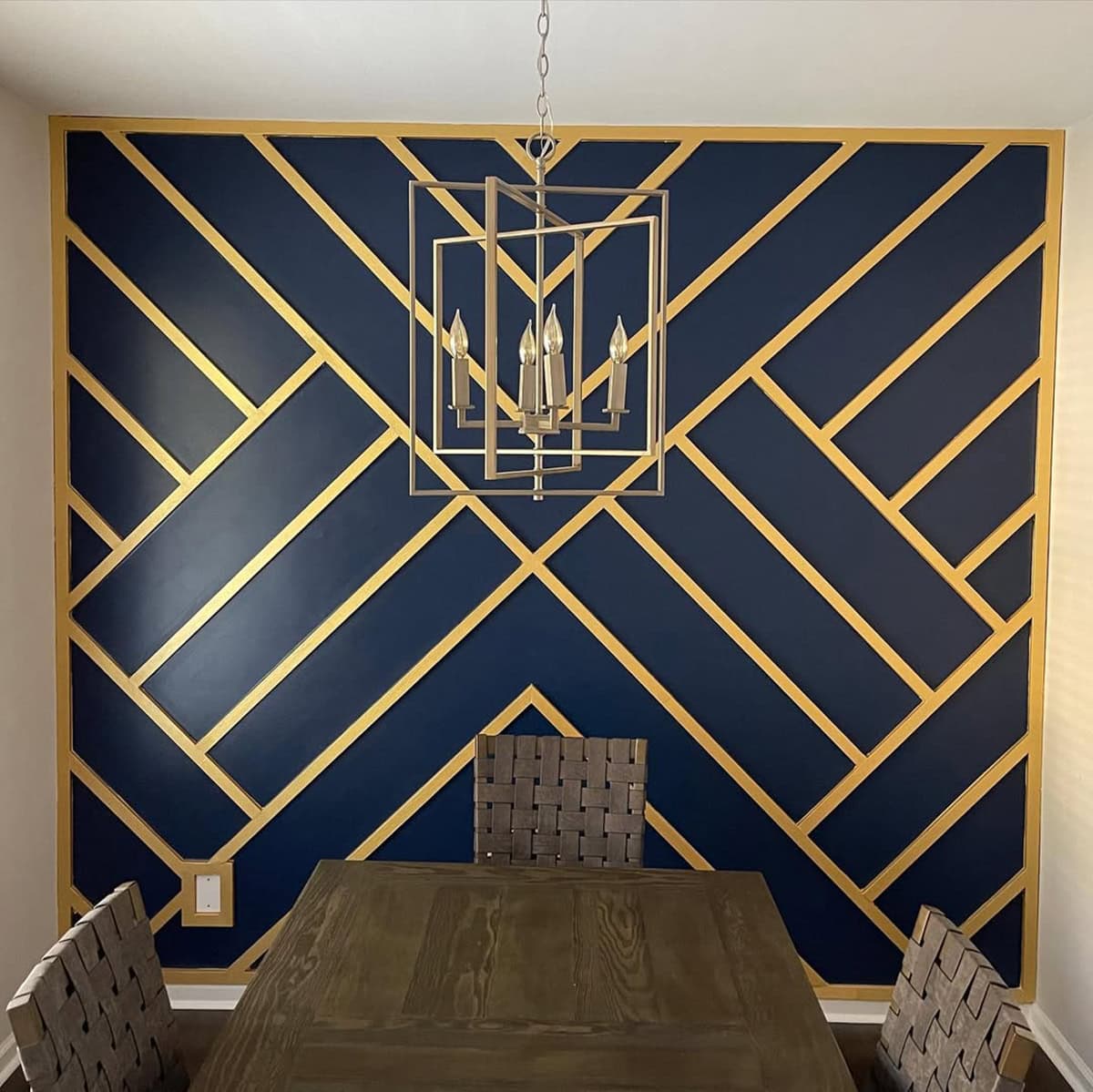
Credit to wouldwoodwork_llc
Some wainscoting styles rely on trim for character. And it’s that trim that can become the star of the show with the right colors. This image shows a herringbone pattern with raised trim painted gold and flat panels of midnight blue.
Again, you’ll need to experiment with color combinations to find the one that fits best for your home, but smaller spaces would benefit from brighter tones.
Natural Wood
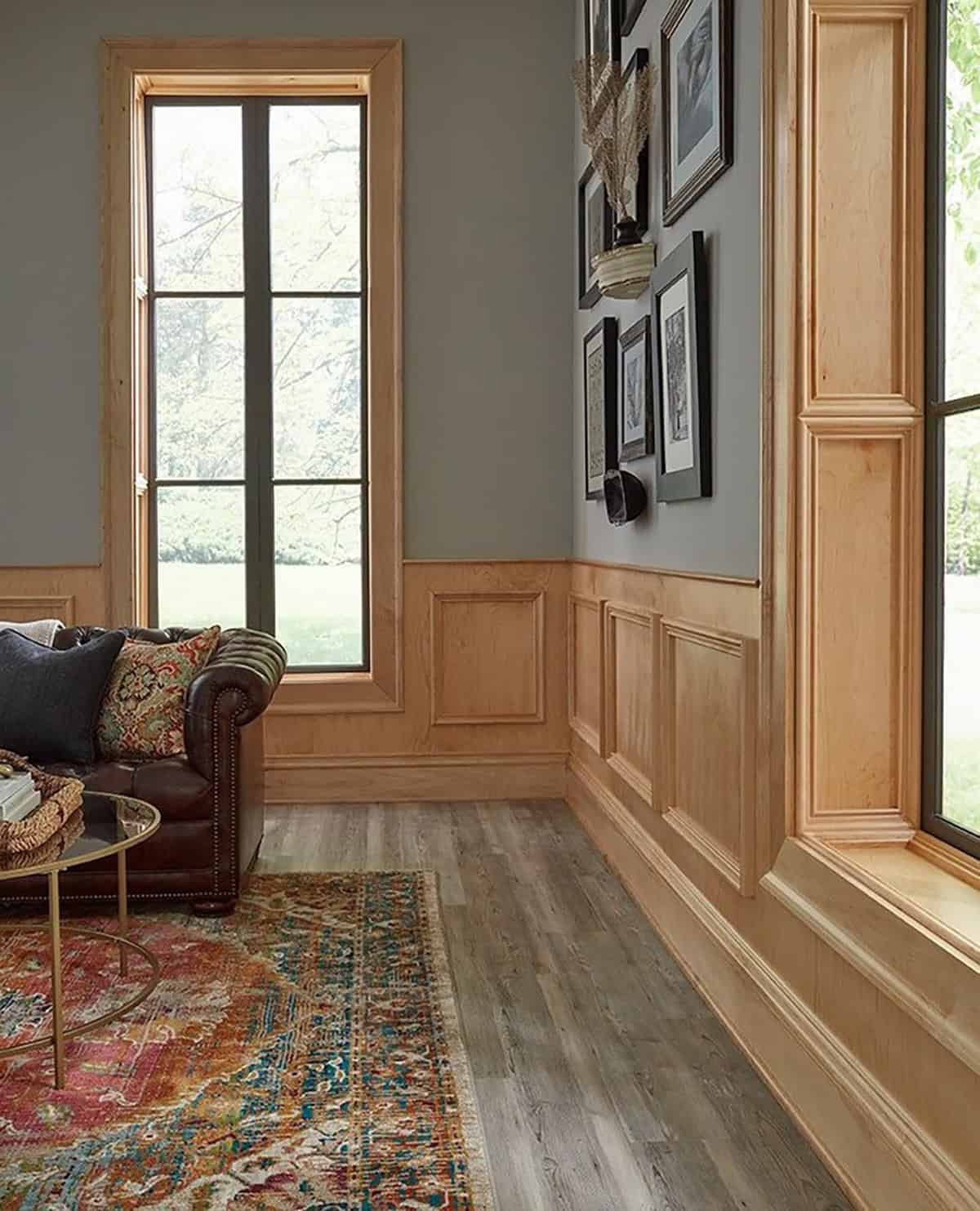
Credit to finishedinspirations
If you’re on the fence regarding color choices, don’t overthink it. Sometimes, the natural markings and colors of wooden boards are more than enough to decorate a wall, big or small.
For a brighter wooden color, choose oak or pine. You can darken the boards with specific stains to boost the coziness factor of a room when used sparingly. Basically, don’t sleep on unfinished or lightly coated wainscoting panels.
Elegant Green
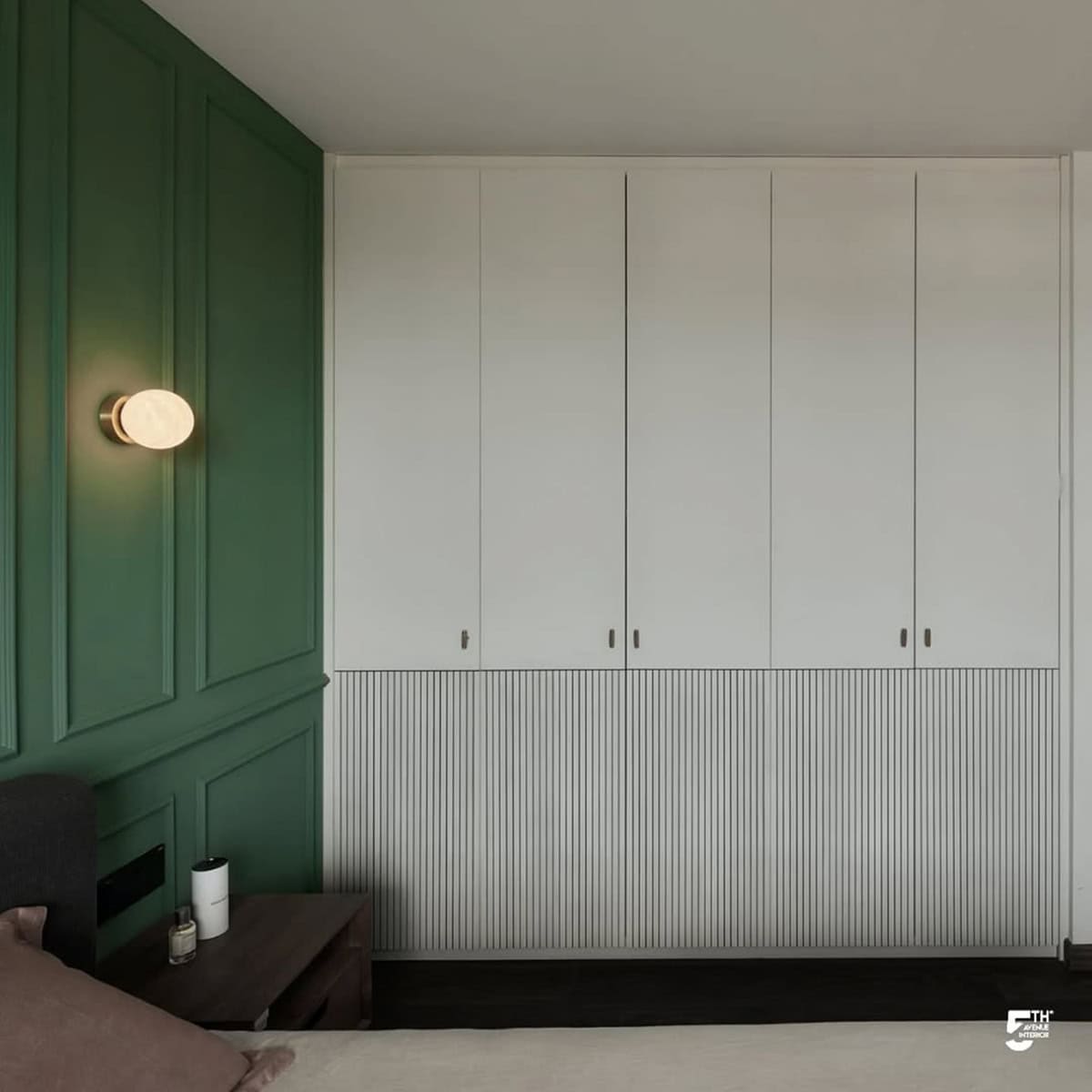
Credit to fifthavenueinterior
Contrary to popular belief, green is actually a decently neutral color when it comes to home design. It’s the ideal color for designers who want to emphasize the richness of nature indoors, but it can also be used to induce a sense of tranquility. The feeling you get from green wainscoting varies between shades.
For example, sage green can be used to add a feeling of sophistication to a room, whereas pale green is all about playful airiness.
Gallery Wall
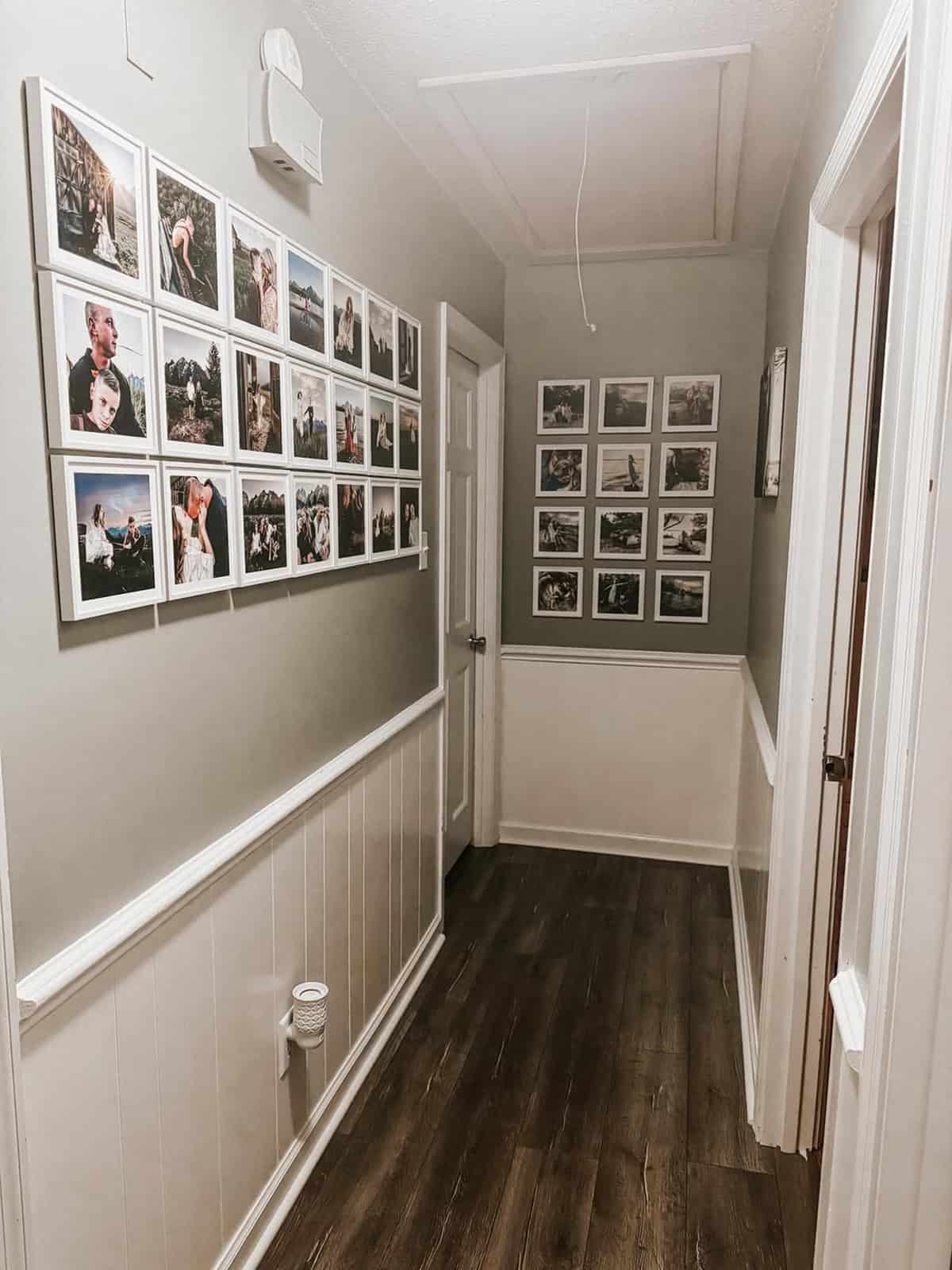
Credit to summer_buchanan0849
While a gallery wall is not a direct part of wainscoting, it can be used as a complementary element in boosting the effect of the lower panels. Gallery walls are simply walls that are decorated with several framed posters or portraits.
The wainscoting helps ground the space below the gallery wall, while the images are there to add personality. Use this combo to allow the upper portion of your wall to shine without feeling overcluttered.
Under-Bar
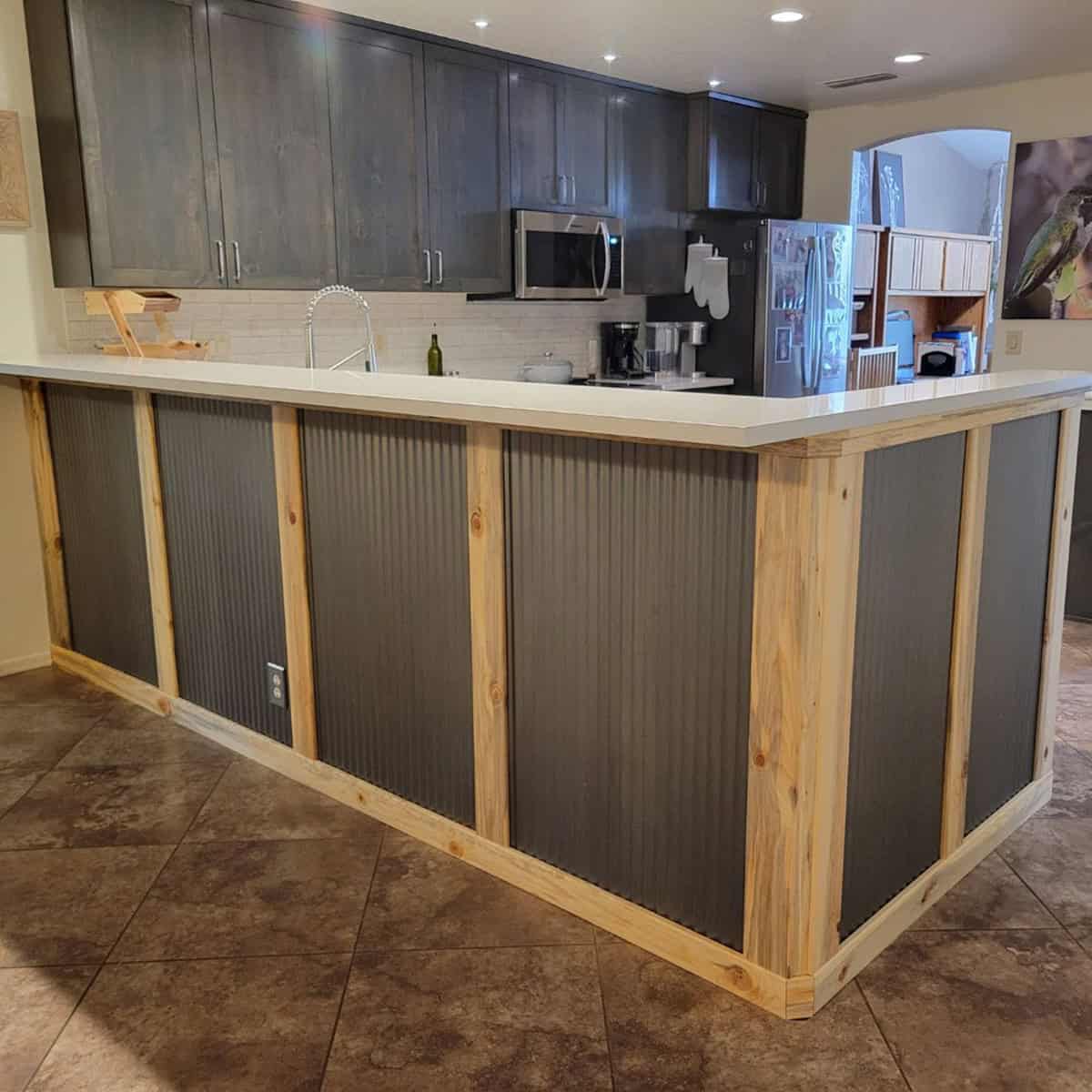
Credit to dakotaceiling
Wainscoting is traditionally used on walls, but it’ll work on virtually any vertical surface you can imagine. For instance, if your kitchen has an island or your living room has a beverage station, consider covering them with wainscoting.
The boards add a few more details to these areas of your home without interfering with the four walls of the room. Also, use these areas as a trial to see how much you like wainscoting before investing any further.
Paint Trick
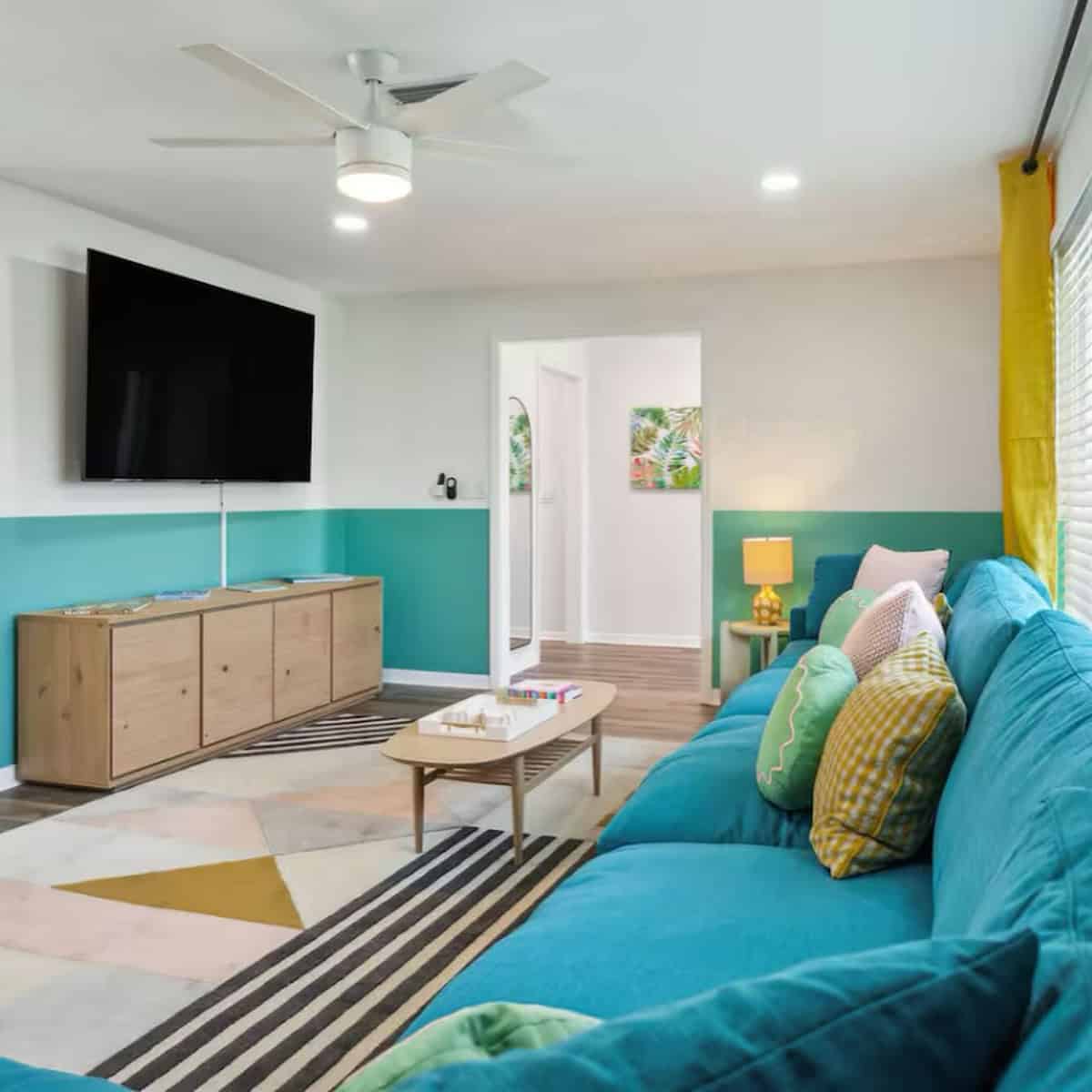
Credit to rankin.design
If you’re on a tight budget, or if you don’t want to go through the hassle of finding a trusted contractor, then just cheat! By that, we mean, paint the “wainscoting” on your walls! This image shows how beautiful the living room wall can be with a coating of paint between the baseboards and an imaginary wainscoting cap.
Though not the perfect substitute, it can be a wallet-friendly way to create the visual depth of wainscoting but without any bulk.
Mirror Panels
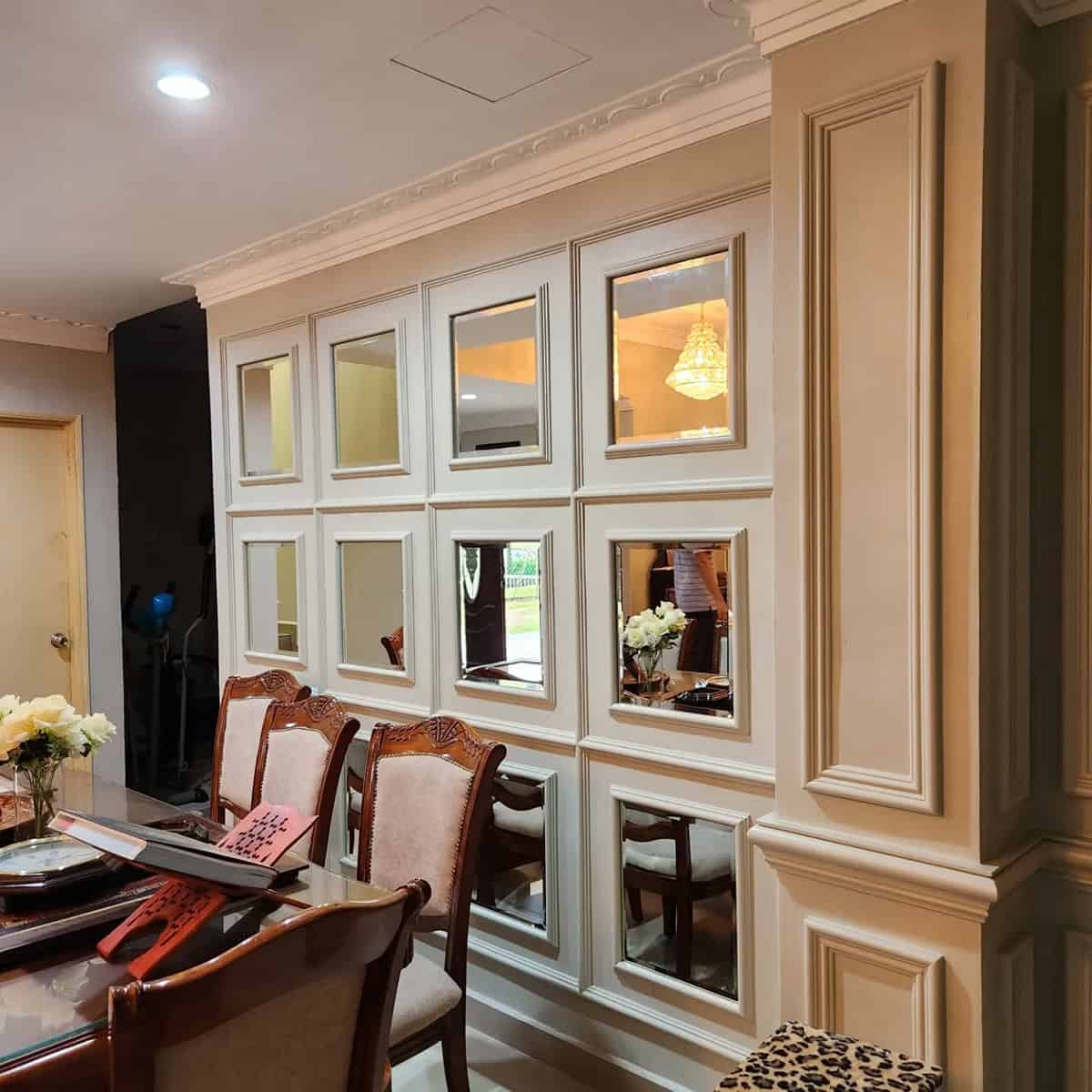
Credit to cantikwall.wainscoting
As you can see, the flat panels on wainscoting can be the perfect real estate for further decorations. You can add painted images or even wallpaper to each individual panel, or you can try something different and install mirrors there.
The reflective surfaces will allow light to bounce around the room and make tight spaces feel bigger. This is especially helpful in parts of your home with limited sunlight.
Mirror Inlay
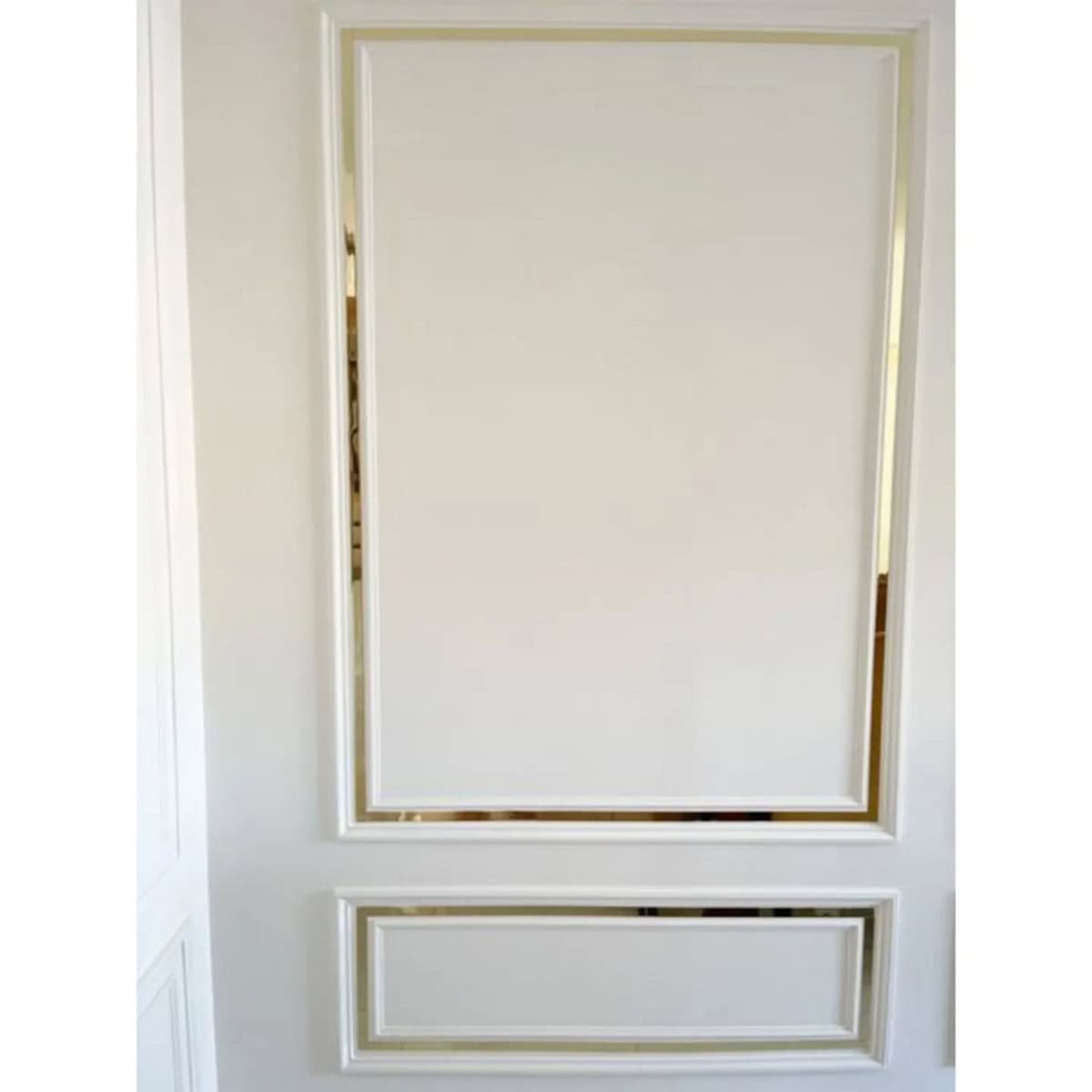
Credit to smart.wallpapers.kenya
Don’t want to invest in dozens, if not hundreds, of mirrored panels? What about adding mirrored inlays along the grooves of your wainscoting? The slim mirrors capture and reflect a bit of light, so they don’t overpower the wainscoting design.
This is a great way to make your home feel a bit more dynamic, especially in entryways or compact sitting rooms.
Monochromatic
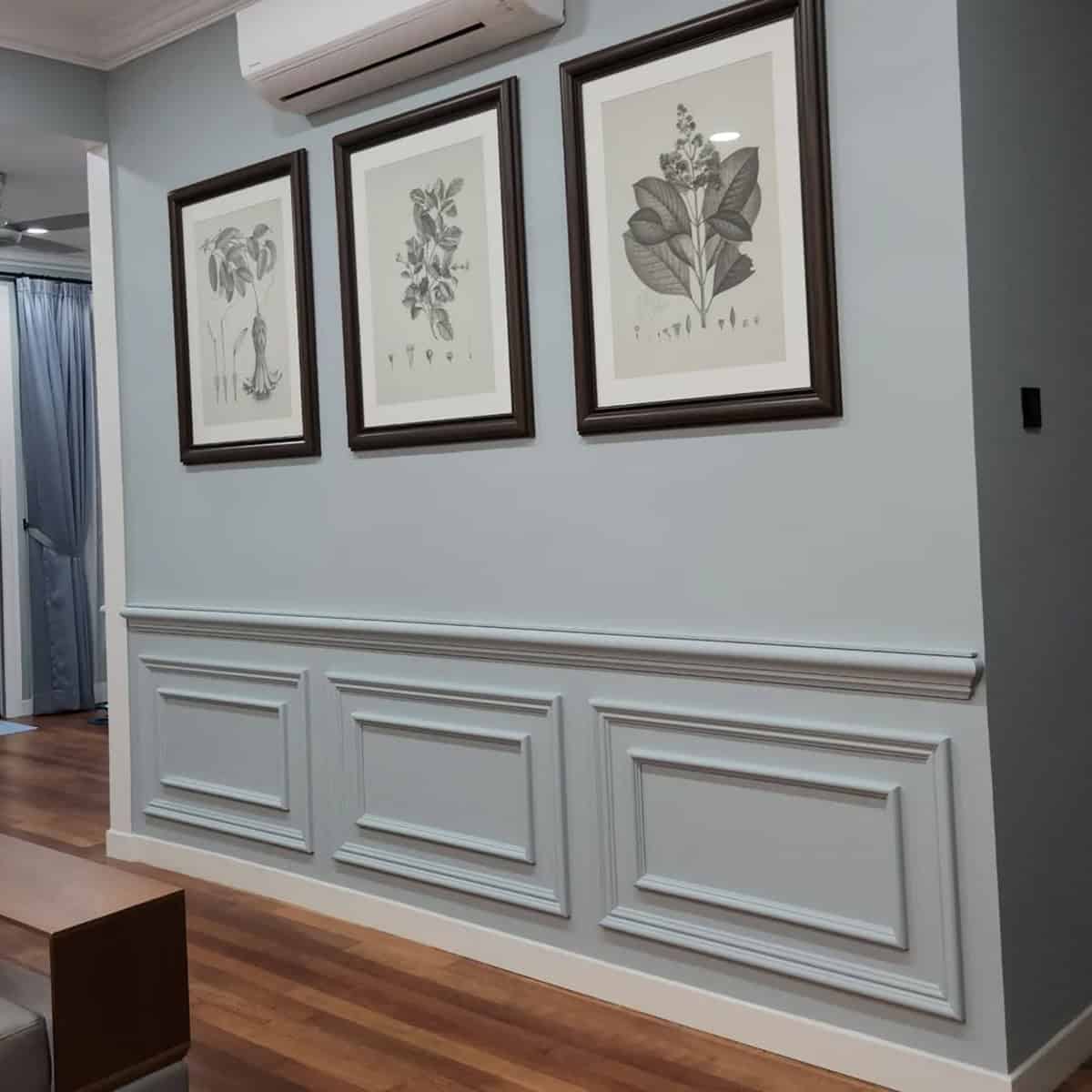
Credit to cantikwall.wainscoting
Color contrasts are great and all, but there’s no beating the tried-and-true monochromatic theme. This means painting the wainscoting and upper wall in the same color.
Monochromatic walls help create a seamless appearance by slightly masking visual breaks between the panels. This style shines best in minimalist settings or where you’ll spend the majority of your time relaxing—e.g., the bedroom or the living room.
More Inspiring Ideas
Two-Tone Wainscoting For Modern Farmhouse Bedroom Style
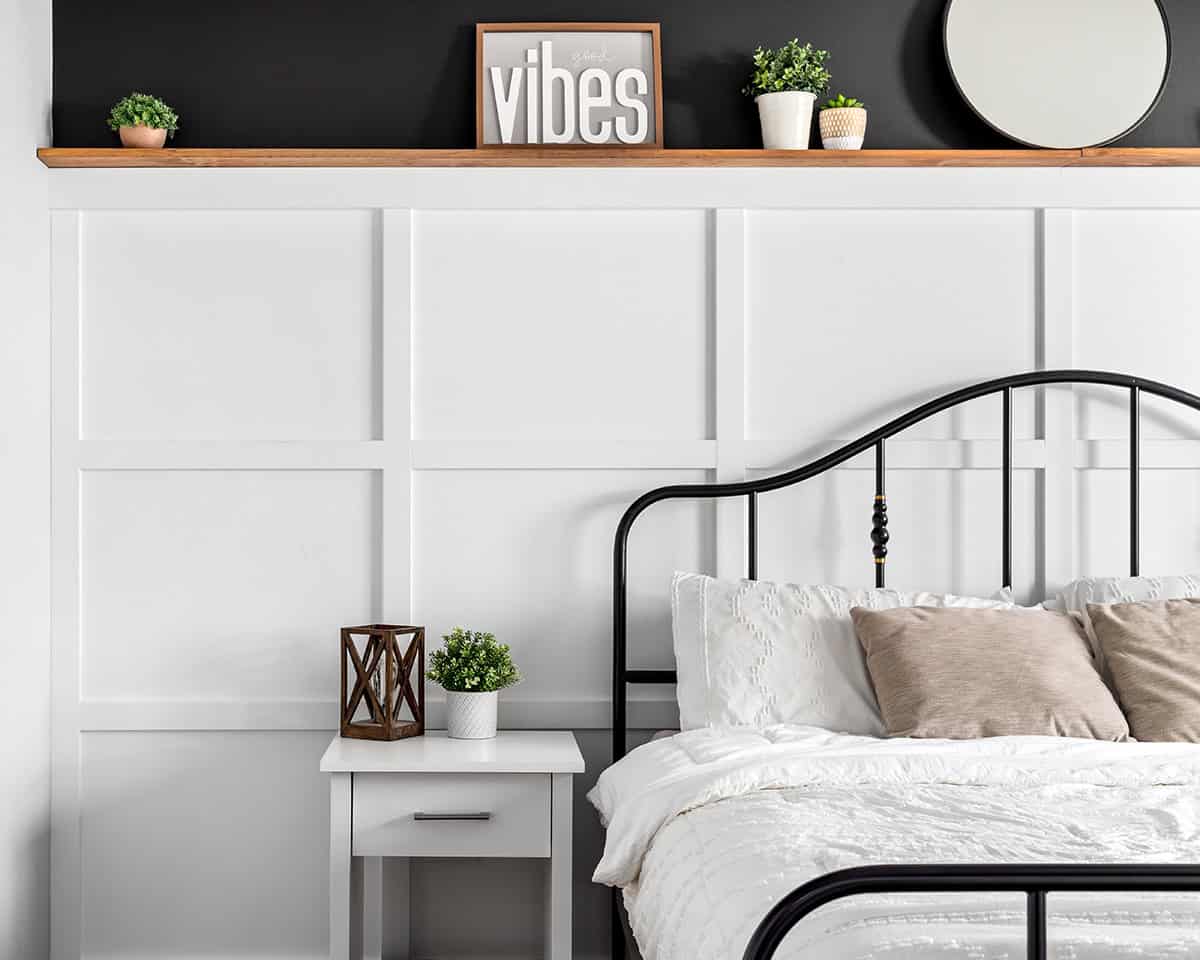
Muted gray, sage, or warm beige panels below, creamy white up top—this combo brings a cozy-modern vibe to a small bedroom. The split draws light upward and keeps things feeling open.
Shaker panels at about 40 inches line up well with most beds and nightstands. They’re practical, too—walls stay safe from scuffs in those tight corners.
Flat, slim cap rails beat chunky ledges here. Black hardware or iron lights add a little edge, but don’t make the space feel crowded.
White Wall Paneling For An Airy, Light-Filled Space
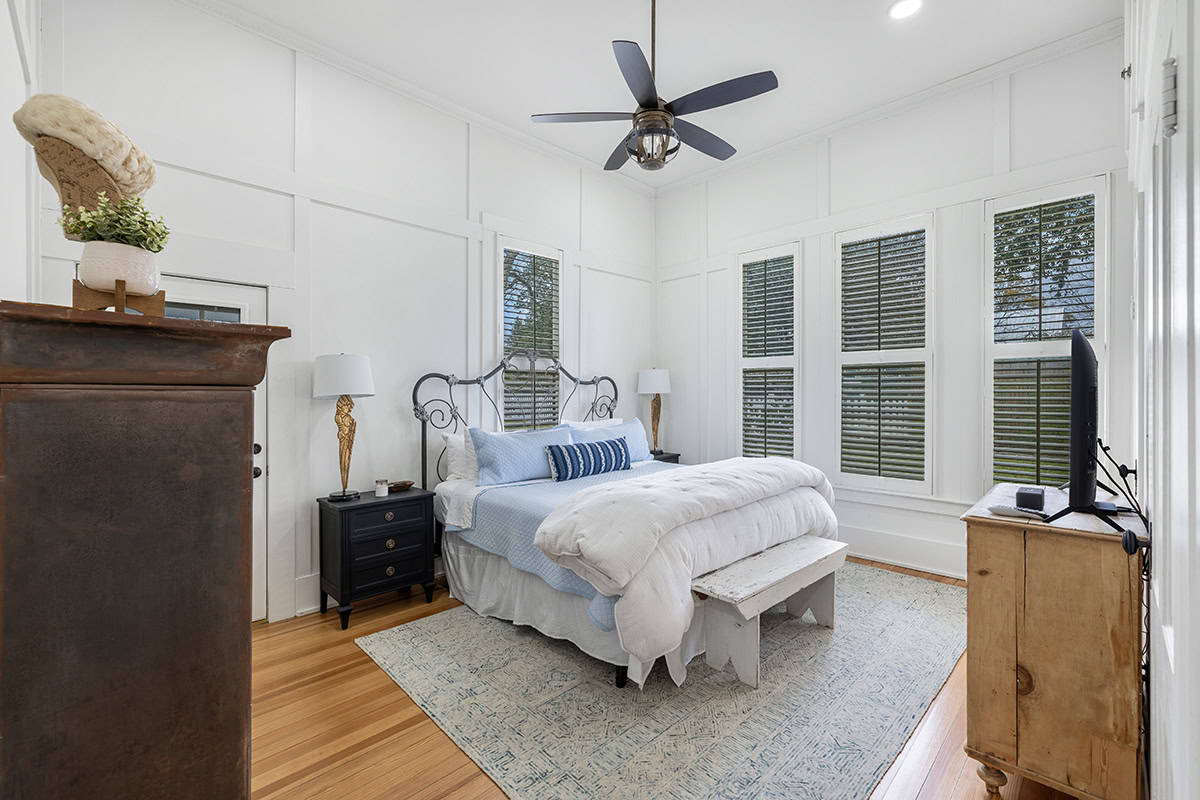
All-white paneling really opens up a room. Light bounces around, shadows soften, and the whole area feels bigger.
Narrow boards or subtle box molding work best. Skip deep relief—too many shadows just shrink the space. Eggshell or satin paint adds a hint of sheen and is a breeze to wipe down.
Paneling to chair-rail height keeps things grounded in living rooms and halls. For tiny rooms, going up two-thirds of the wall works, but keep ceiling and trim the same shade to avoid harsh lines.
Half-Wall Stair Wainscoting That Grounds Bold Wall Colors
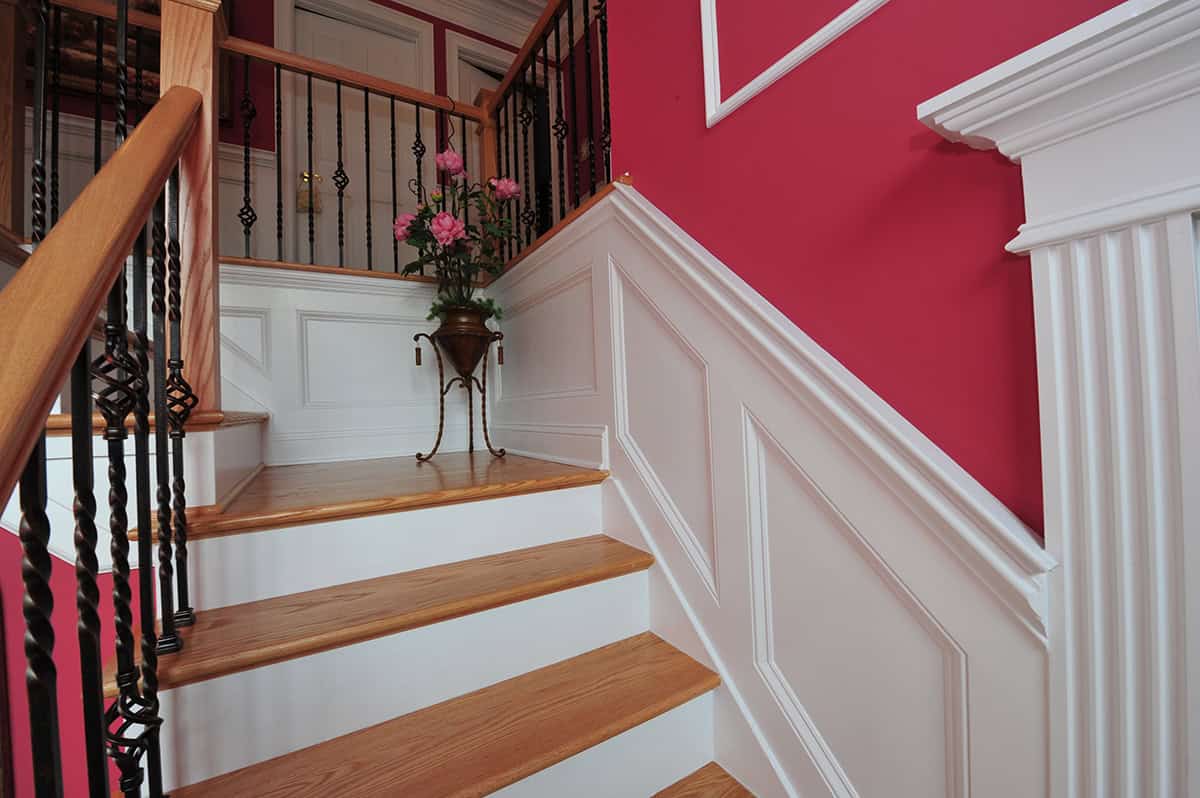
Stairwells can be weird and vertical. Lower panels help anchor all that height.
Soft neutrals or white below, deep navy or green above—this keeps things dramatic but not overwhelming. The paneling acts as a buffer for those bolder shades.
Line up the top rail with the handrail for a crisp finish and balanced proportions, especially in those narrow, steep runs.
Two-Tone Box-Panel Stair Wainscoting
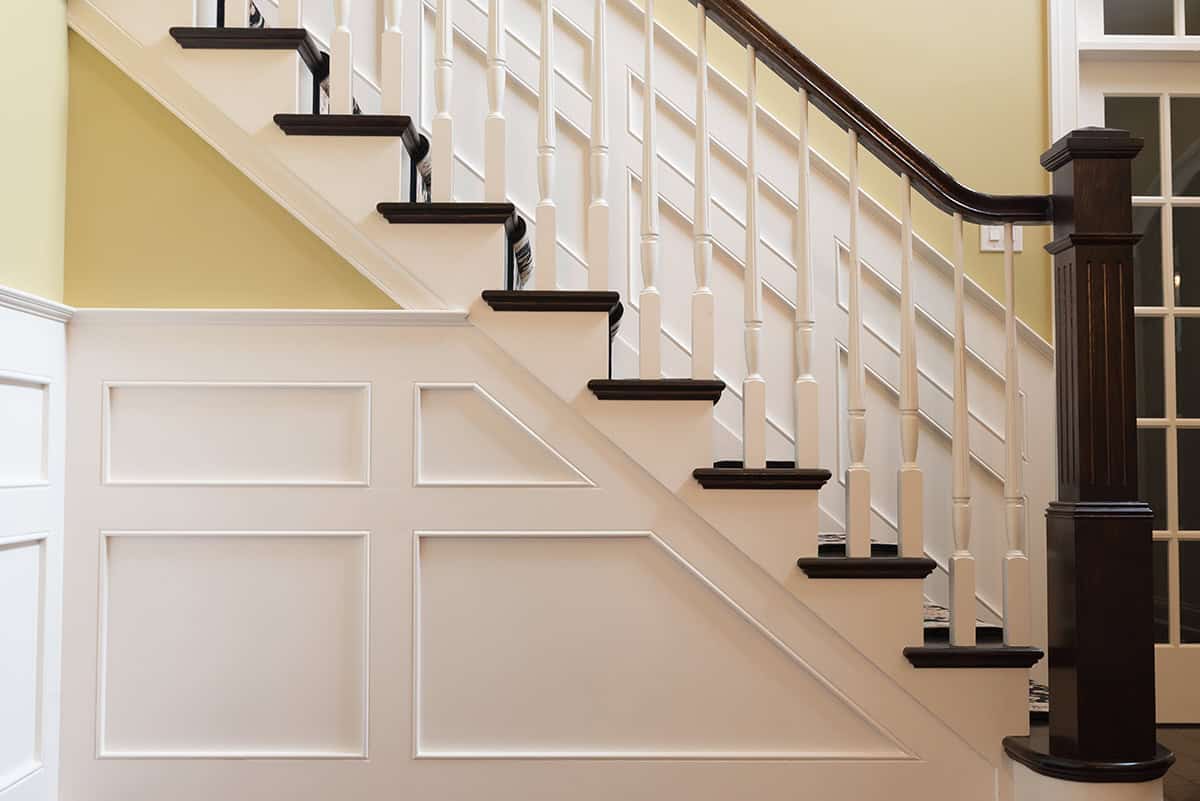
Box panels bring a sense of order to staircases, especially in traditional or transitional homes.
Go one shade darker for the panels than the upper wall. Subtle shifts beat high-contrast in small spaces—just enough depth, not too much drama.
Spacing matters more than panel size. Getting the boxes evenly distributed along the slope is worth the extra measuring.
Shadow Box Wainscoting For Subtle Texture
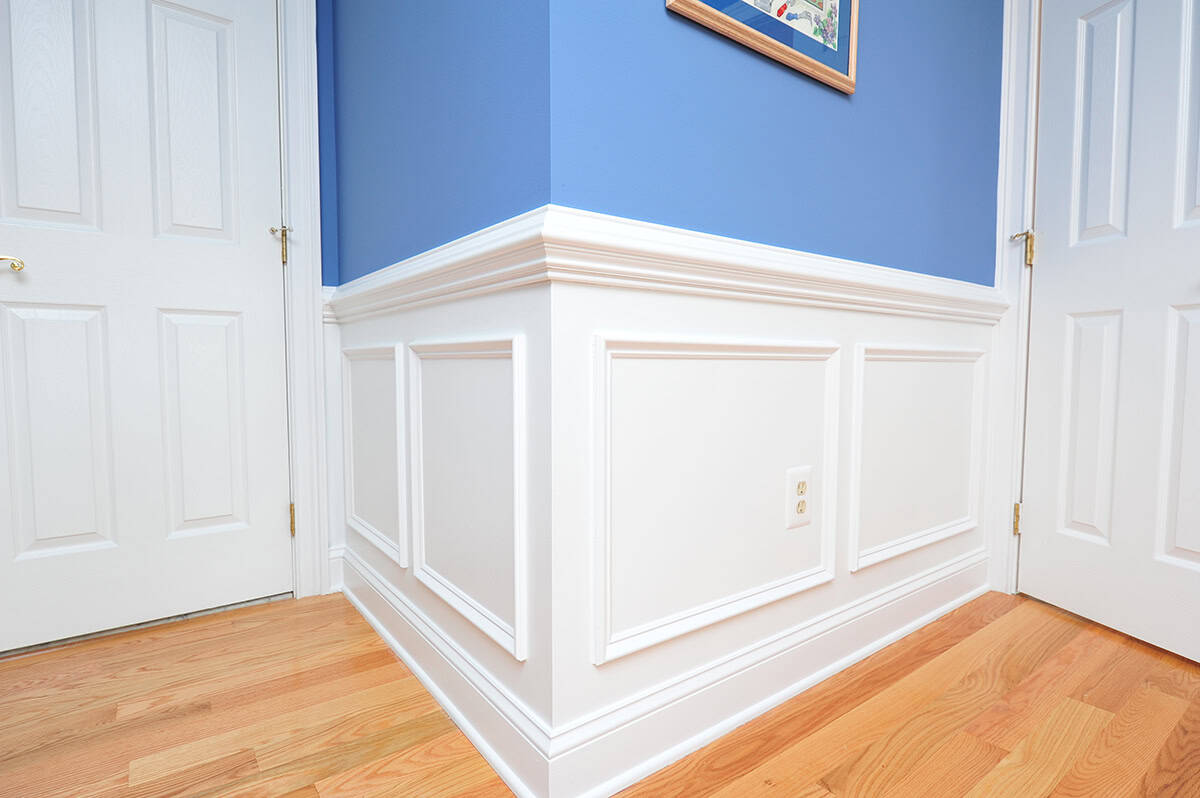
Shadow boxes add dimension without bulk. Thin molding forms rectangles right on the drywall—minimal material, maximum effect.
Stick to trim one or two inches wide. Large profiles feel out of place in a small room. Painting everything the same color keeps it understated.
Perfect for dining nooks, hallways, or tiny offices—architectural detail, no lost square footage, and less expensive than full panels.
Dark Paint With Slim Panel Trim For Depth
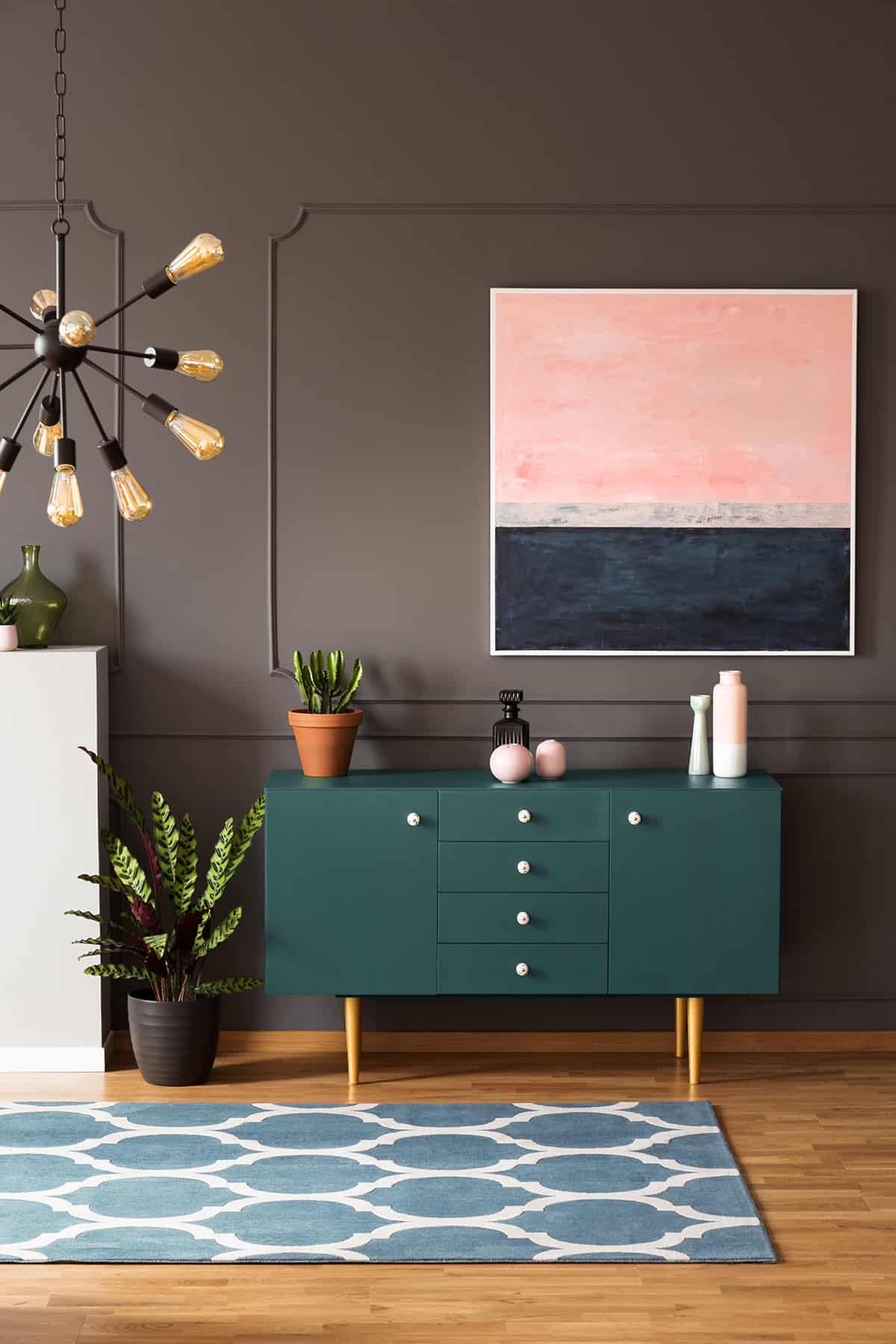
Dark walls don’t have to shrink a room if you’re careful. Deep blue, charcoal, or olive for both wall and paneling gives a moody vibe.
Super slim molding outlines the panels—thick trim just drags things down. A thin, flat cap rail keeps it sleek.
Lighting really matters here. Add wall sconces or ceiling fixtures to keep the space from feeling like a cave—the panel lines should read as subtle texture, not harsh contrast.
Classic White Stair Wainscoting With Black Floors For High-Contrast
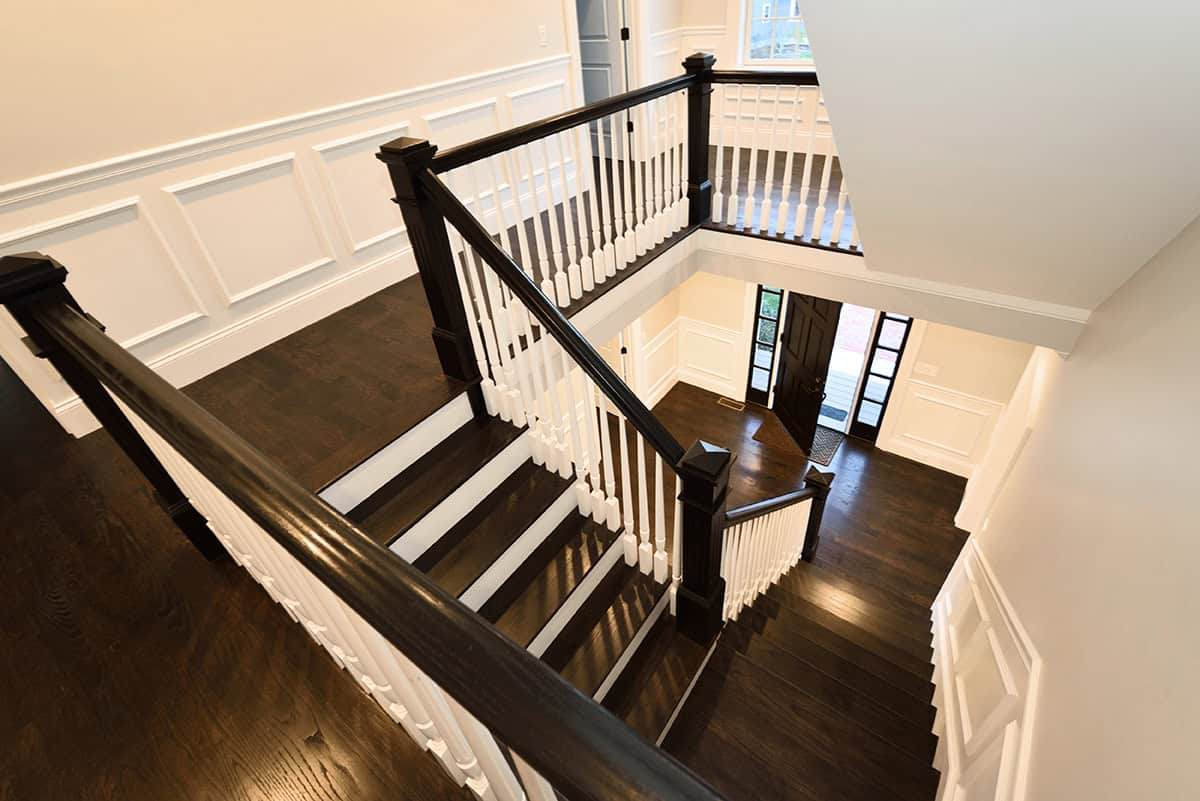
White panels against a black stair floor—now that’s contrast. Works especially well in those skinny entry staircases.
Semi-gloss white wainscoting stands up to foot traffic. Black treads or floors visually ground everything.
Keep panel shapes simple—no need for fancy profiles when the colors are already making a statement. Too much detail just feels fussy in a small spot.
Library-Style Wainscoting For A Small Den
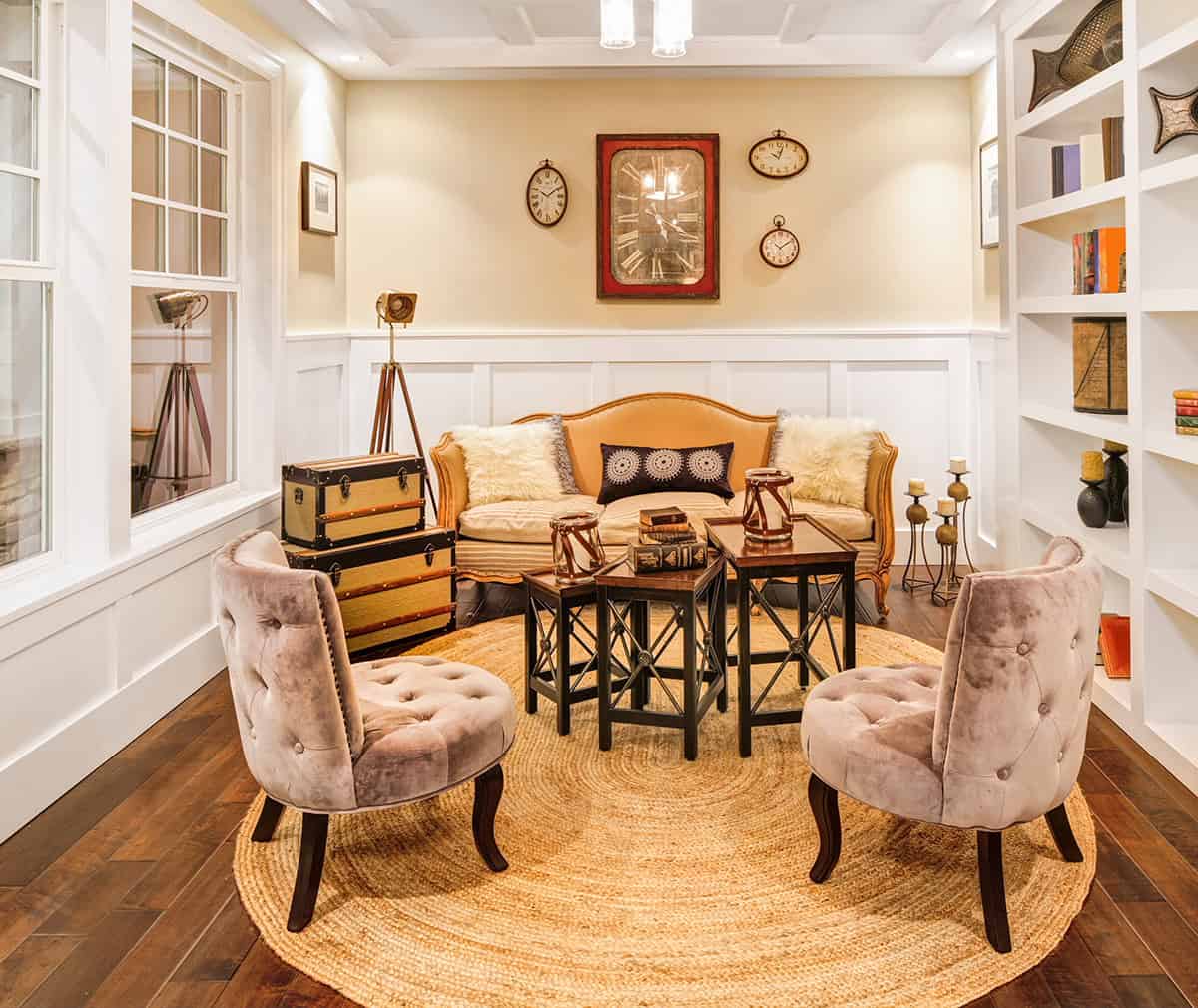
Taller paneling (think 48 or even 54 inches) brings a cozy, formal feel to a small den—if your ceilings can handle it.
Deep neutrals like brown-gray or muted navy below, lighter shades above. This keeps things grounded without boxing you in.
Built-in shelves or low bookcases pair well, and the paneling keeps walls safe behind furniture. The result? A den that feels intentional, not just small.
Entryway Wainscoting That Frames Built-Ins
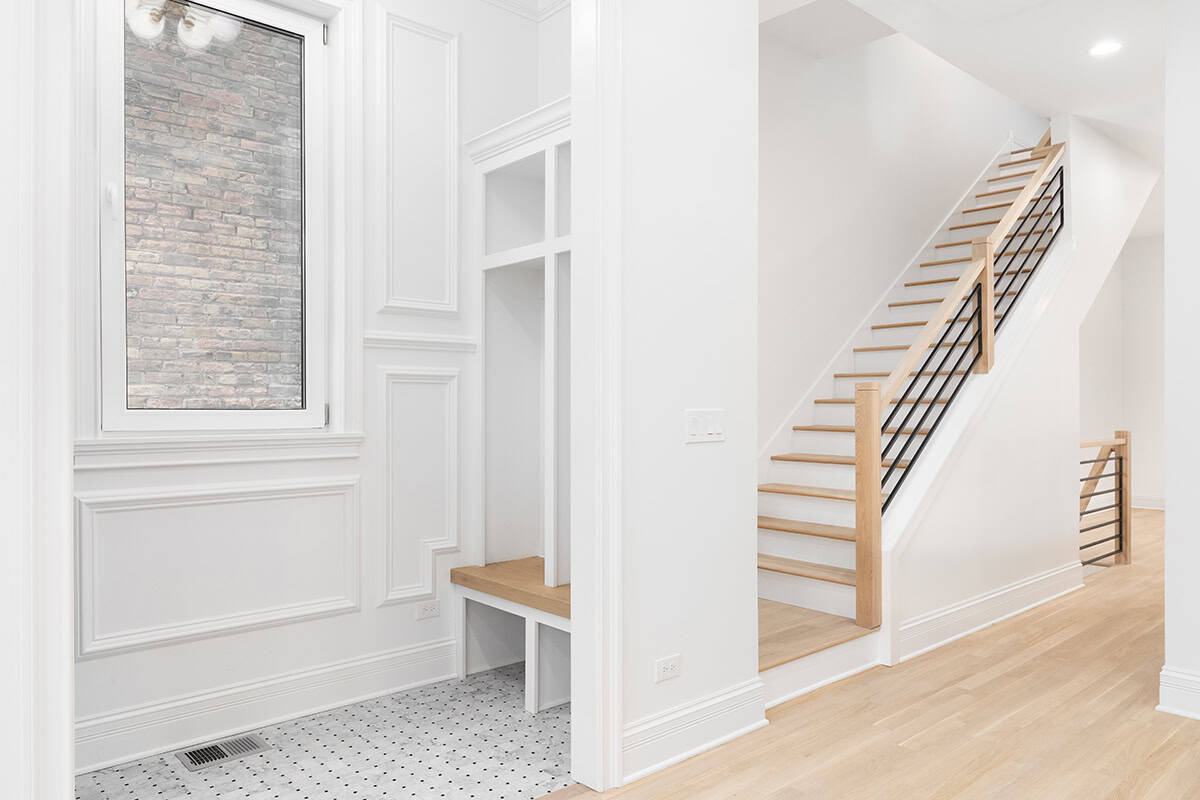
Entries are always tight on space. Wrapping paneling behind and around benches or cabinets ties everything together.
Match panel height to the top of the bench back for a seamless look. Durable paint is a must—bags and shoes take their toll. Satin or semi-gloss finishes wipe clean easily.
Slim Picture-Ledge Cap
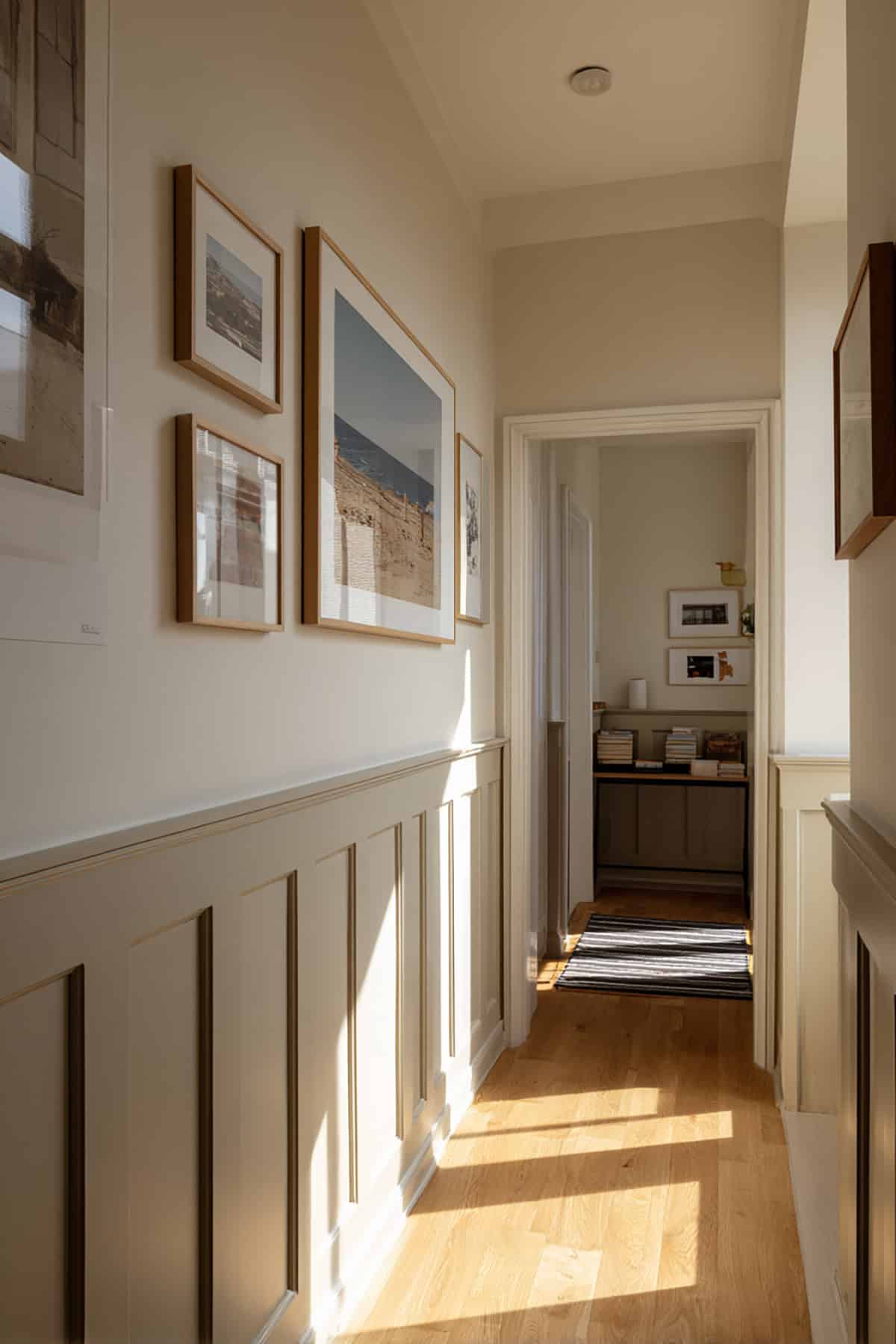
Adding a thin ledge—less than three inches deep—on top of wainscoting can be surprisingly handy. It’s just enough for a photo or two, maybe today’s mail.
Skip heavy decor and keep it out of the walkway. Straight, square edges blend in better than ornate shapes, and painting it to match the panels keeps the look unified.
Curved Wainscoting Corners
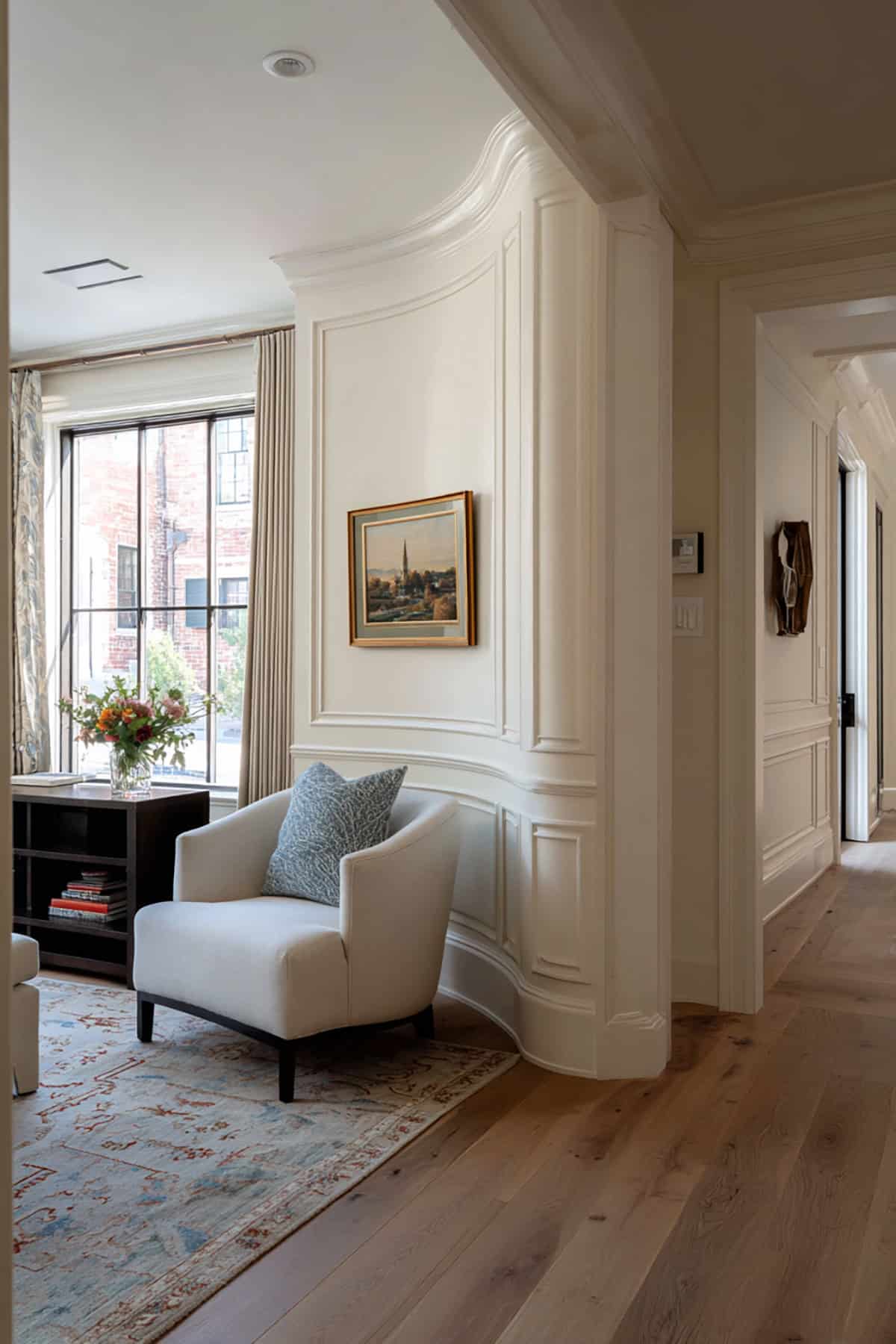
Rounded corners can soften those sharp transitions in narrow halls or stairwells.
Flexible molding or thin MDF bends for the curve. Simple panel designs let the curve stand out—busy box layouts just look awkward here.
One-tone paint jobs let the shape be the star. This works especially well in older homes with arched openings or winding stairs.
Extra-Low Wainscoting For Tight Ceilings
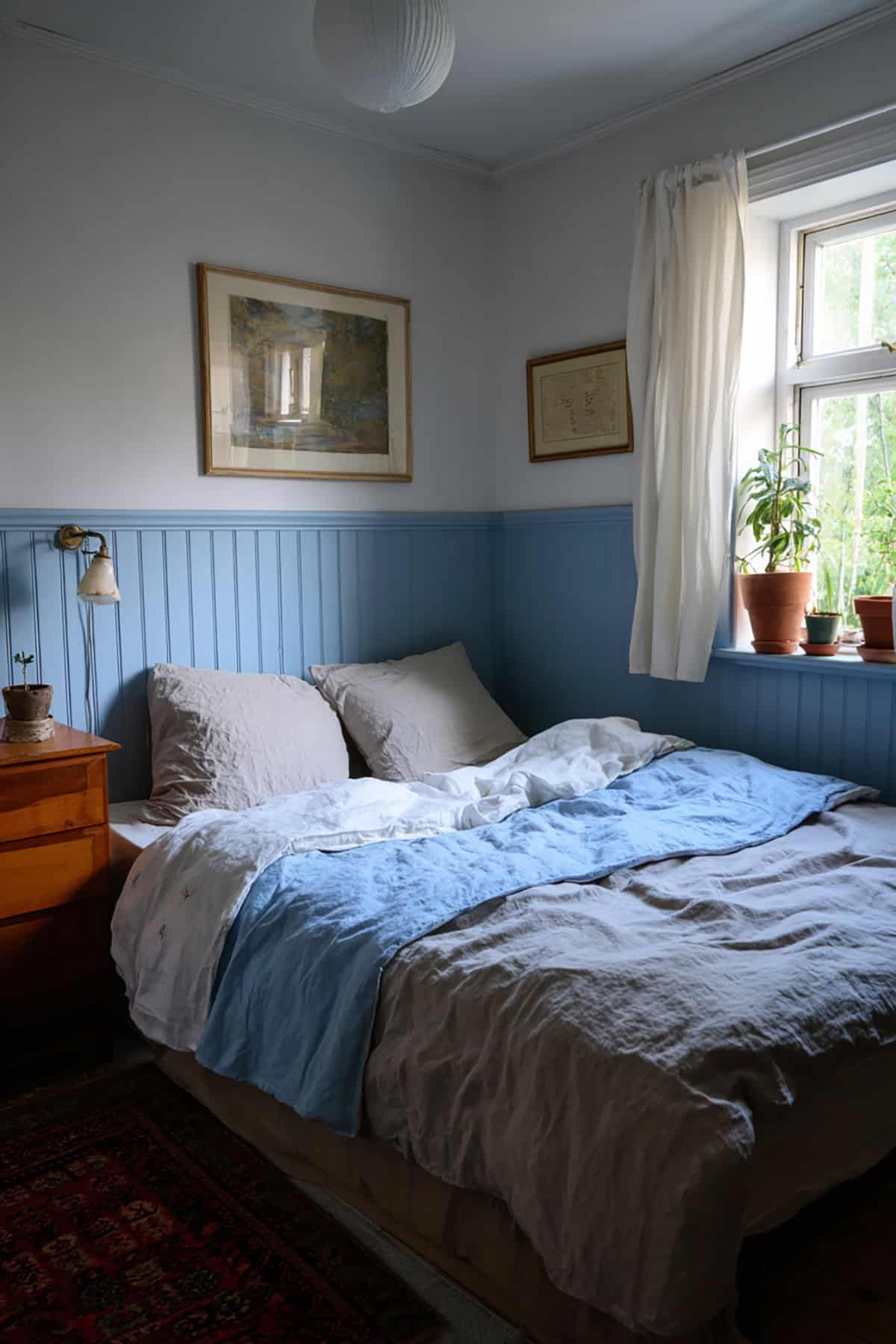
Low ceilings need careful handling. Panels at 30 to 34 inches keep walls feeling open and airy.
Going taller can make everything feel squashed. Even short wainscoting protects against furniture scrapes.
Simple trim—just a top rail and baseboard—does the job. Lighter paint up top draws the eye upward, helping the space feel less compressed.
Thin-Line Modern Panel Grid
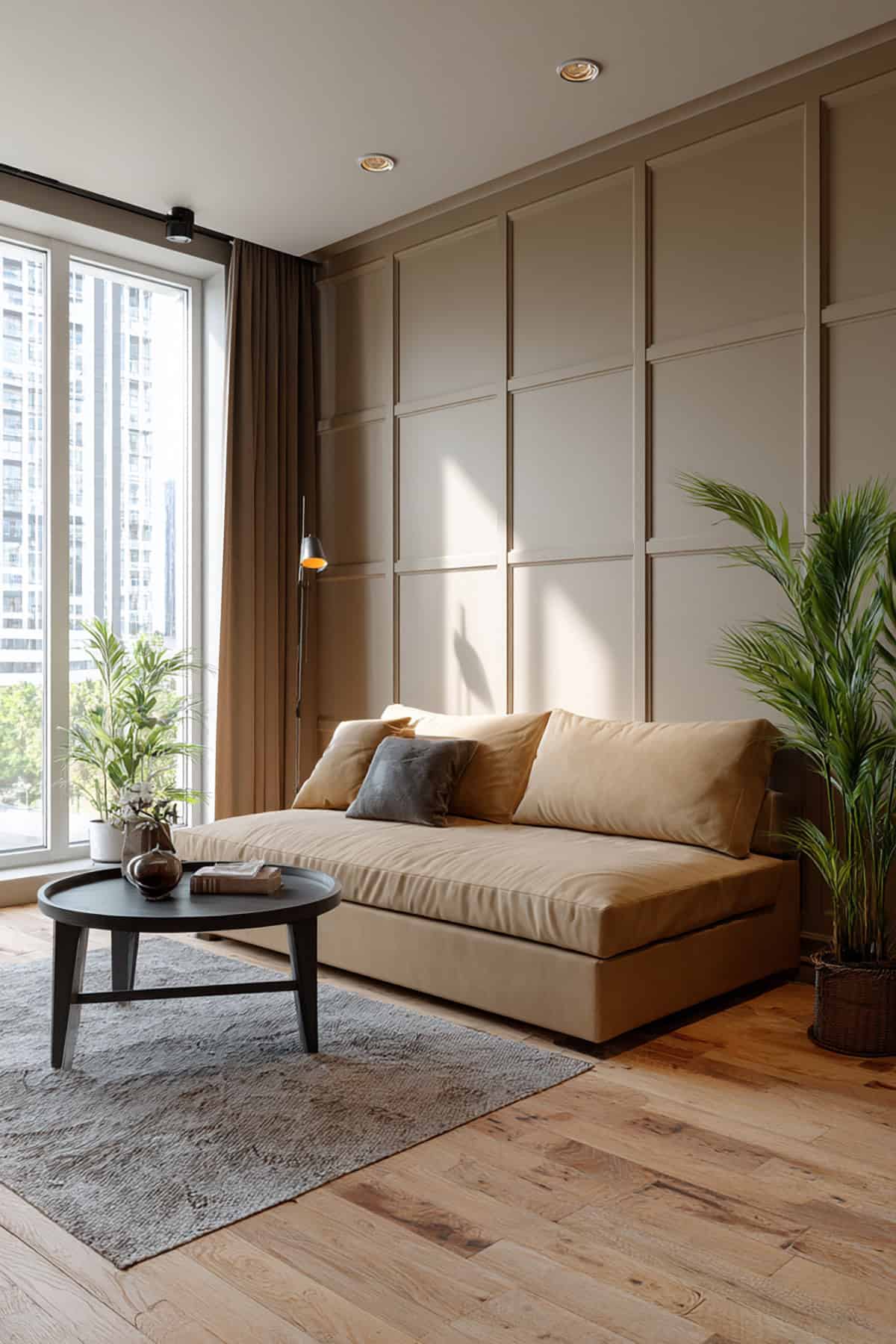
Heavy molding competes with furniture in compact rooms. Thin outlines, spaced generously, avoid that conflict and create structure without bulk.
From across the room the surface feels calm; only up close do the faint shadows reveal the grid.
Wainscoting With Hidden LED Strip
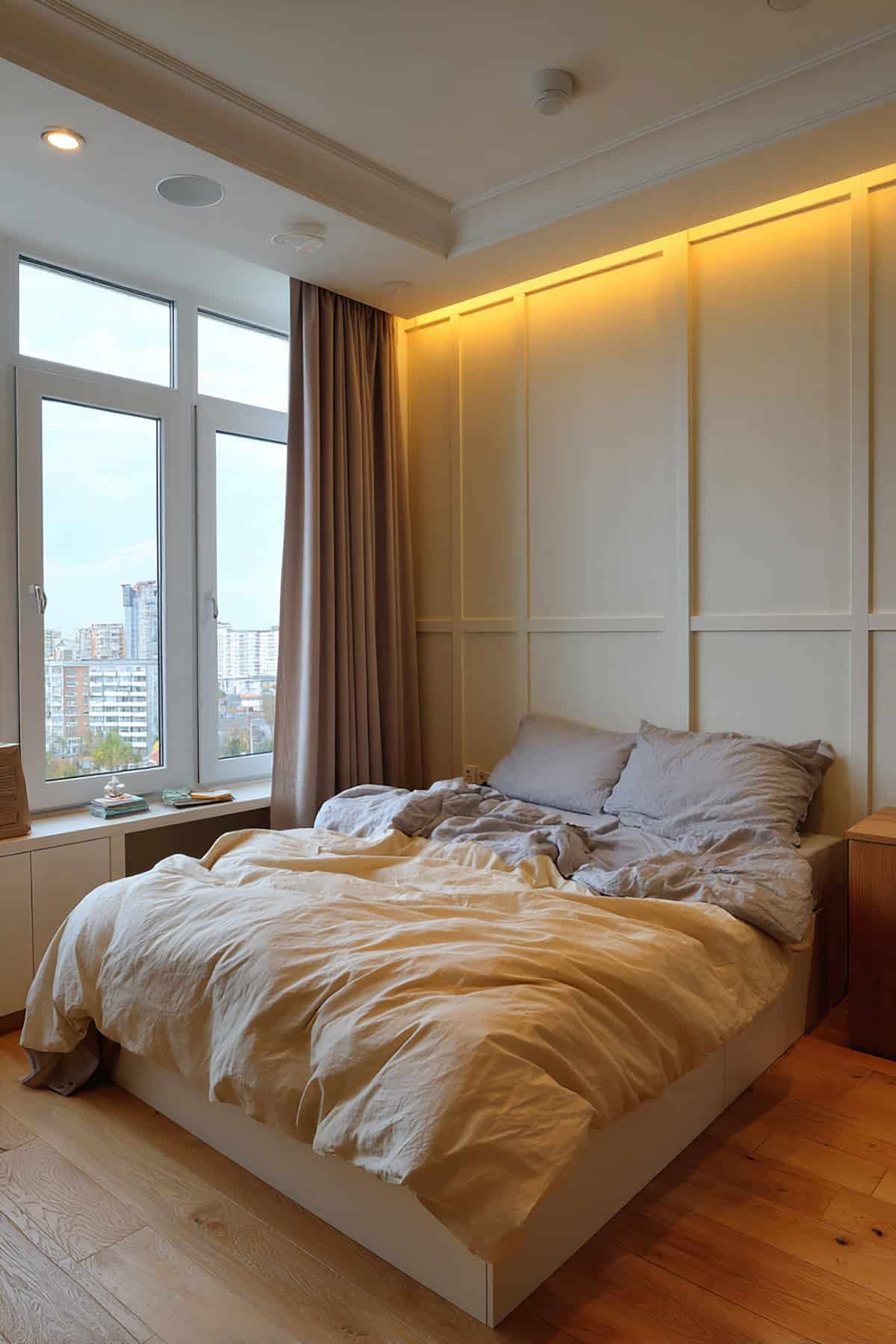
Soft, indirect lighting from a hidden LED strip under the cap rail can change everything after dark.
Warm white LEDs highlight the panel detail without harsh glare. Run the wires behind the trim or inside the wall for a neat finish.
Especially nice in hallways or bedrooms—less need for overhead lights, and the texture pops at night.
Floor-To-Cap Vertical Slat Accent
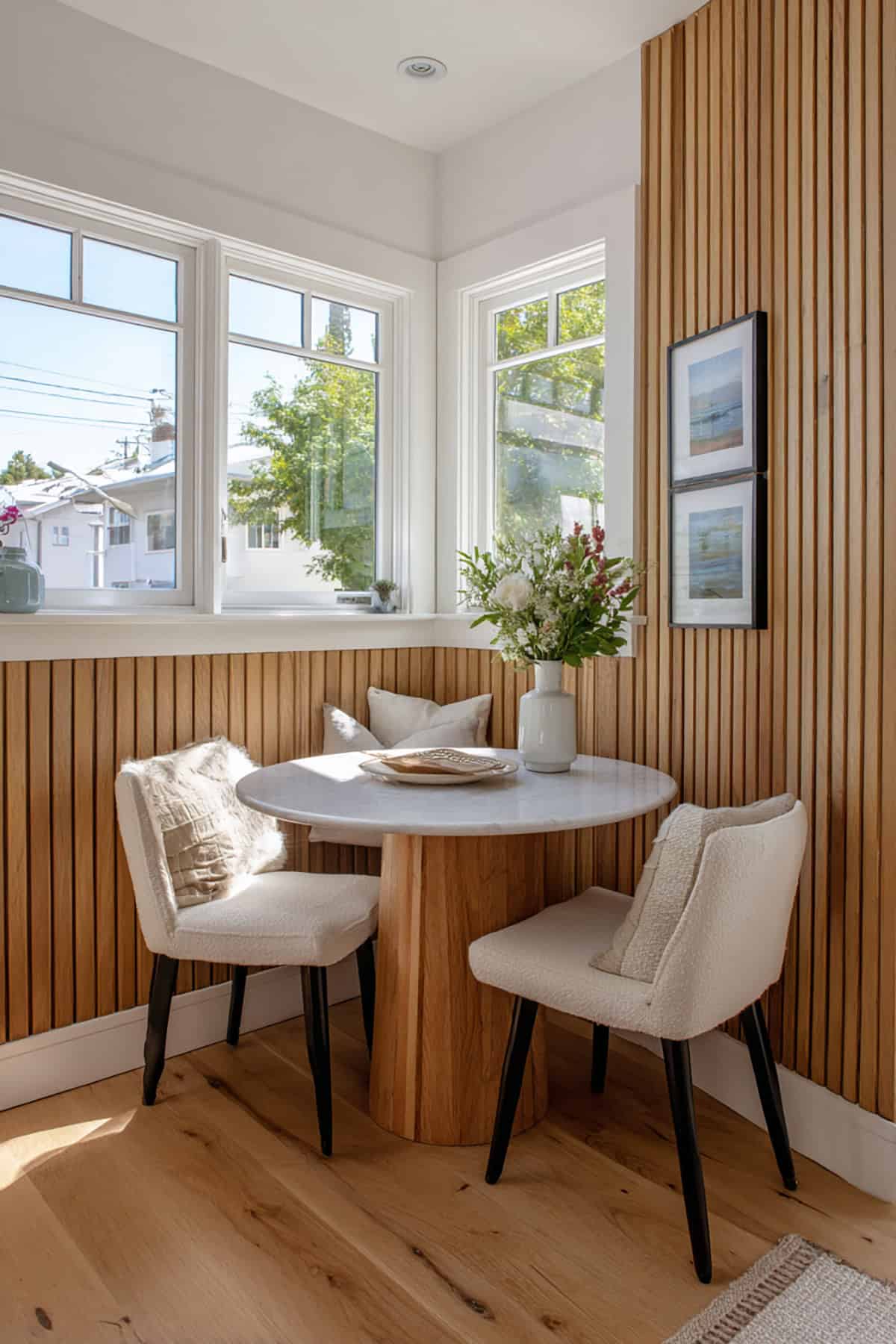
Vertical slats create an upward pull, making low ceilings feel just a bit higher.
Run slim slats from floor to cap rail, keeping the gaps uniform and tight. Painting them to match the wall keeps things subtle.
Perfect for compact dining rooms or bedrooms—adds a gentle rhythm, no heavy frames, and smooth wood or MDF keeps it polished.
Wainscoting Around Built-In Seating
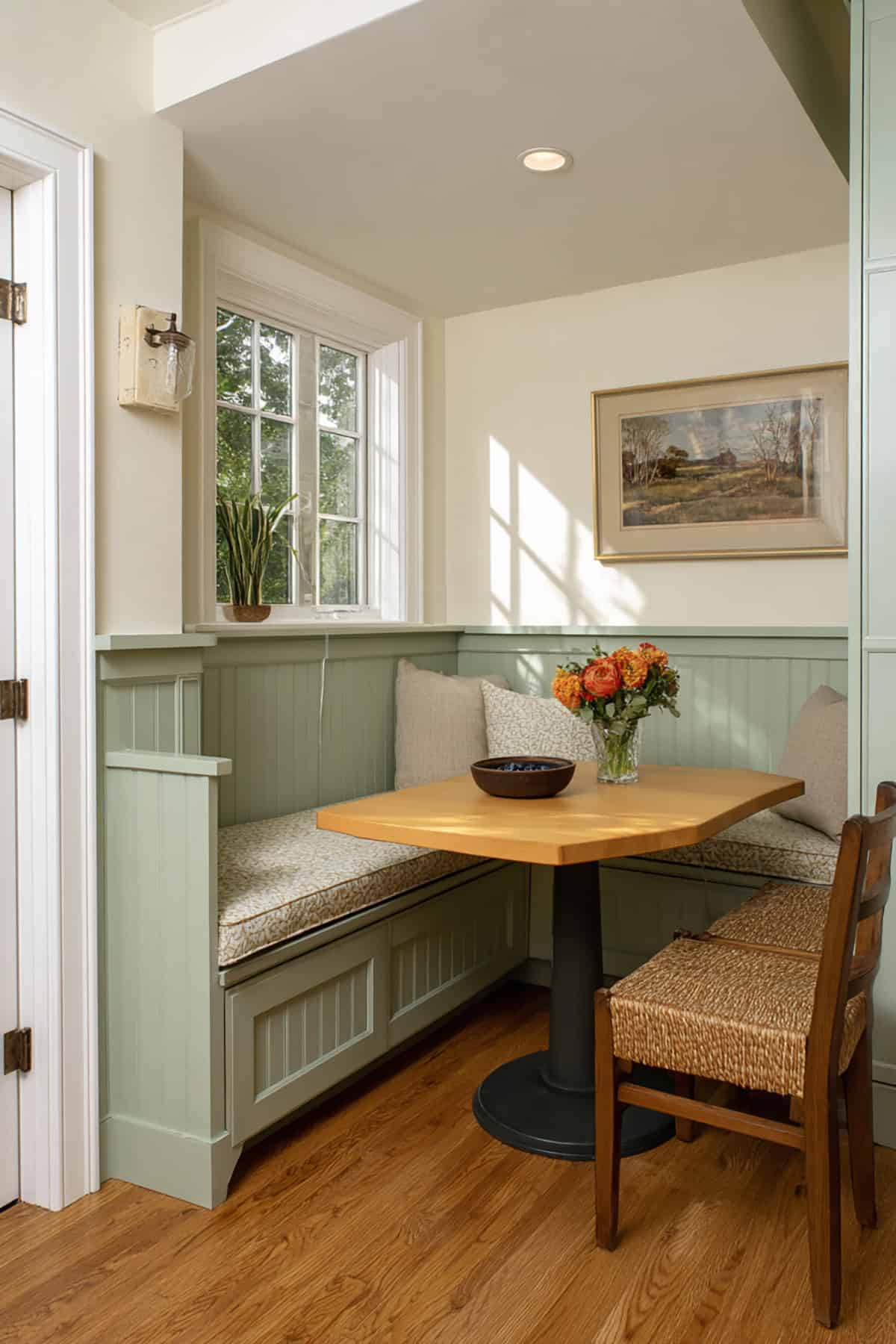
Breakfast nooks pressed against the wall? Wrapping paneling behind and beside the bench gives a custom, finished look.
Line up panel seams with the bench edges—half panels just look off. Durable paint is key for these high-traffic spots.
Keep the panel height a bit above the bench back for extra wall protection and a tidy finish. Match the trim to nearby cabinets for a cohesive feel.
Ultra-Minimal Flat Panel Without Cap Rail
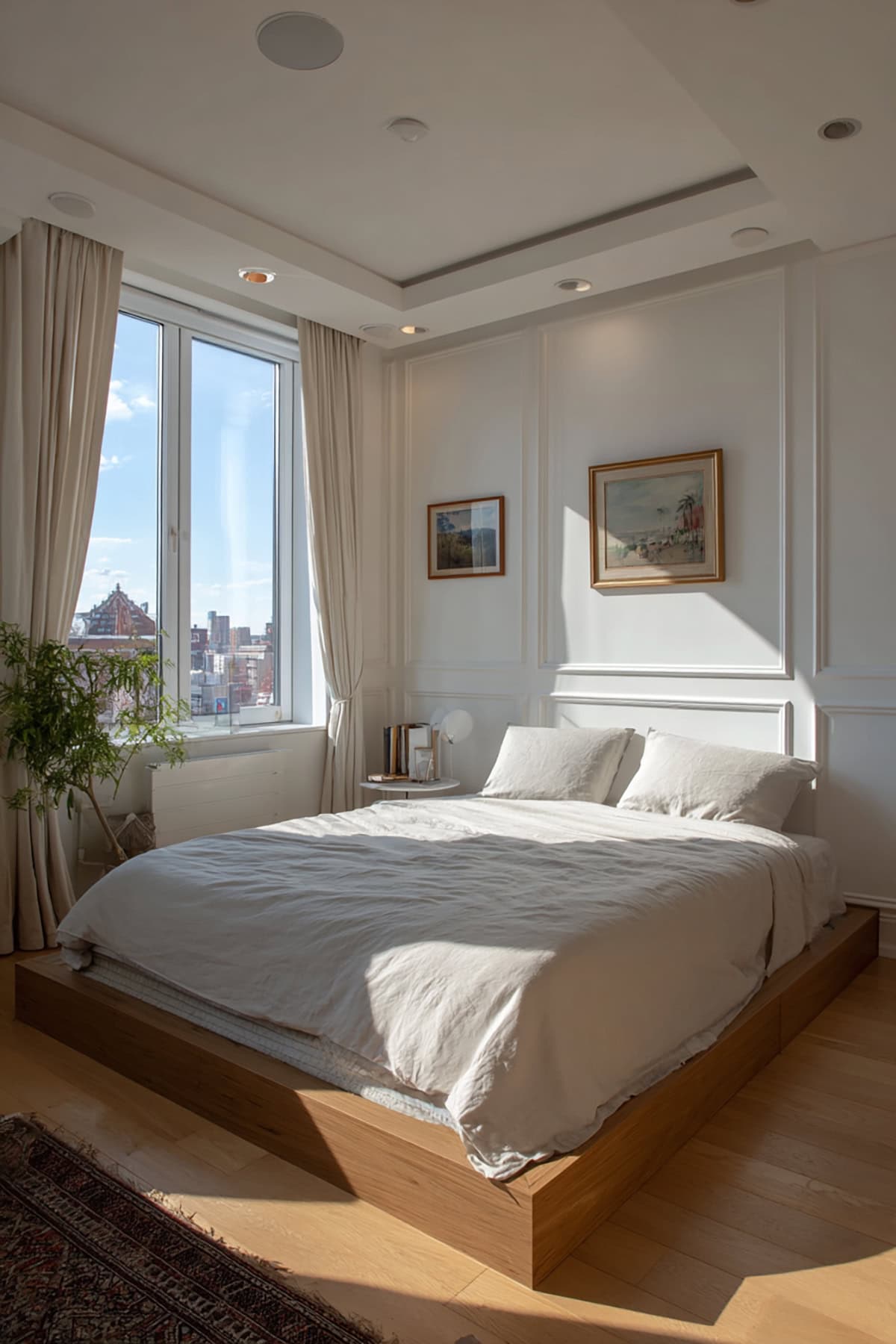
Skipping the cap rail altogether gives you a flush, super-modern look. Flat panels blend right into the wall.
Square-edged trim, sharp top lines—ideal for small condos or apartments that need every inch to feel open.
Painting panels and wall the same color helps the design disappear. No ledge means less dust, too.
Contrasting Baseboard Emphasis
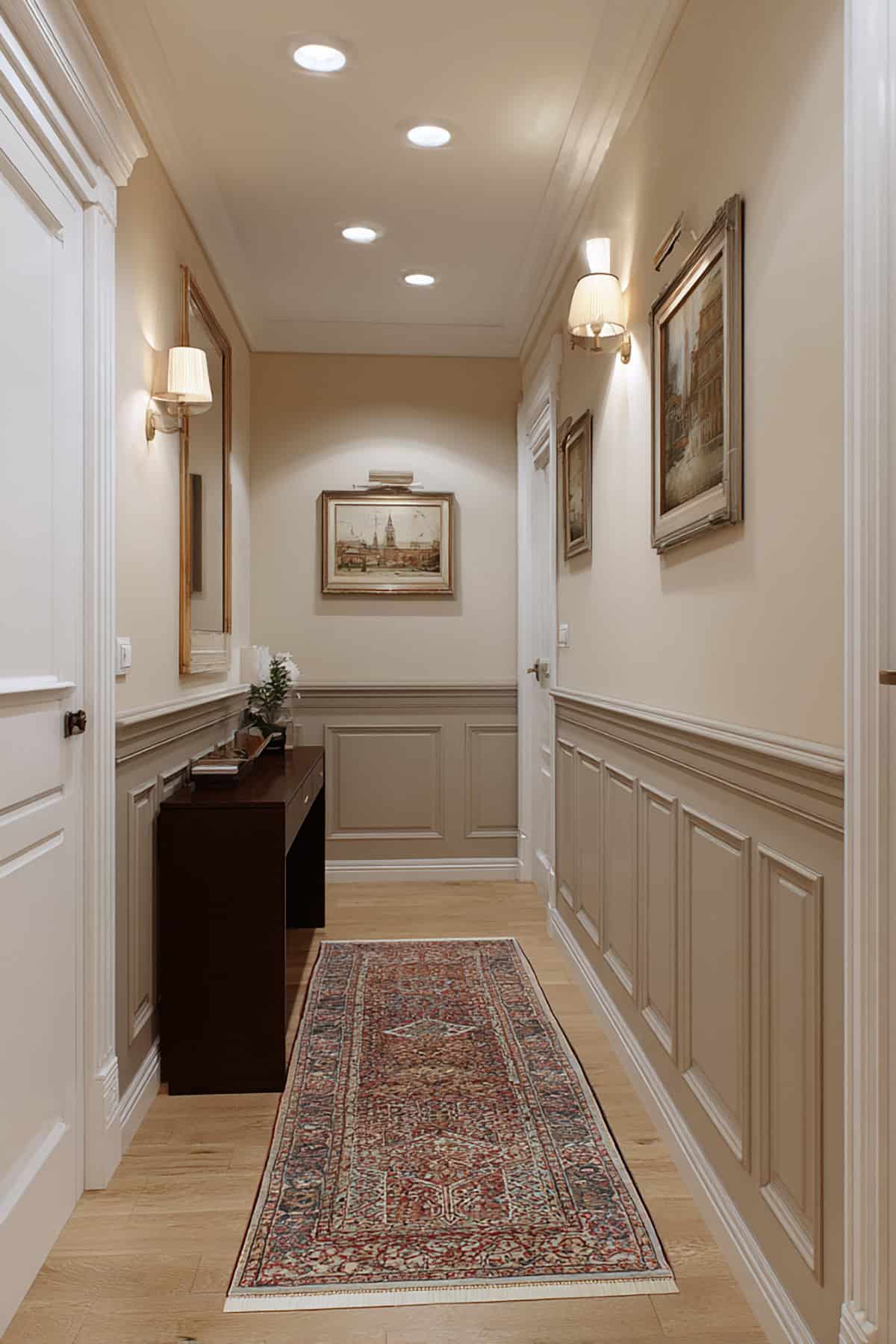
Sometimes it’s the baseboard that steals the show. A darker base anchors pale walls, especially in narrow corridors.
Keep the wainscoting itself simple and neutral. The bold base visually defines the room’s edge. Just don’t go too tall with the baseboard—medium height feels right in small spaces.
Clean, straightforward lines beat ornate detail here.
Wainscoting As Headboard Extension
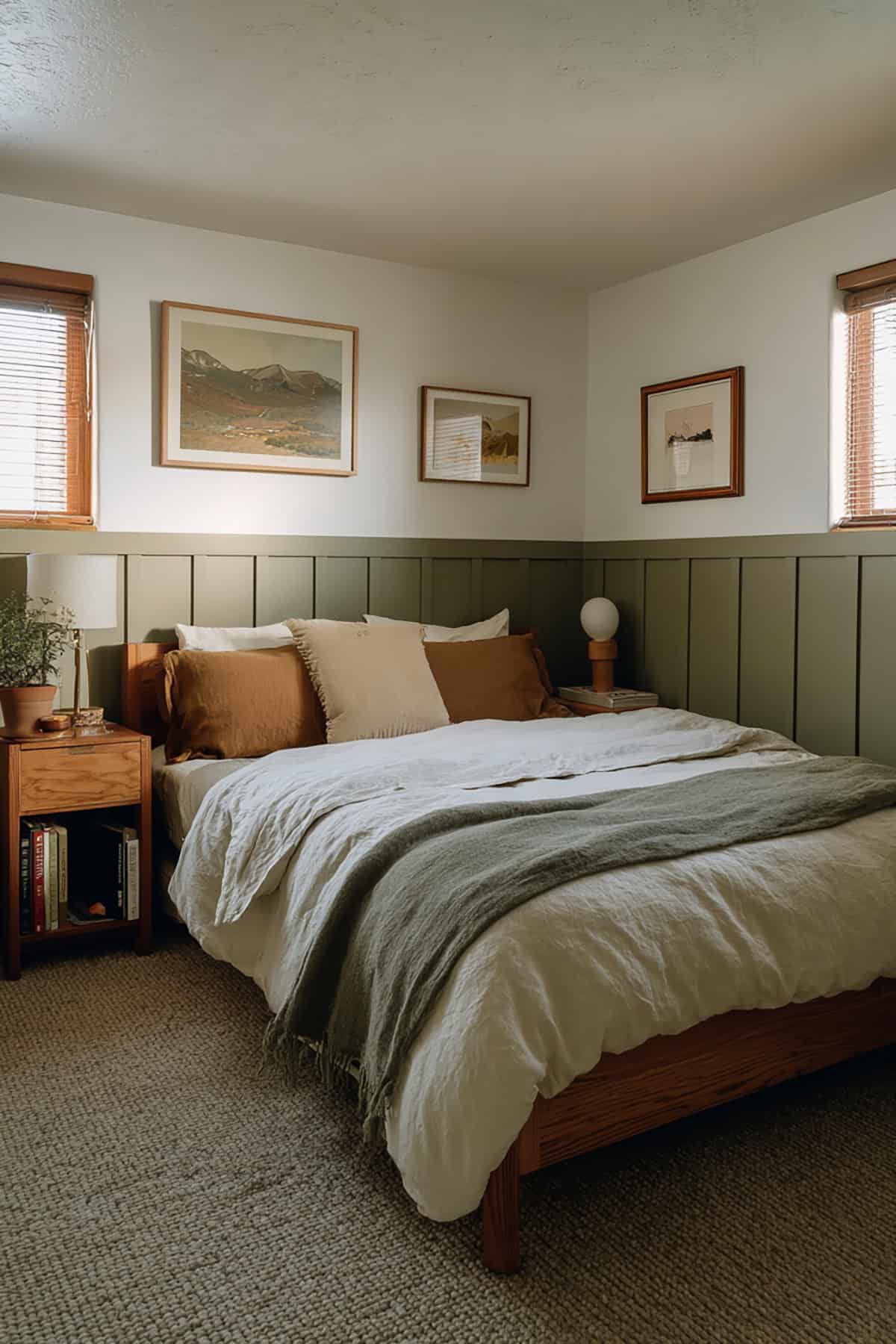
Paneling as a headboard? Why not. Extend it wall-to-wall or just wider than the bed for a tailored look.
Height between 42 and 54 inches usually lines up with mattresses. Wall-mounted lights free up space on tiny nightstands.
Choose calming colors—no wild contrasts right behind your pillow. The paneling should frame, not dominate, your sleep zone.
Micro-Scale Panels For Tiny Rooms
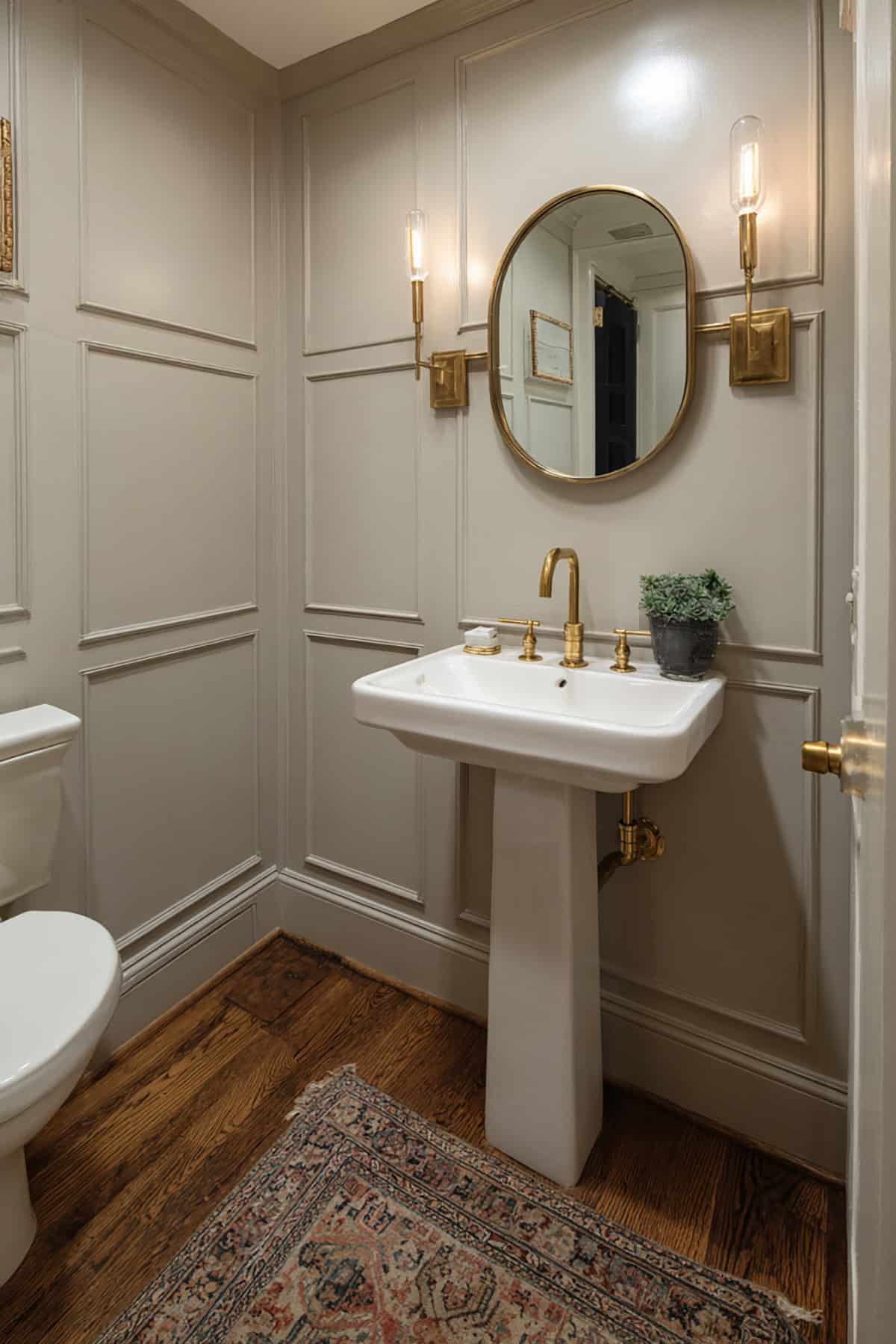
In truly tiny rooms, panel proportions need to shrink too. Smaller boxes fit the scale of powder rooms or little offices.
Tight, even spacing is key. Oversized panels just look odd. Light colors and slim molding keep things airy and intentional.
Measuring carefully pays off—cramped or uneven panels are hard to ignore in a small space.
High Wainscoting To Window-Sill Height
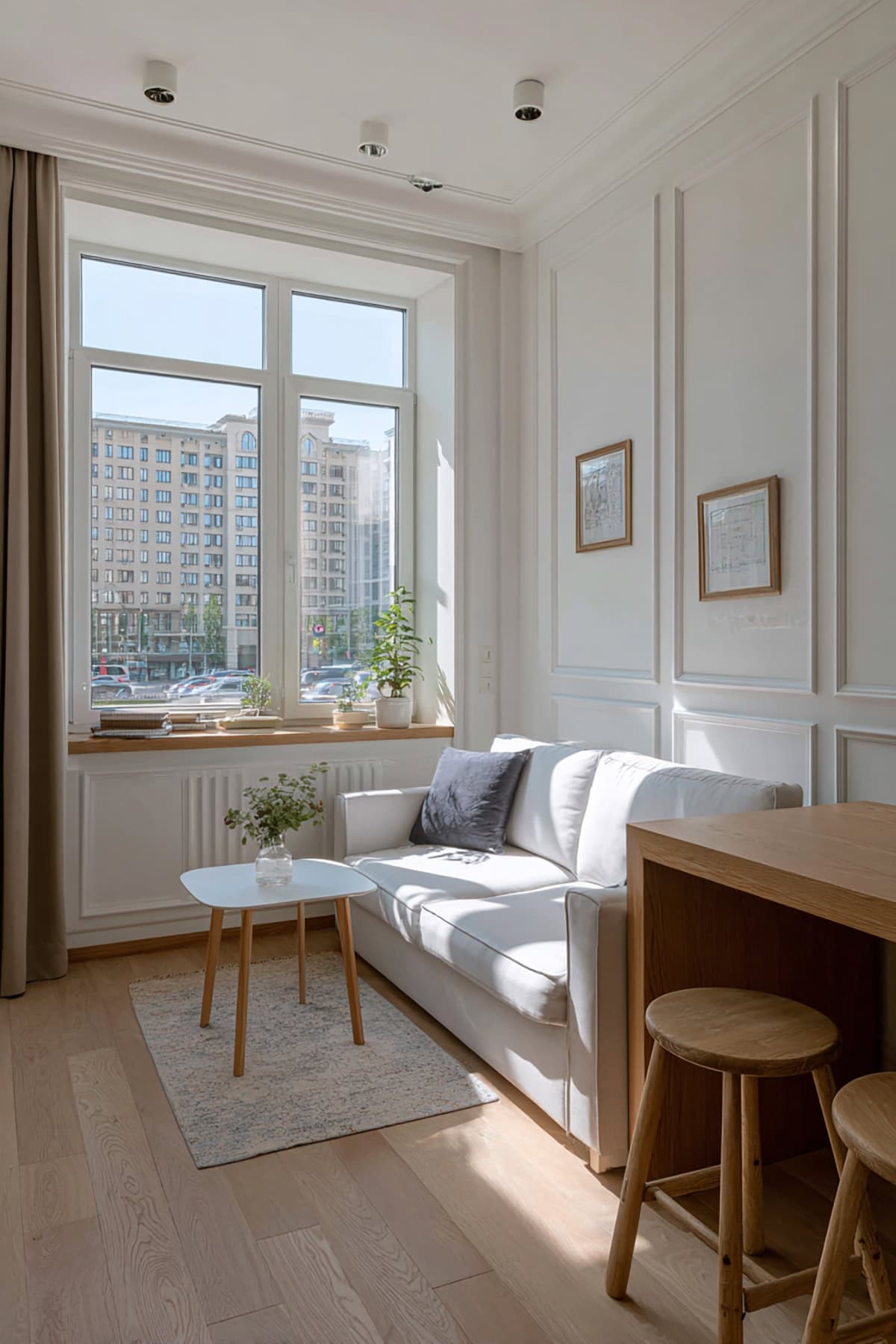
Bringing paneling up to the window sill creates a tidy visual stop. In smaller living rooms, this usually falls between 36 and 42 inches—right in line with most furniture backs.
The wall gets structure but doesn’t feel boxed in. Slightly darker paint below grounds the space, and narrow trim keeps it balanced.
Two-Tone Wainscoting With A Hairline Divider
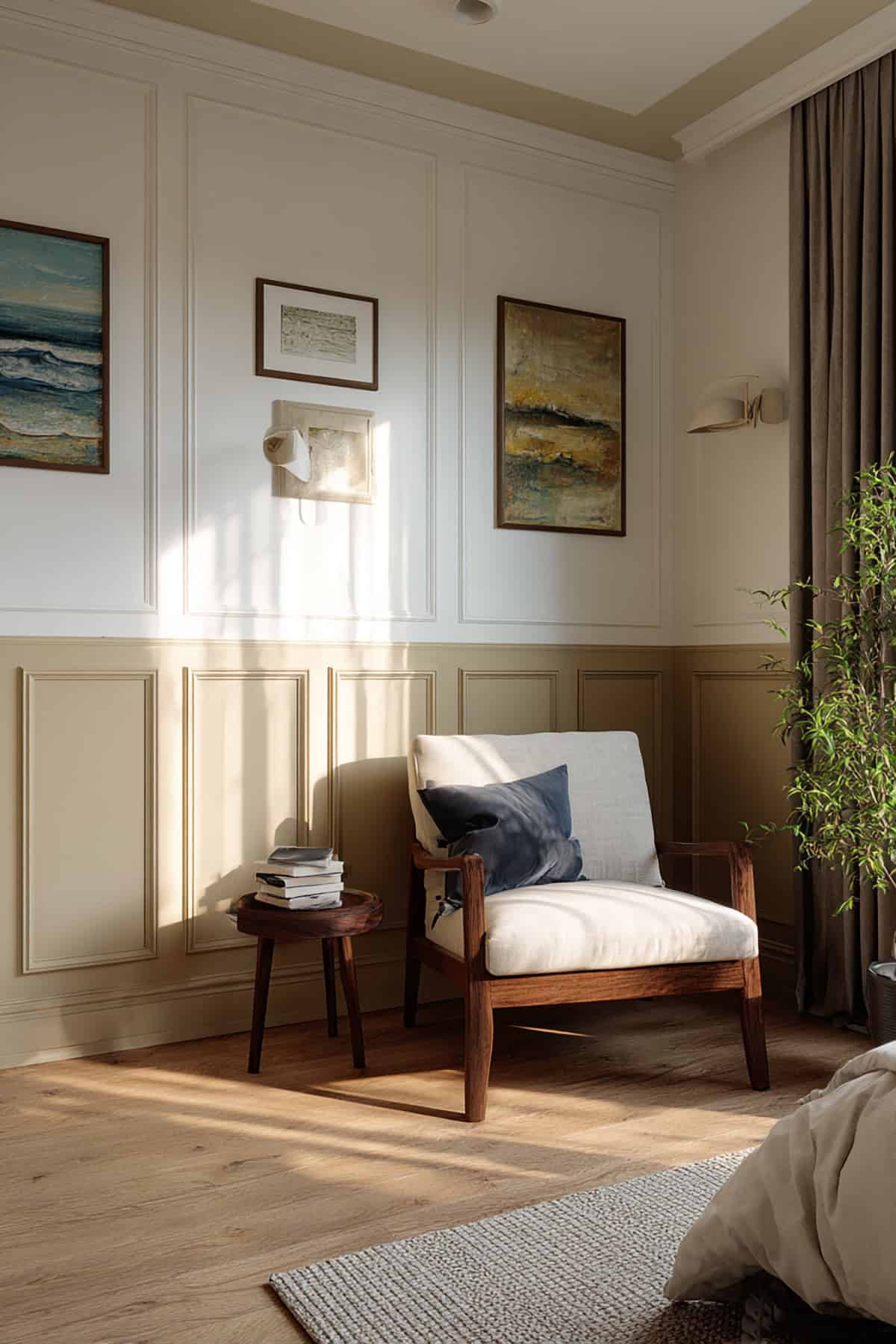
Sometimes a thin divider strip is all you need to separate two paint colors. Install a slim molding between upper and lower sections for a crisp break.
Go bold with contrast for definition, or keep tones close for a layered effect. Straight, square trim holds up best in small rooms—ornate profiles just distract.
This trick works great in dining areas or small bedrooms where you want a little extra detail.
Wallpaper-In-Panel Insets
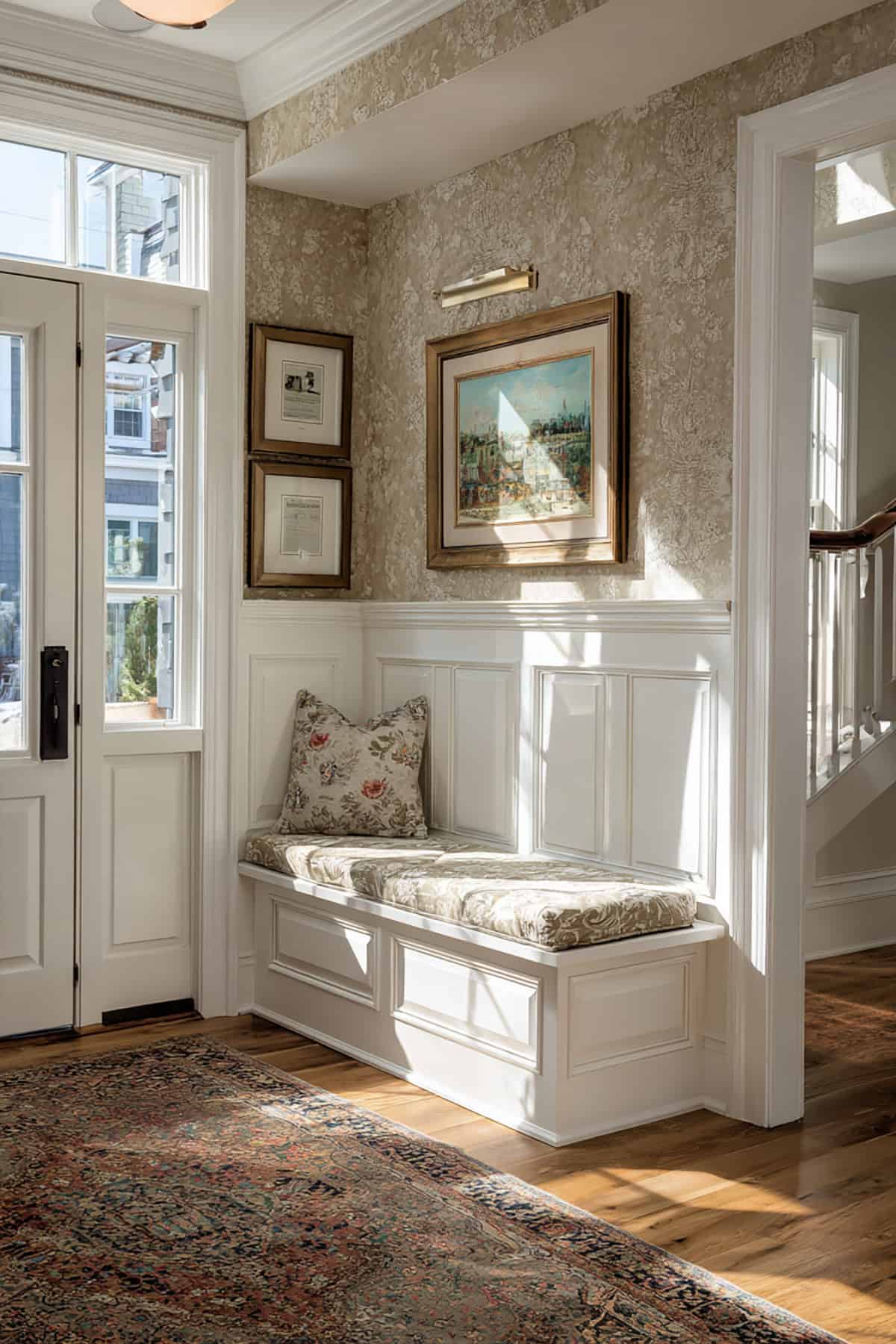
Wallpaper inside box panels brings pattern without overwhelming the room. Keep surrounding trim and wall paint simple to let the print stand out.
Small-scale patterns are key in tight spaces—big prints just take over. Neutral backgrounds help everything feel calm.
It’s a fun way to add character without committing to a whole wall, and it’s easy to update later. For bathrooms, make sure you’re using moisture-resistant wallpaper.
Slim Reeding For A Modern Texture Wall
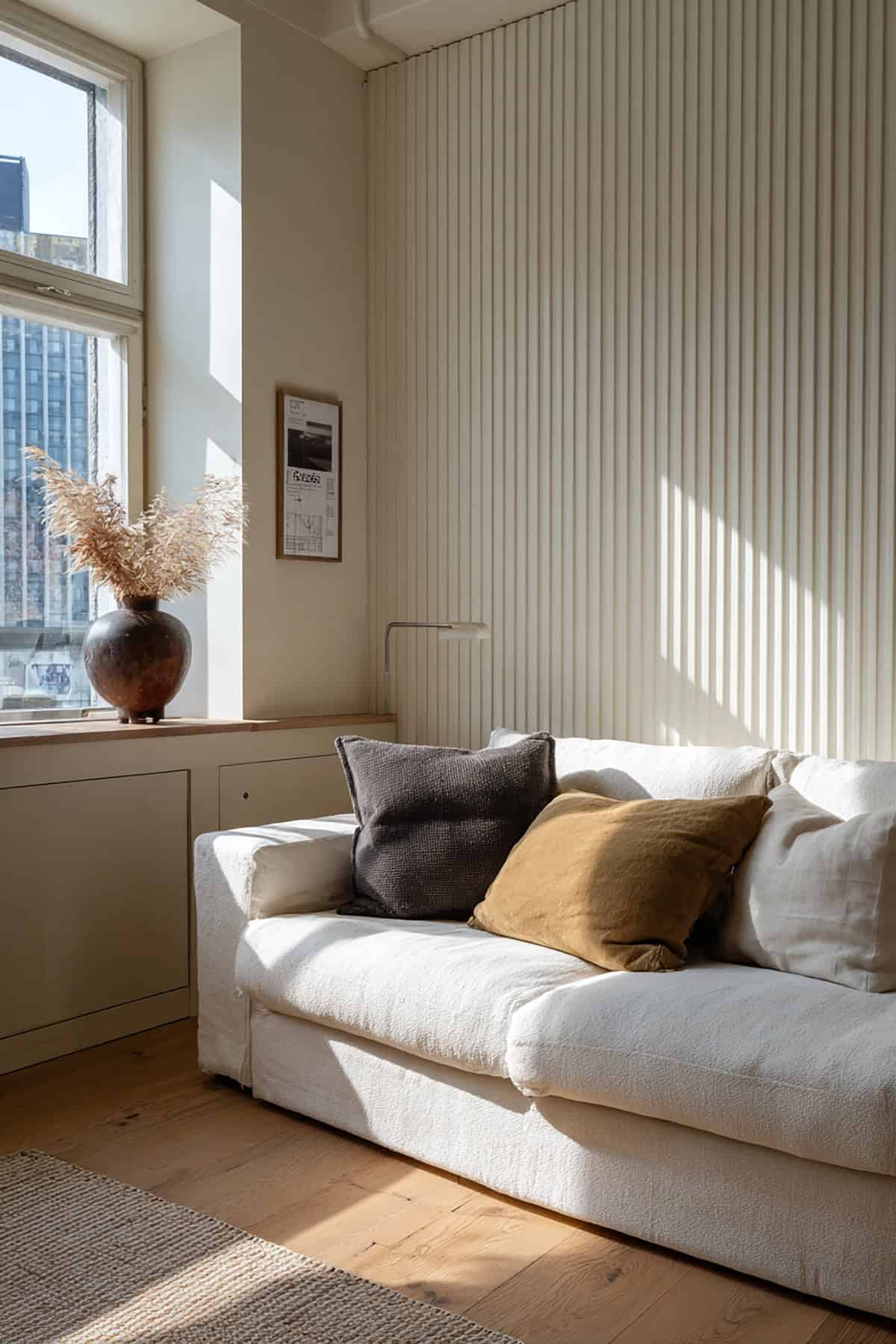
Reeded panels—those skinny vertical ridges—offer texture without bulk. Slim profiles are a smart fit for smaller interiors.
Limiting reeding to the lower third or half of the wall keeps things from feeling too busy. Solid color paint makes the texture pop without too much contrast.
Pair with simple furniture and keep the rest of the walls plain. Too much going on can make a small room feel even smaller.
Mudroom-Style Wainscoting With Peg Rail
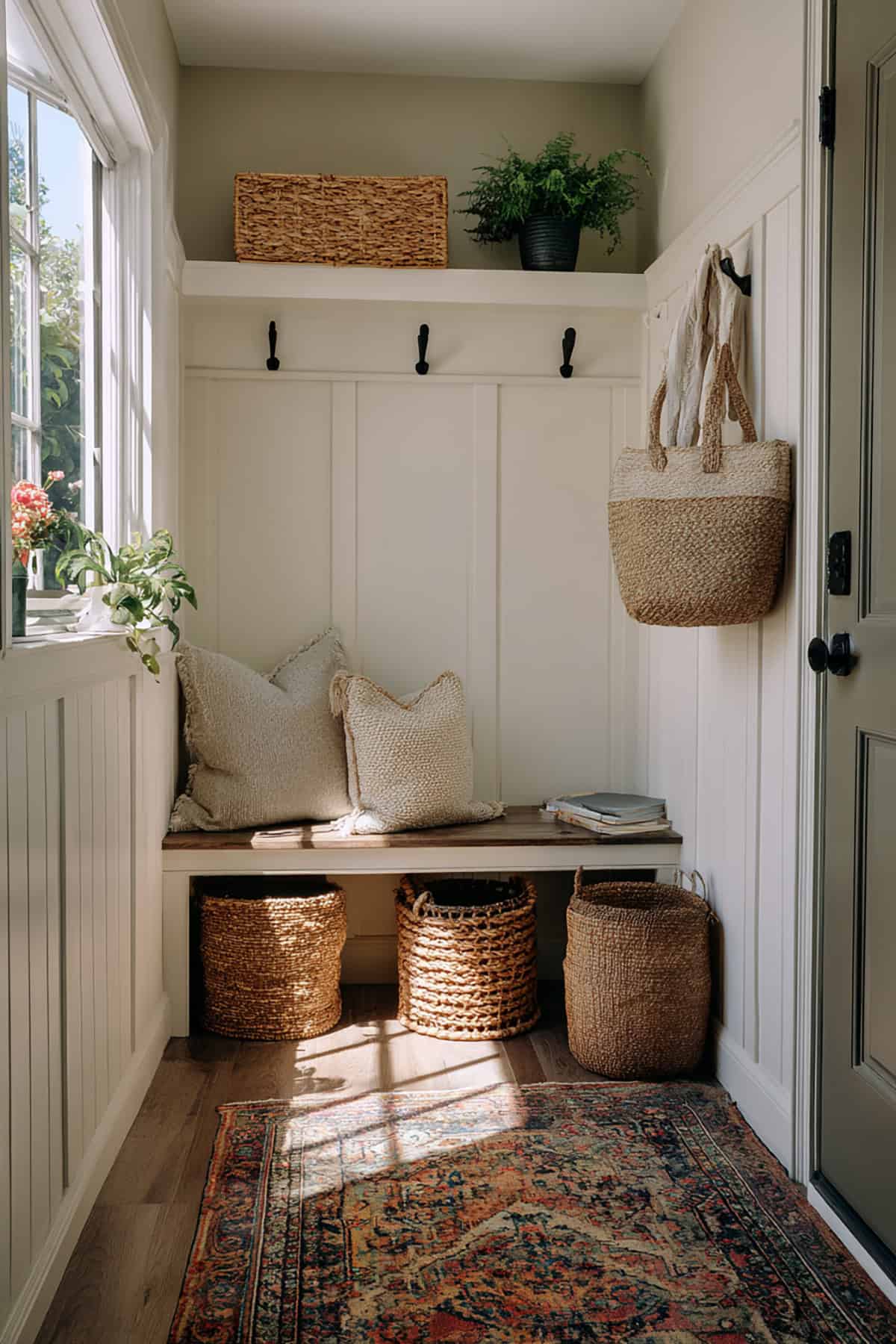
Even the tiniest homes can use a mudroom wall. Vertical boards with a peg rail up top turn any entry into a drop zone.
Keep the boards close and paint with a tough semi-gloss finish—this spot takes a beating. Peg rail lined up with door trim looks tidy, and a bench below adds function.
Stairwell Wainscoting That Follows The Slope
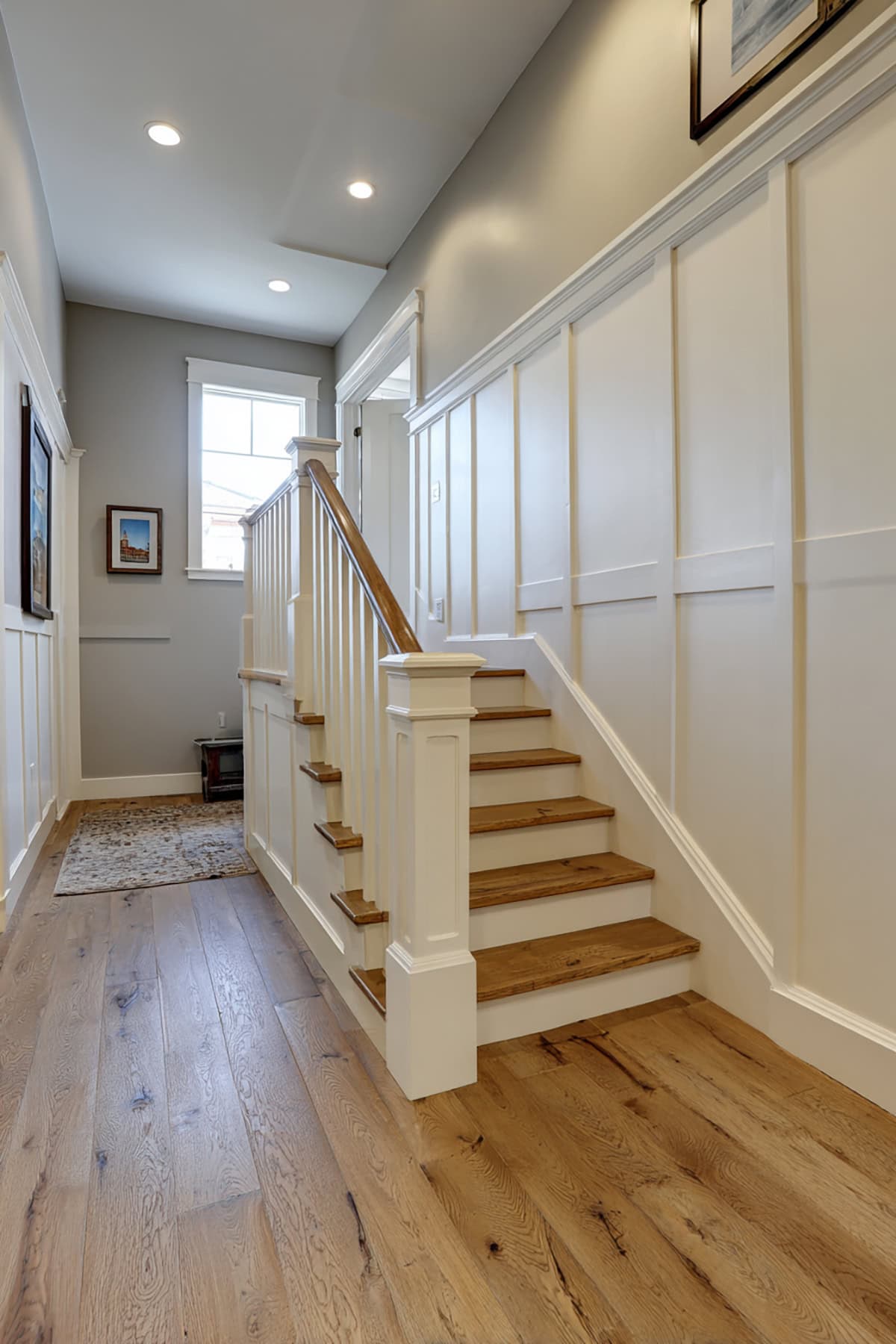
Panels cut to match the stair angle look sharp and custom.
Simple shapes along the slope are easier to align—complicated patterns just become a headache. Consistent spacing along the incline is worth the effort.
Painting the whole wall one color hides any minor imperfections and keeps the focus on the lines, not the details. Getting transitions clean at landings is all in the measuring.
Mirror Strip Inlay Between Panels
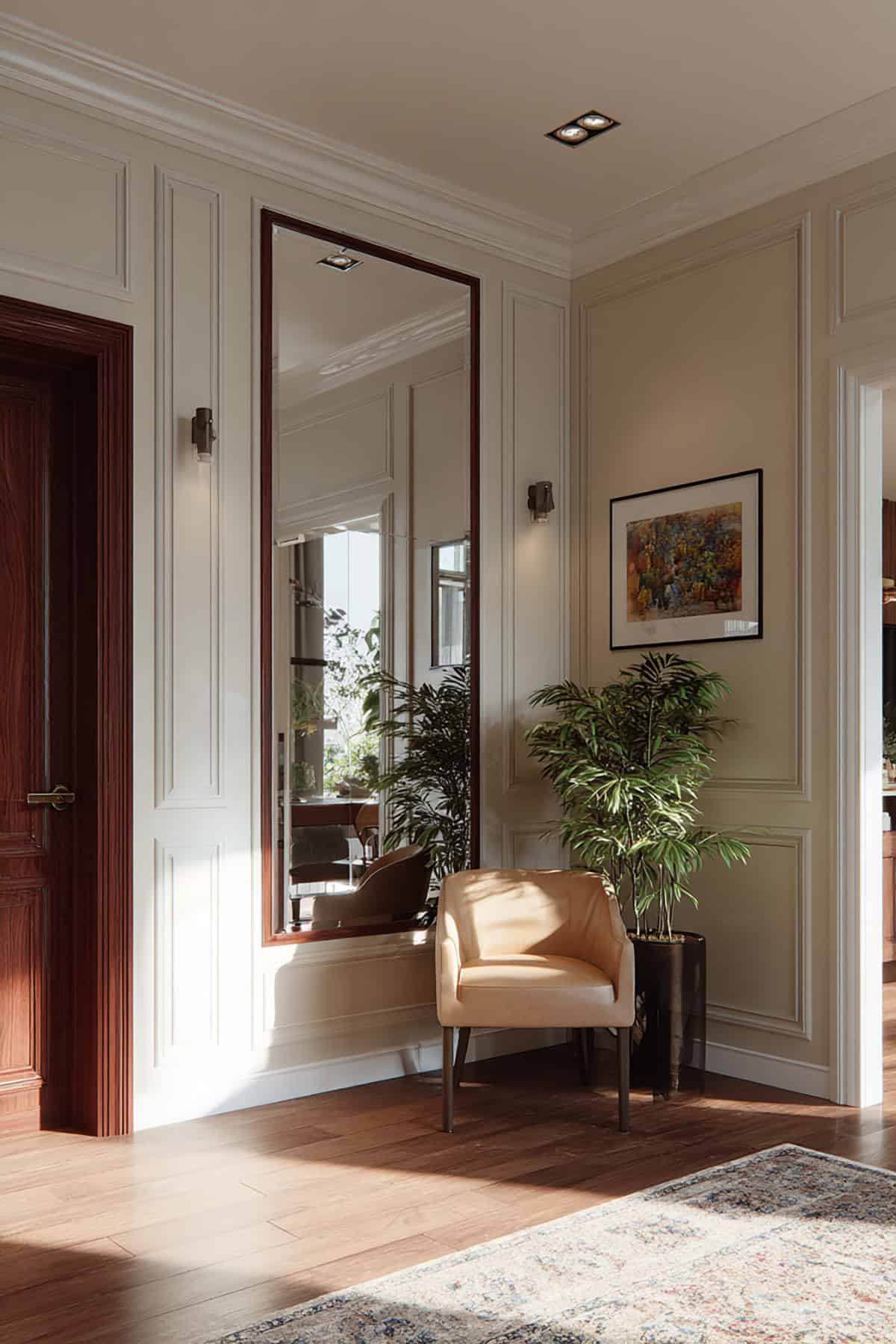
Light bounces around in surprising ways when you slip a slender mirror strip—nothing wider than three inches—between vertical panels. That slim reflection can wake up a dim hallway and shake up the monotony without resorting to a full-on wall mirror. Tempered glass? Yeah, that’s a must if you want to keep things safe.
Don’t get bogged down in fancy trim. Just a thin, simple frame does the trick. Pale paint on the panels nearby will crank up the brightness even more, so it’s worth grabbing a lighter shade for that extra lift.
Built-In Corner Wrap For Awkward Nooks
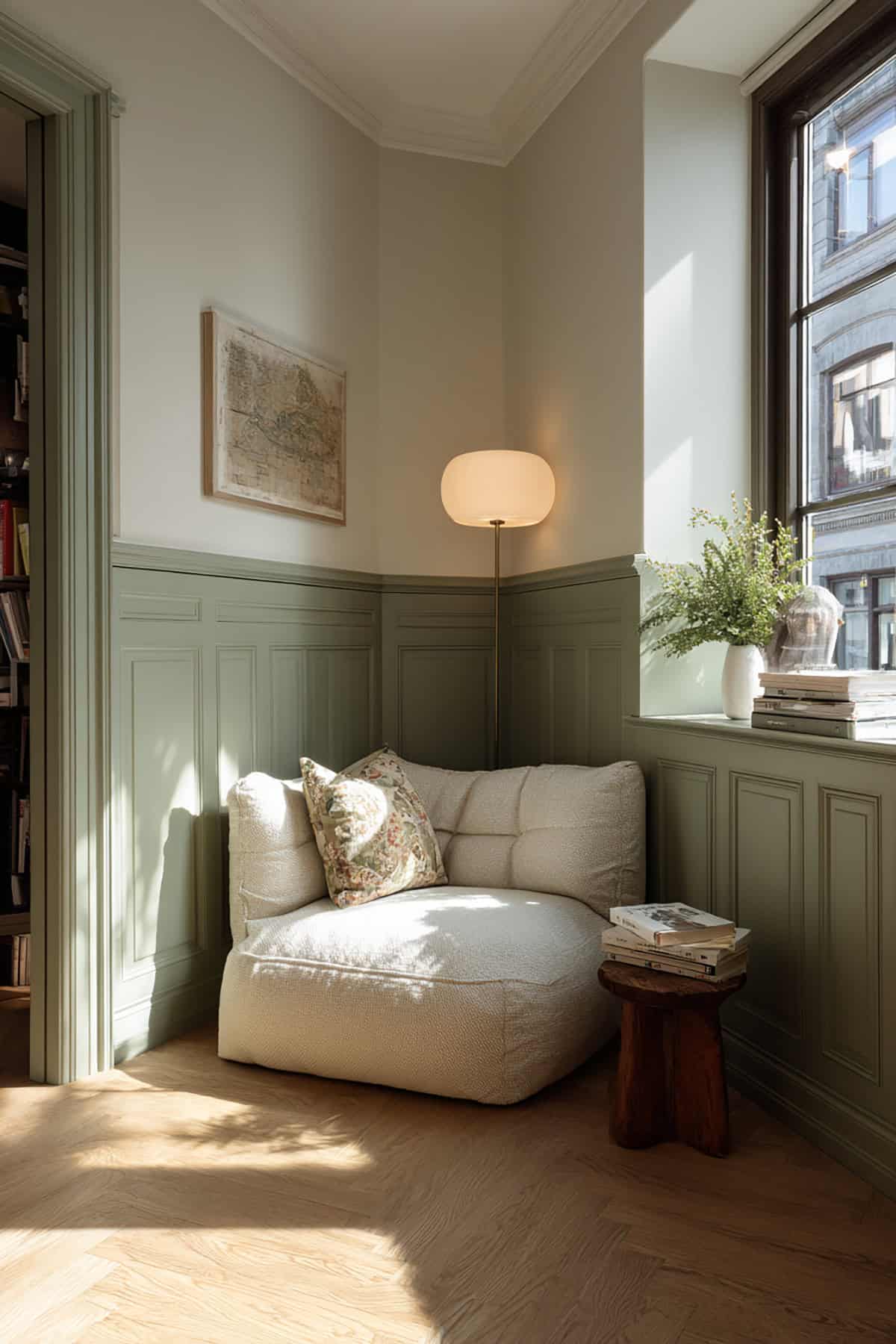
Ever stare at one of those cramped corners in a small house and wonder what to do? Instead of calling it quits at the edge, let the paneling sweep right around. The trick is a crisp mitered joint—no rough edges—so the wrap feels deliberate, not like a patch job. Especially helpful by windows or tucked-away desks, honestly.
Stick with the same paint across both walls. That way, the color flows and the corner doesn’t chop up the room. Suddenly, what used to feel like wasted space turns into a feature you actually notice.
Paint-Only Faux Wainscoting With Crisp Lines
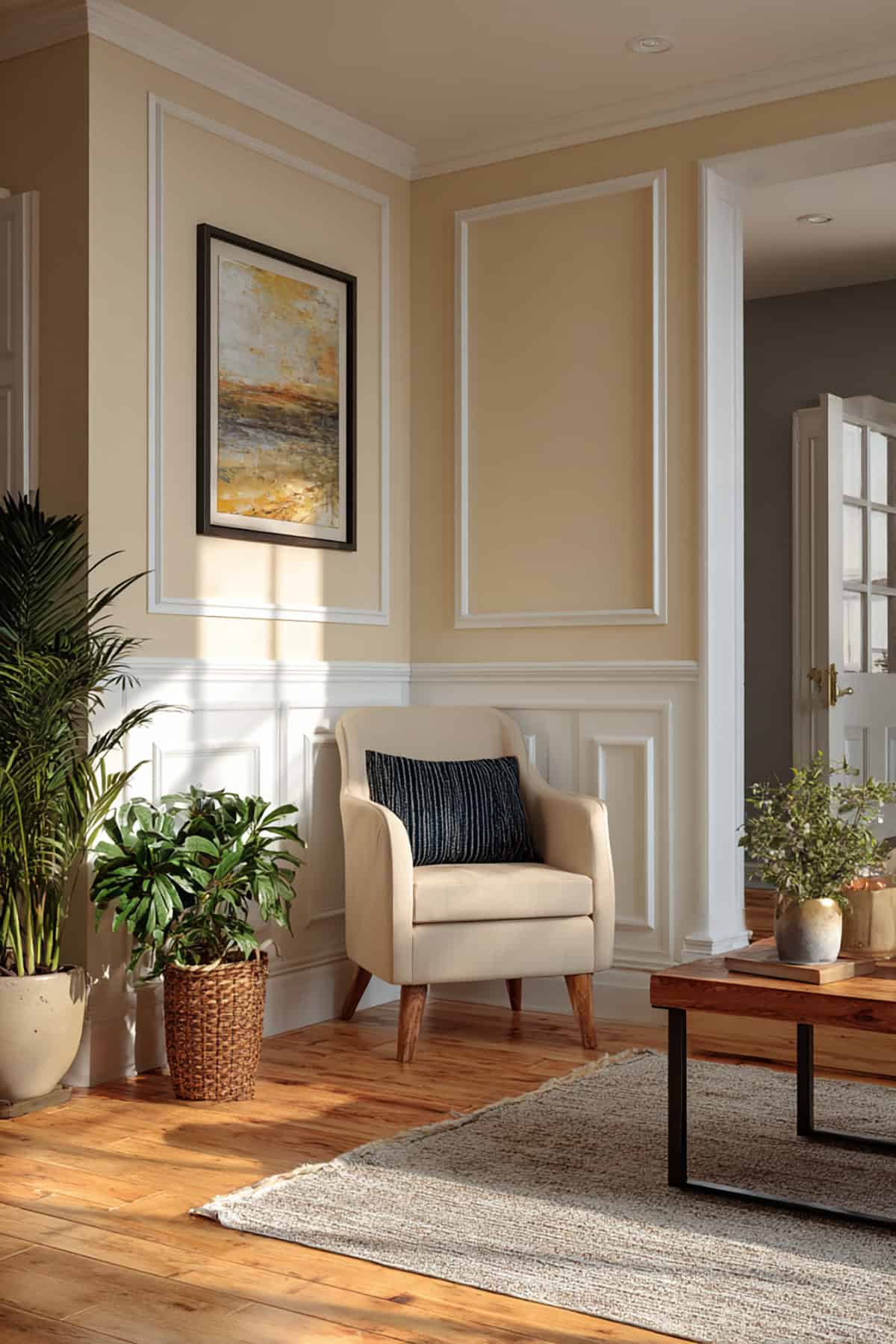
Sharp-edged rectangles, mapped out with painter’s tape, can mimic the charm of paneling without ever picking up a saw. That feeling of order? It comes from tape lines placed with a steady hand.
Opting for a deeper paint shade below the “rail” instantly grounds the space. The difference in color draws the eye, and if you’re patient with tape removal, those lines stay satisfyingly crisp.
Honestly, for anyone not ready to commit to woodwork or permanent changes—renters, indecisive decorators—this trick is a lifesaver. Just measure twice, or maybe three times, to dodge any awkwardly sized sections.