Spills and damp clothes make flooring especially important in a laundry room. The surface needs strength, easy maintenance, and enough grip for everyday use. Appearance matters just as much when the room is visible beside a kitchen, hallway, or mudroom. Plenty of materials meet both practical and decorative needs. Go through all 27 laundry room flooring ideas before planning your update.
Table of Contents
- Laundry Room Flooring Ideas
- Warm Herringbone Tile
- Wood-Look Tile
- Charcoal Slate Tile Flooring
- Patterned Tile Flooring
- Black Square Tile and White Grout
- Terracotta Hexagon Tile
- Seamless Sage Epoxy Flooring
- Blue-Gray Soapstone Tile Flooring
- Burnished Concrete Flooring
- Cream And Gray Limestone Checkerboard
- Cream Mosaic Tile With Olive Grout
- Dark Rubber Coin Flooring
- Deep Red Quarry Tile Flooring
- Green Marble Tile Flooring
- Marble Basketweave Mosaic Flooring
- Marbled Linoleum Sheet Flooring
- Natural Cork Tile Flooring
- Pale Oak Waterproof Vinyl Planks
- Porcelain Cobblestone Flooring
- Salt-And-Pepper Granite Tile Flooring
- Speckled Terrazzo Flooring
- White Penny Tile With A Navy Border
- Reclaimed Brick Paver Flooring
- Interlocking Teak Deck Tile Flooring
- Faded Multicolor Patterned Tile Flooring
- Blue Quatrefoil Ceramic Tile Flooring
- Black Floral Hex Mosaic Flooring
Laundry Room Flooring Ideas
These options range from monolithic poured surfaces with zero seams to hand-set mosaics with a decorative border, covering waterproof vinyl, quarry tile, terrazzo, cork, rubber, and stone at every budget level.
Warm Herringbone Tile
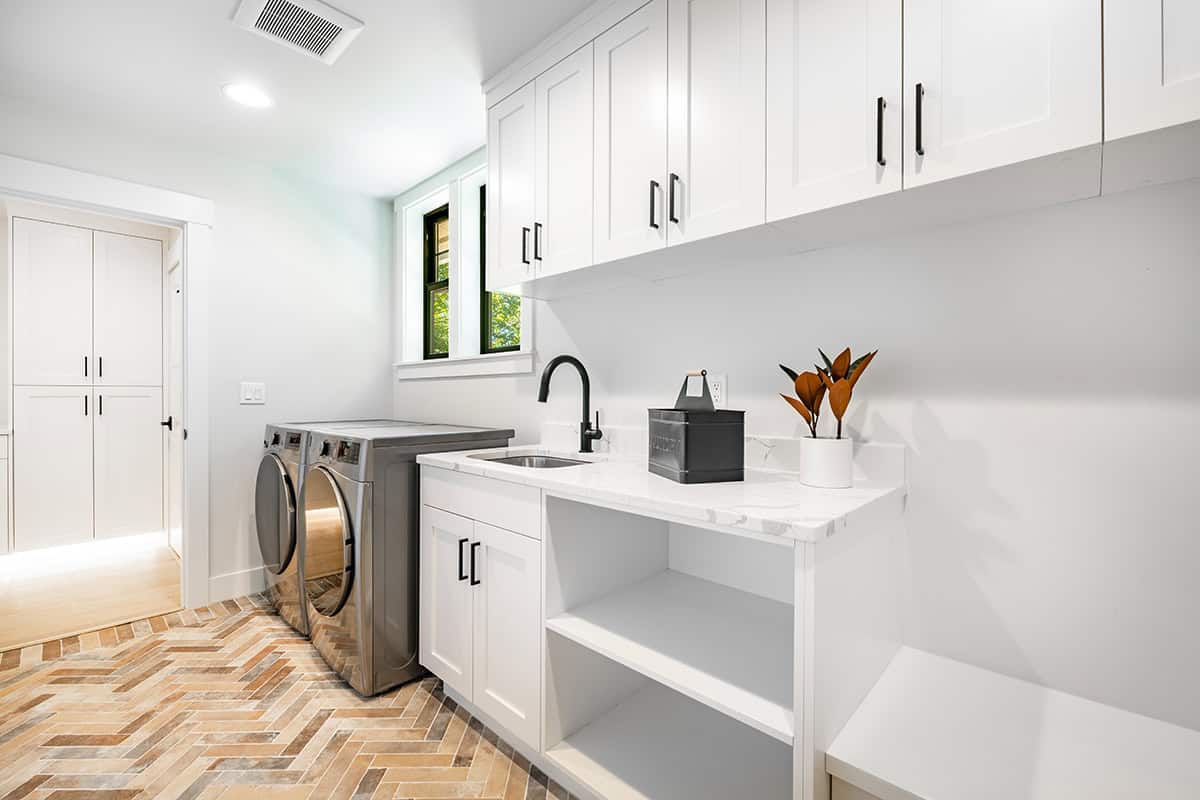
Angled planks in honey and amber tones pull the eye lengthwise down a narrow galley laundry, stretching the proportions of a room that would otherwise read as a corridor. Porcelain planks in a two-by-eight or three-by-twelve format hold the pattern tightly.
Cutting waste runs high, so order 15 to 20 percent extra. Set a chalk line at 45 degrees off the longest wall and check every fourth course, because herringbone drifts fast once it starts.
Wood-Look Tile
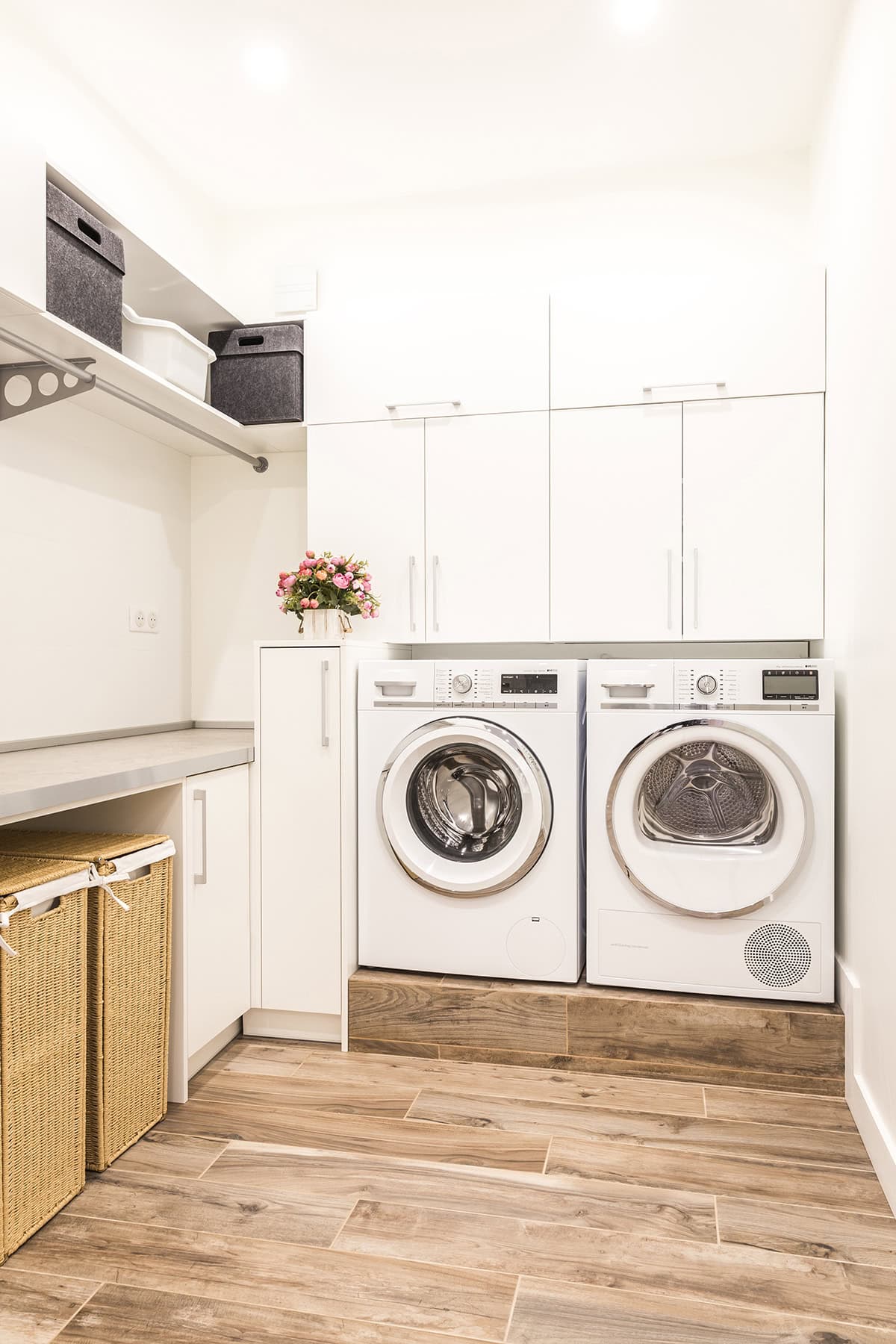
Printed porcelain planks now capture grain, knot variation, and saw marks convincingly enough that a visitor won’t identify them from standing height. Zero swelling risk near a washer is the reason to choose them over engineered wood.
Buy tiles with rectified edges and set them with a 1/16-inch joint in a grout matched to the plank’s mid-tone, since a contrasting grout line instantly reveals the tile. Stagger end joints irregularly rather than in a repeating step.
Charcoal Slate Tile Flooring
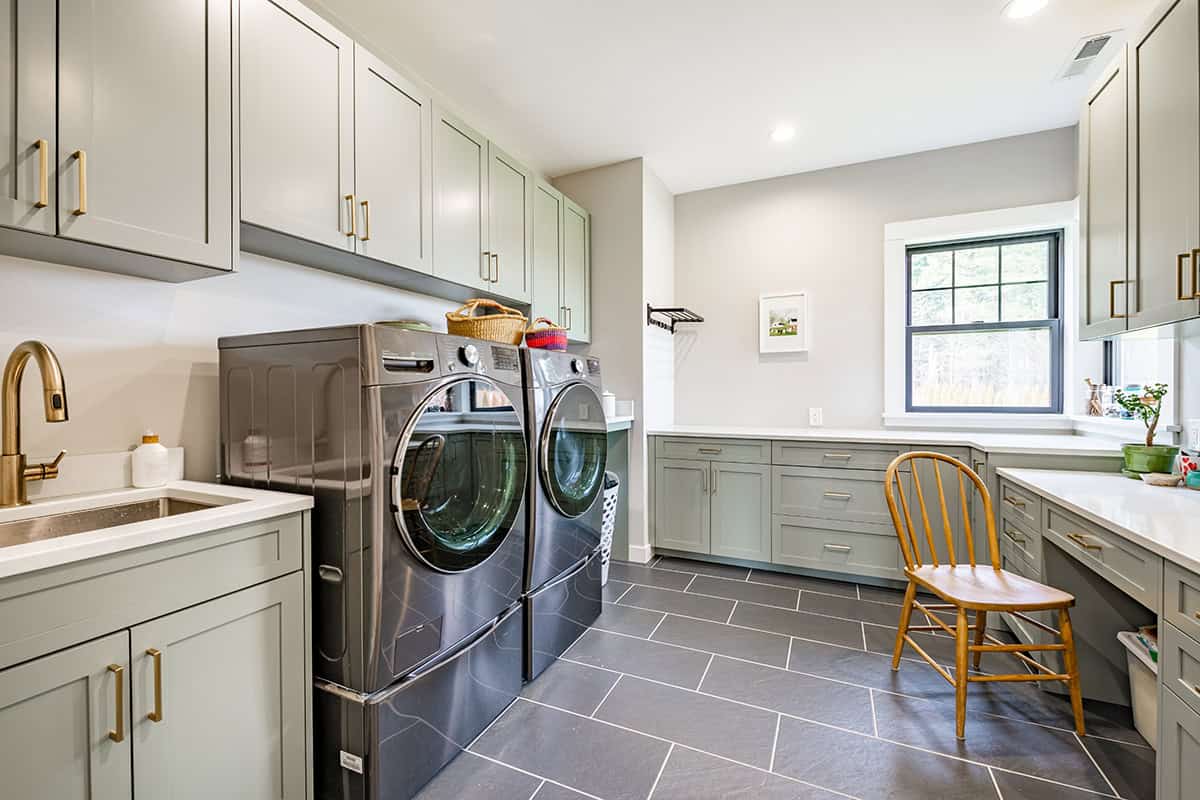
Cleft slate carries a natural riven surface that grips underfoot when damp, an advantage over anything polished. The dark gray field with rust and copper flashes pairs equally well with cream or deep green cabinetry.
Gauged slate installs flatter than ungauged; ungauged looks more authentic but demands a thicker mortar bed. Seal with a penetrating product, and accept that flaking on lower-grade slate happens over years.
Patterned Tile Flooring
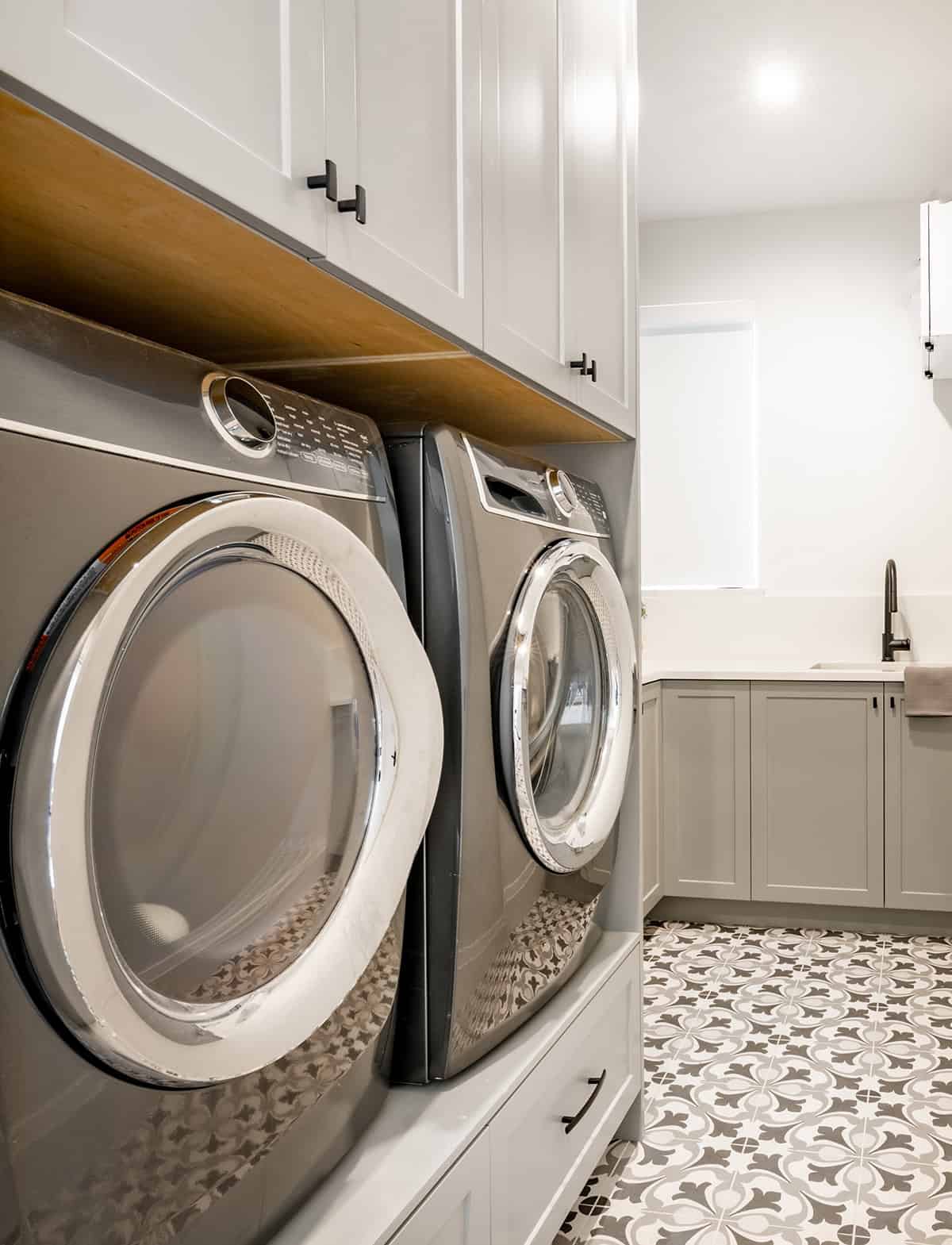
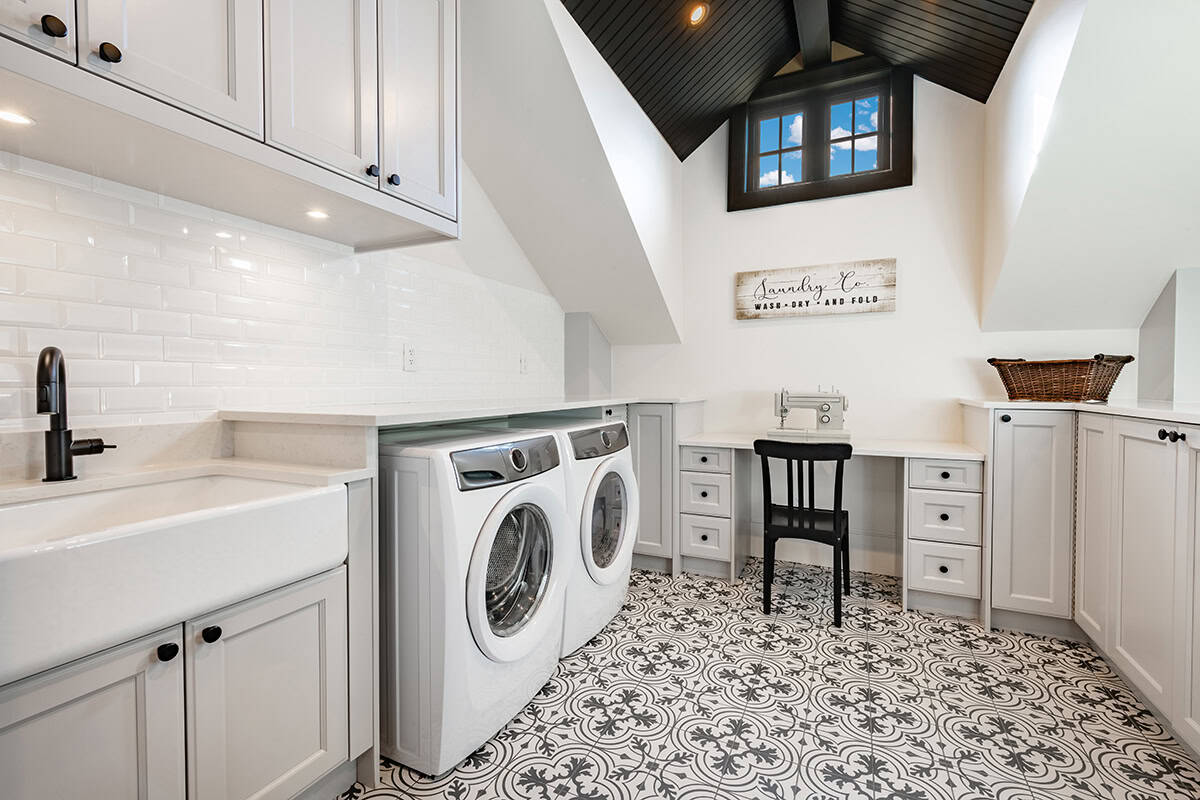
Graphic floors earn their place in small utility rooms where the pattern reads as a rug rather than a takeover. Geometric, floral, or Moroccan repeats disguise tracked-in dirt to a degree solid colors never approach.
Keep walls, counters, and cabinet fronts quiet when the floor talks. Confirm the pattern’s scale against your room dimensions on paper first, since a bold repeat cut off awkwardly at two walls looks unresolved.
Black Square Tile and White Grout
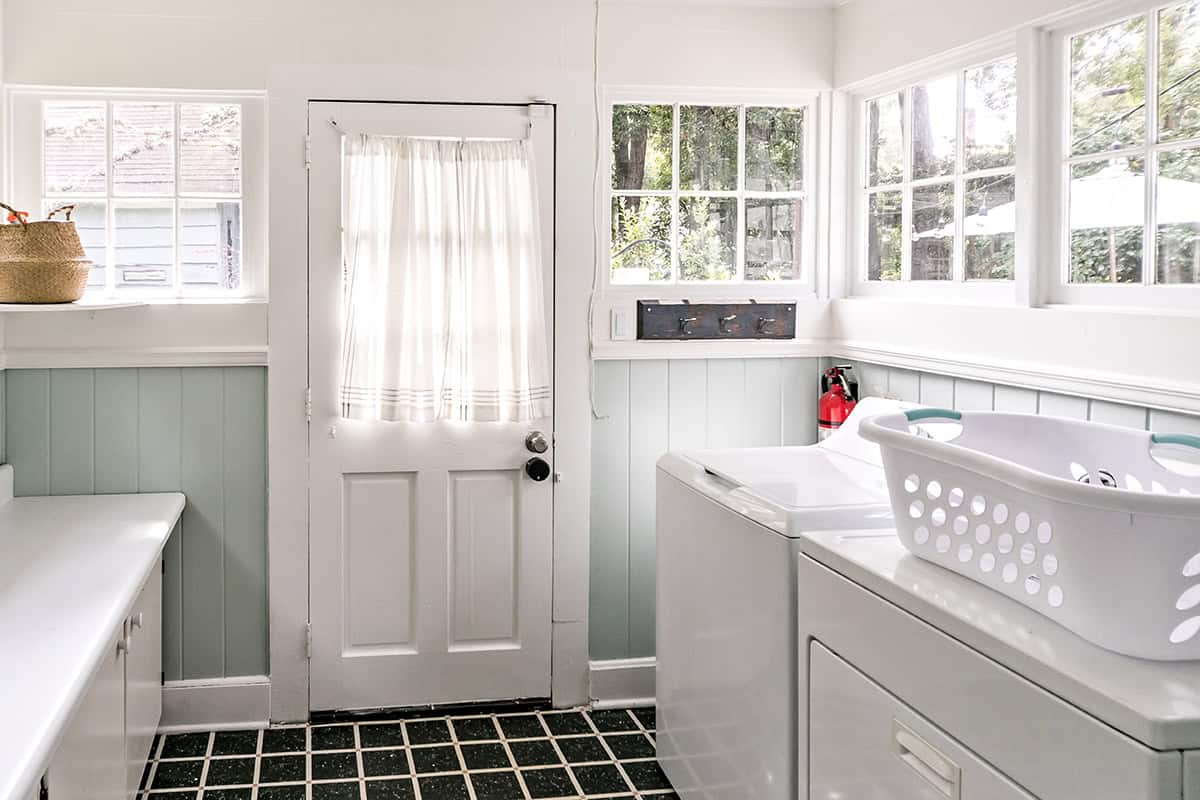
Sharp graphic contrast defines this floor: matte black squares gridded by bright white joints, geometry stated plainly. Four-by-four or six-by-six formats keep the grid legible in a compact footprint.
White grout in a laundry room is a real commitment, so specify epoxy and seal the perimeter. Matte black glazes show water spotting and dust more than mid-tones, which means a microfiber mop earns regular use.
Terracotta Hexagon Tile
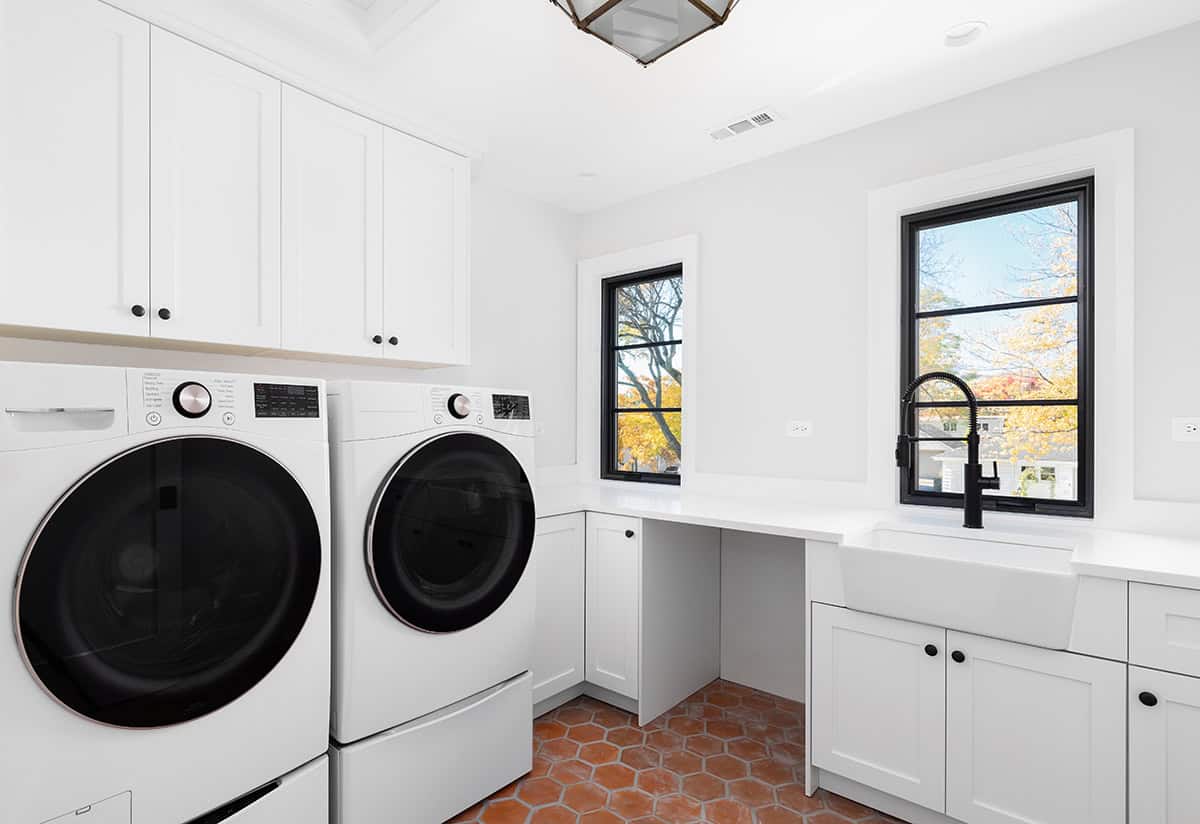
Sun-baked orange and rust hexes warm a windowless room in a way gray tile never manages, and the honeycomb layout gives a small floor a finished shape without a border. Eight-inch hexes suit modern rooms; four-inch reads traditional.
Genuine saltillo drinks liquid and needs multiple sealer coats plus annual upkeep. Terracotta-look porcelain delivers the same clay tones at commercial durability with no sealing schedule at all.
Seamless Sage Epoxy Flooring
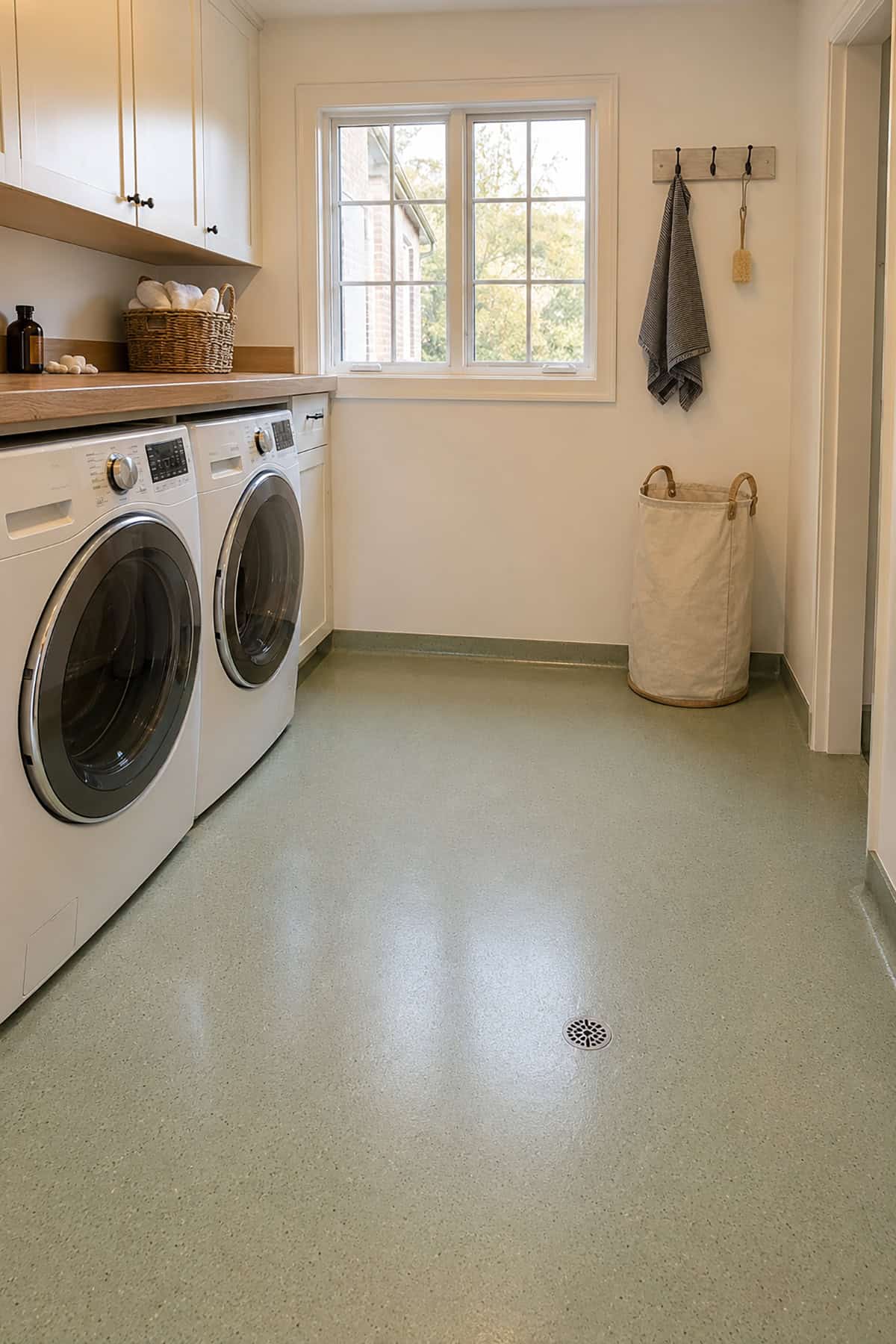
Muted green resin poured wall to wall eliminates every joint where water might migrate, which matters more in a laundry room than in almost any other space. The finish cures rock-hard over concrete and shrugs off bleach, dye, and dropped bottles.
Ask your installer for a broadcast anti-slip additive in the topcoat, because troweled epoxy turns treacherous under a thin film of water. Expect two to three days of cure time and full ventilation during application.
Blue-Gray Soapstone Tile Flooring
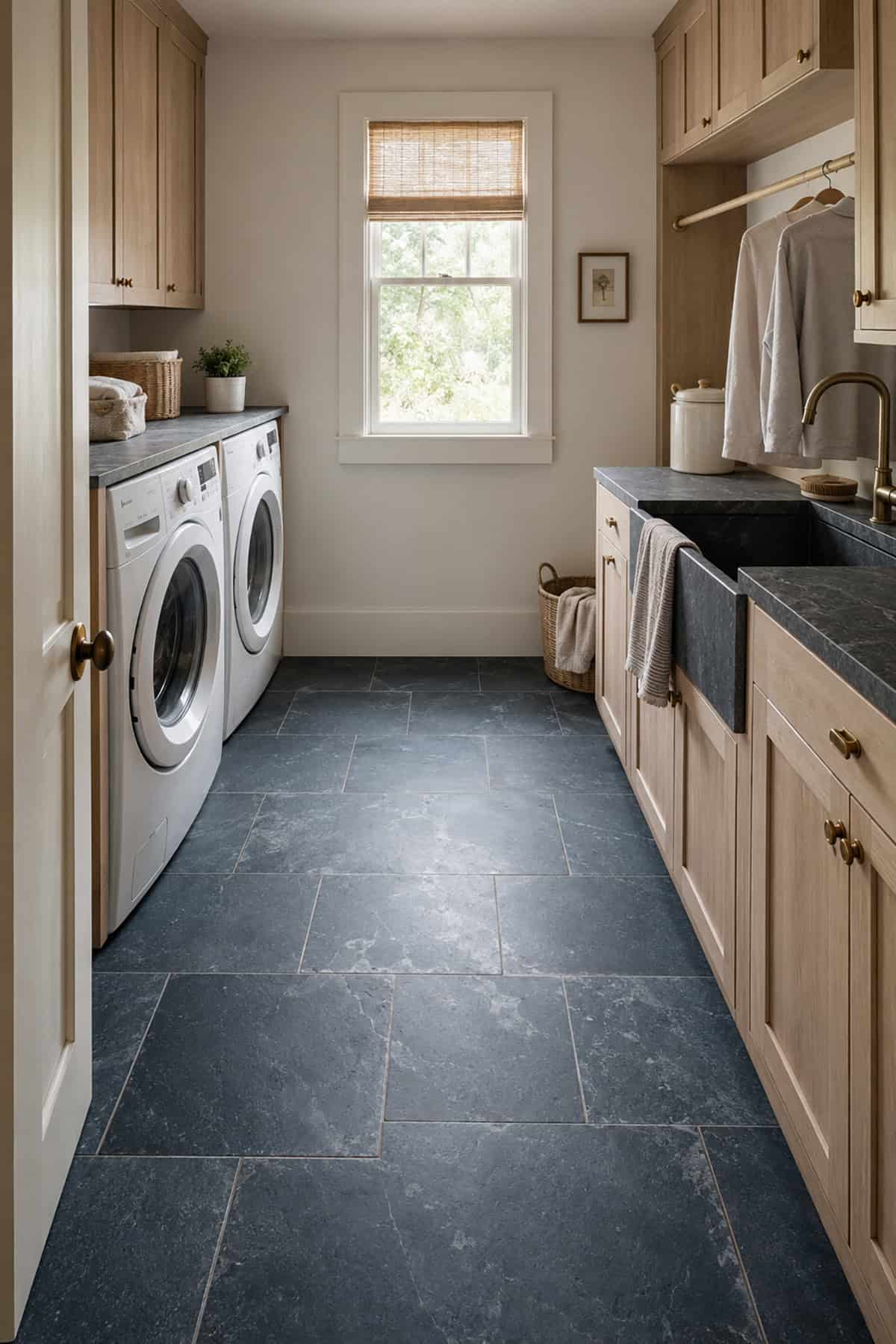
Cool graphite undertones with faint white veining suit rooms with white cabinetry and unlacquered brass hardware. Soapstone is dense and nonporous, so detergent splashes won’t stain the way they do on marble.
The trade-off is softness: the stone scratches, and a dragged appliance leg will leave a mark. Mineral oil darkens the surface evenly and disguises minor wear, which becomes a small monthly ritual rather than a chore.
Burnished Concrete Flooring
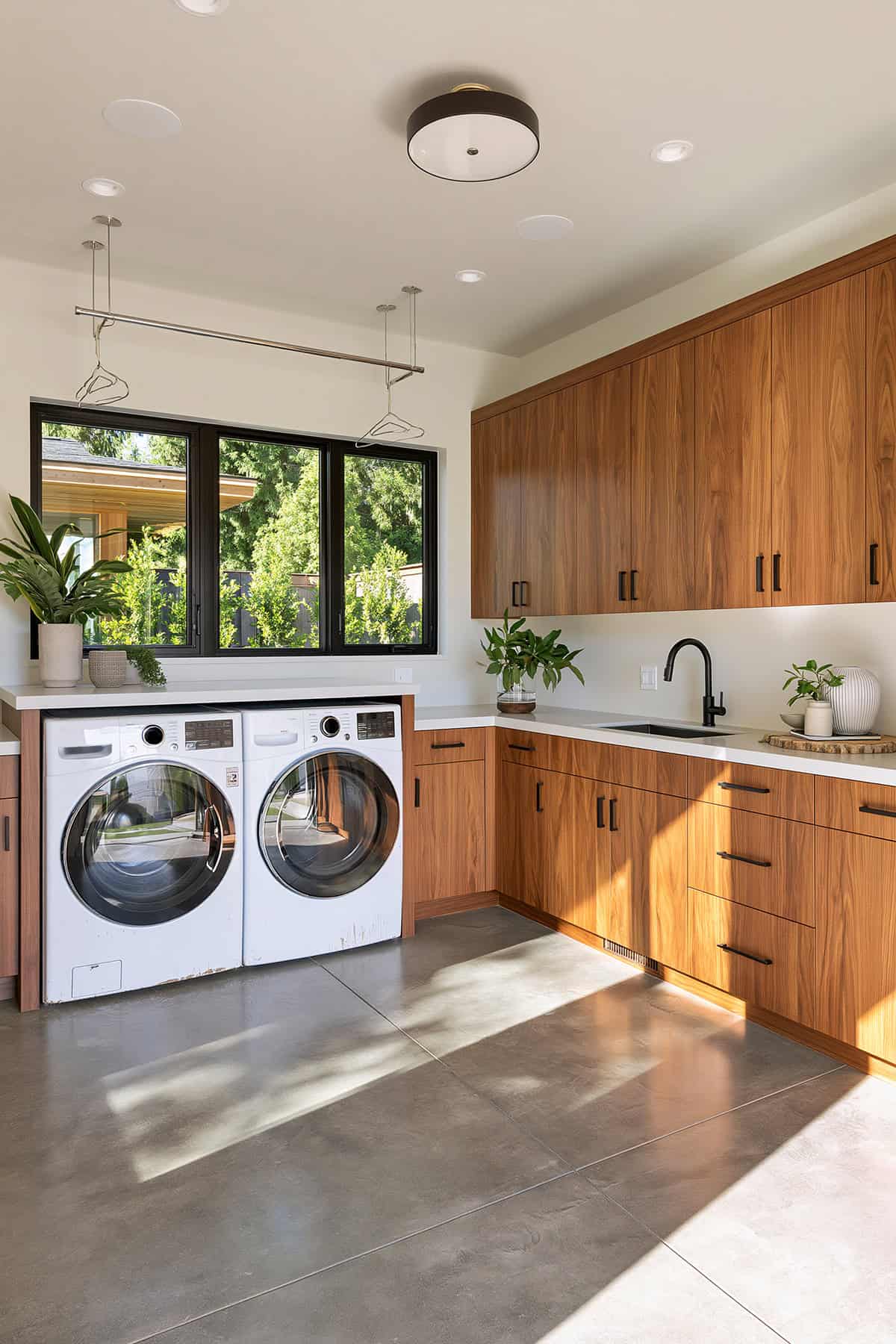
A low satin sheen ground into an existing slab keeps the utility character of a basement or garage-adjacent laundry while reading far more finished than raw concrete. Mopping is quick, and dropped hardware won’t chip anything.
Cold underfoot is the honest drawback in northern climates, so pair it with radiant heat if you’re opening the slab anyway. A penetrating densifier plus a matte sealer resists staining better than a glossy film that scuffs.
Cream And Gray Limestone Checkerboard
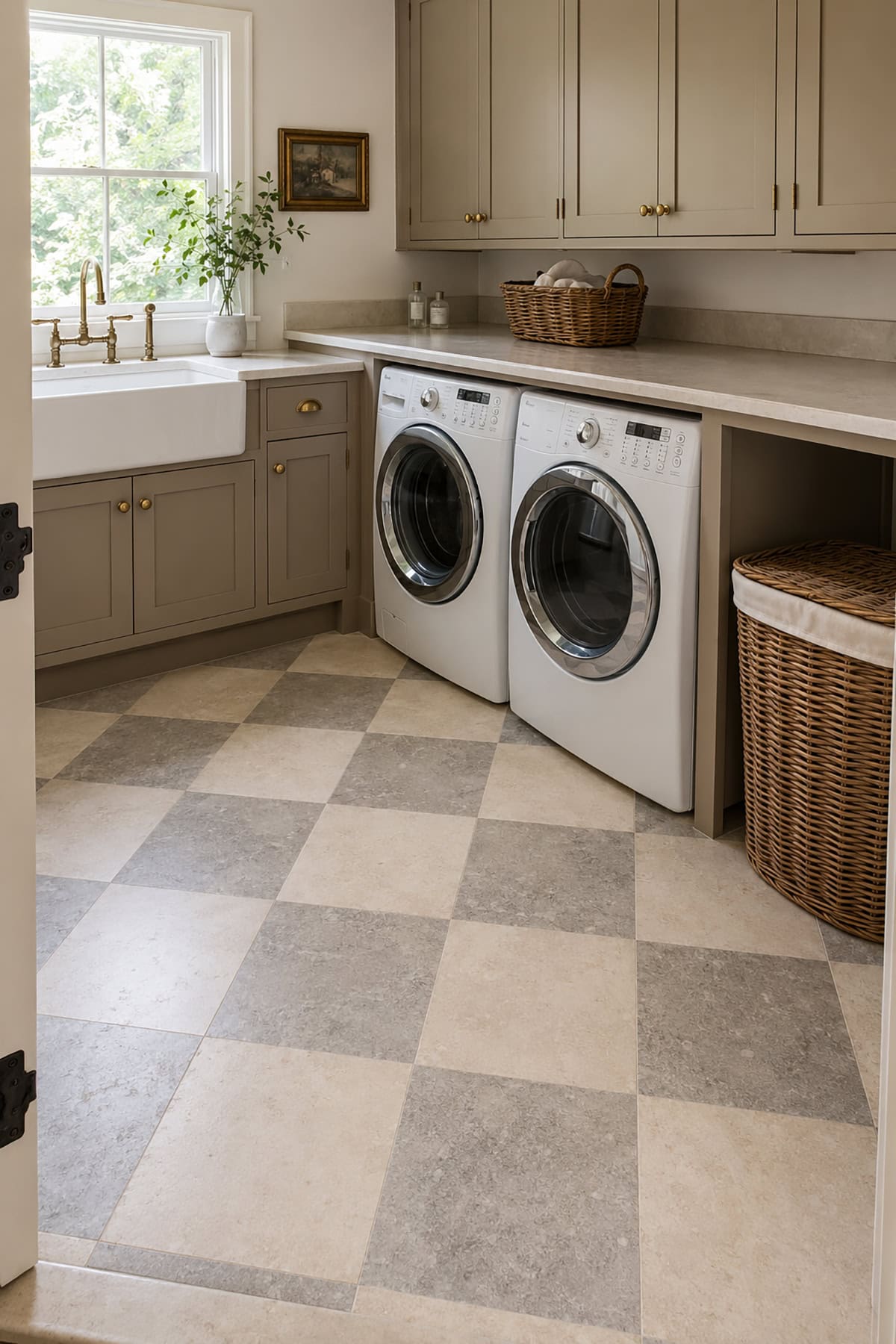
Diagonal or straight-set squares in two soft neutrals soften the graphic punch of traditional black and white while keeping the vintage geometry. Twelve-inch squares suit most laundry footprints; anything larger swallows the pattern in a tight room.
Limestone is porous and reactive, so seal before grouting and reseal annually. Skip acidic cleaners entirely, and keep a felt pad under any rolling laundry cart.
Cream Mosaic Tile With Olive Grout
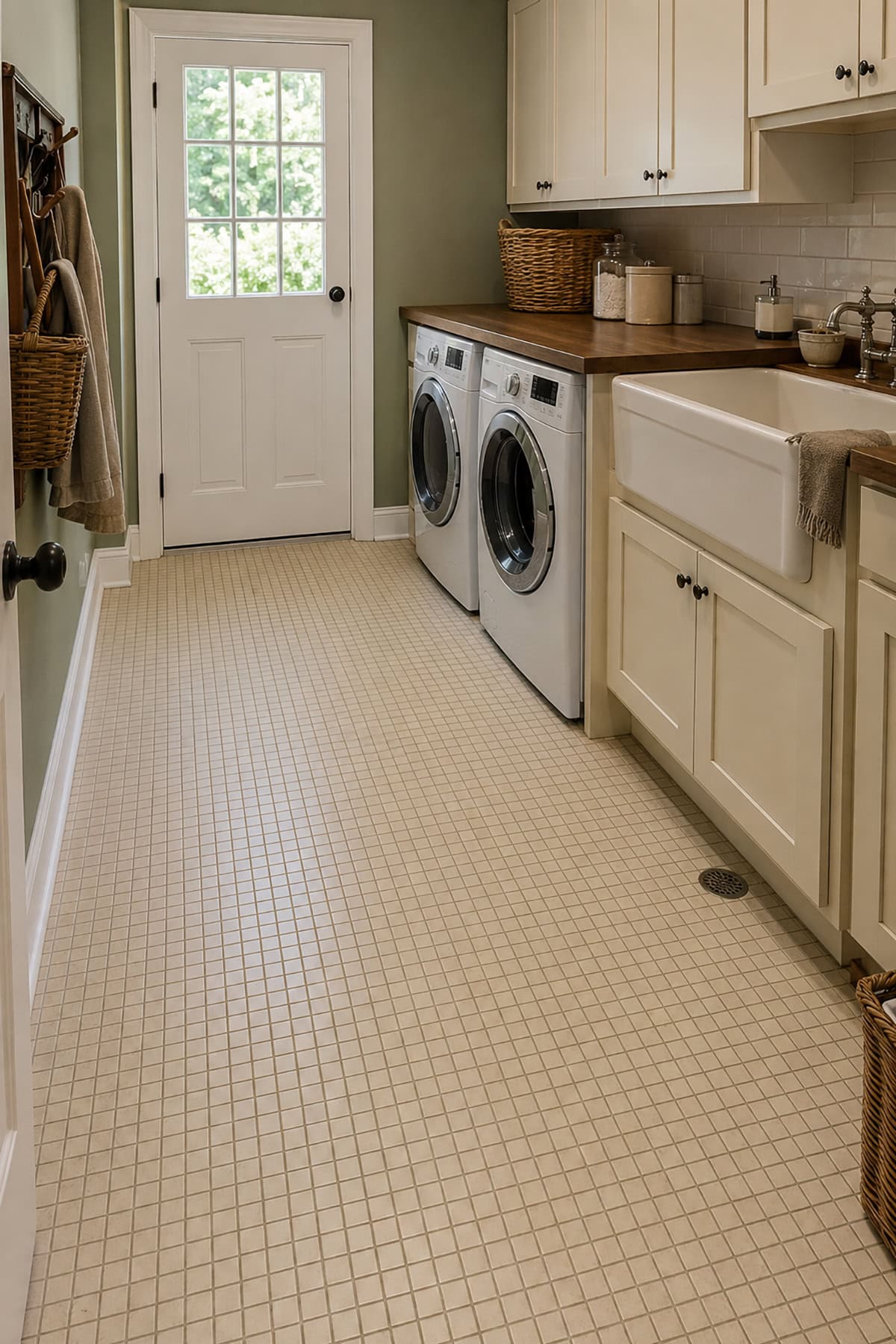
Grout choice carries this floor. Small cream squares with a deep olive joint outline every tile crisply and camouflage lint far better than white grout ever will.
Epoxy grout costs more and sets fast, but it resists staining from detergent pods and shoe polish, and it holds color across the whole floor. Order sheets from a single production run so the cream tone stays consistent.
Dark Rubber Coin Flooring
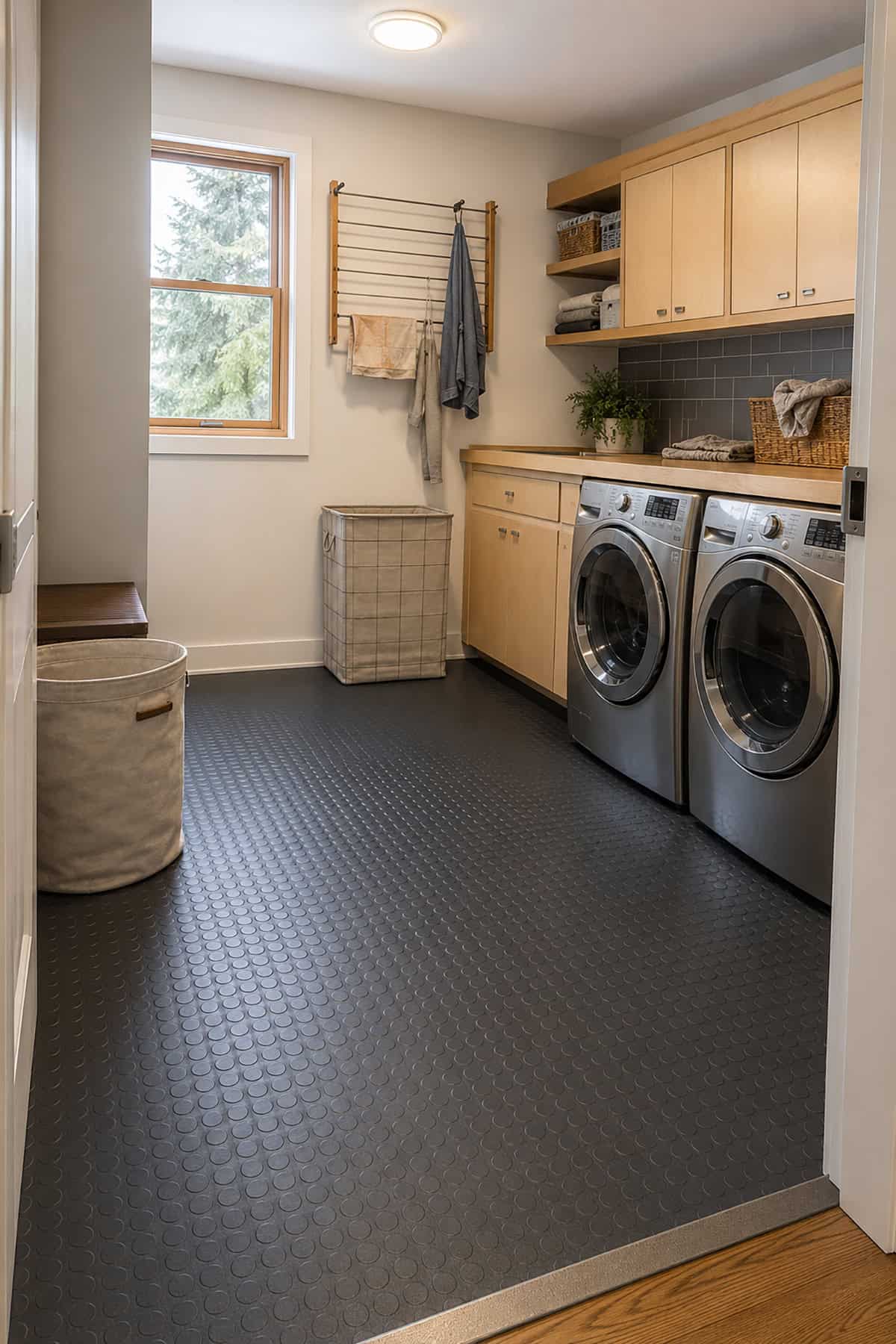
Raised circular studs give real grip when water pools near a front-loader, and the resilient surface deadens spin-cycle vibration noticeably. Rolled goods in six-foot widths mean minimal seams.
Dark charcoal or black hides scuffing, though the raised pattern traps dust in the recesses and needs a vacuum before mopping. Rubber also resists dropped weights and appliance dollies without denting.
Deep Red Quarry Tile Flooring
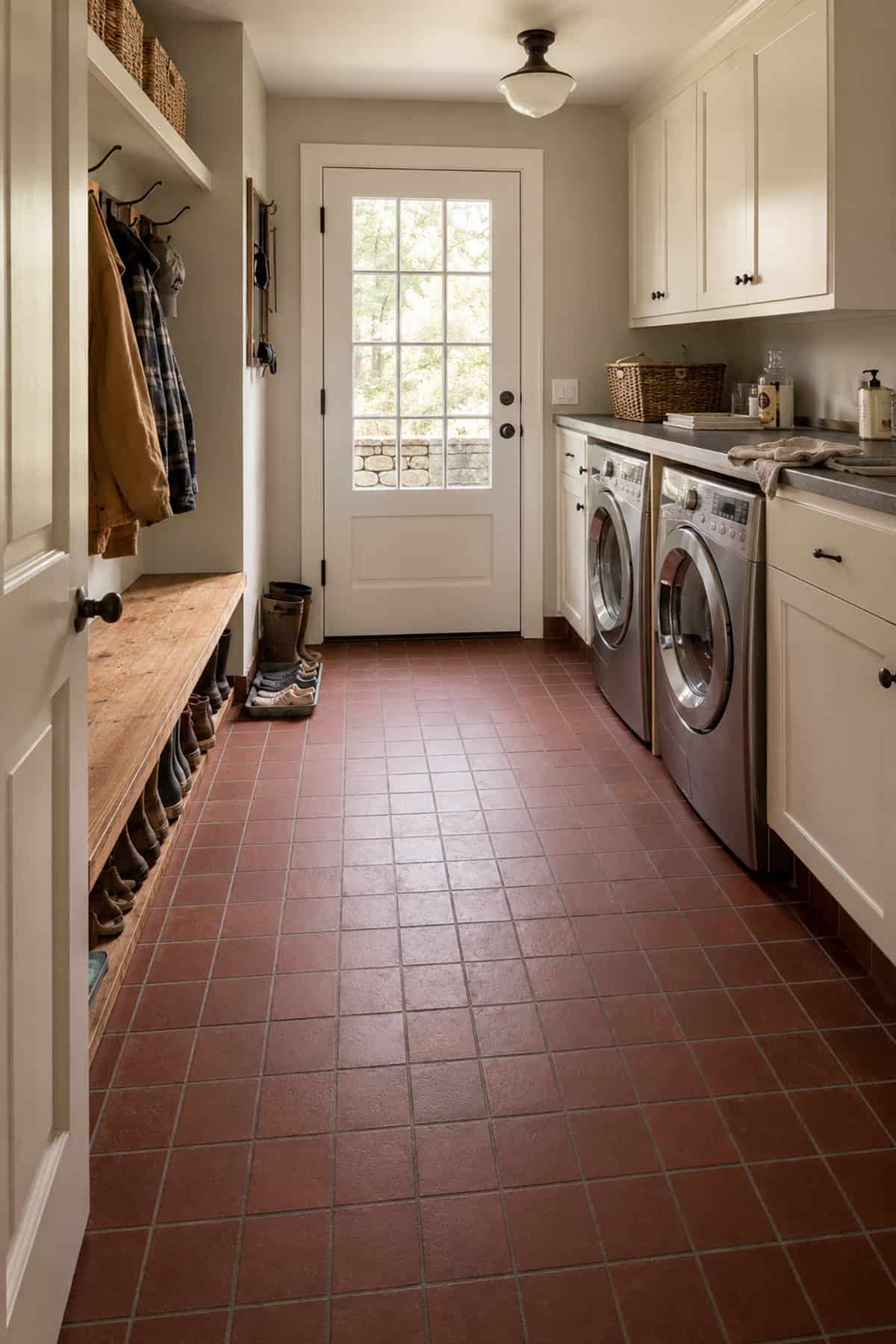
Unglazed and fired throughout, this is the material commercial kitchens have relied on for a century, and its terracotta-red body wears in rather than out. Slip resistance stays high even when wet.
Sealing is optional but recommended in a laundry room where bleach might splash. The tile is thick, roughly half an inch, so plan transitions to adjacent hardwood carefully to avoid a trip hazard at the doorway.
Green Marble Tile Flooring
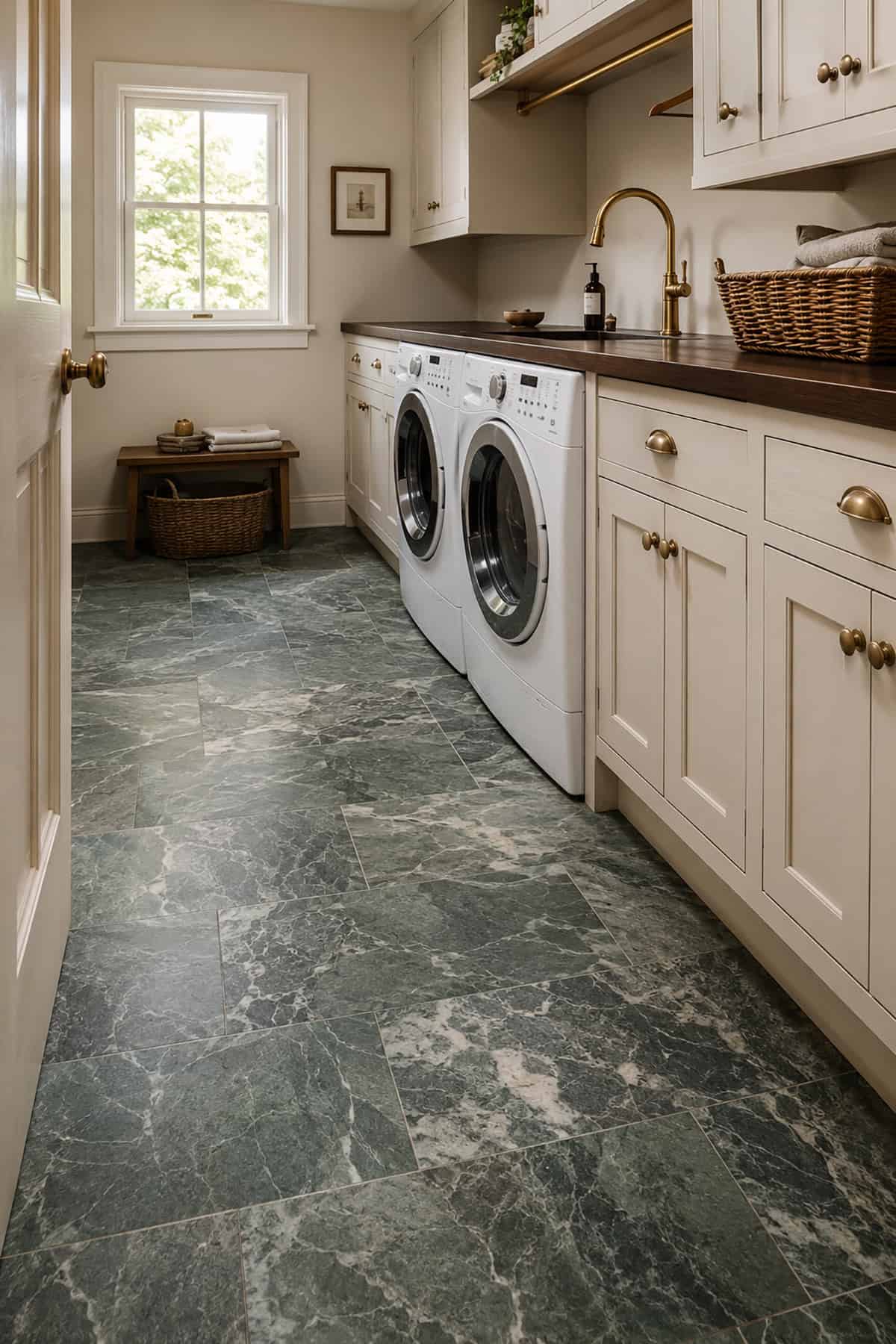
Verde marble with white veining brings genuine depth to a windowless room, particularly against pale cabinetry and a brass faucet. Honed finish beats polished here, since a matte surface stays safer damp and hides etching.
Understand the maintenance commitment before committing: marble is calcareous, and vinegar, bleach, or a spilled cleaner leaves a dull etch mark. Impregnating sealer every year and prompt blotting keep it presentable.
Marble Basketweave Mosaic Flooring
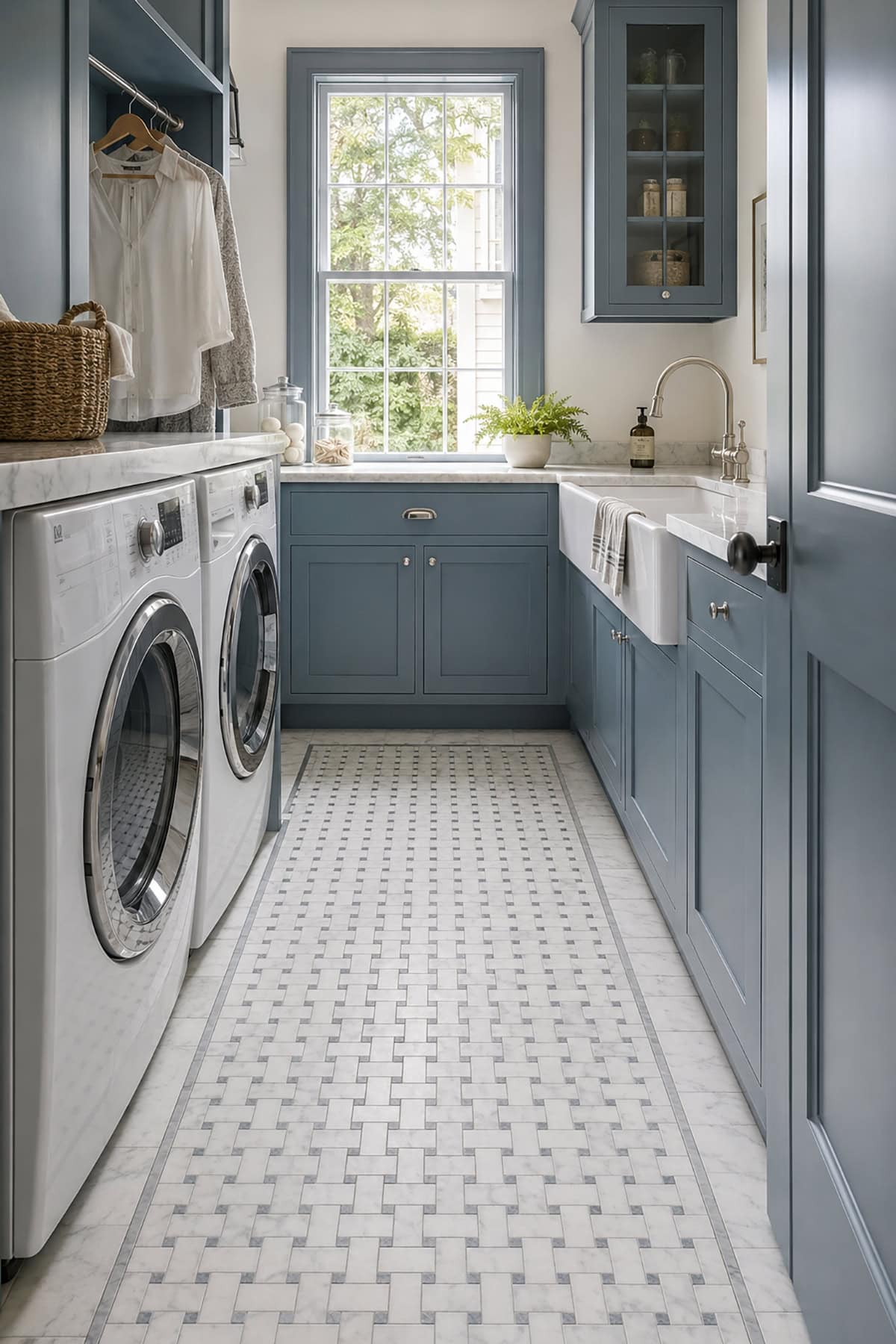
Interlocking rectangles around small square dots trace back to prewar bathrooms, and the same layout suits a compact laundry beautifully at one-by-two-inch scale. Density of grout lines works in your favor for traction.
Carrara with light gray grout stays quiet; adding black dots sharpens the whole floor. Mesh-backed sheets install faster than loose tesserae, but check alignment at every seam so the weave pattern doesn’t stutter.
Marbled Linoleum Sheet Flooring
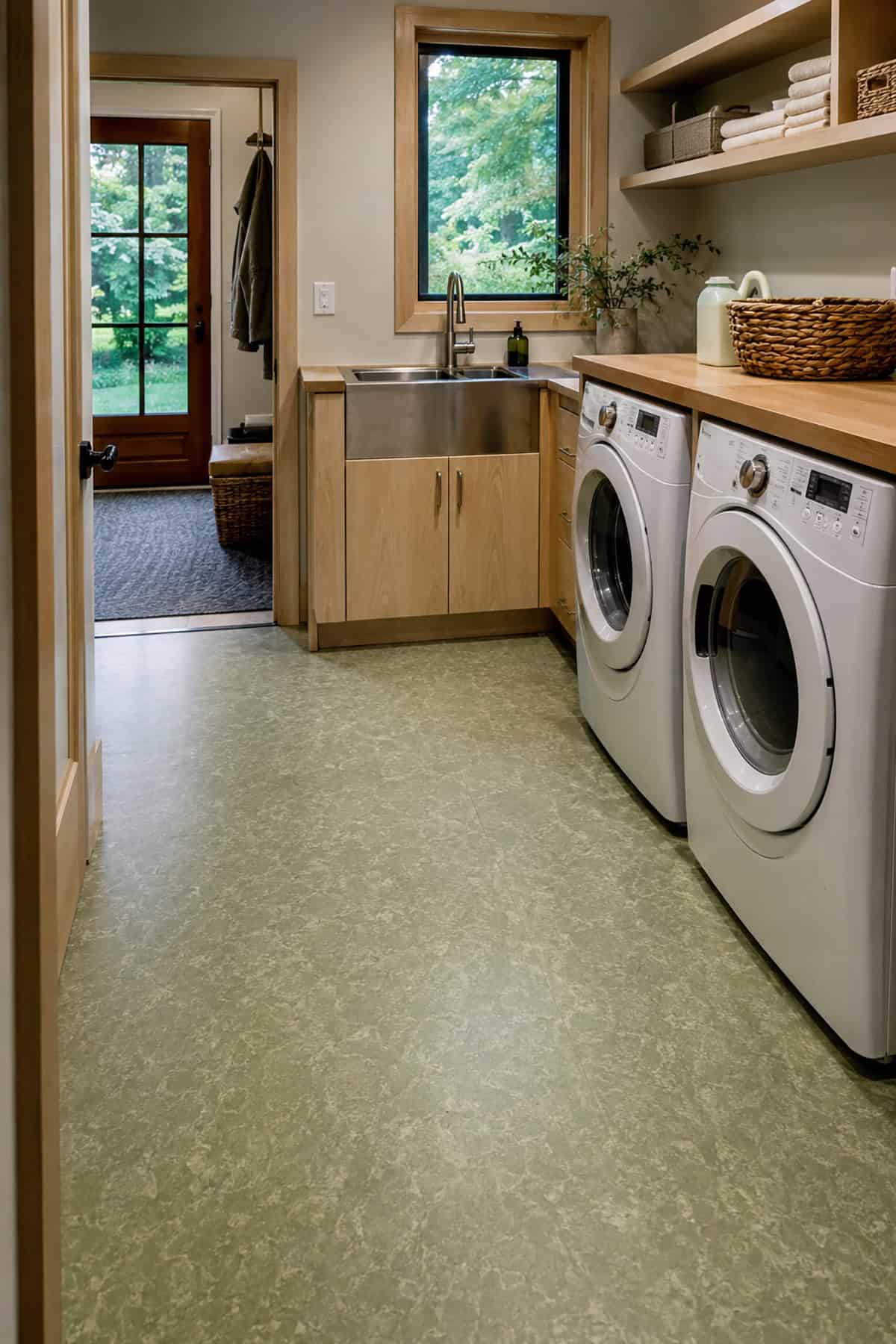
Real linoleum, made from linseed oil and cork dust, wears differently than vinyl and its color runs through the full thickness, so scuffs buff out rather than reveal a backing layer. The marbled variegation disguises everyday grit.
Water resistance depends entirely on the seams and edges, so heat-welded seams and a coved base are worth specifying. Naturally antimicrobial and biodegradable, linoleum appeals if sustainable flooring ranks high on your list.
Natural Cork Tile Flooring
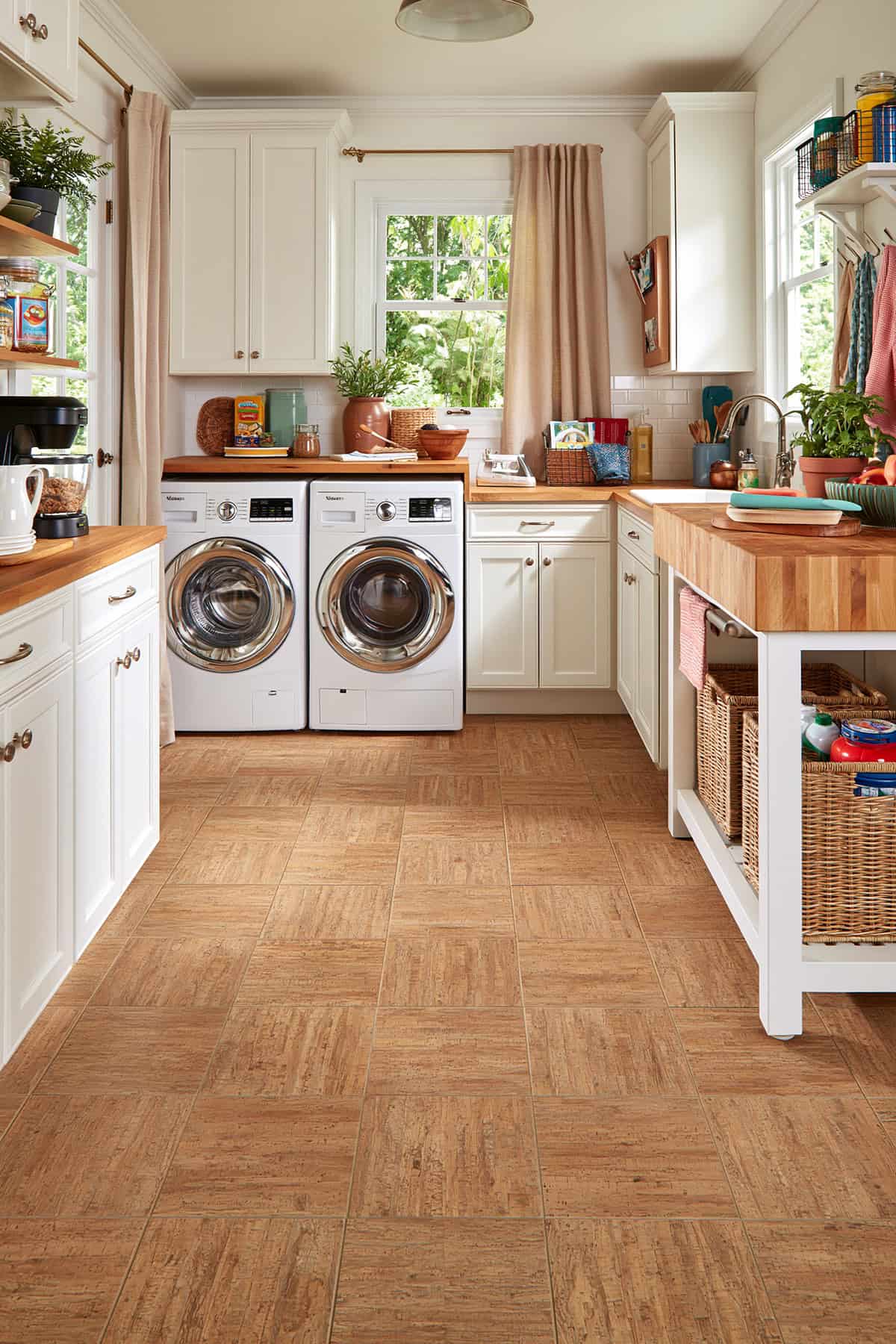
Warmth underfoot and sound absorption set cork apart, and standing at a folding counter for twenty minutes proves the difference against tile. Golden honey tones brighten a basement laundry considerably.
Moisture is the limiting factor. Choose glue-down tiles with a factory urethane finish, keep the perimeter caulked, and address a leak immediately, because saturated cork swells and won’t recover. Reapply finish every few years in wet zones.
Pale Oak Waterproof Vinyl Planks
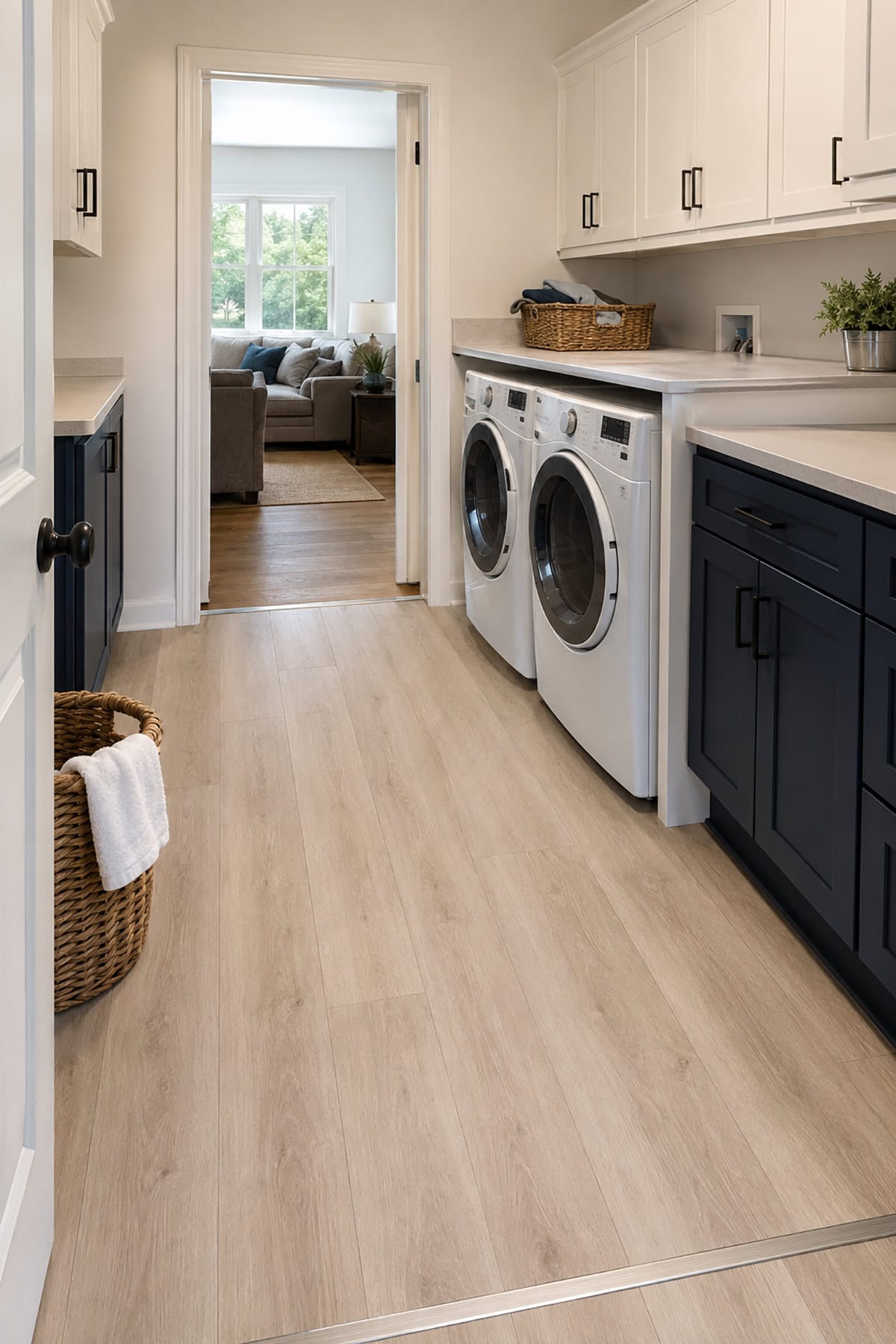
Rigid-core planks with a light oak grain carry a hardwood look through the room without any of the swelling risk, which matters when a supply line lets go. Look for a 20-mil wear layer if pets or a mudroom crossover are in play.
Click-lock floating installation over a flat subfloor goes down in an afternoon. Match plank width to adjacent flooring for continuity, and use a T-molding rather than caulk at doorways so the floor still moves.
Porcelain Cobblestone Flooring
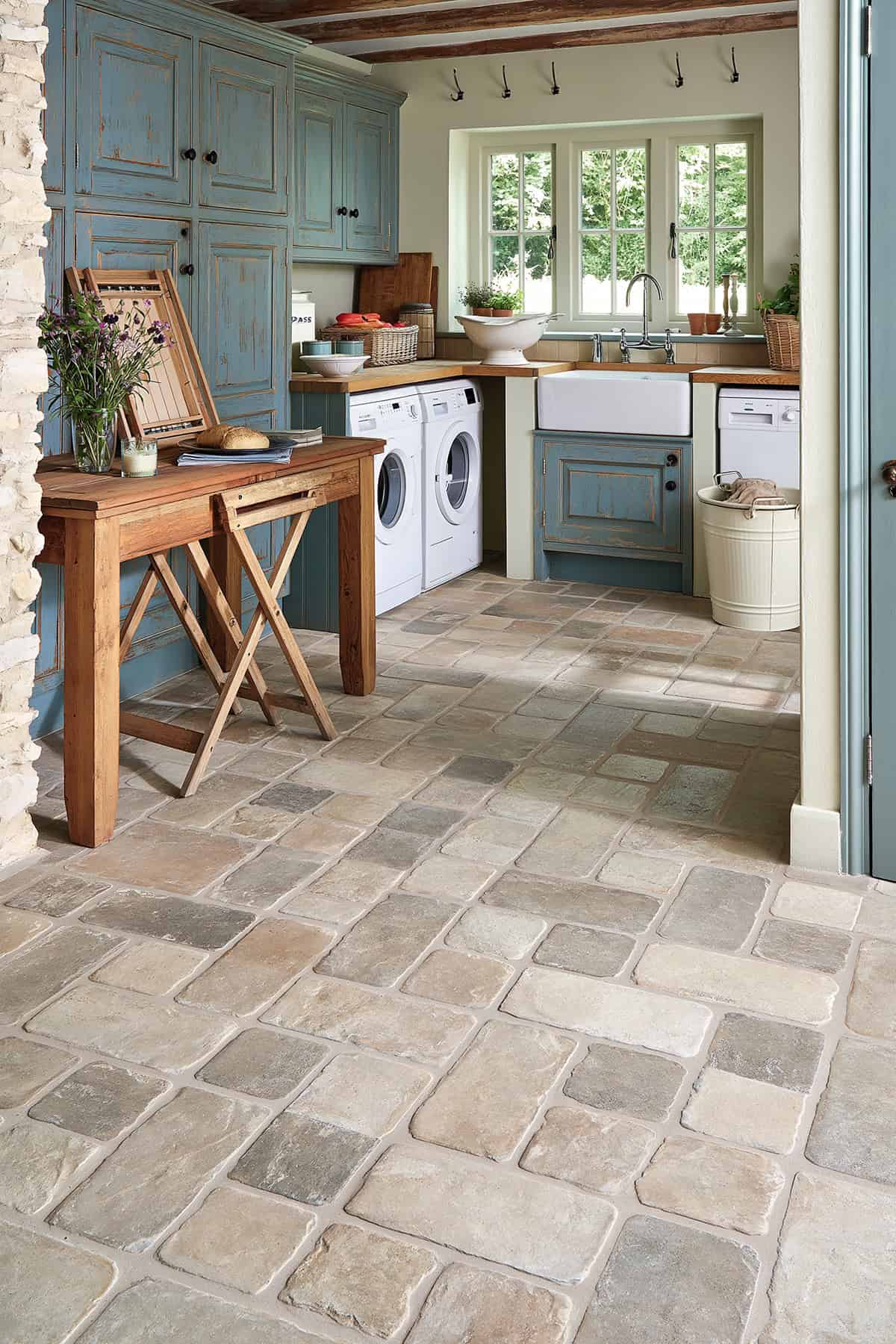
Rounded stone shapes molded in porcelain give the courtyard look without the porosity or the wildly uneven surface of real setts. Dark gray with tan variegation reads convincingly under warm lighting.
Grout joints are wide by design, which improves grip but demands epoxy or a well-sealed cement grout to stay clean. The relief also collects lint, so a stiff-bristle broom belongs in the closet.
Salt-And-Pepper Granite Tile Flooring
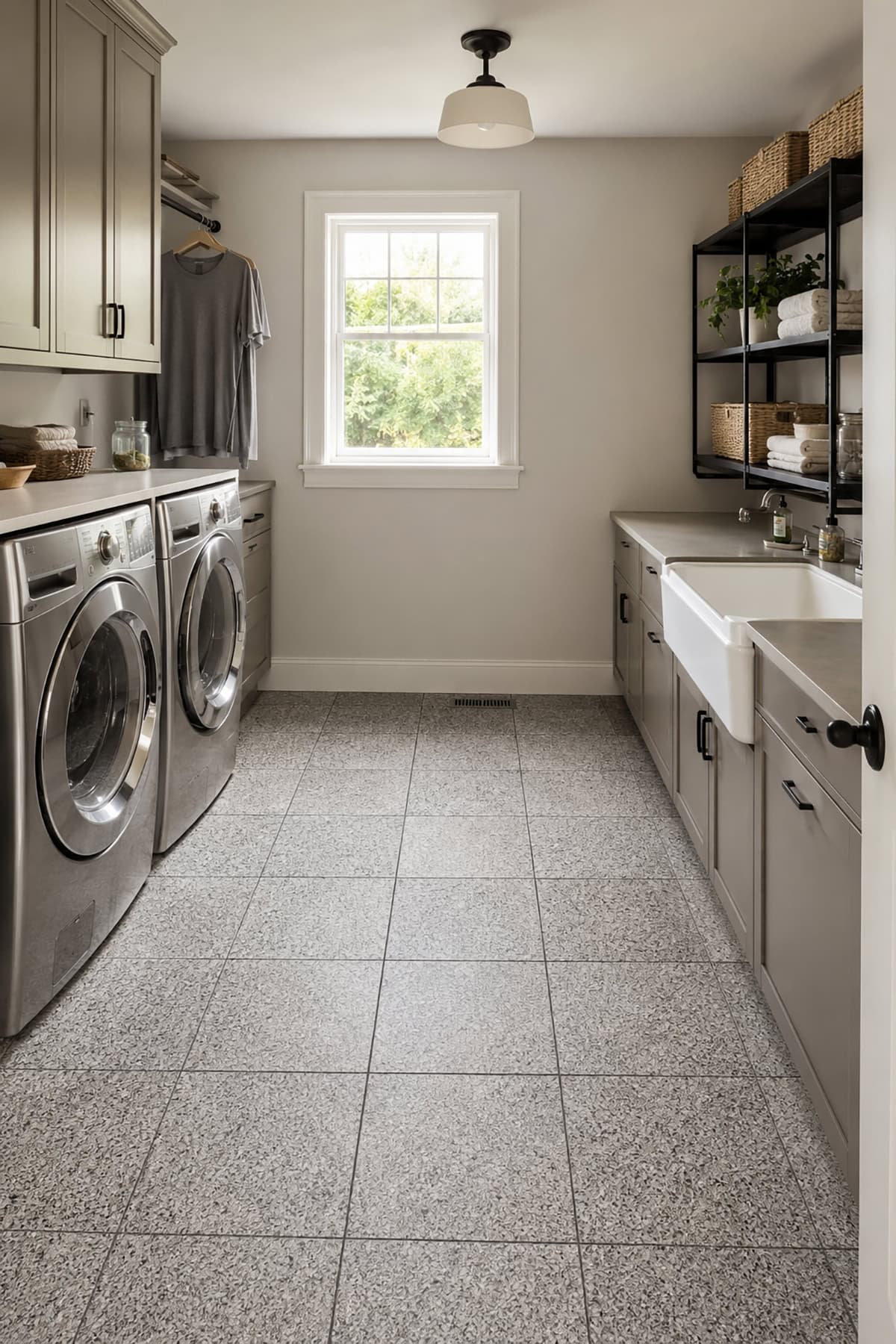
Speckling does the heavy lifting here, hiding dryer lint, pet hair, and dropped soil between cleanings better than nearly any solid color. Granite is dense, hard, and nearly indifferent to detergent.
Honed or flamed finishes stay safer than polished. Twelve-by-twelve or eighteen-by-eighteen tiles keep grout lines minimal, and a mid-gray grout disappears into the field pattern instead of framing every unit.
Speckled Terrazzo Flooring
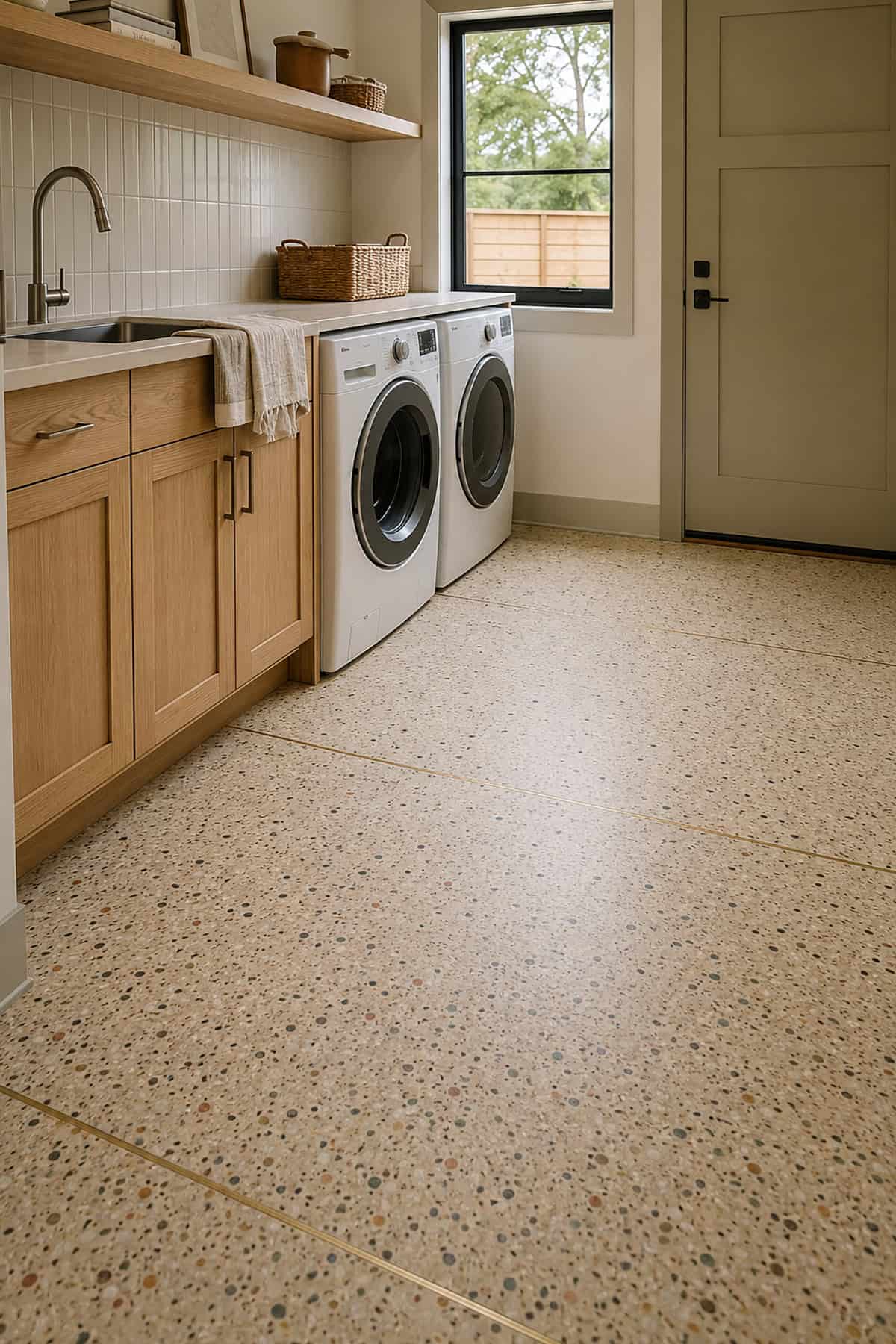
Aggregate chips suspended in cement or epoxy give a floor with genuine visual movement at close range and a calm overall tone from the doorway. Poured terrazzo is monolithic and lasts decades; precast tiles cost far less.
Neutral binders with white marble and charcoal chips suit a modern laundry room; brighter chips push toward mid-century. Sealing matters on cement-based versions, since the binder absorbs staining liquids.
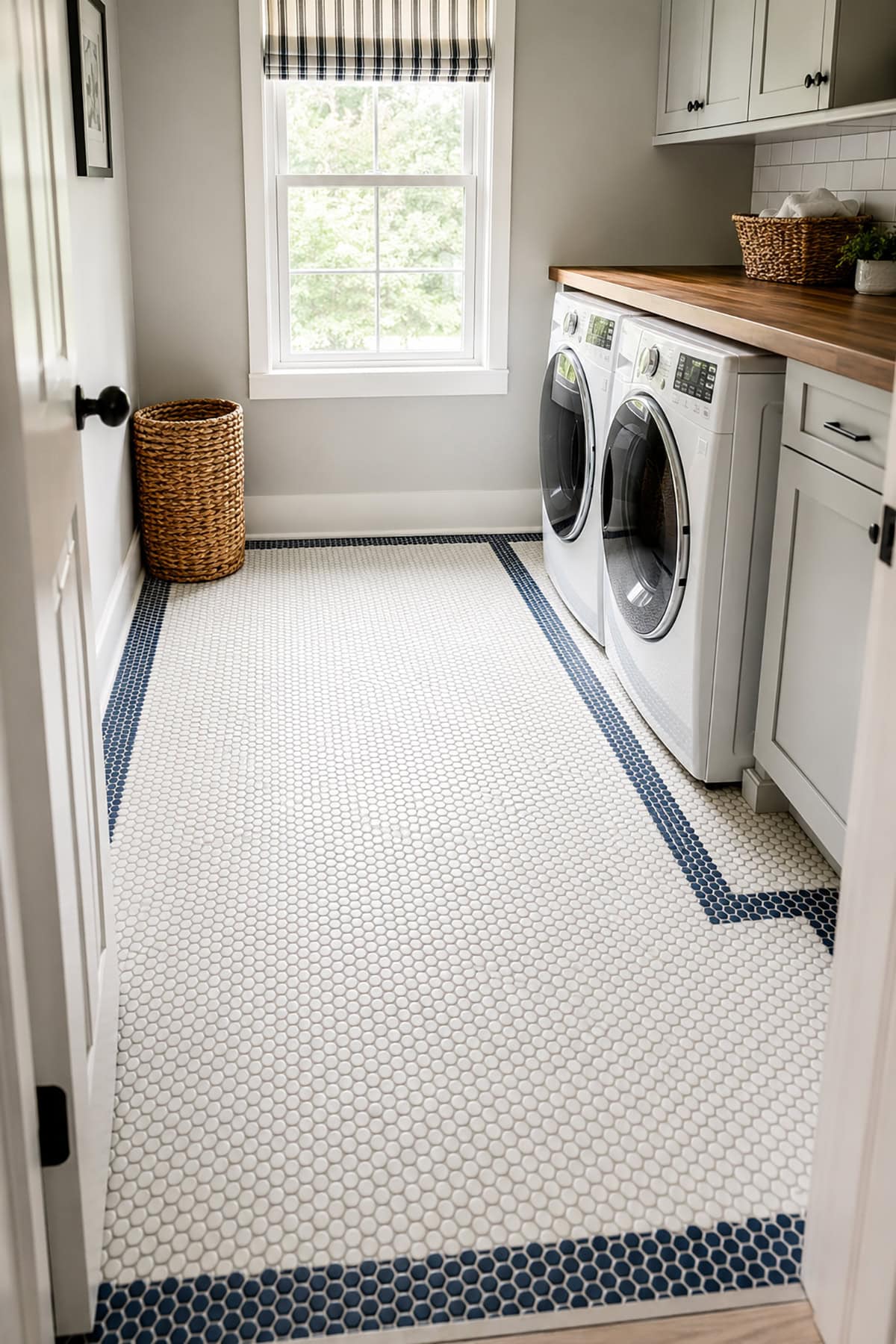
Edge detail transforms this from plain to considered. A double row of navy penny rounds framing a white field defines the room’s shape and draws attention away from appliances.
Thousands of small joints mean excellent slip resistance and an unavoidable amount of grout to maintain, so specify epoxy in a warm gray rather than bright white. Dry-lay the border first, since cut sheets rarely land cleanly at corners.
Reclaimed Brick Paver Flooring
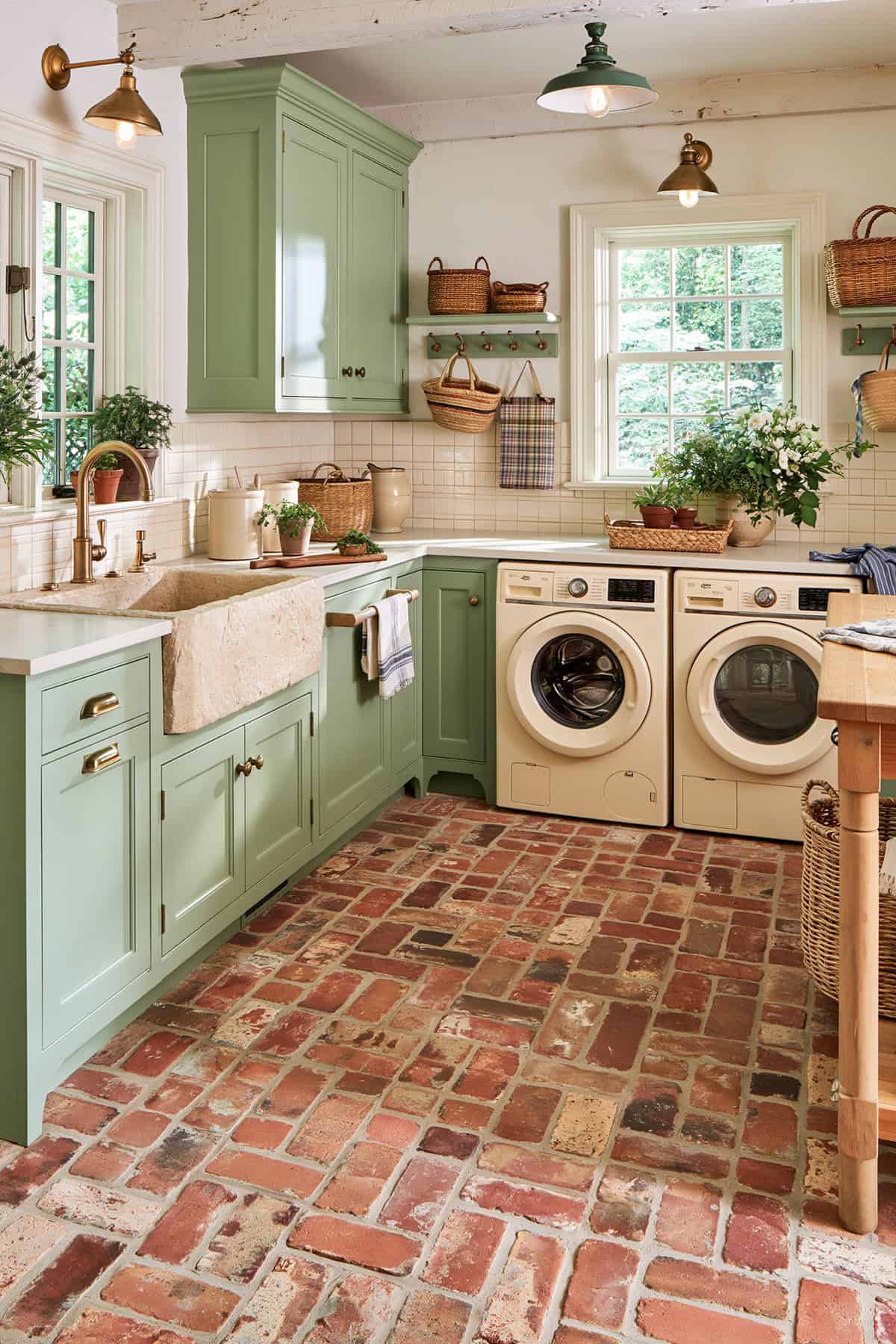
Salvaged clay in mottled reds and browns brings age into a new build faster than any manufactured product. Thin brick pavers, roughly half an inch, keep the floor height reasonable over an existing subfloor.
Structural weight demands checking your joists on an upper floor. Seal with a breathable matte product to control efflorescence and dusting, and expect the sanded grout joints to want a scrub brush occasionally.
Interlocking Teak Deck Tile Flooring
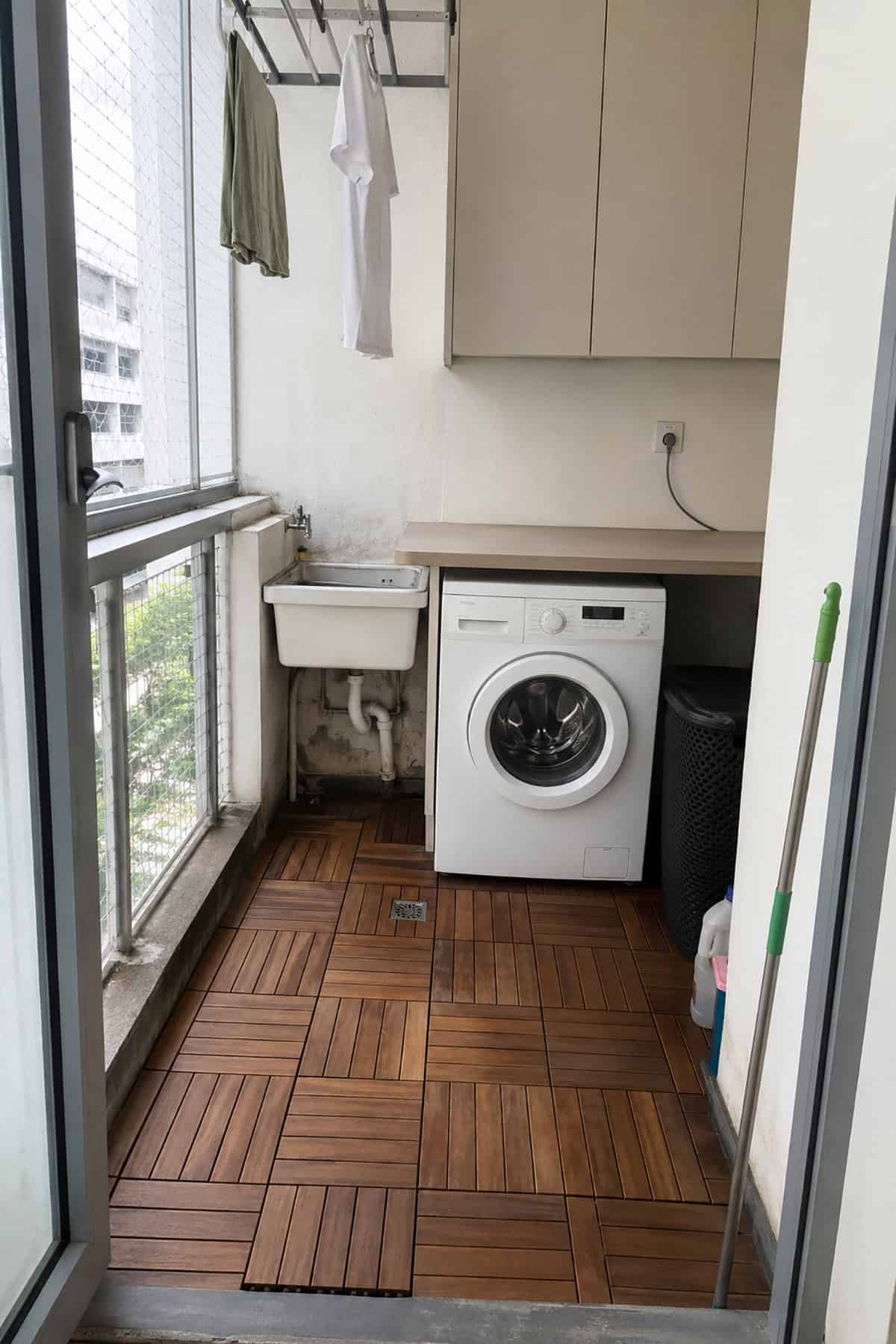
Slatted wood squares that snap together over a plastic grid let water drain straight through to the subfloor below, which suits a laundry room with a floor drain and no other. Renters appreciate the zero-adhesive install.
Teak’s natural oils resist rot, and the wood silvers gracefully if left unfinished. Lift the tiles quarterly to clear lint from the void underneath; skipping that step defeats the drainage advantage entirely.
Faded Multicolor Patterned Tile Flooring
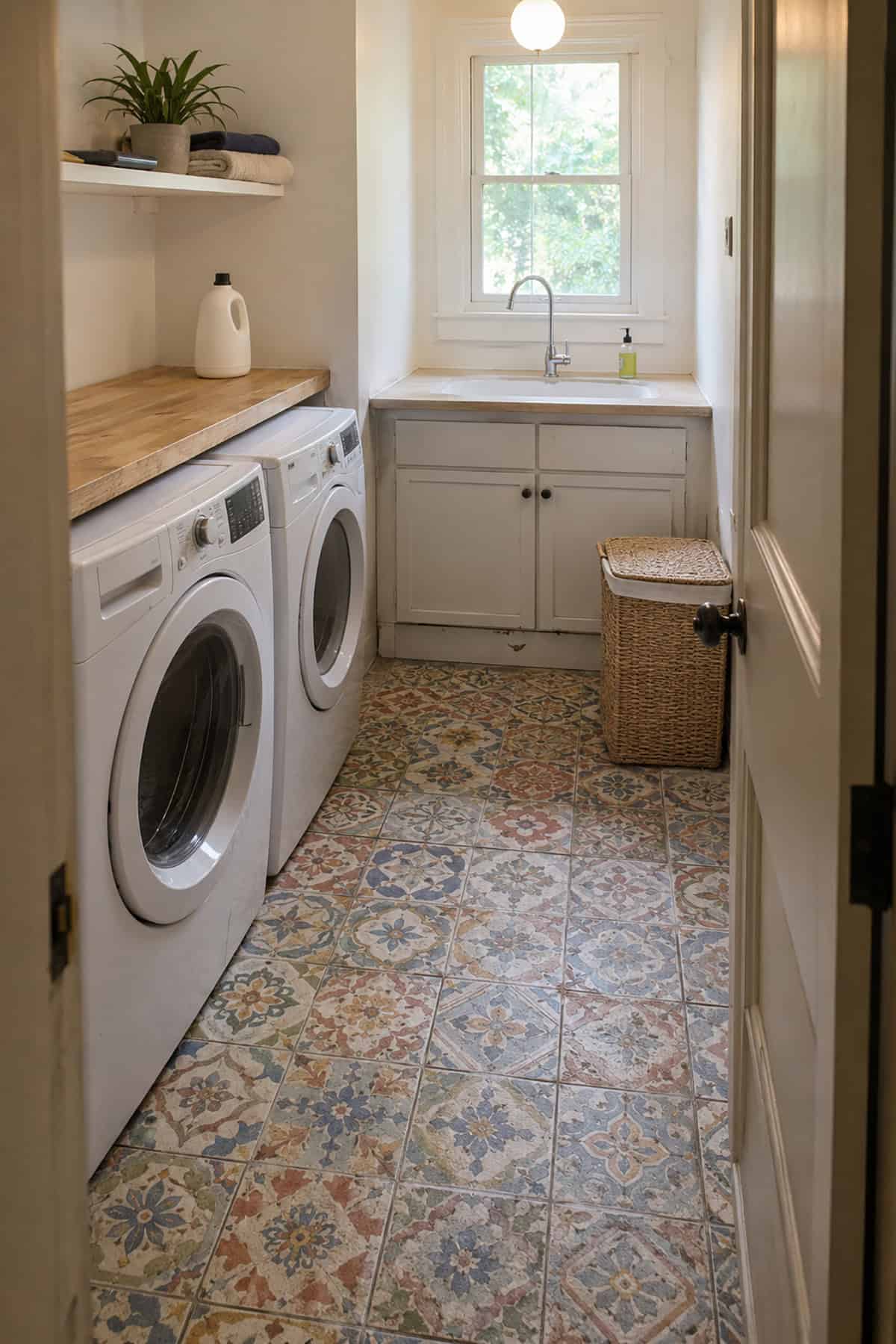 Washed-out ochres, faded blues, and soft terracotta in a repeating motif look collected rather than installed, which suits an older house. Muted tones stay livable in a small room where a saturated pattern would dominate.
Encaustic cement versions require sealing before and after grouting, plus resealing every year or two. Patterned ceramic and porcelain printed alternatives skip that maintenance and cost considerably less per square foot.
Blue Quatrefoil Ceramic Tile Flooring
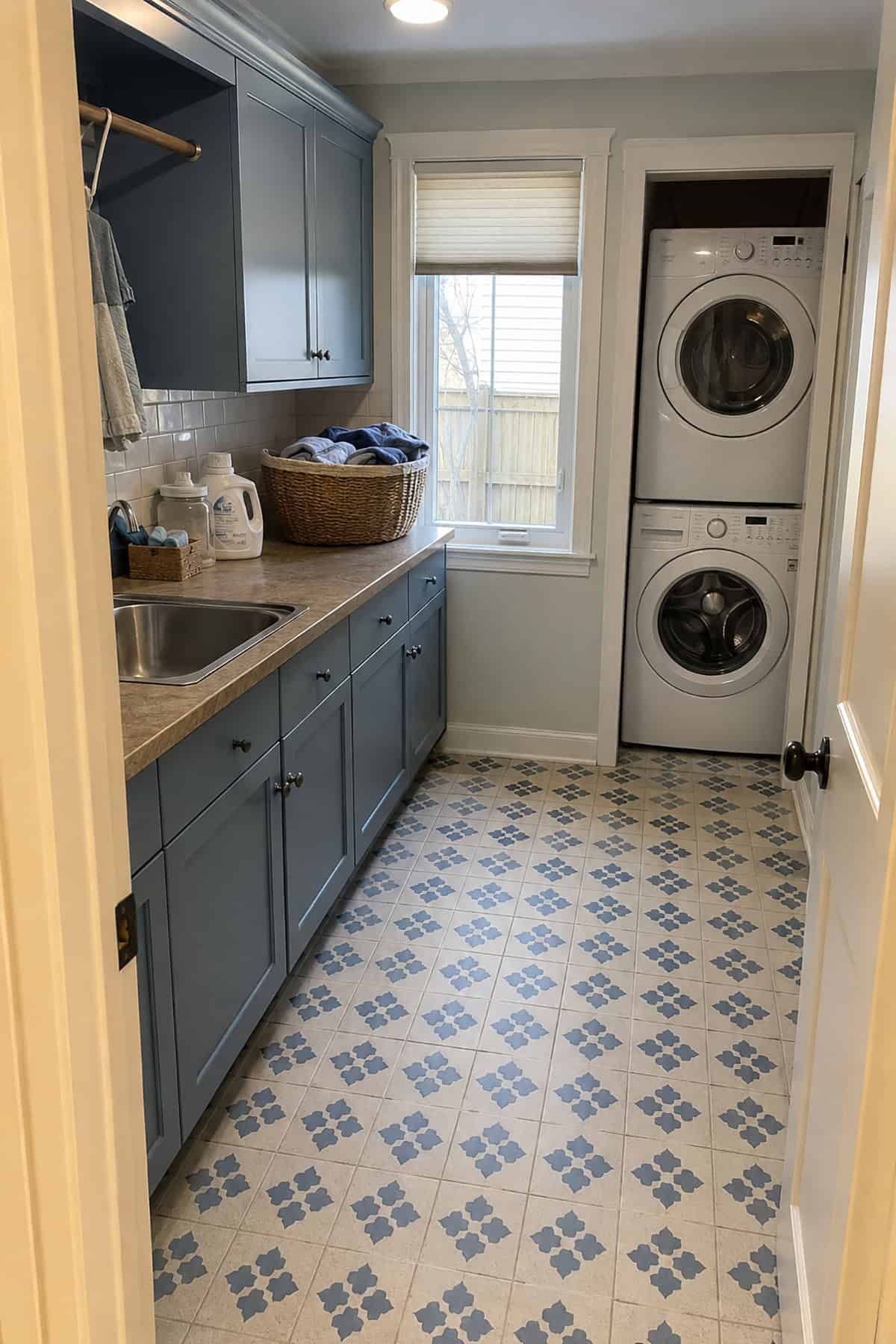
The four-lobed Moorish motif repeats across tile edges into a continuous lattice, so the floor reads as one pattern rather than a grid of individual squares. Indigo on white keeps it crisp against wood cabinetry.
Glazed ceramic handles a laundry room’s traffic without sealing, though a matte or satin glaze holds grip better than gloss. Center the pattern on the room’s most visible sightline before setting the first tile.
Black Floral Hex Mosaic Flooring
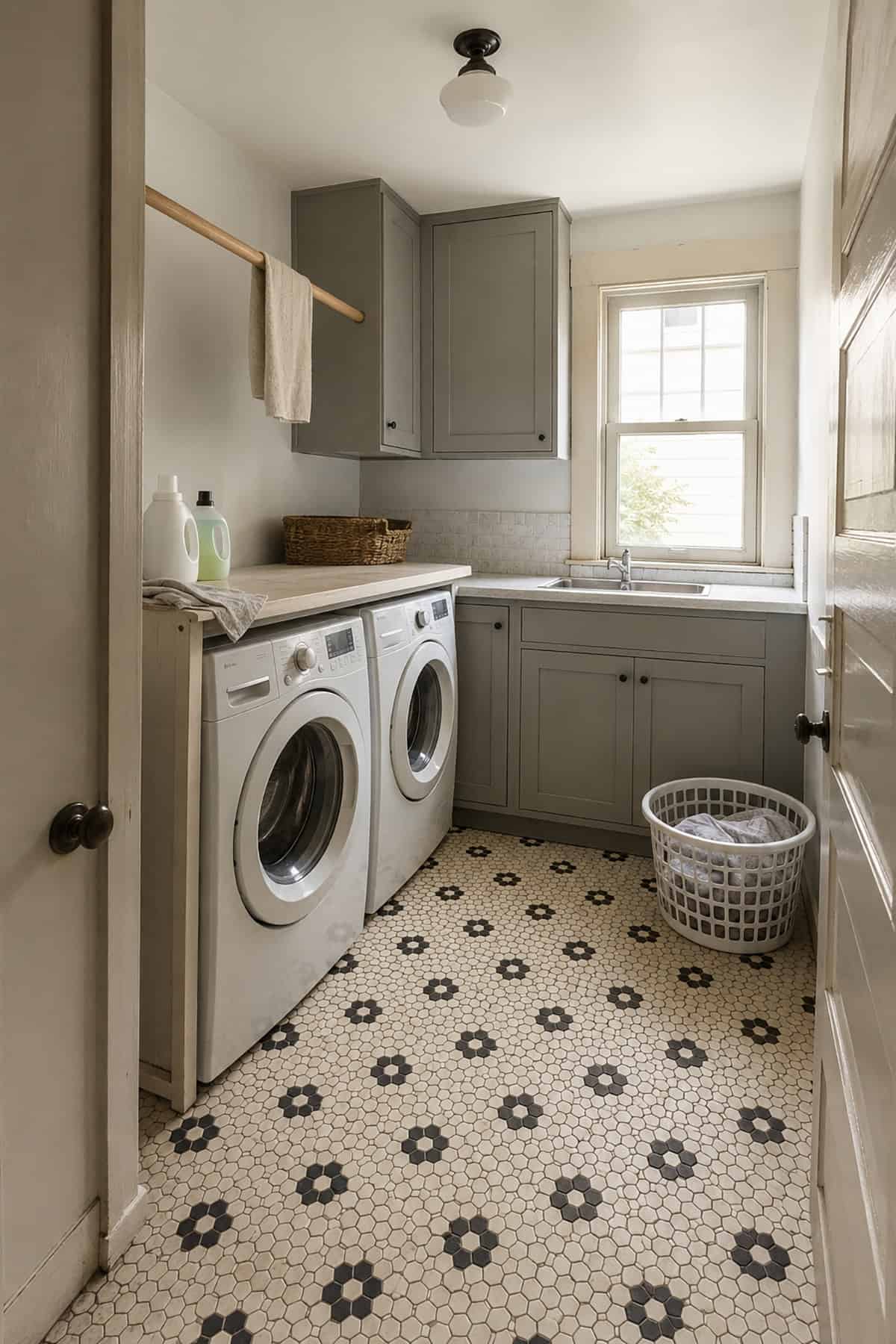
Small white hexagons interrupted by scattered black florets belong to the 1920s bathroom vocabulary, and the motif suits a period laundry room without pastiche. Density of the joints delivers reliable traction.
Sheet-mounted mosaics install quickly, but the floral placement repeats every sheet, so lay several out dry to confirm the spacing looks random. Charcoal grout keeps lint invisible where white would show every fiber.