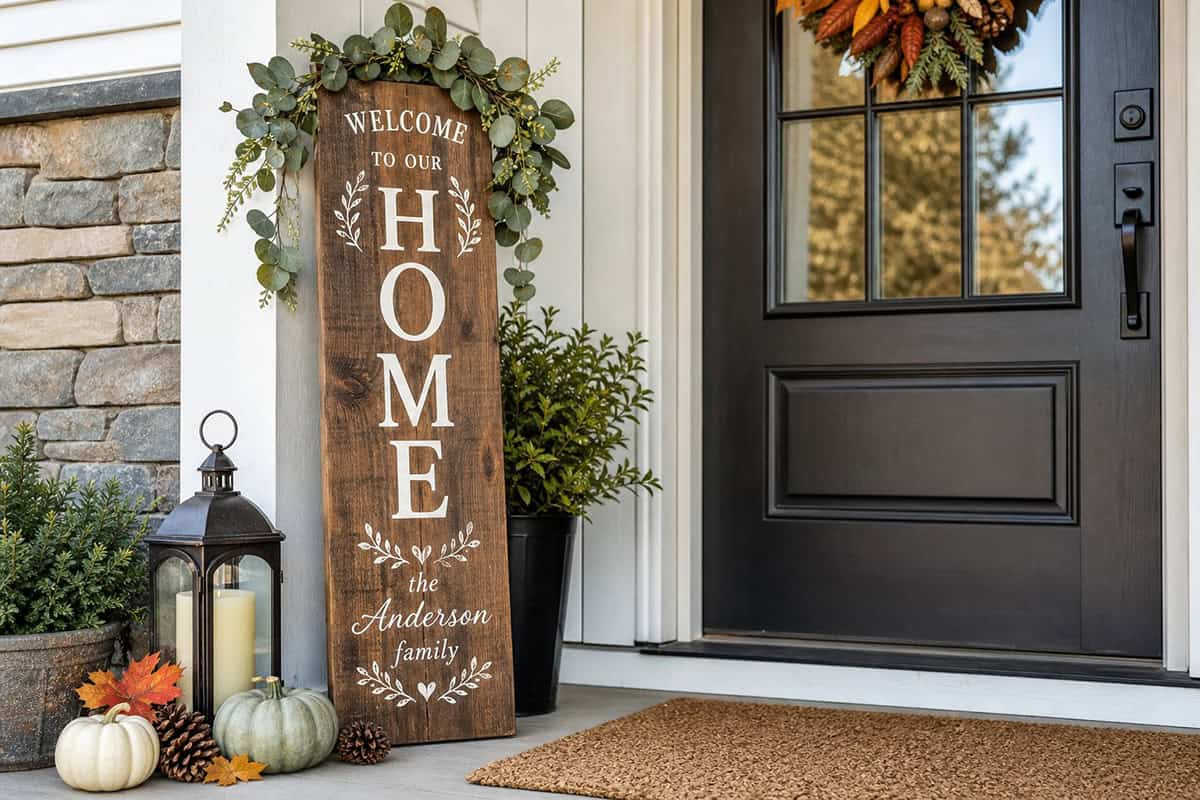
A front entrance does not need new paint, major projects, or a large budget to look different. A few carefully selected accessories can instantly give the space a fresh new look and a warmer welcome. Check out these 22 front door accessory ideas for inspiration.
Table of Contents
- Front Door Accessory Ideas
- Wooden Welcome Sign
- Wall-Mounted Lantern Sconces
- Vintage Brass Door Knocker
- Decorative Window Box Under Sidelights
- Woven Basket Lantern Grouping
- Tall Branch Arrangement Planters
- Statement Front Door Bell
- Rustic Wooden Crate Display
- Plant Stand Arrangement
- Oversized Seasonal Wreath
- Monogram Door Hanger
- Matching Topiary Planters
- Layered Welcome Mat
- Large Ceramic Urn Planters
- Hanging Flower Basket Pair
- Front Door Watering Can Display
- Front Door Herb Planter Collection
- Front Door Bench
- Decorative Outdoor Wall Basket
- Decorative House Number Plaque
- Copper Mailbox And Planter Combination
- Arched Trellis Entry Accent
Front Door Accessory Ideas
It’s the details that separate a dialed-in entry from a mess. Brass against painted wood, layered mats, a couple of bold planters, maybe a big wreath—when things click, the whole space starts to be inviting before the door even opens.
Wooden Welcome Sign
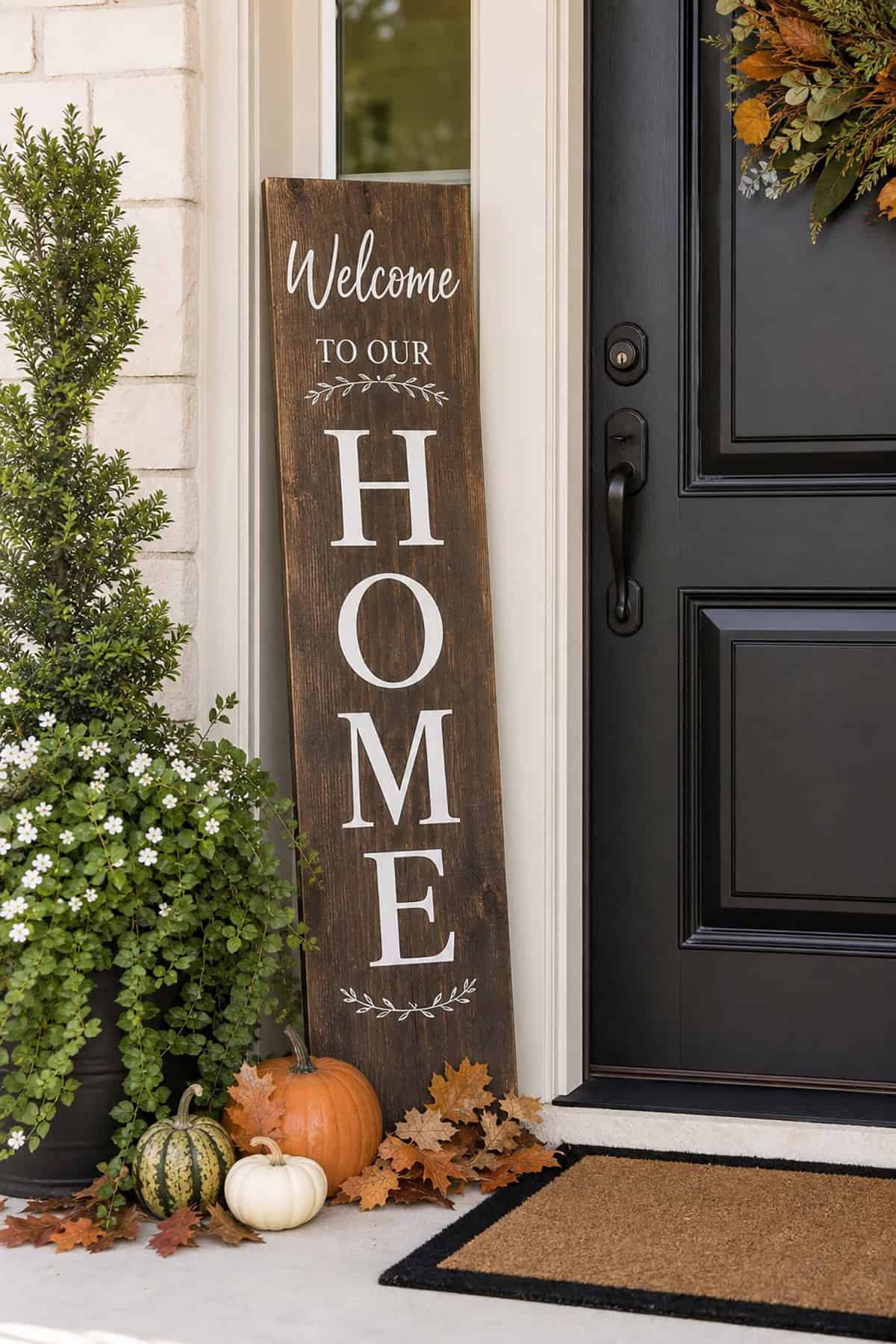
Weathered wood with carved or routed letters looks like it was actually made for your house, especially up against a moody navy or charcoal door. The difference between this and a mass-produced painted sign is night and day.
Don’t let the sign get swallowed up by the scale of the door, but skip anything oversized that overwhelms your hardware.
Wall-Mounted Lantern Sconces
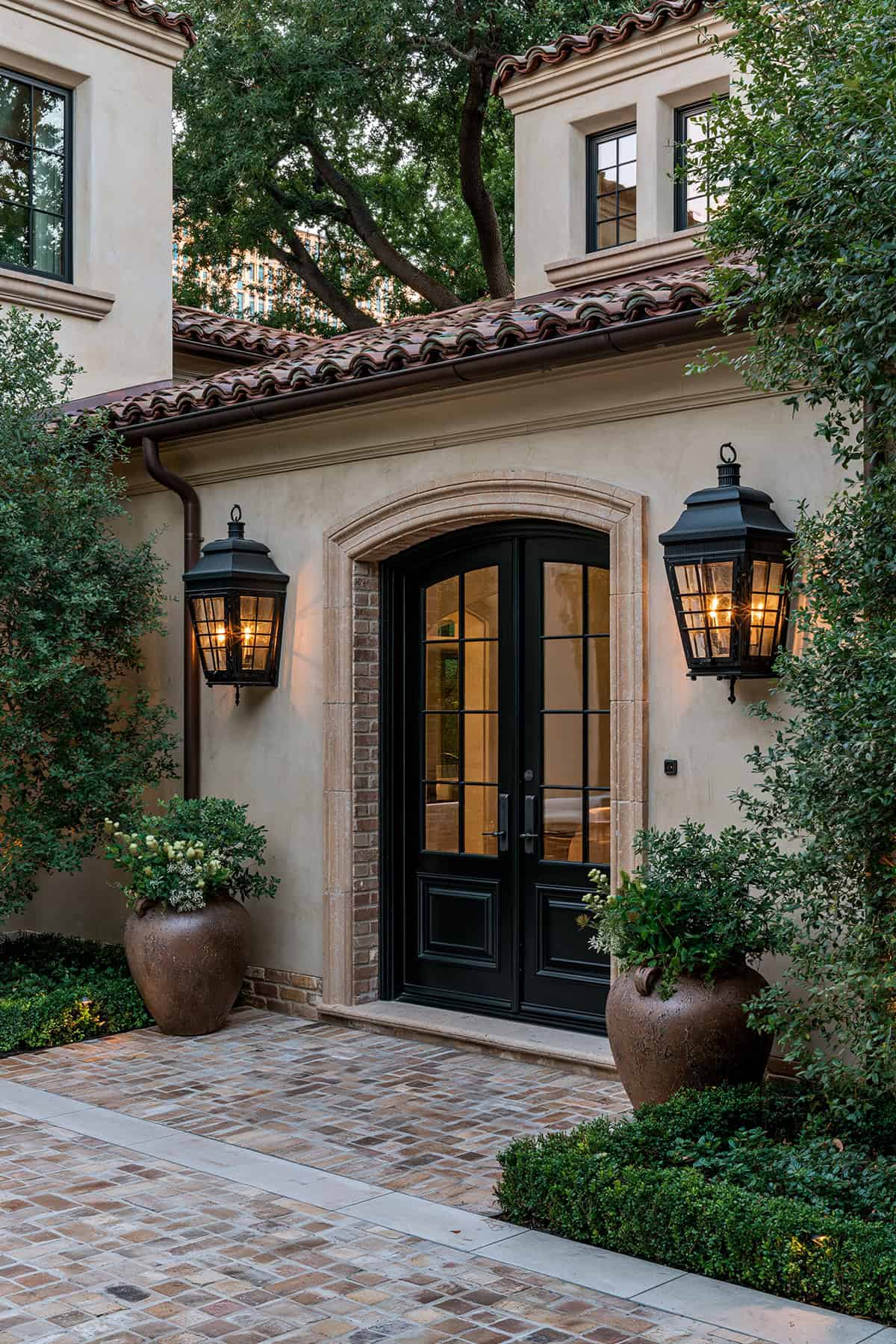
After dark, a well-placed pair of sconces on either side of the door pulls the whole facade into focus. The light frames the entry, stretches the architecture, and helps the place feel finished.
Matching the finish to your door hardware is one of those small choices that make everything look deliberate. Matte black, aged bronze, antique brass—pick what plays off your siding or brick. Warm bulbs are always more flattering than those harsh blue-tinged ones. Seriously, skip the daylight bulbs unless you want your house to look like a clinic.
Vintage Brass Door Knocker
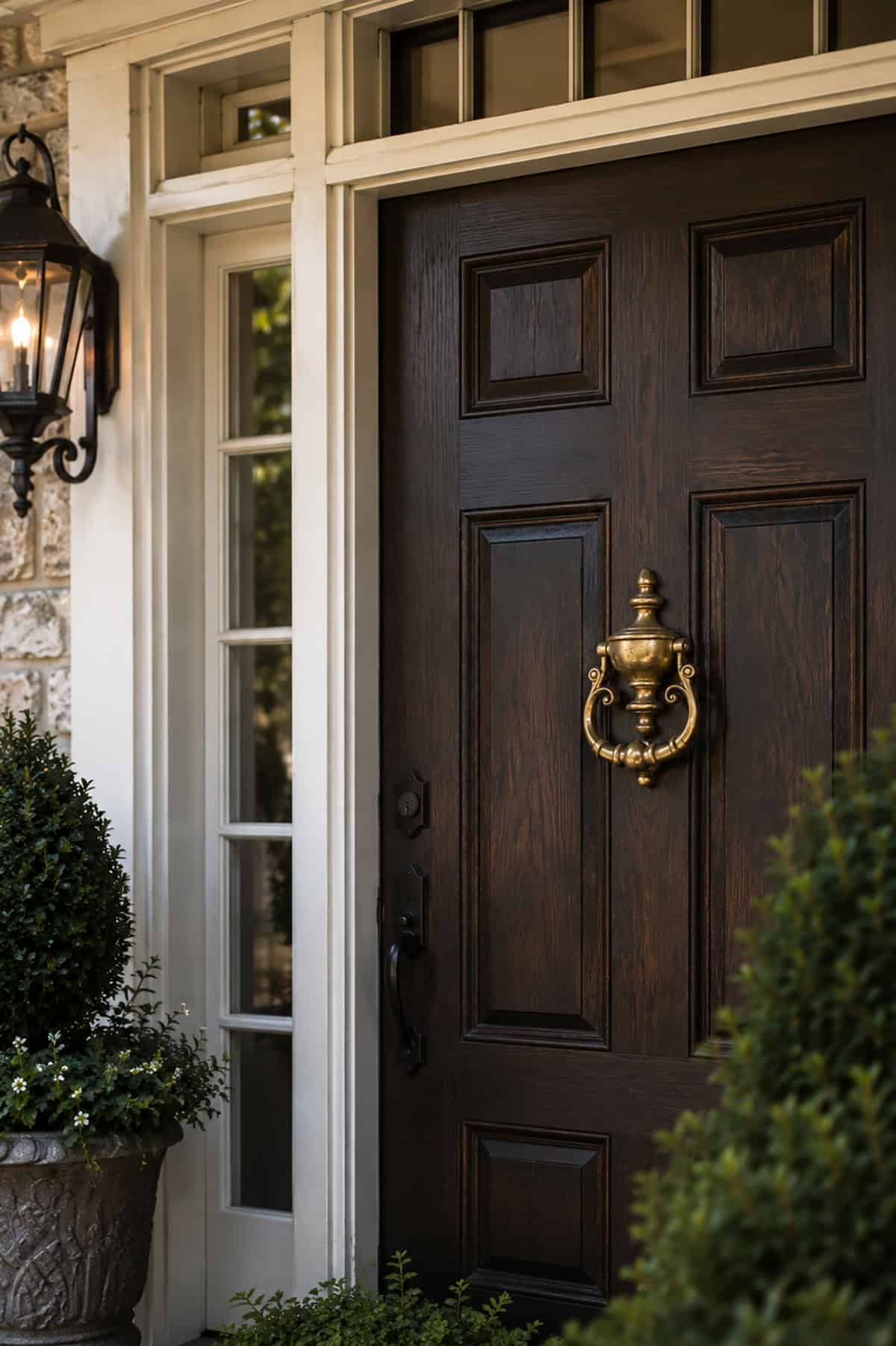
Few things say “someone actually lives here” like a solid brass knocker. Over time, the sheen dulls to a warm glow, and that patina just gets better. Plastic or painted knockers don’t even come close.
You don’t have to stick with the lion’s head—geometric or nautical shapes can work, especially on more modern or coastal homes. Centering the knocker on a narrow panel (not just slapping it anywhere) signals that you noticed the details.
Decorative Window Box Under Sidelights
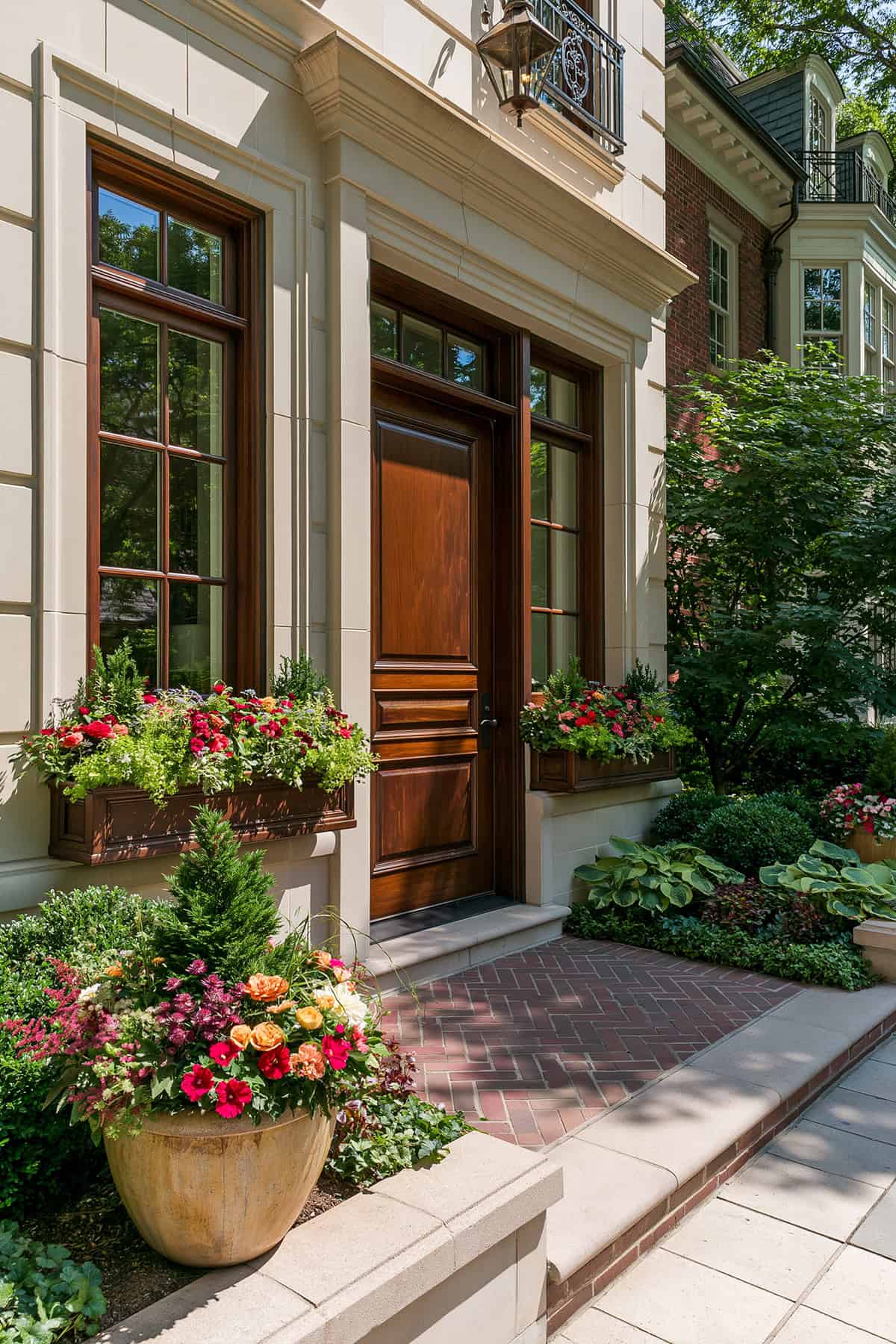
Window boxes under sidelights break up all that vertical glass and add softness down low. Trailing greens—think creeping jenny or ivy—spill out, pulling attention toward the door in a way that feels inviting, not stiff.
Coordinate the box with your hardware, not the door color. A dark iron or bronze window box looks purposeful. Just watch the soil depth—shallow boxes dry out fast, so plan for extra watering if your entry bakes in the sun.
Woven Basket Lantern Grouping
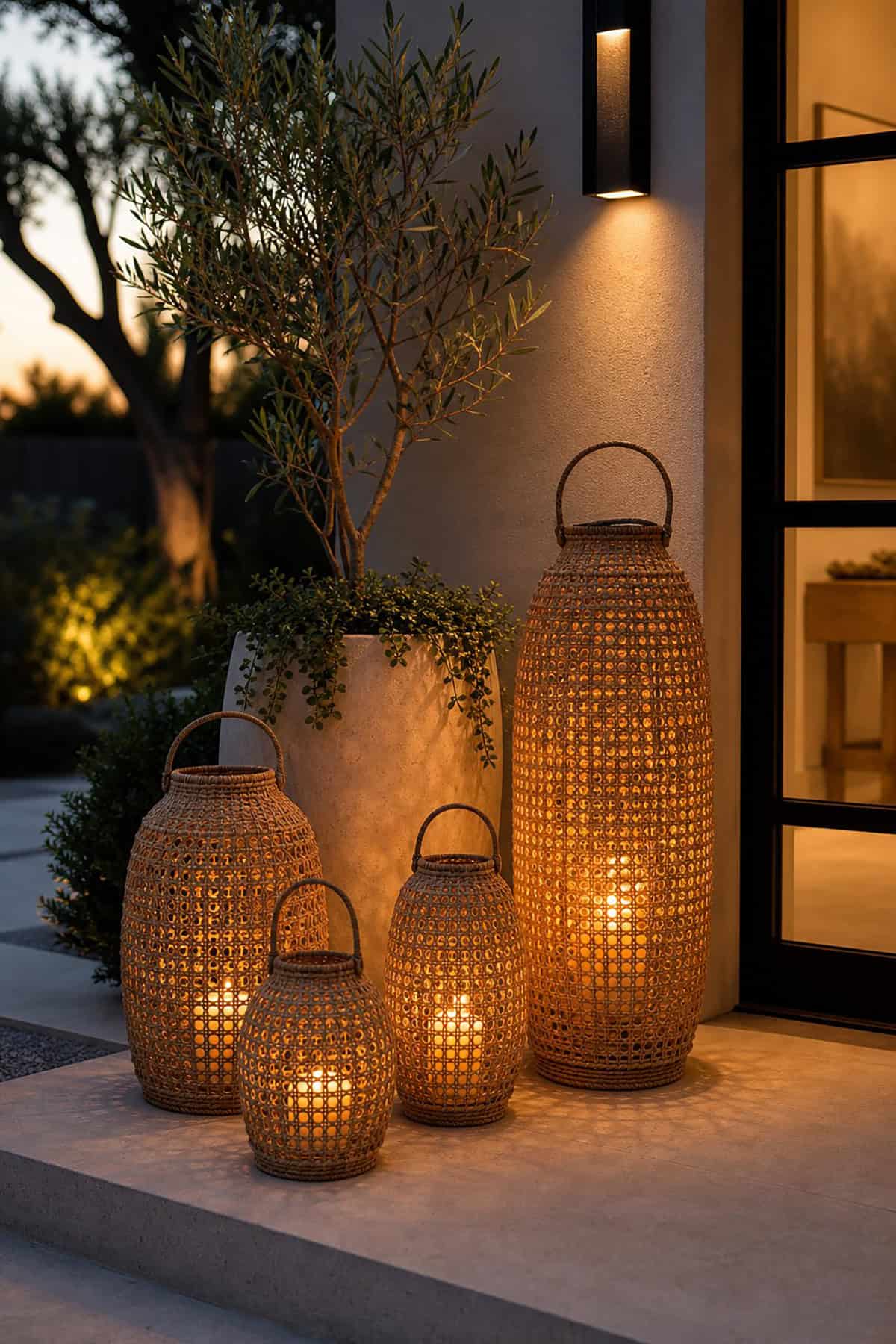
Clustered lanterns—three or four, all different heights, nudged off to one side— will bring a kind of casual, layered look that’s way more interesting than a matched pair.
Rattan or seagrass lanterns give off warmth and texture that metal can’t touch. They’ll hold up under a covered porch, but don’t love rain. Pop a candle or battery bulb inside for evening glow.
Tall Branch Arrangement Planters
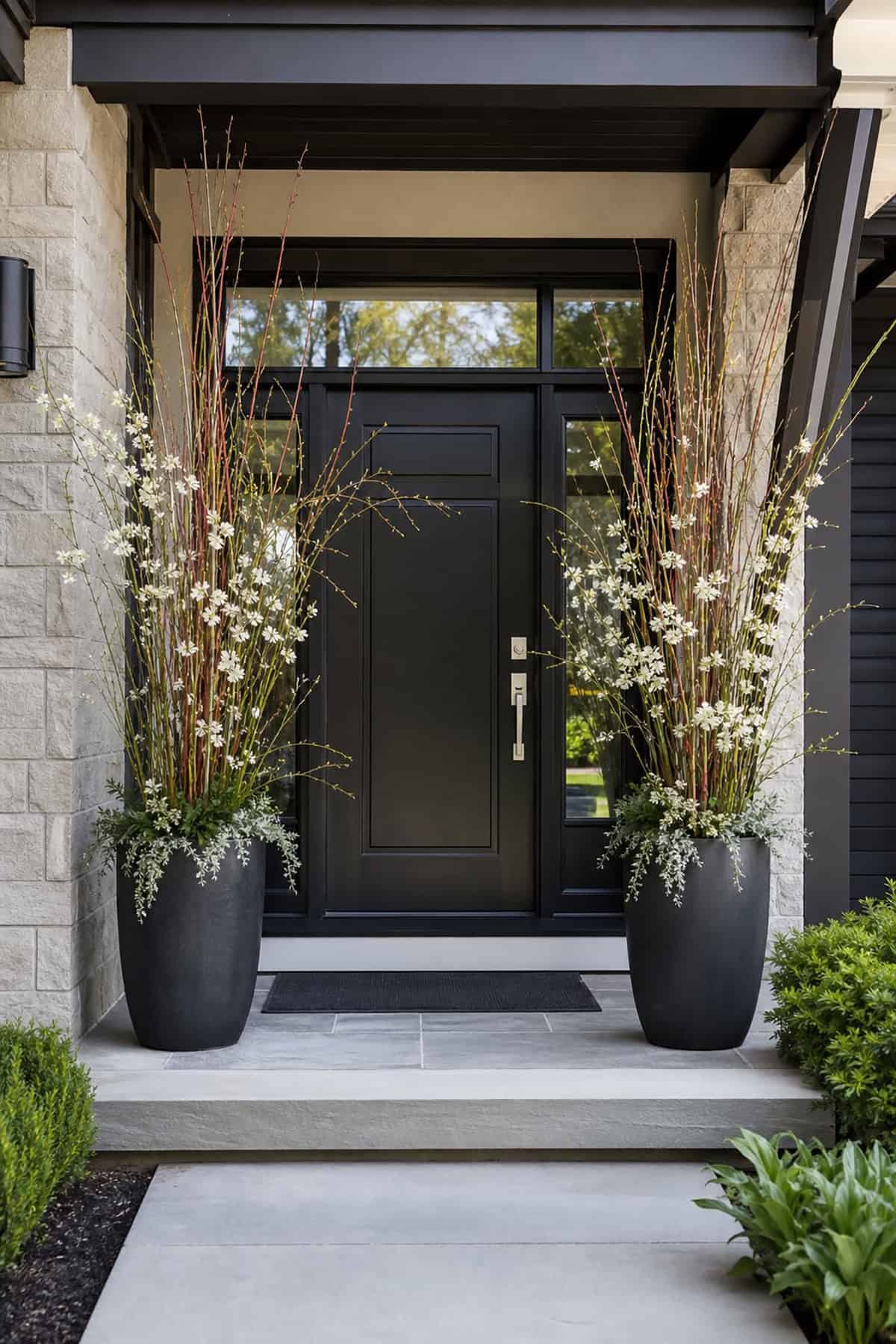
Vertical drama at the entry changes everything. A couple of tall planters stuffed with upright branches—twisted willow, eucalyptus, whatever’s in season—pulls the eye up and frames the door like columns.
Let the branches do the talking, so keep the pot simple. Raw terracotta or concrete works better than anything ornate. In autumn, bare branches or dried seed heads feel right for the season.
Statement Front Door Bell
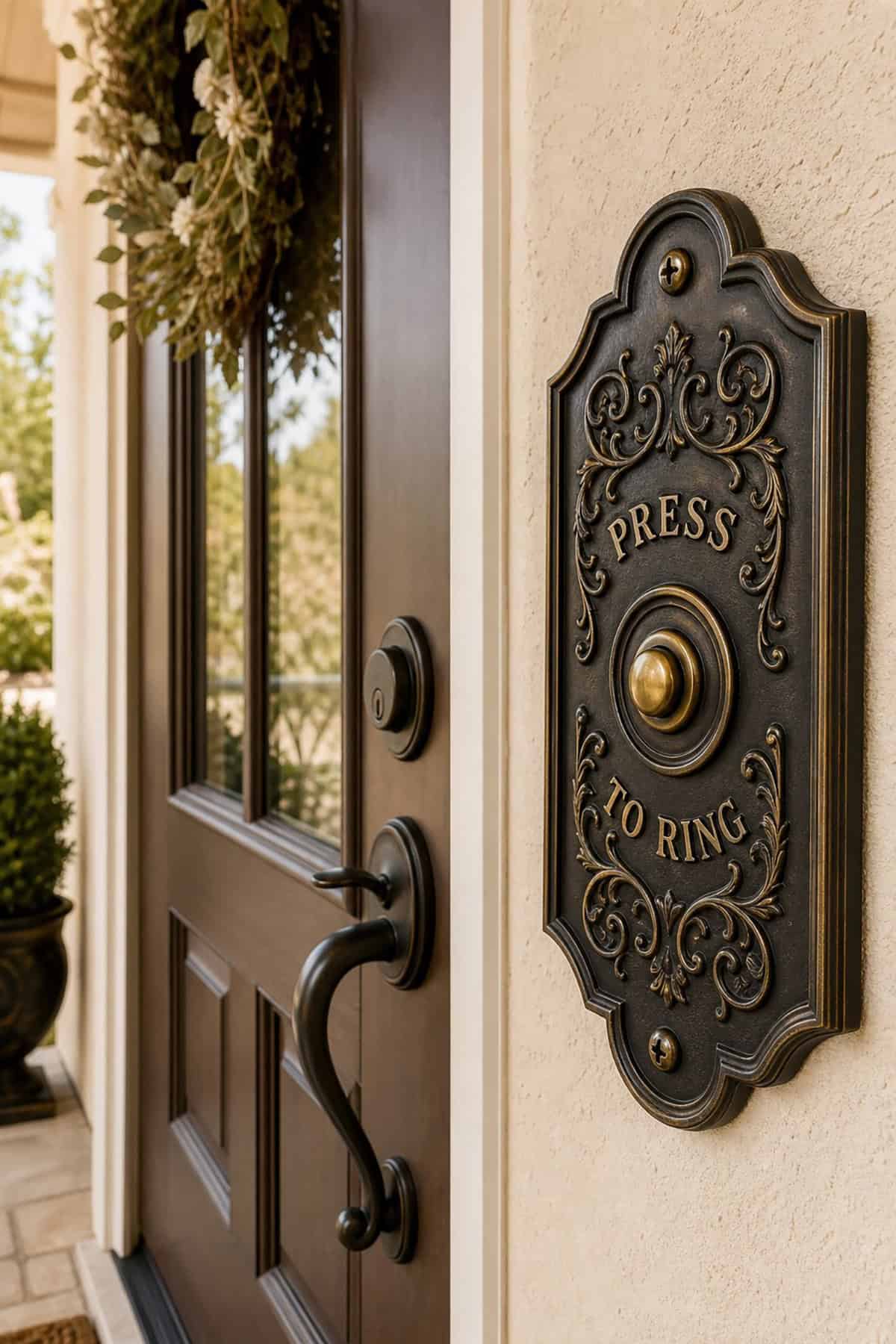
Why let the doorbell fade into the background? A bold bell in aged brass or forged iron can double as a tiny piece of art. The shape, the finish—it all adds up.
If you already have a video doorbell, add a decorative bell mount nearby to keep some of that old-school charm.
Rustic Wooden Crate Display
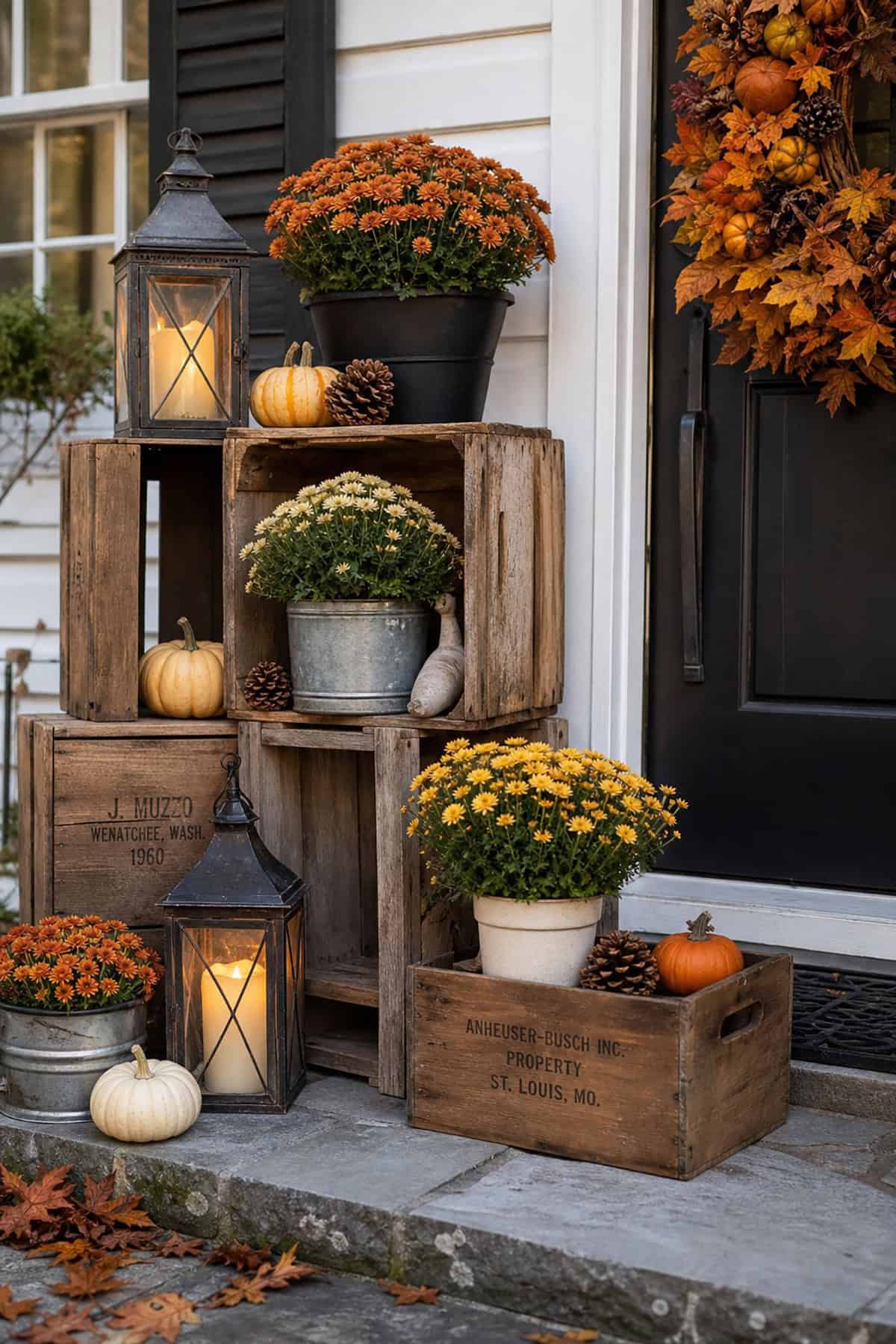
Set a beat-up wooden crate on its side by the door and suddenly you’ve got a mini display shelf. Tuck in a potted plant, maybe a lantern, and a seasonal touch for a look that’s relaxed but not messy.
Don’t overcrowd it—two or three objects max. Weathered pine feels right for cottage or farmhouse, while a dark-stained crate can hang with more modern exteriors.
Plant Stand Arrangement
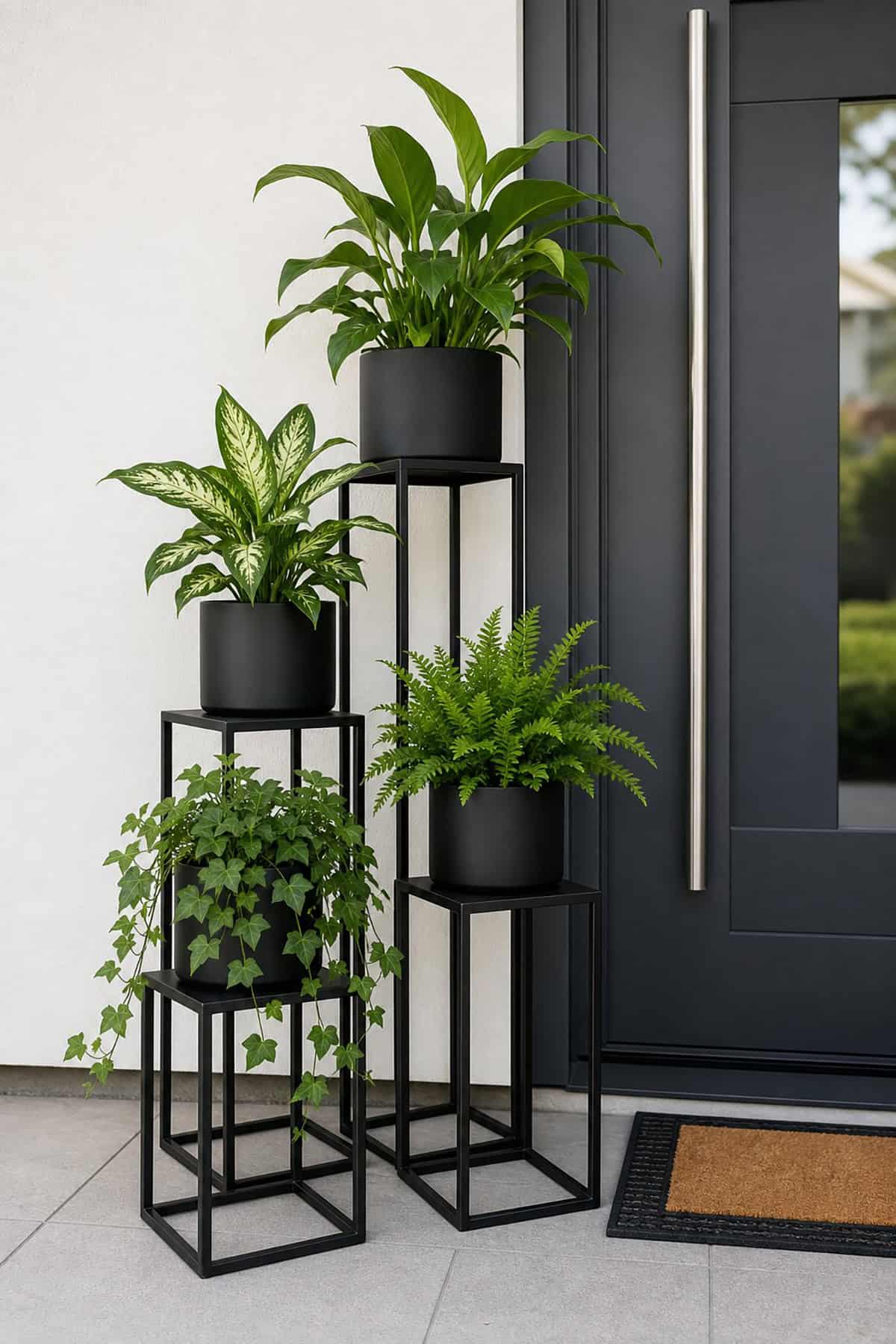
Tiered plant stands break up the flatness at your feet. A three-level iron stand—trailing plant at the bottom, something bushy in the middle, something spiky up top—creates a vertical rhythm that’s hard to beat.
Let the stand echo another finish nearby. Tie it back to your door handle or light fixture for cohesion.
Oversized Seasonal Wreath
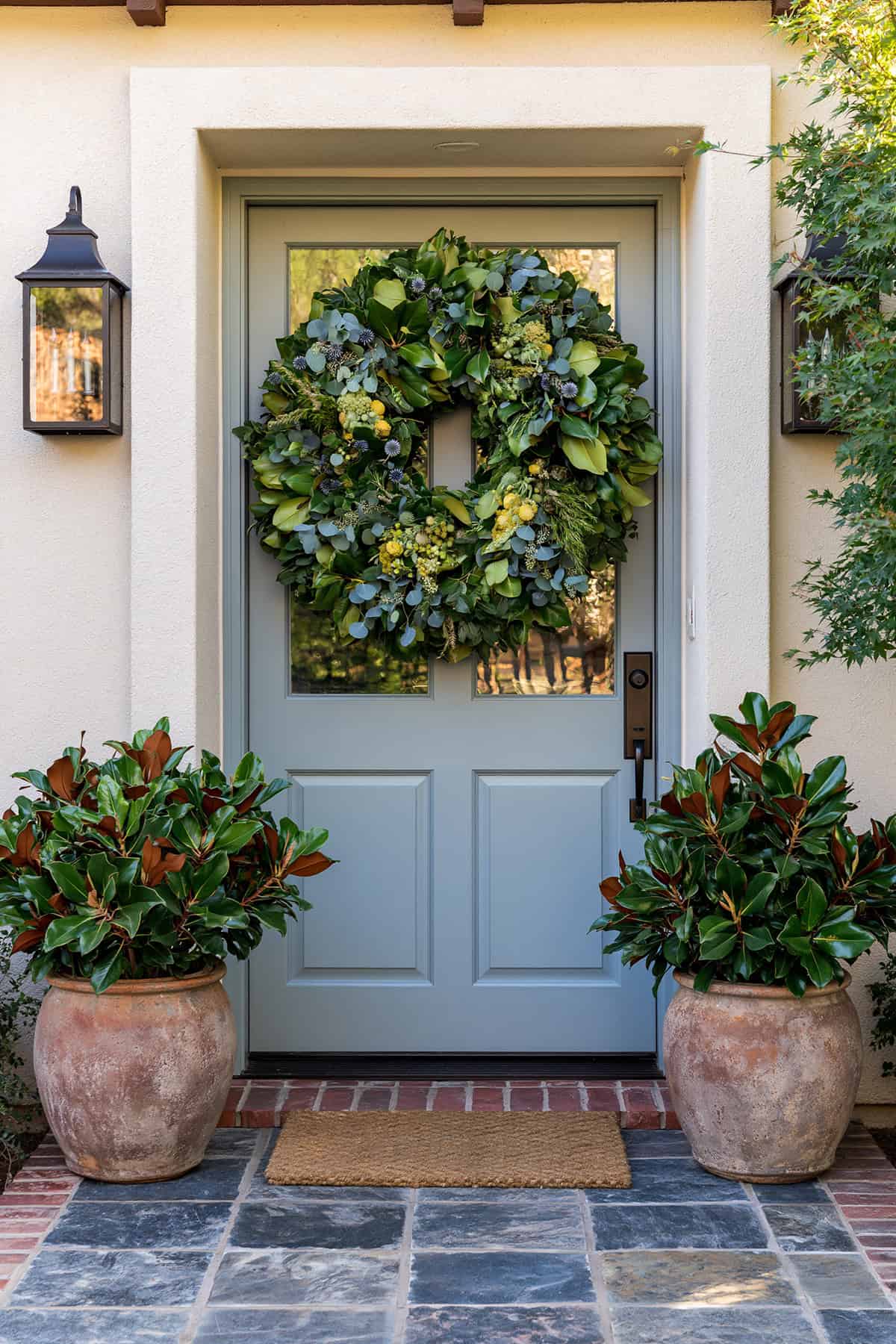
Go big or go home with wreaths. One that nearly fills the door (about two-thirds its width) catches the eye from the street and feels intentional, not like you just grabbed whatever was on sale.
Summer wants eucalyptus or dried botanicals; Christmas calls for noble fir or cedar. Use a wide ribbon hanger in a matching color so the whole thing doesn’t sag off-center.
Monogram Door Hanger
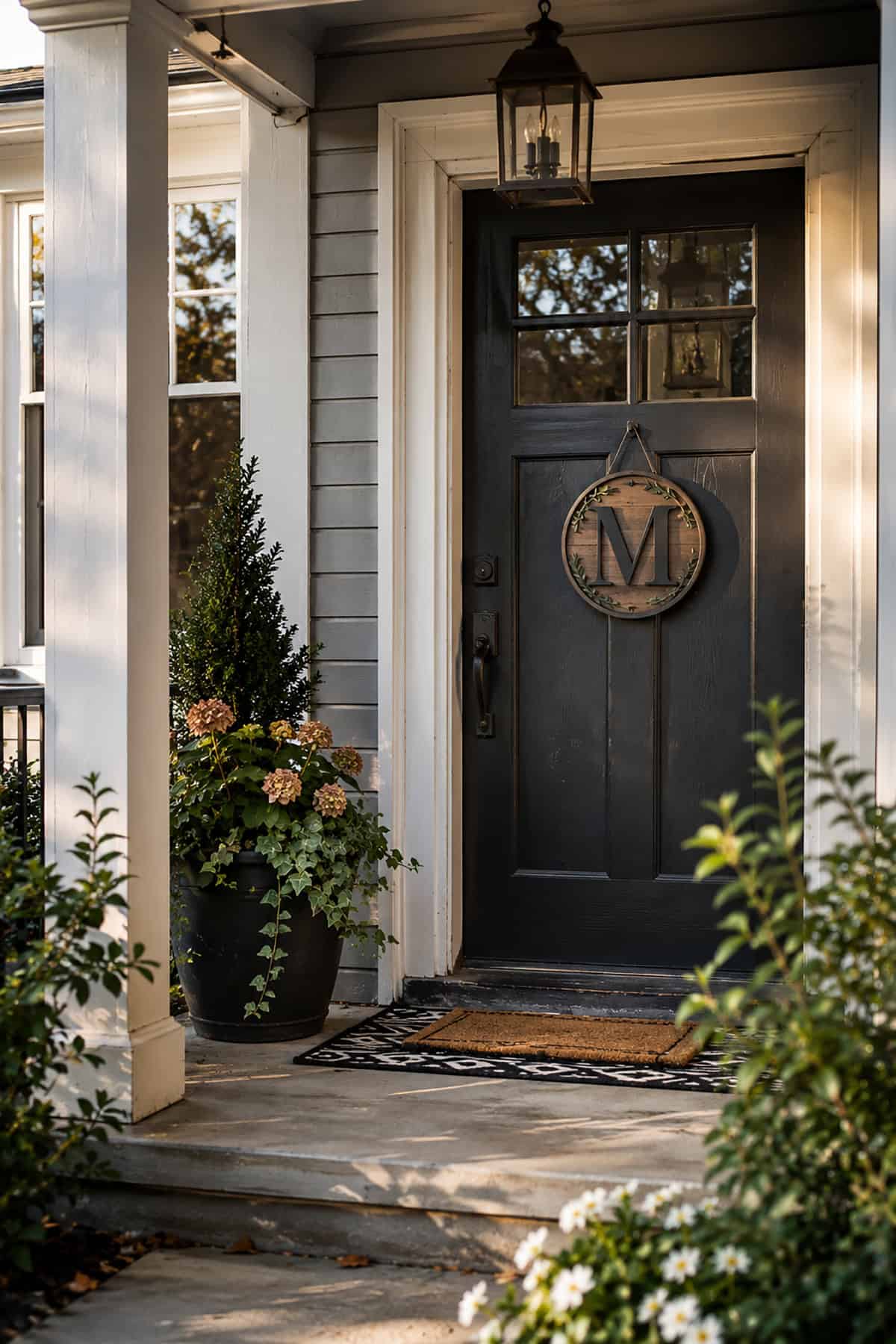
A single metal letter on the door will say more than any phrase. Steel or cast iron, clean serif or block font, it stands up to weather and works on most door sizes.
Matte black for a crisp look, oil-rubbed bronze for something more classic, or raw iron if you like a bit of weathering. Stick it up with a clear adhesive hook or an over-the-door hanger—no need to drill holes.
Matching Topiary Planters
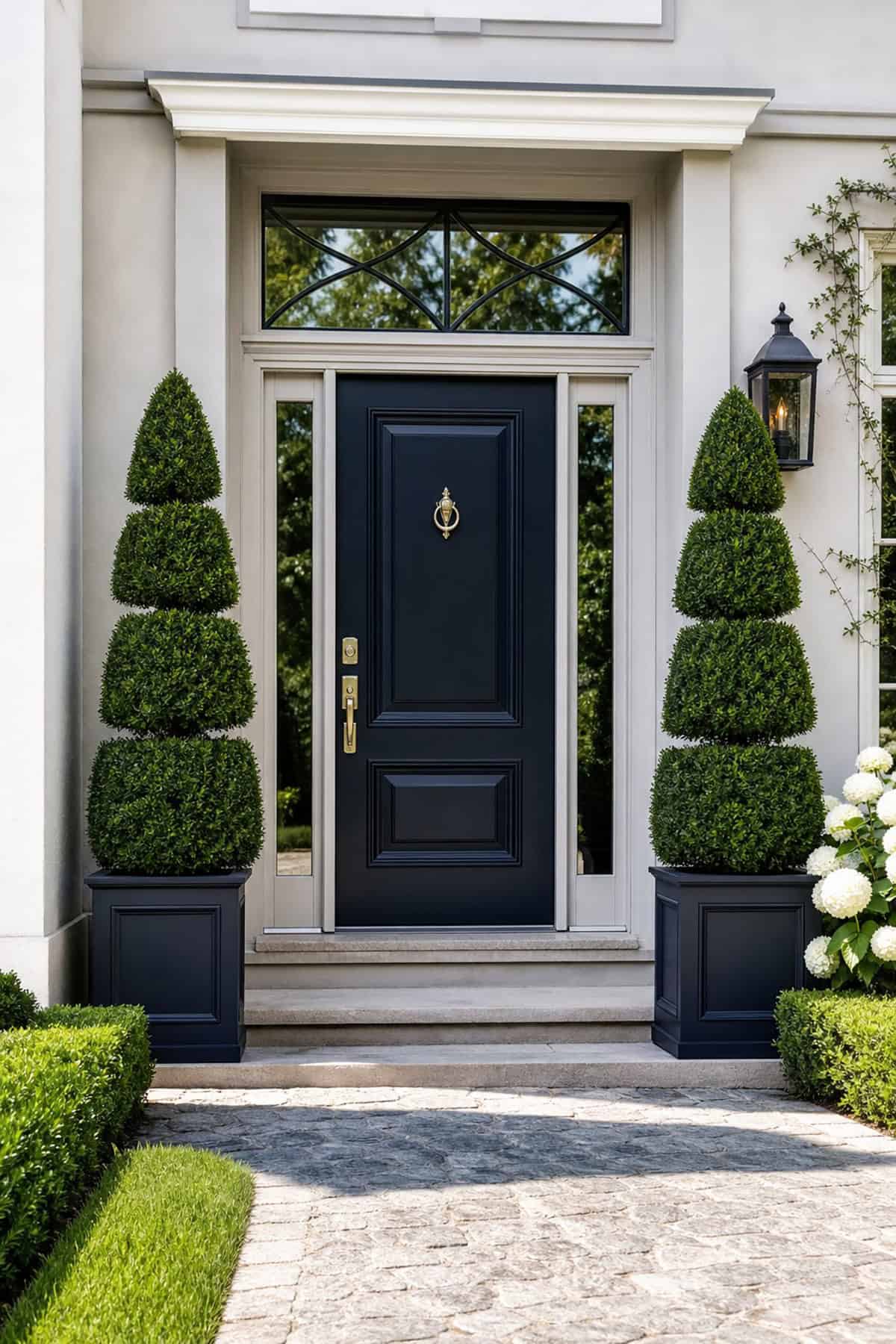
Symmetry takes over when you line up two topiary planters on either side of the door. Clipped boxwoods or spiral junipers in identical pots deliver a kind of formal balance that’s right at home on more traditional facades.
Pots set the tone: black fiberglass for modern, terracotta for Mediterranean, ribbed concrete for in-between. Foliage and pot should be roughly the same height—otherwise, the proportions get weird.
Layered Welcome Mat
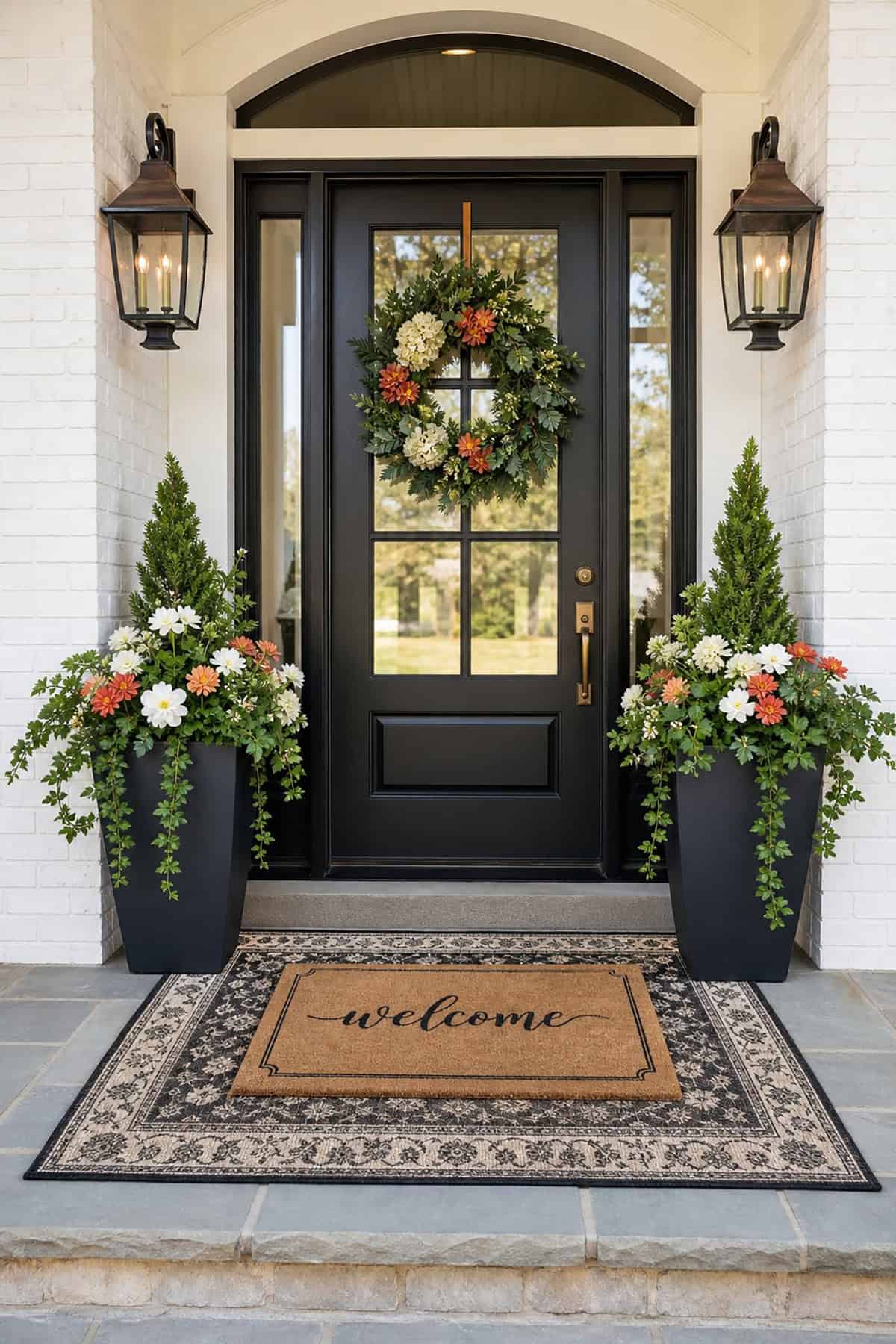
Layering mats beats a lonely rectangle every time. Start with a big outdoor rug—stripe, pattern, whatever—then drop a coir or jute mat on top. The base should peek out by at least six inches all around for the full effect.
Large Ceramic Urn Planters
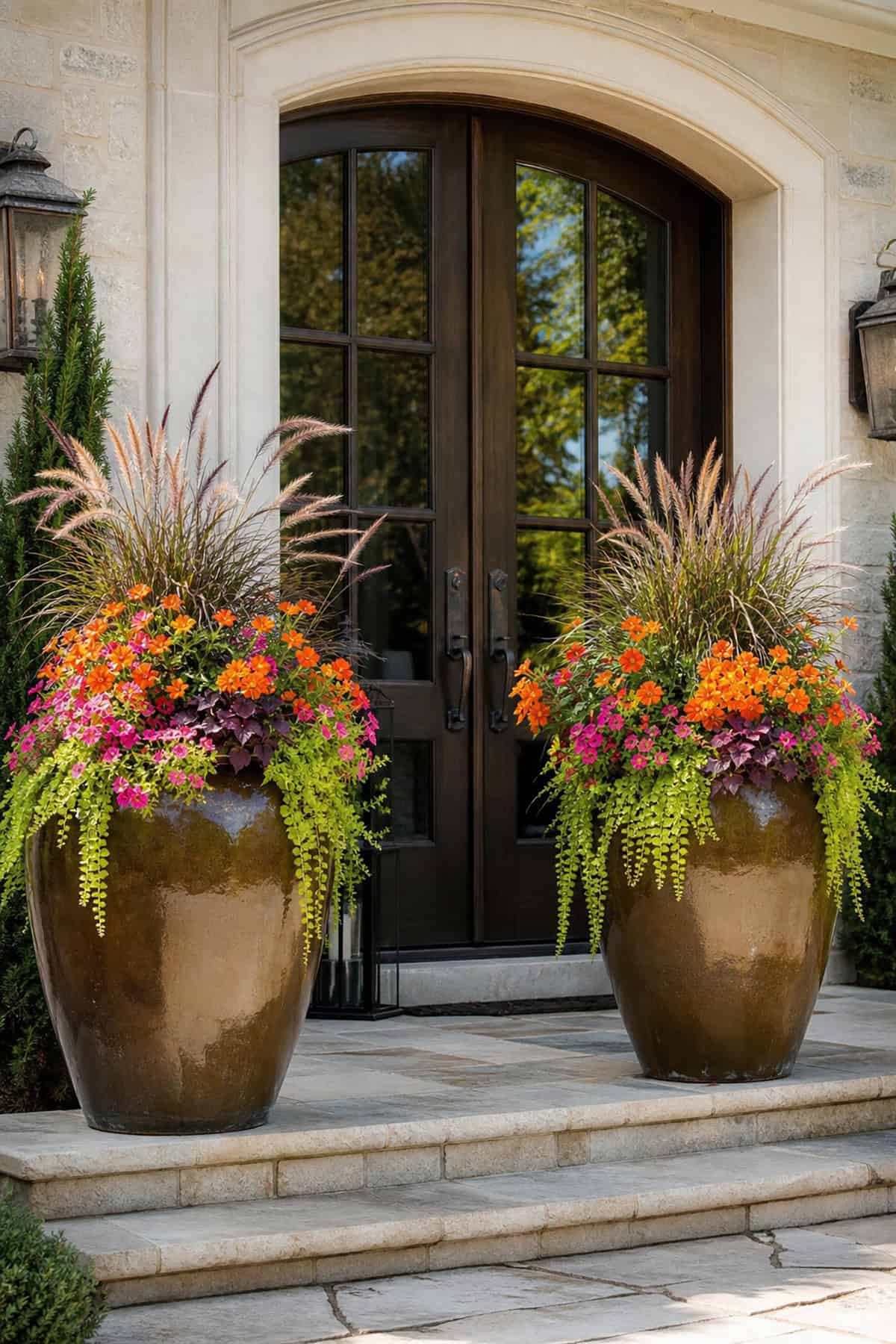
Nothing says “this entry is going nowhere” like a pair of hefty ceramic urns. Glazed in slate, olive, or terracotta, they anchor the space and play with light throughout the day, so things never look flat or static.
Make sure the plants rise well above the rim—at least eight inches. If the greenery sits too low, the whole thing feels off. You want that strong silhouette.
Hanging Flower Basket Pair
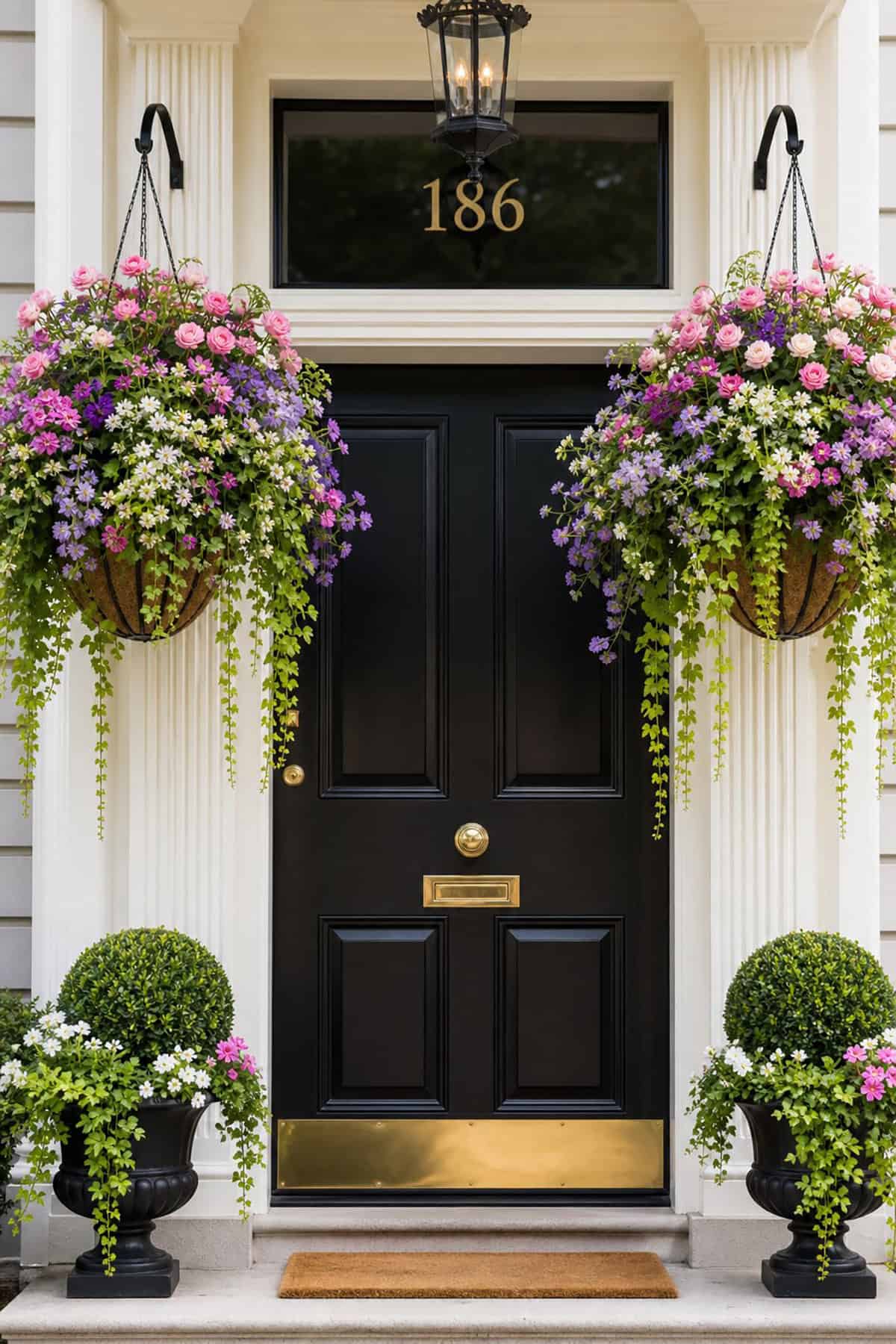
Hanging baskets on either side of the door bring color and softness right where people look first. The trick is getting the height right—too low and they fight with your hardware, too high and they’re just floating out there.
Go for dense, trailing plants so the baskets look full and lush. Watering is non-negotiable; skip a day in summer, and the whole thing wilts fast.
Front Door Watering Can Display
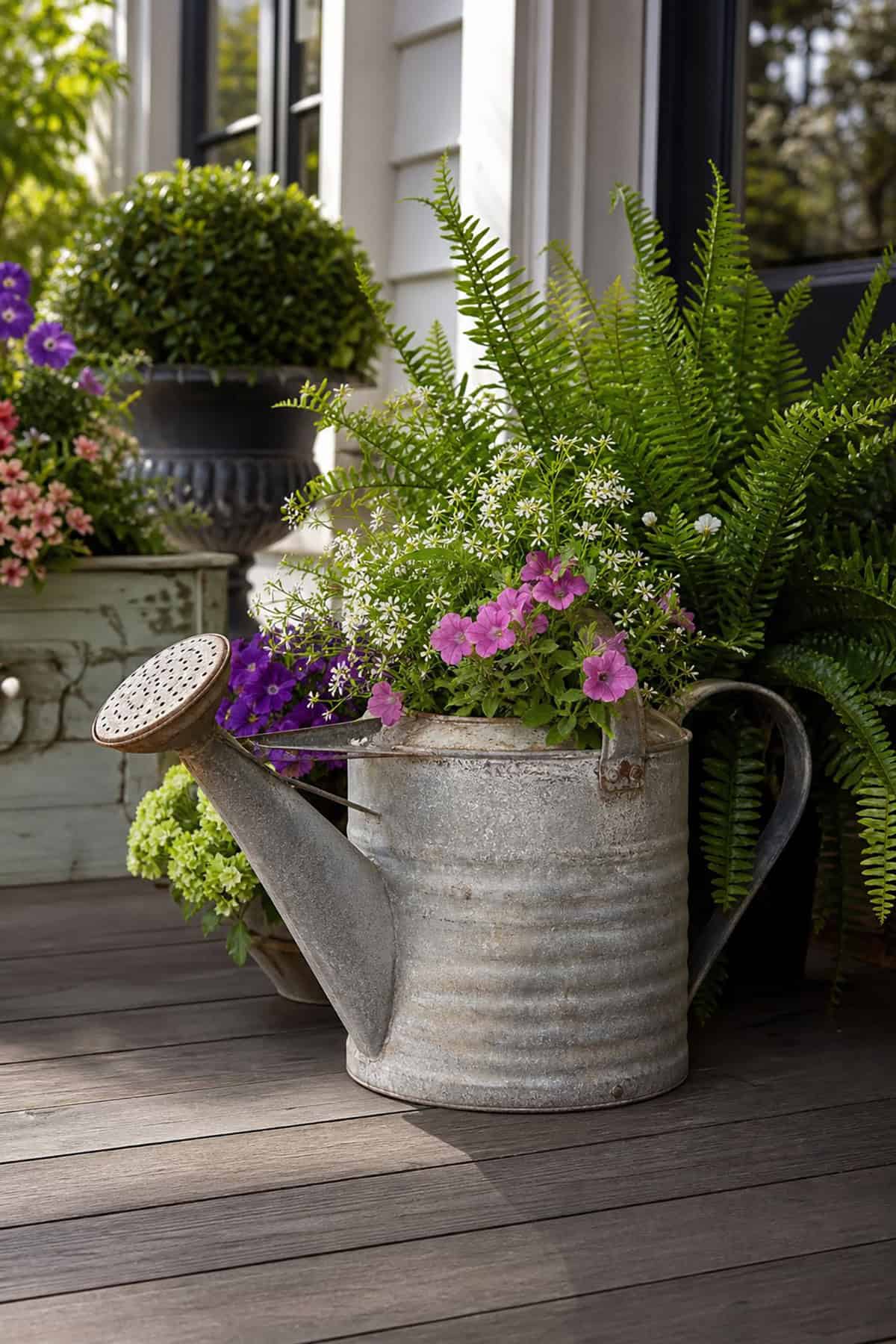
A battered old watering can, tucked by a planter or leaning against the door frame, is like it belongs—especially if you’ve got greenery nearby.
Patina, rust, chipped paint—these all add character. Drop in a trailing plant or a handful of fresh stems. Keep it off-center for a casual vibe.
Front Door Herb Planter Collection
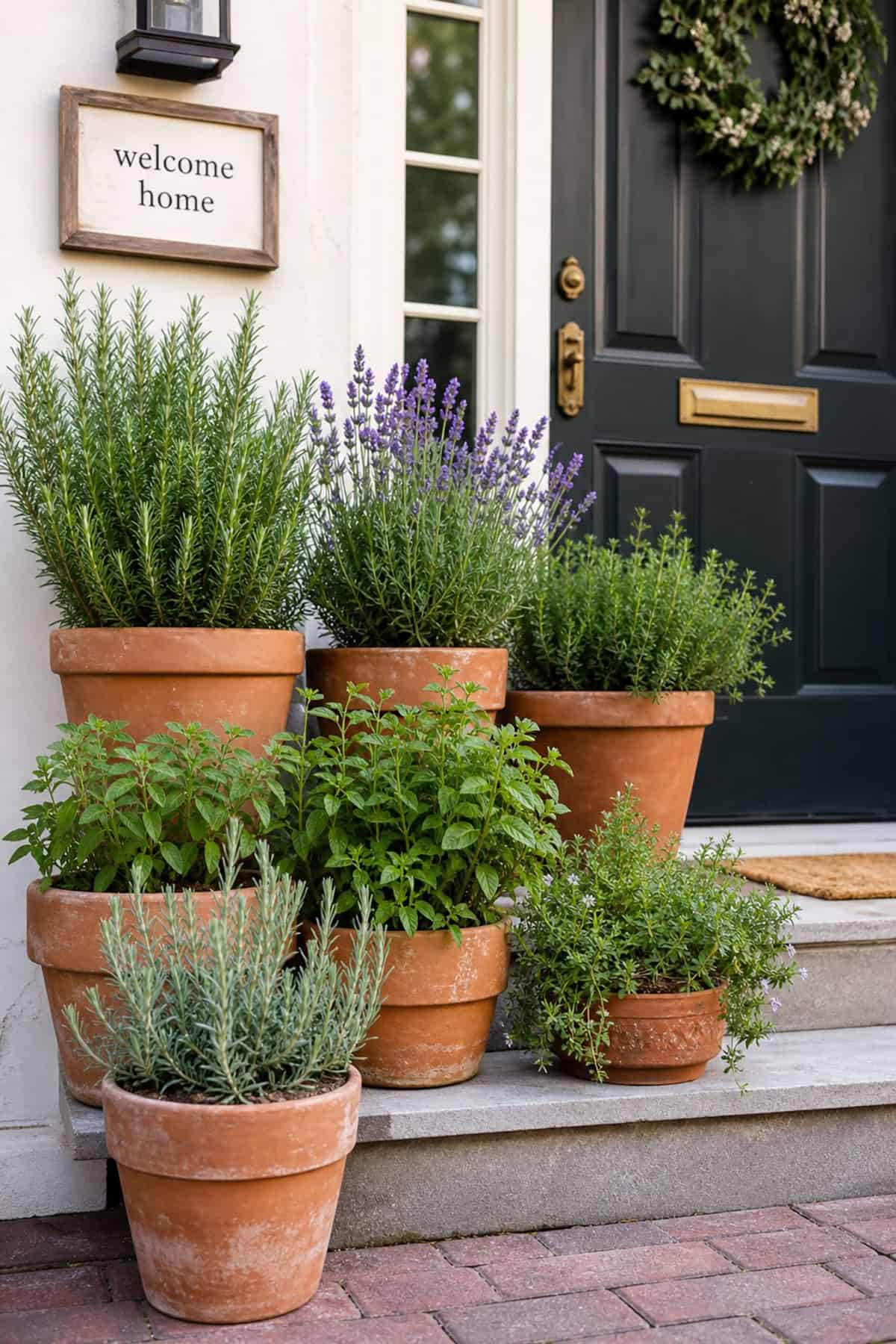
Clustered terracotta pots, each with a different herb, create a small sensory garden right by the door. Basil, rosemary, mint—they all bring something different in scent and shape, and the uneven heights keep it from feeling too arranged.
Label stakes help, and odd numbers (three or five pots) always look better than pairs. Tallest at the back, smaller up front.
Front Door Bench
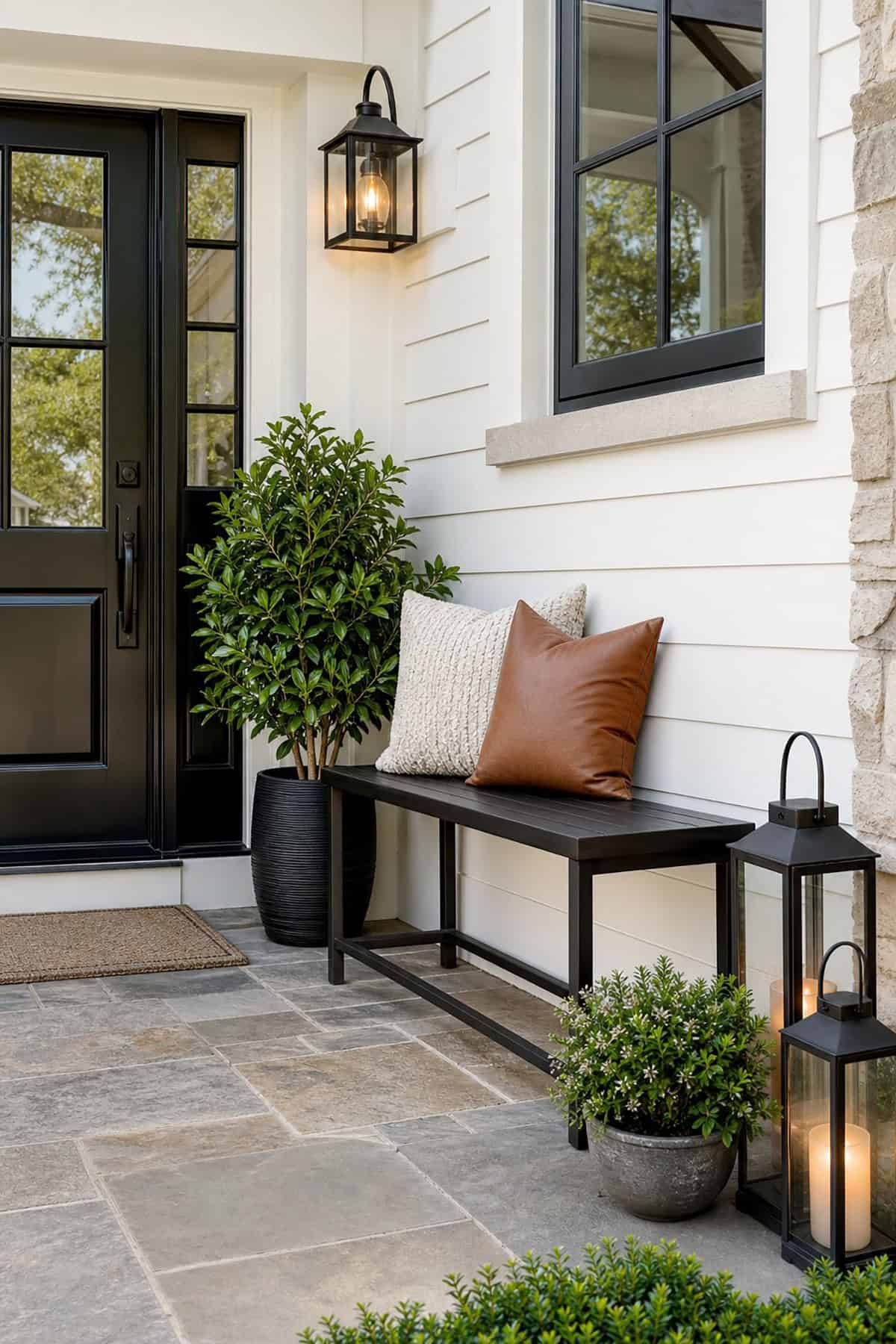
Benches at the entry walk a fine line. Empty, they look forgotten. Add a small plant at one end, a folded throw or cushion in the middle, and leave space for someone to actually sit—it’s a balancing act.
Watch the length. Too long and it crowds the whole entry; too short and it feels like an afterthought. Tie the finish back to your door or trim for a sense of connection.
Decorative Outdoor Wall Basket
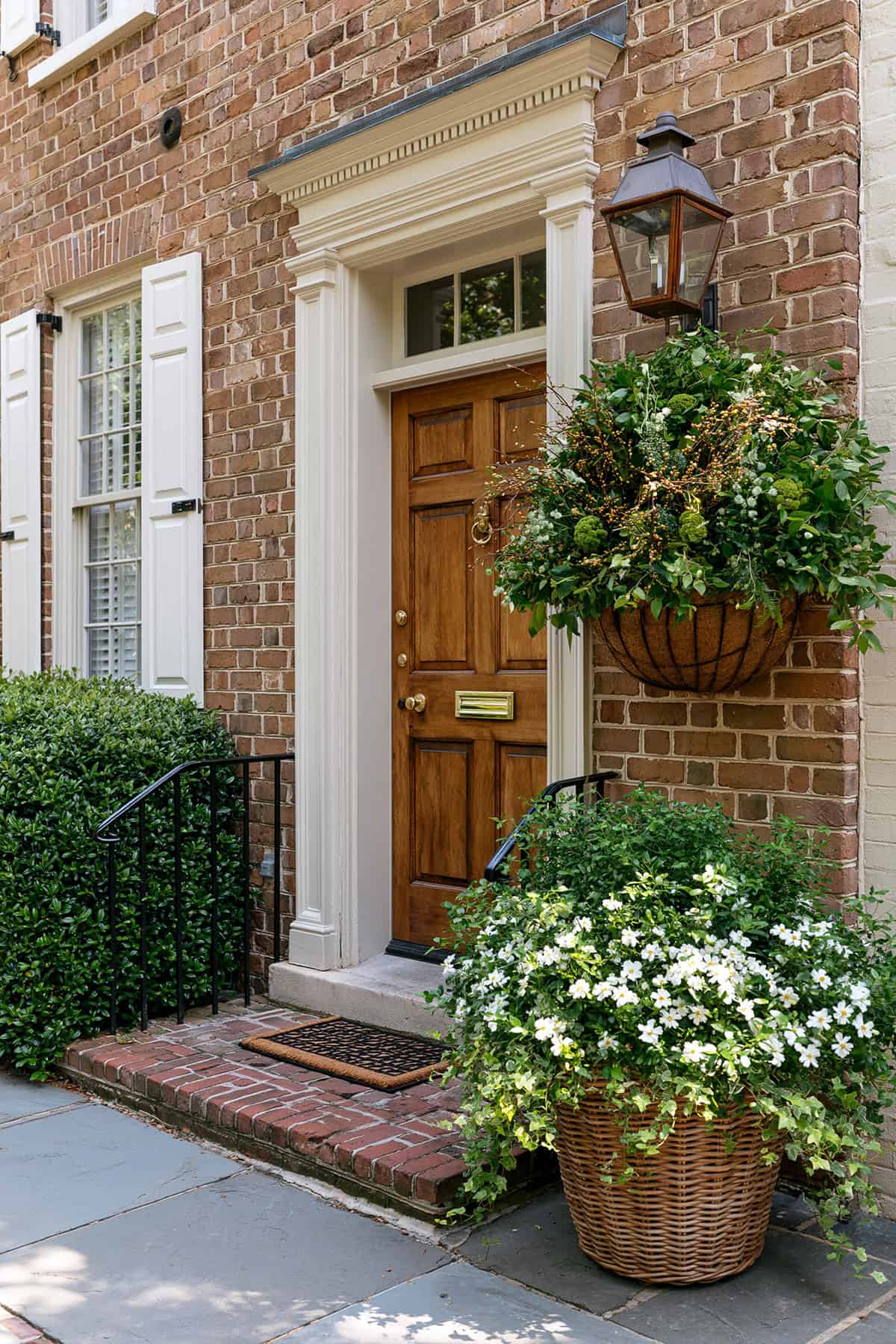
A flat-backed basket mounted beside the door brings texture and a bit of structure to a blank wall. Fill it with dried grasses, pampas, or a trailing pothos—an easy way to draw the eye without much effort.
Natural wicker needs shelter from the elements, it’ll fall apart fast. For exposed spots, go with a synthetic weave that still looks the part but stands up to weather.
Decorative House Number Plaque
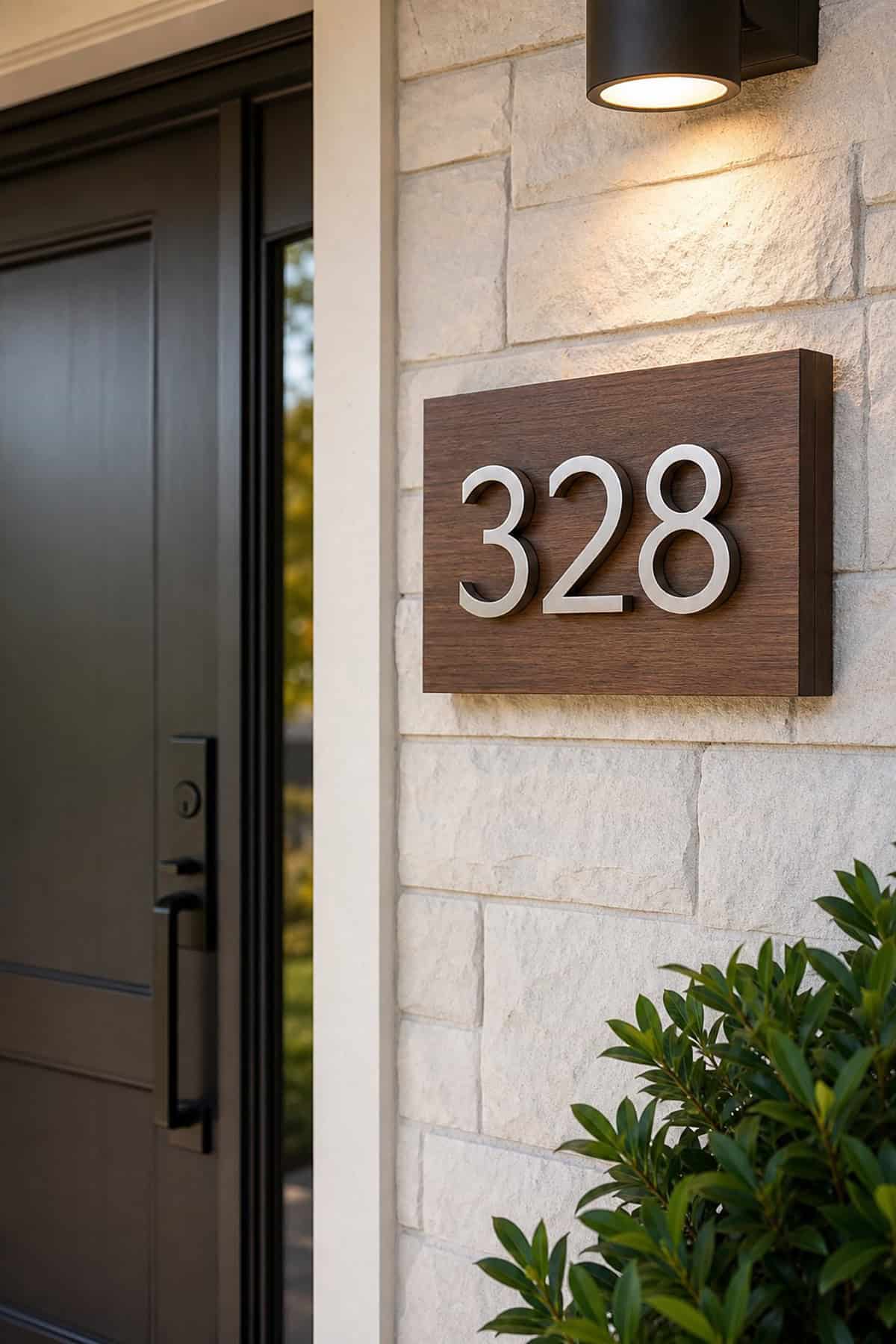
Clean numerals on a sleek plaque—maybe slate, steel, or a painted wood slab—set a different tone right at the entry. The effect is a lot more curated than those stick-on numbers from the hardware aisle. It’s not just about legibility; it’s about that first impression, a little hint of personality before anyone even knocks.
When the finish matches up with other hardware—say, a brass plaque syncing with a brass knocker and kickplate—you get this subtle sense of intention. That kind of detail reads as deliberate, never accidental. Mounting at chest height, a bit off to the side, keeps things visible without crowding the door itself.
Copper Mailbox And Planter Combination
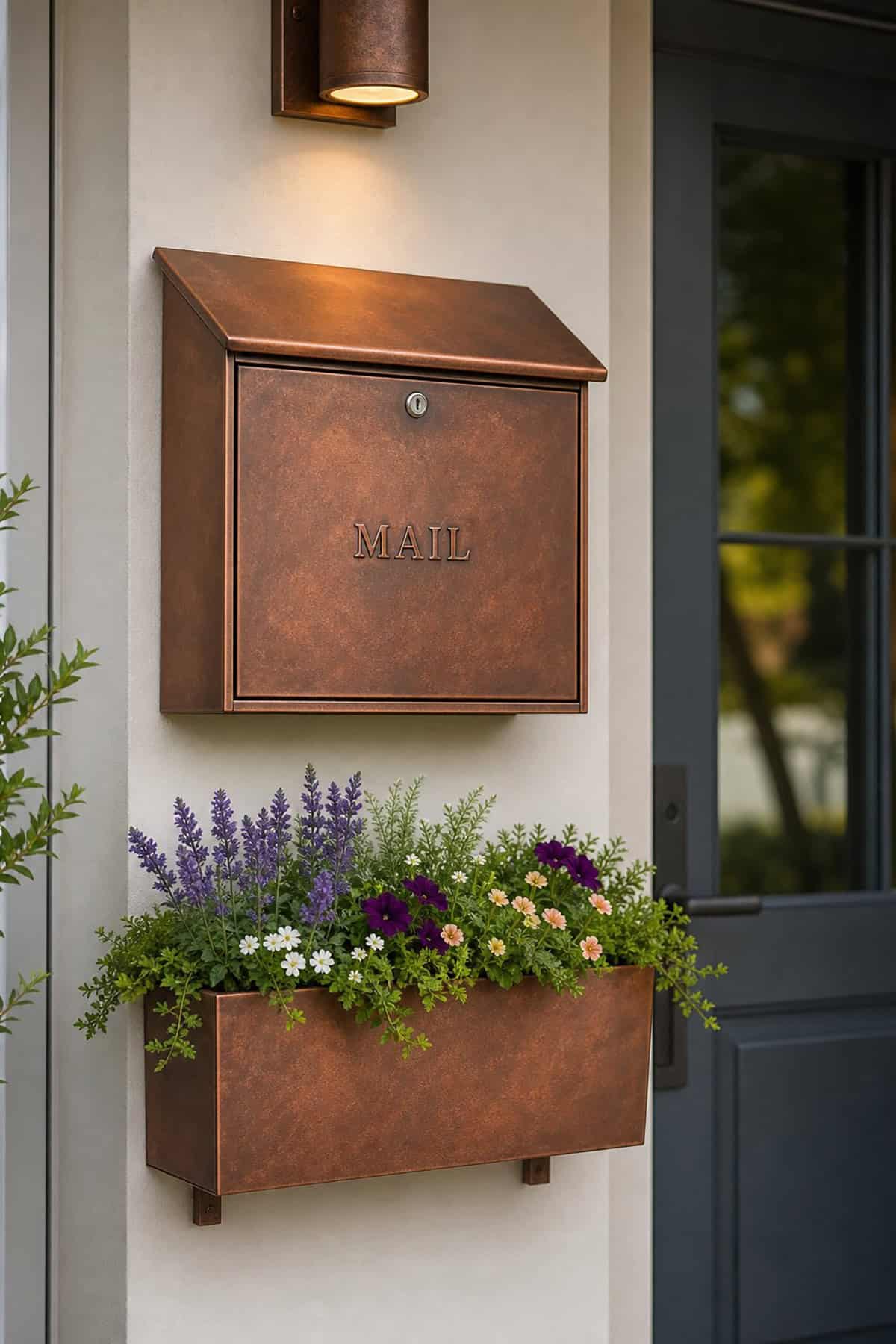
That hit of copper on the wall—especially when paired with a little planter bracket underneath—catches the light in a way that’s hard to ignore. Over time, the copper’s rosy glow shifts, picking up streaks of green and blue as it ages, and honestly, that patina just gets better with every season.
No need for a big planter here. Even a single trailing vine or a couple of succulents in a copper-hued pot can round out the look.
Arched Trellis Entry Accent
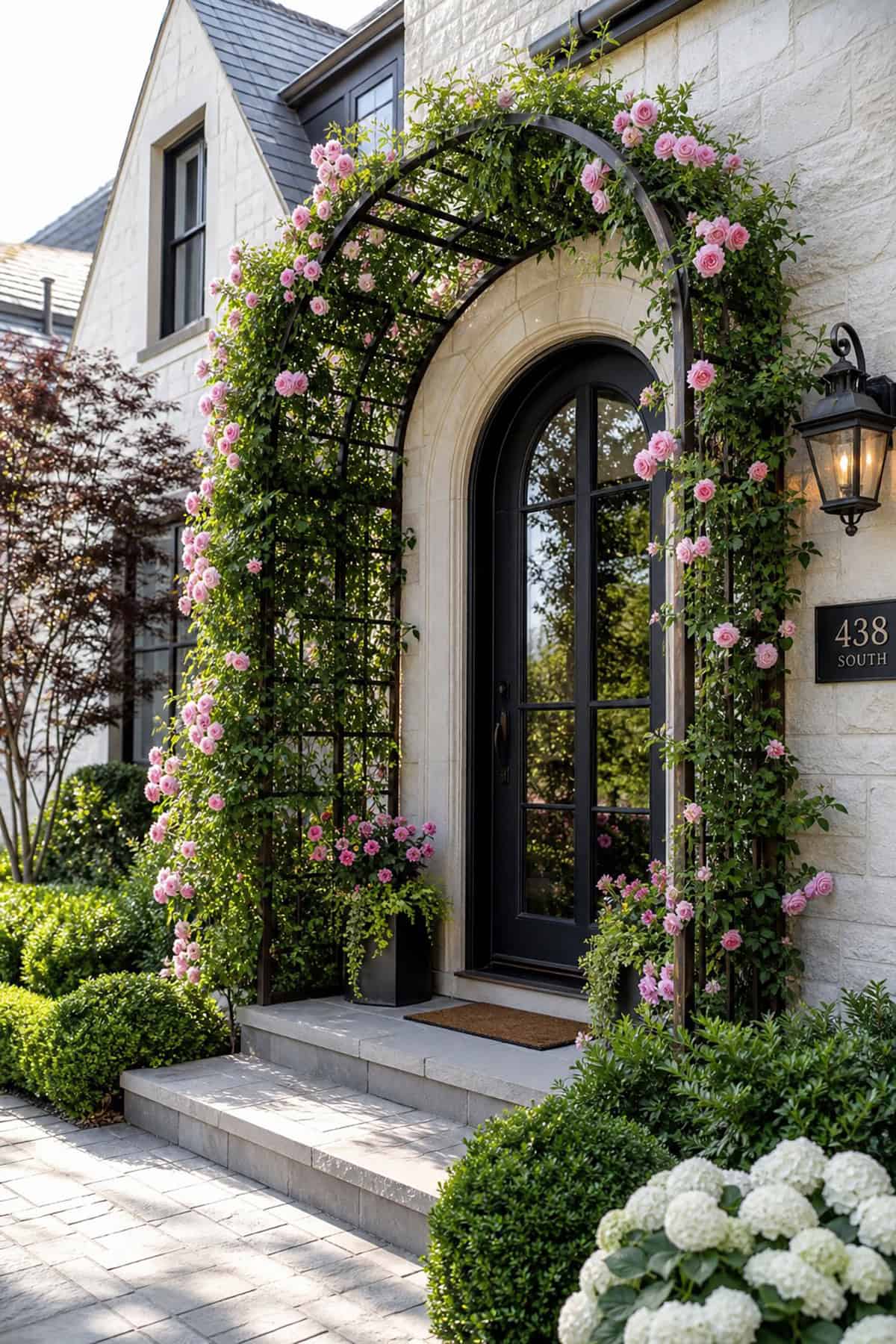
That first glimpse of a garden path, marked by a freestanding or wall-anchored arched trellis, sets a mood before you even reach the door. Let roses, jasmine, or clematis twist and spill over the arch—suddenly, the entry breathes and changes with the months.
Flat black or dark bronze metal? Those finishes just outlast painted wood, especially once humidity gets involved, and wood starts to betray you with warping or peeling. Scale matters—if there’s a gate or fence nearby, the arch shouldn’t dwarf or shrink away from them.