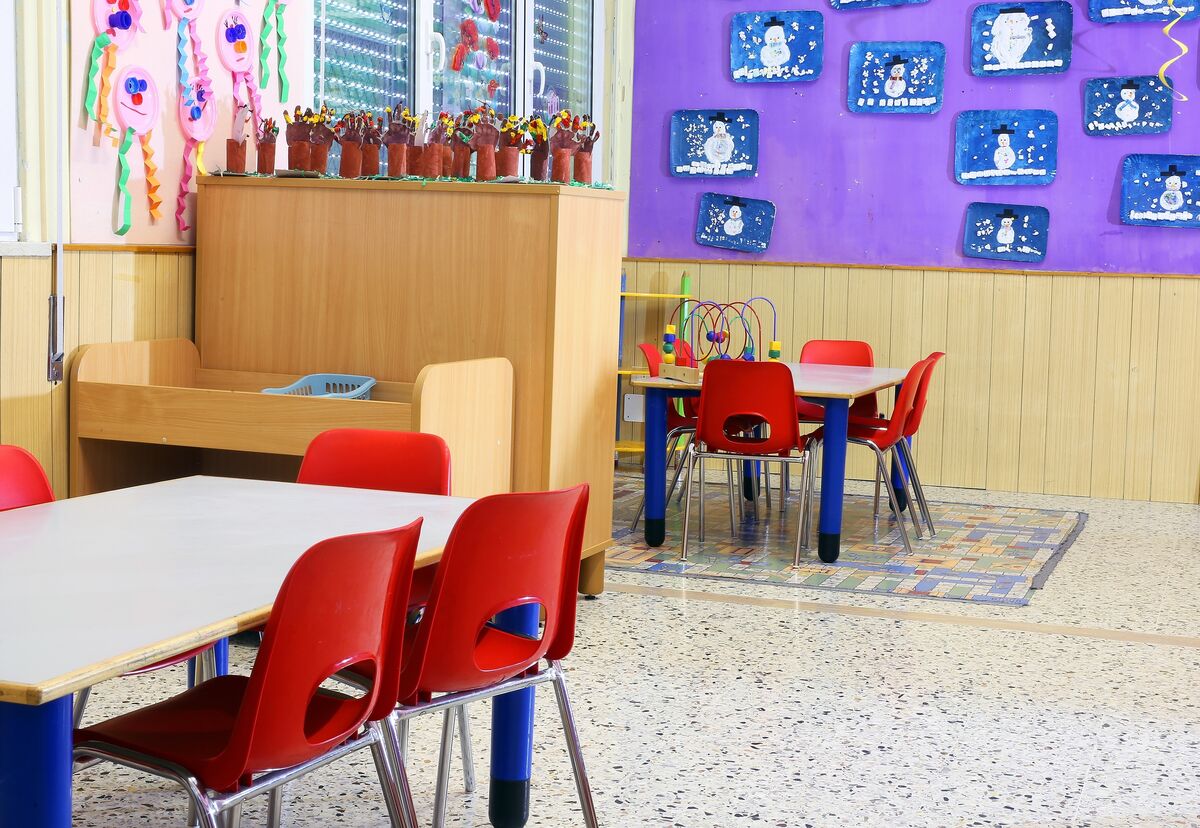
January hallways go gray fast, and a bare cork board outside a classroom looks grayer than most. Paper snowflakes, cotton-ball snowmen and a parade of penguins fix that in an afternoon.
Each of the 31 boards below lists the backing, border and student pieces, plus a layout for a standard 4-by-8-foot board. Scroll down for the first one.
Table of Contents
- Snowman Painting Gallery
- Paper Snowflake Board
- Rhyming Mitten Match
- Penguin Parade Border
- Hot Cocoa Goal Mugs
- Icicle Word Wall
- Snow Globe Self-Portraits
- Polar Bear Ice Floes
- Starry Pine Forest Night
- Melted Snowman Writing
- Snowflake Symmetry Math
- Paper Sweater Book Reviews
- Book Brick Igloo
- Hibernation Station
- Paper Snowball Resolutions
- Cotton-Batting Arctic Landscape
- Snowy Owl Board
- Winter Weather Chart
- Kindness Paper Quilt
- Snowman Sentence Builder
- Tissue Paper Northern Lights
- Paper Ice Skating Rink
- Pinecone Forest Board
- Winter Games Board
- Knit Hat Board
- Animal Tracks in Snow
- Snow Day Graph
- Frosted Window Silhouettes
- Snowman Glyph Board
- Winter Clothing Sort Board
- Winter Bucket List Board
Snowman Painting Gallery
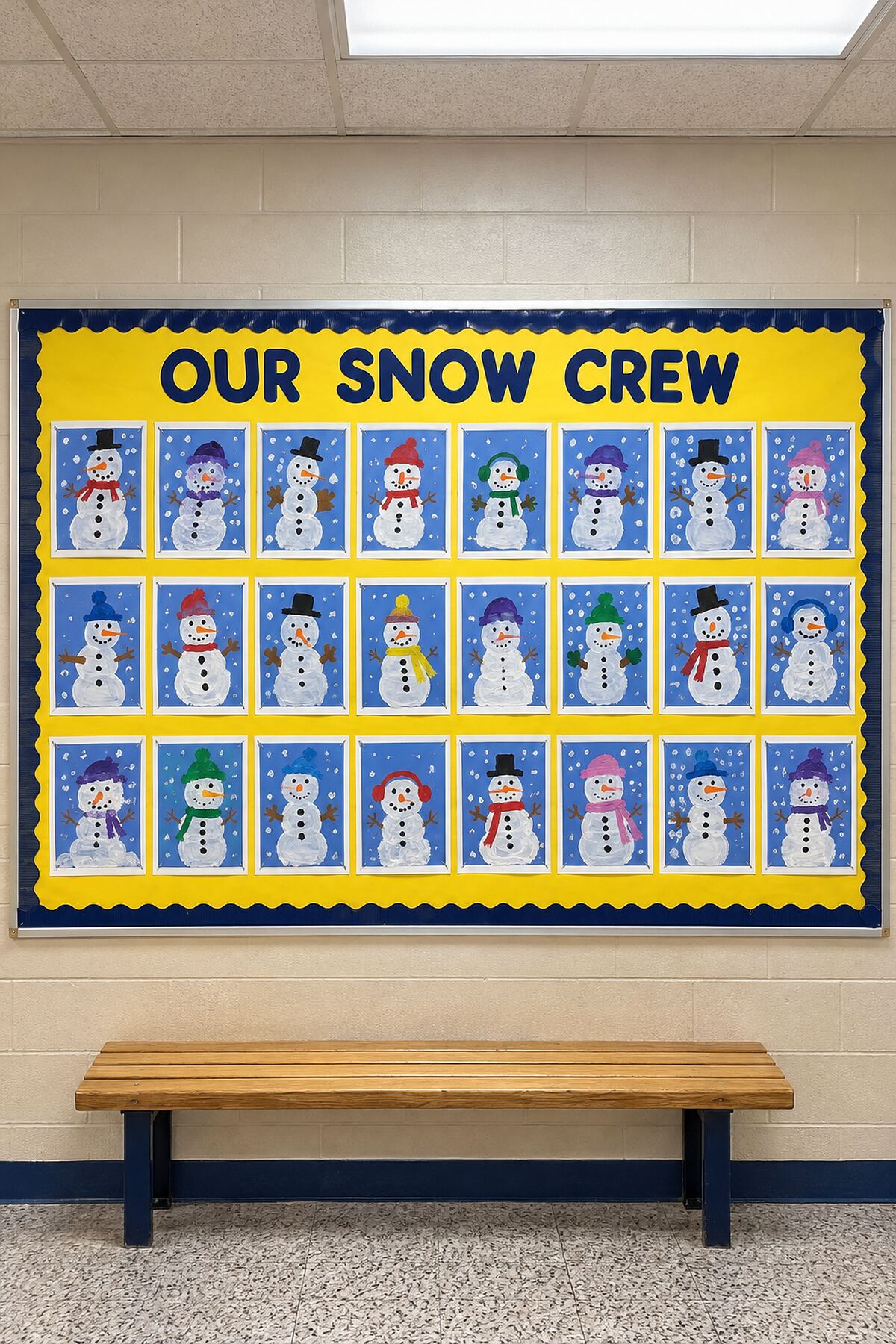
Because most classes paint snowmen in December anyway, this gallery is the quickest board on the list to put up. Tempera snowmen on 9-by-12-inch blue construction paper look sharp along a school hallway, since white paint pops against the color.
Hang them in a tidy grid on a bright accent wall or a board covered in yellow fadeless paper. Mount each painting on a slightly larger white mat so the rows read like a museum wall, and a 4-by-8-foot board holds about 24 paintings in three rows of eight.
A short title such as “Our Snow Crew” fits across the top in 6-inch letters.
Paper Snowflake Board
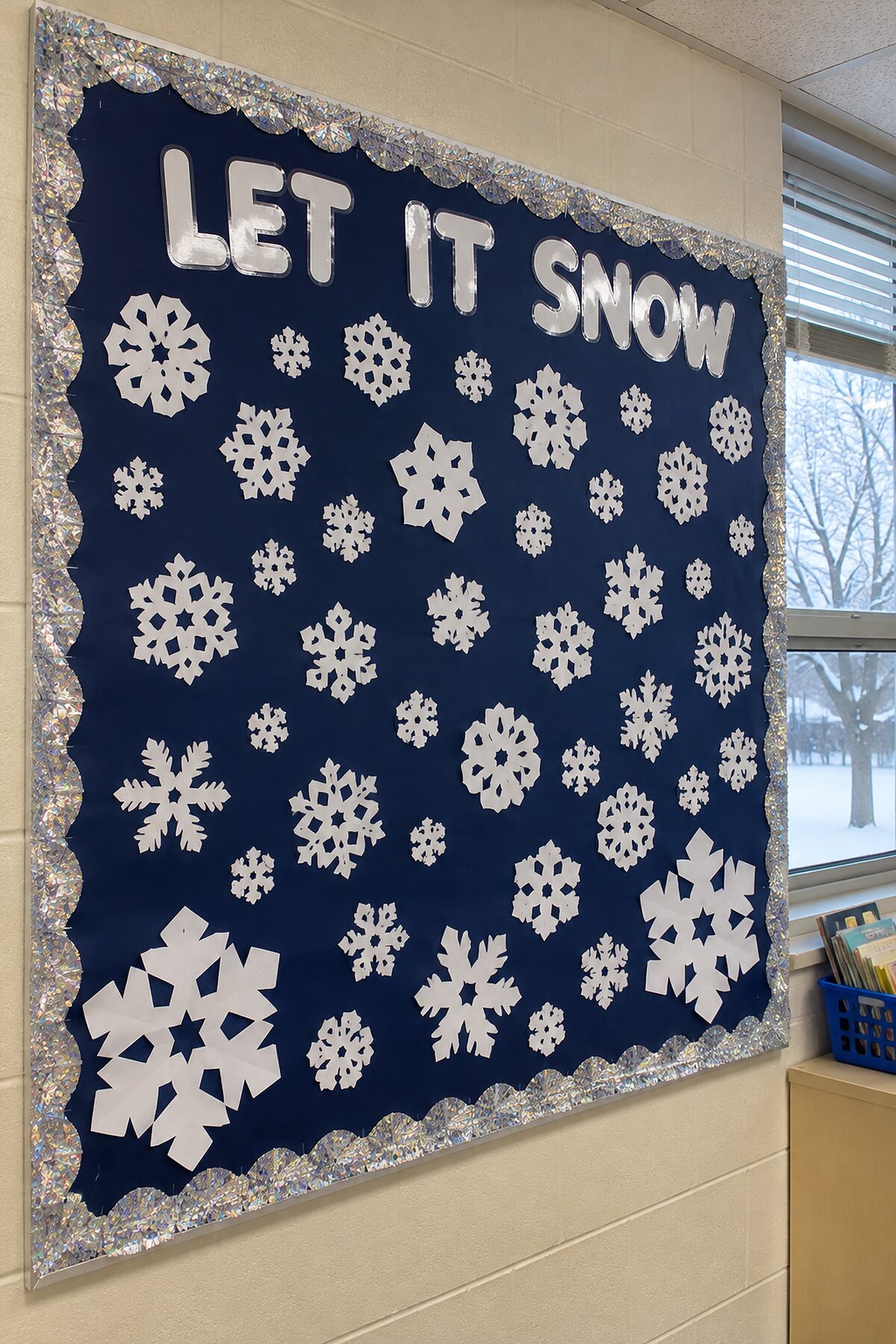
Folded into six wedges, a circle of copy paper produces the same six-sided symmetry students see in real snowflakes under a magnifier. Plain white printer paper cuts cleanly, and thicker stock tears at the folds.
Navy fadeless paper and a silver scalloped border set off the white. Scatter 30 to 40 flakes in three sizes, larger near the bottom corners and smaller ones drifting toward the top.
Glue sticks hold these thin cut-outs better than tape.
Rhyming Mitten Match
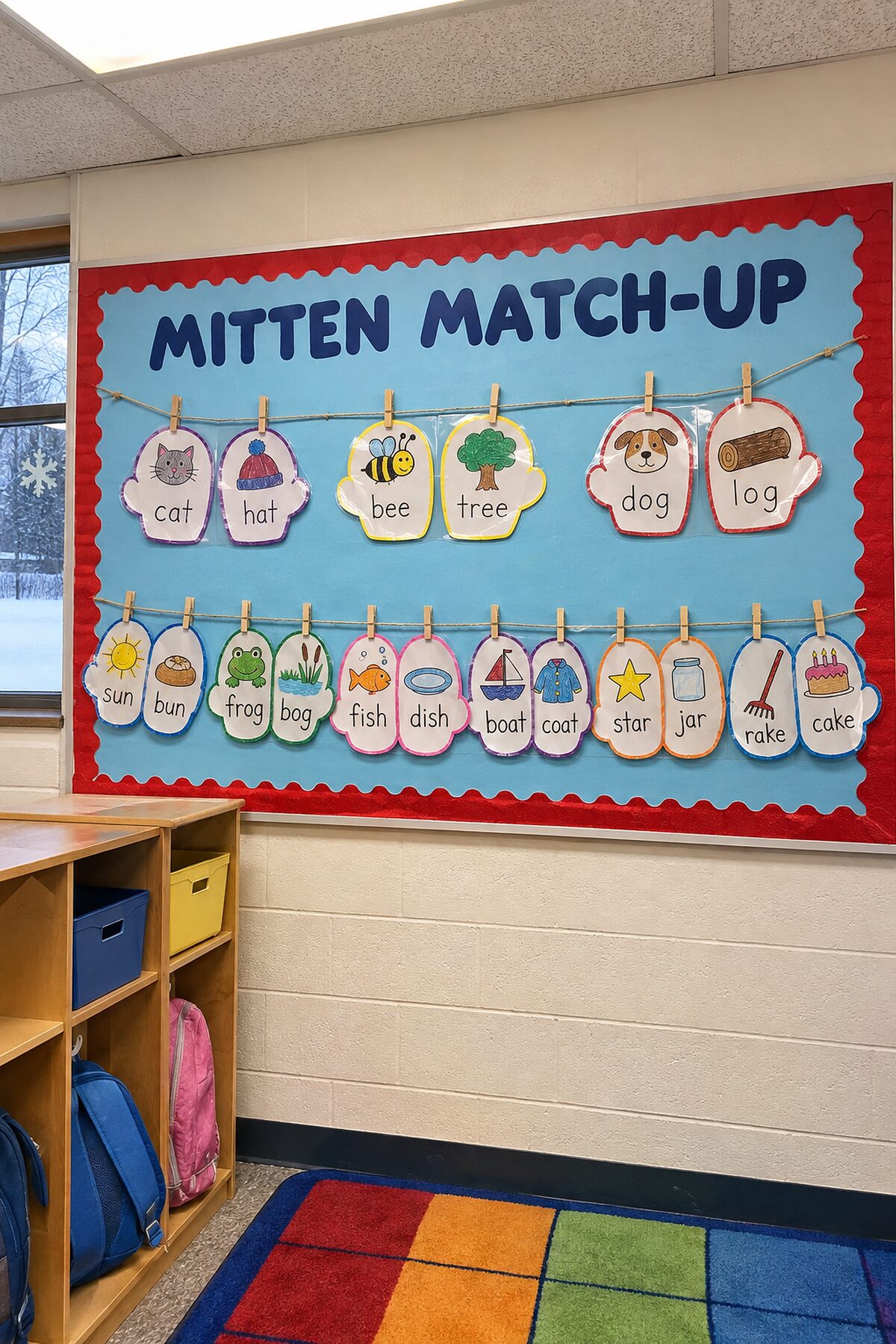
If a preschool or kindergarten room needs a daily center activity, pairs of paper mittens with rhyming drawings fill the gap on a clothesline. Each pair carries two rhyming drawings or words, like a cat on the left mitten and a hat on the right.
Light blue backing sits behind a twine clothesline, and mini clothespins let children unclip and rematch the mittens during centers. Plan for 12 pairs on a 4-by-6-foot board, spaced about 4 inches apart along two lines.
Penguin Parade Border
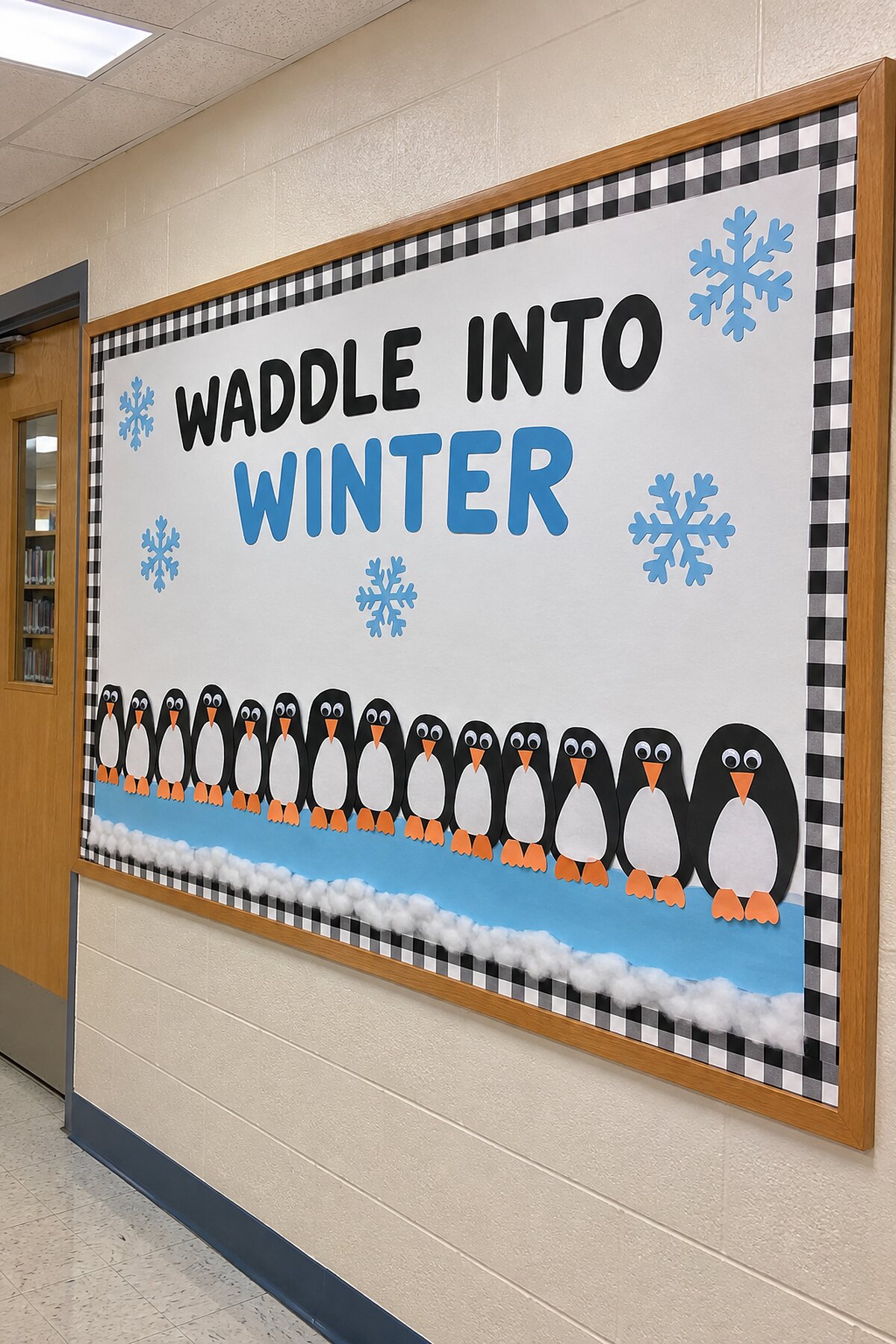
Single file, just like penguins in the wild, a line of paper birds marches along the bottom of this board. Students trace an oval body on black paper, add a white belly and orange feet, then glue on googly eyes.
Run a wavy blue paper ice strip along the bottom of white backing, tuck in a little cotton batting snow, and line the penguins up on it. Each one stands about 5 inches tall, and a 4-by-8-foot board fits around 14 across the bottom edge.
Hot Cocoa Goal Mugs
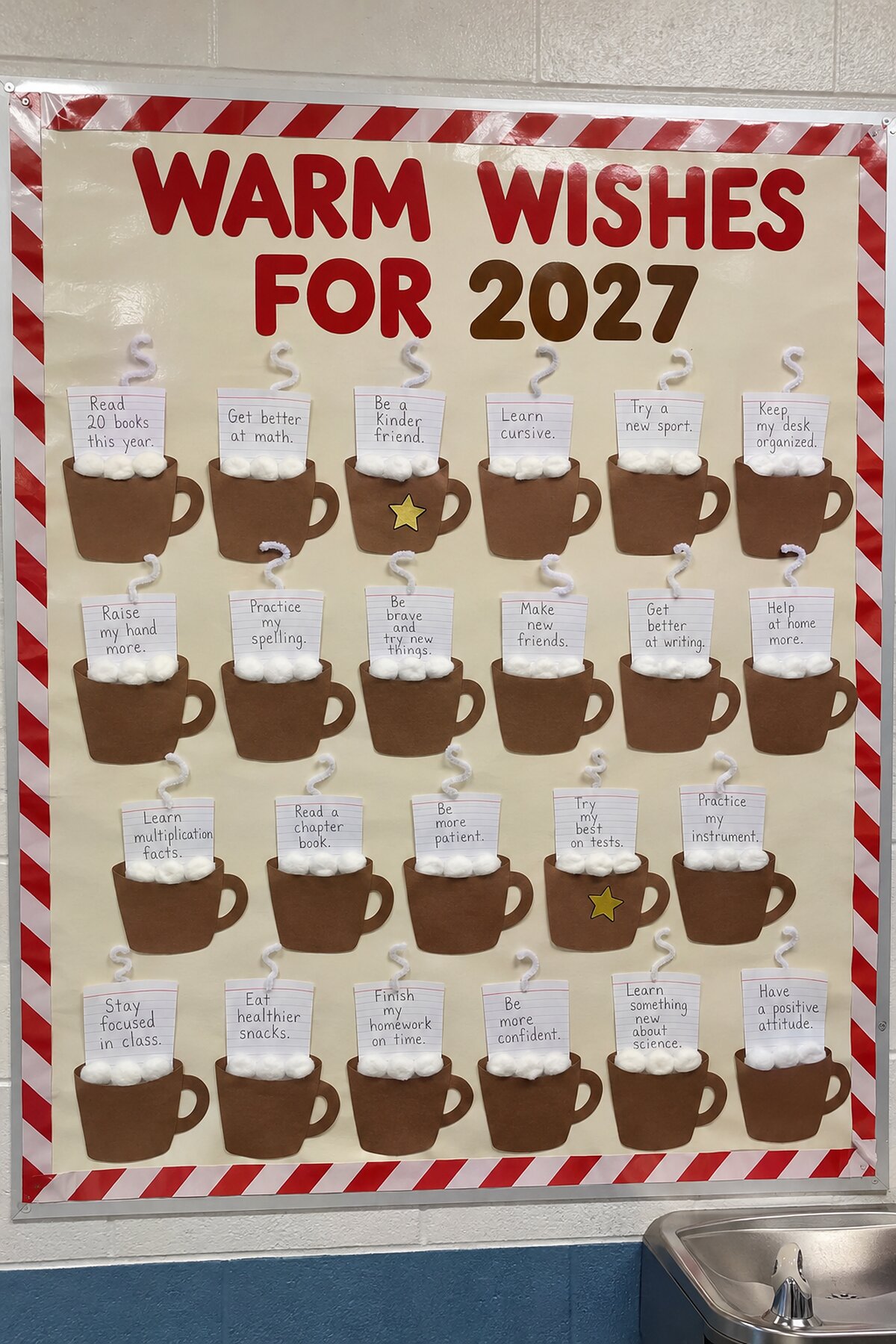
What does a student hope to master by spring? Each child writes one goal on an index card tucked into a brown paper mug, then adds cotton-ball marshmallows above the rim and a curl of white pipe cleaner for steam.
Cover the board in cream paper and frame it with a red and white striped border. Arrange about 20 to 24 mugs in a loose grid of four rows on a 4-by-8-foot board.
A gold star replaces one marshmallow whenever a goal is met.
Icicle Word Wall
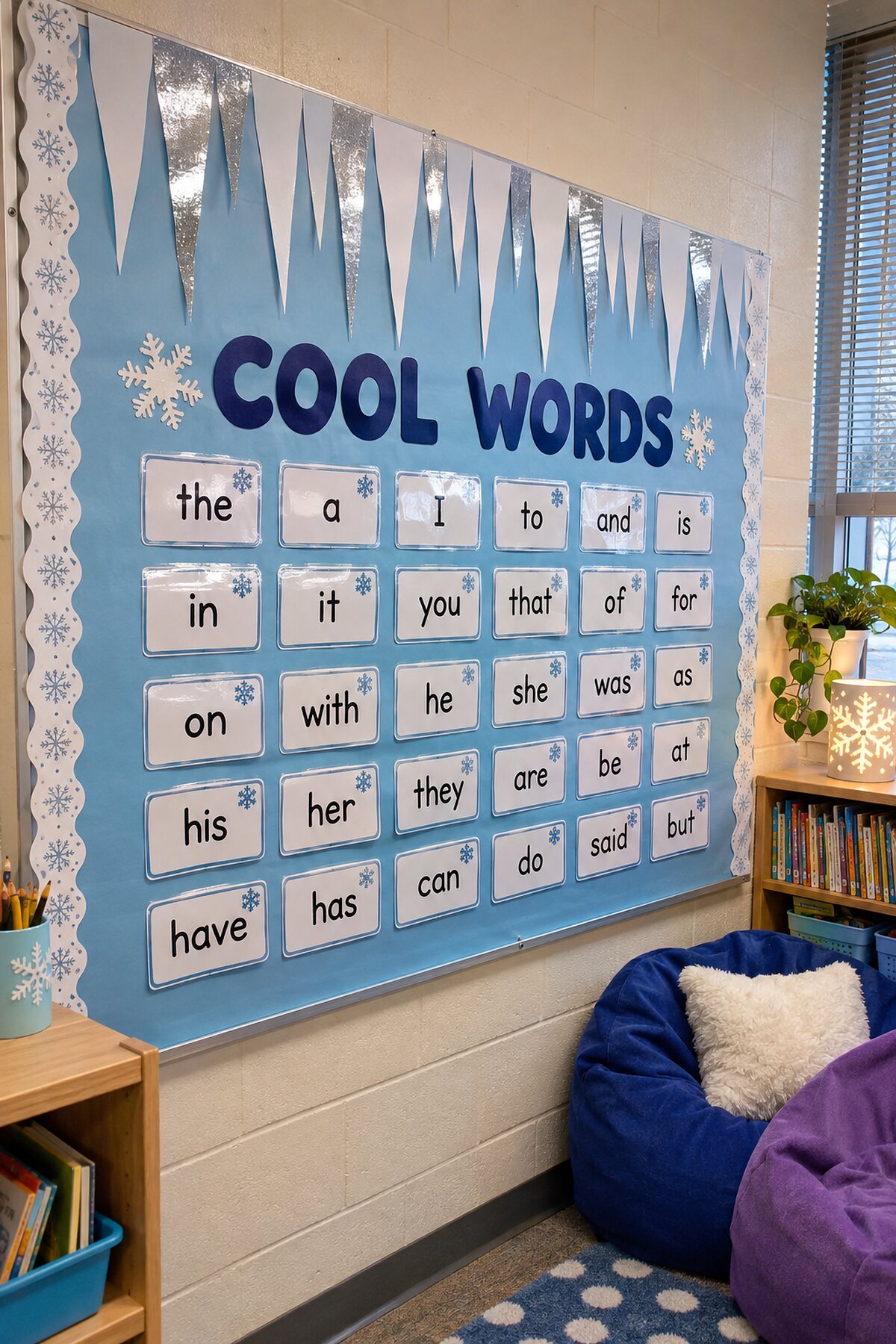
After a run of display boards, here is one students read from every day, so it earns a spot near the door. Hang long tapered strips of white and silver cardstock from the top edge like icicles, and let the word cards below them grow all month. Pale blue backing and a frosty white border along the sides only leave the top clear for the icicles.
Vary icicle lengths from 6 to 14 inches for a natural line. Add new sight words or vocabulary terms each week; by February, a first-grade board holds close to 50.
Snow Globe Self-Portraits
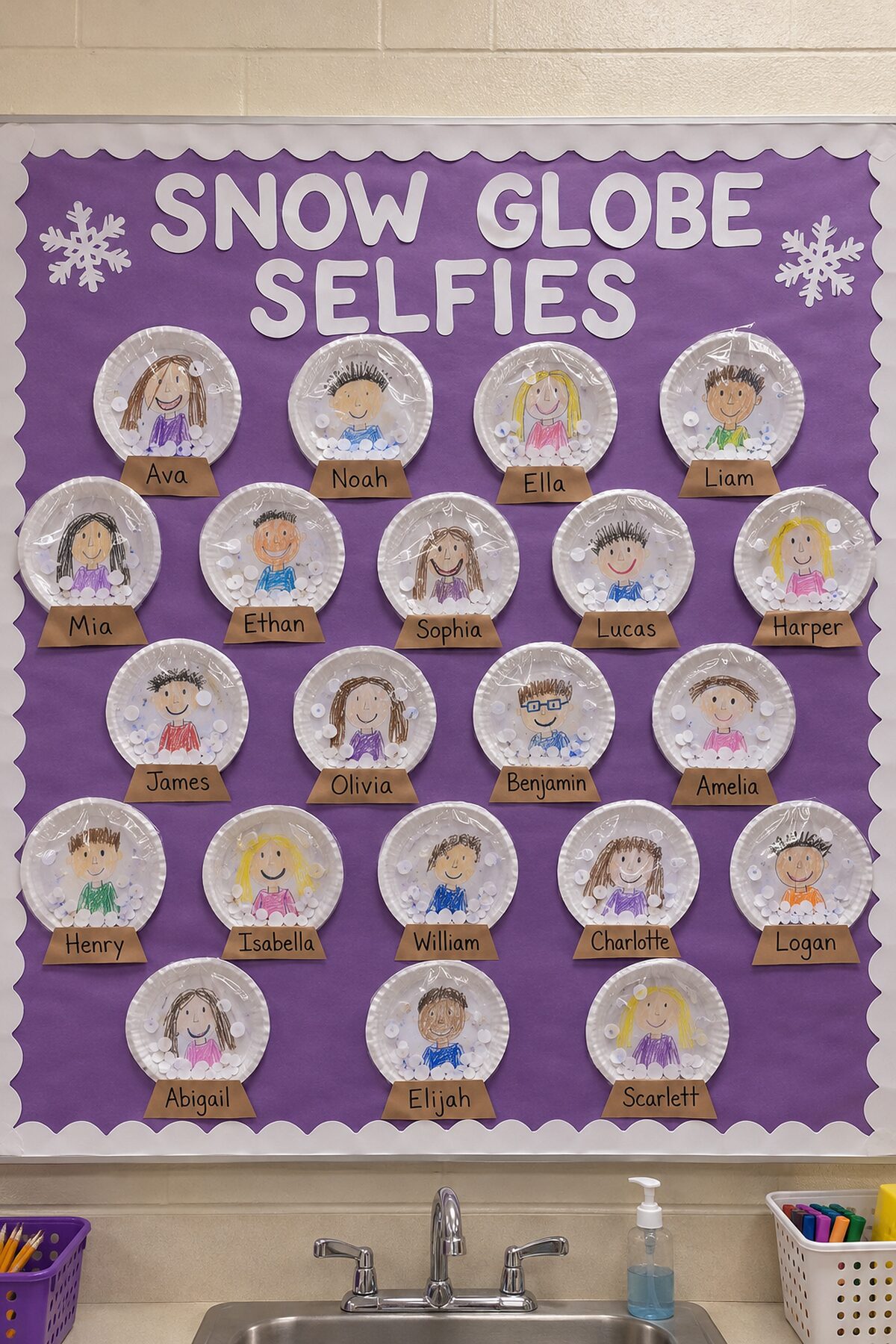
Behind a clear plastic circle, each student’s self-portrait peeks out of a paper-plate snow globe dusted with hole-punch snow. Laminating film makes a good substitute for the plastic, and the portraits go on 7-inch paper circles.
A brown paper base trimmed to a trapezoid holds the child’s name. Back the board in soft purple, arrange the globes in staggered rows of five or six, and use hot glue on the plastic edges, since staples crack the film.
Polar Bear Ice Floes
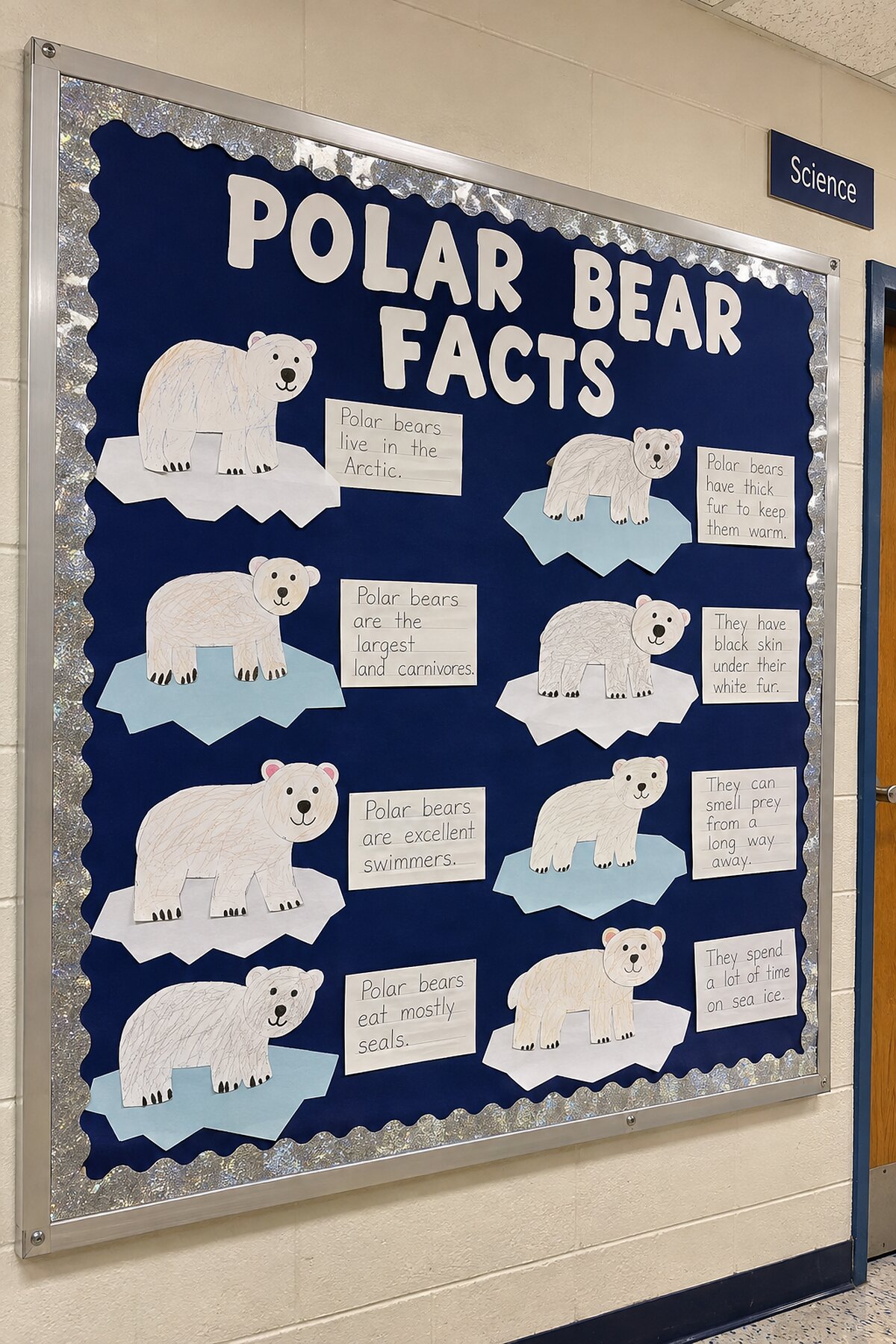
Surprising to most second graders, a polar bear has black skin under fur that is translucent and only looks white (National Geographic). That fact makes a strong caption.
Deep navy paper stands in for Arctic water. Jagged white and pale blue paper ice floes, each about 12 inches wide, float at different heights, with eight to ten paper polar bears perched on top.
Pin student-written bear facts beside each floe.
Starry Pine Forest Night
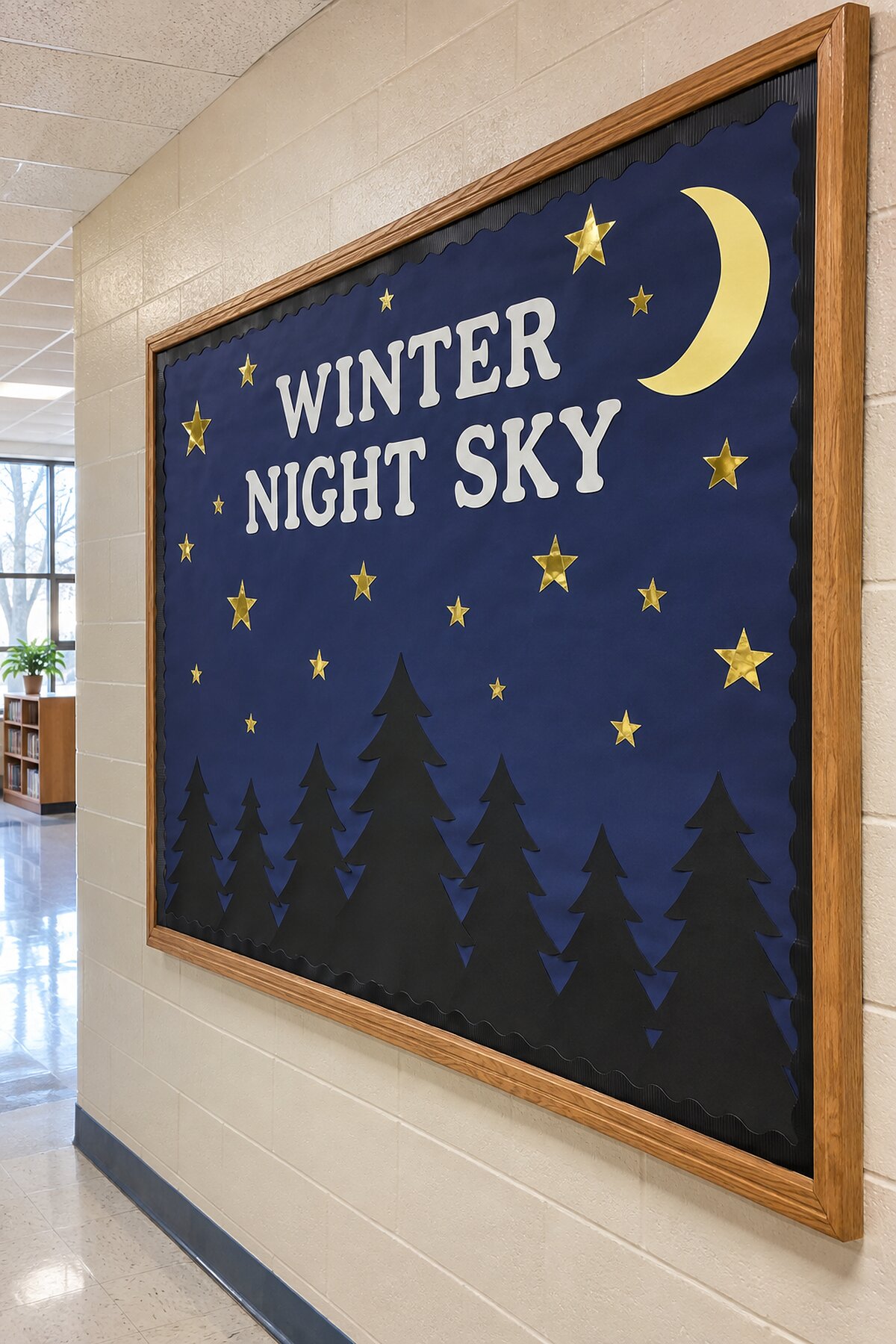
Navy backing paper makes gold foil stars glow from across a hallway. Students cut black paper pine trees between 10 and 18 inches tall and line them along the bottom third of a 4-by-8-foot board, tallest in the middle.
Scatter foil stars above them and add a single pale yellow crescent moon. A thin black border frames the night sky with zero distractions.
Melted Snowman Writing
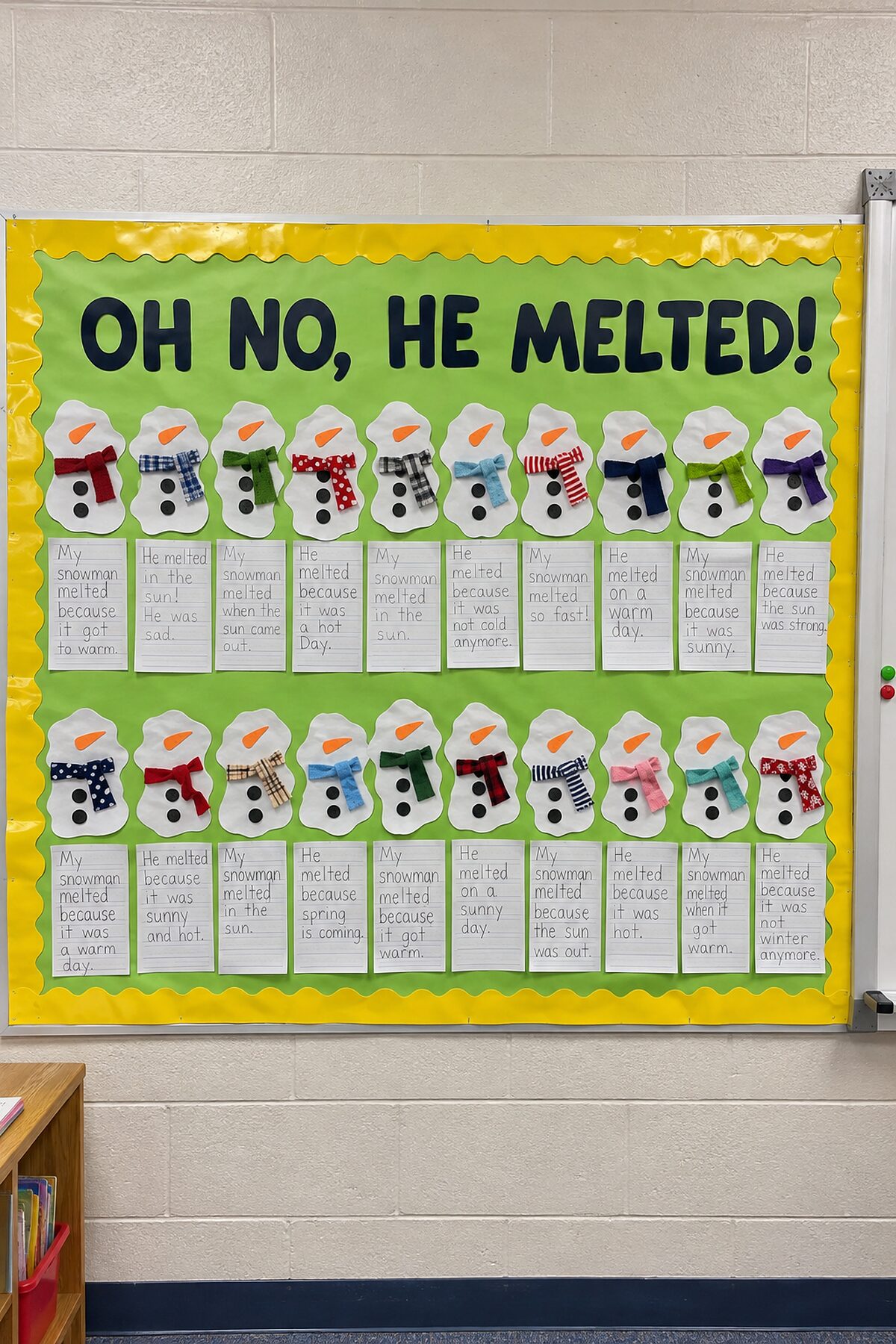
When a snowman melts, a white paper puddle with a carrot nose, two buttons and a fabric scarf tells the story at a glance. Students write a short piece explaining how their snowman melted, then glue the puddle above the writing page.
Back the board in light green, as though spring grass is showing through, and pair each puddle with its story in two rows of ten. A title like “Oh No, He Melted!” draws giggles from younger visitors.
Snowflake Symmetry Math
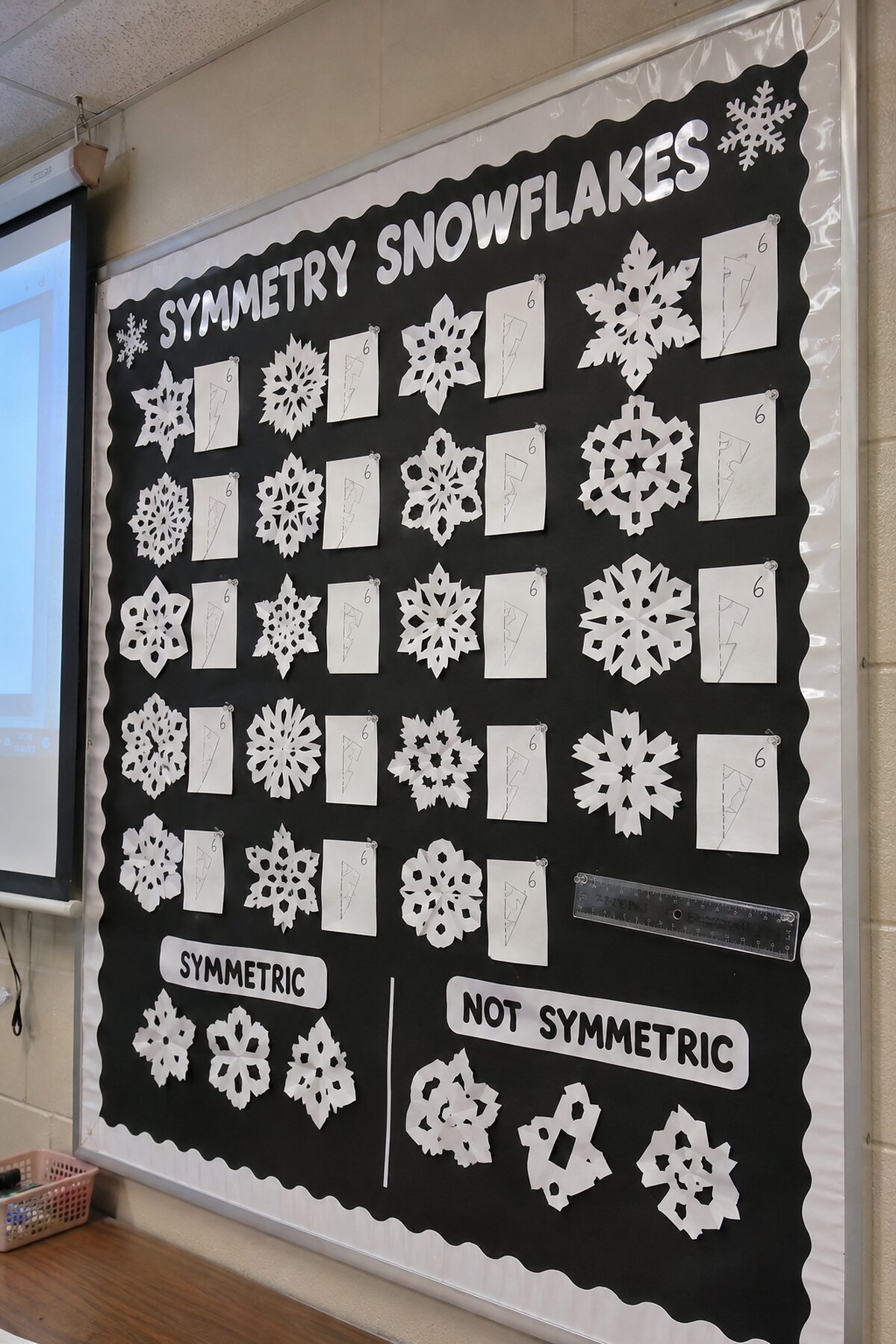
Next comes math, and snowflakes happen to be a ready-made geometry lesson. Six lines of symmetry run through every real snowflake, and this board asks students to prove it.
Each child folds and cuts a paper snowflake, then draws the fold lines on a matching sketch and counts them. Mount the flakes on black backing with a protractor or ruler beside a few for scale. A 4-by-6-foot board fits about 18 flakes.
Add a few deliberately lopsided mystery flakes for students to sort as symmetric or asymmetric.
Paper Sweater Book Reviews
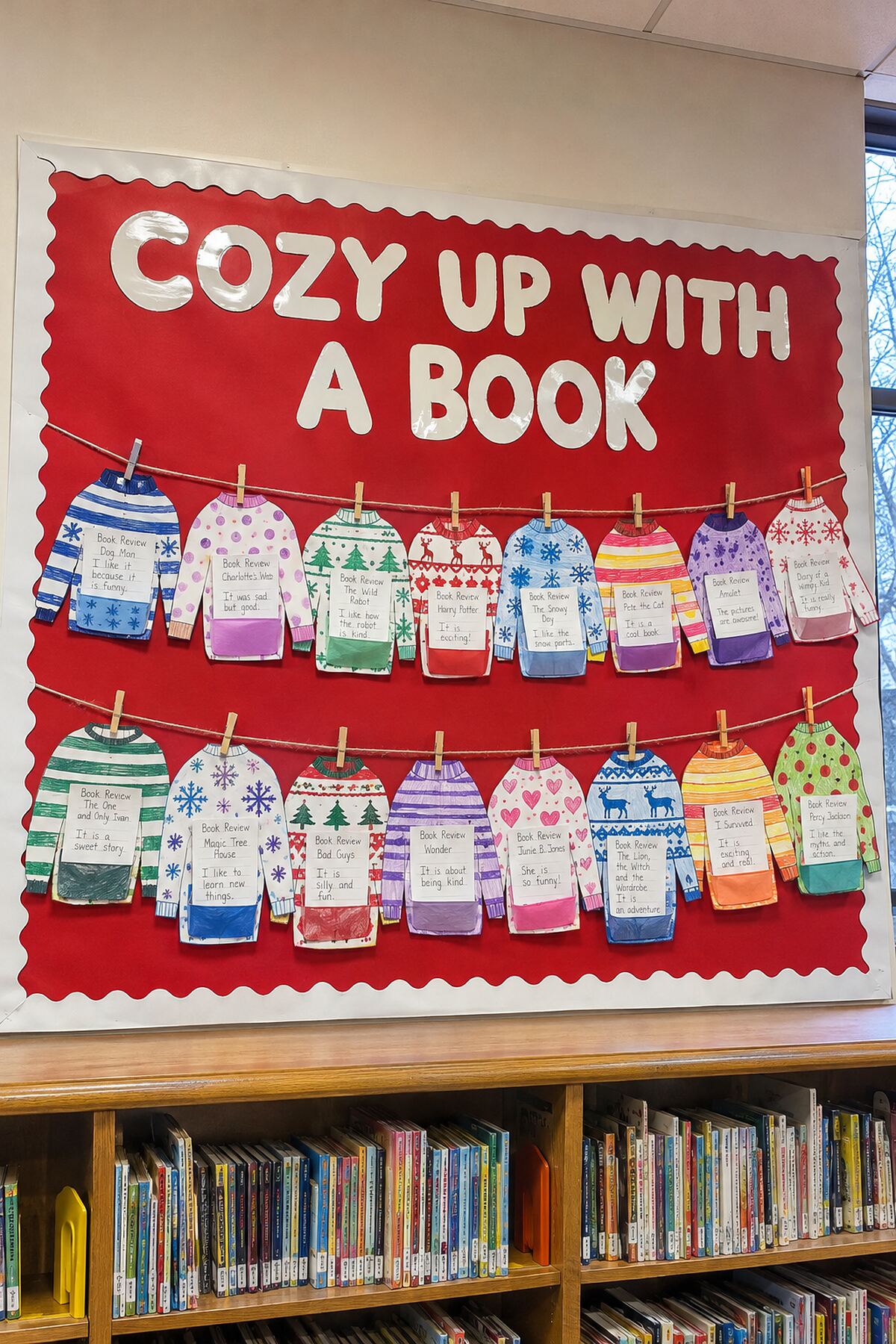
Hang this display in late January, when library circulation picks up after break. Each student decorates a paper sweater with stripes, dots or Nordic shapes inspired by a favorite book, then writes a short review on a card slipped into a paper pocket.
Mini clothespins hold the sweaters on twine across red backing, two lines of eight on a 4-by-8-foot board. A title such as “Cozy Up With a Book” sits centered above.
Book Brick Igloo
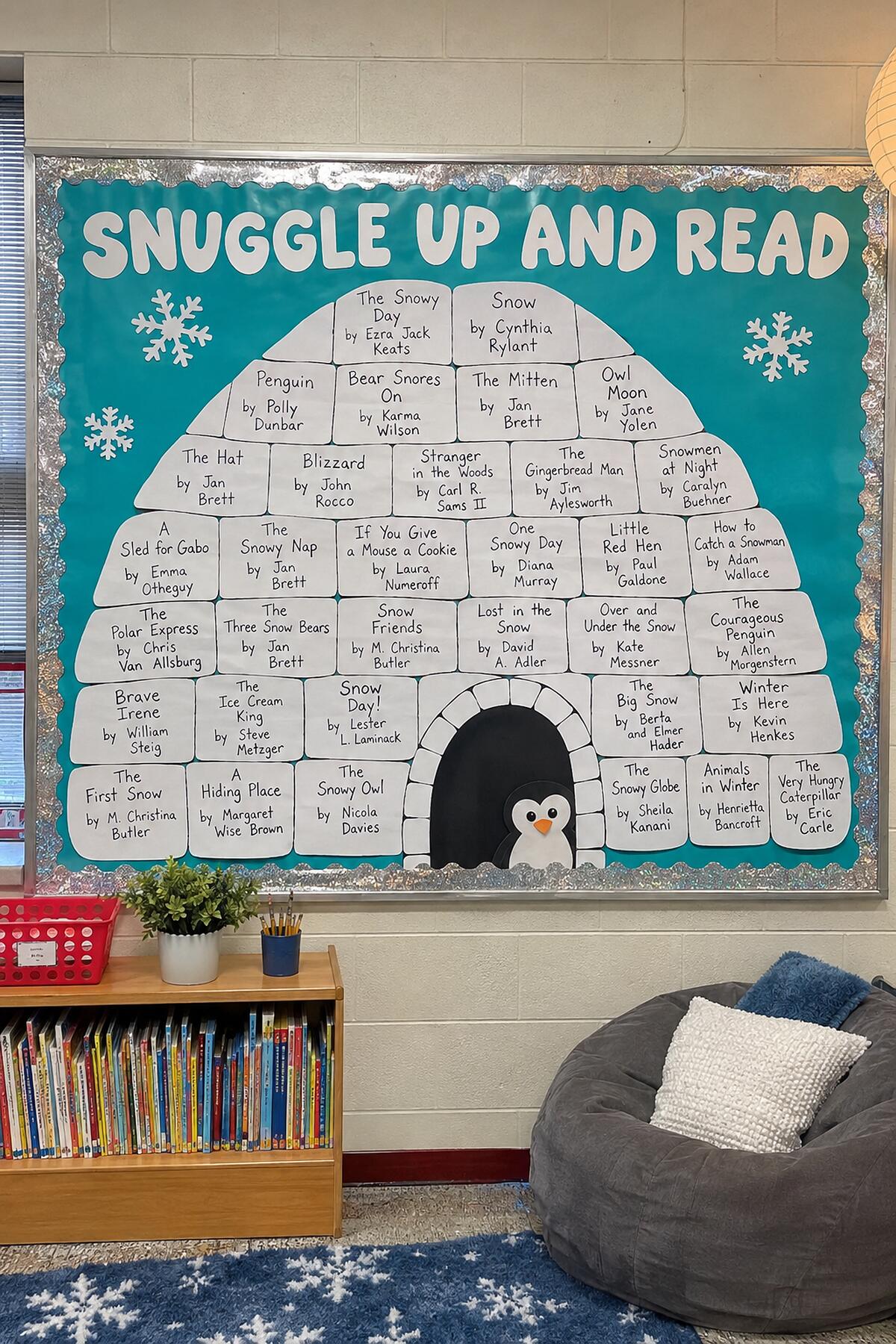
Because each finished book earns one white brick, this reading igloo grows as the class reads through winter. Cut bricks about 3 by 6 inches from cardstock, and each reader adds the title and author.
Sketch a curved dome outline lightly on icy turquoise backing, then stack the bricks from the bottom row up in a staggered pattern. A dark arched doorway with a small paper penguin peeking out finishes the scene.
A class of 24 reading two books a week fills a 4-by-6-foot igloo in about a month, a goal worth a cocoa party.
Hibernation Station
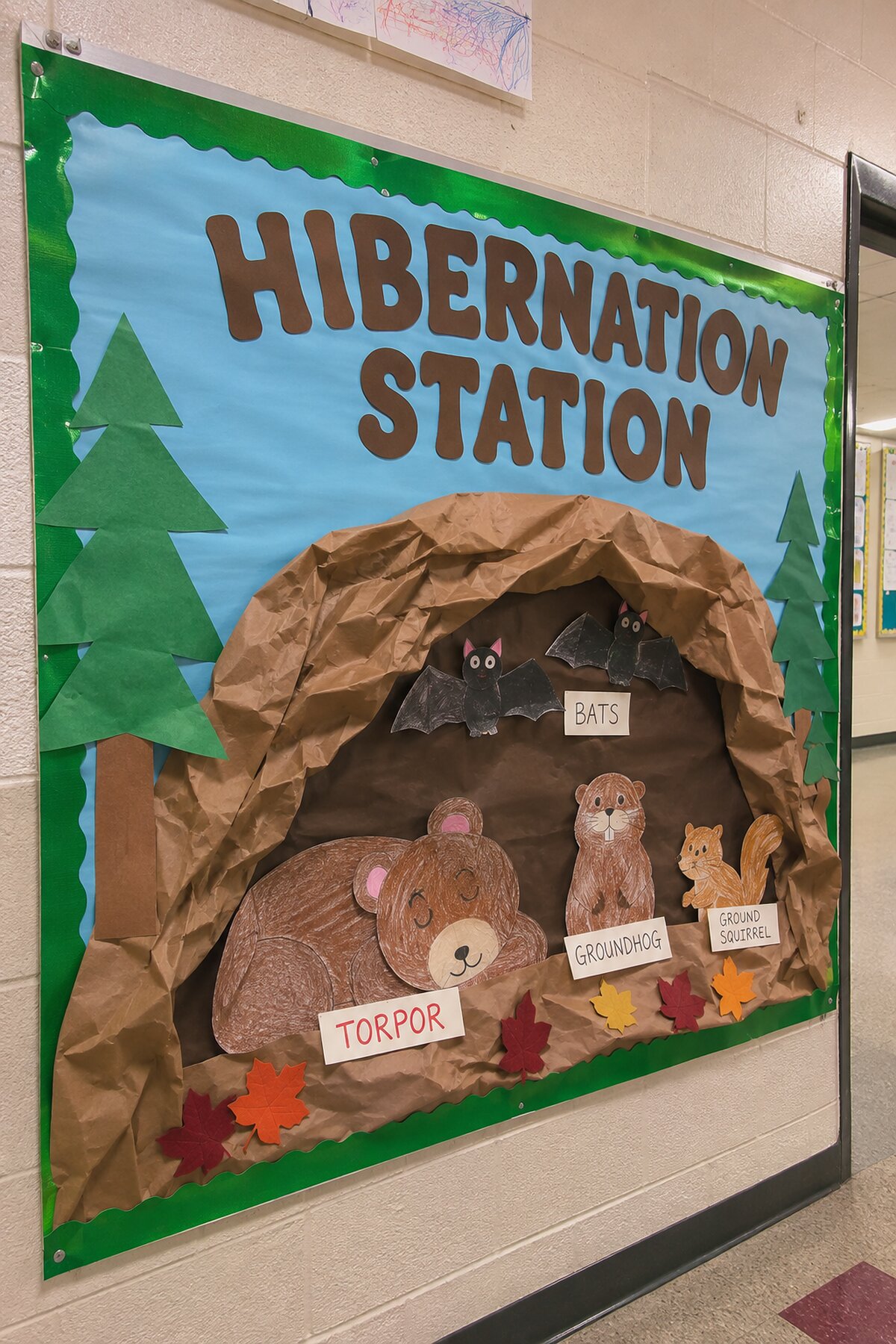
Among true hibernators are groundhogs, many bats and ground squirrels, while bears enter a lighter winter sleep called torpor. Third graders handle that nuance well, and the board labels each animal accordingly.
Crumple brown kraft paper into a cave shape in the lower half and tuck paper animals inside, each with an index card. Add felt leaves on the cave floor and paper trees around it.
Mark the bear’s card “torpor” in a different color so the distinction is clear.
Paper Snowball Resolutions
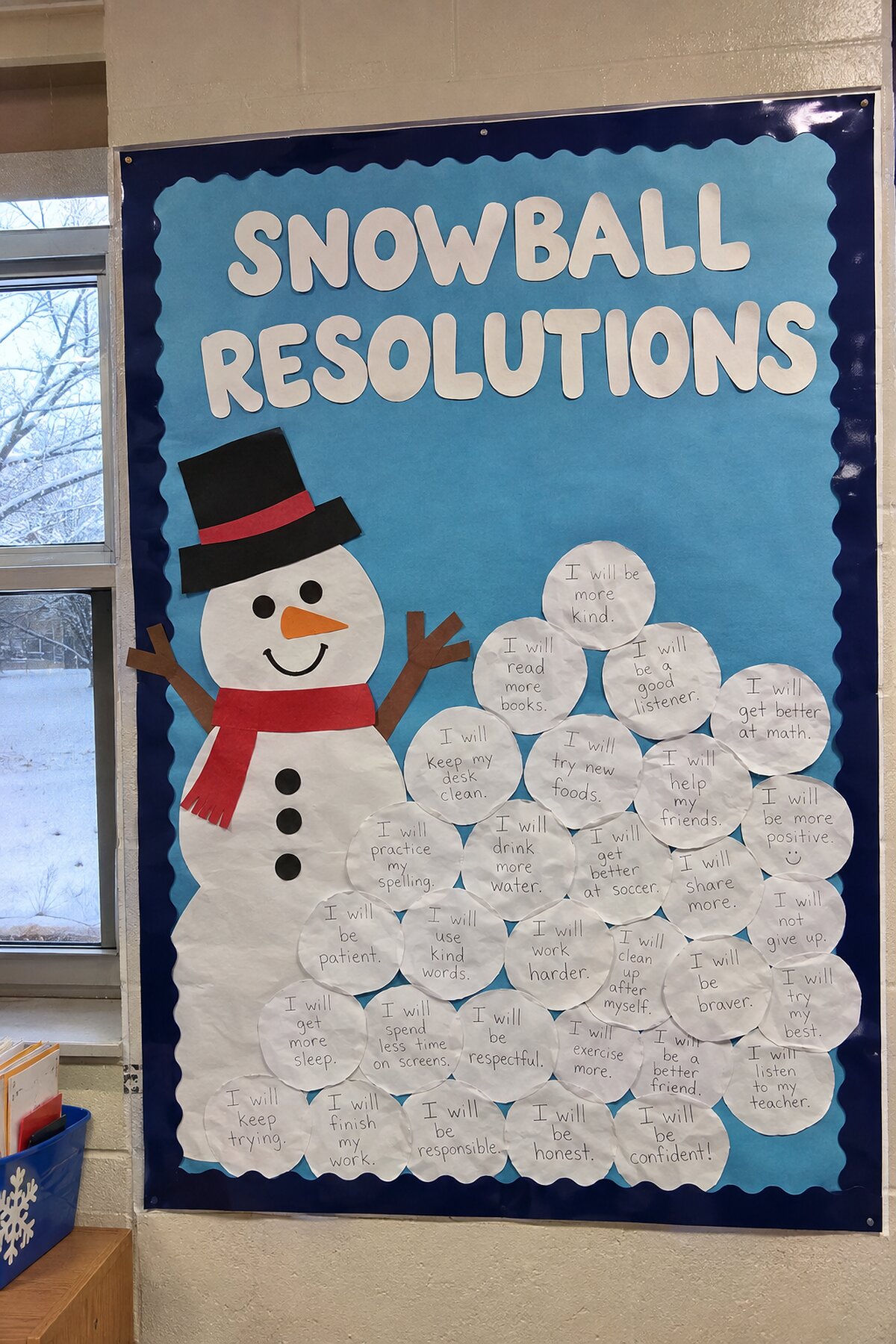
Ask each student to write one resolution on a white paper circle, crumple it gently and flatten it back out into a snowball. Early January means fresh starts, so the timing is right.
Pile the snowballs into a drift in the lower center of a light blue board, about 25 on a 4-by-8-foot surface, beside a big paper snowman. Staples through the flattened centers let the crumpled edges lift slightly.
Cotton-Batting Arctic Landscape
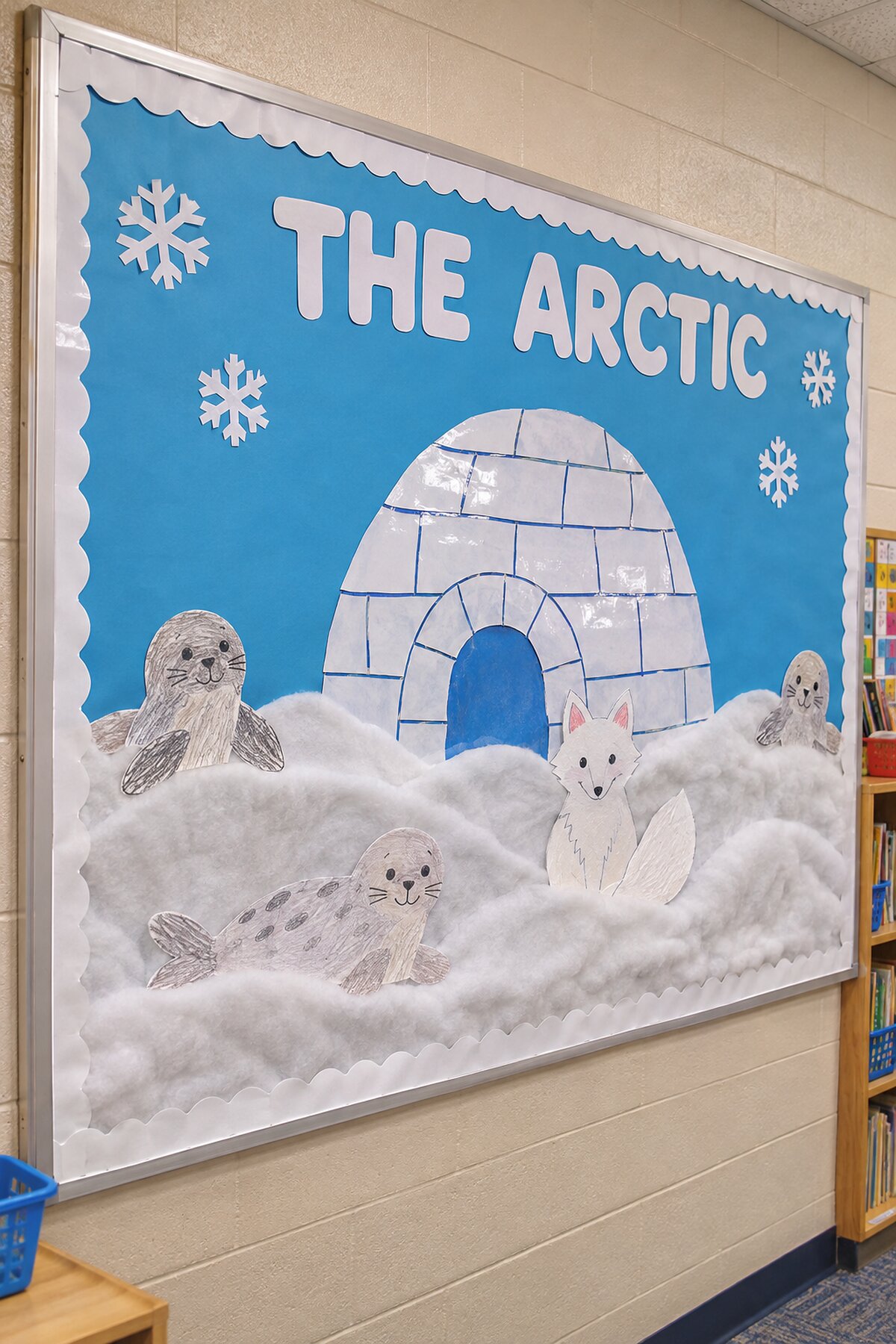
From here, the list heads north into science, and the first stop is a snowbound Arctic scene. Spread along the bottom 18 inches of a sky-colored board, quilt batting from a craft store covers large areas quickly and reads as deep snow from 20 feet away. Shape a few hills with extra layers.
Students add a cut-paper igloo, seals and an arctic fox tucked into the drifts. Many fire codes cap combustible artwork on corridor walls at about 20 percent of the wall area, so check with the school before covering a hallway board with batting, and never staple anything over fire alarms, exit signs or sprinkler heads.
Snowy Owl Board
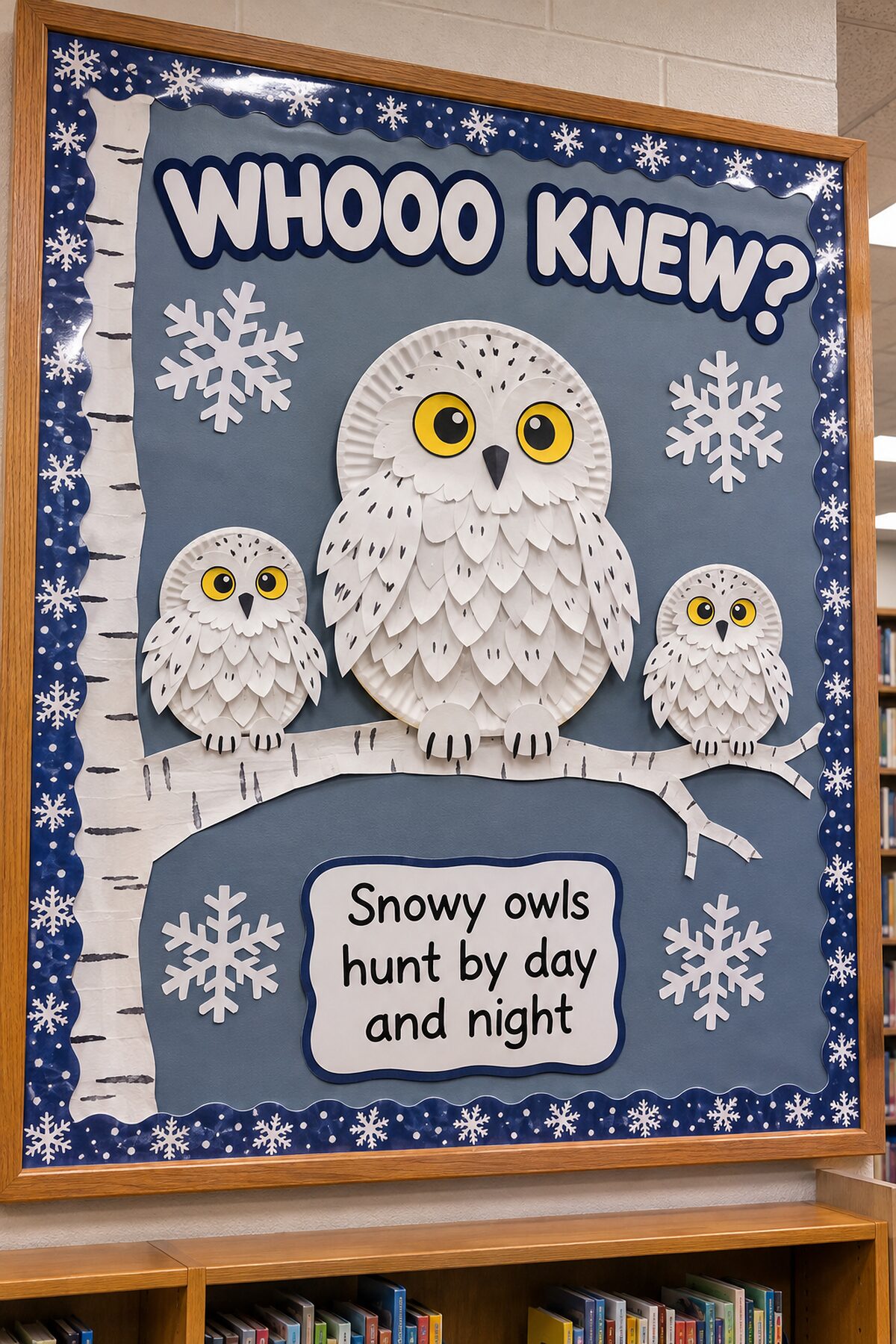
On a paper birch branch stretched across gray-blue backing, one large snowy owl and two smaller ones stare out with big yellow eyes. Students build each owl from cardstock feathers layered on a paper plate base, with black marker flecks across the wings.
Paper snowflakes fill the sky.
A fact card explains that snowy owls hunt by day as well as by night.
Winter Weather Chart
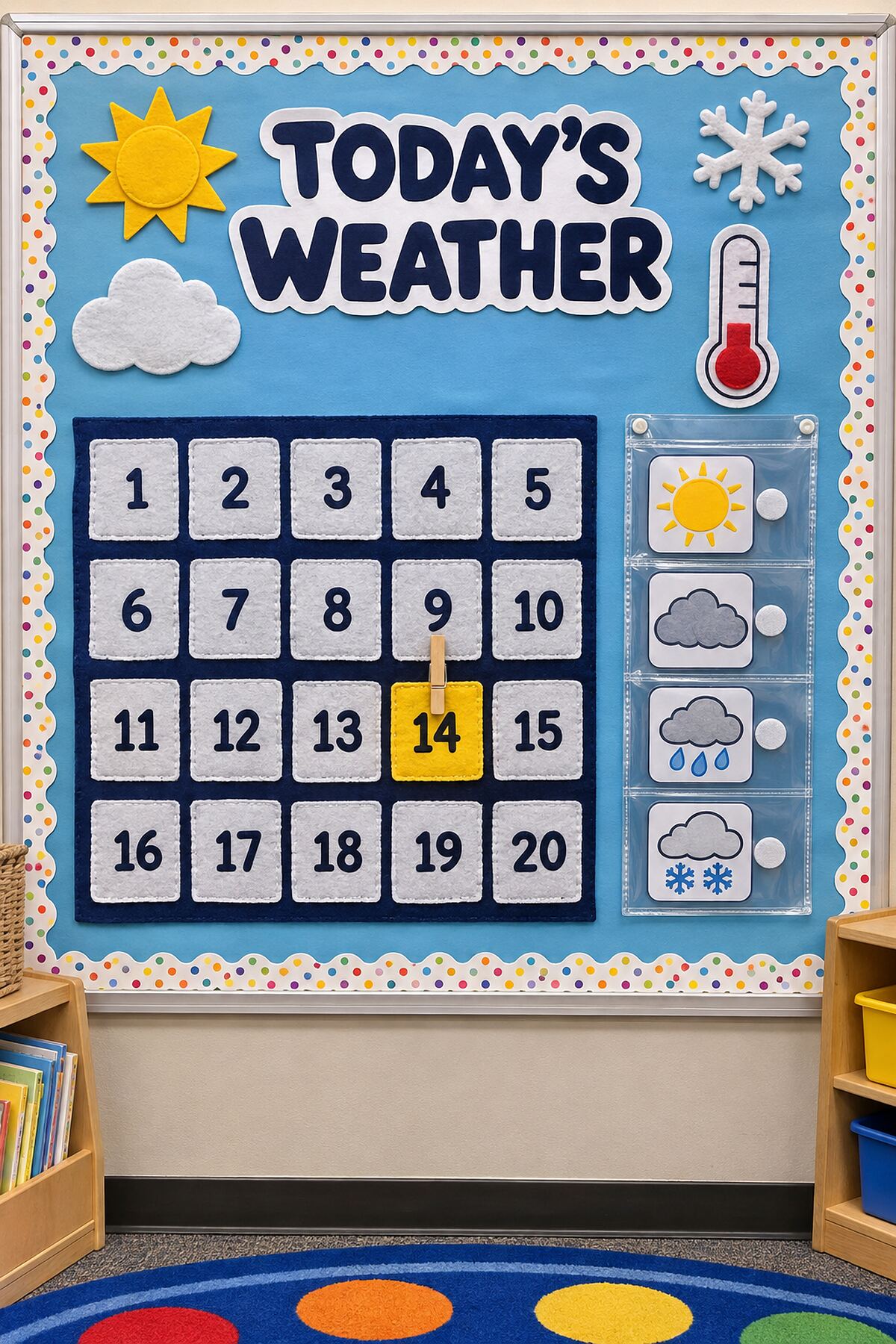
Every morning, a student helper updates this weather board during morning meeting. The helper moves a clothespin and adds the matching icon. Felt sun, cloud, snowflake and thermometer icons sit in a pocket at the side, and a grid of 20 felt squares tracks each school day.
Laminated paper icons with Velcro dots last all season.
At the end of the month, students count each weather type and compare totals.
Kindness Paper Quilt
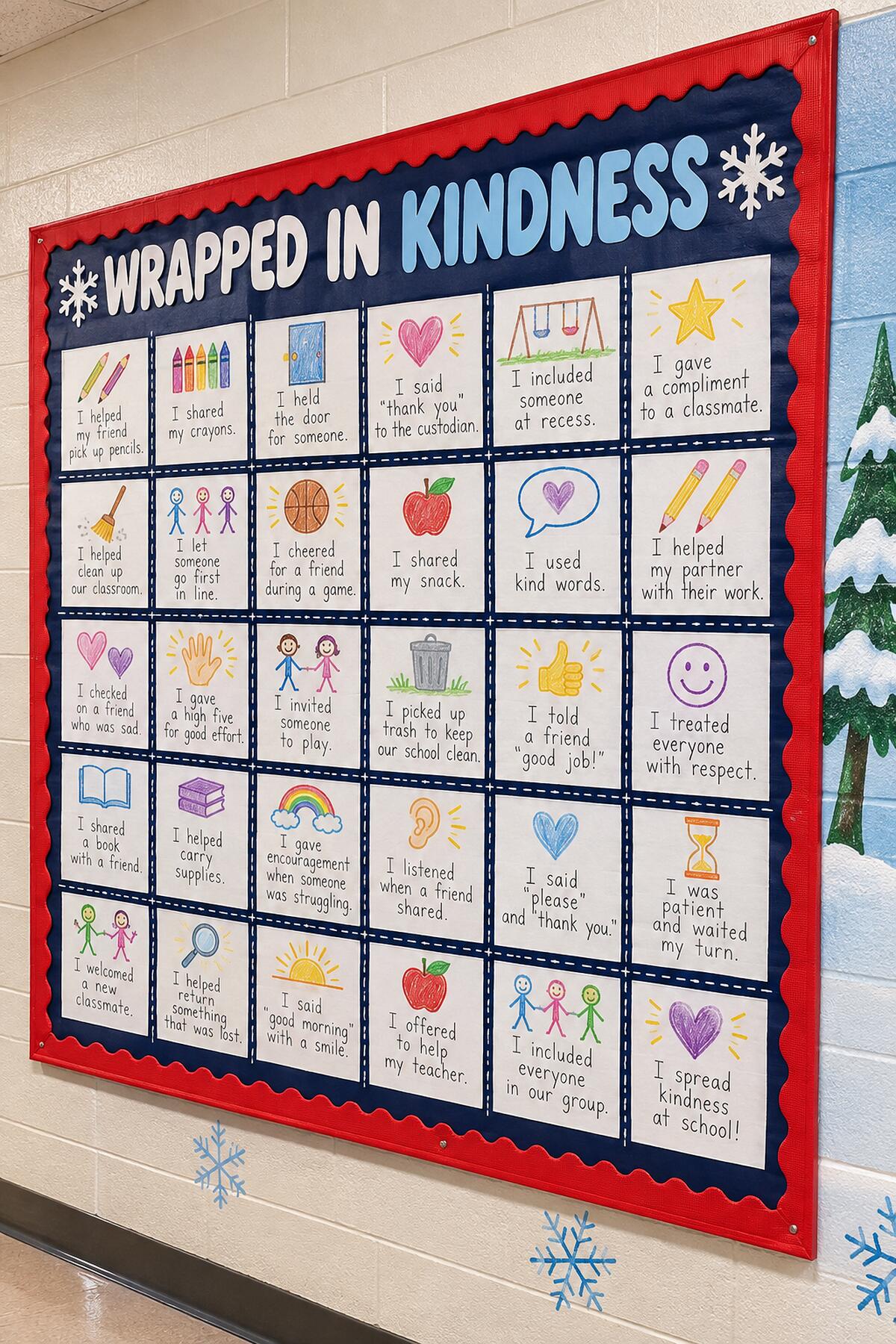
Edge to edge in a tight grid, 8-inch paper squares form a patchwork of kind acts students did or saw. Each child decorates one square with a drawing, and dashed stitch lines drawn between the squares with a marker or white paint pen finish the look.
A 4-by-6-foot board takes 30 to 36 squares. For church boards, a title such as “Wrapped in Kindness” fits Sunday school spaces nicely.
Snowman Sentence Builder
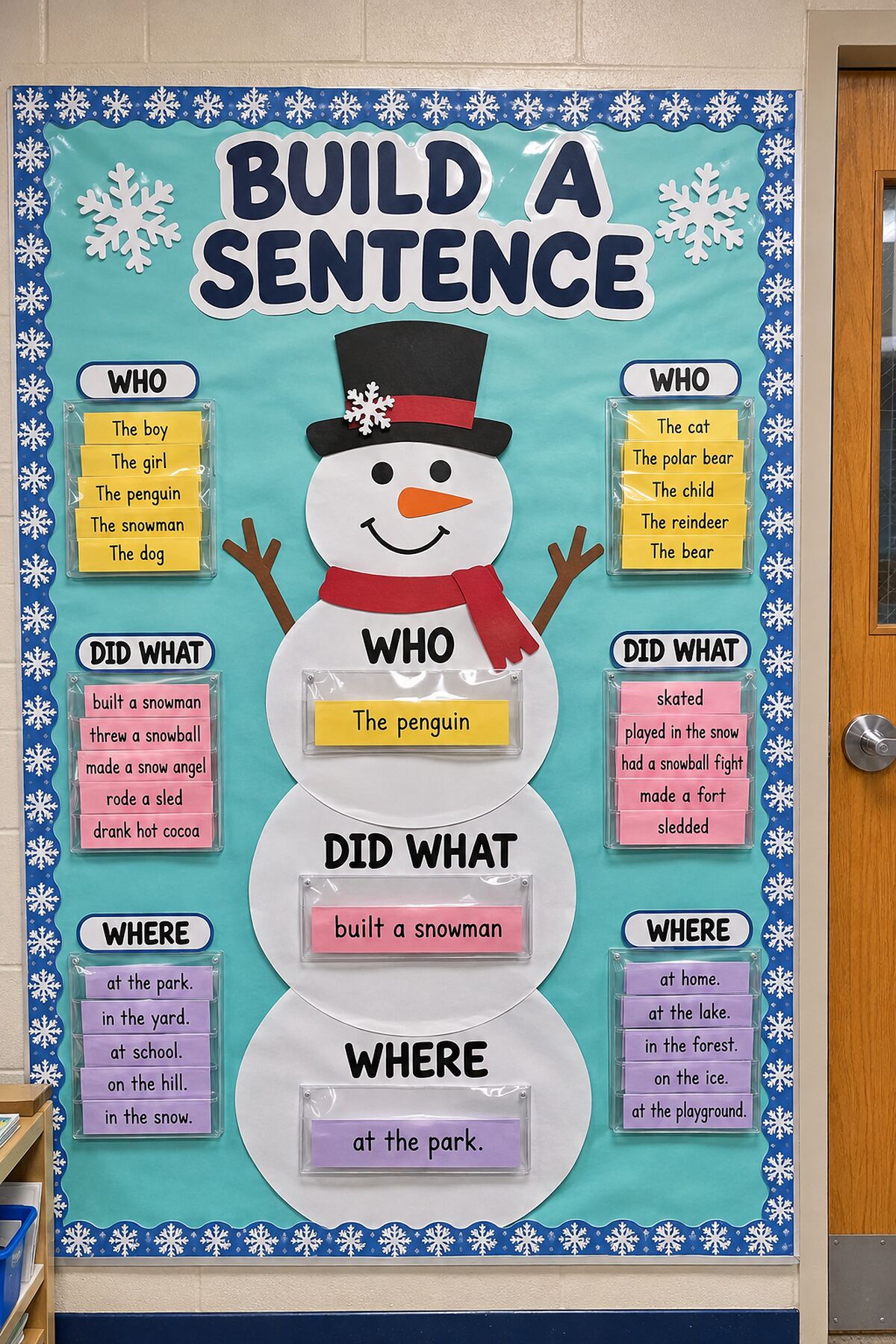
Three stacked circles, labeled who, did what and where, help kindergarten and first-grade writers build complete sentences. Center one large paper snowman, about 36 inches tall, against a soft aqua background and attach a clear pocket to each circle.
Colored paper strips sorted by sentence part wait in library pockets along the sides. During centers, students slide one strip into each pocket and read the finished sentence aloud to a partner.
Tissue Paper Northern Lights
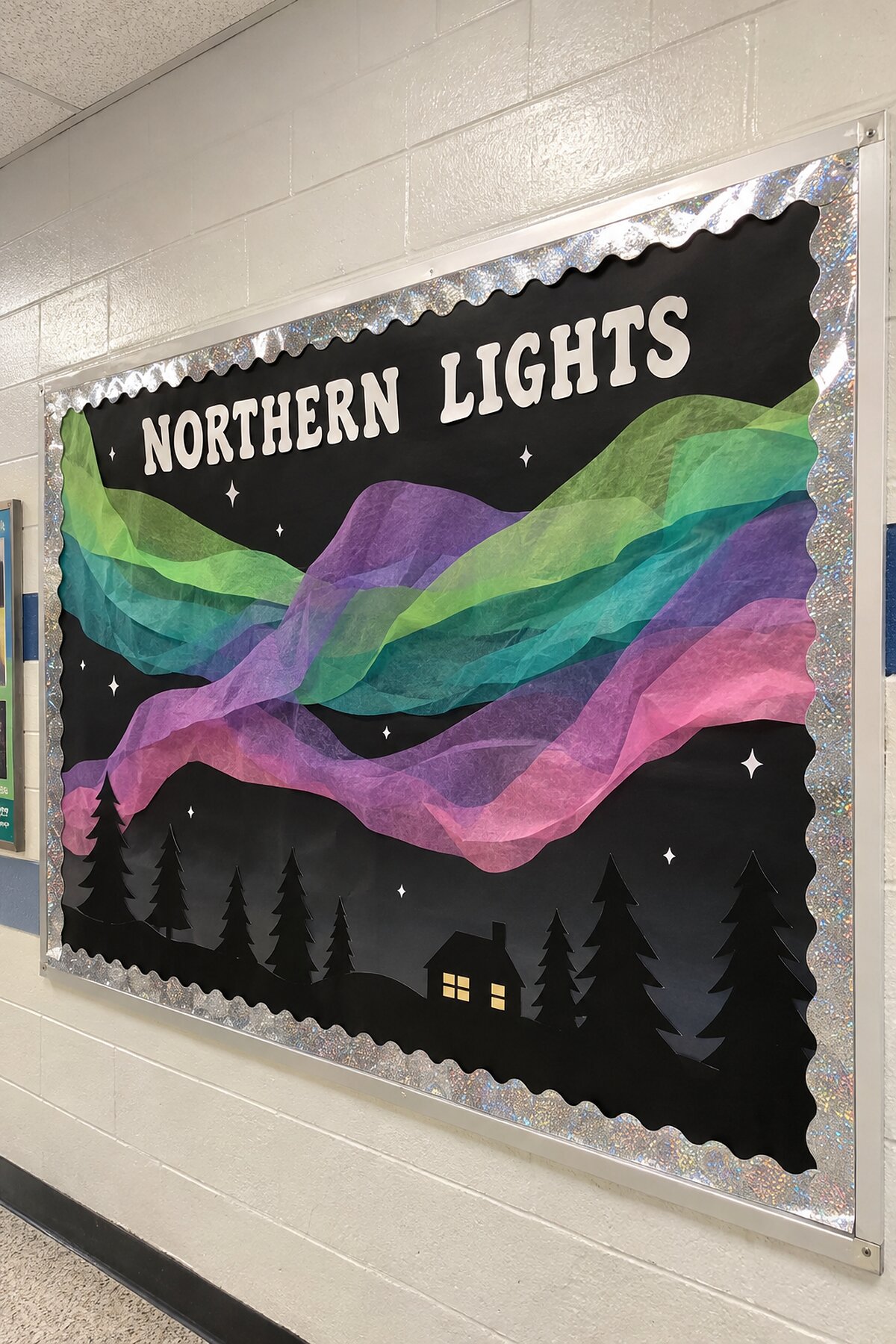
Brushed with thinned glue, layers of green, teal and violet tissue paper overlap into soft ribbons of color across navy backing. The glue lets the edges blend and shine.
Dark construction-paper mountains and pine tree silhouettes run along the bottom edge. On a 4-by-8-foot board, the bands sweep diagonally from the upper left corner.
A caption card explains that the northern lights appear when charged particles from the sun hit Earth’s atmosphere.
Paper Ice Skating Rink
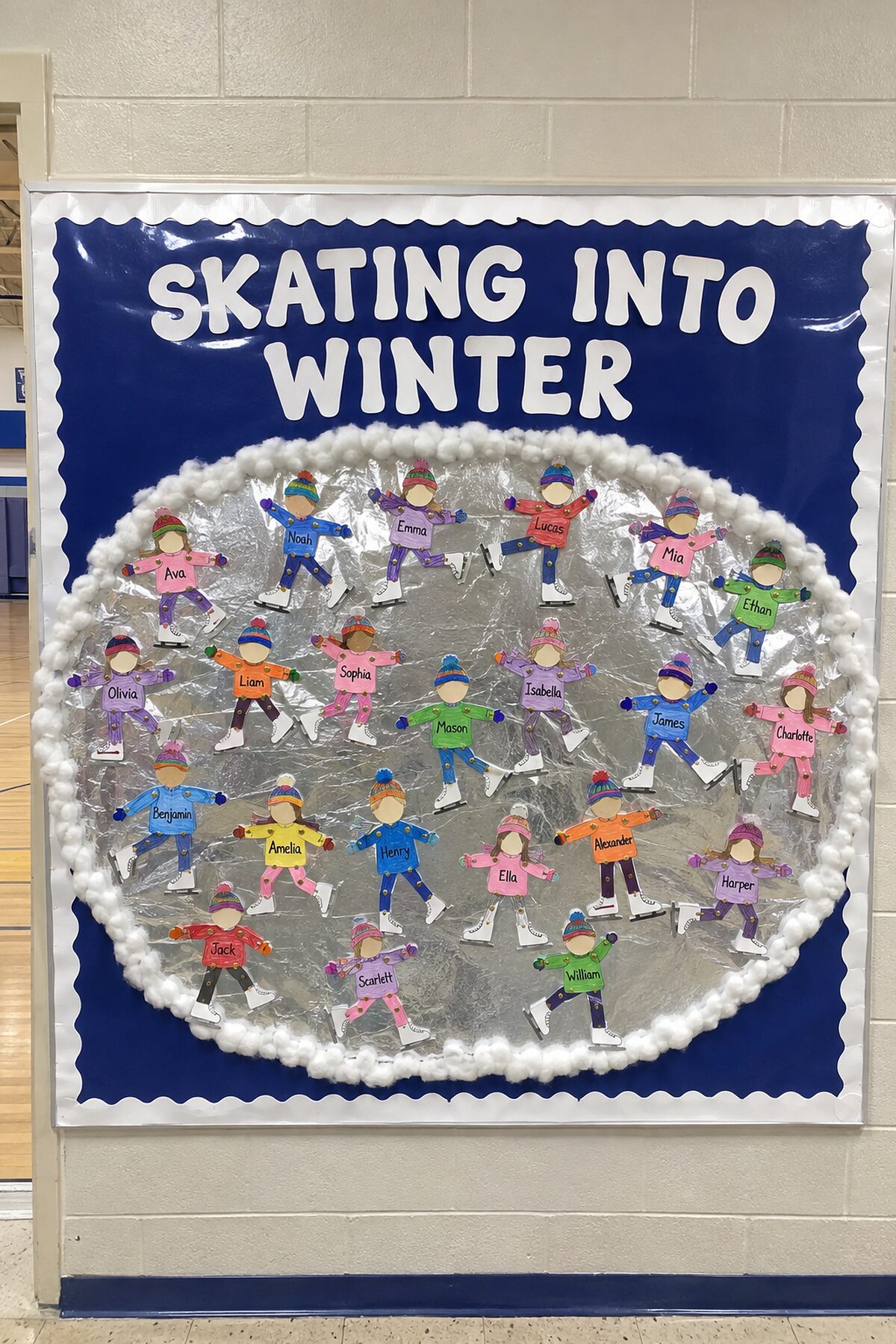
An oval of shiny silver foil paper, about 5 feet across, forms the rink in the center of the board. Students design paper skaters with brad-jointed arms and legs, so each figure strikes a pose, and write their names on the jackets.
Back the rest of the board in deep blue, edge the rink with cotton snow and glue about 20 skaters around it at angles that suggest movement.
Pinecone Forest Board
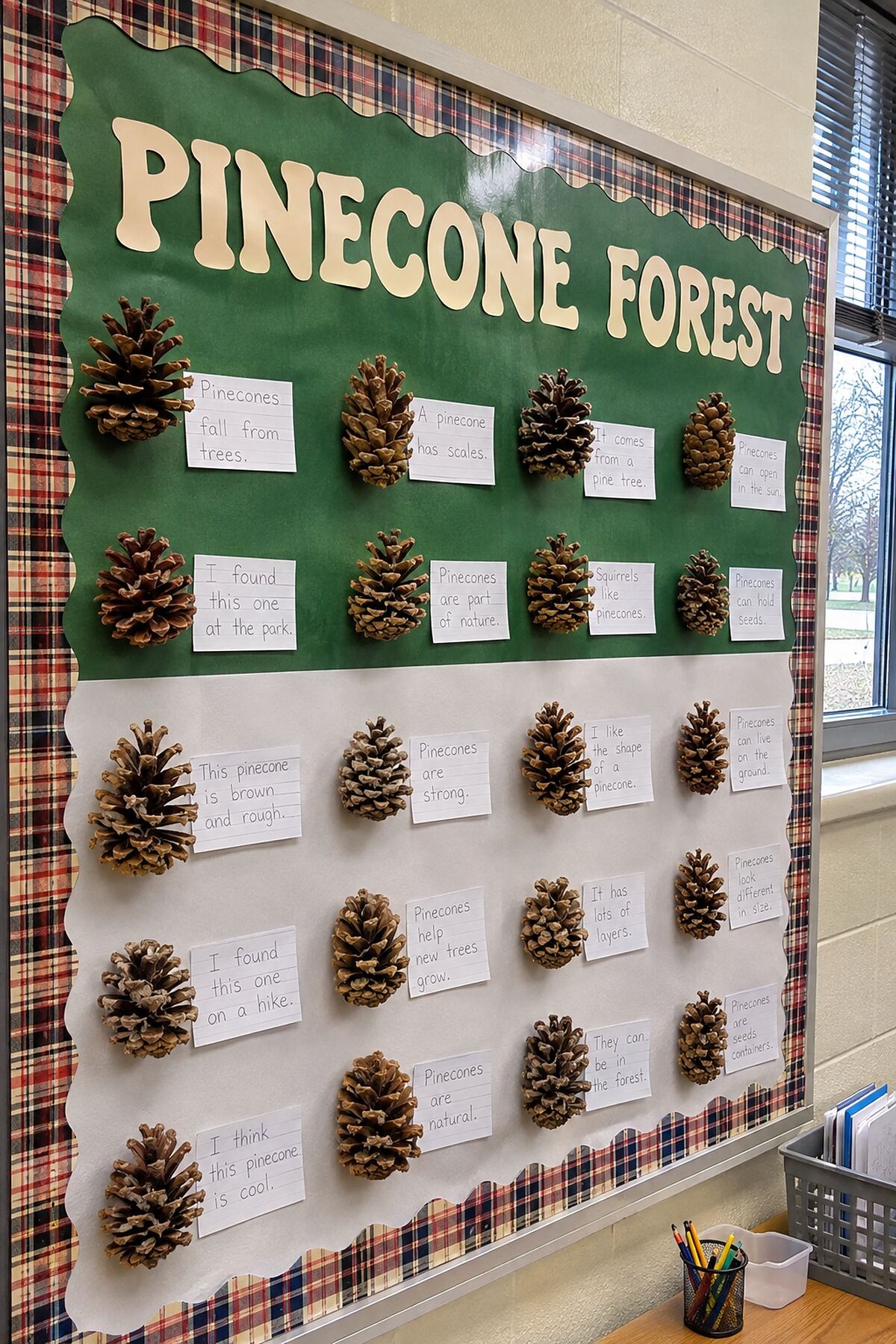
Glued in rows like a small forest, real pinecones add depth that paper alone lacks. Collect cones in fall and bake them on a foil-lined sheet at 200°F for about 30 minutes to clear out insects. A check every 10 minutes is wise.
Green and white backing holds about 18 to 24 cones. Tuck a blank card beside each one for a student’s nature note about where the cone was found.
Winter Games Board
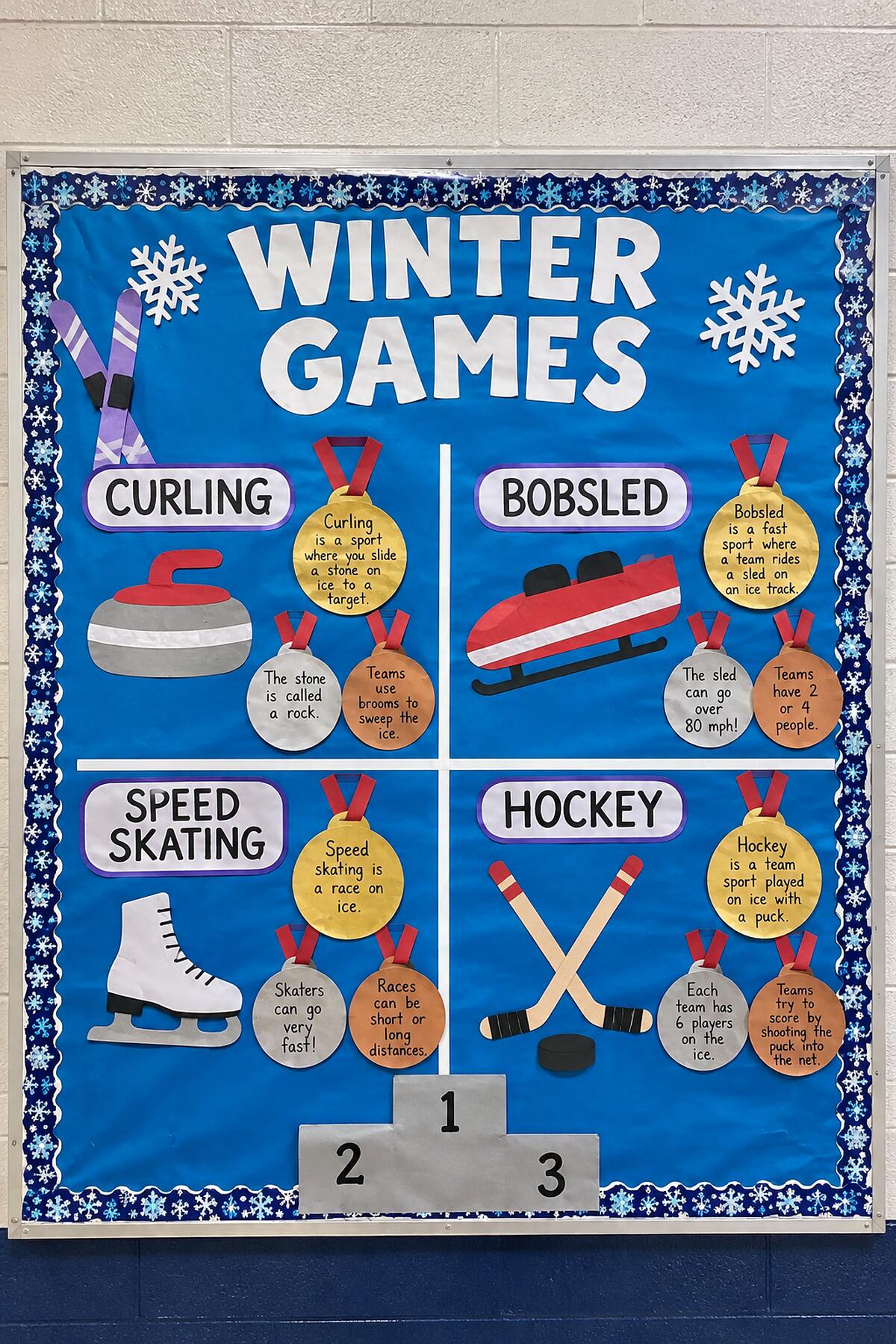
When winter sports fill the news in February, this board rides that energy. Students research a sport such as curling, bobsled or speed skating and write facts on a paper medal in gold, silver or bronze.
Cut skis, sleds, skates and hockey sticks from colored paper and divide a cobalt board into sport zones. A podium cut from three stacked gray paper blocks anchors the bottom center for class challenge winners.
Knit Hat Board
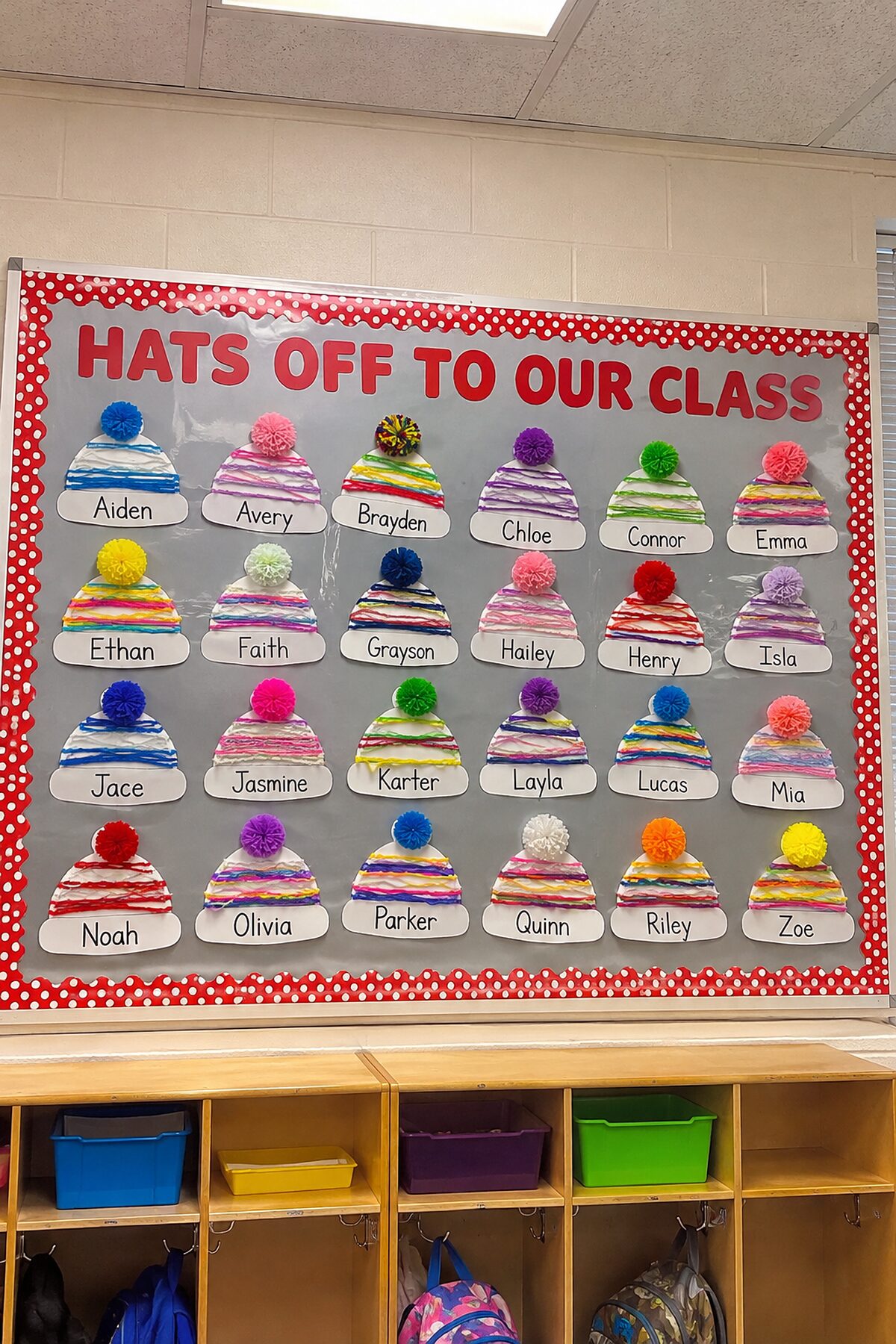
Simple paper hats with real yarn stripes and fluffy pom-poms line up in rows like a class portrait. Children glue strips of leftover yarn across a paper hat shape, then top it with a pom-pom wrapped around a fork.
Back the board in soft gray and place one hat per student, 24 hats in four rows. A title like “Hats Off to Our Class” sits across the top in fat letters.
Animal Tracks in Snow
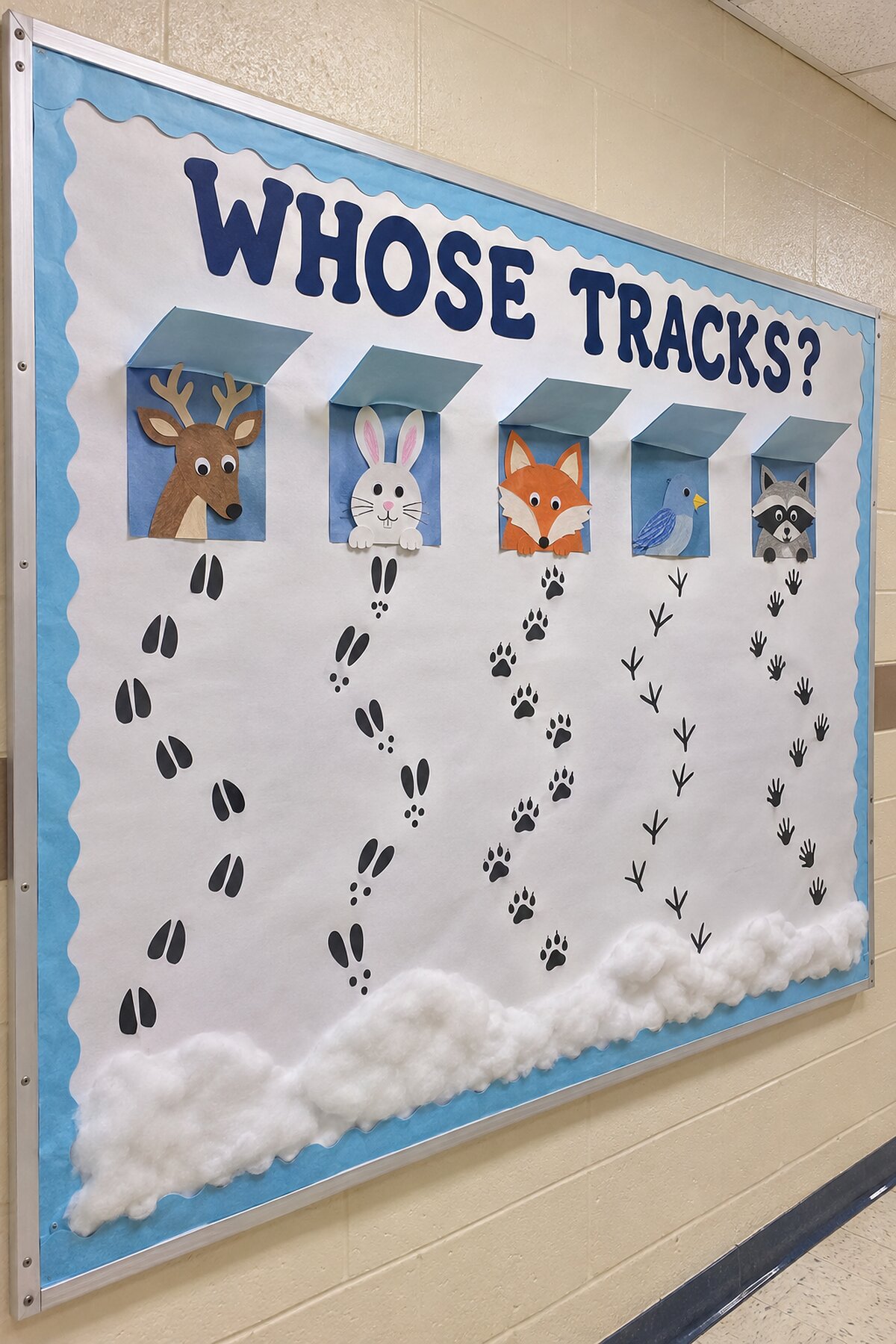
Over the last six boards, students get to answer, sort and vote, and this first one is a mystery to solve on the way to lunch. Across snowy cream paper and cotton batting, deer, rabbit and fox prints cut from charcoal cardstock wander in winding trails, and every student becomes a tracker.
At the end of each trail, a small paper animal or lift-the-flap card reveals who made the tracks. Five or six trails fit on a 4-by-6-foot board with room to spare.
Snow Day Graph
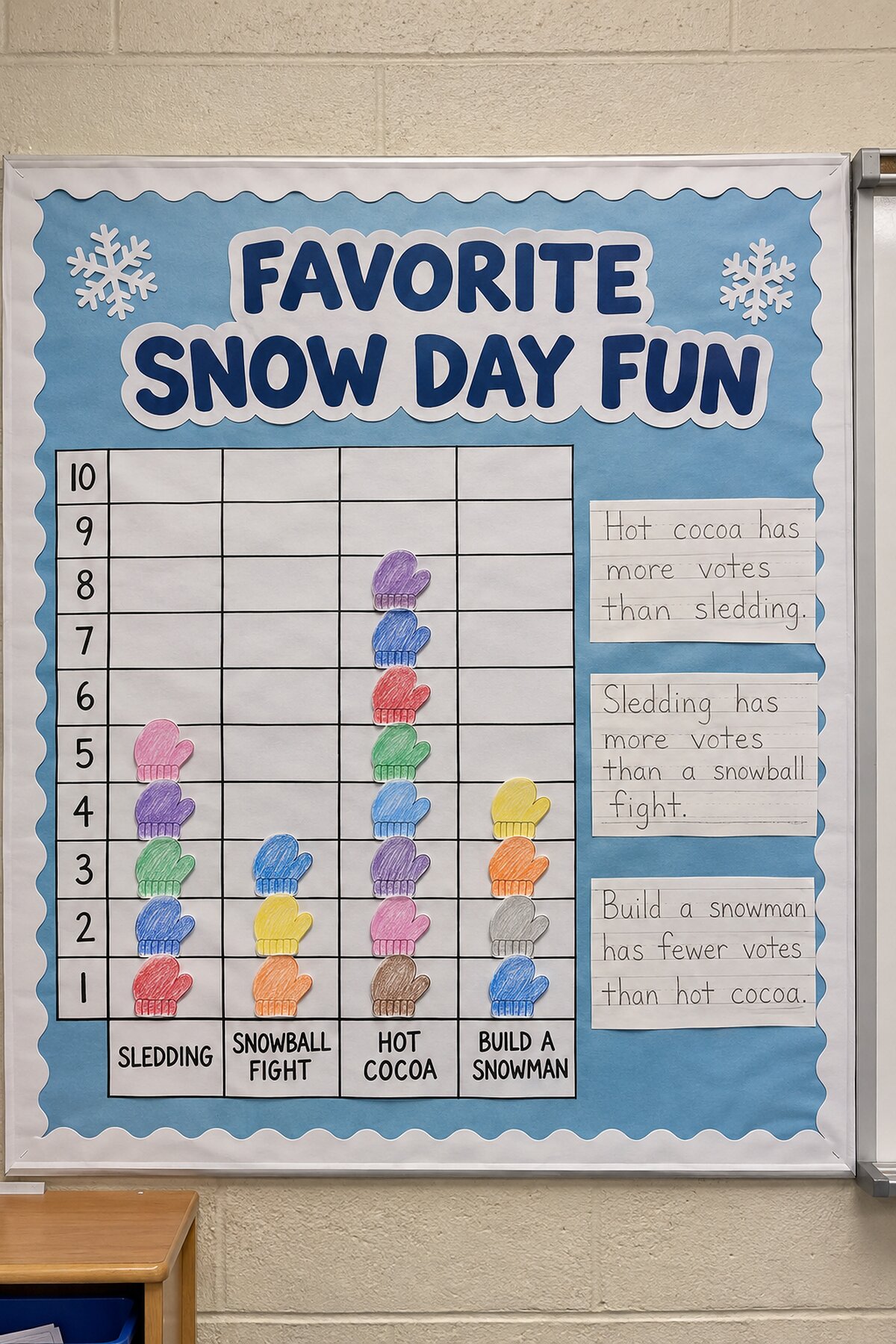
When students vote for a favorite snow day activity, each one adds a paper mitten above a choice such as sledding, snowball fights or hot cocoa. Light gridded chart paper with 1-inch squares makes the columns easy to read.
Labels run along the bottom, and the mitten columns rise as votes pile up. After a week, students write sentences comparing the tallest and shortest bars.
Frosted Window Silhouettes
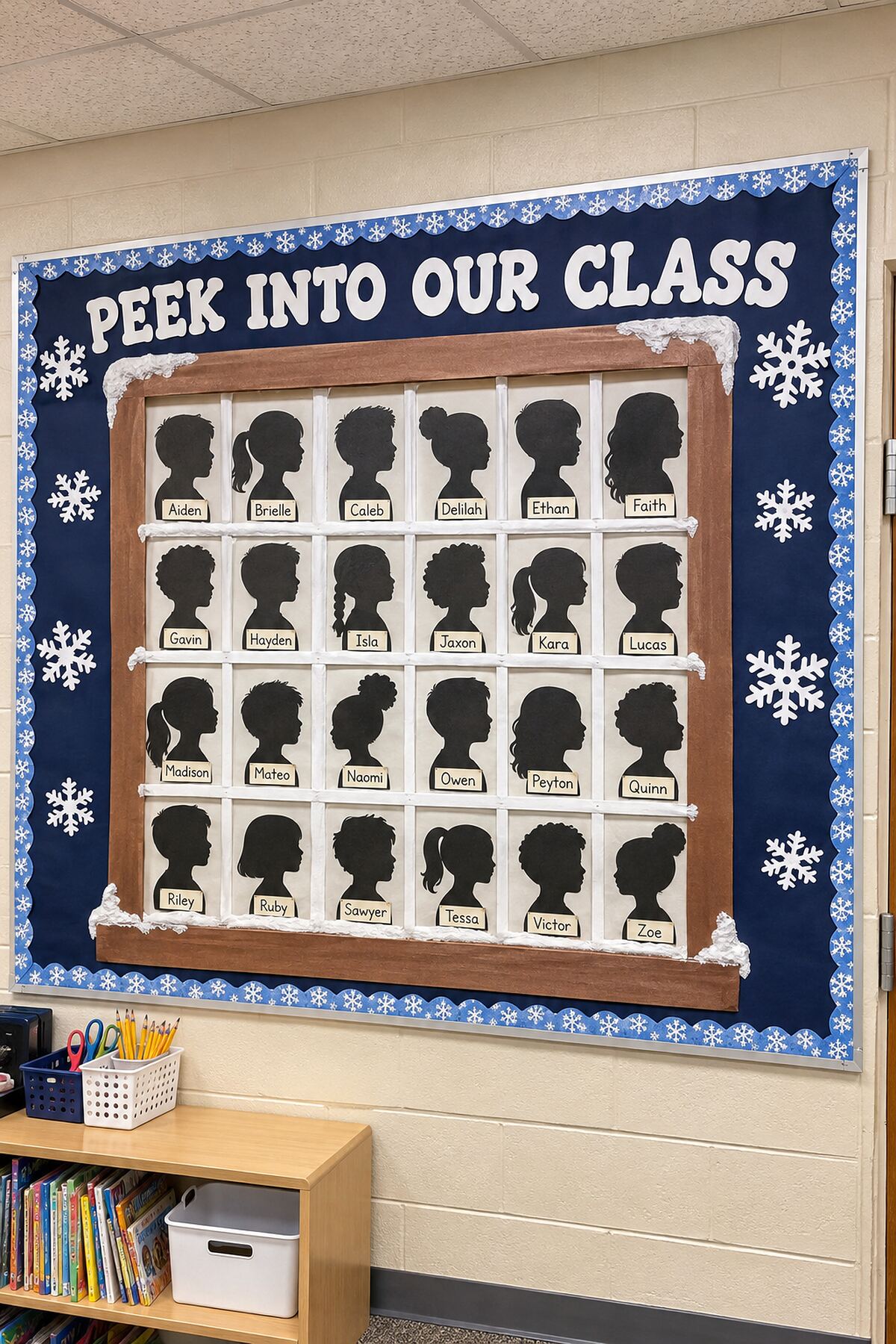
A paper window frame makes the whole board look like a frosty pane. Students trace each other’s side profiles from a lamp’s shadow on dark construction paper, then cut them out and mount them behind cardstock window bars.
Dab a silver paint pen or chalk marker along the frame edges for frost and scatter paper snowflakes around it. About 24 silhouettes fit on a 4-by-8-foot board.
Snowman Glyph Board
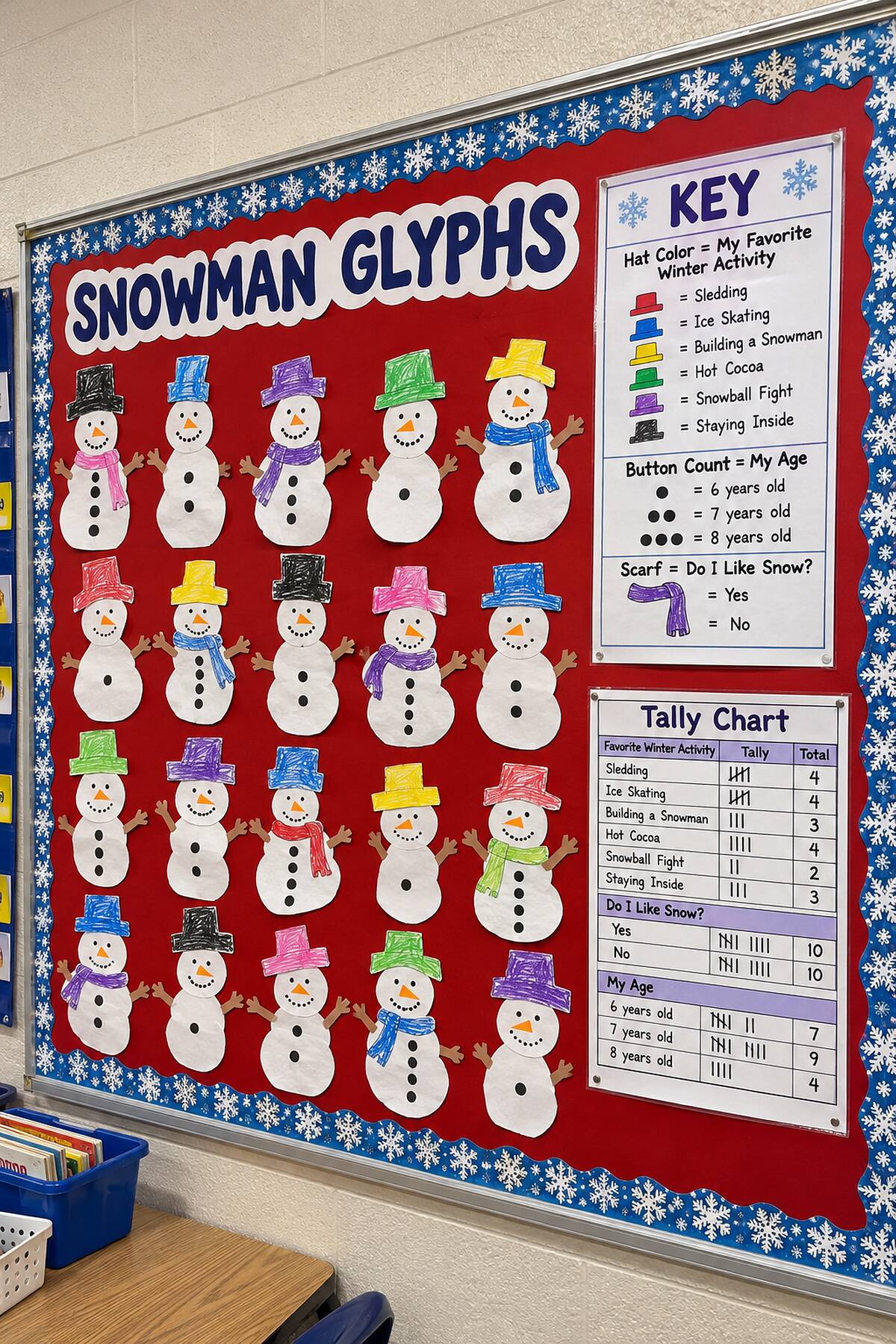
Part drawing and part data chart, a glyph encodes survey answers, so each student’s snowman tells a small data story. Post a key beside the board. Hat color shows a favorite winter activity, button count matches the number of people at home, and a scarf means the student has built a real snowman.
Classmates then read the board like a chart and tally the results.
Winter Clothing Sort Board
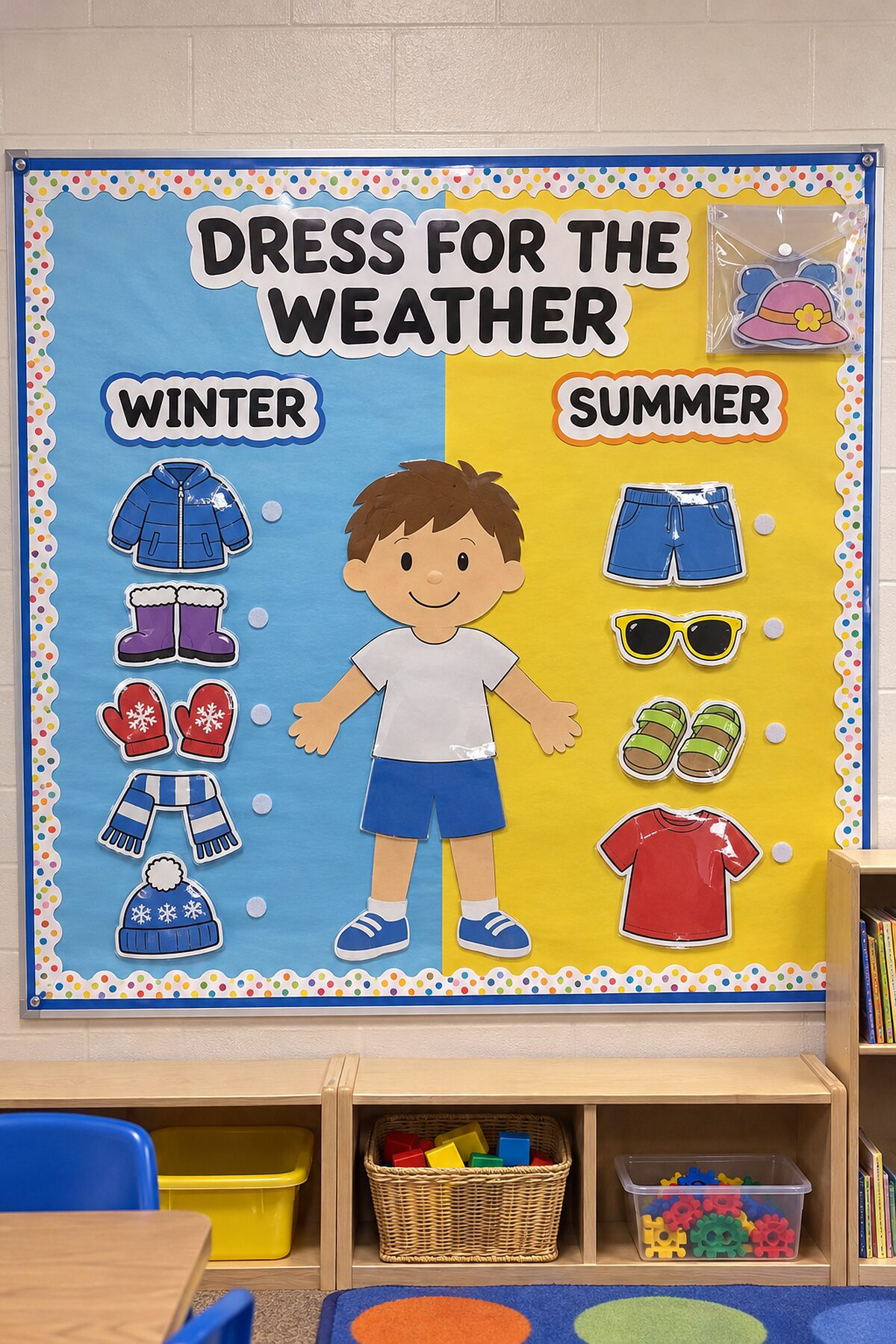
On this hands-on board, younger students dress a paper child for the weather. Laminate cut-outs of coats, boots, mittens, shorts and sunglasses, and back each with a hook-and-loop dot.
Two columns labeled Winter and Summer set a clear goal for the sort, and spare pieces wait in a pocket envelope pinned to the corner.
Winter Bucket List Board
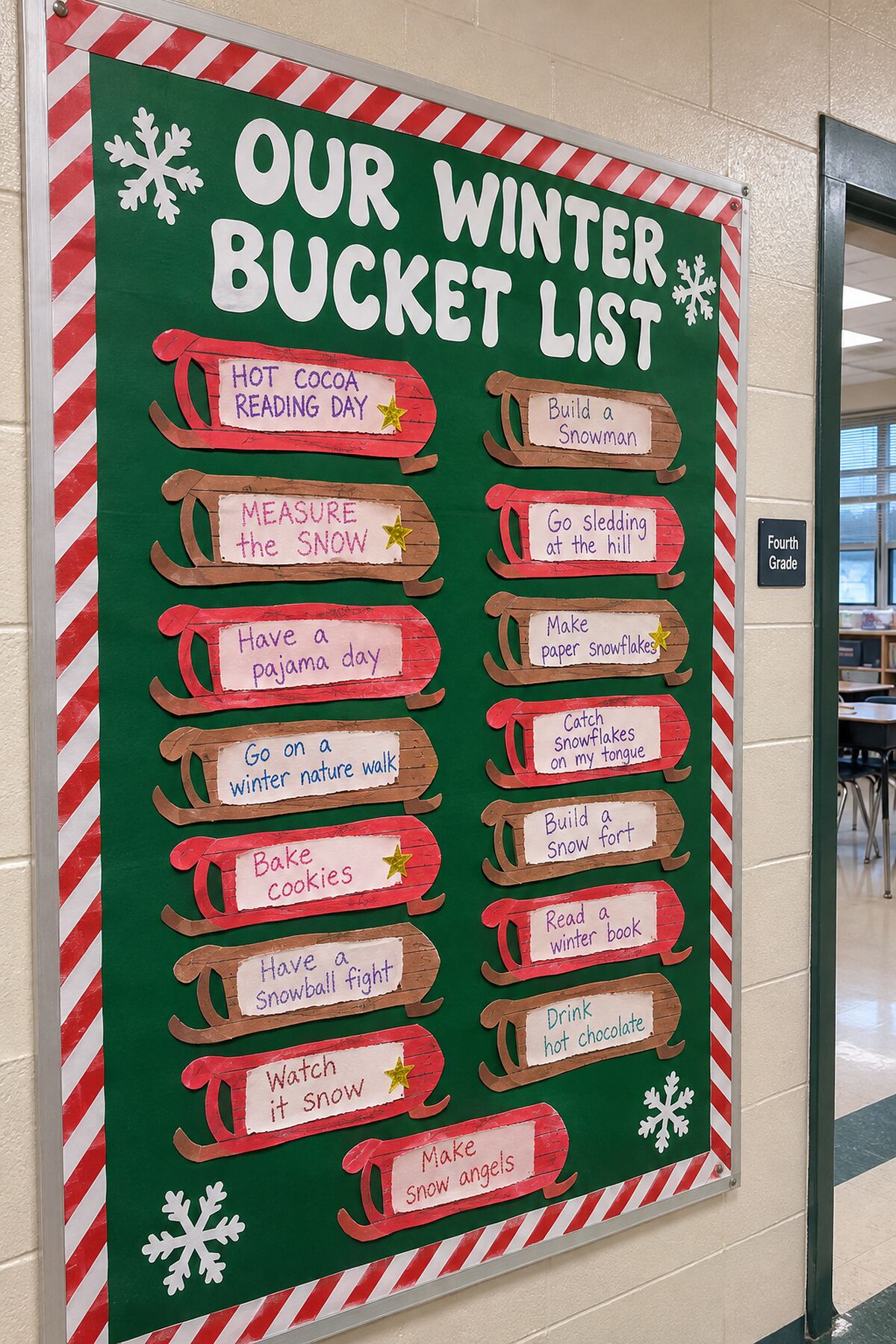
Last on the list is a board the whole class writes together. For January, a class bucket list sets small, doable goals. Students suggest activities like a hot cocoa reading day, a snow measurement or a paper snowflake contest, and each idea goes on a strip of paper shaped like a sled.
Check off each one with a sticker as it happens, and the board fills with proof of a busy winter.