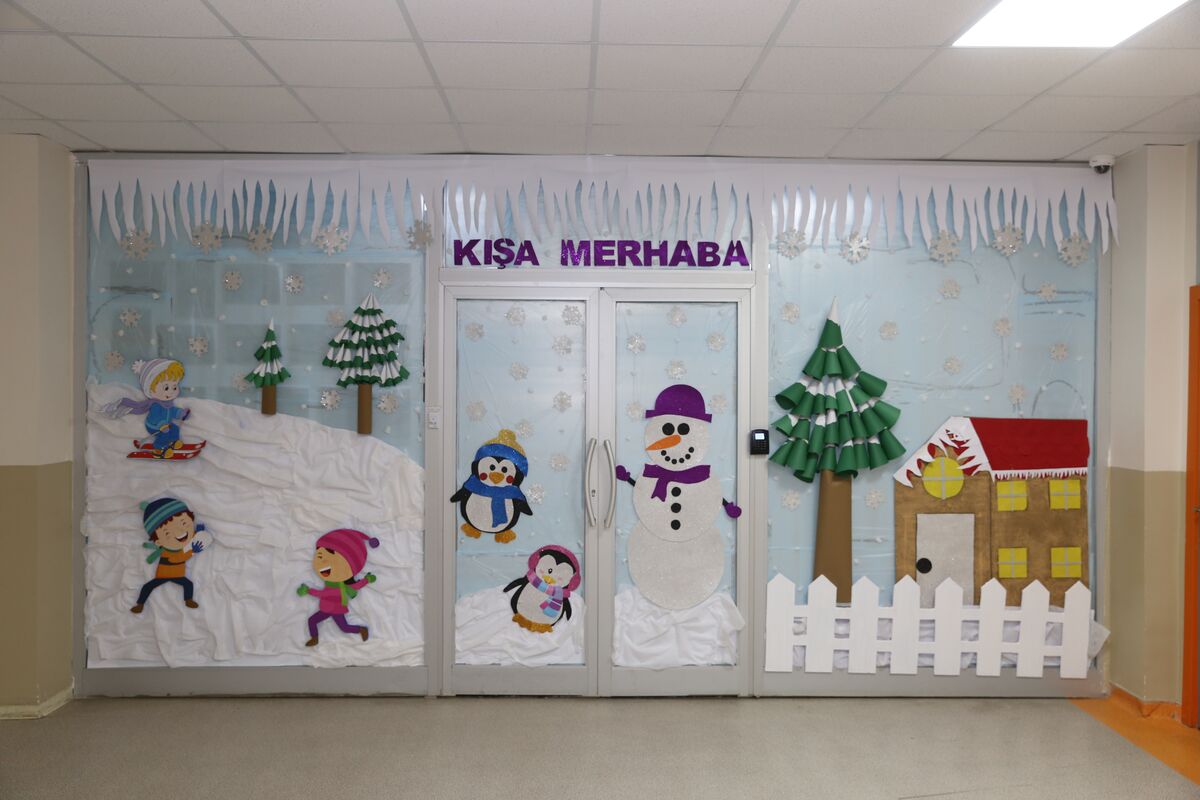
Classroom doors get more traffic in January than any wall in the building, and every class that walks by takes a look. Snowmen, penguins and a forest of student-cut snowflakes carry a winter door from the first week back until February. Each of the 31 designs below names the backing paper, the main cut-outs and a layout for a standard 3-by-7-foot door. Read on for the first one.
Table of Contents
- Snowy Village Penguin Door
- Paper Plate Snowman
- Student Snowflake Door
- Name Mitten Garland
- Polar Bear Ice Hole
- Marshmallow Face Cocoa Mug
- Snow Globe Door
- Penguin Huddle Iceberg
- Glowing Winter Cabin
- Snowy Owl Birch Forest
- Knit Sweater Door
- Cotton Ball Snowball Fight
- Northern Lights Pine Ridge
- Ice Skating Pond
- Book-Stack Snowmen
- Hibernating Bear Den
- Paper Chain Countdown
- Tissue Paper Snowflake Window
- Handprint Snowman Family
- Arctic Animal Mural
- Paper Ice Cube Door
- Paper Toboggan Hill
- Woodland Fox and Rabbit
- Hat and Scarf Snowman Door
- Foil Icicle Fringe
- New Year Goal Snowflakes
- Real Pinecone Forest
- Glow-in-the-Dark Night Sky
- Igloo Brick Door
- Ski Lift Door
- Crowded Mitten Door
Snowy Village Penguin Door
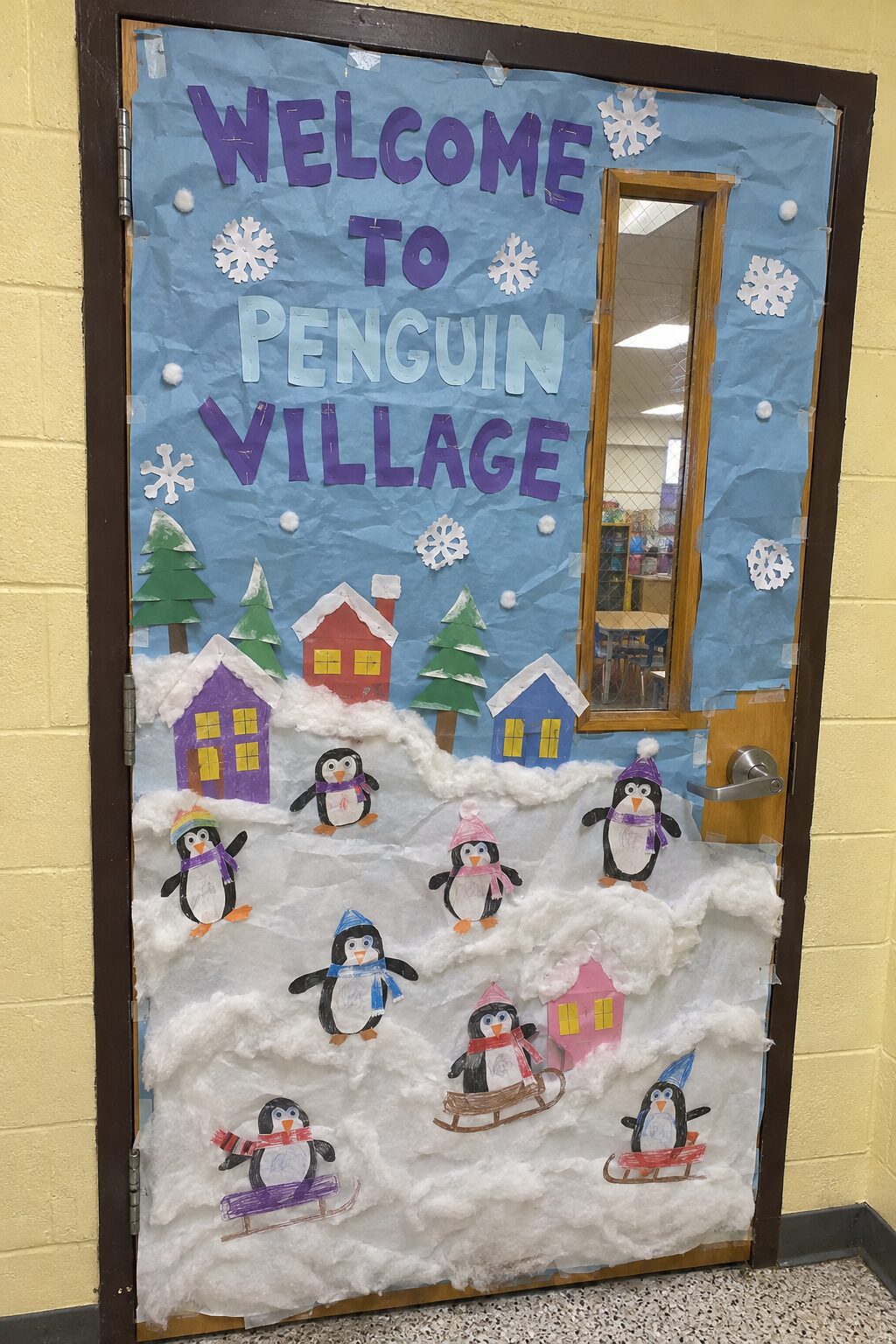
Before any paper goes up, ask the principal or fire marshal about district rules, since many schools cap combustible decorations and a few ban paper on exit doors entirely. Never cover the glass vision panel, the latch, the closer arm or an exit sign.
Once cleared, cover the door in light blue butcher paper and run cotton batting along the bottom third as snowdrifts. Paper houses with yellow windows sit on that snow line, and each student adds one penguin or sledder between them.
Paper Plate Snowman
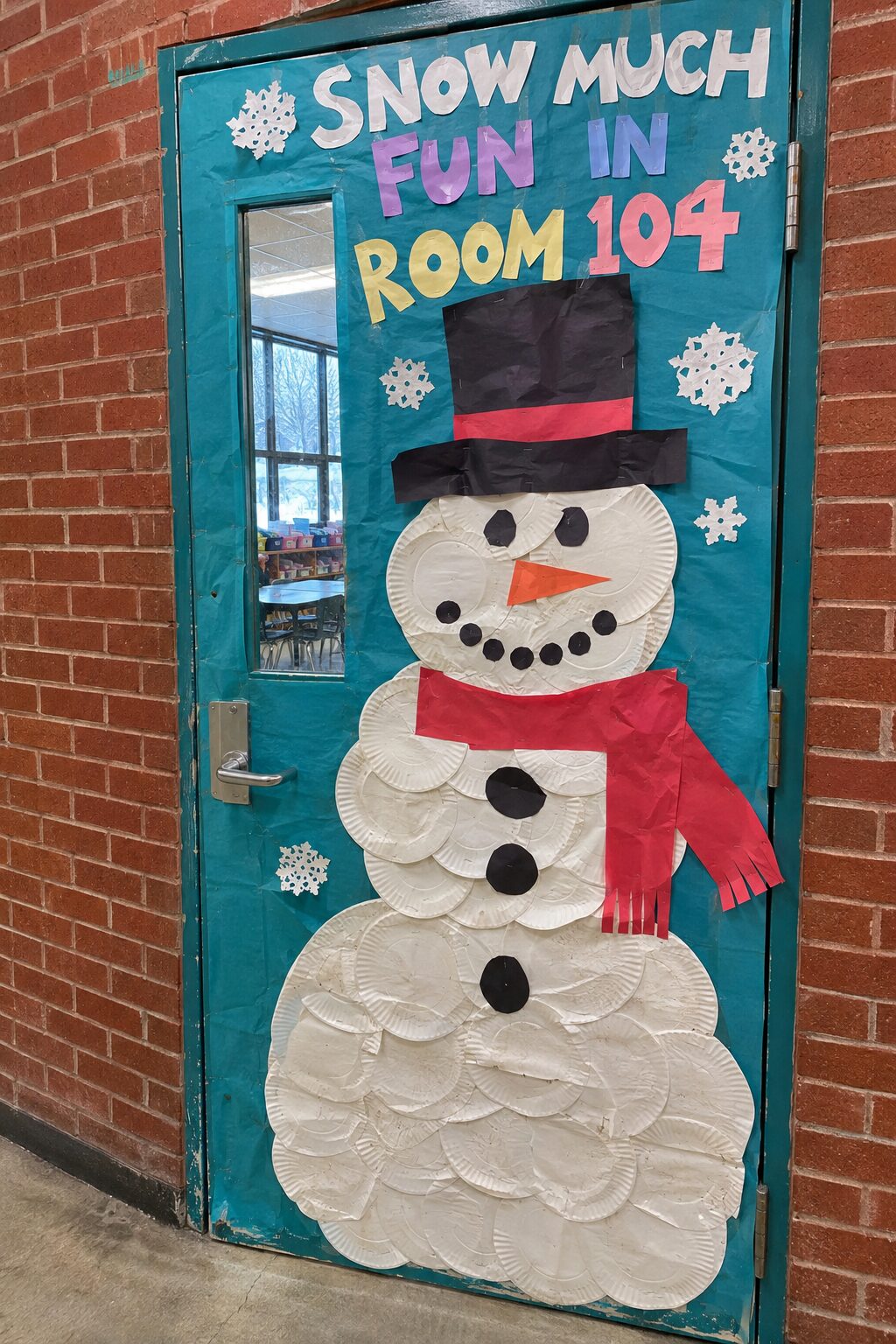
Paper plates overlap into one giant snowman that fills the door. Each student decorates a plate with a pattern or a name, and the plates form three tiers, smallest at the top.
Back the door with navy paper so the white circles pop. A felt scarf, a black paper top hat and button eyes complete the face.
Staple the plates at the rim, where the paper is stiffest.
Student Snowflake Door
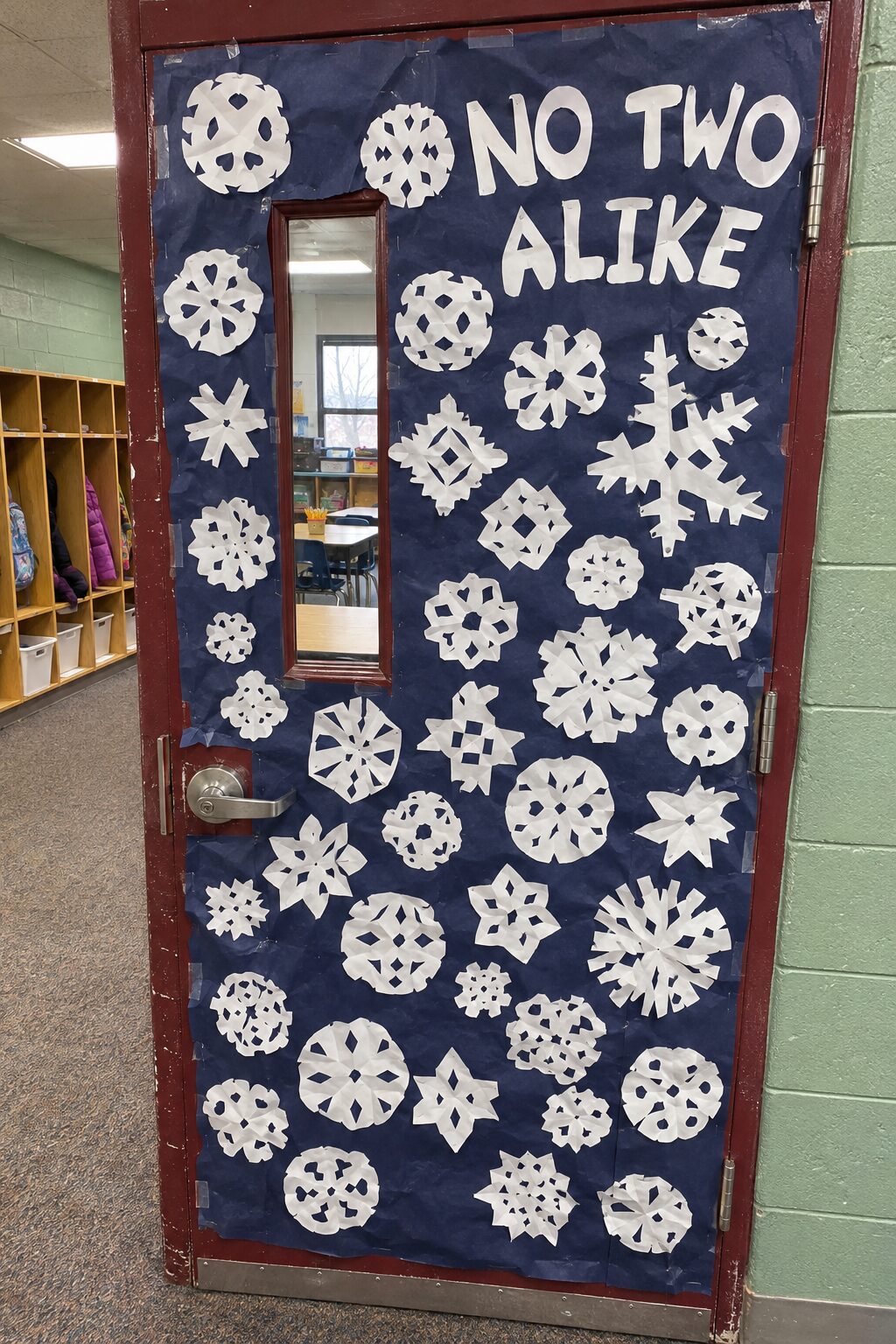
Six sides on every real snowflake make this door a quick science lesson. Teach students to fold copy paper into sixths before they cut.
Light blue paper with a silver tinsel edge frames the flakes, and dozens of them in mixed sizes scatter across the door, largest near the bottom. Older students write one winter word in the center of their flake.
“No Two Alike” is the obvious title, and children grasp it at once.
Name Mitten Garland
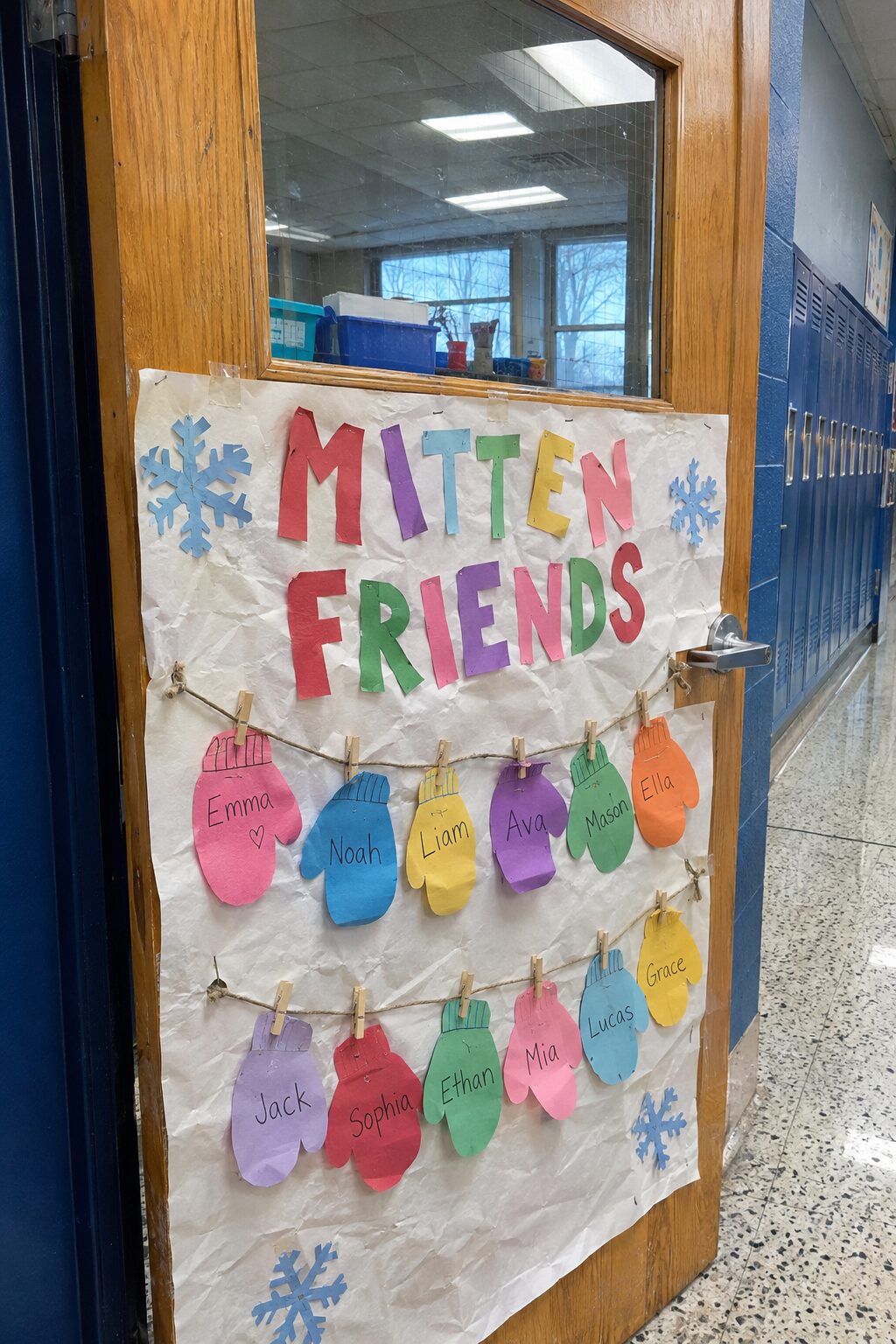
Since mittens pair up naturally, this garland hands every child one with a name tag. Cover the door in white paper and drape twine in two swooping rows across it, like a clothesline.
Mini clothespins hold each mitten in place and allow quick swaps. Patterned scrapbook paper or wallpaper samples from a hardware store yield striped and dotted mittens at almost zero cost.
Polar Bear Ice Hole
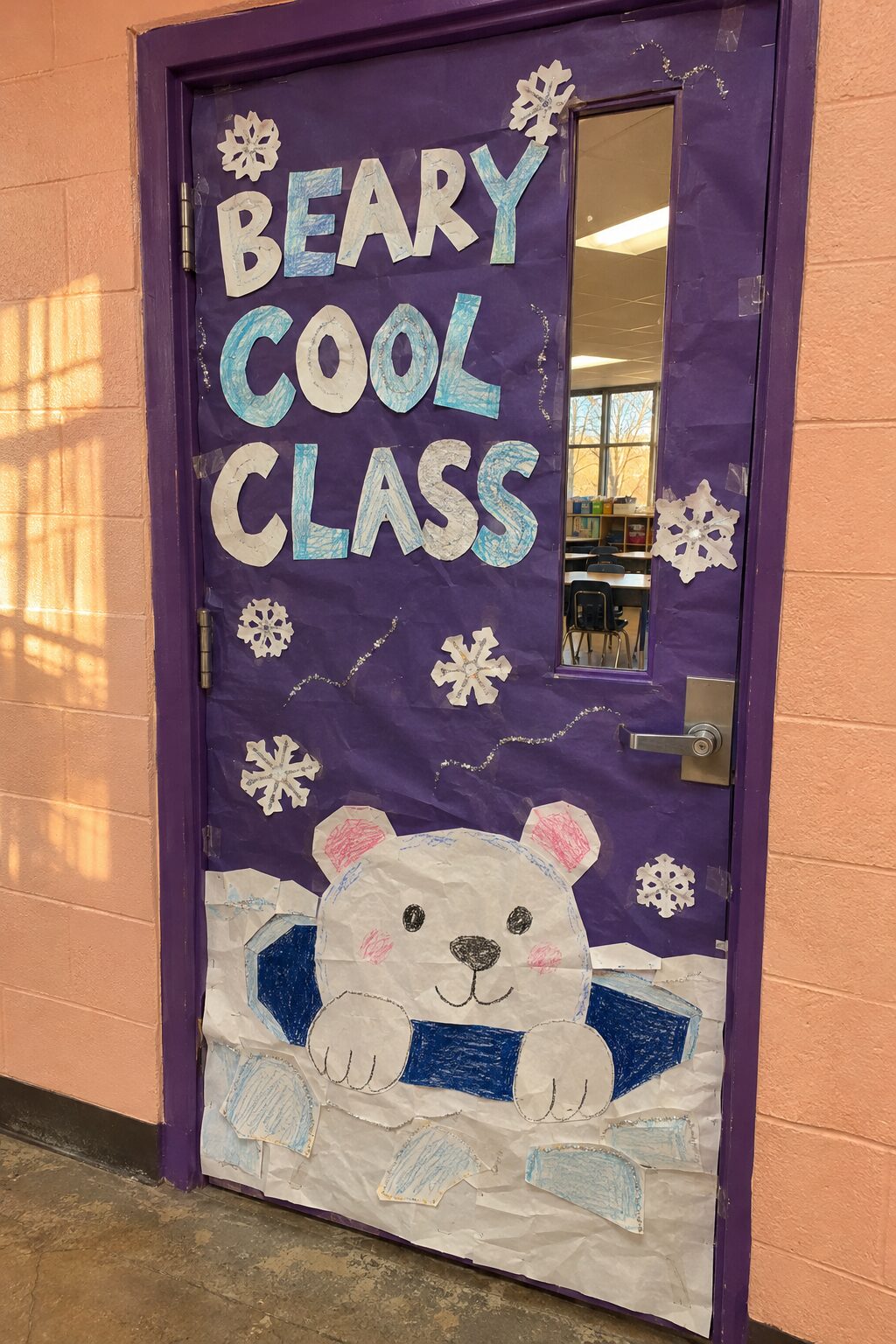
Under that bright coat, a polar bear has black skin, and its translucent fur only looks white (National Geographic). Students love this fact, and it fits neatly on a small card beside the bear.
Cover the door in white paper as an ice sheet, then cut a dark blue oval near the middle for the fishing hole. A large white polar bear, roughly 3 feet long, peeks out of it.
Paper snowflakes above and paper fish with student names complete the scene.
Marshmallow Face Cocoa Mug
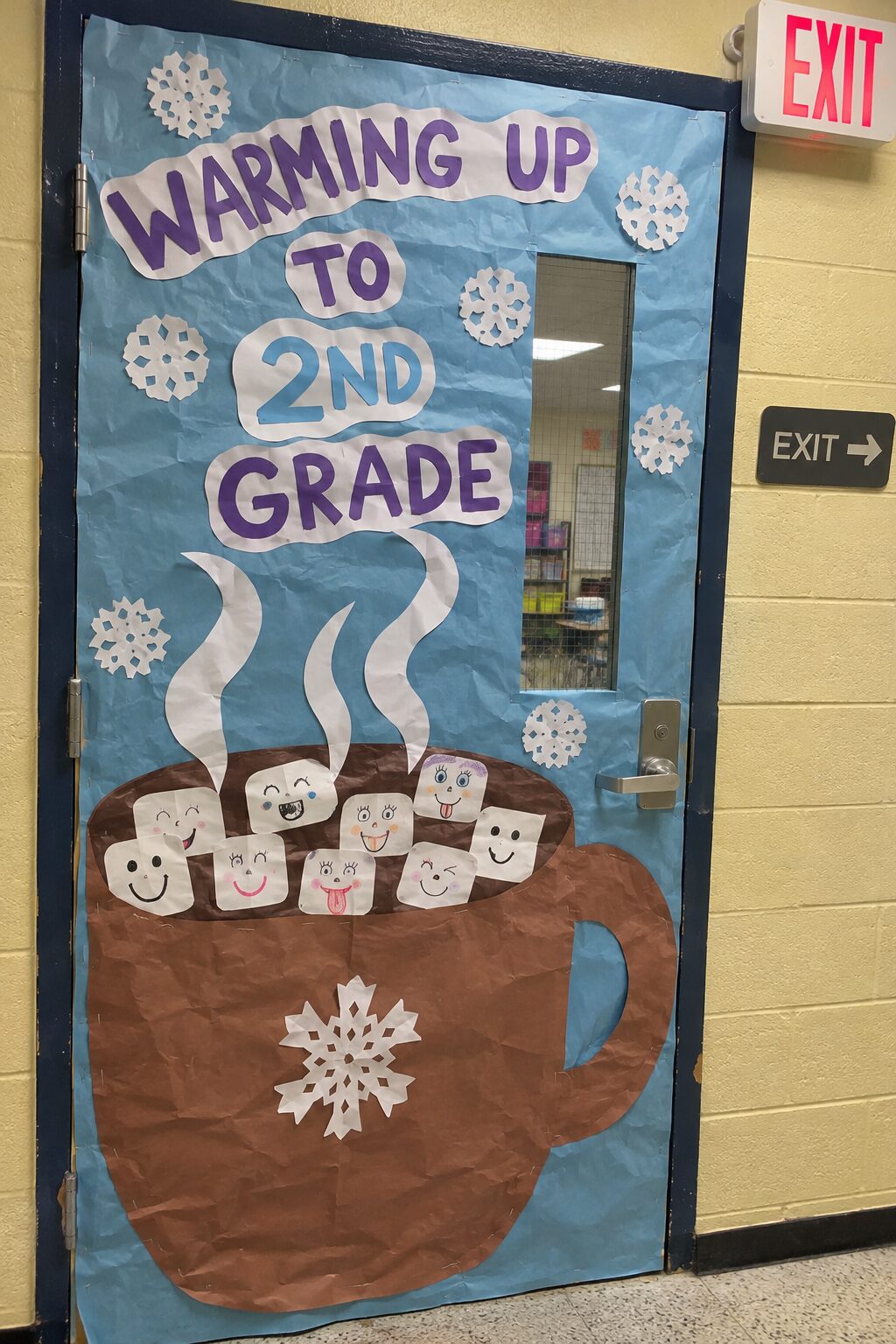
Cut from brown paper, a giant mug fills the lower half of the door, and white paper steam curls toward the top. Each student decorates a white paper square as a marshmallow with a drawn face that matches their mood that week.
The marshmallows pile up at the mug’s rim. Cotton balls glued on the steam add a soft, raised surface children love to touch.
A title like “Our Class Is Sweet” sits above the steam.
Snow Globe Door
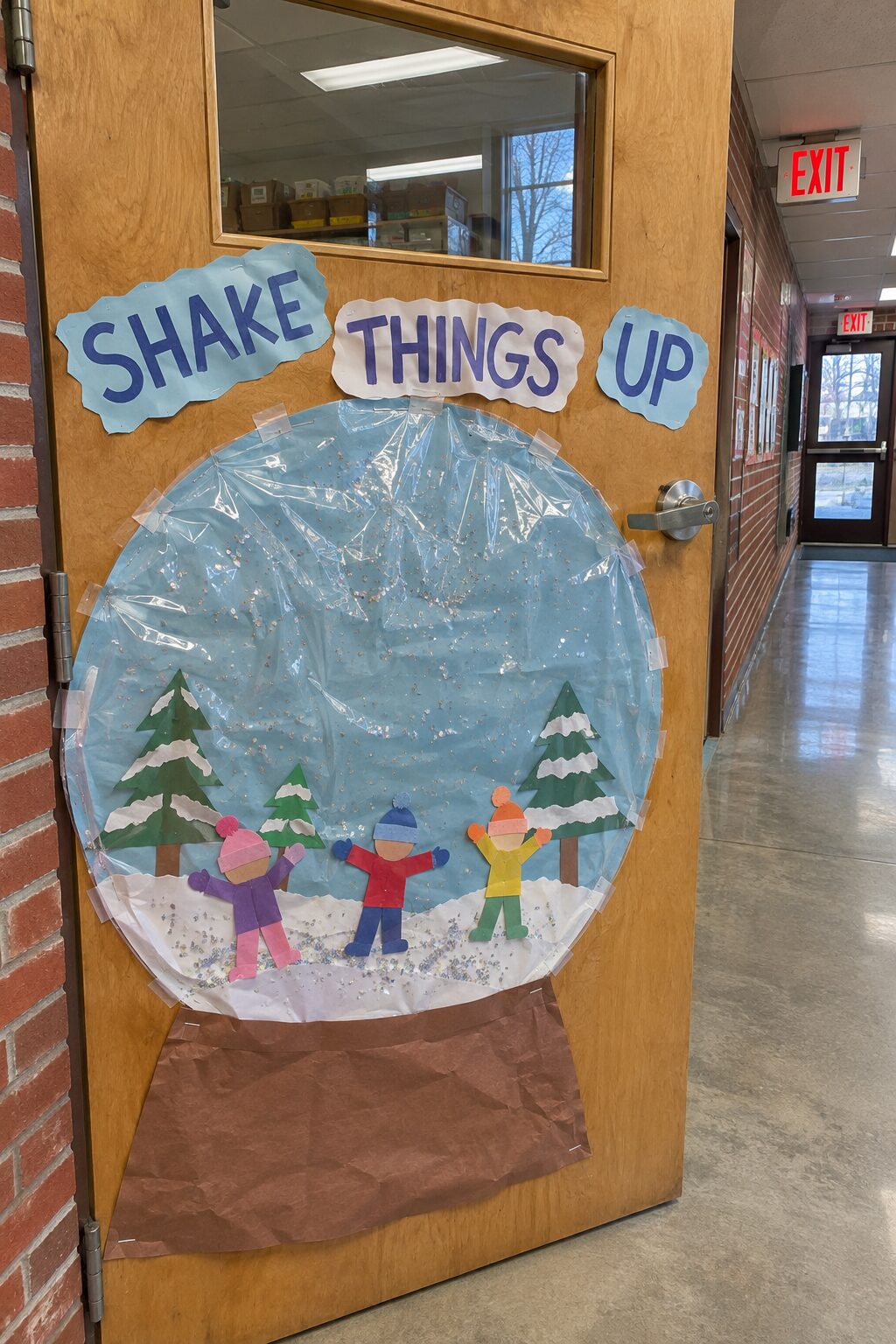
Why does a circle read as a snow globe so quickly? The base does the job.
A brown paper trapezoid at the bottom of the door, about 30 inches wide, signals the shape before anyone sees what sits inside. Above it, a large circle of white or light blue paper frames paper pine trees, snowflakes or student self-portraits in winter hats.
White hole-punch dots inside the circle pass for falling snow; a glue stick holds them better than tape.
Penguin Huddle Iceberg
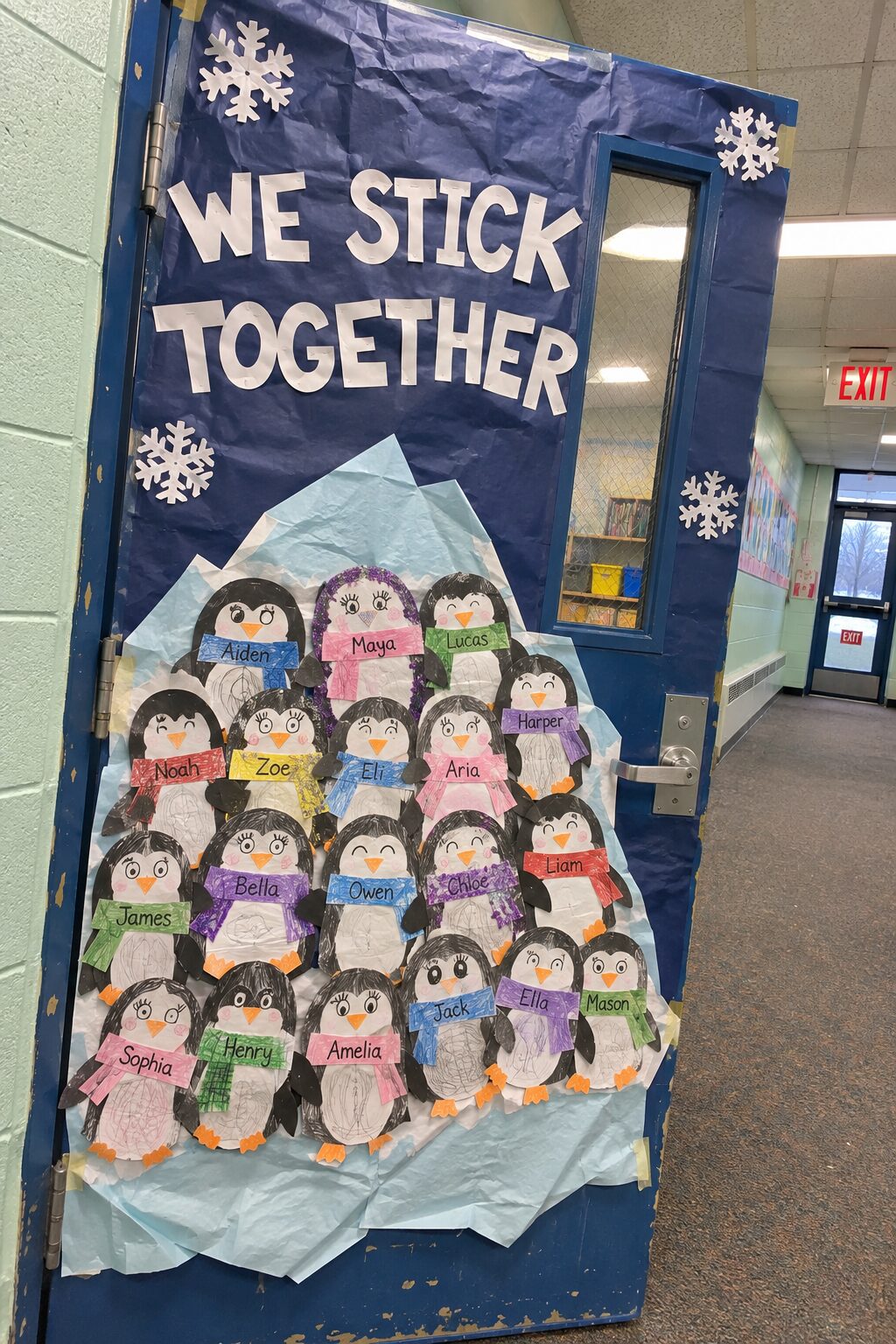
During Antarctic winters, emperor penguins pack together for warmth, and a crowded door mirrors that habit well. A jagged pale blue iceberg cut from poster board rises from a dark blue paper sea.
Every student builds one penguin from black, white and orange paper, and the penguins overlap tightly on the ice, taller ones at the back like a class photo. A banner reading “We Stick Together” fits a class still settling into routines after break.
Glowing Winter Cabin
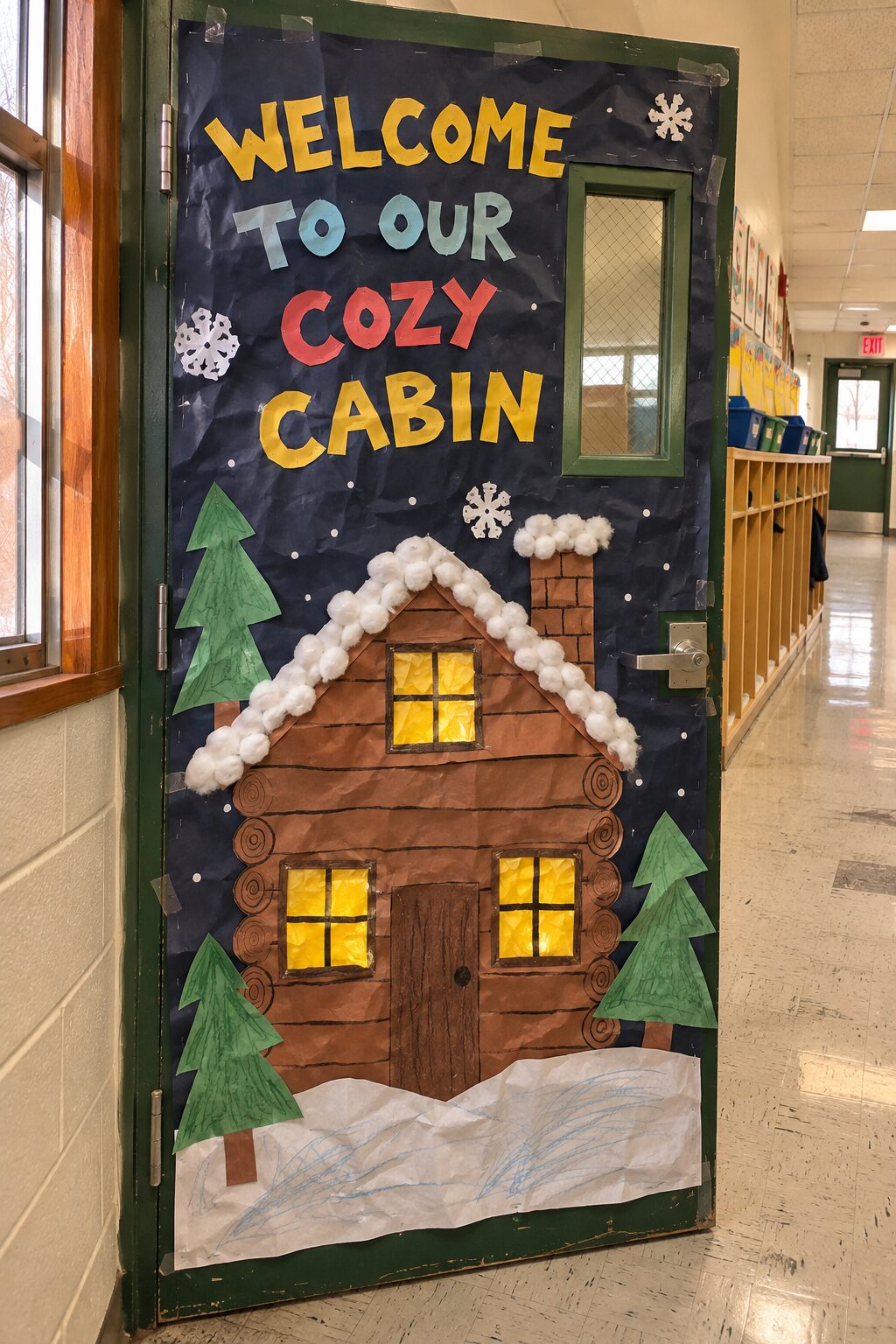
On a dark navy background, a brown paper log cabin in the lower center reads clearly from down the hall, since evening scenes rely on contrast.
Yellow tissue paper behind cut-out windows catches hallway light and glows faintly. Cotton batting piles on the roof, and pine trees in two shades of green flank the cabin.
Students add their names on paper stars across the sky.
Snowy Owl Birch Forest
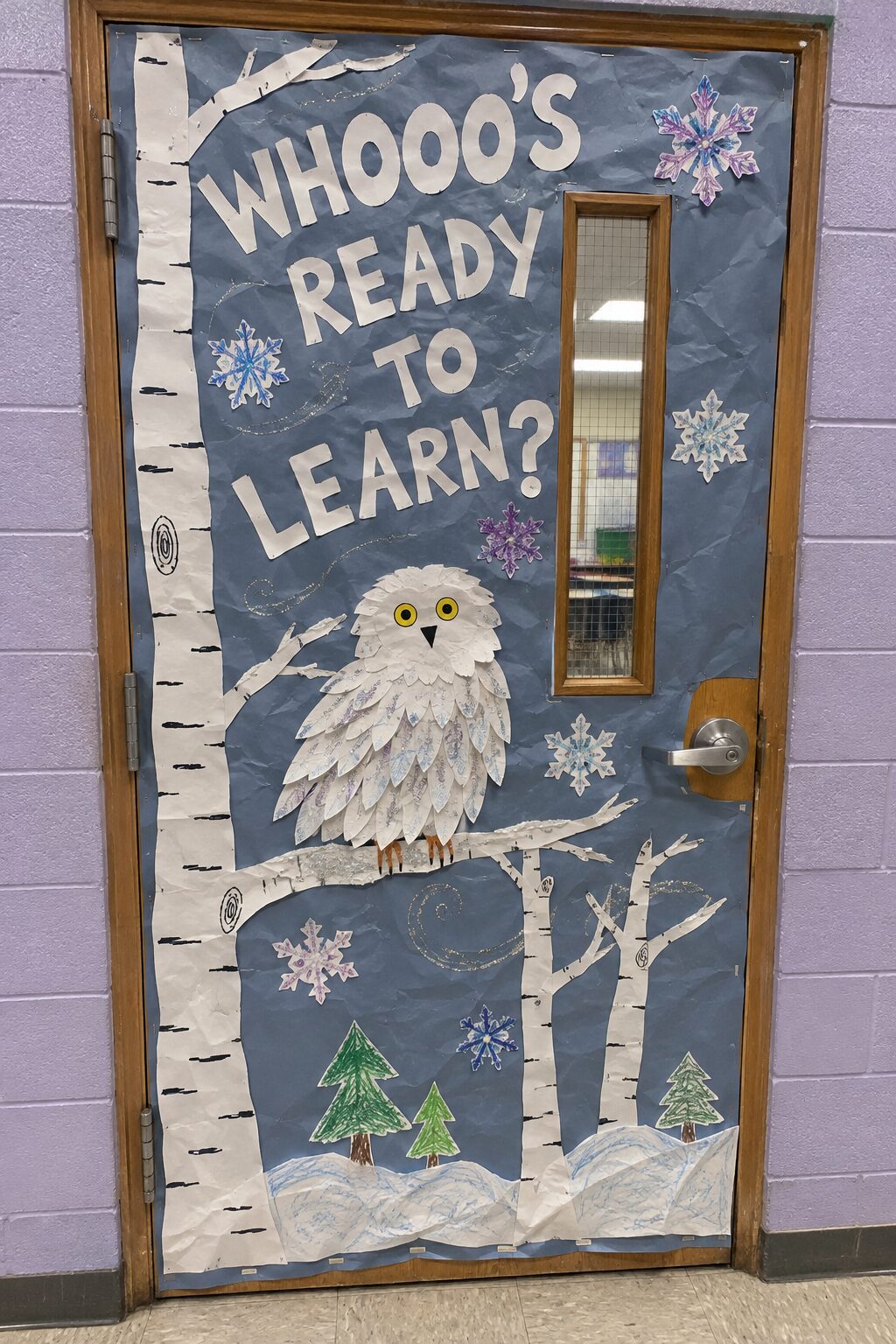
Strips of white paper, about 4 inches wide and the full door height, become birch trunks once students dab them with short black marker lines. Four or five trunks spaced across soft gray paper fill the door.
A large snowy owl cut from white paper perches on a branch halfway up, and smaller student owls line the lower branches. Yellow eyes outlined in black catch attention from a distance.
Knit Sweater Door
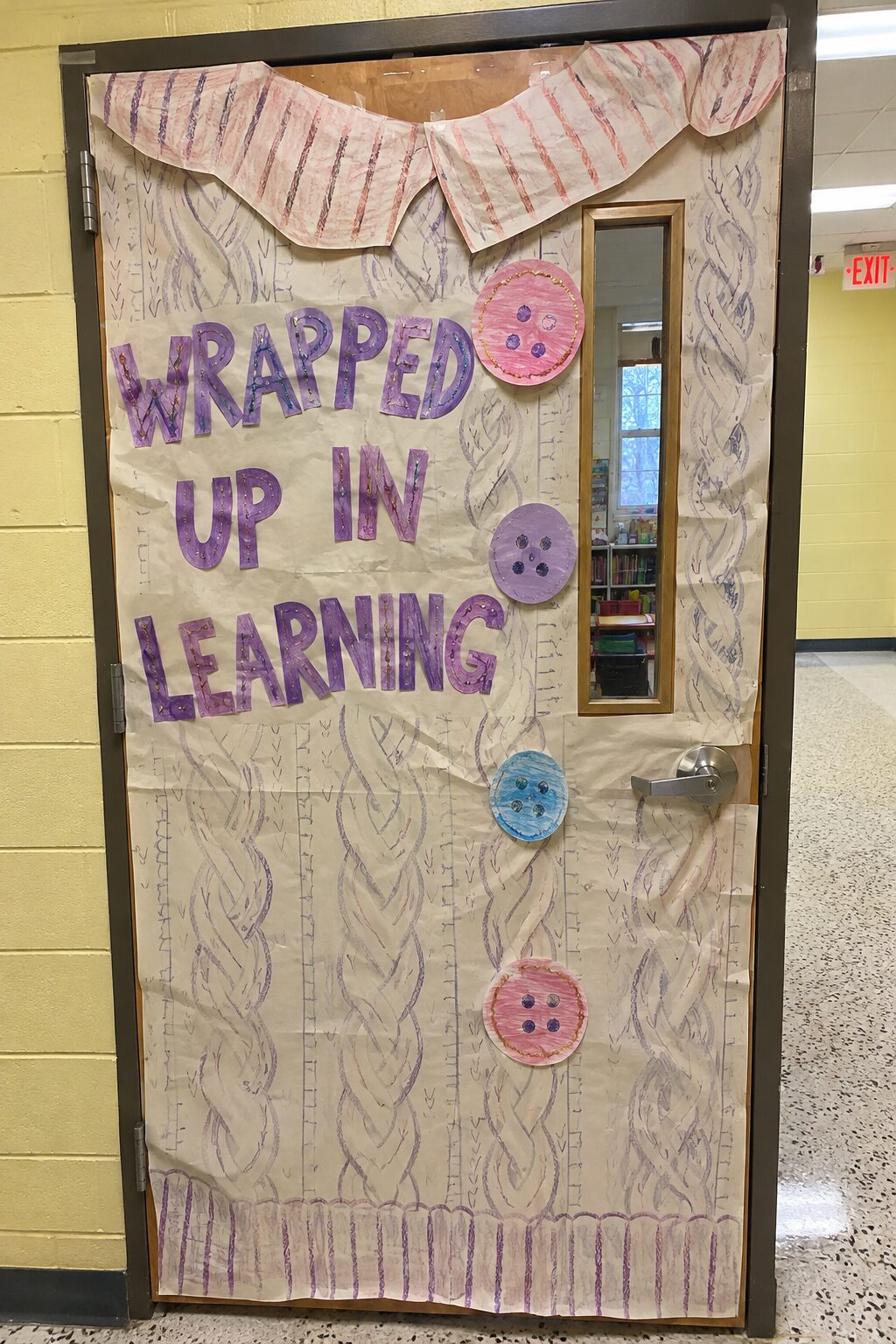
Because the door itself becomes the sweater, hallway visitors look twice at this one. Cream paper drawn with cable-knit patterns covers the surface, and real chunky yarn runs along the edges like ribbing.
Four giant felt buttons line up down the center. Students add small paper patches with their names.
For a February update, swap the buttons for pink hearts and leave the rest in place.
Cotton Ball Snowball Fight
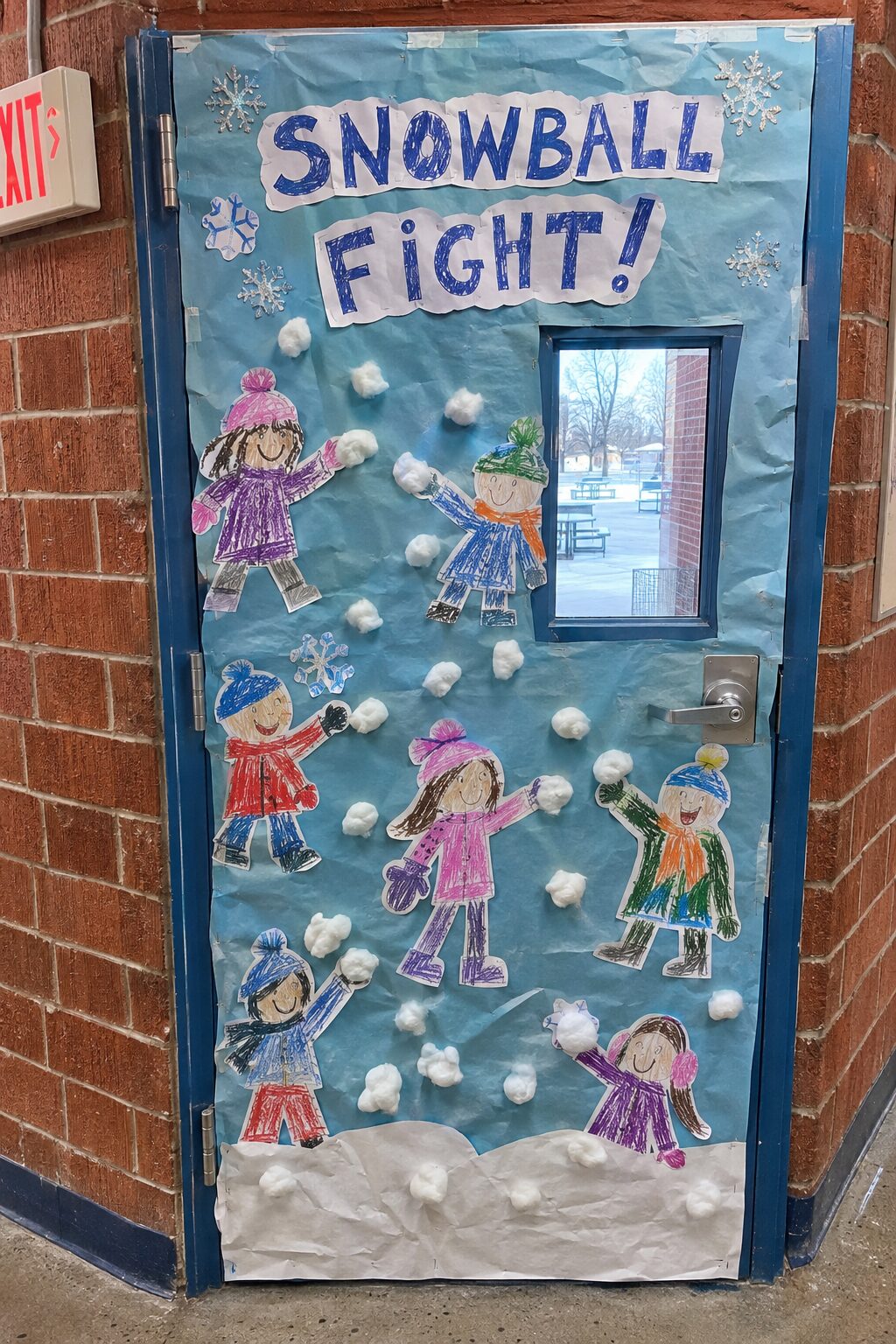
Plan on a bag or two of cotton balls, about 200 for a class, for the snowballs in this busy scene. Light blue paper covers the door, and students draw themselves as small paper figures in bright coats with arms raised to throw.
Glue the cotton balls in arcs between the figures, a few mid-air and a few in splats on the snow. A title such as “Snowball Champs” in chunky letters runs across the top.
Northern Lights Pine Ridge
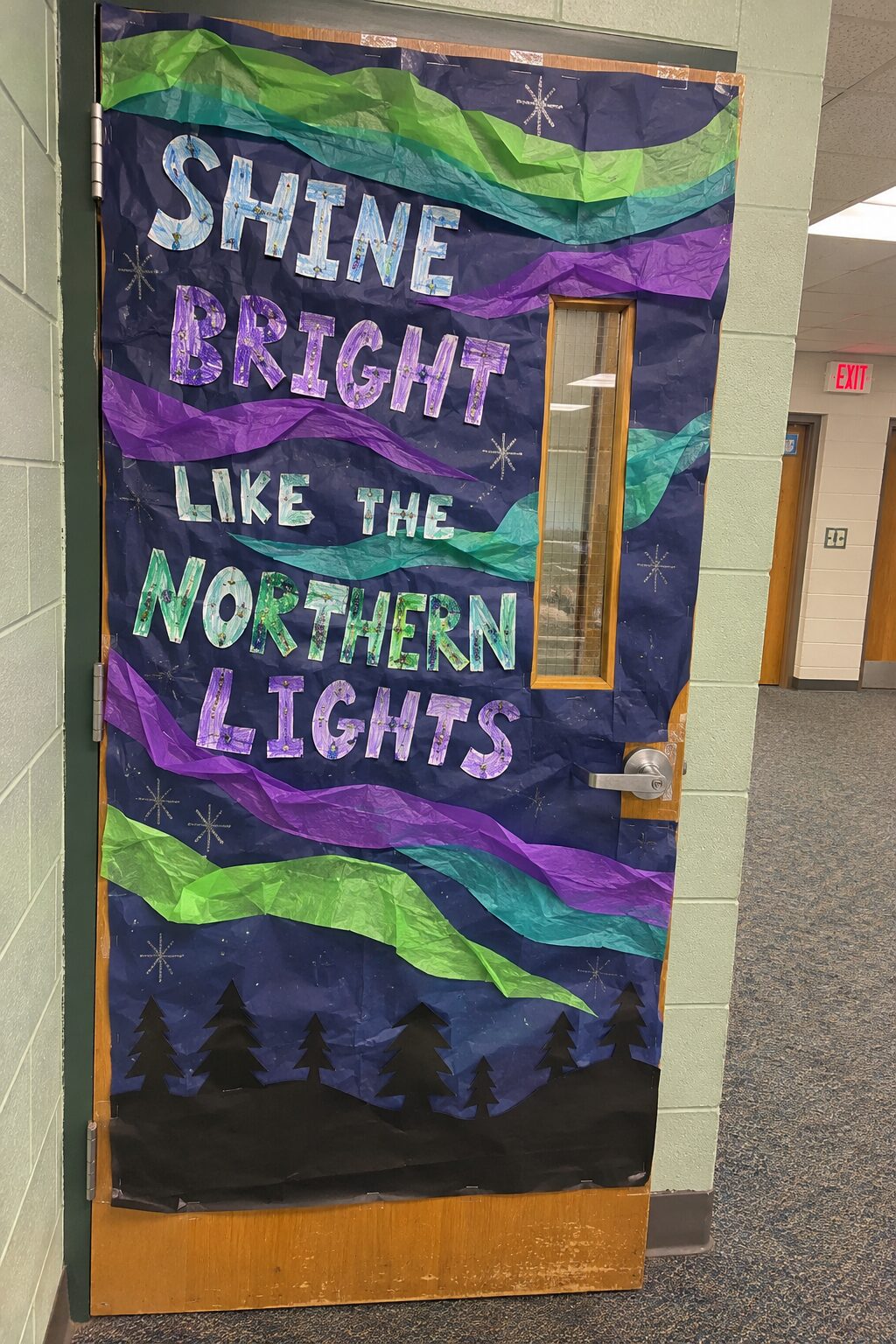
Layered in long wavy strips across navy paper, green, teal and violet tissue paper mimics the aurora once light passes through the overlaps. Run the strips diagonally across the upper two-thirds of the door.
Below, a ridge of black pine silhouettes lines the bottom edge; each child cuts one tree, and the varied heights look natural. Brush on watered-down glue to layer the tissue, since it lies flatter than tape.
Ice Skating Pond
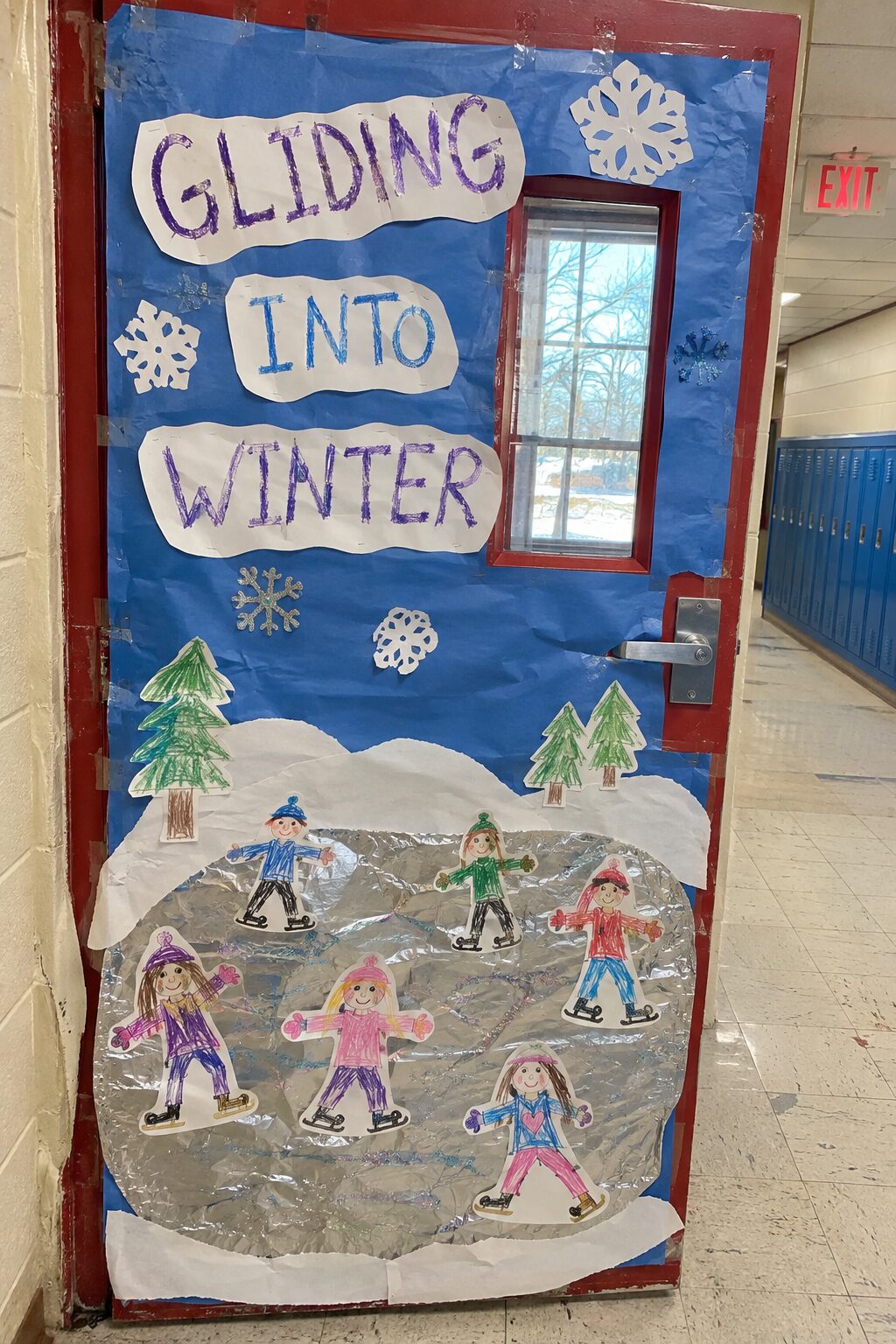
A silver foil oval sits low on the door as the frozen pond, with white paper snowbanks around it. Students draw themselves as skaters on cardstock, cut them out and glue a small curved line under each foot for a blade.
Fan the skaters out across the oval at different angles. A few paper pine trees at the edges complete the scene, and glitter glue swirls on the foil suggest skate tracks.
Book-Stack Snowmen
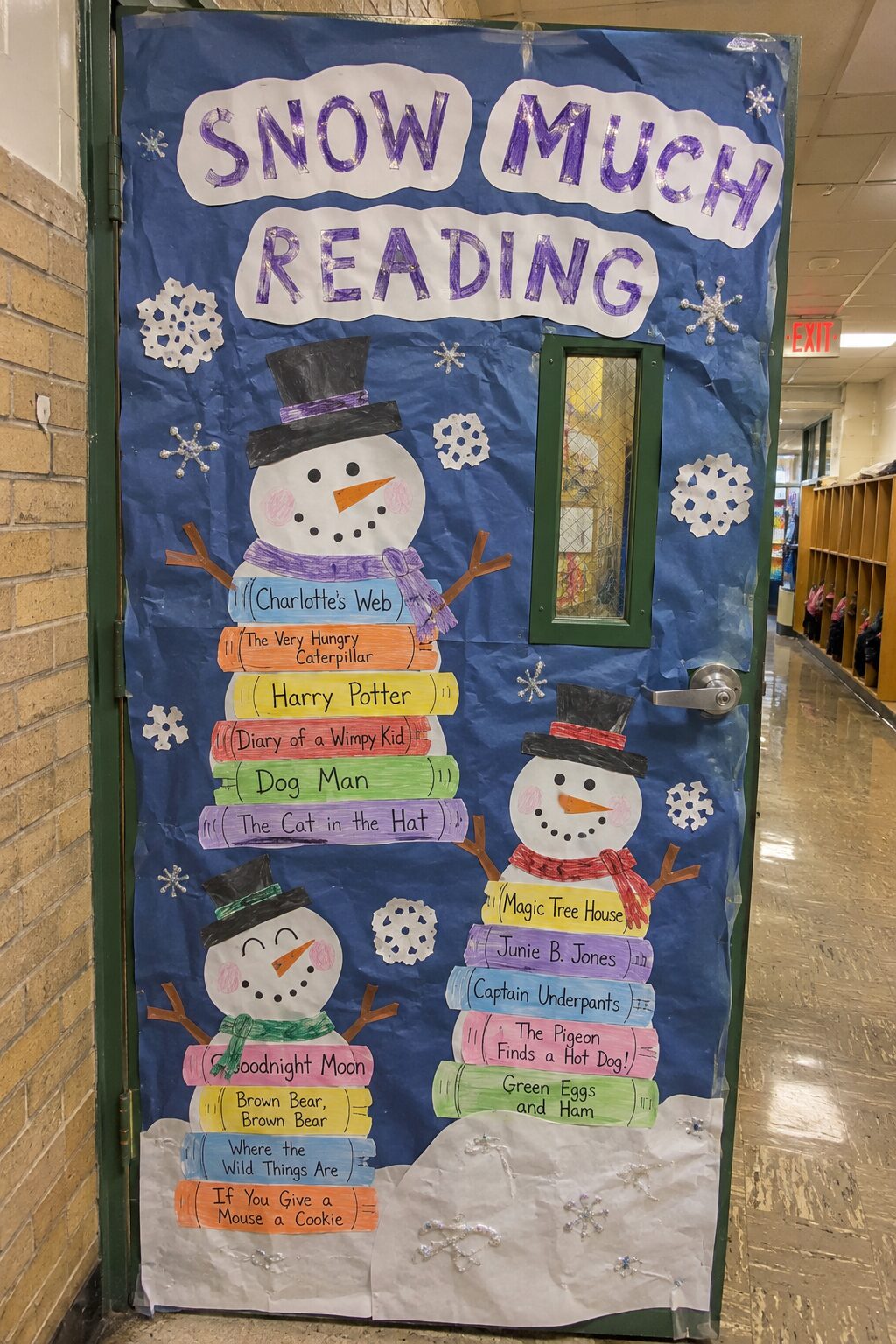
Popular with library and reading-focused teachers, this design fits January reading goals. Each snowman body is a stack of paper books in bright colors, with titles students have read written on the spines.
Pale blue paper behind the stacks lets the colors stand out. Top every stack with a paper snowman head, a felt scarf and a paper hat.
Add a new stack whenever a student finishes a book, and the door fills gradually through the month.
Hibernating Bear Den
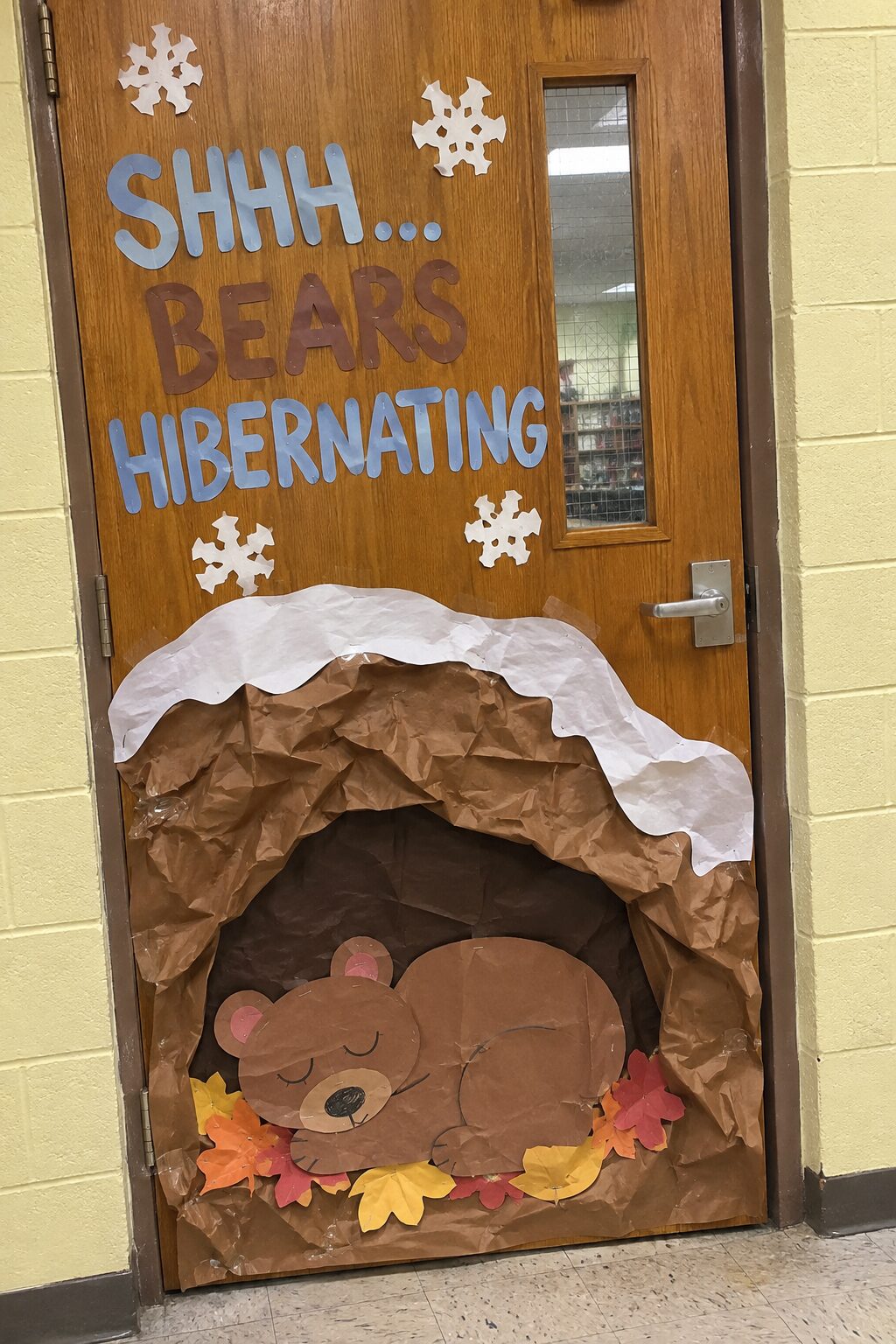
During winter, bears enter a lighter sleep called torpor, while groundhogs and many bats are true hibernators. Many children learn that bear fact here first.
Crumple brown kraft paper into a den across the lower half of the door and curl a sleeping paper bear inside on a bed of paper leaves. White paper snow piles above the den.
Students post one hibernation fact each on paper snowflakes around the opening.
Paper Chain Countdown
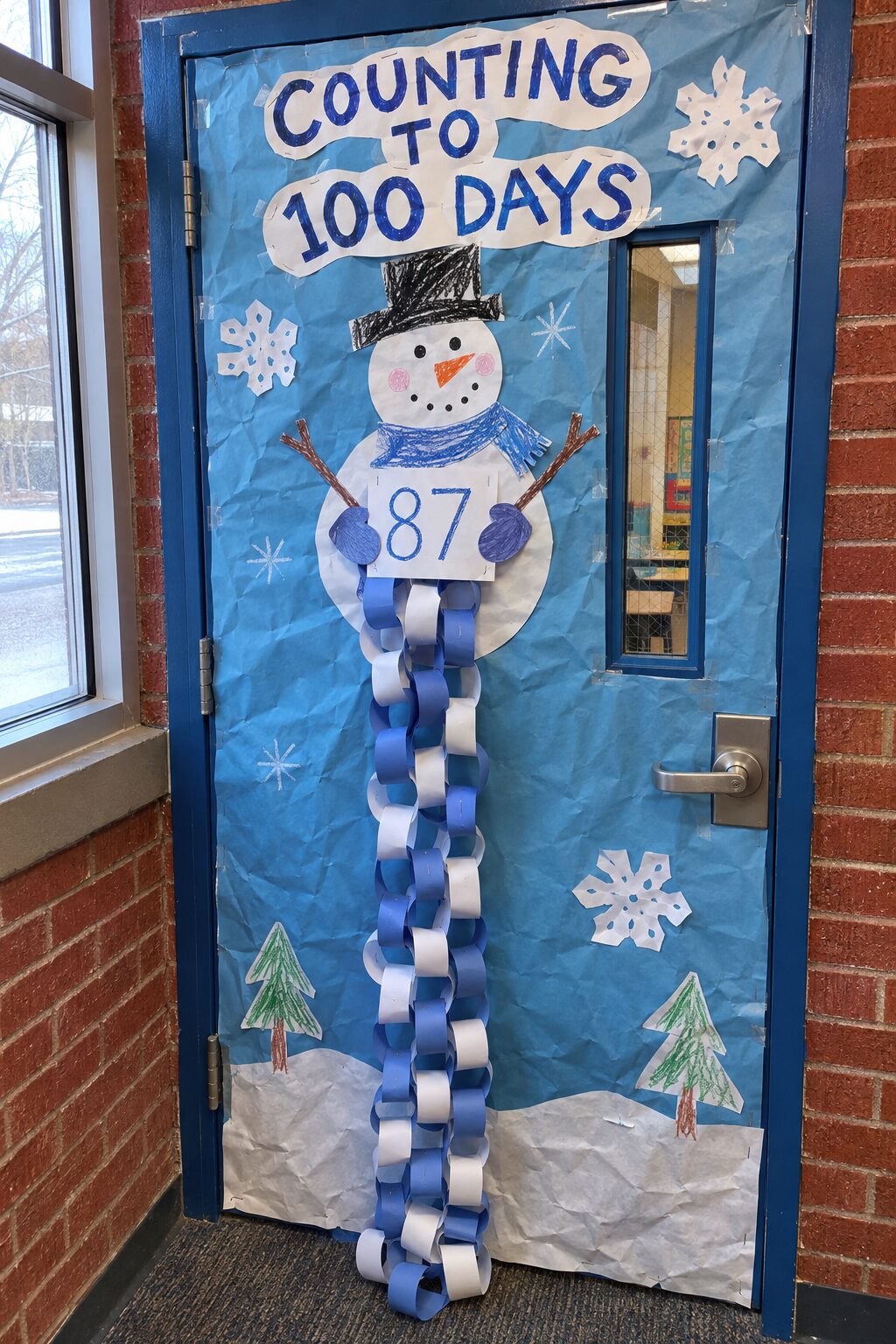
Add one strip of blue or white paper per school day, and the chain grows longer each morning until the 100th day of school.
A navy background with a paper snowman at the top serves as the anchor, and the chain hangs from the snowman in loops down the door. Every tenth link in a contrasting color marks progress at a glance.
Staple the chain at three or four points so it hangs clear of the latch and closer arm.
Tissue Paper Snowflake Window
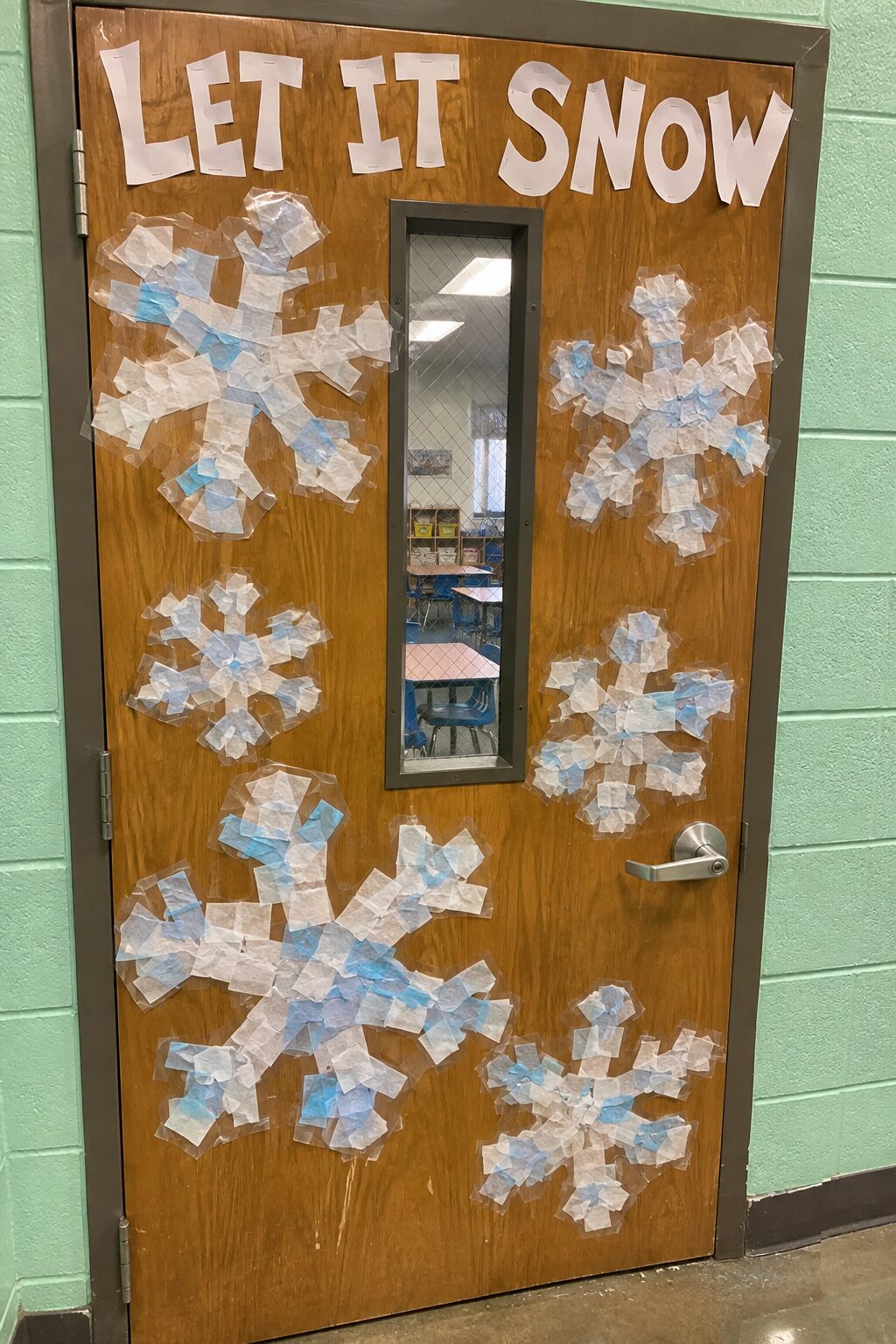
Shaped into giant snowflakes about 18 inches across, contact paper holds this craft together. Students press small squares of white and pale blue tissue onto the sticky side, then seal it with a second sheet.
Mount the finished snowflakes edge to edge across the door. Light from the hallway ceiling catches the layers and shows varied shading.
Never stick these over the vision panel, even though the glass seems like the natural spot.
Handprint Snowman Family
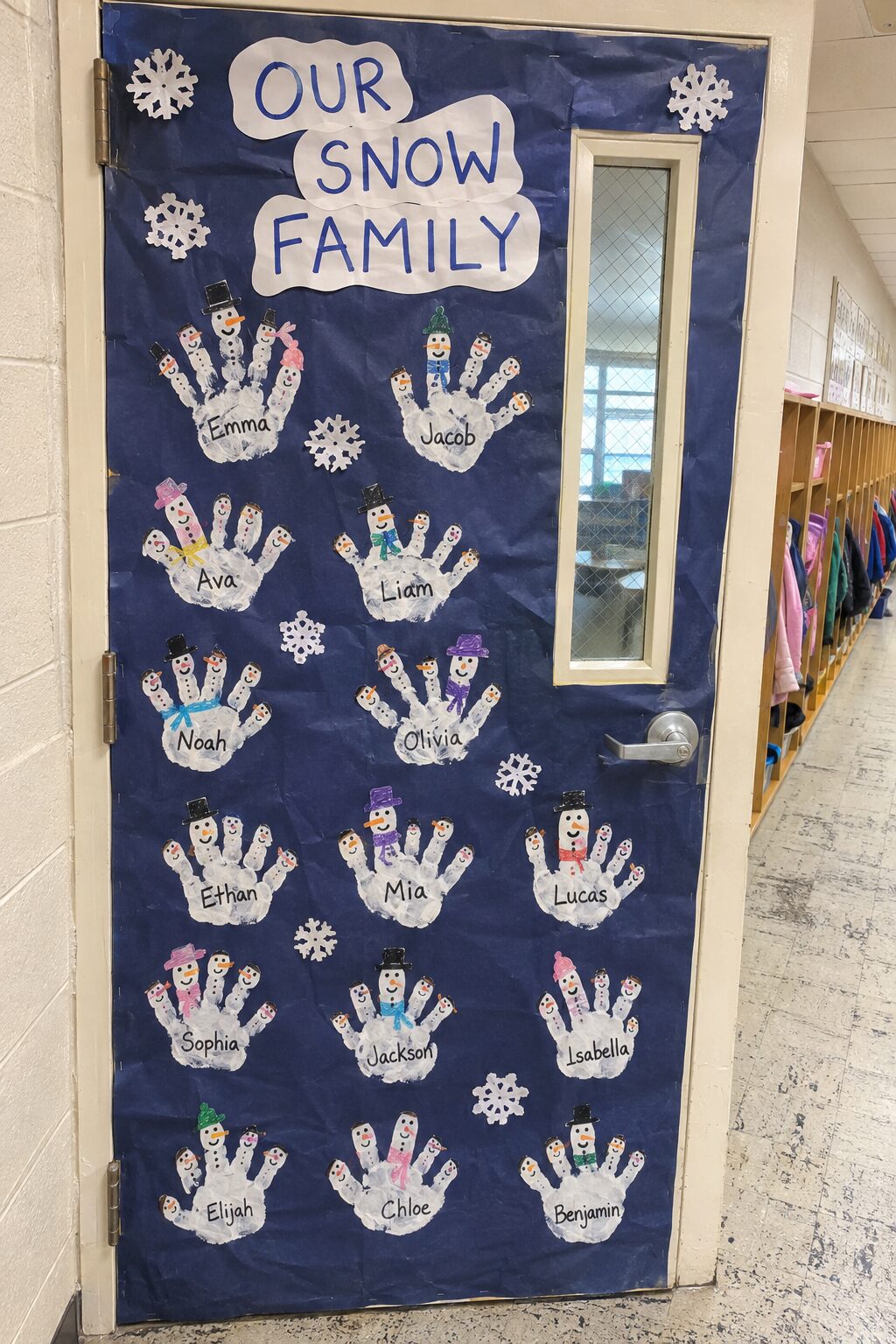
White tempera paint on a child’s palm, fingers pointing down, stamps a family of snowmen; each finger becomes one snowman. Dark blue construction paper squares, roughly 9 inches wide, hold each print.
Once dry, students add tiny hats, faces and felt scarves. Arrange the squares in a tidy grid that fills the door.
Write names on the backs, because parents ask for these prints at the end of the season.
Arctic Animal Mural
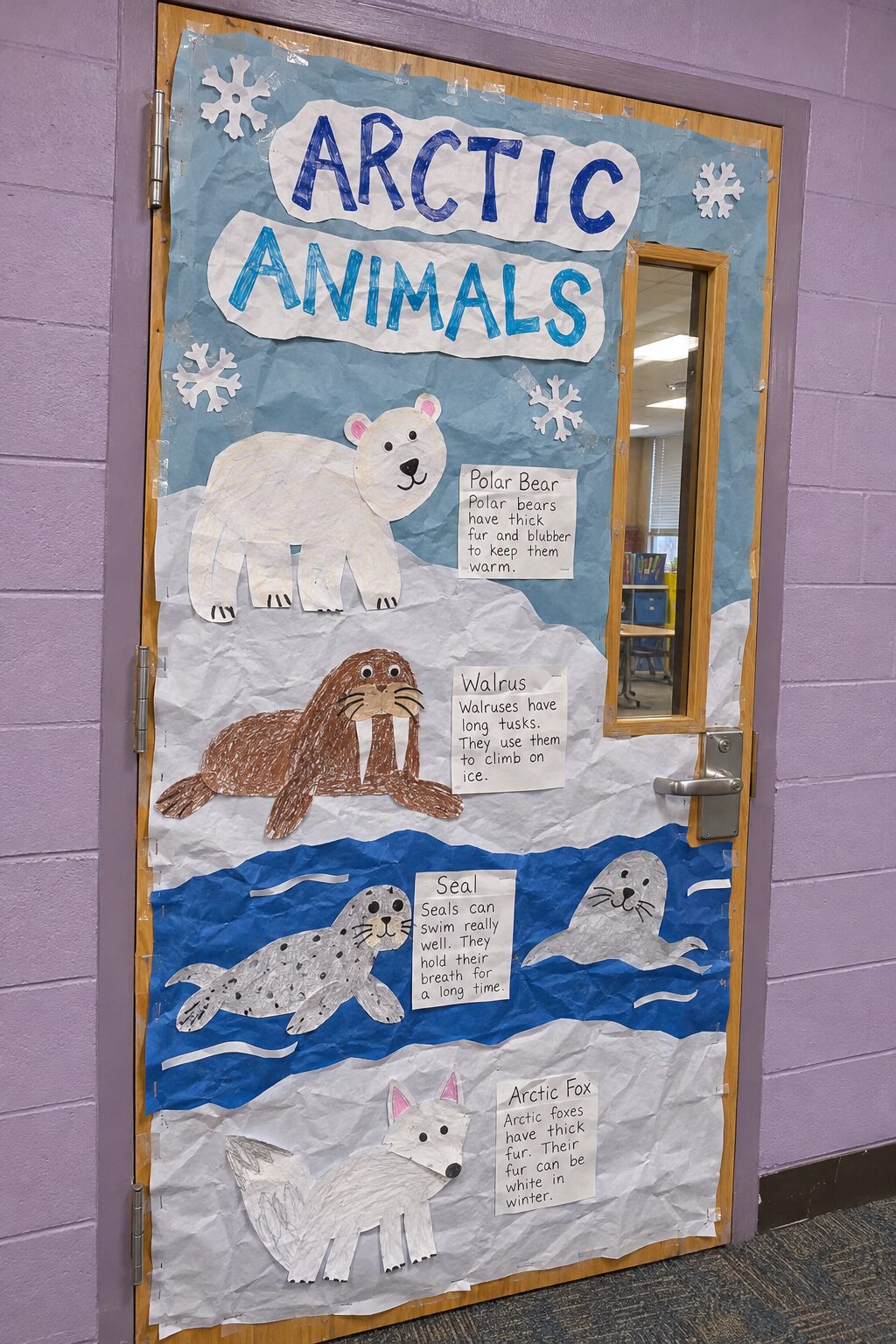
Since many elementary science units cover animal adaptations in winter, this door ties right into that lesson. White paper snow and a band of blue water across the lower door set the scene.
Small groups research one animal each, such as the arctic fox, snowshoe hare, walrus or seal, then cut it out and pin one adaptation fact beside it. A polar bear in the middle anchors the mural.
Paper Ice Cube Door
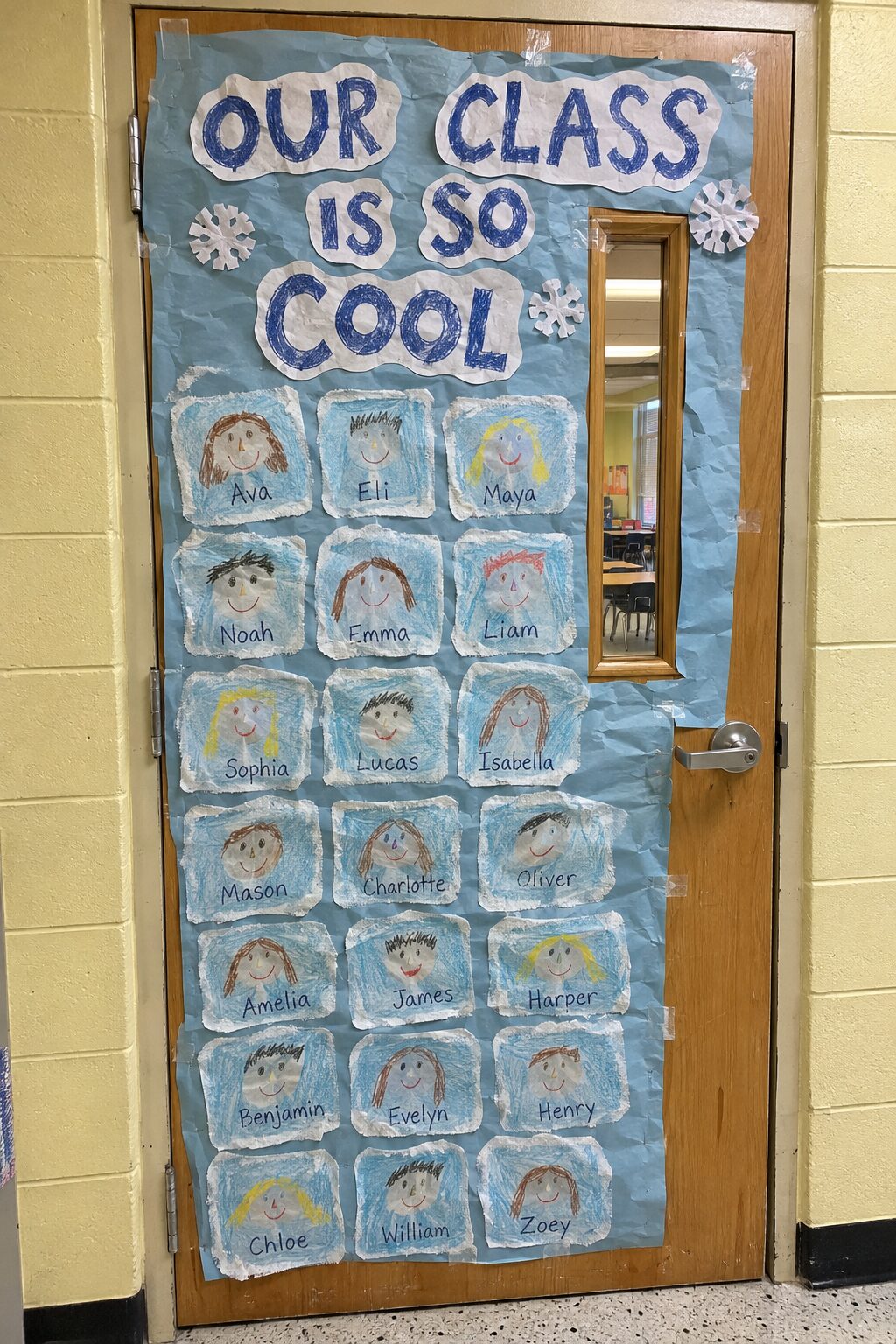
Place pale blue paper squares with frosty white edges, about 12 inches each, in roughly six rows so they stack up like a wall of ice cubes. Each student draws a smiling face or a self-portrait “frozen” inside one cube.
Clear page protectors from the supply cabinet slide over the drawings for a glassy shine. A playful title such as “Cool Kids Inside” fits the theme.
Paper Toboggan Hill
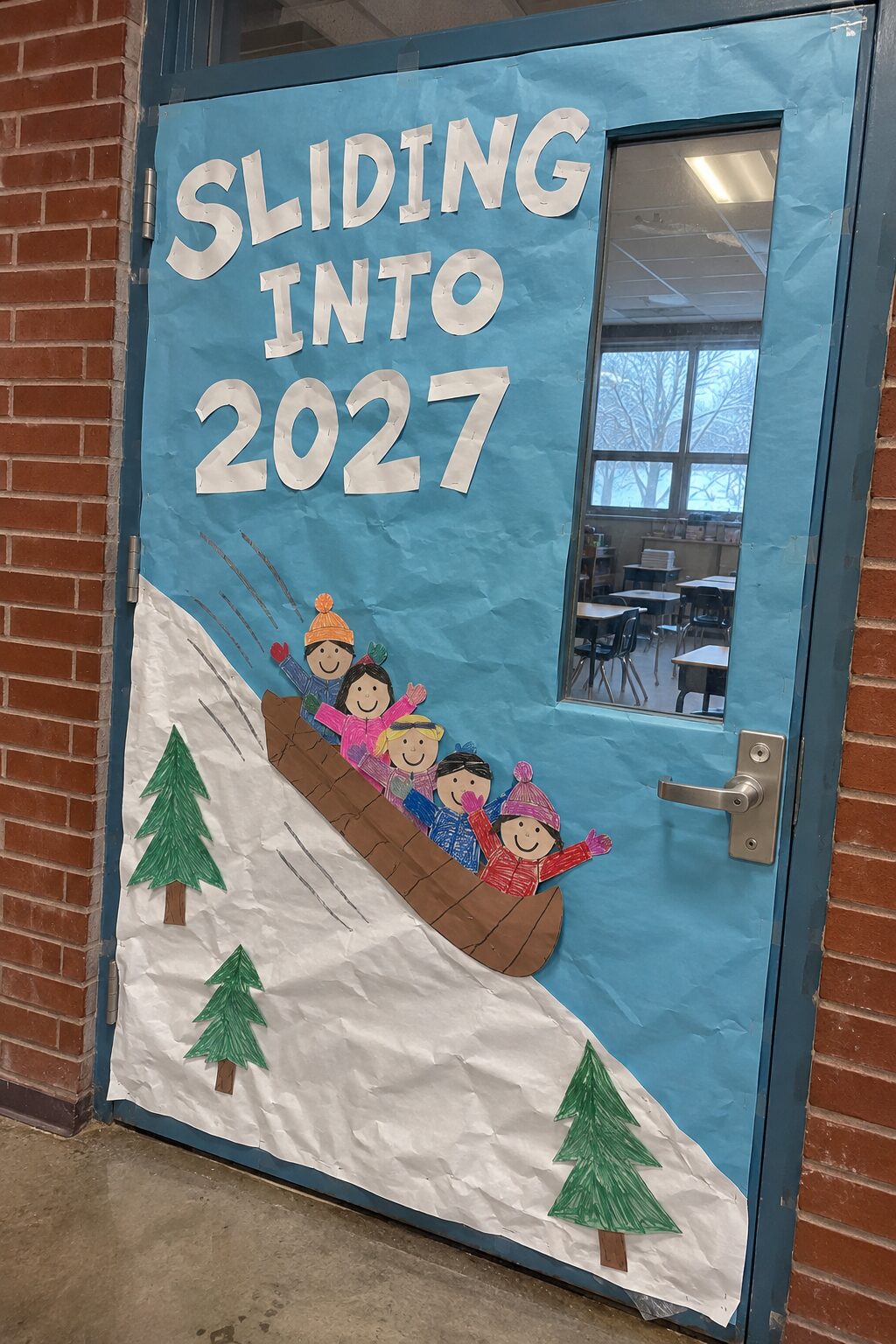
A steep white hill climbs diagonally across a sky-blue door. A brown paper toboggan slides down the slope carrying small paper figures of the students, with motion lines drawn behind it.
Paper pine trees dot the hill, and paper snowflakes fill the sky. A flag at the summit reading “Slide Into Learning” fits the first week back.
Woodland Fox and Rabbit
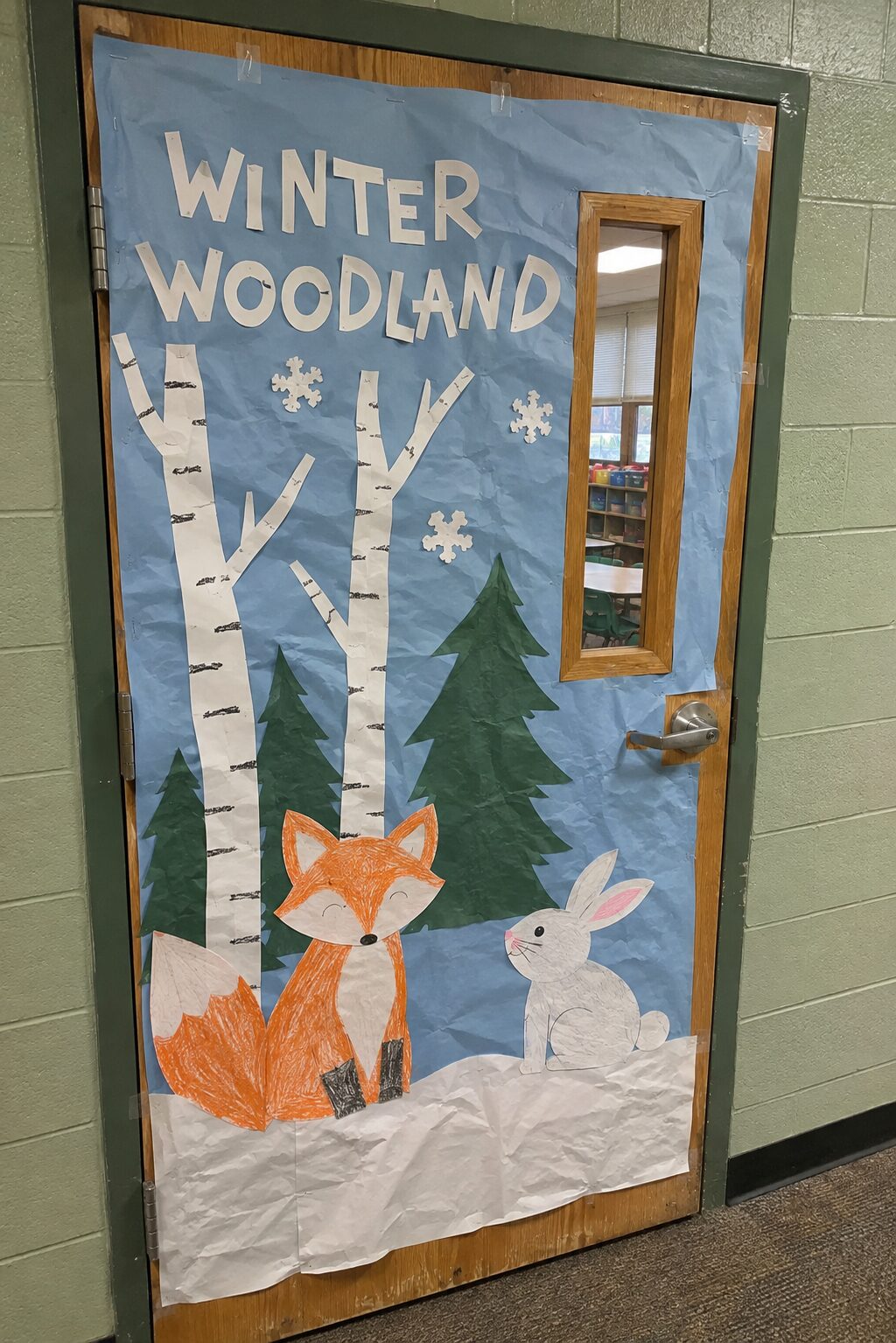
When the brighter snowman doors start to look worn in late January, muted tones fit. Soft blue paper covered with birch trunks and paper evergreens sets a quiet forest scene.
A large orange fox stands in the center, and white rabbits, one per student, peek from snowdrifts at the base. Tracks cut from black paper lead across the snow between them.
Names written small on the rabbits’ bellies make a fun search game for preschoolers.
Hat and Scarf Snowman Door
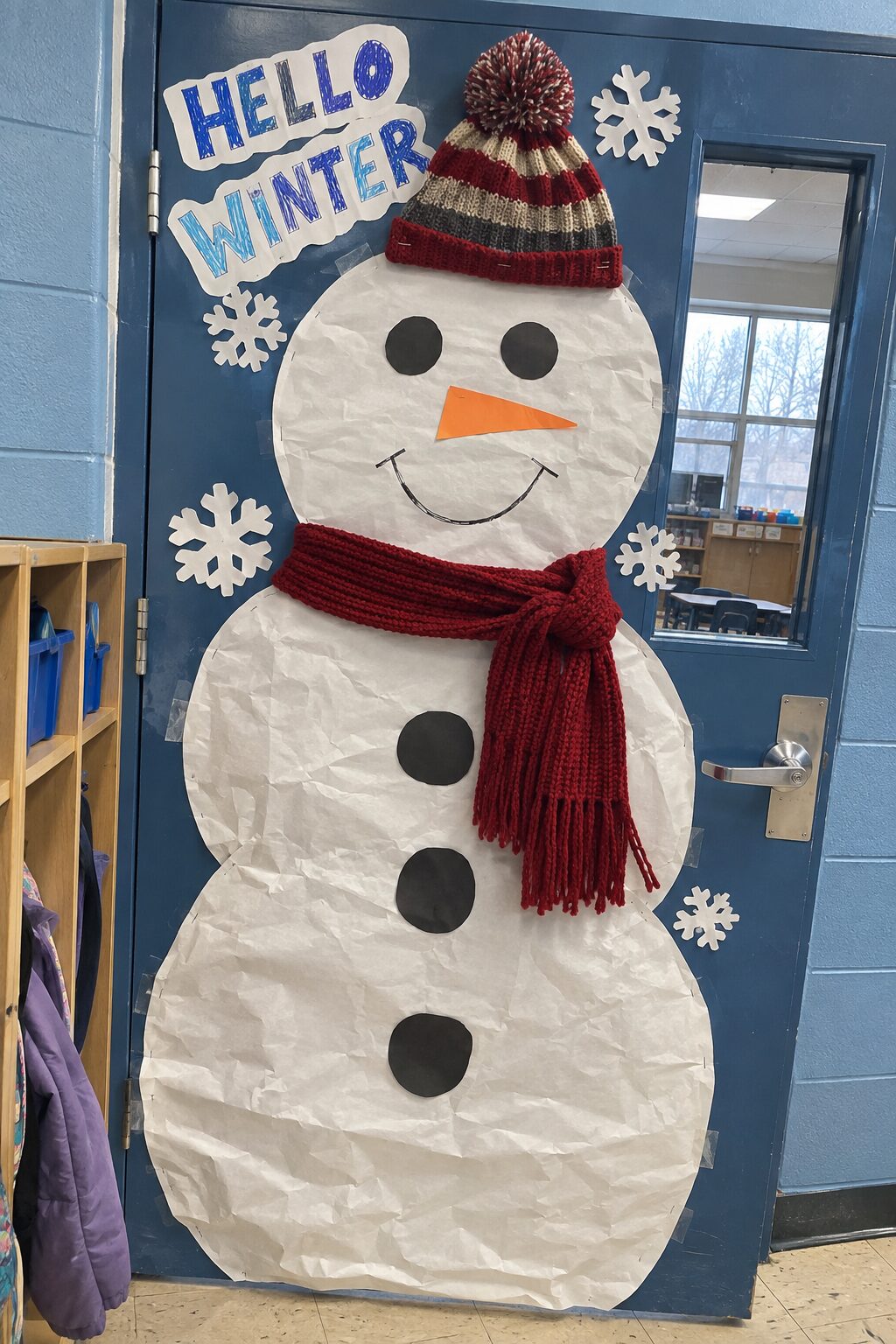
One giant snowman fills the entire door, and the white paper surface becomes his body. Tie a real knit scarf across the middle and fix a real knit hat at the top with clear tape or adhesive hooks.
Students cut the black paper buttons and add their names. Place the hat above the vision panel, and never let the scarf drape over the door window or latch.
Foil Icicle Fringe
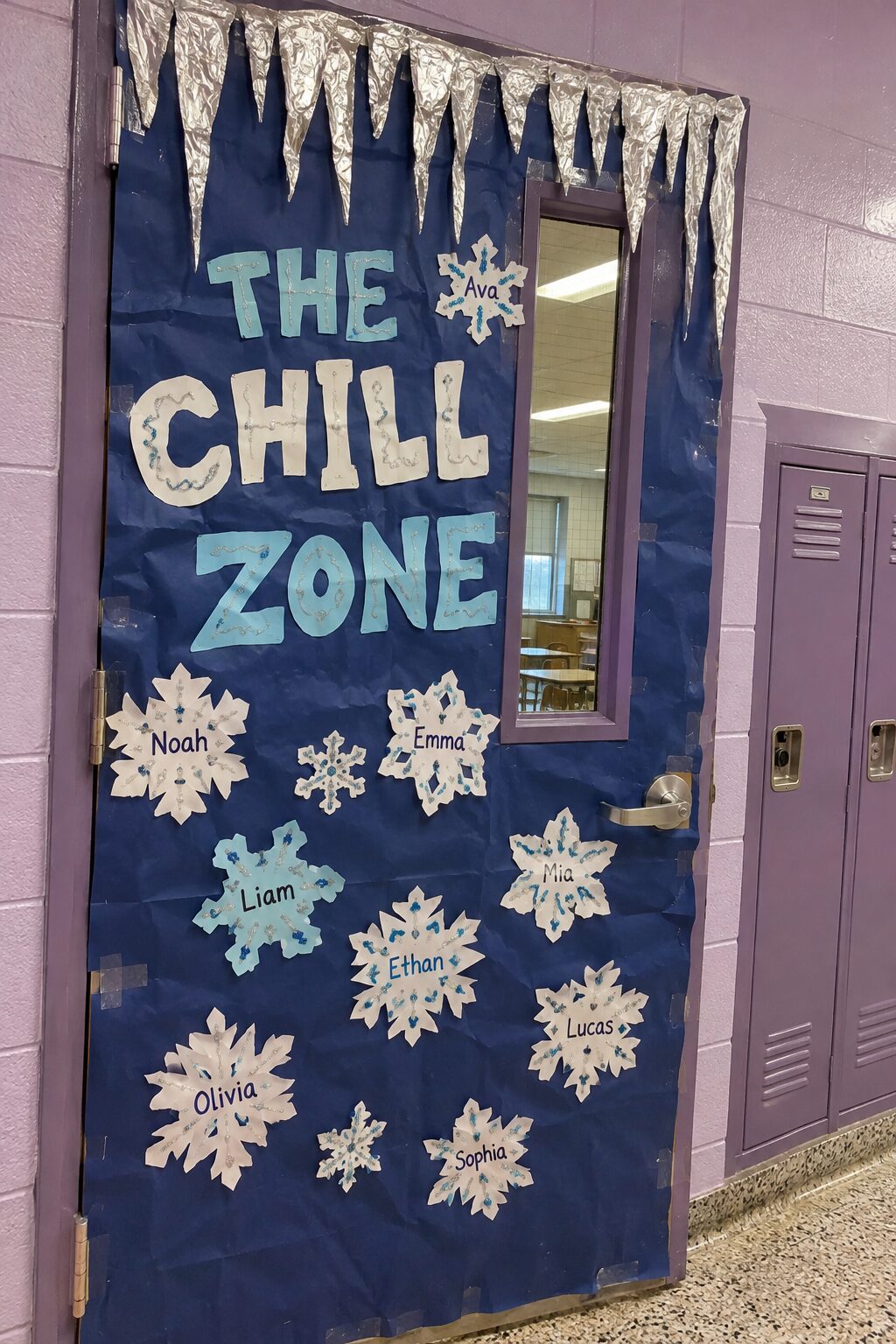
Hang strips of aluminum foil, folded twice for strength and cut to points, along the top edge of the door frame. Alternate lengths of 6 to 14 inches for a natural icicle line.
Plain royal blue paper behind the fringe shows the foil best, and hallway light reflects off the folds from a distance. Tape the strips inside the frame edge only, and never let them hang into the door’s swing path or the closer arm.
New Year Goal Snowflakes
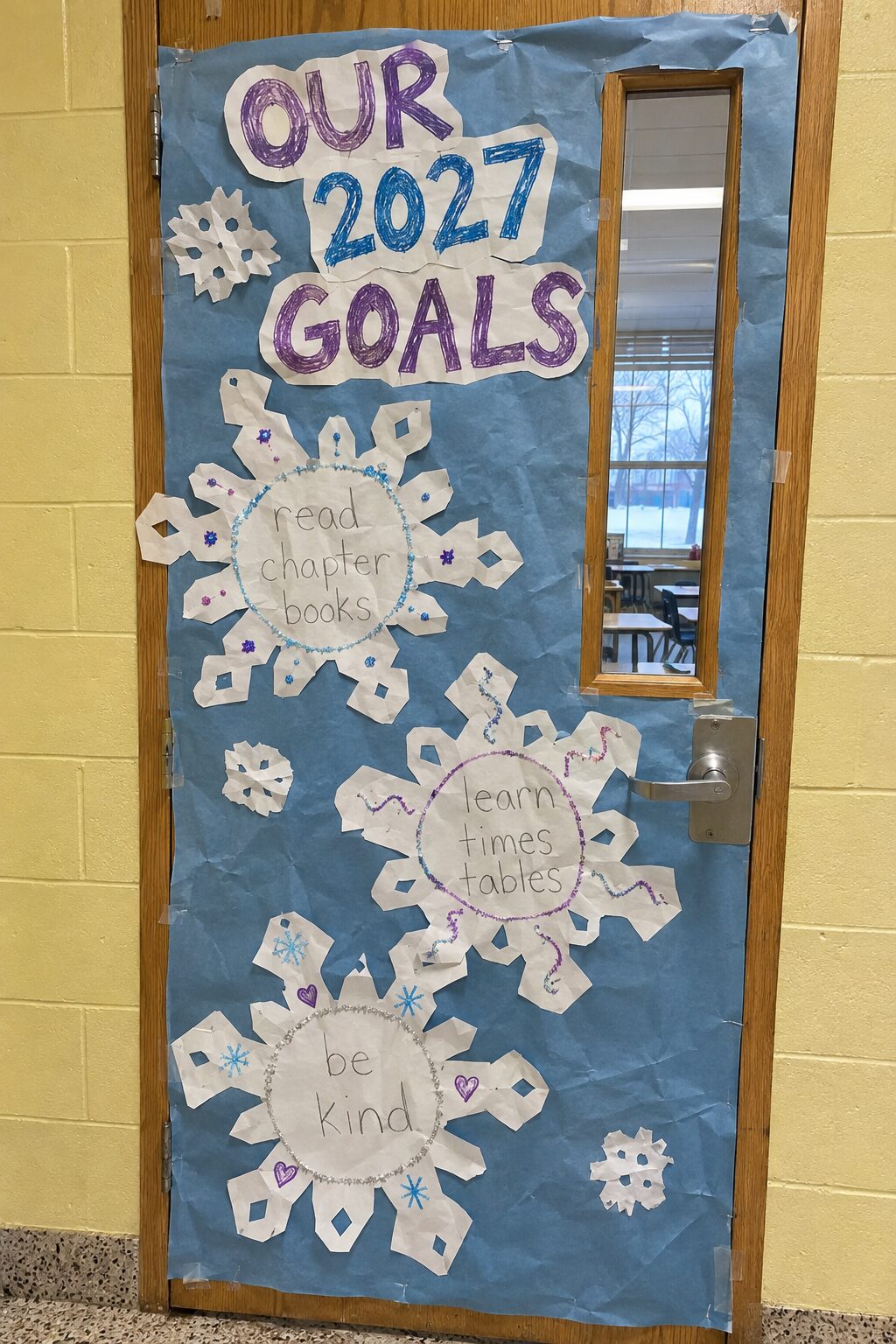
In early January, each student writes one goal for 2027 in the white circle at the center of a paper snowflake. Reading chapter books or learning multiplication facts are typical picks.
A deep blue background shows the white flakes clearly; scatter them loosely, larger ones near the bottom. Revisit the goals in mid-February and add a star sticker to each snowflake with a completed goal.
Real Pinecone Forest
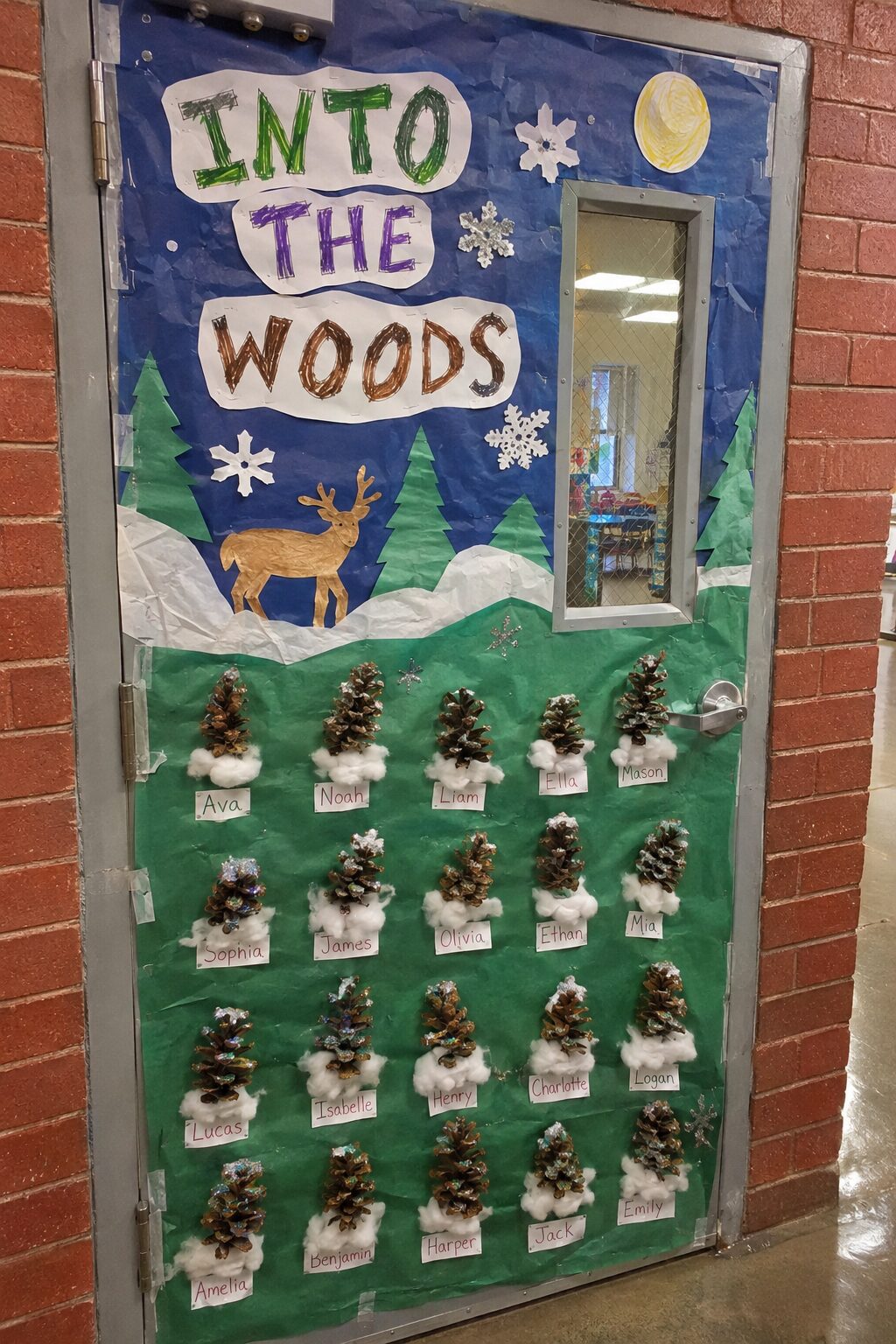
On a sheet of green paper, pinecones collected on a class walk become little trees when glued in rows. Their bumpy shapes stand out against flat paper, and small hands love to touch them.
Use a sturdy poster board base, since pinecones weigh more than paper, and add cotton batting snow along the bottom. Mount the pinecones low enough for young students to see, and leave the hot glue to an adult.
Glow-in-the-Dark Night Sky
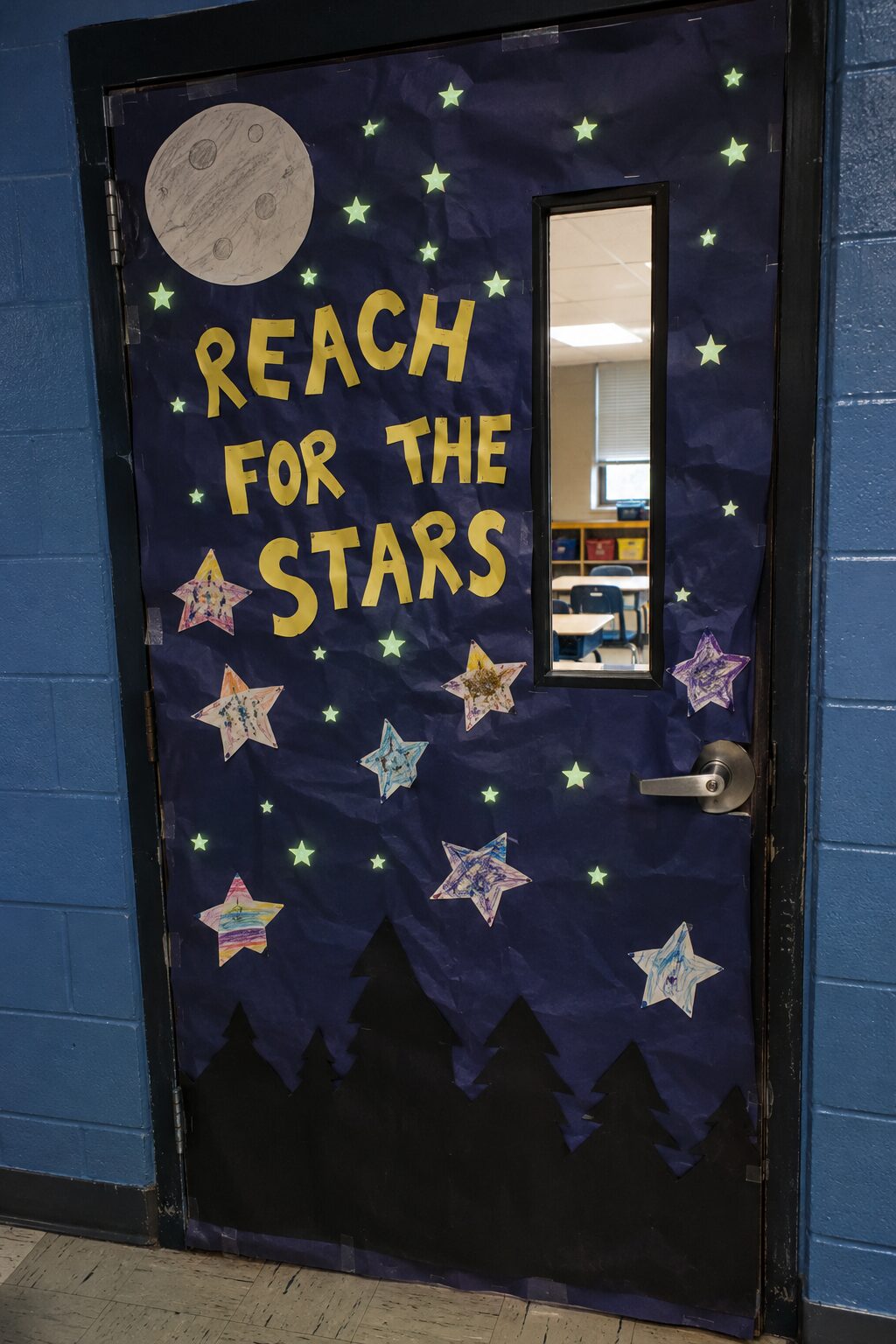
Glow-in-the-dark star stickers, charged under classroom lights, shine softly when the hallway lights dim. Navy paper shows them clearly.
Students arrange the stars into winter constellations such as Orion, with a simple star chart as a guide. A pale crescent moon sits near the top corner, and black paper pine silhouettes anchor the bottom.
Press the stickers firmly, since humidity loosens them by February, and place every one clear of the glass vision panel.
Igloo Brick Door
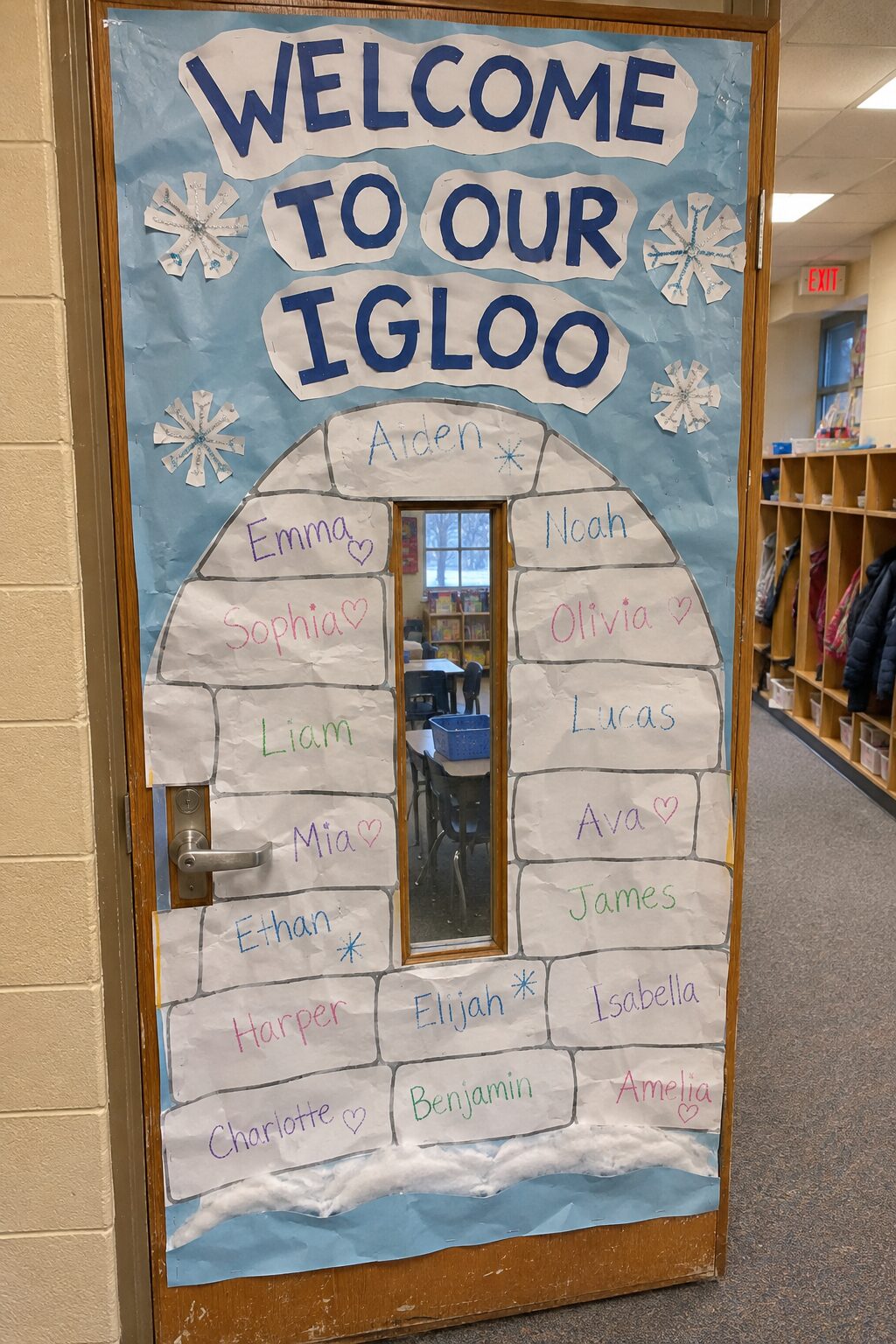
Built around the door’s window, a dome-shaped igloo of white paper bricks carries one student’s name on every brick. Cut 4-by-8-inch bricks from white cardstock and outline each with a light gray marker for mortar lines.
Build the dome from the bottom up on a pale blue background, and leave the vision panel and latch fully clear.
Ski Lift Door
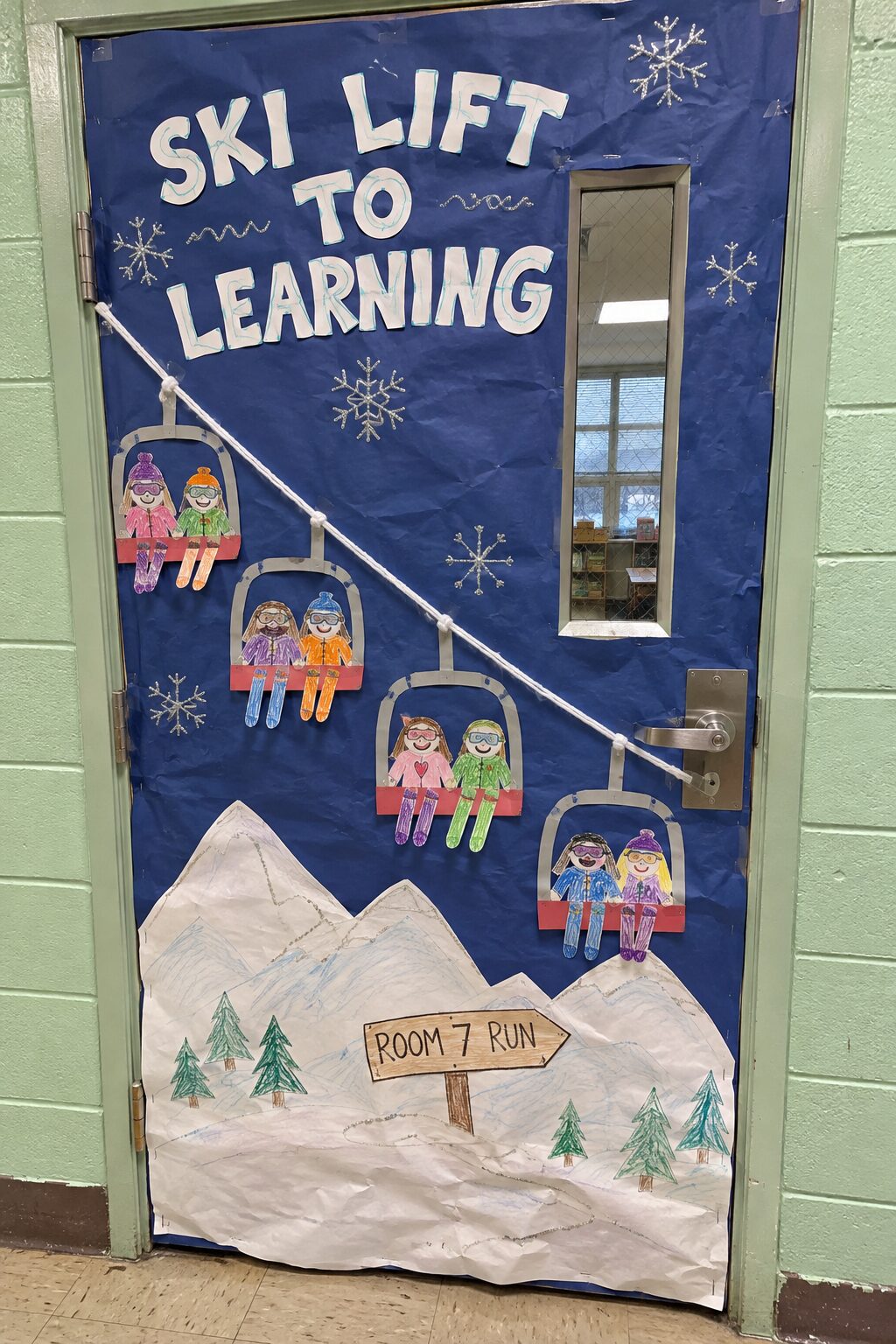
A paper chairlift crosses the door on a strand of yarn, with each chair carrying two students drawn as skiers. Run the yarn diagonally from one top corner toward the opposite edge and tape small cardstock chairs along it.
Add a snowy mountain of white paper below and a hand-lettered trail sign with the class name.
Crowded Mitten Door
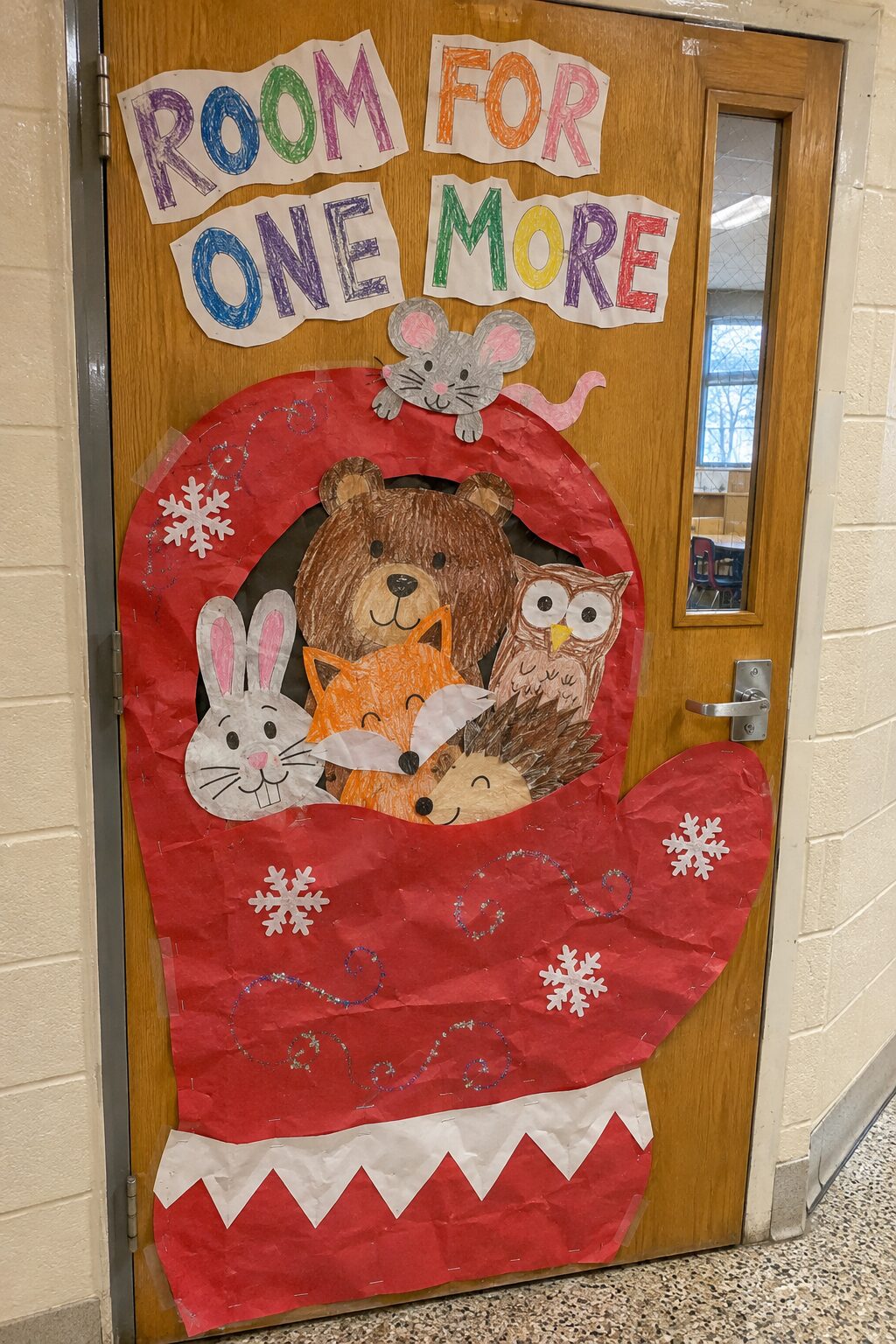
One giant mitten fills the door, packed with paper animals squeezing inside one after another, a favorite read-aloud theme in January. The mitten itself comes from red or blue paper, with the cuff drawn in white zigzags.
Each student makes one woodland animal poking out of the opening, and the smallest creature, a mouse, sits on top.