Earthy decor has moved well beyond the all-beige rooms that dominated interiors for years. Deeper browns, rusty reds, mossy greens, black accents, raw woods, and creamy whites create spaces with far more range.
The result can be bright and relaxed, dark and dramatic, or comfortably layered. Browse these 39 earthy living room ideas and see which version belongs in your home.
Table of Contents
- Warm Rattan Seating
- Earthy Pottery and Greenery
- Terracotta Floors and Warm Wood
- Soft Beige and Natural Wood
- Desert Greenery and Wood
- Warm Clay Walls
- Travertine and Walnut
- Layered Tonal Beige
- Terracotta Fireplace
- Sunken Earth-Tone Seating
- Small Earthy Apartment
- Sage Green and Natural Oak
- Rustic Stone, Modern Furniture
- Olive Green and Dark Wood
- Mushroom Taupe and Black
- Refined Mountain Lodge
- Moss Green and Plaster
- Soft Organic Curves
- Mid-Century Earth Tones
- Mediterranean Earth Tones
- Japanese-Inspired Earthy Style
- Forest Green Accent Wall
- Earthy Minimalism
- Textured Clay Ceiling
- Make a Tree the Centerpiece
- Create an Earthy Gallery Wall
- Reclaimed Brick Wall
- Exposed Wood Beams
- Built-In Plaster Seating
- Arched Wooden Shelves
- Open the Room to the Garden
- Earthy Coastal Style
- Collected Earthy Boho Decor
- Desert-Inspired Sand Tones
- Deep Ochre and Cream
- Chocolate Brown and Cream
- Charcoal, Camel, and Wood
- Warm Autumn Earth Tones
- Adobe-Style Rounded Niches
Warm Rattan Seating
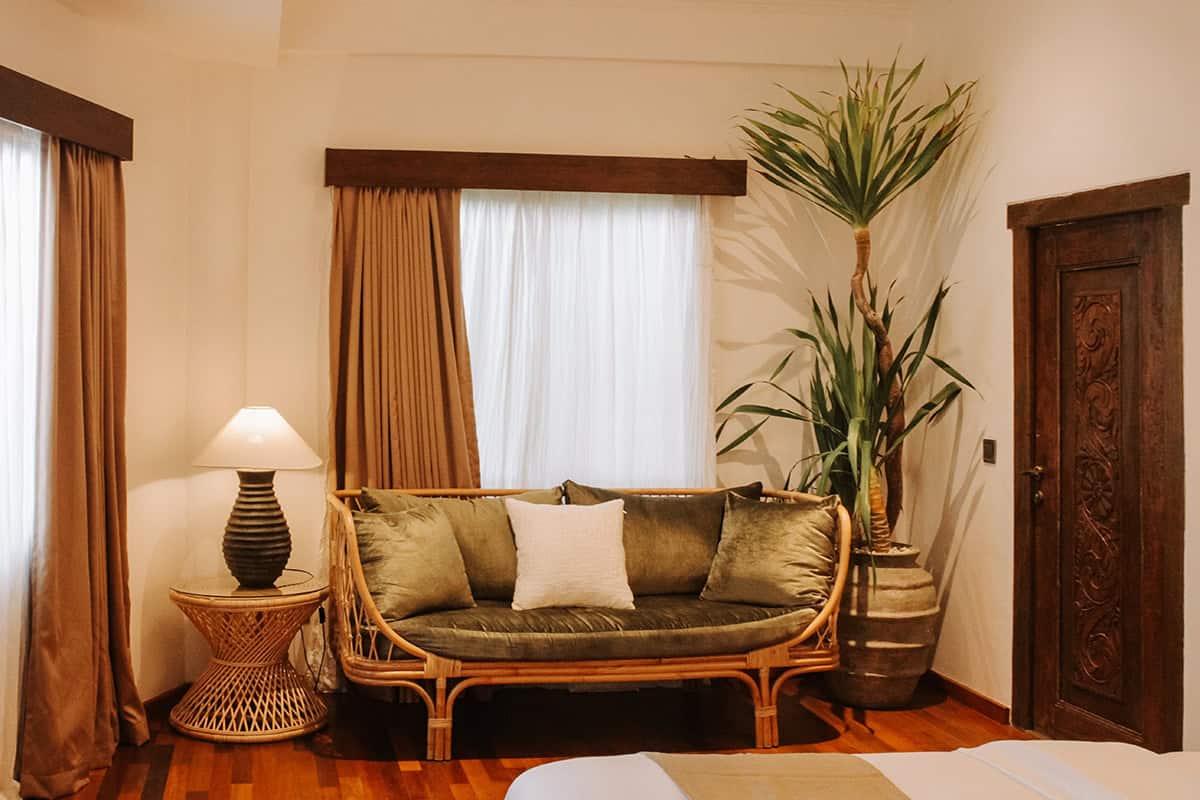
Start with one natural material that has enough visual presence to guide the room, such as rattan, cane, or warm-toned wood. Then pair it with olive, tobacco brown, cream, and other muted shades rather than adding many competing colors.
In this photo, the rattan sofa provides that starting point, while olive cushions and brown curtains deepen the earthy palette. A tall plant beside the sofa introduces green at eye level. Try a similar balance with one large plant and a few darker accents around your seating area.
Earthy Pottery and Greenery
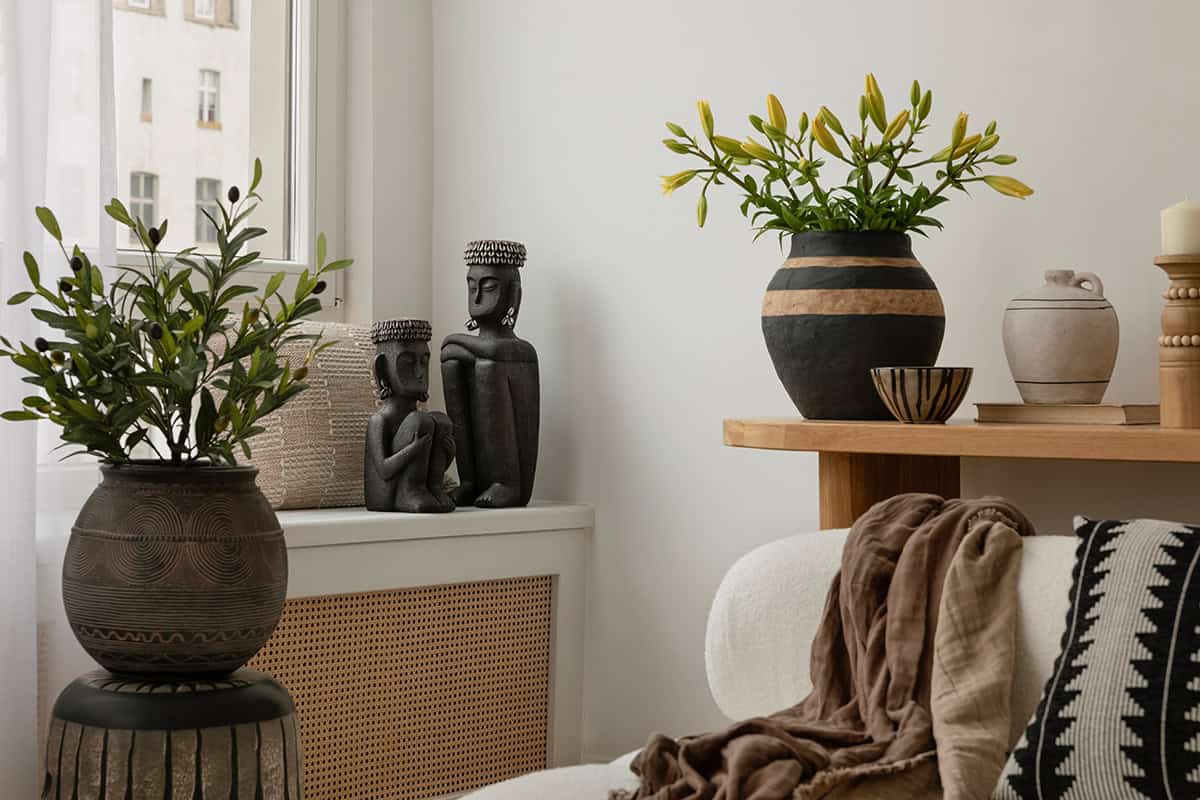
Small decor pieces are an easy route into earthy style if you already have a neutral living room. Choose pottery in charcoal, clay, sand, or weathered brown, then add leafy branches with loose, natural shapes. Mix vessel sizes rather than lining up identical pieces.
Here, dark ceramic pots create strong contrast against white walls and cream upholstery. The homeowner also pairs greenery with carved figures and raw wood. Spread pieces across a console, windowsill, and side table to create several small earthy moments around the room.
Terracotta Floors and Warm Wood
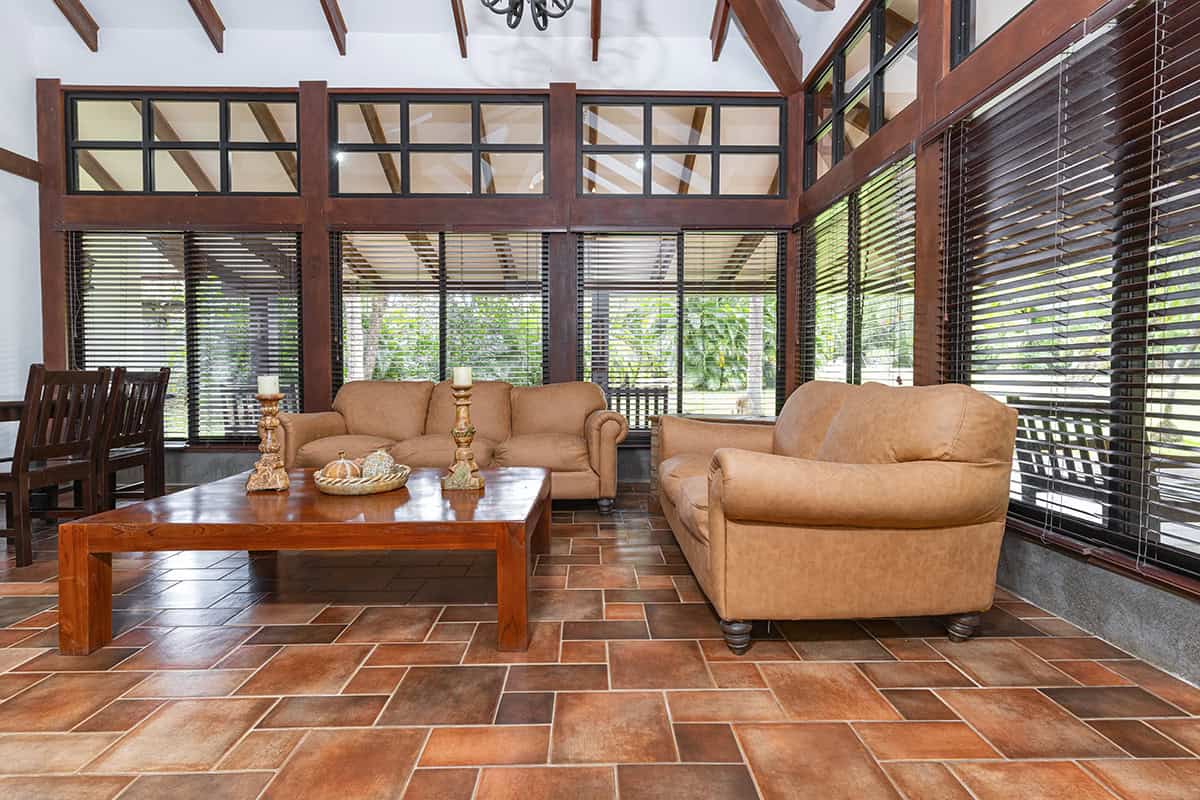
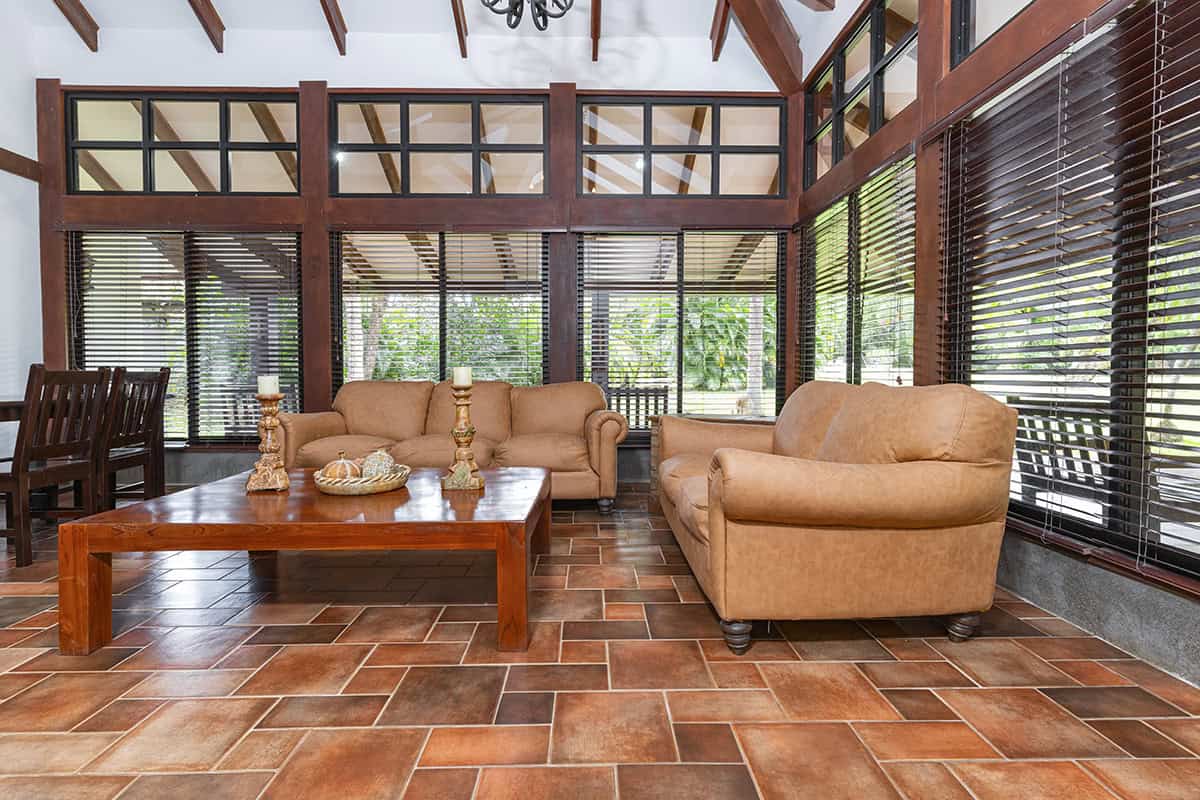
If your living room has terracotta tile, treat its rusty orange color as part of the decorating palette rather than covering most of it with a huge rug. Warm woods, caramel upholstery, dark brown accents, and greenery all pair naturally with this type of floor.
As shown here, the wooden coffee table and exposed beams repeat the warmth of the tiles, while black-framed windows provide a darker counterpoint. You could follow the same formula with terracotta flooring, medium-toned wood furniture, and tan seating, then use garden views or houseplants for green contrast.
Soft Beige and Natural Wood
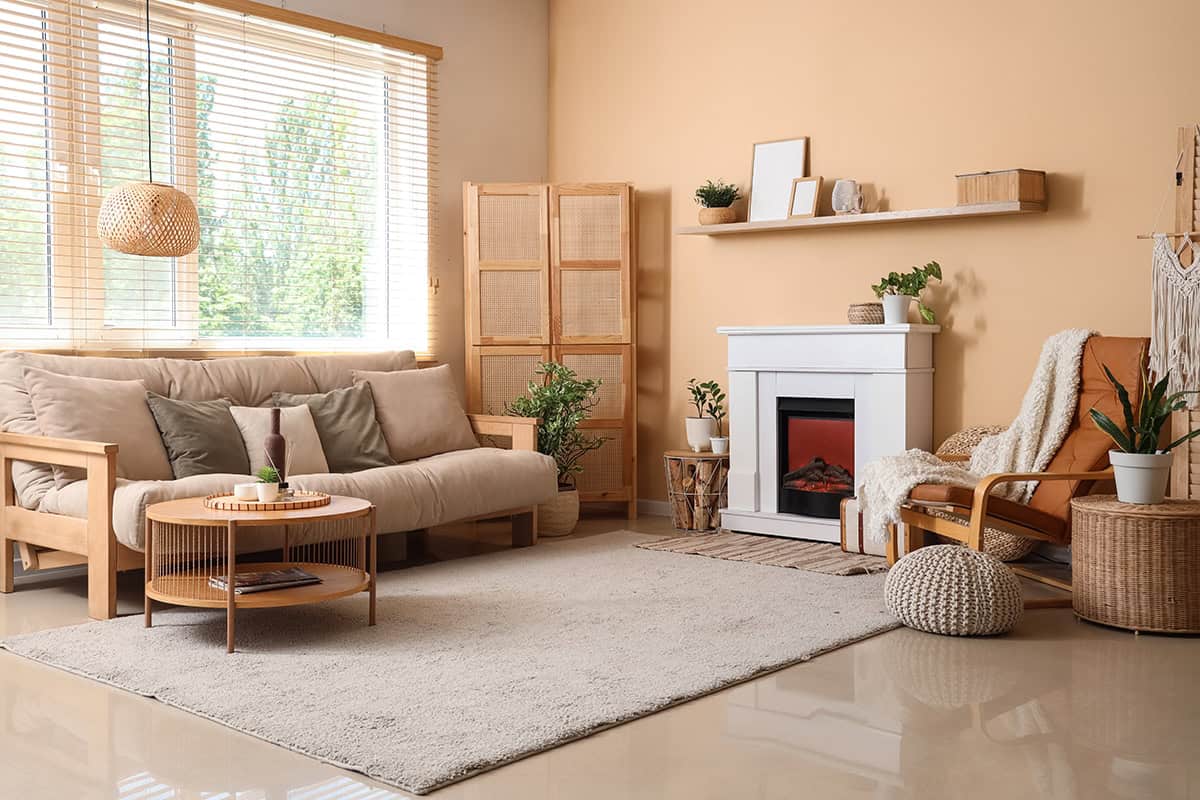
A pale earthy living room doesn’t require layers of dark brown. Try sandy beige walls with blonde wood, cane, wicker, taupe upholstery, and small touches of muted green. Limit the palette to a handful of related neutrals so each natural material has room to register.
The room shown here follows that lighter approach with a wood-framed sofa, woven pendant, cane cabinet, and round timber table. For your own version, distribute these materials across several areas rather than concentrating every woven piece in one corner. A white fireplace or similarly crisp element breaks up all the warmth.
Desert Greenery and Wood
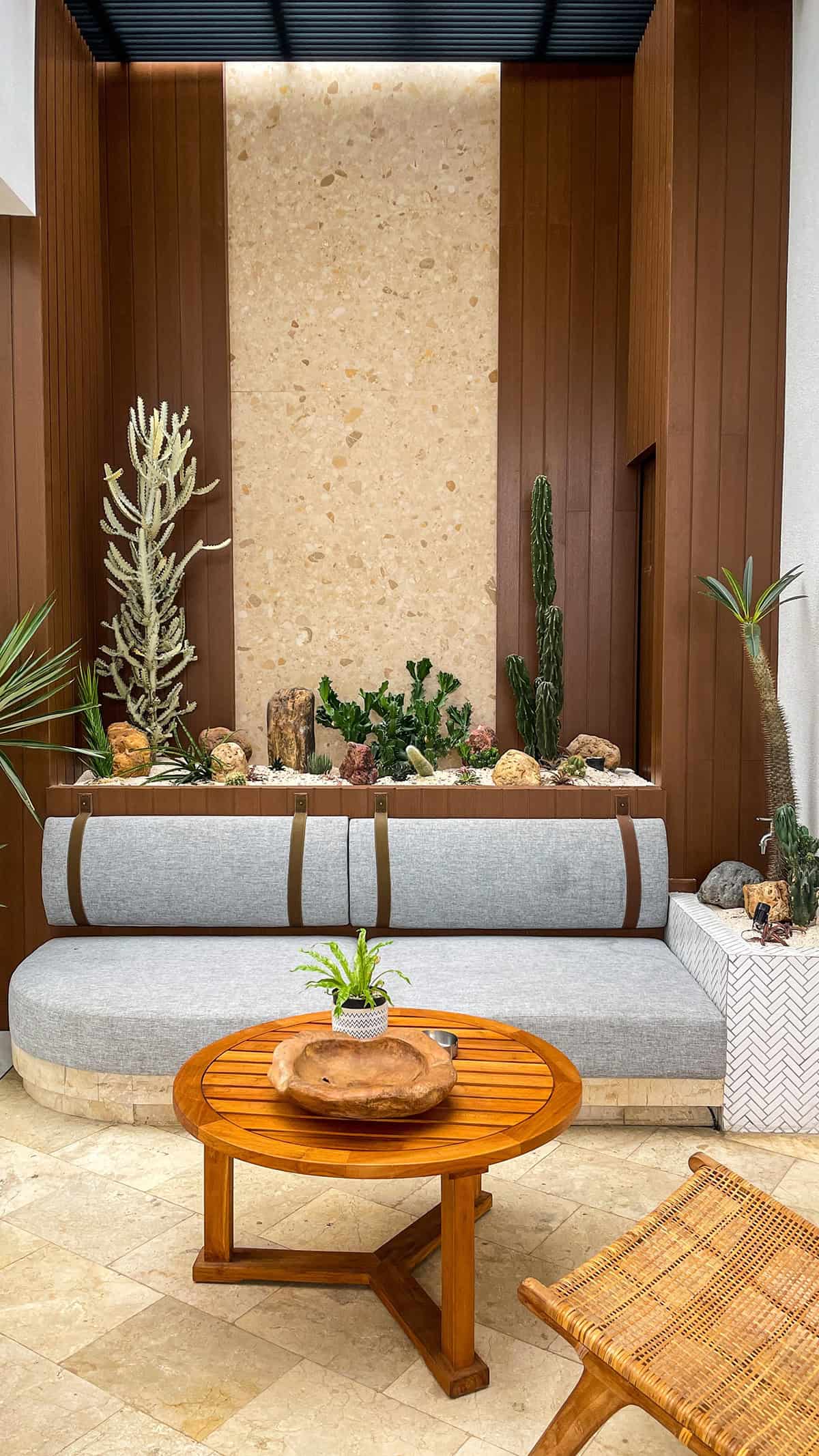
Why limit an earthy living room to leafy tropical plants? Cacti and desert species introduce sharper silhouettes and pair especially well with deep wood, pale stone, and sandy flooring. Choose several plants with noticeably different heights so the arrangement resembles a small desert garden rather than a row of pots.
In this photo, the plants sit against rich vertical wood paneling with rocks scattered around their bases. You could recreate the idea behind a sofa, inside a recessed wall niche, or along an unused corner. Light upholstery nearby helps separate the greenery from all that brown.
Warm Clay Walls
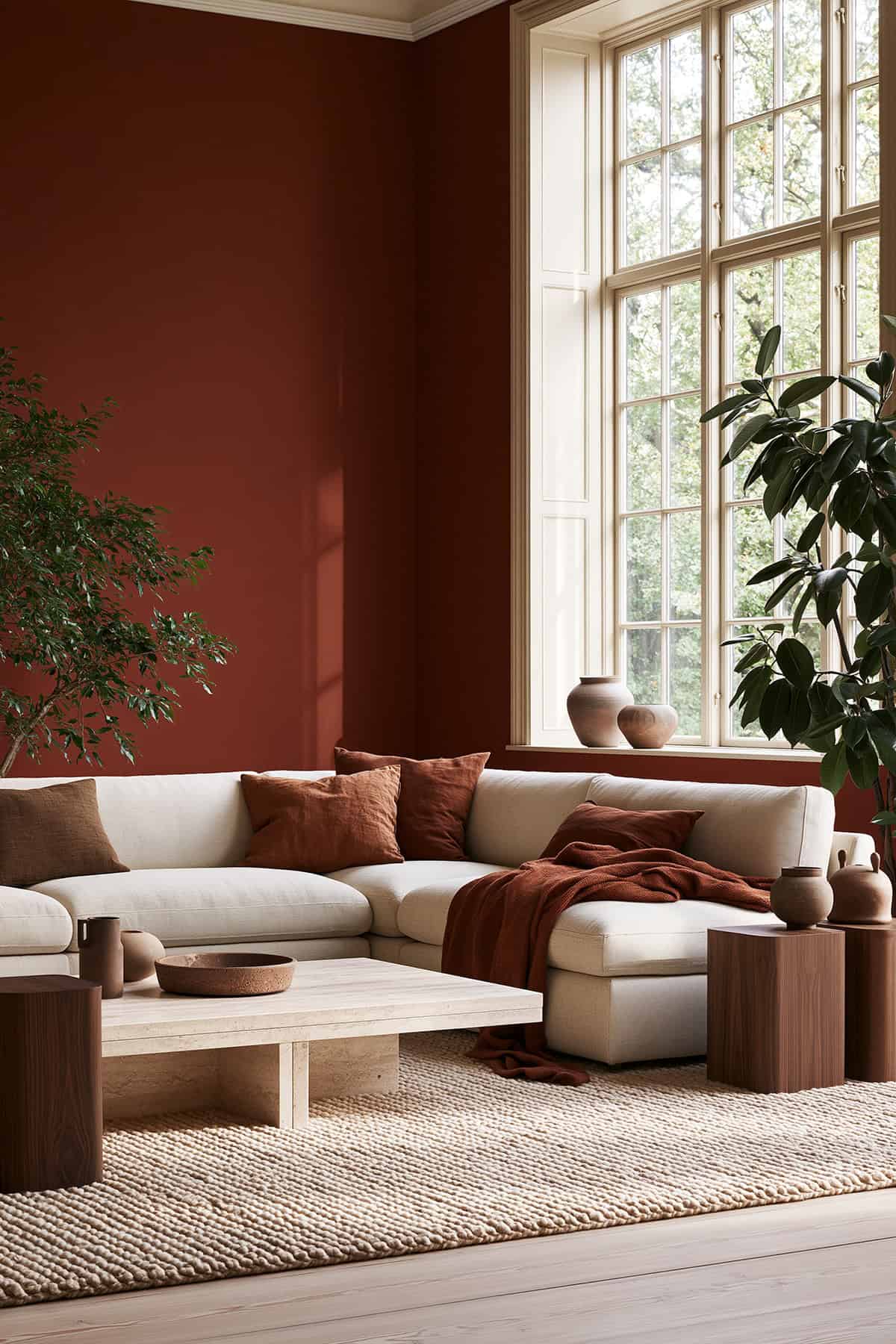
Deep clay paint is worth trying when beige walls seem too restrained for an earthy living room. Use the shade across a large wall, then counter its richness with cream upholstery, pale wood, and a light woven rug.
Here, rust cushions and a matching throw repeat the wall color in smaller doses. Large green plants create a cooler break between those warm surfaces. Even a few simple clay vessels help connect the furniture back to the wall.
Travertine and Walnut
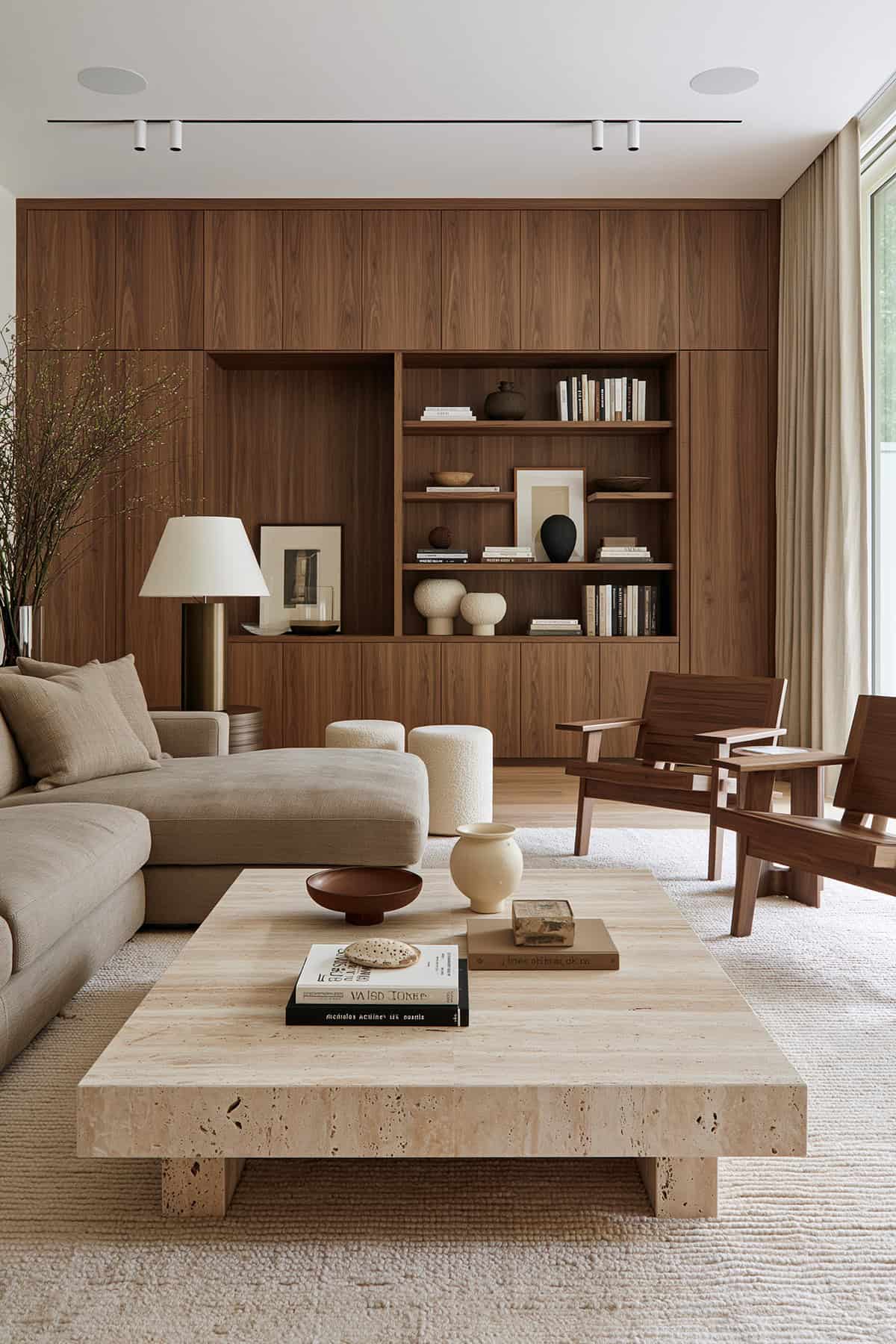
Stone and dark wood make a strong pair when you want earthy decor with a cleaner, contemporary direction. Start with walnut cabinetry or shelving across one wall, then place pale stone closer to the center of the room for contrast.
As shown, a chunky travertine coffee table sits against cream seating and rich walnut furniture. Small ceramic pieces repeat the mineral colors across the shelves. You could borrow the same formula with a stone table, walnut bookcase, and just a few brown or ivory accessories.
Layered Tonal Beige
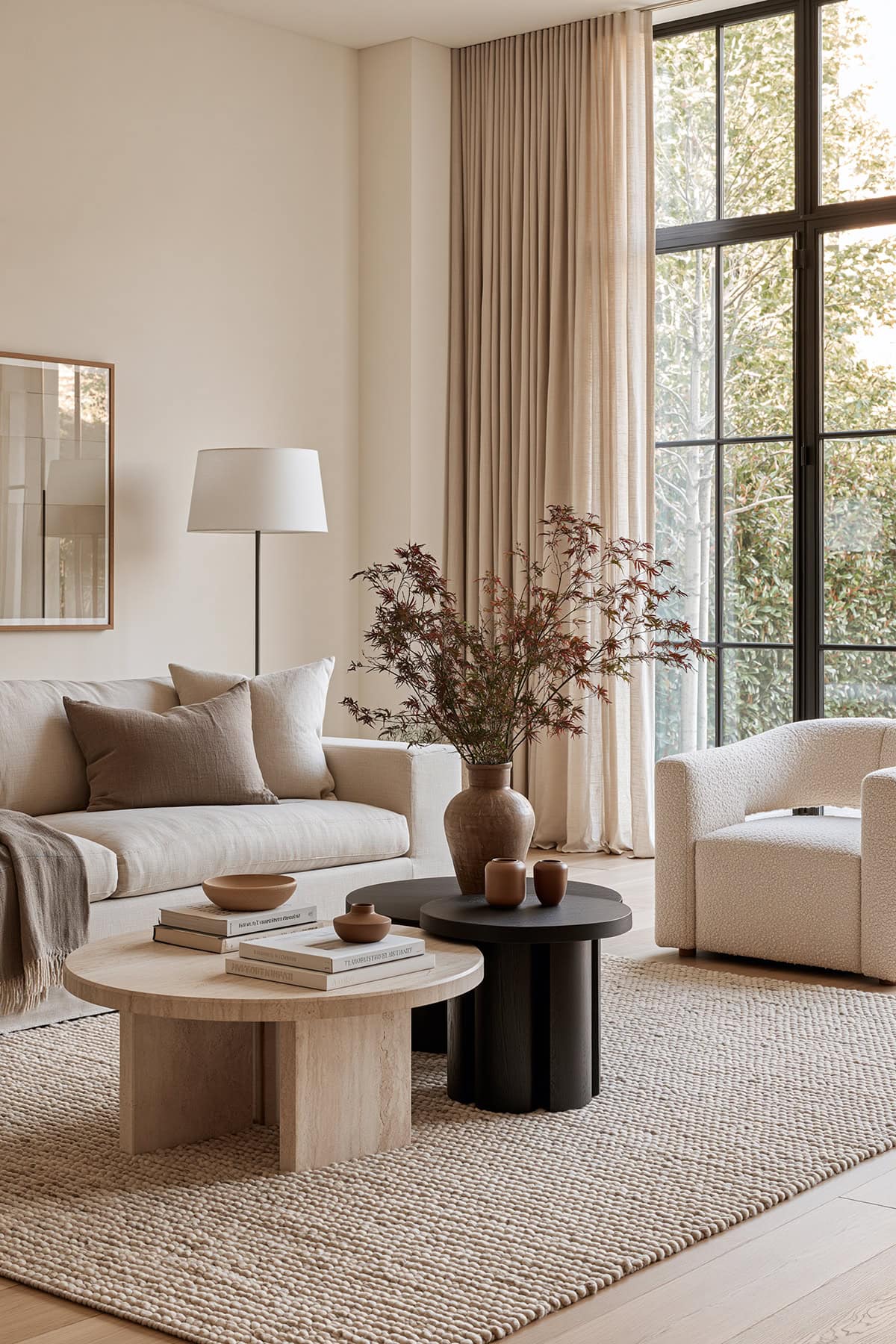
A room built almost entirely around beige needs clear differences between its surfaces. Pair smooth cream upholstery with a coarse woven rug, pale stone tables, linen curtains, and a few pieces of pottery in warm brown.
The example here also adds a black round table, which interrupts the pale palette before it becomes too uniform. A branch-filled earthenware vase supplies another darker note. Use two or three deeper accents like these rather than introducing an entirely new color scheme.
Terracotta Fireplace
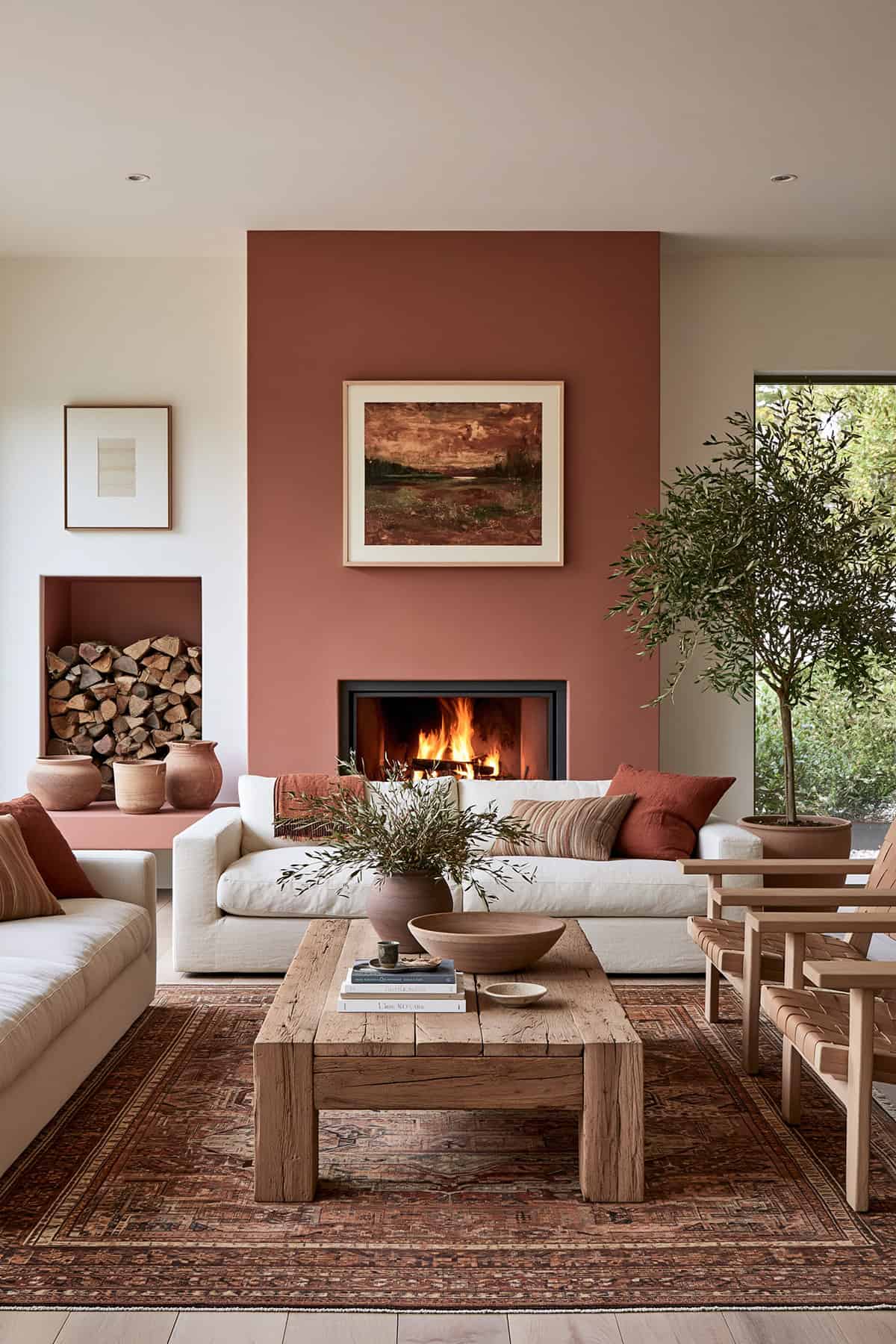
One concentrated area of terracotta may have more impact than scattering rusty shades everywhere. Paint the fireplace wall in a muted red-clay tone, then echo it through cushions, pottery, artwork, or a patterned rug.
This homeowner lets the fireplace occupy the center of the scheme, with creamy sofas and raw wood around it. The stacked logs beside the hearth add another natural element. For a similar setup, reserve your strongest earth color for the architectural focal point and let quieter shades fill the surrounding space.
Sunken Earth-Tone Seating
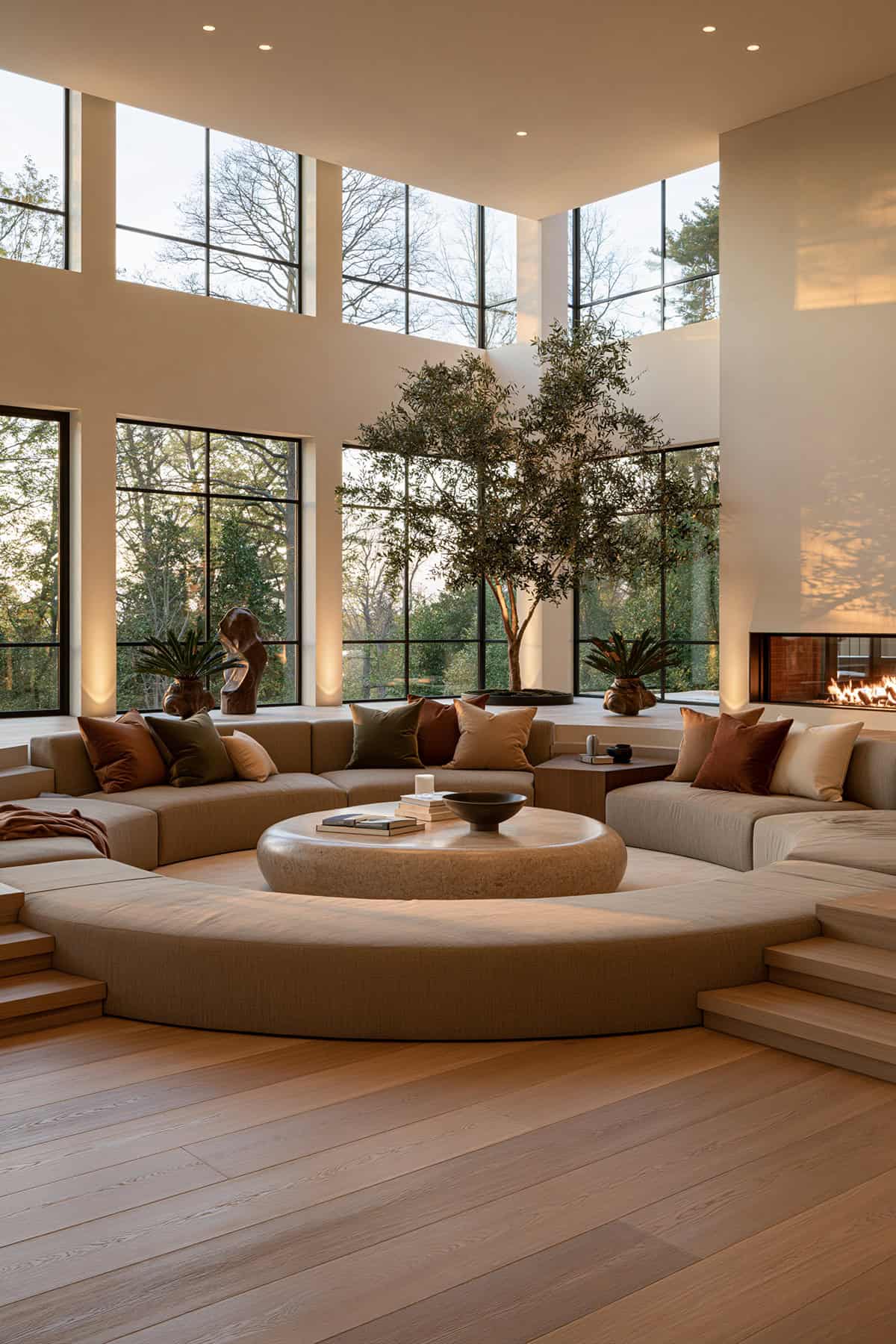
If your architecture allows it, a lowered seating zone creates a very different take on earthy living room design. Choose broad, low sofas in taupe or camel, then center the arrangement around a substantial stone table. Brown, olive, and sand cushions add restrained color.
What stands out here is the indoor tree placed right among the seating, with outdoor greenery visible through enormous windows. You could adapt that idea on a normal floor plan too: arrange low modular seating around a round table and place one tall tree nearby.
Small Earthy Apartment
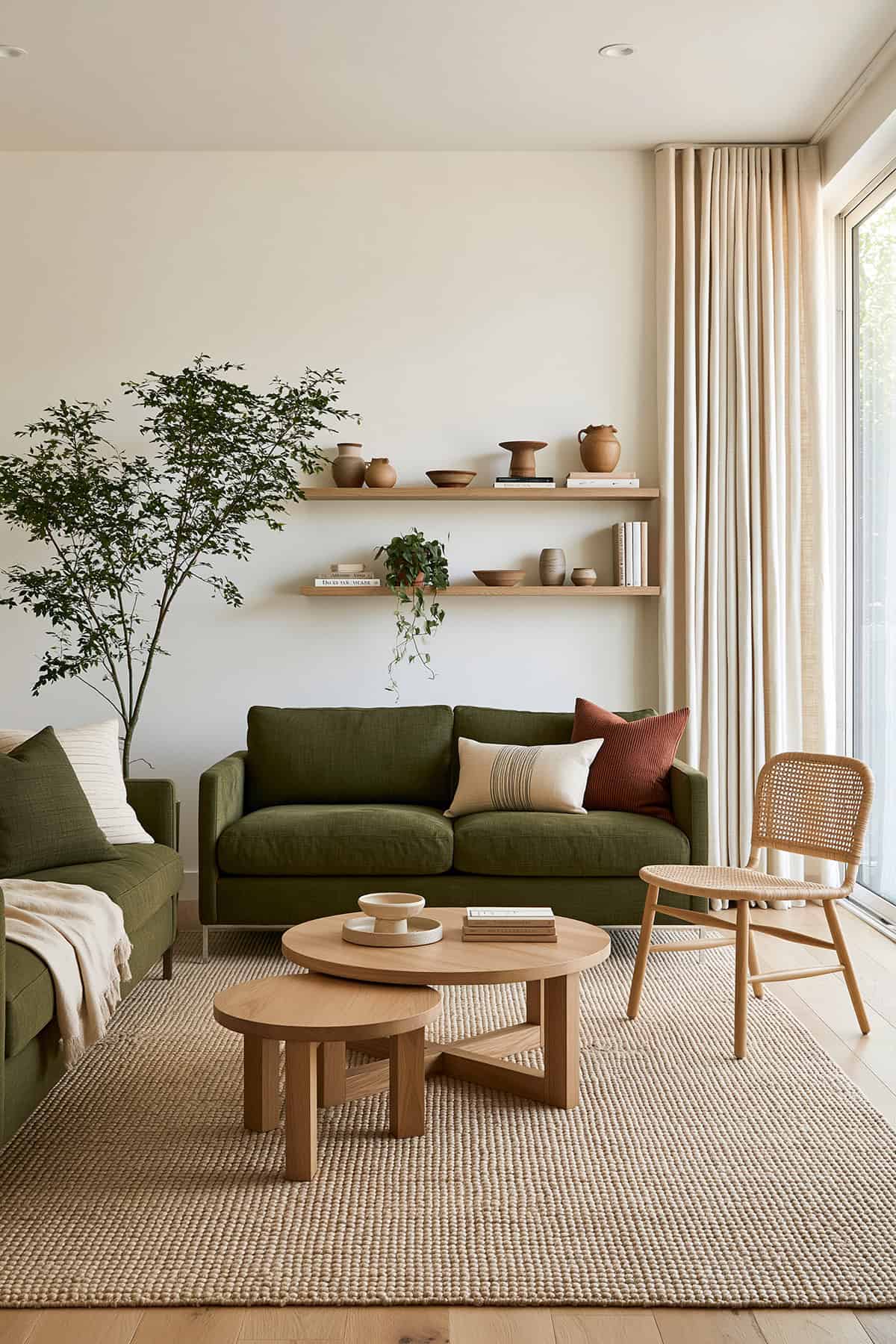
Earthy decor scales down surprisingly well for apartments. Rather than filling a compact room with brown furniture, try olive upholstery as the main color and introduce pale oak through tables, floating shelves, and a cane chair.
Here, the rust pillow provides one warm accent against all that green. Pottery and trailing plants occupy the shelves, so floor space remains relatively open. A large woven rug connects the seating pieces and makes the small arrangement read as one defined zone.
Sage Green and Natural Oak
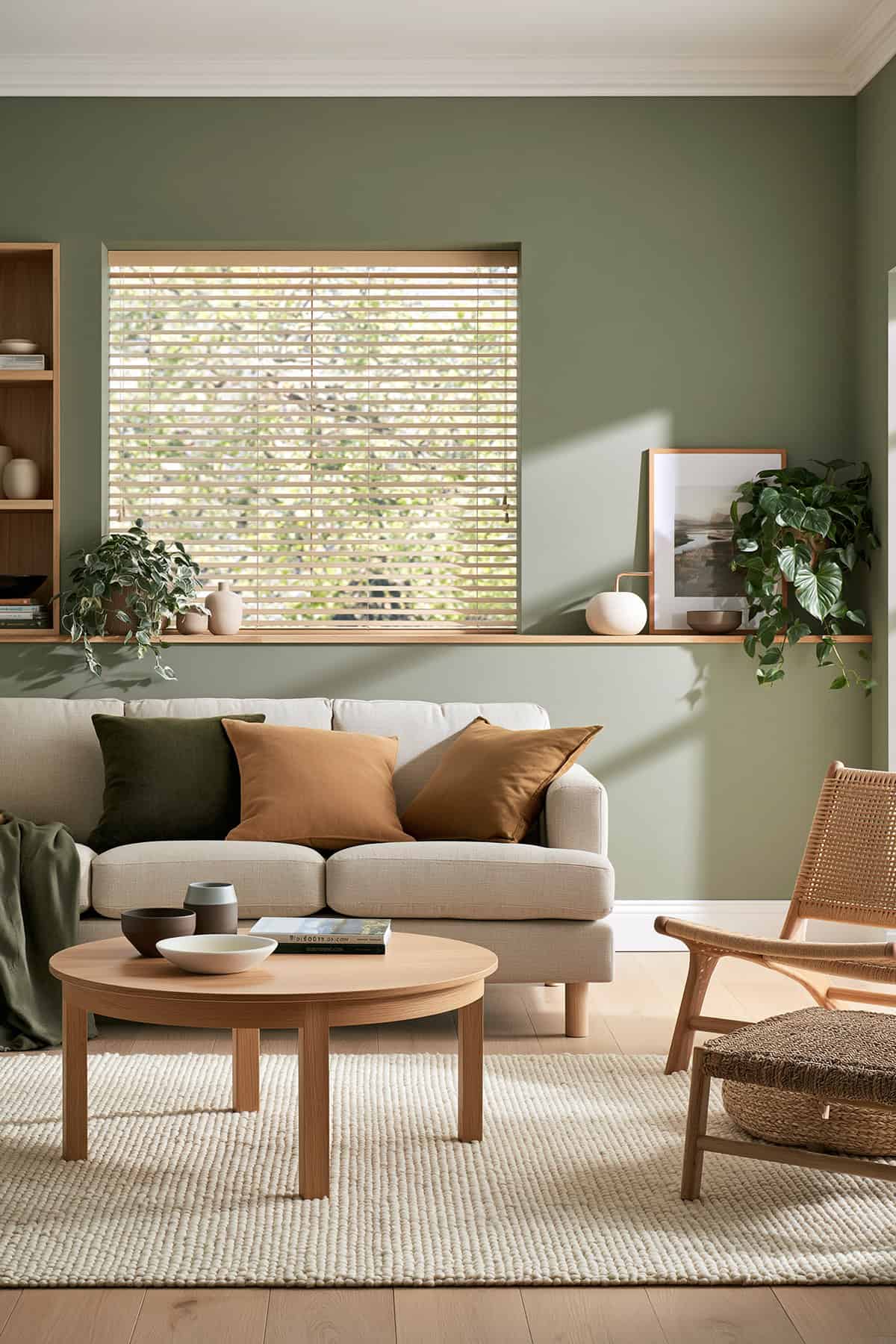
Sage walls provide a gentler alternative to beige while still sitting comfortably beside wood, cream, tan, and deeper greens. For this idea, cover the walls in a muted gray-green and choose light oak furniture rather than dark timber.
In this room, the cream sofa creates a bright break against the sage backdrop, while ochre cushions introduce a warmer earthy note. Plants near the window reinforce the green palette. Add a cane chair or woven basket if you want another natural material in the mix.
Rustic Stone, Modern Furniture
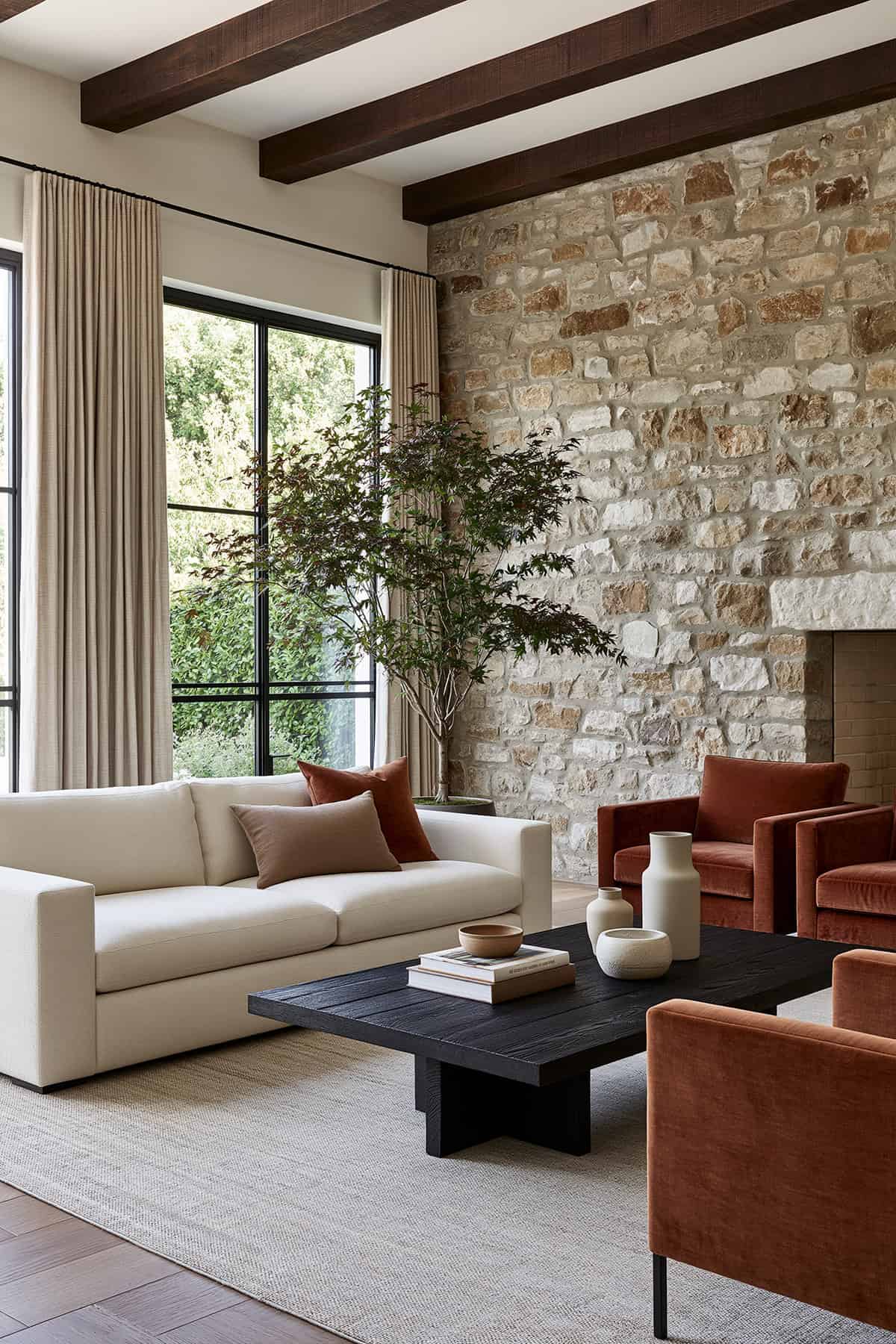
Exposed stone doesn’t require a fully rustic decorating scheme. In fact, contemporary furniture creates a sharper contrast with rough masonry. Use a cream sofa and simple black coffee table beside the stone, then pull its warmer brown shades into rust-colored chairs and cushions.
As shown here, dark ceiling beams reinforce the architecture while the furniture lines remain clean and substantial. If real stone isn’t practical, a quality stone veneer across one focal wall could create a similar direction.
Olive Green and Dark Wood
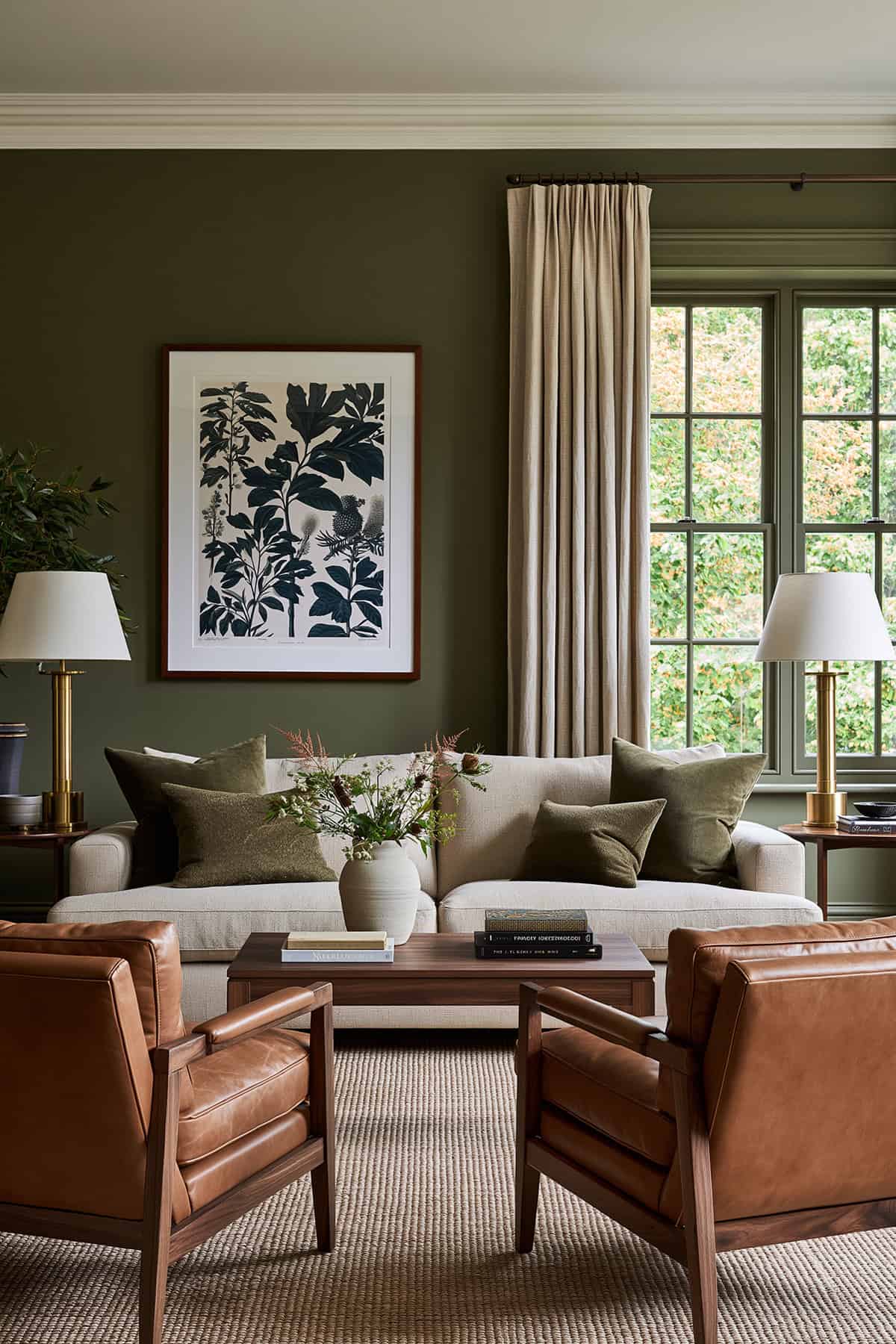
Dark olive walls make an earthy living room richer and more enclosed than the familiar beige-and-tan approach. Pair them with walnut or another deep brown wood, then use cream upholstery to create a large area of contrast.
The room here repeats olive through the sofa cushions while caramel leather chairs introduce warmth in the foreground. Botanical artwork ties directly into the wall color without matching it exactly. Brass lamps add a small metallic note among the greens and browns.
Mushroom Taupe and Black
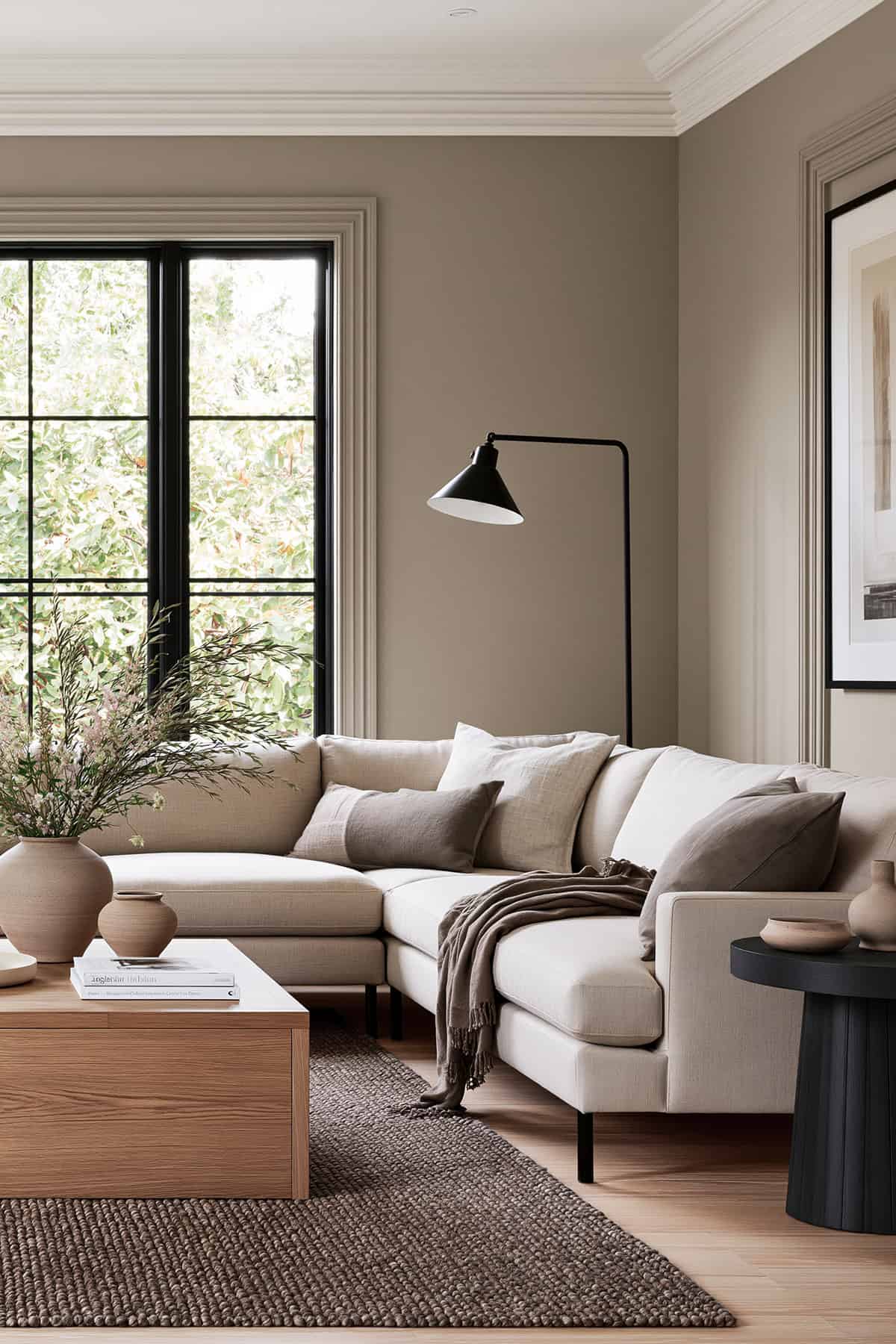
Mushroom taupe sits somewhere between brown, gray, and beige, which makes it useful for a quieter earthy palette. Try it across the walls, then layer cream seating, oatmeal cushions, pale wood, and darker brown textiles around the room.
Notice how black appears only in selected places here: the window frames, floor lamp, and round side table. Those crisp accents stop the neutrals from blending together. A few matte clay vessels and loose branches complete the material mix with very little extra decor.
Refined Mountain Lodge
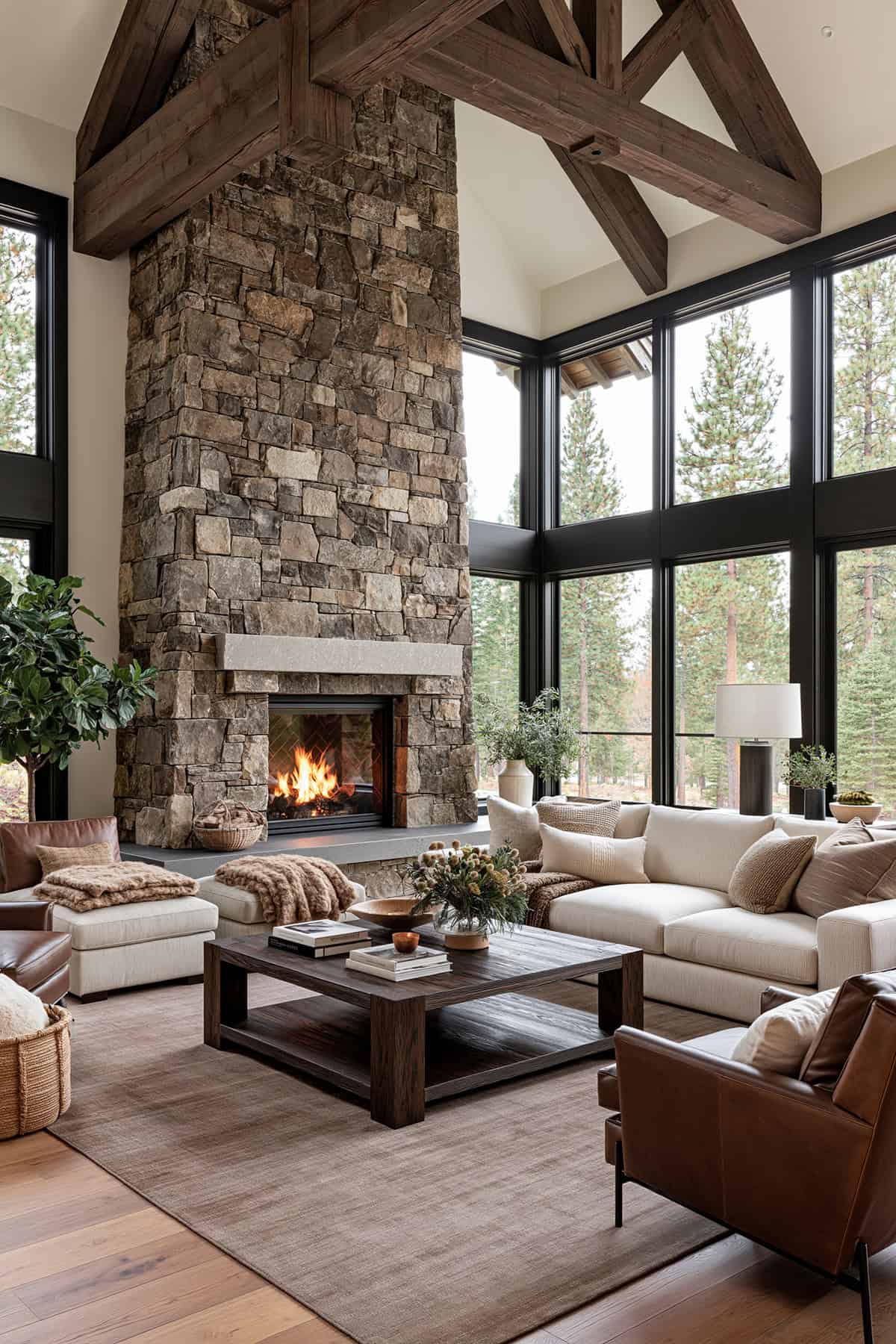
For a lodge-inspired earthy room, let rugged architecture do most of the talking. A tall stone fireplace, exposed timber trusses, and dark window frames establish the deeper browns and grays; cream seating prevents the scheme from becoming overly heavy.
In this example, leather chairs echo the timber overhead, while taupe upholstery and a large brown rug soften the transition toward the stone. Add baskets, wool throws, and a dark wood coffee table for smaller doses of natural material around the seating zone.
Moss Green and Plaster
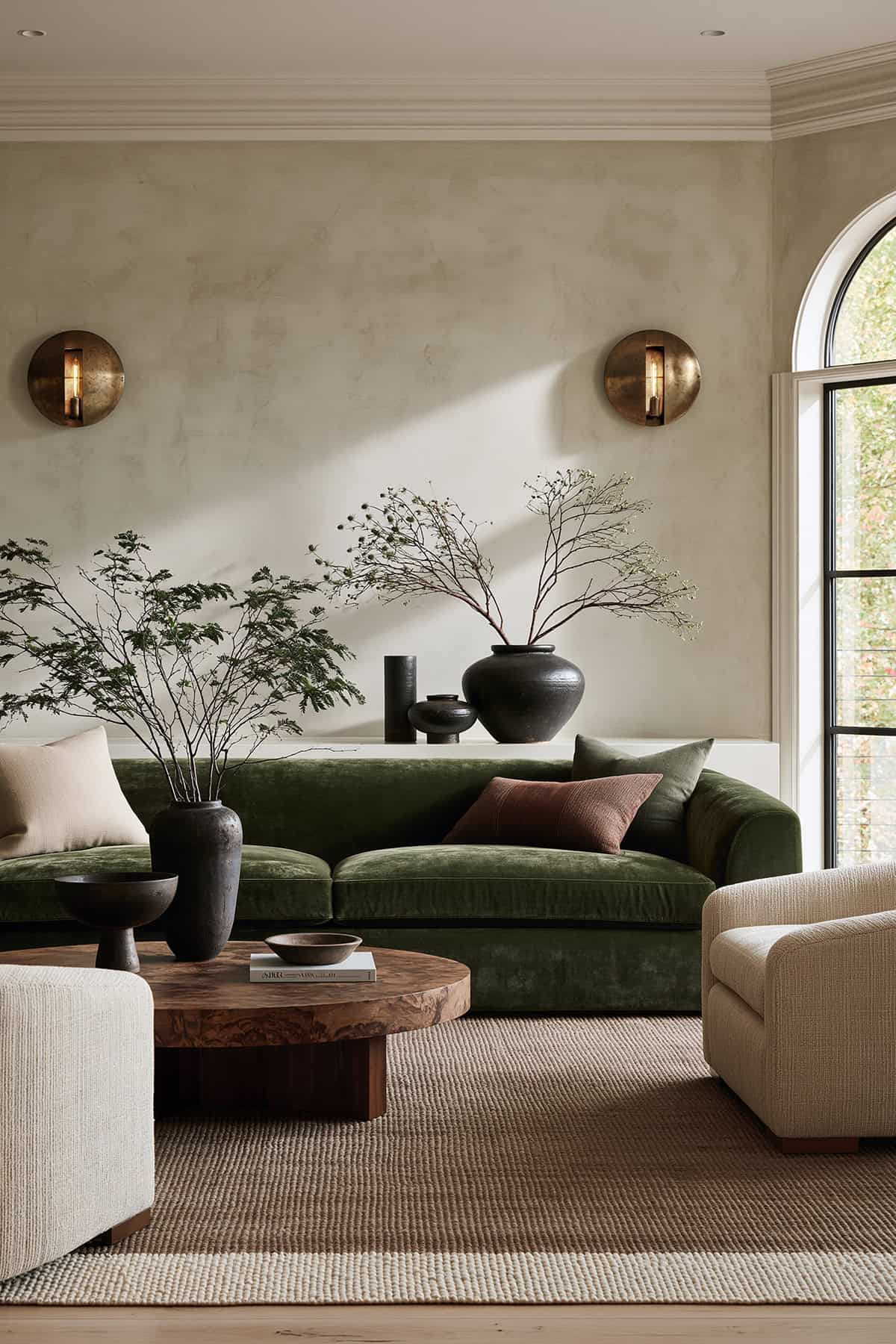
A moss green sofa is a great alternative to the endless brown and beige furniture associated with earthy interiors. Place it against warm plaster or limewashed walls, then surround it with oatmeal chairs and dark pottery so the green takes center stage.
Here, the homeowner adds a thick wood coffee table and rust-colored cushions for extra warmth. Sparse branches in oversized black vessels introduce height and irregular shapes. Bronze wall sconces finish the upper half with a subtle aged-metal detail.
Soft Organic Curves
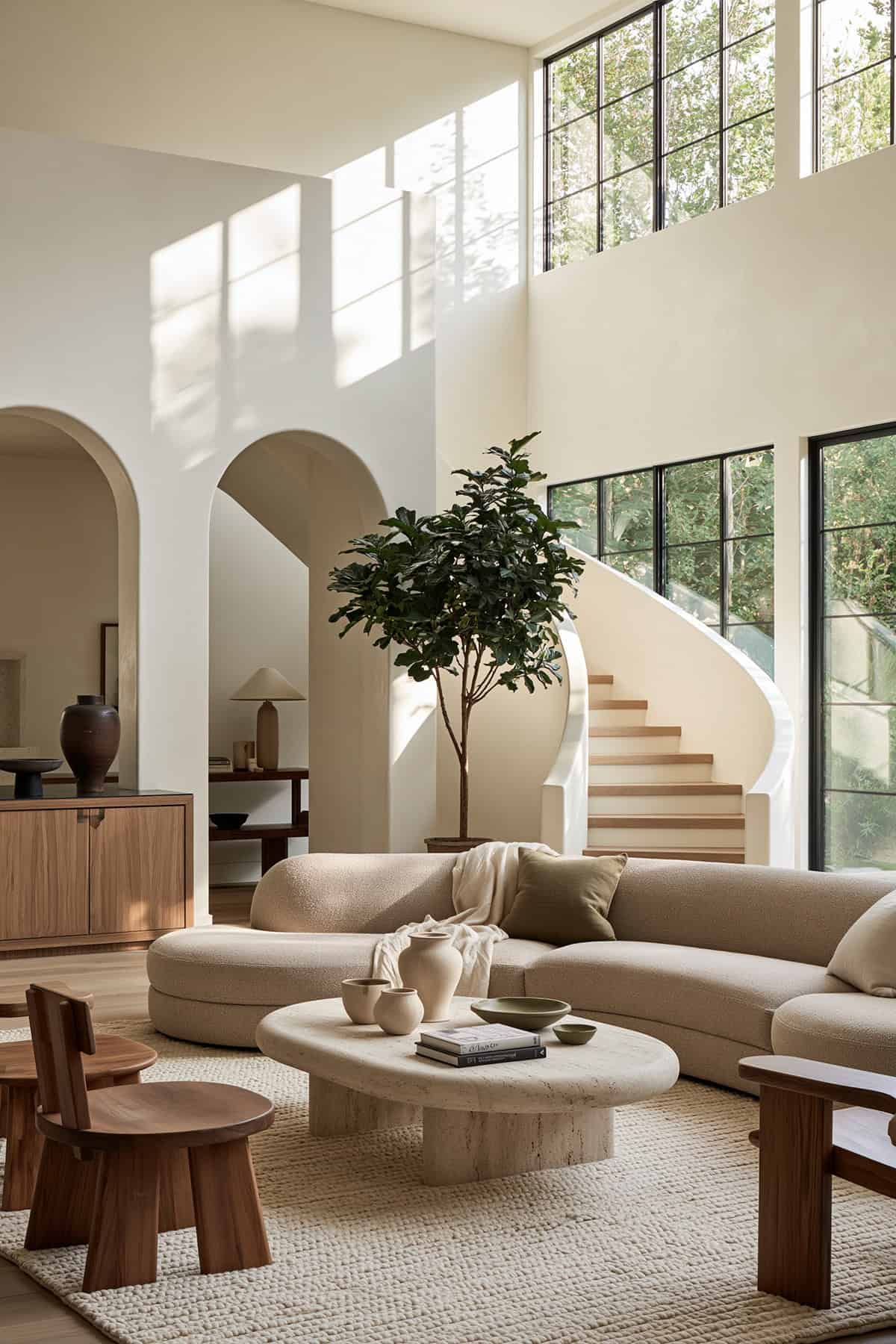
Architecture itself may become part of your earthy decorating plan. Rounded doorways, curved staircases, and arched openings soften a room dominated by straight walls, especially alongside stone, wood, and warm ivory shades.
This space shows how restrained the furniture may be once those curves have enough presence. A rounded cream sofa and oval stone table repeat the architectural shapes below. Add a substantial indoor tree between the seating and staircase if you have an open corner that needs greater height.
Mid-Century Earth Tones
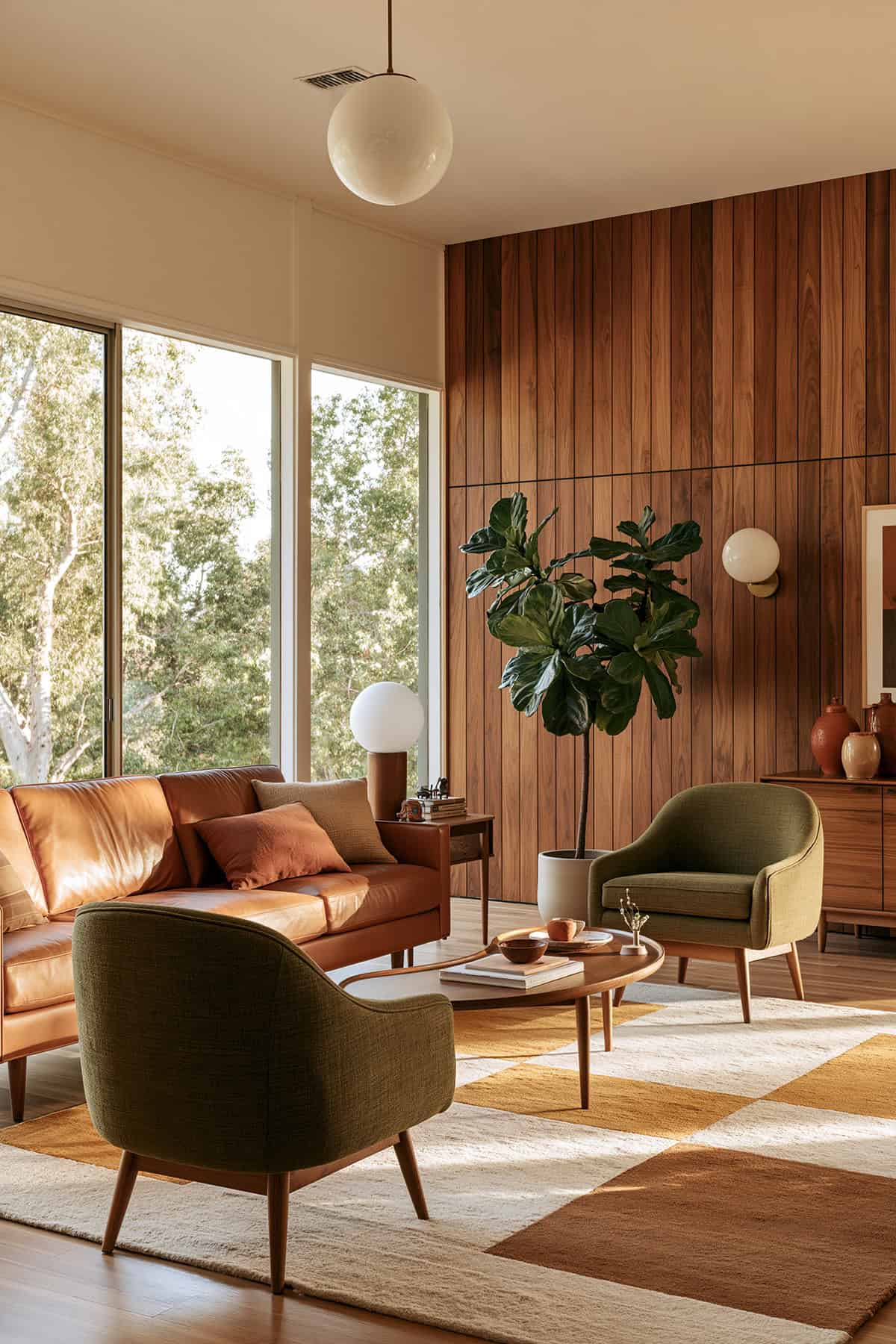
Mid-century furniture and earthy colors share a natural connection, especially through walnut, cognac leather, olive green, and burnt orange. Choose slim-legged pieces with simple silhouettes, then let warm wood cover one substantial surface such as a feature wall or built-in cabinet.
As shown here, caramel leather sits opposite two mossy green chairs, with a leafy tree between them. A geometric rug picks up several of those colors below. Globe lights provide a clean period-inspired detail overhead.
Mediterranean Earth Tones
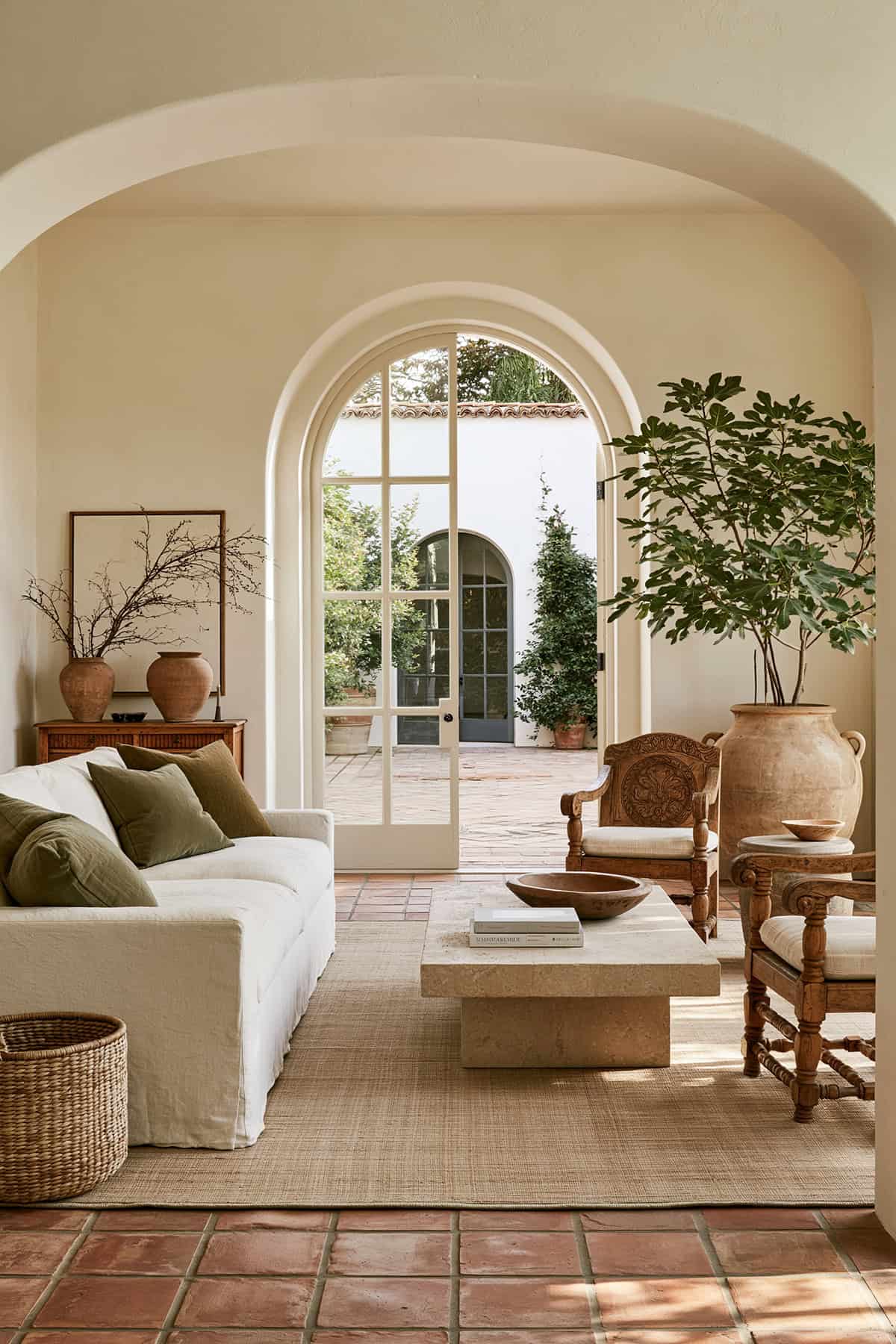
Terracotta floors provide an excellent starting point for a Mediterranean version of earthy decor. Pair them with creamy walls, substantial pottery, aged timber, woven baskets, and olive or moss-colored cushions. Arches are another useful detail if your home already has them.
The room here takes the idea further with a huge tree planted in an oversized earthen vessel. Carved wood chairs introduce decorative detail beside a very simple white sofa. Large clay pots placed around the room reinforce the sun-baked palette.
Japanese-Inspired Earthy Style
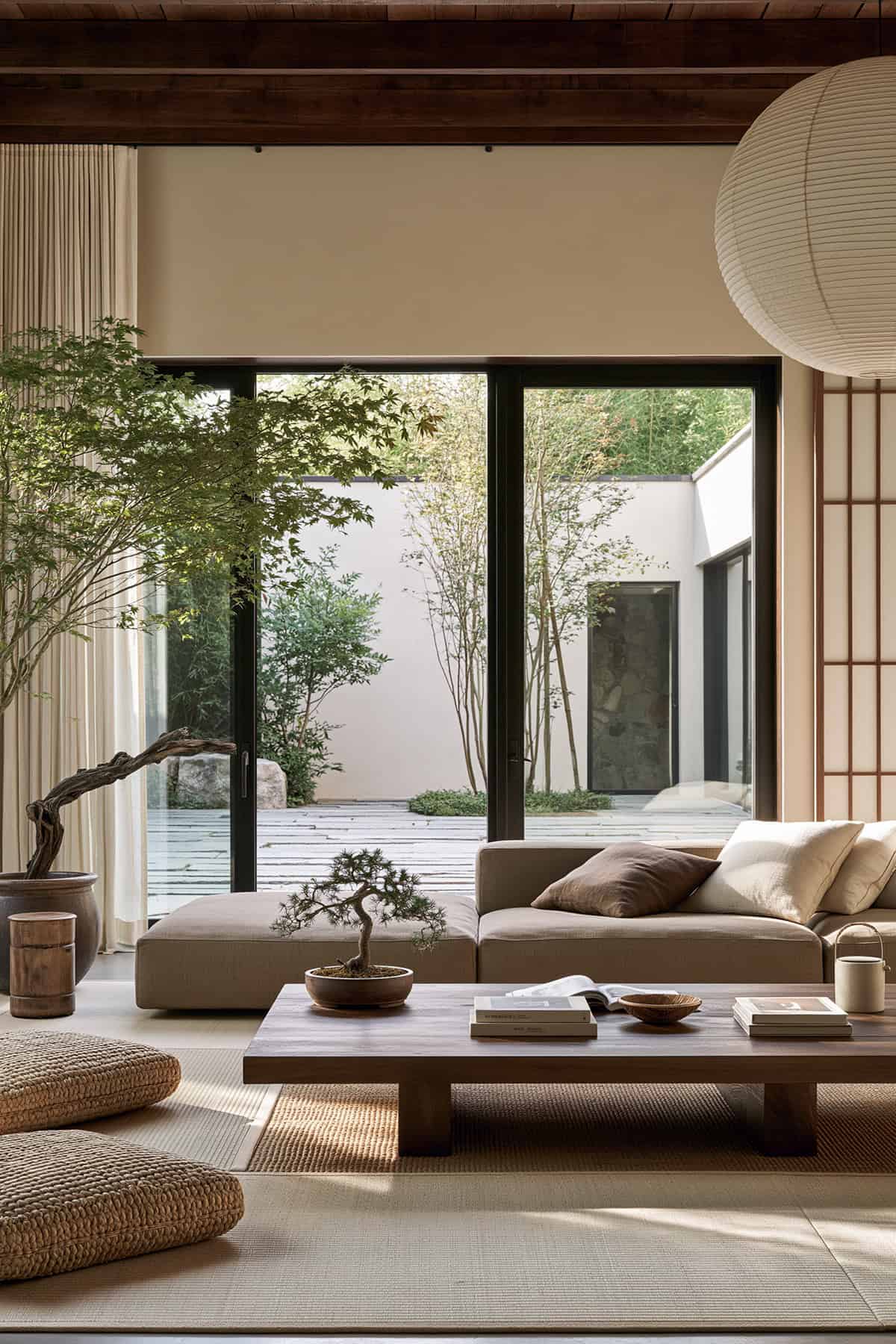
Try a lower furniture profile when you want a calmer, Japanese-influenced direction. A long wood coffee table, modular taupe sofa, floor cushions, and restrained ceramics create horizontal lines across the room, while pale walls leave plenty of visual space above.
Here, a small bonsai sits at the center of the table and a larger tree occupies the corner. Dark ceiling timber adds contrast overhead. Paper lantern pendants and screen-style panels are useful additions for this particular earthy approach.
Forest Green Accent Wall
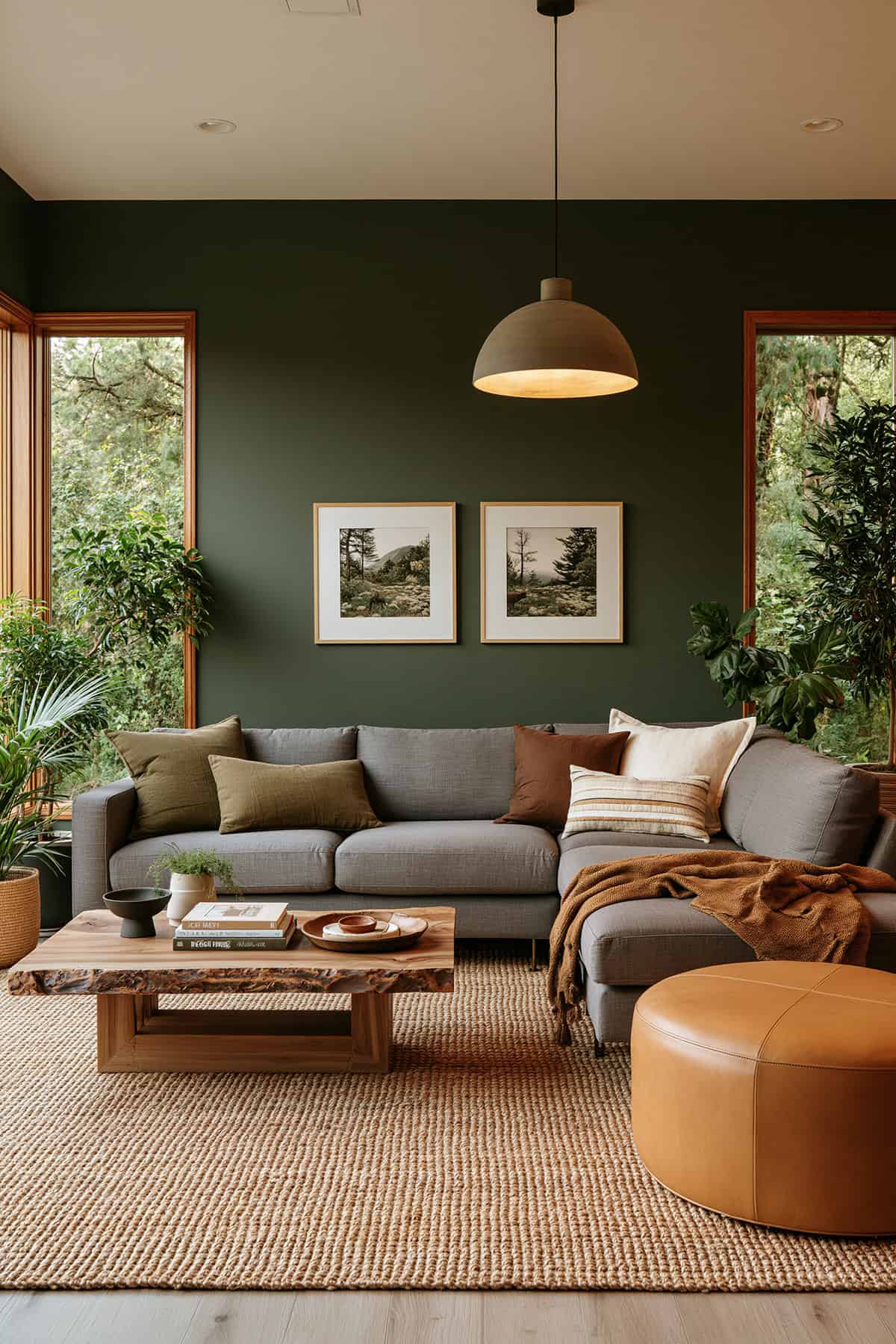
Forest green has enough depth to anchor an entire seating area, so you don’t need to repeat it across every piece of furniture. Paint one broad wall in a dark botanical shade, then introduce gray, tan, camel, and warm wood nearby.
In this room, the gray sectional creates a neutral middle ground between the wall and cognac ottoman. The live-edge coffee table adds an irregular natural detail at the center. Try several leafy plants near windows to extend the green beyond the painted surface.
Earthy Minimalism
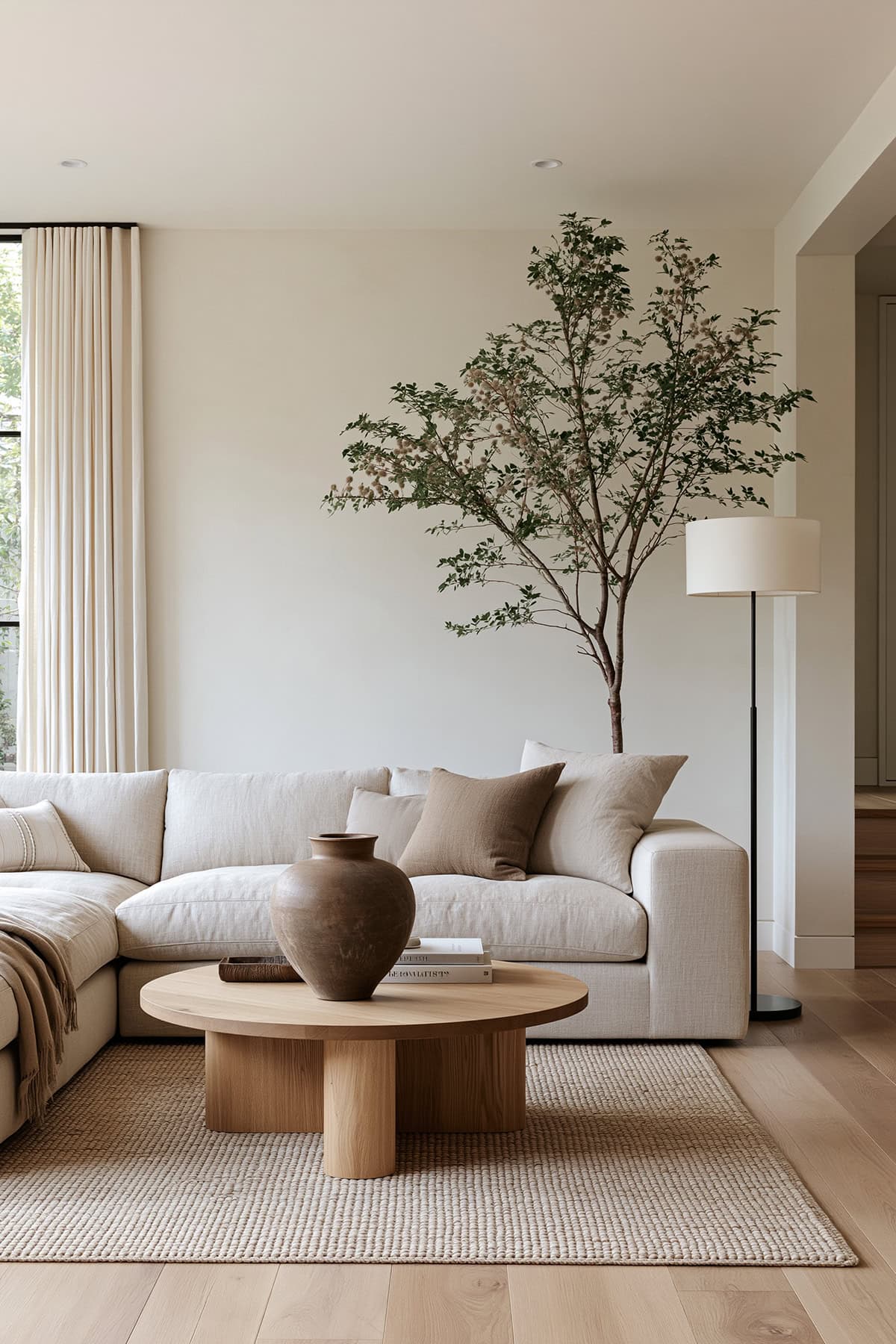
Earthy minimalism relies more on scale and material than a large collection of decor. Start with cream seating and pale wood, add a coarse neutral rug, then choose one oversized ceramic vessel rather than several tiny accessories.
The homeowner here places a broad brown pot right at the center of the coffee table, where its darker shade has plenty of impact. A tall indoor tree provides the main organic shape behind the sofa. Taupe cushions introduce just enough tonal variation across the pale seating.
Textured Clay Ceiling
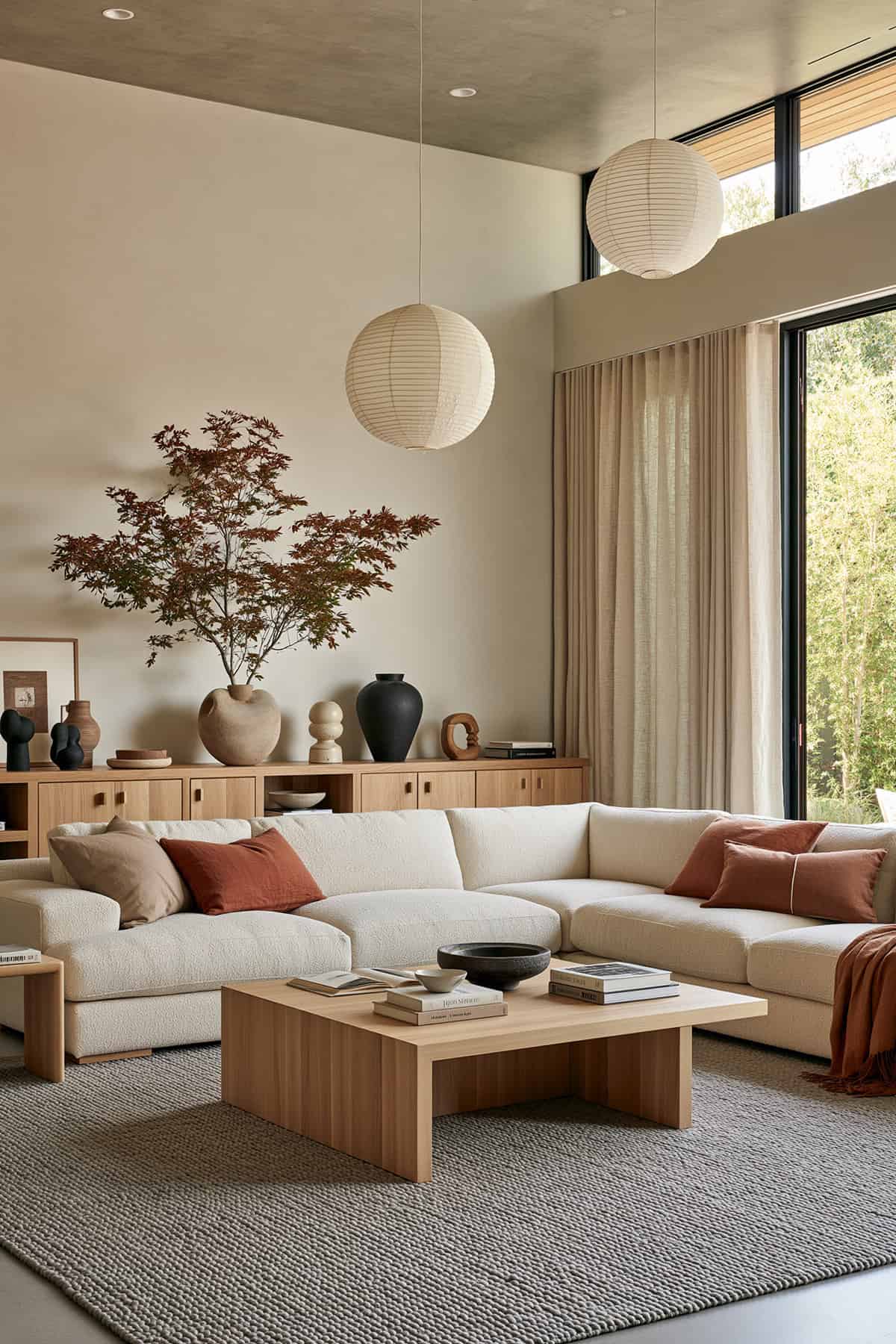
The ceiling is an unexpected place to introduce an earth tone. Try a muted clay, mushroom, or mineral finish overhead while the walls remain cream; this creates a warmer envelope around the room without sacrificing the brightness of pale vertical surfaces.
Below, light wood cabinetry and a chunky coffee table connect visually with the ceiling, while rust cushions repeat its warmth more directly. Large paper lanterns draw attention upward. Black and brown pottery scattered across the cabinet adds a few deeper notes.
Make a Tree the Centerpiece
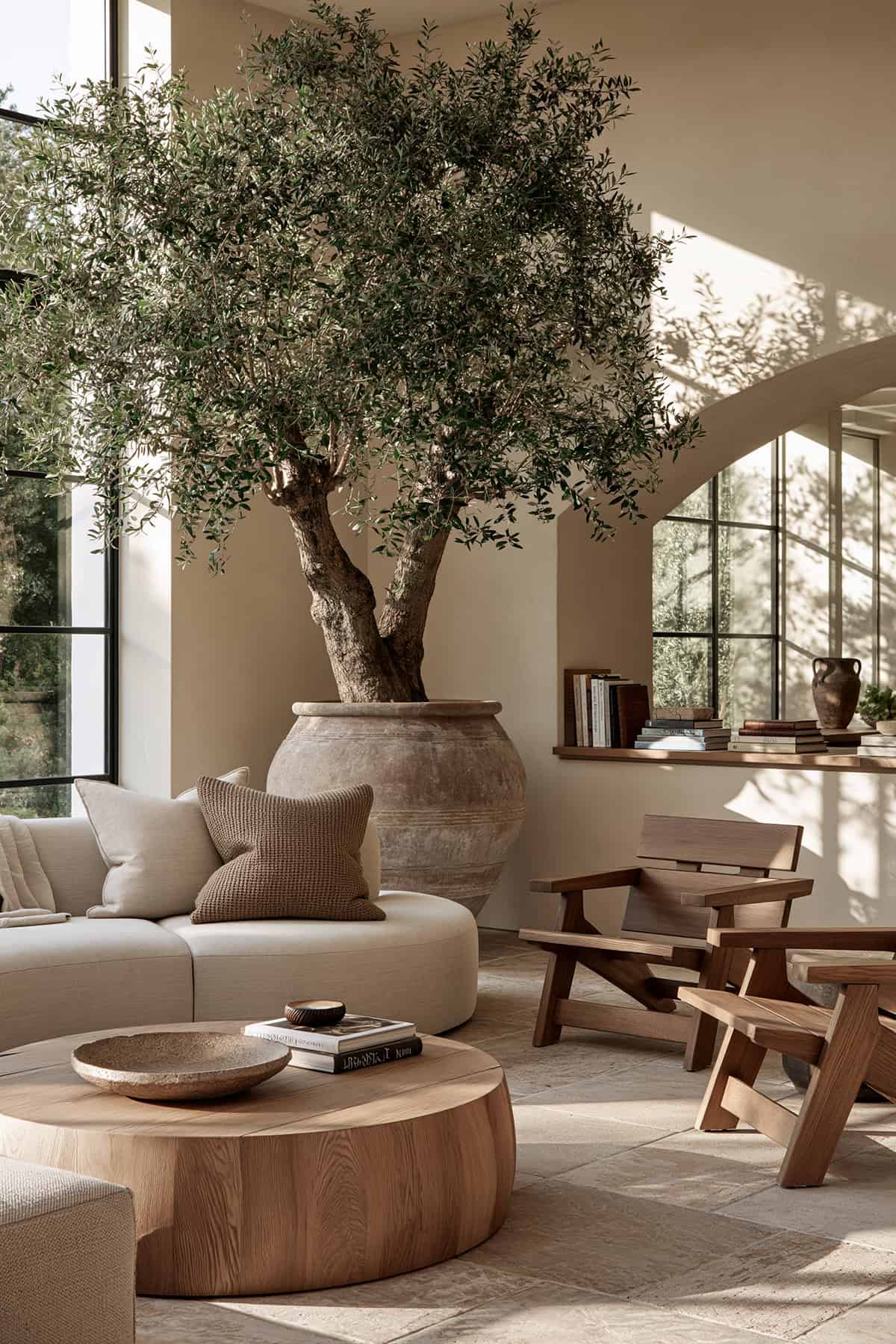
One oversized tree may have far more presence than a collection of little houseplants. Choose a mature olive, ficus, or similar tree and place it in a substantial clay or stone-look vessel near the seating area. Leave enough open space around the canopy so its shape remains clear.
This room demonstrates the idea at dramatic scale, with the tree rising above a curved cream sofa and chunky wooden table. Low timber chairs balance its visual weight across the opposite side. Sandy walls and stone flooring complete the restrained backdrop.
Create an Earthy Gallery Wall
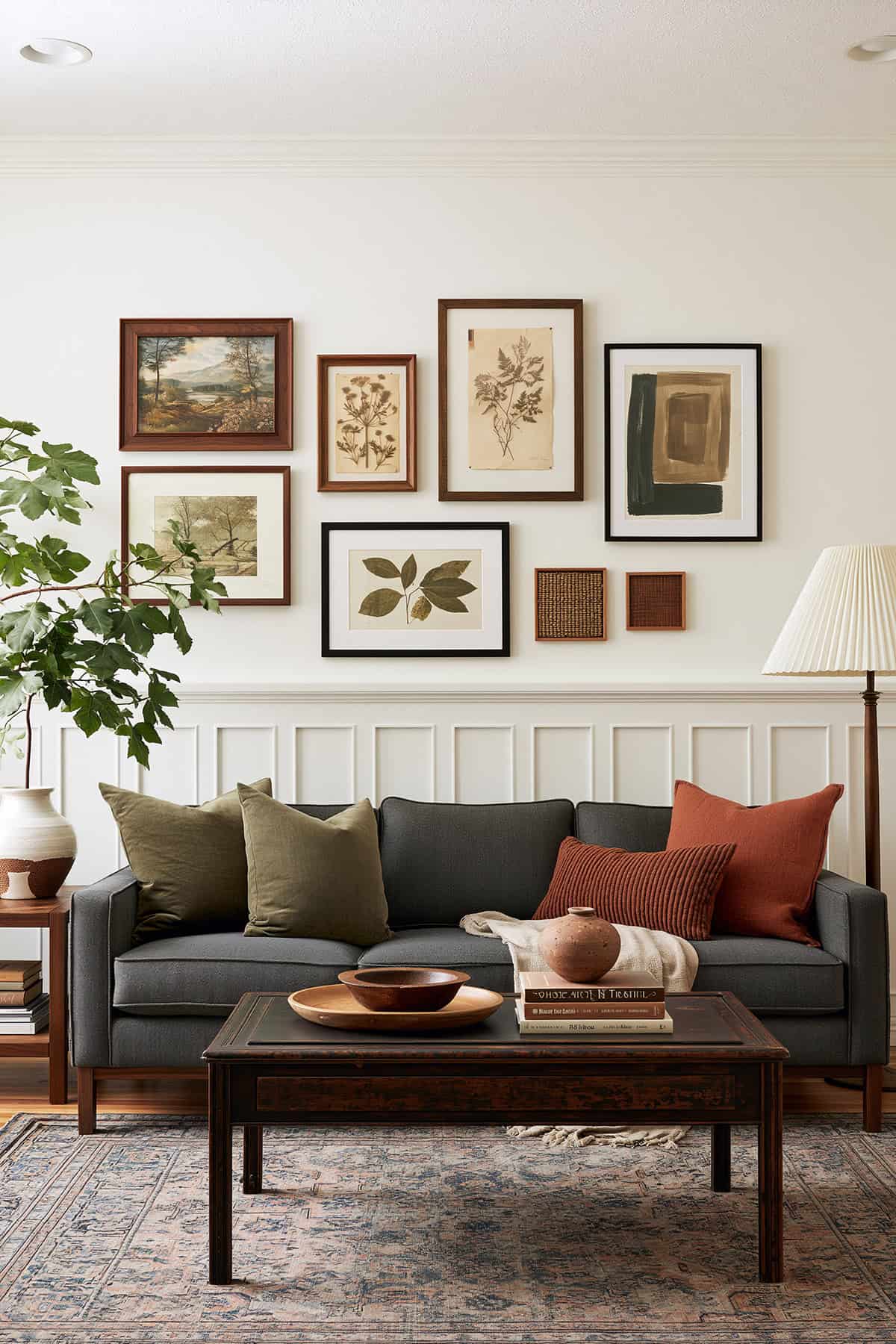
A wall full of art makes this room look as though it came together over years rather than in one decorating session. Botanical studies sit beside landscapes and a simple abstract piece, with brown and black frames adding just enough variation.
Below, the charcoal sofa brings a darker anchor to all those pale walls. Olive and rust pillows echo the colors found in the artwork, while the worn rug and dark wood table give the lower half of the room plenty of warmth.
Reclaimed Brick Wall
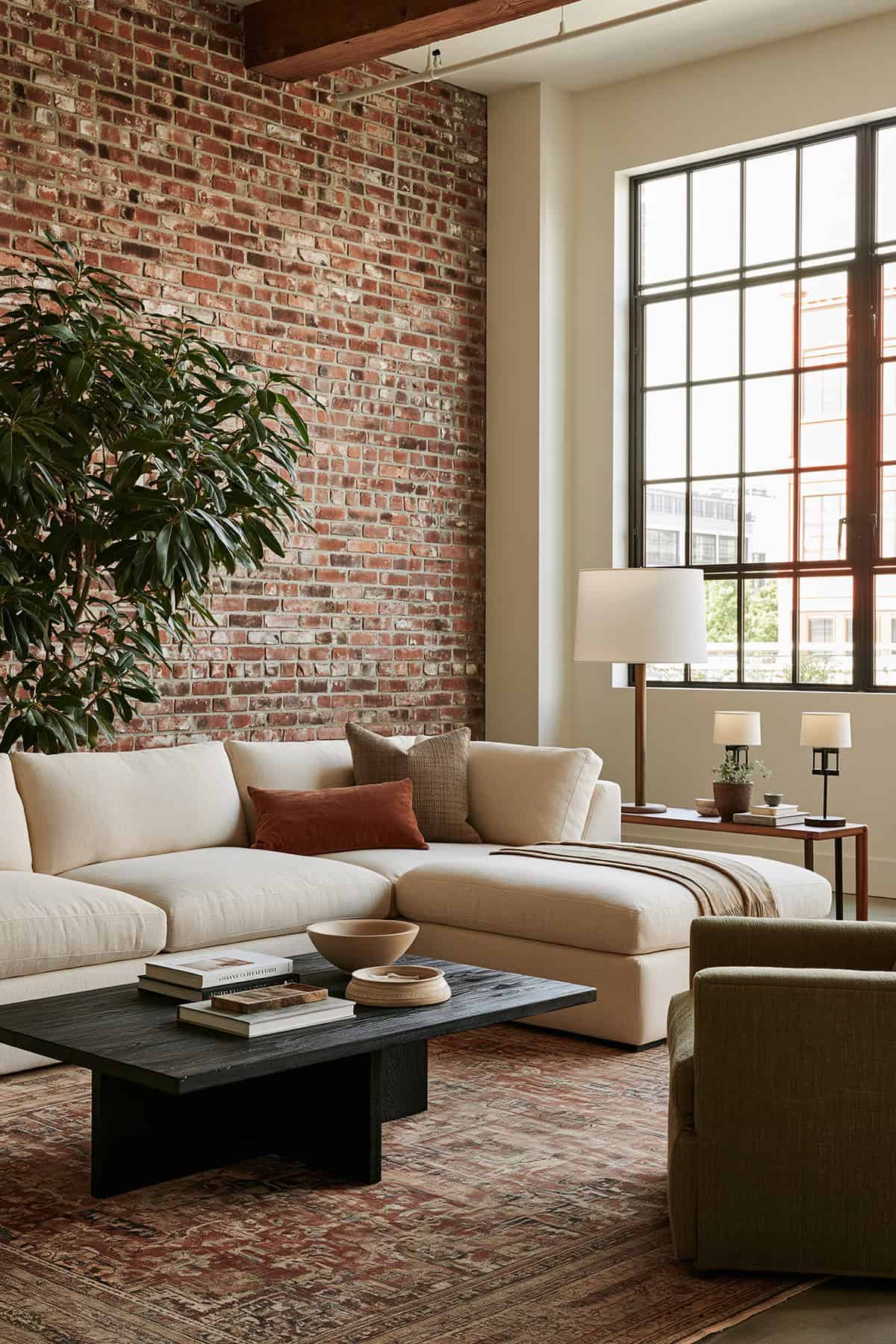
That enormous brick wall does most of the work here. Its faded reds, uneven mortar, and old surface bring much more character than a perfectly smooth accent wall ever could.
The rest of the room stays surprisingly clean. A creamy sectional softens all that rough brick, while the black coffee table picks up the steel window frames. Even the muted red rug seems connected to the wall without matching it too closely.
Exposed Wood Beams
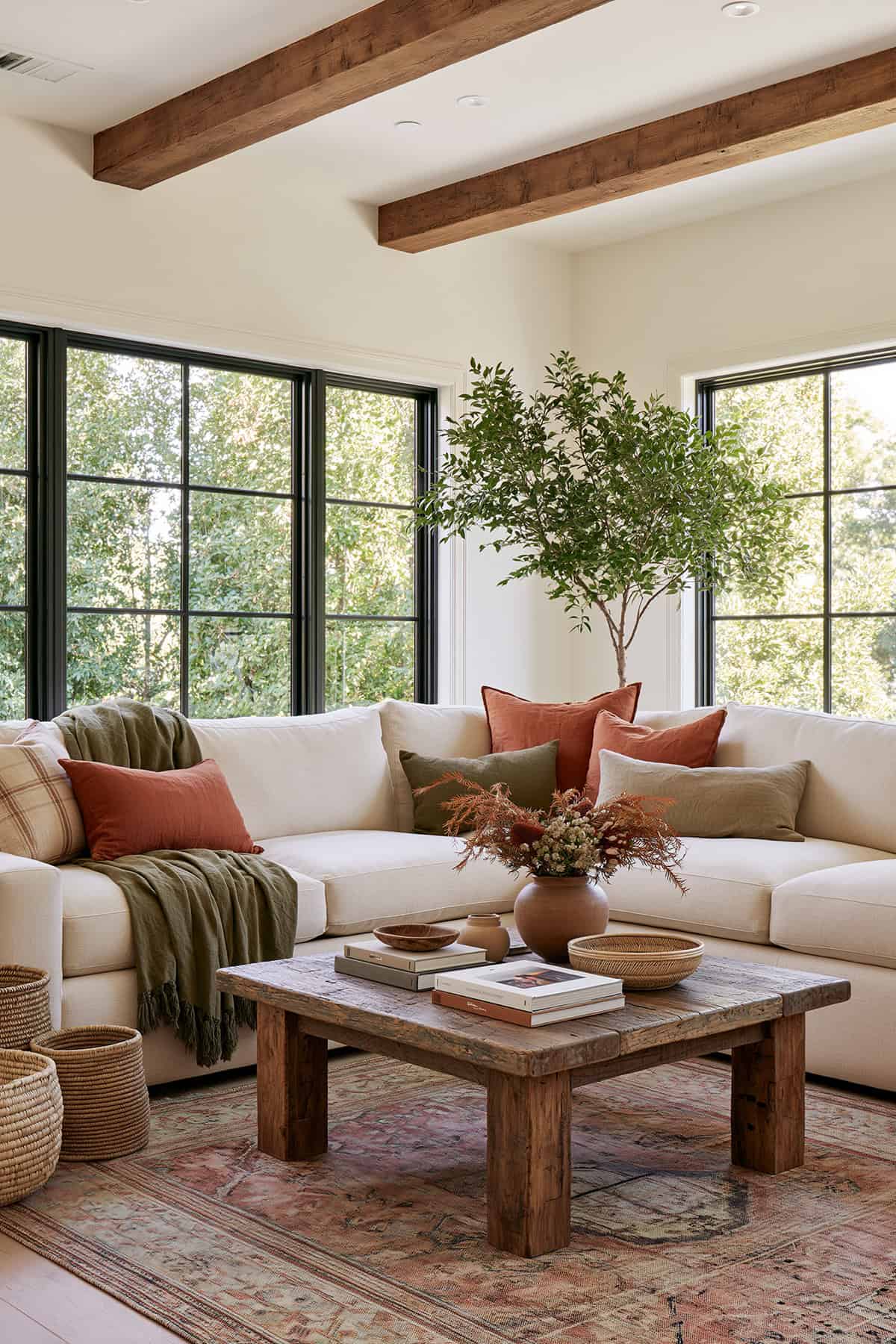
It is hard not to look up first in this room. Those heavy timber beams cross an otherwise bright ceiling, and their warm brown color immediately gives the open space more character.
The furniture below takes a quieter route. A huge cream sectional fills the corner, with olive throws and rusty pillows scattered across it. Then there is that chunky wooden coffee table in the middle—simple, substantial, and a little rough around the edges.
Built-In Plaster Seating
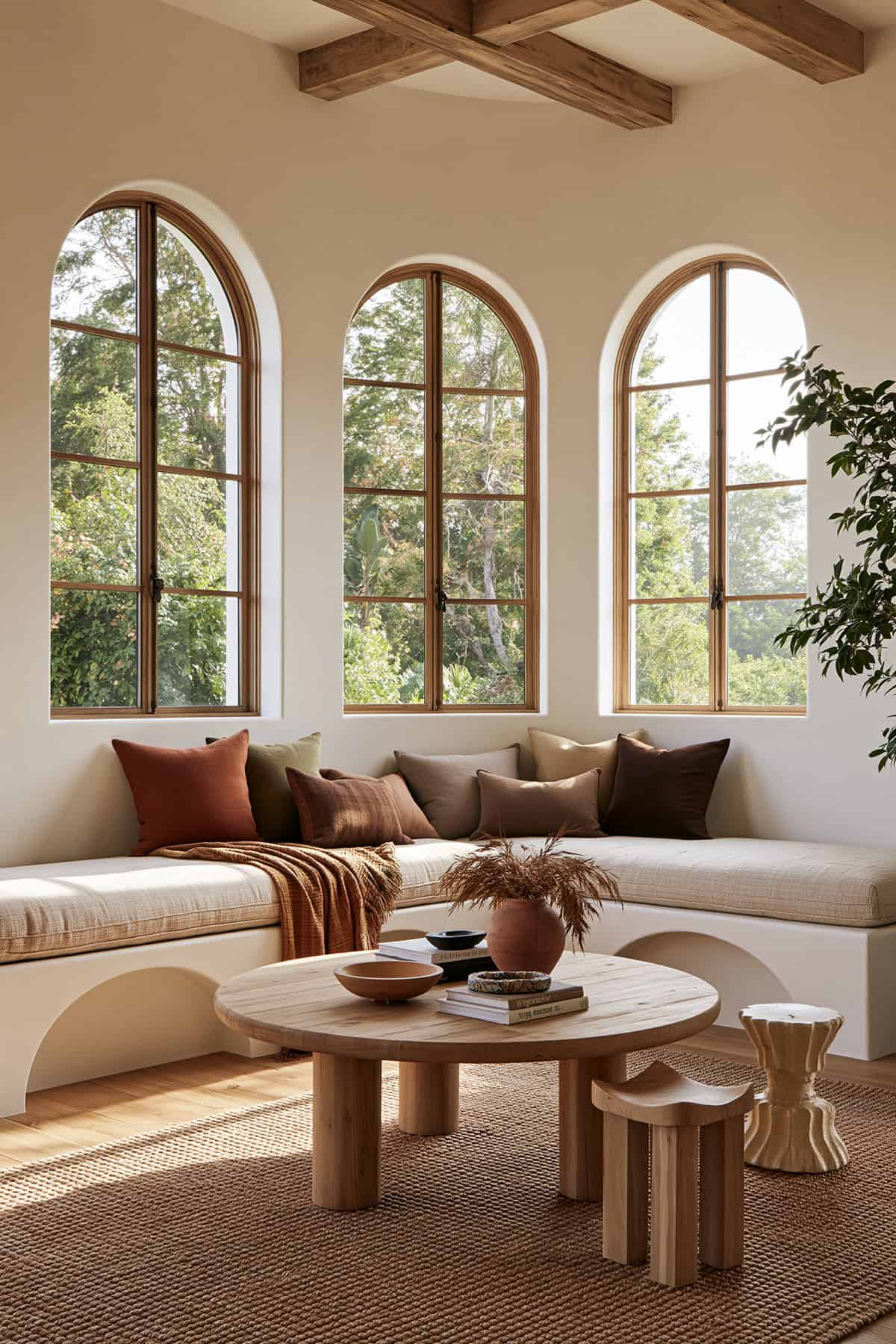
What if the sofa were actually part of the room? Here, a long plaster bench wraps around the corner beneath three tall arched windows, with thick cream cushions laid across the top.
The architecture has such soft curves that very little decoration is necessary. Rust, brown, olive, and taupe pillows provide most of the color. Even the coffee table and small wooden stools have rounded forms, so nothing looks too sharp against those arches.
Arched Wooden Shelves
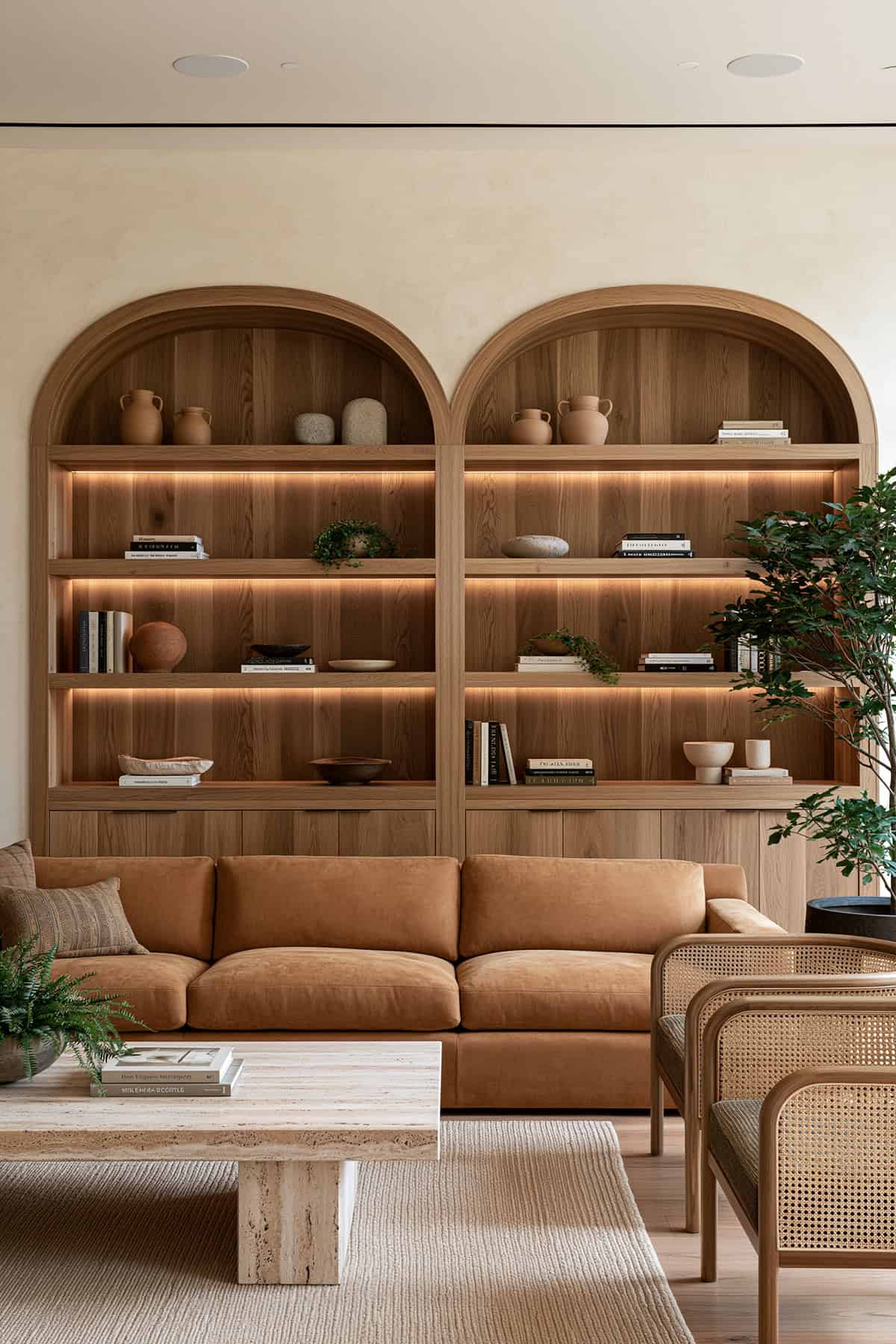
The shelving almost looks like a pair of enormous wooden doorways at the back of this room. Their rounded tops soften the full wall of cabinetry, while hidden lights cast a warm glow across books, pottery, stone pieces, and small plants.
A caramel sofa continues that rich brown palette below. Cane chairs add another natural texture, but the pale stone coffee table breaks up all the timber. It is warm and earthy without becoming rustic or overly decorated.
Open the Room to the Garden
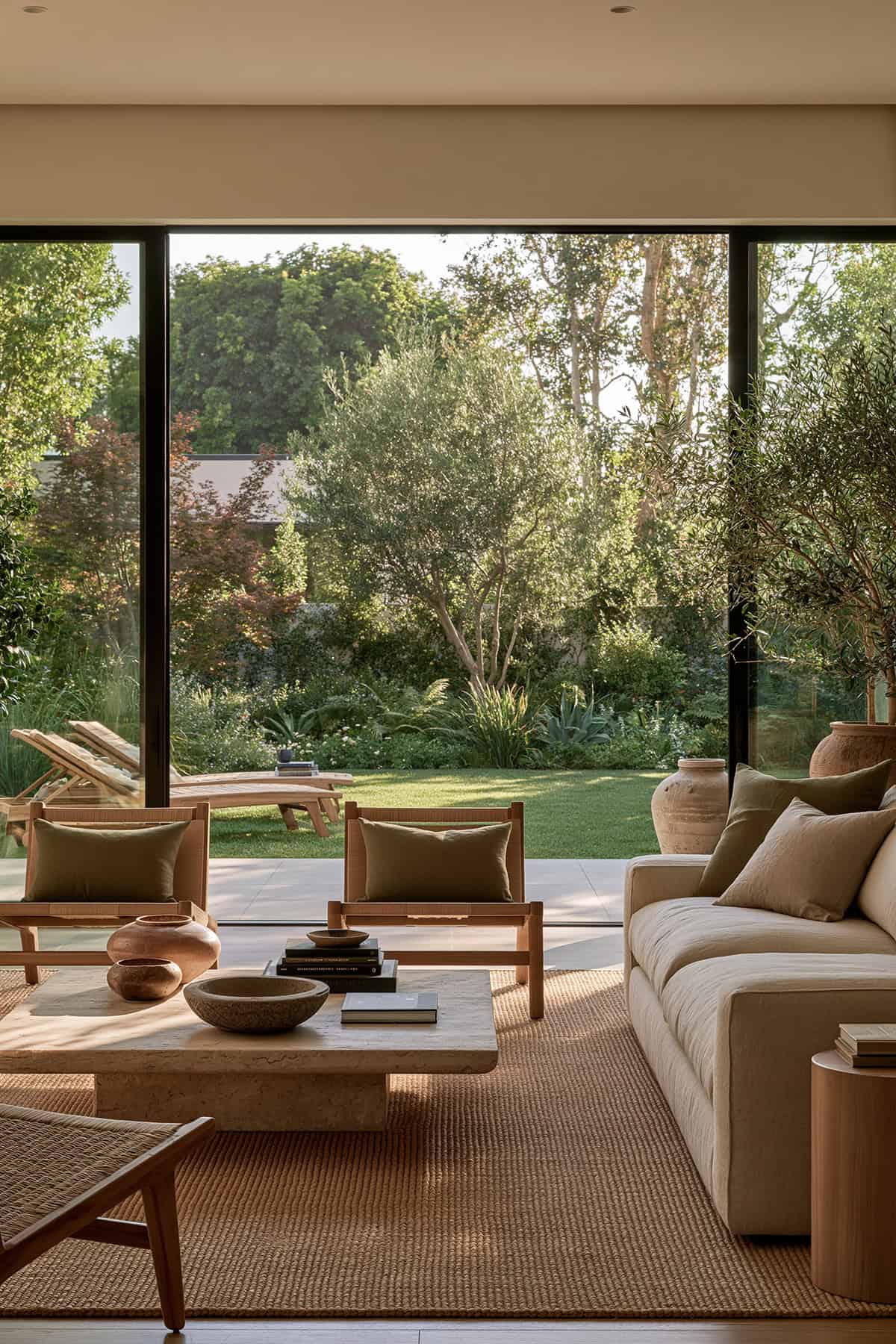
The garden practically becomes the fourth wall here. Huge panes of glass reveal layers of trees, shrubs, lawn, and outdoor loungers, so green enters the room without much help from indoor decor.
Inside, everything is quieter: a cream sofa, wooden chairs, olive cushions, woven flooring, and a broad stone table. Large clay vessels near the glass make a lovely connection between the two spaces. This is the kind of room where the view deserves most of the attention.
Earthy Coastal Style
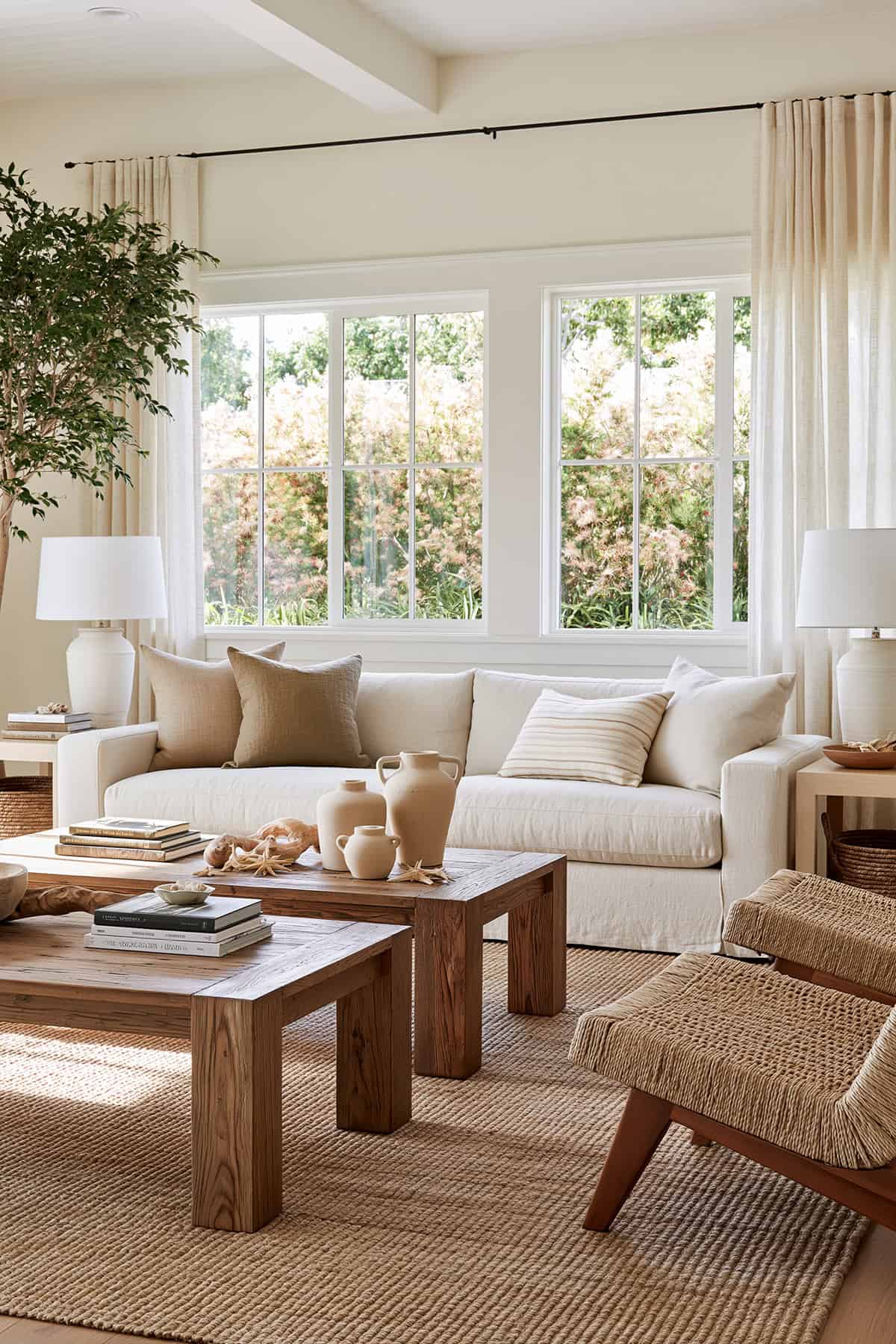
This room has the brightness of a coastal home, but none of the predictable blue stripes or seaside accessories. Cream upholstery and curtains keep everything airy, while warm wood and woven fibers pull the space back toward earthier territory.
Two chunky timber tables give the center real weight. The woven lounge chair and textured rug add a rougher touch against all that soft white fabric. Even the ceramic vessels stay within a sandy, sun-baked palette.
Collected Earthy Boho Decor
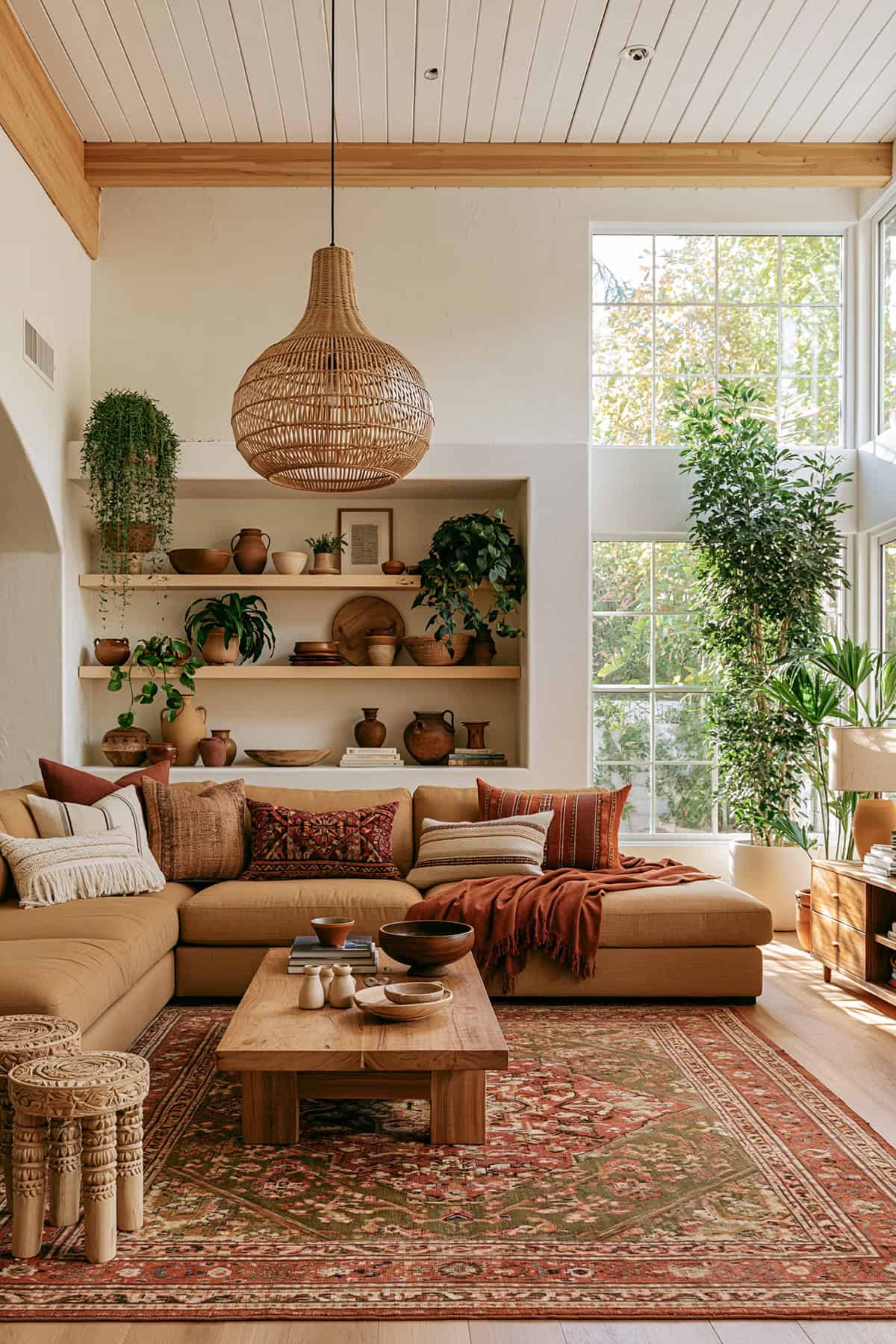
There is a lot to look at here, yet the room never seems random. Pottery, plants, books, patterned pillows, carved stools, and a huge woven pendant all have their own personalities, almost like pieces collected from different places.
Warm tan upholstery keeps the larger furniture fairly simple. Rust and cream textiles add more color, while the traditional rug pulls those shades together underneath. The shelves are especially fun—they resemble a casual display of favorite objects rather than carefully staged decor.
Desert-Inspired Sand Tones
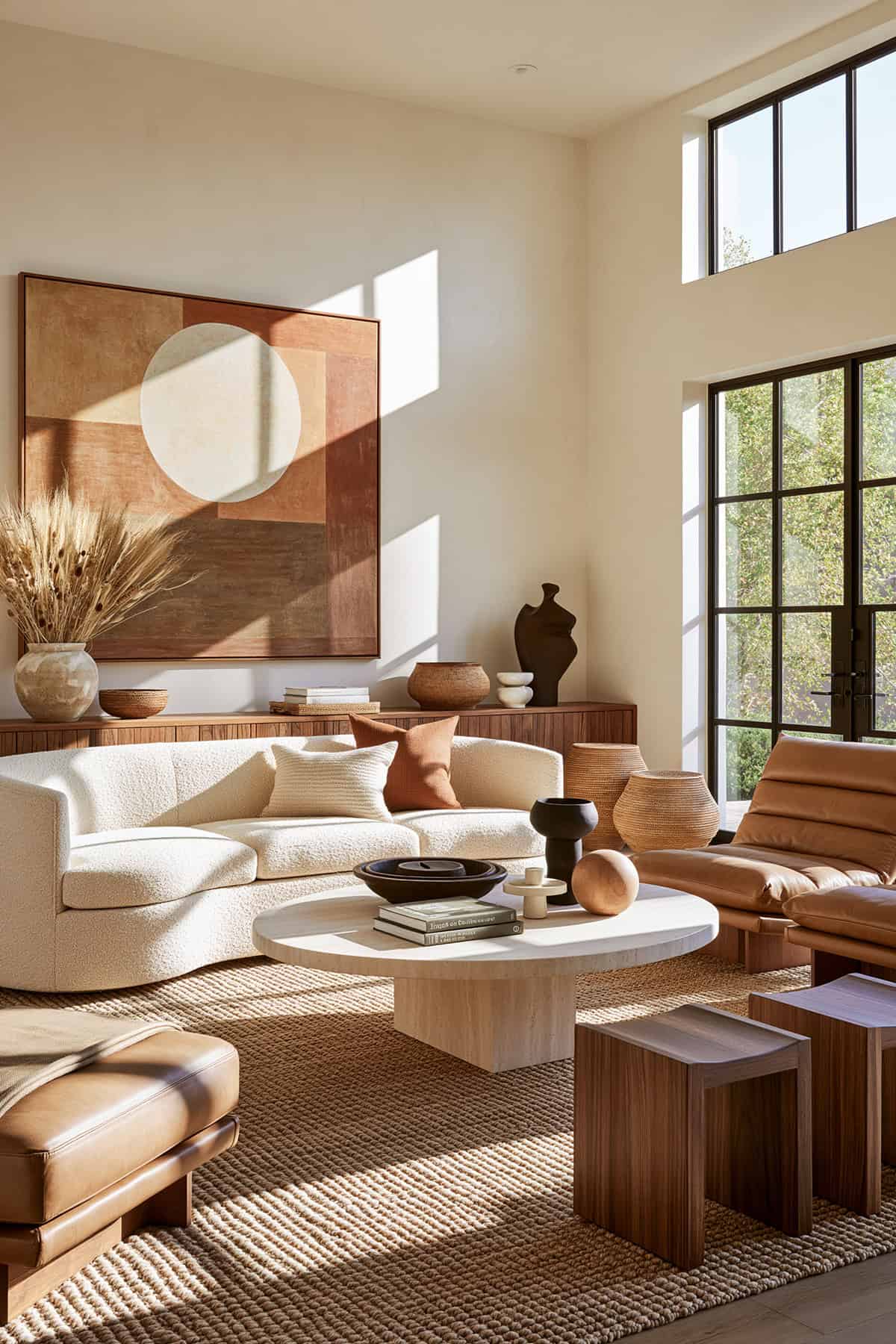
Sunlight is probably the best decoration in this room. It cuts across the cream walls and oversized artwork in sharp geometric shapes, which gives the restrained palette much more depth.
The curved white sofa has a soft, almost sculptural shape beside the tan leather seating. Wood, woven fibers, pottery, and dried grasses fill in the browns without making the room dark. There are very few strong colors here, yet the different surfaces keep your eye moving.
Deep Ochre and Cream
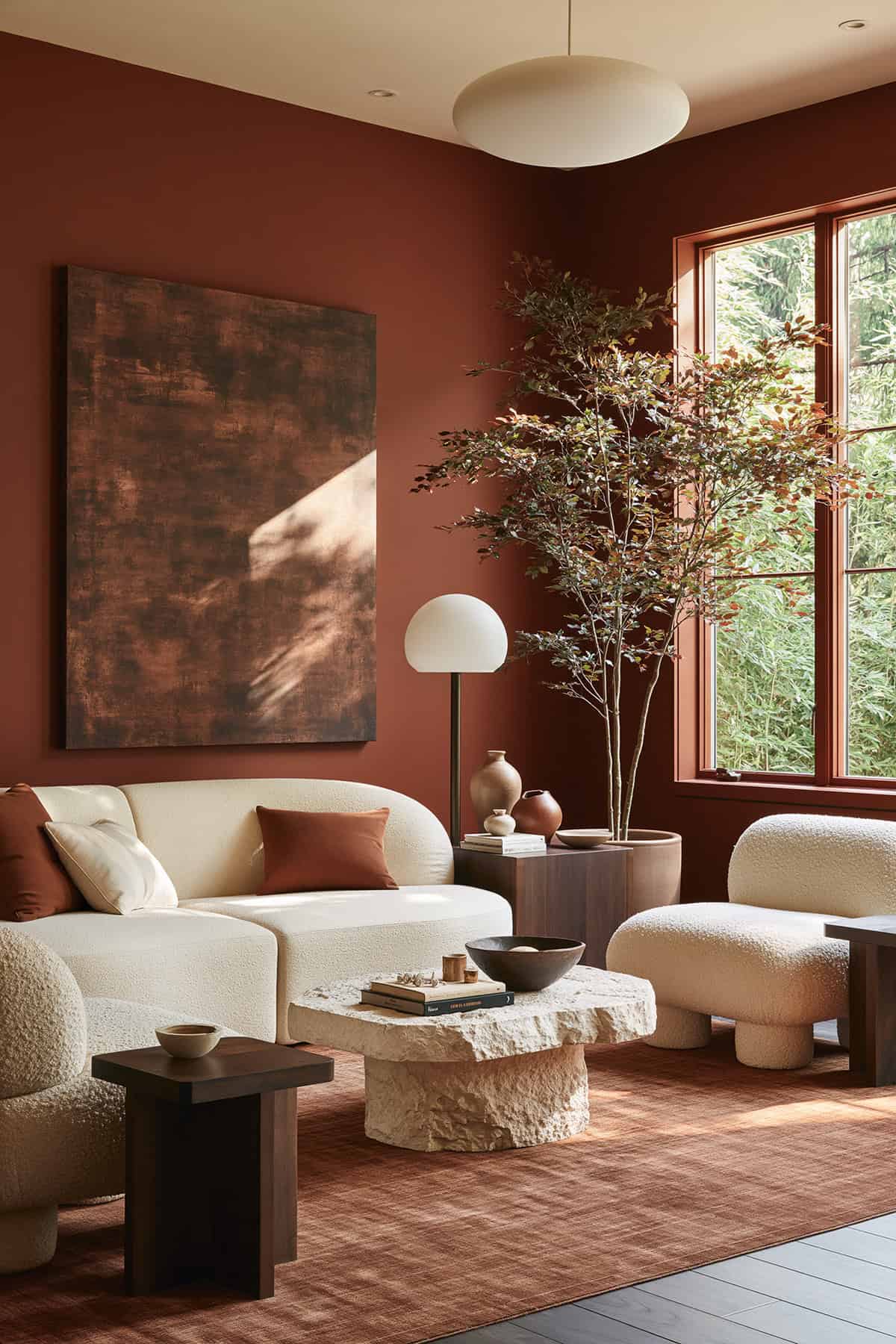
This is what an earthy palette looks like when beige takes a back seat. Deep reddish ochre covers the walls and window trim, so the entire room has a warm, cocoon-like quality.
Against that backdrop, the chunky cream sofa and chair look almost luminous. A rough stone coffee table adds another pale surface, but its irregular texture keeps it far removed from anything sleek. The tall indoor tree is a beautiful interruption to all those reds and browns.
Chocolate Brown and Cream
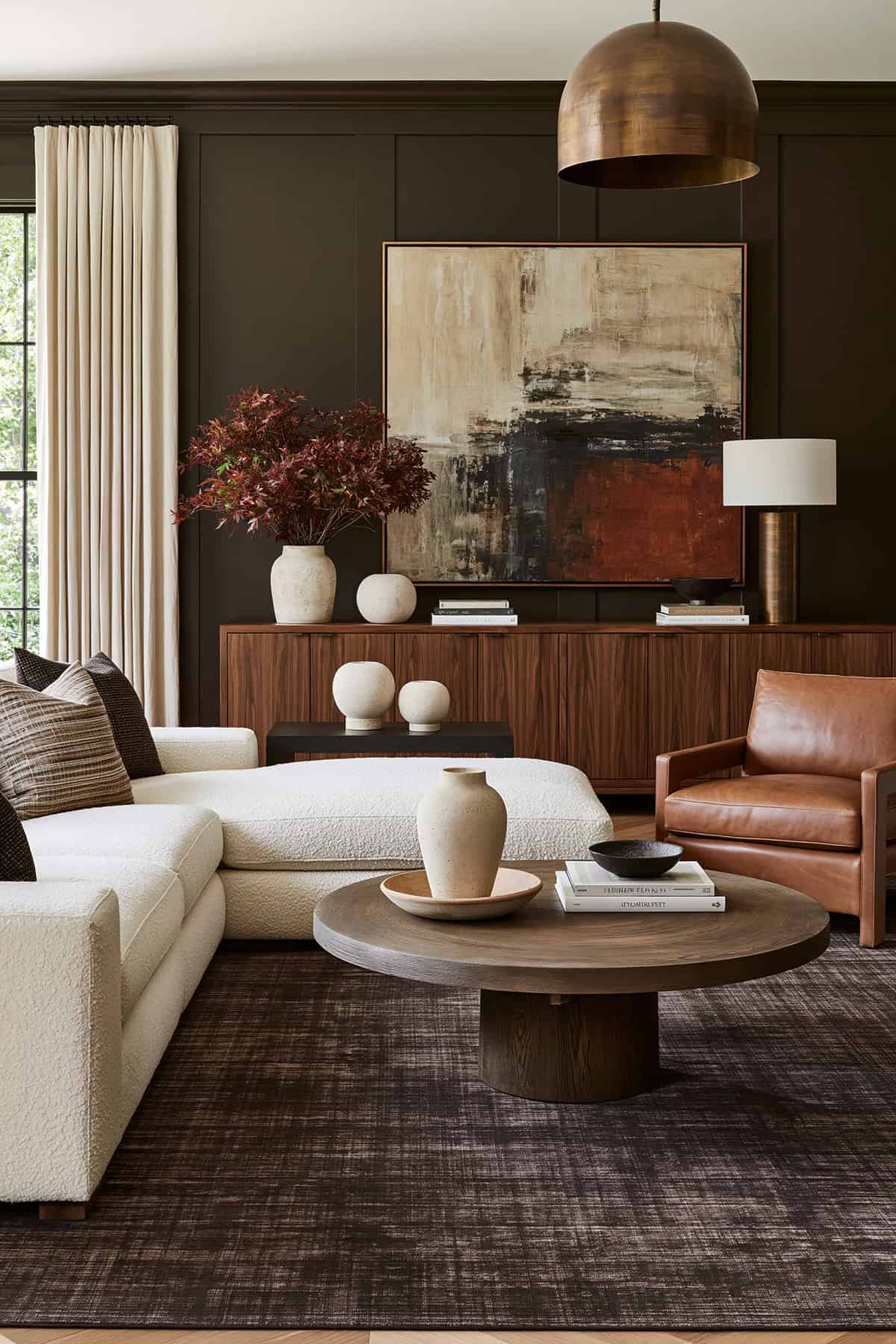
Dark brown walls give this room a completely different personality from the lighter neutral spaces. The paneled surface behind the furniture creates depth, then the oversized abstract painting introduces cream, black, rust, and brown in one dramatic piece.
The large boucle sectional provides a much-needed pale contrast. Walnut cabinetry and caramel leather sit comfortably between those light and dark extremes. A bronze pendant overhead adds one final warm note without demanding too much attention.
Charcoal, Camel, and Wood
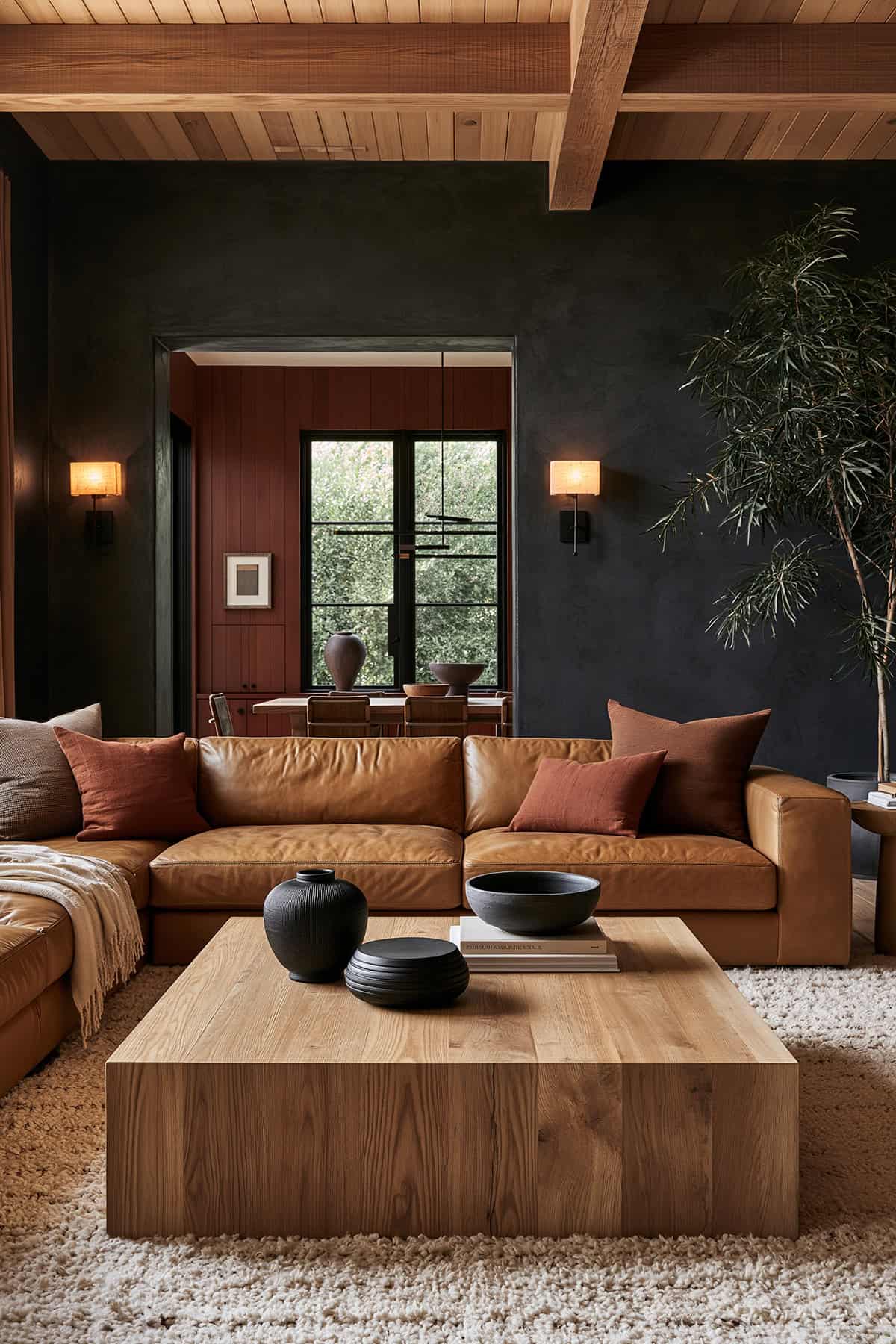
There is something almost cabin-like about the combination of black walls, timber ceilings, and camel leather here, although the clean furniture keeps it firmly contemporary. The leather sectional has plenty of natural creases and variation, which looks great against the flat charcoal wall.
A massive block-style wood table dominates the foreground. Black ceramic vessels repeat the wall color on a smaller scale, while the thick cream rug brightens everything below. Warm wall sconces make the dark backdrop look even richer.
Warm Autumn Earth Tones
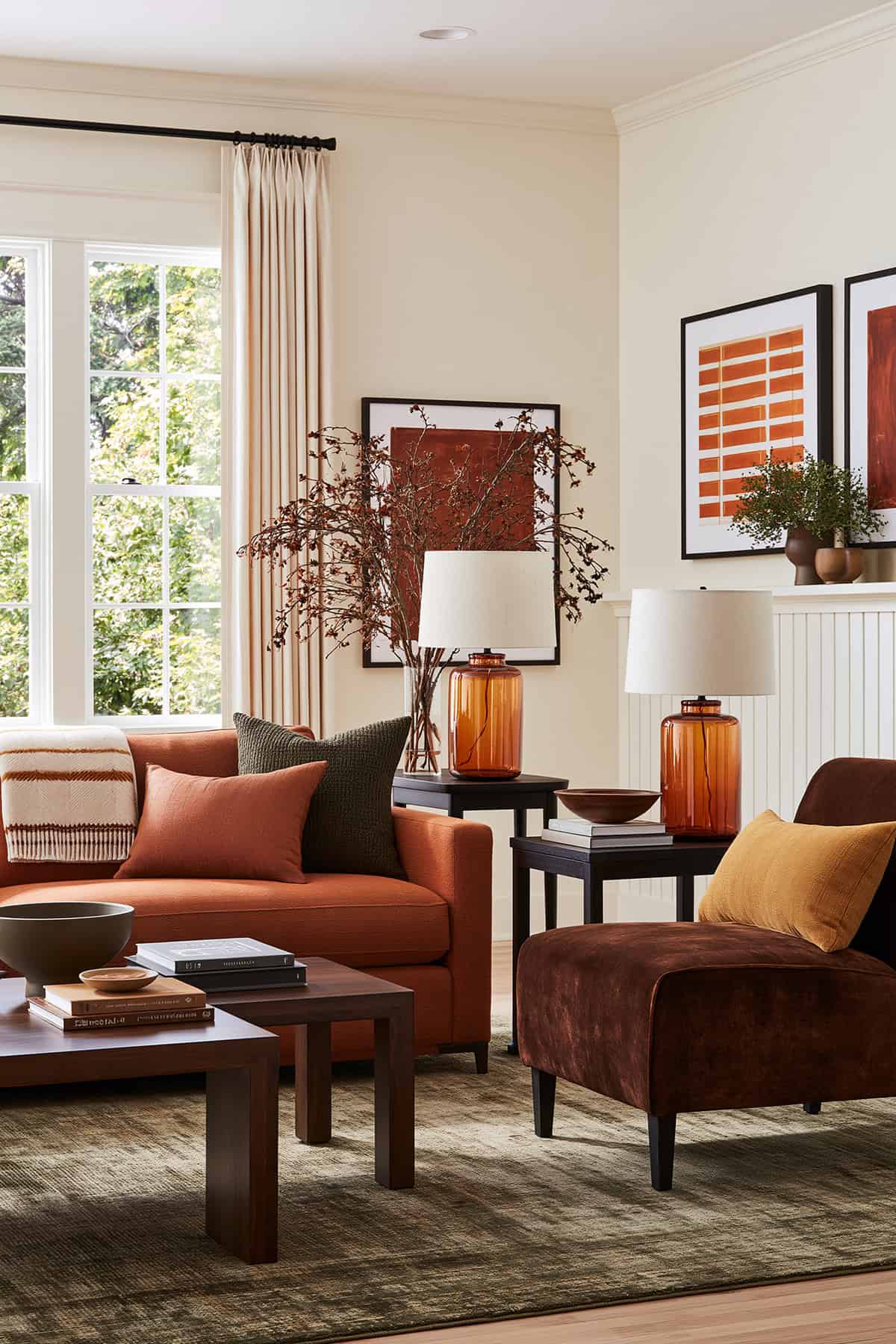
Rust, amber, chocolate, mustard, and olive all appear here, but the cream walls stop the palette from becoming too heavy. The orange sofa immediately catches the eye, especially beside that deep brown chair and golden pillow.
I love the amber glass lamps in this room. They repeat the sofa color in a subtler, almost translucent way. Dark tables add definition between all those warm shades, while the graphic artwork above keeps the arrangement from drifting too far into traditional autumn decor.
Adobe-Style Rounded Niches
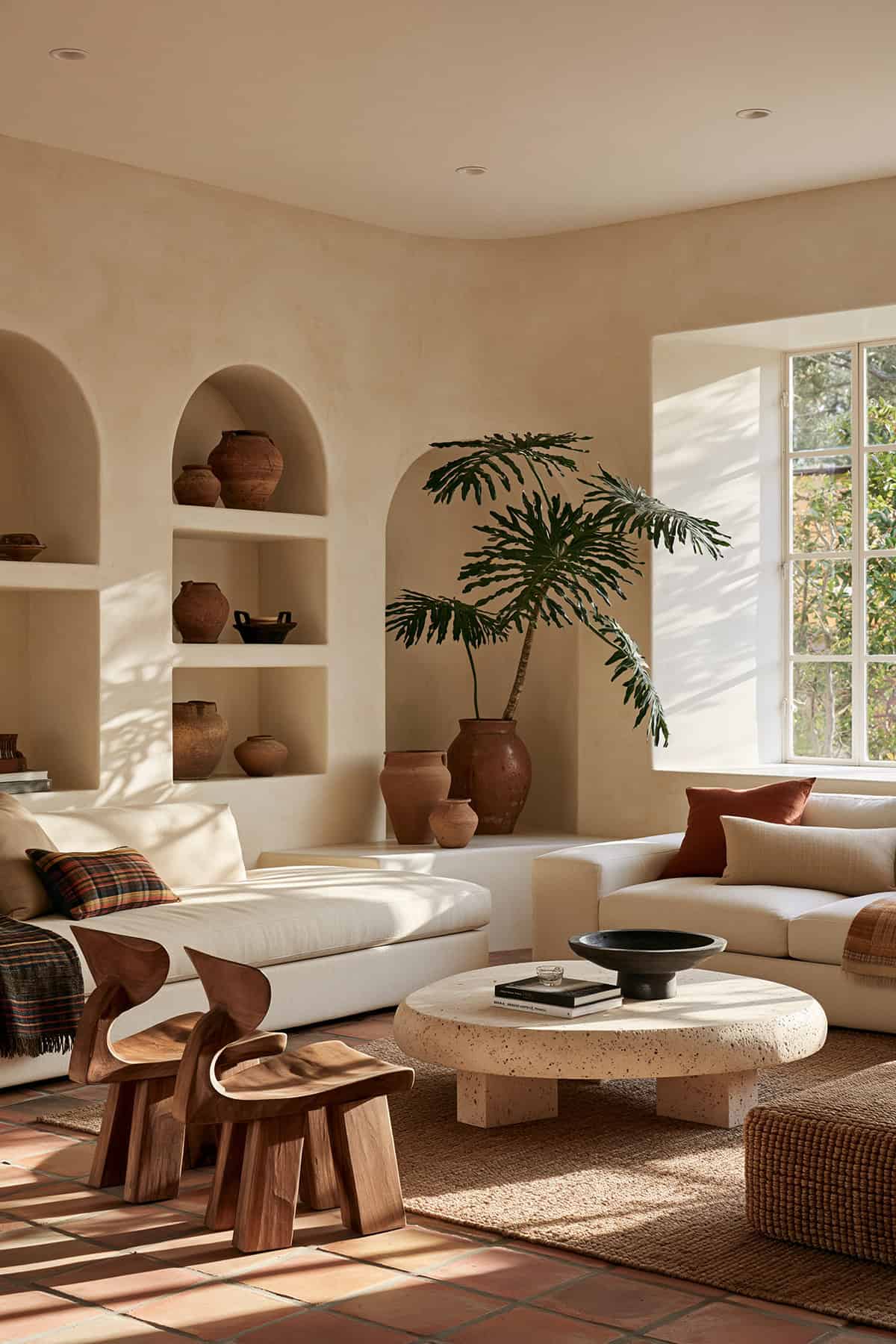
The niches are the part I would remember after leaving this room. Different sizes and depths give the plaster wall an almost hand-built quality, with terracotta pots and one sculptural plant tucked into the openings.
Cream sofas sit low against the warm walls, so the furniture seems closely connected to the architecture. A broad stone coffee table occupies the center without looking heavy. Then those little wooden chairs introduce an unexpected carved shape among all the soft curves and earthy pottery.