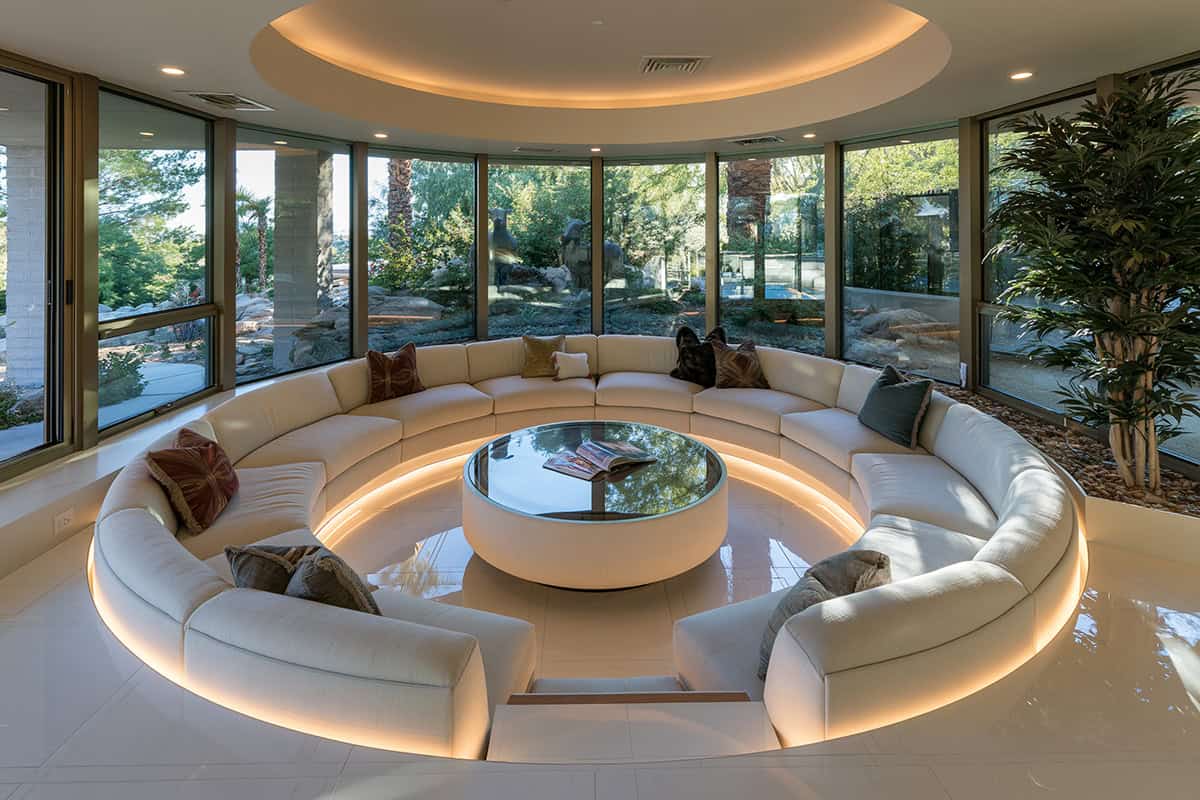
Sunken seating disappeared for years, yet it has found its way back into modern homes. Designers now pair the classic concept with cleaner lines, warmer materials, and layouts suited to everyday living. Check out these living room conversation pit ideas and see why the comeback keeps gaining momentum.
Table of Contents
- Living Room Conversation Pit Ideas
- Japandi-Inspired
- White Minimalist
- Ultimate Luxury
- Sunken With Central Fireplace
- Mid-Century Modern Style
- Double-Level
- Dark Moody
- Wraparound Bookshelves
- Water Views
- Velvet Upholstery
- Suspended Pendant Cluster
- Integrated LED Lighting
- Indoor-Outdoor Connection
- Indoor Fire Bowl
- Hanging Fireplace
- Fluted Wood Panelling
- Floor Cushions
- Floating Stair Access
- Curved Wood Wall
- Built-In Planters
- Black Stone Fireplace
- Conversation Pit In A Mountain Lodge
- Beneath Vaulted Ceilings
- Beneath A Skylight
- Conversation Pit And Home Bar Combination
- Coastal Style
- Curved Seating
- Around A Coffee Table
Living Room Conversation Pit Ideas
The range here spans material palettes, spatial scales, and architectural approaches, from Japandi restraint to mountain lodge weight to coastal lightness. Each format works from a different set of design priorities, and matching your pit to your existing architecture and lifestyle will determine which direction makes sense.
Japandi-Inspired
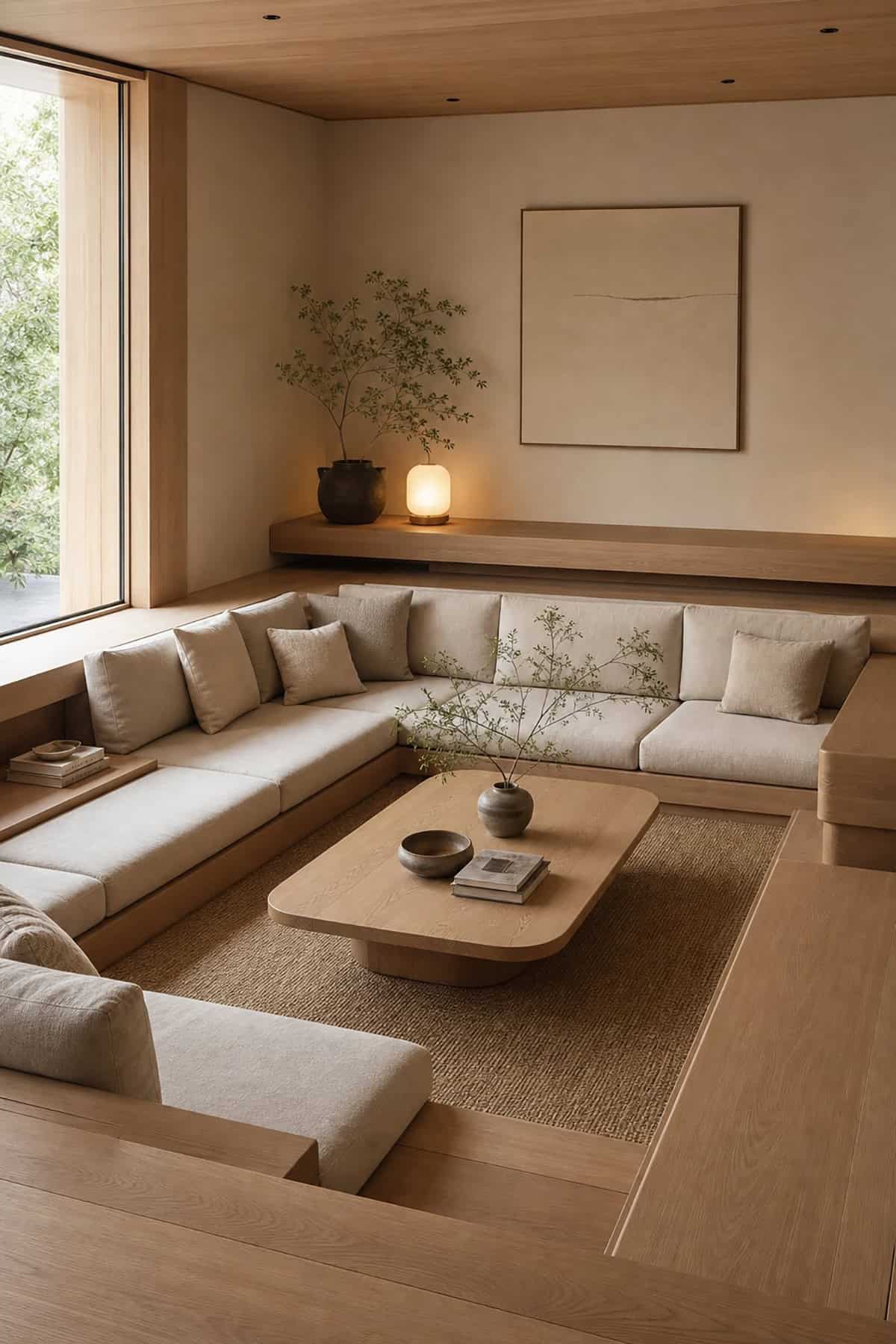
A Japandi conversation pit combines light wood, soft neutral fabrics, and clean built-in seating. White oak, ash, linen, and stone create a simple palette that keeps the space bright without looking cold. Keep the recess shallow so it blends naturally with the rest of the living room.
Choose a low rectangular or round coffee table in wood or stone, then add a woven jute rug for texture. Decorate sparingly with a few handmade ceramic pieces and warm recessed lighting. Open shelves and bare walls suit this style better than crowded displays.
White Minimalist
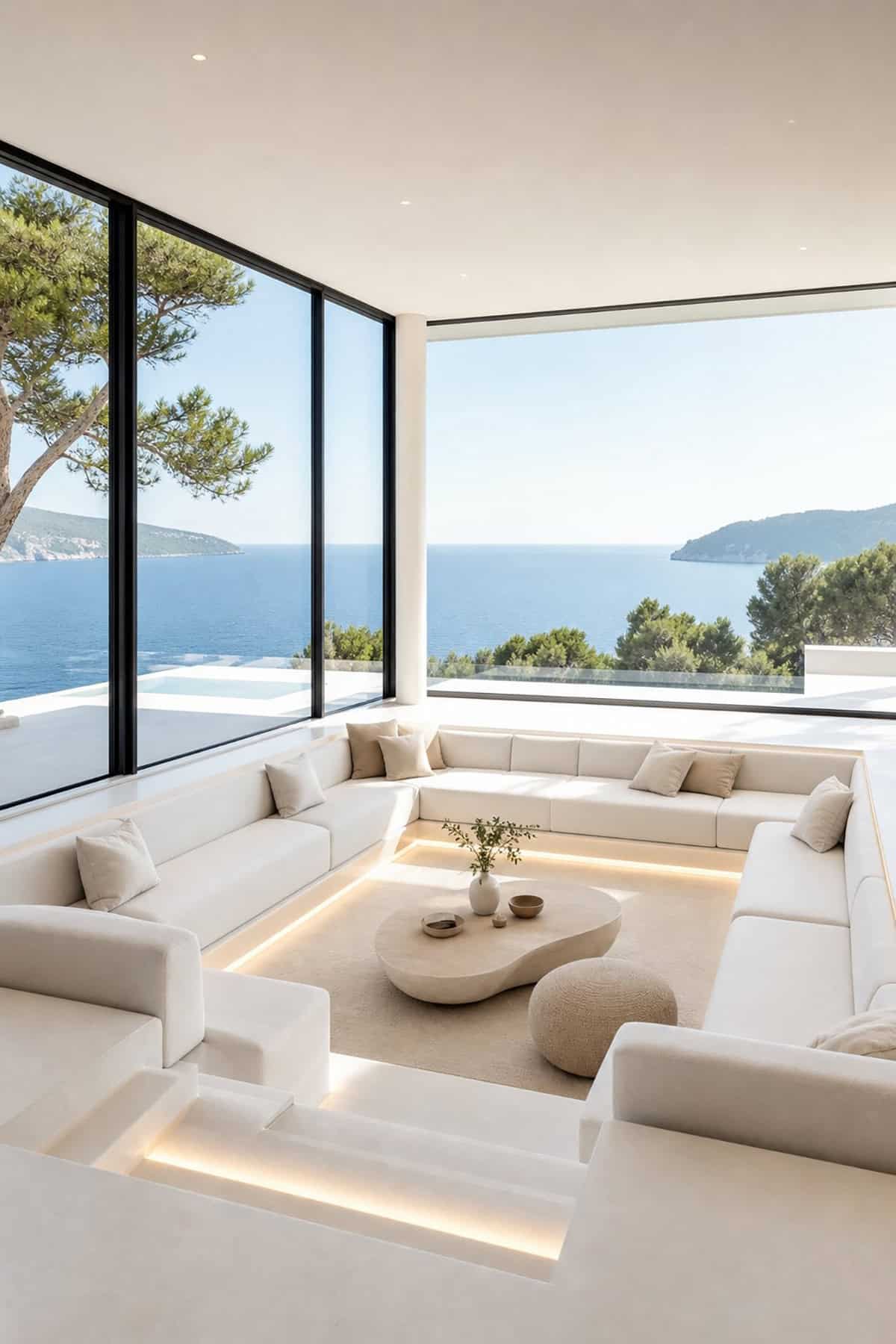
A white conversation pit relies on shape and contrast rather than decoration. White built-in seating, plaster walls, and a simple stone or lacquer coffee table create a clean, uninterrupted layout. The recessed floor adds depth, so the room doesn’t depend on bold colors or heavy furniture.
Limit accessories to a few cushions and one or two decorative objects. Hidden storage beneath the seating keeps blankets and everyday items out of sight. Warm lighting softens the white palette and prevents the space from looking harsh.
Ultimate Luxury
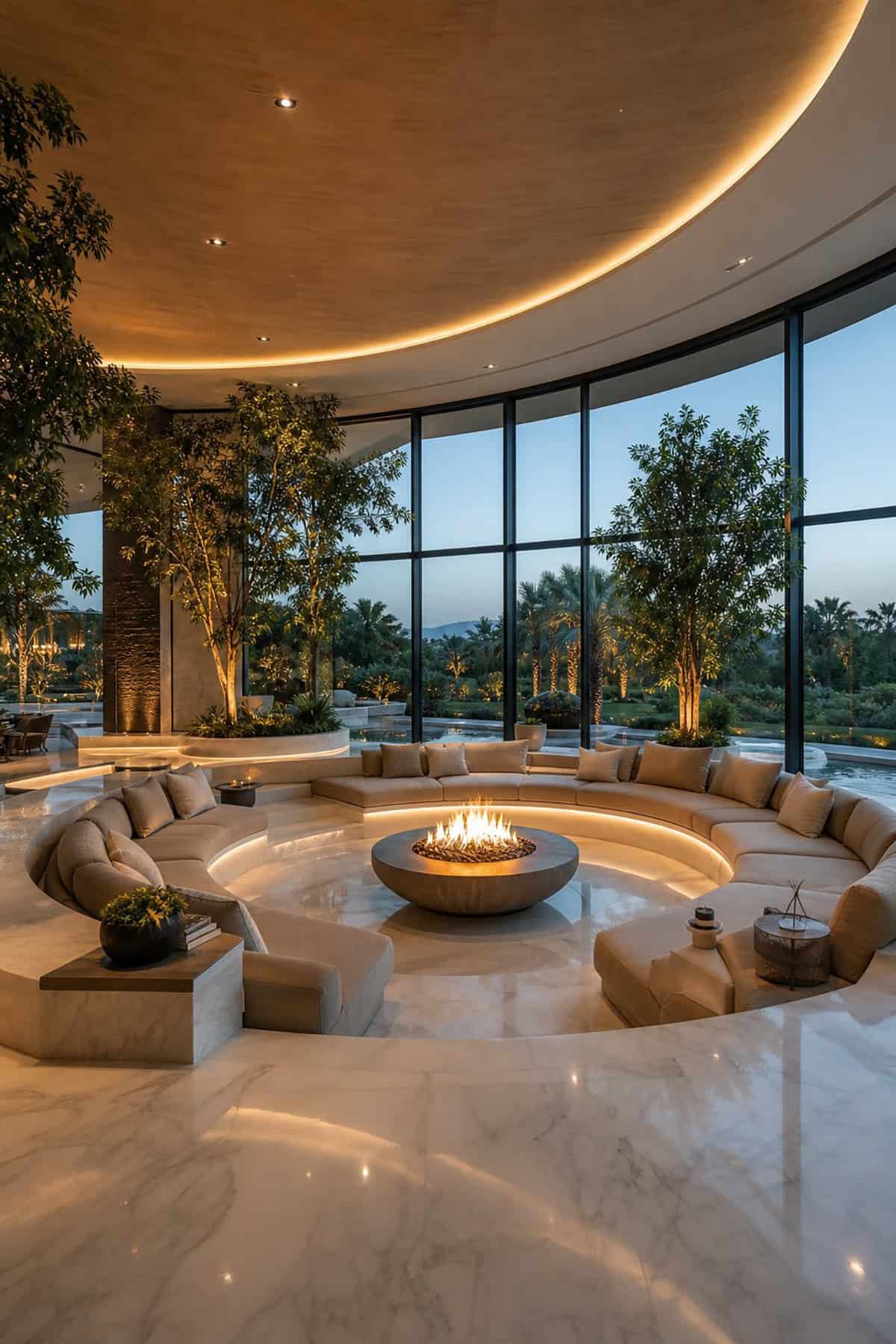
Large proportions and premium materials define this conversation pit. Deep custom seating, natural stone surrounds, and carefully selected finishes create a space designed for entertaining as much as relaxing.
Book-matched marble, travertine, limestone, or richly veined quartz all work well around the seating area. Finish the space with a large chandelier, custom millwork, and integrated storage built into the surrounding steps. Every material should have enough space to stand on its own without competing for attention.
Sunken With Central Fireplace
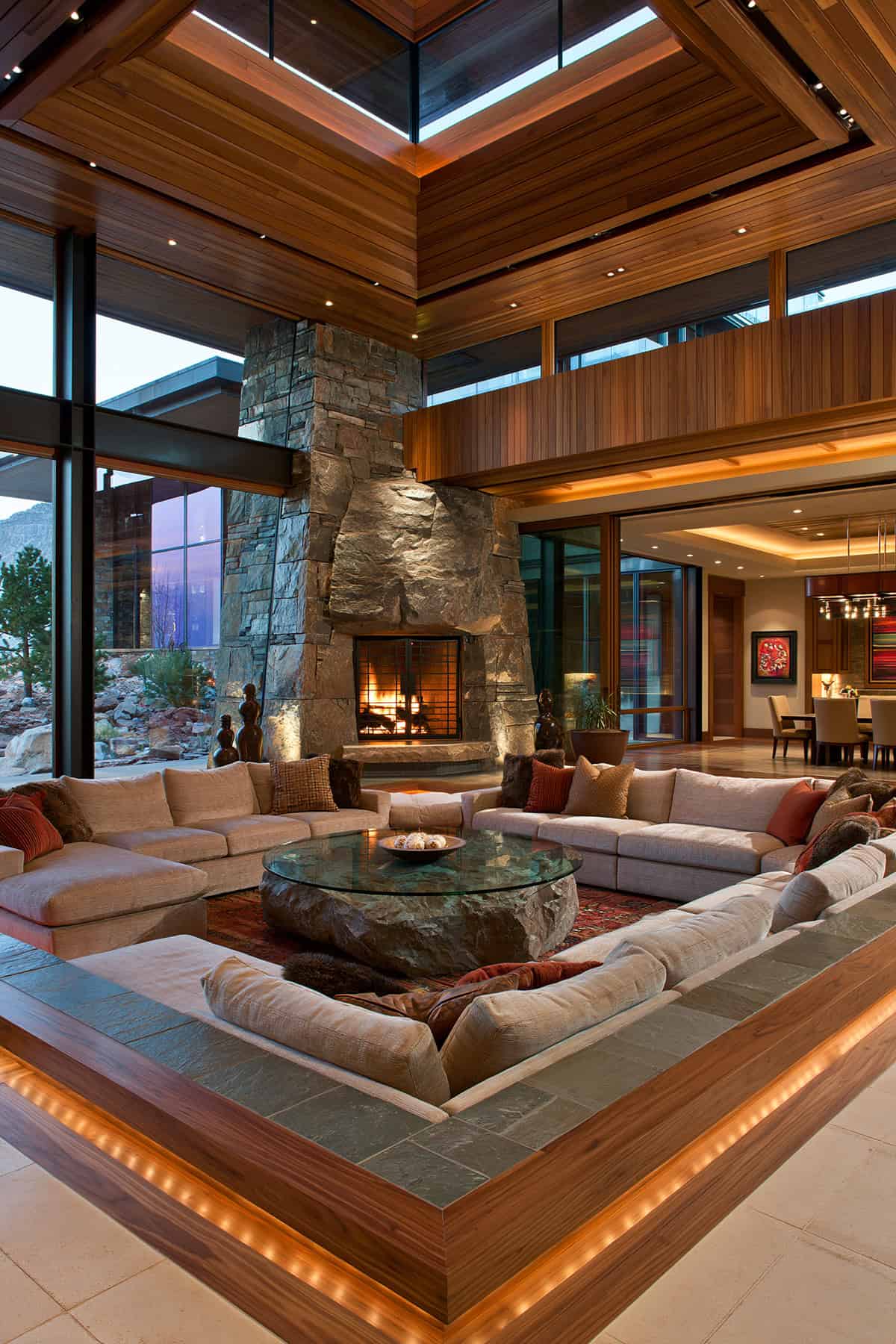
A fireplace placed at the center gives every seat the same view and creates a natural gathering point. This layout works especially well in larger conversation pits where seating wraps around all four sides.
Concrete, stone, and steel provide durable finishes around the fire. Gas and electric fireplaces are the simplest options for most homes, while bioethanol models offer another alternative where venting is limited. Leave enough space between the seating and the fireplace for comfortable movement.
Mid-Century Modern Style
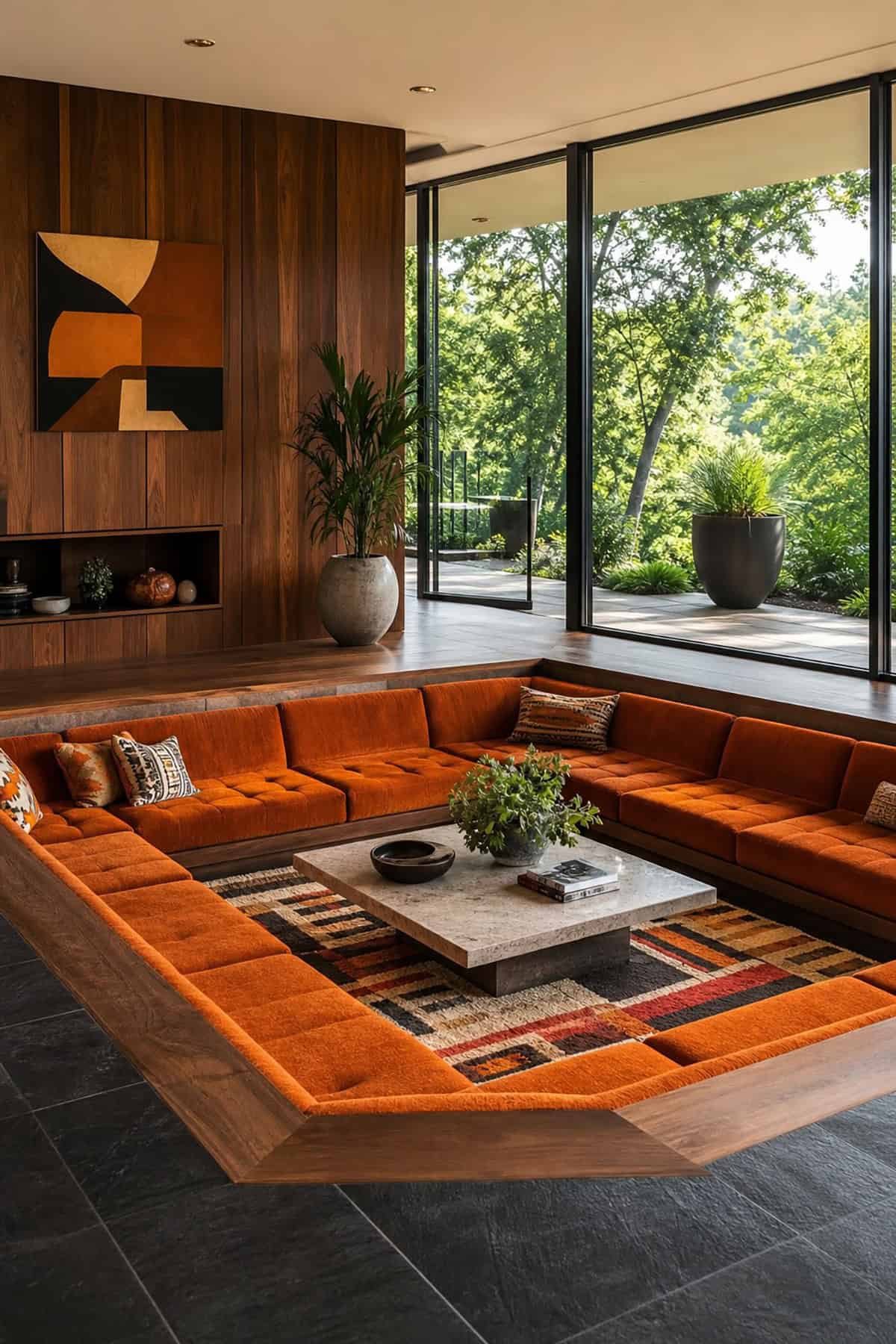
This style draws inspiration from classic mid-century homes with built-in seating, walnut finishes, and low-profile furniture. Earthy colors such as olive, rust, camel, and ochre pair naturally with warm wood.
A walnut coffee table, geometric rug, and vintage-inspired lighting complete the layout without making the room look dated. Keep decorative accessories simple so the furniture remains the main focus.
Double-Level
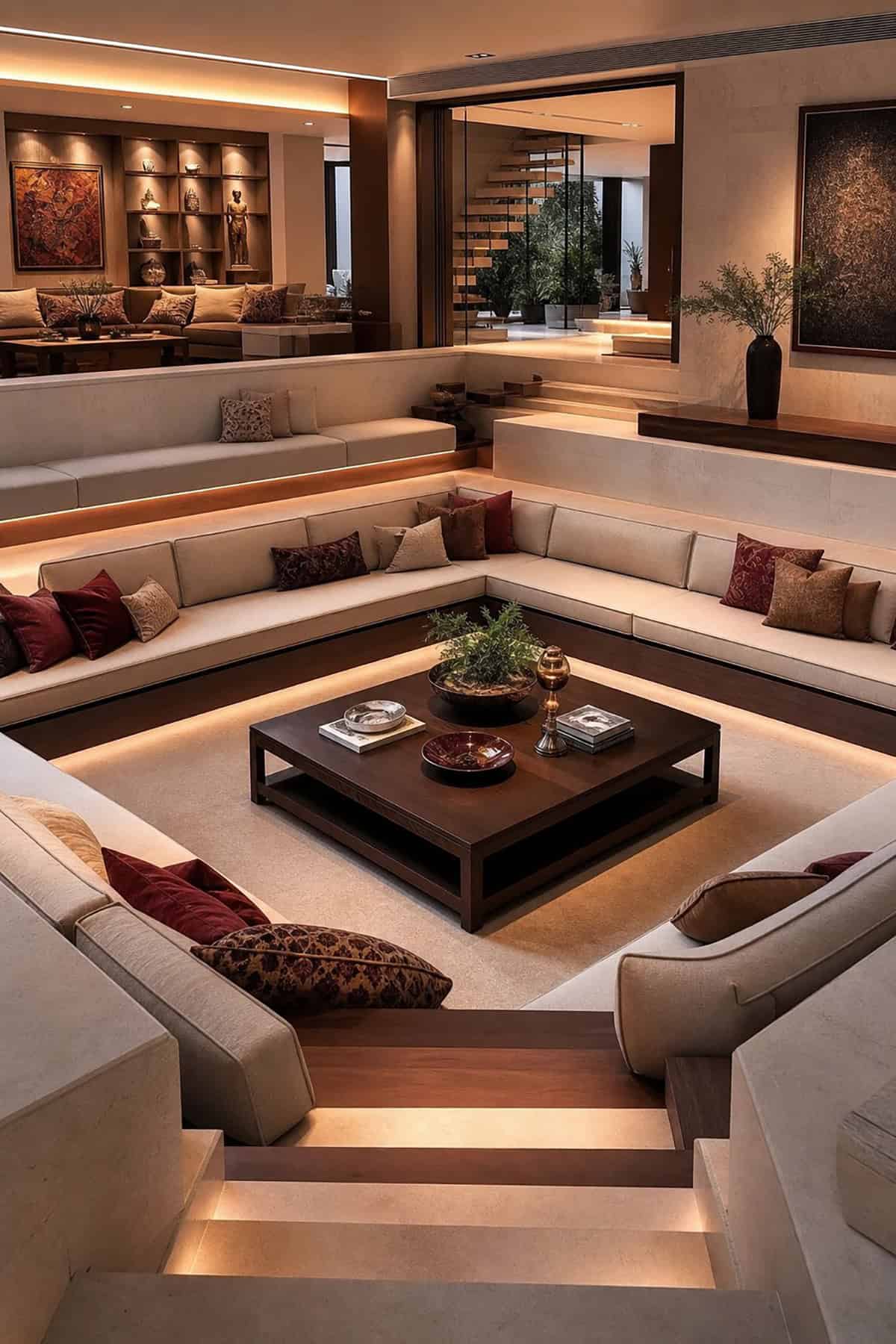
A second level creates a gradual transition between the main floor and the seating area below. The upper platform can hold a narrow bench, side table, or extra seating without crowding the conversation pit.
Using the same flooring across both levels keeps the design cohesive. Wide steps make the change in height more comfortable while giving the room a stronger architectural layout.
Dark Moody
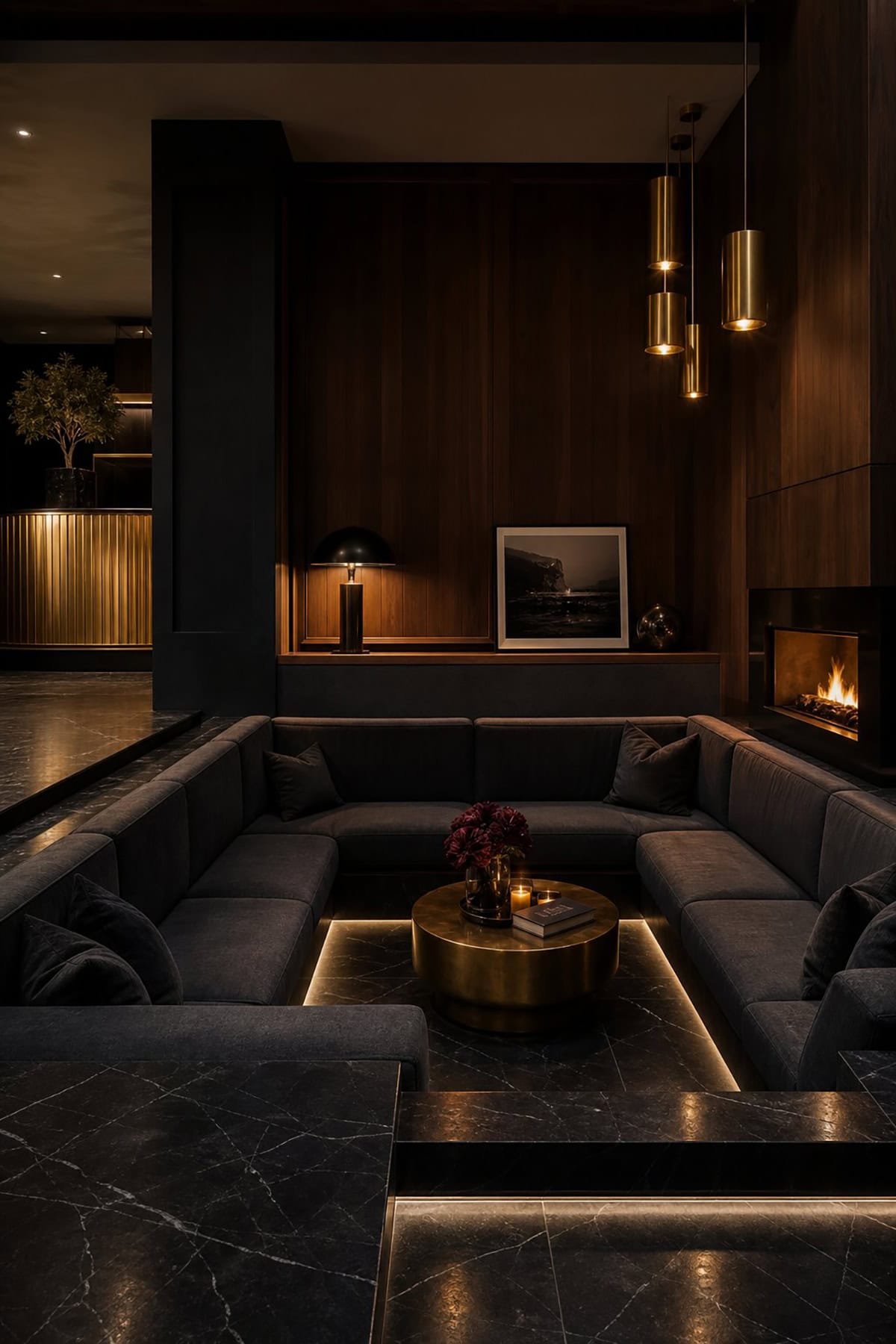
Dark walls and built-in seating immediately set the tone for this layout. Charcoal plaster, smoked oak, or black-stained timber keep the palette consistent, while leather or wool upholstery introduces subtle contrast without relying on brighter colors. A black stone fireplace or matching coffee table sits naturally within the darker finishes instead of competing against them.
Lighting deserves just as much attention as the materials. Recessed wall lights, concealed strips beneath the seating, and a pair of table lamps provide enough illumination for evenings without flooding every corner of the room.
Wraparound Bookshelves
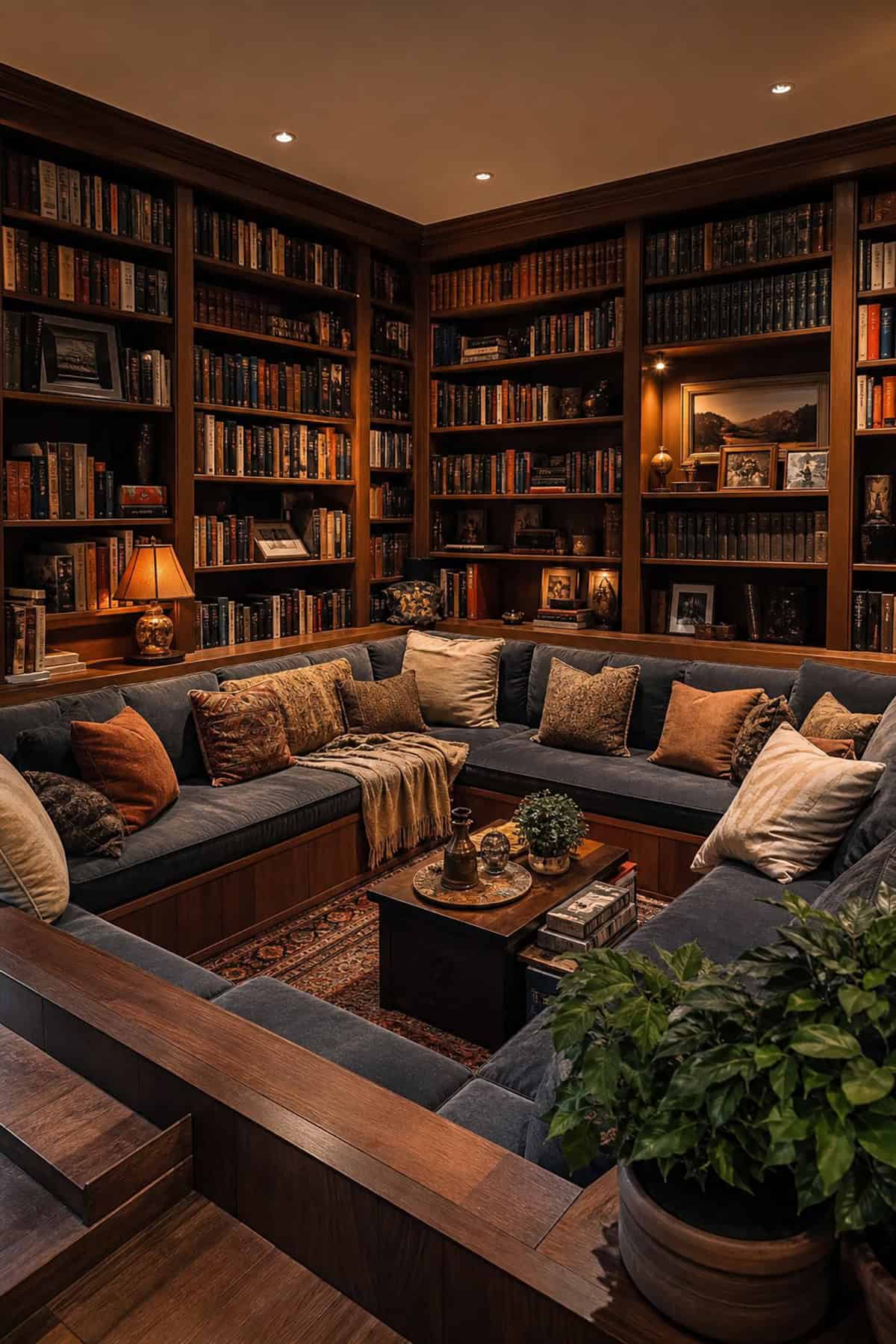
Floor-to-ceiling shelving surrounds the entire seating area, placing books within easy reach from every seat. The walls become part of the furniture, leaving little need for oversized artwork or decorative panels.
Closed cabinets below hide blankets, games, and media equipment. Open shelves above display books, pottery, framed prints, and a small number of personal objects. A generous coffee table at the center gives everyone space for drinks, books, or puzzles.
Water Views
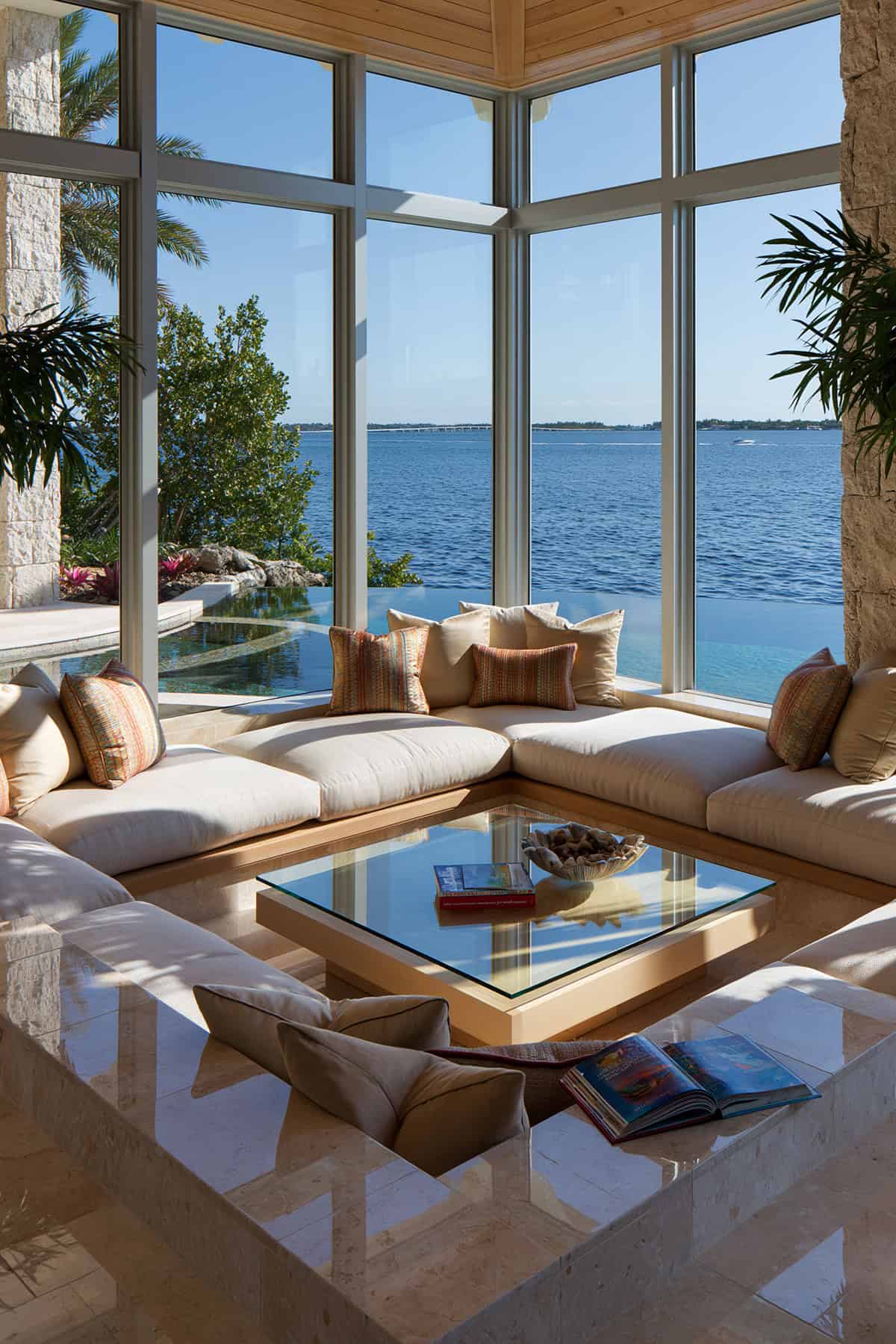
Floor-to-ceiling glass keeps the landscape in full view from every seat. Lowering the seating below the window line prevents sofas from blocking the outlook across a lake, river, coastline, or infinity pool.
Light limestone, pale oak, and linen upholstery suit this setting better than bold finishes. Narrow window frames and large panes leave the scenery uninterrupted throughout the room.
Velvet Upholstery
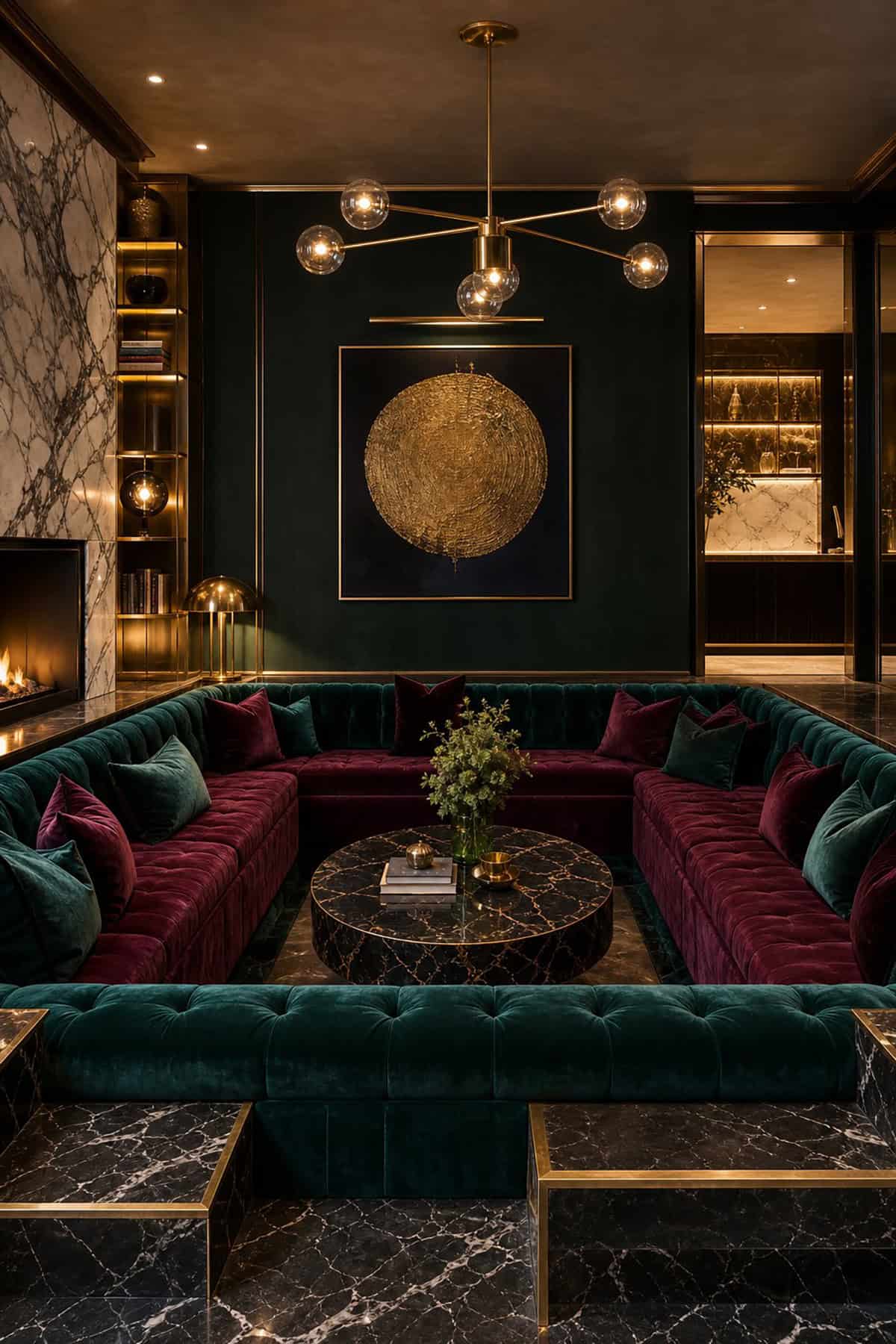
Cover the entire built-in seating in one velvet fabric rather than mixing several upholstery materials. Deep olive, rust, navy, burgundy, or chocolate brown all suit a sunken seating area, especially alongside walnut, oak, limestone, or black stone.
Wide seat cushions and full-height backrests give the fabric long, uninterrupted surfaces instead of breaking it into small sections. A simple stone coffee table, bronze floor lamp, and a few linen cushions finish the space without competing with the upholstery.
Suspended Pendant Cluster
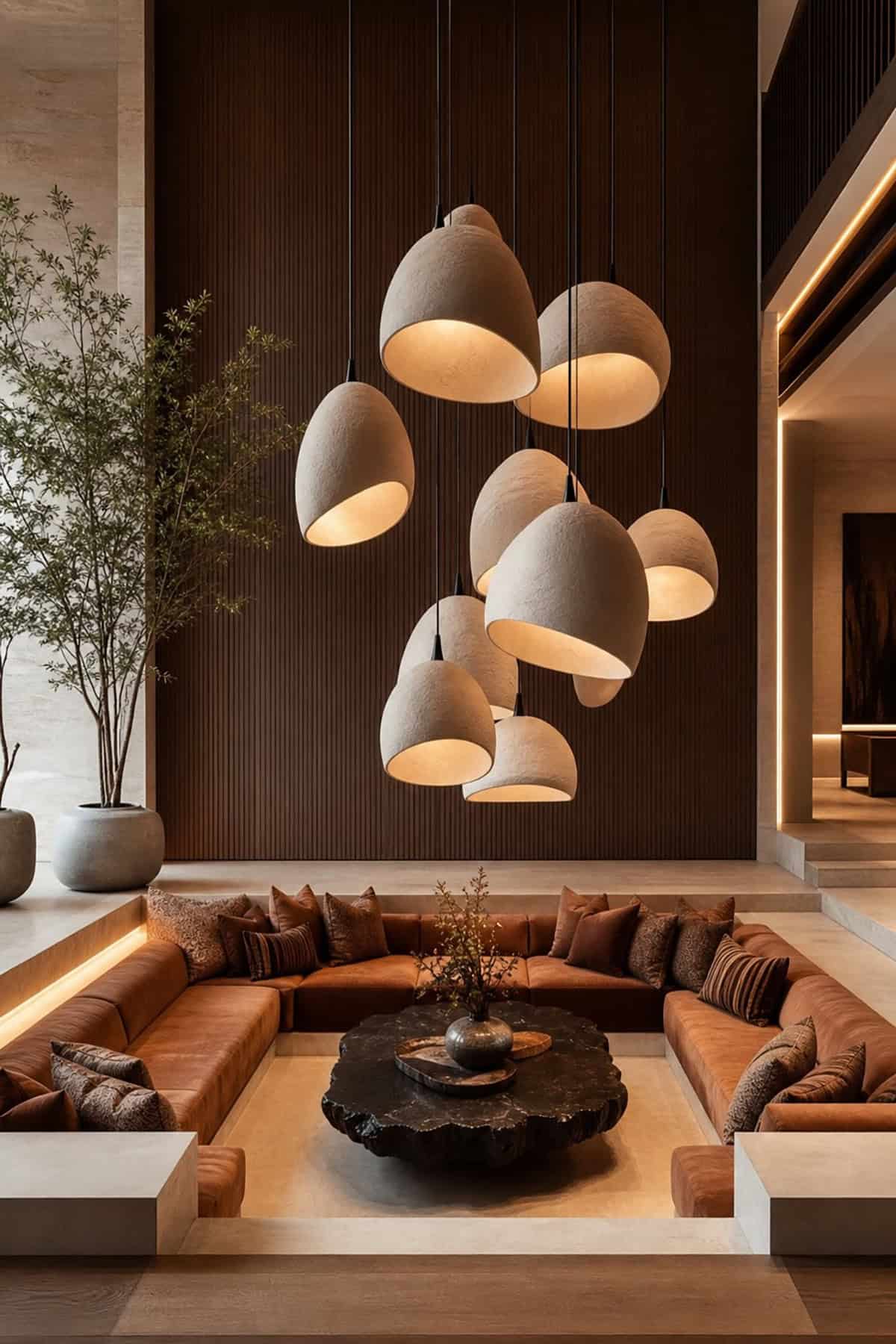
Several pendants hung at different heights fill the space above the pit more naturally than one oversized fixture. The arrangement spreads light across the seating while drawing attention toward the center of the room.
Glass globes suit contemporary interiors, woven shades fit relaxed spaces, and sculptural metal fixtures complement more architectural homes. Leave clear spacing between each pendant so the group reads as one installation rather than a crowded row.
Integrated LED Lighting
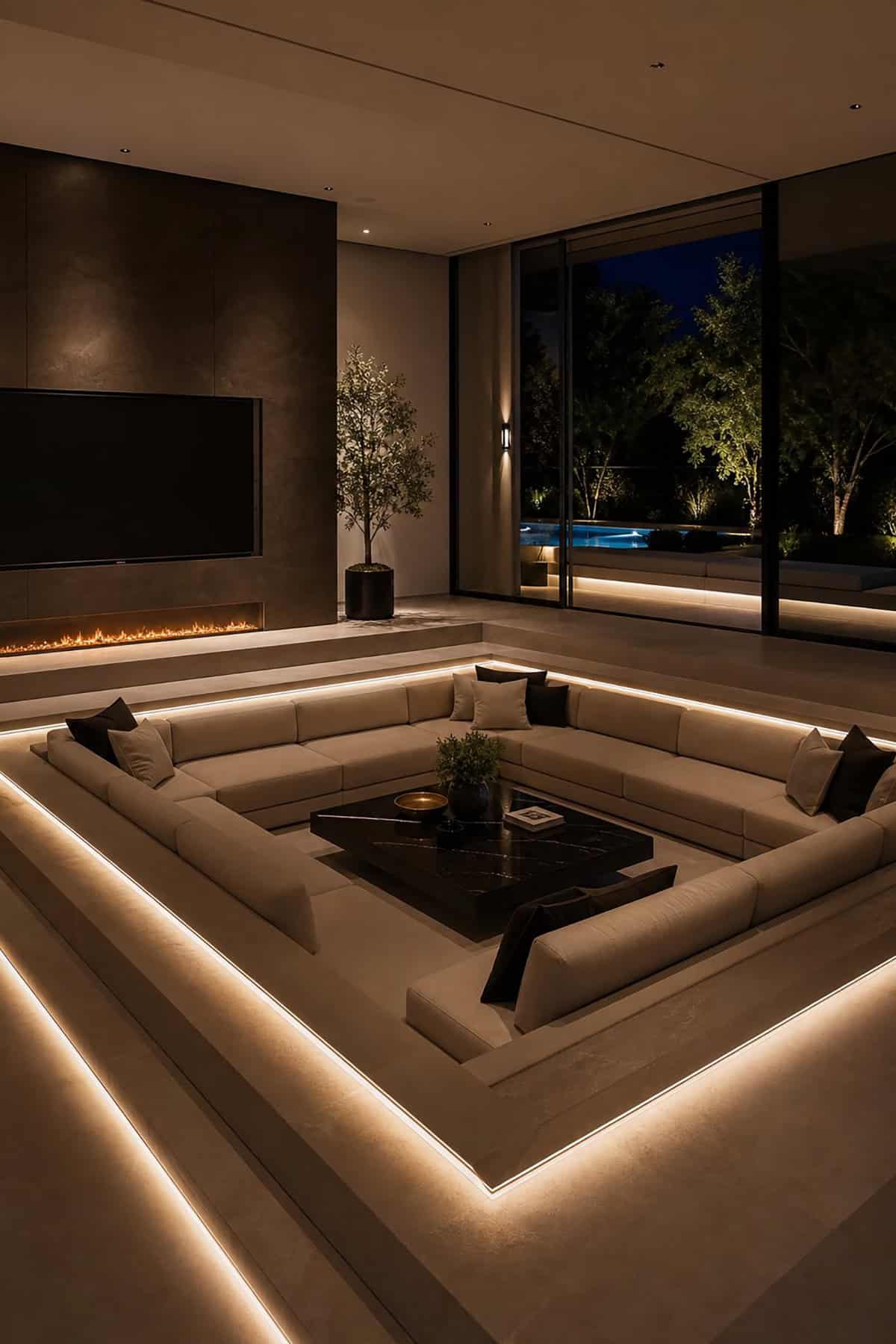
Recessed LED strips along the step risers or at the base of the pit walls serve two functions simultaneously: safety navigation and ambient glow. When the primary room lighting dims, the LED perimeter holds the pit in a warm ring of light that reads as intentional rather than utilitarian.
Tunable white or warm-tone LEDs allow the light temperature to shift for different times of day. Keep the strip placement consistent and the beam direction angled toward the floor rather than outward to avoid a theatrical effect. In a contemporary conversation pit, this kind of lighting integration signals technical precision over decorative impulse.
Indoor-Outdoor Connection
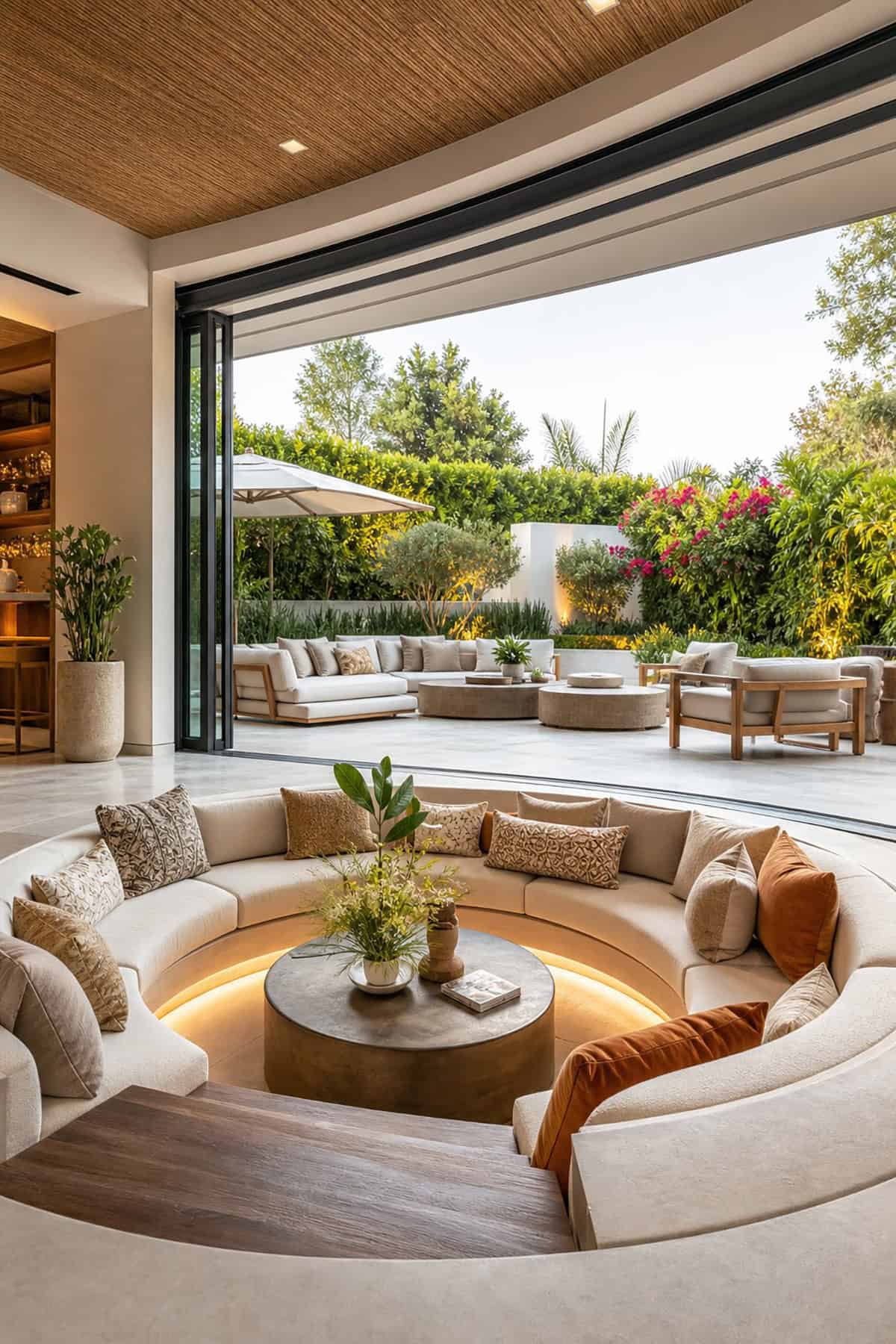
Position the conversation pit beside full-height sliding or folding glass doors so the seating opens directly onto a patio, courtyard, or pool. With the doors fully open, the living room extends naturally outdoors, and the seating area stays connected to both spaces instead of facing inward.
Carry the same flooring to the threshold, or choose materials with a similar color and finish on both sides of the glass. A row of olive trees, ornamental grasses, or large ceramic planters softens the edge between indoors and outdoors, while low outdoor seating mirrors the height of the conversation pit without copying the entire layout.
Indoor Fire Bowl
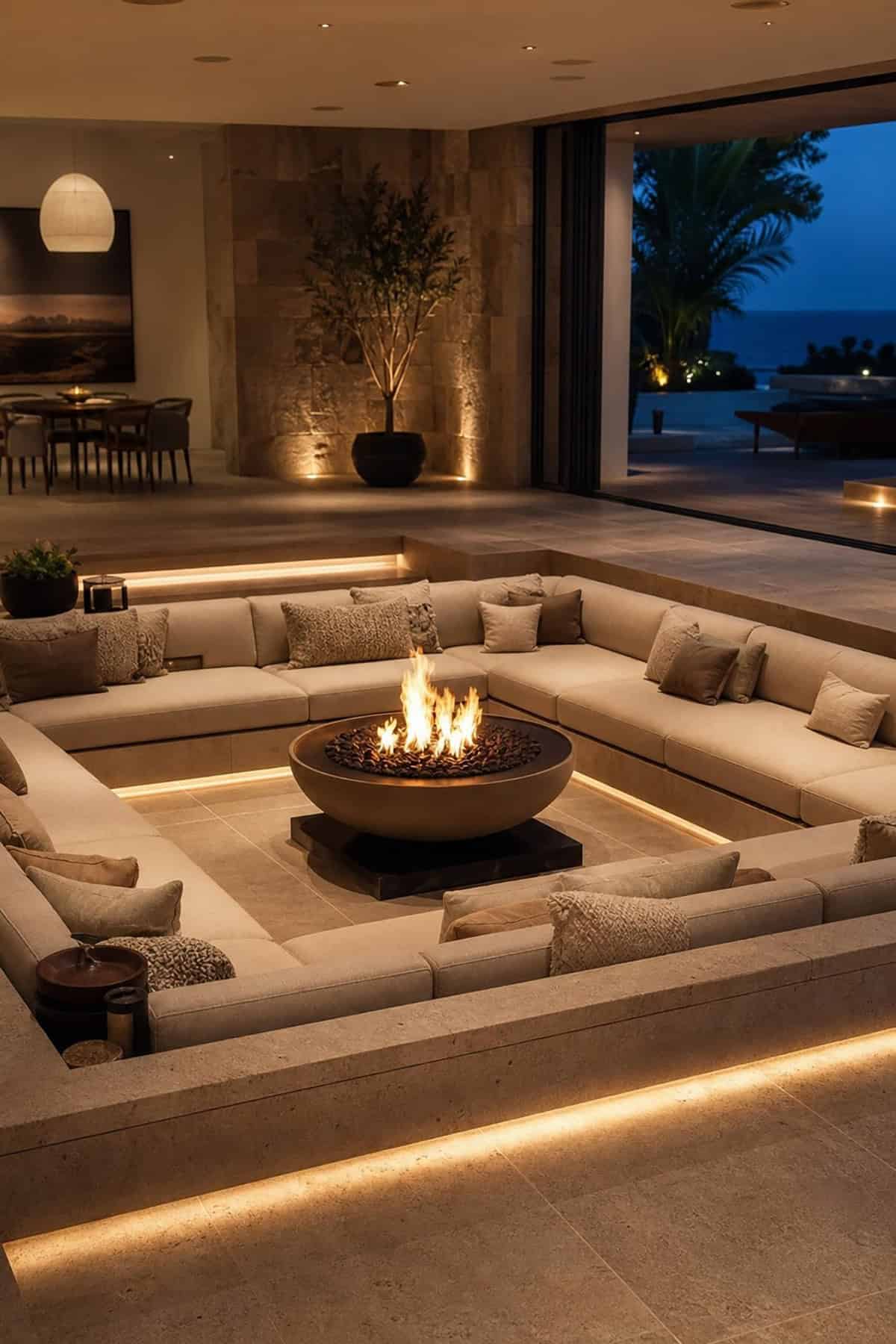
A fire bowl at the center gives the seating area a natural focal point without the construction required for a full fireplace. Concrete, black steel, or natural stone all suit this layout, while a round bowl complements circular pits and a rectangular design fits longer seating arrangements.
Leave enough open floor space around the fire bowl so everyone can move comfortably through the pit. Stone or large-format porcelain beneath the bowl protects the floor while matching the surrounding materials. Bioethanol models offer a simple option for homes without an existing chimney.
Hanging Fireplace
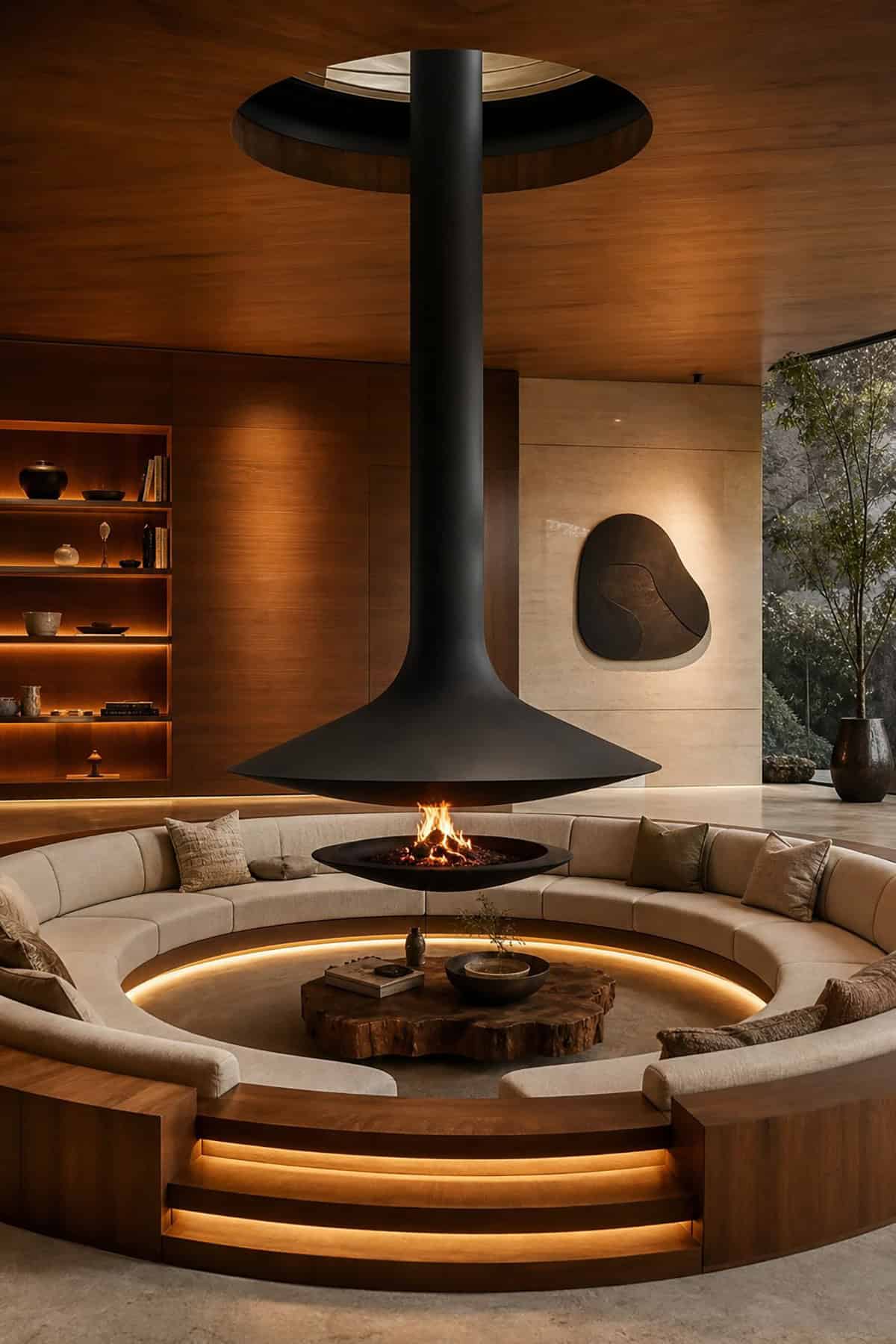
Few features command attention like a suspended fireplace hanging above a conversation pit. The fire remains visible from every seat, while the chimney becomes part of the room’s architecture instead of disappearing into a wall.
Black steel suits contemporary homes, while white finishes blend more easily into lighter interiors. Taller ceilings give the fireplace enough space to hang comfortably above the seating, leaving clear sightlines across the pit.
Fluted Wood Panelling
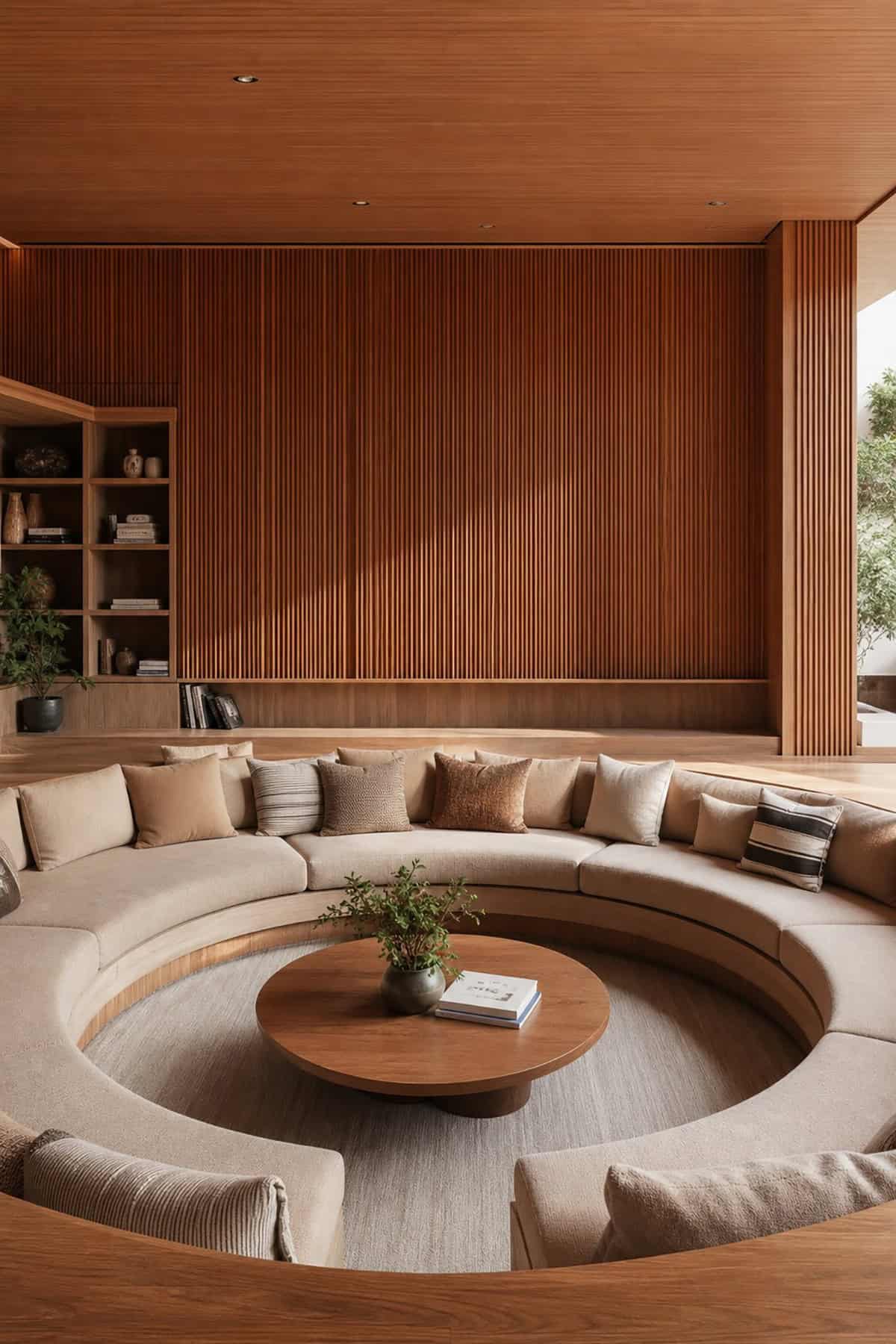
Fluted wood introduces subtle detail without relying on bold colors or decorative patterns. Continue the panels across the back wall, the seating base, or the surrounding ledge instead of limiting them to a small accent section.
White oak keeps the room bright, walnut adds warmth, and black-stained timber suits darker interiors. Smooth plaster, natural stone, and plain upholstery balance the vertical lines without competing for attention.
Floor Cushions
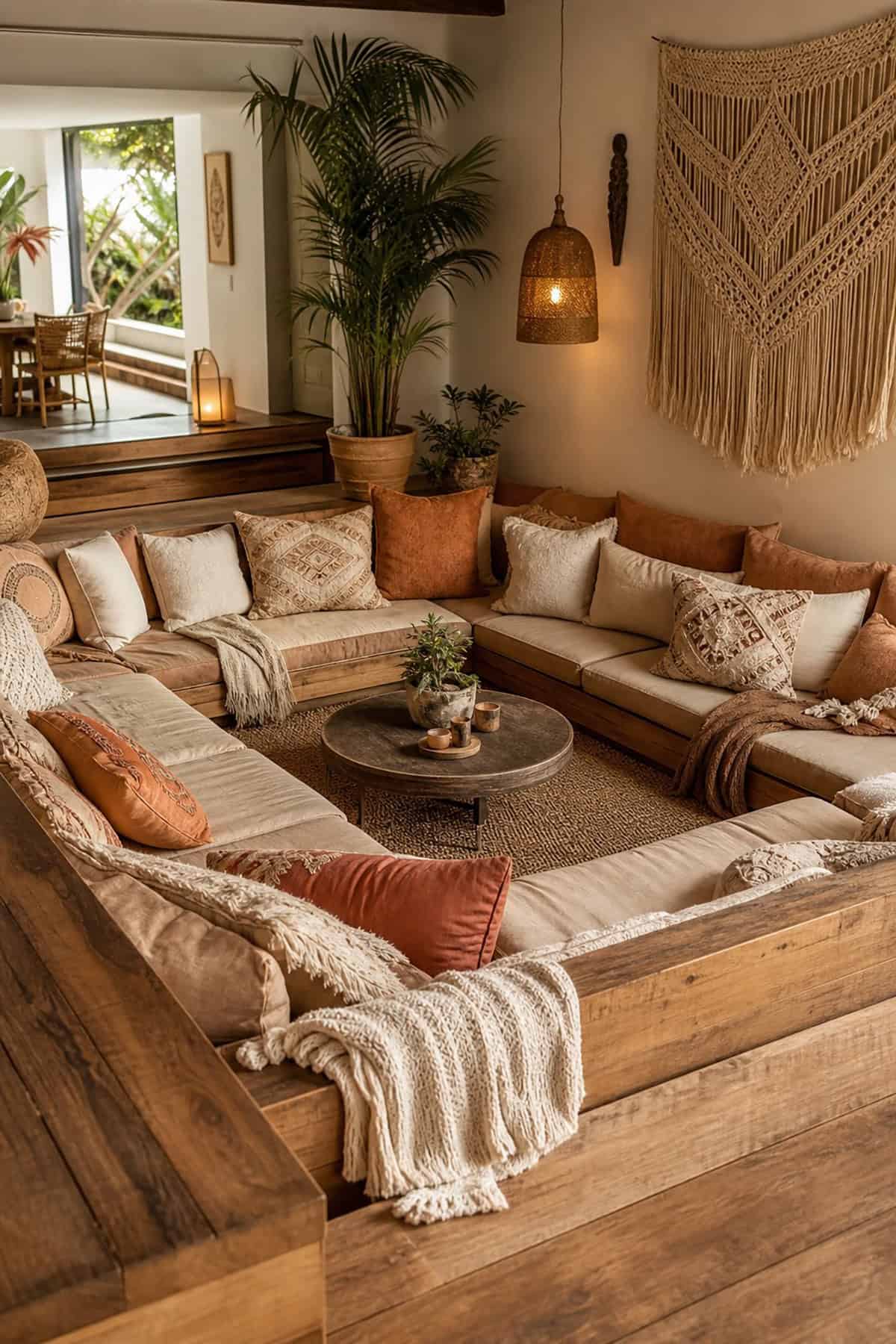
Large floor cushions replace fixed seating and allow the layout to change whenever extra guests arrive. Thick square cushions with supportive foam hold their shape better than oversized beanbags, while durable linen or cotton covers stand up to everyday use.
A timber platform or low stone table provides a stable surface for drinks and books. Built-in ledges around the edge of the pit offer extra support when the cushions are pushed back against the walls.
Floating Stair Access
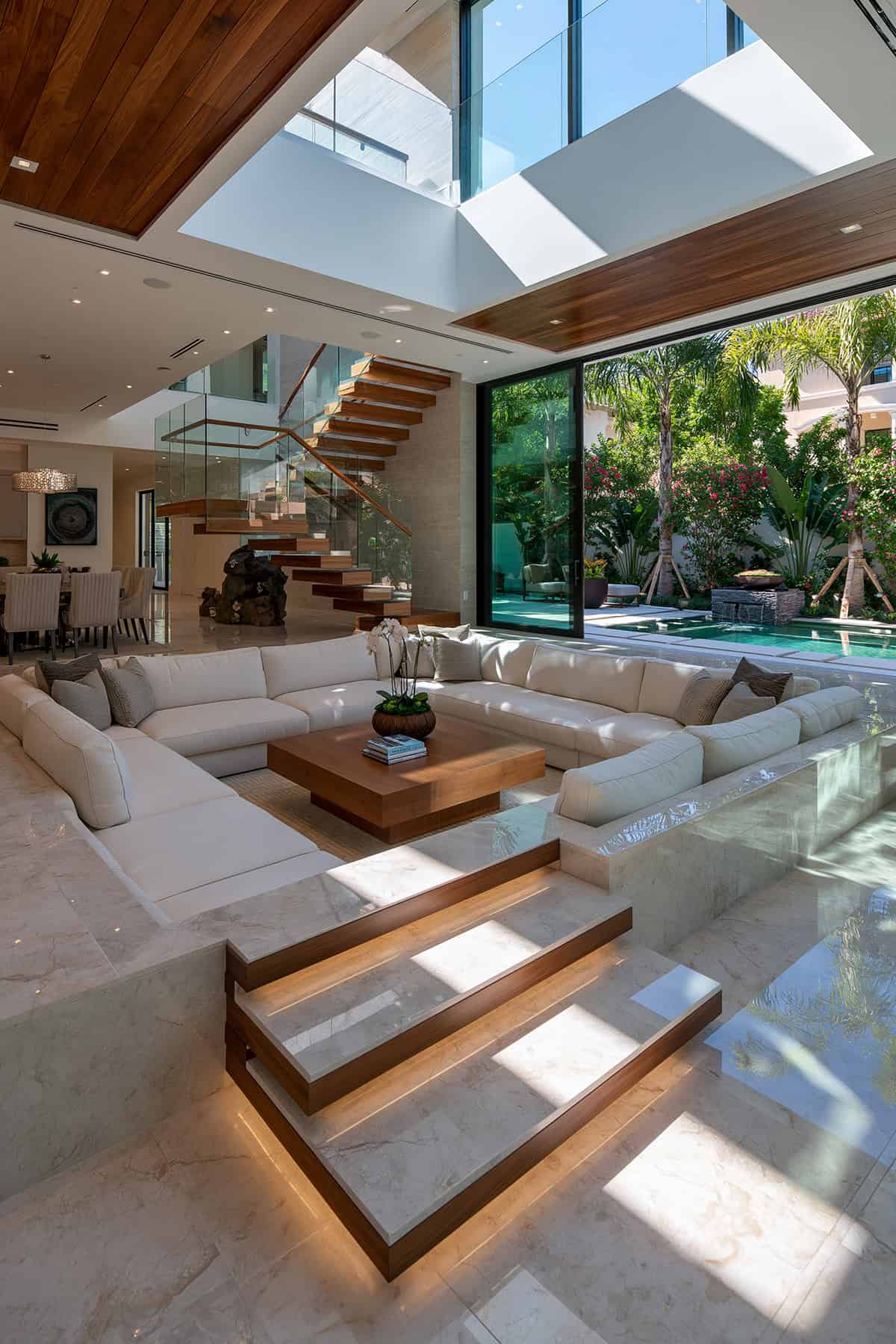
Floating stone or timber steps lead down into the conversation pit from one side of the room. Open gaps beneath each tread keep the entrance light, while concealed steel supports leave the structure almost invisible.
Travertine, oak, concrete, or black stone all suit this design. Position the stairs along one edge of the pit so the seating remains uninterrupted and people can move in and out without walking through the middle of the gathering are
Curved Wood Wall
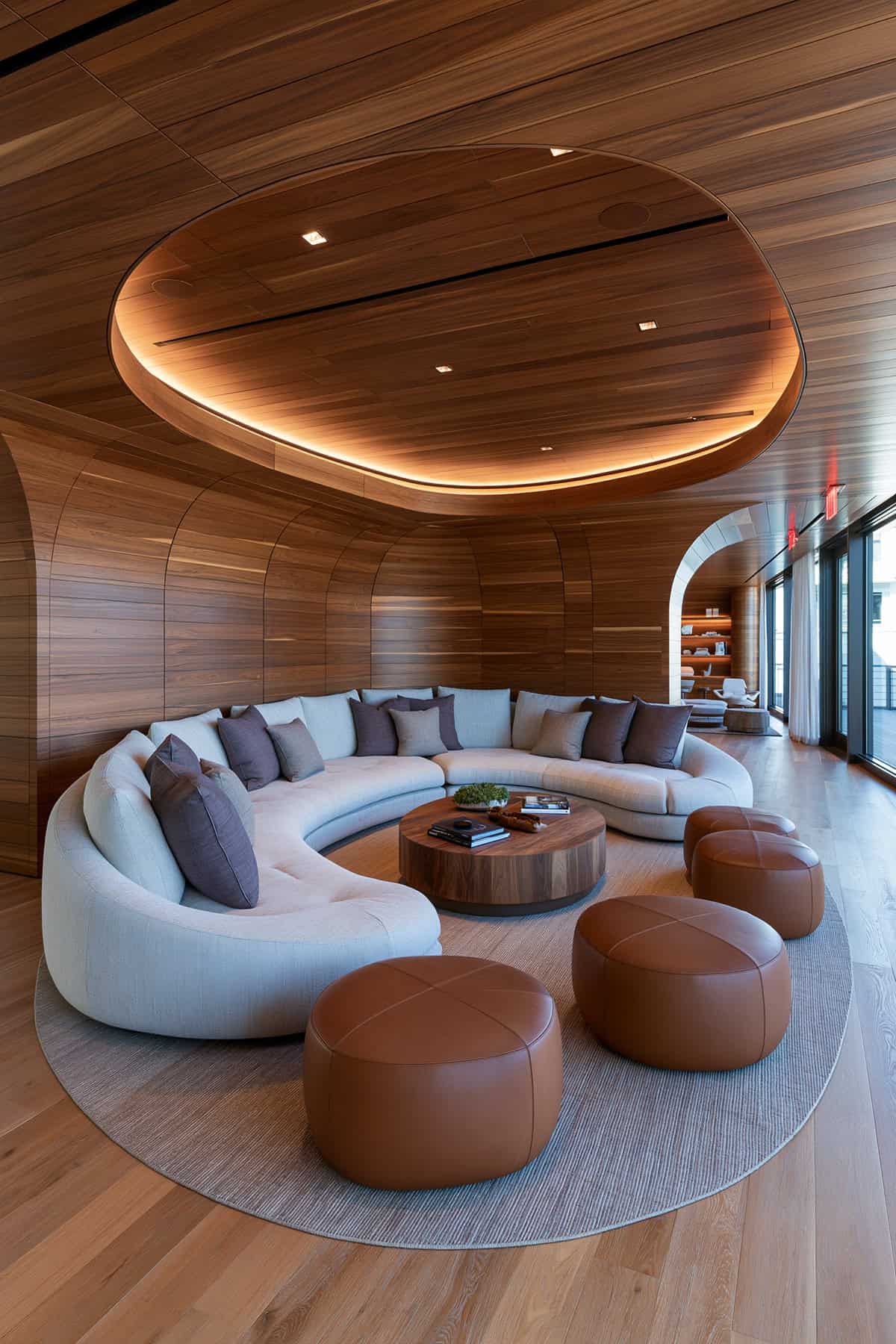
A curved wall of warm-toned wood, white oak, walnut, or cedar, wrapping one arc of the pit’s perimeter gives the recessed area a protective enclosure that straight walls do not provide. The curve echoes the geometry of a round or semicircular pit and reinforces the sense of being held within a defined space.
Vertical plank installation with tight, consistent gaps reads more refined than wide board spacing. The grain direction and finish quality matter at close range because you are seated inches from the surface. A matte or satin finish holds better than high gloss in a space designed for relaxed proximity.
Built-In Planters
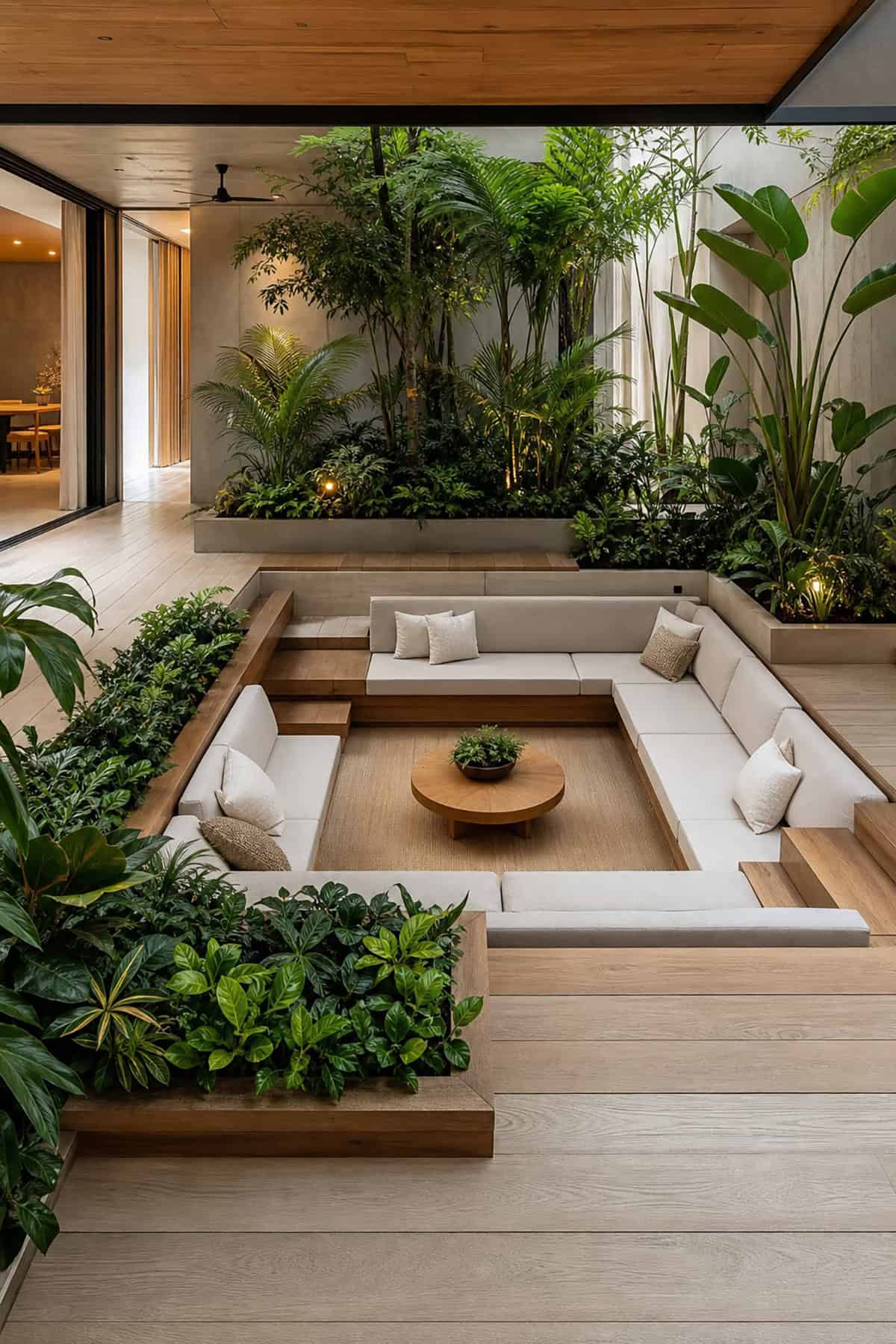
Built-in planters along the edge of the pit bring greenery closer to the seating without taking up valuable floor space. A continuous planter behind the backrest creates a clean border between the conversation pit and the rest of the living room, while shorter planters fit neatly beside the steps or corners.
Trailing pothos, philodendrons, ferns, olive trees, or compact fiddle leaf figs all suit this layout, depending on the available light. Line the planter with waterproofing and include proper drainage before adding soil, especially when the planter forms part of the permanent structure.
Black Stone Fireplace
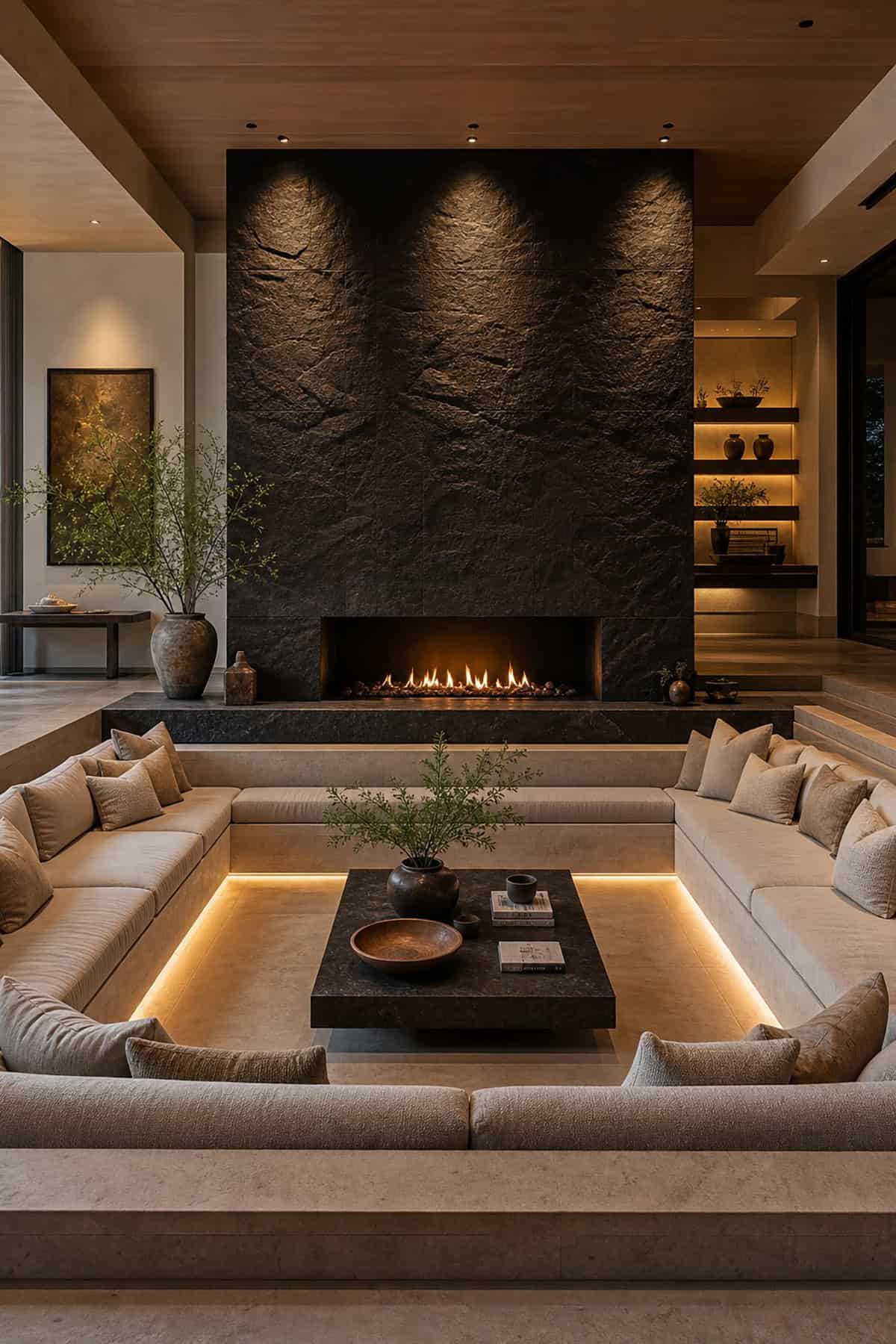
Black stone immediately draws attention to the fireplace without relying on decorative surrounds or oversized mantels. Honed granite, Nero Marquina marble, basalt, or black slate all pair naturally with timber, leather, linen, and concrete.
Run the same stone across the hearth and fireplace wall for a cleaner finish. Matching the coffee table or side tables to the fireplace creates a stronger connection than introducing another stone elsewhere in the room.
Conversation Pit In A Mountain Lodge
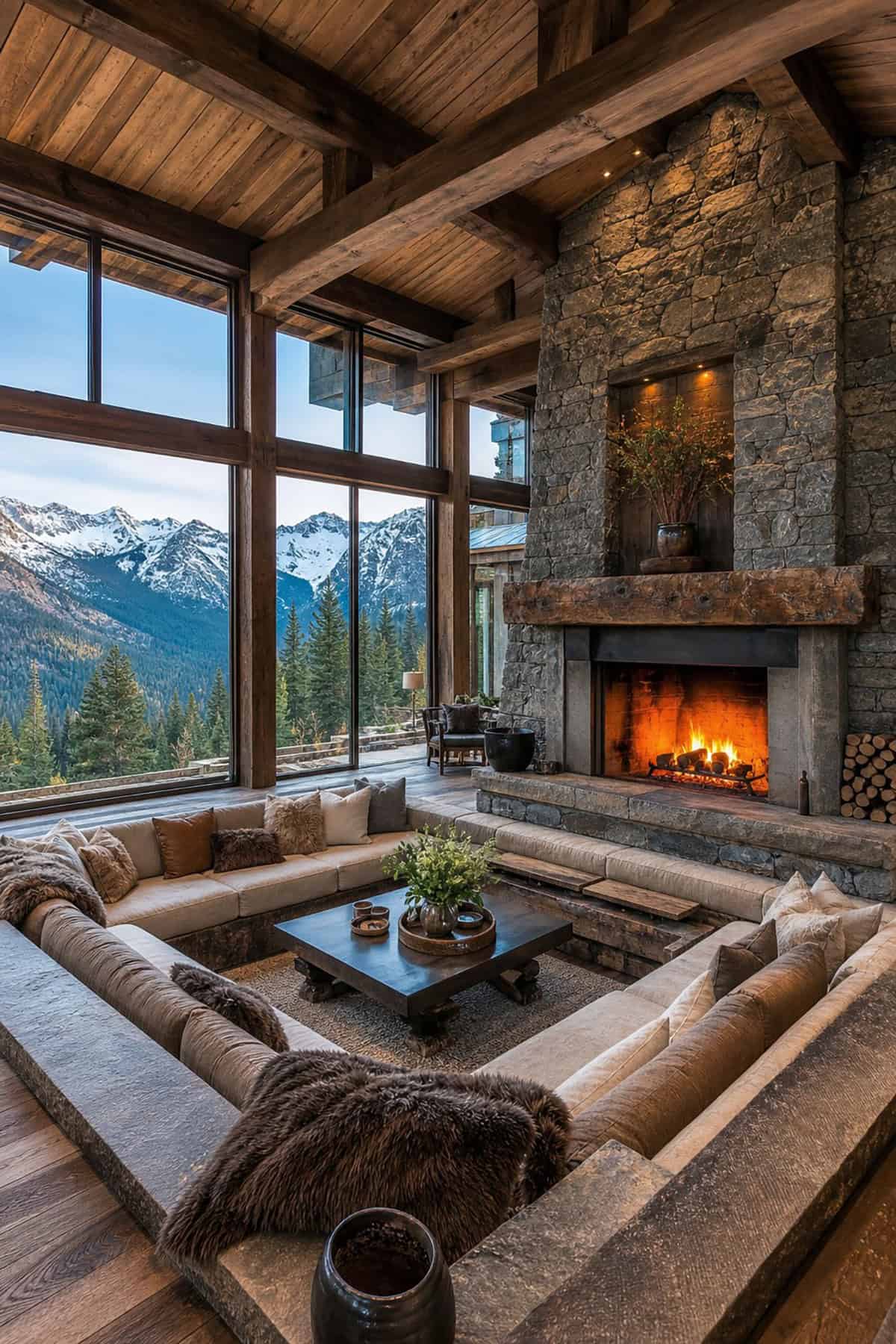
Heavy timber beams, rough-cut stone, and oversized seating suit this setting far better than polished finishes or delicate furniture. Thick wool throws, leather cushions, and large wooden coffee tables reinforce the rugged character without turning the room into a themed cabin.
A substantial stone fireplace belongs at one end of the pit, where everyone can enjoy the fire without blocking movement through the seating area. Slate, flagstone, reclaimed timber, and hand-forged metal all fit naturally within the same palette.
Beneath Vaulted Ceilings
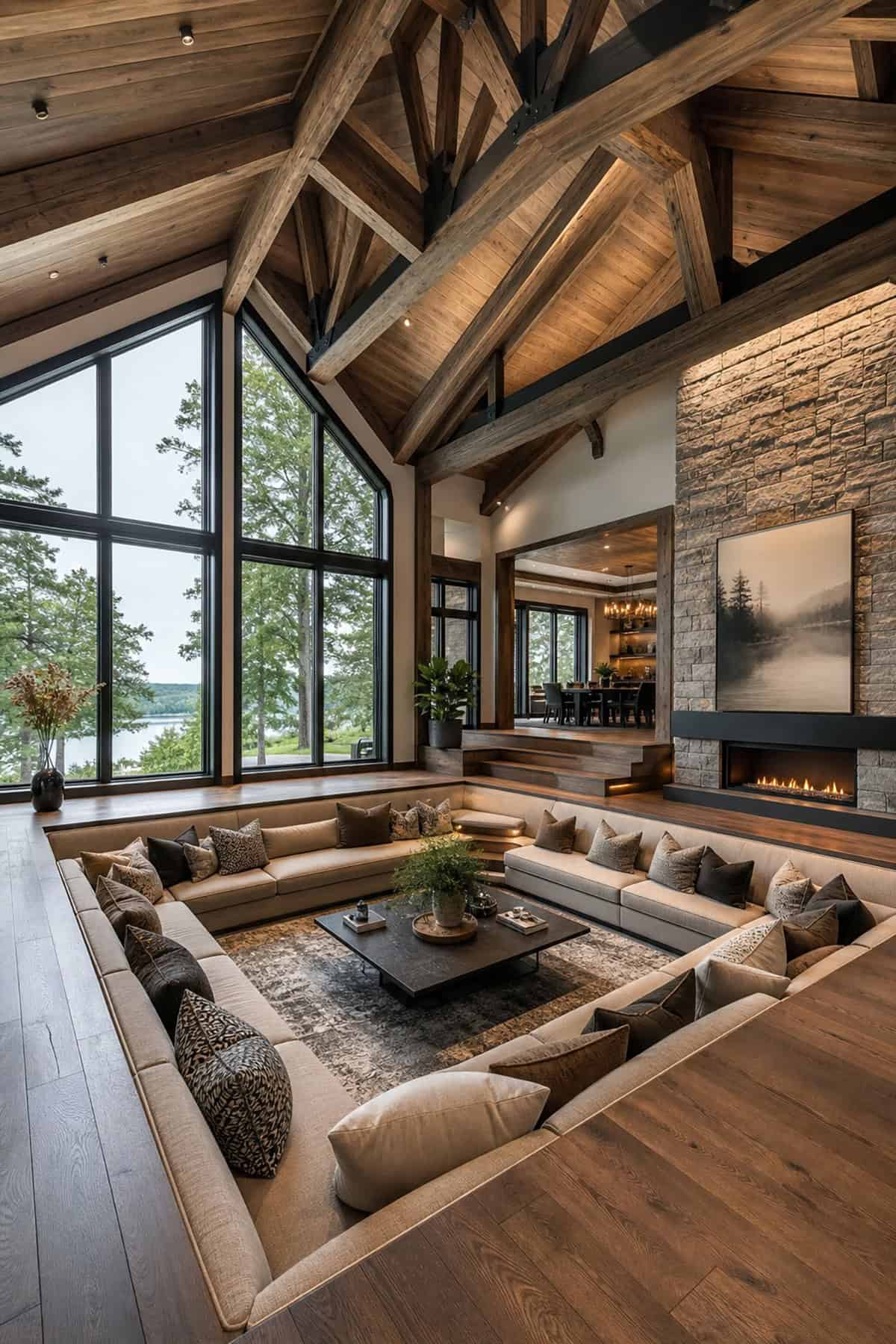
The conversation pit sits directly beneath the tallest part of the room, with exposed beams or painted rafters extending across the ceiling above. That combination gives the seating area far more presence than it would have beneath a flat ceiling, even when the furniture stays simple.
Choose a chandelier or pendant with enough scale to suit the ceiling height, then suspend it above the coffee table instead of leaving it close to the rafters. Stone flooring, built-in seating, and restrained finishes leave the architecture as the strongest feature in the room.
Beneath A Skylight
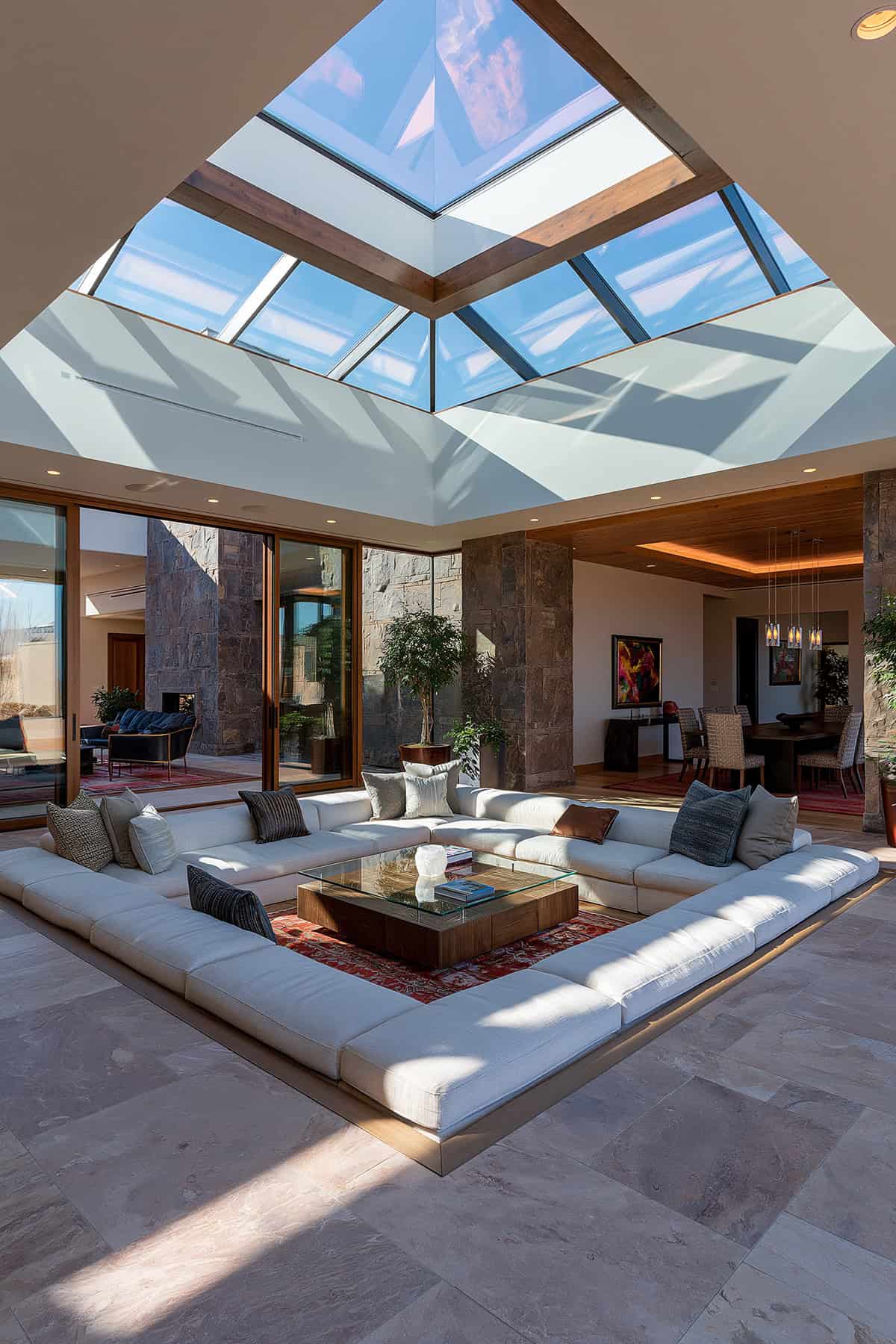
Natural light falls directly into the seating area throughout the day when the pit sits beneath a skylight. Morning and afternoon sunlight changes the appearance of the upholstery, stone, and timber as the light moves across the room.
Center the skylight above the seating whenever possible. Stone, porcelain tile, or sealed concrete around the pit handle years of direct sunlight better than finishes that fade or discolor.
Conversation Pit And Home Bar Combination
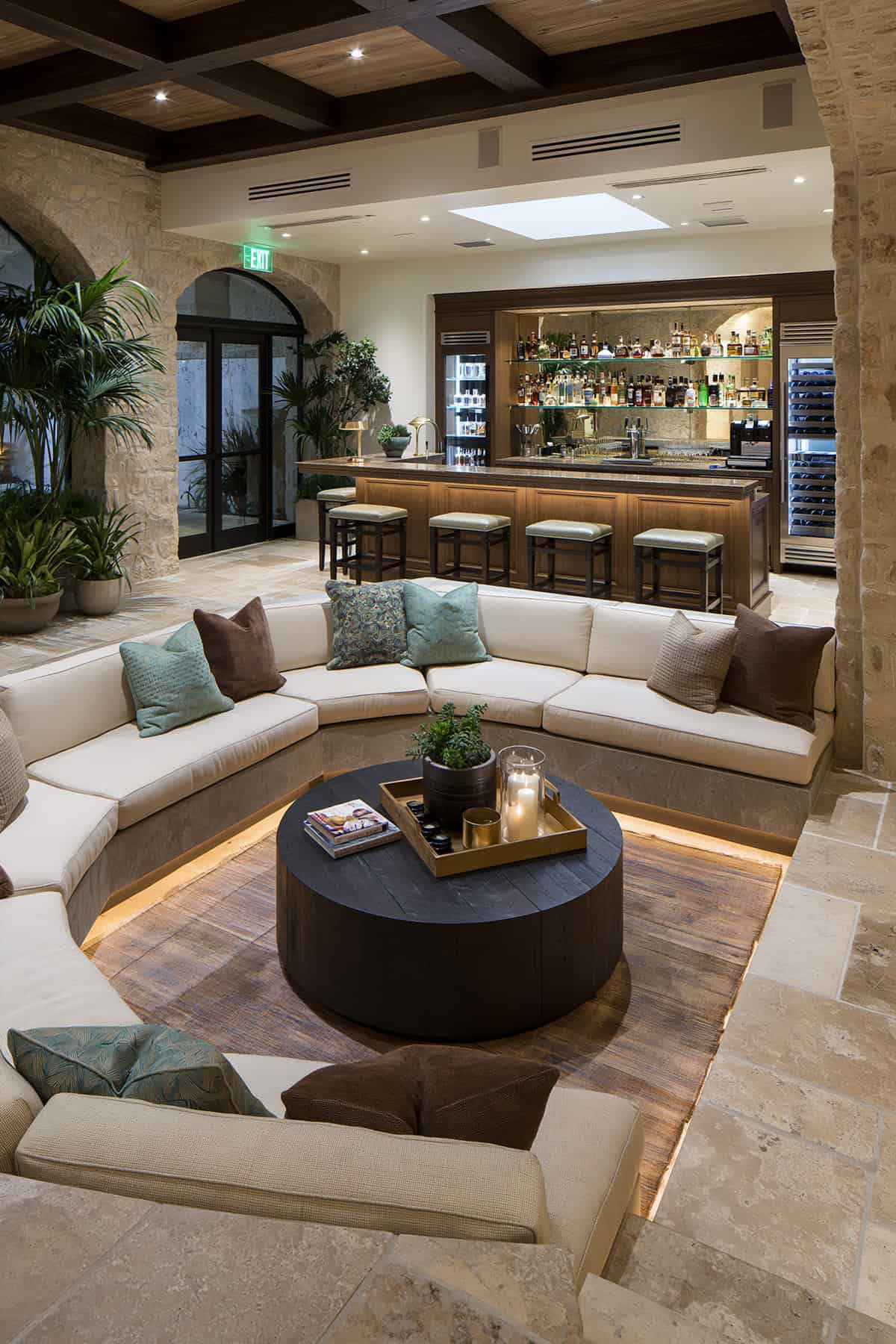
A home bar beside the conversation pit keeps drinks, glassware, and serving space within easy reach during gatherings. The raised floor around the pit naturally places the countertop at a comfortable standing height without building an oversized bar.
Open shelving displays bottles and glassware, while lower cabinets hide refrigerators, ice makers, and storage.
Coastal Style
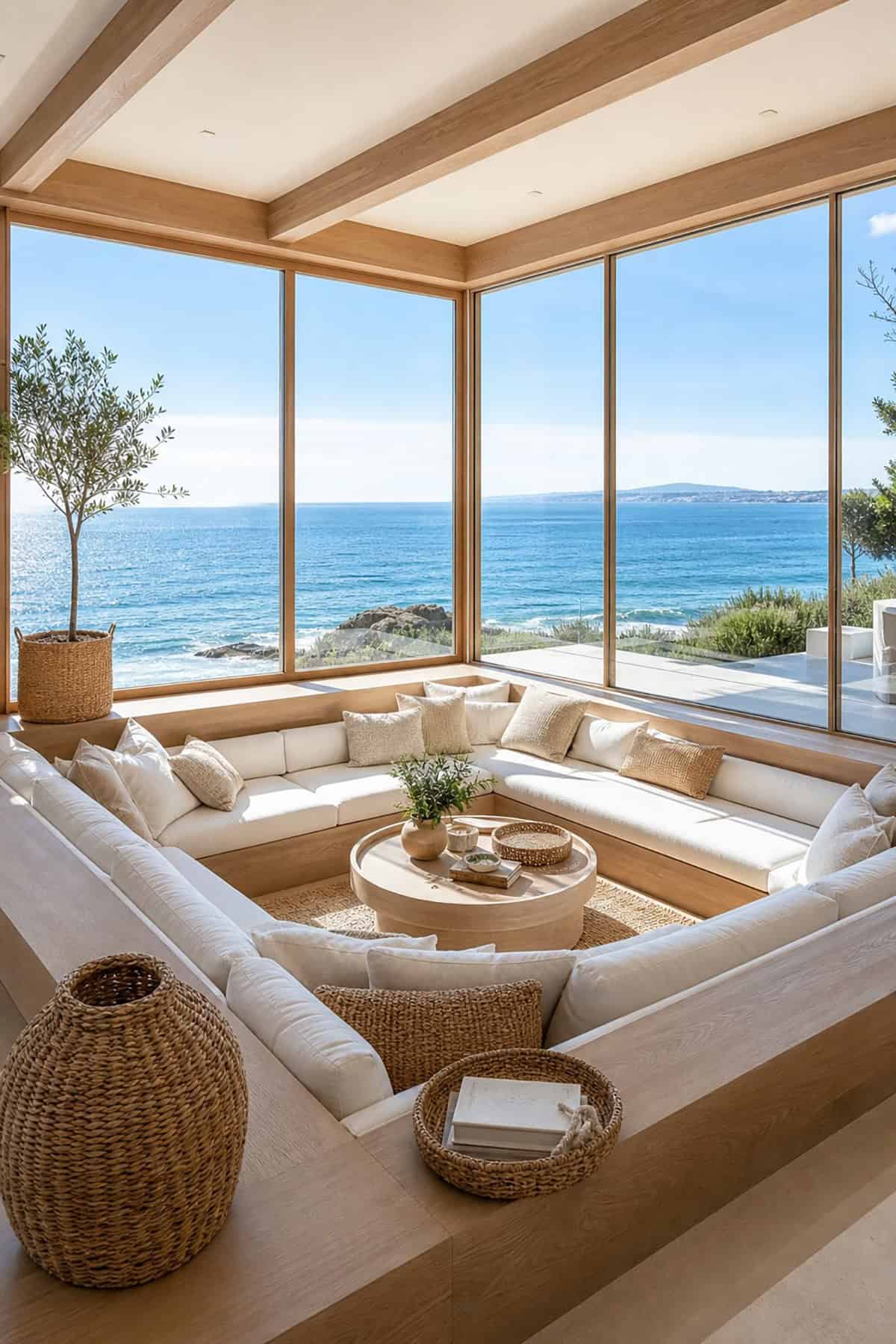
Light timber, white plaster, limestone, and linen define this relaxed coastal palette. Deep built-in seating wrapped in soft neutral fabrics keeps the room understated, while woven rugs and rattan accents introduce natural materials without dominating the space.
Large windows, pale oak, and simple furniture suit this style better than ornate details or heavy decoration. Blue belongs outside the windows, not scattered across every surface inside the room.
Curved Seating
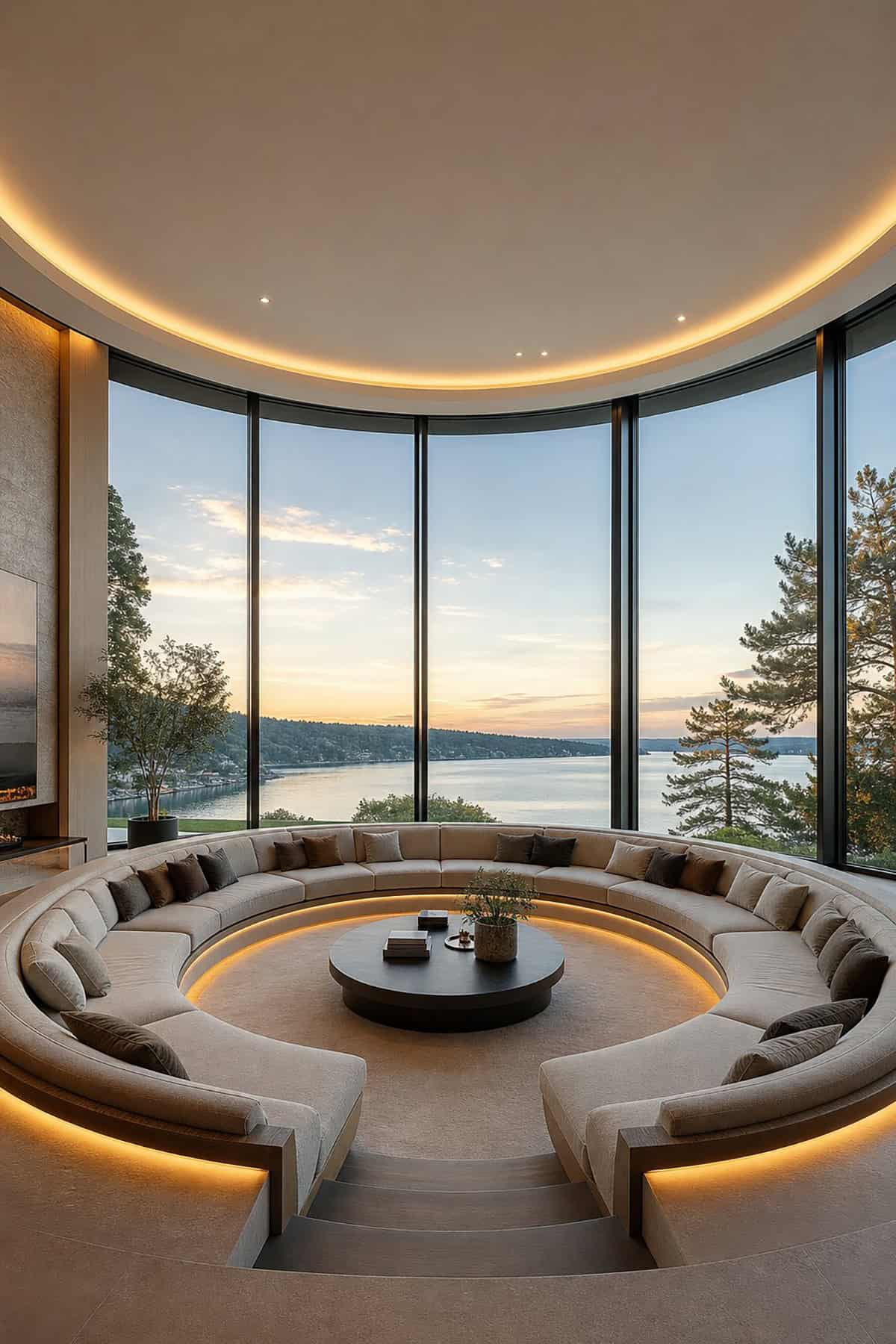
Every seat follows the same curve, leaving nobody at the end of the sofa or pushed into a corner. The layout naturally faces the center, which keeps conversations balanced whether four people are gathered or twelve.
Custom-built seating produces the cleanest result, although curved modular sectionals also suit larger rooms. A round coffee table echoes the shape of the pit and leaves comfortable circulation around every seat.
Around A Coffee Table
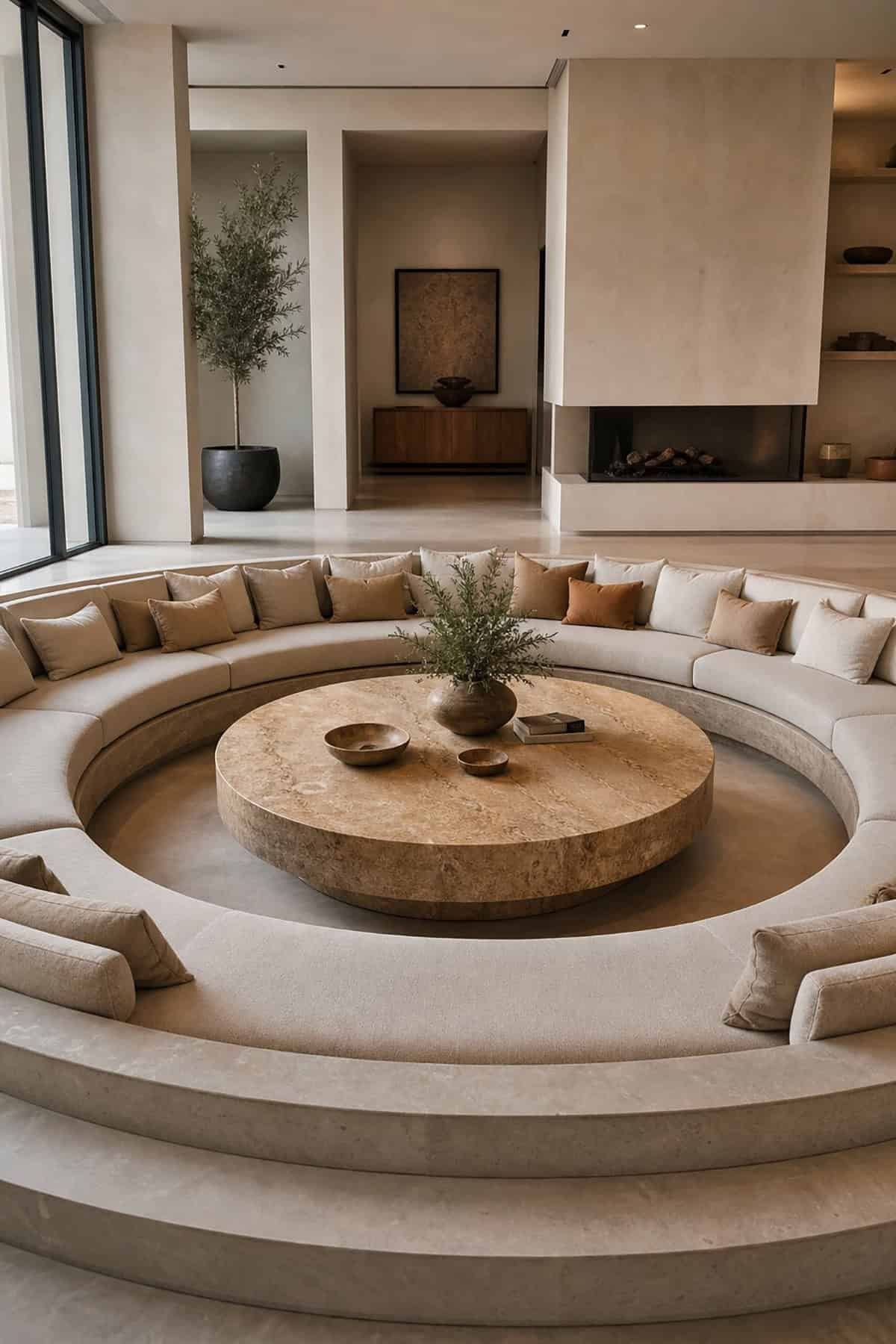
A substantial coffee table gives the entire seating arrangement a clear center point. Stone, timber, or cast concrete all suit this layout, especially when the table feels permanent rather than lightweight or temporary.
Choose a diameter that leaves comfortable space between the seating and the table from every direction. Round tables reinforce the geometry of the pit, while thicker tops and solid bases give the center of the room more presence.